Author: azeeadmin

13 Jul 2020

Superstrata opens pre-orders on a pair of 3D printed bicycles

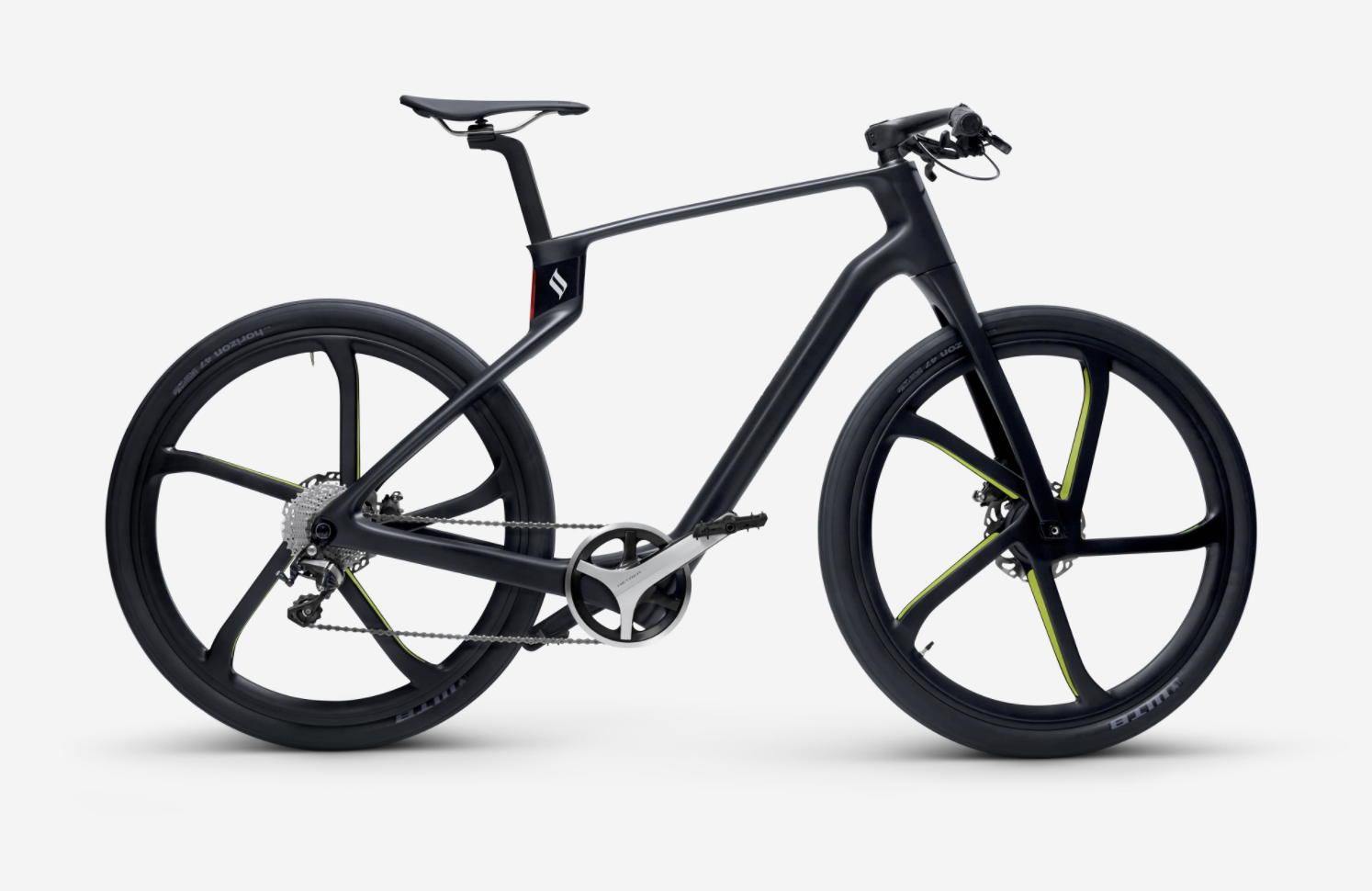
There’s one thing I can’t stop thinking about every time I look at the Superstrata: Just how quickly the thing would get stolen. That’s no knock against the bike itself — in fact, it’s probably a point in its favor. If anything, it’s probably just another in a long list of signs that I’ve been living in New York City for too long.

The Superstrata Ion is a $4,000 bike. But it’s not just any $4,000 bike (I likely wouldn’t be writing about it if it were). In addition to looking quite slick, the unibody bike is 3D printing from a single piece of carbon fiber material. The approach makes it possible for the company to essentially deliver a custom bike to the rider’s body. And despite it’s seemingly heft price tag, the Ion is still cheaper than most traditionally constructed carbon fiber bikes, which can cost as much as $12,000. 

There are two models being offered under the Superstrata brand. There’s the aforementioned electric Ion and the Terra, a $2,800 standard bike. Neither are quite a reality yet. Both are being offered up as preorders on Indiegogo (the campaign has already funded 5x its initial $100,000 goal) via Alabaster/Misfit founder Sonny Vu — a familiar name to anyone who has been following the consumer electronics space over the last several years. 

The advantages of a 3D printed bike should be pretty clear. As the company notes, it’s capable of building the system to fit people from 4’7 to 7’4 (one assumes that’s not exact window and more a fun bit of symmetry, bit you get the point). In all, the bike builders take 18 different measurement to create the unibody frame. That design lends an extra level of strength to the bike’s frame, inspire of the fact that it weighs just under three pounds (for the non-electric model). Superstrata told TechCrunch that this translates into more than 250,000 unique combinations. Once the bike is printed, a human delivers the final touches.

Superstrata is not just some new bike startup. It’s a new brand under Arevo, the Bay Area-based additive manufacturing startup. Superstrata is meant to demonstrate Arevo’s push into manufacturing as a service and composite additive manufacturing, Vu told TechCrunch. 

To achieve this expanded focus, Arevo is building a print farm with a bunch of its systems in Vietnam, said Vu.

“The idea is not to just print a thing and say, ‘look what we can do,'” Vu said in a recent interview. “Let’s build the entire product from the name, colors, brand, type font, industrial design, user experience — the entire thing, B to C (business to consumer).”

Vu is betting that future customers will be hooked once they understand and can see for themselves how quickly Superstrata was created. The entire process from the drawing board to a production-ready prototype took about two months, Vu said. Much of that time was spent designing the printing processes that will allow for so much customization between each bike.

Vu is also aiming for Superstrata to be a high-quality product that can stand on its own, and the company leaned heavily on bike experts and designers to create both products. One of the most interesting — and possibly even controversial — design decisions is the lack of a seat tube.

“Yeah, there’s a bit of showboating on that design I have to admit,” Vu said. “Again, that’s to show off our strength, because of course, we could put a seat tube in. The whole point is we can do the entire thing carbon fiber and support massive amounts of weight.”

One important note is that has customized as these two bikes might be, this is not a closed system that will require the owner to stick with the handlebars and wheels. The bikes can use other wheels and components. Superstrata made this flexible because the company assumed most hardcore cyclists will strip it down to the body or fork anyways.

There is one other temporary upside. The price of both bikes have been reduced for early adopters through the crowdfunding campaign. The product is expected to start shipping in December.

13 Jul 2020

Get a free annual Extra Crunch membership when you register for Early Stage 2020

We’re a few days away from kicking off TC Early Stage 2020. Join us on July 21-22 for a two-day online masterclass designed to help early-stage startup founders build their business and keep moving forward.

Bonus: Buy your ticket now and you’ll get a free annual membership to Extra Crunch, our subscription program focused on startups, founders, and investors with more than 100 exclusive articles published per month. Read how-tos, weekly investor surveys, IPO analysis and in-depth interviews with experts on fundraising, growth, monetization and other core startup topics.

Here’s what you can expect from TC Early Stage. More than 50 experts across the startup ecosystem will lead interactive workshops focused on essential topics and skills that all pre-seed through Series A founders need to know.

We’re talking everything from effective fundraising, how to scale and marketing tactics that help you stand out from the herd to the nuts-and-bolts of tech stack security, smart hiring and the ins-and-outs of structuring term sheets.

Need an example or two? Here’s a taste.

How to avoid 1,000 landmines: When you’re starting your company, there are thousands of small, avoidable mistakes that can turn success into failure. Learn how to navigate around those and maximize your chance of success with key learnings from Garry Tan, founder and managing partner at Initialized Capital.

Hiring your early engineers: The first few employees determine a startup’s trajectory. Learn the dos and don’ts of hiring your early engineers from entrepreneur and investor Ali Partovi. And hear how these hiring decisions can determine not only the type of culture you build for your employees, but also the overall success of your company.

Check out the event agenda here to see all the sessions and the gurus who will show you the way.

Make haste because some sessions are already filled. We’re limiting capacity to keep the workshops smaller so you can get the most out of your experience. Good news: all pass holders will have exclusive video access to all the sessions after the event ends. No FOMO for you.

Buy your Early Stage pass, score a free annual membership to Extra Crunch and dive into a business-building masterclass designed just for you.

If you are already an existing annual or 2-year Extra Crunch member and have not yet bought a ticket to Early Stage, you can reach out to extracrunch@techcrunch.com to request a 20% off discount or if you are an annual or 2-year member and purchased an Early Stage ticket without the 20% off discount, we’re happy to extend the length of your existing membership by 6 months for free by contacting extracrunch@techcrunch.com.

If you are an existing monthly Extra Crunch member, we’re happy to extend the length of your membership by a year for free; however, you won’t be able to claim the 20% off for an event ticket for Early Stage. You will be eligible for the 20% off event tickets for Disrupt and other future TechCrunch events. Please contact extracrunch@techcrunch.com if you are an existing monthly customer and want to take advantage of the membership extension.

13 Jul 2020

Robinhood raises $320M more, bringing its latest round to $600M at an $8.6B valuation

The stakes keep getting higher for American discount brokerage Robinhood, which today disclosed that it has added hundreds of millions of dollars to its previously disclosed funding round.

Including the $280 million that the company had already announced, Robinhood said that it was “pleased to share” that it “raised an additional $320 million in subsequent closings.” Its now $600 million funding round brings its post-money valuation to $8.6 billion. Fortune first reported the news.

(A detail, but the new capital is part of the same round as it was raised at the same price. TechCrunch reported when the company’s $280 million round was announced, the] fintech company was worth $8.3 billion. Another $300 million in capital at a flat share price means that the company’s valuation should have risen by only the dollar amount added. As it did.)

Robinhood’s new capital was as unsurprising as its first tranche of this meg-round; the former startup is seeing demand for its product surge as investors of all sizes take part in the year’s huge equity volatility; many investing-and-savings-focused fintech companies are enjoying a huge year, as consumers look to hoard, and employ their cash.

Robinhood has had a good business year, even if some of its practices have come under fire. The company pledged to tighten up parts of its platform relating to more exotic trading after the suicide of one of its users, for example, a topic that TechCrunch discussed at length last week.

What is inescapable is that Robinhood is having one hell of a year. When it might go public isn’t clear, especially as the private company is having no problem raising capital without an IPO. But as its value continues to rise, it becomes an increasingly remote acquisition target.

13 Jul 2020

Second-quarter VC investing totals appear lackluster

The second quarter’s venture capital results are coming into focus.

The Exchange will have more notes on Q2’s venture results this week, but this morning we’re digging into our first dataset concerning what happened in the world of private capital from April through June.

Crunchbase News — a place I used to work, it feels fair to note — ran its usual dig through the quarter’s venture results, effectively coming up with two answers to the question of what happened in Q2 VC. As it turns out, a single company’s fundraising made the quarter’s results look far better than they really were. Once we strip out that firm’s non-venture funding rounds, a clearer picture emerges.


The Exchange explores startups, markets and money. You can read it every morning on Extra Crunch, and now you can receive it in your inbox. Sign up for The Exchange newsletter, which will drop every Saturday starting July 25.


If you discount Reliance Jio’s epicand continuing — ability to attract billions of dollars, the private investment market was slack in the second quarter. Per Crunchbase News, including the Reliance Jio deals, “Crunchbase recorded $69.5 billion invested across all funding stages for the second quarter specifically. This is up 17 percent quarter-over-quarter and down 2 percent year over year.” (Crunchbase has moved away from making projections, notably, and now discloses reported data in its quarterly results).

A gain of about one-sixth from Q1 2020 results was probably not what you expected, given the quarter’s nearly comical turbulence. But, with Reliance Jio’s fundraising bacchanal stripped out, results are much worse.

Let’s talk about whether it’s fair to lean more on Reliance Jio-free data, and dig into what the data means for startups around the globe. We’ll also look at a few other mega-rounds from the period to see if there are any other distortive funding events lurking in the data.

The bad news

Final global Q2 data exclusive of Reliance Jio’s Q2 deals, per Crunchbase data, shows investment declines in the period of -9% compared to Q1 2020, and -23% compared to the year-ago quarter. While some of that will be due to reporting lag — the thing that projections were initially built to countermand — the dips are still stark.

Global Q2 VC does not look strong from this perspective.

13 Jul 2020

The new school

Higher education is being transformed by COVID-19, but it goes beyond universities simply “going remote” to try and cope. The changes afoot are holistic, transformative and a long time coming. These changes will extend to recruiting, training and, ultimately, how employers fundamentally go about finding potential candidates for their organizations. It also will change the very nature of higher education itself.

Before COVID-19, would-be employees would take traditional educational routes to gain employment. High school led to college which (sometimes) led to grad school. Almost all of this was done in an immersive campus setting where students tried to figure out not only who they were but what they wanted to do and with whom they wanted to do it. This path required enterprises to react specifically to an entrenched educational model that determined how would-be employees would be groomed and trained — be it for a specific skill set or cultural fit — all in an effort to determine who the right person was for them.

This model has grown bloated over the years, and the industry that supports it — projected to register $10 trillion globally by 2030 — has become increasingly vulnerable to the kind of technology-driven change that, over the last decade, has been disrupting old-school industries across the board, from retail to logistics to real estate and more.

“A reckoning is coming for schools and universities,” Scott Galloway, a professor of Marketing at the NYU Stern School of Business, told CNN in late May. “We’ve raised prices 1400% but at the same time if you look at innovation…if you walked into a classroom today it wouldn’t look, smell or feel much different from what it did 40 years ago.”

In a blog post from April, Galloway further projected that COVID-19 would lead to a culling among universities. As with retail, he suggested — where closures skyrocketed from 9,500 stores in 2019 to more than 15,000 in 2020 — there will likely be dozens, if not hundreds, of colleges and universities that simply do not recover from the virus. He also predicted a sustained drop in applications at four-year universities for the first time in decades.

The blow to the world of higher education was bound to come,” said Roei Deutsch, co-founder and CEO of live video course marketplace Jolt Inc. during a talk on the podcast, Coffee Break. “There is a higher education bubble, something there does not work in terms of cost versus what students receive in return, and you can say that the coronavirus crisis is the beginning of this bubble’s bursting.”

While the virus may hasten an overdue transformation in higher education, it also will create opportunities for startups that create alternatives to traditional higher education. As with many other sectors, though, this will be less about COVID-19 acting as a radical change agent and more about the virus accelerating what was already taking place behind the scenes, primarily within global enterprises.

Over the last decade, enterprise learning and development (L&D) has grown in importance as various technologies proliferated throughout large organizations. The global corporate e-learning market is estimated to grow up to $30 billion at a 13% compound annual growth rate through 2022. This growth was driven in large part by the increased importance of matching workforce capabilities with actual required skill sets.

Learning experience platforms (LXP) and learning management systems (LMS) are core products used by enterprises in L&D. They are used to monitor, track and administer employment learning activities. They usually serve as digitized online catalogs. Learning software is primarily designed to create more personalized learning experiences and help users discover new learning opportunities by combining learning content from different sources, while recommending and delivering them — with the support of AI — across multiple digital touch points, e.g. desktop applications, mobile learning apps and others.

Significantly, these same online education tools have also begun to be adopted by many colleges and universities as they look for ways to cope with COVID-19. This is helping to transform thinking around these applications, tools and platforms. Enterprises, which had already been adopting these tools, are now reconsidering their potential. It does not take a colossal leap of imagination to see what lies ahead.

Instead of building training academies and LMS systems to help continually train people for new or expanded roles within an organization, enterprises will now target the front end of the recruiting funnel where higher education begins. With university life transformed by COVID-19, it has opened up the possibility for enterprises to reassess how they participate in that funnel. The potential for global enterprises to own the university experience is, suddenly, very real.

Imagine leveraging these existing education and training platforms to create hyper-specific curricula for enterprises. A gig economy for professors who have been displaced from shuttered universities could provide the online faculty. They’ll design a curriculum specifically suited to an enterprise’s needs.

These new enterprise-driven, online university systems will vet people for academic excellence and cultural alignment to determine who they want to educate and, ultimately, hire. And all of it will feed them directly into their own systems. These would be university systems not unlike what we see today with, say, The U.S. Naval Academy, where a tuition-free education comes with an obligation to serve for a period of time. Others have speculated that a kind of hybrid, for-profit model that blends universities and global enterprises may also emerge.

MIT/Google could offer a two-year degree in STEM,” suggested Galloway. “MIT/Google could enroll 100,000 kids at $100,000 in tuition (a bargain), yielding $5 billion a year (two-year program) that would have margins rivaling… MIT and Google. Bocconi/Apple, Carnegie Mellon/Amazon, UCLA/Netflix, Berkeley/Microsoft… you get the idea.”

Higher education is not the only system poised for fundamental  transformation. The U.S. staffing and recruiting market, whose total size was already predicted to decrease 21% due to the coronavirus outbreak, could also see changes in how they operate. No longer will enterprises feel obliged to recruit at universities or utilize the tools, platforms and resources necessary to identify recruits coming out of these outdated systems. Now, they’ll have a direct funnel to employees perfectly attuned to their needs. This would be a boon for enterprises that would not only create novel profit centers in their organizations but would also avoid the costly and inefficient process of searching for employees common to most recruiting models today. The savings are not insignificant.

The cost of a bad hire can reach up to 30% of the employee’s first-year earnings, according to the U.S. Department of Labor. Undercover Recruiter looked at misadventures in hiring potentially costing enterprise $240,000 in expenses related to hiring, compensation and retention. And one study found that 74% of companies that admit they’ve hired the wrong person lost an average of $14,900 for each bad hire, according to CareerBuilder.

Then there are the ancillary benefits for students — the cost of higher education has been skyrocketing for decades, and student debt has reached unacceptable levels, with diminished earning power associated with degrees. A tipping point is fast approaching: One study demonstrated that a college degree decreases in value as the number of graduates increases. So, in Sub-Saharan Africa (where degrees are relatively rare) a degree will boost earnings by more than 20%. In Scandinavia (where 40% of adults have degrees) that number drops to 9%.

These new, enterprise-specific universities would provide real, tangible ROI on every education investment dollar made. The promise of specific jobs upon graduation with good salaries is doubly important in a shaky economy. As universities continue to price themselves out, they’ll have a tougher time justifying their costs, particularly when juxtaposed against an online educational system that feeds directly into Google, Twitter or Microsoft. It would likely prove irresistible for many students.

The secondary effects of COVID-19 as it relates to higher education are still not clear, but a possible picture is beginning to emerge. Recruiting could have to transform who they target and how (and when) they go about it. A burgeoning industry that has been supporting a steadily increasing appetite from enterprises for digital education and training could be transformed overnight and grow by leaps and bounds. Students could see debt cut in half and have a clear path forward toward employment. Whatever the ultimate landscape is that emerges, the changes in store for universities and colleges will undoubtedly be unpleasant.

“I think we’ve stuck out the mother of all chins and the fist of COVID-19 is coming for us,” Galloway told CNN. “Think of another industry that charges 100K and gets 90-plus points of margin. Other than a pharmaceutical for a drug that cures a rare cancer, maybe, what other product gets that kind of margin? Quite frankly, we’ve had this coming.”

That some kind of change is coming seems clear, but whether or not a paradigm shift in education is a good thing is less so. Like most industries disrupted by software and technology, tremendous value will flow to millions of consumers as technologies drive market efficiencies. There will be jobs that vanish or are transformed and there will be new jobs that are created to satisfy the new way of doing things. Major global enterprise and tech companies stand to profit the most from this transformation, with more wealth and power flowing into the hands of the FAANGs of the corporate world.

There will also be a reshaping of priorities in higher education as intellectual discovery, cultural appreciation and individual growth — the hallmarks of a campus-based liberal arts education — are replaced by the pursuit of a narrowly defined set of vocational skills and corporate efficiencies. The implications of global enterprises wading into higher ed will change not only how we educate, hire and train people but how we fundamentally think about and value higher education, as well.


13 Jul 2020

Microsoft’s Flight Simulator 2020 will launch on August 18

After a series of closed alpha tests, Microsoft’s Xbox Game Studios and Asobo Studios today announced that the next-gen Microsoft Flight Simulator 2020 will launch on August 18. Pre-orders are now live and FS 2020 will come in three editions, standard ($59.99), deluxe ($89.99) and premium deluxe ($119.99), with the more expensive versions featuring more planes and handcrafted international airports.

The last part may come as a bit of a surprise, given that Microsoft and Asobo are using assets from Bing Maps and some AI magic on Azure to essentially recreate the Earth — and all of its airports — in Flight Simulator 2020. Still, the team must have spent some extra time on making some of these larger airports especially realistic and today, if you were to buy even one of these larger airports as an add-on for Flight Simulator X or X-Plane, you’d easily be spending $30 or more.

The default edition features 20 planes and 30 hand-modeled airports, while the deluxe edition bumps that up to 25 and 35 and the high-end version comes with 30 planes and 40 airports.

Among those airports not modeled in all their glorious detail in the default edition (they are still available there, by the way — just without some of the extra detail) are the likes of Amsterdam Schiphol, Chicago O’Hare, Denver, Frankfurt, Heathrow and San Francisco.

The same holds true for planes, with the 787 only available in the deluxe package, for example. Still, based on what Asobo has shown in its regular updates so far, even the 20 planes in the standard edition have been modeled in far more detail than in previous versions and maybe even beyond what some add-ons provide today.

Image Credits: Microsoft

Since a lot of what Microsoft and Adobo are doing here involves using cloud technology to, for example, stream some of the more detailed scenery to your computer on demand, chances are we’ll see regular content updates for these various editions as well, though the details here aren’t yet clear.

“Your fleet of planes and detailed airports from whatever edition you choose are all available on launch day as well as access to the ongoing content updates that will continually evolve and expand the flight simulation platform,” is what Microsoft has to say about this for the time being.

Chances are we will get more details in the coming weeks, as Flight Simulator 2020 is about to enter its closed beta phase.

Image Credits: Microsoft

13 Jul 2020

Autonomous drone startup Skydio rises $100 million and launches the X2 commercial drone

Skydio has raised a $100 million Series C funding round, which was led by Next47 and includes participation from other new investors Levitate Capital and NTT DOCOMO Ventures, as well as existing investors A16Z, IVP and Playground. This new funding will help the drone maker move faster on its product development efforts, and expand its go-to-market strategy to cover not only consumer applications, but also enterprise and public sector drone technology, the company says. To serve the market, Skydio also launched the X2 family of drone hardware today, which is designed for commercial use.

Founded in 2014, Skydio has raised $170 million total and launched two consumer-focused drones to date, both of which employ artificial intelligence technology to give them autonomous navigation capabilities. This means their drones can actively track objects and people, while simultaneously avoiding potential collisions with objects including trees, power lines and other obstacles. The end result is video that looks like it was recorded by a professional film crew in a helicopter, but available to the general consumer market in a sub-$1K price point.

The first Skydio drone, the R1, was launched in 2018, and retailed for $2,499. Its intelligence and tracking capabilities were impressive, and were later improved via software updates and the second-generation hardware, which launched last year and is currently available for order.

Skydio’s new X2 drone platform is designed for enterprise use, and will ship in Q4 of this year according to the company. It includes an onboard 350-degree superzoom camera, a FLIR 320×256 resolution thermal imaging camera, a battery life of 35 minutes of flying time and a maximum range of 6.2 miles. There’s also a Skydio Enterprise Controller for the drone, which has a touchscreen, hardware controls, and a protective hood to block glare.

The move from consumer to enterprise makes a lot of sense for Skydio; the same collision avoidance features and easy piloting that the company has received praise for in the consumer world are very applicable in enterprise use. The company says that its close-proximity avoidance tech, which allows for very tight tolerances in flight, make it a great candidate for doing things like remote infrastructure and equipment inspection where having a person do those would be dangerous or impossible.

X2 can also capture 180-degree images directly above itself, which makes it uniquely capable of inspecting bridge spans and other overhead construction from a different perseptive than is offered by many rotor-drones like this one. And the infrared coverage means it can operate day and night, and provide heat-maps of targets.

Skydio will still serve the consumer market as well, but this progression throughout its brief history is likely a very attractive one for investors: The company went from an expensive, but highly capable consumer product accessible only to a few individuals, to a much more accessibly priced but still high-tech offering, and now appears to be turning the economies it has realized in its tech to the potentially much more lucrative enterprise hardware and software arena.

13 Jul 2020

Autonomous drone startup Skydio rises $100 million and launches the X2 commercial drone

Skydio has raised a $100 million Series C funding round, which was led by Next47 and includes participation from other new investors Levitate Capital and NTT DOCOMO Ventures, as well as existing investors A16Z, IVP and Playground. This new funding will help the drone maker move faster on its product development efforts, and expand its go-to-market strategy to cover not only consumer applications, but also enterprise and public sector drone technology, the company says. To serve the market, Skydio also launched the X2 family of drone hardware today, which is designed for commercial use.

Founded in 2014, Skydio has raised $170 million total and launched two consumer-focused drones to date, both of which employ artificial intelligence technology to give them autonomous navigation capabilities. This means their drones can actively track objects and people, while simultaneously avoiding potential collisions with objects including trees, power lines and other obstacles. The end result is video that looks like it was recorded by a professional film crew in a helicopter, but available to the general consumer market in a sub-$1K price point.

The first Skydio drone, the R1, was launched in 2018, and retailed for $2,499. Its intelligence and tracking capabilities were impressive, and were later improved via software updates and the second-generation hardware, which launched last year and is currently available for order.

Skydio’s new X2 drone platform is designed for enterprise use, and will ship in Q4 of this year according to the company. It includes an onboard 350-degree superzoom camera, a FLIR 320×256 resolution thermal imaging camera, a battery life of 35 minutes of flying time and a maximum range of 6.2 miles. There’s also a Skydio Enterprise Controller for the drone, which has a touchscreen, hardware controls, and a protective hood to block glare.

The move from consumer to enterprise makes a lot of sense for Skydio; the same collision avoidance features and easy piloting that the company has received praise for in the consumer world are very applicable in enterprise use. The company says that its close-proximity avoidance tech, which allows for very tight tolerances in flight, make it a great candidate for doing things like remote infrastructure and equipment inspection where having a person do those would be dangerous or impossible.

X2 can also capture 180-degree images directly above itself, which makes it uniquely capable of inspecting bridge spans and other overhead construction from a different perseptive than is offered by many rotor-drones like this one. And the infrared coverage means it can operate day and night, and provide heat-maps of targets.

Skydio will still serve the consumer market as well, but this progression throughout its brief history is likely a very attractive one for investors: The company went from an expensive, but highly capable consumer product accessible only to a few individuals, to a much more accessibly priced but still high-tech offering, and now appears to be turning the economies it has realized in its tech to the potentially much more lucrative enterprise hardware and software arena.

13 Jul 2020

Apple allocates its first $400M from $2.5B commitment to address California’s housing crisis

Apple announced this morning it’s allocating more than $400 million toward affordable housing projects and other homeowner assistance programs in California, as a part of its earlier multi-year pledge of $2.5 billion to address the state’s housing crisis and homelessness issues.

The funding is expected to support thousands of Californians with first-time homebuyer assistance or new, affordable housing units, Apple says.

Projects launching in 2020 include 250 new units of affordable housing across the Bay Area — the first affordable housing developments funded in a private-public partnership with Housing Trust Silicon Valley. The units will span the North, East, and South Bay regions, and will include many units reserved for veterans, the homeless or formerly homeless, and residents with developmental disabilities.

Image Credits: Apple


Apple is also offering a mortgage and down payment assistance fund and an affordable housing investment support program, both created in conjunction with the California Housing Finance Agency (CalHFA). Apple has provided mortgage and down payment assistance to hundreds of first-time home buyers to date, it says, with additional benefits reserved for teachers, veterans, and firefighters. The CalHFA’s assistance program is typically diverse, as well, with over 65% of borrowers identifying as Hispanic, Black, Asian, Pacific Islander, or American Indian.

This month, Apple will launch an affordable housing investment support program with CalHFA, aimed at funding the development of new, very low to moderate-income housing at a lower costs. The program is expected to produce a number of affordable housing units in California over the next five years.

In addition, Apple is supporting the construction of affordable housing units through a partnership with Destination: Home, which supports the homeless in the Silicon Valley area. This initiative will help fund the construction of over 1,000 new units of deeply-affordable and supportive housing, including 80 units in a project in Santa Clara for seniors who are homeless or nearing homelessness.

Apple says its support has helped Destination: Home keep 1,500 families annually from losing their homes, up 67% over a year ago.

Charities Housing Development Corporation project in San Jose, financed in partnership with Housing Trust Silicon Valley; Image Credits: Apple

“At a time when so many members of our community are facing unprecedented challenges, we believe it’s critical to make sure that their hopes for the future are supported through tangible programs and results,” said Kristina Raspe, Apple’s vice president for Global Real Estate and Facilities, in an announcement. “As cities and states have been forced to pause many of their long-term affordable housing investments amidst the current public health crisis, Apple is proud to continue moving forward with our comprehensive plan to combat the housing crisis in California,” she added.

Apple in November 2019 first announced its plans to commit funds to address the housing and homelessness crisis. It’s not the only major tech firm to do so. Amazon, Facebook, and Google are also spending money to address these problems. But these moves aren’t just about charity and good works. Apple, Amazon, Facebook and Google are partially responsible for the housing crisis to begin with, as their expansions in the region have displaced long-time residents from their homes. Over the years, tech companies have been increasingly criticized for the negative impacts they’ve had on communities, as residents that make cities function — like firefighters, nurses and teachers, for example — had to move out due to rising housing prices.

Of course, like most complexities, a number of other factors also contributed to the housing crisis, outside of tech’s impact. There are also the area’s local laws, zoning regulations, protests against building vertically, NIMBY-ism, rental control’s impact on the market, the restricted housing supply, scarcity of available land, and more.

The additional funds toward affordable housing arrive at a time when some of the Bay Area’s wealthier residents and tech employees are fleeing the city, amid the coronavirus pandemic and its related impacts, such as layoffs. According to a recently released report from Zumper in July, one-bedroom rent prices in San Francisco fell 11.8% year-over-year — the largest drop in the U.S. and beating the prior month’s record. Two-bedroom rents fell nearly 10% year-over-year.

But even a double-digit decline won’t help solve the housing crisis, as rents and home prices were already so high as to be unattainable for many of the city’s residents. Plus, the pandemic’s longer-term impacts on the region’s housing market are yet to be seen. For example, it’s unclear to what extent companies will continue to embrace remote work if a vaccine were to emerge, making it safe to return to offices.

Apple’s initiatives in the $2.5 billion commitment remain unchanged, despite the pandemic. They include $1 billion affordable housing investment fund with the state of California, $1 billion first-time homebuyer mortgage assistance fund, $300 million in Apple-owned land made available for affordable housing, a $150 million Bay Area housing fund, and $50 million to support Destination: Home’s efforts.


13 Jul 2020

India seeks new regulator for non-personal data

India should set up a data regulator to oversee how companies collect, process, store, monetize and even destroy non-personal data (or data that has been anonymized), a panel tasked by New Delhi has recommended in a draft report.

The eight-person panel said that companies such as Google, Facebook, Amazon, and Uber have benefited from a combination of “first mover advantage,” “sizable network effect” and “enormous data” that they have collected over the years.

This dominance has “left many new entrants and startups being squeezed and faced with significant entry barriers,” said the draft report, which has been made available to industry players for consultation before it is submitted to the nation’s IT ministry next month.

New Delhi, which appointed the aforementioned committee last year, has in recent years moved to better understand and control how technology companies make use of data and devise new guidelines for several sectors including e-commerce.

India has emerged as battleground for global giants such as Google, Facebook, Amazon, and ByteDance that are looking to court hundreds of millions of first-time internet users in Asia’s third-largest economy.

Last month, New Delhi banned 59 apps and services developed by Chinese firms citing security and privacy concerns. On Monday, Google announced it plans to invest $10 billion in India to help accelerate the adoption of digital services.

In the draft report, obtained by TechCrunch and embedded below, the panel said that a data authority that provides centralized regulations for all non-personal data exchanges is required to closely evaluate and oversee the aforementioned aspects.

“Market transactions and market forces on their own will not bring about the maximum social and economic benefits from data for the society. Appropriate institutional and regulatory structures are essential for a thriving data economy and a well-functioning data society,” the report said.

The proposed regulator will have “integration” with “raw data pipes” of tech companies, and will be able to exercise its legal power to make data sharing requests.

The draft report also recommends that companies provide their users with metadata of information they are collecting or processing from them so that “users may identify opportunities for combining data from multiple data businesses and/or governments to develop innovative solutions, products and services.”

“Every data business must declare what they do and what data they collect, process and use, in which manner, and for what purposes. This is similar to disclosures required by pharma industry and in food products,” the draft report recommends.