Author: azeeadmin

13 Jul 2020

Google makes education push in India

Google said on Monday that it has partnered with CBSE, a government body that oversees education in private and public schools in India, to deliver a “blended learning experience” across 22,000 schools in the world’s second largest internet market by the end of this year.

The Search giant, which today also announced plans to invest $10 billion in India in the next five to seven years, said it will work with more than 1 million teachers in India this year and offer a range of free tools such as G Suite for Education, Google Classroom, and YouTube to help digitize the education experience in the nation, which like other countries, closed schools earlier this year to prevent the spread of Covid-19.

“We must acknowledge that not everyone has access to internet,” said Sapna Chadha, Senior Marketing Director at Google India, at an online event Monday. She said the company is working with partners to bring education through TV and other mediums.

The company also announced that Bolo, an education app it launched in India last year, is expanding to 180 countries in nine languages under Read Along brand.

More to follow…

13 Jul 2020

Project Ubin, the Singaporean money authority’s blockchain initiative, moves closer to commercialization

The Monetary Authority of Singapore (MAS) and state investment firm Temasek announced today that Project Ubin, its blockchain-based multi-currency payments network, has proven its commercial potential after tests with more than 40 companies.

The initiative was launched in 2016. A prototype developed by Temasek and J.P. Morgan began undergoing testing last year to see how well it would integrate with commercial blockchain applications.

A report released today, commissioned by MAS and Temasek, said Project Ubin’s prototype was validated through workshops with more than 40 financial and non-financial firms. Its potential uses include faster, less costly cross-border transactions; foreign currency exchange; and smart contracts for escrow and trade.

The report also said that Project Ubin’s prototype can potentially pave the way to enable more collaborations with central banks and other financial institution to build better cross-border payments networks.

In a statement, Chia Song Hwee, Temasek’s deputy chief executive officer, said “This validates Temasek’s efforts in exploring and building blockchain solutions focusing on digital identity, digital currencies and financial asset tokenization. We look forward to supporting commercialization efforts emanating from Project Ubin and other application areas, with a view to drive greater adoption of blockchain technology.”

13 Jul 2020

Google to invest $10 billion in India

Google said on Monday that it plans to invest $10 billion in India in the next five to seven years as the search giant looks to expand its presence in the key overseas market.

Sundar Pichai, the chief executive of Google, today unveiled Google for India Digitization Fund through which it will be making the investments in the country.

“We will do this through a mix of equity investment, partnerships, and investment in local infrastructure,” he said at the company’s annual event focused on India.

Investments will focus on four areas important to India’s digitization:

  • First, enabling affordable access and information for every Indian in their own language, whether it’s Hindi, Tamil, Punjabi or any other
  • Second, building new products and services that are deeply relevant to India’s unique needs
  • Third, empowering businesses as they continue or embark on their digital transformation
  • Fourth, leveraging technology and AI for social good, in areas like health, education, and agriculture

India is a key overseas market for Google, where a range of its products and services including Search, YouTube, and Android have made inroads with much of the online population.

Though Google, like every other American tech giant, makes only a fraction of its revenue from the world’s largest internet market.

More to follow…

13 Jul 2020

Microsoft spins out 5-year-old Chinese chatbot Xiaoice

Microsoft is shedding its empathetic chatbot Xiaoice into an independent entity, the U.S. software behemoth said (in Chinese) Monday, confirming an earlier report by the Chinese news site Chuhaipost in June.

The announcement came several months after Microsoft announced it would close down its voice assistant Cortana in China among other countries late last year.

Xiaoice has over the years enlisted some of the best minds in artificial intelligence and ventured beyond China into countries like Japan and Indonesia. Microsoft said it called the shots to accelerate Xiaoice’s “localized innovation” and buildout of the chatbot’s “commercial ecosystem.”

The spinoff will see the new entity license technologies from Microsoft for subsequent research and development in Xiaoice and continue to use the Xiaoice brand (and Rinna in Japanese), while Microsoft will retain its stakes in the new company.

In 2014, a small team of Microsoft’s Bing researchers unveiled Xiaoice, which means “Little Bing” in Chinese. The bot immediately created a sensation in China and was regarded by many as their virtual girlfriend. The chatbot came just a few weeks after Microsoft rolled out Cortana in the country. Modeled on the personality of a teenage girl, Xiaoice aims to add a more human and social element to chatbots. In Microsoft’s own words, she wants to be a user’s friend.

Like all foreign companies, Microsoft has to grapple with China’s censorship. In 2017, Xiaoice was removed by Tencent’s instant messenger QQ over suspicions of politically sensitive speech.

The project has involved some of the most prestigious scientists in the AI land, ranging from Lu Qi, who went on to join Baidu as its chief operating officer and brought Y Combinator to China; Jing Kun, who took up a post at Baidu to head the search giant’s smart devices; and Harry Shum, a former executive at Microsoft’s storied Artificial Intelligence and Research unit and now sits on the board of fledgling news app News Break.

Shum will serve as chairman at Xiaoice’s new standalone entity. Li Di, general manager of Xiaoice, will serve as chief executive officer. Chen Zhan, a developer of the Japanese chatbot Rinna, will be general manager of the Japanese office.

The new company will retain the right to use the “Xiaoice” and “Rinna” brands, with a mission to further develop its client base across the Greater China region, Japan and Indonesia.

Microsoft claimed that Xiaoice has a reach of 660 million users and 450 million third-party smart devices globally at the last count. The chatbot has found applications in such areas as finance, retail, auto, real estate and fashion, in which it claimed it can “mine context, tonality and emotions from text to create unique patterns within seconds.”

13 Jul 2020

Tesla lowers the starting price of its Model Y electric SUV

Tesla has lowered the price of another vehicle. This time it’s the Model Y, an electric SUV the company started shipping in March. The long-range all-wheel drive version of the car is now listed with a purchase price of $49,990, or $3,000 less than what it was before. The car’s new pricing was first reported by Electrek over the weekend.

In May, Tesla cut prices for several of its electric cars, including high-end vehicles like the Model S sedan and the Model X SUV. The new pricing comes as U.S. automakers try to attract buyers despite the economic fallout of the COVID-19 pandemic.

The traditional big three U.S. automakers, Ford, GM and Fiat Chrysler Automobiles, are offering 0% financing rates, in addition to deferred or longer-term payment options, while other automakers have also announced incentives and payment plans to appeal to new buyers and keep existing owners from defaulting on loans.

At the beginning of this month, Tesla said it delivered 90,650 vehicles in the second quarter, a 4.8% decline due to the pandemic and suspension of production at its main U.S. factory for several weeks, but still better than analysts’ expectations. Most of the deliveries, or 80,050, were Model 3 and Model Y, while the remaining 10,600 were its higher-end Model S and Model X.

13 Jul 2020

WeWork’s chairman says it expects to have positive cash flow in 2021

After aggressive cost-cutting measures, including mass layoffs and selling several of its businesses, WeWork’s chairman expects the company to have positive cash flow in 2021. Marcelo Claure, who became WeWork’s chairman after co-founder Adam Neumann resigned as chief executive officer last fall, told the Financial Times that the co-working space startup is on target to meet its goal, set in February, of reaching operating profitability by the end of next year.

Claure is also chief operating officer of SoftBank Group, which invested $18.5 billion in the co-working space, according to leaked comments made by Claure during an October all-hands meeting.

SoftBank said in April that it would lose $24 billion on investments, with one of the main reasons being WeWork’s implosion last year. The company’s financial and management issues brought its valuation down from as much as $47 billion at the beginning of 2019 to $2.9 billion in March, according to a May report by CNBC.

In addition to the layoffs, WeWork sold off businesses including Flatiron School, Teem and its share of The Wing. Claure told the Financial times that WeWork also cut its workforce from a high of 14,000 last year to 5,600.

Neumann resigned as CEO in September, reportedly at the behest of SoftBank, over concerns about the company’s financial health and his behavior. Then the company postponed its IPO filing. The next month, SoftBank took ownership of WeWork as part of a financing package.

Claure is credited with orchestrating a turnaround at Sprint, cutting losses and increasing its stock price in 2015, three years after it was acquired by SoftBank. He has served as SoftBank Group’s COO since 2018.

Despite the impact of the COVID-19 pandemic, which forced many people to work from home, Claure said that companies have been leasing spaces from WeWork to serve as satellite offices close to where employees live. But he also said that revenues were flat during the second-quarter because many tenants terminated their leases or stopped paying rent.

12 Jul 2020

China Roundup: Tech giants take stance on Beijing’s data control in Hong Kong

Hello and welcome back to TechCrunch’s China Roundup, a digest of recent events shaping the Chinese tech landscape and what they mean to people in the rest of the world.

This week, the unprecedented national security law descended on Hong Kong, changing the day-to-day life of the people there, as well as businesses across the board. The law has important implications for the tech sector, providing a litmus test of business sentiment towards China’s regulation over information. Google, Facebook, Twitter, Telegram, Zoom, Reddit among a roster of companies have come to voice their stance.

Resist, comply, avoid

The Hong Kong national security law that went into effect on July 1 is set to tighten Beijing’s grip over the city. A few provisions of the law directly request service providers to remove information or provide assistance to the police, as I wrote earlier. Here are what the tech giants are saying in response:

Facebook confirmed it has paused the processing of data demands from Hong Kong authorities until it can better understand the law, “including formal human rights due diligence and consultations with human rights experts.” Its spokesperson said: “We believe freedom of expression is a fundamental human right and support the right of people to express themselves without fear for their safety or other repercussions.”

Its suspension will also apply to WhatsApp, which it owns.

Twitter said it suspended transfers of user data subject to Hong Kong demands immediately after the law went into effect, and its teams are “reviewing the law to assess its implications, particularly as some of the terms of the law are vague and without clear definition.” It also said it has “grave concerns regarding both the developing process and the full intention of this law.”

Google said it suspended its reviews of data requests from the authorities. It added that it would continue reviewing government requests for removals of user-generated content from its services.

Zoom said it suspended its compliance with data requests from the Hong Kong authorities. “Zoom supports the free and open exchange of thoughts and ideas… We’re actively monitoring the developments in Hong Kong SAR, including any potential guidance from the U.S. government. We have paused processing any data requests from, and related to, Hong Kong SAR.”

LinkedIn, which is owned by Microsoft and runs a separate mainland beholden to Chinese regulations, said it is pausing responses to local law enforcement requests as it conducts its review of the law.

Telegram said it does not intend to process any data requests related to its Hong Kong users until an international consensus is reached in relation to the ongoing political changes in the city. Its spokesperson claimed it has not disclosed any data to the Hong Kong authorities in the past.

Signal, a competitor to Telegram in the realm of data encryption, tweeted a snarky comment: “We’d announce that we’re stopping too, but we never started turning over user data to HK police. Also, we don’t have user data to turn over.”

TikTok is in a dilemma. As a Chinese-owned company, it can’t choose to defy the Chinese government. On the other hand, it can’t afford more narrative about it being a tool of Chinese censorship. Instead of temporarily refusing data requests from the police like many foreign firms, which is regarded as a gesture of opposition to Beijing’s grip, the short video app decided to quit Hong Kong. It’s an easy business decision, as the city constituted only a tiny share of TikTok’s user base. Time will tell whether ByteDance will roll out a censored version of TikTok — Douyin — or leave the city of seven million people out.

Apple has long been criticized for its closeness to the government of China, where it has significant business. Last year, it pulled a map that pinpointed pro-democracy demonstrations in Hong Kong.

Following the enactment of the security law, Apple announced it is assessing the rules, adding that it does not receive requests for user content directly from the Hong Kong government and requires authorities to submit requests under a U.S.-Hong Kong legal assistance treaty.

Reddit, which counts Tencent as an investor, provided a more evasive response: “All legal requests from Hong Kong are bound by careful review for validity and with a special attention to human rights implications.”

The list is not exhaustive and many aspects of the national security law await further explanation. We will keep tracking how other tech companies cope with the city’s new rules.

In response to tech firms pausing data compliance to the police, China’s Foreign Ministry Spokesperson Zhao Lijian tried to allay concerns in a statement:

“I recall what Deng Xiaoping noted in 1982 when he met with Margaret Thatcher, after Hong Kong’s return to the motherland, ‘Horses will still run, stocks will still sizzle, and dancers will still dance’ in Hong Kong. We have every reason to believe that as the Law is implemented, the foundation of ‘one country, two systems’ will be further strengthened, the Hong Kong residents’ fundamental interests and wellbeing will be better protected, there will be greater social stability and harmony, and ‘horses will run faster, stocks will be more sizzling, and dancers will dance more happily.’ We have full confidence in Hong Kong’s future.”

Elsewhere…

  • The U.S. threatens to ban TikTok over concerns that it could be used by the Beijing government as a surveillance and propaganda tool.
  • In a race to lead the global semiconductor industry, Chinese chip companies have fundraised more than twice as much in 2020 than in all of 2019.
  • The U.K. is poised to begin phasing out Huawei technologies in the country’s 5G network as soon as this year due to security fears. The decision reversed a previous plan to keep Huawei in the nation’s telecom infrastructure on condition of tight restrictions.
  • Weibo is becoming a closed ecosystem. The biggest microblogging platform in China announced it will only accept shortened links that it authenticates. Keeping a whitelist, it said, will help clamp down unsafe sites such as illegal gambling and porn services. Meanwhile, users worry this is a slippery slope that leads to another walled garden on the internet. The platform allows four types of short links, including a pre-select list of official websites operated by government branches, media, news portals, as well as business websites vetted and approved by Weibo.

12 Jul 2020

Qualcomm to invest $97 million in India’s Reliance Jio Platforms

Qualcomm has become the latest high-profile investor in four-year-old Reliance Jio Platforms, which has raised more than $15.7 billion in the past 12 weeks from as many investors.

On Sunday evening, Qualcomm Ventures said it will invest $97 million in Reliance Jio Platforms to acquire a 0.15% equity stake in the top Indian telecom operator.

Steve Mollenkopf, chief executive of Qualcomm, said the firm believes that Reliance Jio Platforms, which has disrupted the Indian telecommunications market by offering cut-rate voice and data plans, “will deliver a new set of services and experiences to Indian consumers” in the future.

“With unmatched speeds and emerging use cases, 5G is expected to transform every industry in the coming years. Jio Platforms has led the digital revolution in India through its extensive digital and technological capabilities. As an enabler and investor with a longstanding presence in India, we look forward to playing a role in Jio’s vision to further revolutionize India’s digital economy,” he said.

More to follow…

11 Jul 2020

Startups Weekly: The world is eating tech

Editor’s note: Get this free weekly recap of TechCrunch news that any startup can use by email every Saturday morning (7am PT). Subscribe here.

You could almost hear the internet cracking apart this week as international businesses pulled away from Hong Kong and the US considered a ban on TikTok. Software can no longer eat the entire world like it had attempted last decade. Startups across tech-focused industries face a new reality, where local markets and efforts are more protected and supported by national governments. Every company now has a smaller total addressable market, whether or not it succeeds in it.

Facebook, for example, appears to be getting an influx of creators who are worried about losing TikTok audiences, as Connie Loizos investigated this week. This might mean more users, engagement and ultimately revenue for many consumer startups, and any other companies that rely on paid marketing through Facebook’s valuable channels. But it means fewer platforms to diversify to, in case you don’t want to rely on Facebook so much for your business.

As trade wars look more and more like cold wars, it also means that Facebook itself will have a more limited audience than it once hoped to offer its own advertisers. After deciding to reject requests from Hong Kong-based Chinese law enforcement, it seems to be on the path to getting blocked in Hong Kong like it is on the mainland. But as with other tech companies, it doesn’t really have a choice — the Chinese government has pushed through legal changes in the city that allow it to arrest anyone in the world if it claims they are organizing against it. Compliance with China would bring on government intervention in the US and beyond, among other reasons why doing so is a non-starter. 

This also explains why TikTok itself already pulled out of Hong Kong, despite being owned by mainland China-based Bytedance. The company is still reeling from getting banned in India last week and this maneuver is trying to the subsidiary look more independent. Given that China’s own laws allow its government to access and control private companies, expect many to find that an empty gesture.

Startups should plan for things to get harder in general. See: the next item below.

(Photo by Alex Wong/Getty Images)

Student visas have become the next Trump immigration target

International students will not be allowed to stay enrolled at US universities that offer only remote classes this coming academic year, the Trump administration decided this past week. As Natasha Mascarenhas and Zack Whittaker explore, many universities are attempting a hybrid approach that tries to allow some in-person teaching without creating a community health problem.

Without this type of approach, many students could lose their visas. Here’s our resident immigration law expert, Sophie Alcorn, with more details on Extra Crunch:

International students have been allowed to take online classes during the spring and summer due to the COVID-19 crisis, but that will end this fall. The new order will force many international students at schools that are only offering remote online classes to find an “immigration plan B” or depart the U.S. before the fall term to avoid being deported.

At many top universities, international students make up more than 20% of the student body. According to NAFSA, international students contributed $41 billion to the U.S. economy and supported or created 458,000 jobs during the 2018-2019 academic year. Apparently, the current administration is continuing to “throw out the baby with the bathwater” when it comes to immigration.

Universities are scrambling as they struggle with this newfound untenable bind. Do they stay online only to keep their students safe and force their international students to leave their homes in this country? Or do they reopen to save their students from deportation, but put their communities’ health at risk?

For students, it means finding another school, scrambling to figure out a way to depart the States (when some home countries will not even allow them to return), or figuring out an “immigration plan B.”

Who knows how many startups will never exist because the right people didn’t happen to be at the right place at the right time together? What everyone does know is that remote-first is here to stay.

No Code goes global

A few tech trends seem unstoppable despite any geopolitics, and one seems to be the universal human goal of making enterprise software suck less. (Okay, nearly universal.) Alex Nichols and Jesse Wedler of CapitalG explain why now is the time for no code software and what the impact will bel, in a very popular article for Extra Crunch this week. Here’s their setup:

First, siloed cloud apps are sprawling out of control. As workflows span an increasing number of tools, they are arguably getting more manual. Business users have been forced to map workflows to the constraints of their software, but it should be the other way around. They need a way to combat this fragmentation with the power to build integrations, automations and applications that naturally align with their optimal workflows.

Second, architecturally, the ubiquity of cloud and APIs enable “modular” software that can be created, connected and deployed quickly at little cost composed of building blocks for specific functions (such as Stripe for payments or Plaid for data connectivity). Both third-party API services and legacy systems leveraging API gateways are dramatically simplifying connectivity. As a result, it’s easier than ever to build complex applications using pre-assembled building blocks. For example, a simple loan approval process could be built in minutes using third-party optical character recognition (a technology to convert images into structured data), connecting to credit bureaus and integrating with internal services all via APIs. This modularity of best-of-breed tools is a game changer for software productivity and a key enabler for no code.

Finally, business leaders are pushing CIOs to evolve their approach to software development to facilitate digital transformation. In prior generations, many CIOs believed that their businesses needed to develop and own the source code for all critical applications. Today, with IT teams severely understaffed and unable to keep up with business needs, CIOs are forced to find alternatives. Driven by the urgent business need and assuaged by the security and reliability of modern cloud architecture, more CIOs have begun considering no code alternatives, which allow source code to be built and hosted in proprietary platforms.
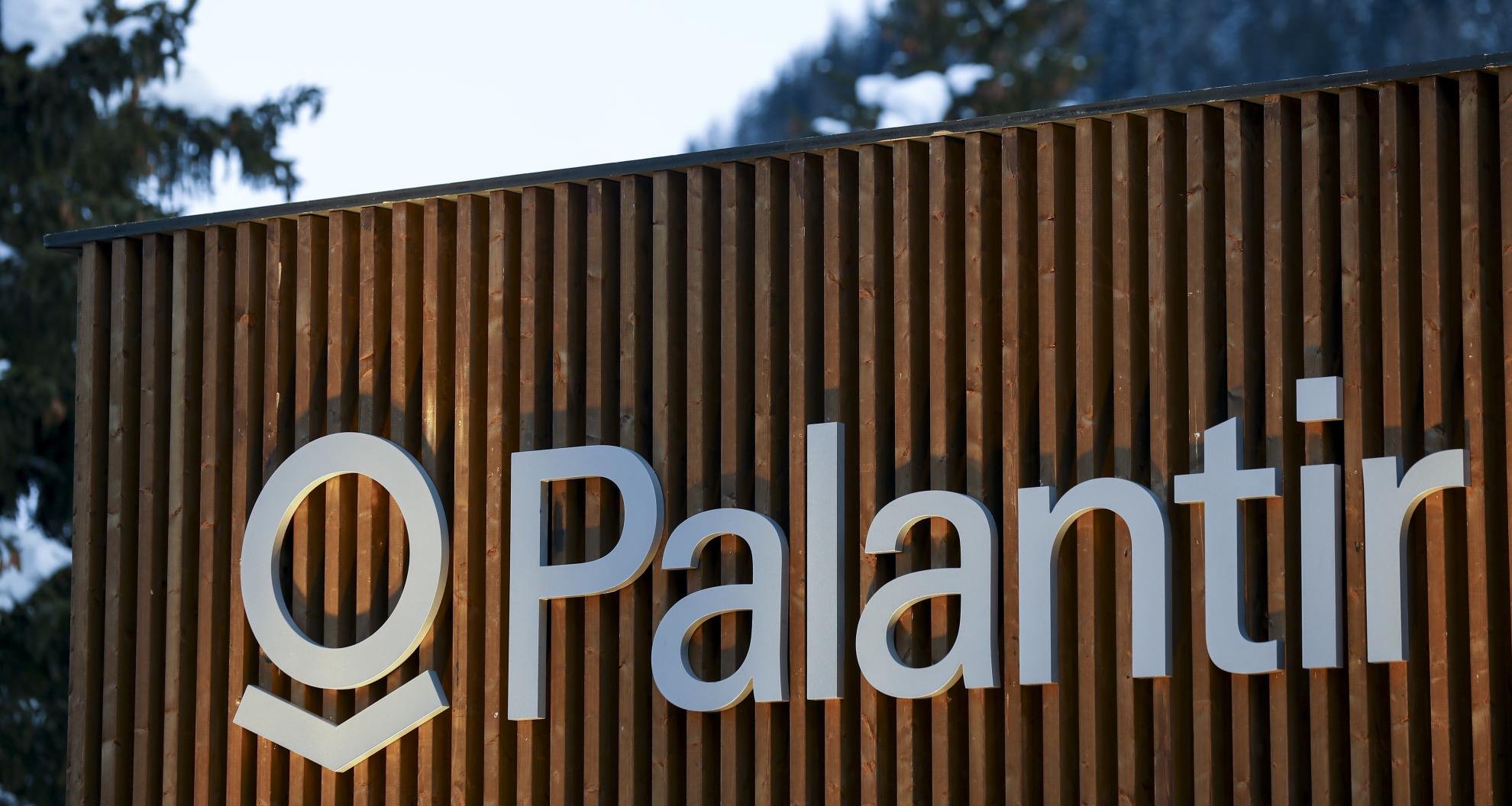
Photo: Jason Alden/Bloomberg

Palantir has finally filed to go public

It’s 16 years old, worth $26 billion and widely used by private and public entities of all types around the world, but this employer of thousands is counted as a startup tech unicorn, because, well, it was one of the pioneers of growing big, raising bigger, and staying private longer. Aileen Lee even mentioned Palantir as one of the 39 examples that helped inspire the “unicorn” term back in 2013. Now the secretive and sometimes controversial data technology provider is finally going to have its big liquidity event — and is filing confidentially to IPO, which means the finances are still staying pretty secret.

Alex Wilhelm went ahead and pieced together its funding history for Extra Crunch ahead of the action, and concluded that “Palantir seems like the Platonic ideal of a unicorn. It’s older than you’d think, has a history of being hyped, its valuation has stretched far beyond the point where companies used to go public, and it appears to be only recently growing into its valuation.”

It also appears to be one of the unicorns that has seen a lot of upside lately. It has been in the headlines recently for cutting big-data deals with governments for pandemic work, on top of a long-standing relationship with the US military and other arms of the government. As with Lemonade, Accolade and a range of other IPOing tech companies that we have covered in recent weeks, it is presumably in a positive business cycle and primed to take advantage of an already receptive market.
(Photo by Kimberly White/Getty Images for TechCrunch)

Meaningful change from BLM

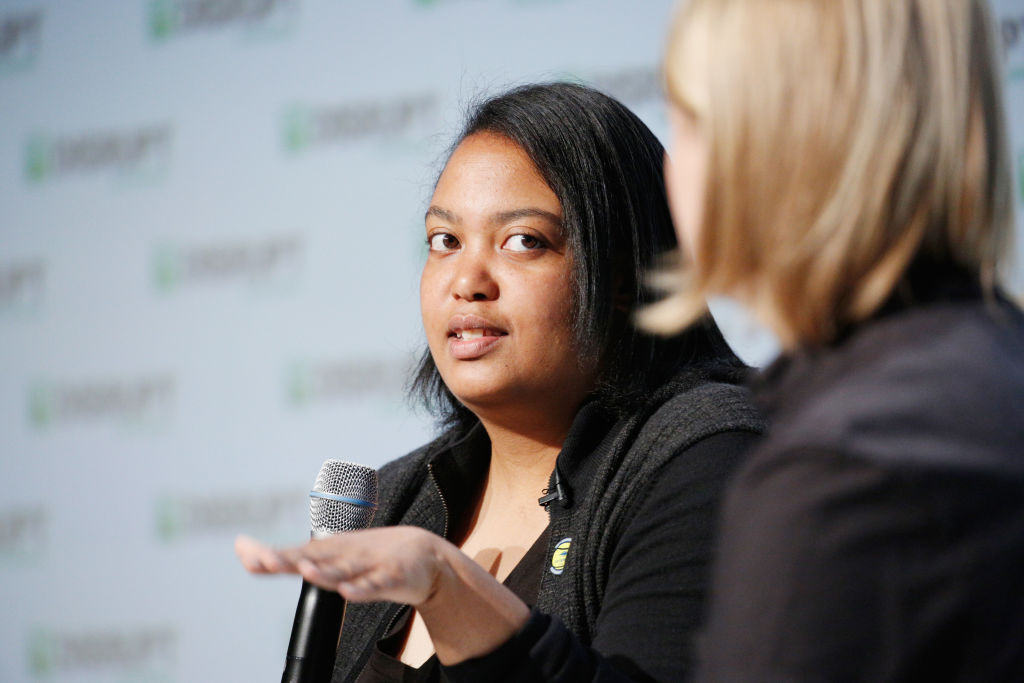
In an investor survey for Extra Crunch this week, Megan Rose Dickey checked in with eight Black investors about what they are investing in, in the middle of what feels like a new focus on making the tech industry more representative of the country and the world. Here’s how Arlan Hamilton of Backstage Capital responded when Megan asked what meaningful change might come from the recent heightened attention on the Black Lives Matter movement.

I happen to be on the more optimistic side of things. I’m not at a hundred percent optimistic, but I’m close to that. I think that there’s an undeniable unflinching resolve right now. I think that if we were to go back to status quo, I would be incredibly surprised. I guess I would not be shocked, unfortunately, but I would be surprised. It would give me pause about the effectiveness of any of the work that we do if this moment fizzles out and doesn’t create change. I do think that there is going to be a shift. I can already feel it. I know that more people who are representative of this country are going to be writing checks, whether through being hired, or taken through the ranks, or starting their own funds, and our own funds. I think there’s more and more capital that’s going to flow to underrepresented founders. That alone, I think, will be a huge shift.

Around TechCrunch

Extra Crunch support expands into Argentina, Brazil and Mexico

Five reasons to attend TC Early Stage online

Hear from James Alonso and Adam Zagaris how to draw up your first contracts at Early Stage

Hear how to manage your enterprise infrastructure from Sam Pullara at TechCrunch Early Stage

Kerry Washington is coming to Disrupt 2020

Amazon’s Alexa heads Toni Reid and Rohit Prasad are coming to Disrupt

Ade Ajao, Maryanna Saenko, Charles Hudson, Ulili Onovakpuri and Melissa Bradley are coming to Disrupt

Minted’s Mariam Naficy will join us at TechCrunch Early Stage

Across the week

TechCrunch

14 VCs discuss COVID-19 and London’s future as a tech hub

Societal upheaval during the COVID-19 pandemic underscores need for new AI data regulations

PC shipments rebound slightly following COVID-19-fueled decline

Here’s a list of tech companies that the SBA says took PPP money

Equity Monday: Uber-Postmates is announced, three funding rounds and narrative construction

Regulatory roadblocks are holding back Colombia’s tech and transportation industries

Extra Crunch

In pandemic era, entrepreneurs turn to SPACs, crowdfunding and direct listings

Four views: Is edtech changing how we learn?

VCs are cutting checks remotely, but deal volume could be slowing

GGV’s Jeff Richards: ‘There is a level of resiliency in Silicon Valley that we did not have 10 years ago’

Logistics are key as NYC startup prepares to reopen office

#EquityPod

From Alex:

Hello and welcome back to Equity, TechCrunch’s venture capital-focused podcast, where we unpack the numbers behind the headlines.

We wound up having more to talk about than we had time for but we packed as much as we could into 34 minutes. So, climb aboard with DannyNatasha and myself for another episode of Equity.

Before we get into topics, a reminder that if you are signing up for Extra Crunch and want to save some money, the code “equity” is your friend. Alright, let’s get into it:

Whew! Past all that we had some fun, and, hopefully, were of some use. Hugs and chat Monday!

Equity drops every Monday at 7:00 a.m. PT and Friday at 6:00 a.m. PT, so subscribe to us on Apple PodcastsOvercastSpotify and all the casts.

11 Jul 2020

Startups Weekly: The world is eating tech

Editor’s note: Get this free weekly recap of TechCrunch news that any startup can use by email every Saturday morning (7am PT). Subscribe here.

You could almost hear the internet cracking apart this week as international businesses pulled away from Hong Kong and the US considered a ban on TikTok. Software can no longer eat the entire world like it had attempted last decade. Startups across tech-focused industries face a new reality, where local markets and efforts are more protected and supported by national governments. Every company now has a smaller total addressable market, whether or not it succeeds in it.

Facebook, for example, appears to be getting an influx of creators who are worried about losing TikTok audiences, as Connie Loizos investigated this week. This might mean more users, engagement and ultimately revenue for many consumer startups, and any other companies that rely on paid marketing through Facebook’s valuable channels. But it means fewer platforms to diversify to, in case you don’t want to rely on Facebook so much for your business.

As trade wars look more and more like cold wars, it also means that Facebook itself will have a more limited audience than it once hoped to offer its own advertisers. After deciding to reject requests from Hong Kong-based Chinese law enforcement, it seems to be on the path to getting blocked in Hong Kong like it is on the mainland. But as with other tech companies, it doesn’t really have a choice — the Chinese government has pushed through legal changes in the city that allow it to arrest anyone in the world if it claims they are organizing against it. Compliance with China would bring on government intervention in the US and beyond, among other reasons why doing so is a non-starter. 

This also explains why TikTok itself already pulled out of Hong Kong, despite being owned by mainland China-based Bytedance. The company is still reeling from getting banned in India last week and this maneuver is trying to the subsidiary look more independent. Given that China’s own laws allow its government to access and control private companies, expect many to find that an empty gesture.

Startups should plan for things to get harder in general. See: the next item below.

(Photo by Alex Wong/Getty Images)

Student visas have become the next Trump immigration target

International students will not be allowed to stay enrolled at US universities that offer only remote classes this coming academic year, the Trump administration decided this past week. As Natasha Mascarenhas and Zack Whittaker explore, many universities are attempting a hybrid approach that tries to allow some in-person teaching without creating a community health problem.

Without this type of approach, many students could lose their visas. Here’s our resident immigration law expert, Sophie Alcorn, with more details on Extra Crunch:

International students have been allowed to take online classes during the spring and summer due to the COVID-19 crisis, but that will end this fall. The new order will force many international students at schools that are only offering remote online classes to find an “immigration plan B” or depart the U.S. before the fall term to avoid being deported.

At many top universities, international students make up more than 20% of the student body. According to NAFSA, international students contributed $41 billion to the U.S. economy and supported or created 458,000 jobs during the 2018-2019 academic year. Apparently, the current administration is continuing to “throw out the baby with the bathwater” when it comes to immigration.

Universities are scrambling as they struggle with this newfound untenable bind. Do they stay online only to keep their students safe and force their international students to leave their homes in this country? Or do they reopen to save their students from deportation, but put their communities’ health at risk?

For students, it means finding another school, scrambling to figure out a way to depart the States (when some home countries will not even allow them to return), or figuring out an “immigration plan B.”

Who knows how many startups will never exist because the right people didn’t happen to be at the right place at the right time together? What everyone does know is that remote-first is here to stay.

No Code goes global

A few tech trends seem unstoppable despite any geopolitics, and one seems to be the universal human goal of making enterprise software suck less. (Okay, nearly universal.) Alex Nichols and Jesse Wedler of CapitalG explain why now is the time for no code software and what the impact will bel, in a very popular article for Extra Crunch this week. Here’s their setup:

First, siloed cloud apps are sprawling out of control. As workflows span an increasing number of tools, they are arguably getting more manual. Business users have been forced to map workflows to the constraints of their software, but it should be the other way around. They need a way to combat this fragmentation with the power to build integrations, automations and applications that naturally align with their optimal workflows.

Second, architecturally, the ubiquity of cloud and APIs enable “modular” software that can be created, connected and deployed quickly at little cost composed of building blocks for specific functions (such as Stripe for payments or Plaid for data connectivity). Both third-party API services and legacy systems leveraging API gateways are dramatically simplifying connectivity. As a result, it’s easier than ever to build complex applications using pre-assembled building blocks. For example, a simple loan approval process could be built in minutes using third-party optical character recognition (a technology to convert images into structured data), connecting to credit bureaus and integrating with internal services all via APIs. This modularity of best-of-breed tools is a game changer for software productivity and a key enabler for no code.

Finally, business leaders are pushing CIOs to evolve their approach to software development to facilitate digital transformation. In prior generations, many CIOs believed that their businesses needed to develop and own the source code for all critical applications. Today, with IT teams severely understaffed and unable to keep up with business needs, CIOs are forced to find alternatives. Driven by the urgent business need and assuaged by the security and reliability of modern cloud architecture, more CIOs have begun considering no code alternatives, which allow source code to be built and hosted in proprietary platforms.

Photo: Jason Alden/Bloomberg

Palantir has finally filed to go public

It’s 16 years old, worth $26 billion and widely used by private and public entities of all types around the world, but this employer of thousands is counted as a startup tech unicorn, because, well, it was one of the pioneers of growing big, raising bigger, and staying private longer. Aileen Lee even mentioned Palantir as one of the 39 examples that helped inspire the “unicorn” term back in 2013. Now the secretive and sometimes controversial data technology provider is finally going to have its big liquidity event — and is filing confidentially to IPO, which means the finances are still staying pretty secret.

Alex Wilhelm went ahead and pieced together its funding history for Extra Crunch ahead of the action, and concluded that “Palantir seems like the Platonic ideal of a unicorn. It’s older than you’d think, has a history of being hyped, its valuation has stretched far beyond the point where companies used to go public, and it appears to be only recently growing into its valuation.”

It also appears to be one of the unicorns that has seen a lot of upside lately. It has been in the headlines recently for cutting big-data deals with governments for pandemic work, on top of a long-standing relationship with the US military and other arms of the government. As with Lemonade, Accolade and a range of other IPOing tech companies that we have covered in recent weeks, it is presumably in a positive business cycle and primed to take advantage of an already receptive market.

(Photo by Kimberly White/Getty Images for TechCrunch)

Meaningful change from BLM

In an investor survey for Extra Crunch this week, Megan Rose Dickey checked in with eight Black investors about what they are investing in, in the middle of what feels like a new focus on making the tech industry more representative of the country and the world. Here’s how Arlan Hamilton of Backstage Capital responded when Megan asked what meaningful change might come from the recent heightened attention on the Black Lives Matter movement.

I happen to be on the more optimistic side of things. I’m not at a hundred percent optimistic, but I’m close to that. I think that there’s an undeniable unflinching resolve right now. I think that if we were to go back to status quo, I would be incredibly surprised. I guess I would not be shocked, unfortunately, but I would be surprised. It would give me pause about the effectiveness of any of the work that we do if this moment fizzles out and doesn’t create change. I do think that there is going to be a shift. I can already feel it. I know that more people who are representative of this country are going to be writing checks, whether through being hired, or taken through the ranks, or starting their own funds, and our own funds. I think there’s more and more capital that’s going to flow to underrepresented founders. That alone, I think, will be a huge shift.

Around TechCrunch

Extra Crunch support expands into Argentina, Brazil and Mexico

Five reasons to attend TC Early Stage online

Hear from James Alonso and Adam Zagaris how to draw up your first contracts at Early Stage

Hear how to manage your enterprise infrastructure from Sam Pullara at TechCrunch Early Stage

Kerry Washington is coming to Disrupt 2020

Amazon’s Alexa heads Toni Reid and Rohit Prasad are coming to Disrupt

Ade Ajao, Maryanna Saenko, Charles Hudson, Ulili Onovakpuri and Melissa Bradley are coming to Disrupt

Minted’s Mariam Naficy will join us at TechCrunch Early Stage

Across the week

TechCrunch

14 VCs discuss COVID-19 and London’s future as a tech hub

Societal upheaval during the COVID-19 pandemic underscores need for new AI data regulations

PC shipments rebound slightly following COVID-19-fueled decline

Here’s a list of tech companies that the SBA says took PPP money

Equity Monday: Uber-Postmates is announced, three funding rounds and narrative construction

Regulatory roadblocks are holding back Colombia’s tech and transportation industries

Extra Crunch

In pandemic era, entrepreneurs turn to SPACs, crowdfunding and direct listings

Four views: Is edtech changing how we learn?

VCs are cutting checks remotely, but deal volume could be slowing

GGV’s Jeff Richards: ‘There is a level of resiliency in Silicon Valley that we did not have 10 years ago’

Logistics are key as NYC startup prepares to reopen office

#EquityPod

From Alex:

Hello and welcome back to Equity, TechCrunch’s venture capital-focused podcast, where we unpack the numbers behind the headlines.

We wound up having more to talk about than we had time for but we packed as much as we could into 34 minutes. So, climb aboard with DannyNatasha and myself for another episode of Equity.

Before we get into topics, a reminder that if you are signing up for Extra Crunch and want to save some money, the code “equity” is your friend. Alright, let’s get into it:

Whew! Past all that we had some fun, and, hopefully, were of some use. Hugs and chat Monday!

Equity drops every Monday at 7:00 a.m. PT and Friday at 6:00 a.m. PT, so subscribe to us on Apple PodcastsOvercastSpotify and all the casts.