Amazon is upgrading its Fire TV’s live TV experience through new integrations with several live TV streaming services, including Sling TV, YouTube TV, and Hulu + Live TV. Live content from these services will now appear within key areas with the Fire TV user interface, including the Fire TV’s Live tab and Channel Guide, making Fire TV feel even more like a cable TV replacement than before.
Already, Amazon Fire TV had offered integrations with nearly 20 other apps in a similar fashion, including live TV apps like Philo and Pluto TV, as well as its own Prime Video Channels.
Live content from these apps will be found within three main sections: the Live tab, the “On Now” rows and the multi-app Channel Guide.
Streaming live TV over the internet has become a more popular option for cord cutters over the years, as it offers a less expensive way to have a cable TV-like experience. Unfortunately, that gap has been closing in more recent months, as live TV users have been subjected to continual price increases as the services expanded their channel lineups.
However, many live TV customers remain because even with the increases, it can still be slightly less than cable and offers more flexibility — like working across platforms and not tied to a cable box.
This trend toward live content has also been seen on Fire TV, Amazon says.
The Live tab has become the second-most-visited destination on the Fire TV interface after the Home screen, due to its integrations of live content, the company noted. In addition, live TV streaming apps on Fire TV have seen the total time spent in app and active customers more than double, on average, since Fire TV added its live TV discovery integrations.
Image Credits: Amazon
“Fire TV is hugely popular among Philo fans. Since integrating with Amazon’s live streaming discovery features, the number of active Philo users is up nearly 2.5x on Fire TV,” said Philo CEO Andrew McCollum, whose TV streaming app was one of the earlier additions to Fire TV.
To use new integrations, you’ll first need to log into the streaming app you subscribe to with your current account information. You can then access the app’s live content across the Live Tab, which organizes live content in the familiar Netflix-like style of scrollable rows. Here, there are rows for things like “Live Sports” and “Live News,” plus content from your subscriptions’ channels.
From here, you can hop into the Channel Guide, which offers the more traditional grid guide, similar to cable TV.
This format is proving popular among live TV service subscribers.
On Monday, for example, Roku introduced its own Live TV Channel Guide, accessible via a new tile, which allows Roku users to browse the free live and linear content Roku offers in a similar way.
Amazon’s Fire TV platform, however, has the perk of Alexa integration.
That means users can ask Alexa to open the Channel Guide or even change the channel, by saying “Alexa, tune to [name of channel],” for example. This works via built-in Alexa on the Fire TV Cube, via a paired Echo device, or by using the Fire TV’s Alexa Voice Remote, depending on your setup.
“We’re excited to welcome Sling TV, Hulu + Live TV, and YouTube TV into our integrated suite of Live TV discovery features,” said Sandeep Gupta, VP of Fire TV, in a statement. “We believe the future of Connected TV is one that brings live content forward, simplifies the streaming and OTT landscape, and enables customers to discover the programs they want to watch with ease,” he added.
Sling TV’s integration began rolling out earlier this year, Amazon clarifies, but is being officially announced today.
YouTube TV will be available starting today, and Hulu + Live TV will become available in the coming weeks.
Scott Salandy-Defour used to make frequent stops at a battery manufacturer in southern China for his energy startup based in Hong Kong. The appeal of Hong Kong, he said, is its adjacency to the plentiful electronics suppliers in the Pearl River Delta, as well as the city’s amenities for foreign entrepreneurs, be it its well-established financial and legal system or a culture blending the East and West.
“It’s got the best of both worlds,” Salandy-Defour told TechCrunch. “But it’s not going to be the same.”
On July 1, Hong Kong’s sweeping new national security law came into effect, spelling the most profound change to the city’s way of life since the former British colony returned to Chinese rule in 1997.
The legislation will see Beijing set up an official security apparatus in the city to suppress what the authority defines as subversion, terrorism, separatism and collusion with foreign forces. Non-permanent residents can be expelled and companies can face fines if suspected of contravening the law.
Though the law doesn’t target the technology sector per se, speculation is rife about how it may affect entrepreneurs and larger companies as they go about their day-to-day operations and long-term plans. We talked to a handful of individuals in an attempt to parse out the ramifications of the law on internet freedom, data control, entrepreneurship, venture capital and other aspects pertaining to the tech industry. Several of our sources requested to have their names withheld in order to speak freely, an example of the law’s effect in action.
Part of the concern arises from the vagueness of the legislation. “We do not know anything concrete,” a Shanghai-based lawyer specializing in cross-border corporate cases told TechCrunch. “The national security law passed in Macau 11 years ago, but I heard there have been no enforcement cases. Hong Kong might be different. Police already prepared and carried banners warning against speech or gathering in violation of the new law.”
The bottom line is that the law impacts everyone in Hong Kong. “[It] will have a chilling effect as people try to understand its implementation,” reckoned Jeremy Daum, a senior research fellow at the Yale Law School Paul Tsai China Center.
Internet freedom
An outstanding concern is that the new rules could curtail internet freedom in the freewheeling city. Specifically, Article 9 stipulates that the Hong Kong government “shall employ necessary measures to strengthen publicity, guidance, oversight and management in schools, social organizations, media, networks and other matters related to national security,” with ‘networks’ here referring to the internet.
There are already signs of self-censorship. Some residents have started to delete their Twitter accounts and messages “out of fear of the national security law,” a Hong Kong-based media professor pointed out to TechCrunch.
While the law doesn’t give rise to “a Great Firewall situation overnight, it will be insidious nonetheless,” said a Hong Kong-based digital rights expert. “Platforms, publishers, and content hosts are likely to self-censor broadly given the vagueness of the law, and even then we’ll likely see more takedown requests and the like from the government.”
Shortly after the law took effect, an app called Eat With You, which labels local eateries supportive of the Hong Kong protesters, terminated its service. A source close to the app told us that the takedown was voluntary. Though the developer didn’t say whether it made the decision to preempt internet crackdown, it has “put other plans on hold.”
AppleCensorship.com told TechCrunch it’s monitoring potential removal of apps by Apple in Hong Kong, where the giant commands a 44% market share in the mobile handset market. The site is a project created by researchers at GreatFire.org, an organization that monitors internet censorship in China, to track what apps are unavailable in various App Stores.
A week after the law’s enactment, tech giants have come to reckon with the city’s new circumstances. Facebook and Twitter said they have suspended data requests from the Hong Kong authority. TikTok, on the other hand, announced it would exit Hong Kong. Reddit, which received an outsize investment from Tencent, provided a more evasive response: “All legal requests from Hong Kong are bound by careful review for validity and with a special attention to human rights implications.”
Residents in the city of seven million people have been bracing for censorship in recent weeks. Demand for virtual private networks (VPNs), which let users access otherwise banned apps, surged in Hong Kong after Beijing passed the national security law in late May.
“But a VPN is not a magic bullet,” the media professor argued. The tool has proven to be a short-lived solution. Back in 2017, Apple removed hundreds of VPNs from its Chinese App Store, stating it did so to comply with Chinese regulations.
Others who are more attuned to the Chinese internet are less wary. Hugo Cheuk, co-founder and chief operating officer of viAct.ai, a Hong Kong-based startup using computer vision to manage construction safety, said he already uses a wide range of apps, both Chinese and overseas ones, and can easily switch to alternatives.
“Let’s say if for whatever reasons WhatsApp cannot be used in Hong Kong one day, you still have other options like Messenger, Line, Dingtalk, WeChat,” he said. “Even apps like Slack or Snapchat weren’t popular just a few years ago, but we still communicate well back then.”
Data control
Some worry that the enforcement of the security law could lead to requests of user data by Beijing, making Hong Kong a less attractive place for tech companies resistant to China’s data review policies. As Daum noted, several provisions directly allow for the search of electronic devices and request service providers to delete information.
According to Article 43:
“When handling cases of crimes endangering national security, the Hong Kong Special Administrative Region government police department for the preservation of national security may employ the various measures that the extant laws of the Hong Kong Special Administrative Region allow the police and other law enforcement departments to take when investigating serious crimes, and may employ the following measures:
(1) search premises, vehicles, boats, aircraft and other relevant places and electronic devices that may contain evidence of an offence.
…
(4) Requiring persons who published information or the related service providers to remove information or provide assistance.”
“When setting up their APAC headquarters, foreign headquarters may no longer choose Hong Kong because the law overrides the original legal system,” partner of a Hong Kong venture capital firm told TechCrunch.
While Hong Kong is primarily known as a free trade and financial center, many international tech firms have set up offices there as a conduit into the APAC market.
Facebook and Twitter, whose main services are unavailable to mainland users, employ marketing staff in Hong Kong to court Chinese exporters with overseas advertising needs. Unicorns like delivery service Lalamove, logistics firm Gogovan and travel platform Klook, put their headquarters in Hong Kong for its strategic geographical location to attract customers across Asia.
“As a historic trading center, with ease of currency exchange, data and logistic flows, Hong Kong has played a key role in cross-border e-commerce. Many start-up tech companies service clients across Southeast Asia from a base in Hong Kong,” said Napoleon Biggs, a digital marketing consultant with over two decade’s experience in the region.
Though the new regulation may hit these sectors in terms of requests for government access to data, it will not affect their businesses otherwise, he reasoned.
Being in a key geographic location, as an internet hub for submarine cables and satellite dishes, Hong Kong also acts a top data center destination for multinationals, Biggs observed. The question now, he said, is how multinationals will perceive this new law and how it will affect their daily operations, if at all.
Startup hopes
Many entrepreneurs see Hong Kong as a springboard to its nearby resources rather than their main market. “Hong Kong investors are super risk-averse. The risk of being an entrepreneur doesn’t have the same level of respect here as in the U.S.,” reckoned Salandy-Defour, whose company Liquidstar deploys smart batteries primarily in Africa.
“But there are opportunities to network quickly,” he added. “We are also so close to Shenzhen and can speak to people [in tech] there who know what they are doing.”
Some Hong Kong entrepreneurs are hopeful that the law could accelerate the Greater Bay Area (GBA) initiative, which aims to stitch together Hong Kong, Macau and other cities around the Pearl River Delta, including economic powerhouses like Shenzhen and Guangzhou.
With its own set of laws and economic system in line with Western practices, Hong Kong has long been a top destination for multinational financial services. The special status was, however, not beneficial for technology companies targeting the Chinese market.
“If we want to do business in China, the first concern is the adaptation of different laws of China. Now, with the newly established national security law plus the GBA initiatives, more resources will be allocated to the 9+2 cities in the market and business perspectives, so we can more easily access the China market,” suggested Cheuk.
The integration can extend the potential reach of Hong Kong companies from seven million customers to 70 million in the GBA region, the entrepreneur said. “It’s good for startups trying to attract investment.”
His optimism is echoed by a Hong Kong-based investor for a Chinese venture capital firm. “After the law came into effect, there may be fewer technological exchanges between Hong Kong and the U.S. or Europe, but the GBA is more important to Hong Kong’s future development.”
For Hong Kong-based entrepreneurs who uphold freedom of information, the law may not bode well. Salandy-Defour, an American citizen, said he’s mulling a move to Singapore or Australia. In the long term, he plans to diversify his supply chain in other countries like Japan or Germany for sustainable batteries.
Relocation is less realistic for entrepreneurs who generate most of their revenues from the mainland. Several of them voiced concerns about the law’s adverse effect on freedom of speech, but have declined our interview requests due to concerns that their comment may violate the new law.
Decoupling spillover
The divide between Washington and Beijing is spilling into Hong Kong as the security law is seen as undermining the territory’s autonomy. In response, the U.S. declared Hong Kong is no longer autonomous from China and suspended the export of sensitive technologies to the city.
The impact of the split was evident. Shortly after China passed the national security for Hong Kong in late May, Hong Kong-based staff of China Mobile lost access to a piece of IBM data software, an employee at the Chinese telecom giant told TechCrunch. The staff has since switched to a Huawei substitute called TaiShan, which the source said comes with a user interface “very similar” to the IBM product.
China Mobile and IBM have not responded to our request for comment.
When it comes to picking promising local startups, the Hong Kong venture partner said he will avoid industries deemed ‘sensitive’ or susceptible to sanctions by the U.S. He’s also advised portfolio companies with an international plan to diversify their supply chain from China to nearby regions like Southeast Asia. Limited partners from the U.S. may start to shy away from Hong Kong VC funds, he speculated, as the city gets caught in the crossfire of trade tensions.
It’s notable that one of the most prominent VCs in Hong Kong, Horizons Ventures, which backs a lot of startups globally and is led by one of Asia’s richest men Li Ka-shing, has long kept a low profile. It continues to do now, perhaps very wisely. Some of the big names in its expansive portfolio include Spotify, Slack, Zoom, Impossible Foods and Skype. The firm did not respond to requests for comment for this article.
An unintended implication of Hong Kong’s loss of its special status is the potential inconvenience to mainland companies. It’s a common practice for Chinese companies to maintain a Hong Kong entity as a gateway to purchase U.S. technologies, tapping the region’s favorable trading terms, the venture partner said. Many Chinese exporters also take advantage of Hong Kong’s well-developed financial system and currency stability to handle international fund transfers.
“If that expediency is gone, Hong Kong is just another Chinese city,” said the investor.
Scott Salandy-Defour used to make frequent stops at a battery manufacturer in southern China for his energy startup based in Hong Kong. The appeal of Hong Kong, he said, is its adjacency to the plentiful electronics suppliers in the Pearl River Delta, as well as the city’s amenities for foreign entrepreneurs, be it its well-established financial and legal system or a culture blending the East and West.
“It’s got the best of both worlds,” Salandy-Defour told TechCrunch. “But it’s not going to be the same.”
On July 1, Hong Kong’s sweeping new national security law came into effect, spelling the most profound change to the city’s way of life since the former British colony returned to Chinese rule in 1997.
The legislation will see Beijing set up an official security apparatus in the city to suppress what the authority defines as subversion, terrorism, separatism and collusion with foreign forces. Non-permanent residents can be expelled and companies can face fines if suspected of contravening the law.
Though the law doesn’t target the technology sector per se, speculation is rife about how it may affect entrepreneurs and larger companies as they go about their day-to-day operations and long-term plans. We talked to a handful of individuals in an attempt to parse out the ramifications of the law on internet freedom, data control, entrepreneurship, venture capital and other aspects pertaining to the tech industry. Several of our sources requested to have their names withheld in order to speak freely, an example of the law’s effect in action.
Part of the concern arises from the vagueness of the legislation. “We do not know anything concrete,” a Shanghai-based lawyer specializing in cross-border corporate cases told TechCrunch. “The national security law passed in Macau 11 years ago, but I heard there have been no enforcement cases. Hong Kong might be different. Police already prepared and carried banners warning against speech or gathering in violation of the new law.”
The bottom line is that the law impacts everyone in Hong Kong. “[It] will have a chilling effect as people try to understand its implementation,” reckoned Jeremy Daum, a senior research fellow at the Yale Law School Paul Tsai China Center.
Internet freedom
An outstanding concern is that the new rules could curtail internet freedom in the freewheeling city. Specifically, Article 9 stipulates that the Hong Kong government “shall employ necessary measures to strengthen publicity, guidance, oversight and management in schools, social organizations, media, networks and other matters related to national security,” with ‘networks’ here referring to the internet.
There are already signs of self-censorship. Some residents have started to delete their Twitter accounts and messages “out of fear of the national security law,” a Hong Kong-based media professor pointed out to TechCrunch.
While the law doesn’t give rise to “a Great Firewall situation overnight, it will be insidious nonetheless,” said a Hong Kong-based digital rights expert. “Platforms, publishers, and content hosts are likely to self-censor broadly given the vagueness of the law, and even then we’ll likely see more takedown requests and the like from the government.”
Shortly after the law took effect, an app called Eat With You, which labels local eateries supportive of the Hong Kong protesters, terminated its service. A source close to the app told us that the takedown was voluntary. Though the developer didn’t say whether it made the decision to preempt internet crackdown, it has “put other plans on hold.”
AppleCensorship.com told TechCrunch it’s monitoring potential removal of apps by Apple in Hong Kong, where the giant commands a 44% market share in the mobile handset market. The site is a project created by researchers at GreatFire.org, an organization that monitors internet censorship in China, to track what apps are unavailable in various App Stores.
A week after the law’s enactment, tech giants have come to reckon with the city’s new circumstances. Facebook and Twitter said they have suspended data requests from the Hong Kong authority. TikTok, on the other hand, announced it would exit Hong Kong. Reddit, which received an outsize investment from Tencent, provided a more evasive response: “All legal requests from Hong Kong are bound by careful review for validity and with a special attention to human rights implications.”
Residents in the city of seven million people have been bracing for censorship in recent weeks. Demand for virtual private networks (VPNs), which let users access otherwise banned apps, surged in Hong Kong after Beijing passed the national security law in late May.
“But a VPN is not a magic bullet,” the media professor argued. The tool has proven to be a short-lived solution. Back in 2017, Apple removed hundreds of VPNs from its Chinese App Store, stating it did so to comply with Chinese regulations.
Others who are more attuned to the Chinese internet are less wary. Hugo Cheuk, co-founder and chief operating officer of viAct.ai, a Hong Kong-based startup using computer vision to manage construction safety, said he already uses a wide range of apps, both Chinese and overseas ones, and can easily switch to alternatives.
“Let’s say if for whatever reasons WhatsApp cannot be used in Hong Kong one day, you still have other options like Messenger, Line, Dingtalk, WeChat,” he said. “Even apps like Slack or Snapchat weren’t popular just a few years ago, but we still communicate well back then.”
Data control
Some worry that the enforcement of the security law could lead to requests of user data by Beijing, making Hong Kong a less attractive place for tech companies resistant to China’s data review policies. As Daum noted, several provisions directly allow for the search of electronic devices and request service providers to delete information.
According to Article 43:
“When handling cases of crimes endangering national security, the Hong Kong Special Administrative Region government police department for the preservation of national security may employ the various measures that the extant laws of the Hong Kong Special Administrative Region allow the police and other law enforcement departments to take when investigating serious crimes, and may employ the following measures:
(1) search premises, vehicles, boats, aircraft and other relevant places and electronic devices that may contain evidence of an offence.
…
(4) Requiring persons who published information or the related service providers to remove information or provide assistance.”
“When setting up their APAC headquarters, foreign headquarters may no longer choose Hong Kong because the law overrides the original legal system,” partner of a Hong Kong venture capital firm told TechCrunch.
While Hong Kong is primarily known as a free trade and financial center, many international tech firms have set up offices there as a conduit into the APAC market.
Facebook and Twitter, whose main services are unavailable to mainland users, employ marketing staff in Hong Kong to court Chinese exporters with overseas advertising needs. Unicorns like delivery service Lalamove, logistics firm Gogovan and travel platform Klook, put their headquarters in Hong Kong for its strategic geographical location to attract customers across Asia.
“As a historic trading center, with ease of currency exchange, data and logistic flows, Hong Kong has played a key role in cross-border e-commerce. Many start-up tech companies service clients across Southeast Asia from a base in Hong Kong,” said Napoleon Biggs, a digital marketing consultant with over two decade’s experience in the region.
Though the new regulation may hit these sectors in terms of requests for government access to data, it will not affect their businesses otherwise, he reasoned.
Being in a key geographic location, as an internet hub for submarine cables and satellite dishes, Hong Kong also acts a top data center destination for multinationals, Biggs observed. The question now, he said, is how multinationals will perceive this new law and how it will affect their daily operations, if at all.
Startup hopes
Many entrepreneurs see Hong Kong as a springboard to its nearby resources rather than their main market. “Hong Kong investors are super risk-averse. The risk of being an entrepreneur doesn’t have the same level of respect here as in the U.S.,” reckoned Salandy-Defour, whose company Liquidstar deploys smart batteries primarily in Africa.
“But there are opportunities to network quickly,” he added. “We are also so close to Shenzhen and can speak to people [in tech] there who know what they are doing.”
Some Hong Kong entrepreneurs are hopeful that the law could accelerate the Greater Bay Area (GBA) initiative, which aims to stitch together Hong Kong, Macau and other cities around the Pearl River Delta, including economic powerhouses like Shenzhen and Guangzhou.
With its own set of laws and economic system in line with Western practices, Hong Kong has long been a top destination for multinational financial services. The special status was, however, not beneficial for technology companies targeting the Chinese market.
“If we want to do business in China, the first concern is the adaptation of different laws of China. Now, with the newly established national security law plus the GBA initiatives, more resources will be allocated to the 9+2 cities in the market and business perspectives, so we can more easily access the China market,” suggested Cheuk.
The integration can extend the potential reach of Hong Kong companies from seven million customers to 70 million in the GBA region, the entrepreneur said. “It’s good for startups trying to attract investment.”
His optimism is echoed by a Hong Kong-based investor for a Chinese venture capital firm. “After the law came into effect, there may be fewer technological exchanges between Hong Kong and the U.S. or Europe, but the GBA is more important to Hong Kong’s future development.”
For Hong Kong-based entrepreneurs who uphold freedom of information, the law may not bode well. Salandy-Defour, an American citizen, said he’s mulling a move to Singapore or Australia. In the long term, he plans to diversify his supply chain in other countries like Japan or Germany for sustainable batteries.
Relocation is less realistic for entrepreneurs who generate most of their revenues from the mainland. Several of them voiced concerns about the law’s adverse effect on freedom of speech, but have declined our interview requests due to concerns that their comment may violate the new law.
Decoupling spillover
The divide between Washington and Beijing is spilling into Hong Kong as the security law is seen as undermining the territory’s autonomy. In response, the U.S. declared Hong Kong is no longer autonomous from China and suspended the export of sensitive technologies to the city.
The impact of the split was evident. Shortly after China passed the national security for Hong Kong in late May, Hong Kong-based staff of China Mobile lost access to a piece of IBM data software, an employee at the Chinese telecom giant told TechCrunch. The staff has since switched to a Huawei substitute called TaiShan, which the source said comes with a user interface “very similar” to the IBM product.
China Mobile and IBM have not responded to our request for comment.
When it comes to picking promising local startups, the Hong Kong venture partner said he will avoid industries deemed ‘sensitive’ or susceptible to sanctions by the U.S. He’s also advised portfolio companies with an international plan to diversify their supply chain from China to nearby regions like Southeast Asia. Limited partners from the U.S. may start to shy away from Hong Kong VC funds, he speculated, as the city gets caught in the crossfire of trade tensions.
It’s notable that one of the most prominent VCs in Hong Kong, Horizons Ventures, which backs a lot of startups globally and is led by one of Asia’s richest men Li Ka-shing, has long kept a low profile. It continues to do now, perhaps very wisely. Some of the big names in its expansive portfolio include Spotify, Slack, Zoom, Impossible Foods and Skype. The firm did not respond to requests for comment for this article.
An unintended implication of Hong Kong’s loss of its special status is the potential inconvenience to mainland companies. It’s a common practice for Chinese companies to maintain a Hong Kong entity as a gateway to purchase U.S. technologies, tapping the region’s favorable trading terms, the venture partner said. Many Chinese exporters also take advantage of Hong Kong’s well-developed financial system and currency stability to handle international fund transfers.
“If that expediency is gone, Hong Kong is just another Chinese city,” said the investor.
The daily updates on COVID-19 outbreaks, tragic stories of related fatalities, and our narrowed scope of life due to lockdown have all put the concept of mortality — and for some the sad business of actually dealing with a death — squarely into focus for many people. Today, a startup that’s building out a suite of services related to that is announcing a round of funding on the back of a boost of growth in business.
Farewill, a UK startup that provides a platform for people write online wills, organise probate services (such as sorting out death duties and taxes on a person’s property) and order cremations, has raised £20 million ($25 million) in funding — money that it hopes will not only help the company grow its business but also to help in the process of coping with our own deaths and those of our loved ones.
“We want to help by destigmatising death,” said Farewill CEO Dan Garrett in an interview about the complexity of the proposition. “We all have to face death. It lives inside everyone. But for most of us, we are psychologically hardwired not to think about it, and as a process people have been largely at the behest of an industry that doesn’t think about its customers.”
The name is, as you may have guessed, a play on farewell. “Think of the pun, and you can start the company,” Garrett said with the hint of wryness in his voice that I’m not sure you can avoid at the moment, especially given the subject.
The round is being led by Highland Europe, with Keen Ventures, Rich Pierson of Headspace, Broadhaven Ventures, Venture Founders and previous investors Augmentum Fintech, Taavet Hinrikus of TransferWise and Kindred Capital also participating. It’s being described as a venture round — a Series A of just under $10 million was closed in January 2019 — and brings the total raised by Farewill to £30 million.
Farewill is currently only live in the UK but longer term has plans to expand to more. In its home market, Garrett (who co-founded the company with university friend Dan Rogers, who is the CTO and CPO) says that in the five years that Farewill has been operational, it’s become the biggest will writer in the country in what is a quite fragmented market: the startup accounts for one out of every 10 wills written, or a 10% market share.
The cremation funeral and probate services are more recent launches from December 2019. But even so, given the current state of play with lockdown, social distancing and sadly the rise in actual deaths, they too have seen a lot of activity. Garrett said that Farewill’s cremation service, where the order for cremation and other details are all carried out online and costs on average one-fifth of the typical funeral — the idea being that families can then choose how to memorialise after that process, bypassing that more traditional funeral option — is now the third/fourth-biggest cremation provider in the country. It’s not all about the last few months, however: overall growth for the startup, he added, was 800% last year (before COVID-19) on a revenue basis.
Death by design
Just as death is not an easy topic for most people, it’s a complicated one to pinpoint as a target industry for a startup to “disrupt.” Farewill’s origin story, in that context, is an interesting one.
Garrett — who studied engineering at Oxford as an undergraduate — said the the idea came to him while doing postgraduate work on a joint degree between Imperial College and the Royal College of Art on design and innovation.
He came into the degree with a lot of big ideas, inspired by companies like Airbnb. “There is just so much potential for design-led companies,” he said of his thinking at the time.
One of the remits that the course cohort was given, he said, was to think about the broader concept of aging and services to address that. As part of the course, he travelled to Japan — which has its own specific reverence for ageing and the death process — and based himself at an old people’s home in Tokyo for six months along with “a team of enthnographers and anthropologists.”
He came out of that with an insight he didn’t expect, he recalled. “I felt that at the end of my six months there, I’d failed in my role as a designer,” he said. “All we focused was on the superficiality of ageing: how can we make better cutlery, or beds or seating that helped them move around? It was all about mobility and the physical aspects. But why we didn’t get close to talking about was that most of these people were facing their mortality. And in care homes, you don’t have friends or family around.” In other words, physical details and making life more manageable or enjoyable are fine, but Garrett didn’t feel that they got to the heart of the matter.
“To my mind, if you’re a designer, your responsibility is to get to the bottom of whatever the issue is,” he said. His dissertation, about dementia care, raised questions not about cutlery per se but person-centered approaches. “So much of it is about physical amelioration, not psychological aspects.”
So when he returned to the UK, he set to work trying to understand “the death industry.” He spent two months doing what he described as “mystery shopping”, regularly visiting funeral directors, and saying he was coming to discuss a death (a hypothetical one, not a real one) to understand what process people went through when they walked through the door for a real funeral. “I made sure I didn’t waste too much of their time,” he said.
He then also got a qualification in will writing and started offering services to his friends (free) who needed help to go through the probate process — which involves sorting out death duties, organising personal effects and the estate and so on. He — and Farewill — have also tried to embody a transparent and ethical approach in the work throughout, which has also included making it easier to designate pledged legacy income in wills (that is donations to causes). The aim is to reach £1 billion in pledged legacy income by 2023, with over £200 million raised so far and the numbers accelerating.
All that hands-on experience was important, he said, to get to grips with what he wanted to build. “I may have three masters degrees, but I am terrible at learning without actually doing something,” he said.
One big conclusion Garrett found was that not only was the death industry large and complicated, not least because of the subject matter, but because it had no technical innovation at all around it.
“There is this profound human aversion to dealing with death, and that is a brilliant design challenge,” he said.
Indeed, like it or not, death is always around us, and perhaps particularly right now. In the US — itself home to a number of startups focusing on death-related services — will writing companies have seen huge spikes in their business in the last several months. And even with the economic slowdown much of the globe is now seeing as a result of COVID-19, death care services (which don’t include will writing but everything after death), is projected to be a $102 billion industry this year.
It’s numbers like that, and Farewill’s execution in what it is doing, that has attracted investors.
“How about entirely removing the administrative pain for those grieving for their loved ones? How about providing an affordable, effortless and considerate service? That’s what the Farewill team is doing – with an extraordinary blend of compassion and tech-fueled efficiency,” said Stan Laurent, Partner at Highland Europe in a statement. “For too long, the wills and funeral industry has been largely geared towards profit over purpose. Since our first meeting with Dan, we knew that Farewill had the ingredients to radically disrupt the industry. We’re excited to back them as they broaden their ambition.”
“Farewill has made phenomenal progress since our initial investment 18 months ago,” added Tim Levene, CEO of Augmentum Fintech, in a statement. “They have grown by 10x and launched a suite of successful new products. This additional capital will provide further opportunity for the company to innovate an archaic industry, and become the leading digital platform in death services.”
(Farewill also recently won a Europa award for its contribution to social innovation.)
LeanIX, the enterprise architecture software company founded out of Bonn in Germany, has closed $80 million in Series D funding. The round is led by new investor Goldman Sachs Growth. Previous investors Insight Partners and DTCP also followed on.
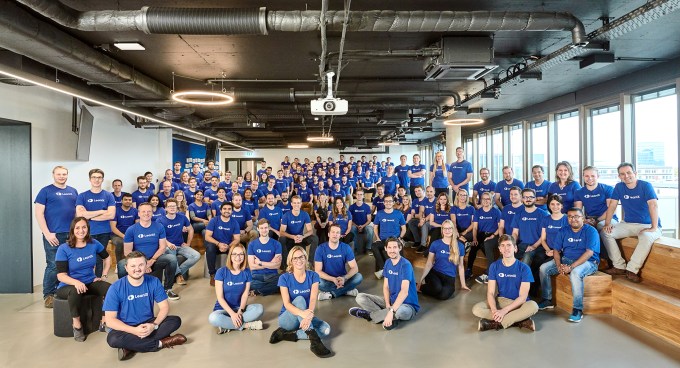
The Series D brings LeanIX’s total funding to over $120 million. The company says it will use the investment to continue international growth and to further develop its complementary solutions for cloud governance. In the last 12 months, LeanIX has opened new offices in Hyderabad (India), Munich (Germany) and Utrecht (Netherlands), and now has 230 employees worldwide (up from 80 when we last covered the company).
Founded in 2012, LeanIX operates in the enterprise architecture space and its SaaS might well be described as a “Google Maps for IT architectures”. The software lets enterprises map out all of the legacy software or modern SaaS that the organisation is run on. This includes creating meta data on things like what business process it is used for or capable of supporting, what tech powers it, which teams are using or have access to it, as well as how the different architecture fits together.
The idea is that enterprises not only have a better handle on all of the software from different vendors they are buying in, including how that differs or might be better utilised across distributed teams, but can also act in a more nimble way in terms of how they adopt new solutions or decommission legacy ones.
“Many well-known enterprises have successfully restarted their EA initiative with LeanIX,” says André Christ, LeanIX CEO and co-founder (pictured). “Due to its high usability and seamless integrations with other data sources, fast-growing businesses like Atlassian, Dropbox, and Mimecast have also kick-started their EA practices”.
Image Credits: LeanIX
To that end, LeanIX says it is currently working with 300 international customers and achieved 100% revenue growth in 2019. Specifically, 39% of total sales are generated in the U.S. market, and 57% in its home market of Europe.
Comments Christian Resch, Managing Director Goldman Sachs Growth, in a statement: “LeanIX is a thought leader in Enterprise Architecture. We were impressed by its strong revenue growth, the positive customer feedback and the company’s visionary concept: LeanIX develops software solutions to reduce complexity in IT application landscapes. Importantly, LeanIX’s software helps companies with their transition to, and maintenance of, both the cloud and modern microservices architecture”.
Alexander Lippert, Vice President at Goldman Sachs Growth, will join LeanIX’s board of directors.
As scores of startups look to cash in on the content void that ban on TikTok and other Chinese apps has created in India, a big challenger is ready to try its own hand.
Instagram said on Wednesday it is rolling out Reels — a feature that allows users to create short-form videos set to music or other audio — to a “broad” user base in India.
Video is already a popular way how many Indians engage on Instagram. “Videos make up over a third of all posts in India,” said Ajit Mohan, the head of Facebook India, in a call with reporters Wednesday.
So a broad test of Reels, which is also currently being tested in Brazil, France, and Germany, in India was only natural, he said, dismissing the characterization that the new feature’s ability had anything to do with a recent New Delhi order.
India banned 59 apps and services developed by Chinese firms citing privacy and security concerns last week. Among the apps that have been blocked in the country includes TikTok, ByteDance’s app that has offered a similar functionality as Reels for years.
TikTok identified India as its biggest market outside of China. Late last year, TikTok said it had amassed over 200 million users in the country, and the firm was looking to expand that figure to at least 300 million this year.
In the event of TikTok’s absence, a number of startups including Twitter-backed Sharechat, Chingari, and Mitro have ramped up their efforts and have claimed to court tens of millions of users. Sharechat said it had doubled its daily active users in a matter of days to more than 25 million.
Gaana, a music streaming service owned by Indian conglomerate Times Internet, rolled out HotShots to showcase user generated videos. Gaana had more than 150 million monthly active users as of earlier this year.
But Instagram, which has already attracted tens of thousands of influencers in India, is perhaps best positioned to take on TikTok in the world’s second largest internet market. Instagram had about 165 million monthly active users last month, up from 110 million in June last year, according to mobile insights firm App Annie, data of which an industry executive shared with TechCrunch. Mohan declined to comment on Instagram’s user base in India.
Black Lives Matter may be the largest movement in U.S. history, according to four different polls cited recently by the New York Times that suggest anywhere from 15 million to 26 million people in the U.S. have participated in demonstrations over the death of George Floyd and others since Floyd’s death in late May.
Blavity, a six-year-old, L.A.-based media company that’s focused on Black culture, could hardly be better positioned to help outraged Americans better understand what’s really been going on. Blavity founder Morgan DeBaun says the outfit receives at least a handful of videos each week that feature egregious acts against Black Americans, and the same has been true since DeBaun, working at the time at Intuit, founded the company in 2014 after unarmed, 18-year-old Michael Brown was gunned down by a police office in her native Missouri.
Blavity tells the stories that the mainstream media has largely been missing, but that’s only part of the story. The company has also become a go-to destination for a growing number of Black millennials interested in fresh takes on culture and politics; in Black Hollywood and travel (via two other properties it runs); and in its sizable networking events, one of which attracted 10,000 people last year.
Last week, we talked with DeBaun about Blavity — which has raised a comparatively conservative $11 million to date, including from GV, Comcast Ventures, and Plexo Capital — to learn more about how the company seizes this moment, and whether investors see the opportunity. Our chat has been edited for length and clarity (you can hear the full discussion here).
TC: You started Blavity in part to address a need you were feeling to connect with others after Michael Brown’s death. What were you reading at the time?
MD: The unfortunate answer is I wasn’t reading anything. I hadn’t really felt the need to stay connected to local or regional or Black issues until I moved out of my community and found myself wondering [from California], what is going on.
Historically in the Black community, we’ve had our own networks and platforms and brands: the African American newspapers in various cities, Essence, Jet, Ebony, and more recently, The Root. [But] a significant amount of media publications are still focused on entertainment and Hollywood and not necessarily on news. And so there was a huge gap of information that I felt wanting to understand.
This was before Twitter really became a source of information and truth for so many people, so there was a gap of information from what I saw happening on the ground in St. Louis and in text messages and as part of an email list with friends who were on the ground, and what I saw in the mainstream media. And to me, that was a huge miss, because we needed to be connected at that point more than ever so we could help impact change.
TC: There’s a lot of social injustice covered by Blavity. Two of the most popular stories on the site as we speak are about Sacramento police officer who placed a plastic bag on a 12-year-old’s head, and a cop who was arrested and charged after tasing a pregnant woman on her stomach. Are these stories central to making Blavity a resource to its readers?
MD: We tend to be a reflection of the pulse of the reality and the Black experience, and we do share stories and news that people might not find other places. I get the question more recently about: Does this time feel different? Are we covering different things? And unfortunately, the answer is that we’ve been covering these stories weekly since Michael Brown happened. It’s been a critical part of our publication and ethos to ensure that we’re sharing the stories of our community and bringing light to the injustices that are happening.
We also share joy and happiness and celebrations and moments of great accomplishments and local stories of heroes. But certainly right now, we’re making sure that we’re doing our diligence and covering the stories that are very important for this moment in time.
TC: You recently told Forbes that advertisers and marketers do not want to spend money next to Black death and violence. You have to cover these stories because it’s core to what you do, but it’s a double-edged sword for you, it sounds like.
MD: Blavity as an organization has five different brands. So we have a diversified revenue stream where we don’t just rely on display advertising against our news business, because if we did, we would wind up very much similar to what we’ve seen happen [to other struggling media companies]. There was a time when our Facebook page was even blocked because [stories] have gotten flagged as being too violent. And it’s like, well yeah, violence against Black bodies is real. It’s the truth; it’s real news.
So we do have this weird kind of balance that we strike in terms of really making sure that we’re telling the truth and that we are pushing back against our clients, our advertisers, and even Facebook to ensure that Blavity can continue to distribute content. But overall, the news business isn’t our highest revenue-generating business. It’s our conference business and our display ads business across all of our brands, some of which are lifestyle brands.
We also have an ad network that we don’t advertise publicly much, but essentially, we run ads and sales operations for other publishers of color who maybe don’t have the scale to necessarily have their own sales team and ad tech and engineers and things of that nature. We’re fighting for deals against a Vice or a Refinery 29 that also have ad networks, so we wanted to make sure that we could also win those deals and we needed that huge inventory and [that business has] allowed us the flexibility to reinvest [in the rest of the business].
TC: I understand that you’re also starting a paid-for membership-only professional network.
MD: We have an exciting announcement that’ll come out in a few weeks about a new platform that will specifically be a place for young Black professionals to come together to have discussions to learn; to get jobs, because that’s one of our core competencies through [our conference business]; but most importantly, to have discussions around the issues and topics that are trending and that matter. We already do daily conversations through Facebook Live and YouTube and Instagram Live. So we’re trying to build a place where we can have a more private space for those conversations that feels safe and also is a place where people can connect on a deeper level.
TC: Have you noticed a real change in Silicon Valley in the last month or so among investors? Are you seeing interest from firms that previously hadn’t reached out to you?
MD: There are a lot of VCs that perhaps are paying attention, but the bias is so deep that I don’t even think they know how to get out. It.
Have I seen more requests for conversations? Yes. Do I think that that’s going to result in more investments and wires and checks? No. I’m very skeptical of this kind of like performative ‘we care’ flag. The most important metric of success for VCs are returns on their investments. [Venture money] is not a donation; it’s not charity. [VCs look for companies that] meet the metrics of success. And my metrics may be different because I’ve been chronically underfunded despite how much we’ve done.
TC: Can you elaborate?
I think the argument that [later-stage] investors make is, ‘Well, there are just not that many Series A Series B companies to invest in. [But] there are enough companies to invest in, that have your revenue criteria and your goal criteria in terms of a potential exit, but that may not call themselves startups. They may look different. And so you need to do more work to go get them.
There are certainly a lot more people raising funds and having really success in terms of raising their first fund, or that are now on their second fund as a result of this [focus on diversity] and that’s very encouraging and that’s really going to help the seed- and early-stage founders.
I wish I was a founder right now who was raising a seed [round], because I could raise $10 million, there’s so much money going around.
TC: It’s incredible that you could be at a disadvantage because you’re now running a real business with multiple properties, particularly given the opportunity ahead. As you’ve mentioned in the past, there will be a majority minority population in this country in 10 years or so. Are you developing products for other communities, including the Afro-Latino community?
MD: We’ve thought a lot about the sub communities that have huge audiences, are growing quickly, but perhaps don’t have a space or a place to connect. And originally, one of our ideas was to build out our tech platform, then change the UI to accommodate all these [ideas] and become a true house with brands that serve people and communities on a niche level — so Gen Z, Black, LGBT, Afro Latina, for the many Caribbean folks who are in the U.S. and Nigerian Americans; there are so many sub communities within the diaspora.
What we realized is that the overhead and operations of doing that over and over would not be a good idea and that we should figure out how to a build the operations side instead. That’s why we invested in our own ad network, because we can say, ‘Hey, creator in Brooklyn who’s amazing, you have a million monthly unique visitors, which is better than half the publications out there. You don’t have ad sales team. Let’s partner with each other.’ That was the first solution.
The second is this social networking platform that we’ve built. Part of the frustration and tension I felt when I started the company was feeling like there was no one like me. I couldn’t find other Black women who wanted to build a huge company and change the world and do it through tech. There was no one walking around Mountain View who looked like that, and I didn’t know where to go. We want to solve that through technology and through a platform that makes it easy for people to find each other. Hopefully then, once people are more connected, they can build their own companies and come up with their own organizations.
Facebook has announced that the limp “Oversight Board” intended to help make difficult content and policy decisions will not launch until “late fall,” which is to say, almost certainly after the election. You know, the election everyone is worried Facebook’s inability to police itself will serious affect.
On Twitter, the board explained that as much as it would like to “officially begin our task of providing independent oversight of Facebook’s content decisions,” it regrets that it will be unable to do so for some time. “Our focus is on building a strong institution that will deliver concrete results over the long term.”
That sounds well enough, but for many, the entire point of creating the oversight board — which has been in the offing since late 2018 — was to equip Facebook for the coming Presidential election, which promises to be something of a hot one.
As my colleague Natasha Lomas described the board when it was officially announced:
The Oversight Board is intended to sit atop the daily grind of Facebook content moderation, which takes place behind closed doors and signed NDAs, where outsourced armies of contractors are paid to eyeball the running sewer of hate, abuse and violence so actual users don’t have to, as a more visible mechanism for resolving and thus (Facebook hopes) quelling speech-related disputes.
But as we soon found out, the board would have nothing to do with what many would call the most dangerous content on Facebook: fast-spreading misinformation. The board will for now primarily concern itself with disputed takedowns of content, not simply disputed content. On many matters its decisions will be merely advisory.
Facebook has taken a relatively laissez-faire attitude towards manipulated media, deliberate misinformation, misleading political ads and other troubling content, and executives including Mark Zuckerberg have regularly reinforced that attitude.
An attempt to hit the company in its wallet has proven unexpectedly successful, with many large companies pledging to at least temporarily advertising from Facebook to protest these policies. Coca-Cola, Ford, REI, and even TechCrunch’s parent company Verizon have signed on to #StopHateforProfit. Facebook met with representatives of the effort today and the latter were, predictably, disappointed.
“Today we saw little and heard just about nothing,” said Anti-Defamation League’s CEO Jonathan Greenblatt said. It seems that Facebook does not consider the present pecuniary punishment heavy enough to warrant a serious response.
The delay of the Oversight Board, even the defanged one being promised, is just one more straw on the camel’s back.
Samsung’s next big Unpacked event is scheduled for August 5. As is the trend these days, the unveiling will be online-only, following in the footsteps of big virtual events from the likes of. Microsoft and Apple. It’s Samsung’s first crack at the format. The company just made it under the pre-COVID-19 shutdown wire back in February for the Galaxy S20 launch.
The headliner of next month’s event will no doubt be the next version of Samsung’s popular phablet line. The Galaxy Note S20 has leaked online a fair bit already, because Samsung. The most notable occasion was the beginning of the month, when the company’s Russia site briefly posted a copper colored version of the Note 20 Ultra. Fitting, the invite for the event features a copper S-Pen dripping into a big similarly-colored puddle.
The premium version of the handset sports a folded zoom lens, much like the Galaxy S20 Ultra. Additional leaks appear to confirm some minor changes to the handsets design, including the swapping of some buttons and moving the S-Pen slot to the left of the charging port. Other details will almost certainly leak out between now and August 5, because that’s just how these things go. There will likely be a slew of other devices on the docket for the event, as well. Samsung likes to pack a lot into Unpacked, after all. Accessories, audio products and wearables are all candidates.
Notably, Samsung also announced that it will be holding its own virtual event in the early September timeframe. The company had initially planned to attend IFA, but ultimately — and understandably — thought better of it. The August 5 event, meanwhile, kicks off at 10AM ET/7 AM PT. It will be available via Samsung.com.
There’s new leadership at troubled startup Magic Leap, Uber launches grocery delivery and Palantir files to go public. Here’s your Daily Crunch for July 7, 2020.
The big story: Magic Leap has a new CEO
Can Peggy Johnson, the former vice president of business development at Microsoft, turn things around for Magic Leap? The augmented/mixed reality company laid off most of its staff in April, and while it managed to raise another $375 million to keep going, that fundraise meant the departure of founder and CEO Rony Abovitz.
Johnson will officially take over on August 1. She’s been at Microsoft since 2014, where she was involved in the $26.2 billion acquisition of LinkedIn. Before that, she spent 24 years at Qualcomm.
“Magic Leap’s technological foundation is undeniable, and there is no question that has the potential to shape the future of XR and computing,” Johnson said in a statement.
Dear Sophie: What does the new online classes rule mean for F-1 students? — International students have been allowed to remain in the U.S. while taking online courses during the COVID-19 pandemic, but ICE says that will end this fall. Immigration lawyer Sophie Alcorn discusses what this means for a startup whose co-founder is a student with an F-1 visa.
The Daily Crunch is TechCrunch’s roundup of our biggest and most important stories. If you’d like to get this delivered to your inbox every day at around 3pm Pacific, you can subscribe here.