
Author: azeeadmin

07 Jul 2020

Facebook boycott leaders say meeting with Zuckerberg, Sandberg was a ‘disappointment’

What began as a relatively small effort by activist organizations to hold Facebook accountable for perceived policy failings has snowballed into a mass corporate backlash—and a rare moment of discomfort for a company that enjoys its status as one of tech’s untouchable giants.

As the #StopHateforProfit campaign continues to attract surprisingly mainstream corporations to its boycott of Facebook advertising, Mark Zuckerberg, Sheryl Sandberg and the newly back-at-Facebook Chief Product Officer Chris Cox sat down with the group on Tuesday. Other members of the policy team and and one more member of Facebook’s product team were also present for the meeting, which lasted a little over an hour.

Following the conversation with Facebook’s uppermost leadership echelon, leaders from four of the organizations spearheading the boycott called the chat an unequivocal disappointment. “Today we saw little and heard just about nothing,” Anti-Defamation League CEO Jonathan Greenblatt said.

Color of Change President Rashad Robinson criticized Facebook for “expecting an A for attendance” for participating in the meeting. Free Press co-CEO Jessica J. González also expressed that she was “deeply disappointed” in the company. NAACP President and CEO Derrick Johnson dismissed the company’s efforts as well, accusing Facebook of being “more interested in dialogue than action.”

The #StopHateforProfit campaign calls for companies to suspend their advertising on Facebook and Instagram for the month of July, citing recent policy choices by the company, including the decision not to touch a post by President Trump threatening racial justice protesters with violence.

The initiative is led by a handful of civil rights groups and other organizations, including the ADL, Color of Change, Sleeping Giants, the NAACP and the tech company Mozilla. The effort attracted surprisingly widespread support, with companies from Coca-Cola and Starbucks to Ford and Verizon agreeing to temporarily suspend their Facebook and Instagram ad budgets, joining a handful of outdoor brands that signed onto the campaign in late June.

The campaign’s goals include a demand that Facebook hire a “C-suite level executive” with civil rights expertise, an audit and refunds for advertisers who unknowingly had their ads run on content later removed for violating the platform’s terms of service and a call for Facebook to identify and shut down both private and public groups centered around “white supremacy, militia, antisemitism, violent conspiracies, Holocaust denialism, vaccine misinformation, and climate denialism.”

The group also critiques Facebook’s incentive structure for content on its platform and how the company’s political relationships, like that with the Trump administration. “Facebook is a company of incredible resources,” the boycott’s organizers wrote. “We hope that they finally understand that society wants them to put more of those resources into doing the hard work of transforming the potential of the largest communication platform in human history into a force for good.”

While the group doesn’t believe that other tech platforms are blameless, it focused efforts on Facebook due to the company’s sheer scale and outsized impact on discourse both on and off the platform. “The size and the scope of it simply has no point of comparison,” Greenblatt said, citing the social network’s 2.6 billion users.

“We’re tired of the dialogue, because the stakes are so incredibly high for our communities,” González said, referring to the pandemic’s disproportionate negative health outcomes for people and color and the ongoing civil rights uprising following the killing of George Floyd. González also mentioned that Facebook profits from political ads “dehumanizing” brown and Black people in the U.S.

In the midst of renewed public scrutiny, Facebook announced last week that it would crack down on so-called “boogaloo” groups inciting anti-government violence, though boogaloo content not linked to violent threats may remain up on the platform. The announcement came the same day that a group of Democratic senators pressed the company on those groups—which it suggests to users via algorithms.

“We come together in the backdrop of George Floyd” Johnson said of the group’s campaign against Facebook, noting that communities are rightfully moving to hold companies to higher standards on issues of race and race-based hate.

“We are simply saying, keep society safe. Keep your employees safe. And help us protect this democracy,” Johnson said.
07 Jul 2020

Regulatory roadblocks are holding back Colombia’s tech and transportation industries

“You know we don’t drive down that road,” my father said.

I had asked him why we never took the shortest path to the beach. Just eight years old, I was fascinated by maps and was questioning my father’s choice. Years later I would learn the route I suggested was mired with armed groups of all stripes whose interests didn’t align with mine or that of other Colombian families.

You may be familiar with the conflicts that plagued Colombia for decades, but you might not be aware of the progress institutions, advocacy groups and its government have made with regard to building a future where citizens have options and mobility that’s not constrained by armed conflict.

In fact, Colombia has at times improved its “ease of doing business” ranking as measured by the World Bank. The country, its institutions and its leaders have a longer way to go when it comes to ensuring that opportunity reaches all corners of the country, particularly at a time that COVID-19 magnifies the inequities that persist. But one thing is for sure, the path to prosperity would look a lot better if Colombia further embraced innovation.

I have dedicated the last decade to Colombia’s path to prosperity. I have done so by studying at Colombia’s most prestigious Universidad de Los Andes, raising more than $10 million in venture capital and building two companies that generate direct and indirect earnings for more than 70,000 Colombians. I have directly retained hundreds of computer engineers by showing young Colombians that it’s possible to earn a good living without emigrating for professional opportunities. Heck, I’ve even convinced a few past emigrants to return to Colombia and work for me at Picap.

My contribution to Colombia’s prosperity and the contribution of thousands of talented engineers that build technology in Colombia is at risk. It’s at risk because the Colombian authorities and the legislative branch have been slow to update transportation and technology regulation designed for an era when regulation could last decades because the pace of societal innovation was measured in, well, decades.

In Colombia, we need to update regulations governing technology and transportation. The ever present threats that Colombian authorities and regulators have imposed on Uber and Picap are not only futile attempts to put the technology genie back into the bottle, but also delay the critical conversations that would build long-term partnership for mutual success.

It’s urgent that Colombia and countries around the globe construct regulatory frameworks that simultaneously advance the public good and technology innovation. We, in fact, have evidence of the kinds of benefits that can expand when new mobility models and technologies are embraced. Take GoJek or Grab which started, like Picap, as two-wheel ride-hailing platforms. Each is now worth billions and facilitates commerce, financial services and more, all for the benefit of societies which then produce more consumer surplus, formalize economic activity and stimulate new forms of innovation. Picap, and others, can do this in Colombia and more places across Latin America with regulatory advancements.

There are congressional leaders in Colombia who have made considerable efforts to advance their understanding of technology platforms, but their efforts, however laudable, have not advanced. Now, more than ever, Colombia’s leaders must, for example, recognize that private transport services need regulation that works for the citizens that power new mobility options. Every country in the globe faces a reckoning based on how easily COVID-19 weakened state-supported and independent systems of health, mobility and economic activity. Technology will be an inevitable component of strengthening health, mobility and economic activity in every country. We’ve already seen that delivery platforms, including Pibox by Picap, increasingly play a role in helping countries preserve social distancing. And yet there’s an opportunity for states to differentiate and think about not just defensive strategies during the pandemic, but also how to remake themselves for the future.

Colombia can learn from the example of South Korea, which for years positioned itself to fulfill the world’s future demands for the types of silicon chips that subsequently made LG and Samsung household names. South Korea did this not by impeding technological advancement, but by facilitating the development of know-how, investing in education and partnering with technology. As technologists, there’s nothing that would make us prouder than helping Colombia develop the kinds of economic activity that will strengthen the country in the long-term. I’ve seen the future, I practice it daily, and I know that Latin America, and Colombia in particular, need to invest in retaining tech talent and advancing regulatory frameworks that attract technology investment, or our economies will struggle even further in the coming years of potential recovery from COVID-19.

Recently, the Alianza IN, a mobility platform trade group, launched in Colombia with the goal of advancing conversations with Colombian lawmakers and regulators on the principles that the Colombian MinTIC (Ministry of Information Technologies and Communications) could incorporate to help attract more investment, retain talent and proactively prepare for a future in which mobility and technology platforms are critical partners of the country’s economic future. Technology platforms are already a part of the present, and the Alianza IN’s actions are a great step on the path toward ensuring that updated regulatory frameworks serve the millions of Colombian citizens who depend on mobility and technology platforms for income, mobility and improved quality of life.

Last year, Colombian technology companies received more than $1.2 billion of investment capital. I am impressed with the new headlines my generation and Colombian colleagues across technology have achieved in only 20 years. But I can assure you that Colombia’s headlines in the 21st century will be stunted if Colombian politicians and authorities do not address the underlying need to improve regulation that embraces technology and new mobility, including Picap. We have room to grow and show the world how our tenacity and resilience will help address not just Colombian or Latin American challenges, but global challenges.

I look forward to soon meeting the young Colombian woman who in 20 or even three years will have developed a renewable energy or disease-prevention innovation that serves billions of people. We have to remove roadblocks. We’ve begun doing so across Colombia on some fronts; we need to continue to do so on the technology front. I, alongside, my generation, will continue to attract the capital, retain the talent and further develop the competitive advantages that will position Colombia to lead in the 21st century.

I hope that the Colombian government, regulators and the Duque administration does this, as well.

07 Jul 2020

Extra Crunch support expands into Argentina, Brazil and Mexico

We’re excited to announce that Extra Crunch is now available to readers in Argentina, Brazil and Mexico. That adds to our existing support in the U.S., Canada, UK, and select European countries.

You can sign for Extra Crunch here.

Latin America has always caught the eye of big tech. For companies like Facebook, Amazon, and Uber, Latin America has represented a massive growth opportunity. But it’s not just big tech that’s investing in Latin America. The startup scene is booming. According to Crunchbase, VCs invested billions into Latin America in 2018 and 2019.

In 2018, the TechCrunch team took a trip to Sao Paulo, Brazil to host Startup Battlefield Latin America. We knew about the hot startup scene and massive investments, and wanted to meet the founders fueling the fire in person.

The excitement, wit, creativity, and energy of the entrepreneurs in Latin America was impressive. We were dazzled by the pitches from budding startup teams, and we were enlightened by the investors sharing their wealth of knowledge about the ecosystem. What we saw in person helped us tie the funding to the faces of the teams building the future. The entrepreneurial mentality of Silicon Valley doesn’t have borders; it’s alive and well across Latin America.

We wanted to bring Extra Crunch to Latin America to help support the startups and investors in this market because community has always been our top priority. We hope that Extra Crunch’s deep analysis and company building resources will help the Latin America tech community grow even stronger than it is today.

We’ve been polling our audience about expanded country support for over a year now, and Argentina, Brazil and Mexico have always been near the top of the list. Now, we’re delivering on the promise to bring Extra Crunch to everyone that asked for it.

We’re optimistic that Extra Crunch will be a big hit in Latin America, and we hope entrepreneurs and investors in the region who have not yet heard of TechCrunch will give it a try.

You can sign for Extra Crunch here.

What is Extra Crunch?

Extra Crunch is a membership program from TechCrunch that features research and reporting, reader utilities, and savings on software services and events. We deliver over 100 exclusive articles per month, with a focus on startup teams and investors.

Our weekly Extra Crunch investor surveys will help members find out where startup investors plan to write their next checks. Extra Crunch subscribers will be able to build a company better with how-tos and interviews from experts on fundraising, growth, monetization and other key work topics. Readers can also learn about the best startups through our IPO analysis, late-stage deep dives and other exclusive reporting delivered daily.

Here’s a taste of the articles you can expect to see in Extra Crunch:

Beyond articles, Extra Crunch also features a series of reader utilities and discounts to help save time and money. This includes an exclusive newsletter, no banner ads on TechCrunch.com, Rapid Read mode, List Builder tool and more. Committing to an annual or two-year Extra Crunch membership will unlock discounts on TechCrunch events and access to Partner Perks. Our Partner Perks can help you save on services like AWS, Brex, Canva, DocSend, Zendesk and more.

Thanks to all of our readers who voted on where to expand support for Extra Crunch, and thanks to all that participated in the Extra Crunch Beta in Latin America. If you haven’t voted and you want to see Extra Crunch in your local country, let us know here. We’re actively working on expanding support to more countries, and input from readers is greatly appreciated.

You can sign up or learn more about Extra Crunch here.

07 Jul 2020

Extra Crunch support expands into Argentina, Brazil and Mexico

We’re excited to announce that Extra Crunch is now available to readers in Argentina, Brazil and Mexico. That adds to our existing support in the U.S., Canada, UK, and select European countries.

You can sign for Extra Crunch here.

Latin America has always caught the eye of big tech. For companies like Facebook, Amazon, and Uber, Latin America has represented a massive growth opportunity. But it’s not just big tech that’s investing in Latin America. The startup scene is booming. According to Crunchbase, VCs invested billions into Latin America in 2018 and 2019.

In 2018, the TechCrunch team took a trip to Sao Paulo, Brazil to host Startup Battlefield Latin America. We knew about the hot startup scene and massive investments, and wanted to meet the founders fueling the fire in person.

The excitement, wit, creativity, and energy of the entrepreneurs in Latin America was impressive. We were dazzled by the pitches from budding startup teams, and we were enlightened by the investors sharing their wealth of knowledge about the ecosystem. What we saw in person helped us tie the funding to the faces of the teams building the future. The entrepreneurial mentality of Silicon Valley doesn’t have borders; it’s alive and well across Latin America.

We wanted to bring Extra Crunch to Latin America to help support the startups and investors in this market because community has always been our top priority. We hope that Extra Crunch’s deep analysis and company building resources will help the Latin America tech community grow even stronger than it is today.

We’ve been polling our audience about expanded country support for over a year now, and Argentina, Brazil and Mexico have always been near the top of the list. Now, we’re delivering on the promise to bring Extra Crunch to everyone that asked for it.

We’re optimistic that Extra Crunch will be a big hit in Latin America, and we hope entrepreneurs and investors in the region who have not yet heard of TechCrunch will give it a try.

You can sign for Extra Crunch here.

What is Extra Crunch?

Extra Crunch is a membership program from TechCrunch that features research and reporting, reader utilities, and savings on software services and events. We deliver over 100 exclusive articles per month, with a focus on startup teams and investors.

Our weekly Extra Crunch investor surveys will help members find out where startup investors plan to write their next checks. Extra Crunch subscribers will be able to build a company better with how-tos and interviews from experts on fundraising, growth, monetization and other key work topics. Readers can also learn about the best startups through our IPO analysis, late-stage deep dives and other exclusive reporting delivered daily.

Here’s a taste of the articles you can expect to see in Extra Crunch:

Beyond articles, Extra Crunch also features a series of reader utilities and discounts to help save time and money. This includes an exclusive newsletter, no banner ads on TechCrunch.com, Rapid Read mode, List Builder tool and more. Committing to an annual or two-year Extra Crunch membership will unlock discounts on TechCrunch events and access to Partner Perks. Our Partner Perks can help you save on services like AWS, Brex, Canva, DocSend, Zendesk and more.

Thanks to all of our readers who voted on where to expand support for Extra Crunch, and thanks to all that participated in the Extra Crunch Beta in Latin America. If you haven’t voted and you want to see Extra Crunch in your local country, let us know here. We’re actively working on expanding support to more countries, and input from readers is greatly appreciated.

You can sign up or learn more about Extra Crunch here.

07 Jul 2020

Arm plans to spin off IoT businesses under Softbank banner, as it focuses on core chip design business

Arm today announced plans to spinoff its two IoT business, a move that would effectively transfer the divisions under the broader umbrella of Softbank Group core, which purchased the chip designer back in 2016. The move comes as Arm seeks to focus its efforts exclusively on the semiconductor IP business that has made the company a ubiquitous presence in the mobile world.

The transfer is pending addition review from the company’s board, along with standard regulatory reviews — though Arm says it expects the move to be completed before the end of September of this year. While it would effectively remove the IoT Platform and Treasure Data businesses from its brand, the company says it plans to continue to collaborate with the ISG (IoT Services Group) businesses.

“Arm believes there are great opportunities in the symbiotic growth of data and compute,” ARM CEO Simon Segars said in a release tied to the news. “SoftBank’s experience in managing fast-growing, early-stage businesses would enable ISG to maximize its value in capturing the data opportunity. Arm would be in a stronger position to innovate in our core IP roadmap and provide our partners with greater support to capture the expanding opportunities for compute solutions across a range of markets.”

Arm’s IoT business has seen quite a bit of success, with its technologies shipping on billions of devices and the planned goal of one trillion expected next decade. These days, however, it seems content to focus on servers, desktops and edge computing, in addition to mobile products.

07 Jul 2020

DocuSign acquires Liveoak Technologies for $38M for online notarization

Even in the best of times, finding a notary can be a challenge. In the middle of a pandemic, it’s even more difficult. DocuSign announced it has acquired Liveoak Technologies today for approximately $38 million, giving the company an online notarization option.

At the same time, DocuSign announced a new product called DocuSign Notary, which should ease the notary requirement by allowing it to happen online along with the eSignature. As we get deeper into the pandemic, companies like DocuSign that allow workflows to happen completely digitally are in more demand than ever. This new product will be available for early access later in the summer.

The deal made sense given that the two companies had a partnership already. Liveoak brings together live video, collaboration tooling and identity verification that enables parties to get notarized approval as though you were sitting at the desk in front of the notary.

Typically, you might get a document that requires your signature. Without electronic signature, you would need to print it, sign the document, scan it and return it. If it requires a notary, you would need to sign it in the notary’s presence, which requires an in-person visit. All of this can be streamlined with an online workflow, which DocuSign is providing with this acquisition.

It’s like the perfect pandemic acquisition, making a manual process digital and saving people from having to make face-to-face transactions at a time when it can be dangerous.

Liveoak Technologies was founded in 2014 and is part of the Austin, Texas startup scene. The company raised just under $28 million during its life as a private company. The firm most recently raised $8 million at a post-money valuation of $30.4 million, according to Pitchbook data. Given the amount that DocuSign paid for the firm, it appears to have gotten a bargain.

This acquisition is part of a growing pandemic acquisition trend of sorts where larger public enterprise companies are plucking early stage startups, in some cases for relatively bargain prices. This includes Apple buying Fleetsmith and ServiceNow acquiring Sweagle last month.

07 Jul 2020

Dear Sophie: What does the new online classes rule mean for F-1 students?

Here’s another edition of “Dear Sophie,” the advice column that answers immigration-related questions about working at technology companies.

“Your questions are vital to the spread of knowledge that allows people all over the world to rise above borders and pursue their dreams,” says Sophie Alcorn, a Silicon Valley immigration attorney. “Whether you’re in people ops, a founder or seeking a job in Silicon Valley, I would love to answer your questions in my next column.”

“Dear Sophie” columns are accessible for Extra Crunch subscribers; use promo code ALCORN to purchase a one- or two-year subscription for 50% off.


Dear Sophie:

One of our founders is currently in the U.S. on an F-1 STEM OPT. Our company is sponsoring her for an H-1B visa, and we recently received an RFE.

What does yesterday’s F-1 visa international student immigration announcement mean for her? Is the H-1B going to be denied? Do we need a backup? What should we do?

—Concerned in Cupertino

Dear Concerned:

To find out if an F-1 student is affected by the Trump administration’s international student ban, watch my latest YouTube Live. For more on the H-1B visa ban, please read last week’s Dear Sophie column.

International students have been allowed to take online classes during the spring and summer due to the COVID-19 crisis, but that will end this fall. The new order will force many international students at schools that are only offering remote online classes to find an “immigration plan B” or depart the U.S. before the fall term to avoid being deported.

At many top universities, international students make up more than 20% of the student body. According to NAFSA, international students contributed $41 billion to the U.S. economy and supported or created 458,000 jobs during the 2018-2019 academic year. Apparently, the current administration is continuing to “throw out the baby with the bathwater” when it comes to immigration.

Universities are scrambling as they struggle with this newfound untenable bind. Do they stay online only to keep their students safe and force their international students to leave their homes in this country? Or do they reopen to save their students from deportation, but put their communities’ health at risk?

For students, it means finding another school, scrambling to figure out a way to depart the States (when some home countries will not even allow them to return), or figuring out an “immigration plan B.” Yesterday’s video explores F-1 visa alternatives.

Fortunately, since your co-founder is on OPT, I don’t think the latest F-1 restrictions will affect her based on my initial reading of the tiny bit of info that trickled out of U.S. Immigration and Customs Enforcement (ICE) yesterday and the slightly broader SEVIS broadcast message guidance for schools. (“For the fall 2020 semester, continuing F and M students who are already in the United States may remain in Active status in SEVIS if they make normal progress in a program of study, or are engaged in approved practical training, either as part of a program of study or following completion of a program of study.”)

On the RFE front, I don’t know if it’s any comfort, but you’re definitely not alone: The percentage of H-1B petitioners that receive a Request for Evidence (RFE) has nearly doubled since 2016. Nearly 21% of petitioners received an RFE in fiscal year 2016 compared to more than 40% in 2019. During the first two quarters of the current fiscal year, 41% of all H-1B petitions received an RFE. Check out my podcast because we’ll be covering RFEs, Requests for Initial Evidence (RFIEs) and Notices of Intent to Deny (NOIDs) soon.

Just to be totally clear in answer to your first question: No, getting an RFE does not mean your H-1B application is more likely to be denied. In fact, an RFE offers a final opportunity to strengthen your petition for approval. Because the stakes are so high, I recommend consulting with an experienced immigration lawyer when crafting a response to an RFE.

Make sure U.S. Citizenship and Immigration Services (USCIS) receives your response to the RFE by the deadline printed on the RFE. Last week, USCIS extended its deadlines: The deadline for RFEs issued between March 1 and Sept. 11 is automatically extended by 60 calendar days after the due date due to the COVID-19 crisis and the budget shortfall facing the agency. If your response is not received by the deadline, USCIS will deny your company’s H-1B petition.

You always want to make sure you understand exactly what additional evidence USCIS is seeking from you. Check your original application package to make sure that the requested document or evidence was not included. Sometimes, USCIS mistakenly overlooks information already submitted. If that’s the case, resubmit the requested document in your response package. If you can’t provide a requested document, explain why and provide alternative evidence if possible. Otherwise, provide the document or evidence as requested.

Among the top reasons why USCIS issues an RFE are for failing to show that the position qualifies as a specialty occupation or that a valid employer-employee relationship exists. If the RFE you received is for either of these reasons, here’s a quick reminder of what USCIS is seeking for each requirement.

To qualify for an H-1B visa, your petition must have demonstrated to USCIS that the position sought by the international professional is a specialty occupation. You should have provided evidence that the job requires the understanding and application of highly specialized knowledge and that it usually requires at least a bachelor’s degree — or equivalent experience — in a particular specialty. In recent years, USCIS has narrowed its interpretation of what qualifies as a specialty occupation. For instance, it no longer considers computer programming to be a specialty occupation. USCIS has also challenged positions that don’t require a bachelor’s degree and positions with titles such as computer systems analyst, financial analyst, market research analyst and human resources manager.

Making the case that an employer-employee relationship exists is tricky when it involves a founder working for the company she helped create. An employer must demonstrate that it will control the work of the H-1B beneficiary. For founders, that means someone at the company — either the board of directors or a co-founder — would have to supervise the H-1B beneficiary and have the authority to fire the individual. There are lots of ways to set this up properly.

Once all the evidence and documents required to respond to the RFE are ready, they should all be submitted together in a single response package with the original copy of the RFE as the first page. Save a copy of the response package for your records and send the response to the correct location using tracking and proof of delivery options.

Given that U.S. embassies and consulates abroad have stopped issuing visas and green cards under the executive proclamations issued on April 22 and June 22 and due to the ongoing COVID-19-related travel restrictions, your co-founder should remain in the U.S. for the foreseeable future.

For long-term immigration security for your co-founder, your startup should consider sponsoring her for one of the following green cards if she qualifies:

  • EB-1A green card for individuals with exceptional ability.
  • EB-2 NIW (National Interest Waiver) green card, which is ideal for startup founders.
  • EB-2 green card for individuals with an advanced degree or exceptional ability, which requires a time-consuming PERM labor certification from the U.S. Department of Labor.
  • EB-5 investor green card, for which your company could provide your co-founder with the investment funds for this option.

Apparently the Trump administration is not yet done with its efforts to further restrict legal immigration. They are taking a look at whether individuals currently in the U.S. on H-1B visas, as well as EB-2 green cards and EB-3 green cards limit opportunities for U.S. workers. Further restrictions or even expanded moratoriums may be put into place. Of course, I’ll cover it all here if and when it happens.

Let me know if you have more specific questions about an RFE. Good luck!

—Sophie


Have a question? Ask it here. We reserve the right to edit your submission for clarity and/or space. The information provided in “Dear Sophie” is general information and not legal advice. For more information on the limitations of “Dear Sophie,” please view our full disclaimer here. You can contact Sophie directly at Alcorn Immigration Law.

Sophie’s podcast, Immigration Law for Tech Startups, is available on all major podcast platforms. If you’d like to be a guest, she’s accepting applications!

07 Jul 2020

‘No code’ will define the next generation of software

It seems like every software funding and product announcement these days includes some sort of reference to “no code” platforms or functionality. The frequent callbacks to this buzzy term reflect a realization that we’re entering a new software era.

Similar to cloud, no code is not a category itself, but rather a shift in how users interface with software tools. In the same way that PCs democratized software usage, APIs democratized software connectivity and the cloud democratized the purchase and deployment of software, no code will usher in the next wave of enterprise innovation by democratizing technical skill sets. No code is empowering business users to take over functionality previously owned by technical users by abstracting complexity and centering around a visual workflow. This profound generational shift has the power to touch every software market and every user across the enterprise.

The average enterprise tech stack has never been more complex

In a perfect world, all enterprise applications would be properly integrated, every front end would be shiny and polished, and internal processes would be efficient and automated. Alas, in the real world, engineering and IT teams spend a disproportionate share of their time fighting fires in security, fixing internal product bugs and running vendor audits. These teams are bursting at the seams, spending an estimated 30% of their resources building and maintaining internal tools, torpedoing productivity and compounding technical debt.

Seventy-two percent of IT leaders now say project backlogs prevent them from working on strategic projects. Hiring alone can’t solve the problem. The demand for technical talent far outpaces supply, as demonstrated by the fact that six out of 10 CIOs expect skills shortages to prevent their organizations from keeping up with the pace of change.

At the same time that IT and engineering teams are struggling to maintain internal applications, business teams keep adding fragmented third-party tools to increase their own agility. In fact, the average enterprise is supporting 1,200 cloud-based applications at any given time. Lacking internal support, business users bring in external IT consultants. Cloud promised easy as-needed software adoption with seamless integration, but the realities of quickly changing business needs have led to a roaring comeback of expensive custom software.

07 Jul 2020

With partnerships at major children’s hospitals, Manatee seeks clinical validation of its CBT-based app

When Manatee founder Damayanti Dipayana’s brother was diagnosed with autism spectrum disorder, the family took all the steps to ensure that he was properly cared for. All of the things that could have been an obstacle to getting treatment weren’t for Dipayana’s family.

A comfortably middle class background, a supportive family and ready access to care were all available, but still the therapy didn’t take. For Dipayana, it was witnessing the breakdown between the care provided at sessions and the differences in treatment at home, that led her to create Manatee.

“Therapy just sucks for kids,” Dipayana said. “My brother hated it.. It can’t be the best thing for children to put them in a room with an adult and have them talk about their problems for an hour.”

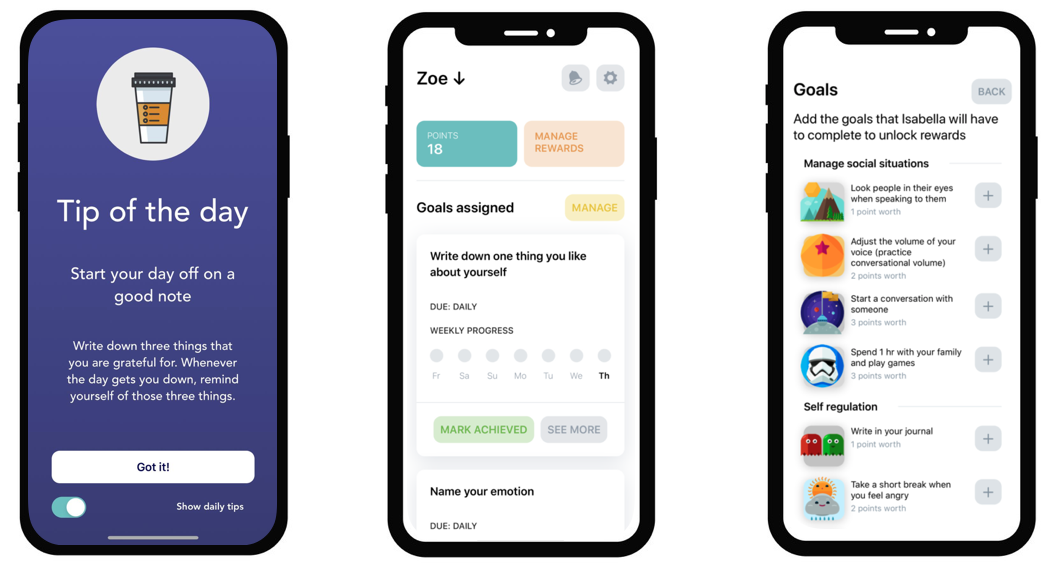
Now the graduate from Techstars Los Angeles has $1.5 million in funding from investors including the Michigan-based investment firm, Grand Ventures; Telosity, a fund launched by Vinaj Ventures & Innovation, that invests in companies improving children’s and young adult’s mental health; and the American Family Insurance Institute for Corporate and Social Impact, will pursue clinical validation for its suite of apps and services to provide a continuum of care for children with cognitive and behavioral disorders. 

Beginning with Children’s Hospital Los Angeles, Manatee has started a trial with ten clinicians and fifty families to evaluate the commercial use case for Dipayana’s service.

The first targets for care are anxiety and oppositional disorder, Dapayana said.

Image credit: Manatee

“I really want to focus on children. From a social [return on investment] perspective it seems insane to me that we don’t invest more in the early wellbeing of children,” said Dipayana. “If we did then we probably wouldn’t have to deal with a  ballooning juvenile detention system.”

From the company’s earliest days the stars seemed to align for Dipayana. She found her technical co-founder, Shawn Kuenzler, thanks to a post on AngelList. A veteran in the health tech startup world, Kuenzler ran engineering at Health Language and Zen Planner and has two exits under his belt. If that wasn’t serendipitous enough, Kuenzler’s wife is a clinical psychologist.

The two Denver-based entrepreneurs then took their startup on the road to the Techstars Los Angeles accelerator. It was there that they were introduced to contacts at companies including Headspace and LA Children’s Hospital that are paving the way for clinical validation of digitally delivered cognitive behavioral healthcare.

“We’re going to spend money and resources on launching our research with Children’s LA to understand the impact for a health system,” Dipayana said. “We position it as everyday therapy for kids. We provide the platform for providers to make it the day-to-day therapy for kids.” 

Manatee sells its services directly to healthcare systems to ensure that it can reach the broadest population of users rather than just ones who could afford to access the company’s app-based offerings. Doctors use Manatee as a clinical dashboard and way to communicate to both a child and their family around care plans and treatment.

“I thought about this really long and hard… Looking from my personal experience. Parents and families that have kids with autism… there’s so much snake oil that gets pushed down their throat that they’ll try anything,” Dipayana said. “It was very important to me that one i understand the clinical workflow and understood how the workforce manages behavioral healthcare and whether the work we were doing was valuable.”