Author: azeeadmin

07 Jul 2020

Amazon adds ‘hands-free’ Alexa to its Alexa mobile app

Amazon is making it easier for mobile users to access its Alexa virtual assistant while on the go. The company announced today it’s making it possible to use Alexa “hands free” from within its Alexa mobile app for iOS and Android, meaning customers will be able to use Alexa to make lists, play music, control their smart home devices and more, without having to touch their phone.

Customers can first command their phone’s digital assistant, like Siri or Google Assistant, to launch the Alexa app to get started with the hands-free experience. They can then speak to Alexa as they would normally, saying something like “Alexa, set the thermostat to 72,” “Alexa, remind me to call Jen at 12 pm tomorrow,” “Alexa, what’s the weather?” and so on. Customers can even request to stream music directly within the Alexa app itself, if they choose.

Before, users would have to tap the blue Alexa button at the bottom of the screen before Alexa would listen.

Once the wake word is detected, an animated blue line will appear at the bottom of the app’s screen to indicate Alexa is streaming the request to the cloud.

Amazon had previously integrated the Alexa experience into its other apps, including its flagship shopping app and Amazon Music. In the latter, it rolled out a hands-free Alexa option back in 2018, allowing users to control playback or ask for music without having to tap. But the Alexa app has remained a tap-to-talk experience until now, which doesn’t quite mesh with how Alexa works on most other devices, like Amazon Echo speakers and screens, for example.

After updating the app, customers will be presented with the option to enable the hands-free detection and can then begin to use the feature. A setting is also being made available that will allow users to turn the feature off at any time.

Amazon notes the feature will only work when the phone is unlocked and the Alexa app is open on the screen. It won’t be able able to launch Alexa from a locked phone or when the app is closed and off the screen, running in the background. (As we don’t have the app update yet ourselves, we are unable to directly confirm this detail.)

To use the new feature, customers will have to first update their Alexa app to the latest version on the Apple App Store or Google Play store.

Amazon says the feature is rolling out over the next several days to users worldwide, so you may not see the option immediately.

07 Jul 2020

Amazon Prime Video finally launches user profiles to all customers worldwide

Amazon’s Prime Video is finally adding a feature that’s long since become a standard for streaming video services: user profiles. With profiles, Prime Video users will have access to their own Watchlist, personalized recommendations, and they’ll be able to track their own viewing progress, similar to rival services, like Netflix.

Customers can create up to 6 profiles for their household members, including 1 primary profile associated with the Amazon account, plus 5 additional profiles, which can be a mix of adult and kids’ profiles.

The new profiles will be first available in the Prime Video app on iOS, Android, Fire tablet (Gen 10 and higher), and the Fire TV Prime Video app, in addition to the Prime Video apps built for other living room devices.

Prime Video profiles were spotted earlier this year by NDTV, which led to some erroneous reporting that the feature had officially launched to all. In actuality, Amazon first rolled out profiles to its customers in India and Africa. It’s now making it accessible to all worldwide, including the U.S.

Image Credits: Amazon

For any profile set as a “Kids” profile, the service will only include age-appropriate content aimed at those 12 years old or younger. The search results and search suggestions will also be filtered to only show Kids titles. Children with a Kids profile won’t be able to make purchases, either.

Meanwhile, any adult profile will be able to play all the entitled Prime Video content form the primary account, including content that has been purchased or rented, Prime Video titles, Prime Video Channels, and Live content.

However, if the adult wants to set up parental controls on their account so this content is not accessible on a shared device, like the living room TV, they can do so. In this case, viewing restrictions will be enabled but parents can enter a PIN code to access the content, as they can now.

Parents can also continue to block children from making purchases from an adult profile by enabling Purchase Restrictions under Prime Video Settings, which will also require a PIN to complete the transaction.

The one exception to how child profiles work is on mobile devices. The Prime Video app will allow a child profile to access the adult profile’s downloads on mobile — a decision Amazon made because it didn’t want to restrict access to downloads if the device was taken offline, making it impossible to profile switch.

In addition, for customers that have set up wallet-sharing in their Amazon Household settings, Prime Video will automatically create profiles for those users. This can be disabled from the Manage your profiles page, but once profile sharing is off, it can’t be re-enabled.

The lack of user profiles have been, to date, one of the bigger oversights with Amazon’s Prime Video streaming service, first launched in 2011, and a much-requested feature for years. Today, streaming services don’t just compete on their content library but on how well they can surface the titles from that library by way of personalized recommendations and other tools that keep a user’s favorites and interests easily accessible. But Prime Video ignored this need, forcing all members of a household to share a single account. That choice told customers that even Amazon itself didn’t consider Prime Video a true competitor to other top services, like Netflix, Hulu and Disney+.

It’s finally correcting this matter, but only as the streaming market crowds with new offerings, like recently launched HBO Max and NBCU’s forthcoming Peacock, for example.

Amazon cautions that user profiles are being launched today, but not everyone will see them immediately. The feature is rolling out in phases, so you may see them arrive in a few days’ time, if not today.

07 Jul 2020

Quaestor is reinventing business metric collaboration for the startup party round era

Business is the foundation, of, well, business. For startups, finding a working business model and honing it through decision-making, smart hires, and relentless focus on the right metrics can be the difference between building a scalable company and collapsing into the next Luckin Coffee.

Given how important business performance and finance is, it’s not uncommon in the early days of a startup to hire an “outsourced CFO” — a part-time financial professional who helps with budgeting, basic forecasting, and preparing reports for investors. Those reports though are static, and don’t lead to great conversations around how a business is performing, how it can change, and what should happen next for all parties involved.

Quaestor wants to upend the static spreadsheets and PDFs sent to dozens if not hundreds of people on cap tables today with a software-first solution that allows executives and their investors to hold better, more intelligent conversations about business performance.

The idea for the company congealed in the offices of 8VC, where the firm’s partners like Joe Lonsdale and Alex Moore repeatedly watched companies struggling to present all of their business information to their investors in a time-efficient way. 8VC has a history of incubating projects just like Quaestor, such as CRM tool Affinity.

For Quaestor, the firm eventually brought together a trio of co-founders, with Lonsdale also officially co-founding the company. John Melas-Kyriazi is CEO, and formerly was with Spark Capital for five years as a VC. He left earlier this year, and is maintaining his board seats there. Kevin Hsu is head of product and was a product manager at cap table management startup Carta before joining 8VC as an EIR. Finally, Deny Khoung is head of operations and was formerly the director of design at 8VC.

The group has been riffing on the idea of improving collaboration around the fundamentals of startup metrics for months, but officially spun out of 8VC in March and raised $5.8 million led by 8VC with participation from Melas-Kyriazi’s former firm Spark as well as Abstract Ventures, Riot Ventures, Fathom Ventures and GFC.

Let’s head back to the product though. Quaestor connects founders, company executives, and investors all together to discuss a business and make sure everyone is on the same page regarding targets and metrics. “How do VCs and their companies interact around financial data, whether it’s documents like P&L / balance sheet / cash flow statement [or] individual financial KPIs like revenue, gross margin, net income, ARR, etc.,” Melas-Kyriazi explained. “How do companies share that information with their investors to keep them updated? How do investors support their companies in understanding what goals they should be setting?”

The goal with the platform is two-fold. One is to ingest financial data and automatically prepare it so that all those annoying Excel mistakes disappear and everyone can read from one consistent set of metrics. The other is to help guide everyone to focus on the metrics that matter. “Most entrepreneurs come from a product background or engineering or sales and they might not necessarily have worked in in finance before,” Melas-Kyriazi said. The goal with Quaestor is to help push them to think carefully about their finances.

Over time as cap tables get more complicated and more investors add their capital, the goal is that Quaestor can offer a single source of truth for all financial data, without requiring the CEO or an outsourced CFO to prepare individual reports for each firm.

Right now, the company is focusing its product on early-stage startups, but hopes to grow up with those companies as they scale, expanding its services to other types of companies over time. The company’s product has been in beta as it tests out its MVP.

Quaestor is now a team of eight, with several offer letters in motion (so that number is actively growing as I write this article). Melas-Kyriazi said that product development and early scaling are the key goals for the startup over the next year or two.

07 Jul 2020

Zoom announces new Hardware as a Service offering to run on ServiceNow

Zoom announced a new Hardware as a Service offering today that will run on the ServiceNow platform. At the same time the company announced a deal with ServiceNow to standardize on Zoom and Zoom Phone for its 11,000 employees in another case of SaaS cooperation.

For starters, the new Hardware as a Service offering allows customers, who use the Zoom Phone and Zoom Rooms software to acquire related hardware from the company for a fixed monthly cost. The company announced that initial solutions providers will include DTEN, Neat, Poly and Yealink.

The new service allows companies to access low-cost hardware and pay for the software and hardware on a single invoice. This could result in lower up-front costs, while simplifying the bookkeeping associated with a customer’s online communications options.

Companies can start small if they wish, then add additional hardware over time as needs change, and they can also opt for a fully managed service, where a third party can deal with installation and management of the hardware if that’s what a customer requires.

Zoom will run the new service on ServiceNow’s Now platform, which provides a way to manage the service requests as they come in. And in a case of one SaaS hand washing the other, ServiceNow has standardized on the Zoom platform for its internal communications tool, which has become increasingly important as the pandemic has moved employees to work from home. The company also plans to replace its current phone system with Zoom Phones.

One of the defining characteristics of SaaS companies, and a major difference from previous generations of tech companies, has been the willingness of these organizations to work together to string together sets of services when it makes sense. These kinds of partnerships, not only benefit the companies involved, they tend to be a win for customers too.

Brent Leary, founder at CRM Essentials sees this as a deal between two rising SaaS stars, and one that benefits both companies. “Everyone and their mother is announcing partnerships with Zoom, focusing on integrating video communications into core focus areas. But this partnership looks to be much more substantial than most with ServiceNow not only partnering with Zoom for tighter video communication capabilities, but also displacing its current phone system with Zoom Phone,” Leary told TechCrunch.

07 Jul 2020

As Palantir preps IPO, a look back at its growth history

Yesterday evening Palantir, the quasi-secretive data mining and analysis firm, publicly announced that it has privately filed to go public.

The disclosure came in the wake of Palantir raising new capital, taking on hundreds of millions of dollars before its planned public offering. According to Crunchbase data, Palantir has raised billions while private, making its debut a marquee affair in the worlds of technology, startups and venture capital.

As TechCrunch reported yesterday, Palantir has a controversial product history, including helping locate immigrants for the Immigration and Customs Enforcement agency, connecting databases for intelligence agencies and recently winning no-bid contracts to gather data about the COVID-19 pandemic for the White House Pandemic Task Force.


The Exchange is a daily look at startups and the private markets for Extra Crunch subscribers; use code EXCHANGE to get full access and take 25% off your subscription


The company’s filing comes after a long incubation period; it’s been 17 years since Palantir’s founding in 2003. Since then, its reported financial performance and fundraising history have become sufficiently convoluted that I couldn’t tell you this morning how big the company really is or how much it raised before its most recent investment.

To prep us for its eventual public IPO filing, let’s go back in time and collect data points from Palantir’s reported history. This way when we do get the company’s S-1 filing, we’ll better understand what we’re looking at.

Palantir’s reported history

Even with companies that aren’t privacy-conscious, it can be hard to craft a comprehensive history of their business activities from when they were private. With Palantir, it’s even trickier.

Still, leaning on more than a decade of TechCrunch reporting, Crunchbase data, other publications and Craft.co, what follows is a reasonable look at what has been reported about Palantir through time. Of course, we’ll know more when we get the S-1.

07 Jul 2020

Watch an army of Spot and Pepper robots cheerlead a baseball game in an empty stadium

NPB games are known for engaging antics that extend well beyond the play on the field. But what’s to be done in the era of COVID-19 when baseball is played in front of an empty stadium? For many — including Korea’s KBO League and the upcoming shortened MLB season — cardboard cutouts are an attempt to bring something familiar to the otherwise surreal experience.

Japan, on the other hand, is leaning into the surreality. The Fukuoka SoftBank Hawks are getting some cheerleading help from a couple of familiar robots. Softbank’s own Pepper and Spot (of the Softbank-owned Boston Dynamics) formed the cheering section at a game this week, as the NPB team took on the Rakuten Eagles. The celebration is the first of many, running through the end of the month.

It is, as Softbank Notes, “the first time that Spot has performed a dance at a sports event.” Boston Dynamics’ robot has taken on a number of jobs of late, as the company has offered the quadruped up for sale — a first in its 25+ year history. Construction and security are among the key uses for the ‘bot, though Softbank is obviously equally interested in putting on a show. Pepper, the product of Softbank’s 2015 acquisition of  Aldebaran Robotics, meanwhile, has become a familiar sight in the hospitality industry.

When the shortened MLB season kicks off in States later this month, many teams will be filling stands with cardboard cutouts. The Oakland A’s, notably, announced a plan to charge fans to have their likeness appear on the life-size cardboard facades.

07 Jul 2020

Nayya, bringing transparency to choosing and managing healthcare plans, raises $2.7 million

Entrepreneurs Roundtable Accelerator -backed Nayya is on a mission to simplify choosing and managing employee benefits through machine learning and data transparency.

The company has raised $2.7 million in seed funding led by Social Leverage with participation from Guardian Strategic Ventures, Cameron Ventures, Soma Capital, as well as other strategic angels.

The process of choosing an employer-provided healthcare plan and understanding that plan can be tedious at best and incredibly confusing at worst. And that doesn’t even include all of the supplemental plans and benefits associated with these programs.

That’s where Nayya comes in. When enrollment starts, employers send out an email that includes a link to Nayya’s Companion, the company’s flagship product.

Companion helps employees find the plan that is right for them. The software first asks a series of questions about lifestyle, location, etc. For example, Nayya founder and CEO Sina Chehrazi explained that people who bike to work, as opposed to driving in a car, walking or taking public transportation, are 20 times more likely to get into an accident and need emergency services.

Companion asks questions in this vein, as well as questions around whether you take medication regularly or if you expect your healthcare costs to go up or down over the next year, without getting into the specifics of chronic ailments or diseases or particular issues.

Taking that data into account, Nayya then looks at the various plans provided by the employer to show you which one matches the user’s particular lifestyle and budget best.

Nayya doesn’t just pull information directly from the insurance company directory listings, as nearly 40 percent of those listings have at least one error or are out of date. It pulls from a broad variety of data sources, including the Centers for Medicare and Medicaid Services (CMS) to get the cleanest, most precise data around which doctors are in network and the usual costs associated with visiting those doctors.

[gallery ids="2012505,2012506,2012507"]

Alongside Companion, Nayya also provides a product called ‘Edison,’ which it has dubbed the Alexa for Helathcare. Users can ask Edison questions like “What is my deductible?” or “Is Dr. So-and-So in my network and what would it cost to go see her?”

The company helps individual users find the right provider for them with the ability to compare costs, location, and other factors involved. Nayya even puts a badge on listings for providers where another employee at the company has gone and had a great experience, giving another layer of validation to that choice.

As the healthtech industry looks to provide easier-to-use healthcare and insurance, the idea of ‘personalization’ has been left behind in many respects. Nayya focuses first and foremost on the end-user and aims to ensure that their own personal healthcare journey is as simple and straightforward as possible, believing that the other pieces of the puzzle will fall into place when the customer is taken care of.

Nayya plans on using the funding to expand the team across engineering, data science, product management and marketing, as well as doubling down on the amount of data the company is purchasing, ingesting and cleaning.

Alongside charging employers on a per seat, per month basis, Nayya is also looking to start going straight to insurance companies with its product.

“The greatest challenge is educating an entire ecosystem and convincing that ecosystem to believe that where the consumer wins, everyone wins,” said Chehrazi. “How to finance and understand your healthcare has never been more important than it is right now, and there is a huge need to provide that education in a data driven way to people. That’s where I want to spend the next I don’t know how many years of my life to drive that change.”

Nayya has five full-time employees currently and 80 percent of the team comes from racially diverse backgrounds.

07 Jul 2020

High Earth Orbit Robotics uses imaging satellites to provide on-demand check-ups for other satellites

Maintaining satellites on orbit and ensuring they make full use of their operational lifespan has never been more important, given concerns around sustainable operations in an increasingly crowded orbital environment. As companies tighten their belts financially to deal with the ongoing economic impact of COVID-19, too, it’s more important than ever for in-space assets to live up to their max potential. A startup called High Earth Orbit (HEO) Robotics has a very clever solution that makes use of existing satellites to provide monitoring services for others, generating revenue from unused Earth imaging satellite time and providing a valuable maintenance service all at the same time.

HEO’s model employs cameras already on orbit mounted on Earth observation satellites operated by partner companies, and tasks them with collecting images of the satellites of its customers, who are looking to ensure their spacecraft are in good working order, oriented in the correct way, and with all their payloads properly deployed. Onboard instrumentation can provide satellite operators with a lot of diagnostic information, but sometimes there are problems only external photography can properly identify, or that require confirmation or further detail to resolve.

The beauty of HEO’s model is that it’s truly a win for all involved; Earth observation satellites generally aren’t in use at all times – they have considerable down time in particular when they’re over open water, for instance, HEO’s founder and CEO William Crowe tells me.

“We try to use the satellites at otherwise low-value times, like when they are over the ocean (which of course is most of the time),” Crowe said via email. “We also task our partners just like we would as a regular Earth-imaging business, specifying an area on Earth’s surface to image, the exception being that there is always a spacecraft in the field-of-view.”

The company is early on in its trajectory, but it has just released a proof-of-concept capture of the International Space Station, as seen in the slides provided by HEO below. The image was captured by a satellite owned by the Korean Aerospace Research Institute, which is operated by commercial satellite operator SI Imaging Services. HEO’s software compensated for the relative velocity of the satellite to the ISS, which was a very fast 10 km/s (around 6.2 miles per second). The company says it’s working towards getting even higher-resolution images.

[gallery ids="2012500,2012501,2012502"]

The beauty of HEO’s model is that it actually requires no capital expenditure to work, in terms of the satellites used: Crowe explained that they currently pay-per-use, which means they only spend when they have a client request, so that the revenue covers the cost of tasking the partner satellite. HEO does plan to launch its own satellites in the “medium-term,” however, Crowe said, in order to cover the gaps that currently exist in coverage and in anticipation of an explosion in the low Earth orbit satellite population, which is expected to expand from the existing 2,000 or so spacecraft to as many as 100,000 or more over roughly the next decade.

HEO could ultimately provide imaging of not only other satellites, but also space debris to help with removal efforts, and even asteroids that could prove potential targets for mining and resource gathering. It’s a remarkably well-considered idea that stands to benefit from the explosion of growth in the orbital satellite industry, and also stands out among space startups because it has a near-term path to revenue that doesn’t require a massive outlay of capital up front.

07 Jul 2020

8 Black investors discuss the intersection of race, tech and funding

Since the killing of George Floyd at the hands of four police officers heightened awareness about racial justice, the experiences of Black people in tech — and the industry’s lack of racial diversity — are getting new attention.

In the tech ecosystem at large, the industry is still predominantly white and male, and venture capital is no different. Just 3% of investment partners are Black, according to a 2018 survey from by the National Venture Capital Association and Deloitte. Meanwhile, more than 80% of VC firms don’t have a single Black investor and just 1% of venture-backed startups have a Black founder, according to BLCK VC.

“Venture capital certainly plays a role,” GV Principal Terri Burns told TechCrunch about the overall lack of diversity in tech. “VC is a tool that can enable businesses to scale greatly and quickly, and historically, this tool hasn’t been equally distributed. For example, VC has traditionally focused on founders from a small number of institutions and pedigrees that are not particularly diverse (in 2016 we learned from Richard Kerby, general partner at Equal Ventures, that 40% of VCs went to either Harvard or Stanford). With more equal distribution of funds across backgrounds, underrepresented people will have a greater chance at success.”

Burns shared the above and more as part of our survey of a handful of Black VCs in tech. Burns, and others, described what they’re looking for in their next investment, identified overlooked opportunities that are ripe for innovation and offered advice for founders navigating COVID-19 amid this racial justice uprising.

“Both COVID-19 and the racial justice uprising have had really profound impacts on our society and the tech ecosystem,” Precursor Ventures Managing Partner Charles Hudson told TechCrunch. “For me, the main takeaway from COVID-19 is that planning in an uncertain environment is extremely stressful for founders. Advice that made sense in March and April might not apply in May and June. We went from a world where it felt like we might shelter-in-place through the fall to an attempted reopening of the economy. I think the racial justice uprising is a different thing. It’s bigger than technology, it’s about our society coming to grips with some really important, structural issues.

“While I think everyone is really struggling with the impacts of COVID-19, I think employees and founders of color are being particularly impacted by the racial justice issue and it is weighing heavily on the minds and hearts of many who are trying to process what’s happening while also trying to be productive and engaged at work. I think it’s important to be aware of that and do what you can to support folks who are struggling under the weight of this.”

Below, we’ve gathered insights from:

Arlan Hamilton, managing partner, Backstage Capital
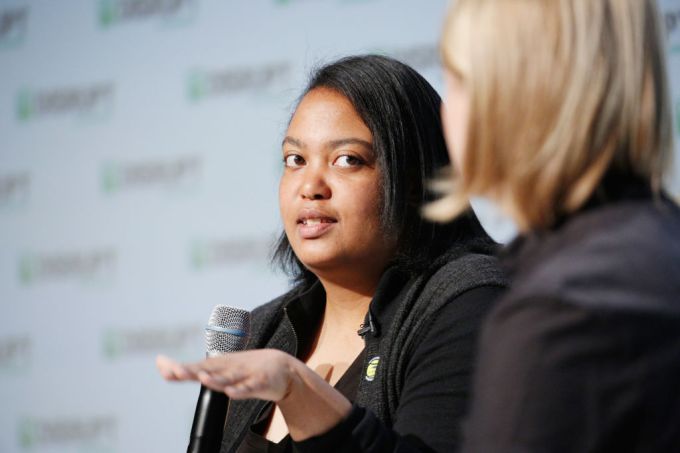
Image Credits: Photo by Kimberly White/Getty Images for TechCrunch)

What are the industries you’re most interested in right now?

I am into things that promote sustainability, that are clever. I like the senior care industry, but also pushing that a little further into senior activity and thriving entrepreneurship, et cetera. And media. I think media has a really interesting, exciting opportunity right now because of the way representation is so important, has always been, but it’s even more now. I’m seeing more and more interesting and unique media options rather than the status quo.

What are you looking for in your next investment?

I’m looking for people who can break down barriers within their industries, who can offer something exciting, and new, and innovative to their end user, and someone who is daring, and risk-taking, and not afraid to go against the grain. That’s really the main thing I’m looking for.

What are some overlooked opportunities that are ripe for innovation?

Again, I think senior care is something a lot of people are thinking about, thankfully. At the same time, we don’t spend a lot of time thinking about what value seniors can bring to the ecosystem, to even tech. I think you have millions and millions of people who have a gained experience that no one else has, that’s their junior, and you have all this technology at their fingertips. I’ve noticed that a lot of seniors I know have some sort of… it’s intuitive, some of this tech, like voice. They’re used to having to track down their children, and so they’re used to yelling out in the middle of an empty room, to be honest. I think that’s part of where it comes from.

They don’t have the same vanities that a lot of younger people have, and so they’re willing to take more risk when it comes to trying something new. It’s not necessarily something they want to be dangerous about because they are, by and large, taking care of themselves and caring about damage to their bodies, but they’re not afraid to look silly or to sound silly when they’re trying out a new device. I think that’s something that we can really tap into, because a lot of these people who are 70, 75, 80 years old, there’s still 20 years purchasing power there, at the least, and it’s just important that we don’t discard them and forget about them.


07 Jul 2020

Motorola announces €349 5G phone for Europe, promises a sub-$500 model for US this year

Last year Qualcomm announced the Snapdragon 765, promising to usher in an era of low-cost 5G devices. Motorola, naturally, was more than happy to take advantage of the technology. While the company has been flirting with premium devices (with mixed results), budget devices will almost certainly be the company’s bread and butter for the foreseeable future.

Today the Lenovo brand announced the launch of the Moto G 5G. Set for release tomorrow in Europe, the device is most notable for its €349 ($395) starting price, which puts it well below the market average, as 5G continues to be the realm of the flagship for many competitors.

The device has a number of other features on-board worth noting, including a 21:9 6.7-inch display with a 90Hz refresh rate and a quad-camera set up on the rear. That second bit includes a 48-megapixel main camera with quad pixel tech to allow for more light in shots, an ultra-wide lens, a dedicated macro lens for closeups and a depth-sensing camera.

The macro lens is still fairly rare on smartphones, with Motorola really being the one company that has included the tech on multiple models. For most, it’s probably more a nice curiosity, though there are certainly occasions that call for it. Speaking of curiosities, there’s also a dual-selfie camera on the front, which includes a 16-megapixel main and a wide-angle to cram more people into shots.

Honestly, it’s shaping up to be a pretty interesting product, as far as budget handsets go. There’s also a healthy 5,000 mAh battery, which should go a ways toward keeping the phone alive even with the demands of 5G and the 90 Hz display. The base-level version comes with 4GB of RAM and 64GB of storage, and another  €50 will get you 6GB of RAM and 128GB of storage. It’s also coming to Saudi Arabia and the UAE in “coming months.”

Meanwhile, Motorola’s also promising to deliver on a sub-$500 5G handset for the North American market at some time in the fall, adding to the Moto 5G Mod for the Z line as a method for accessing the next-gen wireless tech with its devices.