Author: azeeadmin

06 Jul 2020

Daily Crunch: Uber confirms Postmates acquisition

You may have noticed that The Daily Crunch is publishing about six hours later than usual. Do not be alarmed! We decided that sending the newsletter later in the day was a better fit for the TechCrunch news cycle — hopefully, there will be fewer days when we hit Publish and then groan when we see a giant story break five minutes later.

We’re also taking the opportunity to rethink the newsletter format. The mission hasn’t changed — the goal is to deliver the day’s big tech headlines in an email that you can read in just a couple of minutes. But we know that different readers are focused on different areas of TechCrunch’s coverage, so moving forward, The Daily Crunch will be organized to make it easier to find the news that interests you.

Without further ado: Here’s your Daily Crunch for July 6, 2020.

The big story: Uber confirms Postmates acquisition

The reports last week were true: Uber announced today that it’s acquiring Postmates in an all-stock deal worth $2.65 billion. It looks like the restaurant delivery market is consolidating — Uber previously tried to acquire Grubhub, which ended up selling to the European company Just Eat Takeaway instead. The company said Postmates will continue to operate as a standalone app, but tech and delivery operations will be consolidated.

Meanwhile, Alex Wilhelm took a close look at Uber’s finances to help Extra Crunch readers understand why the company’s stock is up today, arguing that the acquisition could help Uber Eats “grow more quickly while bringing down its losses as a percent of revenue.”

The tech giants

US tech giants halt Hong Kong police help — After the Chinese government has passed a new security law undermining protections for Hong Kong, both Facebook and Twitter said that they will no longer process demands for user data from Hong Kong authorities. (In Facebook’s case, this also applies to WhatsApp.)

Instagram Reels tested in India following TikTok’s ban — Instagram may be taking advantage of India’s decision to ban TikTok by expanding its Reels feature, which allows users to create 15-second videos set to music.

Intel to invest $253.5 million in India’s Reliance Jio Platforms — Intel joins General Atlantic, Facebook and Silver Lake as an investor in India’s top telecom operator.

Startups, funding and venture capital

Here’s a list of tech companies that the SBA says took PPP money — Bolt Mobility, Getaround, Luminar, Stackin, TuSimple and Velodyne all took loans of $150,000 or more from the Paycheck Protection Program, according to the U.S. Treasury Department. But confusingly, some of the firms on the list (including Bird and Index) denied taking any loans.

Sequoia announces $1.35 billion venture and growth funds for India and Southeast Asia — Sequoia Capital India made more than 50 investments in India last year, putting it ahead of any other VC firm in the country.

Payfazz gets $53 million to give more Indonesians access to financial services — This Indonesian startup offers a number of mobile financial services, including bill payments and loans.

Advice and analysis from Extra Crunch

Four views: Is edtech changing how we learn? — Devin Coldewey, Natasha Mascarenhas, Alex Wilhelm and Danny Crichton have thoughts about whether digital learning can make quality education more accessible, or will simply widen existing divides.

As COVID-19 surges, 3D printing is having a moment — 3D printing has fallen out of the spotlight over the past couple of years, but the COVID-19 pandemic has changed all that.

(Reminder: Extra Crunch is our subscription membership program, designed to democratize information about startups. You can sign up here.)

Everything else

‘Hamilton’ gives Disney+ a holiday weekend bump in US, with app downloads up 74% — That’s according to data from Apptopia.

Original Content podcast: ‘Eurovision Song Contest: The Story of Fire Saga’ is a goofy delight — Every week, Darrell Etherington, Jordan Crook and I review the latest streaming movies and shows in a freewheeling discussion. In this episode, we were all pleasantly surprised by the new Will Ferrell movie on Netflix.

The Daily Crunch is TechCrunch’s roundup of our biggest and most important stories. If you’d like to get this delivered to your inbox every day at around 3pm Pacific, you can subscribe here.

06 Jul 2020

Daily Crunch: Uber confirms Postmates acquisition

You may have noticed that The Daily Crunch is publishing about six hours later than usual. Do not be alarmed! We decided that sending the newsletter later in the day was a better fit for the TechCrunch news cycle — hopefully, there will be fewer days when we hit Publish and then groan when we see a giant story break five minutes later.

We’re also taking the opportunity to rethink the newsletter format. The mission hasn’t changed — the goal is to deliver the day’s big tech headlines in an email that you can read in just a couple of minutes. But we know that different readers are focused on different areas of TechCrunch’s coverage, so moving forward, The Daily Crunch will be organized to make it easier to find the news that interests you.

Without further ado: Here’s your Daily Crunch for July 6, 2020.

The big story: Uber confirms Postmates acquisition

The reports last week were true: Uber announced today that it’s acquiring Postmates in an all-stock deal worth $2.65 billion. It looks like the restaurant delivery market is consolidating — Uber previously tried to acquire Grubhub, which ended up selling to the European company Just Eat Takeaway instead. The company said Postmates will continue to operate as a standalone app, but tech and delivery operations will be consolidated.

Meanwhile, Alex Wilhelm took a close look at Uber’s finances to help Extra Crunch readers understand why the company’s stock is up today, arguing that the acquisition could help Uber Eats “grow more quickly while bringing down its losses as a percent of revenue.”

The tech giants

US tech giants halt Hong Kong police help — After the Chinese government has passed a new security law undermining protections for Hong Kong, both Facebook and Twitter said that they will no longer process demands for user data from Hong Kong authorities. (In Facebook’s case, this also applies to WhatsApp.)

Instagram Reels tested in India following TikTok’s ban — Instagram may be taking advantage of India’s decision to ban TikTok by expanding its Reels feature, which allows users to create 15-second videos set to music.

Intel to invest $253.5 million in India’s Reliance Jio Platforms — Intel joins General Atlantic, Facebook and Silver Lake as an investor in India’s top telecom operator.

Startups, funding and venture capital

Here’s a list of tech companies that the SBA says took PPP money — Bolt Mobility, Getaround, Luminar, Stackin, TuSimple and Velodyne all took loans of $150,000 or more from the Paycheck Protection Program, according to the U.S. Treasury Department. But confusingly, some of the firms on the list (including Bird and Index) denied taking any loans.

Sequoia announces $1.35 billion venture and growth funds for India and Southeast Asia — Sequoia Capital India made more than 50 investments in India last year, putting it ahead of any other VC firm in the country.

Payfazz gets $53 million to give more Indonesians access to financial services — This Indonesian startup offers a number of mobile financial services, including bill payments and loans.

Advice and analysis from Extra Crunch

Four views: Is edtech changing how we learn? — Devin Coldewey, Natasha Mascarenhas, Alex Wilhelm and Danny Crichton have thoughts about whether digital learning can make quality education more accessible, or will simply widen existing divides.

As COVID-19 surges, 3D printing is having a moment — 3D printing has fallen out of the spotlight over the past couple of years, but the COVID-19 pandemic has changed all that.

(Reminder: Extra Crunch is our subscription membership program, designed to democratize information about startups. You can sign up here.)

Everything else

‘Hamilton’ gives Disney+ a holiday weekend bump in US, with app downloads up 74% — That’s according to data from Apptopia.

Original Content podcast: ‘Eurovision Song Contest: The Story of Fire Saga’ is a goofy delight — Every week, Darrell Etherington, Jordan Crook and I review the latest streaming movies and shows in a freewheeling discussion. In this episode, we were all pleasantly surprised by the new Will Ferrell movie on Netflix.

The Daily Crunch is TechCrunch’s roundup of our biggest and most important stories. If you’d like to get this delivered to your inbox every day at around 3pm Pacific, you can subscribe here.

06 Jul 2020

Tech shares set fresh records despite uncertain economy

Despite record-setting COVID-19 infections, American equities rose today. All major indices gained ground during regular trading, while tech stocks did even better.

The Nasdaq Composite set new 52-week and all-time highs, touching 10,462.0 points before closing at 10,433.65, up 2.21% on the day. Similarly, a basket of SaaS and cloud companies that has risen and fallen more sharply than even the tech-heavy Nasdaq closed this afternoon at 1,908.30 after touching 1,952.39 points. Both results were 52-week and all-time highs.

Such is the mood on Wall Street regarding the health of technology companies. It’s not hard to find bullish sentiment, jockeying to push tech shares higher. Some examples of today’s enthusiasm paint the picture:

  • The recent IPO Lemonade is now worth $4.7 billion, according to Yahoo Finance. That price gives it a Q1-annualized revenue run rate multiple of around 45x. For a SaaS company, that would boggle the mind. As we’ve written, however, Lemonade has very un-SaaS-like gross margins, and has higher churn. The company’s stock rose around 17% today for no clear reason.
  • Tesla rose over 13% today to $1,371.58 per share, another huge day of gains for the company now worth in excess of $250 billion. Analysts expect the firm to report $4.83 billion in revenue in its most recent quarter, according to Yahoo Finance. That’s less than the company reported in its year-ago June quarter when it saw $6.35 billion in revenue. Since July 1, 2019, Tesla shares have appreciated in excess of 450%, despite the company prepping to report what the market anticipates will be revenue declines.
  • Amazon and Netflix also set new records today to toss a few more names into the mix.

You can’t swing your arms without running into a reason why it makes sense for SaaS stocks to be trading at record valuation multiples, or why one company or another is actually reasonably valued over a long-enough time horizon.

It’s worth noting that this putatively rational public investor thinking doesn’t fit at all with what the tech set used to pound into my head about the public markets, namely that they are infamously impatient and thus utter bilge for most long-term value creation. Going public was garbage, I was told; you have to report every three months and no one looks out a few years.

Now, I’m being told by roughly the same people that the market is doing the very thing that they said it didn’t do, namely price firms for future results instead of trailing outcomes. Fine by me either way, frankly, but I’d like to know which story is true.

Happily, we’re about to see if all this high-fiving and enthusiasm is real.

Earnings season beckons, and it should bring with it a dose or two of clarity. If the digital transformation has managed to accelerate sufficiently that most tech companies have managed to greatly boost their near-term value, hats off to the cohort and bully for the startups that must also be enjoying similar revenue upswells.

But that doesn’t have to happen. There are possible earnings result sets that can cause investors to dump tech shares, as Slack learned a month ago.

The background to all of this is that there are good reasons to have some doubts about the current health of the national economy. And, sure, most people are willing to allow that the stock market and the aggregate domestic economy are not perfectly linked — this is no less than partially true — but each day the stock market steps higher and COVID-19 surges again leading to re-closings around the nation makes you to wonder if this is all for real.

Earnings season is here soon. Let’s find out.

06 Jul 2020

Logistics are key as NYC startup prepares to reopen office

The future of offices will require “hot desks,” contact tracing and a volunteer task force run by employees to make sure their colleagues are washing their damn hands.

SquareFoot CEO Jonathan Wasserstrum says he’s bullish on the future of office spaces because his startup helps growing companies find office space. Since COVID-19 hit, his firm has spent the past four months talking to tenants and landlords to figure out what’s next.

But as the country reopens, Wasserstrum says offices will return. Business has already resumed in some capacity, so SquareFoot is soon heading back to its office with half of its staff and physical distancing plans in place. I spoke to Wasserstrum about what it’s like to return to the office amid a pandemic, from biggest hurdles to price tag.

Transportation is the biggest hurdle

Wasserstrum said his team is returning in shifts and has asked volunteers to be a part of the first cohort. “This is not about recruiting everyone back; it’s a methodical process to enable everyone to get what they need,” he told TechCrunch. “The complicating factor here that still needs to be grappled with is how each of these individuals will get to and from the office daily.”

06 Jul 2020

U.S. online grocery shopping hits record $7.2 billion in June

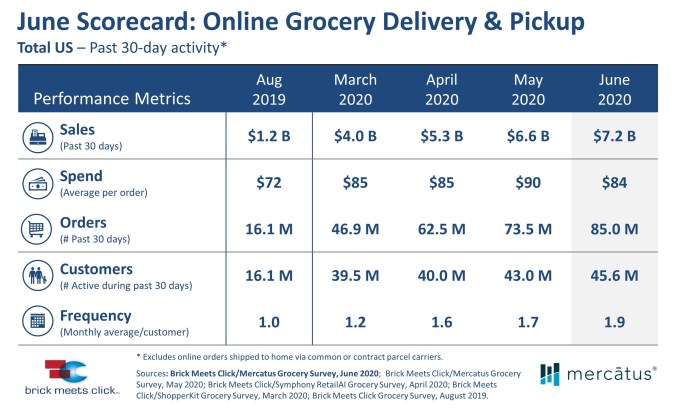
Despite the slow reopening of the U.S. economy over the past several weeks, online grocery shopping is continuing to reach ever-higher numbers as Americans seem to be in no rush to return to the store. According to new research released today by Brick Meets Click and Mercatus, U.S. online grocery sales hit a record $7.2 billion in June, up 9% over May, as 45.6 million households turned to online grocery pickup and delivery services for a larger portion of their grocery needs.

This figure is higher than the $4 billion seen in March 2020, when the U.S. first went under coronavirus lockdowns. Since then, online grocery sales have been growing quickly — jumping to $5.3 billion in April, then $6.6 billion in May, as more consumers shifted their shopping to online services, grocery included.

The customer base for online grocery also grew from 39.5 million monthly actives in March to now 45.6 million as of June, the report found.

Remarkably, only 16.1 million customers were using online grocery as of August 2019, totalling then just $1.2 million in sales.

The growth isn’t just due to a large influx of new customers to online grocery, but also due to more frequent orders. Customers may be ordering from online services not only for their large “stocking up” trips, but also for those smaller grocery runs they would often do in between — to grab ingredients for their weekly recipes or to replace the more quickly depleted items, like milk, bread and other staples, perhaps.

According to the new research, order frequency ticked up from 1.7 orders per month for active households in May to 1.9 orders in June, demonstrating this increase.

In addition, more retailers, including independents, have added capacity for online order fulfillment amid the coronavirus pandemic to meet consumers’ changing needs. This has also resulted in an increase in sales as more customers are able to shop online and get a timeslot for delivery or pickup.

Walmart Grocery in April even began pilot testing a way to offer 2-hour “Express” grocery delivery service to customers who were willing to pay an upcharge. The company said this was a direct result of its newly added capacity aimed at serving its online grocery customer base. Instacart, meanwhile, added new features in April aimed at opening more delivery windows. And many retailers — including Amazon, Walmart, Instacart, and Shipt, among others — have been hiring to help address the growing number of online orders.

When asked about their increased usage of online grocery in June, consumers reported fears of contracting coronavirus as their main concern, the report said. Specifically, 44% of households claimed they had “high levels” of concern about someone in their home being infected, up 2 percentage points from the prior month. This increase was also almost entirely driven by the 9% increase among shoppers in the over-60 age segment.

But on the downside, the increased choice in online grocery providers has made it more difficult for services to attract repeat usage, the data indicates. As of June, the likelihood of a shopper to use a specific online grocery service again within the next 30 days now sits at 57%. While this figure did grow by 1 percentage point since May, it’s still far below the pre-COVID 74% repeat rate seen back in August 2019. 

General interest in online grocery was also growing. Among both active online grocery shoppers and those not active, 32% said they were either “extremely” or “very likely” to use a service in the next 90 days — up 2 percentage points from May. The interest, not surprisingly, was strongest in households which had used a online grocery service in June, with 57% showing strong interest, compared with only 17% of the non-active households.

The data for the research was sourced from 1,781 U.S. adults in June (6/24-6/25), with responses weighted by age to reflect the national population of U.S. adults. The firms’ prior surveys also used a similar methodology, timing and sampling.

“Even though some retailers have seen sales decline within their respective business, the new reality of increased capacity across the market – and related greater choice (or options) for shoppers – means that all grocery retailers will need to accelerate their efforts to make shopping online even more seamless to thrive going forward,” said David Bishop, partner and research lead, Brick Meets Click, in a statement.

06 Jul 2020

Here’s a list of tech companies that the SBA says took PPP money

The U.S. Treasury Department released Monday a highly anticipated trove of data identifying every company that has received a loan of more than $150,000 from the Paycheck Protection Program (PPP) — a list that includes some of the hottest names in the tech startup world, including Bolt Mobility, Getaround, Luminar, Stackin, TuSimple, and Velodyne.

The data, which lists the names of companies that received small business loans over $150,000, was the result of a push for greater transparency around the loans. The list also provides the number of jobs that each company said it plans to retain as a result of the funds.

The PPP loans became available to help prop up companies affected by the COVID-19 pandemic, which has prompted local and state governments to issue stay-at-home orders and close non-essential businesses.

As illuminating as this data is, it may contain inaccurate data. Both Bird and Index Ventures have issued statements that counter information provided by the federal government.

“Bird was erroneously listed as a company that filed for a PPP Loan,” according to an emailed statement from Bird. “We did not apply for nor did we receive a PPP Loan. We decided as a company not to file an application as we did not want to divert critical funding from small and local businesses.”

Bird CEO and founder Travis VandenZander tweeted Monday that Citi had started an application while it awaited the company’s decision on whether to formally apply. Bird told Citi it decided not to apply and the bank told the company the temporary application had been cancelled.

Index Ventures confirmed it has not applied for or received a loan.

Below is a list of tech startups and companies, including some venture firms that received money, either for themselves or on behalf of portfolio companies, from the program. The story is developing and we’re seeking to confirm the loans with companies. We will update throughout the day.

$150,000 to $350,000 range

  • Stackin, which connects millennials to fintech startups, plans to retain 33 jobs. This loan is notable because the fintech company raised a $12.6 million Series B financing in May, is listed in the loan data. CEO Scott Grimes did not immediately respond to a request for comment.

$350,000 to $1 million range

  • Bolt Mobility, a city micromobility upstart, plans to retain 27 jobs

$2 to $5 million range

$5 to $10 million loan range

  • Getaround, a peer-to-peer car sharing service, plans to save 12 jobs
  • Luminar, a lidar sensor company, plans to retain 7 jobs
  • Velodyne, a lidar sensor company, plans to save 19 jobs

Developing …

06 Jul 2020

As COVID-19 surges, 3D printing is having a moment

COVID-19 will be remembered for many things — most undoubtedly negative. There are, however, some silver linings among the horrors of the deadliest pandemic in recent memory. Among them, if the sort of human ingenuity that shines whenever the world is faced with a similar crisis.

The simple truth of the matter is the world wasn’t prepared for a virus of this magnitude. It’s something that’s played out in country after country, as the novel coronavirus has continued to devastate communities across borders.

In spite of early warning signs, many nations — the U.S. certainly included — were caught off-guard, lacking the proper personal protective equipment (PPE) and other necessities required to battle the virus for a prolonged stretch. For many, taking on COVID-19 has required improvisation and resourcefulness — both, thankfully, qualities found in good volumes among the maker community that helped give rise to 3D printing technology.

If you’ve followed the technology even in passing over the last decade, you’re no doubt aware how much time evangelists spend justifying the usefulness of 3D printing beyond the the confines of desktop hobbyists. The defensiveness is certainly understandable. Consumer 3D printing has all of the trapping of an overhyped boom and bust. The truth of the matter is that it simply wasn’t ready for the mainstream moment many investors and members of the press were ready to thrust upon it.

But even as desktop 3D printing companies begun to scale back or shutter at an alarming rate, the industry has continued to have success stories among those who have further innovated and targeted the right market. Formlabs jumps out amongst the desktop market, with Carbon presenting a success story on the industrial side of the fence. What unites both beyond innovation is a focus on real-world case uses.

06 Jul 2020

Mercedes-Benz 2021 S-Class jumps on the giant touchscreen bandwagon

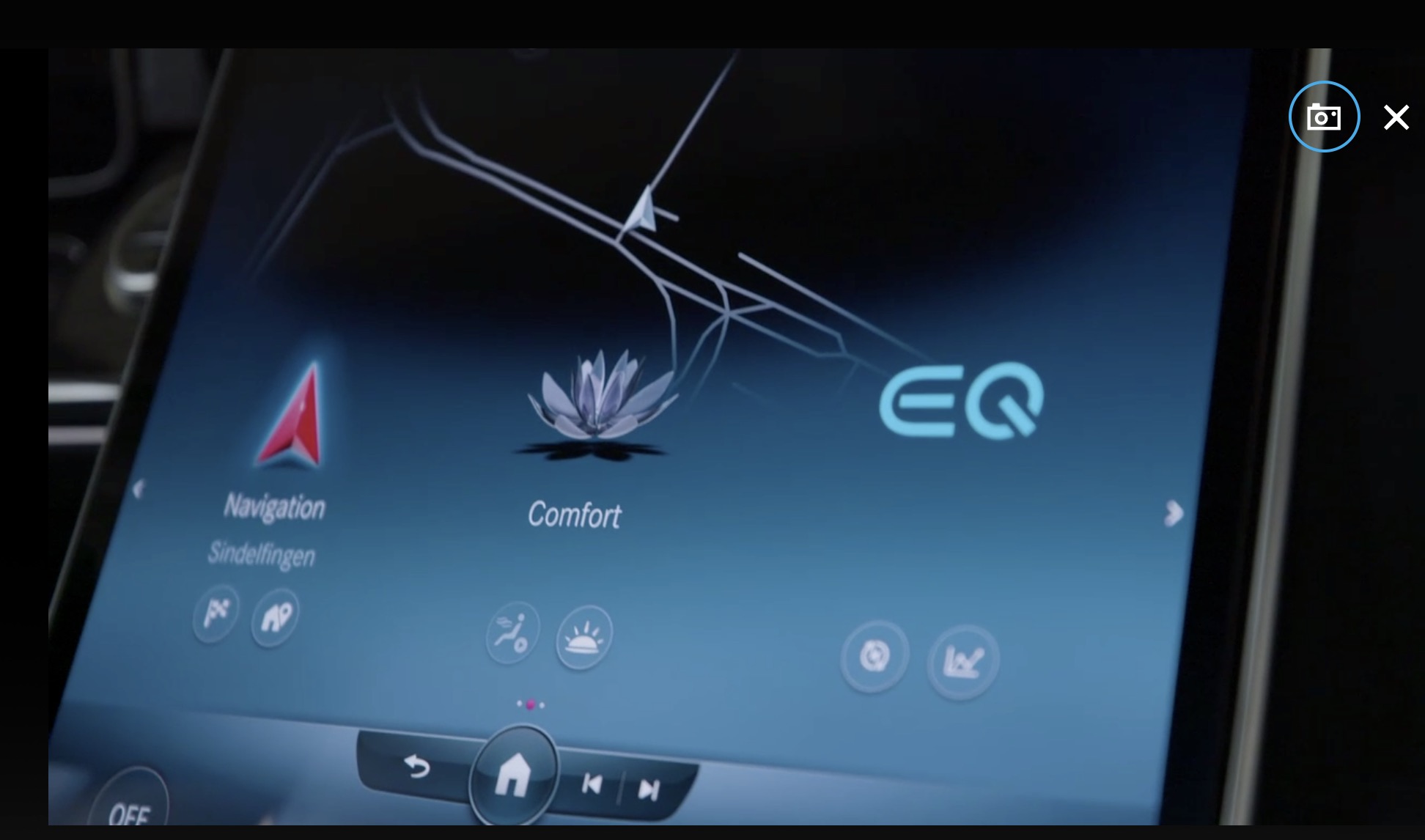
Mercedes-Benz sent out a teaser image and video Monday of its upcoming 2021 S-Class that hints at a sleeker interior that forgoes the bevy of physical knobs and toggles found in previous models in favor of a digital centric design.

The teasers illustrate a movement in the automotive industry popularized by Tesla to incorporate large touchscreens in new models.

Little is known about Mercedes’ next-generation MBUX infotainment system, which will debut in the 2021 S-Class. It appears, based on Mercedes’ teaser image and latest video as well as leaked photos that a large portrait-style touchscreen will be the centerpiece of the new MBUX system. Mercedes didn’t reveal the size of the screen or what functions will be incorporated into it. However, it appears that the climate control functions are head to the central touchscreen.

Mercedes S-Class interior

Image Credits: Screenshot/Mercedes

More information about the system and the S-Class is coming in just a couple of days. Mercedes-Benz will unveil the next-gen MBUX system at 5:30 a.m. EST July 8 as part of a series of digital reveals that will give snippets of information on the 2021 S-Class. The other videos are set for July 29 and August 12. The world premiere of the S-Class is expected to be held in September.

The first-generation Mercedes-Benz User Experience or MBUX system was unveiled in January 2018 at the CES tech trade show and debuted in the automaker’s A Class hatchback. That was a departure for Mercedes, which has historically reserved its best tech for its highest-class models — the S Class being the first vehicle to typically get the latest and greatest tech. Mercedes appears to be returning to that strategy with the new version of MBUX heading to the 2021 S-Class.

Mercedes S-Class interior screen

Image Credits: Screenshot/Mercedes

The next-gen MBUX will likely continue its emphasis on voice, if the video with Daimler board member Markus Schäfer is any indication. The 2021 Mercedes S-Class will also have a head-up display, according to the video.

06 Jul 2020

Instagram Reels arrives in India following TikTok’s ban

In the wake of India’s decision to ban TikTok and other dozens of other Chinese apps over privacy concerns, Instagram has expanded its TikTok rival, known as Reels, in the region. The launch in India also comes only days after Facebook announced its standalone TikTok clone, Lasso, would be shutting down on July 10.

In addition to India, Instagram Reels is live in Brazil, and of recently, France and Germany. But an Instagram spokesperson hints the expansion may go even broader, without offering specific details.

“We’re planning to start testing an updated version of Reels in more countries,” a spokesperson told TechCrunch, when asked about the feature’s arrival in India. “Reels,” they added, “is a fun, creative way for people to both express themselves and be entertained.”

Unlike Lasso, which had been its own separate app, Reels has been designed to be a feature within Instagram itself. Reels allows users to create and post short, 15-second videos set to music or other audio, similar to TikTok. Also like TikTok, the feature offers a set of editing tools — like a countdown timer and those that adjust the video’s speed, for example — that aim to make it easier to record creative content. However, Instagram doesn’t have the same sort of two-tabbed, scrollable feed, like TikTok offers, just for watching Reels’ content.

Following the launch of Reels last year in Brazil, Instagram updated the feature based on user feedback. Users said they wanted a space to compile their Reels and watch those made by others. To address these concerns, Instagram moved Reels to a dedicated space on the user Profile page and now features Reels in its Explore section, if they’re published by a public account. That gives Reels the potential to go viral by catching the eye of Instagram users who don’t yet follow the creator’s account. (Before, Reels had been only available to Instagram Stories, which limited their exposure.)

Business Insider India was the first to report on Reels’ expansion in India, citing unnamed sources for the discovery.

The Reels launch is timely for a number of reasons. For starters, Facebook in June announced it had entered a global deal with Saregama, one of India’s largest music labels, which would allow it to license music for videos and other social experiences across both Facebook and Instagram. Facebook also has agreements with other Indian labels, including Yash Raj Films, Zee Music Company and T-Series. However, the addition of Saregama may have cleared the path for Reels to launch given the breadth of its content, which includes over 100,000 tracks like those from Indian music legends, plus Bollywood tunes, devotional music, ghazals, indipop and others.

But mainly, it’s ideal timing for Reels to come to India, given the country’s decision to ban TikTok.

The ban on Chinese apps knocked out TikTok from its largest overseas market, leaving a massive opportunity for Instagram to swoop in and pick up new users for Reels. Before its removal, TikTok had amassed more than 200 million users in India, which is a significant loss for the Beijing-headquared video app.

But Instagram is not without competition for those users. Reuters recently reported a surge in popularity for other Indian video-sharing apps, like Roposo, Chingari and Mitron, for example. Roposo even saw its user base jump by 22 million in the two days after India banned TikTok, the report noted.

Instagram didn’t indicate when Reels would launch in other key markets, like the U.S.


06 Jul 2020

Sequoia announces $1.35 billion venture and growth funds for India and Southeast Asia

Sequoia Capital India on Monday announced it has secured $1.35 billion from LPs for two new funds in the country as the storied venture firm looks to ramp up its investments in the world’s second largest internet market and Southeast Asia and finance existing portfolio startups.

The two new funds — a $525M venture fund and a $825M growth fund — will help the venture firm, which already maintains a seed fund, more comprehensively serve the startup ecosystem, said Shailendra Singh, a managing director at Sequoia Capital India.

“A fundraise represents a massive responsibility to deliver attractive returns to Sequoia’s Limited Partners, the majority of which are non-profits, foundations and charities. We do this by partnering with outstanding founders who are building category defining companies,” he said.

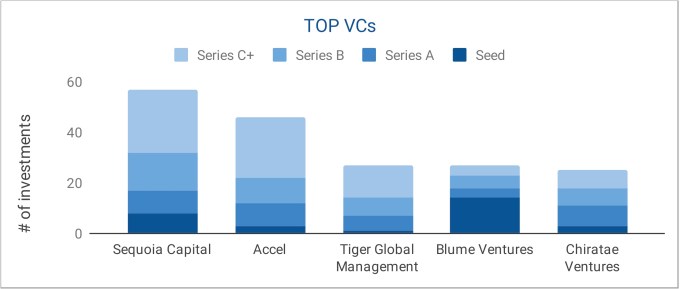
Sequoia Capital India, which roped in former Google India head Rajan Anandan last year, made more than 50 investments last year, more than any firm in the country.

Top VC firms in India last year based on the number of investments they made

The firm, which began investing in India 14 years ago, closed its last fund, of $695 million, for India and Southeast Asia in 2018. That was its sixth fund for the region.

The VC firm has made several high-profile investments over the years, including in edtech giant Byju’s, which is now valued at $10.5 billion, Singapore e-commerce startup Zilingo, and fintech startup PineLabs, and Khatabook, which offers bookkeeping services to merchants. Last year, Sequoia Capital India sold most of its stake in budget hotel startup Oyo

The new funds from Sequoia comes as a time when several investors have lost appetite as the coronavirus pandemic disrupts businesses. The per capita income of Indians, which remains some of the lowest across the globe, has also not improved over the years.

More to follow…