Author: azeeadmin

01 Jul 2020

Location data startup Bluedot raises $9.1M

Bluedot, a geofencing and location data startup used by companies like Dunkin’, KFC and McDonald’s, is announcing that it has raised $9.1 million in Series B funding.

The San Francisco-headquartered company claims that its technology its 20 times more accurate than competing solutions — something that CEO Emil Davityan attributed to its roots in the toll road industry, where it needed to deliver “lane-level” accuracy.

“Since then, we’ve delivered location-based solutions for retail, restaurants and other verticals,” Davityan told me via email. “The focus is on valuable, contactless experiences that prioritize the consumer’s needs.”

The company is extending its capabilities with the launch of a new product called Tempo, which is supposed to incorporate data like traffic patterns — and even the time it takes to get in and out of a car — to deliver real-time alerts when a customer is approaching.

That sounds particularly desirable in the middle of a pandemic, when businesses are increasingly interacting with customers via curbside pickup and drive-through — and presumably want to minimize contact even when the customers are inside the store. It also sounds a little creepy, but Davityan emphasized that the data is encrypted and anonymized.

“We don’t collect personal data, or track, share, or sell location data,” he said. “It’s easy to make claims about being ‘privacy friendly.’ The real challenge is to live and breathe it, to make it central to your business.”

Bluedot says its footprint — as measured by unique monthly users — has increased 2,471% over the past year, and that it’s now powering more than 121 million location events each month.

The startup has now raised a total of $21.9 million. The new funding was led by Autotech Ventures, with participation from previous backer Transurban and new investors Forefront Ventures, IAG Firemark Ventures and Mighty Capital. Autotech’s Alexei Andreev is joining the Bluedot board, with Mighty Capital’s Jennifer Azapian joining as board observer.

“Software that can enable businesses to minimize contact is vital,” Andreev said in a statement. “Moving forward, we see the market favoring contactless solutions and Bluedot is poised to meet this demand. Bluedot’s differentiated offering, focus on consumer experience, and scalability are key factors for any business’s future success, especially as we all rethink mobility and brand interactions.”

01 Jul 2020

After grinding investigation, Luckin Coffee confirms $300 million revenue fraud

Luckin Coffee’s drips and drops of news the past few weeks — including a boardroom feud that is pitting the company’s chairman against a special investigation committee looking into an alleged massive fraud — is now turning into a flood.

In a new SEC filing this morning, the company’s Special Committee, which was tasked with investigating claims that the one-time China-based coffee darling overstated its revenues by hundreds of millions of dollars, has returned with its verdict. And the verdict is that the company did indeed inflate revenues by nearly $300 million.

In its filing, the company said “In the course of the Internal Investigation, the Special Committee and its advisors reviewed over 550,000 documents collected from over 60 custodians, interviewed over 60 witnesses, and performed extensive forensic accounting and data analytics testing.”

What it found is that starting around April 2019, or roughly contemporaneous with the IPO of the company on Nasdaq, the company began inflating revenues. According to the company’s analysis, revenues were overstated by $35 million in Q2, $99 million in Q3, and almost $166 million in Q4, in present day U.S. dollars.

The fraud was first discovered by unknown private investigators in a report that was later circulated online by the short-seller Muddy Waters in January of this year. That short-seller report eventually led the company to begin an investigation roughly three months ago, which led to today’s conclusions.

The filing further stated that “Following the Special Committee’s recommendations, the Board terminated its former Chief Executive Officer and former Chief Operating Officer based on evidence demonstrating their participation in the fabricated transactions.” That news was released a few weeks ago.

Now, this is where things get interesting because this week, the boardroom feud is spilling out into the open. There are competing proposals on who will run Luckin going forward, with the chairman of the board attempting to fire the board’s Special Committee, while the rest of the board is trying to fire the chairman. Yes, it’s complicated, but the vote is happening this week, with the firing of the chairman for July 2, and the firing of the rest of the board in a shareholders meeting on July 5.

We’ll be following those developments closely, but I will say this: whoever read 550,000 pages of evidence in roughly three months deserves … at least $300 million in Luckin Coffee free coupons. I’d even say it’s even grounds for a permanent and free coffee subscription. Let’s just hope the board spills even more beans on what is going on here. (Okay, I am going to stop now).

01 Jul 2020

After grinding investigation, Luckin Coffee confirms $300 million revenue fraud

Luckin Coffee’s drips and drops of news the past few weeks — including a boardroom feud that is pitting the company’s chairman against a special investigation committee looking into an alleged massive fraud — is now turning into a flood.

In a new SEC filing this morning, the company’s Special Committee, which was tasked with investigating claims that the one-time China-based coffee darling overstated its revenues by hundreds of millions of dollars, has returned with its verdict. And the verdict is that the company did indeed inflate revenues by nearly $300 million.

In its filing, the company said “In the course of the Internal Investigation, the Special Committee and its advisors reviewed over 550,000 documents collected from over 60 custodians, interviewed over 60 witnesses, and performed extensive forensic accounting and data analytics testing.”

What it found is that starting around April 2019, or roughly contemporaneous with the IPO of the company on Nasdaq, the company began inflating revenues. According to the company’s analysis, revenues were overstated by $35 million in Q2, $99 million in Q3, and almost $166 million in Q4, in present day U.S. dollars.

The fraud was first discovered by unknown private investigators in a report that was later circulated online by the short-seller Muddy Waters in January of this year. That short-seller report eventually led the company to begin an investigation roughly three months ago, which led to today’s conclusions.

The filing further stated that “Following the Special Committee’s recommendations, the Board terminated its former Chief Executive Officer and former Chief Operating Officer based on evidence demonstrating their participation in the fabricated transactions.” That news was released a few weeks ago.

Now, this is where things get interesting because this week, the boardroom feud is spilling out into the open. There are competing proposals on who will run Luckin going forward, with the chairman of the board attempting to fire the board’s Special Committee, while the rest of the board is trying to fire the chairman. Yes, it’s complicated, but the vote is happening this week, with the firing of the chairman for July 2, and the firing of the rest of the board in a shareholders meeting on July 5.

We’ll be following those developments closely, but I will say this: whoever read 550,000 pages of evidence in roughly three months deserves … at least $300 million in Luckin Coffee free coupons. I’d even say it’s even grounds for a permanent and free coffee subscription. Let’s just hope the board spills even more beans on what is going on here. (Okay, I am going to stop now).

01 Jul 2020

Science Inc. is getting into the music business with incubator Heavy Sound Labs

Jason Geter, who previously co-founded Grand Hustle Records, told me that he’s looking to “redefine what a record label is today” with his new startup Heavy Sound Labs.

Geter said he sees Heavy Sound — which is part of startup studio Science Inc. — as an extension of the work he’s been doing for decades: Before co-founding Grand Hustle with T.I., Geter signed on as the rapper’s manager back when T.I. was only 18. He said he also signed Travis Scott back when Scott only had 500 views on YouTube.

“For me,  I want to continue doing what I’ve always done, which is prepare [artists] to go to major labels,” Geter said.

Of course, the music business has changed dramatically since Grand Hustle was founded in 2003, a change that’s only accelerating as the coronavirus pandemic has brought in-person concerts and tours to a halt.

For one thing, Geter argued, “Traditional labels, they’re pretty much not in the development business anymore” — in other words, they’re not interested in finding young, undiscovered artists and nurturing their careers. At the same time, he suggested that musical subcultures (like the Atlanta hip-hop scene that he calls home) are no longer tied to specific cities.

“Lil Nas X stayed online,” he said. “By the time I found out about him, everyone else did too. It all happened at once.”

As a result, he suggested that finding the next up-and-coming artist no longer means focusing on a geographic scene: “I wanted to be able to put myself out there in a way that someone in Memphis, Houston, Kentucky, Seattle — they really truly are disconnected from the music industry, but they can come to Heavysound.com and it’s available for everyone [to apply] without any gatekeepers.”

Heavy Sound Labs has an open application process on its website, and it’s already signed artists including AllStarrDaGreat (ADG), 47 Gino and Ralph Weah. The goal is to help those artists build their audience and get them signed to a major label within 24 months.

Geter said he also wants the incubator to avoid what he sees as one of the main structural issues of a traditional label — namely, its exclusive focus on music. Instead, he said Heavy Sound can also help artists explore other avenues, whether that’s fashion or cannabis. The specific contracts will differ from industry to industry, but Geter said the goal is to always partner with the artist in a 50-50 split.

“The music business is traditionally very linear,” he said. “Whether you’re talking about record sales or streams, it’s always one kind of vertical. If you want to talk publishing, they’ll send you to the next floor to talk about publishing, which I’ve never understood.”

Geter added that he’s hoping to reinvent industry internships at the same time. Heavy Sound has already recruited 1,200 people to what it calls its Heavy Crew. Those Crew members gets access a special Slack channel and to industry talks, and they’re then called upon to help promote Heavy Sound artists.

As for how Heavy Sound became part of Science, Geter said he met the startup studio’s co-founder Peter Pham at South by Southwest last year, who quickly suggested that Geter meet with Science co-founder and managing partner Mike Jones.

“Heavy Sound pairs Jason’s unmatched ability to identify and grow talent at the earliest stages of development with the Heavy Crew, a powerful digital network of creatives and fans who can help the artists gain cultural traction,” Jones said in a statement. “The music incubator’s focus on empowering artists and providing a supportive community sets it apart from anything else in the industry. We’re thrilled to work closely with Jason and help Heavy Sound scale this new model in music.”

01 Jul 2020

Fauna raises an additional $27M to turn databases into a simple API call

Databases have always been a complex part of the equation for developers requiring a delicate balance to manage inside the application, but Fauna wants to make adding a database a simple API call, and today it announced $27 million in new funding.

The round, which is technically an extension of the company’s 2017 Series A, was led by Madrona Venture Group with participation from Addition, GV, CRV, Quest Ventures and a number of individual investors. Today’s investment brings the total raised to $57 million, according to the company.

While it was at it, the company also added some executive fire power, announcing that it was bringing on former Okta chief product officer Eric Berg as CEO and former Snowflake CEO Bob Muglia as Chairman.

Companies like Stripe for payments and Twilio for communications are the poster children for the move to APIs. Instead of building sophisticated functionality from scratch, a developer can use an API call to a service, and presto, has the tooling built in without any fuss. Fauna does the same thing for databases.

“Within a few lines of code with Fauna, developers can add a full featured globally distributed database to their applications. They can simplify code, reduce costs and ship faster because they never again worry about database issues such as correctness, capacity, scalability, replication, etc,” new CEO Berg told TechCrunch.

To automate the process even further, the database is serverless, meaning that it scales up or down automatically to meet the needs of the application. Company co-founder Evan Weaver, who has moved to CTO with the hiring of Berg, says that Stripe is a good example of how this works. “You don’t think about provisioning Stripe because you don’t have to. […] You sign up for an account and beyond that you don’t have to provision or operate anything,” Weaver explained.

Like most API companies, it’s working at the developer level to build community and developer consensus around it. Today, they have 25,000 developers using the tool. While they don’t have an open source version, they try to attract developer interest with a generous free tier, after which you can pay as you go or set up a fixed monthly pricing as you scale up.

The company has always been 100% remote, so when COVID hit, it didn’t really change anything about the way the company’s 40 employees work. As the company grows Berg says it has aggressive goals around diversity and inclusion.

“Our recruiting and HR team have some pretty aggressive targets in terms of thinking about diversity in our pipelines and in our recruiting efforts, and because we’re a small team today we have the ability to impact that as we grow. If we doubled the size of the company, we could shift those percentages pretty dramatically, so it’s something that is definitely top of mind for us.”

Weaver says that fund raising began last year before COVID hit, but the term sheet wasn’t signed until April. He admits being nervous throughout the process, especially as the pandemic took hold. A company like Fauna is highly technical and takes time to grow, and he worried getting investors to understand that, even without a bleak economic picture, was challenging.

“It’s a deep tech business and it takes real capital to grow and scale. It’s a high risk, high reward bet, which is easier to fund in boom times, but broadly I think the best companies get built during recessions when there’s less competition for talent and there’s more focus on capital.”

01 Jul 2020

The Mom Project raises $25M for its job site aimed at women returning to work

Women have long had the short end of the stick when it comes to employment, regularly finding themselves struggling to break through the glass ceiling for promotions and on average getting paid less than their male counterparts. That situation often gets compounded when the woman in question is a parent, balancing the needs of professional and home life and more.

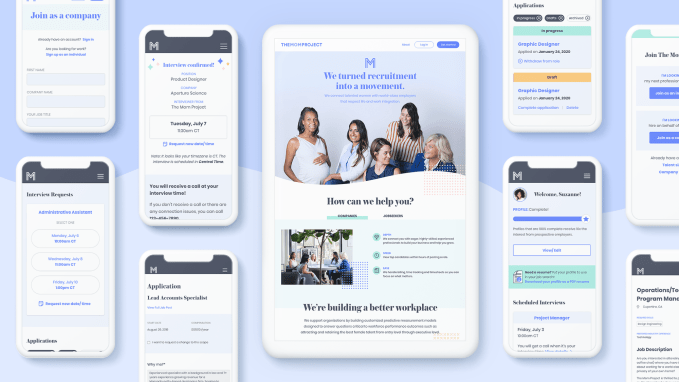
But we’re seeing a gradual shift among companies to “do better” on inclusion, and that’s opening the door to new opportunities. And to underscore that, The Mom Project — a Chicago startup that focuses on connecting women, including parents, with jobs from organizations specifically open to employing people who meet that profile — is announcing a $25 million round of funding to expand its business.

The funding comes on the heels of some significant traction for The Mom Project . Since we first profiled the company in December 2018 (when it had raised a round of $8 million led by Initialized Capital) it has grown to 275,000 users (up from 75,000), and doubled the number of organizations posting jobs on the platform to 2,000, including several major tech companies other brands like Facebook, Nike, Uber, Apple, Google and Twitter. The company has also made an acquisition of a startup called Werk to add analytics tools to for its business customers.

The Series B round of funding brings the total raised by the startup to $36 million, and it is being led by 7CG — a VC that has backed the likes of Jio (the Indian juggernaut raising like crazy right now), Cheddar (the media platform acquired by Altice) and fintech Acorns — with participation also from Citi Ventures, Synchrony Financial, SVB and High Alpha, as well as previous investors Initialized Capital, Grotech Ventures, OCA, Aspect Ventures, Wintrust Financial, Irish Angels and Engage VC.

The Mom Project is built around a two-sided platform and both of those sides will be getting a boost with this funding.

On one side, the startup works with businesses to post job listings that specifically target women and those returning to work who might need more flexible terms in their employment engagements, as well as analyse its overall HR strategies around those efforts.

On the other side, it provides a platform to women who fit that basic profile — the average age of its users is between 28 and 44, its CEO and founder Allison Robinson (pictured above with her child) said — providing them both with job listings and other support.

The plan will be to enhance both aspects of the business: more tools for enterprises to better engage The Mom Project’s community, as well as manage the recruitment and employment of people better; and more tools for Mom users, including building out an interactive community (and forums) to better “address the pain points of family and career,” Robinson said.

While there are a lot of job boards online — indeed recruitment dot-coms were some of the earliest successful business in the earliest days of the World Wide Web, meaning there are giant legacy players out there — The Mom Project is a strong example of how that model has been evolving.

Specifically, we’re seeing a flourishing of startups, and sites, focused on identifying and cultivating job opportunities for specific segments of the market, be it specific types of jobs like engineers, or a specific demographic, or both — in ways that more general job boards like those on LinkedIn or Indeed either don’t highlight as well or simply cannot address.

These are not only connecting with specific talent groups, but speaking to the needs of businesses that are trying to make more of an effort to boost their workforce diversity as part of larger inclusion policies: they are also struggling, in their case to find effective ways to target specific kinds of candidates.
As we noted when we previously profiled The Mom Project, it was started when Robinson herself struggled to return to work — her previous career had he working as an executive at Pampers — after having a child, and it’s a problem that she is not alone in having identified, and the focus on addressing that and executing well on it is one reason The Mom Project has grown.

Needless to say, recent events have had a huge impact on how all those general employment trends, and the recruitment industry, have been going. We’ve seen unprecedented job losses, hiring freezes, a push for remote working all suddenly become the norm. All of that has had a mixed impact on The Mom Project.

In some ways, it plays into what the startup has been building all along: currently some two-thirds of all jobs posted and that people are looking to do are focused on fixed-term projects, rather than permanent positions, and so as companies slow down their normal recruiting, it leaves a space for the kind of work that people who need more flexible schedules may be able to do. That’s at the same time that the companies themselves may be reducing headcount overall for all kinds of work, however.

Another big theme of the last several months has been the big shift to inclusiveness when it comes to racial diversity, and that too has direct relevance in the female workforce, Robinson noted. “Sixty percent of the job losses in the pandemic have been women, and the statistics have been even worse for women of color,” she said. “It’s like a canary in the coalmine.”

While The Mom Project doesn’t have any tools today to surface candidates that meet more diverse profiles, Robinson said that they are considering it and how to approach that in a way that works.

Meanwhile, The Mom Project is also trying to do more to speak to the other side of its marketplace and the struggles they are having. It’s launched a $500,000 fund, distributing grants specifically to small businesses that are its customers (that is, hiring via The Mom Project) the are finding it especially tough right now. (And indeed, many have pointed to the especially hard hit that SMBs are taking at the moment.)

All of this is to say that there remains a huge market opportunity here and there is an argument to be made that companies that good at identifying clever ways of targeting gaps, and executing on that well, are strong candidates for identifying and filling other gaps in the future, one reason why investors are knocking.

“There is a material disconnect between senior female talent and executive roles at major corporations, not for lack of interest, however the difficulty to institutionalize in large enterprise. The Mom Project’s platform enables corporates to source, onboard and manage variable labor at the highest skill level, a function historically which has been offline and manual for FTEs and even more so difficult for flexible employees,” said Jack Leeney, founding partner at 7GC, in an emailed interview. “In our diligence, the value add to senior HR managers of an analytic platform which enables the oversight of a variable work force was the single most important factor to integrating The Mom Project initially and at scale. There is no other growth company, digital first HR company or large scale talent agency that is addressing the female exec population with an enterprise grade digital solution.”
01 Jul 2020

Andela, which builds engineering teams tapping African talent, goes fully-remote and opens to the wider continent

In the wake of the COVID-19 pandemic, remote working has become the name of the game for knowledge workers in the tech industry. Today, a startup that was an early mover on the opportunity of that model is announcing some news to double down on the concept.

Andela, the New York startup that helps tech companies build remote engineering teams while at the same time shrinking the digital divide by tapping talent out of hubs in Africa for those teams, is today announcing a big step up in its efforts. The company is itself going fully remote, and as part of that it’s widening the pool of people that it taps to work and train by extending its reach across the whole of the African continent, while also shutting down its existing physical campuses.

Jeremy Johnson, the co-founder and CEO, said that he believes that the move will extend the talent pool that it can tap to more than 500,000 engineers from the 250,000 that it could reach through its earlier model. To date some 100,000 engineers have applied to and used Andela’s skills training tools (it works in partnership with a number of other tech companies to provide these, including Google, Microsoft and Facebook) and it has connected some 1,000 people to job opportunities.

The news comes on the heels of the company laying off 135 employees in May, with senior employees taking 10%-30% pay-cuts ahead of what the company hinted would be a big change in its business — the news that’s getting announced today. Andela has confirmed that it is not making any more cuts to its staff with today’s news. (It has around 1,200 employees globally.)

We’re seeing a huge shift right now to remote working due to the persistent existence of COVID-19 and the need to keep more social distancing in place, and a byproduct of that has been people actively moving out of expensive tech hubs now that it’s been accepted that being in them isn’t a fundamental requirement to do work.

At the same time, a lot of companies have either slowed down or frozen hiring of full-time employees but are continuing to tap people for project-based work because their businesses are no less in need of talent to operate.

Both of those trends are an endorsement of the model that Andela helped to pioneer with its remote teams concept, and they more pointedly spell opportunity for companies like it that already have networks in place to speak to those demands.

All the same, it’s a major shift for the startup, not least because it’s closing down its physical campuses.

Founded in 2014 out of Lagos, Nigeria, and backed by investors like Generation (Al Gore’s fund), the Omidyar Network, Spark Capital and Chan Zuckerberg Education and valued at $700 million as of its most recent funding round last year, Andela has for the last six years focused on building a network based around the biggest tech hubs on the continent, building physical spaces in Nigeria, Kenya, Uganda, and Rwanda, that helped source, vet and further train talent to become part of remote company teams for some 200 customers, with a large proportion of those in the US, including Cloudflare, Wellio, ViacomCBS, and Women Who Code.

As Andela started to scale that model, starting with a pilot in Ghana in 2018 and a second in Egypt last year, it saw that the more efficient route was to forego the physical hubs completely for virtual ones.

Indeed, Jeremy Johnson, the CEO who co-founded the company with Christina Sass, said that its move was not a direct response to the pandemic per se, although global events have definitely given a fillip to the concept

“What we’ve done historically is go and build campus in each location and in early days that made a ton of sense because that was helpful for training and from an infrastructure standpoint it was what we needed to do,” he said in an interview.

“But as we’ve transitioned to focus more on the breadth and depth of talent and diversity across the continent, we opened satellites in Egypt and Ghana where we didn’t require a campus. It’s actually worked really well and some ways feels like it’s opening opportunities for even greater growth.”

Our own interview was via Zoom, with me in London and Johnson in New Hampshire: Andela’s New York office (where he is normally based) closed for the moment.

“Our headquarters has technically been the internet, but we’ve had a big presence in NYC,” he said referring to its US base. He added that the expansion in Africa using the satellite/remote concept is the limit to how it apply the remote concept, with the question of what will happen in the future to even its US offices still not fully answered.

“We announced a few weeks ago we are going to be a remote-first company overall going forward,” he said. “It lets you think differently about where to live and more. I don’t know what it means longer term but for now we are all living on Zoom.”

While Andela is obviously expanding its talent pool with this move, and potentially giving a huge boost to providing more job opportunities for technology talent on the continent, the interesting next step for all of us will be to see how that connects with the other side of the marketplace — that is, the big tech companies themselves and how much they need to and are willing to invest in growing their own workforces. That is not a minor issue, considering the millions that have been laid off so far in the last few months.

Andela, Johnson said, has no plans to raise more capital at the moment with money in the bank and revenues continuing to come in. Last year, it confirmed that it was on an annual revenue run rate of $50 million, but it’s not updating that figure at the moment.

01 Jul 2020

Spotify expands Premium Duo subscription tier aimed at couples to U.S., India, dozens of other markets

Spotify today announced it is expanding Premium Duo, a feature that allows two people who live at the same place — say couples or flatmates — to share one subscription plan while maintaining their own individual accounts, to dozens of new markets. 

Premium Duo is a remarkable concept from Spotify, which it first began testing in March last year and expanded to 19 markets months later. Starting Wednesday, Spotify Premium Duo is now available in 55 markets. 

The new subscription offering is remarkable mostly because it’s solving a problem that very few people face today. At a glance, it appears that Premium Duo is designed to help people save money and gain access to a shared playlist that represents music they both cherish. 

Two people can split the cost by joining Premium Duo, and it would save them a few bucks had they subscribed to the music streaming service individually. The problem is that if you are looking to save money, you can save even more by subscribing to Spotify’s family plan that supports six members in a group.

In the U.S., Premium Duo is priced at $12.99 a month. In India, it’s priced at Rs 149 a month ($2). (In India, subscriptions to Spotify, Apple Music, Apple TV+ and a vast range of services are more affordable generally.) 

Spotify says it also creates a special Duo Mix playlist for participating members of a Premium Duo tier that will comprise songs both listeners like. But it offers a similar feature for members of the family plan as well. 

I think I have figured out why Premium Duo exists. On its website, Spotify says that “with two separate accounts you can both enjoy your own music without having to take turns.” Couples, Spotify will really appreciate if both of you got your own paid accounts instead of listening to the streaming service from one account.

Alex Norström, who is Spotify’s “Chief Freemium Business Officer” said in a statement that the streaming giant was proud to launch Spotify Premium Duo. “With two individual Premium accounts, you can both listen independently, uninterrupted and get all of your personalized playlists and features tailored just for you. We are thrilled to bring this unique Spotify Premium plan to even more markets around the world.”

01 Jul 2020

Sophia Bendz is leaving Atomico to join Berlin-based seed firm Cherry Ventures

More personnel changes in European early-stage VC, this time it’s the latest career move of former Spotify global director of marketing Sophia Bendz, who is leaving Atomico to join Berlin’s Cherry Ventures. TechCrunch understands that the full Atomico staff are being informed of Bendz’ departure at an all-hands currently taking place.

Her stated reason for leaving the London VC firm — which mainly does Series A and Series B rounds — is that, having made the difficult transition from seasoned operator to venture capitalist, she wants to focus on seed-stage where she can do more deals and work closely with founders and their teams at a much earlier stage.

Swedish Bendz is already a prolific angel investor, with a total of 44 deals in the last 9 years! Notably, although she was promoted to partner at Atomico in November 2018, having joined the firm initially as an “executive in residence,” she as helped sourced and done due diligence on deals, but was yet to lead any. I wouldn’t read too much into that but it speaks to the fact that a Series A and beyond firm does many fewer deals per year than a seed investor, and likewise the investment process is very different, too.

In the several calls over the years I’ve had with Bendz, I always got the impression that her passion is early-stage and especially consumer. In a brief catch up call yesterday, she made that abundantly clear.

That’s borne out by one of her main projects at Atomico, where she conceived of and led the Atomico angel programme – a scheme designed to “activate” the latent angel investing potential of well-connected and talented people within the European ecosystem who don’t necessarily have the funds to angel invest on their own. As well as fronting the money, Atomico — led by Bendz — provides mentoring and legal support for angel investors recruited to the program.

To that end, I’m told that the angel programme will continue and that Bendz will remain as an advisor. Officially, she remains at Atomico over the summer as she transitions Nordic sourcing over to other members of the Atomico investment team, before starting with Cherry in September.

01 Jul 2020

Bolt launches electric bike-sharing service in Paris

Like other ride-hailing companies, Bolt has been suffering from the coronavirus-related lockdown and economic downturn around the world. But the company is trying to find another revenue stream by launching electric bikes in Paris. Bolt plans to launch a similar service in other European capitals this year.

For the past couple of weeks, the only bike-sharing service that has been operating in Paris is Vélib’, the public bike-sharing service based on docked bikes and electric bikes. Many private companies have tried to compete with Vélib’ but they’ve all failed so far — Gobee.bike, Obike, Ofo, Mobike…

The most recent example is Jump, Uber’s micromobility subsidiary. Following a financial transaction with Lime, Jump has removed all its bikes from the streets of Paris, London, Rome, Brussels and more. Those electric bikes now belong to Lime, but Lime hasn’t relaunched the service yet (if it ever gets relaunched).

But it doesn’t mean bikes aren’t popular. The public bike-sharing service in Paris is even reaching record highs these days. Let’s see if it means that people are willing to give Bolt’s e-bikes a try.

In addition to ride-hailing and scooters, you’ll be able to access the bike-sharing service from the same Bolt app. Like other free-floating vehicles, you can unlock a bike by scanning a QR code.

When it comes to pricing, Bolt is trying to make its service as cheap as possible to attract its first users. There won’t be any unlock fee and it’ll cost €0.10 per minute. It’s still unclear how much it’s going to cost after the launch phase.

Vélib’ still feels more attractive when it comes to pricing. It costs €2 to rent an e-bike for up to 30 minutes, or €8.30 per month to rent as many e-bikes as you want in a given month. With Bolt, you pay €2 for a 20-minute ride — and that’s without any unlock fee.

Bolt has 30 million users in 35 countries. It operates a scooter service in 21 cities around Europe.