Author: azeeadmin

30 Jun 2020

Daimler-backed Momenta says its robotaxis will be fully driverless and profitable in 2024

In China and the U.S., there’s much debate about when and how humans will achieve fully autonomous robotaxis at scale — cars that chauffeur passengers under complex road conditions without safety drivers behind the wheel.

Many pieces are needed to make this happen: mammoth amounts of test data, advanced algorithms, strong operational teams, big checks from investors, local policy support, to name a handful. Until that day arrives, the bold claims from players in the field seem mostly out of reach.

One recent pledge came from Momenta, one of Asia’s most valuable artificial intelligence startups and the country’s first autonomous driving company to reach the $1 billion unicorn valuation back in 2018. The four-year-old startup, which specializes in software solutions for autonomous vehicles (AVs), told TechCrunch recently that its entire robotaxi fleet will operate without safety drivers in 2024, while some of its vehicles will already be driverless by 2022.

Competition in AVs is intense. Alphabet’s Waymo told customers last October that its completely driverless cars “are on the way.” Tesla planned to launch a robotaxi network in 2020. In China, Toyota-backed Pony.ai now offers autonomous ride-hailing service with safety drivers in two cities. SoftBank-backed ride-hailing leader Didi just began testing a robotaxi service in Shanghai.

An expensive pursuit

The autonomous cabs we now see around the world are mostly trial programs running in designated areas. Most self-driving companies build their own fleets from the ground up. The business is cash-hemorrhaging and commercialization is still years down the road, so the question is who can make it work before running out of cash.

“The expense [of building car fleets] is even unbearable for a multi-billion-dollar company like Baidu, let alone startups like us. But it may be possible for Waymo’s size,” said founder and chief executive Cao Xudong, who appeared in a plain white t-shirt on a Zoom call with us.

The 34-year-old founder previously helped launch face recognition giant SenseTime’s research division after a stint at Microsoft’s reputed Asia Research arm, which has trained many of China’s top AI brains and entrepreneurs.

Uber’s IPO prospectus revealed its self-driving unit was burning up to $20 million a month. Waymo’s valuation was slashed 40% by Morgan Stanley last year citing concerns of cash burn.

Cao claimed that his company can achieve full vehicle automation while keeping costs manageable for a startup like itself. While Momenta couldn’t reveal whether it’s actively fundraising, it said it has a “stable cash flow” that will last for at least three more years. The company had raised over $200 million by 2018.
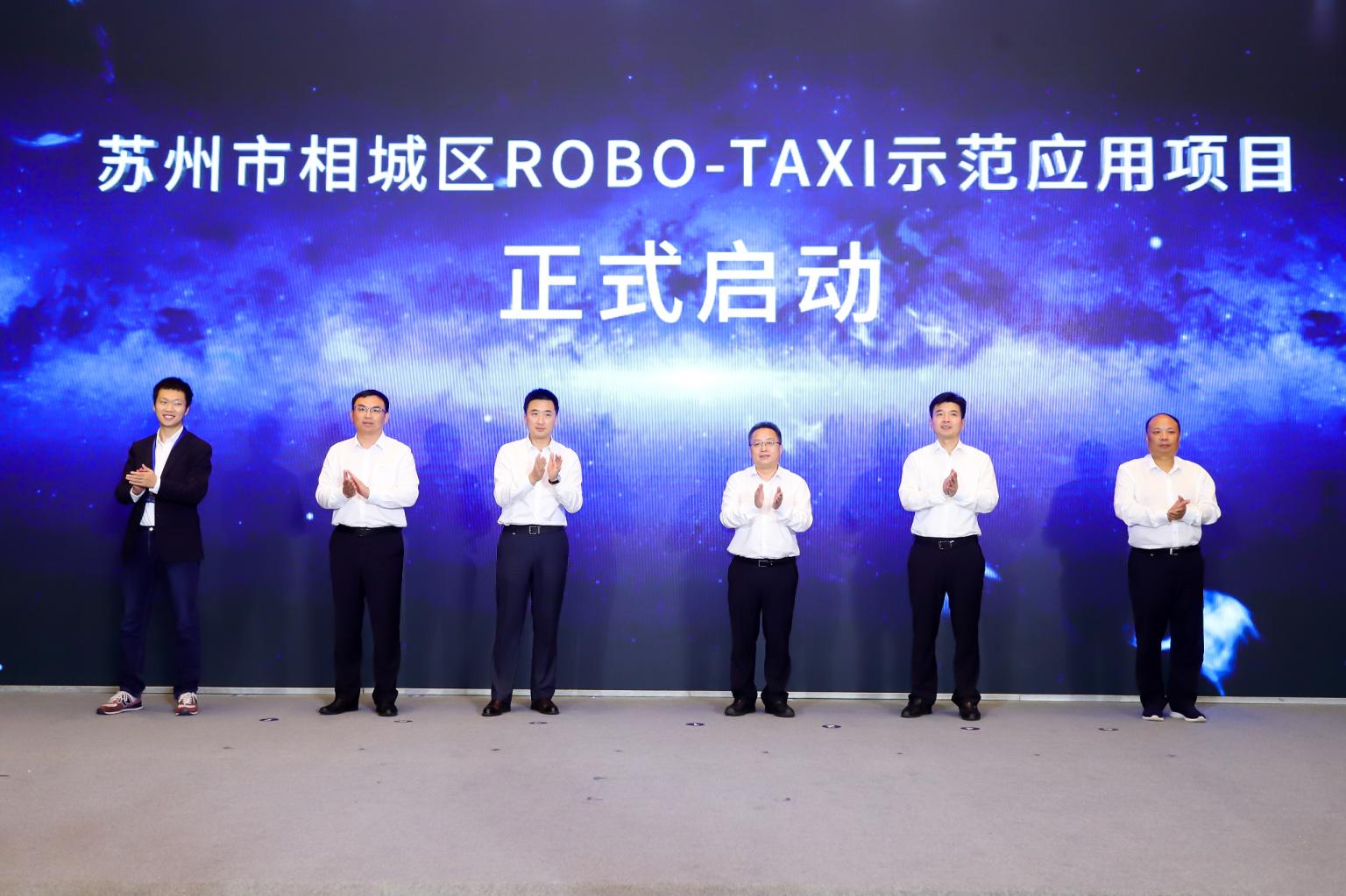
Cao Xudong (far left) posing with municipal officials at an inaugural event for Momenta’s robotaxi program in Suzhou. Source: Momenta

Before diving into Momenta’s expenditures, it’s important to note that none of its progress can happen without state support. In its transition from traditional manufacturing to a tech-driven economy, China has made large sums of government-guided funds available for players in strategic industries such as 5G and artificial intelligence, which, of course, includes autonomous driving.

More recently, Beijing moved to speed up the development of so-called “new infrastructure” like data centers and 5G networks to offset COVID-19’s economic impact. These are basic facilities necessary for AVs, said Cao, and the policy push will certainly give China’s autonomous driving sector a strong boost.

The government is also clearing regulatory hurdles for promising AV operators. Just this month, Momenta secured the first license to recruit passengers for its robotaxis running on chosen public roads in Suzhou, an affluent and historic city bordering Shanghai that houses its sprawling 4,000-square-meter headquarters.

A sustainable path to automation

Unlike many peers in its field, Momenta depends on partners to deploy technology and reap data rather than owning its own fleets. While forms of collaboration may vary case by case, its robotaxi service will largely be a joint effort with automakers, which will likely provide vehicles and importantly, driver data; local governments, which can provide infrastructure like 5G networks; and itself, which develops self-driving software.

“If you have one million cars, which each costs a few hundred thousand RMB, that accrues to hundreds of billions of RMB. It’s no small money,” Cao contended.

Right now Momenta is working to solidify its alliance in Suzhou, where we rode in one of its trial AVs last year. While the startup aims to achieve full automation eventually, it’s not getting rid of all safety personnel.

“We will take advantage of 5G infrastructure and have remote safety staff who will each be monitoring, say, ten cars. Thus we will lower the cost of safety managers to one-tenth of its current level,” said Cao.

When all of its vehicles go driverless in 2024, the company will have significantly reduced labor costs and reach a positive operating margin per vehicle, the founder forecasted. If things go as planned, it will also roll its light-asset model into other cities outside Suzhou, entering a period of “enormous growth.”

“It’s a bit like MacDonald’s franchising model. We will come up with a set of operational standards and replicate them in other cities, where we will collaborate with the local government, taxi services, operational companies and et cetera,” said Cao.

Momenta also uses less expensive sensors, what the founder called “mass-produced” ones such as millimeter-wave radars and high-definition cameras as opposed to expensive LiDar sensors. Elon Musk would agree with his choice, having blared that “anyone relying on lidar is doomed.”

The startup procures core hardware parts from international and domestic vendors, counting NXP, Nvidia and Texas Instruments as its semiconductor partners. Cao declined to comment on the ramifications of ongoing U.S.-China trade tensions, but it’s not hard to see how sanctions from D.C. could choke the startup’s relationships with its suppliers.
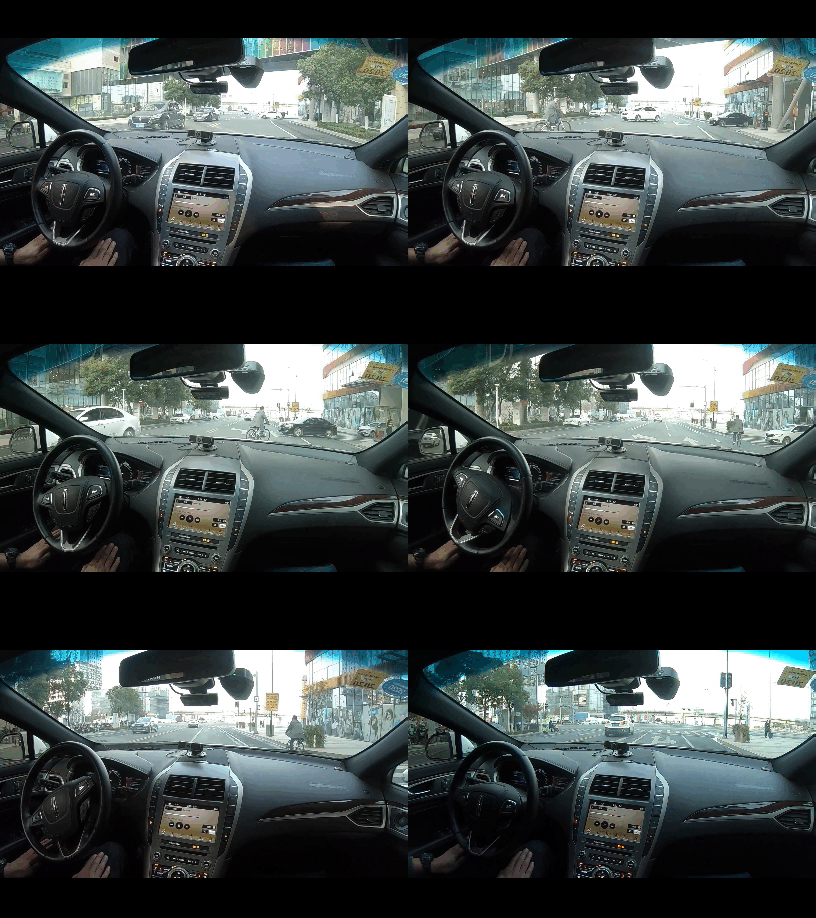
Momenta’s autonomous driving test in a commercial district. Source: Momenta

The other cost-cutting tactic is automation, which allows the company to minimize the number of engineers. There are nuances in this seemingly simple principle though.

“I’ve repeatedly told our R&D team that they are hired not as problem solvers but as architects. Why? Because Level 4 [autonomous driving without human input] involves long-tail scenarios,” the founder explained enthusiastically. “You may be presented with millions of problems. Sure, we can solve 100 problems with 100 people, but we can’t hire one million engineers to answer one million questions… So if you can build an automatic problem-solving system, automation will take care of a lot of the work for us.”

Control of data

To get ahead in the AV race, contestants need to accumulate a large quantity of data to train up algorithms. Knowing it doesn’t enjoy the financial prowess to deploy thousands of robotaxis, Momenta has been selling autonomous driving software to traditional OEM partners and Tier 1 customers, which not only supply it with data but also a steady stream of revenue.

Once the partners’ vehicles go out on the market, driving data begins pouring in, and Momenta will input that data into algorithmic training and periodically upgrade the autonomous cars for consumers.

This setup — getting reams of data at low costs — sounds ideal in theory, but it has one big red flag: the data, which is the lifeblood of any AI company, belongs to auto companies, not Momenta. Cao didn’t seem concerned, arguing that the partners are incentivized to hand over data because Momenta can offer the advanced technology absent in traditional carmakers.
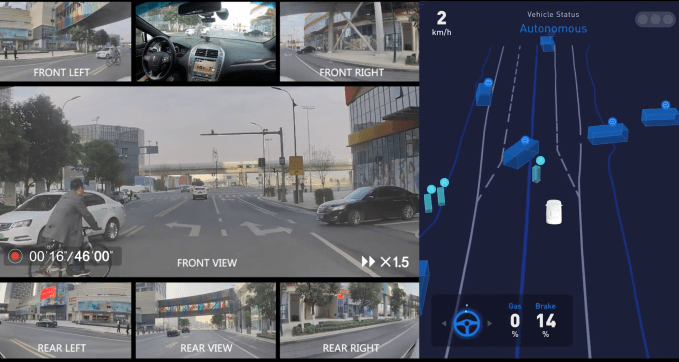
The field of view of Momenta during autonomous driving. Source: Momenta

“When we can extract data from customers’ long-tail problems to train our algorithms, their autonomous driving systems will consequently be improved. We are essentially creating value for customers,” Cao said with an air of confidence.

Working with outsiders also forces Momenta to juggle competing needs. Its business is no longer just about throwing money at R&D. Having customers means it needs to consider what makes commercial sense for automakers, from the choice of sensors to software solutions.

“The auto industry thinks very differently from the internet industry. You can’t ask carmakers to adapt to your way,” reckoned Cao. As such, he’s hired a considerable number of auto industry veterans, including business development managers with years of experience at Mercedes Benz and Toyota.

Momenta has been reticent about its list of clients, though Cao hinted to us last year that there weren’t many because partnerships in AVs necessitate close and resource-intensive collaboration.

So far, we know Momenta is developing high-definition maps for Toyota’s AVs. The startup also counts Daimler as a major investor, which kicked off its AV strategy in 2017, though it wouldn’t disclose whether the German auto giant is a client. Daimler’s website offers a clue, listing Momenta under its portfolio managed by the “M&A Tech Invest” team, which is responsible for technology and startup acquisitions for the world’s leading premium car brand.
30 Jun 2020

Watch SpaceX launch a GPS III satellite for the U.S. Space Force live

SpaceX is set to launch a Falcon 9 rocket today from Cape Canaveral Air Force Station in Florida. The launch is set to take place at 3:55 PM EDT (12:55 PM PDT), with a 15-minute window opening at that time, and there is a backup opportunity on Wednesday, July 1 if the launch needs to be pushed back for any time. This rocket is carrying a GPS III Space Vehicle, which is named “Katherine Johnson” after the NASA mathematician who played a fundamental role in Mercury, Apollo and Space Shuttle programs.

The launch today will add another GPS III satellite to the U.S. Space Force’s existing in-space GPS assets, which include three already on orbit, with another one set to be deployed in 2022. This third-generation GPS satellite is three times more accurate, and eight times more resilient in terms of its ability to resist gaming efforts than prior versions. In addition to its use for military and defense applications, the GPS III satellite will also contribute to civilian GPS-based satellite navigation.

This launch will include a landing of the Falcon 9 booster, using SpaceX’s “Just Read the Instructions” drone landing ship in the Atlantic Ocean.

SpaceX has had a very busy launch schedule over the past month, including its historic first crewed spacecraft launch on May 30 with astronauts Bob Behnken and Doug Hurley on board. It also subsequently launched two Starlink missions to add to its low Earth orbit broadband constellation, and had another planned for last week, which ended up having to be delayed until after this flight today.

The webcast will kick off above around 15 minutes prior to the launch time, so at around 3:40 PM EDT (12:40 PM PDT)

30 Jun 2020

Capital raises $9M for its AI-based ‘capital as a service’ funding platform for startups

In 2019, in the US alone, more than 10,000 startups raised more than $133 billion in venture funding, with a large proportion of that equity investments. Today, a company building a platform to help startups consider alternative routes to financing — specifically less dilutive options that give up less or no equity in the process — is announcing a round of funding of its own to ramp up its activity.

Capital, which has built an AI-based platform called the “Capital Machine” that ingests details about your company to provide tips on how to optimise it and — if you make at least $5 million in annual recurring revenue — to provide offers of financing (typically between $5 million and $50 million, at a 5-15% interest rate, and typically within a day of asking for it), has raised a further $9 million, a “Seed 2” that it will use to continue expanding the Capital Machine’s functionality.

The funding is coming from an interesting group of investors. It’s being led by AME Cloud Ventures (the investment firm led by Jerry Yang, who once founded Yahoo), with participation also from Future Ventures (Steve Jurvetson’s fund), Greycroft, Wavemaker Partners, Partech, and angels including Howard Morgan (of Rentech and First Round Capital) and Stuart Roden (former Chairman of Lansdowne Partners).

Many of these are repeat backers: this second seed round comes about 8 months after Capital launched with its first seed funding of $5 million.

When Capital launched last October, it also announced $100 million on its balance sheet to distribute as loans: it hasn’t disclosed how much of that is now dispersed but Blair Silverberg, the CEO who co-founded Capital with Csaba Konkoly and Chris Olivares, said the company has mostly been “heads down building the Capital Machine” in the last 8 months. It also says that its users have aggregate annual sales of $3 billion between them, so there are definitely customers onboarded.

Silverberg also hinted that in the coming months, it’s due to announce more news on financing sources as it continues to scale, which sounds like it is gearing up to announce strategic partners, perhaps other funds or banks, who will be adding to that investing pool as well.

Before founding Capital, Silverberg worked closely with Steve Jurvetson as an investor at DFJ (which last year rebranded as Threshold Ventures), and in that capacity got a lot of experience with the equity-based investment model.

That wasn’t an entirely happy picture, though: Silveberg could see that for every company that got funded there were so many more that couldn’t be considered, either because of sheer volume, or because of investment theses that VCs are using, or some kind of “investment bias” as Silverberg described it.

On top of that, even when money was there for the taking, founders were giving up equity to take it, in some cases so much after several years and several rounds of funding that one had to question if that was always the best route to take.

And finally, while there have always been alternatives to equity funding, many don’t seem to have the right routes to access them because they are too small. Venture debt has largely been handled by big banks and other institutional firms, and thus has largely been used by the larger startups that these bigger firms consider.

His idea was to use the advances of AI, software-as-a-service and the surge of interest (and, I would add, trust) in fintech and running financial services online to build something that could give founders and CFOs of smaller startups an alternative to consider, which took into account the fact that done right it could be a win-win for financiers and those getting funded.

“A tech company does not instantly mean a risky company these days,” said Silverberg. “It’s fascinating to us that tech companies have not had the tools to slice and dice their financing financing options. But the cost of capital can be the key advantage for a company.”

The aim initially has been to target tech companies, as these are the most typical recipients of equity investments from VCs, but Silverberg said that the picture is bigger than that.

“The Capital Machine is very generalised,” he said about the analytics capabilities of the platform, and thus its customer targets. “We can look at merchant shipping fleets or an insurance agency or a SaaS company or a media property. We can look at and understand any business. But we have found that there is the biggest cultural misunderstanding among those that started life with venture backing.”

He said that thousands have tapped the Machine for insights, which are free to get (indeed the data is helpful for the Capital Machine regardless as it continues to learn more about businesses each time it gets used). But in practice, the pool of those taking loans is smaller and typically splits 50/50 between those that are taking Capital debt to meet all of their funding requirements, and those that are taking it in combination with other kinds of financing, including equity funding.

It is somewhat ironic that Jurvetson — who eschewed making deals for internet and enterprise companies while at DFJ — would now be backing a SaaS company essentially offering a B2B service.

“Since the 90s I have avoided most of the categories of traditional investment, such as internet and enterprise software,” he admitted in an interview. “Oh, yet another B2B retailer or exchange. There are just too many clones, so I shifted to nanotechnology and other areas and delegated those to my partners.”

But notwithstanding that he knows and seems to really like Silverberg — “We know each other and there is a high degree of trust there,” he said. “It’s a deep business relationship.” — he also through his years of investing also saw the disparities of the model, and decided it was time to back an alternative.

“I was trying to put my finger on what it is that so empowering of bringing frictionless capital to companies that don’t show up on my radar screen,” he said. “Currently venture capital dollars flow into a small small amount of companies that are sucking up too much capital, and on the investor side, you are basing the decision too much on an excel spreadsheet. It’s the worst strategy.”

The idea of applying a new and clever piece of software to fix that is just a good business idea, he added, which has a lot of potential also to extend to offering a range of other financial services to startups. “The more software-centric [the solution] is, the more the headroom you have. It’s enormous and then it’s just, can they execute?”

That may have been the question to ask about startups getting funded in genera, but it’s also the big question for Capital, which is not the only one that has identified the opportunity to sit alongside VCs as an alternative for startup funding. Others that have also raised money to build their own non-dilutive financing platforms include Clearbanc, which recently tweaked its model specifically to help startups struggling in Covid-19 times with their runway; Lighter Capital; Wayflyer aimed at e-commerce companies; and many more.

30 Jun 2020

Willa secures $3M from EQT Ventures to let freelancers get paid immediately

Willa, the Sweden and U.S.-based fintech that wants to help freelancers request payment and get paid immediately for a fee, has raised $3 million in funding. The company’s founders are former early members of Spotify’s growth team and also created influencer marketing platform Relatable.

Leading the seed round is EQT Ventures. Also participating is ex-Atomico partner Mattias Ljungman’s Moonfire Ventures, Nordic Makers, Michael Hansen and Johan Lorenzen. Willa says the injection of cash will enable it to launch “Willa Pay,” an app that promises to remove the paperwork required when billing corporations for freelance work and comes with a payment process that claims to make it easier to collect payments.

One you’ve completed a job, you use the Willa Pay app to enter the details of the work, how much you are supposed to get paid, and who you did the job for. Willa Pay then contacts the corporation and issues the paperwork.

If you wish to get paid earlier than a corporation’s standard terms, which is often anything from 30-90 days, for a small fee Willa will pay you directly. The idea is that freelancers gain more predictable income, and can pay their bills on time and protect their credit score.

“The payment process between freelancers and corporations is completely broken,” says co-founder and CEO Kristofer Sommestad. “It’s built for the old world, by people of the old world. Both freelancers and corporations are suffering a lot from this. At least half of freelancers experience problems getting paid, while a third of payments are late. The result? Credit scores decline”.

Sommestad says Willa Pay solves this problem by “re-engineering” the payment process. “We’re creating it from scratch with the new freelance economy in mind. And we’re starting with freelancers’ biggest problem: getting paid, on time, every time. As a freelancer, using the Willa Pay app is a faster, simpler and better way of requesting payment for your work”.

To help with Willa Pay’s launch, Sommestad says the product’s first 10,000 users will be influencers, averaging a 100,000-plus following. “They are brilliant creators, the world’s best product marketeers and suffering as much as anyone from the payment problems,” he tells me. “This is, by the way, a brilliant distribution move from the Spotify growth playbook”.

Meanwhile, on the question of competitors, the Willa CEO says financial services are typically built by massive companies like PayPal and Intuit, along with many startups “building shiny tools or launching yet-another challenger bank”.

“But none of them are solving the core problem for freelancers… That’s what we do at Willa. We’re focusing on solving the biggest problem, for the people that suffer the most”.

30 Jun 2020

Berlin’s DeepSpin raises seed funding for its ‘portable, ultra-low-cost’ MRI system

DeepSpin, a Berlin-based startup that is developing what it describes as a “next-generation, AI-powered MRI imaging machine”, has raised €600,000 in seed funding.

Backing the round is APEX Digital Health, with participation from existing investors Entrepreneur First (EF) and SOSV, along with a number of unnamed angel investors. Including grants and earlier investment, it brings the total raised to €1 million pre-launch.

DeepSpin is a graduate of EF’s company builder programme, where its two founders — Clemens Tepel, a former McKinsey consultant, and Pedro Freire Silva, a PhD researcher from KIT — decided to partner in September 2019. Freire Silva drew on his research into small-scale, mass-manufacturable MRI systems and pitched the idea to his future co-founder.

“From the beginning I found the idea very intriguing and so we directly jumped into attempting to prove its feasibility,” says Tepel. “Within 4 weeks we were able to prove it in simulation, get industry-leading advisors on board and get first LOIs [letter of intent] from interested clinicians”.

Yet-to-launch and still in the development phase, DeepSpin aims to build a new type of MRI system at a “fraction of the cost, weight and size” of existing systems. To make this possible, the startup is has developed a new antenna technology combined with AI-controlled operation, which the startup is currently patenting.

“The problem we are solving is that MRI, the most advanced medical imaging method, is currently not easily accessible because it is incredibly expensive, requires specialised operators and needs specifically shielded rooms,” explains Tepel. “We are removing all of these constraints based on our proprietary technology, making MRI universally accessible for any patient, anywhere in the world”.

Adds Freire Silva: “Instead of combining highly expensive hardware with standard software, as it is done on conventional MRI scanners, we will be able to obtain the same clinical information by applying very sophisticated algorithms on simplified hardware, thereby reducing our system’s cost by orders of magnitude”.

Tepel tells me this approach has not been taken before because both key enablers — highly capable AI-algorithms and the specific antenna design – were only available very recently.

Having proven DeepSpin’s methods in simulation, the next step and the team’s current focus is to develop a first fully AI-driven prototype. “Based on that, we will develop an initial product version, aimed at pre-clinical applications, before going into medical certification, which then will allow us to sell our product for clinical use across a range of medical domains and to new geographies that can’t afford conventional systems,” says Tepel.

30 Jun 2020

Facebook launches Avatars, its Bitmoji competitor, in India

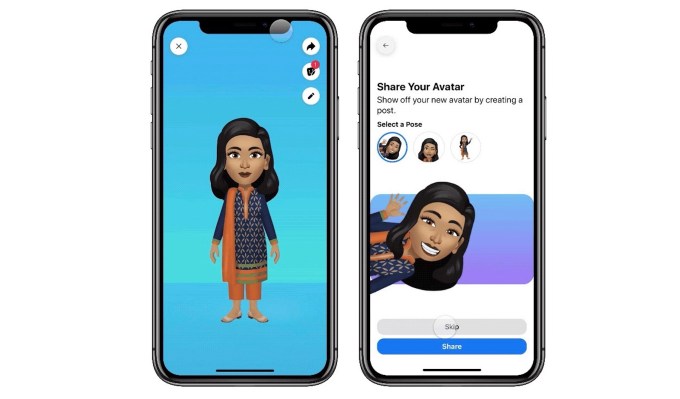
Facebook Avatars, which lets users customize a virtual lookalike of themselves for use as stickers in chat and comments, is now available in India, the social juggernaut’s biggest market by users account.

The American firm said Tuesday it had launched Avatars to India as more social interaction moves online amid a nationwide lockdown in the world’s second largest internet market. The company said Avatars supports a variety of faces, hairstyles, outfits that are customized for users in India.

Avatars’ launch comes to India at the height of a backlash against Chinese apps in the country — some of which have posed serious competition to Facebook’s ever-growing tentacles in Asia’s third-largest economy. On Monday evening, New Delhi ordered to ban TikTok and nearly 60 other apps developed by Chinese firms.

The social giant’s Avatars, a clone of Snapchat’s popular Bitmoji, was first unveiled last year. The feature, which Facebook sees as an expression tool, aims at turning engagements on the social service fun, youthful, visually communicative, and “more light-hearted.”

Users can create their avatar from the sticker tray in the comment section of a News Feed post or in Messenger. Facebook has expanded Avatars, initially available to users in Australia and New Zealand, to Europe and the U.S. in recent weeks.

Scores of companies including Chinese smartphone maker Xiaomi have attempted to replicate Bitmoji in recent years — though no one has expanded it like Snapchat.

Earlier this year, Snapchat  href="https://techcrunch.com/2020/01/30/bitmoji-tv/">introduced Bitmoji TV, a series of 4-minute comedy cartoons with users’ avatars. At the time, Snapchat said that about 70% of its daily active users, or 147 million of its 210 million users, had created their own Bitmojis.

Snapchat is preparing to launch the Spectacles, its AR glasses, in India.

30 Jun 2020

Facebook launches Avatars, its Bitmoji competitor, in India

Facebook Avatars, which lets users customize a virtual lookalike of themselves for use as stickers in chat and comments, is now available in India, the social juggernaut’s biggest market by users account.

The American firm said Tuesday it had launched Avatars to India as more social interaction moves online amid a nationwide lockdown in the world’s second largest internet market. The company said Avatars supports a variety of faces, hairstyles, outfits that are customized for users in India.

Avatars’ launch comes to India at the height of a backlash against Chinese apps in the country — some of which have posed serious competition to Facebook’s ever-growing tentacles in Asia’s third-largest economy. On Monday evening, New Delhi ordered to ban TikTok and nearly 60 other apps developed by Chinese firms.

The social giant’s Avatars, a clone of Snapchat’s popular Bitmoji, was first unveiled last year. The feature, which Facebook sees as an expression tool, aims at turning engagements on the social service fun, youthful, visually communicative, and “more light-hearted.”

Users can create their avatar from the sticker tray in the comment section of a News Feed post or in Messenger. Facebook has expanded Avatars, initially available to users in Australia and New Zealand, to Europe and the U.S. in recent weeks.

Scores of companies including Chinese smartphone maker Xiaomi have attempted to replicate Bitmoji in recent years — though no one has expanded it like Snapchat.

Earlier this year, Snapchat  href="https://techcrunch.com/2020/01/30/bitmoji-tv/">introduced Bitmoji TV, a series of 4-minute comedy cartoons with users’ avatars. At the time, Snapchat said that about 70% of its daily active users, or 147 million of its 210 million users, had created their own Bitmojis.

Snapchat is preparing to launch the Spectacles, its AR glasses, in India.

30 Jun 2020

Indian ride-hailing giant Ola adds tipping option to its app globally

You can now tip your Ola driver. The Indian ride-hailing giant said on Tuesday that it has rolled out this feature to its users in India, Australia, New Zealand, and the United Kingdom — all the nations where it currently operates.

Ola said riders in each market will see a range of denominations they can pick as the amount they wish to tip digitally. It plans to allow riders to pay a custom amount of their choice in a few weeks, a spokesperson told TechCrunch.

All of Ola’s 2.5 million driver partners globally — from those who operate two-wheelers to four — can receive tips, the nine-year-old ride-hailing giant said.

The addition of this feature comes as Ola looks to broaden its efforts to help its driver partners who have been financially hit in recent weeks after New Delhi and several other governments across the globe enforced a lockdown to contain the spread of the coronavirus.

Uber first introduced the tipping feature in some states in the U.S. in 2017 and has since expanded to it many more states and nations. It rolled out the tipping feature to its users in India early this year.

Driver partners on both the platforms have long expressed the need for a tipping feature to supplement their incomes after both the companies gradually reduced the incentives they had bandied out in the early years.

“Since the beginning of the pandemic, our driver-partners have worked tirelessly to enable essential travel for all those in need, despite facing their own challenges. As services resume, they continue to personally invest in ensuring the safety of their customers and deliver a comfortable ride experience,” said Anand Subramanian, a spokesperson at Ola.

“Linking rewards to higher-quality services, we invite our customers to join us in sharing our appreciation and supporting them during these trying times. Not only will the new functionality provide an opportunity for drivers to increase their earnings but will also showcase how a small gesture of solidarity and support from customers will drive our driver-partner community to go a long way,” he said.

In recent months, Ola has announced a range of relief packages including exempting lease rental to assist its driver partners. It has also committed to provide driver partners with a few hundred dollars if they or their family members test positive for Covid-19. Uber has yet to offer any significant aid to its driver partners in India.

Like their driver partners, both Ola and Uber have been hit with the global pandemic as well. Ola said last month it was cutting 1,400 jobs, or 35% of its workforce in India. Days later, Uber said it was eliminating 600 jobs, or 25% of its local workforce, in the nation. India is a key overseas market for Uber.

30 Jun 2020

Indian ride-hailing giant Ola adds tipping option to its app globally

You can now tip your Ola driver. The Indian ride-hailing giant said on Tuesday that it has rolled out this feature to its users in India, Australia, New Zealand, and the United Kingdom — all the nations where it currently operates.

Ola said riders in each market will see a range of denominations they can pick as the amount they wish to tip digitally. It plans to allow riders to pay a custom amount of their choice in a few weeks, a spokesperson told TechCrunch.

All of Ola’s 2.5 million driver partners globally — from those who operate two-wheelers to four — can receive tips, the nine-year-old ride-hailing giant said.

The addition of this feature comes as Ola looks to broaden its efforts to help its driver partners who have been financially hit in recent weeks after New Delhi and several other governments across the globe enforced a lockdown to contain the spread of the coronavirus.

Uber first introduced the tipping feature in some states in the U.S. in 2017 and has since expanded to it many more states and nations. It rolled out the tipping feature to its users in India early this year.

Driver partners on both the platforms have long expressed the need for a tipping feature to supplement their incomes after both the companies gradually reduced the incentives they had bandied out in the early years.

“Since the beginning of the pandemic, our driver-partners have worked tirelessly to enable essential travel for all those in need, despite facing their own challenges. As services resume, they continue to personally invest in ensuring the safety of their customers and deliver a comfortable ride experience,” said Anand Subramanian, a spokesperson at Ola.

“Linking rewards to higher-quality services, we invite our customers to join us in sharing our appreciation and supporting them during these trying times. Not only will the new functionality provide an opportunity for drivers to increase their earnings but will also showcase how a small gesture of solidarity and support from customers will drive our driver-partner community to go a long way,” he said.

In recent months, Ola has announced a range of relief packages including exempting lease rental to assist its driver partners. It has also committed to provide driver partners with a few hundred dollars if they or their family members test positive for Covid-19. Uber has yet to offer any significant aid to its driver partners in India.

Like their driver partners, both Ola and Uber have been hit with the global pandemic as well. Ola said last month it was cutting 1,400 jobs, or 35% of its workforce in India. Days later, Uber said it was eliminating 600 jobs, or 25% of its local workforce, in the nation. India is a key overseas market for Uber.

30 Jun 2020

Strap in — a virtual Tour de France kicks off this weekend on the online racing platform Zwift

The pandemic has wreaked havoc on all manner of professional sports this year, and cycling has not been immune. For example, the best-known race on the planet, the Tour de France, normally staged in July, has had to be pushed back to August 29 through September 20.

That doesn’t mean that the world — and professional cyclists — can’t enjoy world-class racing this summer. In fact, beginning this coming weekend, 23 top men’s teams and 17 women’s teams will participate in a virtual version of the event that’s being hosted by six-year-old Zwift, after it was chosen by the official race organizer of the real tour, Amaury Sport Organization (ASO), as its partner on the event.

It’s a coup for the Long Beach, Calif.-based, venture-backed company whose multiplayer video game technology is used by both amateur and pro cyclists and that, according to Outside magazine, is now the biggest player in the growing online racing world.

Investors have noticed, funding the company to the tune of $170 million so far, says cofounder and CEO Eric Min.

This Tour has the potential to drive many more users its way, too.

For one thing, the virtual version of the event — which will feature six stages that last roughly hour over the next three weekends beginning this Saturday, getting underway with the first women’s stage, followed immediately by the men — will be broadcast in more than 130 countries, including on NBC Sports here in the U.S.. It’s hard to imagine another way for a company like Zwift to get so much exposure, so quickly.

The race is also open to any cyclists on its platform who want to race on the same roads as the professionals, meaning anyone who wants to “compete” in this virtual tour needs to sign up for an account, though it’s worth noting a few things. First, mere mortals won’t be racing at the same time as the cyclists in the Tour but during mass participation events that will ostensibly provide them the chance to experience exactly what the pros went through and actually compare their power, heart rate, cadence and other data to their pro rider heroes.

Also, signing up isn’t free. Users can check out the platform for a free, seven-day trial, but after that, Zwift costs $15 per month (though even the pros hit the pause button on their accounts when they’re spending more time outdoors, says Min.)

Riders also need a smart trainer, which costs around $300. Zwift doesn’t make its own trainers — yet — but its software works with the hardware of a dozen or so companies.

Unsurprisingly, Min sounded both excited and terrified when we caught up with him last week to talk about the race, whose first two stages will be held in Zwift’s existing game world, Watopia, with the other stages orchestrated in virtual versions of real courses from the race.

Though Zwift has staged virtual races before —  including the Giro d’Italia, which is basically the Tour de France for Italy, and the Vuelta a Espana, an annual multi-stage race in Spain — it “doesn’t get any bigger than this,” said Min, who told us the idea was hatched six weeks ago with ASO and that Zwift has been working furiously to prepare for the race ever since.

It could prove a turning point for the outfit. It already has nearly two million accounts, and while subscribers ebb and flow, depending on the time of year, the virtual Tour is an opportunity for some of those riders to “reengage,” Min says, adding that Zwift has been growing 50 percent year over year, and has unsurprisingly seen pick-up accelerate throughout the pandemic.

Zwift doesn’t just cater to competitive athletes, Min stresses, saying that more than half the company’s customers are overweight and that, unlike Peleton, its customers are drawn less to particular instructors and more to the idea of being part of a club where they can train, take part in events, and compete with one another another, either in a public way or by via private rides wherein users share maps with friends, for example. (“Zwifters,” as they are called, also engage with each other over the tracking tool Strava, which they use to capture their real-world and virtual rides, says Min.)

Either way, both amateur rider and professional racers will undoubtedly have high expectations of the Tour itself, even while it comes with more inherent challenges, including less time to break away from fellow riders than in the real-world tour, where each stage can take five or six hours.

Min thinks Zwift is ready. On our call, he talked about Zwift convincingly creates drag, for example, walking through the software’s calculations, including a rider’s weight and body mass and the terrain they’re on and whether a rider is receiving draft from riders in front. Apply resistance to the machine  or easing it, is what gives riders a sense of motion, and inertia, and of going downhill — fast.

“It’s not exactly like outdoor riding,” said Min, but combined with the software’s visual tools, meant to fool the mind, “it gets pretty darn close.

At least the software, including the Tour maps, is now largely done, Min said. Now, Zwift is ensuring its broadcast tools work as well as possible, among other last-minute priorities. “We’ll do some dry runs [this] week. Then it’s showtime,” he said, before acknowledging that the “stakes are pretty high. It has to be rock solid.”