Author: azeeadmin

29 Jun 2020

In a significant expansion, Spotify to launch real-time lyrics in 26 markets

Last November, Spotify confirmed it was testing real-time lyrics synced to music in select markets. Tomorrow, the company will announce the launch its new lyrics feature in 26 worldwide markets across Southeast Asia, India, and Latin America. This will be the first time lyrics have been offered in 22 of these 26 markets, as only Thailand, Vietnam, Indonesia, and Mexico had some form of lyrics support in the past via other providers.

The launch is being made possible by a new agreement with lyrics provider Musixmatch, which was also the source for the tests seen last year. At that time, users in Canada had reported gaining access to real-time lyrics, as well. However, we understand that Canadian users in this test will no longer have the lyrics feature when it  officially launches tomorrow, Tuesday, June 30th, in the supported markets.

The feature will offer real-time lyrics in the language that the songs are sung in. Users will access the feature by tapping “Lyrics” at the bottom of the “Now Playing” screen. 

The following markets will gain access to the new feature starting tomorrow: Argentina, Brazil, Colombia, Chile, Mexico, Peru, Bolivia, Costa Rica, Dominican Republic, Ecuador, Guatemala, Honduras, India, Nicaragua, Panama, Paraguay, El Salvador, Uruguay, Vietnam, Philippines, Indonesia, Malaysia, Thailand, Taiwan, Singapore, and Hong Kong.

Spotify confirmed the above details to TechCrunch, noting the lyrics support will go live at 10 AM EST on Tuesday, June 30.

The streamer had worked with Musixmatch in the past, but cut ties with the provider in 2016 before teaming up with lyrics provider Genius for its “Behind the Lyrics” feature.

Since 2016, Genius has provided Spotify with backstory and commentary along with partial lyrics to power the Behind the Lyrics feature, but didn’t offer full lyrics.

In 2018, Apple teamed up with Genius to provide full lyrics to Apple Music listeners. Apple Music also then became the exclusive web player for Genius. In 2020 Apple expanded its relationship with Genius to co-produce a video series called “Verified” which was made available on Apple Music.

Spotify’s delay to roll out lyrics is due to the complexities around lyrics and licensing. As a result, providing users with access to legally licensed lyrics on streaming services has been difficult for many companies, not only Spotify.

Last year, for example, the Genius sued Google and its lyrics partner, LyricFind for $50 million, claiming it caught LyricFind redhanded stealing its lyrics. Genius had used a clever digital watermarking technique where it had set the 2nd, 5th, 13th, 14th, 16th and 20th apostrophes of each watermarked song as curly apostrophes, and all the other apostrophes straight. Interpreted as Morse code, the pattern spelled out the word “redhanded.”

That companies would have to resort to digital tricks like this to combat lyrics-stealing shows how complicated the market for lyrics has become. Contrary to popular wisdom, lyrics aren’t usually provided by the labels or publishers. Instead, lyrics companies rely on fans to transcribe the lyrics to songs or they obtain lyrics from the artists themselves, then get a license from the publisher to display and distribute them.

Genius has been in particular demand because it frequently works with artists directly.

With the expansion of lyrics to these 26 countries, Spotify will offer lyrics to 27 markets out of its 79 total markets worldwide. Japan had already offered lyrics through a different provider until now.

Spotify’s global partnership with Musixmatch will provide it with access to the world’s largest catalog of lyrics and translations, it says.
 

29 Jun 2020

Nacelle raises $4.8M for its headless e-commerce platform

As e-commerce companies aim to capitalize on the online spending boom connected to shelter-in-place and keep the party going as physical retailers open back up, more are turning their attention to how they can juice the functionality of their online storefronts and improve experiences for shoppers. Enter Nacelle, a New York startup in the burgeoning “headless” e-commerce space.

The startup bills itself as a JAMstack for e-commerce, offering a developer platform that delivers greater performance and scalability to online storefronts. Nacelle has raised about $4.8 million to date in fundings led by Index Ventures and Accomplice. Some of the company’s other angel investors include Shopify’s Jamie Sutton, Klaviyo CEO Andrew Bialecki and Attentive CEO Brian Long.

Nacelle builds an easier path for e-commerce brands to embrace a headless structure. Headless web apps essentially mean a site’s frontend is decoupled from the backend infrastructure, so it’s leaning fully on dedicated frameworks for each to deliver content to users. There are some notable benefits for sites going headless, including greater performance, better scalability, fewer hosting costs and a more streamlined developer experience. For e-commerce sites, there are also some notable complexities due to how storefronts operate and how headless CMSes need to accommodate dynamic inventories and user shopping carts.

“We asked how do you pair a very dynamic requirement with the generally static system that JAMstack offers, and that’s where Nacelle comes in,” CEO Brian Anderson tells TechCrunch.

Anderson previously operated a technical agency for Shopify Plus customers building custom storefronts, a venture that has led to much of the company’s early customers. Nacelle also recently hired Kelsey Burnes as the startup’s first VP of Marketing; she joins from e-commerce plugin platform Nosto.

Though Anderson described a flurry of benefits regarding Nacelle’s platform, many are the result of reduced latency that he say converts more users and pushes them to spend more. The startup has a particular focus on mobile storefronts, with Anderson noting that most desktop storefronts dramatically outperform mobile counterparts and that the speedier load times Nacelle enables on mobile can do a lot to overcome this.

Image Credits: via Nacelle

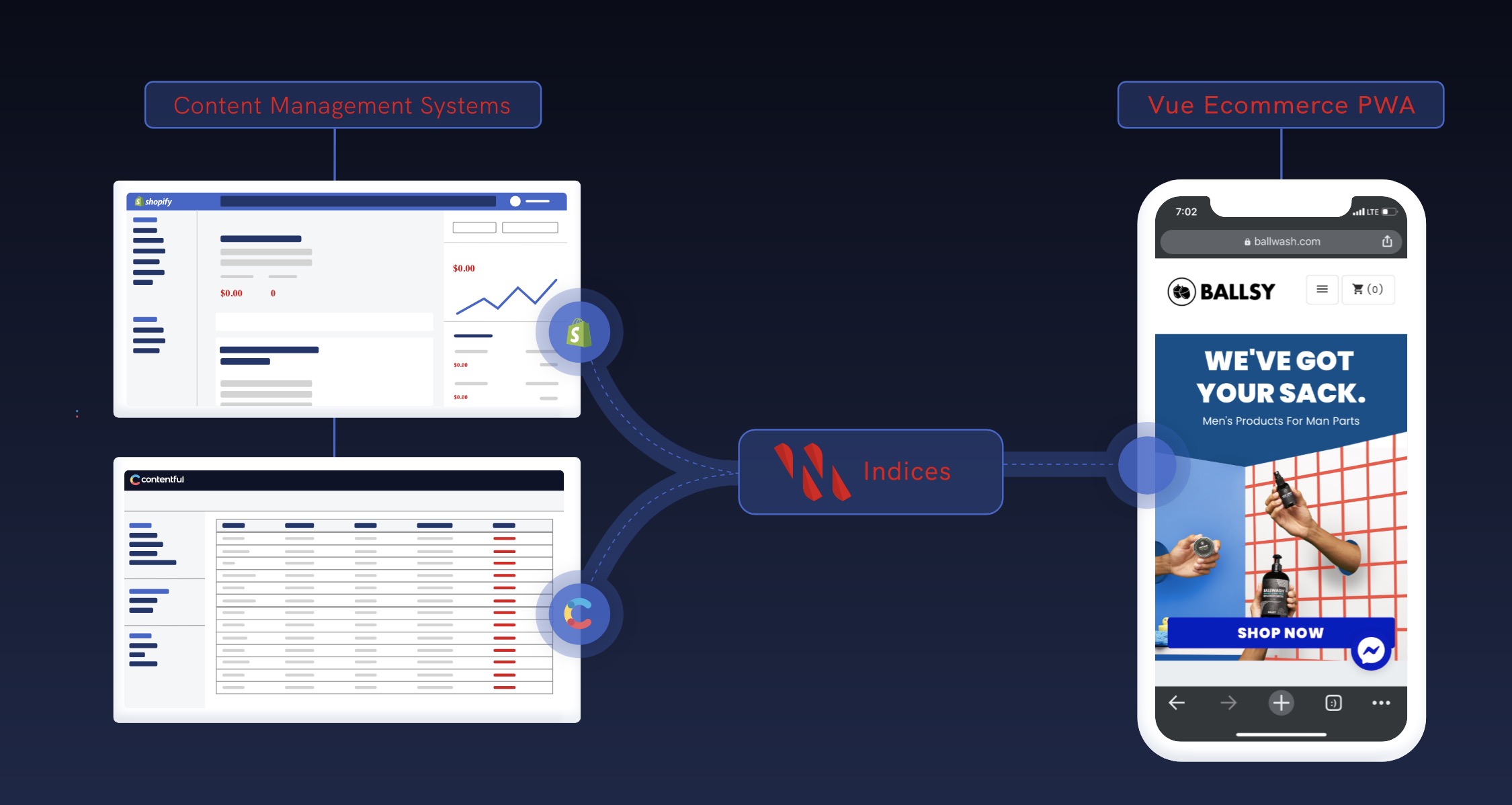
As more brands embrace headless structures, Nacelle is aiming to manage the experience. Nacelle is optimized for Shopify users to get up-and-running the most quickly. Users can also easily integrate the system with popular CMSs like Contentful and Sanity. All in all, Nacelle sports integrations for more than 30 services including payments platforms, SMS marketing platforms, analytics platforms and more, the goal being to minimize the need for users to migrate data or learn new workflows.

The company is unsurprisingly going after direct-to-consumer brands pretty heavily. Some of Nacelle’s early customers include D2C bedding startup Boll & Branch, cozy things marketplace Barefoot Dreams and fashion brand Something Navy. Most of Nacelle’s rollouts launch later this summer. Last month, Nacelle went live with mens toiletries startup Ballsy, and says that the storefront has already seen conversions increase 28 percent.

Nacelle is far from the only young entrant in this space. Just last month, Commerce Layer announced that it had raised $6 million in funding from Benchmark.

29 Jun 2020

Apple launches ‘Path to Apple Card’, a 4 month credit worthiness improvement program

Apple is launching an interesting new Apple Card program for people who have their application declined.

Declined Apple Card applicants may begin seeing emails later today that offer them the Path to Apple Card program. It’s an opt-in program that can run for up to 4 months. It leverages the information that Goldman Sachs used determine their credit worthiness to outline why they were declined and to help them improve the specific financial markers that would make them more likely to get approved next time.

Once a user opts in, they get a once-a-month update on their progress on specific tasks.

Examples include:

  • Resolving past due balances
  • Making payments to secured and unsecured debt accounts on time
  • Lowering credit card and personal loan debt

The updates also include specific steps to take to improve each of those markers.

Once a customer has completed the program, they are invited to re-apply to Apple Card.

Doubtless the points above seem pretty straightforward to anyone with strong basic knowledge of how credit works. But I encourage anyone to whom those seem simple to consider how many people do not have a real window into the factors that determine whether an underwriting process at a financial firm accepts or rejects their application. No other interactive program like this exists in the credit card world as far as I know

On the privacy front, Apple only knows whether you have chosen to participate in the program. It does not retain personally identifiable information or know details about the participants’ financial situation. Goldman Sachs is also not sharing this data with third parties for advertising or marketing. Pretty much the same deal as the Apple Card itself.

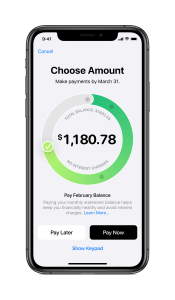
I’ve been bullish before on the way that Apple Card handles fiscal transparency. The ‘payment wheel’ inside the card’s interface on iOS devices is one of the clearest, most well made interfaces for any credit card ever offered. The approach Apple takes — an all out effort to make it as easy as possible not to pay interest on purchases unless you absolutely feel you want to — is wildly different from the industry norms.

This additional financial health tool fits well within that overall philosophy. And, as a side benefit, these steps will doubtless result in an overall credit score improvement for participants.

Apple has also recently launched an additional website that details the exact criteria that Goldman Sachs uses to determine acceptance and credit limit. It also offers additional details about things like how interest is calculated for the platform.

29 Jun 2020

Google adds local COVID-19 news coverage to its Google News app in pilot test

Google is piloting a new way to bring local news about the COVID-19 pandemic to its Google News application. In partnership with regional news publications in select cities across the U.S., the Google News app will now offer a dedicated section in select markets detailing critical information like community reopening timelines, business updates, school openings, as well as information on the local healthcare infrastructure, public transportation, events, and ways to help families in need.

At launch, the new feature is available for readers in Raleigh, Baton Rouge, New Orleans, Lafayette, Columbus, Portland, Cleveland, Myrtle Beach, Albany, Sarasota, Cap Girardeau, Richmond, Memphis, Cincinnati, Boston, New York, Baltimore, Chicago, Detroit, Los Angeles, and Minneapolis.

To access the newly added local information, app users will click on the COVID-19 banner which directs them to the existing section focused on coverage of the coronavirus outbreak. They will then scroll down to find the new “Local news” section directly underneath the “Top News” section.

This new section won’t be shown if the user’s city or town isn’t yet covered. However, you can force the section to display by selecting one of the supported cities and making that your city in the Google News app.

Image Credits: Google

To deliver this local information, Google is working in partnership with 21 news organizations for the supported markets, including Raleigh’s The News & Observer, NOLA.com, CBS Chicago, Oregon Live and Gothamist, among others. The news organizations must already provide this COVID-19 information in the form of short-form content. For example, this page from The News & Observer offers a brief list of updates as bullet points which Google can easily re-publish to the Local News section of the Google News app.

The app will still allow users to click through to the local publication to read more.

Google tells us that all publishers will have to offer news a similar format to be included for the time being. In other words, Google isn’t automatically creating short-form summaries from news articles to fill this section.

The local COVID-19 news feature is currently in pilot testing, but Google plans to expand coverage across the U.S. and Canada in the future. It also plans to offer the feature outside of the Google News mobile app itself.

To some extent, the addition is a way for Google to offer its own version of Facebook’s “Community Help” feature, which the social network expanded in March due to the COVID-19 crisis. Facebook’s hub today offers a way for users to get information about how the coronavirus outbreak is impacting their own local region and what they can do to help. Google’s feature also arrives at a time when Flipboard has splashed back onto the scene with its new focus on local coverage, including coronavirus updates.

And of course there’s Google News app’s direct rival, the Apple News app. Apple News has also added its own take on local coverage with a “City Guides” section in its own COVID-19 special coverage area. These city guides focus on providing essential knowledge about testing, resources, jobs, and more for larger U.S. metros.

In addition to the update to the Google News app, Google says it’s recently expanded access to local news on Search and Google Assistant, as well.

Now when people search for coronavirus information on Google Search, they’ll see both a top stories carousel as well as a new dedicated local news carousel. Google also expanded its new carousel highlighting top tweets from local and health authorities in more than 30 countries.

Meanwhile, users can ask Google Assistant for local coronavirus news by saying something like “Hey Google, play news about coronavirus in Boston,” in select markets.

Google has also financially contributed to local news organizations itself in the wake of the COVID-19 crisis, having recently provided emerging funding for over 5,300 local news organizations around the world, ranging from $5,000 – $30,000. The company said it expects to spend “tens of millions” through this Journalism Emergency Relief Fund. Plus, Google recently launched a Support Local News campaign to encourage people and businesses to subscribe, donate and advertise across local news outlets in the U.S. and Canada.


29 Jun 2020

Trump suspended from Twitch, as Reddit bans the ‘The_Donald’ and additional subreddits

Two big new pieces of news today from the ongoing battle between social media and politics. Both Twitch and Reddit have made moves against political content, citing violations of terms of service.

Twitch confirmed today that it has temporarily suspended the president’s account. “Hateful conduct is not allowed on Twitch,” a spokesperson for the streaming giant told TechCrunch. “In line with our policies, President Trump’s channel has been issued a temporary suspension from Twitch for comments made on stream, and the offending content has been removed.”

Twitch specifically cites two incidents from campaign rallies, uttered by Trump at rallies four years apart. The first comes from his campaign kickoff, including the now infamous words:

When Mexico sends its people, they’re not sending their best. They’re not sending you. They’re not sending you. They’re sending people that have lots of problems, and they’re bringing those problems with us. They’re bringing drugs. They’re bringing crime. They’re rapists. And some, I assume, are good people. But I speak to border guards and they tell us what we’re getting. And it only makes common sense. It only makes common sense. They’re sending us not the right people.

The second is from the recent rally in Tulsa, Oklahoma, his first since COVID-19-related shutdowns ground much of presidential campaigning to a halt. Here’s the pertinent bit from that:

Hey, it’s 1:00 o’clock in the morning and a very tough, I’ve used the word on occasion, hombre, a very tough hombre is breaking into the window of a young woman whose husband is away as a traveling salesman or whatever he may do. And you call 911 and they say, “I’m sorry, this number’s no longer working.” By the way, you have many cases like that, many, many, many. Whether it’s a young woman, an old woman, a young man or an old man and you’re sleeping.

Twitch tells TechCrunch that it offered the following guidance to Trump’s team when the channel was launched, “Like anyone else, politicians on Twitch must adhere to our Terms of Service and Community Guidelines. We do not make exceptions for political or newsworthy content, and will take action on content reported to us that violates our rules.”

That news follows the recent ban of the massive The_Donald subreddit, which sported more than 790,000 users, largely devoted to sharing content about Trump. Reddit confirmed the update to its policy that resulted in the ban, along with 2,000 other subreddits, including one devoted to the hugely popular leftist comedy podcast, Chapo Trap House.

The company cites the following new rules:

  • Rule 1 explicitly states that communities and users that promote hate based on identity or vulnerability will be banned.
    • There is an expanded definition of what constitutes a violation of this rule, along with specific examples, in our Help Center article.
  • Rule 2 ties together our previous rules on prohibited behavior with an ask to abide by community rules and post with authentic, personal interest.
    • Debate and creativity are welcome, but spam and malicious attempts to interfere with other communities are not.
  • The other rules are the same in spirit but have been rewritten for clarity and inclusiveness.

It adds:

All communities on Reddit must abide by our content policy in good faith. We banned r/The_Donald because it has not done so, despite every opportunity. The community has consistently hosted and upvoted more rule-breaking content than average (Rule 1), antagonized us and other communities (Rules 2 and 8), and its mods have refused to meet our most basic expectations. Until now, we’ve worked in good faith to help them preserve the community as a space for its users—through warnings, mod changes, quarantining, and more.

Reddit adds that it banned the smaller Chapo board for “consistently host[ing] rule-breaking content and their mods have demonstrated no intention of reining in their community.”

Trump in particular has found himself waging war on social media sites. After Twitter played whack-a-mole with problematic tweets around mail-in voting and other issues, he signed an executive order taking aim at Section 230 of the Communications Decency Act, which protects sites from being sued for content posted by users.

29 Jun 2020

One week only: score 4th of July discounts on Disrupt 2020 passes

Here’s a 4th of July event that doesn’t require a mask or social distancing. This week only you can save an extra $50 when you buy Disrupt Digital Pro passes or a Disrupt Digital Startup Alley Package for Disrupt 2020.

Buy the pass or package you want and save $50 at checkout when you use this promo code: 50JULY4. The discount remains in play until Sunday, July 5 at 11:59 pm (PT).

Our first virtual Disrupt spans five programming-packed days from Sept 14 – 18. Both types of Digital Pro pass holders enjoy live and on-demand access to the full breadth of content across all Disrupt stages. For starters, don’t miss TechCrunch editors interviewing some of the biggest names in tech and watch the always-epic Startup Battlefield pitch competition on the Disrupt Stage.

The Extra Crunch Stage features interactive, moderated discussions with top experts — growth marketers, lawyers, investors, technologists, recruiters — on topics critical to founders’ success. Submit questions and get answers in real time.

Check out early-stage startups in Digital Startup Alley. Browse hundreds of exhibiting startups, organized by category, and watch their product demos on demand. See something you like? Arrange a 1:1 video conference right then and there with the founders.

And that brings us to the Disrupt Digital Startup Alley Package. You get all the access benefits of a Digital Pro pass for up to three people in your company and will be able to exhibit and promote your product from wherever you are in the world. It includes a custom landing page to collect leads, post a marketing video or promote your pitch deck among several other benefits and tools to help you get in front of the right audience.

Whether you buy an individual pass or a package, CrunchMatch will keep your networking organized and on track. The AI-powered platform features a new-and-improved algorithm for faster and more precise matching, and it makes connecting with people who can help grow your business easier than ever. Schedule 1:1 video meetings with prospective investors, customers, collaborators — or recruit talent. CrunchMatch launches weeks before Disrupt begins so you can disrupt longer.

There’s so much more to do at Disrupt 2020, and all of it’s designed to help you keep your business moving forward. Take advantage of the July 4th discount. Buy a Disrupt Digital Pro pass or a Disrupt Digital Startup Alley Package and plug in promo code 50JULY4 — before July 6 at 11:59 pm (PT), save an extra $50 and disrupt for less. No mask or social distancing required.

Is your company interested in sponsoring or exhibiting at Disrupt 2020? Contact the sponsorship sales team by filling out this form.

29 Jun 2020

How $20 billion health care behemoth Blue Shield of California sees startups

In the two years since Jeff Semenchuk took the reins in the newly created position of chief innovation officer for Blue Shield of California, the nonprofit health insurer with $20 billion in revenues has stepped up its investments in startup companies.

As one of California’s largest insurance providers with more than four million members, Blue Shield plays an outsized role in technology adoption among physicians, hospital networks and patients. With that in mind, and with the acceleration of entrepreneurial activity around the multitrillion health care market, Semenchuk was brought on board after serving as chief executive of Yaro (now Virgin Plus) and CIO of Hyatt Hotels and Citi Ventures.

Semenchuk said he sees Blue Shield as working to create a new health care system: “It’s not to perpetuate the health care system we have today.” Increasingly, startups have a role to play in that revisioning of health care services in America, according to Semenchuk.

“What I would say has happened over the last two years is that we have really focused on transformational innovation,” he added.

Investing in those transformational technologies involves taking cash directly from Blue Shield’s balance sheet for investments. The company doesn’t operate a corporate venture capital fund in the traditional sense, instead making strategic investments under the auspices of Semenchuk or Chief Financial Officer Robert Kolodgy.

29 Jun 2020

Blackbaud’s cloud for ‘social good’ serves customers that work against human rights

Blackbaud offers enterprise tools ostensibly in a campaign to support social good, but the company also provides services to far-right organizations the Heritage Foundation and the Center for Security Policy, TechCrunch has discovered.

Blackbaud describes itself as “the world’s leading cloud software company powering social good,” and collects revenues in the hundreds of millions of dollars from that business. Nothing about that mission is partisan, and good can of course be accomplished by groups all across the current American political spectrum.

But while conservative causes are by no means excluded from the category, the far-right stances of Heritage and especially those of CSP are difficult to square with even the broadest interpretation of social good.

The decades-old Heritage Foundation has been behind lobbying efforts against climate change action, equal rights for LGBTQ Americans, and immigration modernization efforts. It has worked on behalf of the oil and tobacco industries and opposed health care reform, and recommended the likes of Betsy DeVos and Scott Pruitt to the administration.

Google recently scuttled an advisory committee on AI that included Heritage’s president, after overwhelming criticism that they had essentially endorsed the think tank’s policies.

According to GLAAD, Heritage “has made it a focused mission to stop all laws protecting on the basis of sexual orientation and gender identity.” This alone makes it a poor match for a company that just weeks ago said in celebration of Pride that “we want to underscore that LGBTQ+ rights are human rights.”

Yet according to documents reviewed by TechCrunch, Blackbaud collects about $180,000 in annual revenue from the Heritage Foundation, and has worked with them for about 15 years.

The Center for Security Policy is a more extreme case. Designated as a hate group by the Southern Poverty Law Center, CSP has pursued a hardline anti-Muslim stance for years. It publishes reports saying jihadists are infiltrating the U.S. government, and was commissioned to perform polling to show support for Trump’s Muslim travel ban. A CSP executive was hired by John Bolton to serve in the administration, and later left to rejoin the anti-Muslim organization as its head.

Image Credits: Blackbaud

One recent study warns of a Muslim plot “even more sinister” than the widespread sexual abuse revealed in the #MeToo era: “Sharia-supremacists are insinuating themselves into script-writing, Hollywood ‘consulting,’ film production, and even financial scholarships designed to facilitate young Muslims’ penetration of the entertainment industry.”

The documents show a smaller contract with CSP, amounting to about $11,000 in annual revenue.

Blackbaud records show interactions with both companies within the last month or so; these are current contracts. Neither Heritage nor CSP responded to requests for comment, and Blackbaud would not confirm they are customers as a matter of policy.

“Blackbaud provides cloud software, services, data intelligence and expertise to a wide spectrum of registered 501c3 organizations and companies that are lawfully conducting business. Those organizations are diverse in their missions and belief systems, but we remain committed to building the best software to support all who are truly doing good in achieving their missions,” the company said in a statement. It then referred me to a recent blog post entitled “EQUALITY.”

While doing business with a couple of bad actors doesn’t negate Blackbaud’s work with other organizations actually working for the social good, the discrepancy bears highlighting given the company’s virtue-first brand. If the concept of social good they are working with is mutable enough that it includes hate groups, other organizations might think twice about trusting that message.

At times like the present, companies are being called on to not just say they are dedicated to things like human rights, anti-racism and other causes, but to demonstrate it and respond to criticism. According to Blackbaud:

“Racism and acts of hate strip people of basic human rights and defy the very principles of what ‘good’ stands for. We condemn racism and discrimination and seek solutions to end the suffering in our communities and world.

Equality must be more than a motto. It must be a promise to each other and the world.”

By espousing equality on one hand and making millions from those who oppose it on the other, it may be fairly questioned whether that promise is being kept.

29 Jun 2020

The iRig Pro Duo makes managing advanced audio workflows simple anywhere

Connecting audio interfaces to the various mobile and computing devices we use these days can be a confusing headache. The iRig Pro Duo, which IK Multimedia announced this year at CES and recently released, is a great way to simplify those connections while giving you all the flexibility you need to record high-quality audio anywhere, with any device.

The basics

The iRig Pro Duo is a new addition to IK’s lineup based on the original iRig Pro, which adds a second XLR input, as the name implies. It’s still quite small and portable, fitting roughly in your hand, with built-in power optionally supplied via two AA batteries, while you can also power it via USB connection, or with an optional dedicated plug-in power adapter accessory.

Compared to desktop devices like the Scarlett Focusrite 2i2 USB audio interface that’s a popular standard among home audio enthusiasts, the iRig Pro Duo is downright tiny. It’s still beefier than the iRig Pro, of course, but it’s a perfect addition to a mobile podcaster’s kit for ultimately portability while also maintaining all the features and capabilities you need.

The iRig Pro Duo also includes balanced L/R 1/4″ output, built-in 48v phantom power for passive Macs, a 3.5mm stereo jack for direct monitoring, 2x MIDI inputs and dedicated gain control with simple LED indicators for 48V power status and to indicate audio input peaking.

Design

Beveled edges and a slightly rounded rectangular box design might not win the iRig Pro Duo any accolades from the haute design community, but it’s a very practical form factor for this type of device. Inputs go in one side, and output comes out the other. IK Multimedia employs a unique connector for its output cables, but provides every one you could need in the box for connecting to Mac, iOS, Windows and Android devices.


The whole thing is wrapped in a matte, slightly rubberized outside surface that feels grippy and durable, while also looking good in an understated way that suits its purpose as a facilitation device. The knobs are large and easy to turn with fine-grained control, and there are pads on the underside of the Duo to help it stick a bit better to a surface like a table or countertop.

The lighting system is pretty effective when it comes to a shorthand for what’s on and working with your system, but this is one area where it might be nice to have a more comprehensive on-device audio levels display, for instance. Still, it does the job, and since you’ll likely be working with some kind of digital audio workflow software whenever you’re using it that will have a much more detailed visualizer, it’s not really that much of an issue.

Bottom line

As mentioned, iRig Pro Duo works with virtually all platforms out of the box, and has physical connector cables to ensure it can connect to just about every one as well. IK Multimedia also supplies free DAW software and effects, for all platforms – though you do have to make a choice about which one you’re most interested in since it’s limited to one piece of software per customer.

If you’re looking for a simple, painless and versatile way to either set up a way to lay down some music, or to record a solo or interview podcast, this is an option that ticks essentially all the boxes you could come up with.

29 Jun 2020

Startups are poised to disrupt the $14B title insurance industry

If you have bought a house in the last decade, you likely started the process online. Perhaps you browsed for your future dream home on a website like Zillow or Realtor, and you may have been surprised by how quickly things moved from seeing a property to making an offer.

When you reached the closing stage, however, things slowed to a crawl. Some of those roadblocks were anticipated, such as the process of getting a mortgage, but one likely wasn’t: the tedious and time-consuming process of obtaining title insurance — that is, insurance that protects your claim to home ownership should any claims arise against it after sale.

For a product that is all but required to purchase a home, title insurance isn’t something many people know about until they have to pay for it and then wait up to two months to get.

Now, finally, a handful of startups are taking on the title insurance industry, hoping to make the process of buying a policy easier, cheaper and more transparent. These startups, including Spruce, States Title, JetClosing, Qualia, Modus and Endpoint, enable part or all of the title insurance buying process. Whether these startups can finally topple the title insurance monopoly remains to be seen, but they are already causing cracks in the system.

To that end, we’ve outlined what’s broken about today’s title industry; recent developments in technology and government that are priming the industry for change; and a synthesis of some key trends we’ve observed in the space, as entrepreneurs begin to capitalize on a tipping point in a century-old, $14 billion business.

Title insurance 101

To understand how startups are beginning to challenge title insurance incumbents, we need to first understand what title insurance is and what title companies do.

Title insurance is unique from other types of insurance, which require ongoing payments and protect a buyer against future incidents. Instead, title insurance is a one-time payment that protects a buyer from what has already happened — namely errors in the public record, liens against the property, claims of inheritance and fraud. When you buy a home, title insurance companies research your property’s history, contained in public archives, to make sure no such claims are attached to it, then correct any issues before granting a title insurance policy.