Author: azeeadmin

29 Jun 2020

Personal Capital sells to Empower Retirement in deal worth up to $1B

Today Personal Capital, a fintech company that had attracted over $265 million in private funding, announced that it is selling itself to Empower Retirement, a company that provides retirement services to other companies. The deal is worth $825 million upon closing, with another $175 million in what are described as “planned growth” incentives, according to a release.

The deal is a likely win for Personal Capital . According to Forbes the firm was worth $660 million around the time of its Series F round of funds, which it raised in February of 2019. The company was valued at around $500 million in December of 2016, meaning that investors who put capital in at that point, or before, likely did well on their investment.

Venture groups who put capital in later, unless they had ratchets in place, likely didn’t make as much from the deal as they originally hoped. Regardless, a $1 billion all-inclusive exit is nothing to scoff at; Facebook once bought Instagram for that much money, and the sheer cheek of the transaction at the time nearly broke the Internet.

During its life as a private company, Crosslink Capital, IGM Financial, Venrock, IVP, and Corsair each led rounds into the company according to Crunchbase data.

Personal Capital is a consumer service that helps folks plan for retirement, and invest their capital. The company offers free financial tools, and a higher-cost wealth management option for accounts of at least $100,000. The company doesn’t like being called a robo-advisor, instead claiming to exist in the space between old-fashioned in-person wealth management relationships, and fully-automated options.

Regardless, the company’s sale price should help market rivals price themselves. Here are Personal Capital’s core stats (data via Personal Capital, accurate as a May 31, 2020):

  • AUM: $12.3 billion
  • Users: 2.5 million

So, Wealthfront and M1 Finance and others, there are some metrics for you to weigh yourselves again. Of course, other, competing companies have different monetization methods, so the comparison won’t be 100% direct.

The Personal Capital exit fits into the theme that TechCrunch has tracked lately in which savings and investing applications have seen demand surge for their wares. This is a trend not merely in the United States where Personal Capital is based, but also abroad.

Aside from Personal Capital’s exit today, we’ve also seen huge deals in 2020 from Plaid, which sold to Visa for over $5 billion, Galileo’s exit for over $1 billion, and Credit Karma’s sale for north of $7 billion. In response to this particular news item, TechCrunch’s Danny Crichton noted that fintech is “probably the hottest exit market right now.” He’s right.


29 Jun 2020

Sale: Save 25% on annual Extra Crunch membership

As America fires up the grill for the 4th of July, Extra Crunch has a tasty deal you don’t want to miss. From now until July 5th, we are offering 25% off your first year of Extra Crunch membership. After the first year, membership fees will increase to $99/year plus tax. This offer is only valid for readers in the U.S.

Claim this deal by navigating here.

Extra Crunch is a membership program from TechCrunch that features weekly investor surveys, how-tos and interviews with experts on company building, private and public market analysis, and other exclusive articles delivered daily.

Membership gets you access to our recently launched Extra Crunch Live virtual sessions with speakers like Aileen Lee of Cowboy Ventures and Zach Perret of Plaid. Extra Crunch members can also save 20% on all TechCrunch events, like Early Stage and Disrupt.

Members also can save on software through our Partner Perks program, including discounts on services from Crunchbase, AWS, Zendesk, Typeform, DocSend and more.

Our goal with Extra Crunch is to democratize information for startups, and we’d love to have you join our community.

You can sign up for Extra Crunch and claim this deal here.

29 Jun 2020

Daily Crunch: Facebook faces an advertiser revolt

Facebook takes (small) steps to improve its content policies as advertisers join a broad boycott, founder Alexis Ohanian is leaving Initialized Capital and Waze gets a new look.

Here’s your Daily Crunch for June 29, 2020.

1. As advertisers revolt, Facebook commits to flagging ‘newsworthy’ political speech that violates policy

In a live-streamed segment of the company’s weekly all-hands meeting, CEO Mark Zuckerberg announced new measures to fight voter suppression and misinformation. At the heart of the policy changes is an admission that the company will continue to allow politicians and public figures to disseminate hate speech that does, in fact, violate Facebook’s own guidelines — but it will add a label to denote they’re remaining on the platform because of their “newsworthy” nature.

This announcement comes as advertiser momentum against the social network’s content and monetization policies continues to grow, with Unilever and Verizon (which owns TechCrunch) both committing to pull advertising from Facebook.

2. Alexis Ohanian is leaving Initialized Capital

Ohanian is leaving Initialized Capital to work on “a new project that will support a generation of founders in tech and beyond,” the firm said in a statement to TechCrunch. According to Axios, Ohanian is leaving Initialized to work more closely on pre-seed efforts.

3. Waze gets a big visual update with a focus on driver emotions

The new look is much more colorful, and also foregrounds the ability for individual drivers to share their current emotions with Moods, a set of user-selectable icons (with an initial group of 30) that can reflect how you’re feeling as you’re driving.

4. Amazon warehouse workers strike in Germany over COVID-19 conditions

Amazon warehouse workers in Germany are striking for 48 hours this week, to protest conditions that have led to COVID-19 infections among fellow employees. Strikes began today at six warehouses and are set to continue through the end of day Tuesday.

5. Four views: How will the work visa ban affect tech and which changes will last?

Normally, the government would process tens of thousands of visa applications and renewals in October at the start of its fiscal year, but President Trump’s executive order all but guarantees new visas won’t be granted until 2021. Four TechCrunch staffers analyzed the president’s move in an attempt to see what it portends for the tech industry, the U.S. economy and our national image. (Extra Crunch membership required.)

6. Apple began work on the Watch’s handwashing feature years before COVID-19

Unlike other rush initiatives undertaken by the company once the virus hit, however, the forthcoming Apple Watch handwashing app wasn’t built overnight. The feature was the result of “years of work,” VP of Technology Kevin Lynch told TechCrunch.

7. This week’s TechCrunch podcasts

The latest full-length Equity episode discusses new funding rounds for Away and Sonder, while the Monday news roundup has the latest on the Rothenberg VC Scandal. And Original Content has a review of the second season of “The Politician” on Netflix.

The Daily Crunch is TechCrunch’s roundup of our biggest and most important stories. If you’d like to get this delivered to your inbox every day at around 9am Pacific, you can subscribe here.

29 Jun 2020

Disney Research neural face swapping technique can provide photorealistic, high resolution video

A new paper published by Disney Research in partnership with ETH Zurich describes a fully automated, neural network-based method for swapping faces in photos and videos – the first such method that results in high-resolution, megapixel resolution final results according to the researchers. That could make it suited for use in film and TV, where high resolution results are key to ensuring that the final product is good enough to reliably convince viewers as to their reality.

The researchers specifically intend this tech for use in replacing an existing actor’s performance with a substitute actor’s face, for instance when de-aging or increasing the age of someone, or potentially when portraying an actor who has passed away. They also suggest it could be used for replacing the faces of stunt doubles in cases where the conditions of a scene call for them to be used.

This new method is unique from other approaches in a number of ways, including that any face used in the set can be swapped with any recorded performance, making it possible to relatively easily re-image the actors on demand. The other is that it kindles contrast- and light conditions in a compositing step to ensure the actor looks like they were actually present in the same conditions as the scene.

You can check out the results for yourself in the video below (as the researchers point out, the effect is actually much better in moving video than in still images). There’s still a hint of ‘uncanny valley’ effect going on here, but the researchers also acknowledge that, calling this “a major step toward photo-realistic face swapping that can successfully bridge the uncanny valley” in their paper. Basically it’s a lot less nightmare fuel than other attempts I’ve seen, especially when you’ve seen the side-by-side comparisons with other techniques in the sample video. And, most notably, it works at much higher resolution, which is key for actual entertainment industry use.

The examples presented are a super small sample, so it remains to be seen how broadly this can be applied. The subjects used appear to be primarily white, for instance. Also, there’s always the question of the ethical implication of any use of face-swapping technology, especially in video, since it could be used to fabricate credible video or photographic ‘evidence’ of something that didn’t actually happen.

Given, however, that the technology is now in development from multiple quarters, it’s essentially long past the time for debate about the ethics of its development and exploration. Instead, it’s welcome that organizations like Disney Research are following the academic path and sharing the results of their work, so that others concerned about its potential malicious use can determine ways to flag, identify and protect against any bad actors.

29 Jun 2020

India bans TikTok, dozens of other Chinese apps

The Indian government on Monday evening said it was banning 59 apps developed by Chinese firms over concerns that these apps were “engaged in activities which is prejudicial to sovereignty and integrity of India, defence of India, and security of state and public order” in what is the latest standoff between the two most populated nations in the world.

ByteDance’s TikTok, which counts India as its biggest market, Community and Video Call apps from Xiaomi, which is the top smartphone vendor in India, UC Browser, UC News, Shareit, CM Browser, Club Factory, ES File Explorer are among the 59 apps that India’s Ministry of Electronics and IT have ordered to ban.

“The Computer Emergency Response Team (CERT-IN) has also received many representations from citizens regarding security of data and breach of privacy impacting upon public order issues,” the Indian government agency said.

More to follow…

29 Jun 2020

India bans TikTok, dozens of other Chinese apps

The Indian government on Monday evening said it was banning 59 apps developed by Chinese firms over concerns that these apps were “engaged in activities which is prejudicial to sovereignty and integrity of India, defence of India, and security of state and public order” in what is the latest standoff between the two most populated nations in the world.

ByteDance’s TikTok, which counts India as its biggest market, Community and Video Call apps from Xiaomi, which is the top smartphone vendor in India, UC Browser, UC News, Shareit, CM Browser, Club Factory, ES File Explorer are among the 59 apps that India’s Ministry of Electronics and IT have ordered to ban.

“The Computer Emergency Response Team (CERT-IN) has also received many representations from citizens regarding security of data and breach of privacy impacting upon public order issues,” the Indian government agency said.

More to follow…

29 Jun 2020

DoubleDown is going public: Why isn’t its IPO worth more?

Agora isn’t the only company headquartered outside the United States aiming to go public domestically this quarter. After catching up on Agora’s F-1 filing, the China-and-U.S.-based, API-powered tech company that went public last week, today we’re parsing DoubleDown Interactive’s IPO document.


The Exchange is a daily look at startups and the private markets for Extra Crunch subscribers; use code EXCHANGE to get full access and take 25% off your subscription.


The mobile gaming company is targeting the NASDAQ and wants to trade under the ticker symbol “DDI.”

As with Agora, DoubleDown filed an F-1, instead of an S-1. That’s because it’s based in South Korea, but it’s slightly more complicated than that. DoubleDown was founded in Seattle, according to Crunchbase, before selling itself to DoubleU Games, which is based in South Korea. So, yes, the company is filing an F-1 and will remain majority-held by its South Korean parent company post-IPO, but this offering is more a local affair than it might at first seem.

Even more, with a $17 to $19 per-share IPO price range, the company could be worth up to nearly $1 billion when it debuts. Does that pricing make sense? We want to find out.

So let’s quickly explore the company this morning. We’ll see what this mobile, social gaming company looks like under the hood in an effort to understand why it is being sent to the public markets right now. Let’s go!

Fundamentals

Any gaming company has to have its fun-damentals in place so that it can have solid financial results, right? Right? [Editor’s note: A

Anyway, DoubleDown is a nicely profitable company. In 2019 its revenue only grew a hair to $273.6 million from $266.9 million the year before (a mere 2.5% gain), but the company’s net income rose from $25.1 million to $36.3 million, and its adjusted EBITDA rose from $85.1 million to $101.7 million over the same period.

29 Jun 2020

DoubleDown is going public: Why isn’t its IPO worth more?

Agora isn’t the only company headquartered outside the United States aiming to go public domestically this quarter. After catching up on Agora’s F-1 filing, the China-and-U.S.-based, API-powered tech company that went public last week, today we’re parsing DoubleDown Interactive’s IPO document.


The Exchange is a daily look at startups and the private markets for Extra Crunch subscribers; use code EXCHANGE to get full access and take 25% off your subscription.


The mobile gaming company is targeting the NASDAQ and wants to trade under the ticker symbol “DDI.”

As with Agora, DoubleDown filed an F-1, instead of an S-1. That’s because it’s based in South Korea, but it’s slightly more complicated than that. DoubleDown was founded in Seattle, according to Crunchbase, before selling itself to DoubleU Games, which is based in South Korea. So, yes, the company is filing an F-1 and will remain majority-held by its South Korean parent company post-IPO, but this offering is more a local affair than it might at first seem.

Even more, with a $17 to $19 per-share IPO price range, the company could be worth up to nearly $1 billion when it debuts. Does that pricing make sense? We want to find out.

So let’s quickly explore the company this morning. We’ll see what this mobile, social gaming company looks like under the hood in an effort to understand why it is being sent to the public markets right now. Let’s go!

Fundamentals

Any gaming company has to have its fun-damentals in place so that it can have solid financial results, right? Right? [Editor’s note: A

Anyway, DoubleDown is a nicely profitable company. In 2019 its revenue only grew a hair to $273.6 million from $266.9 million the year before (a mere 2.5% gain), but the company’s net income rose from $25.1 million to $36.3 million, and its adjusted EBITDA rose from $85.1 million to $101.7 million over the same period.

29 Jun 2020

Google brings free product listings to its main Google Search results

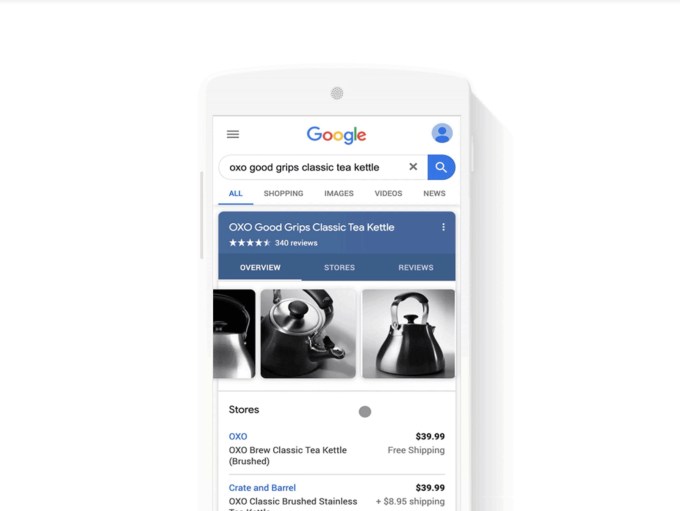
Earlier this year, Google made a significant change to its Shopping search tab in the U.S. to allow the service to primarily feature free product listings selected by Google’s algorithms, instead of paid ads. Building on that change, Google is today introducing a shift to free product listings in the main Google Search results page in the U.S. Before, it would only showcase sponsored links in its “product knowledge panel.”

This panel appears when a Google user searches for a product that has matching listings on e-commerce website. But until now, those links were paid ads. Google says, starting this summer, these panels will instead feature free listings.

This change will roll out first in the U.S. on mobile, followed later by the desktop.

Shopping ads aren’t going away, however. These ads will appear separately at the top of the page, where they’re marked like Google’s other ad units.

Since its shift to free listings in April of this year, Google says it’s seen an average 70% increase in clicks and 130% increase in impressions across both the free listings and ads on the Shopping tab in the U.S. These metrics were based on an experiment looking at the clicks and impressions after the free listings were introduced, compared with a control group. The control group was a certain percentage of Google traffic that had not been moved to the new, free experience.

Image Credits: Google


Google has positioned its shift to free listings as a way to aid businesses struggling to connect with shoppers due to the impacts of the coronavirus pandemic. But the reality is that this change would have had to arrive at some point — pandemic or not — because of Amazon’s threat to Google’s business.

Amazon over the years has been steadily eating away at Google’s key business: search ad revenue. In a report published last fall, before the pandemic hit, analyst firm eMarketer said Google’s share of search ad market revenue would slip from 73% in 2019 to 71% by 2021, as more internet users started their searches for products directly on Amazon.

Now the coronavirus is pushing more consumers to shop online in even greater numbers, much to Amazon’s advantage. The online retailer reported the pandemic helped drive a 26% increase in its first-quarter 2020 revenue, for example. Meanwhile, a new eMarketer forecast estimates that Google ad revenues will drop for the first time this year, falling 5.3% to $39.58 billion due to pandemic impacts on ad spend — particularly the pullback in travel advertiser spending.

Google needed to change its Search service to return more than just paid listings to better compete. Paid listings alone wouldn’t always feature the best match for the user’s search query nor would they show as complete a selection — a problem Amazon’s vast online superstore doesn’t have. But Google’s shift to free listings also incentivizes advertisers to pay for increased visibility. Now, advertisers will need a way to stand out against a larger and more diverse selection of products.

“For many merchants, connecting with customers in a digital environment is still relatively new territory or a smaller part of their business,” notes Google’s, Bill Ready, President of Commerce. “However, consumer preference for online shopping has increased dramatically, and it’s crucial that we help people find all the best options available and help merchants more easily connect with consumers online.”

29 Jun 2020

In effort to fight COVID-19, MIT robot gets to work disinfecting The Greater Boston Food Bank

MIT’s Computer Science and Artificial Intelligence Lab (CSAIL) has put one of its research projects to work providing disinfection services for The Greater Boston Food Bank (GBFB), in an effort to slow the spread and still allow the non-profit to provide services to its patrons. The CSAIL-designed robotic system, which was created in partnership with Ava Robotics, can not only disinfect surfaces that might have come in contact with the novel coronavirus, but also wipe out its aerosolized forms that might be present in the air, the lab says.

CSAIL’s robotic cleaning system goes well beyond your run-of-the-mill Roomba: It employs UV light for a fully automated clean that can be done free of any human oversight, which is key because UV light when used in the strength required for surface and airborne disinfection can be harmful to any people present.

The team behind the design took one of Ava’s telepresence robot, removed the top which normally houses the screen to display a remote operator, and instead replaced it with a UVC light array. Via cameras and sensors, the robot can map an indoor space, and then navigate designed waypoints within that mapped area and disinfect as it goes, keeping track fo the areas it has to disinfect. In operation, after its autonomous mapping exercise, human remote operators showed it the path that people would normally traverse in the space to define priority disinfection zones.

The system is flexible so that it can handle re-mapped routes, which is required because what areas of the GBFB warehouse need to be traversed can change daily as food comes in and food goes out, with stock stored on different shelves. Eventually, the team wants to develop more automated ways for the modified telepresence robots to user their suite of sensors to figure out what areas are priority for disinfection based on foot traffic and changing real-world conditions, but for now, it can easily be manually adjusted to accommodate shifts.

This project focused specifically on use at the GBFB, a priority resource especially during the COVID-19 pandemic, but MIT CSAIL’s researchers envision similar systems being put to use to cover a range of complex spaces that require frequent disinfection, including grocery stores, dorms, schools and airplanes.