Author: azeeadmin

14 Mar 2019

Huawei has built an Android alternative in case US tensions increase

Tensions between the U.S. and Huawei show no sign of easing. Last week, the electronics giant announced that it has filed a lawsuit against the government, over an “unconstitutional” ban on its products. Meanwhile, earlier this week, the U.S. threatened German intelligence over the country’s use of Huawei 5G products.

The company has understandably been prepping for a further downtown in relations by building its own in-house alternative to Android. The backup was noted by Huawei mobile head Richard Yu, following a year of rumors around the mobile OS.

“We have prepared our own operating system, if it turns out we can no longer use [Android], we will be ready and have our plan B,” the exec said.

Huawei began building the software in earnest after a U.S. ban on ZTE. The use of software and hardware from U.S. companies like Google and Qualcomm in Chinese smartphones has led to increasing tariffs on both sides.

In addition to concerns over ties to the Chinese government, Huawei has also been hit over its alleged skirting of Iranian tariffs. That landed the company’s CFO Meng Wanzhou in a Canadian jail. Of course, all of this hasn’t slowed Huawei’s global growth. The company saw a 50 percent jump in revenue in spite of mounting concerns.

We’ve reached out to Huawei for further confirmation.
14 Mar 2019

Slack removes 28 accounts linked to hate groups

Today in a short blog post, Slack announced that it had removed 28 accounts with a “clear affiliation with known hate groups.” Few details were provided about the accounts or how Slack identified them, but we have reached out to the company for more information.

The announcement, brief as it is, comes as a surprise. To date, Slack has managed to stay out of the conversation around what happens when sometimes violent politically extreme organizations use popular social platforms to organize. While that conversation should be fairly clear cut when it comes to public-facing content somewhere like Facebook, it’s a bit more nuanced on messaging platforms where communication is private in nature.

Slack is mostly used for workplace communication, but the chat platform Discord, popular with gamers, has been grappling with the same issues. In 2017, Discord removed a public server tied to AltRight.com that the company said violated its rules against harassment and calls for violence. As fringe groups are booted off of mainstream platforms, it will be interesting to see where they wind up and how their new platforms of choice will handle their unsavory new clusters of users.

For reference, here’s Slack’s full blog post:

Today we removed 28 accounts because of their clear affiliation with known hate groups. The use of Slack by hate groups runs counter to everything we believe in at Slack and is not welcome on our platform. Slack is designed to help businesses communicate better and more collaboratively so people can do their best work. Using Slack to encourage or incite hatred and violence against groups or individuals because of who they are is antithetical to our values and the very purpose of Slack. When we are made aware of an organization using Slack for illegal, harmful, or other prohibited purposes, we will investigate and take appropriate action and we are updating our terms of service to make that more explicit.

14 Mar 2019

Apple’s iCloud is having an outage, too

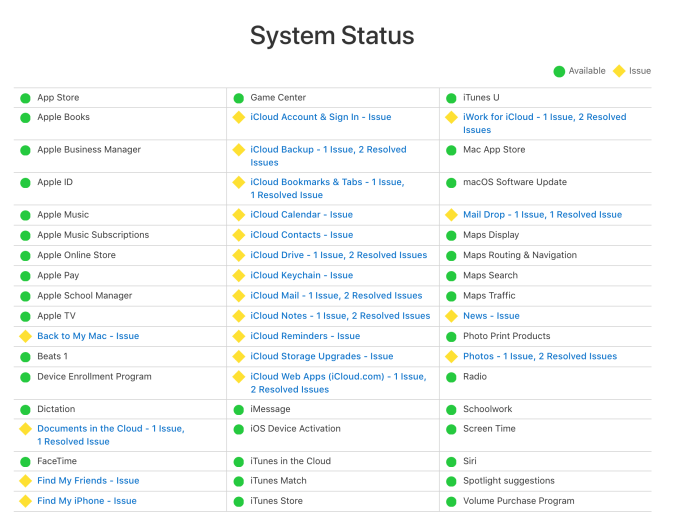
Facebook has only just recovered from one of its worst outages to date, and Gmail and Google Drive also experienced a worldwide outage this week. Now, apparently, it’s Apple’s turn. According to the company’s System Status dashboard, a number of iCloud services are experiencing issues, including iCloud Drive, Mail, Calendar, Notes, Keychain, Reminders, iWork, Photos, News and others.

According the System Status page, the issues began today at 11 AM ET/8 AM PT.

The page doesn’t offer much in terms of detail as to why the services are experiencing problems, only saying that “some users are affected” and “users may be unable to access this service.”

The iCloud issues arrive on the heels of Facebook’s massive outage which impacted its 2.3 billion users across its properties – including Facebook, Instagram, WhatsApp, and Messenger – for over 24 hours. The social networking company chalked up the problem to a “server configuration change,” not a DDoS attack as some had been speculating.

That hasn’t stopped people from continuing to believe the series of outages seen this week are related. But it’s simply too soon to draw any conclusions. There’s not enough being provided by the companies themselves to fully understand the nature of what’s happened at this point, nor what’s causing the issues with iCloud.

Fair to say, it has been a bad week for the internet. (Did anyone try turning it off and back on again?)

Apple historically gets its outages under control in a fairly timely fashion. We’ll have to wait to see if it’s able to do so today, or if the issues worsen or improve.

Apple declined to comment.

14 Mar 2019

Valve lets you stream Steam games from anywhere

Valve doesn’t want to miss the cloud gaming bandwagon. As PC Gamer spotted, The company quietly released a beta version of Steam Link Anywhere. As the name suggests, it lets you turn your gaming PC into a cloud gaming server and stream games from… anywhere.

The company’s strategy is a bit puzzling here as Valve recently discontinued its hardware set-top box, the Steam Link. While Valve might be done on the hardware side, the company is still iterating on Steam Link apps.

You can now download the Steam Link app on an Android phone, an Android TV device or a Raspberry Pi. Unfortunately, Valve still hasn’t found a way to release its Steam Link app on the App Store for iOS devices and the Apple TV. You can start Steam on your computer and play demanding PC games on other screens.

Steam Link works fine on a local network, especially if you use Ethernet cables between all your devices. With Steam Link Anywhere, your performance will vary depending on your home internet connection. If you don’t have a fiber connection at home, the latency might simply be too high to play any game.

Now let’s see if Valve plans to flip the switch and let you run Steam games on a server in a data center near you. That would turn Steam Link Anywhere into a Shadow competitor.

Microsoft recently showed off Forza Horizon 4 running on an Android phone thanks to Project xCloud. Google has also been teasing its Game Developers Conference to learn more about its gaming projects. It’s clear that everybody wants to turn 2019 into the year of cloud gaming.

14 Mar 2019

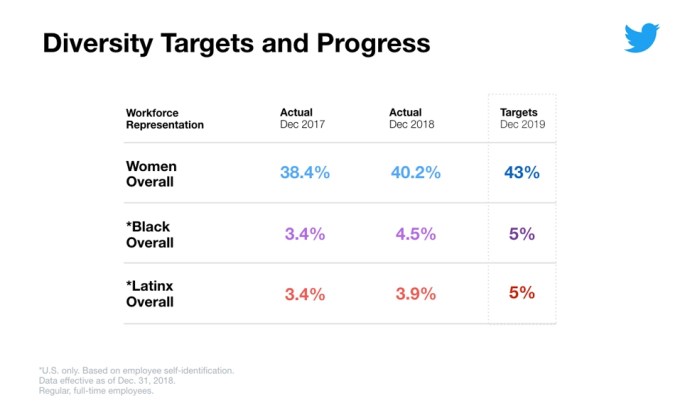
Twitter wants workforce to be at least 5% black, 5% Latinx by the end of this year

Twitter unveiled its latest diversity report and announced a new vice president of people experience and head of diversity and inclusion. In order to “unify I&D with critical People functions under one leader who owns the decisions for both,” Twitter CMO Leslie Brand tweeted today, the company promoted Dalana Brand to VP of People Experience and Head of Diversity and Inclusion.

According to its report, Twitter is now 40.2 percent female, 4.5 percent black and 3.9 percent Latinx. These figures are better than last year.

At the leadership level, Twitter’s representation of women, black and Latinx people also improved.

Meanwhile, of all the attrition Twitter experienced in 2018, women made up 39.6 percent of it, while black employees accounted for 3.9 percent and Latinx employees made up 4.2 percent.

Twitter has also implemented new targets for each member of the leadership team. Those targets are to attract, retain and include.

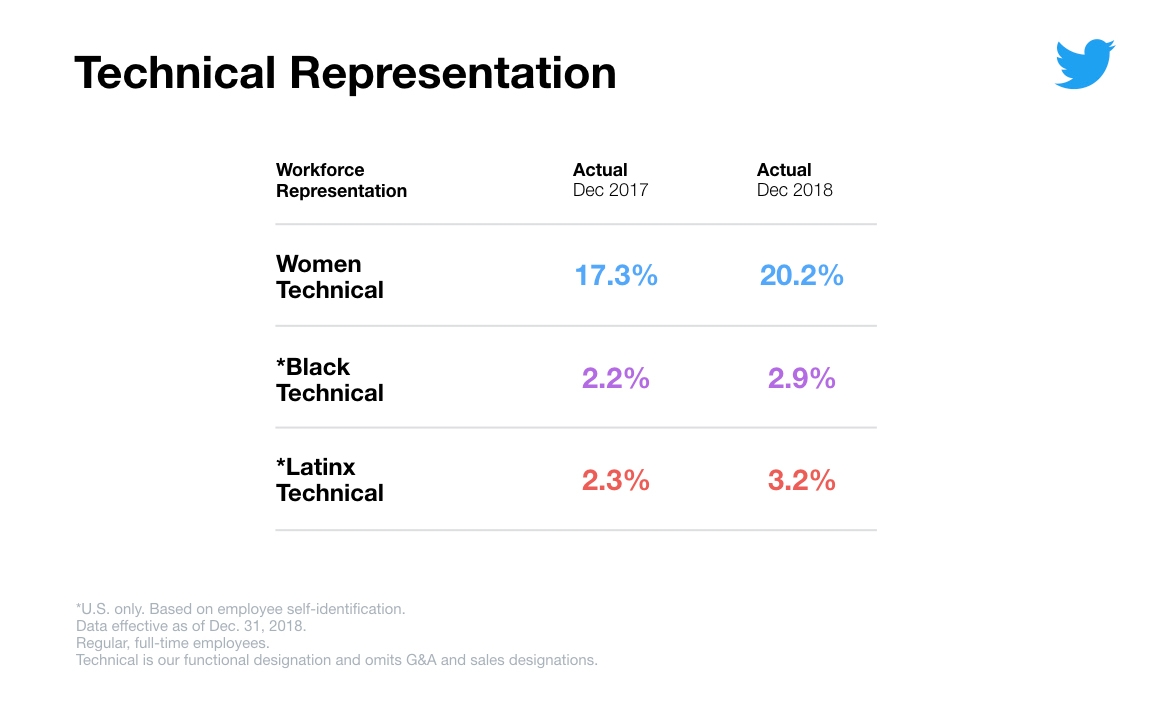
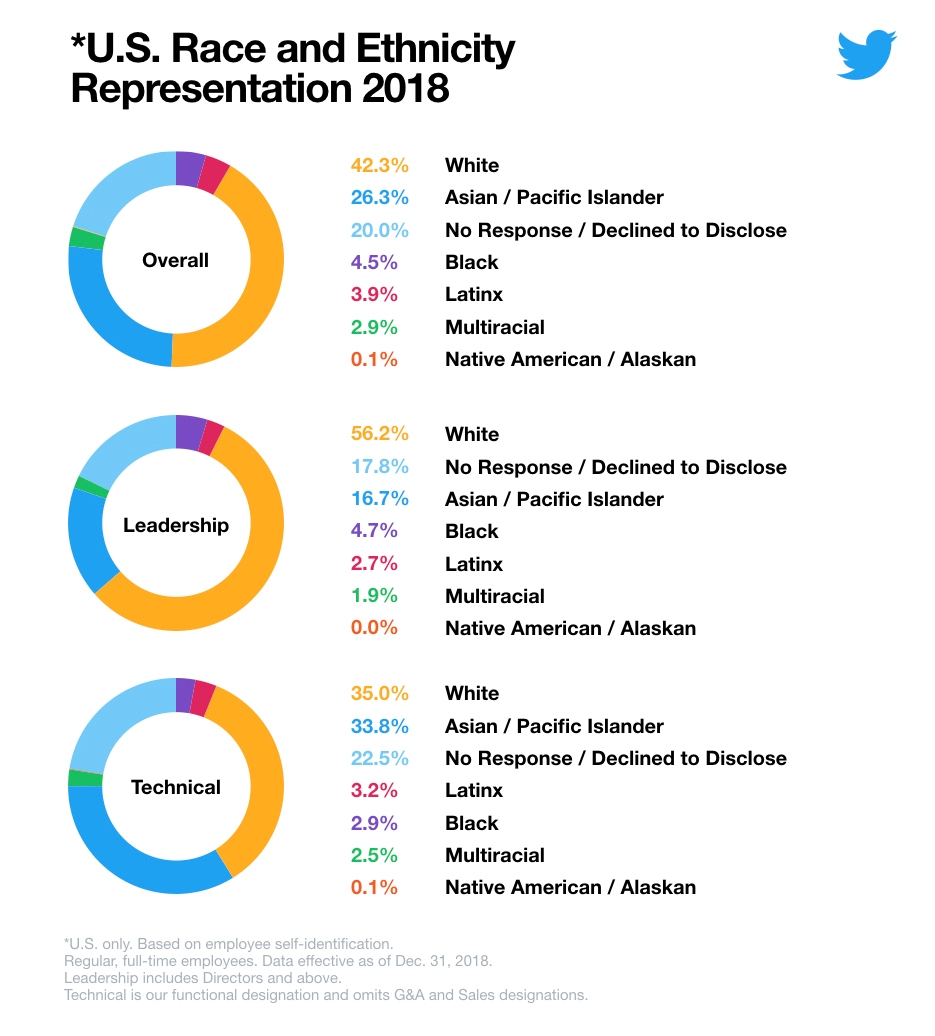
Here’s the full breakdown of Twitter’s demographics.

“Missing from this chart is sexual orientation and gender identity because we had lower participation in our self-ID survey for this category,” Twitter wrote in its blog post. “We believe a refresh of our self-identification efforts and a new anonymous survey will allow us to better understand and share a more accurate representation of our company moving forward. This will also put us in a position to report on representation for employees with disabilities and with military status.”

Moving forward, Twitter plans to release its report quarterly instead of annually and share data around pay equity and promotions. In a tweet today, Berland said the company is currently conducting the analyses and will share the results once they’re ready.

14 Mar 2019

Kamala Harris wants to bring the US Digital Service to local governments, with a $65M budget

Senator Kamala Harris (D-CA), who has already announced her presidential campaign, has introduced a bill that would double down on one of the rare successful tech upgrade programs in the government today: the U.S. Digital Service. Ultimately she wants this quietly effective program to go from federal to state and local level, and command a much larger $65 million yearly budget.

If you haven’t heard of the USDS, don’t worry — it’s not exactly flashy. Founded under Obama’s tenure after the Healthcare.gov debacle, the modest (around 200 people) team has been taking on federal projects like digitizing veteran benefits paperwork, building APIs and payment systems for Medicare, and that sort of thing.

It’s working (and saving enough money through smart spending) to the point where the current administration quietly tolerates their continued existence — though reportedly it has had trouble recruiting over the last couple years.

What Sen. Harris’s Digital Service Act would do is extend the program to the state, county, and city level, with a fixed budget it would distribute to individual short-term projects.

“We must do more to empower our state and local governments to tap into the power of technology to provide seamless, cost-effective services for the 21st century,” Harris said in a press release announcing the bill.

States are already working on creating teams to do what the federal team does — essentially intensive development targeted at high-impact applications — and the bill would support those with federal money.

The bill proposes two numbers: $50 million for the USDS to continue its work at the federal level, well above its approximate current budget of about $15 million. Then there’s $15 million on top of that set apart specifically for state and local projects. The money would be awarded case by case similar to other federal aid grants. The announcement describes them as follows:

2-year grants ranging from $200,000 to $2.5 million per year, according to the population they serve. Grants require a 20 percent cost share [i.e. paid 20 percent by the local government] and at least 50% of the grant must be used for talent rather than technology.

Those latter number prevent a few obvious sweetheart deals and buying packaged services from vendors or other providers. This is about hiring people to build bespoke systems, not hunting for bargains.

The act would also require yearly reports on the impact of USDS projects — not that oversight is desperately required, as the success of the program has shown, but simply because accountability should be the norm, not the exception.

You can read the full text of the bill here. Although increases in spending are risky propositions right now, this one can at least claim that it will produce savings far in excess of its budget, as the existing program has. And should it fail to proceed, it also serves as a statement of purpose and a plank in Harris’s presidential platform.

14 Mar 2019

Microsoft open sources its data compression algorithm and hardware for the cloud

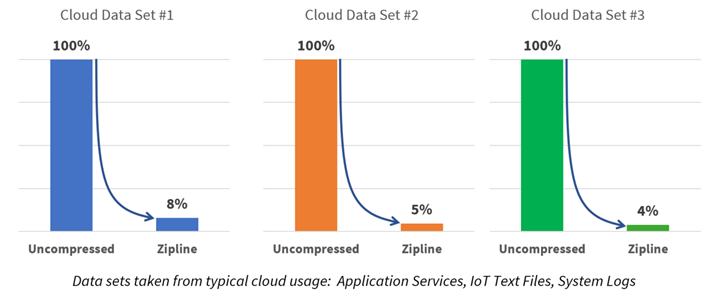
The amount of data that the big cloud computing providers now store is staggering, so it’s no surprise that most store all of this information as compressed data in some form or another — just like you used to zip your files back in the days of floppy disks, CD-ROMs and low-bandwidth connections. Typically, those systems are closely guarded secrets, but today, Microsoft open sourced the algorithm, hardware specification and Verilog source code for how it compresses data in its Azure cloud. The company is contributing all of this to the Open Compute Project (OCP).

Project Zipline, as Microsoft calls this project, can achieve 2x higher compression ratios compared to the standard Zlib-L4 64KB model. To do this, the algorithm — and its hardware implementation — were specifically tuned for the kind of large datasets Microsoft sees in its cloud. Because the system works at the systems level, there is virtually no overhead and Microsoft says that it is actually able to manage higher throughput rates and lower latency than other algorithms are currently able to achieve.

Microsoft stresses that it is also contributing the Verilog source code for register transfer language (RTL) — that is, the low-level code that makes this all work. “Contributing RTL at this level of detail as open source to OCP is industry leading,” Kushagra Vaid, the general manager for Azure hardware infrastructure, writes. “It sets a new precedent for driving frictionless collaboration in the OCP ecosystem for new technologies and opening the doors for hardware innovation at the silicon level.”

Microsoft is currently using this system in its own Azure cloud, but it is now also partnering with others in the Open Compute Project. Among these partners are Intel, AMD, Ampere, Arm, Marvell, SiFive, Broadcom, Fungible, Mellanox, NGD Systems, Pure Storage, Synopsys and Cadence.

“Over time, we anticipate Project Zipline compression technology will make its way into several market segments and usage models such as network data processing, smart SSDs, archival systems, cloud appliances, general purpose microprocessor, IoT, and edge devices,” writes Vaid.

14 Mar 2019

How to watch Elon Musk unveil the Tesla Model Y

Tesla is scheduled to reveal the Model Y — the next electric vehicle in electric automaker’s lineup — tonight at an event in Los Angeles after, not months, but years of teasers and hints from CEO Elon Musk .

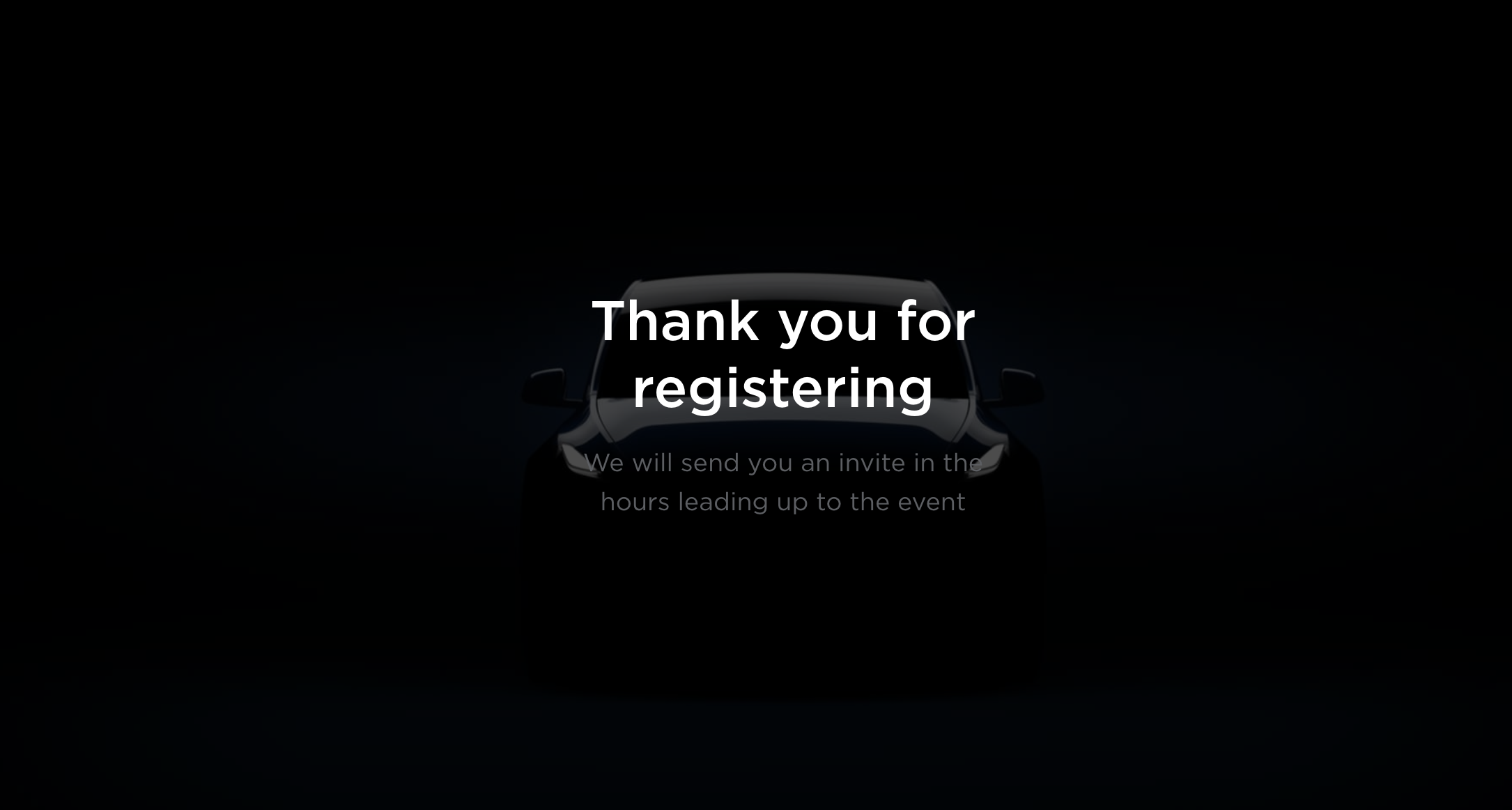
Tesla will live stream the Model Y unveiling event at 8 pm PT via its website. However, folks who want to watch the event should head over to the site (https://www.tesla.com/modely) prior to the 8 pm start time. There is a registration process. Once completed, a new page pops up with the message “Thank you for registering. We will send you an invite in the hours leading up to the event.”

TechCrunch will be at the event to hunt for other interesting tidbits about the Model Y as well as possibly get a ride in the compact SUV. Stay tuned.

What to expect

Details about the compact SUV are scant, although Musk has provided some information leading up to the March 14 Tesla Model Y event.

The Model Y is expected to be 10 percent bigger than the Model 3 and cost 10 percent more, according to Musk. It will have the same battery as the Model 3, but its beefier profile will mean “slightly less” range than the Model 3.

Tonight’s event should answer many, but not all questions. Expect more information on the vehicle specs such as range and performance, two favorite go-tos for Musk. Price could be revealed as well. Those kinds of splashy data points can create buzz and attention. But TechCrunch is more interested in the how, than the what.

What we’ll be watching for is any information about where the Model Y will be produced, a production timeline, and what manufacturing strategy the company plans to pursue. TechCrunch will also be paying attention to how Tesla handles reservations for the Model Y.

Some of Tesla’s biggest problems stem from how it builds its electric vehicles. The company emphasized highly automated systems and then backed away from that approach. (Remember the tent?)

Why it matters

Model 3 has long been considered Tesla’s most important car. And it still is. Without continued sales of the Model 3, Tesla will lack the necessary capital to produce the Model Y.

Meanwhile, the Model Y, if Tesla can apply all of the lessons it learned from its troubles with the Model 3 production, could be a smash hit for the automaker. More importantly, Musk is counting on the Model Y to hit the company’s goal of delivering 1 million cars by 2020.

Americans are still lusting after SUVs, particularly smaller ones,  and it’s an appetite that has grown beyond U.S. borders and into other important markets such as China.

14 Mar 2019

Daily Crunch: Telegram soars after Facebook outage

The Daily Crunch is TechCrunch’s roundup of our biggest and most important stories. If you’d like to get this delivered to your inbox every day at around 9am Pacific, you can subscribe here.

1. Telegram gets 3M new signups during Facebook apps’ outage

In a message sent to his Telegram channel, founder Pavel Durov wrote, “I see 3 million new users signed up for Telegram within the last 24 hours.” Durov doesn’t offer an explicit explanation for Telegram’s sudden spike in signups, but he does take a thinly veiled swipe at social networking giant Facebook.

It’s probably not a coincidence that Facebook and its related family of apps went down for most of Wednesday.

2. Google removed 2.3B bad ads, banned ads on 1.5M apps + 28M pages, plans new Policy Manager this year

Using both manual reviews and machine learning, Google said that in 2018 it removed 2.3 billion “bad ads” that violated its policies — which at their most general forbid ads that mislead or exploit vulnerable people.

3. Uber reportedly raising $1B in deal that values self-driving car unit at up to $10B

Uber is in negotiations with investors, including the SoftBank Vision Fund, to secure an investment as large as $1 billion for its autonomous vehicles unit. The deal would value the business at between $5 billion and $10 billion, according to a report from The Wall Street Journal.

4. Opportunity’s last Mars panorama is a showstopper

The Opportunity Mars Rover may be officially offline for good, but its legacy of science and imagery is ongoing — and NASA just shared the last (nearly) complete panorama the robot sent back before it was blanketed in dust.

5. AI photo startup Polarr raises an $11.5 million Series A

At the moment, Polarr is probably best known for its photography app for iOS and Android, which utilizes machine learning and AI to improve image editing. The company says it has around four million monthly active users.

6. WeWork Labs is launching a food tech accelerator

WeWork is committing $1 million to back the first batch of companies.

7. Facebook won’t store data in countries with human rights violations — except Singapore

When Mark Zuckerberg said in a lengthy blog post that Facebook would not build data centers in countries with poor human rights, he chose to ignore Singapore — known for a lack of privacy and freedom of expression.

14 Mar 2019

Facebook blames a server configuration change for yesterday’s outage

Facebook has finally released its assessment of what was responsible for yesterday’s massive outage of its Instagram, Messenger, and core Facebook service.

Contrary to the thesis circulating yesterday that it was a route leak, the company said that a misconfigured server was to blame.

Millions of people were impacted by the outage yesterday, which had users taking to Twitter (and our tips inbox) to vent their frustration or share theories about what was happening inside the company’s networks.

This story is developing.