Author: azeeadmin

13 Mar 2019

Google has quietly added DuckDuckGo as a search engine option for Chrome users in ~60 markets

In an update to the chromium engine, which underpins Google’s popular Chrome browser, the search giant has quietly updated the lists of default search engines it offers per market — expanding the choice of search product users can pick from in markets around the world.

Most notably it’s expanded search engine lists to include pro-privacy rivals in more than 60 markets globally.

The changes, which appear to have been pushed out with the Chromium 73 stable release yesterday, come at a time when Google is facing rising privacy and antitrust scrutiny and accusations of market distorting behavior at home and abroad.

Many governments are now actively questioning how competition policy needs to be updated to rein in platform power and help smaller technology innovators get out from under the tech giant shadow.

But in a note about the changes to chromium’s default search engine lists on an Github instance, Google software engineer Orin Jaworski merely writes that the list of search engine references per country is being “completely replaced based on new usage statistics” from “recently collected data”.

Their choices appear to loosely line up with top four marketshare.

The greatest beneficiary of the update appears to be pro-privacy Google rival, DuckDuckGo, which is now being offered as an option in more than 60 markets, per the Github instance.

Previously DDG was not offered as an option at all.

Another pro-privacy search rivals, French search engine Qwant, has also been added as a new option — though only in its home market, France.

Whereas DDG has been added in Argentina, Austria, Australia, Belgium, Brunei, Bolivia, Brazil, Belize, Canada, Chile, Colombia, Costa Rica, Croatia, Germany, Denmark, Dominican Republic, Ecuador, Faroe Islands, Finland, Greece, Guatemala, Honduras, Hungary, Indonesia, Ireland, India, Iceland, Italy, Jamaica, Kuwait, Lebanon, Liechtenstein, Luxembourg, Monaco, Moldova, Macedonia, Mexico, Nicaragua, Netherlands, Norway, New Zealand, Panama, Peru, Philippines, Poland, Puerto Rico, Portugal, Paraguay, Romania, Serbia, Sweden, Slovenia, Slovakia, El Salvador, Trinidad and Tobago, South Africa, Switzerland, UK, Uruguay, US and Venezuela.

“We’re glad that Google has recognized the importance of offering consumers a private search option,” DuckDuckGo founder Gabe Weinberg told us when approached for comment about the change.

DDG has been growing steadily for years — and has also recently taken outside investment to scale its efforts to capitalize on growing international appetite for pro-privacy products.

Interestingly, the chromium Github instance is dated December 2018 which appears to be around about the time when Google (finally) passed the Duck.com domain to DuckDuckGo, after holding onto the domain and pointing it to Google.com for years.

We asked Google for comment on the timing of the changes to search engine options in chromium. At the time of writing the search giant had not responded.

We’ve also reached out to Qwant for comment on being added as an option in its home market.

 

13 Mar 2019

Periscope cracks on inauthentic behavior including fake hearts, follows, chats and more

Twitter’s video streaming app, Periscope, is cracking down on spam and, specifically, fake engagements. The company says it’s updating its policies around how it enforces its anti-spam rules, and is making improvements in terms of how those rules are enforced. This means users will see increased enforcement actions, Periscope notes – and these may even take place on “high-profile” accounts.

The app has had struggled for some time to get a handle on spam and other bad behavior.

For example, in 2016 the livestreaming app rolled out real-time comment moderation – a much-needed change given the real-time nature of the live video and associated comments. Last year, it updated this system so broadcasters could assign their own chat moderators instead of relying on the crowd to handle the reporting and banning.

While these changes may have helped to address issues around trolling and abuse, spam is another matter – and particularly the inauthentic behavior around “fake engagements.”

This isn’t only a Periscope problem. On any platform where engagements – like hearts, favorites, follows, and comments – are the currency of success, entire ecosystems pop up designed to help people cheat their way to the top.

With the updated spam policy, the company says it will now prohibit fake engagements  – including any artificial hearts, chat, followers and views. It classifies these actions as “spam,” because they’re “deceptive” forms of activity.

Any selling or promoting of fake engagement will be prohibited, too.

In addition, company says it will focus on proactive enforcement to help improve chat quality and will soon launch account-level spam reporting options so others can report spammy users.

Fake engagement is not a new issue for the app.

For years, there have been problems with fake followers and fake hearts, as an attempt to manipulate the system. There are YouTube videos that detail how this works, tutorials on how to make these purchases, bots, and, of course, offers filed under “social media marketing” on sites like Fiverr – a marketplace where much of the fake internet is manufactured.

While Periscope may have turned a blind eye to the spam and fakery for some time, its decision to finally crack down on fake engagement arrives only a few months after Instagram did the same. In November, Instagram began fighting back against automated apps people used to leave spammy comments and to follow and unfollow users in hopes of growing their audience.

Social media platforms, as a whole, have actively ignored these sorts of attempts to manipulate their systems for most of their existence. After all, fake engagements like hearts and follows and comments make it look like their platforms are more active than they actually are. And if these fakery tools helped birth crowds of “influencers” who then, in turn, attracted more users to the platform, that could be even seen as a perk.

But fake accounts and activity aren’t always about people wanting a shortcut to online fame – inauthentic accounts are also the source for disinformation campaigns and attempts by foreign governments to hack our democracy. That’s shifted the scale in the other direction, and has forced social media platforms to finally stop ignoring the problem of inauthentic accounts and activity.

Periscope, however, told users it’s all about listening to their feedback.

“At Periscope, we value our community’s feedback to make our service better. Periscope is a place for instant engagement and we’ve heard your concerns about spammy accounts and chats,” the company said. “Whether you’re broadcasting or catching up with your favorite broadcaster, we are always looking for ways to make Periscope feel safer and more authentic for our community.”


13 Mar 2019

Periscope cracks on inauthentic behavior including fake hearts, follows, chats and more

Twitter’s video streaming app, Periscope, is cracking down on spam and, specifically, fake engagements. The company says it’s updating its policies around how it enforces its anti-spam rules, and is making improvements in terms of how those rules are enforced. This means users will see increased enforcement actions, Periscope notes – and these may even take place on “high-profile” accounts.

The app has had struggled for some time to get a handle on spam and other bad behavior.

For example, in 2016 the livestreaming app rolled out real-time comment moderation – a much-needed change given the real-time nature of the live video and associated comments. Last year, it updated this system so broadcasters could assign their own chat moderators instead of relying on the crowd to handle the reporting and banning.

While these changes may have helped to address issues around trolling and abuse, spam is another matter – and particularly the inauthentic behavior around “fake engagements.”

This isn’t only a Periscope problem. On any platform where engagements – like hearts, favorites, follows, and comments – are the currency of success, entire ecosystems pop up designed to help people cheat their way to the top.

With the updated spam policy, the company says it will now prohibit fake engagements  – including any artificial hearts, chat, followers and views. It classifies these actions as “spam,” because they’re “deceptive” forms of activity.

Any selling or promoting of fake engagement will be prohibited, too.

In addition, company says it will focus on proactive enforcement to help improve chat quality and will soon launch account-level spam reporting options so others can report spammy users.

Fake engagement is not a new issue for the app.

For years, there have been problems with fake followers and fake hearts, as an attempt to manipulate the system. There are YouTube videos that detail how this works, tutorials on how to make these purchases, bots, and, of course, offers filed under “social media marketing” on sites like Fiverr – a marketplace where much of the fake internet is manufactured.

While Periscope may have turned a blind eye to the spam and fakery for some time, its decision to finally crack down on fake engagement arrives only a few months after Instagram did the same. In November, Instagram began fighting back against automated apps people used to leave spammy comments and to follow and unfollow users in hopes of growing their audience.

Social media platforms, as a whole, have actively ignored these sorts of attempts to manipulate their systems for most of their existence. After all, fake engagements like hearts and follows and comments make it look like their platforms are more active than they actually are. And if these fakery tools helped birth crowds of “influencers” who then, in turn, attracted more users to the platform, that could be even seen as a perk.

But fake accounts and activity aren’t always about people wanting a shortcut to online fame – inauthentic accounts are also the source for disinformation campaigns and attempts by foreign governments to hack our democracy. That’s shifted the scale in the other direction, and has forced social media platforms to finally stop ignoring the problem of inauthentic accounts and activity.

Periscope, however, told users it’s all about listening to their feedback.

“At Periscope, we value our community’s feedback to make our service better. Periscope is a place for instant engagement and we’ve heard your concerns about spammy accounts and chats,” the company said. “Whether you’re broadcasting or catching up with your favorite broadcaster, we are always looking for ways to make Periscope feel safer and more authentic for our community.”


13 Mar 2019

AgroStar gets $27M Series C to give more Indian farmers increase crop production with data analytics

Indian agriculture tech startup AgroStar announced today that it has raised a $27 million Series C for its platform, which helps farmers increase crop production, manage orders and buy supplies online. The round was led by Bertelsmann India Investments, with participation from returning investors Accel, Chiratae Ventures and Aavishkaar Bharat Fund.

AgroStar bills its app as a “one-stop solution” that contains everything India’s 135 million farmers need, including agronomy tools, such as a crop disease diagnosis tool that combines image recognition technology, educational content and an e-commerce store that sells farming products. Its new funding, which brings AgroStar’s total raised so far to $42 million, will be used to scale the platform in order to take advantage of India’s increasing smartphone penetration in rural areas and hire more agriculture experts.

CEO and co-founder Shardul Sheth told TechCrunch that the app has been downloaded over a million times and engaged with more than million farmers. Its target is to reach 10 million downloads over the next two years and expand its e-commerce operations to more states in India.

In a statement, Bertelsmann India Investments managing director Pankaj Makkar said the investment firm will work with AgroStar to “build the right strategy for its supply chain and will bring the best practices from our investments in similar spaces in China.”

13 Mar 2019

Verizon’s 5G to launch first in Chicago and Minneapolis on April 11

Verizon today announced the launch details of its first standards-based 5G wireless service. Starting on April 11 5G will be available throughout areas of Chicago and Minneapolis. Current subscribers can expect to pay an additional $10 a month for access, and at launch, the only supported device is the Motorola Z3 with the 5G Moto Mod.

Later in the year, once they become available, Verizon will support the Samsung Galaxy S10 5G and LG’s V50 ThinQ.

Prices start at $85 a month for the base Go Unlimited plan and go up from there. When in 4G, the three eligible plans are subject to data throttling after a set amount of data, but when in 5G, that is not the case. Verizon says it will not throttle 5G data. “5G data usage with the moto mod is unlimited with no data de-prioritization,” the carrier said.

This will be Verizon’s first standards-based 5G network. Last year, Verizon launched in-home 5G service based off proprietary specifications. The 5G launching in Chicago, Minneapolis, and eventually other cities, is different and based off standards developed by 3GPP. The two 5G networks are not compatible meaning owners of a 5G phone will not be able to use on the 5G in-home network.

At launch Verizon subscribers can only access 5G with the Moto Z3 and 5G Moto Mod add-on. For a limited time, the 5G Moto Mod is on sale for $50. The required Moto Z3 is also on sale for limited time.

Verizon says it intends to bring 5G to more than 30 cities in 2019. At launch the network will only be available in select areas of Chicago and Minneapolis. The carrier did not reveal the roll-out plan for the additional cities.

In Chicago, Verizon says 5G will be limited to areas around The Loop, Gold Coast, River North and Old Town areas. For Minneapolis, 5G will hit Downtown West, Downtown East, and Elliot Park.

Verizon is not alone in slowly deploying 5G. Carriers worldwide are rolling out their first 5G networks. At MWC Barcelona 2019 a Qualcomm executive stated in 2019, 20 mobile operators are launching 5G in 60 markets. In late 2018, the first 5G network launched in the US followed by three services in South Korea. Availability is limited in each market as carriers stress-test the systems and slowly roll them out to different users. In Korea, at launch, the networks were only available to enterprise customers.

Last month AT&T started changing the 4G logos on some Android phones to say 5G E. While the phones might be getting slightly faster speeds, they are not, despite AT&T’s marketing, running on a 5G network. AT&T’s peers quickly called the carrier out on it and Sprint filed a lawsuit stating, “What AT&T touts as 5G, however, is nothing more than an enhanced fourth generation Long Term Evolution wireless service, known as 4G LTE Advanced, which is offered by all other major wireless carriers.”

AT&T’s true 5G network will go by the branding 5G+. It’s confusing and will get worse.

Sprint’s 5G effort is different from Verizon or AT&T. Announced in late February, the carrier intends to use existing cellular spectrum to more quickly launch its 5G network at the expense of the speed of the network. This is different from other carriers that will use different spectrum, allowing their networks to offer faster speeds but at the expense of a slower roll-out.

There’s an arms race of sorts but it means little in the near future. 5G promises to bring ultra-high speeds and ultra-low latency allowing devices to take advantage of edge computing. But at launch, in 2019 and perhaps even 2020, devices will just have access to faster speeds and to many users, that might not be enough to justify upgrading.

Disclosure: TechCrunch is owned by Verizon Media.

13 Mar 2019

The meaning of Nginx and F5

F5 Networks took a dive yesterday after the company announced it was acquiring open-source web server NGINX. While media coverage of the deal was largely positive, the public markets appeared much more skeptical, as F5 stock finished the day down nearly 8%.

As most analyses noted, the logic behind the deal is clear. F5’s existing markets have continued to dry up, with just low single digit expansion expected year-over-year. On top of NGINX being one of the most widely used web servers in the world, NGINX gives NetOps-focused F5 an entrée into the DevOps market. As a result, F5 now has to fork over some cash to modernize its offering and find new avenues for growth. Plus, the acquisition provides F5 with exposure to the growing movement towards open source software.

Unfortunately for F5, the company’s stock is heavily owned by institutional holders and the tradeoffs and costs of the transaction hit areas where institutional investors are particularly sensitive.

You’re reading the Extra Crunch Daily. Like this newsletter? Subscribe for free to follow all of our discussions and debates.

First, investors love nothing more than when companies return cash to shareholders, primarily through buybacks or dividends. Unsurprisingly, investors were less than pleased when F5 announced it would be cutting its more than $1 billion share repurchase plan and would instead be using its cash to fund the NGINX deal.

Some investors and analysts were even more turned off by a purchase price they viewed as a bit pricey (with some estimating a mid-to-high 20s transaction multiple on 2018 sales), which meant F5 will have to extract larger financial benefits from the deal to reach attractive levels of return.

Though F5 expects the combined entity to gain market share and identify more than enough synergies to fuel returns in the long run, in the near term, the company announced that the deal would compress operating margins and earnings-per-share, while only modestly improving revenue growth. Diluting earnings-per-share in particular likely had a direct impact on the valuations spat out by investor models, since many at least in part use a multiple of year-ahead earnings to derive price targets.

And while many investor concerns seem largely technical or financial, several analysts expressed broader fears over the level of synergies and revenue growth F5 and NGINX will actually be able to generate. The synergy concerns from the investment community are actually fairly aligned with those expressed by some of the developer community.

Historically, open-source purists have typically viewed the involvement of for-profit entities as a fatal blow to open source platforms, based on the general assumption that financial and shareholder incentives will lead to proprietary licensing or other challenges. As a result, in addition to the normal integration risk seen in any M&A event, analysts expressed concerns over potential impacts to the combined entity’s ability to attract or retain dedicated open source customers or employees.

Fears that F5’s involvement in NGINX will deter investors seem a bit overblown, but the immediate harsh reaction of F5’s stock investors does nothing to quell fears that financial pressure may impact the existing NGINX model.

The divergent responses to F5’s deal seems indicative of a larger trend we’ve focused on, where long-standing tech powerhouses have seen growth stall after focusing on profitable business lines while ignoring emerging alternative models that have become the primary source of growth. Now, incumbents are having to cough over hefty sums just to play catch up and face a tough balancing act of angering investors and investing in their future.

~ Written by Arman Tabatabai

Ingrid Burrington’s Networks of New York

Photo by Smith Collection/Gado/Getty Images

In book news, I finished Networks of New York, which is a slim book on the infrastructure that powers New York City’s internet and surveillance infrastructure. Burrington has made a name for herself covering the politics and challenges of the networking layers of the internet, and this is both a reference and a sort of travel field guide to this technology that looms around us every day but we often overlook.

That all said, it is really slim, with a few details of mergers and acquisitions of telecom companies strewn in between pages of figures depicting manhole covers. As an exemplar of short books, I think it is an experimental contribution, but I can’t recommend the book if you really want to understand how internet plumbing works. A better book (albeit less about the internet) is Kate Ascher’s The Works: Anatomy of a City.

~ Written by Danny Crichton

Thanks

To every member of Extra Crunch: thank you. You allow us to get off the ad-laden media churn conveyor belt and spend quality time on amazing ideas, people, and companies. If I can ever be of assistance, hit reply, or send an email to danny@techcrunch.com.

This newsletter is written with the assistance of Arman Tabatabai from New York

You’re reading the Extra Crunch Daily. Like this newsletter? Subscribe for free to follow all of our discussions and debates.

13 Mar 2019

Email app Spark adds delegation feature for teams

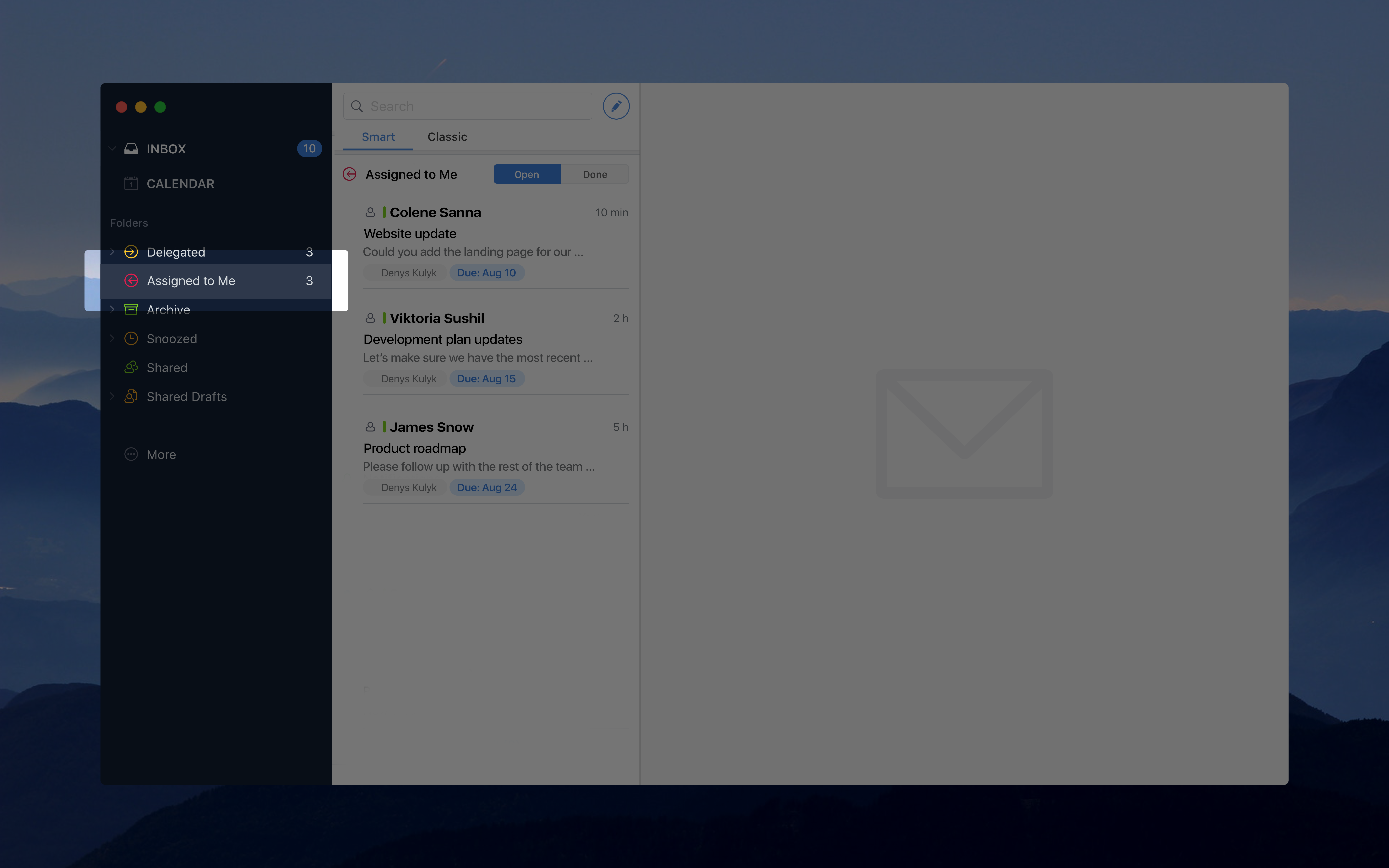
Email app Spark added collaboration features back in May 2018. And Readdle, the company behind the app, is going one step further with a new feature specifically designed to delegate an email to one of your colleagues.

While you can already collaborate with your team by sharing emails in Spark, the app is still not as powerful as a dedicated shared email client, such as Front. But delegation brings Spark one step closer to its competitor.

You can now treat emails as tasks with a deadline. If you’re a manager, you’re working with a personal assistant or you’re in charge of everyone’s workload, you can now assign a conversation to a person in particular and send a message to add some context.

On the other end, your colleague receives the conversation in their Spark account, in the ‘Assigned’ tab. They can then start working on that email together with other team members.

As a reminder, Spark lets you discuss email threads with your colleagues in a comment area, @-mention your colleague, add attachments and links. When you know what to say, you can create a draft, ask for feedback and collaborate like in Google Docs.

Delegation is a bit more powerful than simply sharing an email with a colleague. For instance, you can set a due date and mute the conversation. This way, you can hand off some work and focus on something else.

Spark for Teams uses a software-as-a-service approach. It’s free for small teams and you have to pay $6.39 to $7.99 per user per month to unlock advanced features, such as unlimited email templates and unlimited delegations. Free teams are limited to 10 active delegations at any time.

13 Mar 2019

Email app Spark adds delegation feature for teams

Email app Spark added collaboration features back in May 2018. And Readdle, the company behind the app, is going one step further with a new feature specifically designed to delegate an email to one of your colleagues.

While you can already collaborate with your team by sharing emails in Spark, the app is still not as powerful as a dedicated shared email client, such as Front. But delegation brings Spark one step closer to its competitor.

You can now treat emails as tasks with a deadline. If you’re a manager, you’re working with a personal assistant or you’re in charge of everyone’s workload, you can now assign a conversation to a person in particular and send a message to add some context.

On the other end, your colleague receives the conversation in their Spark account, in the ‘Assigned’ tab. They can then start working on that email together with other team members.

As a reminder, Spark lets you discuss email threads with your colleagues in a comment area, @-mention your colleague, add attachments and links. When you know what to say, you can create a draft, ask for feedback and collaborate like in Google Docs.

Delegation is a bit more powerful than simply sharing an email with a colleague. For instance, you can set a due date and mute the conversation. This way, you can hand off some work and focus on something else.

Spark for Teams uses a software-as-a-service approach. It’s free for small teams and you have to pay $6.39 to $7.99 per user per month to unlock advanced features, such as unlimited email templates and unlimited delegations. Free teams are limited to 10 active delegations at any time.

13 Mar 2019

This is the next-gen lionfish vacuuming robot

Roboticists have the strangest pet projects. For Colin Angle, it’s vacuuming up lionfish. The iRobot CEO is also the cofounder of RSE (that’s Robots in Service of the Environment), a volunteer-based organization designed to create what it says in the name.

The organization’s first project, announced back in 2017, is a robot designed to capture the invasive species, which are capable of decimating reef fish.

Following a successful $29,000 Kickstarter campaign, RSE just announced the launch the intensely named Guardian LF1 Mark 3. Fish vacuuming robot works at depths up to 400 feet, where the fish tend to hang out and breed. It can be remotely operated via a laptop or mobile device for up to an hour in a go.

“The Lionfish are destroying the coral reef and decimating fish populations in the Atlantic,” Angle said in a release tied to the news. The latest innovations incorporated into the RSE Guardian LF1, enable the undersea robotic solution to go deeper, fish longer and pull in a larger haul. With each technical milestone we cross we get one step closer to saving our greatest natural resource by empowering fisherman with new tools.”

The device stuns the fish with a zap, before collected up to ten in a single go. It’s currently a functioning prototype, which has been deployed during various testing missions in Florida.

13 Mar 2019

TwitSnap? Twitter launches new camera feature to demote text

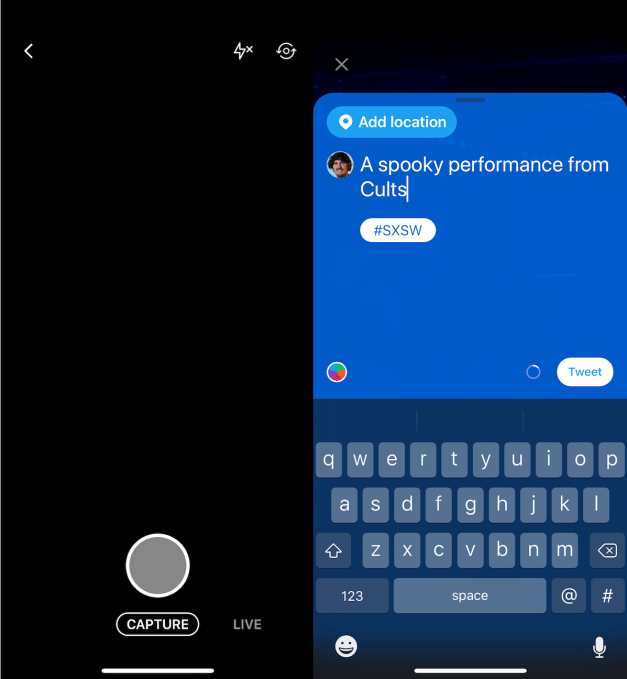
Twitter is rolling out the redesign to its camera feature TechCrunch reported on a month ago that’s designed to let you capture photos, videos, and live footage and connect them to global conversations. Starting today when you swipe left from the Twitter timeline, you’ll get the new camera that’s no longer buried in the tweet composer. After you capture some media (no uploads for now), you can overlay a location, hashtag, or some words on a colored label. But what’s really special is that Twitter will show this media in a larger, more immersive format in the feed with the imagery appearing before the text in your tweet.

Twitter isn’t launching Stories or some dedicated feed of photos to rival Instagram. But it wants to become a more real-time lens on the world rather than just an intepretation of it through people’s words. The enhanced camera could get more people shooting media, which could make Twitter more accessible to new users daunted by walls of text. More visual content also makes it easier to slip more visual ads into the feed.

Twitter tells me it’s not giving tweets created with the camera an algorithmic boost in the main timeline. But a spokesperson told me its combined human and technology curation team may seek to spotlight Twitter Camera tweets in the Whats Happening section about live events in the Explore tab.