Author: azeeadmin

06 Mar 2019

Fitbit announces a $160 stripped-down version of the Versa smartwatch

Last year’s Versa was at the center of Fitbit’s reversing fortunes. After two years in the wilderness, the smartwatch helped turn the tide for the flailing company. Last quarter marked the first time in two years the company saw a year-over-year increase in devices shipped.

After the lackluster launch of the Ionic, the Versa delivered, with a sleeker and smaller form factor, a more mature ecosystem and, perhaps most importantly of all, a lower price point. That device launched at $200 — $100 cheaper than the Ionic. The company is further leveraging those lessons learned for the Versa Lite Edition. It’s pretty much what it sounds like: a stripped-down version of the Versa, which arrives at $160.

The arrival of the original Versa helped Fitbit grow its smartwatch business 442 percent, year-over-year, CEO James Park told TechCrunch in a recent interview. The category now comprises 44 percent of the company’s business and has helped catapult Fitbit to the No. 2 smartwatch spot in the U.S. behind you-know-who.

“There are more and more people getting interested in the smartwatch category, but there are certain barriers to them jumping in: ease of use, simplicity and pricing,” Park said. 

A further price drop could help push Fitbit’s gains even more among those who have been eyeing the category but don’t want to pay the full $200. Positioned against other top smartwatch models, the price point is certainly appealing. Of course, it does come with some compromises.

The Lite drops a number of features for the sake of lowering the product’s price point. It’s a combination of some core smartwatch capabilities and some Fitbit excess. The list includes floors climbed, swim laps, music, Fitbit’s on-screen workouts, additional band styles and Fitbit Pay.

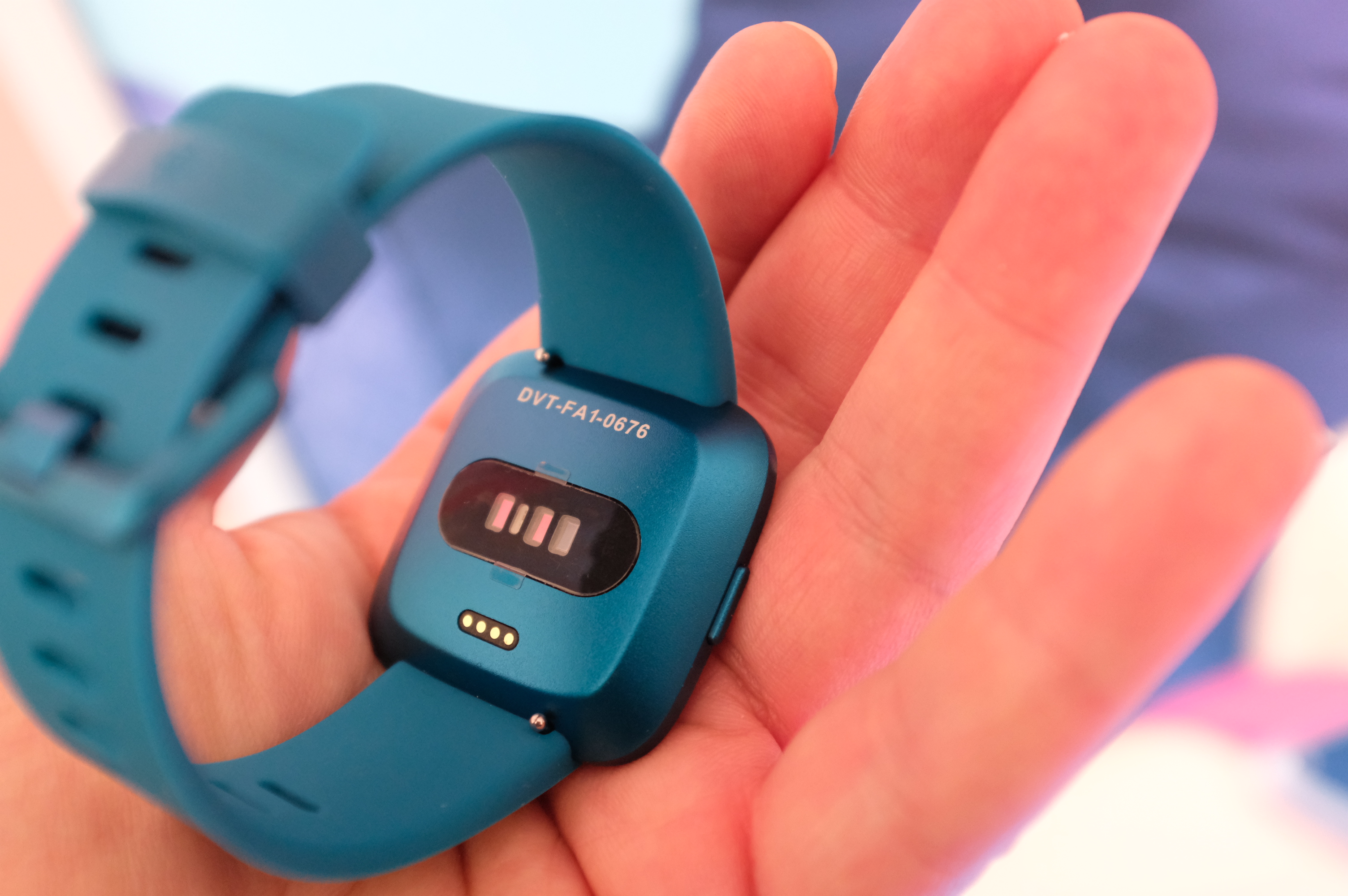
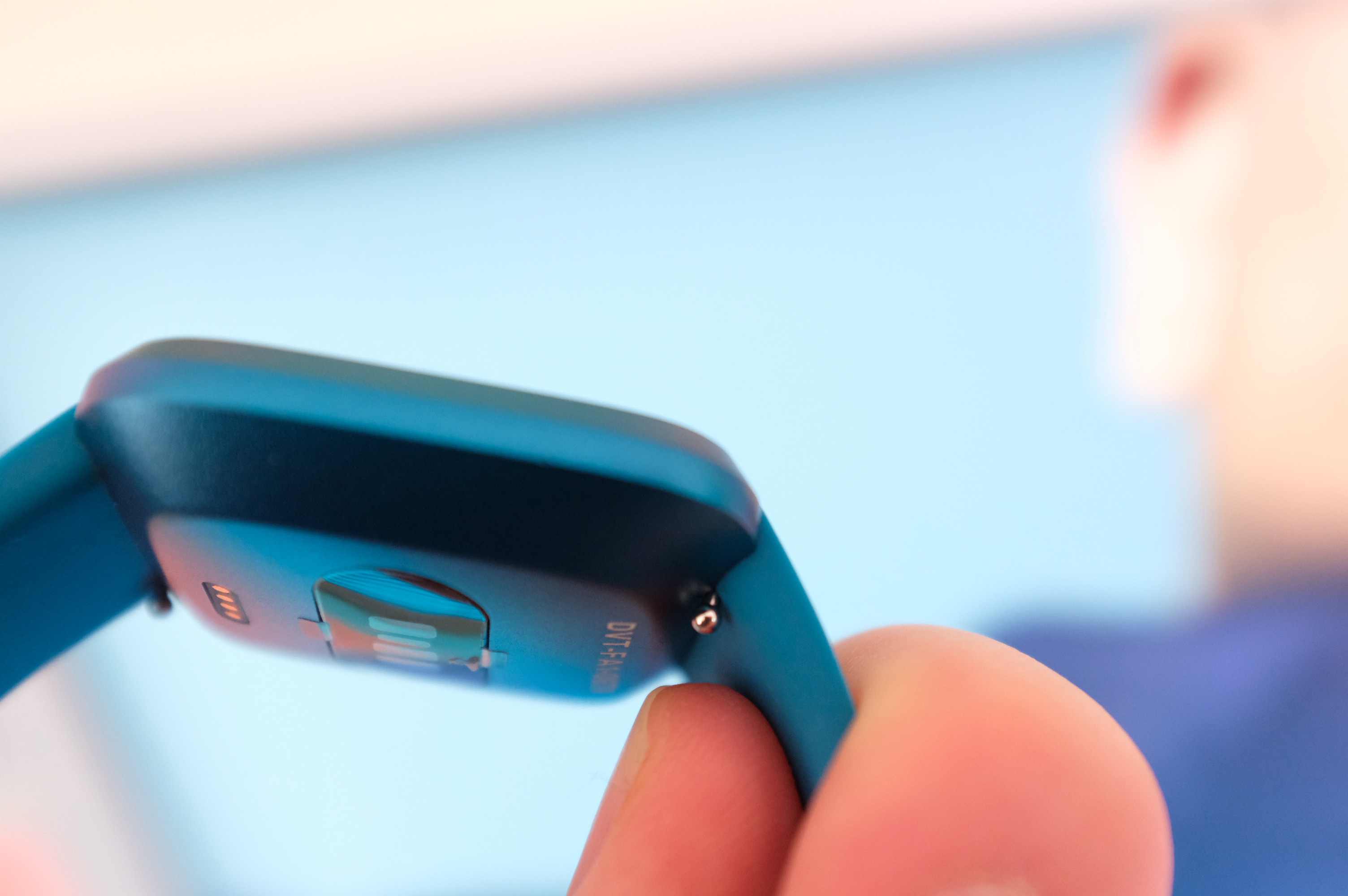
If none of those sounds particularly essential to your smartwatch needs, then the Versa might be the device for you. The product looks nearly identical to its predecessor in both size and shape, though the company has pared the original Versa’s three buttons down to one.The relative success of the device will provide an interesting proving ground for Fitbit’s smartwatch sales — and help determine precisely what people are looking for in the category.

The Versa was a solid device — and certainly an improvement over the Ionic, in spite of dropping a handful of features. Pre-orders open today. They’ll be available from retailers including Amazon, Best Buy, Kohl’s, Target and Walmart later this month.

The Versa and Ionic, in the meantime, aren’t going anywhere any time soon. “We feel that there’s a distinct need for a higher-end ASP (average selling price),” Park explains. “We do consider that an important part of our portfolio.”

06 Mar 2019

Facebook refuses to disclose “chuck Chequers” Brexit advertiser to UK parliament

Facebook has refused to provide the British parliament with the names of individuals behind a shadowy network backing an extreme ‘no deal’ Brexit outcome over a government-negotiated compromise.

Since the June 2016 EU referendum vote, politics in the UK has been consumed by the question of how to implement a close vote to leave.

And last year the UK’s Electoral Commission confirmed the vote was tarnished by in influx of dark money ploughed into social media ads — with platforms such as Facebook offering an unregulated route for circumventing democratic norms.

Nor have the Brexit ads stopped since the referendum.

An unknown group, called ‘Mainstream Network’, ran a series of political ads on Facebook’s platform last year which targeted voters in key leave voting constituencies urging them to pressure on their member of parliament not to support the prime minister’s approach to seek a withdrawal deal from the EU.

Such a deal would allow the UK to leave the bloc more smoothly, with more contingencies in place to cover the exit. But legally, if no deal (and/or no extension to Article 50) is agreed before the end of this month the UK could just ‘crash out’ of the EU without any such safety net.

Unknown entities have been using Facebook’s platform to push for exactly that to happen — by paying Facebook to target leave voters with anti-Brexit-deal ads (which included the line “chuck Chequers”; a reference to the prime minister’s Brexit deal).

Last year research commissioned by a UK parliamentary committee as part of an enquiry into political advertising online spotlit the existence of Mainstream Network, estimating the unknown Facebook advertiser had spent ~£257,000 in just over 10 months.

Its Facebook pages were said to have reached between 10M and 11M people on the platform.

Mainstream Network also operated a ‘news’ website, where whoever was behind it curated pro-Brexit content and advocated for no deal being “better than partition or permanent vassalage”.

Last November Facebook policy VP Richard Allan faced questions from the DCMS committee about who is behind the ‘Mainstream Network’ Brexit ads running on Facebook.

DCMS chair Damian Collins asked for Facebook to provide details of the accounts behind Mainstream Network or if it would not to provide a reason for not disclosing the information.

Yesterday the committee published Facebook’s refusal to provide the information to the DCMS committee. Though it said it has passed some information to the UK’s data watchdog, the Information Commissioner’s Office (ICO).

“The Committee asked about an advertiser on our platform called Mainstream Network. As I noted at the time, in the event that Facebook receives a request for personal data from an entity which can legally require such information, Facebook will provide information in line with normal procedures. You will appreciate that it would be inappropriate to provide personal data of our users to any third party absent a lawful basis for such disclosure,” writes Allan.

He goes on to say that Facebook has provided “information” about Mainstream Network to the UK’s data watchdog “on a private and confidential basis”.

The ICO is investigating the advertiser as part of a wider probe into the use of social media for political campaigning.

“It is now a matter for ICO (acting in accordance with its statutory duties) to determine what they will do with the data provided to them,” Allan adds.

We reached out to the ICO to ask whether it intends to disclose the names.

“We received a response from Facebook to an Information Notice issued by the ICO. The information is under review and forms part of our ongoing investigation into the use of data analytics for political purposes,” a spokeswoman told us.

Last summer information commissioner Elizabeth Denham called for an ethical pause of the use of social media tools for political ads — saying she was concerned about the lack of transparency and the knock-on impact that could have on democracy.

In recent years Facebook has been busy making loud crisis PR noises about how it’s ‘increasing the transparency’ around advertisers on its platform — ever since the 2016 US presidential election disinformation scandal blew up, and it emerged quite how many Roubles Facebook had been accepting to allow divisive Kremlin ads to target US voters.

The company launched ‘political ad transparency’ measures in the U.S. initially, including a requirement for election advertisers to verify they are US-based.

It has also since rolled out some similar measures in some international markets — including in the U.K. where it introduced a system for disclosing political ads last fall. (Though it quickly had to rework the system after it was shown being trivially easy to spoof.)

Allan appears to intend to reference the latter measures in the concluding portion of his letter, albeit he gets the date wrong by a full year.

“I further note that as of 29 November 2019 [sic], we have required political advertisers to consent to the publication of additional information in the form of a disclaimer that they create when they go through the authorisation process. All political advertisements along with these disclaimers are made available to the public in our Ad Library,” he writes, without making it clear why that should mean Facebook can’t disclose the identities behind Mainstream Network.

The company has claimed to be working towards having a “global system” for political ad transparency.

But the reality on the ground remains highly variable, piecemeal and very far from perfect full transparency.

Nor will Facebook even come clean with the public when specifically asked to do so by policymakers, as its refusal to the DCMS shows.

Responding to the company’s letter in a series of tweets, Collins writes: “I believe there is a strong public interest in understanding who is behind the Mainstream Network, and that this information should be published. People have a right to know how is targeting them with political advertisements and why.”

It remains to be seen whether the ICO will release the information Facebook has provided it.

The watchdog has also so far declined to disclose the identities of several senior Facebook executives who knew about another political ad scandal — the Cambridge Analytica data breach — earlier than the company had publicly claimed it knew.

The DCMS committee published its final report into online disinformation last month, setting out a laundry list of recommendations for cleaning up political campaigning in the digital era.

The report also includes the tidbit about the trio of senior Facebook managers who knew (but apparently did not disclose) the Cambridge Analytica breach sooner than Zuckerberg himself knew, as well as singling out Facebook for “disingenuous” and “bad faith” responses to democratic concerns about the misuse of people’s data.

The committee also calls for privacy and antitrust regulators to investigate the company.

06 Mar 2019

Taxing your privacy

Data collection through mobile tracking is big business and the potential for companies helping governments monetize this data is huge. For consumers, protecting yourself against the who, what and where of data flow is just the beginning. The question now is: How do you ensure your data isn’t costing you money in the form of new taxes, fees and bills?  Particularly when the entity that stands to benefit from this data — the government — is also tasked with protecting it?

The advances in personal data collection are a source of growing concern for privacy advocates, but whereas most fears tend to focus on what type of data is being collected, who’s watching and to whom is your data being sold, the potential for this same data to be monetized via auditing and compliance fees is even more problematic.

The fact is, you don’t need massive infrastructure to now track/tax businesses and consumers. State governments and municipalities have taken notice.

The result is a potential multi-billion dollar per-year business that, with mobile tracking technology, will only grow exponentially year over year.

Yet, while the revenue upside for companies helping smart cities (and states) with taxing and tolling is significant, it is also rife with contradictions and complications that could, ultimately, pose serious problems to those companies’ underlying business models and for the investors that bet heavily on them.

Internet of Things connecting in cloud over city scape.

Photo courtesy of Getty Images/chombosan

The most common argument when privacy advocates bring up concerns around mobile data collection is that consumers almost always have the control to opt out. When governments utilize this data, however, that option is not always available. And the direct result is the monetization of a consumer’s privacy in the form of taxes and tolls. In an era where states like California and others are stepping up as self-proclaimed defenders of citizen privacy and consent, this puts everyone involved in an awkward position — to say the least.

The marriage of smart cities and next-gen location tracking apps is becoming more commonplace.  AI, always-on data flows, sensor networks and connected devices are all being employed by governments in the name of sustainable and equitable cities as well as new revenue.

New York, LA and Seattle are all implementing (or considering implementing) congestion pricing that would ultimately rely on harvesting personal data in some form or another. Oregon, which passed the first gas tax in 1919, began it’s OreGo Program two years ago utilizing data that measured miles driven to levy fees on drivers so as to address infrastructure issues with its roads and highways.

Image Courtesy of Shutterstock

As more state and local governments look to emulate these kinds of policies the revenue opportunity for companies and investors harvesting this data is obvious.  Populus, (and a portfolio company) a data platform that helps cities manage mobility, captures data from fleets like Uber and Lyft to help cities set policy and collect fees.

Similarly, ClearRoad  is a “road pricing transaction processor” that leverages data from vehicles to help governments determine road usage for new revenue streams.  Safegraph, on the other hand, is a company that daily collects millions of trackers from smartphones via apps, APIs and other delivery methods often leaving the business of disclosure up to third parties. Data like this has begun to make its way into smart city applications which could impact industries as varied as the real estate market to the Gig Economy.

“There are lots of companies that are using location technology, 3D scanning, sensor tracking and more.  So, there are lots of opportunities to improve the effectiveness of services and for governments to find new revenue streams,” says Paul Salama, COO of ClearRoad . “If you trust the computer to regulate, as opposed to the written code, then you can allow for a lot more dynamic types of regulation and that extends beyond vehicles to noise pollution, particulate emissions, temporary signage, etc.”

While most of these platforms and technologies endeavor to do some public good by creating the baseline for good policy and sustainable cities they also raise concerns about individual privacy and the potential for discrimination.  And there is an inherent contradiction for states ostensibly tasked with curbing the excesses of data collection then turning around and utilizing that same data to line the state’s coffers, sometimes without consent or consumer choice.

Image courtesy Bryce Durbin

“People care about their privacy and there are aspects that need to be hashed out”, says Salama. “But we’re talking about a lot of unknowns on that data governance side.  There’s definitely going to be some sort of reckoning at some point but it’s still so early on.”

As policy makers and people become more aware of mobile phone tracking and the largely unregulated data collection associated with it, the question facing companies in this space is how to extract all this societally beneficial data while balancing that against some pretty significant privacy concerns.

“There will be options,” says Salama.  “An example is Utah which, starting next year, will offer electric cars the option to pay a flat fee (for avoiding gas taxes) or pay-by-the-mile.  The pay-by-the-mile option is GPS enabled but it also has additional services, so you pay by your actual usage.”

Ultimately, for governments, regulation plus transparency seems the likeliest way forward.

Image courtesy Getty Images

In most instances, the path to the consumer or tax payer is either through their shared economy vehicle (car, scooter, bike, etc.) or though their mobile device.  While taxing fleets is indirect and provides some measure of political cover for the governments generating revenue off of them, there is no such cover for directly taxing citizens via data gathered through mobile apps.

The best case scenario to short circuit these inherent contradictions for governments is to actually offer choice in the form of their own opt-in for some value exchange or preferred billing method, such as Utah’s opt-in as an alternative way to pay for road use vs. gas tax.   It may not satisfy all privacy concerns, particularly when it is the government sifting through your data, but it at least offers a measure of choice and a tangible value.

If data collection and sharing were still mainly the purview of B2B businesses and global enterprises, perhaps the rising outcry over the methods and usage of data collection would remain relatively muted. But as data usage seeps into more aspects of everyday life and is adopted by smart cities and governments across the nation questions around privacy will invariably get more heated, particularly when citizen consumers start feeling the pinch in their wallet.

As awareness rises and inherent contradictions are laid bare, regulation will surely follow and those businesses not prepared may face fundamental threats to their business models that ultimately threaten their bottom line.

06 Mar 2019

Food delivered to the doorstep is not so cheap in China anymore

A big selling point of ordering food to the doorstep in China is price, which, in the early years, could be much cheaper than eating in-house. That’s arguably indulged a demographic of lazy, indoorsy eaters, but that may not last for much longer.

Over the past few months, users in China have noticed incremental price increases on their meals ordered via Ele.me and Meituan, the country’s largest food delivery apps. The trigger? China’s food heavyweights have gone about taking a bigger cut of each order — over 20 percent in some cases — as their priorities shifted following a major upheaval.

Three-way war

Ele.me and Meituan work just like their American counterparts Uber Eats, GrubHub, DoorDash and the likes. The apps list menu items from an assortment of local restaurants. When a user places an order, they pass it along to the restaurant and dispatch a driver — in China’s case, a scooter driver — to pick up the food. The customer can then see when their meal will arrive through a live map tracking the driver’s movement.

This new habit of ordering food via a marketplace app rather than calling a restaurant caught on rapidly in China, in part thanks to vast sums of subsidies from companies like Ele.me and Meituan to bring costs down for restaurants and users. The market was on course to reach 240 billion yuan ($35.8 billion) in transactions in 2018 with an 18 percent year-over-year growth rate, estimates research firm iiMedia. Total users would reach 355 million, which means a quarter of Chinese are now ordering food from their phones.

ELEME ALIBABA meituan

Meituan’s delivery driver pictured in an ad / Image: Meituan via Weibo

Food delivery startups willingly undertook the cash-intensive fight because they had deep-pocketed backers. For a few years, the sector was a three-way proxy war between China’s tech mammoths Baidu, Alibaba and Tencent, which are collectively known as the “BAT”. Baidu effectively quit the scene after selling its food delivery business to rival Ele.me in 2017. Last year saw more shakeup as Alibaba took over Ele.me, which subsequently merged with the parent’s local services unit Koubei, while Meituan went public with Tencent being a major shareholder.

Meituan led the game in 2018 with a 61.3 percent market share according to research firm TrustData, giving it a meaningful edge over Ele.me, which alongside its newly acquired Baidu Waimai commanded a total of 36.5 percent share.

Subsidies were helpful in enlisting restaurants and consumers early on, but as the market consolidates, investors will likely become more attuned to monetization. It’s thus unsurprising to see both major players scaling back from subsidy-powered growth. It’s too soon to know how the faceoff between Ele.me and Meituan will play out in the next few years, as the duo is now dealing with a fresh set of challenges and goals.

New adventures

It’s hard to nail down how much Ele.me and Meituan are charging restaurants from each transaction since fees vary on the location, type and size of a restaurant. What’s widely acknowledged is that both have been raising commission rates once every few months, forcing restaurants to rethink their strategy for ferrying food around.

“We’ve raised all our items by at least two yuan [$0.30]. We aren’t worried because we’ve built a loyal customer base over the years. For those who just started and focus on delivery, they may have a harder time,” a restaurant owner who operates a take-out kitchen in Hefei, the capital of China’s Anhui Province, told TechCrunch.

ELEME ALIBABA meituan

Ele.me’s delivery driver pictured in an ad / Image: Ele.me via Weibo

The subsidy-fuelled period cultivated a clan of “virtual restaurants” that operate only out of a kitchen. As subsidies shrink, those reliant on delivery as a lifeline are left with three options: close down, absorb the new costs to keep customers happy, or in some cases where the kitchen is well-functioning, shift the costs to customers.

TechCrunch spoke to more than a dozen restaurants and take-out kitchens in China’s major cities and found most are paying at least 20 percent of each order — a considerable bite to the low-margin business — to Meituan and slightly less to Ele.me. The discrepancy may speak to Meituan’s mounting operating losses — which tripled year-over-year to 3.45 billion yuan ($510 million) in the third quarter of 2018 — a soft spot that its rival poignantly pointed out.

“Ele.me promises it won’t further raise fees [on restaurants] and its rate will always be lower than that of Meituan,” Ele.me vice president Wang Jingfeng told news portal Sina in an interview in January. “Meituan is under financial pressure. But Ele.me understands the food delivery market is still in the phase of being educated. Reaping rewards from merchants too early can do great harm to the market.”

Meituan said it had no comment on its increased fees for restaurants. But the Hong Kong-listed company, driven with the vision to become the “Amazon for services,” already showed signs of stress when it ceased expansions on its costly new ventures — car-hailing and bike-rental. Food delivery accounts for the majority of Meituan’s revenues, while hotel booking is its second-most significant revenue source. The company, however, assured investors that it’s in no rush to turn a profit.

“We are not focused on the short-term profitability, even though we have been proven that we are able to do so, to make it — continue improvement in our unit economics. We would rather focus on growth and improve the overall user and merchant experience and to continue to strengthen our leadership in this market,” said Chen Shaohui Chen, Meituan’s vice president of corporate development, during the company’s Q3 earnings call. 

Despite enjoying support from consistently profitable Alibaba, Ele.me will also face pressure soon as parent company Alibaba copes with slowing revenue growth. For Ele.me, opportunities lie outside China’s megacities where eating via an app is not yet a norm. All told, Alibaba plans to hire 5,000 new employees in 2019 for Ele.me and Koubei to infiltrate the largely untapped Tier 3 and 4 cities, a source close to the matter told TechCrunch, and the team will focus not just on delivery but also work to digitally power up conventional restaurants.

Food delivery is just one way to generate income. Both Ele.me and Meituan are aiming to upgrade restaurants the way Alibaba and JD.com have transformed brick-and-mortar stores: from how data analytics can beef up sourcing efficiency to implementing scan-to-order for in-house diners. The hope is a data-centric practice will convert to cost-saving for restaurants, which will eventually boost their loyalty and willingness to pay for the tech giants’ tools.

06 Mar 2019

Huawei opens a cybersecurity transparency center in the heart of Europe

5G kit maker Huawei opened a Cyber Security Transparency center in Brussels yesterday as the Chinese tech giant continues to try to neutralize suspicion in Western markets that its networking gear could be used for espionage by the Chinese state.

Huawei announced its plan to open a European transparency center last year but giving a speech at an opening ceremony for the center yesterday the company’s rotating CEO, Ken Hu, said: “Looking at the events from the past few months, it’s clear that this facility is now more critical than ever.”

Huawei said the center, which will demonstrate the company’s security solutions in areas including 5G, IoT and cloud, aims to provide a platform to enhance communication and “joint innovation” with all stakeholders, as well as providing a “technical verification and evaluation platform for our
customers”.

“Huawei will work with industry partners to explore and promote the development of security standards and verification mechanisms, to facilitate technological innovation in cyber security across the industry,” it said in a press release.

“To build a trustworthy environment, we need to work together,” Hu also said in his speech. “Both trust and distrust should be based on facts, not feelings, not speculation, and not baseless rumour.

“We believe that facts must be verifiable, and verification must be based on standards. So, to start, we need to work together on unified standards. Based on a common set of standards, technical verification and legal verification can lay the foundation for building trust. This must be a collaborative effort, because no single vendor, government, or telco operator can do it alone.”

The company made a similar plea at Mobile World Congress last week when its rotating chairman, Guo Ping, used a keynote speech to claim its kit is secure and will never contain backdoors. He also pressed the telco industry to work together on creating standards and structures to enable trust.

“Government and the mobile operators should work together to agree what this assurance testing and certification rating for Europe will be,” he urged. “Let experts decide whether networks are safe or not.”

Also speaking at MWC last week the EC’s digital commissioner, Mariya Gabriel, suggested the executive is prepared to take steps to prevent security concerns at the EU Member State level from fragmenting 5G rollouts across the Single Market.

She told delegates at the flagship industry conference that Europe must have “a common approach to this challenge” and “we need to bring it on the table soon”.

Though she did not suggest exactly how the Commission might act.

A spokesman for the Commission confirmed that EC VP Andrus Ansip and Huawei’s Hu met in person yesterday to discuss issues around cybersecurity, 5G and the Digital Single Market — adding that the meeting was held at the request of Hu.

“The Vice-President emphasised that the EU is an open rules based market to all players who fulfil EU rules,” the spokesman told us. “Specific concerns by European citizens should be addressed. We have rules in place which address security issues. We have EU procurement rules in place, and we have the investment screening proposal to protect European interests.”

“The VP also mentioned the need for reciprocity in respective market openness,” he added, further noting: “The College of the European Commission will hold today an orientation debate on China where this issue will come back.”

In a tweet following the meeting Ansip also said: “Agreed that understanding local security concerns, being open and transparent, and cooperating with countries and regulators would be preconditions for increasing trust in the context of 5G security.”

Reuters reports Hu saying the pair had discussed the possibility of setting up a cybersecurity standard along the lines of Europe’s updated privacy framework, the General Data Protection Regulation (GDPR).

Although the Commission did not respond when we asked it to confirm that discussion point.

GDPR was multiple years in the making and before European institutions had agreed on a final text that could come into force. So if the Commission is keen to act “soon” — per Gabriel’s comments on 5G security — to fashion supportive guardrails for next-gen network rollouts a full blown regulation seems an unlikely template.

More likely GDPR is being used by Huawei as a byword for creating consensus around rules that work across an ecosystem of many players by providing standards that different businesses can latch on in an effort to keep moving.

Hu referenced GDPR directly in his speech yesterday, lauding it as “a shining example” of Europe’s “strong experience in driving unified standards and regulation” — so the company is clearly well-versed in how to flatter hosts.

“It sets clear standards, defines responsibilities for all parties, and applies equally to all companies operating in Europe,” he went on. “As a result, GDPR has become the golden standard for privacy protection around the world. We believe that European regulators can also lead the way on similar mechanisms for cyber security.”

Hu ended his speech with a further industry-wide plea, saying: “We also commit to working more closely with all stakeholders in Europe to build a system of trust based on objective facts and verification. This is the cornerstone of a secure digital environment for all.”

Huawei’s appetite to do business in Europe is not in doubt, though.

The question is whether Europe’s telcos and governments can be convinced to swallow any doubts they might have about spying risks and commit to working with the Chinese kit giant as they roll out a new generation of critical infrastructure.

06 Mar 2019

Brodmann17 nabs $11M for its automotive computer vision tech that runs on any CPU

Efficient computer vision systems are a critical component of autonomous and assisted driving vehicles, and now a startup that has developed a way to deliver computer vision technology without relying on costly and bulky hardware — by building deep learning software that can run even on low-end processors — has secured a round of funding as it gears up for its first services later this year.

Brodmann17 — named after the primary visual cortex in the human brain — has raised $11 million in a Series A round of funding led by OurCrowd, with participation also from Maniv Mobility, AI Alliance, UL Ventures, Samsung NEXT, and the Sony Innovation Fund.

Brodmann17’s edge technology (necessary for rapid computations) is designed to be used in any automotive application that requires artificial intelligence to see and process objects, roads and wider landscapes, competing with the likes of Intel’s Mobileye, services being developed by other OEMs like Bosch, and some automakers like BMW.

The challenge that all these and many other players in the self-driving industry are tackling is that as cars start to be viewed more as hardware, they are taking on some of the biggest feature challenges ever tackled in the world of tech. Autonomous systems are not only expensive but they consume a lot of energy and take up a lot of space in the vehicle, so everyone is looking for solutions that can be less of a strain in one or ideally all of these areas.

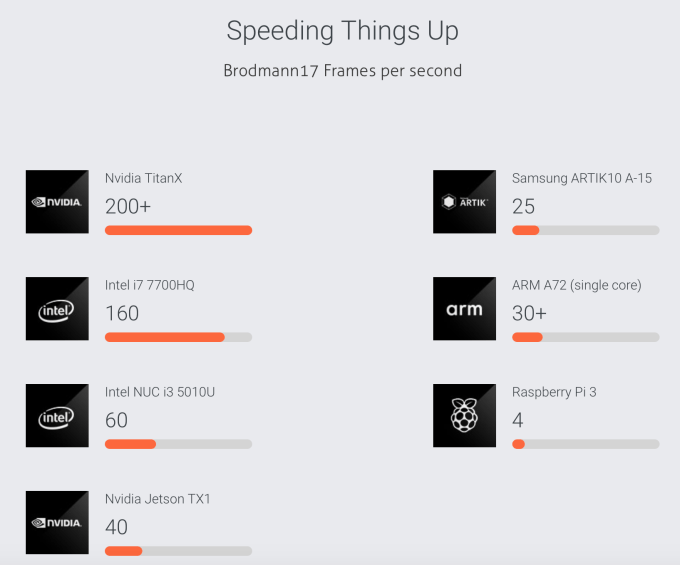
The pitch from Brodmann17 is that its core product essentially does just that: its deep-learning based computer vision technology is designed as a “light weight” solution, which can work even on smaller, low-end processors. (Note: it works on low-end CPUs but not nearly as well as on the faster ones.)

The plan is for Brodmann17’s tech to eventually be a part of fully autonomous deployments, but with self-driving vehicles still some years away from being a reality, CEO Adi Pinhas — a deep learning and computer vision specialist who co-founded the company with two other AI scientists, Amir Alush and Assaf Mushinsky — said that its first commercial efforts will come in the form of advanced driver assistance systems (ADAS): it’s currently working with a global, tier-one automaker to incorporate its technology into front and rear cameras to make more accurate identifications of still and moving objects when a human is still behind the wheel.

That is not a small fish: ADAS is not only already a key component of many newer vehicles, but its ubiquity and functionality will continue to grow. ADAS systems — which are often supplied in part or entirety by third parties to carmakers — was a $20 billion market in 2017 and is projected to reach nearly $92 billion by 2025.

I first met the founding team of Broadmann in Tel Aviv, where they are based, a couple of years ago, when it was just four guys working in a corner of the Samsung NEXT incubator in the city, showing me the the earliest versions of how its tech was able to sit on small processors and identify with a lot of nuance different small and large objects that are encountered in a typical driving scenario.

Fast forward to today, and the company now has 70 people, mostly engineers, now working out of its own digs, and the startup is continuing to hire as it gears up beyond that early development phase.

Pinhas said that in these last couple of years, he’s seen some interesting evolutions in how the tech world, and the wider automotive industry, have approached the concept of autonomous cars.

On the one hand, everyone is throwing what they can at self-driving, and that will inevitably help accelerate roadmaps for new prototypes and tests. On the other hand, that increased effort is also leading to more pragmatism on just how much work lies ahead and how more elements of self driving might come sooner than full-fledged systems.

“Right now, to me it looks like the market may have taken a step back. Everyone wants to speed up development on autonomous systems, but at the same time I noticed how this year at CES, no one was talking about Level 5,” Pinhas said, referring to the highest level of autonomy in driving services, and the big tech event in January where many of the next big shiny new services get shown off for the first time. “I think the thinking now is, even a working Level 4 deployment would be great. Let’s do that and see how well we can get robo-taxis driving in well-defined scenarios.”

That’s where Brodmann17’s push into ADAS comes in: it gives the company a foothold in future deployments and services while also proving the concept by powering services that are live today. 

The other interesting development that Pinhas noted is a shift in focus from volumes of training data, to developing smarter neural networks to calculate and understand that data. “It used to be ‘who has more data’, but now everyone has it,” he said. “Now it’s about the algorithms for training. Experts have long thought that neural networks” — designed to “think” like humans — “will solve everything but the key is still figuring out how best to train those networks. Just throwing data at them will not solve this.” Notably, this is an area where Broadmann17 has put focus for some time, “and others are also starting to now.”

Pinhas admits that Mobileye is the most advanced company in the automotive computer vision market today, although we are still at such an early stage of development that there is room for more innovation, and more startups and other large companies to make an impact. This is why investors are interested in Brodmann17, and why the startup has already started working on its next round to supply itself with capital for the next phase.

“We are convinced that Brodmann17 is one of the best deep AI companies out there. The company has a very experienced management team and exceptional technical leadership that has created a major leapfrog in the fundamentals of AI algorithms,” said Eli Nir, Senior Partner at OurCrowd, said. “Brodmann17’s technology opens the doors for low computation implementation of AI – significantly lowering cost, complexity, and price, and can be used over many sectors and industries. We are very excited to lead this round and take part in the future success of the company.”

06 Mar 2019

A healthcare investment fund has become one of Israel’s largest with a $660 million close

One of Israel’s single largest venture capital funds is a new later stage vehicle focused on healthcare.

The aMoon investment firm launched its second vehicle in April 2018 and it just announced its final close with $660 million in assets under management — making it one of the largest (if not the largest) firm in the country.

“We plan to leverage Israel’s ecosystem of breakthrough science and disruptive tech innovation to accelerate cure and reshape global healthcare.” said Dr. Yair Schindel MD, Co-Founder & Managing Partner of aMoon, in a statement. “This raise is a vote of confidence for the Israeli HealthTech ecosystem that extends beyond Israel’s borders, to include the sizable community of Israeli entrepreneurs and researchers in global hubs, such as Silicon Valley and Boston.”

The firm’s second fund will have a strategy focused on later stage, lower risk companies in which aMoon will invest larger checks, according to an email from the firm’s co-founder and managing director, Dr. Schindel.

Ticket size for deals will range anywhere from $10 million to $20 million on the low end with the potential for follow-on investments ranging from $40 million to $50 million, Dr. Schindel said.

This larger check size is a function of the fund’s expansion. While the first aMoon fund was a $200 million, fund from a single limited partner (Marius Nacht, the co-founder and chairman of Check Point Software), the new fund counts 50 investors globally, including Credit Suisse which committed $250 million from their asset management and private banking groups. Goldman Sachs, also participated alongside an undisclosed Israeli investment firm.

Since its launch, aMoon 2 has made five investments in companies like Zebra Medical Vision, Cartiheal, Ayala Pharmaceuticals, Biolojic Design, and a still-in-stealth mode fifth company.

Broadly speaking, those deals align with the firm’s broader investment strategy which Schindel described as tackling diseases that are “either the worst killers or the largest cost-drivers of healthcare such as: cancer, cardiovascular disease, diabetes, Alzheimer’s, Parkinson’s, and infectious diseases.”

For Schindel and his colleagues at the firm, Israel represents an incredibly fertile market for developing new healthcare technologies.

The country boasts highly curated electronic medical records for nearly the entire population dating back more than 20 years. That means Israel has one of the most complete electronic pictures of its national population health extant in the world today.

And the Israeli government recently launched a $272 million investment scheme into digital health projects over the next five years

“The biggest opportunity today lies in the convergence of technology and biology and the shift from care which is reactive to care which is predictive, preventive and personalized,” says Schindel in a statement.

And the presence of large consumer tech companies in the healthcare market these days, means good things to come for startup companies, according to Schindel.

:Their presence means a larger universe of buyers as well as a much faster pace of development in a relatively conservative industry which is currently undergoing a massive digital transformation,” he wrote in an email.


06 Mar 2019

Africa Roundup: Kenya’s BRCK acquires EveryLayer, Nigeria’s TeamApt eyes global expansion

Kenyan  communications hardware company BRCK acquired the assets of Nairobi based internet provider Surf and its U.S. parent EveryLayer in a purchase deal of an undisclosed amount in February.

Based in Nairobi, Surf is a hotspot service provider aimed at offering affordable internet to lower income segments. BRCK is a five year old venture that pairs its rugged WiFi routers to internet service packages designed to bring people online in frontier and emerging markets.

With the acquisition, BRCK gains the assets of San Francisco based EveryLayer and its Surf subsidiary, including 1200 hotspots and 200,000 active customers across 22 cities in Kenya, according to BRCK CEO and founder Erik Hersman.

Backed by $10 million from investors including Steve Case’s Revolution  VC fund, BRCK plans to use its new resources to expand to an undisclosed East African country and is eyeing options abroad. “We’re looking at Indonesia and starting our pilot in Mexico next month,” Hersman told TechCrunch on a call from Kigali.

BRCK built its platform around providing internet solutions primarily in Kenya and Rwanda. In 2017, the company rolled out its SupaBRCK product and paired it to its Moja service, which offers free public WiFi—internet, music, and entertainment—subsidized by commercial partners.

There’s not a requirement to click on or watch advertisements to gain Moja access, though users can gain faster speeds if they “interact with one of our business partners…by doing a survey, downloading an app, or watching an ad,” said Hersman.

In 2018, BRCK began offering SupaBRCK devices to drivers of Nairobi’s Matatu buses for Kenyan commuters to access Moja. As of January Moja traffic is racking up 300,000 active uniques and 3.7 million impressions per month, according to Hersman. There’s more on the deal and Africa’s internet connectivity equation in this TechCrunch exclusive on the acquisition.

Nigerian fintech startup TeamApt raised $5.5 million in capital in a Series A round led by Quantum Capital Partners.

The Lagos based firm will use the funds to expand its white label digital finance products and pivot to consumer finance with the launch of its AptPay banking app.

Founded by Tosin Eniolorunda, TeamApt supplies financial and payment solutions to Nigeria’s largest commercial banks—including Zenith, UBA, and ALAT.

For Eniolorunda, launching the fintech startup means competing with his former employer, the later stage Nigerian tech company Interswitch.

The TeamApt founder is open about his company going head to head not only with Interswitch, but other Nigerian payment gateway startups, including Paystack and Flutterwave, he told TechCrunch in this exclusive.

TeamApt, whose name is derivative of aptitude, bootstrapped its way to its Series A by generating revenue project to project working for Nigerian companies, according to its CEO.

The venture now has a developer team of 40 in Lagos, according to Eniolorunda, who spent 6 years at Interswitch as a developer and engineer himself, before founding the startup in 2015 .

“The 40 are out of a total staff of about 72 so the firm is a major engineering company. We build all the IP and of course use open source tools,” he said.

TeamApt’s commercial bank product offerings include Moneytor— a digital banking service for financial institutions to track transactions with web and mobile interfaces—and Monnify, an enterprise software suite for small business management.

On performance, TeamApt claims 26 African bank clients and processes $160 million in monthly transactions, according to company data. Though it does not produce public financial results, TeamApt claimed revenue growth of 4,500 percent over a three year period.

Quantum Capital Partners, a Lagos based investment firm founded by Nigerian banker Jim Ovia, confirmed it verified TeamApt’s numbers.

“Our CFO sat with them for about two weeks,” Elaine Delaney told TechCrunch.

TeamApt’s results and the startup’s global value proposition factored into the fund’s decision to serve as sole-investor in the $5.5 million round.

Delaney will take a board seat with TeamApt “as a supportive investor,” she said.

TeamApt plans to develop more business and consumer based offerings. “We’re beginning to pilot into much more merchant and consumer facing products where we’re building payment infrastructure to connect these banks to merchants and businesses,” CEO Tosin Eniolorunda said.

Part of this includes the launch of AptPay, which Eniolorunda describes as “a push payment, payment infrastructure” to “centralize…all services currently used on banking mobile apps.”

The company recently received its license from the Nigerian Central Bank to operate as a payment switch in the country.

On new markets,  TeamApt is looking to Canada and Europe with a specific expansion announcement expected by fourth quarter 2019, according to Eniolorunda

TeamApt’s CEO is open about the company’s future intent to list. “The project code name for the recent funding was NASDAQ. We’re clear about becoming a public company,” said Eniolorunda.

More Africa Related Stories @TechCrunch

African Tech Around The Net    

06 Mar 2019

Sea is raising up to $1.5B for its Shopee e-commerce business in Southeast Asia

Alibaba is about to get a jolt from its largest rival in Southeast Asia. Sea, the Nasdaq-listed business, is raising as much as $1.5 billion from a new share offering that’s sure to be funneled into its Shopee e-commerce business.

Singapore-based Sea said in a filing that it plans to offer 60 million American Depositary Shares (ADS) at a price of $22.50 each. That could raise $1.35 billion, but that number could increase by a further $202 million if underwriters take up the full allotment of 9 million additional shares that are open to them. If that were to happen, the grand total raised would pass $1.5 billion. (Shopee raised $500 million in a sale last year.)

Sea said it would use the capital for “business expansion and other general corporate purposes.” That’s a pretty general statement and its business span gaming (Garena) and payments (AirPay), but you would imagine that Shopee, its primary focus these days, would be the main benefactor.

The $22.50 price represents a discount on Sea’s current share price — $24.06 at the time of writing — and the timing sees Sea take advantage of a recent share price rally. The company announced its end of year financials for 2018 last month, but which included positive progress for Shopee and Garena.

Whilst it remains unprofitable, Shopee saw annual GMV — total e-commerce transactions, an indicator of business health — cross $10 billion for the first time, growing 117 percent in the fourth quarter alone.

Those green shoots were met with enthusiasm by investors, as trading drove the stock price to a record high since its October 2017 IPO. That, in turn, made founder Forrest Li a billionaire on paper and gave Sea a market cap of over $8 billion.

Shopee shares have rallied after its 2018 financial report showed signs of promising growth for its Shopee e-commerce business

The capital is very much needed, however, as Shopee is some way from profitability and that is dragging down Sea’s overall business.

While adjusted revenue for Shopee increased by over 1,500 percent last year, it represented just over one-quarter of Sea’s overall $1 billion income in 2018 and contributed heavily to the parent company’s net loss of $961 million. Shopee alone posted a $893 million net loss in 2018.

Shopee is up against some tough competitors in Southeast Asia, most of which have strong links to Alibaba. Those include Alibaba’s own AliExpress service, Lazada — the e-commerce service it acquired — and Tokopedia, the $7 billion-valued Indonesian company that counts Alibaba and SoftBank’s Vision Fund among its backers.

Sea claims to be the largest e-commerce firm in “Greater Southeast Asia” — a classification that includes Taiwan alongside Southeast Asia — although direct comparisons are not possible since Alibaba doesn’t provide detailed information on its e-commerce businesses outside of China.

Alibaba said its international e-commerce businesses — which include many other services beyond Lazada — made $849 million in revenue during its most recent quarter, an annual increase of 23 percent. Lazada is in the midst of a transition — it appointed a new CEO in December — that has included a move away from direct sales. Alibaba said that impacted growth, with GMV rates slowing, but it pledged to continue its focus, having invested a fresh $2 billion into the business last year.

“We continue to invest resources to integrate Lazada’s business and technology operations into Alibaba with the aim of building a strong foundation for us to extend our offerings in Southeast Asia,” it said.

06 Mar 2019

FDA approves esketamine nasal spray, the first new major depression drug in more than 30 years

In one of the most significant milestones for depression treatment in decades, the U.S. Food and Drug Administration announced today that it has approved a new drug with esketamine, a derivative of ketamine.

Made by Johnson & Johnson under the brand name Spravato, the drug is meant to be taken as a nasal spray in conjunction with an oral antidepressant and is targeted to patients who have not responded to other treatments. Spravato is the first major new depression treatment to be approved by the FDA since Prozac, which had less side effects than older antidepressants, hit the market more than 30 years ago, and is especially notable because it is supposed to work much more quickly than other drugs.

This is the first time the FDA has approved esketamine for any use (it approved ketamine as an anesthetic in 1970). Despite ketamine’s reputation as a recreational drug, doctors have been prescribing it off-label for years to patients who have not responded to antidepressants and other treatments. The FDA’s advisory committee voted 14-2 (with one abstention) for its approval last month.

The FDA approved esketamine with the caveat that Spravato will only be available through REMS (Risk Evaluation and Mitigation Strategies), its restricted distribution system for drugs with major safety concerns, citing the risk of sedation and dissociation, as well as potential for abuse and misuse. Patients administer the nasal spray themselves, but they will only be allowed to do so in a doctor’s office or clinic, and cannot take Spravato home with them.

Spravato’s effectiveness was evaluated in three short-term clinical trials, as well as one longer trial. One of the short-term studies, each four weeks long, found that the combination of Spravato and an oral antidepressant demonstrated a “statistically significant effect” compared to a placebo, sometimes within two days (the other two short-term trials did not meet pre-determined statistical tests for effectiveness).

In the longer trial, patients who had stabilized and continued with the medication combo took a “statistically significant longer time” to relapse than patients who received a placebo nasal spray with their oral antidepressant.