Author: azeeadmin

25 Feb 2019

Ubiquitilink advance means every phone is now a satellite phone

Last month I wrote about Ubiquitilink, which promised, through undisclosed means, it was on the verge of providing a sort of global satellite-based roaming service. But how, I asked? (Wait, they told me.) Turns out our phones are capable of a lot more than we think: they can reach satellites acting as cell towers in orbit just fine, and the company just proved it.

Utilizing a constellation of satellites in low Earth orbit, Ubiquitilink claimed during a briefing at Mobile World Congress in Barcelona that pretty much any phone from the last decade should be able to text and do other low-bandwidth tasks from anywhere, even in the middle of the ocean or deep in the Himalayas. Literally (though eventually) anywhere and any time.

Surely not, I hear you saying. My phone, that can barely get a signal on some blocks of my neighborhood, or in that one corner of the living room, can’t possibly send and receive data from space… can it?

“That’s the great thing — everybody’s instinct indicates that’s the case,” said Ubiquitilink founder Charles Miller. “But if you look at the fundamentals of the RF [radio frequency] link, it’s easier than you think.”

The issue, he explained, isn’t really that the phone lacks power. The limits of reception and wireless networks are defined much more by architecture and geology than plain physics. When an RF transmitter, even a small one, has a clear shot straight up, it can travel very far indeed.

Space towers

It’s not quite as easy as that, however; there are changes that need to be made, just not anything complex or expensive like special satellite antennas or base stations. If you know that modifying the phone is a non-starter, you have to work with the hardware you’ve got. But everything else can be shaped accordingly, Miller said – three things in particular.

  1. Lower the orbit. There are limits to what’s practical as far as the distance involved and the complications it brings. The orbit neds to be under 500 kilometers, or about 310 miles. That’s definitely low — geosynchronous is ten times higher — but it’s not crazy either. Some of SpaceX’s Starlink communications satellites are aiming for a similar orbit.
  2. Narrow the beam. The low orbit and other limitations mean that a given satellite can only cover a small area at a time. This isn’t just blasting out data like a GPS satellite, or communicating with a specialized ground system like a dish that can reorient itself. So on the ground you’ll be looking at a 45 degree arc, meaning you can use a satellite that’s within a 45-degree-wide cone above you.
  3. Lengthen the wavelength. Here simple physics come into play: generally, the shorter the wavelength, the less transparent the atmosphere is to it. So you want to use bands on the long (lower Hz) side of the radio spectrum to make sure you maximize propagation.

Having adjusted for these things, an ordinary phone can contact and trade information with a satellite with its standard wireless chip and power budget. But there’s one more obstacle, one Ubiquitilink spent a great deal of time figuring out.

Although a phone and satellite can reach one another reliably, a delay and doppler shift in the signal due to the speeds and distances involved are inescapable. Turns out the software that runs towers and wireless chips isn’t suited for this; the timings built into the code assume the distance will be less than 30 km, since the curvature of the Earth generally prevents transmitting further than that.

So Ubiquitilink modified the standard wireless stacks to account for this, something Miller said no one else had done.

“After my guys came back and told me they’d done this, I said, well let’s go validate it,” he told me. “We went to NASA and JPL and asked what they thought. Everybody’s gut reaction was ‘well, this won’t work,’ but then afterwards they just said ‘well, it works.’ ”

The theory became a reality earlier this year after Ubiquitilink launched their prototype satellites. They successfully made a two-way 2G connection between an ordinary ground device and the satellite, proving that the signal not only gets there and back, but that its doppler and delay distortions can be rectified on the fly.

“Our first tests demonstrated that we offset the doppler shift and time delay. Everything else is leveraging commercial software,” Miller said, though he quickly added: “To be clear, there’s plenty more work to be done, but it isn’t anything that’s new technology. It’s good solid hardcore engineering, building nanosats and that sort of thing.”

Since his previous company was Nanoracks and he’s been in the business for decades, he’s qualified to be confident on this part. It’ll be a lot of work and a lot of money, but they should be launching their first real satellites this summer. (And it’s all patented, he noted.)

Global roaming

The way the business will work is remarkably simple given the complexity of the product. Because the satellites operate on modified but mostly ordinary off-the-shelf software and connect to phones with no modifications necessary, Ubiquitilink will essentially work as a worldwide roaming operator that mobile networks will pay for access to. (Disclosure: Verizon, obviously a mobile network, owns TechCrunch, and for all I know will use this tech eventually. It’s not involved with any editorial decisions.)

Normally, if you’re a subscriber of network X, and you’re visiting a country where X has no coverage, X will have an agreement with network Y, which connects you for a fee. There are hundreds of these deals in play at any given time, and Ubiquitilink would just be one more — except its coverage will eventually be global. Maybe you can’t reach X or Y, you’ll always be able to reach U.

The speeds and services available will depend on what mobile networks want. Not everyone wants or needs the same thing, of course, and a 3G fallback might be practical where an LTE connection is less so. But the common denominator will be data enough to send and receive text at the least.

It’s worth noting also that this connection will be in some crucial ways indistinguishable from other connections: it won’t affect encryption, for instance.

This will of course necessitate at least a thousand satellites, by Miller’s count. But in the meantime limited service will also be available in the form of timed passes — you’ll have no signal for 55 minutes, then signal for five, during which you can send and receive what may be a critical text or location. This is envisioned as a specialty service at first, then as more satellites join the constellation, that window expands until it’s 24/7 and across the whole face of the planet, and it becomes a normal consumer good.

Emergency fallback

While your network provider will probably charge you the usual arm and leg for global roaming on demand (it’s their prerogative), there are some services Ubiquitilink will provide for free; the value of a global communication system is not lost on Miller.

“Nobody should ever die because the phone in their pocket doesn’t have signal,” he said. “If you break down in the middle of Death Valley you should be able to text 911. Our vision is this is a universal service for emergency responders and global E-911 texting. We’re not going to charge for that.”

An emergency broadcast system when networks are down is also being planned — power outages following disasters are times when people are likely to panic or be struck by a follow-up disaster like a tsunami or flooding, and reliable communications at those times could save thousands and vastly improve recovery efforts.

“We don’t want to make money off saving people’s lives, that’s just a benefit of implementing this system, and the way it should be,” Miller said.

It’s a whole lot of promises, but the team and the tech seem capable of backing them up. Initial testing is complete and birds are in the air — now it’s a matter of launching the next thousand or so.

25 Feb 2019

Superb AI generates customized training data for machine learning projects

One of the big challenges of developing a machine learning project can be simply getting enough relevant data to train the algorithms. That’s where Superb AI, a member of the Y Combinator Winter 2019 class, can help. The startup helps companies create customized data sets to meet the requirements of any project, using AI to speed up the tagging process.

Hyun Kim, who is CEO and co-founder at the startup says one of the big stumbling blocks for companies trying to incorporate AI and machine learning into their applications is coming up with a set of suitable data to train the models. “Superb AI uses AI to make customized AI training data for large tech companies. Clients work with us to develop machine learning-based features in their products multiple times faster than they could themselves,” Kim told TechCrunch.

Kim and his co-founders CTO Jungkwon Lee, Machine Learning Engineers Jonghyuk Lee and Moonsu Cha and Hyundong Lee, head of APAC sales and operations (who is based in Seoul, South Korea) all were working in the field when they identified the data problem and decided to launch a company to solve it.

Traditionally, companies working on a machine learning project will hire human workers to tag data, but this has been expensive and error prone, assuming you even had the data to work with. Kim and his co-founders, who worked on AI projects and studied the subject in college, came up with the idea of putting AI to work on the tagging part of the problem.

“Instead of relying on slow and error-prone manual labor, Superb AI uses proprietary deep learning AI that assists humans to achieve up to 10x faster labeling of images and videos,” Kim explained. The company will also help find data sources for companies, who don’t have any data to begin with.

Kim says that they don’t take humans out of the process completely, but they do enhance tagging accuracy by combining human workers with artificial intelligence underpinnings. He says that this involves a couple of steps. First, it splits training data into as many components as possible in order automate each piece one at a time. If the data is too complex, and the AI tools can’t automate the tagging, they use a second approach called “human in the loop.” As humans label data, the AI can learn over time and eventually take over more and more of the process.

The co-founders decided to apply to Y Combinator to gain a foothold in Silicon Valley where they could expand their market beyond their native South Korea. “It’s definitely been a game changer. The amount of knowledge and experience we gained from the YC partners and fellow entrepreneurs is really unbelievable. And also the vast YC network helped us find our early customers in the Valley,” Kim said.

The company, which launched last October, is up to 13 employees including the co-founders. It has raised $300,000 in seed investment and has already generated the same amount in revenue from the product, according to Kim.

25 Feb 2019

With a $3.5 million haul, Dray Alliance joins a booming logistics startup scene in LA

With an angle on a long-neglected part of the shipping industry — the short haul movement of cargo from docks to logistics centers — Dray Alliance, is launching joining a growing startup scene for logistics businesses based in Los Angeles.

With some of the nation’s largest ports in Los Angeles and Long Beach, the Southern California regino is now fertile ground for businesses hoping to tackle what amounts to a trillion dollar industry.

Companies like Shippabo, a provider of shipping tracking and logistics for international small cargo transport, and NEXT Trucking, which handles long haul and short haul trucking, have both launched in the Los Angeles area to tackle different areas of the shipping industry. And now Dray Alliance is joining them trying to take a piece of the market transporting cargo from the docks to logistics centers.

The company has raised $3.5 million in seed funding from David Sacks’ Craft Ventures and has already signed contracts with the toy company Mattel and CMA CGM Group.

“Drayage is currently the most neglected area of the transit supply chain. The nuances of drayage create distinct challenges and opportunities that are quite different from other trucking segments such as FTL and LTL,” said Jeff Fluhr, general partner at Craft Ventures, in a statement. “Focus on drayage is what sets Dray Alliance apart. That focus, combined with deep industry expertise, technical skills, and entrepreneurial grit is why we believe this team will emerge as the leader in the sector.”

Founded by middle school friends Alfred Wen, Hank Cui, and Jason Yu, Dray Alliance leverages years of work that Yu and Wen had done as founders of their own trucking company. Cui was brought on board to start developing the technology product — which Wen says is exactly like an Uber for trucking.

Wen says the company has thousands of truckers who have signed up for the service — most of whom are now on a wait list as the company builds up supply before opening the floodgates on the demand side.

For every successful shipment, Dray Alliance takes 15% to 30% of the total cost of the shipment, which Wen acknowledged was a bit higher than the industry norm. The reason for that, he said, was because of the massive savings that shippers can realize.

Fines for late pickup on cargo can range from $100 to $1,000 per day. Working with Mattel, for instance, Dray Alliance was able to save the toy manufacturer nearly a quarter of a million dollars through its service.

“The drayage trucking industry still depends on emails and spreadsheets for its daily operations – leading to massive inefficiencies that result in lower earnings for truckers, less predictability in delivery times and 20-50% increases in the drayage trucking cost of freight deliveries for shippers. This is not in the best interest of anyone involved,” said Steve Wen, CEO of Dray Alliance. “Dray Alliance wants to bring Uber-like airport pick up efficiency to the drayage industry by providing a seamless mobile experience, more predictability in delivery time, and better economics for shippers, carriers, and truckers.”

25 Feb 2019

Verified Expert Lawyer: Leslee Cohen

Leslee Cohen has been practicing law for decades in her hometown of Chicago. She’s been working with more and more startups over the last ten years, after co-founding her own firm (Herschman Cohen) and expanding along with the city’s tech scene.


On her approach:

“I have one partner and we have now hired two other women to join us. We are extremely conscious of the fact that startups and small businesses have a lot of important uses for their dollars other than legal fees. We are all senior-level attorneys and we never double bill. What that means to our clients is that if one of us does the work and needs a second set of eyes in a particularly complex contract, those additional hours are not billed.

“Leslee’s ability to make even the most complicated issues simple and easy to understand has been invaluable to our company!” Larry Bellack, Chicago, President, Mobile Doorman
“The pressure at the big firms is: how many hours have you billed? If someone called me with a quick question in my prior days as a big firm attorney, my thought was ‘I get to put .2 on my billing sheet.’ And that’s just the complete opposite of what our practice is about; it’s about forming those relationships with startups and continuing to serve in that general counsel role for as far down the road as possible. Having our clients go tell everyone how great we are is so much more important to me than an extra .5 on a timesheet.”

On founder-investor relations:

“I feel that maintaining the founder’s relationship with its investors is of great importance, even through sometimes difficult negotiations, and make every effort to be the lawyer that fosters that relationship rather than hindering it in any way. I recently worked on a Series A offering and the founder-investor relationship was extraordinarily positive until one particular issue arose — the founder’s first gut reaction was fury and ‘how could she say that to me and how could she do that to me and I’m gonna call her and tell her what I think.’ My response was ‘write out an email with everything you want to say and send it to me and then we’re gonna delete it. Two weeks ago you loved each other and you’re going to again. She’s a strategic investor, she knows what she’s doing and she’s bringing so much credibility to your business — this is not the way you want the relationship to go.’

“So the founder wrote that email, and it was vicious, and then he called me back two hours later to thank me profusely. Sure enough they sat down, talked it out, and their relationship is strong again.”
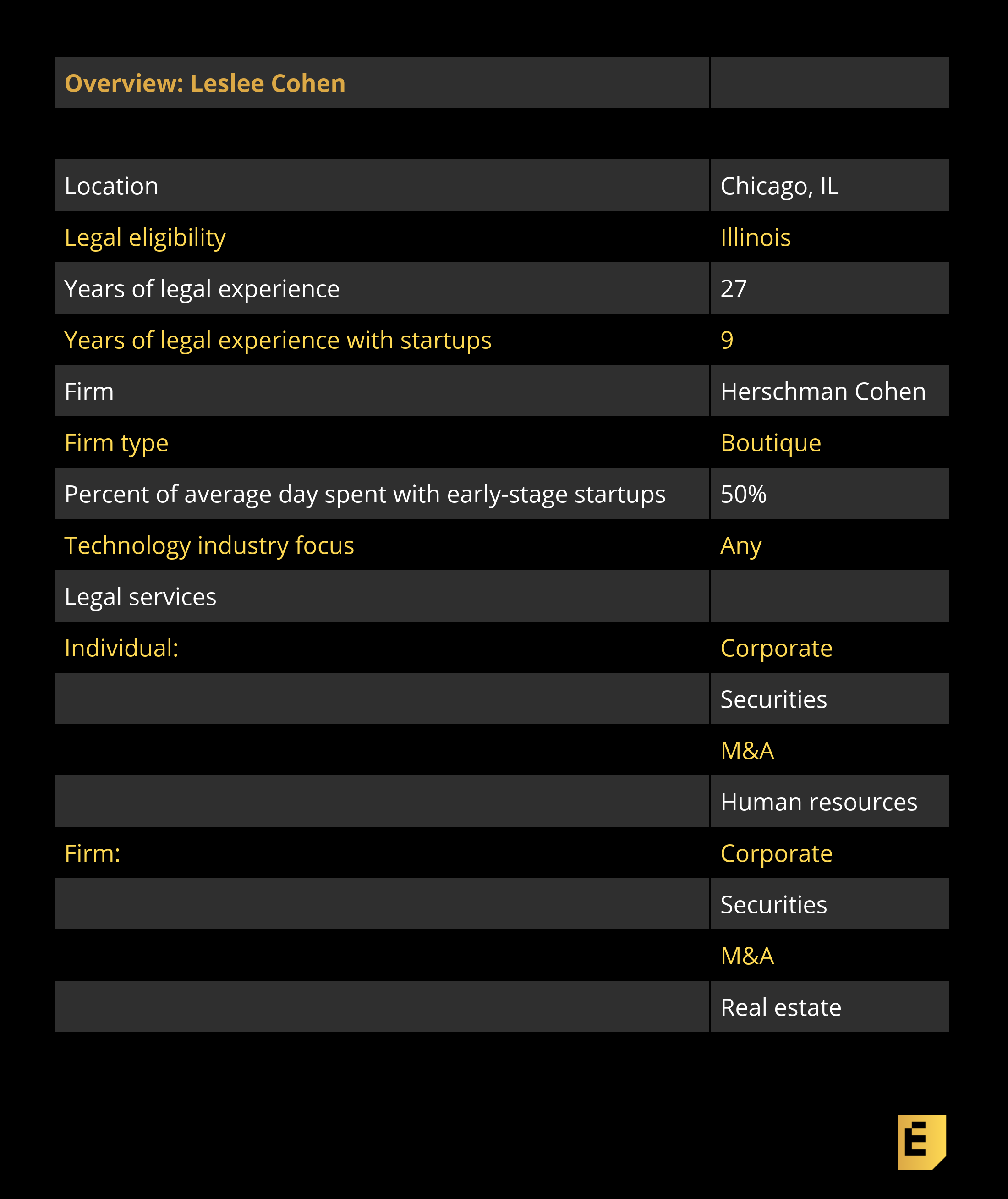
Below, you’ll find the rest of the founder reviews, the full interview, and more details like their pricing and fee structures.

This article is part of our ongoing series covering the early-stage startup lawyers who founders love to work with, based on this survey (which we’re keeping open for more recommendations) and our own research. If you’re a founder trying to navigate the early-stage legal landmines, be sure to check out our growing set of in-depth articles, like this checklist of what you need to get done on the corporate side in your first years as a company.


The Interview:

Eric Eldon: How does your practice work, given that you’ve struck out from a big law firm to cofound a boutique firm? What are you focused on with early-stage companies?

Leslee Cohen: One is startup formation and I do work with those ‘I have an idea’ kind of companies. Usually I’ll talk for an hour for free to anybody who is at that point, but usually other than entity formation — which a paralegal can do — you probably should focus on developing your idea a little more before you spend money on a lawyer. Once someone is ready to actually start a company, I’ll do it all at that stage, even pre-funding, and help with entity selection and formation, organizational documents, bylaws and what-have-you.

And then co-founder agreements, a lot of co-founder agreements. I think that’s really important, I understand if someone comes to me and says I’m starting a company with my sister or with my best friend from kindergarten that’s not your first thing you want to spend money on in terms of legal fees. But, with those few exceptions, I’ve seen so many co-founder breakups that it’s really important to me.

The more common way that companies come to me is when they’re raising their seed round. I will work with them on SAFE and convertible note rounds. I will work with them on the disclosure part of the round, the SEC filings, any state filings necessary, structuring the round, what it’s going to look like. And then the companies have money and start hiring their first employees, so I draft employment agreements, handle HR issues and structure equity grants to advisors and restricted stock agreements. I also provide a privacy policy, terms of use, NDAs, and then once they start doing business, day-to-day contracts with customers and on the other side with vendors and suppliers. Determining employee versus independent contractors, cap tables, incentive stock plans — those are all right in my wheelhouse.

The furthest I’ll go into real estate is the first lease.

Eldon: How does this compare versus what you used to do in BigLaw?

Cohen: I was in that world, so I understand what goes on — the fees, and really the pressure to bill hours — and that’s my number one pet peeve that we really focus on here.

I have one partner and we have now hired two other women to join us. We are extremely conscious of the fact that startups and small businesses have a lot of important uses for their dollars other than legal fees. We are all senior-level attorneys and we never double bill. What that means to our clients is that if one of us does the work and needs a second set of eyes in a particularly complex contract, those additional hours are not billed.

The pressure at the big firms is: how many hours have you billed? If someone called me with a quick question in my prior days as a big firm attorney, my thought was ‘I get to put .2 on my billing sheet.’ And that’s just the complete opposite of what our practice is about; it’s about forming those relationships with startups and continuing to serve in that general counsel role for as far down the road as possible. Having our clients go tell everyone how great we are is so much more important to me than an extra .5 on a timesheet.”

Eric Eldon: Tell me a little more about what you’ve seen from working with startups so far. Chicago is a huge city, but the startup scene has at least from my perspective been relatively small over the years. How do you see your role in nurturing that community and developing bigger companies out of it, helping people really figure out how to navigate the whole world of tech?

Cohen: I speak all around the city and like to impart a lay person’s knowledge on the law impacting their financings. I start out by saying: you typically will turn to your neighbor who lives on the left of you, who’s a real estate lawyer and really doesn’t work with startups. Good lawyer, but doesn’t really work with startups, doesn’t know the market. They’ll say ‘oh yeah, you can just do convertible notes, you’re just selling to some friends and family, it’s no big deal, you don’t need to do anything, just hand them a convertible note, and get the form off the internet.’

And then you’ve got your big-firm attorney who lives on the other side of you who says ‘oh no, no, no, you’re selling securities, you need a private placement, it’s $50,000 in fees.’

And so the question becomes what’s the right answer in between those two. My goal is that my listeners can walk into a meeting with whomever they choose to represent them with some knowledge about the applicable law, and to educate founders on where they can get into trouble, where they should draw that line between how much disclosure you provide and whether you need to file with the SEC and related questions.

I do that because it helps me bring in work, but a lot of times people go to other lawyers too, and at least they’re educated. That’s one way I try to help nurture Chicago’s startup community. I also do a lot of mentoring through a couple different accelerator programs.

Ultimately, the toughest part of being a startup is finding money. There’s just so much competition for that early-stage money so I have tried to cultivate a network of high-net-worth individuals who like to support young people who are doing cool new things in the tech industry but know that their $250,000 may turn into nothing. I have relationships with most of the VCs in town, so there’s someone who I can run a pitch deck by, but obviously getting funded is so tough.

Eric Eldon: Could you tell me about a specific challenge you’ve seen or an example of a challenge you helped a client navigate successfully? Like one of the co-founder issues you were talking about?

Cohen: I had a client who came to me and was a 50/50 business owner, with no agreement between cofounders — so they couldn’t extricate themselves from each other. It got so ugly and nasty and so expensive after ending up in litigation. It was really just awful to watch. When a client comes to me and they’re 50/50 owned, it’s so important to me that they have an agreement with each other. It’s dicey, though, to figure out how to resolve an issue that doesn’t exist yet, when you’re excited and you’re sure that you’re going be best friends forever. I recently had two women who had a start up together and two years later, one of them was really not pulling her weight; like a night-and-day difference. One continued working at her full time job and the other woman was working full-time for the startup. While the business divorce was definitely a stressful experience for both of them, it was far less so and one hundredth of the cost because we had a legal document that pointed the way through it.

Eric Eldon: That’s a classic issue. Can you tell me more about a biggest legal mistake you see early stage founders make?

Cohen: Well, there’s the classic forming an LLC when you want to look for venture capital money in the future and you have to convert to a corp, which isn’t the end of the world. And there’s not entering into an agreement with your co-founder. I think also investor relations is a big one. I think if you don’t maintain your relationship with your investors and communicate regularly with them, it gets really difficult to do next round investments, especially when if you’ve done a seed round and the relationship turns not necessarily sour, but distant.

I recently worked on a Series A offering and the founder-investor relationship was extraordinarily positive until one particular issue arose — the founder’s first gut reaction was fury and ‘how could she say that to me and how could she do that to me and I’m gonna call her and tell her what I think.’ My response was ‘write out an email with everything you want to say and send it to me and then we’re gonna delete it. Two weeks ago you loved each other and you’re going to again. She’s a strategic investor, she knows what she’s doing and she’s bringing so much credibility to your business — this is not the way you want the relationship to go.’

So the founder wrote that email, and it was vicious, and then he called me back two hours later to thank me profusely. Sure enough they sat down, talked it out, and their relationship is strong again.

Eric Eldon: Can you tell me how your firm works in terms of billing for early stage companies?

Cohen: I don’t have a startup package because I’ve found that very few startups are standard in any way. I do have a list of documents that startups will need over time. I will always give an hour of free consultation and sometimes I end up talking people through questions for a long time before they actually retain me. Obviously that’s not my favorite, but I’m willing to do that. And that’s how I try to be supportive of the community in general.

I’ll send an estimate with ‘here’s what we decided, what we want to go forward with right away, here’s what we think we can put off.’ And I’ve done enough of them that probably 80% of the time I end up right within the estimate. The caveat comes when you’ve got opposing counsel that’s either difficult or more often just doesn’t know the startup world. And so they’ll say ‘what are these terms?’ In Chicago, I’ve found early-stage investors negotiate the hell out of funding — they try to negotiate SAFEs and convertible notes on issues other than the cap and the discount and that can get expensive. So I usually tell clients that, assuming they use a lawyer who knows the startup space, this is what it’s gonna cost and I can guarantee it. But if not, you never know.

I bill at $395 an hour for startups and our paralegal is at $160. She does all of the entity formation, bylaws, organizational resolutions and she usually does all of it for a startup within two hours. So it’s very small cost for that and then it’s hourly billable. I bill at the end of each month with 30 days to pay.


Founder recommendations:

“Leslee was invaluable as I navigated the intricacies of best practices of corporation creation while involving the needed eccentricities my company required. In sum, we create the appropriate bespoke relationship that is invaluable to any organization with an eye towards growth and sustainability.” — Montana Butsch, Chicago, CEO and founder, Spotivity

“Leslee guided my startup through its early stages with respect to corporate formation, convertible note issuance, stock issuance, restricted stock issuance, shareholders agreement creation, and appointment of our board of directors. She also connected me to other attorneys regarding IP creation and to insurance brokers who focus on startups.” — Marty Elisco, Chicago, CEO, Augmented Intelligence

“Leslee has always been very sensitive to my financial limitations as a startup. For standard legal documents, she will find me the best template to customize which reduces the hours she ultimately needs to spend reviewing them. She also has a great local network that she has tapped into for my benefit. As a new entrepreneur, Leslee has been the perfect fit. She is honest, authentic, knowledgeable, passionate and fun to work with. All of these qualities have allowed me secure a solid legal foundation without overspending.” — Justin Lyons, Chicago, Founder of Blaze, a Lilsure company.

“Leslee has helped us with incorporating our business in Delaware as well as Illinois. She has served as a mentor to help us establish Research Planet. She is always there to provide us with the most accurate guidance. Leslee has a strong background working with Startups and technical founders.” — Rafael Sid, Chicago, IL , Founder of Research Planet

“Leslee was instrumental in setting our corporate structure and compensation to protect against founder/employee fallout, which happened more than once. She also ensured that our structure prepared us to raise funding and grow the team quickly.” – A founder in Cleveland

“Gave big law insight in a boutique style.” — Jim Pesoli, Chicago, media and entertainment Entrepreneur

“Leslee has been our attorney for over three years. She has guided us through multiple rounds of funding, always providing great legal and business advice. She is also extremely responsive, particularly when a deal is closing. This level of service is another level up from a majority of attorneys I’ve dealt with in the past. Leslee understands how important it is to help clients during stressful transactions.” — Bob Matteson, Chicago IL, CEO, Mobile Doorman

“Leslee and her firm have produced for us restricted stock agreements, advisory agreements, employment agreements, and more. She and her firm have also reviewed our contractor agreements and MSAs with third party vendors. She has personally made introductions to other law firms who might have more expertise in a given area, such as to Tricia Meyer and Meyer Law.” — Ben Margolit, Chicago, cofounder and CEO at Rentgrata, Inc

“Leslee has done all of our legal work. Everything from initial vesting agreements, company formation documents, customer contracts, and terms of service. She was particularly helpful regarding terms of service and privacy policy for our health technology service. There was a lot of complexity regarding HIPAA and health data, but she made it incredibly easy for us.” — Kelley Halpin, Chicago, CEO at Karrot Health

“Leslee’s ability to make even the most complicated issues simple and easy to understand has been invaluable to our company!” — Larry Bellack, Chicago, President, Mobile Doorman

“I own and operate a boutique advisory firm that provides consulting services and funding solutions to small businesses, including start-ups. Leslee has provided tremendous value helping us conceptualize, frame, and document solutions that have proven to be highly beneficial and pragmatic for our common clients. Her relationship with my business and our mutual clients goes way beyond the traditional scope of corporate counsel. Leslee brings a personal commitment as well as valuable insights both within and outside the legal framework that helps business owners and their companies achieve success!” — Ken Goldberg, Lincolnshire, IL, consultant


25 Feb 2019

iOS developers will soon be able to offer discounts to their existing and lapsed subscribers

As subscriptions continue to grow into a sizable revenue stream for mobile app developers, Apple has had to make adjustments to its guidelines, rules, and even its tools for subscription management in recent weeks. It issued stricter guidelines around how subscriptions are to be presented to consumers, and it made the setting for canceling existing subscriptions more accessible. Now, Apple is rolling out new tools for developers that will help them retain their current customers and win back lapsed subscribers.

The company announced on Friday that apps with auto-renewable subscriptions will soon be able to offer their subscriptions at a discounted price for a specific period, as a means of growing and retaining their customer base. This will give the developers more control over their subscription pricing than was available before.

Until the change, developers could only make introductory offers to entice consumers to sign up for the first time. For example, developers could lure customers with a one-time introductory price, offer a free trial, or offer discounted rate for a specific period of time before the subscription converted to the full price.

But these offers could only be made to first-time customers. The new promotional offers will allow developers to cut similar deals for existing subscribers or to win back the business from those who used to pay for the subscription, but had canceled.

While the new promotional offers allow for the same sort of discounts as introductory offers, they’re more flexible in terms of how they’re used.

With introductory offers, developers were allowed one offer per subscription, per territory. With promotional offers, developers can activate up to 10 offers per subscription. This allows them to test which ones work best for their customers, instead of having to pick just one.

And developers are in control of when an offer displays to a customer, in which territories, as well as how many offers a customer can redeem.
In addition, while introductory offers may display in the App Store when promoted, the promotional offers will not. That means developers can use business logic that targets winning back their most valuable customers with offers that may be better from those shown to others – and no one would be the wiser. It also means developers can offer different deals to lapsed customers – like maybe a discounted subscription – compared with promos meant to retain current subscribers.

Developers will also be able to use receipt validation tools to find subscribers who turned off auto-renewal, which allows them to target those customers with new offers before their subscription lapses. They may also decided to target those who cancel during the free trial with different offers than those who cancel after using a paid subscription for a time.

As an end-user looking to save money, these changes mean it may be worth toggling off your subscriptions from time to time to see if you’re offered a better deal to resubscribe.

Developers were alerted to the new features last week, but the offers themselves aren’t yet publicly available.

To create the offers, developers have to download the latest Xcode 10.2 beta and will need to implement the new StoreKit APIs. They can then test their offers on the latest beta version of iOS 12.2, macOS 10.14.4, and tvOS 12.2. Apple said the offers will be made available to the public “soon.”

25 Feb 2019

Coinbase Pro is about to let you trade XRP

On Tuesday, Coinbase announced that XRP will be the latest cryptocurrency to hit its pro-level trading platform. Coinbase Pro will allow users to transfer XRP to the platform right away (“After 10am on February 25”) but there will be at least a 12 hour delay before trading is enabled.

As one of the most controversial cryptocurrencies around, the addition of Ripple’s XRP is sure to stir up the institutional banking coin’s hot-blooded armies of supporters and detractors. Support for XRP will be available for users in the U.S. (though not those in New York state), the UK, Canada, Singapore, Australia and the EU.

“Once sufficient supply of XRP is established on the platform, trading on the XRP/USD, XRP/EUR, and XRP/BTC order books will start in phases, beginning with post-only mode and proceeding to full trading should our metrics for a healthy market be met,” the company said in its announcement.

For now, XRP will be limited to Coinbase Pro, Coinbase’s feature-rich platform previously known as GDAX. The company declined to specify when XRP would hit the regular Coinbase platform, though in the past those additions have often followed Coinbase Pro by a few weeks.

Last year, Coinbase began expanding its previously spartan coin offerings to include a much wider selection of offerings beyond its longtime support for Bitcoin, Litecoin, Ethereum and a small handful of other offerings derived from those core coins. XRP is the third largest cryptocurrency by market cap, trailing Bitcoin and Ethereum.

25 Feb 2019

Helping children overcome their mobility challenges, Trexo Robotics gets a Y Combinator boost

Manmeet Maggu and Rahul Udasi didn’t know it when they met at the University of Waterloo 11 years ago, but the bond they forged in late-night study sessions as roommates has helped drive their work to create an exoskeleton that provides mobility for children with disabilities.

The fruit of that labor is Trexo Robotics, which will graduate as part of the latest batch of Y Combinator’s winter 2019 cohort.

In the three years since Udasi and Maggu launched their company, Trexo has gone through the Techstars accelerator program in New York and raised $720,000 in seed funding. But the roots of the company extend back to Maggu’s senior year at Waterloo, when he learned that his nephew in India had been diagnosed with cerebral palsy.

The disease, which affects millions around the world and at least 500,000 children in the U.S. alone, was not something Maggu knew much about. But with the diagnosis of his nephew, he began to learn.

We started looking at what cerebral palsy is and what it would mean to him,” says Maggu. “For him it meant that he would spend his entire life in a wheelchair and I knew the tremendous negative health effects associated with sitting.”

At first, the family looked at ways to encourage the child to walk outside of physical therapy, with no results.

“Initially we were like, let’s buy him a robotics system or an exoskeleton, but after looking around we saw that there was nothing out there,” says Maggu.

That’s when Maggu determined he would make the development of the exoskeleton the focus of his senior design thesis, back in 2012.

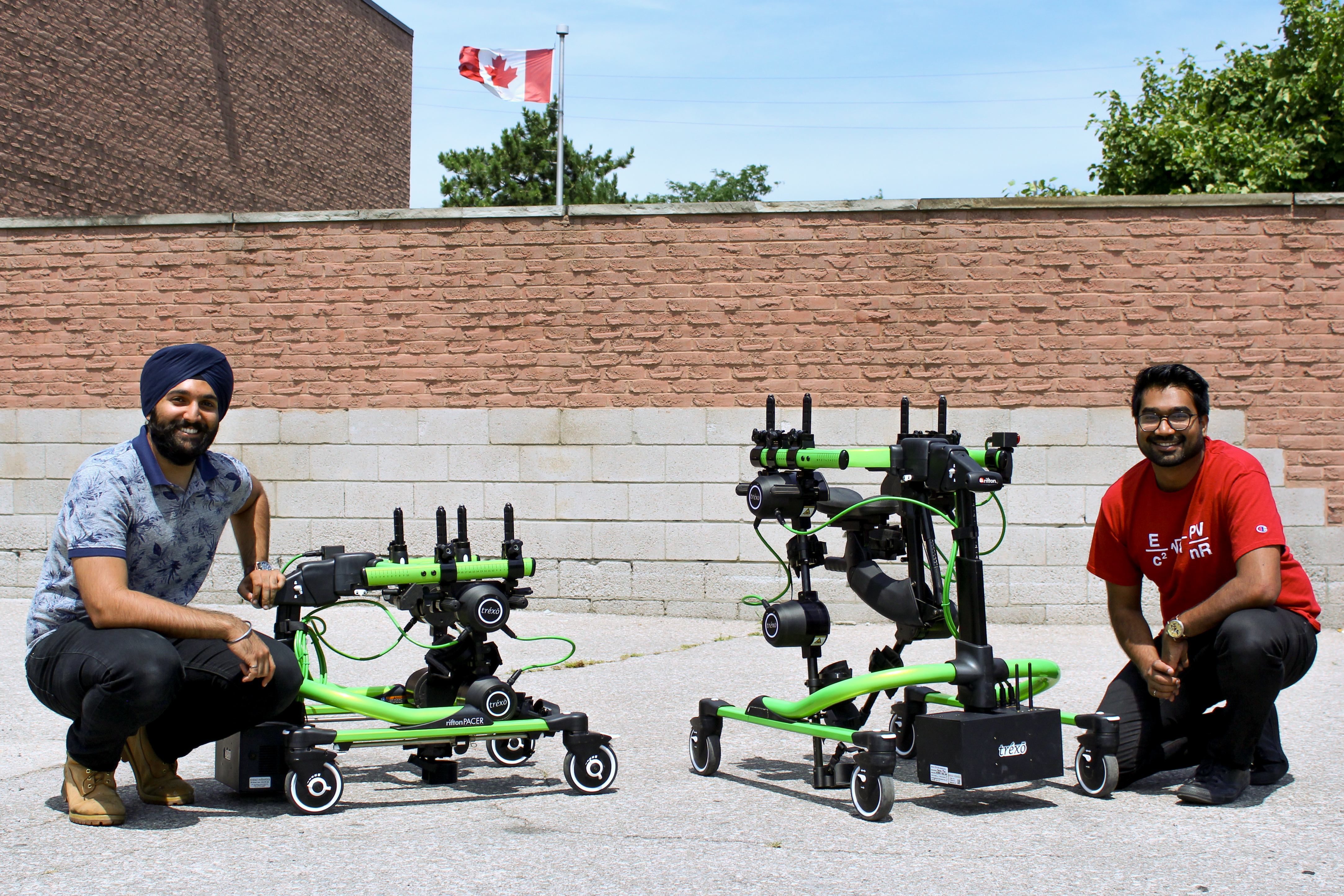
Trexo co-founders Manmeet Maggu and Rahul Udasi (Image courtesy of Trexo Robotics)

“After that, everybody went our own ways but I couldn’t stop working on this,” Maggu recalls. “I kept working on this on the side. I was just working in my apartment doing design, doing 3D printing there.”

By that time, Maggu and Udasi had gone their separate ways. Maggu worked on the project on the side while pursuing his career in the technology industry. He worked at BlackBerry and Qualcomm, but kept in touch with his college friend, Udasi, who worked for a spell at Willow Garage and a few other robotics companies, before returning to Canada to study for a master’s degree in robotics at the University of Toronto.

Maggu had also returned to Toronto to work on a masters in business administration.

But throughout that time, using a low-end printer that he bought for $600, Maggu kept prototyping. Then, when the two were living together, Maggu would ask Udasi, the robotics expert, for his help.

By 2017 the two men had developed a functioning prototype and flown to India to give it to their first test patient — Maggu’s nephew.

“The first time we tried it it didn’t work,” says Maggu. “But my brother has a factory in India in Delhi, so we made some more modifications and tried it out again and I watched my nephew try to walk with the device for the first time.”

After progressing through the Techstars accelerator and raising its seed round, Trexo now has around six versions of its exoskeletons in private homes and hospitals. The company is conducting a clinical study at the Cincinnati Children’s Hospital and has four paying customers in Canada.

These are still devices that aren’t affordable for most Americans — not by a longshot. Trexo is pursuing a direct-to-consumer approach that would see their technology selling for $899 per month through a lease model with a $1,000 down payment and financing for 36 months. Customers can also lease the product for $999 with at least a required 12-month lease period, or they can buy a Trexo exoskeleton for $29,900.

The company is marketing the device as an exercise and therapy device, which means that it can avoid some of the regulatory requirements to bring the product to market under the current regulations from the Food and Drug Administration, which oversees medical devices.

Maggu and Udasi ultimately see Trexo tackling more than just treatment for children with mobility issues. Indeed, Maggu sees opportunities for the company to begin developing products for elder care as well.

“We view this as much more of a consumer product,” says Maggu. “We strongly believe that wearable robotic systems are going to play a huge role in the future to come.”

[gallery ids="1788608,1788609,1788610,1788611,1788612,1788616,1788617"]

25 Feb 2019

Bioware’s high-flying ‘Anthem’ falls flat

Anthem is the first attempt by Bioware (of Mass Effect and Dragon Age fame) to tap into the well of cash supposedly to be found in the “game as platform” trend that has grown over the last few years, with Destiny, Warframe and Fortnite as preeminent exemplars. After a botched demo weekend dampened fan expectations, the final game is here — and while it’s a lot better than the broken mess we saw a few weeks ago, it’s still very hard to recommend.

I delayed my review to evaluate the game’s progress after an enormous day-one patch. While it is always premature to judge a game meant to grow and evolve by how it is immediately after launch, there are serious problems here that anyone thinking of dropping the $60 or more on it should be aware of. Perhaps they’ll all be fixed eventually, but you better believe it’s going to take a while.

I’d estimate this is about half the game it’s clearly intended to be; it seems to me we must soon find out that most of Anthem, supposedly in development for five years or more, was scrapped not long ago and this shell substituted on short notice.

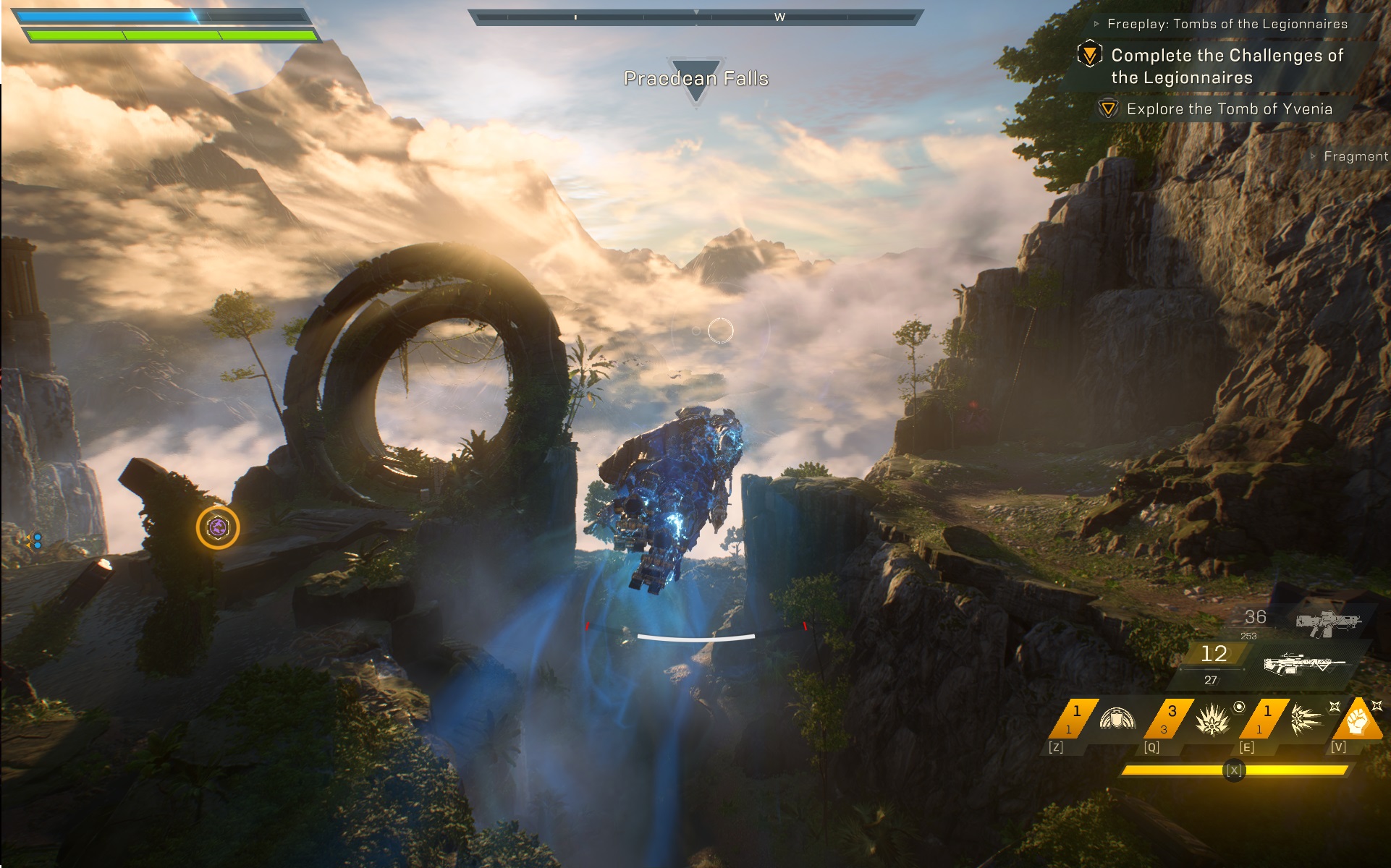
The basic idea of Anthem is that you, a “freelancer” who pilots a mechanized suit called a “javelin,” fly around a big, beautiful world and blast the hell out of anything with a red hostility indicator over its head, which in practice is damn near everything. Once you’re done, you collect your new guns and gadgets and head back to base to improve your javelin, take on new missions, and so on.

If it sounds familiar, it’s basically an extremely shiny version of Diablo, which established this gameplay loop more than 20 years ago; its sequels and the innumerable imitators it spawned have refined the concept, bolstering it with MMO-style online integration, “seasons” of gameplay, and of course the inevitable microtransactions. People play them simply because it’s fun to kill monsters and see your character grow more powerful.

So Anthem is in good company, though of course for every success there are probably two or three failures and mediocre titles. Destiny has thrived in a way only because of its fluid and satisfying gunplay, while a game like Path of Exile leans on bulk, with skill trees and content one may never reach the ends of.

Anthem, on the other hand, lacks the charms of either. It is wildly short on content and its moment-to-moment gameplay, while competent and in some ways unique, rarely has you on the edge of your seat. It’s a very mixed bag of interesting concepts and disappointing execution, coupled with some truly baffling user experience issues.

I’ll cover the good parts first: the basics of flying around and shooting guys are for the most part solid. There’s a good variety of weapons, from hand cannons to shotguns and sniper rifles, with meaningful variations within those groups (though they usually boil down to rate of fire). You feel very cool during engagements, picking off enemies, dodging behind cover, flying to a new vantage point, and so on.

Each of the four javelins has a good pile of themed special abilities that significantly affect how you play; for instance, the Storm starts out with (basically) non-damaging ice shards that freeze enemies, setting them up for a damaging combo from its lightning strike — but soon you can swap those out for fiery explosions and a charge-up blast of cold, and so on. The synergies are somewhat limited in that some abilities clearly only work with some others, but there’s fun to be had experimenting. I played with three of the four javelins available (more to come, apparently) and they were all very distinct styles.

Damn.

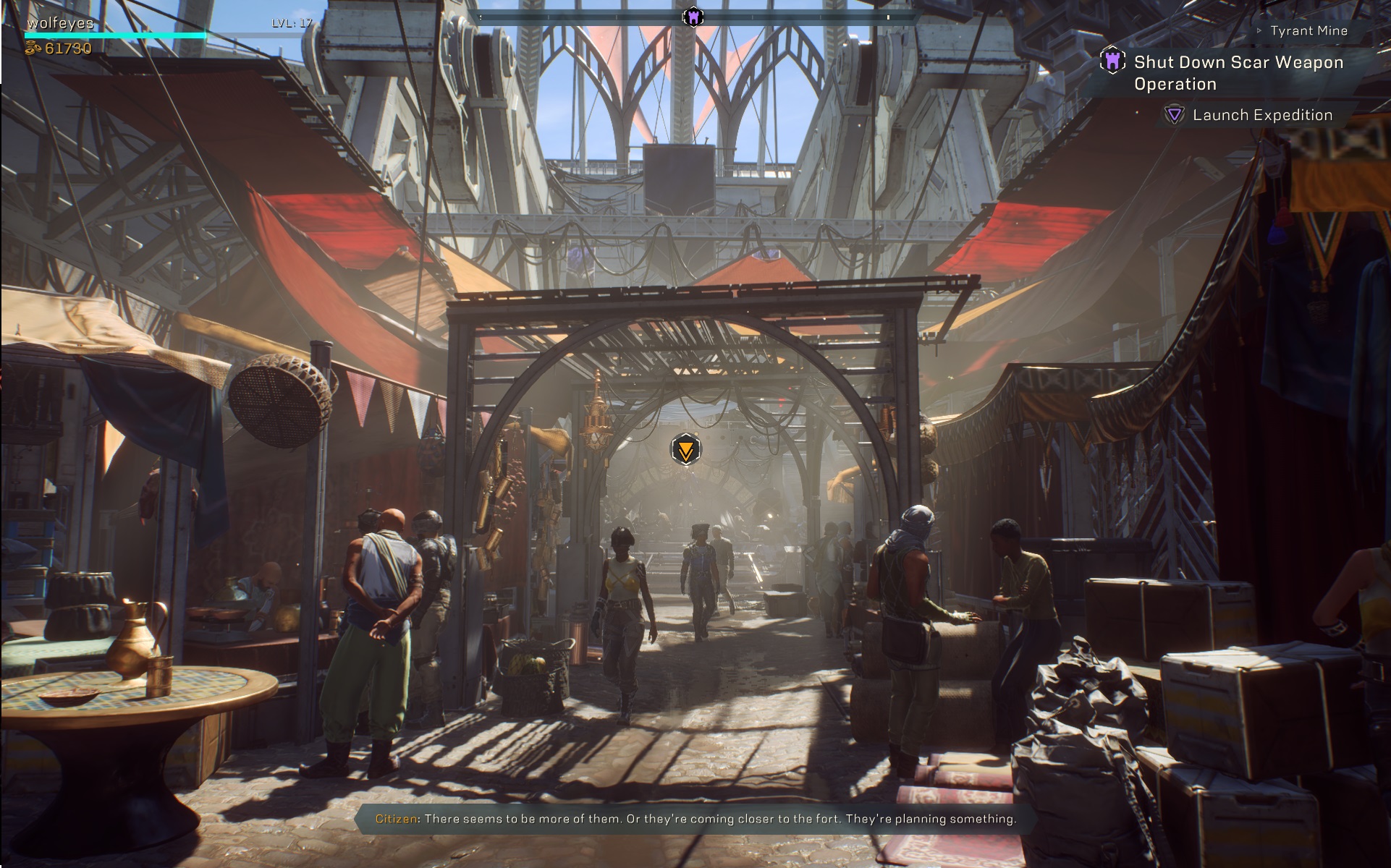
The graphics really are lovely, from the future-past desert chic of Fort Tarsis to the lush jungle cliffs of the world you’ll be exploring. The light and landscapes are beautiful, and the character models are, too. Firefights look chaotic and splashy, which they are. There are also lots of customization options, in terms of colors and materials anyway — there’s a puzzling lack of cosmetics to buy with in-game or real currency, only two or three available right now.

Unfortunately, that’s pretty much the extent of what Anthem gets right — and to be clear, it really can be fun when you’re actually in the middle of a firefight, blasting away, doing combos with friends, taking on hordes of bad guys. The rest is pretty much a mess. Here’s the greatest hits of how Anthem fails to operate, to respect the player’s time, and to generally speaking be a good game.

First and perhaps most egregious, the load screens are frequent and long. I timed it at more than 5 minutes from launch, and at least 3 or 4 different load screens, before I could actually play the game.

Get ready for a lot of this! And incidentally, many fire attacks don’t actually set up combos.

A long load time to bring up a huge world like Anthem’s I can understand. But load times to enter the screen where you change your gear? Load screens when you enter a small cave from the map? A load screen when you stray too far from your teammates and have to be teleported to them? A load screen when you finish a mission, then another before you can return to base — and another before you can equip your new gun? Oh my god!

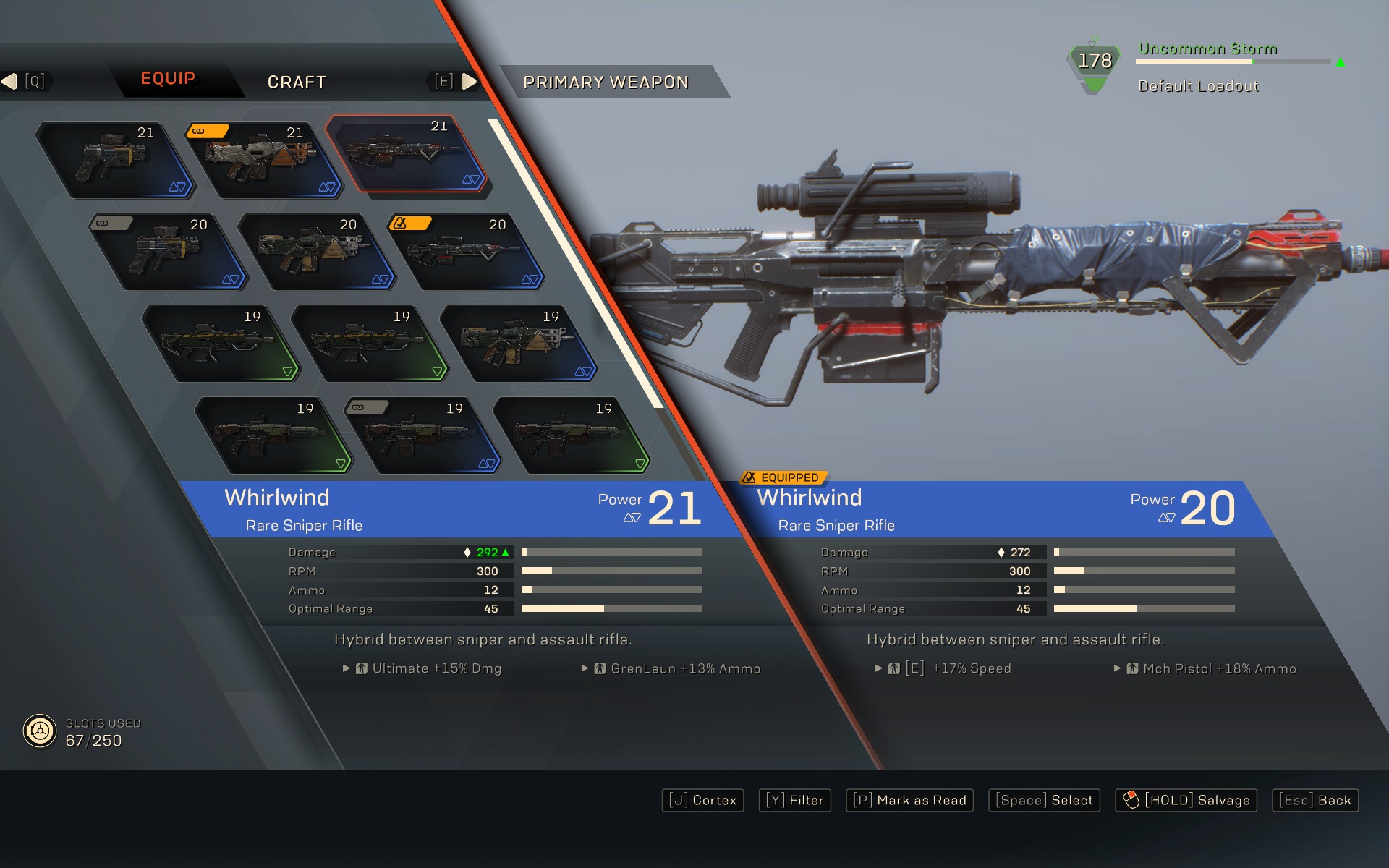
This is compounded by a sluggish and over-complicated UI that somehow manages to show both too much and not enough, while inconsistent keys and interaction elements keep you guessing as to whether you need to press F or space or escape to go forward, hit or hold escape to go back, use Q or E to go through submenus or if you have to escape out to find what you’re looking for.

Equipment and abilities are mystifyingly under-explained: no terms like “+15% gear speed” or “+/-10% shield time” are explained anywhere, in the tutorial, documentation, or character screen. Because there is no character screen! For a game that depends hugely on stats and getting an overall feel for your build and gear, you have to visit five or six screens to get a sense of what you have equipped, its bonuses (if comprehensible), and whether you have anything better to use. Even core game systems like the “primer” and “detonator” abilities are only cursorily referred to, by cryptic icons or throwaway text. The original Diablo did it better, to say nothing of Anthem’s competition at the AAA level.

Navigating these menus and systems is doubly hard because you must do so not by just hitting a key, but by traveling at walking speed through the beautiful but impractical Fort Tarsis. It took a full 30 seconds for me to walk from my suit (the only place where you can launch missions) to a quest giver. And when you start the game, you start in a basement from which you have to walk 20 seconds to get to your suit! Are you kidding me?

A common sight.

Even when you’re doing what the game does best, zooming around and getting in firefights, there’s a disturbing lack of mission variety. Almost without exception you’ll fly to a little arena — some ruins or a base of some kind — and are immediately alerted of enemies in the area. They warp in at a convenient distance, often while you watch, and attack while you stand near a gadget (to advance a progress bar) or collect pieces to bring back. Some more powerful guys warp in and you shoot them. Fly to next arena, rinse and repeat.

Sure, you could say “well it’s a shooter, what do you expect?” I expect more than that! Where are the aerial chases the intro leads you to believe exist? Enemies all either stand on the ground or hover just above it. They don’t clamber on the walls, get to the top of towers, shoot down on you from cliffs, climb trees, build gun emplacements. You don’t defend a moving target like the “Striders” (obviously AT-ATs) you supposedly travel in; bridges and buildings don’t crumble or explode; you don’t chase a bad guy into a big cave (or if you do, there’s a loading screen); the “boss” type enemies are often just regular guys with more life or shields that recharge in the time it takes you to reload. Where are the enemy javelins? The enemy Striders? 90 percent of what you kill will be groundbound grunts taken down in a flash. For a game in which movement is emphasized and enjoyable, combat involves very little of it.

The campaign, which is surprisingly well acted but forgettable, seems like it was tacked on in a hurry. Amazingly, a major cutscene details a much more interesting story, in which a major city is overrun and destroyed and only a few survive. It struck me at the time that this might have been the original campaign and starting mission, after which you are logically relegated to the nearby Fort Tarsis and forced to fight for scraps. Instead you have a series of samey missions with voice-overs telling you what’s happening while you stand there and watch progress bars fill up.

At one point you are presented with four ancient tombs to track down, only to find that these amazing tombs aren’t missions but simply checklists of basic game activities like opening 15 treasure chests, killing 50 enemies with melee, and so on. At a point increasing these numbers was literally the only “mission” I had available in the game. And when I tried to join other people’s missions to accomplish these chores, half the time they were broken or already finished. Even trying to quit these missions rarely worked! (Some of these bugs and issues have been mitigated by patches, but not all.)

Spoiler warning! What do you think is in the tombs? A taxing dungeon full of traps, monsters, and ancient treasure? Nope! Literally just a tiny, empty room. And yes, there’s a loading screen — both in and out.

Oh, and because many of the missions are difficult or tedious to do solo, you’ll want to team up — except if you’re slow to load, the mission will commence without you and you’ll miss the VO. Whoops! And by the way, if you just want to test out a new gun or power, you’ll have to join a multiplayer “freeplay” session to do it, which is another handful of loading screens. I’m not even going to get into the failings of the multiplayer. Since you can’t communicate it’s basically like playing with bots. By the way, there’s no PvP so forget about skirmishing with your friends or randoms.

Even the loot you get is frustratingly low quality and unimaginative. Every gun or component is a standard model almost always with just slightly better damage than the last one you found, and perhaps a stat bonus. But the stat bonuses are boring and often nonsensical: do I really want an assault rifle that gives me 10 percent better damage with heavy pistols?

Where’s the fun? For comparison when I was playing Diablo III recently I found a pair of leg armor early on that produced a powerful poison cloud whenever I was touching 3 or more enemies. Suddenly I played differently, rushing into crowds of monsters and leaping out, then immobilizing them while their life ticked down. I changed out my weapons, focused on physical defense, poison buffs… all because of a pair of pants!

I’ve encountered nothing like that in 25 hours of Anthem. Every new power and gun is the same as the old one but with a higher number. Where’s the lightning bolt that also sets people on fire, or the plasma blast that always knocks down flying guys? The pistol that does double damage against one class of enemy, the sniper rifle that automatically chambers a new round instantly in one out of five shots?

You do eventually find some “Masterwork” items that have unique qualities, but even these are compromised by the fact that their stats are completely random (such as a bonus to the wrong damage type), necessitating a grind to make or find them over and over until you get one with bonuses that make sense.

So much of Anthem seems like it’s just missing. The campaign is half there; the controls and UI are half there; the loot is half there. The multiplayer is half there. Everything lacks a critical piece that makes it more than basically functional, and considering the game’s highly polished competition, this is inexplicable and inexcusable. I find it hard to believe this was in the works for five years when such elementary aspects like a character screen and working item descriptions aren’t included at launch.

It’s more than possible that with perhaps half a year of work the Bioware team — which seems to be painfully aware of the game’s shortcomings, if their responses to detailed litanies of complaints on the game’s subreddit are any indication — could make this game worth the price of entry. But right now I couldn’t recommend it to anybody in conscience, and I’m disappointed that a developer that’s created some of my favorite games dropped the ball so badly.

It’s too bad, because I feel the pull of the game, the basic chaotic fun at the heart of any good looter-shooter, because I feel like this can’t really be it. This can’t really be all my abilities, right? This can’t be every weapon? I liked Anthem when it was at its best, but that was so very little of the time I spent in it, and it took so much effort and patience on my part to even make those moments a possibility. I’ll be checking back in with the game in the hopes that it makes a Destiny-esque turnaround, but for now I have to say Anthem suffers from a failure to launch.

25 Feb 2019

With China tariffs delayed, Beijing faces startup dilemma

China is facing a challenging juxtaposition in the coming years: can the government remain in control of business and media while also opening up the country to the knowledge economy?

China has uplifted more humans in a shorter period of time than any other country in the history of the planet. That mesmerizing growth engine, though, is starting to face an intense slog. Economic growth has slowed considerably, and while there are vagaries to these indicators, it is clear that China needs to rebuild its economy as it migrates from industrials into services.

The future (of course) is all the buzzwords that linger in Silicon Valley coffee shops: innovation, startups, and entrepreneurship, mixed in with some Chinese flavors like indigenous technology development. China has designs to be the world-leader in semiconductors and artificial intelligence. To get there though, it needs to create the intellectual environment to push the frontiers of science and technology.

That’s the debate happening right now. On one side, you have this discussion from the New York Times’ Asia business columnist Li Yuan from this weekend. Chinese entrepreneurs are supposedly fleeing the country and seeking safer waters as the government clamps down on dissent and further censors China’s already narrow internet.

Few are predicting a crash, but worries over China’s long-term prospects are growing. Pessimism is so high, in fact, that some businesspeople are comparing China’s potential future to another country where the government seized control of the economy and didn’t ease up: Venezuela.

Only one-third of China’s rich people say they are very confident in the country’s economic prospects, according to a recent survey of 465 wealthy individuals by Hurun, a Shanghai-based research firm. Two years ago, nearly two-thirds said they were very confident. Those who have no confidence at all rose to 14 percent, more than double the level of 2018. Nearly half said they were considering migrating to a foreign country or had already started the process.

Minxin Pei, a well-known writer on China’s business environment and politics, was quoted by Yuan as saying:

“It’s clear to the private businesspeople that the moment the government doesn’t need them, it’ll slaughter them like pigs. This is not a government that respects the law. It can change on a dime.”

China’s government furiously denied the article’s contention, arguing in its international-focused mouthpiece that:

Because some Western media’s always tend to smear or even subvert China’s political system. Take Chen Tianyong’s story. With ulterior motives, the New York Times tells stories of certain Chinese individuals and then exaggerates the fact, thus declaring that there are serious problems in China’s economy and political system. This is their consistent practice and some foreign people who do not understand China will fall into the Western media’s trap. Chinese people always need to be on the alert for such ill-intentioned articles.

(Really, it’s fun to read the Global Times in the morning, in the way that taking a New York City subway at 8:15am on Monday morning is fun).

Yet, for all the entrepreneurs supposedly leaving, business opportunities remain robust. China’s government announced a huge economic development plan to create a “Greater Bay Area” region around Guangdong, Hong Kong, Macau and others to compete directly with California’s Bay Area (The Lesser Bay Area: Even Better Without High-Speed Rail!™). The goal is to build upon the region’s manufacturing prowess and increasingly turn it into a source for technology innovation. If the blueprint’s economic goals are achieved, the region would rival the United Kingdom in economic size.


But that’s a big “if.”

Few areas of the economy show the tension between openness and control better than the video game industry. China has once again stopped approving licenses for games in the country last week, after a brief session of approvals following last year’s nine-month long hiatus. Tencent, which produces some of the country’s most popular games, has lost nearly a quarter of its value in the meantime, even while it puts new streaming rules into effect to try to please the government.

China has incredible potential to lead in technology (and frankly beat the United States) if it can figure out how to open its economy, perhaps not to foreign competition, but at least to its own talent. Yuan quotes several entrepreneurs saying that Trump’s trade war with China may be the country’s last hope for a more open environment. Trump’s delay implementing tariffs on China this weekend, though, highlights the danger of relying on external forces to push domestic change. Only the Chinese can rebuild China’s economy.

Across the strait, Taiwan’s Silicon Valley is fizzling

Photo by keel via Getty Images

Becoming the next Silicon Valley is every government’s dream, although few seem capable of putting all the pieces together to make it happen. Take Taiwan, which has made innovation a key watchword as it attempts to survive in the penumbra of China’s overwhelming economy.

It’s Silicon Valley plans are fizzling from lack of action and a stagnant economy according to a translated article in the Taiwan Gazette:

But according to a member of the opposition Chinese Nationalist Party (KMT), the Agency’s goal is hindered by cumbersome business regulations and restrictive visas and work permits.

“Although [the government was] targeted to issue 2200 visas, the Plan so far has disbursed a mere two,” said Jason Hsu, a KMT legislator with experience in Taiwan’s innovation sector.

Hsu said the government has not succeeded in attracting any global entrepreneurs to the island since the plan was implemented. The Agency has been slow to implement the Asia Silicon Valley plan, prioritizing other aspects, or simply failing to match action with words.

Compounding Taiwan’s global talent crunch is competition from China and the US, with graduates moving house to take advantage of higher wages and better employment opportunities.

You can’t build an innovative economy if the talent can’t or won’t show up.

U.S. slowing H-1B visas

Image by Blue Diamond Gallery used under Creative Commons

Meanwhile, the United States has plenty of talent that wants to show up of course, but increasingly wants to prevent at least some of them from staying in the country.

We previously talked about how the Trump administration was attempting to simplify some elements of the H-1B process. Now, USCIS has released new data that shows a decline in the approval rate for H-1B visa applications. In 4Q18 only 75% of H1-B applications were approved, compared to 83% and 92% in 2017 and 2016 respectively.

The application process itself has also gotten more intensive, with reviewing agencies requesting additional evidence from roughly 60% of corporate applicants in the fourth quarter of 2018, compared to 46% and 28% in 2017 and 2016, respectively. The Wall Street Journal noted that Apple, Microsoft and others had a 99% approval rate, while Capgemini was much lower at 60%.

Maybe some of these applications are marginal, and protecting the wages of American workers is a fair compromise. More transparency here would be very helpful. But if the United States wants to maintain its technological edge, it needs smart and talented workers to congregate here. These new rates do not bode well.

Intel investing heavily to regain lost ground in the battle for chip supremacy

Photo via Intel Corporation

Written by Arman Tabatabai

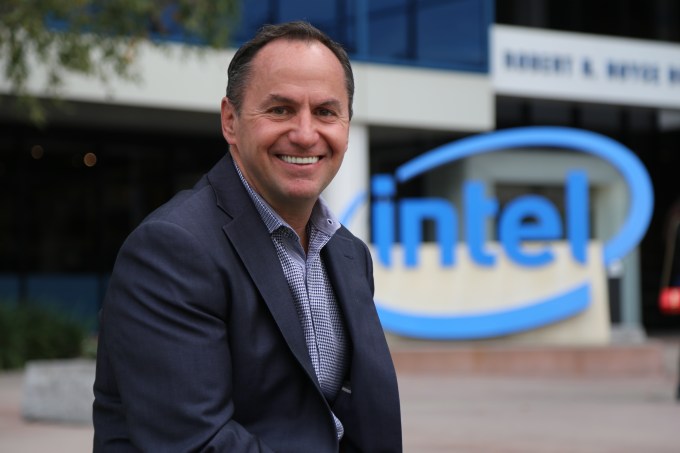
At a press event last week, Intel’s newly appointed CEO Bob Swan reiterated the company’s strategy of investing heavily in growth markets outside of its core competencies. The company has taken heat for racking up its R&D bills, but Swan insisted that the chip giant needs to spend that money after struggling in recent years to keep up with the industry’s transition to new technologies.

Intel invested nearly $30 billion last year in R&D with a focus on memory, 5G, and graphical processing units (GPUs), which are seen as the best option for artificial intelligence, machine learning, and any use case needing strong parallelized processing capabilities. The FT quoted Swan as saying :

…“If we want to play in a much larger market we’re going to continue to invest more in R&D, there’s no question about that,” he said. “We don’t want to get too penny wise and pound-foolish so we don’t invest for the future.”

Traditional brand names chipmakers have lost dominant share by investing heavily in whatever was driving profits at the time, while ignoring emerging tech that has become the primary source of growth. Intel is now paying for their failure to move sooner.

Are India’s nationalist policies creating a closed internet?

Photo by MONEY SHARMA/AFP/Getty Images

Written by Arman Tabatabai

India is facing a similar dilemma to China on how open it wants to make its economy.

India’s government announced draft policies that will dictate operational requirements for ecommerce, social, and messaging companies. Following the country’s heightened focus around data localization, which we have discussed before, the set of proposals announced over the weekend would require internet companies to maintain locally-housed data centers and servers, impose a legal framework for regulating the movement of user data across borders, provide the government with access to company data stored abroad upon request, and force ecommerce websites or apps operating in India to have a locally registered business entity.

At the same time, the government also announced plans to institute policies that would require social networking and messaging platforms to swiftly remove content deemed “unlawful” or threatening to the “sovereignty and integrity of India.”

While the Indian government is trying to take a hardline approach to avoid the misconduct that has followed the expansion of big tech, they’re also putting further pressure on companies that already face a tougher, more expensive operating environment behind India’s “national champion” policy push as we’ve harped on before.

As India continues to move towards nationalist policies that make it difficult for companies to compete, a Chinese-style closed and censored internet increasingly seems likely.

Obsessions

  • We’re excited since Little Brown & Co just announced a retrospective from Netflix co-founder and original CEO, Marc Randolph, coming this fall and entitled “That Will Never Work: The Birth of Netflix and the Amazing Life of an Idea.”
  • Lots of other book coverage coming this week including Billonnaire Raj by James Crabtree, The Next Factory of the World by Irene Yuan Sun, and The Next Billion Users by Payal Arora.
  • More discussion of megaprojects, infrastructure, and “why can’t we build things”

Thanks

To every member of Extra Crunch: thank you. You allow us to get off the ad-laden media churn conveyor belt and spend quality time on amazing ideas, people, and companies. If I can ever be of assistance, hit reply, or send an email to danny@techcrunch.com.

This newsletter is written with the assistance of Arman Tabatabai from New York

25 Feb 2019

Daily Crunch: Microsoft unveils the HoloLens 2

The Daily Crunch is TechCrunch’s roundup of our biggest and most important stories. If you’d like to get this delivered to your inbox every day at around 9am Pacific, you can subscribe here.

1. Say hello to Microsoft’s new $3,500 HoloLens with twice the field of view

Microsoft has unveiled the latest version of its HoloLens “mixed reality” headset at MWC Barcelona. The HoloLens 2 features a significantly larger field of view, higher resolution and a device that’s more comfortable to wear. In fact, Microsoft says the device is three times as comfortable to wear.

HoloLens 2 will be available later this year in the United States, Japan, China, Germany, Canada, United Kingdom, Ireland, France, Australia and New Zealand for $3,500.

2. Nubia’s ‘wearable smartphone’ might be the next step for flexible displays

It’s still bulky, so far as smartwatches go. But at the very least, you could probably walk down the street in the thing without stopping traffic.

3. Netflix’s ‘Roma’ wins three Oscars, including Best Director (but not Best Picture)

It was a good night for Netflix, and for “Roma.” But I’m still mad that “Green Book” won the big prize.

4. New microSD format promises insane transfer speeds, better battery life

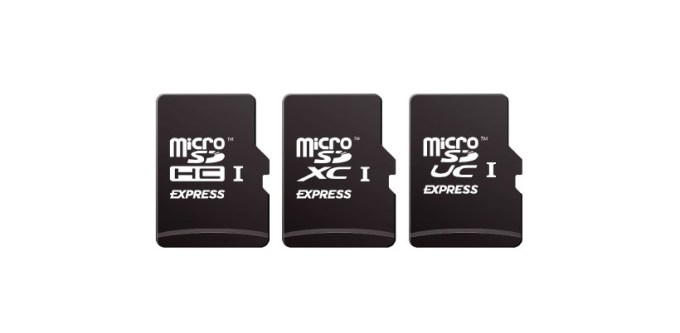
The SD Association has announced the new microSD Express format, which will allow future mobile devices to consume and create content at even faster speeds.

5. New flaws in 4G, 5G allow attackers to intercept calls and track phone locations

This is the first time vulnerabilities have affected both 4G and the incoming 5G standard — which promises faster speeds and better security. But the researchers say their new attacks can defeat newer protections.

6. The Google Assistant gets a button

Traditionally, the Google Assistant always lived under the home button on Android phones. But LG, Nokia, Xiaomi, TCL and Vivo are about to launch phones with dedicated assistant buttons, similar to what Samsung has long done with its Bixby assistant.

7. This week’s TechCrunch podcasts

In the latest TC podcasts, Equity discusses potential Pinterest and Lyft IPOs, Mixtape interviews the CEO of compassionate care startup Concrn and Original Content reviews the Netflix film “High Flying Bird.”