Author: azeeadmin

24 Feb 2019

The Mate X is Huawei’s 5G foldable

The world’s fastest growing mobile company has long had a chip on its shoulder when it comes to Apple and Samsung. For too long, the company has had to go out of its way to remind the world that it’s capable of being every bit as innovative as those better established brands, a concept very much at the heart of the Mate X.

The device lives right at the cross section of the year’s biggest forward looking trends — foldables and 5G, and unlike some of the concepts we’ve seen to date, the product does so with panache.
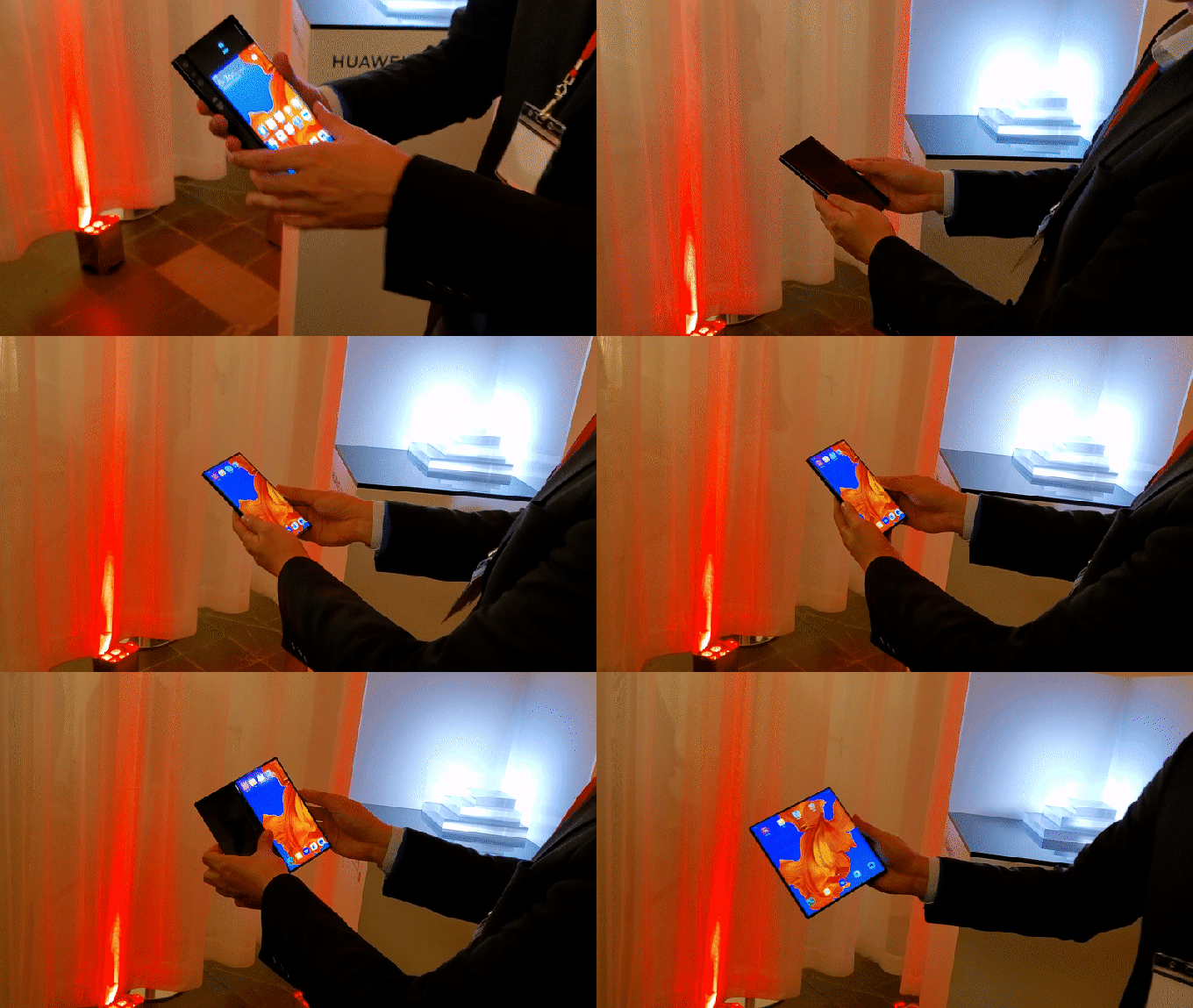
It is, of course, a bit of a wild west when it comes to form factors for the burgeoning foldable space. In a quick, behind the scenes briefing ahead of today’s press conference at MWC, we were given the opportunity to see the handset in action. It was, admittedly, a little more rushed than we’d like, involving no actual hands on time with the product — it was more of a stand behind this rope and snap off a couple of photos situation.

No touching, no followup questions. The company promised to shed more light on the product today, as Richard You takes the stage, but for now, it appears to be the kind of cautious presentation one gives involving a device that isn’t quite ready to be put through its paces. Even so, it’s a heck of a lot closer and with much better lighting than we got the first time Samsung showed off its own entry.
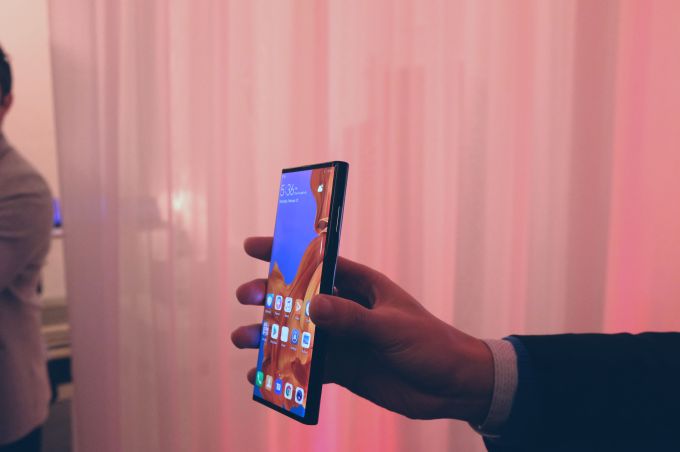
And from these early glimpses, I’m mostly impressed with what the Chinese manufacturer was able to do here. Huawei’s brought some clever touches to the product category, and designed what looks to be a pretty slick devices from most angles.

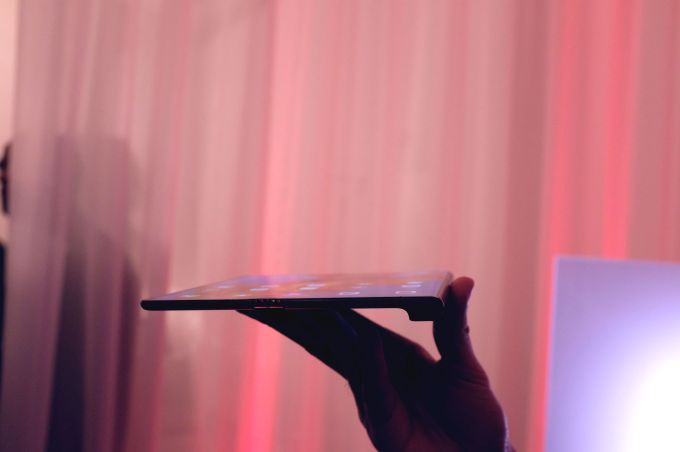
The device is thin, as far as tablets go, at 5.4 mm, unfolded. Closed, it’s nearly double that, at 11 mm. Not thin, exactly, but still a heck of a lot easier to slip into your pants pockets than the 17mm Galaxy Fold.
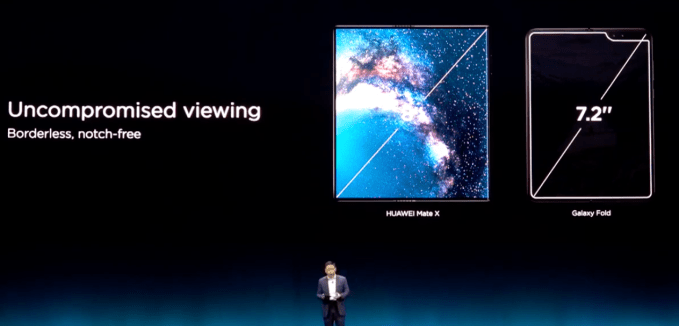
More impressive is what the company’s been able to do with its displays. The screen is very much the thing on these products, and yet the Fold’s outside screen only measures 4.6 inches. The Mate X, meanwhile, sports a pair of outward-facing displays, the larger of which measures 6.6 inches at 2480 x 1148 pixels, with a 19:5 aspect ration.
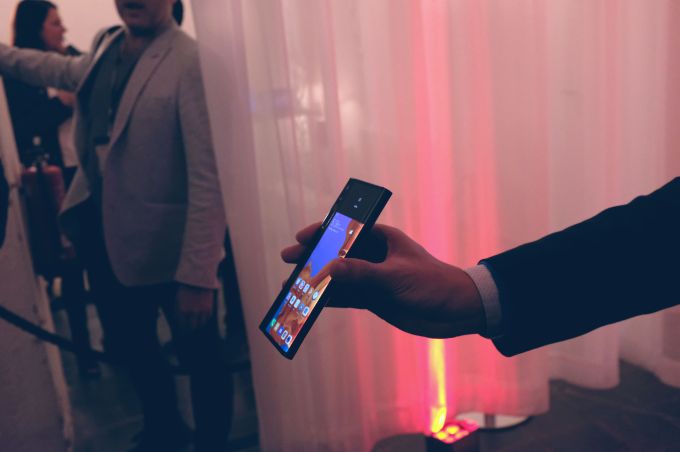
The flip side is 6.38 inches, allowing for space for the camera bar — a chin that folds over to meet the display. The system features a Leica lens and the design is such that photo subjects can see themselves on the outward-facing display as a shot is taken. On the device’s side is a combo fingerprint reader/power button.

Unfolded using the proprietary “Falcon Wing” hinge (three years in the making, according to mobile CEO Richard Yu), the inside screen is a full eight inches. That’s certainly enough room to have a pair of apps open, side by side. While we didn’t get closer than a few feet away, the vantage point was enough to spot a visible crease in the middle of the phone, detectable when it caught the overhead lights.
The other key part here is, naturally, the 5G. Huawei, of course, manufacturers its own 5G network gear, which means that, unlike most of the competition, it’s been able to speed test. The company calls the Mate X “the world’s fastest 5G phone” — words that admittedly don’t mean a heck of a lot, at the moment. That said, it’s promising download speeds of “up to 4.6 Gbps, which should translate to a 1GB movie download in three seconds.

Inside are a pair of batteries that add up to 4,500mAh – you’re going to need something beefy inside to deal with all of those screens and 5G, which is a notable battery drainer. The company’s Kirin 980 processor is also on board for the device.

Update: The handset will be available mid-year, priced at, get this, $2,600

24 Feb 2019

Huawei launches two new laptops at MWC

Everyone’s favorite MacBook knockoffs are back, with two new models. Of course, for all the talk of stolen trade secrets. Huawei’s got a strong track record of making seriously compelling and premium Windows laptops, and this latest batch certainly doesn’t appear to an exception.

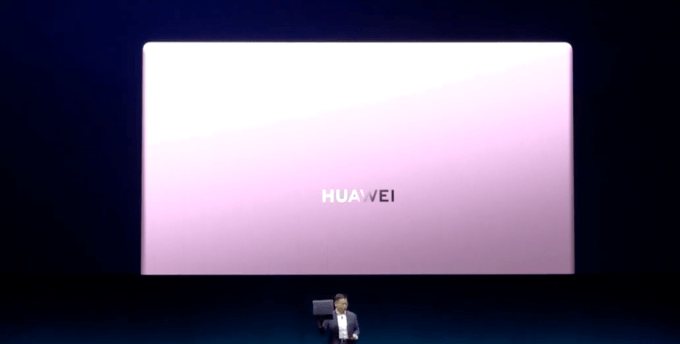
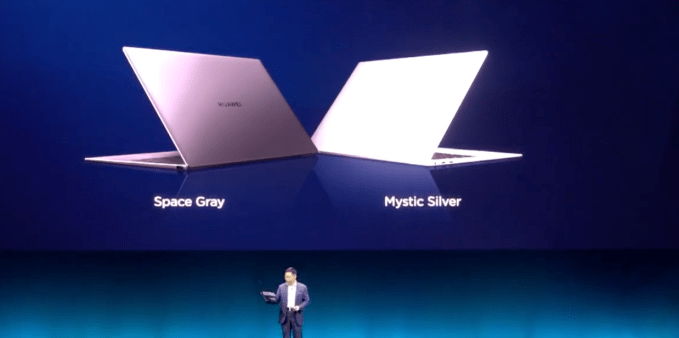
Design wise, the systems are pretty similar to their predecessors (which, in turn, makes them pretty similar to Apple’s), but for a “cleaner logo” that removes the flower icon from the top, instead just opting for the company’s name. Both system feature aluminum alloy unibody designs, with a sandblasted finish.

The Matebook X Pro is the more premium of the two systems, sporting a 13.9 inch display at 260 PPI. The system also features Huawei’s singular recessed camera, hidden in the keyboard’s top row, with is great for stashing away for security purposes and also shooting video of the underside of your nose. Above the keys is a combination power button/fingerprint reader. 

Inside is an 8th gen Intel Core i7 process, up to 16GB of RAM and up to 1TB of solid state storage. The battery, meanwhile, should get up to 14 hours on a charge. On the sides, you’ll find two USB Type-C ports and, one full USB and a headphone jack.

There are new some software features on board, as well. Most notable is Huawei Share, which utilizes NFC to bring easy file sharing between the company’s laptops and phones, so you can, say, copy text on the handset and send it to the notebook to edit.

The Matebook X 14, meanwhile, is more of a midrange system. The laptop features a lower res 14 inch display and a few other lower-end features throughout. There are however, more full USB ports and a battery that should last up to 15 hours on a charge.

More information, including pricing and availability, is coming soon. Both systems should be available in the U.S.

24 Feb 2019

Accurx raises £8.8M Series A for its messaging app for medical teams and patients

Accurx, the U.K. startup and Entrepreneur First alumni that has developed a messaging service for doctor surgeries, has raised £8.8 million in Series A funding, TechCrunch has learned.

According to multiple sources, London venture capital firm Atomico has led the round, with participation from LocalGlobe and EF. We first heard a term sheet had been put on the table as far back as mid-January, while it is thought the investment only closed last week.

I also understand the round was highly contested, potentially pushing up Accurx’s valuation. One source tells me that Accel was in the running but didn’t end up investing.

Both Atomico and Accurx declined to comment.

Co-founded by Jacob Haddad and Laurence Bargery, who met and subsequently founded the company at Entrepreneur First in 2016, Accurx initially set out to develop a data-set and tools to help tackle the problem of inappropriate use of antibiotics, which is a major contributor to the diminishing effectiveness of antibiotics. Since then the startup has pivoted to focus on creating a broader communication platform to bring medical teams and patients closer together.

(Given Haddad and Bargery’s backgrounds, I dare say that the use of data and machine learning to help improve healthcare delivery is still very much front of mind for the company).

As it exists today, Accurx’s main product is Chain SMS, a messaging app for use by doctor surgeries to communicate with patients. It has been designed to support nurses, administration staff and practice managers etc., as well as GPs. Typical use-cases for Chain SMS includes sending advice to patients, notifying a patient of normal results, and reminding them to book appointments. All communication is saved back to a patient’s medical record to ensure a more joined up approach than might otherwise happen using arcane communication methods such as telephone calls and sending letters in the post.

(Somewhat related: this weekend, British Health Secretary Matt Hancock has called for the use of pagers for communications within the NHS to be phased out by 2021. The outdated technology costs the U.K. taxpayer-funded health service £6.6m per year, apparently).

To that end — and no doubt not gone unnoticed by investors — I gather that Chain SMS is already in use by 20 percent of GP practices in England, from close to zero when it launched in February 2018. The conventional wisdom is that startups find it difficult to penetrate the NHS, when in practice this is starting to change, whilst GP surgeries, although funded through the NHS, are actually run as independent businesses so arguably easier to sell into.

A fun fact: A quick spelunking of Companies House records reveals that prominent Conservative Party politician and former Army officer Tom Tugendhat — who is also the current chairman of the Foreign Affairs Committee and tipped by some to be a possible future PM — is an early investor in Accurx.

Separately, I’m told that Wendy Tan White, the former EF General Partner who recently joined Alphabet’s X (formerly Google X) as Vice President, has also invested as part of this latest round. Meanwhile, I understand that recently recruited Principal Irina Haivas led on behalf of Atomico. Haivas is a former surgeon and former surgical fellow at Harvard Medical School (yes, you read that correctly!) and has previously worked at healthcare investor GHO Capital Partners.

24 Feb 2019

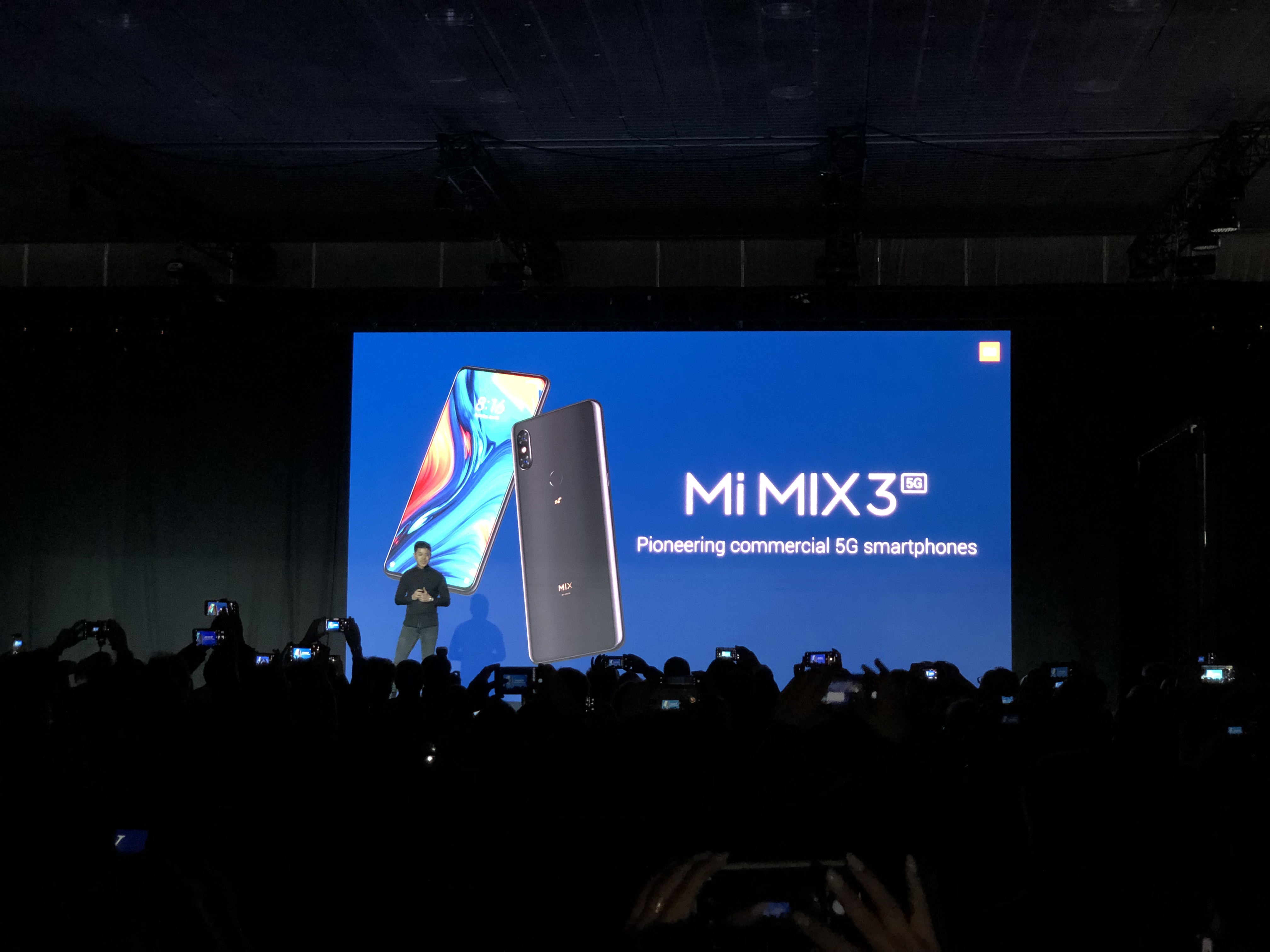
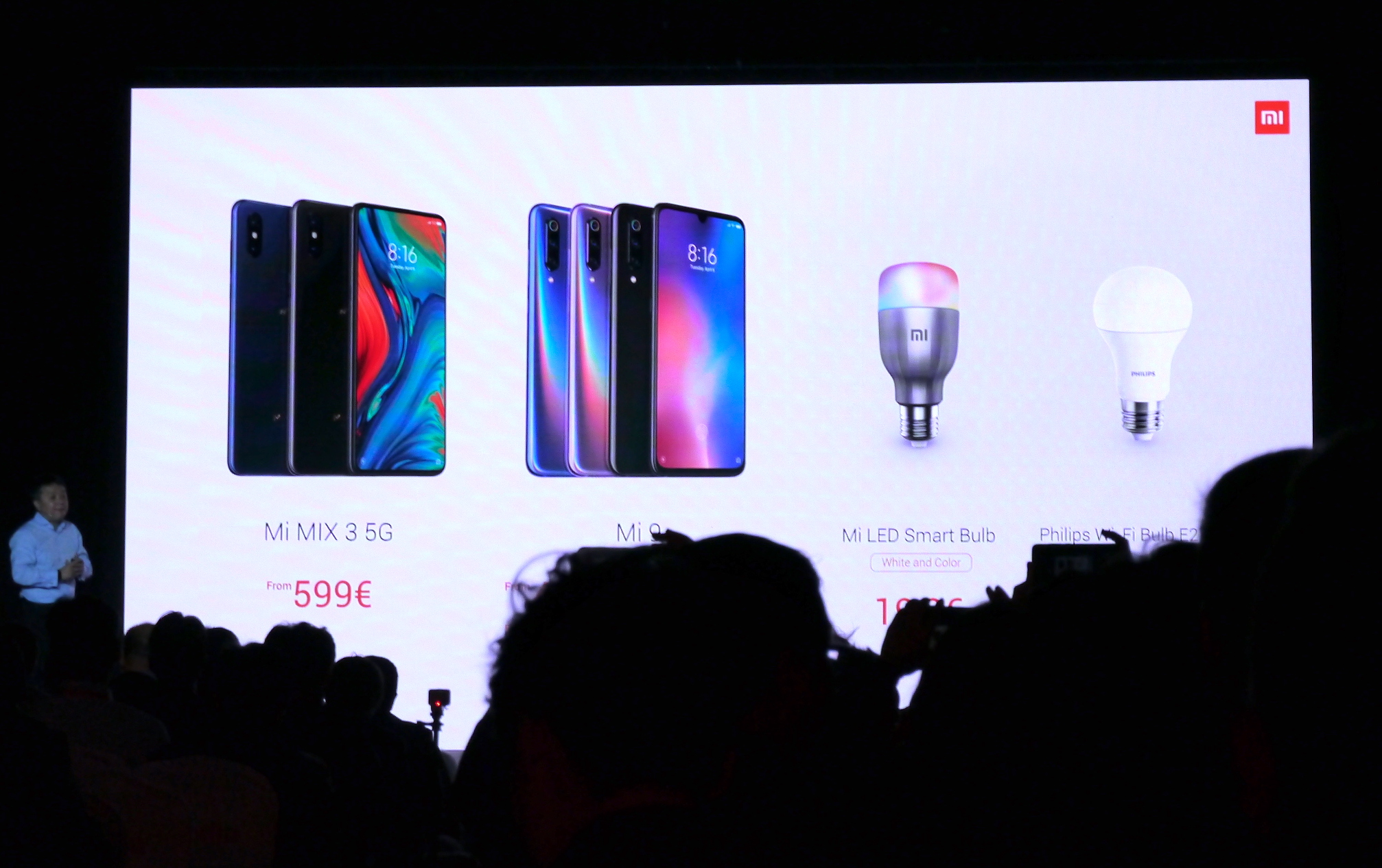
Xiaomi announces its first 5G phone, the Mi Mix 3 5G

Xiaomi doesn’t want to miss the 5G bandwagon — the company just unveiled its first smartphone that comes with a 5G modem at a press conference in Barcelona. The Mi Mix 3 5G is a new variant of the Mi Mix 3, a phone that Xiaomi originally released in October 2018.

The company is trying to create a bezel-less phone with the Mi Mix line. Instead of a notch or a punch-hole display, Xiaomi has opted for a sliding front-facing camera. The result is a 93.4 percent screen-to-body ratio. You can find two cameras on the back of the device, which give you the ability to shoot slow-motion videos at 960 frames per second. The handset body is made of ceramic.

There are a few changes in the new device. First, Xiaomi has swapped the Qualcomm Snapdragon 845 system-on-a-chip with a Snapdragon 855 system-on-a-chip — the same chipset you can find on the Samsung Galaxy S10. When it comes to the modem, the company is using Qualcomm’s X50 5G modem.

It’s always hard to grasp the advantages of 5G. That’s why Xiaomi’s Director of Product Management Donovan Sung started a video call with one of its telecom partner, Orange Spain. There was some latency and it wasn’t that convincing.

At launch, Xiaomi is partnering with Orange, 3, Sunrise, Telefonica, Tim and Vodafone. The device will be available in May for €599 ($680) in two colors — Onyx Black and Sapphire Blue. Let’s see if any 5G network will be ready by then.

Chipmaker Qualcomm’s president, Cristiano Amon, stole a little of Xiaomi’s thunder by naming the Mi Mix 3 5G first during a turn on stage at the press conference as a Xiaomi partner.

Amon took the opportunity to give a muscular sales pitch for 5G, claiming the next-gen cellular tech would come faster than the transition from 3G to 4G/LTE and bring transformative benefits for consumers — touting the likes of premium gaming on mobile to replace game consoles. That’s because 5G should greatly lower latency and improve online gaming.

“5G is here. Not in 2020, not in late 2020 – it’s here right now in 2019. 2019 is the year of 5G,” he claimed, suggesting 5G device launches would be fast-followed by commercial 5G services as early as the second half of this year.

On device AI will also get a boost from 5G, Amon suggested, arguing that “every” app will be able to leverage machine learning thanks to reduced latency.

“You can unleash the power of the cloud for every app and service,” he said.

“5G will improve substantially how we think about our phones,” he added. “Everything will get better.”

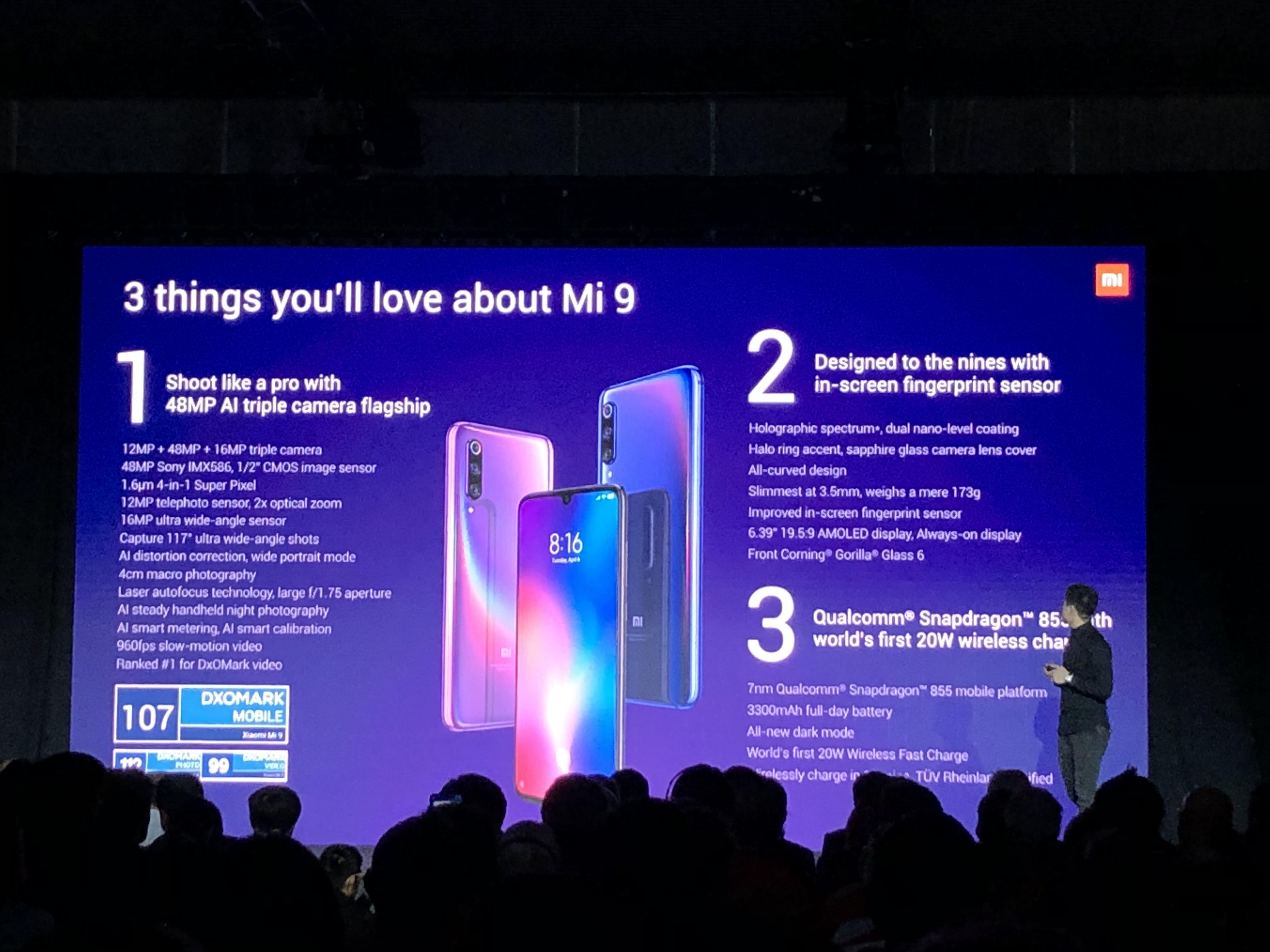
Xiaomi also used its first MWC new product launch event opportunity to announce the Mi 9 once again. The company has already unveiled its new flagship device earlier this week. It’s a more traditional phone with a waterdrop-shaped notch, a Snapdragon 855 chipset and a triple camera system. You can find a 48-megapixel camera, a 16-megapixel wide-angle camera and a 12-megapixel telephoto camera on the back of the device.

The Mi 9 will be priced at €449 ($510) for 6GB of RAM and 64GB of storage, €499 ($565) for 6GB of RAM and 128GB of storage. Pre-orders start from today in select European markets — devices should ship by February 28.

There are now 224 million monthly active Xiaomi smartphone users globally. While Xiaomi phones aren’t available in the U.S., you can now buy Xiaomi phones in Spain, the U.K., France and Italy in addition to many Asian markets.

Xiaomi also talked up its wider product portfolio, saying it has more than 2,000 Xiaomi-branded products in all, working with more than 200 partners. The company reiterated that it’s committed to having a dual strategy of smartphones plus A-IoT

It singled out electric scooters to say it’s shipped more than 560,000 Mi scooters to date. The Mi scooter was “probably the best selling personal transportation device in the world in 2018”, it added.

At the event it also announced the launch of another new product: The Mi LED Smart Bulb — a connected light bulb that lets users control light color and brightness via their phone. It’s priced at €19.90. The company tried to demo its smart home ecosystem but failed to turn off the air purifier using Google Assistant.

Xiaomi didn’t say a word on its foldable smartphone. It looks like there’s still some more work to do on the device.

24 Feb 2019

Watch Microsoft unveil the HoloLens 2 live right here

Microsoft is set to announce a brand new hardware device at MWC in Barcelona — the new HoloLens headset. The conference starts at 6:00 PM CET (5:00 AM GMT, 12:00 PM ET, 9:00 AM PT).

If you’ve ever tried the HoloLens, you know that this it is a magical device. But Microsoft quickly realized that it had more potential for industrial use cases. It is now positioned as a B2B device.

Let’s see what Microsoft has in mind with the second-generation HoloLens. The company is also going to talk about its mobile strategy when it comes to apps and services on iOS and Android.

You can check it out live via Microsoft’s official stream above, and stay tuned on TechCrunch.com for ongoing coverage of all the news coming out of MWC.

24 Feb 2019

Here are the first leaked images of Microsoft’s new HoloLens

Microsoft is scheduled to hold a major press conference at MWC Barcelona later today. With Satya Nadella and Alex Kipman in attendance, the expectation has long been that the company would use the event to show off the next version of its HoloLens mixed reality headset. Just hours before the event, though, Twitter user WalkingCat spoiled at least some of the surprise by leaking four images of the new device.

These are the first images of the new HoloLens we’ve seen. The new version seems to have enhanced padding and generally looks more comfortable to wear, but that’s about all we can say about the device so far. The images show roughly the same camera and sensor layout of the old device, too. Chances are, though, there’s plenty of surprises left for today’s events.

One of the images shows a user tapping a menu item, for example. That’s a gesture that’s not currently supported on HoloLens 1 but that would make a huge difference in the user experience. The current tap and bloom gestures work, but aren’t exactly elegant or fast.

What everybody really wants to know, though, is if the new device features an improved field of view. The earliest prototypes Microsoft showed off had a large field of view that made you feel highly immersed into the AR experience. The production version, though, didn’t quite live up to that, though in my own experience, it only takes your brain a few minutes to compensate for the limited field of view.

Microsoft’s press event in Barcelona is scheduled to start at 18:00 CET, 9am PT and we’ll be out in full force, so check back later for our reporting from the event and more details about the new HoloLens.

24 Feb 2019

Watch Huawei’s MWC conference live right here

While Huawei isn’t going to show the P30 at Mobile World Congress, the company says it is going to “reveal the unprecedented”. Like other manufacturers, Huawei has been trying some new designs. The conference starts at 2:00 PM CET (1:00 PM GMT, 8:00 AM EST).

Huawei doesn’t unveil its flagship devices at MWC anymore. The company usually holds its own press conference after the show. This time, Huawei will unveil the P30 in Paris on March 26.

But it doesn’t mean that the company is skipping the show altogether. So maybe Huawei is going to show a foldable phone?

You can check it out live via Huawei’s official stream above, and stay tuned on TechCrunch.com for ongoing coverage of all the news coming out of MWC.

24 Feb 2019

Watch HMD unveil Nokia phones live right here

HMD is holding a press conference at MWC in Barcelona to showcase some Nokia-branded phones. The conference starts at 4:00 PM CET (3:00 PM GMT, 10:00 AM EST).

HMD licenses the Nokia brand so that the company can release smartphones under the Nokia brand. It isn’t the company we used to know and love, but it still says Nokia. So get ready for some new Nokia phones running Android.

You can check it out live via HMD’s official stream above, and stay tuned on TechCrunch.com for ongoing coverage of all the news coming out of MWC.

24 Feb 2019

Watch Xiaomi announce new 5G and foldable phones live right here

It’s Mobile World Congress in Barcelona, which means that Xiaomi is about to announce a lot of phones. The conference starts at 10:30 AM CET (9:30 AM GMT, 4:30 AM EST).

Rumor has it that the company will unveil a phone that supports 5G network. Xiaomi has already showed this phone at various events over the past couple of months. The company will also launch its new flagship device outside of China, the Mi 9.

But I’m more excited about rumors that Xiaomi is also about to show some sort of foldable phone. Will it look better than the Samsung Galaxy Fold?

You can check it out live via Xiaomi’s official stream above, and stay tuned on TechCrunch.com for ongoing coverage of all the news coming out of MWC.

23 Feb 2019

Amazon Air cargo plane operated by Atlas crashes in Texas, killing 3 passengers on board

An Atlas cargo plane flying on behalf of Amazon Air — Amazon’s own freight delivery service that competes with FedEx and UPS, among others — has crashed outside Houston, Texas, killing three passengers on board.

Amazon and Atlas both confirmed the accident with short statements. Neither provided any details on the nature of the accident.

“Our thoughts and prayers are with the flight crew, their families and friends along with the entire team at Atlas Air during this terrible tragedy. We appreciate the first responders who worked urgently to provide support,” said Dave Clark, SVP of worldwide operations at Amazon.

“This is to confirm that an Atlas Air 767 cargo aircraft Flight No. 3591 operating from Miami to Houston has been involved in an accident this afternoon,” reads a statement from Atlas. “We understand the aircraft went down near the city of Anahuac Texas, in the Trinity Bay. We can confirm there were three people on board the aircraft. Those people and their family members are our top priority at this time. Atlas Air is cooperating fully with the FAA and NTSB. We will update as additional information becomes available.”

The Boeing 767 cargo jetliner lost contact on radio and radar around 12:45pm local time after crashing into Trinity Bay close to Anahuac, a small city about 30 miles from Houston. Local news reported officials on the ground saying there is unlikely to be survivors.

The aircraft, Atlas Air Flight 3591, was flying from Miami on behalf of Amazon, according to flight tracking site Flightradar24

Many people are reporting the crash as a “Prime Air” incident, but this isn’t completely accurate. Originally, Amazon Air was branded “Prime Air”, and this appears to be the logo that still runs on many of these planes — but Amazon rebranded the service in December 2017. Amazon Prime Air now refers to the company’s efforts to build a drone delivery network.

As we have noted, it is not yet clear what caused the crash. The Federal Aviation Administration confirmed the accident in a statement, deferring the investigation to the National Transportation Safety Board, which said in a tweet that it has dispatched investigators to the crash site.

We have also contacted Amazon and Atlas for comment, and we will update this post with their responses.

Counting today’s plane, Amazon has 40 aircraft operating under the Amazon Air brand, serving some 23 airports in the U.S.

One looming question is how and if today’s incident will impact Amazon’s bigger strategy with freight delivery.

The company has been building its own network of cargo planes since 2015, a strategy that serves a couple of purposes. It gives Amazon more control (both in terms of scheduling and costs) over air-based logistics for the transport of goods that it sells; and it gives Amazon a shot at taking on some of the air shipping business that FedEx and UPS provide for other companies.

Amazon Air has quietly but steadily grown over the years. Amazon currently has plans to add another 10 aircraft during 2019 and 2020, leasing them from Air Transport Services Group, an Atlas competitor. Notably, Amazon has stakes in both Atlas and ATSG as part of this bigger bet on taking on other larger cargo carriers with its own freight delivery service.

More soon.