Author: azeeadmin

06 Feb 2019

Microsoft really, really, really doesn’t want you to buy Office 2019

Microsoft launched a new ad campaign for its Office suite today. Usually, that’s not something especially interesting, but this one is a bit different. Instead of simply highlighting the features of Word and Excel, Microsoft decided to pitch Office 365 and Office 2019 against each other (as an extra gimmick, it used twins to do so, too). But here’s the deal: Microsoft really doesn’t want you to buy Office 2019, and the ads make that abundantly clear.

The reason for that is obvious: Office 365 is a subscription product while Office 2019 (think Office Home & Student or other SKUs) comes with a perpetual license, so that’s a one-time sale for Microsoft. Subscriptions are a better business for Microsoft in the long run (hence its recent focus on products like Microsoft 365, too).

For the longest time, the annual non-365 Office release was simply a snapshot of the state of the Office apps at a given time. That changed with Office 365. Now, Office 365 users are the ones who get all the online features, including a bunch of AI-driven tools, while the Office 2019 versions don’t get any of these.

Office 365 subscriptions start at $70 for personal use and $8.25/month for business users. Office Home and Business is a one-time $250 purchase.

Unsurprisingly, in the new ads, which give the actors twins various challenges to perform in the likes of Word, Excel and PowerPoint, Office 365 beats Office 2019 every time. Yawn. The ads aren’t very good and you will cringe a few times (though sadly, they are no rival to Microsoft’s worst commercial ever, 2009’s Songsmith debacle), but you’ll definitely come away with a sense that Microsoft really wants you to subscribe to Office 365 and not buy a perpetual Office 2019 license and then maybe buy the next update in 2025.

06 Feb 2019

Investigation finds e-scooters a cause of 1,500+ accidents

An investigation by Consumer Reports may force electric scooter businesses to double back on safety measures.

The magazine found electric scooters caused 1,545 injuries in the U.S. since late 2017, according to data collected from 110 hospitals and five public agencies in 47 cities where Bird or Lime, the leading tech-enabled scooter-sharing platforms, operate.

The news comes shortly after UCLA published a study finding that 249 people required medical care following scooter accidents, with one-third of that group arriving at the hospital in an ambulance.

“These injuries can be severe,” Tarak Trivedi, an emergency physician at UCLA and the study’s lead author, told CNET. “These aren’t just minor cuts and scrapes. These are legit fractures.”

Despite commentary from scooter CEOs suggesting otherwise, safety doesn’t seem to be a priority for businesses in the space. Given the nature of the industry, taking a ride on an e-scooter or a dockless bike without a helmet is the norm. That, coupled with failed hardware, irresponsible riding practices and access to scooters in the evening, has unsurprisingly led to several accidents and even casualties. Just this past weekend, the city of Austin reported a pedestrian riding a Lime scooter died after being struck by an Uber driver. The Lime scooter rider was traveling the wrong way down an interstate.

Lime, Bird and other leading scooter providers do provide free helmets to riders and don’t encourage poor scooter etiquette, but ensuring riders actually carry helmets or don’t do stupid things like travel the wrong way down a busy road is impossible.

With a fresh $310 million in Series D funding for Lime, announced today, it will be interesting to see how the company ramps up safety efforts.

06 Feb 2019

Daily Crunch: Spotify buys Gimlet and Anchor

The Daily Crunch is TechCrunch’s roundup of our biggest and most important stories. If you’d like to get this delivered to your inbox every day at around 9am Pacific, you can subscribe here:

1. Spotify buys Gimlet and Anchor in podcast push, earmarks $500M for more deals

Spotify is going after podcasts in a major way in 2019.

The music streaming service confirmed that it has snapped up two podcast networks — Gimlet and Anchor — in undisclosed deals. But that’s not all: Spotify also said it has plans to spend a further $400 to $500 million “on multiple acquisitions in 2019” to get even deeper into the space.

2. Meditation app Calm hits unicorn status with fresh $88 million funding

As meditation grows in popularity across the U.S. — the CDC says it tripled from 4.1 percent in 2012 to 14.2 percent in 2017 — Calm has capitalized on the craze by offering a suite of mindfulness and wellness tools, from guided meditation sessions to a product called “Sleep Stories,” via a subscription.

3. Instacart faces class-action lawsuit regarding wages and tips

The suit alleges Instacart “intentionally and maliciously misappropriated gratuities in order to pay plaintiff’s wages even though Instacart maintained that 100 percent of customer tips went directly to shoppers. Based on this representation, Instacart knew customers would believe their tips were being given to shoppers in addition to wages, not to supplement wages entirely.”

4. Angela Ahrendts is leaving Apple

Ahrendts joining Apple in 2014 was massive news, with her having served as the CEO of the luxury fashion brand Burberry from 2006 to 2014. She led the charge to “reimagine” Apple’s retail stores, shifting them to what she hoped felt more like a “modern-day town square.”

5. YouTube’s CEO says it will continue addressing monetization issues, admits Rewind 2018 was ‘cringey’

The letter seems unlikely to satisfy creators who are still trying to recover revenue or gain a better understanding of how YouTube’s policies are enforced.

6. Reddit is raising a huge round near a $3 billion valuation

Reddit is raising $150 million to $300 million to keep the front page of the internet running, according to multiple sources. Leading the round is Chinese tech giant Tencent.

7. Snapchat shares soar as it stops losing users, shrinks losses in Q4

Snapchat isn’t growing again, but at least it didn’t hemorrhage any more users in its Q4 earnings report — the company stayed flat at 186 million daily users.

06 Feb 2019

Pluto TV will expand its free service with paid subscriptions, says new owner Viacom

Last month, Viacom picked up free streaming service Pluto TV for $340 million in cash. This week, the company spoke in more detail about its plans for Pluto TV – including its potential to for ad-supported streaming as well as the ability to market Viacom’s various subscription video properties directly to consumers, similar to how Amazon Channels works today.

At the time of the acquisition, Pluto TV offered over 100 channels of free content from 130 partners, and reached 12 million monthly users – many of whom are younger, and never intend to subscribe to traditional pay TV, like cable or satellite.

While Pluto TV built its brand on offering access “free TV,” Viacom sees the service not only as a way to grow an ad-supported video business, but also a way to upsell those free customers to paid subscription video products.

Viacom isn’t the only brand to have realized in recent months that a good number of consumers are uninterested in paying for TV and movies, when there are so many free alternatives for entertainment available on today’s web – including most notably, YouTube’s massive ad-supported video network, and to a lesser extent, the video offerings from places like Facebook Watch, and even those from social apps like Instagram and Snapchat.

That’s led many in the industry to launch their own, free and ad-supported video destinations. This includes Amazon’s recent debut of IMDb’s Freedive; Roku’s free TV and movie app known as The Roku Channel; Sling TV’s teaser package of free content for non-subscribers; and Walmart’s now over two-year old Vudu “Movies On Us;” among others. Plex also recently said it will venture into this area in 2019.

Viacom believes Pluto TV will give it a leg up in this growing ad-supported video market, explained Viacom CEO Robert Bakish, in a call with investors.

“We believe the majority of the Pluto TV audience is not watching pay-TV today. This segment already exists, so it makes sense for us – as Viacom – to take share,” he said. “Given the segmenting of the market, distributors need a free TV offering.”

The idea is that the free TV offered by Pluto TV will continue to attract consumers to the service. And Pluto TV will become more attractive on this front as Viacom adds its own content to the service – including all the programming it has been holding back from other subscription video-on-demand (SVOD) services over the years.

“Our strategic decision to curtail large-scale library licensing to the SVOD players over the last couple of years – it cost us some money in fiscal 2017 and 2018 – but it means that we have large volumes of content to bring to bear now once we close the Pluto transaction,” Bakish noted.

In particular, the content Viacom plans to bring to Pluto TV spans genres like “kids, African-American, reality and comedy,” the company said.

Pluto TV will also gain access to Viacom’s marketing capabilities to grow its audience and its infrastructure, allowing the service to expand globally.

Meanwhile, Pluto TV offers advertisers an attractive audience, as it’s capable of reaching younger viewers who are opting out of pay TV, Viacom believes. Half of Pluto’s users today are ages 18 to 34, and the majority watch the service’s content on their TV’s big screen, thanks to Pluto’s integrations with smart TVs like those from Samsung and Vizio.

“It will provide a rapidly growing source of billions of monthly advanced TV impressions in young and hard-to-reach demos in a premium and safe environment,” said Bakish.

By noting that Pluto TV content would be “safe,” Bakish is taking a pointed dig at YouTube, which has struggled to police its user-gen content in a way that made it safe for advertisers, which even resulted in a brand freeze over ads in 2017. This is still a big concern for YouTube, CEO Susan Wojcicki said this week a letter to the YouTube community.

Last year, YouTube saw “how the bad actions of a few individuals can negatively impact the entire creator ecosystem,” wrote Wojcicki. “And that’s why we put even more focus on responsible growth,” she added.

In addition to the poor taste in programming choices made by various creators, at times, YouTube and more recently Roku, have also had to weigh decisions about how much extremist content they want to host in the name of being an open platform. The risk that comes with that is a significant impact to their bottom line as advertisers flee, the companies have found.

Viacom noted that Pluto TV’s ad inventory is today undersold – today, the company’s sales team sells less than 50 percent of ad space. That leaves room for growth.

In addition to free streaming, Viacom plans to use Pluto TV to grow its paid subscriber base, as well.

Through Pluto TV, Viacom will offer customers the chance to add on paid subscriptions to their account, Bakish said – a strategy employed today by Amazon and Roku.

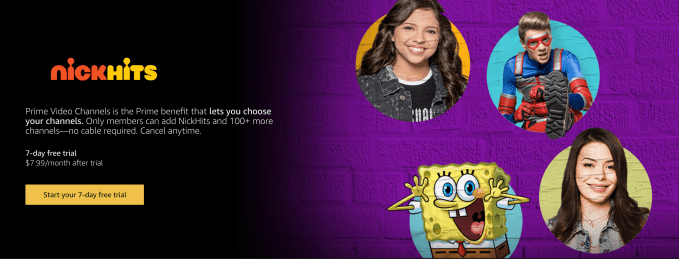
These add-ons will include those for Viacom’s subscription products like Noggin, aimed at parents of preschoolers; Comedy Central Now; and the company’s newest subscription, NickHits, the CEO said. (The latter targets older kids and recently arrived on Amazon Channels.)
Viacom said the Pluto TV deal would boost revenue in 2019, but will be “slightly dilutive” to earnings. Viacom experts the deal to close in March.

The company reported a mixed quarter, with revenue of $3.09 billion that fell short of Wall Street forecasts, an earnings per share at $1.12 which beat analyst expectations.


06 Feb 2019

Microsoft’s Build developer conference returns to Seattle May 6 to 8

Microsoft’s Build developer conference is returning to Seattle May 6 to 8. This is a bit of a surprise since Microsoft itself leaked May 7 to 9 as Build’s dates last month, after all. But then Google’s announced exactly those dates for its I/O confab and like last year, Microsoft probably had to scramble a bit and we’ll get back-to-back developer keynotes from Microsoft and Google in early May.

To say that timing is a bit awkward is an understatement, but we’ll be there and do our thing and then fly out to California at night and do it all over again for Google I/O. For developers, this shouldn’t be too much of an issue, though, given that the target audience for both events is quite different.

Build is typically Microsoft’s biggest show for developers. Other events, including its massive Ignite show in Orlando, have a stronger emphasis on IT and productivity, but Build is where you can expect announcements around Windows, new developer tools and its Azure cloud, but also updates to how developers can integrate their tools and services into products like Office.


Since Microsoft will likely announce the next version of its HoloLens at MWC in Barcelona in just a few weeks, I think it’s a safe bet that Microsoft will also emphasize its mixed reality platform at Build.

Registration for Build opens February 27.

06 Feb 2019

Lime raises $310 million Series D round led by Bain Capital

Lime just announced it has raised a $310 million Series D round. Led by Bain Capital, with participation from Andreessen Horowitz, Fidelity Ventures, GV and IVP, the round values Lime at $2.4 billion.

“This new investment demonstrates the fundamental strength of our business and the increasingly rapid adoption of Lime,” Lime CEO Toby Sun wrote in a blog post. “The new funds will give us the ability to expand into new markets, enhance our technology, strengthen the team and pilot new opportunities. We will also continue investing in two critical areas: rider safety and city collaboration.”

In May, Lime partnered with Segway to launch its next generation of electric scooters. These Segway-powered Lime scooters were designed to be safer, longer-lasting via battery power and more durable for what the sharing economy requires,  Sun told TechCrunch last year.

But this partnership hasn’t been without its issues. In October, Lime recalled some of its scooters due to battery fire concerns. The next month, Lime put $3 million toward a new safety initiative called “Respect the Ride.” Safety, in general, is a major concern. In September, someone lost their life after a scooter accident.

This brings Lime’s total funding north of $800 million. Lime, which got its beginnings as a bike-share company, has deployed its scooters in more than 100 cities in the U.S. and 27 international cities. Since June, Lime has more than doubled the number of cities where it operates in the U.S. Lime has also partnered with Uber to offer Lime scooters within the Uber app.

06 Feb 2019

Google doubles down on its Asylo confidential computing framework

Last May, Google introduced Asylo, an open source framework for confidential computing, a technique favored by many of the big cloud vendors because it allows you to set up trusted execution environments that are shielded from the rest of the (potentially untrusted) system. Workloads and their data basically sit in a trusted enclave that adds another layer of protection against network and operating system vulnerabilities.

That’s not a new concept, but as Google argues, it has been hard to adopt. “Despite this promise, the adoption of this emerging technology has been hampered by dependence on specific hardware, complexity and the lack of an application development tool to run in confidential computing environments,” Google Cloud Engineering Director Jason Garms and Senior Product Manager Nelly Porter write in a blog post today. The promise of the Asylo framework, as you can probably guess, is to make confidential computing easy.

Asylo makes it easier to build applications that can run in these enclaves and can use various software- and hardware-based security back ends like Intel’s SGX and others. Once an app has been ported to support Asylo, you should also be able to take that code with you and run in on any other Asylo-supported enclave.

Right now, though, many of these technologies and practices around confidential computing remain in flux. Google notes that there are no set design patterns for building applications that then use the Asylo API and run in these enclaves, for example.The different hardware manufacturers also don’t necessarily work together to ensure their technologies are interoperable.

“Together with the industry, we can work toward more transparent and interoperable services to support confidential computing apps, for example, making it easy to understand and verify attestation claims, inter-enclave communication protocols, and federated identity systems across enclaves,” write Garms and Porter.

And to do that, Google is launching its Confidential Computing Challenge (C3) today. The idea here is to have developers create novel use cases for confidential computing — or to advance the current state of the technologies. If you do that and win, you’ll get $15,000 in cash, $5,000 in Google Cloud Platform credits and an undisclosed hardware gift (a Pixelbook or Pixel phone, if I had to guess).

In additionl, Google now also offers developers three hands-on labs that teach how to build apps using Asylo’s tools. Those are free for the first month if you use the code in Google’s blog post.

06 Feb 2019

Profits at The New York Times show media dinosaurs are ruling the internet

Today’s news that the (failing?) New York Times reported net income of $55.2 million, after losses a year earlier — and that its digital business raked in $709 million — is just one indicator that some of the nation’s oldest media properties are finally crossing the bridge into the 21st century.

The Times managed to turn a profit while employing 1,600 journalists — an all-time high. Fourth-quarter digital advertising revenue increased 22.8 percent, while print advertising revenue decreased 10.2 percent. Digital advertising revenue was $103.4 million, or 53.9 percent of total advertising revenues, compared with $84.2 million, or 46.1 percent, in the fourth quarter of 2017, according to the company.

Add those numbers to a newly robust Washington Post, a consistently profitable New Yorker, and the erection of paywalls at sites across the vast reaches of the internet point to a very simple lesson learned — people will pay for quality reporting, videos, personal writing, and exclusive information.

Given the excitement around subscriptions, it may seem surprising that TechCrunch isn’t doing something in this area… yet.

Some of this is driven by a newly relevant news cycle that has seen American audiences wake up to the day-to-day decisions that are reshaping the country from the halls of power in Congress and the White House .

“Our appeal to subscribers — and to the world’s leading advertisers — depends more than anything on the quality of our journalism,”  said the Times’ chief executive, Mark Thompson, in a statement. “That is why we have increased, rather than cut back, our investment in our newsroom and opinion departments. We want to accelerate our digital growth further, so in 2019, we will direct fresh investment into journalism, product and marketing.”

For some in the word salad business, the news comes a bit too late. Compare the fortunes of these hundred-year-old companies with the newer darlings of the media world and it becomes even more starkly clear how ad-driven businesses were eviscerated by social media.

Layoffs at BuzzFeed, Vice Media, and our own parent company Verizon Media Group especially point to the failings of the “new” media model. The Times actually covered this at some length, but it’s worth repeating.

At two other new media properties; Vox Media Group (a division of Comcast NBC Universal) and Axios, a new subscription newsletter business; it’s a combination

Owning an audience through exclusive information or distribution is a much better way to get to profitability then giving away the store to get eyeballs.

Even network television and movie studios are coming around to the subscription model as the salvation of their business. Ad revenues are declining and subscription services like Netflix and Spotify have already taken huge bites out of the cash cows of the broader entertainment industry. What do studios and networks have left but subscription, subscription, subscription? It’s why CBS launched its exclusive service, why Disney is launching theirs, and how Amazon, Netflix and (even) Hulu have managed to become ascendant.

With a subscriber base, it’s easier for media businesses to sell sponsorships to particular companies or brands that want the influence. With subscriptions, a core readership gets to support the investigative work of a group of journalists and support (and join) a community.

The eyeball business was a classic contrivance of first generation internet businesses — and it largely didn’t work then either.

Now the question remains whether this resurgence can also revivify the moribund prospects of local media. The Times and its marquee media brethren have a national scope and an amazing reach — or command a monopoly in large cities. What’s needed is the resurrection of a vibrant local news scene that can actually make money. Let’s see if the Times’ model shows the way… again.

06 Feb 2019

Big companies are not becoming data-driven fast enough

I remember watching MIT professor Andrew McAfee years ago telling stories about the importance of data over gut feeling, whether it was predicting successful wines or making sound business decisions. We have been hearing about big data and data-driven decision making for so long, you would think it has become hardened into our largest organizations by now. As it turns out, new research by NewVantage Partners finds that most large companies are having problems implementing an organization-wide, data-driven strategy.

McAfee was fond of saying that before the data deluge we have today, the way most large organizations made decisions was via the HiPPO — the highest paid person’s opinion. Then he would chide the audience that this was not the proper way to run your business. Data, not gut feelings, even those based on experience, should drive important organizational decisions.

While companies haven’t failed to recognize McAfee’s advice, the NVP report suggests they are having problems implementing data-driven decision making across organizations. There are plenty of technological solutions out there today to help them from startups all the way to the largest enterprise vendors, but the data (see, you always need to go back to the data) suggests that it’s not a technology problem, it’s people problem.

Executives can have farsighted vision that their organizations need to be data-driven. They can acquire all of the latest solutions to bring data to the forefront, but unless they combine that with a broad cultural shift and a deep understanding of how to use that data inside business processes, they will continue to struggle.

The study’s authors, Randy Bean and Thomas H. Davenport, wrote about the people problem in their study’s executive summary. “We hear little about initiatives devoted to changing human attitudes and behaviors around data. Unless the focus shifts to these types of activities, we are likely to see the same problem areas in the future that we’ve observed year after year in this survey.”

The survey found that 72 percent of respondents have failed in this regard, reporting they haven’t been able to create a data-driven culture, whatever that means to individual respondents. Meanwhile, 69 percent reported they had failed to create a data-driven organization, although it would seem that these two metrics would be closely aligned.

Perhaps most discouraging of all is that the data is trending the wrong way. Over the last several years, the report’s authors say that those organizations calling themselves data-driven has actually dropped each year from 37.1% in 2017 to 32.4% in 2018 to 31.0% in the latest survey.

This matters on so many levels, but consider that as companies shift to artificial intelligence and machine learning, these technologies rely on abundant amounts of data to work effectively. What’s more, every organization regardless of its size, is generating vast amounts of data, simply as part of being a digital business in the 21st century. They need to find a way to control this data to make better decisions and understand their customers better. It’s essential.

There is so much talk about innovation and disruption, and understanding and affecting company culture, but so much of all this is linked. You need to be more agile. You need to be more digital. You need to be transformational. You need to be all of these things — and data is at the center of all of it.

Data has been called the new oil often enough to be cliche, but these results reveal that the lesson is failing to get through. Companies need to be data-driven now, this instant. This isn’t something to be working towards at this point. This is something you need to be doing, unless your ultimate goal is to become irrelevant.

06 Feb 2019

Disney+ streaming service will feature non-Disney content at launch

Disney’s soon-to-launch streaming service and Netflix competitor, known as Disney+, will include non-Disney programming at launch, Disney CEO Bob Iger confirmed in a call with investors following Disney’s earnings on Tuesday. The company had already licensed a CBS show for its service, which led to questions about Disney’s content strategy for the new service. Iger said that while Disney’s long-term strategy will focus on the company’s own internally-sourced programming, it plans to launch this year with shows licensed from outside of Disney.

Last month, Disney had ordered the 10-episode series, “Diary of a Female President” from “Crazy Ex-Girlfriend writer Ilana Peña, Gina Rodriguez (“Jane the Virgin”), and CBS TV Studios.

But it was unclear if a buy like this was something of a one-off for Disney, or if the company planned to strategically shop for more programming from outside of its walls to fill out Disney+.

The service, we already knew, will feature content from all of Disney’s big-name brands, including Marvel, LucasFilm/Star Wars, Pixar, National Geographic, and Disney Studios itself. And we knew, too, the service will focus on family-friendly fare, while snaring the exclusive streaming rights to things like the Star Wars and Marvel movies.

On Tuesday, Disney announced that “Captain Marvel” would be the first of its movies to stream exclusively on Disney+.

Disney will also produce original shows and movies for the service, including a “High School Musical” show, an animated “Monsters Inc.” series, a Marvel live-action title, and a “Star Wars” title, “The Mandalorian,” among other things.

What was less clear was whether Disney-owned content would be all there is to watch on Disney+ – at least until Disney’s Fox deal goes through, that is. The company said it plans to leverage some of its new Fox assets and output further down the road to round out Disney+’s offerings.

In the foreseeable future, however, Disney confirmed will strategically buy shows from other studios, and will continue to do so in the future

According to Iger, the long-term strategy is “pretty heavily weighted to internally sourced versus externally sourced.” But he added that there would be times when Disney would be “glad to license from third parties.”

One of those times, apparently, is launch.

“Because we need to launch the service with some volume – and it takes time to ramp up – we’re buying certain products from the outside opportunistically, and we’ll continue to do that,” said Iger. He added that this is something Disney has done for some time, in other areas of its business. For example, its theme parks licensed IP from George Lucas, as well as the Indiana Jones IP, and the Avatar IP.

“We’ll continue to look at opportunities that we think we can leverage because there is a potential consumer demand for it,” Iger said.

Streaming was a big part of Disney’s conversation with investors on Tuesday, as the public debut of Disney+ nears. Investors will get a first look at the new service on April 11, but the pricing and an exact release date aren’t yet known.

Disney also updated investors on its other streaming efforts, including ESPN+ milestone of 2+ million subscribers, and the company’s plans to use the same underlying technology platform, BAMTech, to power Disney+. The company touched on its plans for Hulu, too, again reiterating its desire to take the service international and to offer bundles that combined Hulu and ESPN+ or Disney+ in one package deal.

Iger spoke also of FX’s plans to output content to Hulu instead of Disney+, as FX doesn’t fit the latter’s family-friendly nature.

The shift to streaming is not coming without an initial hit to Disney’s business, though. The company noted it expected to lose $150 million from stopping its licensing deals with Netflix this year, as it expected. Disney believes that it will eventually make up for the loss as consumers sign up for Disney+.

Disney reported flat growth of $15.3 billion in revenue in its fiscal Q1 2019 and adjusted earnings per share of $1.84, topping analyst estimates. It warned that its investments in streaming, including both ESPN+ and Disney+, would negatively impact the segment’s year-over-year operating income by $200 million in Q2.


Image credits: Disney