Author: azeeadmin

02 Oct 2018

Apple expands Business Chat with new businesses and additional countries

Apple Business Chat launched earlier this year as a way for consumers to communicate directly with businesses on Apple’s messaging platform. Today the company announced it was expanding the program to add new businesses and support for additional countries.

When it launched in January, business partners included Discover, Hilton, Lowe’s and Wells Fargo. Today’s announcement includes the likes of Burberry, West Elm, Kimpton Hotels, and Vodafone Germany.

The program, which remains in Beta, added 15 new companies today in the US and 15 internationally including in the UK, Japan, Hong Kong, Singapore, Canada, Italy, Australia and France.

Since the launch, companies have been coming up with creative ways to interact directly with customers in a chat setting that many users prefer over telephone trees and staticy wait music (I know I do).

For instance, Four Seasons, which launched Business Chat in July, is expanding usage to 88 properties across the globe with the ability to chat in more than 100 languages with reported average response times of around 90 seconds.

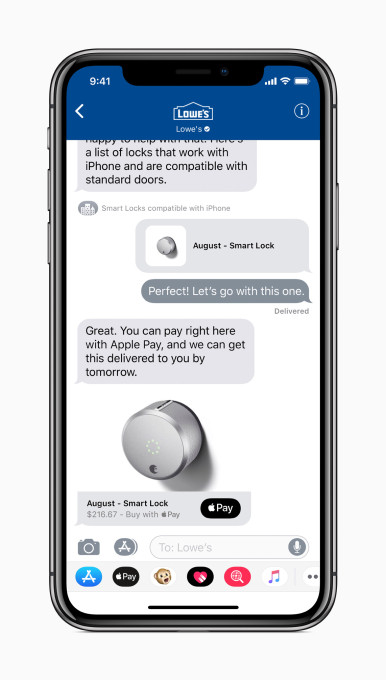
Apple previously added features like Apple Pay to iMessage to make it easy for consumers to transact directly with business in a fully digital way. If for instance, your customer service rep helps you find the perfect item, you can purchase it right then and there with Apple Pay in a fully digital payment system without having to supply a credit card in the chat interface.

Photo: Apple

What’s more, the CSR could share a link, photo or video to let you see more information on the item you’re interested in or to help you fix a problem with an item you already own. All of this can take place in iMessage, a tool millions of iPhone and iPad owners are comfortable using with friends and family.

To interact with Business Chat, customers are given messaging as a choice in contact information. If they touch this option, the interaction opens in iMessage and customers can conduct a conversation with the brand’s CSR, just as they would with friends.

Touch Message to move to iMessage conversation. Photo: Apple

This link to customer service and sales through a chat interface also fits well with the partnership with Salesforce announced last week and with the company’s overall push to the enterprise. Salesforce president and chief product officer, Bret Taylor described how Apple Business Chat could integrate with Salesforce’s Service Bot platform, which was introduced in 2017 to allow companies to build integrated automated and human response systems.

The bots could provide a first level of service and if the customer required more personal support, there could be an option to switch to Apple Business Chat.

Apple Business Chat requires iOS 11.3 or higher.

02 Oct 2018

Facebook rolls out new anti-bullying tools and an appeals process

Facebook is introducing new tools to tackle online bullying, the company announced this morning. Specifically, it’s rolling out a way for people to hide or delete multiple comments at once from the options menu of a post, and is beginning to test new ways to more easily search and block offensive words from showing up in comments. It’s also rolling out a new way to report bullying on behalf of others and is offering the opportunity to appeal decisions related to bullying and harassment.

There’s an old internet adage, “don’t feed the trolls.”

It means you shouldn’t engage with disruptive commenters – those who are making ridiculous, rude, and offensive statements designed to anger or attack others. But on Facebook, no one seems to heed this rule. As soon as a troll’s comment appears, it quickly becomes the top comment on the post as everyone piles on to tell them how wrong and rude they are.

While people’s inability to ignore trolls is part of the problem here, an even larger factor is that Facebook built out a massive social network of now over 2 billion users before it took the time to thoughtfully consider what sort of tools are needed to address online abuse.

While it may feel like bullying and harassment has increased on Facebook thanks to the current political climate – it’s always been there…and at scale. The issue is especially troubling considering the ramifications that continued bullying and abuse can have on online users – it can be a factor in troubled teens’ decisions towards self-harm and suicide, for example. (And Facebook users can be kids of just 13, per its official rules.)

At its worse, online hate speech spreading across Facebook has contributed to genocide.

It’s irresponsible, at this point, for large scale social platforms to not make anti-abuse tools one of their biggest priorities.

The first of Facebook’s new additions will allow users to better control how people interact with their posts. They’ll now have a way to hide or delete multiple comments at once from the options menu of the post. Currently, you can remove a single comment at a time – which makes it difficult to moderate posts that have a lot of activity, or where one user has continued to post abusive remarks throughout a number of conversation threads.

This feature is rolling out now on desktop and Android and will hit iOS in “the coming months.”

An upcoming feature will also introduce the ability to search and block offensive words, Facebook says.

Instagram has offered offensive word blocking tools for years, and implemented A.I. to detect and hide offensive words in comments. That Facebook is just now getting around to improving its own tools on this front is notable, in terms of the delays involved here.

Facebook didn’t say when offensive language blocking tools would be made public.

Another new tool will allow friends and family to report bullying and harassment on behalf of victims via the menu above the post in question. Facebook’s Community Operations team will review the post, keep the report anonymous, and determine whether it violates the company’s Community Standards, it says.

Facebook says it added this option because some people don’t feel comfortable reporting a bully or harasser themselves.

Protecting People from Bullying and Harassment

Posted by Facebook on Monday, October 1, 2018

On the flip side, Facebook will allow those dinged for being abusive to request an appeal.

Earlier this year, Facebook said it was rolling out a new process that allowed people to request a second review of their photo, video or post that had been removed for violation of the Community Standards. Now this appeals process is expanding to bullying and harassment violations. This could help combat reports where people submit items for being abusive that are really just unpopular statements, but not necessarily those that would constitute online harassment.

The appeals process can also be used to request Facebook take a second look at content that it declined to take down the first time. This is useful because Facebook often makes a bad decision the first time around – erroneously blocking things like the Declaration of Independence as hate speech, or posts made by online activists.

Another notable change is that Facebook is ramping up its protection for public figures.

Online, including on Facebook, anyone who gains a following has been subject to a slightly different set of rules than private individuals. To some extent, this is necessary – politicians, for example, still have to hear from constituents, even when those constituents are sharing their thoughts a rude or harassing fashion.

But the attacks on public figures often go too far. Earlier this year, Facebook expanded protections on young public figures, and now it will turn its attention to better protecting “severe” attacks that directly engage other public figures, as well. (The company didn’t define how it measures severity.)

Facebook’s post also highlighted a recent partnership with the National Parent Teachers Association in the US to facilitate 200 community events in cities in every state to address tech-related challenges faced by families, including bullying prevention. It’s also now offering a peer-to-peer online safety and anti-bullying program to every secondary school in the UK, through partners. And it supports a program in India that has educated tens of thousands of young people about online safety, thoughtful sharing, and privacy and security, the company claims.

It’s good that Facebook will roll out improved tools around bullying. But it should have done so ages ago.

Because of Facebook’s size and scale – it also runs Instagram, and messaging platforms Messenger and WhatsApp – it has already set the tone for much of online culture.

For years, it has permitted back-and-forth heated discussions to devolve into harassment and bullying. It has sacrificed people’s mental health and wellness at the alter of “increased engagements” on its site – a metric that impacts its bottom line. Newer platforms, like Twitter, later emerged without having to live up to any sort of standards around reasonable and thoughtful discussions, thanks to Facebook’s inattention or slow reactions to dealing with hate speech and abuse.

“Everyone deserves to feel safe on Facebook, and it’s important that we help people who encounter bullying and harassment online,” writes Antigone Davis, Facebook’s Global Head of Safety, in the company’s announcement. “We know our job is never done when it comes to keeping people safe, and we’ll continue listening to feedback on how we can build better tools and improve our policies.”




02 Oct 2018

“Venom” is better than it has any right to be

What happens when a cast of Oscar contenders like Tom Hardy, Riz Ahmed and Michelle Williams are turned loose to chew the scenery of a (seemingly wryly self-aware) B movie?

Audiences get “Venom”, the latest bid from Sony Pictures to create its own superhero mega-franchise now that storylines for the studio’s web-slinging centerpiece have merged into the cast of thousands populating Disney’s Marvel Cinematic Universe.

Audiences may remember the character Venom as the nemesis in “Spider-Man 3”, the last (and least) of the original Spider-Man movies directed by Sam Raimi and starring Tobey Maguire.

There are echoes of its cinematic predecessor in the current “Venom”, but instead of setting up the character of Eddie Brock, and his alter-ego, Venom, as a nemesis to Peter Parker and Spider-Man, the new reboot focuses solely on Brock.

A “loose cannon” in the reporting world, Brock’s bona fides as a righter of wrongs are established early in a montage sequence that has him reporting on the seedy underbelly of a stylized San Francisco, ruled by technology companies that have run more than slightly amok over the city’s population.

Brock’s nemesis, played by the Emmy award-winning British actor Riz Ahmed, is “Carlton Drake” a billionaire tech mogul whose wealth is built on the backs of the city’s poor. They serve as fodder for Drake’s experiments, meant to save humanity from destruction at the hands of disease, climate change, and overpopulation. And they’re the focal point of Brock’s reporting.

Drake’s plans to save the world have a whiff of Elon Musk, as he fantasizes about extraterrestrial colonization, sending space ships up to explore other planets that may be suitable for human life — or asteroids that may be suitable for mining.

In these heady times where startups like SpaceX, Blue Origin, and Planetary Resources are planning colonization and asteroid mining missions, the plot point isn’t as far-fetched as some might think. But the alien life-form known as a symbiote, which Drake’s crew of astronauts takes back for study and (human) experimentation is still squarely in the realm of comic books.

Those symbiotes are what give the movie its propellant force, as Drake experiments on humans to try and find suitable hosts for the super-powered aliens (who feed on human organs) to bond with — thus creating a new super species that can survive the coming environmental apocalypse and ensuing space colonization.

Brock, while working to uncover the dastardly deeds of this mad scientist, becomes one of those unwitting hosts — and thus imbued with super powers, fights the good fight with the help of his former fiancee, in an unlikely turn for Michelle Williams, to save the earth, and himself.

With Ahmed forced to deliver clunkers like, “Oh my God, they’re beautiful!” when first confronted with the alien species; or “Release the drones!” during a particularly satisfying chase sequence where his minions are tracking an alien-infected Brock (made the more enjoyable for the wanton destruction of San Francisco), “Venom” could have been terrible.

But the movie aims for the kind of tongue-in-cheek humor that made Deadpool a hit with audiences … and it mostly succeeds. Hardy delivers a performance that’s shot through with some great physical comedy and sight gags, and the levity goes a long way to lightening what could have been an exercise in morbidity given the darkness of an alien-infected, organ eating anti-hero at the movie’s core. 

To be clear, Venom doesn’t quite hit the meta-movie high notes that made Deadpool a smash, but powered by the performances from Williams and Hardy (who seem to have chemistry) and a script that aims for humor and hijinks and (seemingly) embraces the camp within its source material, Sony should have a solid foundation on which to build a new superhero franchise.

And it needs one. As Spider-Man’s scripting swings off into the arms of Disney’s Marvel Cinematic Universe, Sony appears to be looking to some of the lesser-known corners and characters in the Spideyverse so it can write its own destiny. Next up for the studio is Morbius: the Living Vampire, which has landed Jared Leto in the lead role, according to recent reports.

Following on the heels of Disney’s surprise breakout hit with “Guardians of the Galaxy” and Fox’s big box office bonanza with “Deadpool” (both lesser known titles in the Marvel catalog), the practice of going with something a bit more off-the-beaten path when it comes to superhero sagas may not be a bad idea.

Perhaps Venom benefited from the extremely low expectations that had been set for it, but the movie managed to score big with the preview audience that attended last night’s premier.

02 Oct 2018

Facebook follows Twitch and YouTube with launch of Premieres, live polls and fan badges

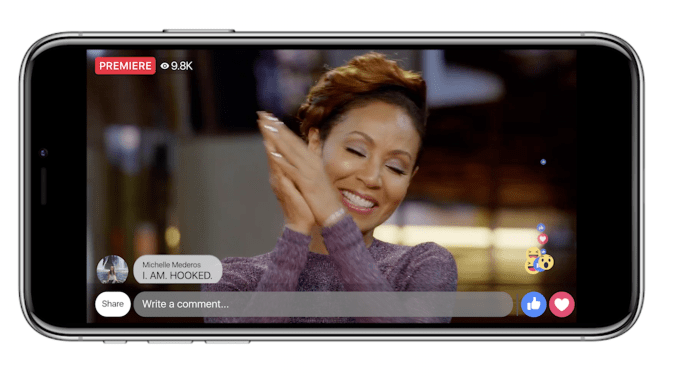
Facebook today announced the global launch of Premieres, its new interactive video format that allows creators to pre-record a video for fans, then release it during a viewing window they choose, as more of a live event. The move follows YouTube’s introduction of a similar Premieres format just a few months ago. In addition, Facebook says it’s rolling out interactive video polls to more Pages, and making its Top Fans feature available to all Facebook Pages worldwide.

Like Twitch and YouTube, Facebook is focused on giving its creators a variety of tools to engage with their fans and viewers.

Specifically, these companies have found that allowing creators to delay the release of a pre-recorded video gives them the ability to build up excitement for a live viewing event among their community, which in turn, can increase the video’s viewership when it finally hits. This benefits the creators, platforms, and the advertisers alike, as they all want to reach as many people as possible.

Facebook video Premieres had been in testing for some time before today’s global launch, according to reports from earlier this year.

The idea had been largely popularized by the Amazon-owned video game streaming site, Twitch, as a way to capture the thrill associated with a live event, while also allowing the video creators to edit their video to give it more polish.

Facebook says that during testing, a number of outlets saw increased engagement through the use of the feature, including OWN, which tested with Oprah Winfrey’s SuperSoul Sunday; Sony, which announced the 10th season of India’s successful game show – Kaun Banega Crorepati (Who Wants to Be a Millionaire?); Australia’s Broadcaster Channel 7; BuzzFeed’s Unsolved; the Buffalo Bills; and creator Jimmy Zhang.

It didn’t cite specific increases as numbers, percentages, or averages, however.

The upcoming slate of Premieres also includes an extended look at Aquaman from WB, debuting exclusively on Facebook this week.

The process of creating a Premiere involves the same video uploading tools already available, including monetization tools for ad breaks and branded content.

With Premieres, the platforms can attract a wider audience for tools that had previously only been offered to live broadcasters. For example, Twitch and YouTube creators can engage fans in chat, selling them speciality badges (emotes and Super Chat badges, respectively), along the way.

Facebook is now heading into this space, as well.

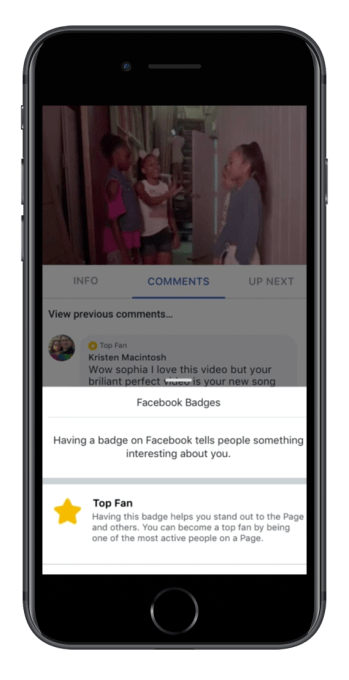
Along with the launch of Premieres, it’s rolling out Top Fans to all eligible Facebook Pages. This feature, which began testing in March, highlights the creator’s most loyal fans by displaying a badge next to their name.

For the time being, Top Fans earn the badge by being active on the Page – by watching the Page’s videos, reacting, commenting or sharing its content.

It seems likely this feature will be monetized in the future, however – similar to how fans can buy badges on Twitch and YouTube to demonstrate loyalty. But Facebook hasn’t announced any plans – and in fact, claims it has no plans to do so. (We’ll see.)

Once labeled a “Top Fan,” comments will be badged on any kind of post or video, including Premieres.

Any Page with more than 10K followers can activate Top Fans by using the video template, and then opting into Top Fans badges from the Page settings.

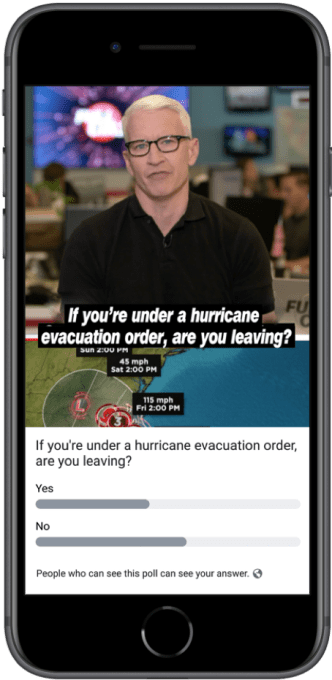
Video polls are arriving today, too, after tests of the feature earlier this year. Testers so far included Anderson Cooper’s Full Circle; Tastemade; and gaming creator ViruSs.

Live polls are now available to all Pages through Facebook’s Live API, live publishing tool, and soon, they’ll come to on-demand video.

These moves come at a time when video is of increasing importance to the social network. A month ago, it launched its video portal Facebook Watch worldwide, as it continues its attempts to woo video creators away from YouTube and game streamers from Twitch, to its social networking platform instead.

It also recently acquired Vidpresso’s team and tools to help make videos more interactive. At the time, it reported that its Facebook Live videos had seen 3.5 billion broadcasts to date and received 6 times as many interactions as traditional videos. Those figures are key to understanding why Facebook, and its rivals, are trying to make pre-recorded videos feel as if they’re a live event.

02 Oct 2018

Rich-text editing platform Tiny raises $4M, launches file management service

Maybe you’ve never heard about Tiny, but chances are, you’ve used its products. Tiny is the company behind the text editors you’ve likely used in WordPress, Marketo, Zendesk, Atlassian and other products. The company is actually the result of the merger of Moxiecode, the two-person team behind the open source TinyMCE editor, and Ephox, the company behind the Textbox.io editor. Ephox was the larger company in this deal, but TinyMCE had a significantly larger user base, so Tiny’s focus is now almost exclusively on that.

And the future of Tiny looks bright thanks to a $4 million funding round led by BlueRun Ventures, the company announced today (in addition to a number of new products). Tiny CEO Andrew Roberts told me the round mostly came together thanks to personal connections. While both Ephox and Moxiecode were profitable, now seemed like the right time to try to push for growth.

Roberts also noted that the merger itself is a sign of the company’s ambitions. “I think we’ve always been searching for how we could get that hockey stick growth to kick in,” he said. “I don’t think we would’ve done the merger if we weren’t hungry for that next level of success. So after two or three years [after the merger], we started to feel like we had the signs of a business that could grow into something significant and big and with some good numbers behind it. So were: ‘alright, now is the time.'”

While Tiny continues to offer its free open-source editor, it offers a cloud-hosted version of its service with a fee based on the number of users for developers who want the company to handle the backend infrastructure, as well as a self-hosted version that Tiny charges for based on the number of servers it runs on.

Roberts noted that quite a few developers try to build their own text editors. Yet handling all the edge cases and ensuring compatibility is actually quite hard. He estimates that it would take two or three years to build a new text editor from the ground up.

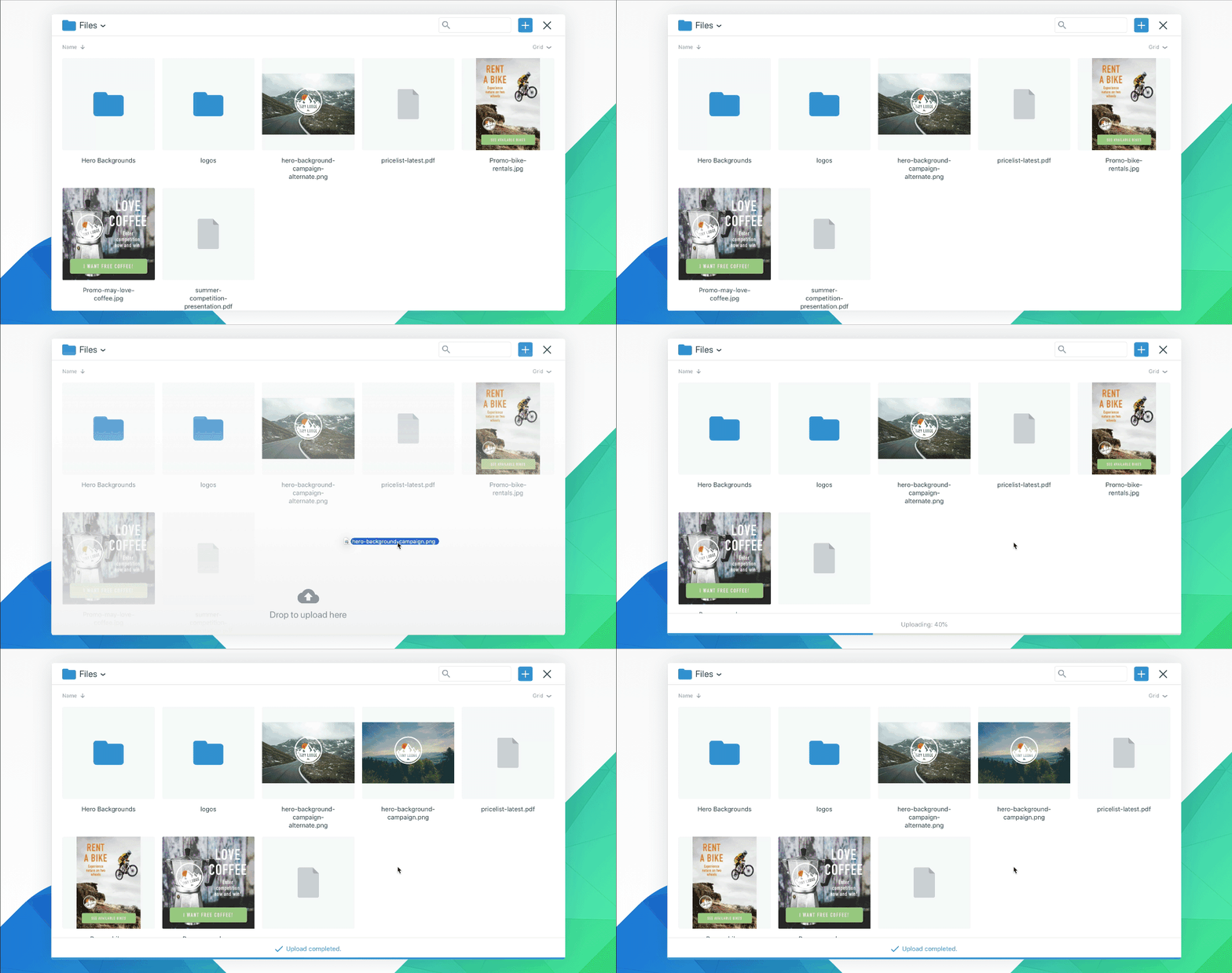
As part of today’s announcement, Tiny is also launching a number of new products. The most important of those from a business perspective is surely Tiny Drive, a file storage service that developers can integrate with the TinyMCE editor. Tiny Drive offers all of the file storage features that one would expect, including the ability to handle images and other assets. Tiny Drive uses AWS’s S3 file storage service and CloudFront CDN to distribute files.

Also new is the Tiny App Directory, which Roberts likened to the Slack App Directory. The idea here is to offer a curated list of TinyMCE plugins. For now, there is no revenue sharing here or any other advanced features, but it’s definitely a play for creating a larger ecosystem around the editor.

Tiny also today announced the first developer preview of the TinyMCE 5 editor. The updated editor features a new user interface that gives the editor a more modern look. Developers can customize it to their hearts’ content, with plenty of compatible plugins and advanced features to extend the editor based on their specific needs. There’s also now an emoticon plugin.

Talking about customized editors: You’re probably aware of WordPress’ efforts to modernize its text editor. The new editor, called Gutenberg, focuses more on page building than the current one, but as Roberts stressed, the underlying rich text editor is still based on the TinyMCE libraries. He noted that even the classic version, though, was always a subset of TinyMCE’s editor. What’s maybe even more important for Tiny as a company, though, is that none of WordPress’ changes will influence its business, even though WordPress and TinyMCE have long had what he describes as a “symbiotic relationship.”

“Tiny’s core business comes from a mix of software vendors, large enterprises, and agencies building custom solutions for clients that has little to do with the WordPress ecosystem,” he notes. “It is a popular and commercially viable project in its own right.”

02 Oct 2018

Vital Labs’ app can measure changes in your blood pressure using an iPhone camera

If a twinkle in the eye of a venture capitalist could predict the longevity of a startup, Vital Labs is going all the way.

During a quick demo of the Burlingame, Calif.-based startup’s app, called Vitality, True Ventures partner Adam D’Augelli’s enthusiasm was potent. The company, which emerges from stealth today, is pioneering a new era of personalized cardiovascular healthcare, he said.

Vitality can read changes in a person’s blood pressure using an iPhone’s camera and graphics processing power. The goal is to replace blood pressure cuffs to become the most accurate method of measuring changes in blood pressure and eventually other changes in the cardiovascular system.

The app is still in beta testing and is expected to complete an official commercial rollout in 2019.

Here’s how it works: The technology relies on a technique called photoplethysmography. By turning on the light from a phone’s flash and placing a person’s index finger over the camera on the back of the phone, the light illuminates the blood vessels in the fingertip and the camera captures changes in intensity as blood flows through the vessels with each heartbeat. This technique results in a time-varying signal called the blood-pulse waveform (BPW). The app captures a 1080p video at 120 frames per second and processes that data in real-time using the iPhone’s graphics processing unit to provide a high-resolution version of a person’s BPW.

The startup was founded by Tuhin Sinha, Ph.D., the former technical director for the University of California, San Francisco’s Health eHeart Study. He’s been working on the app for several years.

“Part of the reason this project strikes a chord with me is because if I look at the stats of my own family, I probably only have 20 years left,” Sinha told TechCrunch. “Most people on my dad’s side of the family have passed away before 60 from cardiovascular disease.”

Prior to joining UCSF, Sinha was an instructor at Vanderbilt University and the director of the Center for Image Analysis, where he directed and developed medical image analysis algorithms.

He linked up with True Ventures in June 2015, raising a total of $1 million from the early-stage venture capital firm.

“[Sinha] saw an opportunity to improve a stagnant practice and invented a new approach that takes full advantage of today’s technologies,” True’s D’Augelli said in a statement.

Three years after that initial funding, Sinha says Vital Labs is looking to raise another round of capital with plans to create additional digital tools to advance cardiovascular health.


02 Oct 2018

Tesla deliveries double, led by Model 3 surge

Tesla delivered 83,500 electric vehicles in the third quarter, more than double from the previous period as the company steered by Elon Musk pulled out all the stops to get its newest sedan, the Model 3, to customers.

The company delivered 55,840 Model 3 sedans up from 18,440 in the previous quarter, which was in line within its own guidance. The company’s delivery numbers fell just short of the 56,000 deliveries expected by a consensus of analysts surveyed by FactSet.

Tesla emphasized in its report Tuesday that thousands of vehicles — 8,048 Model 3 and 3,776 Model S and X vehicles — were in transit to customers at the end of the quarter. The company is standing by its overall target of 100,000 Model S and X deliveries in 2018 remains.

Delivery logistics became the primary pinch point for the company in the third quarter with customers reporting delays and confusion over how to pick up their new Model 3s. Hundreds of Tesla owners ended up heading down to various Tesla showrooms where Model 3s were being handed over to customers in an effort to help the company meet its goal.

The question raised by several analysts is whether Tesla’s unconventional production and delivery methods are sustainable. Jeremy Acevedo, Edmunds manager of industry analysis, noted that Tesla’s production announcement offered some redemption and that “producing 50,000 Model 3s in Q3 is significant milestone.”

“It’s refreshing to see the company making headlines for producing cars, not controversies,” Acevedo said in a statement. “The real question now is if Tesla can really sustain this pace, particularly in light of the delivery issues the company has faced recently. While Tesla superfans and owners have generously volunteered their time to assist, this isn’t necessarily a sustainable model that Elon can count on moving forward.”

Tesla acknowledged the problems with deliveries and said it plans to make improvements to its system in the fourth quarter. Deliveries to a customers’ homes and offices, which began in the third quarter, will be expanded.

Tesla produced more than 80,000 electric vehicles in the third quarter, a 50% increase from the previous quarter.

The production and delivery numbers, which were announced early Tuesday, cap off a tumultuous quarter that were plagued by Musk’s controversial “funding secured” tweet. That tweet triggered an SEC investigation and ultimately charges of securities fraud. Musk and Tesla reached a settlement with the SEC on Saturday.

Production breakdown for Q3:

  • Tesla produced 53,239 Model 3 vehicles
  • Tesla produced 26,903 Model S and X vehicles
  • Total: 80,142

Delivery breakdown in Q3:

  • 55,840 Model 3 vehicles
  • 14,470 Model S
  • 13,190 Model X
  • Total: 83,500


02 Oct 2018

SoftBank leads $35M investment in sports engagement startup Heed

Heed, a startup looking to create new ways for sports leagues and clubs to engage with fans, is announcing that it has raised $35 million led by SoftBank Group International.

As laid out for me by CEO Danna Rabin, the company sits at the intersection of sports and IoT — which makes sense, since it was founded by Internet of Things company AGT International and talent agency Endeavor .

“Our primary mission is to connect the young audience with sports leagues and clubs,” Rabin said. “[Those] audiences are consuming less broadcast TV, consuming less of anything linearly. Sports clubs and brands are having more and more issues connecting with and reengaging those younger audiences.”

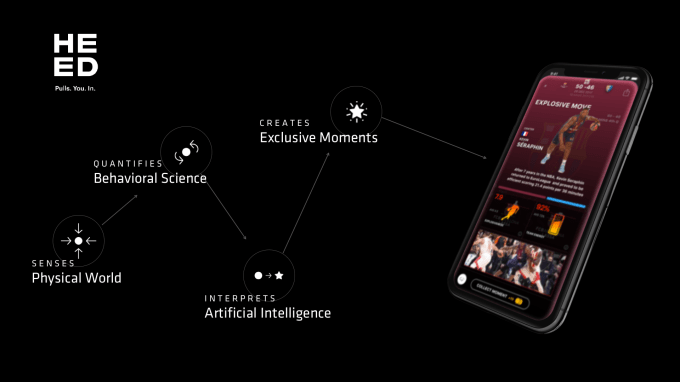
To create that connection, Heed places sensors around the match or game venue, even potentially on players’ clothing and equipment.

For example, the team let me make a couple punches using gloves with sensors inside, which were created for the mixed martial arts league UFC. Afterwards, I could see the measured force of each of my swings. (I didn’t really have any points of comparison, but I think it’s safe to say that my numbers weren’t too impressive.)

Heed

Rabin emphasized that Heed’s real focus isn’t on building fancy hardware, but rather on the artificial intelligence it uses to take that data (which can also be drawn from video and audio footage of the match) and transform it into a general narrative that can be viewed on the Heed smartphone app.

Pointing to the UFC glove, Rabin said, “We extract, only from this sensor, 70 different data points. What’s happening is, the fusion of these data points is what creates the stories.”

Put another way, the goal is to replace the generic commentary that you often get in sports coverage and live games with unique details about how the game or match is unfolding. Those aren’t just numbers like how hard someone is punching, but also inferences about a player’s emotional state based on the data.

“One of our core promises is that it’s not editorial driven,” Rabin added. “The AI is selecting what’s interesting in a match. Of course, we have a creative team that designs the formats, the visuals, how the packaging should look like, but that’s incorporated into the technology, which is automatically selecting the moments and creating the experiences with no human interpretation.”

So does Heed aim to be a technology provider or a sports media company of its own? Well, Rabin said it didn’t make sense to simply provide the tech to individual leagues or teams.

“A specific club does not have the breadth of technologies to keep evolving,” she said. Plus, she argued that the audience isn’t looking for just a one-off site with stories about one team, but an all-around destination where they can “get a bit of everything.”

In addition to the UFC, Heed is also working with EuroLeague (the European basketball league), various soccer clubs and Professional Bull Riding. In the latter case, it’s not just creating content, but actually working with the organization to create a more automated and objective form of judging.

“By leveraging AI and IoT, HEED has developed a unique platform that is changing the way fans watch and interact with sports,” said Softbank President and CFO Alok Sama. “HEED is taking a traditionally static experience and providing fans with deeper insights into the physical and emotional aspects of the sporting event by gathering and analyzing large, complex data in real time.”

02 Oct 2018

The Freewrite Traveler offers distraction-free writing for the road

If you’ve ever tried to write something long – a thesis, a book, or a manifesto outlining your disappointment in the modern technocracy and your plan to foment violent revolution – you know that distractions can slow you down or even stop the creative process. That’s why the folks at Astrohaus created the Freewrite, a distraction-free typewriter, and it’s always why they are launching the Traveler, a laptop-like word processor that’s designed for writing and nothing else.

The product, which I saw last week, consists of a hearty, full-sized keyboard and an E ink screen. There are multiple “documents” you can open and close and the system autosaves and syncs to services like Dropbox automatically. The laptop costs $279 on Indiegogo and will have a retail price of $599.

The goal of the Freewrite Traveler is to give you a place to write. You pull it out of your bag, open it, and start typing. That’s it. There are no Tweets, Facebook sharing systems, or games. It lasts for four weeks on one charge – a bold claim but not impossible – and there are some improvements to the editing functions including virtual arrow keys that let you move up and down in a document as you write. There are also hotkeys to bring up ancillary information like outlines, research, or notes.

If the Traveler is anything like the original Freewrite then you can expect some truly rugged hardware. I tested an early model and the entire thing was built like a tank or, more correctly, like a Leica. Because it is aimed at the artistic wanderer, the entire thing weighs two pounds and is about as big as the collected stories of Raymond Carver.

Is it for you? Well, if you liked the original Freewrite or even missed the bandwagon when it first launched, you might really enjoy the Traveler. Because it is small and light it could easily become a second writing device for your more creative work that you pull out in times of pensive creativity. It is not a true word processor replacement, however, and it is a “first-thought-best-thought” kind of tool, allowing you to get words down without much fuss. I wouldn’t recommend it for research-intensive writing but you could easily sketch out almost any kind of document on the Traveler and then edit it on a real laptop.

There aren’t many physical tools to support distraction-free writing. Some folks, myself included, have used the infamous AlphaSmart, a crazy old word processor used by students or simply set up laptops without a Wi-Fi connection. The Freewrite Traveler takes all of that to the next level by offering the simplest, clearest, and most distraction-free system available. Given it’s 50% off right now on Indiegogo it might be the right time to take the plunge.

02 Oct 2018

Google Home Mini? More like Google Home Minty

Hey, did you hear? There’s a big Google event coming up next week. There’s gonna be a big new phone and, no doubt, some additions to the Home line. In the meantime, here’s a mint (officially “Aqua”) Google Home Mini.

The new color scheme is arriving on October 29, for the usual $49 price point. The timing of all of this is a bit odd, given the platform the company has next week. That said, this is probably just Google’s way of showing the world that it’s got too much to pack into the Pixel event.

If the hue looks familiar, it’s probably because it’s surfaced in leaks of the upcoming Pixel 3. Aesthetic consistency among its hardware line has become an increasing focus for Google in recent years.

It’s a quick way to remind everyone about its big event, the day that Microsoft is fighting for mindshare with its own big launch. It also appears to be a sign that the Home Mini, which was a focus at last year’s show, won’t be getting much of a refresh next week.