Author: azeeadmin

02 Oct 2018

Petal’s no-fee credit card for the credit score-less is now open to the public

Petal, the startup credit card company that’s offering a no-fee credit line to people without a credit history, is now publicly available.

Launched earlier this year by co-founders Jason Gross, Andrew Endicott, Andrew Ehrich, and Jake Arenas, Petal has received a $34 million credit facility from Jeffries and Silicon Valley Bank to bring its consumer lending product to the masses.

That money will take Petal beyond the few thousand customers that have trialed the company’s credit card in a pre-release to broad distribution for applicants.

Petal uses information from a customer’s bank account and payments to develop a credit score for individuals who haven’t had time to build up a financial picture that most banks or credit card companies use to create risk profiles and issue credit.

“We use more data than credit history to make credit decisions,” says Jason Gross, Petal’s co-founder and chief executive. “They’re common sense metrics about your finances: how much you make save and spend every month.”

Gross says this window into its customers spending habits allows his company to issue credit lines with higher limits than its competitors and with annual financing rates that are among the lowest for first time borrowers.

Annual percentage rates begin at 14% and are up to 25%, which is the standard for the industry, says Gross. And Petal offers credit limits that are, in many cases, ten times higher than its competitors. Another difference between Petal and its older competitors is the company’s elimination of all fees.

“We want to eliminate traps and fees. We have no fee. No late fees, international fee, or over the limit fees,” says Gross. Petal makes its money on the interest it pays and the transaction charges it receives from vendors when its customers use its card. 

“We want you to pay on time and we want you to build your credit,” says Gross. It’s also transparent about how much interest rates will wind up costing its users, Gross says. “Before you carry an interest on Petal… we show you how much it’s going to cost you… .you have a minimum payment and the statement balance…. All of the costs associated with the minimum payment… we make that information clear,” he said.

Those credit limits and the card’s transparent approach to costs and fees make up for the lack of other perks that cardholders would get with competing lenders.

And, Gross stresses that Petal is for first time borrowers, primarily. People who are looking to rebuild their credit score will likely not be approved for a Petal card. Indeed, the company’s demographics skew younger and solidly middle class, according to Gross.

The typical applicants for the Petal card are in their 20s, and are making somewhere between $30,000 and $70,000 per year.

In the market for the past year, Petal has issued cards to over 1,000 early adopters and is on pace to hit 10,000 borrowers signed up with the company by the end of the year.

The company, which most recently raised a $13 million round Valar Ventures, The Social Entrepreneurs Fund, Third Prime, The Gramercy Fund, Story Ventures, RiverPark Ventures, Ride Ventures and other institutional investors.

In fact, investors are throwing a lot of money at the credit space, and specifically trying to find a way to get at the thin-file customers that are Petal’s target audience. Deserve, a startup backed by Accel Partners (among others) is also pitching potential borrowers with a similar approach.

It’s certainly an important market to address.

“If you look at folks who are thin-file, credit invisible, those who don’t have an accurate score, they’re predominantly young people but they’re disproportionately groups that have historically lacked access to financial services,” Gross has previously saidsaid. “Minorities, immigrants, if you lack a score — or an accurate score — it can cost you very real money throughout your life. Having no score, you’re treated as subprime, you won’t qualify for most financial products, or they’ll be more expensive and inferior.”

02 Oct 2018

Security startup Tanium raises another $200M at a $6.5B valuation, less than 5 months after it raised $175M

Security continues to remain top of mind for organizations and consumers, as each day seems to bring another high-profile network breach. One of the faster-growing startups in the space is capitalising on that by raising some significant funding to fuel its growth. Tanium today said that it has raised another $200 million in funding with a post-money valuation of $6.5 billion. The funding was led by Wellington Management, with Baillie Gifford & Company and Adage Capital Management LP also participating.

The money is notable not just for the size and valuation, but for the timing: it comes less than five months since the company closed its last round, $175 million at a $5 billion valuation. The company has now raised just under $683 million in total with other investors including Andreessen Horowitz, Citi Ventures, Franklin Templeton Investments, and Geodesic Capital.

Fazal Merchant, the COO and CFO of the company, said in an interview that the proximity in part was because of the fact that money is coming in fast right now for the fastest-moving startups, but it’s also because the impetus behind the funding is a little different.

“The last round was largely an inside round,” he said of the May 2018 deal, which came entirely from previous investor TPG. He described this latest investment as “deliberate” and focused instead on new outside investors. “We have friends and family who have been investors for a long time and this gives them liquidity.”

What Tanium doesn’t need, he said, was the funding to extend its runway. The company announced at the end of 2017 that it had turned profitable and while it’s not commenting directly on that today, Merchant said that the company has stayed cash-flow positive. “We have grown Tanium with the belief that profitability and cash flow are not an afterthought,” he said.

The company says that in 2018 (fiscal year end 2017), it had $320 million in cash and equivalents, and positive operating cash flow of $25 million, with billings growing to more than $270 million, and ARR of approximately $230 million, up over 80 percent from the prior year. Net renewal rates — a big metric for enterprise SaaS businesses — was over 150 percent, it said.

Large organizations tend to run their security services on two tracks: one sets and tracks compliance with security policies, while another runs operations across the network to detect potential breaches or other behavior that might occur outside that policy framework, tapping into the fact that the growth of mobile has led to a huge proliferation of new devices that are touching an organization’s network. Tanium up to now has built its business by effectively offering services across both tracks, and by building services in-house, and positioning itself as a platform, versus a single-purpose security offering.

Merchant said that going forward that will continue to be the case: “Acquisitions are often made when a company’s organic growth starts to plateau, but that hasn’t been a constraint for us yet,” he said. The company has definitely looked at options — there has been a lot of fragmentation, and consolidation, in the wider security space, and that has doubtless affected Tanium both as a potential buyer and acquisition target — but to date it has not made a single acquisition.

“Tanium is an extraordinary platform, providing IT security and management at scale for some of the world’s most successful companies,” said Peter Singlehurst, head of the unlisted equities team at Baillie Gifford, in a statement. “As long-term investors, we look forward to supporting Tanium’s management team over the coming years as it continues to build a world-class technology business.”

The news today — and Tanium’s run this year — potentially puts to bed another bumpy part in the company’s story. In 2017, the company was singled out as “troubled” due to the fact that it saw a huge wave of departures among its executive team, including seeing its CTO swap out in place of the CEO (his brother) to run the business.

“We introduced our technology to the world five years ago, and in that time, we have grown to be over 800 team members strong and helped hundreds of the world’s largest enterprises — including over half of the Fortune 100 — achieve stronger business resilience,” said the current Tanium CEO, co-founder Orion Hindawi, in a statement. “We are thrilled to have such a strong set of investors support the Tanium vision of transforming the way industry-leading companies are able to manage and secure their networks against ever-advancing technology-based disruptions.”


02 Oct 2018

Apple adds student ID cards into Apple Wallet to access buildings, buy food and more

The education market has long been one of the cornerstones of growth for Apple’s hardware business, and today the company is leveraging its popularity in it, specifically among college-aged students, to build out a newer effort. Today, Apple started to integrate university student ID cards — used to access buildings, pay for food or books, and any other transactional campus services — into Wallet, its contactless payment system on the Apple Watch and the iPhone. The first schools to come online are Duke University, the University of Alabama and the University of Oklahoma.

Apple had actually announced the service back in June, during WWDC, earmarking the three schools going live today. It said that Johns Hopkins University, Santa Clara University and Temple University will start using the service by the end of this year.

The expansion comes at a time when Apple is riding on a growth high for its mobile wallet. iPhone and Watch owners have been shown to be enthusiastic users of their devices for making purchases (thrice as more avid, it seems, than Android users), and on the back of that, Apple Pay — which is now live in 24 markets — has laid claim to being the most popular mobile contactless payment in use today, with some 1 billion transactions in the last quarter alone, up three-fold from a year before.

Many of those transactions are specifically related to Apple Pay, made using more traditional payment cards such as American Express or Visa credit cards, and at traditional retail locations — Apple says it expects 60 percent of all US retail locations to support Apple Pay by the end of this year, including over 70 of the top 100 retail chains.

But Apple has also been pursuing a second wave of growth to make Wallet useful, by encouraging people to upload and use the myriad cards they have for various other services, such as loyalty cards and passes for city transport systems. Twelve US metro areas already use Apple Pay, and there is ground being gained internationally too in markets like the UK, China and Japan.

Adding in university student cards falls within that scope, Apple says.

“iPhone and Apple Watch have brought us into a new era of mobility, helping to transform everyday experiences,” said Jennifer Bailey, Apple’s vice president of Internet Services, said in a statement. “When we launched Apple Pay, we embarked on a goal to replace the physical wallet. By adding transit, loyalty cards and contactless ticketing we have expanded the capabilities of Wallet beyond payments, and we’re now thrilled to be working with campuses on adding contactless student ID cards to bring customers even more easy, convenient and secure experiences.”

Apple Pay may not appear to massively profit Apple in a direct way — as it’s been pointed out by others, the percentages on payment transactions are tiny — but what it does give the company indirectly is another tie into how people use their phones and watches, making the devices more valuable to their owners, and those users more tied into the Apple ecosystem.

At colleges (and other schools), we’ve seen an increasing use of student ID cards not just as a way to identify yourself, but to access services and buildings, and also to pay for things, and use of contactless versions of these has been on the rise. Part of the reason for this is safety: having one card for everything means students need to carry less valuables, and if they lose it or it’s stolen, the card can be more easily replaced. At the same time, watches and phones are not items they’re leaving behind, so further consolidating, and making those cards more secure by way of Apple’s device locks, makes sense.

What we don’t know is if Apple is getting a commission (even a tiny one) on the payment transactions made via these student cards. We have asked the company and will update as we learn more.

Educational institutions aren’t the only not-strictly-retail locations that are being put into Wallet. Apple’s been adding sports venues to let attendees use Wallet to carry their tickets, and to then buy food and other concessions once you get in. (See how Apple uses one non-commissioned transaction to lead you into using it for one that might be?)

Today, Apple is estimated to account for between 14 percent and 17 percent of the K-12 education market in the US, and with the likes of Google and Microsoft also pushing hard for growth both here and in higher education, you can see how adding in more services like this could help Apple expand its piece of the pie.

02 Oct 2018

NYC wants to build a cyber army

Empires rise and fall, and none more so than business empires. Whole industries that once dominated the planet are just a figment in memory’s eye, while new industries quietly grow into massive behemoths.

New York City has certainly seen its share of empires. Today, the city is a global center of finance, real estate, legal services, technology, and many, many more industries. It hosts the headquarters of roughly 10% of the Fortune 500, and the metro’s GDP is roughly equivalent to that of Canada.

So much wealth and power, and all under constant attack. The value of technology and data has skyrocketed, and so has the value of stealing and disrupting the services that rely upon it. Cyber crime and cyber wars are adding up: according to a report published jointly between McAfee and the Center for Strategic and International Studies, the costs of these operations are in the hundreds of billions of dollars – and New York’s top industries such as financial services bare the brunt of the losses.

Yet, New York City has hardly been a bastion for the cybersecurity industry. Boston and Washington DC are far stronger today on the Acela corridor, and San Francisco and Israel have both made huge impacts on the space. Now, NYC’s leaders are looking to build a whole new local empire that might just act as a bulwark for its other leading ecosystems.

Today, the New York City Economic Development Corporation (NYCEDC) announced the launch of Cyber NYC, a $30 million “catalyzing” investment designed to rapidly grow the city’s ecosystem and infrastructure for cybersecurity.

James Patchett, CEO of New York City Economic Development Corporation. (Photo from NYCEDC)

James Patchett, CEO of NYCEDC, explained in an interview with TechCrunch that cybersecurity is “both an incredible opportunity and also a huge threat.” He noted that “the financial industry has been the lifeblood of this city for our entire history,” and the costs of cybercrime are rising quickly. “It’s a lose-lose if we fail to invest in the innovation that keeps the city strong” but “it’s a win if we can create all of that innovation here and the corresponding jobs,” he said.

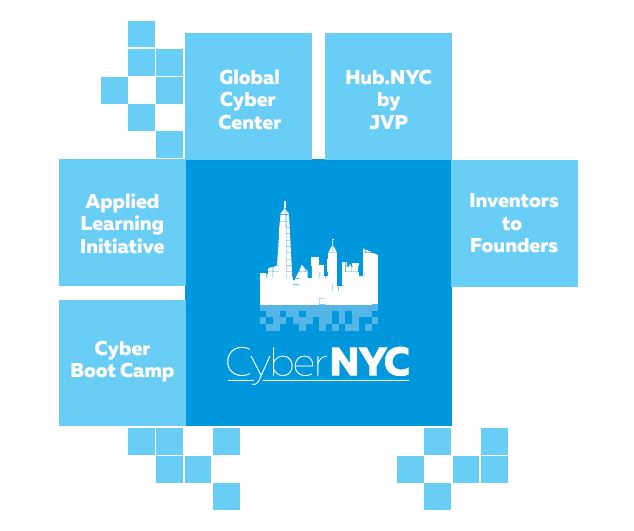
The Cyber NYC program is made up of a constellation of programs:

  • Partnering with Jerusalem Venture Partners, an accelerator called Hub.NYC will develop enterprise cybersecurity companies by connecting them with advisors and customers. The program will be hosted in a nearly 100,000 square foot building in SoHo.
  • Partnering with SOSA, the city will create a new, 15,000 square foot Global Cyber Center co-working facility in Chelsea, where talented individuals in the cyber industry can hang out and learn from each other through event programming and meetups.
  • With Fullstack Academy and Laguardia Community College, a Cyber Boot Camp will be created to enhance the ability of local workers to find jobs in the cybersecurity space.
  • Through an “Applied Learning Initiative,” students will be able to earn a “CUNY-Facebook Master’s Degree” in cybersecurity. The program has participation from the City University of New York, New York University, Columbia University, Cornell Tech, and iQ4.
  • With Columbia University’s Technology Ventures, NYCEDC will introduce a program called Inventors to Founders that will work to commercialize university research.

NYCEDC’s map of the NYC Cyber initiative. (Photo from NYCEDC)

In addition to Facebook, other companies have made commitments to the program, including Goldman Sachs, MasterCard, PricewaterhouseCoopers, and edX.org. Two Goldman execs, Chief Operational Risk Officer Phil Venables and Chief Information Security Officer Andy Ozment, have joined the initiative’s advisory boards.

The NYCEDC estimates that there are roughly 6,000 cybersecurity professionals currently employed in New York City. Through these programs, it estimates that the number could increase by another 10,000. Patchett said that “it is as close to a no-brainer in economic development because of the opportunity and the risk.”

From Jerusalem to New York

To tackle its ambitious cybersecurity goals, the NYCEDC is partnering with two venture firms, Jerusalem Venture Partners (JVP) and SOSA, with significant experience investing, operating, and growing companies in the sector.

Jerusalem-based JVP is an established investor that should help founders at Hub.NYC get access to smart capital, sector expertise, and the entrepreneurial experience needed to help their startups scale. JVP invests in early-, late-, and growth-stage companies focused on cybersecurity, big data, media, and enterprise software.

JVP will run Hub.NYC, a startup accelerator that will help cybersecurity startups connect with customers and mentors. (Photo from JVP)

Erel Margalit, who founded the firm in 1993, said that “If you look at what JVP has done … we create ecosystems.” Working with Jerusalem’s metro government, Margalit and the firm pioneered a number of institutions such as accelerators that turned Israel into an economic powerhouse in the cybersecurity industry. His social and economic work eventually led him to the Knesset, Israel’s unicameral legislature, where he served as an MP from 2015-2017 with the Labor Party.

Israel is a very small country with a relative dearth of large companies though, a huge challenge for startups looking to scale up. “Today if you want to build the next-generation leading companies, you have to be not only where the ideas are being brewed, but also where the solutions are being [purchased],” Margalit explained. “You need to be working with the biggest customers in the world.”

That place, in his mind, is New York City. It’s a city he has known since his youth – he worked at Moshe’s Moving IN NYC while attending Columbia as a grad student where he got his PhD in philosophy. Now, he can pack up his own success from Israel and scale it up to an even larger ecosystem.

Since its founding, JVP has successfully raised $1.1 billion across eight funds, including a $60 million fund specifically focused on the cybersecurity space. Over the same period, the firm has seen 32 successful exits, including cybersecurity companies CyberArk (IPO in 2014) and CyActive (Acquired by PayPal in 2013).

JVP’s efforts in the cybersecurity space also go beyond the investment process, with the firm recently establishing an incubator, known as JVP Cyber Labs, specifically focused on identifying, nurturing and building the next wave of Israeli cybersecurity and big data companies.

On average, the firm has focused on deals in the $5-$10 million range, with a general proclivity for earlier-stage companies where the firm can take a more hands-on mentorship role. Some of JVP’s notable active portfolio companies include Source Defense, which uses automation to protect against website supply chain attacks, ThetaRay, which uses big data to analyze threats, and Morphisec, which sells endpoint security solutions.

Opening up innovation with SOSA

The self-described “open-innovation platform,” SOSA is a global network of corporations, investors, and entrepreneurs that connects major institutions with innovative startups tackling core needs.

SOSA works closely with its partner startups, providing investor sourcing, hands-on mentorship and the physical resources needed to achieve growth. The group’s areas of expertise include cybersecurity, fintech, automation, energy, mobility, and logistics. Though headquartered in Tel Aviv, SOSA recently opened an innovation lab in New York, backed by major partners including HP, RBC, and Jefferies.

With the eight-floor Global Cyber Center located in Chelsea, it is turning its attention to an even more ambitious agenda. Uzi Scheffer, CEO of SOSA, said to TechCrunch in a statement that “The Global Cyber Center will serve as a center of gravity for the entire cybersecurity industry where they can meet, interact and connect to the finest talent from New York, the States, Israel and our entire global network.”

SOSA’s new building in Chelsea will be a center for the cybersecurity community (Photo from SOSA)

With an already established presence in New York, SOSA’s local network could help spur the local corporate participation key to the EDC’s plan, while SOSA’s broader global network can help achieve aspirations of turning New York City into a global cybersecurity leader.

It is no coincidence that both of the EDC’s venture partners are familiar with the Israeli cybersecurity ecosystem. Israel has long been viewed as a leader in cybersecurity innovation and policy, and has benefited from the same successful public-private sector coordination New York hopes to replicate.

Furthermore, while New York hopes to create organic growth within its own local ecosystem, the partnerships could also benefit the city if leading Israeli cybersecurity companies look to relocate due to the limited size of the Israeli market.

Big plans, big results?

While we spent comparatively less time discussing them, the NYCEDC’s educational programs are particularly interesting. Students will be able to take classes at any university in the five-member consortium, and transfer credits freely, a concept that the NYCEDC bills as “stackable certificates.”

Meanwhile, Facebook has partnered with the City University of New York to create a professional master’s degree program to train up a new class of cybersecurity leaders. The idea is to provide a pathway to a widely-respected credential without having to take too much time off of work. NYCEDC CEO Patchett said, ”you probably don’t have the time to take two years off to do a masters program,” and so the program’s flexibility should provide better access to more professionals.

Together, all of these disparate programs add up to a bold attempt to put New York City on the map for cybersecurity. Talent development, founder development, customer development – all have been addressed with capital and new initiatives.

Will the community show up at initiatives like the Global Cyber Center, pictured here? (Photo from SOSA)

Yet, despite the time that NYCEDC has spent to put all of these partners together cohesively under one initiative, the real challenge starts with getting the community to participate and build upon these nascent institutions. “What we hear from folks a lot of time,” Patchett said to us, is that “there is no community for cyber professionals in New York City.” Now the buildings have been placed, but the people need to walk through the front doors.

The city wants these programs to be self-sustaining as soon as possible. “In all cases, we don’t want to support these ecosystems forever,” Patchett said. “If we don’t think they’re financially sustainable, we haven’t done our job right.” He believes that “there should be a natural incentive to invest once the ecosystem is off the ground.”

As the world encounters an ever increasing array of cyber threats, old empires can falter – and new empires can grow. Cybersecurity may well be one of the next great industries, and it may just provide the needed defenses to ensure that New York City’s other empires can live another day.

02 Oct 2018

Tencent shakeup puts the focuses on enterprise

Chinese internet giant Tencent is reorganizing its business to place more emphasis on enterprise as it prepares for the future of technology and looks to alleviate the pressure on its under-fire consumer business.

The reorg, which Reuters reports is the company’s first shakeup for six years, was announced over the weekend — ahead of a holiday in China — and it comes at a challenging time. Tencent’s share price is down 33 percent from a record high in January, and the firm just experienced a rare quarterly profit drop largely on account of regulators freezing new game releases in China.

Gaming is where the firm is strongest — Honour of Kings over 200 million monthly players and is one of the top-grossing games ever, while Tencent has stakes in current blockbusters Fornite and PUBG — but a change in government regulation has prevented any new titles being released in China for months. Titles already in the market have also been affected. Under pressure from the government, Tencent was forced to acknowledge that some gamers are addicted and it has introduced systems to combat that — which now include a facial recognition pilot.

This structural change seems to be targeted at helping Tencent grow revenue beyond the consumer space, where it has seen tremendous success with WeChat, China’s top messaging app, perhaps its most successful product.

The change will see Tencent retain four units — ‘Corporate & Development,’ ‘Interactive Entertainment,’ ‘Technology Engineering’ and ‘Weixin’ (its WeChat business) — but add two new ones. Those will include ‘Platform & Content’ which will unite its digital services beyond WeChat, that includes its social networks, online media and content divisions.

The other new addition is ‘Cloud & Smart Industries,’ as the name implies that caters to cloud services, maps, security and other enterprise-led initiatives from the company. In addition, the firm’s advertising operations will be united in a single division which will sit under the corporate and development department.

Finally, Tencent is also putting a renewed focus on upcoming technology with a newly created ‘Technology Committee’ that’ll be tasked with looking at “cutting-edge technologies,” including AI, robotics, quantum research and more.

Chairman and CEO Pony Ma said in a statement that the changes mark “a new beginning” that’ll prepare Tencent for the next 20 years of operations:

It is a very important strategic upgrade as we step into the second stage of the Internet, the Industrial Internet era. In the first stage, we connected users to high quality services. In the second stage, we aspire to enable our partners in different industries to better connect with consumers via an expanding, open and connected ecosystem. As an Internet-based company focused on innovation, communications, and content, Tencent views technology as our core infrastructure. With the emergence of AI and 5G, we will use technology as our innovation engine, and to explore new connections between social networks and content. We need to not only focus on our existing businesses, but even more so seek to position ourselves for the long-term future. Together with this strategic upgrade, we will reinforce our investment in cutting-edge technologies.

02 Oct 2018

Amazon increases minimum wage for all U.S. workers to $15 an hour

Amazon just announced that it will be raising its raising its minimum wage for all U.S. workers to $15 an hour.

The policy will cover employees at Amazon subsidiaries, including Whole Foods, and well as seasonal and temporary employees. Amazon says that in total, this will cover 250,000 employees, plus 100,000 seasonal employees.

This comes as Amazon is facing increasing scrutiny over how its workers are treated and paid. Senator Bernie Sanders, for example, recently introduced legislation to end what he calls “corporate welfare” — and it’s pretty clear who he had in mind, since the bill was titled Stop Bad Employers by Zeroing Out Subsidies (BEZOS).

Meanwhile, a group of Whole Foods workers have been pushing to unionize, with demands that included a $15 minimum wage.

“We listened to our critics, thought hard about what we wanted to do, and decided we want to lead,” said Amazon CEO Jeff Bezos in the announcement. “We’re excited about this change and encourage our competitors and other large employers to join us.”

Amazon says its existing benefits will not change, except that its RSU stock grant program will be phased out for hourly fulfillment and customer service employees and replaced with a direct stock purchase plan, supposedly because those employees “prefer the predictability and immediacy of cash to RSUs.”

In addition, the company also pledges its public policy team will lobby for an increase to the federal minimum wage from $7.25 — it doesn’t identify a specific wage that it’s targeting, but instead says, “We believe $7.25 is too low. We would look to Congress to decide the parameters of a new, higher federal minimum wage.”

It remains to be seen whether Amazon’s critics are satisfied with these moves.

02 Oct 2018

Twitter widens its view of bad actors to fight election fiddlers

Twitter has announced more changes to its rules to try to make it harder for people to use its platform to spread politically charged disinformation and thereby erode democratic processes.

In an update on its “elections integrity work” yesterday, the company flagged several new changes to the Twitter Rules which it said are intended to provide “clearer guidance” on behaviors it’s cracking down on.

In the problem area of “spam and fake accounts”, Twitter says it’s responding to feedback that, to date, it’s been too conservative in how it thinks about spammers on its platform, and only taking account of “common spam tactics like selling fake goods”. So it’s expanding its net to try to catch more types of “inauthentic activity” — by taking into account more factors when determining whether an account is fake.

As platform manipulation tactics continue to evolve, we are updating and expanding our rules to better reflect how we identify fake accounts, and what types of inauthentic activity violate our guidelines,” Twitter writes. “We now may remove fake accounts engaged in a variety of emergent, malicious behaviors.”

Some of the factors it says it will now also take into account when making a ‘spammer or not’ judgement are:

  •         Use of stock or stolen avatar photos
  •         Use of stolen or copied profile bios
  •         Use of intentionally misleading profile information, including profile location

Kremlin-backed online disinformation agents have been known to use stolen photos for avatars and also to claim accounts are US based, despite spambots being operated out of Russia. So it’s pretty clear why Twitter is cracking down on fake profiles pics and location claims.

Less clear: Why it took so long for Twitter’s spam detection systems to be able to take account of these suspicious signals. But, well, progress is still progress.

(Intentionally satirical ‘Twitter fakes’ (aka parody accounts) should not be caught in this net, as Twitter has had a longstanding policy of requiring parody and fan accounts to be directly labeled as such in their Twitter bios.)

Pulling the threads of spambots

In another major-sounding policy change, the company says it’s targeting what it dubs “attributed activity” — so that when/if it “reliably” identifies an entity behind a rule-breaking account it can apply the same penalty actions against any additional accounts associated with that entity, regardless of whether the accounts themselves were breaking its rules or not.

This is potentially a very important change, given that spambot operators often create accounts long before they make active malicious use of them, leaving these spammer-in-waiting accounts entirely dormant, or doing something totally innocuous, sometimes for years before they get deployed for an active spam or disinformation operation.

So if Twitter is able to link an active disinformation campaign with spambots lurking in waiting to carry out the next operation it could successfully disrupt the long term planning of election fiddlers. Which would be great news.

Albeit, the devil will be in the detail of how Twitter enforces this new policy — such as how high a bar it’s setting itself with the word “reliably”.

Obviously there’s a risk that, if defined too loosely, Twitter could shut innocent newbs off its platform by incorrectly connecting them to a previously identified bad actor. Which it clearly won’t want to do.

The hope is that behind the scenes Twitter has got better at spotting patterns of behavior it can reliably associate with spammers — and will thus be able to put this new policy to good use.

There’s certainly good external research being done in this area. For example, recent work by Duo Security has yielded an open source methodology for identifying account automation on Twitter.

The team also dug into botnet architectures — and were able to spot a cryptocurrency scam botnet which Twitter had previously been recommending other users follow. So, again hopefully, the company has been taking close note of such research, and better botnet analysis underpins this policy change.

There’s also more on this front: “We are expanding our enforcement approach to include accounts that deliberately mimic or are intended to replace accounts we have previously suspended for violating our rules,” Twitter also writes.

This additional element is also notable. It essentially means Twitter has given itself a policy allowing it to act against entire malicious ideologies — i.e. against groups of people trying to spread the same sort of disinformation, not just any a single identified bad actor connected to a number of accounts.

To use the example of the fake news peddler behind InfoWars, Alex Jones, who Twitter finally permanently banned last month, Twitter’s new policy suggests any attempts by followers of Jones to create ‘in the style of’ copycat InfoWars accounts on its platform, i.e. to try to indirectly return Jones’ disinformation to Twitter, would — or, well, could — face the same enforcement action it has already meted out to Jones’ own accounts.

Though Twitter does have a reputation for inconsistently applying its own policies. So it remains to be seen how it will, in fact, act.

And how enthusiastic it will be about slapping down disinformation ideologies — given its longstanding position as a free speech champion, and in the face of criticism that it is ‘censoring’ certain viewpoints.

Hacked materials

Another change being announced by Twitter now is a clampdown on the distribution of hacked materials via its platform.

Leaking hacked emails of political officials at key moments during an election cycle has been a key tactic for democracy fiddlers in recent years — such as the leak of emails sent by top officials in the Democratic National Committee during the 2016 US presidential election.

Or  the last minute email leak in France during the presidential election last year.

Twitter notes that its rules already prohibit the distribution of hacked material which contains “private information or trade secrets, or could put people in harm’s way” — but says it’s now expanding “the criteria for when we will take action on accounts which claim responsibility for a hack, which includes threats and public incentives to hack specific people and accounts”.

So it seems, generally, to be broadening its policy to cover a wider support ecosystem around election hackers — or hacking more generally.

Twitter’s platform does frequently host hackers — who use anonymous Twitter accounts to crow about their hacks and/or direct attack threats at other users…

Presumably Twitter will be shutting that kind of hacker activity down in future.

Though it’s unclear what the new policy might mean for a hacktivist group like Anonymous (which is very active on Twitter).

Twitter’s new policy might also have repercussions for Wikileaks — which was directly involved in the spreading of the DNC leaked emails, for example, yet nonetheless has not previously been penalized by Twitter. (And thus remains on its platform so far.)

One also wonders how Twitter might respond to a future tweet from, say, US president Trump encouraging the hacking of a political opponent….

Safe to say, this policy could get pretty murky and tricky for Twitter.

“Commentary about a hack or hacked materials, such as news articles discussing a hack, are generally not considered a violation of this policy,” it also writes, giving itself a bit of wiggle room on how it will apply (or not apply) the policy.

Daily spam decline

In the same blog post, Twitter gives an update on detection and enforcement actions related to its stated mission of improving “conversational health” and information integrity on its platform — including reiterating the action it took against Iran-based disinformation accounts in August.

It also notes that it removed ~50 accounts that had been misrepresenting themselves as members of various state Republican parties that same month and using Twitter to share “media regarding elections and political issues with misleading or incorrect party affiliation information”.

“We continue to partner closely with the RNC, DNC, and state election institutions to improve how we handle these issues,” it adds. 

On the automated detections front — where Twitter announced a fresh squeeze just three months ago — it reports that in the first half of September it challenged an average of 9.4 million accounts per week. (Though it does not specify how many of those challenges turned out to be bona fide spammers, or at least went unchallenged).

It also reports a continued decline in the average number of spam-related reports from users — down from an average of ~17,000 daily in May, to ~16,000 daily in September.

This summer it introduced a new registration process for developers requesting access to its APIs — intended to prevent the registration of what it describes as “spammy and low quality apps”.

Now it says it’s suspending, on average, ~30,000 applications per month as a result of efforts “to make it more difficult for these kinds of apps to operate in the first place”.

Elsewhere, Twitter also says it’s working on new proprietary systems to identify and remove “ban evaders at speed and scale”, as part of ongoing efforts to improve “proactive enforcements against common policy violations”.

In the blog, the company flags a number of product changes it has made this year too, including a recent change it announced two weeks ago which brings back the chronological timeline (via a setting users can toggle) — and which it now says it has rolled out.

“We recently updated the timeline personalization setting to allow people to select a strictly reverse-chronological experience, without recommended content and recaps. This ensures you have more control of how you experience what’s happening on our service,” it writes, saying this is also intended to help people “stay informed”.

Though, given that a chronological timeline remains not the default on Twitter, with algorithmically surfaced ‘interesting tweets’ instead being most actively pushed at users, it seems unlikely this change will have a major impact on mitigating any disinformation campaigns.

Those in the know (that they can change settings) being able to stay more informed is not how election fiddling will be defeated.

US midterm focus

Twitter also says it’s continuing to roll out new features to show more context around accounts — giving the example of the launch of election labels earlier this year, as a beta for candidates in the 2018 U.S. midterm elections. Though it’s clearly got lots of work to do on that front — given all the other elections continuously taking place in the rest of the world.

With an eye on the security of the US midterms as a first focus, Twitter says it will send election candidates a message prompt to ensure they have two-factor authentication enabled on their account to boost security.

“We are offering electoral institutions increased support via an elections-specific support portal, which is designed to ensure we receive and review critical feedback about emerging issues as quickly as possible. We will continue to expand this program ahead of the elections and will provide information about the feedback we receive in the near future,” it adds, again showing that its initial candidate support efforts are US-focused.

On the civic engagement front, Twitter says it is also actively encouraging US-based users to vote and to register to vote, as well as aiming to increase access to relevant voter registration info.

“As part of our civic engagement efforts, we are building conversation around the hashtag #BeAVoter with a custom emoji, sending U.S.-based users a prompt in their home timeline with information on how to register to vote, and drawing attention to these conversations and resources through the top US trend,” it writes. “This trend is being promoted by @TwitterGov, which will create even more access to voter registration information, including election reminders and an absentee ballot FAQ.”


02 Oct 2018

AI accelerator Zeroth bags investment from digital media firm Animoca

Asia-based accelerator program Zeroth is getting a major infusion of capital after digital media company Animoca Brands agreed to invest over $3 million into its businesses.

Animoca is listed on the ASX with a market cap of around $40 million. It is best known for its range of mobile games which include the Doraemon and Garfield brands but it has been pushing to broaden its focus into artificial intelligence, blockchain and more.

The relationship is not new. Animoca previously invested US$1 million (A$1.39 million) in Hong Kong-based Zeroth last December, and now it is following up to take a majority stake in Zeroth’s operational business and also joining its fund as an LP.

According to an announcement, Animoca is paying up to US$1.08 million (A$1.5 million) for a 67 percent share of Venture Classic Limited — Zeroth’s operational business — in addition to a $2 million commitment to Zeroth’s fund, which it will join as an LP.

Zeroth founder Tak Lo played down suggestions that the deal constitutes an acquisition, telling TechCrunch that the deal represents an important addition of capital and know-how for the business.

He added that the program will continue to operate independently and there are plans to expand its scope and geographical focus, although he declined to provide more details. He added that the Zeroth fund remains wholly owned.

Zeroth has graduated 33 companies from three batches to date, taking an average of 6 percent equity. Some has gone on to raise from other investors, including Fano Labs (which is now Accosys) which raised from Horizons Ventures, the VC firm founded by Hong Kong’s richest man Li Ka-Shing.

Animoca has also been a part of the program. Its OliveX health and fitness spinout graduated Zeroth before going on to raise funding of its own.

“We were impressed by Zeroth’s rise to one of the most influential AI accelerators in Asia as well as a major investor in blockchain,” Yat Siu, co-founder and chairman of Animoca Brands said in a statement. “As Animoca Brands continues to expand its AI and blockchain initiatives, Zeroth provides us with an excellent strategic match, invaluable resources, and access to high-potential ventures and technologies.”

It’ll certainly be interesting to observe how Zeroth, which was founded 18 months ago, will continue with a third-party closely involved. Animoca has been a part of the business for some time, and TechCrunch understands that Lo and his team are talking to other prospective LPs who are likely to come on board soon to give more balance and capital.

02 Oct 2018

Tile’s new lost item trackers offer replaceable batteries, subscription service

Just around a week ago, lost item finder Tile announced its new CEO and added Comcast as an investor. But the company isn’t done making changes just yet. Today, Tile is launching new devices that tackle consumers’ most frequent complaints about its trackers – the lack of a user-replaceable battery. Now, Tile’s flagship products, the Tile Mate and Tile Pro, will be powered by coin cell batteries – which Tile can automatically ship to you when they start to run low, via a new subscription program.

“Most of the reviews that ding us are tied to the fact that we don’t have a replaceable battery,” explains Tile CEO CJ Prober, who recently took over the position from co-founder Mike Farley, who stepped away from his day-to-day role at the company. “Users have to go out and buy new Tiles, reattach them, and reactivate them,” he says.”It’s quite a significant barrier to remaining a Tile customer.”

User-replaceable batteries are also a significant departure from Tile’s original vision, which had argued that not having to accommodate a battery allowed its devices to be thinner than rivals.

That’s not to say these new Tiles are big, by any means.

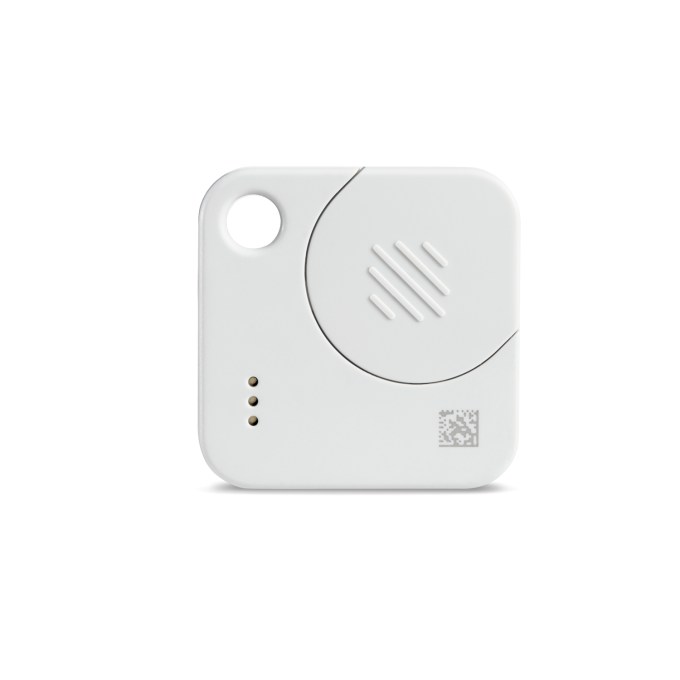
The new Tile Mate measures 34.7mm x 34.7mm x 6.2 mm and weighs 7.5g, compared with 34 x 34 x 4.65 mm and 6.1g.

And the new Tile Pro, which has double the range of the Mate, today comes in at 41.6mm x 41.6mm x 6.5 mm and weighs 12.8g. The older version was 37.5 x 37.5 x 5.9 mm and weighed 11g. 

In other words, these are still very small dongles – perfectly sized for keychains, bags, purses, and more.

However, Tile’s other device, Tile Slim, designed to slide into your wallet, will not be upgraded today. It will continue to have a non-replaceable battery for the time being we’re told.

To remove the battery from the new Mate or Pro, you use your thumb to push off the small door on the back of the device. With a paperclip, you pop out the old battery and then pop in the new one.

While the battery is the biggest change to the new products, the devices are also louder and have a longer range than before. The Mate’s range is now 150 ft and the Pro can reach 300 ft.

The Mate is also 50% louder than older Mate models, and the Pro is 100% louder than the new Mate.

With the update, Tile is also shifting to a new subscription product. The company previously offered a reTile program that offered hefty discounts on new devices when the old devices’ battery died. That’s not immediately ending, Prober says. Instead, customers will be gradually shifted over to the new devices as their old ones stop functioning.

And instead of recycling Tiles, customers will instead be offered a variety of features along with battery shipments. For $2.99 per month (or $29.99 per year), Tile Premium subscribers will receive an extended, 3-year warranty, on-demand customer support via SMS, battery replacements, unlimited sharing (ideal for families tracking devices together), location history, and a “Smart Alerts” feature, launching into beta.

The location history feature will give you a map and list of your Tile’s last known locations over the past 30 days as Tiles ping the server (which they do more often when being moved), while Smart Alerts will help you not to leave items behind.

At launch, Smart Alerts will ping you if you’ve left something behind at your (pre-configured) home address – like if you walk out the door without your wallet, gym bag, work badge or something else you track. Over time, the plan is to support other addresses, too.

“We’re definitely thinking about multiple locations,” Prober says.

Above: Tile Pro, now in black and white. The pretty white-and-gold one is gone. 

Tile Premium will work with any Tile device as well as embedded solutions in partners‘ products, like the Tile-enabled Bose headphones, for example. It’s rolling out first on iOS with Android to follow.

The move to subscriptions aims to capitalize on the sizable market Tile has created. To date, 15 million Tiles have been sold. These connect to locate 4 million items daily with a 90% success rate, thanks the community-find feature that lets Tile work beyond Bluetooth range via a crowdsourced network of Tile owners.

The upgraded Tiles are available today. The Mate is $25 and the Pro is $35.

The products are sold at Tile.com and via major retailers including Amazon, Best Buy, Target, AT&T, Verizon (TechCrunch parent by way of Oath), and others.

02 Oct 2018

TechCrunch Startup Battlefield MENA 2018 takes place tomorrow

Last call, startup fans! Tomorrow we kick off the first TechCrunch Startup Battlefield MENA in Beirut, Lebanon. We sifted through more than 400 applications to find the 15 very best early-stage startups the Middle East and North Africa has to offer, and we want you in the audience to witness tech history in the making.

As if watching a Startup Battlefield competition isn’t exciting enough, we’ve worked a stellar list of speakers and dynamic workshops into the day-long mix. Interested in investing? Some of MENA’s leading investment firms will be in the house, including Outlierz Ventures, BeryTech Fund and Leap Ventures — to name just a few. See the full list of investment firms here.

If infrastructure and connectivity is more your thing, you’ll enjoy hearing Ogero Telecom’s Imad Kreidieh and Facebook’s Ari Kesisoglu discuss the impact of changes in the region’s telco industry.

You’ll gain perspective when Omar Gabr (Instabug), Nour Al Hassan (Tarjama), Mai Medhat (Eventtus) and Ameer Sherif (Wuzzuf) talk about the massive changes in MENA’s tech landscape over the last decade. And they’ll take a look at what challenges and opportunities lie ahead. Read the complete agenda here.

Now, about the main event. The 15 teams compete in three preliminary rounds — five startups per round. They have six minutes to pitch and present a live demo to our panel of judges — expert technologists and VC investors in their respective fields. An intensive Q&A follows each pitch.

Five teams move into the final round — to pitch a new panel of judges and endure another stress-inducing Q&A. From the five comes one champion. The first TechCrunch Startup Battlefield MENA champion.

To the winning founders go the spoils, including a $25,000 no-equity cash prize and a trip for two to compete in the Startup Battlefield at TechCrunch Disrupt in 2019 (assuming the company still qualifies to compete at the time).

This full, action-packed event offers excitement, enlightenment and a tremendous opportunity to network with the most influential movers and shakers in the Middle East and North Africa.

If you have a ticket, you’re one of the lucky ones as we’re all sold out! Videos of the event will be posted approximately 2-3 business days after the conclusion of the event on techcrunch.com.