Author: azeeadmin

28 Sep 2018

Everything you need to know about Facebook’s data breach affecting 50M users

Facebook is cleaning up after a major security incident exposed the account data of millions of users. What’s already been a rocky year after the Cambridge Analytica scandal, the company is scrambling to regain its users trust after another security incident exposed user data.

Here’s everything you need to know so far.

What happened?

Facebook says at least 50 million users’ data were confirmed at risk after attackers exploited a vulnerability that allowed them access to personal data. The company also preventively secure 40 million additional accounts out of an abundance of caution.

What data were the hackers after?

Facebook CEO Mark Zuckerberg said that the company has not seen any accounts compromised and improperly accessed — although it’s early days and that may change. But Zuckerberg said that the attackers were using Facebook developer APIs to obtain some information, like “name, gender, and hometowns” that’s linked to a user’s profile page.

What data wasn’t taken?

Facebook said that it looks unlikely that private messages were accessed. No credit card information was taken in the breach, Facebook said. Again, that may change as the company’s investigation continues.

What’s an access token? Do I need to change my password?

When you enter your username and password on most sites and apps, including Facebook, your browser or device is set an access tokens. This keeps you logged in, without you having to enter your credentials every time you log in. But the token doesn’t store your password — so there’s no need to change your password.

Is this why Facebook logged me out of my account?

Yes, Facebook says it reset the access tokens of all users affected. That means some 90 million users will have been logged out of their account — either on their phone or computer — in the past day. This also includes users on Facebook Messenger.

When did this attack happen?

The vulnerability was introduced on the site in July 2017, but Facebook didn’t know about it until this month, on September 16, 2018, when it spotted a spike in unusual activity. That means the hackers could have had access to user data for a long time, as Facebook is not sure right now when the attack began.

Who would do this?

Facebook doesn’t know who attacked the site, but the FBI is investigating, it says.

However, Facebook has in the past found evidence of Russia’s attempts to meddle in American democracy and influence our elections — but it’s not to say that Russia is behind this new attack. Attribution is incredibly difficult and takes a lot of time and effort. It recently took the FBI more than two years to confirm that North Korea was behind the Sony hack in 2016 — so we might be in for a long wait.

How did the attackers get in? 

Not one, but three bugs led to the data exposure.

In July 2017, Facebook inadvertently introduced three vulnerabilities in its video uploader, said Guy Rosen, Facebook’s vice president of product management, in a call with reporters. When using the “View As” feature to view your profile as someone else, the video uploader would occasionally appear when it shouldn’t display at all. When it appeared, it generated an access token using the person who the profile page was being viewed as. If that token was obtained, an attacker could log into the account of the other person.

Is the problem fixed? 

Facebook says it fixed the vulnerability on September 27, and then began resetting the access tokens of people to protect the security of their accounts.

Did this affect WhatsApp and Instagram accounts?

Facebook said that it’s not yet sure if Instagram accounts are affected, but were automatically secured once Facebook access tokens were revoked. Affected Instagram users will have to unlink and relink their Facebook accounts in Instagram in order to cross post to Facebook.

On a call with reporters, Facebook said there is no impact on WhatsApp users at all.

Will Facebook be fined or punished?

If Facebook is found to have breached European data protection rules — the newly implemented General Data Protection Regulation (GDPR) — the company can face fines of up to four percent of its global revenue.

However, that fine can’t be levied until Facebook knows more about the nature of the breach and the risk to users.

Another data breach of this scale – especially coming in the wake of the Cambridge Analytica scandal and other data leaks – has some in Congress calling for the social network to be regulated. Sen. Mark Warner (D-VA) issued a stern reprimand to Facebook over today’s news, and again pushed his proposal for regulating companies holding large data sets as ““information fiduciaries” with additional consequences for improper security.

FTC Commissioner Rohit Chopra also tweeted that “I want answers” regarding the Facebook hack. It’s reasonable to assume that there could be investigators in both the U.S. and Europe to figure out what happened.

Can I check to see if my account was improperly accessed?

You can. Once you log back into your Facebook account, you can go to your account’s security and login page, which lets you see where you’ve logged in. If you had your access tokens revoked and had to log in again, you should see only the devices that you logged back in with.

Should I delete my Facebook account?

That’s up to you! But you may want to take some precautions like changing your password and turning on two-factor authentication, if you haven’t done so already. If you’re weren’t impacted by this, you may want to take the time to delete some of the personal information you’ve shared to Facebook to reduce your risk of exposure in future attacks, if they were to occur.

28 Sep 2018

Pulling back the curtain on how SoftBank’s massive Vision Fund works — including just how big a check it can write

Picture it. The scene is Silicon Valley. Suddenly an investment firm materializes on the scene and starts writing checks bigger than anyone is accustomed to seeing. Fellow investors start to privately complain. Its partners are poseurs, they say. The firm is driving up valuations, they continue. It’s going to ruin venture capital, they conclude.

It was said of Andreessen Horowitz when it burst onto the scene in 2009. (Remember its then jaw-dropping decision to hand GitHub a $100 million check in 2012?) Today, it’s being said even more widely about the SoftBank Vision Fund, and little wonder, given that SoftBank is fast plowing $100 billion into mostly venture-backed companies and that, according to its CEO, Masayoshi Son, more $100 billion funds are coming soon.

Just this week, the firm led a $1 billion round in the India-based hotel chain and room aggregator Oyo. It also participated in two other enormous deals,  leading a $450 million round for the real estate tech platform Compass, which creates tools for residential real estate agents and more recently launched a commercial brokerage division. Separately, it led a  $400 million round in the home-buying startup Opendoor.

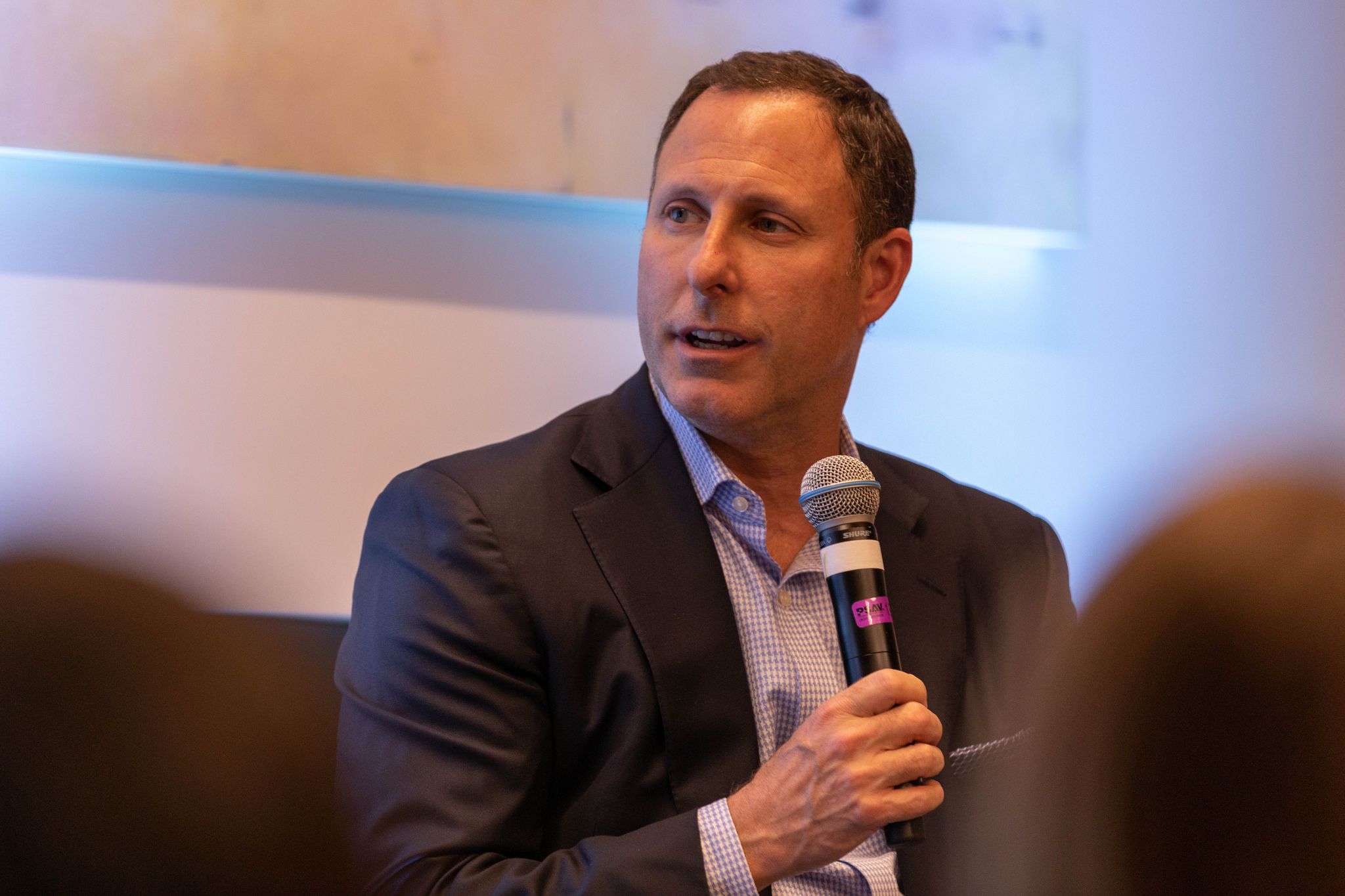
What might be the longer-term impact of so much capital getting jammed into still private companies? How does SoftBank decide who to fund, and who to steer around? On Tuesday night, at a StrictlyVC event in San Francisco, we had the chance to talk with two of its investors, Vision Fund Managing Director Jeff Housenbold and Anna Lo, a director with SoftBank Investment Advisors, to learn more about how the whole thing works — and to run past them some of the criticisms that their fellow investors have been whispering to us.

In addition to some basic stats (SoftBank’s Vision Fund is run by 86 people, including nine managing directors, across offices in Tokyo, London, and San Carlos, Ca.; it has a 14-year investing period), you’ll learn what SoftBank won’t touch, how big a check it can write before asking for permission from its own investors, and what happens to companies that say they are in talks with the Vision Fund when they are not.

Also, spoiler alert: the Vision Fund has vice clauses that prevent it from funding tobacco, firearms and certain other companies, as do most venture firms. (We’d asked in the context of discussing whether SoftBank might ever fund the e-cig company Juul, which also appeared at the event.)

You can watch the chat for yourself below. In the meantime, some outtakes from that conversation follow edited lightly for length:

TC: Walk us through how you decide on which companies to approach.

AL: Definitely leaders in their respective markets and geographies. Excellent, rock star teams. We are very friendly and collaborative with our founders, so we need to see eye to eye on their vision. The criteria isn’t so different from a lot of VCs here in the audience.

TC: In terms of metrics, more specifically what do you want to see?

JH: In the continuum of venture capital, we’re late-stage growth. Our minimum check size is $100 million. We’re looking for product-market fit [meaning] some revenue and some traction before we typically come into a deal. It depends on which industry and which company. It could be GMV. It could be revenue. If it’s in enterprise software, it could be how many clients do they have and the diversification of the revenue and what the repeats and retention rates [are].

But we’re looking for companies that are growing very quickly and could deploy a lot of capital in a differentiated way to either capture new customers, market share, enter into new geographies, expand their product portfolio, or move into adjacent markets.

TC: How do you think about making that first call? I would imagine when companies get a call from you, it’s both exciting and nerve wracking, because you’re clearly looking at a certain sector and probably not just talking to that one company. 

JH: First, we’ll do landscape studies, and have strategic hypotheses around certain sectors and how technology is impacting that sector and driving innovation. So let’s say, in the real estate sector: we took a scan and looked at over 80 different companies across different aspects of the value chain. So we’ve already mapped out which are the incumbents, who are the up-and-coming startups, who is differentiating themselves, who’s getting traction. And then we have a thesis [about] where can money be made in those value chains. And then we go and approach those companies.

The other thing, often the phone rings when you have a large fund. People call us opportunistically. So sometimes it’s like, ‘Oh, you know, we looked at that eight months ago; maybe we should take another look.’ Because now a new player entered or this company has gotten more traction, or they completed that merger they told us about, where they move from $20 million in [annual recurring revenue] to now $100 million. And we’ll come back to that because they called us. So it’s a combination.

AL: We’re also looking for successful e-commerce models in emerging markets that are beginning to display characteristics such as in China in terms of rising income and the adoption of mobile internet.

JH: Also, half of what you read in the press, as you can imagine, is fake news. So companies are now using our name to create competitive tension in a term sheet, where we’ve never even met with the company. So I’ll read in the press our meeting, ‘Oh, we’re investing a billion in so and so company,’ and I log in and no one has ever met the company.

TC: Is that company then permanently off your screen?

JH: It doesn’t go [over] well internally.

TC: What does the decision-making process look like inside the Vision Fund? There are five managing directors in the Bay Area. You’re one of them. Is it a majority-rules situation?

JH:  So, for example, my team looks after consumer and real estate [opportunities], so if it’s a deal in consumer and we’re intrigued by it, we’ll do a bunch of work. We’ll meet with the management team. We’ll do some outside-in and inside-out research and we’ll come up with an investment thesis.

If we have conviction internally, we then take it to managing partners and we ask the management team to come back and meet all of us. If there are no major objections, then we bring [the deal] to a global deal call, where partners around the world come together once a week, and we walk through our investment case. And Masa is on that call often, and he’ll say, ‘I’m intrigued. Bring the entrepreneur to Japan. So Masa meets every single entrepreneur who we invest in, which is phenomenal because he’s brilliant . .  . he has amazing pattern recognition. But what’s really amazing is, he’s fearless. He’ll sit with an entrepreneur and go, ‘I really love that concept. Have you thought about what if we remove barriers?” Or, ‘What if capital wasn’t a restriction?’ Or, ‘What if we could land you a CFO, a CMO, and a CPO tomorrow. What would you do different?’ And it’s just it’s fun to be in that environment

And so if Masa says, “Yes, I’m intrigued, move forward,’ then we go to our formal investment committee to do confirmatory due diligence, then we close the deal.

TC: There was a story in the WSJ recently that talked of Masa’s brilliance but also painted a picture of his being impulsive. It said he can get excited about a company and rough out the deal terms and not leave much for everyone else to do. Does that happen often and either way, does it drive you crazy? 

AL: All companies still come through the wringer, [including] the due diligence process, the investment committee meeting, sometimes lots of follow-up questions, and regulatory approvals.

JH: Sometimes where that changes is: we never bring a company to see Masa that we haven’t already kind of outlined what the deal terms will look like. But sometimes in that exploration, Masa says, ‘What if you went bigger, quicker, faster?’ Then instead of putting $300 million [into the company]he says, ‘Could you deploy $500 million? What would your business plan look like?’ And that’s where sometimes, the deal terms change. Because in the moment, he helps to think about, ‘Well, what if we bought your competitor and we move quickly in doing that? What if we took you to Japan quickly.’ And so the deal terms often change because of that more expansive worldview and the challenge to the management team of what they could do if we remove some of the perceived barriers to building a great franchise quickly.

TC: I’m curious if you want something that Masa doesn’t want, if he can be persuaded, or if he wants something that you don’t want, he can be persuaded.

JH: Masa is a man of action. But he’s also a man of facts and wisdom. So I’ve had several deals where at first blush, he goes, ‘Yeah, I don’t really get it.’ And I’ll say, ‘Well, then I didn’t do a good enough job of explaining why we had such conviction around this investment.’ And so he’ll say, ‘Okay, come back. Take me through it so I can understand these aspects of it.’

Then there are instances where he says, ‘I was at this conference and met this entrepreneur and think they are really amazing. I want to invest in them.’ That’s not a mandate to go invest. That’s the permission to go explore. It’s our job to then go vet that and put it through the rigor and analytics and then come back to Masa. And there have been plenty examples where, he was excited about something, and we say, ‘You know, the tech really doesn’t scale.’ Or sometimes it’s, “This is a great company and it’s number one, but we’ve found a much better, smaller company with better tech, a better management team, a better go-to-market strategy, better execution. We think we should [bet] on number two because they will pass number one in 14 months.” So Masa if very open to [this]. If you know your stuff and it’s fact-based, he’s very open to changing his opinion.

TC: How much of the Vision Fund is being deployed in the U.S. versus elsewhere, and how mapped out is that in advance? 

AL: It’s quite in line with how private equity gets deployed. If you think about the biggest venture and private equity ecosystems in the world, the two biggest being the U.S. and China, I think we do have 50-50 U.S and non-U.S investments across 30-plus companies. Based on what we’re seeing, I’d say Southeast Asia and the Middle East are next frontiers for us. But the check size would not be as large as in China, where it takes a lot more capital to build at scale.

TC: And how much are you looking to own of a company? I’ve read 15 to 20 percent, but it’s confusing, given the size checks you are writing.

JH: We don’t have targets. We’re late stage so we like to have meaning minority stakes . . . so we don’t go in [thinking] we have to have 15 or 20 [percent ownership]. Twenty percent to 35 percent [ownership], is what I’d say, if there was a normal distribution.

You can check out the rest of our interview below.

28 Sep 2018

Pulling back the curtain on how SoftBank’s massive Vision Fund works — including just how big a check it can write

Picture it. The scene is Silicon Valley. Suddenly an investment firm materializes on the scene and starts writing checks bigger than anyone is accustomed to seeing. Fellow investors start to privately complain. Its partners are poseurs, they say. The firm is driving up valuations, they continue. It’s going to ruin venture capital, they conclude.

It was said of Andreessen Horowitz when it burst onto the scene in 2009. (Remember its then jaw-dropping decision to hand GitHub a $100 million check in 2012?) Today, it’s being said even more widely about the SoftBank Vision Fund, and little wonder, given that SoftBank is fast plowing $100 billion into mostly venture-backed companies and that, according to its CEO, Masayoshi Son, more $100 billion funds are coming soon.

Just this week, the firm led a $1 billion round in the India-based hotel chain and room aggregator Oyo. It also participated in two other enormous deals,  leading a $450 million round for the real estate tech platform Compass, which creates tools for residential real estate agents and more recently launched a commercial brokerage division. Separately, it led a  $400 million round in the home-buying startup Opendoor.

What might be the longer-term impact of so much capital getting jammed into still private companies? How does SoftBank decide who to fund, and who to steer around? On Tuesday night, at a StrictlyVC event in San Francisco, we had the chance to talk with two of its investors, Vision Fund Managing Director Jeff Housenbold and Anna Lo, a director with SoftBank Investment Advisors, to learn more about how the whole thing works — and to run past them some of the criticisms that their fellow investors have been whispering to us.

In addition to some basic stats (SoftBank’s Vision Fund is run by 86 people, including nine managing directors, across offices in Tokyo, London, and San Carlos, Ca.; it has a 14-year investing period), you’ll learn what SoftBank won’t touch, how big a check it can write before asking for permission from its own investors, and what happens to companies that say they are in talks with the Vision Fund when they are not.

Also, spoiler alert: the Vision Fund has vice clauses that prevent it from funding tobacco, firearms and certain other companies, as do most venture firms. (We’d asked in the context of discussing whether SoftBank might ever fund the e-cig company Juul, which also appeared at the event.)

You can watch the chat for yourself below. In the meantime, some outtakes from that conversation follow edited lightly for length:

TC: Walk us through how you decide on which companies to approach.

AL: Definitely leaders in their respective markets and geographies. Excellent, rock star teams. We are very friendly and collaborative with our founders, so we need to see eye to eye on their vision. The criteria isn’t so different from a lot of VCs here in the audience.

TC: In terms of metrics, more specifically what do you want to see?

JH: In the continuum of venture capital, we’re late-stage growth. Our minimum check size is $100 million. We’re looking for product-market fit [meaning] some revenue and some traction before we typically come into a deal. It depends on which industry and which company. It could be GMV. It could be revenue. If it’s in enterprise software, it could be how many clients do they have and the diversification of the revenue and what the repeats and retention rates [are].

But we’re looking for companies that are growing very quickly and could deploy a lot of capital in a differentiated way to either capture new customers, market share, enter into new geographies, expand their product portfolio, or move into adjacent markets.

TC: How do you think about making that first call? I would imagine when companies get a call from you, it’s both exciting and nerve wracking, because you’re clearly looking at a certain sector and probably not just talking to that one company. 

JH: First, we’ll do landscape studies, and have strategic hypotheses around certain sectors and how technology is impacting that sector and driving innovation. So let’s say, in the real estate sector: we took a scan and looked at over 80 different companies across different aspects of the value chain. So we’ve already mapped out which are the incumbents, who are the up-and-coming startups, who is differentiating themselves, who’s getting traction. And then we have a thesis [about] where can money be made in those value chains. And then we go and approach those companies.

The other thing, often the phone rings when you have a large fund. People call us opportunistically. So sometimes it’s like, ‘Oh, you know, we looked at that eight months ago; maybe we should take another look.’ Because now a new player entered or this company has gotten more traction, or they completed that merger they told us about, where they move from $20 million in [annual recurring revenue] to now $100 million. And we’ll come back to that because they called us. So it’s a combination.

AL: We’re also looking for successful e-commerce models in emerging markets that are beginning to display characteristics such as in China in terms of rising income and the adoption of mobile internet.

JH: Also, half of what you read in the press, as you can imagine, is fake news. So companies are now using our name to create competitive tension in a term sheet, where we’ve never even met with the company. So I’ll read in the press our meeting, ‘Oh, we’re investing a billion in so and so company,’ and I log in and no one has ever met the company.

TC: Is that company then permanently off your screen?

JH: It doesn’t go [over] well internally.

TC: What does the decision-making process look like inside the Vision Fund? There are five managing directors in the Bay Area. You’re one of them. Is it a majority-rules situation?

JH:  So, for example, my team looks after consumer and real estate [opportunities], so if it’s a deal in consumer and we’re intrigued by it, we’ll do a bunch of work. We’ll meet with the management team. We’ll do some outside-in and inside-out research and we’ll come up with an investment thesis.

If we have conviction internally, we then take it to managing partners and we ask the management team to come back and meet all of us. If there are no major objections, then we bring [the deal] to a global deal call, where partners around the world come together once a week, and we walk through our investment case. And Masa is on that call often, and he’ll say, ‘I’m intrigued. Bring the entrepreneur to Japan. So Masa meets every single entrepreneur who we invest in, which is phenomenal because he’s brilliant . .  . he has amazing pattern recognition. But what’s really amazing is, he’s fearless. He’ll sit with an entrepreneur and go, ‘I really love that concept. Have you thought about what if we remove barriers?” Or, ‘What if capital wasn’t a restriction?’ Or, ‘What if we could land you a CFO, a CMO, and a CPO tomorrow. What would you do different?’ And it’s just it’s fun to be in that environment

And so if Masa says, “Yes, I’m intrigued, move forward,’ then we go to our formal investment committee to do confirmatory due diligence, then we close the deal.

TC: There was a story in the WSJ recently that talked of Masa’s brilliance but also painted a picture of his being impulsive. It said he can get excited about a company and rough out the deal terms and not leave much for everyone else to do. Does that happen often and either way, does it drive you crazy? 

AL: All companies still come through the wringer, [including] the due diligence process, the investment committee meeting, sometimes lots of follow-up questions, and regulatory approvals.

JH: Sometimes where that changes is: we never bring a company to see Masa that we haven’t already kind of outlined what the deal terms will look like. But sometimes in that exploration, Masa says, ‘What if you went bigger, quicker, faster?’ Then instead of putting $300 million [into the company]he says, ‘Could you deploy $500 million? What would your business plan look like?’ And that’s where sometimes, the deal terms change. Because in the moment, he helps to think about, ‘Well, what if we bought your competitor and we move quickly in doing that? What if we took you to Japan quickly.’ And so the deal terms often change because of that more expansive worldview and the challenge to the management team of what they could do if we remove some of the perceived barriers to building a great franchise quickly.

TC: I’m curious if you want something that Masa doesn’t want, if he can be persuaded, or if he wants something that you don’t want, he can be persuaded.

JH: Masa is a man of action. But he’s also a man of facts and wisdom. So I’ve had several deals where at first blush, he goes, ‘Yeah, I don’t really get it.’ And I’ll say, ‘Well, then I didn’t do a good enough job of explaining why we had such conviction around this investment.’ And so he’ll say, ‘Okay, come back. Take me through it so I can understand these aspects of it.’

Then there are instances where he says, ‘I was at this conference and met this entrepreneur and think they are really amazing. I want to invest in them.’ That’s not a mandate to go invest. That’s the permission to go explore. It’s our job to then go vet that and put it through the rigor and analytics and then come back to Masa. And there have been plenty examples where, he was excited about something, and we say, ‘You know, the tech really doesn’t scale.’ Or sometimes it’s, “This is a great company and it’s number one, but we’ve found a much better, smaller company with better tech, a better management team, a better go-to-market strategy, better execution. We think we should [bet] on number two because they will pass number one in 14 months.” So Masa if very open to [this]. If you know your stuff and it’s fact-based, he’s very open to changing his opinion.

TC: How much of the Vision Fund is being deployed in the U.S. versus elsewhere, and how mapped out is that in advance? 

AL: It’s quite in line with how private equity gets deployed. If you think about the biggest venture and private equity ecosystems in the world, the two biggest being the U.S. and China, I think we do have 50-50 U.S and non-U.S investments across 30-plus companies. Based on what we’re seeing, I’d say Southeast Asia and the Middle East are next frontiers for us. But the check size would not be as large as in China, where it takes a lot more capital to build at scale.

TC: And how much are you looking to own of a company? I’ve read 15 to 20 percent, but it’s confusing, given the size checks you are writing.

JH: We don’t have targets. We’re late stage so we like to have meaning minority stakes . . . so we don’t go in [thinking] we have to have 15 or 20 [percent ownership]. Twenty percent to 35 percent [ownership], is what I’d say, if there was a normal distribution.

You can check out the rest of our interview below.

28 Sep 2018

Y Combinator is changing up the way it invests

To keep up with the growing sizes of early-stage funding rounds, Y Combinator announced this morning that it will increase the size of its investments to $150,000 for 7 percent equity starting with its winter 2019 batch.

Based in Mountain View, Calif., YC funds and mentors hundreds of startups per year through its 12-week program that culminates in a demo day, where founders pitch their companies to an audience of Silicon Valley’s top investors. Airbnb, Dropbox and Instacart are among its greatest successes.

Since 2014, YC has invested $120,000 for 7 percent equity in its companies. It has increased the size of its investment before — in 2007, a YC “standard deal” was just $20,000 — but the amount of equity the accelerator takes in exchange for the capital has been consistent.

“We thought a $30K increase was necessary to help companies stay focused on building their product without worrying about fundraising too soon,” Y Combinator chief executive officer Michael Seibel wrote in a blog post this morning. “Capital for startups has never been more abundant, and we’ll continue to focus on the things that remain hard to come by — community, simplicity, advice that’s systematic and personal, and above all, a great founder experience.”

Seibel was named CEO in 2016. Co-founder Sam Altman serves as YC’s president.

YC is also changing the way it crafts its investments. It will now invest in startups on a post-money safe basis rather than on a pre-money safe. YC invented the fundraising mechanism, safe, in 2013. A safe, or a simple agreement for future equity, means an investor makes an investment in a company and receives the company stock at a later date — an alternative to a convertible note. A safe is a quicker and simpler way to get early money into a company and the idea was, according to YC, that holders of those safes would be early investors in the startup’s Series A or later priced equity rounds.

In recent years, YC noticed that startups were raising much larger seed rounds than before and those safes were “really better considered as wholly separate financings, rather than ‘bridges’ into later priced rounds.” Founders, in the meantime, were struggling to determine how much they were being diluted.

YC’s latest change, in short, will make it easier for founders to know exactly how much of their company they are selling off and will make capitalization table math, which can be extremely grueling for founders, a whole lot easier.

The pre-money safe has been criticized by founders and investors alike.

Last year, a pair of venture capitalists who’d worked with YC companies, Dolby Family Partners’ Pascal Levensohn and Andrew Krowne, wrote that the safe method was screwing over founders.

“Entrepreneurs who don’t do the capitalization table math end up owning less of their company’s equity than they thought they did. And when an equity round is inevitably priced, entrepreneurs don’t like the founder dilution numbers at all. But they can’t blame the VC, they can’t blame the angels, so that means they can only blame… oops!”

A transition to a post-money safe will eliminate that cap table math headache while still being simple and efficient. The trade-off, YC says, “is that each incremental dollar raised on post-money safes dilutes just the current stockholders, which is often the founders and early employees.” So it’s not perfect, but it’s an improvement.

Recent YC grad Deepak Chhugani, the founder of The Lobby, which announced a $1.2 million investment this week, had a positive response to the changes and said either way, most of the resources provided by YC are priceless to a first-time founder, like himself.

“I think given rising costs in the Bay Area and most startup hubs, the new YC deal is going to be great for founders, regardless of whether they stay in the Bay Area afterward or not,” Chhugani told TechCrunch.

YC is also tweaking its policy around pro-rata follow-ons. You can read about that here.


28 Sep 2018

Y Combinator is changing up the way it invests

To keep up with the growing sizes of early-stage funding rounds, Y Combinator announced this morning that it will increase the size of its investments to $150,000 for 7 percent equity starting with its winter 2019 batch.

Based in Mountain View, Calif., YC funds and mentors hundreds of startups per year through its 12-week program that culminates in a demo day, where founders pitch their companies to an audience of Silicon Valley’s top investors. Airbnb, Dropbox and Instacart are among its greatest successes.

Since 2014, YC has invested $120,000 for 7 percent equity in its companies. It has increased the size of its investment before — in 2007, a YC “standard deal” was just $20,000 — but the amount of equity the accelerator takes in exchange for the capital has been consistent.

“We thought a $30K increase was necessary to help companies stay focused on building their product without worrying about fundraising too soon,” Y Combinator chief executive officer Michael Seibel wrote in a blog post this morning. “Capital for startups has never been more abundant, and we’ll continue to focus on the things that remain hard to come by — community, simplicity, advice that’s systematic and personal, and above all, a great founder experience.”

Seibel was named CEO in 2016. Co-founder Sam Altman serves as YC’s president.

YC is also changing the way it crafts its investments. It will now invest in startups on a post-money safe basis rather than on a pre-money safe. YC invented the fundraising mechanism, safe, in 2013. A safe, or a simple agreement for future equity, means an investor makes an investment in a company and receives the company stock at a later date — an alternative to a convertible note. A safe is a quicker and simpler way to get early money into a company and the idea was, according to YC, that holders of those safes would be early investors in the startup’s Series A or later priced equity rounds.

In recent years, YC noticed that startups were raising much larger seed rounds than before and those safes were “really better considered as wholly separate financings, rather than ‘bridges’ into later priced rounds.” Founders, in the meantime, were struggling to determine how much they were being diluted.

YC’s latest change, in short, will make it easier for founders to know exactly how much of their company they are selling off and will make capitalization table math, which can be extremely grueling for founders, a whole lot easier.

The pre-money safe has been criticized by founders and investors alike.

Last year, a pair of venture capitalists who’d worked with YC companies, Dolby Family Partners’ Pascal Levensohn and Andrew Krowne, wrote that the safe method was screwing over founders.

“Entrepreneurs who don’t do the capitalization table math end up owning less of their company’s equity than they thought they did. And when an equity round is inevitably priced, entrepreneurs don’t like the founder dilution numbers at all. But they can’t blame the VC, they can’t blame the angels, so that means they can only blame… oops!”

A transition to a post-money safe will eliminate that cap table math headache while still being simple and efficient. The trade-off, YC says, “is that each incremental dollar raised on post-money safes dilutes just the current stockholders, which is often the founders and early employees.” So it’s not perfect, but it’s an improvement.

Recent YC grad Deepak Chhugani, the founder of The Lobby, which announced a $1.2 million investment this week, had a positive response to the changes and said either way, most of the resources provided by YC are priceless to a first-time founder, like himself.

“I think given rising costs in the Bay Area and most startup hubs, the new YC deal is going to be great for founders, regardless of whether they stay in the Bay Area afterward or not,” Chhugani told TechCrunch.

YC is also tweaking its policy around pro-rata follow-ons. You can read about that here.


28 Sep 2018

US government loses bid to force Facebook to wiretap Messenger calls

US government investigators have lost a case to force Facebook to wiretap calls made over its Messenger app.

A joint federal and state law enforcement effort investigating the MS-13 gang had pushed a district court to hold the social networking giant in contempt of court for refusing to permit real-time listening in on voice calls.

According to sources speaking to Reuters, the judge later ruled in Facebook’s favor — although, because the case remains under seal, it’s not known for what reason.

The case, filed in a Fresno, Calif. district court, centers on alleged gang members accused of murder and other crimes. The government had been pushing to prosecute 16 suspected gang members, but are said to have leaned on Facebook to obtain further evidence.

Reuters said that an affidavit submitted by an FBI agent said that “there is no practical method available by which law enforcement can monitor” calls on Facebook Messenger . Although Facebook-owned WhatsApp uses end-to-end encryption to prevent eavesdroppers, not even the company can listen in — which law enforcement have long claimed that this hinders investigations.

But Facebook Messenger doesn’t end-to-end encrypt voice calls, making real-time listening in on calls possible.

Although phone companies and telcos are required under US law to allow police and federal agencies access to real-time phone calls with a court-signed wiretap order, internet companies like Facebook fall outside the scope of the law.

Privacy advocates saw this case as a way to remove that exemption, accusing the government of trying to backdoor the encrypted app, just two years after the FBI sued Apple over a similar request to break into the encrypted iPhone belonging to San Bernardino shooter Syed Farook.

Neither Facebook nor the FBI responded to a request for comment.

28 Sep 2018

Online education unicorn Udacity has quietly laid off 5% of staff — at least 25 people — since August

Online education is a $160 billion+ industry today, but as it continues to mature, there are some inevitable ebbs and flows. In the latest development, TechCrunch has learned and confirmed that Udacity — the $1 billion startup co-founded by Sebastian Thrun that specialises in “nanodegrees” in tech subects that range from AI and coding through to the how-tos of digital marketing — has quietly cut about five percent of its staff since August across multiple offices globally.

“Back in August, five percent of our global employees were laid off based on carefully considered, strategic business decisions,” a spokesperson told TechCrunch in an emailed statement. “We are supporting our former and current employees through the transition. Our business continues to grow, with offices in India, China, Germany, Brazil, Egypt, and the United Arab Emirates, in addition to Silicon Valley. We continue to hire for key roles.”

The company does not disclose an exact number of employees it has across globally, except to say that it is over 500, meaning that this change is affecting about 25 people — the same number that a source had originally give us.

It’s not clear exactly what is going on at Udacity to prompt the layoffs, either in terms of the existing business or what it may have planned for the future.

Udacity says that it has over 50,000 students enrolled in its six-12-month nanodegree programs, but that is a figure that it has not updated in almost a year, when it emerged that Shernaz Daver, the CMO who was credited for turning around the company, was leaving Udacity.

Overall, Udacity says the number of registered students on the platform is higher than this, now at over 10 million — which also includes one-off free courses as well as partnerships with businesses. Udacity works with companies like Google, Facebook, Amazon and others to develop its curriculum, and it counts Accenture, AT&T, Bank of America, GE and Ford among its customers.

The company made $70 million 2017, but it has not provided guidance on how it is doing this year. (That $70 million figure was first released in February this year, when Udacity’s CEO Vishal Makhijani hinted the company was eyeing up an IPO.)

In terms of funding, Udacity has not raised any money since 2015 — when it closed a $105 million round led by publisher Bertelsmann that catapulted it to a $1 billion valuation. It’s raised $163 million to date, with other investors including Andreessen Horowitz, Ballie Gifford, Charles River Ventures, Cox Enterprises and GV.

A rush of companies have entered the online education space — which has been around in one form or another since the start of the web, and indeed you could argue went hand-in-hand with some of the earliest intentions behind the internet. Offerings run the gamut of what “education” can entail: single courses, full degrees, professional development, casual hobbies, gamefied children’s education, and much more — using videos, mobile technology, VR, AI to tailor courses, curriculums approved by leading academics and educators, and much more to make the learning more sticky and effective.

Udacity has competitors, effectively, from many parts of that spectrum, but some of the more notable include Coursera, Lynda (which is now part of LinkedIn and Microsoft) and Khan Academy.

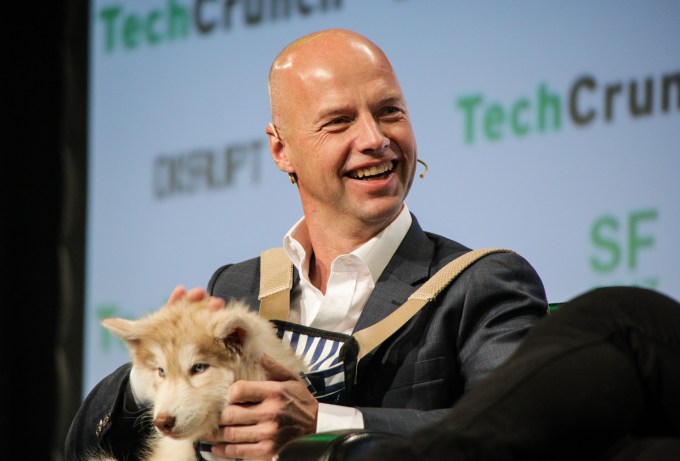
Sebastian Thrun (Udacity) at TechCrunch Disrupt SF 2017

Since its launch in 2011, Udacity has played a few different roles within that evolution. The company initially started as one of the early providers of “MOOCs” (Massive Open Online Courses): Thrun (pictured above, who co-founded the company with David Stavens and Mike Sokolsky; neither are with the company anymore) left a position as a professor of AI at Stanford to start Udacity when he found that 160,000 students signed up for an open invite he made to take his class for free online.

Higher educational institutions worked closely with Udacity in the early days, although the company appeared to move away from that focus that in 2013 after some hiccups, including San Jose State University suspending a pilot with the startup after pass rates were deemed too low.

Instead it started to work with a number of large tech players like Google (where Thrun is credited with the company’s early work on building self-driving cars) to develop a new set of courses to target older people and those already in the workforce. That pivot appeared to turn the company profitable at one point, as it expanded its sights to further markets like India.

Then, Thrun stepped away as the CEO (he’s now president) and the role was taken on by Makhijani, who had been the COO. Under him, the company appeared to focus a little more: it looked set to build deeper coding experiences with its first acquisition, of CloudLabs; and it spun out its self-driving car program, which was renamed Voyage and is now building its own business. It’s likely that this latest turn is one more step in how Udacity is aiming to position for whatever comes next.

28 Sep 2018

Intel acknowledges supply issues, will prioritize premium chips

Intel interim CEO Bob Swan issued an uncharacteristically frank letter today, highlighting the company’s supply issues. The executive blames the surprising growth of an unexpectedly rebounding PC industry for the shortage. Swan says that rebound is driven by “strong demand for gaming as well as commercial systems.”

It’s a bit of a perfect storm here. Higher demand coupled with the longstanding yield issues for its 10nm architecture have spread things thin for Intel. Though Swan says it’s “making progress” with those chips, with production ramping up in 2019.

“[S]upply is undoubtedly tight,” Swan acknowledged in the letter, “particularly at the entry-level of the PC market.” But he believes that Intel does have enough supply to meet its full-year revenue outlook.

In the short term, Intel plans to prioritize the premium market, including Xeon and Core processors, so it “can serve the high-performance segments of the market.” Beyond that, the company plans to invest $15 billion in capital expenditures this year, including $1 billion going toward the manufacture of 14nm silicon in the U.S., Ireland and Israel.

These issues have left the broader PC industry in a rough spot. On the face of it, a shortage due to increased demand seems like a good problem to have, but ultimately a lack of processors could create a major issue if the market continues to grow, perhaps ultimately reversing some of that success.

28 Sep 2018

As its own reports reveal the disaster of climate inaction, Trump proposes climate inaction

If the current presidential administration’s approach to climate change could be summarized in one sentence, it seems that sentence would be “smoke em if you got em.”

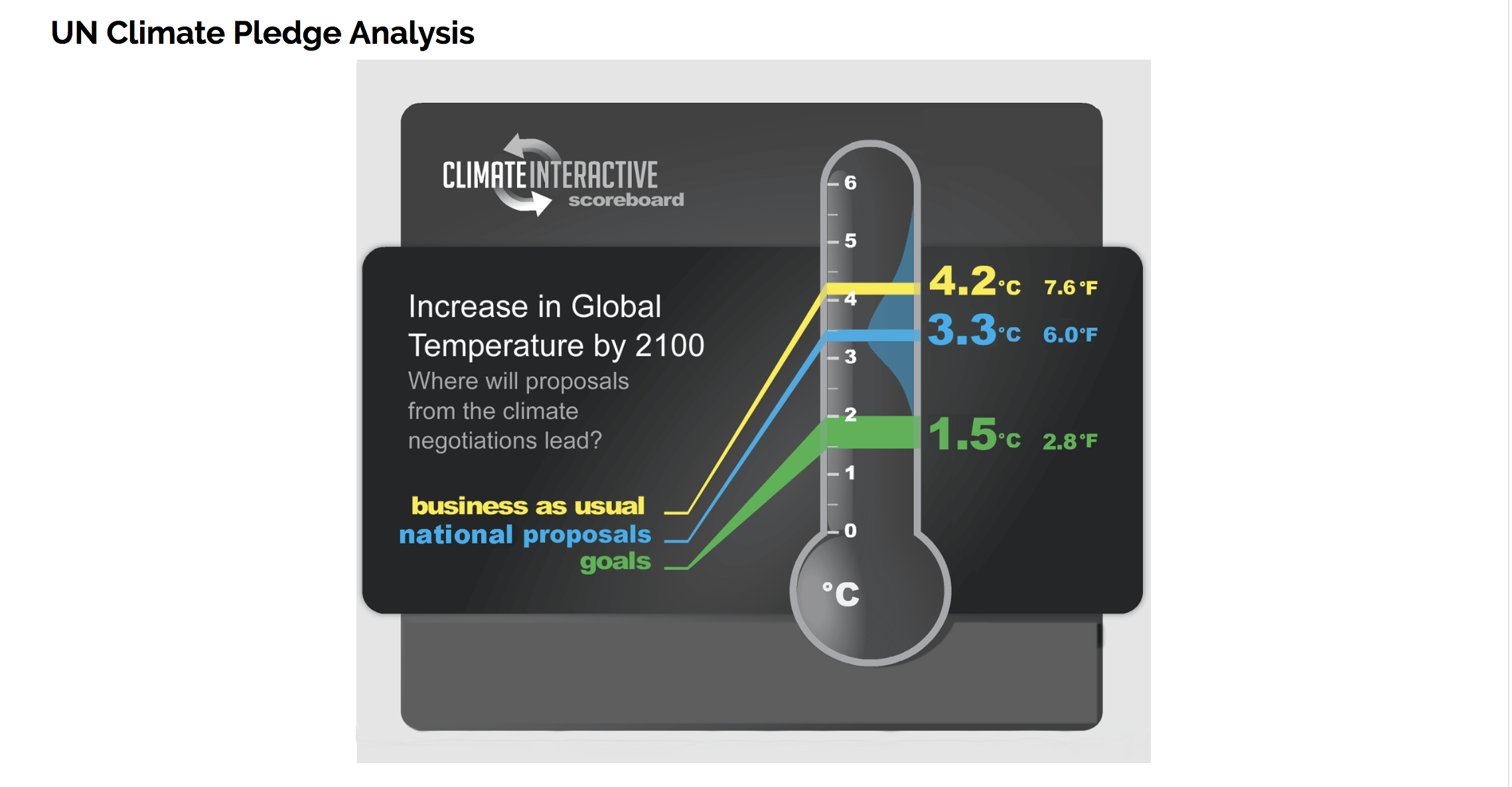
By the administration’s own estimate, on its current course (if nations around the world do nothing more to respond to the climate change threat) the planet will warm by 7 degrees by the end of the century. It means, as one Twitter commentator pointed out, that climate change is not only real, but catastrophic… and the response is to burn more carbon because we’re all dead anyway.

If global temperatures rise 7 degrees, much of coastal America will find itself underwater. Ocean acidification will dissolve coral reefs and the world can expect dramatically more powerful and more damaging storms and more severe droughts and heatwaves.

However, as The Washington Post reported, the dire assessment of the world’s climate situation wasn’t made with an eye toward trying to find solutions to the problem, merely to illustrate that the planet is already doomed.

The revelations of our planet’s fate came buried in a 500-page report from the National Traffic Highway Safety Administration study that was meant to justify President Trump’s decision to drop fuel efficiency standards for cars and trucks built after 2020.

The administration’s argument is: if no one does anything more to combat climate change, then the world will be destroyed anyway, so there’s no point in doing anything to try and combat climate change.

The (lack of) logic explains why the administration has rolled back emissions reduction requirements on methane (from oil and gas drilling and industrial animal farming), carbon dioxide (for coal fired power plants), and hydrofluorocarbons (used in refrigerators and air conditioners).

The NTHSA report projects that global temperatures will rise by roughly 3.5 degrees above the last average temperature before climate change began to affect (the years between 1986 and 2005) whether or not the rules on fuel efficiency standards are enacted or not.

The administration isn’t wrong in its assessment of where things stand now, but it is wrong in assuming that the current situation in any way reflects future realities.

As the analysis states, the world will have to drastically slash carbon to avoid the kind of disastrous warming scenario. However, the assumption that the analysis reaches (as quoted by The Post), that reducing emissions “would require substantial increases in technology innovation and adoption compared to today’s levels and would require the economy and the vehicle fleet to move away from the use of fossil fuels, which is not currently technologically feasible or economically feasible,” seems misplaced.

It also flies in the face of repeated assertions by the President that climate change is a hoax.

By acknowledging the existence of climate change and saying that nothing can be done to stop it, the new report provides a cover for all of the steps that have been taken by conservative lawmakers and the President’s cabinet to cut costs for industry.

Meanwhile, the Carolinas are still underwater from flooding brought on by Hurricane Florence (here are ways to donate), and the risk of wildfires continues to increase in the West.

This is fine.

28 Sep 2018

The 7 most eyebrow-raising details in the Elon Musk fraud complaint

The securities fraud complaint filed by the U.S. Securities & Exchange Commission against Tesla CEO Elon Musk contains an eye-opening view into the events leading up to the “funding secured” tweet heard round the internet.

And luckily, TechCrunch has read through the document and highlighted the most compelling details, including new insights from the SEC’s investigation.

But first, the nuts and bolts: The SEC filed a complaint Thursday in federal district court alleging that Musk lied when he tweeted on August 7 that he had “funding secured” for a private takeover of the company at $420 per share. Federal securities regulators reportedly served Tesla with a subpoena just a week after the tweet. Investigations can take years before any action is taken, if at all.

In this case, the investigation, which regulators say is continuing, progressed to a complaint within six weeks.

The SEC alleges that Musk violated antifraud provisions of the federal securities laws. The commission has asked the court to fine Musk and bar the billionaire entrepreneur from serving as an officer or director of a public company. That’s a big deal, and one Musk will certainly fight.

Musk described fraud charges an “unjustified action” that has left him “deeply saddened and disappointed” in a statement sent to TechCrunch.

Here are some of the key takeaway and nuggets pulled from the complaint, which includes details of the SEC’s investigation:

The fund’s interest in Tesla

Musk met with representatives of a sovereign investment fund ( Saudi Arabia’s sovereign wealth fund) three or four times beginning in January 2017. There was never a formal agreement, but the fund did express a “verbal desire” to make a big investment in Tesla and establish a production facility in the Middle East, according to the complaint. 

After months without contact, Musk meets with the fund’s lead representative on July 31. This is when he learns the fund has acquired almost 5 percent of Tesla’s common stock.

According to the complaint, the representative expresses interest in taking Tesla private and asks about establishing a production facility in the Middle East. Musk said he was open to the idea, but did not make a commitment.

The representative did tell Musk that as long as the terms were “reasonable,” the fund would be fine with them. However, the pair never discussed specific deal terms during the meeting or talked what would or would not be “reasonable.” Nothing was exchanged in writing, and there was no discussion of confidentiality, according to the complaint.

Musk did not communicate with representatives of the fund again about a going-private transaction until August 10, three days after his August 7 statements, the complaint states.

The Saudi sovereign wealth fund agreed in September to invest $1 billion into electric vehicle startup Lucid Motors.

The tweet was not some whim

Some have speculated that Musk’s August 7 tweet was just a silly impulse, particularly because the proposed shared price was a reference to marijuana. But regulators show in the complaint that Musk was talking to the board about an offer to take Tesla private as early as Aug. 2 when he sent an email with the subject, “Offer to Take Tesla Private at $420,” to Tesla’s Board of Directors, Chief Financial Officer, and General Counsel.

The email laid out his reasons for wanting to take Tesla private, including that being public “[s]ubjects Tesla to constant defamatory attacks by the short-selling community, resulting in great harm to our valuable brand,” according to the complaint.

The $420 share price

According to the complaint, Musk calculated the $420 price per share based on a 20% premium over that day’s closing share price because he thought 20% was a “standard premium” in going-private transactions.

This calculation resulted in a price of $419. Musk stated that he rounded the price up to $420 because he had recently learned about the number’s significance in marijuana culture and thought his girlfriend “would find it funny, which admittedly is not a great reason to pick a price,” according to the complaint.

A 50-50 chance

Musk’s August 7 tweet indicated that funding had been secured. The complaint lays out a much different account.

Musk thought that there was “a lot of uncertainty” regarding a potential going-private transaction at the time of his August 2 email to Tesla’s board, “but it was worth investigating,” according to the complaint.

He believed at the time that the likelihood of consummation of a transaction was about 50%, the complaint says.

Permission granted, request ignored

Musk had a call with the board on August 3, the day after he sent the email. He told the board he wanted to contact existing shareholders to assess their interest in participating in a going-private transaction, the complaint said.

The board authorized him to contact certain investors and report back on those conversations.

Musk never spoke to any shareholders. He had a conversation with a private equity fund representative about the process, according to the complaint. But he didn’t contact any additional potential strategic investors to assess their interest.

He also did not provide the board with a specific proposal, contact existing shareholders to determine if they would remain invested in Tesla as a private company, retain any advisers, or determine whether retail investors could remain invested in Tesla as a private company.

Four days after the call he sent the tweet.

An unprecedented transaction structure

During his conversation with a private equity fund partner, who had with previous experience with such transactions, Musk said the number of Tesla shareholders needed to be below 300, according to the complaint.

But here’s the problem. Tesla had more than 800 institutional shareholders and many more individual shareholders at the time.

The private equity fund partner said the transaction structure that Musk was contemplating was “unprecedented” in his experience, according to the complaint.

Is it legit?

Musk’s August 7 triggered a maelstrom of calls, emails and texts from the board, executive staff, analysts and press. Confusion was the theme early on.

In one example, Tesla’s head of investor relations Martin Viecha sent a text to Musk’s chief of staff (Sam Teller) about 12 minutes after the initial tweet asking “Was this text legit?”

Teller and Viecha would receive more communications from press and shareholders. One reporter emailed Musk asking “Are you just messing around?.” The reporter wrote, “Reaching out to see what’s going on with your tweets about taking the company private? Is this just a 420 joke gone awry?”