Author: azeeadmin

27 Sep 2018

How aerial lidar illuminated a Mayan megalopolis

Archaeology may not be the most likely place to find the latest in technology — AI and robots are of dubious utility in the painstaking fieldwork involved — but lidar has proven transformative. The latest accomplishment using laser-based imaging maps thousands of square kilometers of an ancient Mayan city once millions strong, but the researchers make it clear that there’s no technological substitute for experience and a good eye.

The Pacunam Lidar Initiative began two years ago, bringing together a group of scholars and local authorities to undertake the largest-yet survey of a protected and long-studied region in Guatemala. Some 2,144 square kilometers of the Maya Biosphere Reserve in Petén were scanned, inclusive of and around areas known to be settled, developed or otherwise of importance.

Preliminary imagery and data illustrating the success of the project were announced earlier this year, but the researchers have now performed their actual analyses on the data, and the resulting paper summarizing their wide-ranging results has been published in the journal Science.
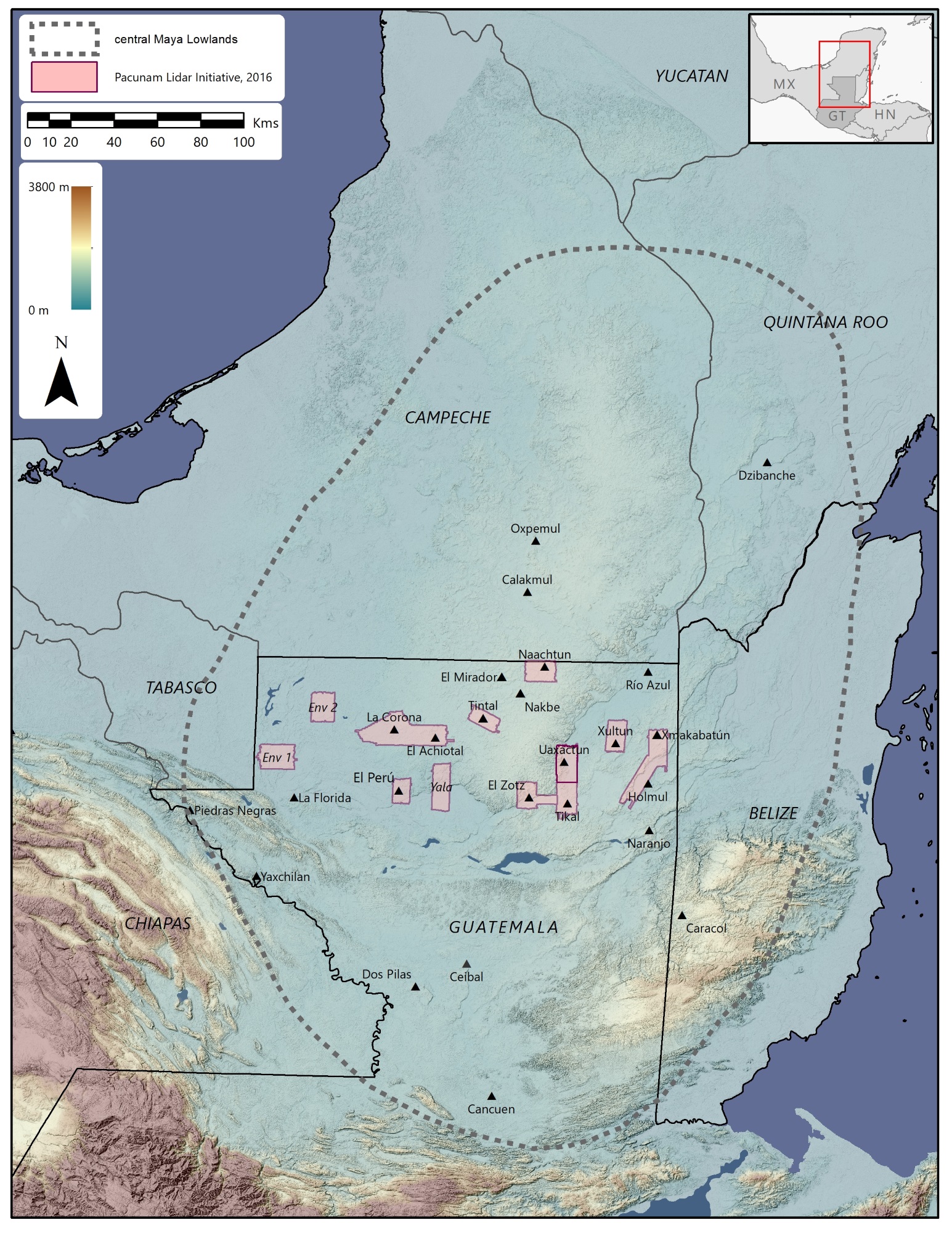
The areas covered by the initiative, as you can see, spread over perhaps a fifth of the country.

“We’ve never been able to see an ancient landscape at this scale all at once. We’ve never had a data set like this. But in February really we hadn’t done any analysis, really, in a quantitative sense,” co-author Francisco Estrada-Belli, of Tulane University, told me. He worked on the project with numerous others, including his colleagues Marcello Canuto and Stephen Houston. “Basically we announced we had found a huge urban sprawl, that we had found agricultural features on a grand scale. After another nine months of work we were able to quantify all that and to get some numerical confirmations for the impressions we’d gotten.”

“It’s nice to be able to confirm all our claims,” he said. “They may have seemed exaggerated to some.”

The lidar data was collected not by self-driving cars, which seem to be the only vehicles bearing lidar we ever hear about, nor even by drones, but by traditional airplane. That may sound cumbersome, but the distances and landscapes involved permitted nothing else.

“A drone would never have worked — it could never have covered that area,” Estrada-Belli explained. “In our case it was actually a twin-engine plane flown down from Texas.”

The plane made dozens of passes over a given area, a chosen “polygon” perhaps 30 kilometers long and 20 wide. Mounted underneath was “a Teledyne Optech Titan MultiWave multichannel, multi-spectral, narrow-pulse width lidar system,” which pretty much says it all: this is a heavy-duty instrument, the size of a refrigerator. But you need that kind of system to pierce the canopy and image the underlying landscape.

The many overlapping passes were then collated and calibrated into a single digital landscape of remarkable detail.
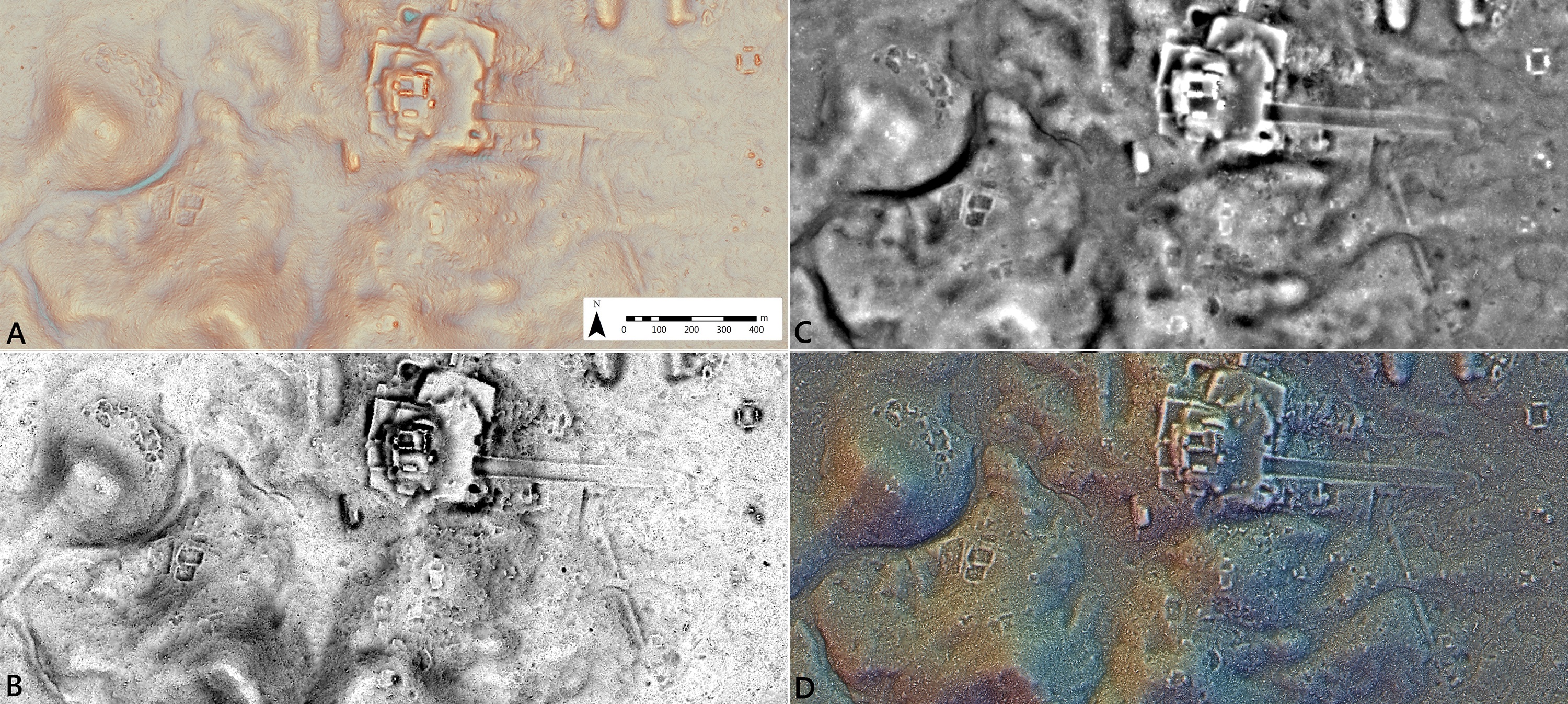
“It identified features that I had walked over — a hundred times!” he laughed. “Like a major causeway, I walked over it, but it was so subtle, and it was covered by huge vegetation, underbrush, trees, you know, jungle — I’m sure that in another 20 years I wouldn’t have noticed it.”

But these structures don’t identify themselves. There’s no computer labeling system that looks at the 3D model and says, “this is a pyramid, this is a wall,” and so on. That’s a job that only archaeologists can do.

“It actually begins with manipulating the surface data,” Estrada-Belli said. “We get these surface models of the natural landscape; each pixel in the image is basically the elevation. Then we do a series of filters to simulate light being projected on it from various angles to enhance the relief, and we combine these visualizations with transparencies and different ways of sharpening or enhancing them. After all this process, basically looking at the computer screen for a long time, then we can start digitizing it.”

“The first step is to visually identify features. Of course, pyramids are easy, but there are subtler features that, even once you identify them, it’s hard to figure out what they are.”
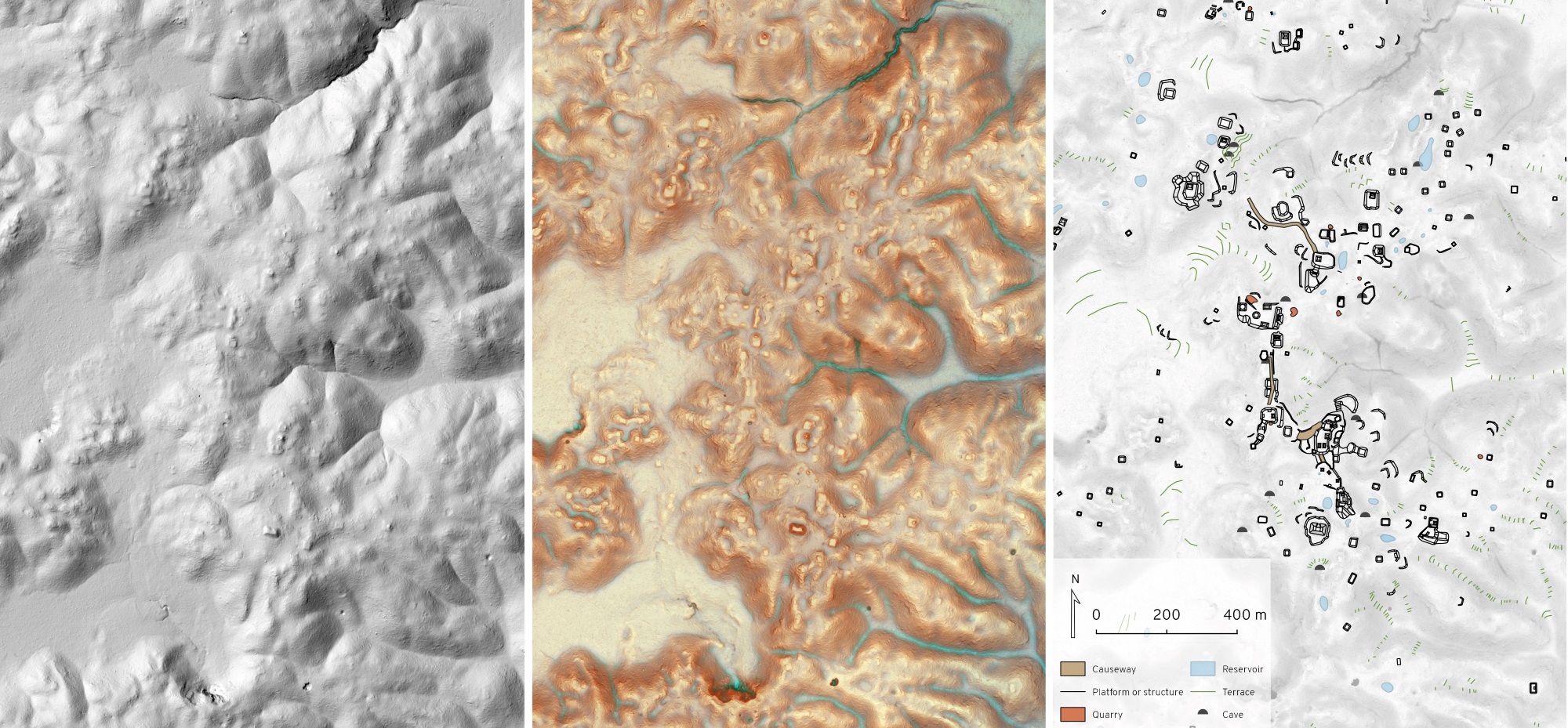
The lidar imagery revealed, for example, lots of low linear features that could be man-made or natural. It’s not always easy to tell the difference, but context and existing scholarship fill in the gaps.

“Then we proceeded to digitize all these features… there were 61,000 structures, and everything had to be done manually,” Estrada-Belli said — in case you were wondering why it took nine months. “There’s really no automation because the digitizing has to be done based on experience. We looked into AI, and we hope that maybe in the near future we’ll be able to apply that, but for now an experienced archaeologist’s eye can discern the features better than a computer.”

You can see the density of the annotations on the maps. It should be noted that many of these features had by this point been verified by field expeditions. By consulting existing maps and getting ground truth in person, they had made sure that these weren’t phantom structures or wishful thinking. “We’re confident that they’re all there,” he told me.

[gallery ids="1721959,1721960,1721957,1721961,1721958"]

“Next is the quantitative step,” he continued. “You measure the length and the areas and you put it all together, and you start analyzing them like you’d analyze other data set: the structure density of some area, the size of urban sprawl or agricultural fields. Finally we even figured a way to quantify the potential production of agriculture.”

This is the point where the imagery starts to go from point cloud to academic study. After all, it’s well known that the Maya had a large city in this area; it’s been intensely studied for decades. But the Pacunam (which stands for Patrimonio Cultural y Natural Maya) study was meant to advance beyond the traditional methods employed previously.

“It’s a huge data set. It’s a huge cross-section of the Maya lowlands,” Estrada-Belli said. “Big data is the buzzword now, right? You truly can see things that you would never see if you only looked at one site at a time. We could never have put together these grand patterns without lidar.”

“For example, in my area, I was able to map 47 square kilometers over the course of 15 years,” he said, slightly wistfully. “And in two weeks the lidar produced 308 square kilometers, to a level of detail that I could never match.”

As a result the paper includes all kinds of new theories and conclusions, from population and economy estimates, to cultural and engineering knowledge, to the timing and nature of conflicts with neighbors.

The resulting report doesn’t just advance the knowledge of Mayan culture and technology, but the science of archaeology itself. It’s iterative, of course, like everything else — Estrada-Belli noted that they were inspired by work done by colleagues in Belize and Cambodia; their contribution, however, exemplifies new approaches to handling large areas and large data sets.

The more experiments and field work, the more established these methods will become, and the greater they will be accepted and replicated. Already they have proven themselves invaluable, and this study is perhaps the best example of lidar’s potential in the field.

“We simply would not have seen these massive fortifications. Even on the ground, many of their details remain unclear. Lidar makes most human-made features clear, coherent, understandable,” explained co-author Stephen Houston (also from Tulane) in an email. “AI and pattern recognition may help to refine the detection of features, and drones may, we hope, bring down the cost of this technology.”

“These technologies are important not only for discovery, but also for conservation,” pointed out co-author Thomas Garrison in an email. “3D scanning of monuments and artifacts provide detailed records and also allow for the creation of replicas via 3D printing.”

Lidar imagery can also show the extent of looting, he wrote, and help cultural authorities provide against it by being aware of relics and sites before the looters are.

The researchers are already planning a second, even larger set of flyovers, founded on the success of the first experiment. Perhaps by the time the initial physical work is done the trendier tools of the last few years will make themselves applicable.

“I doubt the airplanes are going to get less expensive but the instruments will be more powerful,” Estrada-Belli suggested. “The other line is the development of artificial intelligence that can speed up the project; at least it can rule out areas, so we don’t waste any time, and we can zero in on the areas with the greatest potential.”

He’s also excited by the idea of putting the data online so citizen archaeologists can help pore over it. “Maybe they don’t have the same experience we do, but like artificial intelligence they can certainly generate a lot of good data in a short time,” he said.

But as his colleagues point out, even years in this line of work are necessarily preliminary.

“We have to emphasize: it’s a first step, leading to innumerable ideas to test. Dozens of doctoral dissertations,” wrote Houston. “Yet there must always be excavation to look under the surface and to extract clear dates from the ruins.”

“Like many disciplines in the social sciences and humanities, archaeology is embracing digital technologies. Lidar is just one example,” wrote Garrison. “At the same time, we need to be conscious of issues in digital archiving (particularly the problem of obsolete file formatting) and be sure to use technology as a complement to, and not a replacement for methods of documentation that have proven tried and true for over a century.”

The researchers’ paper was published today in Science; you can learn about their conclusions (which are of more interest to the archaeologists and anthropologists among our readers) there, and follow other work being undertaken by the Fundación Pacunam at its website.


27 Sep 2018

Mozilla pushes PayPal to make Venmo transactions private by default

Earlier this year, the FTC settled with PayPal over the company’s handling of privacy disclosures in its peer-to-peer payments app Venmo, but Mozilla doesn’t think the changes Venmo made as a result went far enough. This week, Mozilla says it delivered a petition signed by 25,000 Americans asking Venmo to set transactions shared in its app to private by default, instead of public.

As Mozilla explains, “millions of Venmo users’ spending habits are available for anyone to see. That’s because Venmo transactions are currently public by default — unless users manually update their settings, anyone, anywhere can see whom they’re sending money to, and why.”

Many Venmo users likely feel that it’s not very dangerous to share through Venmo’s feed – a key feature of its popular payments app – that they paid back a friend for part of the dinner, drinks or some concert tickets, for example.

But a Berlin-based researcher, Hang Do Thi Duc, recently studied the risks associated with this sort of over-sharing.

Do Thi Duc analyzed more than 200 million public Venmo transactions made in 2017 by accessing the data through a public API. This allowed her to see the names, dates and transactions of Venmo users. She found that a lot could actually be gleaned from this data, including users’ drug habits in some cases, as well as their relationships, junk food habits, location, daily routines, personal finances, rent payments and more.

In other words, while the individual transaction itself may seem harmless, in aggregate these transactions can be very revealing about the person in question.

Mozilla says it, along with Ipsos, also polled 1,009 Americans how they felt about Venmo’s “public by default” nature. 77% said they didn’t think that should be the case, and 92% said they don’t support Venmo’s justifications for making them public. (It thinks sharing is fun, basically.)

Venmo didn’t respond to Mozilla’s petition directly, but tells TechCrunch via a spokesperson that it takes its users’ trust seriously.

“Venmo was designed for sharing experiences with your friends in today’s social world, and the newsfeed has always been a big part of this,” the spokesperson said. “The safety and privacy of Venmo users and their information is always a top priority. Our users trust us with their money and personal information, and we take this responsibility and applicable privacy laws very seriously,” they added.

The company also pointed out it takes several steps to ensure some level of user protection, including not making sensitive transactions public, never publishing dollar amounts, and allowing users to control the publicity of the item, even after the fact.

As part of the FTC settlement, Venmo also had to make other changes, as well. The company now has to explain to new and existing users how to limit the visibility of transactions through the use of privacy settings.

We recently saw this in the updated Venmo app, in fact.

Users are walked through a tutorial that spells out how you can change settings to make transactions private by default, or any time you choose.

[gallery ids="1721938,1721939,1721940,1721941"]

Mozilla’s petition comes at a time when PayPal has been weighing whether to change the default in Venmo from public to private, according to a report from Bloomberg last month.

Thanks to large-scale scandals like Cambridge Analytica and others involving user data being overexposed, timed alongside the rollout of new privacy regulations like Europe’s GDPR, many companies are reviewing their data-protection policies.

Venmo’s casual over-sharing now feels like a holdover from an earlier, more naive time on the web, and it wouldn’t be surprising if it decided to later adjust the app’s settings to match where consumer sentiment is headed today.

27 Sep 2018

IRS can do more to protect against tax fraudsters, watchdog says

A government watchdog has said that the Internal Revenue Service could do more to prevent tax fraud if it invested more money in ensuring that the identities of taxpayers are properly verified.

From the IRS’s own data, fraudsters scammed the agency out of at least $1.6 billion in tax refunds during the 2016 tax season that belonged to taxpayers. That’s a drop in the ocean to the $383 billion paid out in legitimate tax returns. But the new report by the Government Accountability Office said that the IRS still has a way to go to prevent further fraudulent activity.

“While IRS regularly assesses risks to and monitors its online authentication applications, it has not established equally rigorous internal controls for its telephone, in-person, and correspondence channels, including mechanisms to collect reliable, useful data to monitor authentication outcomes,” said the report. “As a result, IRS may not identify current or emerging threats to the tax system.”

In other words, the IRS can’t always guarantee that it’s you calling up about your tax affairs or logging in to the website.

That’s a problem because around tax season, scammers obtain tax returns or filings — through leaks or breaches — and use that information to impersonate taxpayers. By filing fake tax returns before the legitimate taxpayer does, the scammer can collect the fraudulently obtained return.

These breaches aren’t helping matters, said IRS chief information officer Gina Garza at a House committee hearing on Thursday. Indeed, the IRS had to clean up after its own data breach last year, in which 100,000 taxpayers had their tax information stolen — just two years after a separate IRS breach affected 300,000 taxpayers.

Although the government watchdog said that the IRS has made some steps to improve its taxpayer verification efforts, the agency “does not have clear plans and timelines” to implement guidance provided by the National Institute of Standards and Technology that would properly authenticate taxpayers.

One of the ideas was to notify taxpayers when a tax return had been filed in their name, which would help get ahead of scammers trying to cash in on fraudulent returns. But the watchdog said that the IRS hasn’t found the funding to roll out notifications.

Some of the measures could still take between six months and three years to complete, the report said, leaving millions of taxpayers to defend themselves against the ongoing threat of tax fraud.

The IRS accepted all of GAO’s 11 recommendations. IRS spokesperson Cecilia Barreda declined to comment further.

27 Sep 2018

May Mobility puts autonomous shuttles on the streets of Columbus, Ohio

This December a set of autonomous vehicles will start roaming the streets of Columbus, Ohio, in an effort to turn this bustling Midwestern community into the first smart city. The project, which is part of the Smart Columbus and DriveOhio initiatives, is the first step in launching a fully autonomous shuttle route in the city.

“We’re proud to have the first self-driving shuttle in Ohio being tested on the streets of Columbus,” said Mayor Andrew J. Ginther. “This pilot will shape future uses of this emerging technology in Columbus and the nation. Residents win when we add more mobility options to our transportation ecosystem – making it easier to get to work, school or local attractions.”

Michigan-based May Mobility provided the shuttles and the team is training the autonomous vehicles to navigate Columbus streets. May Mobility already launched their vehicles in Detroit and this is the second full implementation of the tech.

The six-seater electric shuttles will follow a 3 mile route through downtown Columbus and the vehicles will start picking up passengers on December 1. Rides are free. May Mobility has already performed over 10,000 successful trips in Detroit. In Columbus the shuttles will drive the Scioto Mile loop, a scenic route through the city and by the Ohio River. A large digital display will show system information and there will be a single operator to oversee the trip and take control in case of emergency.

Founder Edwin Olson is a robotics professor at the University of Michigan and his team won the original DARPA challenge in 2007.

“Cities are seeking cost-effective transportation services that will improve congestion in urban cores, and self-driving shuttles can offer a huge relief,” he said. “As we work toward a future where people can drive less and live more, we’re thrilled to be working with partners from Columbus to provide a new transportation experience that will make traveling through Columbus safe, reliable and personal.”

Columbus won the $40 million Smart City Challenge in June 2016 to test and implement smart city tech.

27 Sep 2018

Compound launches easy way to short cryptocurrencies

Think Ethereum and other crypto coins are overvalued? Now you can make money when their prices fall via Compound, which is launching its money market protocol for shorting cryptocurrencies today. The Coinbase and Andreessen Horowitz-funded startup today opens its simple web interface allowing users to borrow and short Ethereum, 0x’s ZRX, Brave’s BAT, and Augur’s REP token, or lend them through Compound to earn interest.

Compound’s protocol isn’t just useful for crypto haters, or HODLers who want to generate interest instead of just having their coins gathering dust in a wallet.  “If/when Compound scales, this will lead to some really interesting improvements in market structure, namely, fairer prices” Compound CEO Robert Leshner tells me.

The startup spent the summer completing a security audit by Trail Of Bits and adding 26 hedge fund partners who will trade with Compound, offering liquidity to independent investors looking to be matched with borrowers or lenders. Next, the startup wants to offer a stablecoin on its protocol, bring in big financial institutions to add even more liquidity, and partner with a wallet provider to make signup faster.

Compound users visit its site through a Web3 browser such as MetaMask or Coinbase Wallet and enter their Ethereum price. They can then view the interest rates for borrowing and shorting or lending and earning interest for each of the supported tokens. Compound’s secret sauce is that those interest rates are set algorithmically based on demand, though eventually it wants a community governance body to oversee this process. “It ranges from 5 percent to 45 percent APR depending on how scarce liquidity is . . . in general, we expect supply to outnumber borrowing about 5-1, and borrowing rates to be about 10 percent”.

To make sure no one thinks they’re getting scammed, Compound is also releasing a transparency dashboard users can view to check up on all the assets moving through the protocol and see what Compound is earning. It charges 10 percent of what borrowers pay in interest, with the rest going to the lender. That margin is what attracted the $8.2 seed round for Compound that also included Polychain Capital and Bain Capital Ventures.

It could also make crypto exchanges like Coinbase or Robinhood less attractive to users because leaving their coins there comes with the opportunity cost of not lending them for profit. Meanwhile, shorts could pop the volatile crypto bubble and push prices to more sensible and stable levels. That’s market health is a critical precursor to big banks and traditional investors diving into crypto.

[Disclosure: The author owns small positions in Bitcoin and Ethereum, but has no financial motive for writing this article, did not make trades in the week prior to this article, and doesn not plan to make trades in the 72 hours following publication.]

27 Sep 2018

Google launches new travel-planning tools

Slowly but surely, Google is expanding its portfolio of travel offerings that now range from hotel- and flight-booking services to trip planning tools. Today, it’s launching yet another set of new travel features that focus on travel planning and hotel bookings.

Maybe the most interesting new tool, especially if you are planning to travel over the holidays, is a new landing page that shows you when to best book your flights ahead of Thanksgiving, the December holidays and New Year’s based on 2017’s price changes. The tool is a bit limited in the number of city pairs it supports, but if you plan to fly on one of the 25 supported routes, then it could definitely save you a few dollars (assuming this year’s price trends are comparable to last year’s).

The same page will also show you hotel deals, though that’s more of a lead-generation tool for Google Maps’ hotel search feature, which many people probably don’t yet know about.

Once you have decided on a destination, Google’s new hotel location score can then help you find the neighborhood that’s best for you. The score summarizes information like nearby bars, landmarks and access to public transportation based on data from Google Maps. It’ll also tell you how to get to and from the airport, which is a smart addition.

Come October, Google will also launch Your Trips, a new feature that’ll help you organize your travel plans. Your Trips is not a new feature, but when this update goes live, it’ll collect all of your flight price tracking, hotel research and everything else you may have saved about a potential trip in one place. It’s a bit like Inbox’s (RIP) trip bundles, but for trips that you are still planning.

And finally, if you perform a regular search for a popular travel destination in Google Search, the result page will automatically highlight these trip-planning features, including day plans and articles about the destination. Once you start booking a trip, these results will also include information about your bookings and additional information based on this data.

27 Sep 2018

Fund raises $200 million to lend cash to startup employees whose liquidity is locked up in equity

Troy Capital Group has closed its $200 million fund to provide loans to startup employees whose liquidity is locked up in company stock.

The fund, backed by the multi-billion dollar private equity giant Oaktree Capital, is the latest investment vehicle from Troy Capital Partners, a four year-old venture firm founded by MySpace co-founder Josh Berman; Samit Varma, a former partner at Anthem Ventures; and Brian Sullivan, the founder of the startup small business lender, ForwardLine.

Troy Capital Partners has roughly $140 million under management in a $20 million early stage fund and a $120 million growth stage fund, according to Berman. This is the firm’s first foray into the lending business.

The new fund represents a brand new business opportunity for Oaktree, which manages $100 billion and invests heavily in credit and lending vehicles.

“We think equity compensation is a bit broken as companies stay private longer,” says fund principal Anthony Tucker. The problem for employees is that a lot of their net worth is locked up in stock that is illiquid except through secondary offerings, which requires them to relinquish their shares.

The lending product that Troy Capital offers comes with a 7% interest rate and means that employees don’t have to let go of their shares should they want to get some liquidity for their efforts. They simply take out a loan and get to keep the shares that could potentially be worth billions.

“As former operators of private technology companies, we understand the large and growing demand for early access to loans or liquidity, particularly as large, private technology companies stay private longer than ever,” said Varma in a statement. “TCG’s offering provides an attractive solution for the many loyal and committed tech employees who want to be able to tap the value of their stock, but over the long-term want to keep their upside and stay closely aligned with their colleagues and leadership teams at these fast-growing, dynamic companies.”

For Troy, not only do the fund managers get access to a potentially lucrative new investment market, but they also gain a new pipeline for potential dealflow with the engineers and executives who may one day become founders in their own right.

According to Tucker, the market for this kind of product is in the tens of billions of dollars. “SoftBank did a tender with Uber and it was a $9 billion tender, which was oversubscribed two times.” That means there was an additional $9 billion of demand for that transaction alone, he said.

27 Sep 2018

Microsoft will end support for Skype Classic in November

This summer, Microsoft pushed off the inevitable end of Skype Classic (7.0) support after a fair bit of user backlash. Nearly a month after the original September deadline, the company announced today that it’s going to pull the plug in November — for real this time.

The company is killing Skype 7 support on the desktop on November 1, following suit for mobile and tablets two weeks later on the 15th. The initial delay was motivated by vocal users unhappy by the changes brought on by Skype 8 in the name of simplification.

One user went so far as launching a Change.org petition asking Microsoft to “Keep the desktop version of Skype alive for professional users.” That’s since racked up in excess of 1,000 signatures, demanding the company keep enterprise features lost in the shuffle.

For its part, Microsoft says that it’s listening and responding to the outcry over abandoned features.

“We’re continuing to work on your most requested features,” the company writes in an update to the original announcement. “Recently we launched call recording and have started to roll out the ability to search within a conversation. You’ll soon be able to add phone numbers to existing contacts, have more control over your availability status, and more.”

27 Sep 2018

The Infatuation raises $30M from Jeffrey Katzenberg’s WndrCo to bring Zagat into the digital age

WndrCo, the consumer tech investment and holding company founded by longtime Hollywood executive Jeffrey Katzenberg, has invested $30 million in The Infatuation, a restaurant discovery platform.

The Infatuation made waves earlier this year when it purchased Zagat from Google, which had paid $151 million for the 40-year-old company in 2011. Despite efforts to makeover the Zagat app, the search giant ultimately decided to unload the perennial restaurant review and recommendation service and focus on expanding its database of restaurant recommendations organically.

New York-based The Infatuation was founded by music industry vets Chris Stang and Andrew Steinthal in 2009. It has previously raised $3.5 million for its mobile app, events, newsletter and personalized SMS-based recommendation tool.

Stang told TechCrunch this morning that they plan to use a good chunk of the funds to develop the new Zagat platform, which will be kept separate from The Infatuation.

“The first thing we want to do before we build anything is spend a lot of time researching how people have used Zagat in the past, how they want to use it in the future, what a community-driven platform could look like and how to apply community reviews and ratings to the brand,” said Stang, The Infatuation’s chief executive officer. “Zagat’s roots are in user-generated content. … What we are doing now is thinking through what that looks like with new tech applied to it. What it looks like in the digital age. How [we can] take our domain expertise and that legendary brand and make something new with it.”

The Infatuation will also expand to new cities beginning this fall with launches in Boston and Philadelphia. It’s already active in a dozen or so U.S. cities including Los Angeles, Seattle and San Francisco. The startup’s first and only international location is London.

Katzenberg, who began his Hollywood career at Paramount Pictures, began raising up to $2 billion for WndrCo about a year ago. Since then, he’s unveiled WndrCo’s new mobile video startup NewTV, which has raised $1 billion and hired Meg Whitman, the former president and CEO of Hewlett Packard, as CEO.

On top of that, WndrCo has invested in MixcloudAxiosNodeFlowspace, Whistle Sports, TYT Network and others.

Given The Infatuation founders’ experience in the entertainment industry, a partnership with Katzenberg was natural.

“We really felt like between content and technology they had … expertise on both sides,” Stang said. “The Infatuation is at its best when great content intersects with great technology, to find a fund that was perfectly suited to that was exciting.”

27 Sep 2018

China’s secret startup advantage: liquidity

This year’s rush of IPOs from Chinese tech companies has dominated headlines, but what’s more interesting is how quickly they got there.

Traditionally, “going public” represented the gratifying culmination of sleepless nights and missed birthdays that went into building a company. The peak of a lengthy climb, where founders and VCs would finally see the fruits of their labor. 

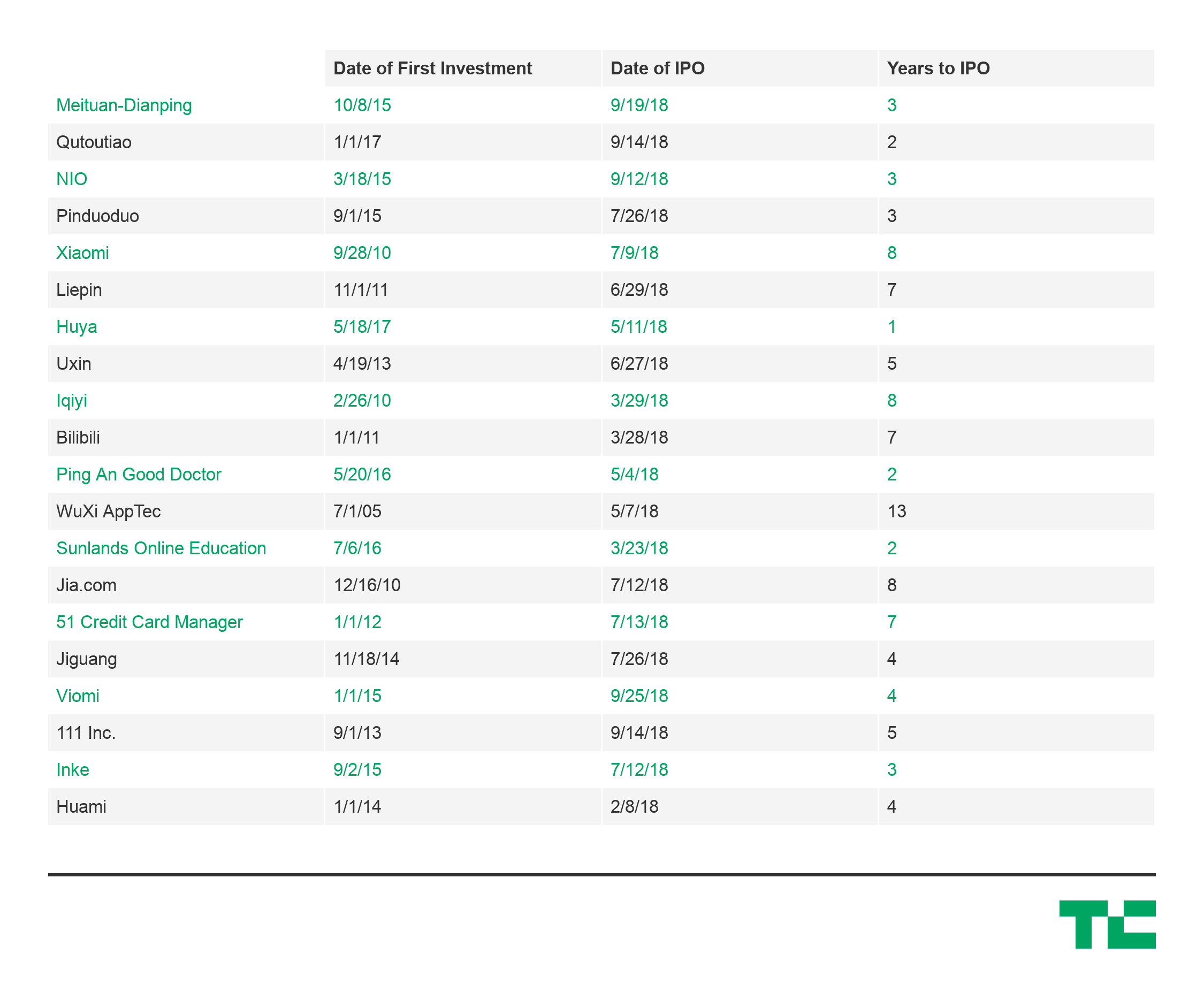
However, Chinese companies appear to be reaching that peak much quicker than their American peers, heading to the public markets only a few years after initial venture investments, and often with little operating history. 

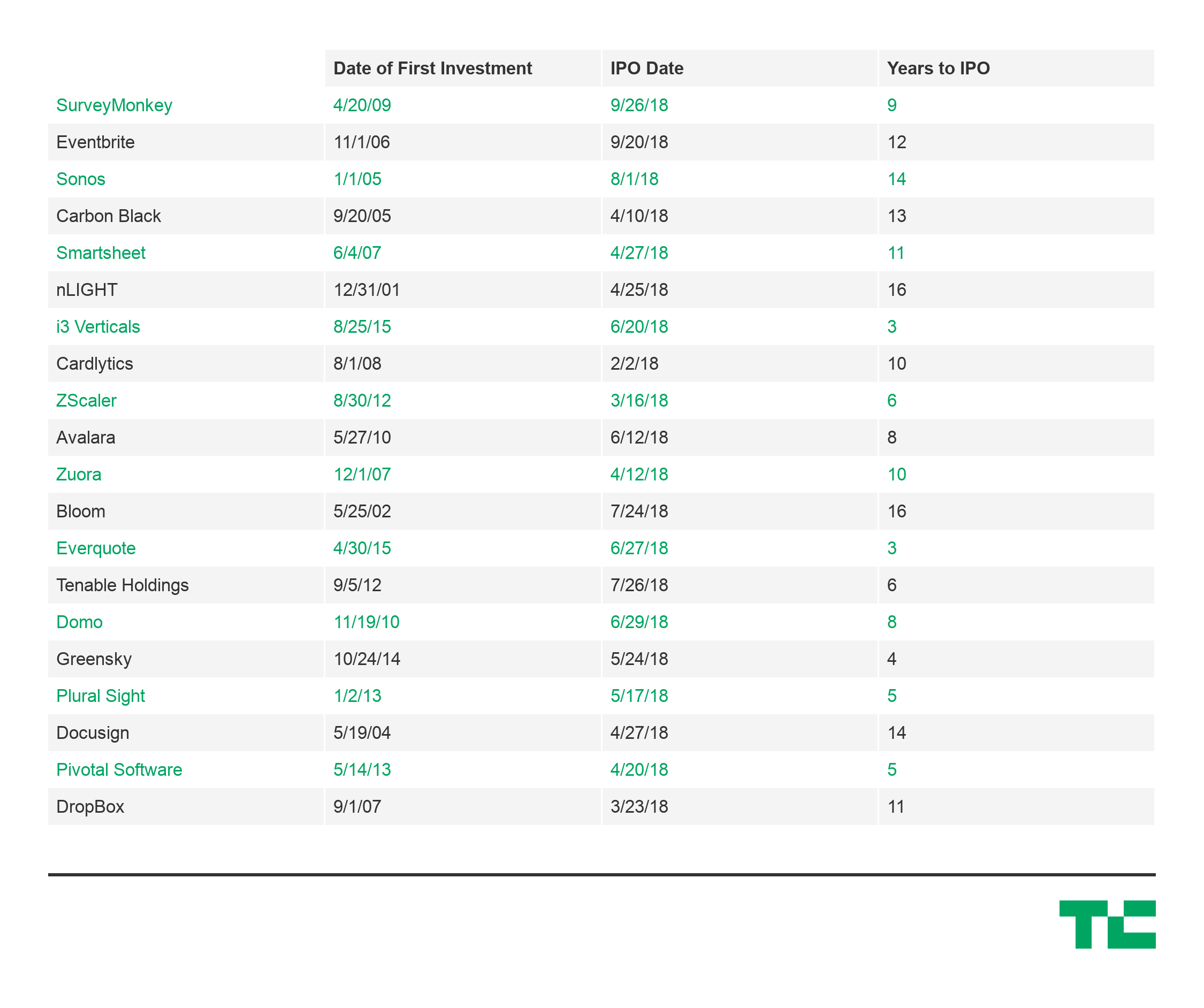
Analyzing twenty of the most high profile Chinese tech IPOs this year, the average time from first venture investment to IPO was only around three to five years. Take e-commerce platform Pinduoduo, which pulled in $1.6 billion less than three years after its Series A.  Or the recent IPO of EV-manufacturer NIO, which raised a billion dollars just three-and-a-half years after its Series A and having just delivered its first car in June.

China IPO data for 2018 compiled from NASDAQ, Pitchbook, and Crunchbase

That’s less than half the average 10-year timeline for venture-backed US tech companies that went public in 2018, including Dropbox, Eventbrite, and DocuSign, which all IPO’d more than a decade after their initial investments.

Differences in market maturity, government involvement, and support from large tech incumbents all undoubtedly play a factor, but the speed to liquidity for the Chinese companies is still astounding.

Faster liquidity can push cycle of returns, fundraising, reinvestment

Speed to liquidity is a critical metric for the health of a startup ecosystem. It creates a positive cycle where faster liquidity can drive faster fundraising, faster reinvestment, faster startup building, and faster public liquidity again.  An accelerated cycle could be especially appealing for funds with LPs that require faster returns due to cash commitments or otherwise.

It’s important to note that venture returns are a function of capital and time, so quicker exits will also drive higher returns for the same amount invested.  For example, a $1 million investment with a $5 million exit after ten years would generate an Internal Rate of Return (a commonly used metric to evaluate VC performance) of 20%.  If the same exit occurred after five years, the IRR would be 50%. 

Liquidity is a key consideration as China’s influence on the flow of global venture capital intensifies. As China’s tech ecosystem sees more of its darlings mature and more consistently deliver smashing exits, investments in China will have to be a more serious consideration for VCs, even if only to minimize the sheer amount of time, resources, and painstaking energy needed to build a company in the U.S.