Author: azeeadmin

27 Sep 2018

Cloudflare launches a low-cost domain registrar

It’s been a busy week at Cloudflare, which promised a week of news for its birthday (and delivered). After announcing the Bandwidth Alliance yesterday, the company today announced the Cloudflare Registrar. This new domain registration service promises to only charge the wholesale price that the top-level domain registry (think Verisign) charges. Typically, registrars charge their own fees on top of that and try to upsell you to a hosting plan or other services that you likely don’t need.

As Cloudflare CEO and co-founder Matthew Prince told me, this new service isn’t meant to be a loss-leader. “We took a look at this and said: every single Cloudflare customer needs to register their domains,” he told me. “And I’ve never heard somebody say: I love my domain registrar. We hope to create the first domain registrar people love.”

The service will start rolling out by order of how long a customer has been with Cloudflare. If you signed up when Cloudflare launched at TechCrunch Disrupt eight years ago, you’ll get yours pretty soon. But Cloudflare also allows you to donate to Girls Who Code to skip the line. “What we’re hoping is that whatever [our customers save], they will donate to Girls Who Code.”

Given Cloudflare’s heritage, it’s no surprise the new service will offer security features like built-in two-factor authentication and automatic domain lock, as well as Whois privacy protection.

If some of this sounds familiar, it’s likely because you’ve heard of the Cloudflare enterprise registrar, the company’s domain registration and protection service for large businesses.

27 Sep 2018

Facebook’s ex-CSO, Alex Stamos, defends its decision to inject ads in WhatsApp

Alex Stamos, Facebook’s former chief security officer, who left the company this summer to take up a role in academia, has made a contribution to what’s sometimes couched as a debate about how to monetize (and thus sustain) commercial end-to-end encrypted messaging platforms in order that the privacy benefits they otherwise offer can be as widely spread as possible.

Stamos made the comments via Twitter, where he said he was indirectly responding to the fallout from a Forbes interview with WhatsApp co-founder Brian Acton — in which Acton hit at out at his former employer for being greedy in its approach to generating revenue off of the famously anti-ads messaging platform.

Both WhatsApp founders’ exits from Facebook has been blamed on disagreements over monetization. (Jan Koum left some months after Acton.)

In the interview, Acton said he suggested Facebook management apply a simple business model atop WhatsApp, such as metered messaging for all users after a set number of free messages. But that management pushed back — with Facebook COO Sheryl Sandberg telling him they needed a monetization method that generates greater revenue “scale”.

And while Stamos has avoided making critical remarks about Acton (unlike some current Facebook staffers), he clearly wants to lend his weight to the notion that some kind of trade-off is necessary in order for end-to-end encryption to be commercially viable (and thus for the greater good (of messaging privacy) to prevail); and therefore his tacit support to Facebook and its approach to making money off of a robustly encrypted platform.

Stamos’ own departure from the fb mothership was hardly under such acrimonious terms as Acton, though he has had his own disagreements with the leadership team — as set out in a memo he sent earlier this year that was obtained by BuzzFeed. So his support for Facebook combining e2e and ads perhaps counts for something, though isn’t really surprising given the seat he occupied at the company for several years, and his always fierce defence of WhatsApp encryption.

(Another characteristic concern that also surfaces in Stamos’ Twitter thread is the need to keep the technology legal, in the face of government attempts to backdoor encryption, which he says will require “accepting the inevitable downsides of giving people unfettered communications”.)

This summer Facebook confirmed that, from next year, ads will be injected into WhatsApp statuses (aka the app’s Stories clone). So it is indeed bringing ads to the famously anti-ads messaging platform.

For several years the company has also been moving towards positioning WhatsApp as a business messaging platform to connect companies with potential customers — and it says it plans to meter those messages, also from next year.

So there are two strands to its revenue generating playbook atop WhatsApp’s e2e encrypted messaging platform. Both with knock-on impacts on privacy, given Facebook targets ads and marketing content by profiling users by harvesting their personal data.

This means that while WhatsApp’s e2e encryption means Facebook literally cannot read WhatsApp users’ messages, it is ‘circumventing’ the technology (for ad-targeting purposes) by linking accounts across different services it owns — using people’s digital identities across its product portfolio (and beyond) as a sort of ‘trojan horse’ to negate the messaging privacy it affords them on WhatsApp.

Facebook is using different technical methods (including the very low-tech method of phone number matching) to link WhatsApp user and Facebook accounts. Once it’s been able to match a Facebook user to a WhatsApp account it can then connect what’s very likely to be a well fleshed out Facebook profile with a WhatsApp account that nonetheless contains messages it can’t read. So it’s both respecting and eroding user privacy.

This approach means Facebook can carry out its ad targeting activities across both messaging platforms (as it will from next year). And do so without having to literally read messages being sent by WhatsApp users.

As trade offs go, it’s a clearly a big one — and one that’s got Facebook into regulatory trouble in Europe.

It is also, at least in Stamos’ view, a trade off that’s worth it for the ‘greater good’ of message content remaining strongly encrypted and therefore unreadable. Even if Facebook now knows pretty much everything about the sender, and can access any unencrypted messages they sent using its other social products.

In his Twitter thread Stamos argues that “if we want that right to be extended to people around the world, that means that E2E encryption needs to be deployed inside of multi-billion user platforms”, which he says means: “We need to find a sustainable business model for professionally-run E2E encrypted communication platforms.”

On the sustainable business model front he argues that two models “currently fit the bill” — either Apple’s iMessage or Facebook-owned WhatsApp. Though he doesn’t go into any detail on why he believes only those two are sustainable.

He does say he’s discounting the Acton-backed alternative, Signal, which now operates via a not-for-profit (the Signal Foundation) — suggesting that rival messaging app is “unlikely to hit 1B users”.

In passing he also throws it out there that Signal is “subsidized, indirectly, by FB ads” — i.e. because Facebook pays a licensing fee for use of the underlying Signal Protocol used to power WhatsApp’s e2e encryption. (So his slightly shade-throwing subtext is that privacy purists are still benefiting from a Facebook sugardaddy.)

Then he gets to the meat of his argument in defence of Facebook-owned (and monetized) WhatsApp — pointing out that Apple’s sustainable business model does not reach every mobile user, given its hardware is priced at a premium. Whereas WhatsApp running on a cheap Android handset ($50 or, perhaps even $30 in future) can.

Other encrypted messaging apps can also of course run on Android but presumably Stamos would argue they’re not professionally run.

“I think it is easy to underestimate how radical WhatsApp’s decision to deploy E2E was,” he writes. “Acton and Koum, with Zuck’s blessing, jumped off a bridge with the goal of building a monetization parachute on the way down. FB has a lot of money, so it was a very tall bridge, but it is foolish to expect that FB shareholders are going to subsidize a free text/voice/video global communications network forever. Eventually, WhatsApp is going to need to generate revenue.

“This could come from directly charging for the service, it could come from advertising, it could come from a WeChat-like services play. The first is very hard across countries, the latter two are complicated by E2E.”

“I can’t speak to the various options that have been floated around, or the arguments between WA and FB, but those of us who care about privacy shouldn’t see WhatsApp monetization as something evil,” he adds. “In fact, we should want WA to demonstrate that E2E and revenue are compatible. That’s the only way E2E will become a sustainable feature of massive, non-niche technology platforms.”

Stamos is certainly right that Apple’s iMessage cannot reach every mobile user, given the premium cost of Apple hardware.

Though he elides the important role that second hand Apple devices play in helping to reduce the barrier to entry to Apple’s pro-privacy technology — a role Apple is actively encouraging via support for older devices (and by its own services business expansion which extends its model so that support for older versions of iOS (and thus secondhand iPhones) is also commercially sustainable).

Robust encryption only being possible via multi-billion user platforms essentially boils down to a usability argument by Stamos — which is to suggest that mainstream app users will simply not seek encryption out unless it’s plated up for them in a way they don’t even notice it’s there.

The follow on conclusion is then that only a well-resourced giant like Facebook has the resources to maintain and serve this different tech up to the masses.

There’s certainly substance in that point. But the wider question is whether or not the privacy trade offs that Facebook’s monetization methods of WhatsApp entail, by linking Facebook and WhatsApp accounts and also, therefore, looping in various less than transparent data-harvest methods it uses to gather intelligence on web users generally, substantially erodes the value of the e2e encryption that is now being bundled with Facebook’s ad targeting people surveillance. And so used as a selling aid for otherwise privacy eroding practices.

Yes WhatsApp users’ messages will remain private, thanks to Facebook funding the necessary e2e encryption. But the price users are having to pay is very likely still their personal privacy.

And at that point the argument really becomes about how much profit a commercial entity should be able to extract off of a product that’s being marketed as securely encrypted and thus ‘pro-privacy’? How much revenue “scale” is reasonable or unreasonable in that scenario?

Other business models are possible, which was Acton’s point. But likely less profitable. And therein lies the rub where Facebook is concerned.

How much money should any company be required to leave on the table, as Acton did when he left Facebook without the rest of his unvested shares, in order to be able to monetize a technology that’s bound up so tightly with notions of privacy?

Acton wanted Facebook to agree to make as much money as it could without users having to pay it with their privacy. But Facebook’s management team said no. That’s why he’s calling them greedy.

Stamos doesn’t engage with that more nuanced point. He just writes: “It is foolish to expect that FB shareholders are going to subsidize a free text/voice/video global communications network forever. Eventually, WhatsApp is going to need to generate revenue” — thereby collapsing the revenue argument into an all or nothing binary without explaining why it has to be that way.


27 Sep 2018

Facebook’s ex-CSO, Alex Stamos, defends its decision to inject ads in WhatsApp

Alex Stamos, Facebook’s former chief security officer, who left the company this summer to take up a role in academia, has made a contribution to what’s sometimes couched as a debate about how to monetize (and thus sustain) commercial end-to-end encrypted messaging platforms in order that the privacy benefits they otherwise offer can be as widely spread as possible.

Stamos made the comments via Twitter, where he said he was indirectly responding to the fallout from a Forbes interview with WhatsApp co-founder Brian Acton — in which Acton hit at out at his former employer for being greedy in its approach to generating revenue off of the famously anti-ads messaging platform.

Both WhatsApp founders’ exits from Facebook has been blamed on disagreements over monetization. (Jan Koum left some months after Acton.)

In the interview, Acton said he suggested Facebook management apply a simple business model atop WhatsApp, such as metered messaging for all users after a set number of free messages. But that management pushed back — with Facebook COO Sheryl Sandberg telling him they needed a monetization method that generates greater revenue “scale”.

And while Stamos has avoided making critical remarks about Acton (unlike some current Facebook staffers), he clearly wants to lend his weight to the notion that some kind of trade-off is necessary in order for end-to-end encryption to be commercially viable (and thus for the greater good (of messaging privacy) to prevail); and therefore his tacit support to Facebook and its approach to making money off of a robustly encrypted platform.

Stamos’ own departure from the fb mothership was hardly under such acrimonious terms as Acton, though he has had his own disagreements with the leadership team — as set out in a memo he sent earlier this year that was obtained by BuzzFeed. So his support for Facebook combining e2e and ads perhaps counts for something, though isn’t really surprising given the seat he occupied at the company for several years, and his always fierce defence of WhatsApp encryption.

(Another characteristic concern that also surfaces in Stamos’ Twitter thread is the need to keep the technology legal, in the face of government attempts to backdoor encryption, which he says will require “accepting the inevitable downsides of giving people unfettered communications”.)

This summer Facebook confirmed that, from next year, ads will be injected into WhatsApp statuses (aka the app’s Stories clone). So it is indeed bringing ads to the famously anti-ads messaging platform.

For several years the company has also been moving towards positioning WhatsApp as a business messaging platform to connect companies with potential customers — and it says it plans to meter those messages, also from next year.

So there are two strands to its revenue generating playbook atop WhatsApp’s e2e encrypted messaging platform. Both with knock-on impacts on privacy, given Facebook targets ads and marketing content by profiling users by harvesting their personal data.

This means that while WhatsApp’s e2e encryption means Facebook literally cannot read WhatsApp users’ messages, it is ‘circumventing’ the technology (for ad-targeting purposes) by linking accounts across different services it owns — using people’s digital identities across its product portfolio (and beyond) as a sort of ‘trojan horse’ to negate the messaging privacy it affords them on WhatsApp.

Facebook is using different technical methods (including the very low-tech method of phone number matching) to link WhatsApp user and Facebook accounts. Once it’s been able to match a Facebook user to a WhatsApp account it can then connect what’s very likely to be a well fleshed out Facebook profile with a WhatsApp account that nonetheless contains messages it can’t read. So it’s both respecting and eroding user privacy.

This approach means Facebook can carry out its ad targeting activities across both messaging platforms (as it will from next year). And do so without having to literally read messages being sent by WhatsApp users.

As trade offs go, it’s a clearly a big one — and one that’s got Facebook into regulatory trouble in Europe.

It is also, at least in Stamos’ view, a trade off that’s worth it for the ‘greater good’ of message content remaining strongly encrypted and therefore unreadable. Even if Facebook now knows pretty much everything about the sender, and can access any unencrypted messages they sent using its other social products.

In his Twitter thread Stamos argues that “if we want that right to be extended to people around the world, that means that E2E encryption needs to be deployed inside of multi-billion user platforms”, which he says means: “We need to find a sustainable business model for professionally-run E2E encrypted communication platforms.”

On the sustainable business model front he argues that two models “currently fit the bill” — either Apple’s iMessage or Facebook-owned WhatsApp. Though he doesn’t go into any detail on why he believes only those two are sustainable.

He does say he’s discounting the Acton-backed alternative, Signal, which now operates via a not-for-profit (the Signal Foundation) — suggesting that rival messaging app is “unlikely to hit 1B users”.

In passing he also throws it out there that Signal is “subsidized, indirectly, by FB ads” — i.e. because Facebook pays a licensing fee for use of the underlying Signal Protocol used to power WhatsApp’s e2e encryption. (So his slightly shade-throwing subtext is that privacy purists are still benefiting from a Facebook sugardaddy.)

Then he gets to the meat of his argument in defence of Facebook-owned (and monetized) WhatsApp — pointing out that Apple’s sustainable business model does not reach every mobile user, given its hardware is priced at a premium. Whereas WhatsApp running on a cheap Android handset ($50 or, perhaps even $30 in future) can.

Other encrypted messaging apps can also of course run on Android but presumably Stamos would argue they’re not professionally run.

“I think it is easy to underestimate how radical WhatsApp’s decision to deploy E2E was,” he writes. “Acton and Koum, with Zuck’s blessing, jumped off a bridge with the goal of building a monetization parachute on the way down. FB has a lot of money, so it was a very tall bridge, but it is foolish to expect that FB shareholders are going to subsidize a free text/voice/video global communications network forever. Eventually, WhatsApp is going to need to generate revenue.

“This could come from directly charging for the service, it could come from advertising, it could come from a WeChat-like services play. The first is very hard across countries, the latter two are complicated by E2E.”

“I can’t speak to the various options that have been floated around, or the arguments between WA and FB, but those of us who care about privacy shouldn’t see WhatsApp monetization as something evil,” he adds. “In fact, we should want WA to demonstrate that E2E and revenue are compatible. That’s the only way E2E will become a sustainable feature of massive, non-niche technology platforms.”

Stamos is certainly right that Apple’s iMessage cannot reach every mobile user, given the premium cost of Apple hardware.

Though he elides the important role that second hand Apple devices play in helping to reduce the barrier to entry to Apple’s pro-privacy technology — a role Apple is actively encouraging via support for older devices (and by its own services business expansion which extends its model so that support for older versions of iOS (and thus secondhand iPhones) is also commercially sustainable).

Robust encryption only being possible via multi-billion user platforms essentially boils down to a usability argument by Stamos — which is to suggest that mainstream app users will simply not seek encryption out unless it’s plated up for them in a way they don’t even notice it’s there.

The follow on conclusion is then that only a well-resourced giant like Facebook has the resources to maintain and serve this different tech up to the masses.

There’s certainly substance in that point. But the wider question is whether or not the privacy trade offs that Facebook’s monetization methods of WhatsApp entail, by linking Facebook and WhatsApp accounts and also, therefore, looping in various less than transparent data-harvest methods it uses to gather intelligence on web users generally, substantially erodes the value of the e2e encryption that is now being bundled with Facebook’s ad targeting people surveillance. And so used as a selling aid for otherwise privacy eroding practices.

Yes WhatsApp users’ messages will remain private, thanks to Facebook funding the necessary e2e encryption. But the price users are having to pay is very likely still their personal privacy.

And at that point the argument really becomes about how much profit a commercial entity should be able to extract off of a product that’s being marketed as securely encrypted and thus ‘pro-privacy’? How much revenue “scale” is reasonable or unreasonable in that scenario?

Other business models are possible, which was Acton’s point. But likely less profitable. And therein lies the rub where Facebook is concerned.

How much money should any company be required to leave on the table, as Acton did when he left Facebook without the rest of his unvested shares, in order to be able to monetize a technology that’s bound up so tightly with notions of privacy?

Acton wanted Facebook to agree to make as much money as it could without users having to pay it with their privacy. But Facebook’s management team said no. That’s why he’s calling them greedy.

Stamos doesn’t engage with that more nuanced point. He just writes: “It is foolish to expect that FB shareholders are going to subsidize a free text/voice/video global communications network forever. Eventually, WhatsApp is going to need to generate revenue” — thereby collapsing the revenue argument into an all or nothing binary without explaining why it has to be that way.

27 Sep 2018

TiVo’s 4-tuner $250 BOLT OTA set-top box goes after cord cutters

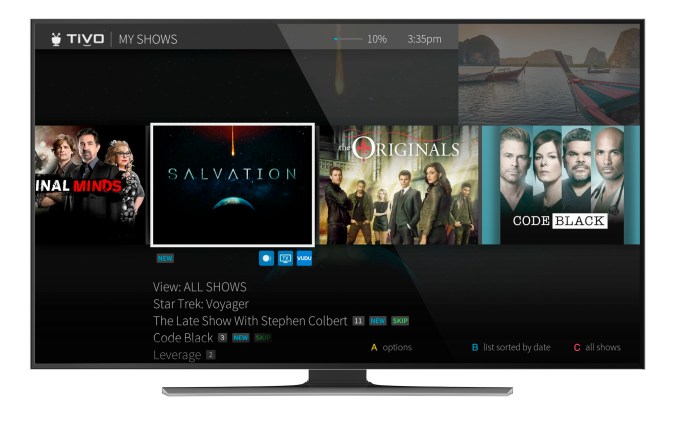
TiVo today is introducing a new set-top box, the TiVo BOLT OTA, which will join its existing lineup of TiVo BOLT-branded devices, including the voice-controlled BOLT VOX DVRs, launched last year. This new device, as its name suggests, is designed for cord cutters who use a digital antenna to watch live TV over-the-air. It will replace the TiVO Roamio OTA DVR, which will no longer be sold.

Specifically, the BOLT OTA 4K Ultra High Definition capable set-top box is designed to work with almost any HD antenna and TV set, as a way for customers to ditch expensive cable or satellite TV without losing the ability to watch and record live TV.

The device is similar to the 1TB BOLT VOX, as it also offers 4 tuners and supports storing 150 hours of HD programming. But it costs less as it’s dropped the BOLT VOX’s support for cable in favor of only antenna support instead.

That brings the cost of the device down a bit, too.

While the 1TB BOLT VOX is $299.99 with a $14.99 per month TiVo service plan, the new 1TB BOLT OTA is $249.99 and has a monthly fee of $6.99. (Or you can pay $69.99 annually, if you choose, or opt out of fees with an upfront payment of $249.)

The device additionally ships with TiVo’s VOX voice remote and, helpfully, a 6″ 4K HDMI cable.

On the back are inputs and outputs for the remote finder, the coax connection for the antenna, optical audio out, audio L/R, HDMI 2.0, Ethernet, 2 USB 2.0 ports, external storage port, and power.

Like other TiVo devices, the BOLT OTA is aimed at consumers who are looking to combine access to traditional TV programming – in this case, from an antenna – with on-demand streaming services like Netflix, Hulu, HBO, YouTube and others.

TiVo’s software includes over 20 popular streaming apps. That’s not as many as something like Roku or Apple TV, for instance, but does cover many of the majors like Prime Video, Netflix, Hulu, HBO, YouTube, Vudu, Pandora, Plex, EPIX, iHeartRadio, MLB.TV, and others.

The new BOLT OTA will also support the TiVo Mini for a multi-room, whole-home setup – but only over Ethernet, not MoCA (networking over coax), which is not supported on the new device. 

The other selling points for TiVo BOLT OTA are its commercial-skipping feature (TiVo’s SkipMode), universal search across live TV, recordings and streaming services (OneSearch), and the ability to use voice commands to find programming.

In fact, TiVo’s lineup of DVRs support Amazon Alexa – interesting to note, given that Amazon has seemingly taken aim at TiVo’s market with its new Fire TV Recast, which has left TiVo with the need to plug the hole in its own lineup with a lower-cost box.

Amazon’s new set-top box will stream and record live TV as well as offer access to traditional streaming services, like Netflix, plus Amazon’s video catalog, and any other app that works on Fire TV devices.

And the Recast offers the ability to stream to other connected devices both in and outside the home without additional monthly fees. That’s probably the biggest threat to TiVo, which has relied on monthly service plans to generate revenue beyond the one-time cost of the hardware purchase itself.

The 2-tuner version of the Fire TV Recast is $230 and the 4-tuner option is $280, which puts it slightly higher than the new BOLT OTA, which comes in at $250. But without the need for a subscription, Fire TV Recast users could save money over time. (The way out of TiVo’s monthly fees is the upfront payment of $249 for its All-In Plan now that the fee-less Roamio is going away.)

Despite the similarities between the products, TiVo says Amazon is not a rival.

“It’s really important to understand that TiVo doesn’t see Amazon as a competitor,” says Ted Malone, Vice President of Consumer Products and Services at TiVo. “We we run a bunch of our services on AWS; we sell our products via Amazon; we support Alexa; we were first and, as far as I know, still one of the best integrations of the Alexa video skill kit.  And we support Amazon Prime Video on our boxes. We really see Amazon at a partner level,” he says.

Plus, he adds, the devices are different. TiVo is aiming to feel more like a professional TV product – an upgraded cable TV box, perhaps – while Amazon’s Fire TV Recast is more like the DIY solutions offered by Tablo or ChannelMaster, Malone says..

“They’ve done a nice job of integrating tightly with the Amazon ecosystem,” he continues. “But I think you’re probably not going to see them rush to support Google Voice or Roku clients or a lot of the things we’re doing that are more open, from an ecosystem standpoint,” Malone notes. 

He says that Amazon’s entry will raise awareness, and that will be good for TiVo. “We think that once that tide starts rising, we think that we can still provide a solution that is differentiated and targets is slightly different customer type,” says Malone.

For example, the BOLT OTA allows customers to play back five programs at the same time (2 on mobile, 2 via Minis, and 1 via local playback). The Recast – even the 4-tuner version – only supports 2 outputs at the same time, he points out.

TiVo wants to focus on its OTA product line because that’s the only one that’s growing. The business involving customers using OTA devices is growing 10% year-over-year, while TiVo’s cable install base is shrinking by 5%, the company says.

TiVo BOLT OTA will be available beginning Friday, September 28, 2018 on TiVo.com and Amazon. Best Buy will stock it in-store on October 7.

27 Sep 2018

TiVo’s 4-tuner $250 BOLT OTA set-top box goes after cord cutters

TiVo today is introducing a new set-top box, the TiVo BOLT OTA, which will join its existing lineup of TiVo BOLT-branded devices, including the voice-controlled BOLT VOX DVRs, launched last year. This new device, as its name suggests, is designed for cord cutters who use a digital antenna to watch live TV over-the-air. It will replace the TiVO Roamio OTA DVR, which will no longer be sold.

Specifically, the BOLT OTA 4K Ultra High Definition capable set-top box is designed to work with almost any HD antenna and TV set, as a way for customers to ditch expensive cable or satellite TV without losing the ability to watch and record live TV.

The device is similar to the 1TB BOLT VOX, as it also offers 4 tuners and supports storing 150 hours of HD programming. But it costs less as it’s dropped the BOLT VOX’s support for cable in favor of only antenna support instead.

That brings the cost of the device down a bit, too.

While the 1TB BOLT VOX is $299.99 with a $14.99 per month TiVo service plan, the new 1TB BOLT OTA is $249.99 and has a monthly fee of $6.99. (Or you can pay $69.99 annually, if you choose, or opt out of fees with an upfront payment of $249.)

The device additionally ships with TiVo’s VOX voice remote and, helpfully, a 6″ 4K HDMI cable.

On the back are inputs and outputs for the remote finder, the coax connection for the antenna, optical audio out, audio L/R, HDMI 2.0, Ethernet, 2 USB 2.0 ports, external storage port, and power.

Like other TiVo devices, the BOLT OTA is aimed at consumers who are looking to combine access to traditional TV programming – in this case, from an antenna – with on-demand streaming services like Netflix, Hulu, HBO, YouTube and others.

TiVo’s software includes over 20 popular streaming apps. That’s not as many as something like Roku or Apple TV, for instance, but does cover many of the majors like Prime Video, Netflix, Hulu, HBO, YouTube, Vudu, Pandora, Plex, EPIX, iHeartRadio, MLB.TV, and others.

The new BOLT OTA will also support the TiVo Mini for a multi-room, whole-home setup – but only over Ethernet, not MoCA (networking over coax), which is not supported on the new device. 

The other selling points for TiVo BOLT OTA are its commercial-skipping feature (TiVo’s SkipMode), universal search across live TV, recordings and streaming services (OneSearch), and the ability to use voice commands to find programming.

In fact, TiVo’s lineup of DVRs support Amazon Alexa – interesting to note, given that Amazon has seemingly taken aim at TiVo’s market with its new Fire TV Recast, which has left TiVo with the need to plug the hole in its own lineup with a lower-cost box.

Amazon’s new set-top box will stream and record live TV as well as offer access to traditional streaming services, like Netflix, plus Amazon’s video catalog, and any other app that works on Fire TV devices.

And the Recast offers the ability to stream to other connected devices both in and outside the home without additional monthly fees. That’s probably the biggest threat to TiVo, which has relied on monthly service plans to generate revenue beyond the one-time cost of the hardware purchase itself.

The 2-tuner version of the Fire TV Recast is $230 and the 4-tuner option is $280, which puts it slightly higher than the new BOLT OTA, which comes in at $250. But without the need for a subscription, Fire TV Recast users could save money over time. (The way out of TiVo’s monthly fees is the upfront payment of $249 for its All-In Plan now that the fee-less Roamio is going away.)

Despite the similarities between the products, TiVo says Amazon is not a rival.

“It’s really important to understand that TiVo doesn’t see Amazon as a competitor,” says Ted Malone, Vice President of Consumer Products and Services at TiVo. “We we run a bunch of our services on AWS; we sell our products via Amazon; we support Alexa; we were first and, as far as I know, still one of the best integrations of the Alexa video skill kit.  And we support Amazon Prime Video on our boxes. We really see Amazon at a partner level,” he says.

Plus, he adds, the devices are different. TiVo is aiming to feel more like a professional TV product – an upgraded cable TV box, perhaps – while Amazon’s Fire TV Recast is more like the DIY solutions offered by Tablo or ChannelMaster, Malone says..

“They’ve done a nice job of integrating tightly with the Amazon ecosystem,” he continues. “But I think you’re probably not going to see them rush to support Google Voice or Roku clients or a lot of the things we’re doing that are more open, from an ecosystem standpoint,” Malone notes. 

He says that Amazon’s entry will raise awareness, and that will be good for TiVo. “We think that once that tide starts rising, we think that we can still provide a solution that is differentiated and targets is slightly different customer type,” says Malone.

For example, the BOLT OTA allows customers to play back five programs at the same time (2 on mobile, 2 via Minis, and 1 via local playback). The Recast – even the 4-tuner version – only supports 2 outputs at the same time, he points out.

TiVo wants to focus on its OTA product line because that’s the only one that’s growing. The business involving customers using OTA devices is growing 10% year-over-year, while TiVo’s cable install base is shrinking by 5%, the company says.

TiVo BOLT OTA will be available beginning Friday, September 28, 2018 on TiVo.com and Amazon. Best Buy will stock it in-store on October 7.

27 Sep 2018

Cybersecurity firm Nozomi Networks raises $30M in latest round of funding

Nozomi Networks has secured $30 million in Series C funding.

The San Francisco, Calif.-based touts itself as an industrial security giant, securing more than 300,000 industrial devices over a range of industries, like manufacturing, energy, and mining, with hundreds of hydroelectric and gas distribution facilities on its roster.

It’s the second round of funding this year, following a $15 million round in January, putting the company’s valuation at about $150 million.

The company said the $30 million — led by Planven Investments, GGV Capital, Lux Capital, Energize Ventures and THI Investments — will put it in a better position to sell its services and enter new markets.

“We want to continue to invest in the product and R&D, but because we’re doing so well what we want to focus the investments on awareness, sales, reach and technical support so that we can reach more customers and sell more products so that our technology can reach a lot more people,” Nozomi’s chief executive Edgard Capdevielle told TechCrunch in a call.

This year alone, the company has expanded its global footprint in an effort to tap into major economic markets, like Canada, the UK and Germany.

The funding can’t come at a more critical time for the company. Industrial control systems (ICS) run and automate all kinds of critical infrastructure, like power grids and transportation, but the threat to ICS systems has become greater in recent years as more systems have been hooked up to the internet — even if the number of confirmed attacks have been low.

Nozomi, like a handful of other companies in the industrial control system security space, work to secure ICS devices by detecting threats before they hit. The company’s main focus is on passive detection of threats and anomalies which combines behavior-based and signature-based approaches, but also offers an active detection offering which allows operators to detect and monitor specific threats.

Capdevielle said its new funding puts it in a better place than ever to respond to what he sees as a growing need for ICS security.

27 Sep 2018

Compass nabs $400M, valuing the real estate technology startup at $4.4B

Compass, the New York startup that has built a tech-first platform to take on the antiquated market of real estate, is building up its own house today. To double down on domestic growth, build out its tech, and to finally open up for business outside the US, the company has raised another $400 million of funding.

Jointly led by SoftBank’s Vision Fund and the Qatar Investment Authority, this Series F — likely to be the last before it goes public — now values Compass at a whopping $4.4 billion.

(Other investors in this round include Wellington, IVP and Fidelity, with the total raised by Compass now at $1.2 billion to date.)

Compass has been on nothing less than a funding roll. (Part of a wider one for the real estate startup market: today SoftBank also led a $400 million round into Opendoor, and last week Zumper raised $46 million.)

Compass’s money comes on the heels of the startup raising $450 million less than a year ago at a $2.2 billion valuation, also led by the Vision Fund, and picking up $100 million just before that, totalling $900 million for this year.

These sums underscore just how far and fast the company has leaped since first being founded as Urban Compass in 2012Indeed, while the real estate market has had its ups and downs, you could argue that Compass has been witnessing a boom of its own.

The company cleared $34 billion in sales in 2018 ($14.8 billion in 2017) and is on track to make $1 billion in revenues. It already claims to be the biggest independent brokerage in California. This, it should be said, was partly due to inorganic growth: it acquired Pacific Union International in August, and although Compass doesn’t rule out more M&A, this will never replace organic growth, according to Ori Allon, the co-founder (with CEO Robert Reffkin) and executive chairman of the startup.

Allon would not say whether Compass is currently profitable, but it sounds like an intentional no. “We are in a strong financial position and continue to heavily invest in growth,” Allon — a search engineer himself who previously sold companies to Google and Twitter — said in an interview.

Compass at its most basic offers a clear and easy way for property owners to list, market and sell properties, as well as follow through on the many pieces of complex transactional data that occur before and after the deal is made. But it has also built its business in a quite traditional way, too: by adding people.

The company says it now has more than 7,000 agents on the ground, triple the number it had in 2017, and is on track with a strategy to control 20 percent of all residential property sales in the US’s top 20 markets. (In addition to big cities like New York, Washington, Boston and San Francisco, it’s been expanding into the next wave of markets, including San Diego, Dallas, Seattle, Philadelphia and Atlanta, and soon Austin, Nashville and Houston).

In Allon’s view, the tech and human elements are essentially two sides to the same coin.

“We are continuing to build an end-to-end technology platform that services agents and their clients through every step of the real estate journey,” Allon said. “This is why so many agents make the transition to Compass. Our vision is for Compass to be everywhere, and we are excited to expand internationally in 2019.”

Compass is not the only company trying to disrupt (and improve) real estate with tech. In addition to the now-established guard of sites like Redfin and Zillow that aggregate listings and provide a way to view properties from a range of agencies, there are startups like Zumper looking to tackle the rental market.

“We’re all trying to make the whole ecosystem better, but are focusing on fundamentally different parts of the ecosystem,” Allon said of Zumper (which itself raised a round just last week). “It’s great to see other companies investing in innovation for the real estate industry. Our industry will be better for the changes these companies are making and it will prepare us all to thrive for many years to come.”

That’s not to say that Zumper — and others — might not one day become more direct competition. “Our goal is to eventually service all aspects of real estate, ultimately creating a single platform for the industry, with agents at the center of the referral economy,” Allon said in response to a question of whether it would tackle more short-term lettings a la Airbnb. This would be a market you could imagine might be interesting, given how many property investors specifically buy to rent out the spaces.

The Adyen of real estate?

There is an interesting trend in the tech world of businesses that are tackling what some would describe as “unsexy” problems: in many industries, there are too many pieces that need to work together to get something done, and this slows down not only the overall industry’s growth, but how smaller players can engage and use it. Adyen has built a solution to tie up and simplify working with the many moving parts of the payments space, and it seems that this too is what Compass wants to build for the real estate industry.

“As we build new tech and tools, our goal is seamless integration — of our tech, tools and backend data,” Allon said. “There is not one company that has seamlessly integrated the real estate journey for agents or consumers on an end-to-end platform. Our current focus is on creating a seamless experience that allows agents to complete daily tasks more intelligently, which will eventually extend beyond close, to title, insurance, mortgage, escrow, and more.”

In terms of investors, Allon describes SoftBank as “an incredible partner” — not least, I’m guessing, because it has been so willing to back Compass (twice!). Notably, he said that Compass is in a position where it didn’t need to raise — words that must be some of the most welcome ones that any investor hears as the term sheets are drawn up — but “this latest round of funding gets us steps closer, faster.”

“Compass’s continued growth is being driven by their commitment to empowering agents with best-in-class technology that helps them expand their business and better serve consumers,” said Justin Wilson, SoftBank Investment Adviser’s board representative. “We’re excited to continue to support Compass as they further invest in their data and technology capabilities to create a next generation platform for home transactions and ownership.”

QIA, meanwhile, is an interesting and likely strategic investor, given its holdings also in real estate globally. (It’s a very prominent player in my town of London, for example, with stakes or full ownership of some of the city’s most iconic properties.)

“We believe Compass is well positioned in the real estate brokerage sector driven by technology. We look forward to partnering with Compass and existing shareholders in the next stage of the company’s growth. Our investment marks QIA’s ongoing commitment to investing in high quality technology, media and telecommunications assets.” said a spokesperson for the QIA, in a statement.

27 Sep 2018

Opendoor just raised $400 million in funding from SoftBank’s Vision Fund

It’s official. Two weeks ago, we reported that Opendoor —  the four year-old, San Francisco-based company aiming to make it possible to buy and sell residential real estate with a few key strokes —  was close to sealing up funding from SoftBank. Today, it’s announcing that the ink is dry on the deal.

The terms: SoftBank’s massive Vision Fund is investing $400 million for a minority equity stake in the company, with one of its five managing directors, Jeff Housenbold, taking a board seat. The round brings Opendoor’s total funding to slightly more than $1 billion, the vast majority of it raised in the last six months. (It had separately closed on $325 million in a June round that brought its total equity funding at the time to $645 million.)

The deal also further cements its status as a unicorn, though we gather there wasn’t a huge bump in valuation with this newest round. Opendoor was, and continues to be, valued at north of $2 billion, says once source familiar with the deal.

The move is also another feather in the cap of Housenbold, who long ran the personal publishing company Shutterfly before joining SoftBank last year, and who has been closing deals left and right with the regional founders he has been tracking. Among other recent deals that have landed him on the board of directors: SoftBank’s investments in the dog-walking service Wag, the delivery service DoorDash, the construction company Katerra, and the e-commerce company Brandless.

Asked yesterday how Opendoor and SoftBank came together, Opendoor cofounder and CEO Eric Wu tell us that Housenbold first approached Wu 18 months ago, before Housenbold joined SoftBank. “The minute he joined,” says Wu, “he reached out to me and let me know he was joining, saying if there was an opportunity to work together, to reach out to him.”

Given Opendoor’s ambitious plans, now apparently was the time to do that, and it’s easy to see why. Representatives from the Vision Fund often talk of having the ambition and the patience to transform entire industries, and Opendoor is trying to upend the traditional home-buying process by bidding on homes sight unseen, agreeing to buy them, then — contingent on an inspection to verify the quality of the home —selling them, charging a fee of between 6 percent and 13 percent.

To date, Opendoor, which now employs roughly 950 people, has largely been working with people who need to sell their homes quickly because of a new job or other life event. But the company increasingly wants to help customers buy that next house, too. Indeed, toward that end, the company earlier this month acquired Open Listings, a four-year-old, L.A.-based startup that aimed to make it easier and cheaper for buyers to purchase homes by automating much of what an agent would do, thus reducing the fee an agent would traditionally take.

Opendoor never said what it planned to pay for Open Listings,  which had raised $7.6 million from investors over the years, but Open Listings was the first acquisition for the company. And armed with $400 million in fresh capital, we probably shouldn’t be surprised to see Opendoor go shopping again.

Wu has also been talking about for years about a financial business that sounds closer now to fruition. “We’re doing some things around mortgages that will integrated into the shopping experience,” he told us earlier this month, without wanting to elaborate further. Home improvement loans may also be on the horizon. (Wu says Opendoor “also wants to enable home buyers to personalize their experience.”)

Indeed, in addition to the substantial amount of equity funding that Opendoor has now raised to date, it has also now raised more than $2 billion in debt over the years.

Explains Wu of the two pillars, “We’re using the equity funding to invest in tech and software and to build an experience that enables a one-lick [home-buying experience].” As for the debt, “That’s used to purchase real estate,” he says.

27 Sep 2018

Russian hackers ‘Fancy Bear’ now targeting governments with rootkit malware

Security researchers say that they have found evidence that for the first time Russia-backed hackers are now using a more sophisticated type of malware to target government entities.

ESET presented its case Thursday that the hacker group, known as Fancy Bear (or APT28), is using rootkit malware to target its victims. That marks an escalation in tactics, which the researchers say the group’s hacking capabilities “may be even more dangerous than previously thought.”

Although the researchers would not name the targeted governments, they said that the hackers were active in targeting the Balkans and some central and eastern European countries.

The malware, dubbed LoJax, uses a portion of LoJack, an anti-theft software that has been criticized for its brutal persistence making it challenging to remove — even when a user reinstalls their operating system. Arbor Networks found earlier this year that the LoJack agent now connected to a malicious command and control server operated by the hackers.

LoJax, like other rootkits, embeds in the computer’s firmware and launches when the operating system boots up. Because it sits in a computer’s flash memory, it takes time, effort and extreme care to reflash the memory with new firmware.

According to its investigation, ESET said that the hackers were “successful at least once” in writing a malicious module into a system’s flash memory.

Although attribution is typically difficult, the researchers found that systems hit by LoJax also contained other hacking tools known to used by Fancy Bear, including backdoors and proxy tools used for funneling network traffic to and from the hackers’ servers.

ESET said it could link the malware to earlier network infrastructure used by the hacker group “with high confidence.”

Fancy Bear has been active for more than a decade, but is best known for hacking into the Democratic National Committee and its disinformation and election influencing campaign against the U.S. in the run up to the 2016 presidential election. The hackers have also targeted senators, social media sites, the French presidential elections, and leaked Olympic athletes’ confidential medical files.

The researchers said that there are preventative measures. Because Fancy Bear’s rootkit isn’t properly signed, a computer’s Secure Boot feature could prevent the attack by properly verifying each component in the boot process. That can usually be switched on at a computer’s pre-boot settings.

ESET said that the discovery “serves as a heads-up, especially to all those who might be in the crosshairs of Fancy Bear.”

27 Sep 2018

Insurance startups have raised billions as industry players fight tech disruptors

The once sleepy world of insurance has become the hot ticket for venture investors.

Insurance technology companies have raised multiple billions of dollars in the past four years as venture capitalists finance industry disruptors and enabling technologies for established players to fend off new technology-based challengers.

In the month since tech-enabled car insurance startup Root Insurance joined the billion dollar club after its $100 million investment round, new investments in startups serving insurers in categories like life insurance, liability insurance, and — most notably — in insurance assessment and analysis services illustrate both the pace of dealmaking in the category and the breadth of technologies being developed for the industry.

In the second quarter of 2018, insurance technology investments totaled $527 million in 71 deals, according to a quarterly survey by Willis Tower Watson Securities. While that total amount committed was actually down significantly from the $985 million across 64 transactions in the second quarter of 2017, the total number of deals — at 71 — actually went up.

No investment better illustrates the opportunity for investors to play both sides of the insurance industry against each other than the recent $20 million extension Slice Labs raised to an original $11.6 million Series A round which closed in October of 2017. It’s not normal. But abnormal is the new normal for insurance technology investing.

Strategic investor The Co-operators, a $3.6 billion collective of Canadian insurance cooperatives, led the extension with participation from the company’s previous investors, XL Innovate, Horizons Fund, and Munich  Re/HSB Ventures, and SOMPO, and additional new investors Vero Norte, the investment arm of Grupo Sura and JetBlue Technology Ventures.

Slice now offers what it calls “insurance cloud services”, which basically takes the insurance modeling and approval methodologies that other companies have raised significant money to create standalone businesses with, and white labels them for established insurance providers.

It’s a bit of a pivot for Slice, which initially launched with the thesis of providing an on-demand insurance policy and coverage for anything anyone wanted insured.

If Slice is trying to give insurers the ability to build their own tools in-house and fight back against a deluge of startups, Covr Financial Technologies is trying to give those insurers new channels to sell through as they confront the dwindling of their direct sales channels.

That company raised $10 million in a Series A round of its own — bringing the company’s total financing to $20 million. Joining previous investors Nyca Partners, Commerce Ventures, Contour Venture Partners and Connectivity Capital Partners was the strategic investor Allianz Life Ventures — the investment arm of the insurance giant Allianz.

“Financial institutions see protection as an important component of the financial planning discussions they have with their customers – and Covr is in a unique position to tap modern technology to solve this challenge,” said Emily Reitan, vice president of Strategy and Business Development for Allianz Life.

Big banks like Morgan Stanley, US Bank and SunTrust all use either Covr’s digital advisor or consumer facing platforms to make life insurance sales part of a broader package of wealth management services. The idea is that the banks provide an additional service, and life insurers get another way to pitch to a customer while Covr gets a cut.

“Covr is helping us solve an important financial need for our clients” said Michael Finnegan, Head of Insurance Platforms at Morgan Stanley in a statement. “They have allowed us to fundamentally change our insurance process to a technology-enabled solution that delivers a positive experience for both the financial advisor and our clients.”

Finally there’s Jones, a startup that’s pitching liability insurance backed by Chubb for independent contractors and the building owners and managers that hire them. The company raised $2.8 million in a seed round fromHetz Ventures, JLL Spark, MetaProp Ventures, GroundUp Ventures and 500 Startups.

The company’s technology marries pay-as-you-go insurance for contractors to obtain a certificate of insurance with a back-end management system for building managers and construction companies to ensure their compliance and oversight requirements are being met.

The company is in beta with construction companies and real estate management firms like ARCO Construction and JLL, but if its services gain ground, it would mean a huge windfall for Chubb Insurance, which is the company’s sole underwriter for the insurance policies it’s pitching.

Slice, Covr, and Jones all represent one type of startup business that’s attracting venture dollars — the enabling technologies or channels for existing insurers to experiment with or sell through to reach new consumers.

Meanwhile, there’s another category of startup — and one that’s attracted massive valuations by running directly at incumbent players with an eye toward dislodging them from their perches atop the industry.

It’s this category that has attracted the most money and the largest valuations in property and casualty, health, and auto insurance.

Root Insurance is only the most recent example of this type of company. In health insurance Oscar Health is also valued at $1 billion for its attempts to try and unseat incumbents in health insurance. Lemonade raised $120 million from SoftBank (in what might be that firm’s only intelligent real estate-related deal) and is likely approaching or surpassing that billion-dollar valuation threshold itself.

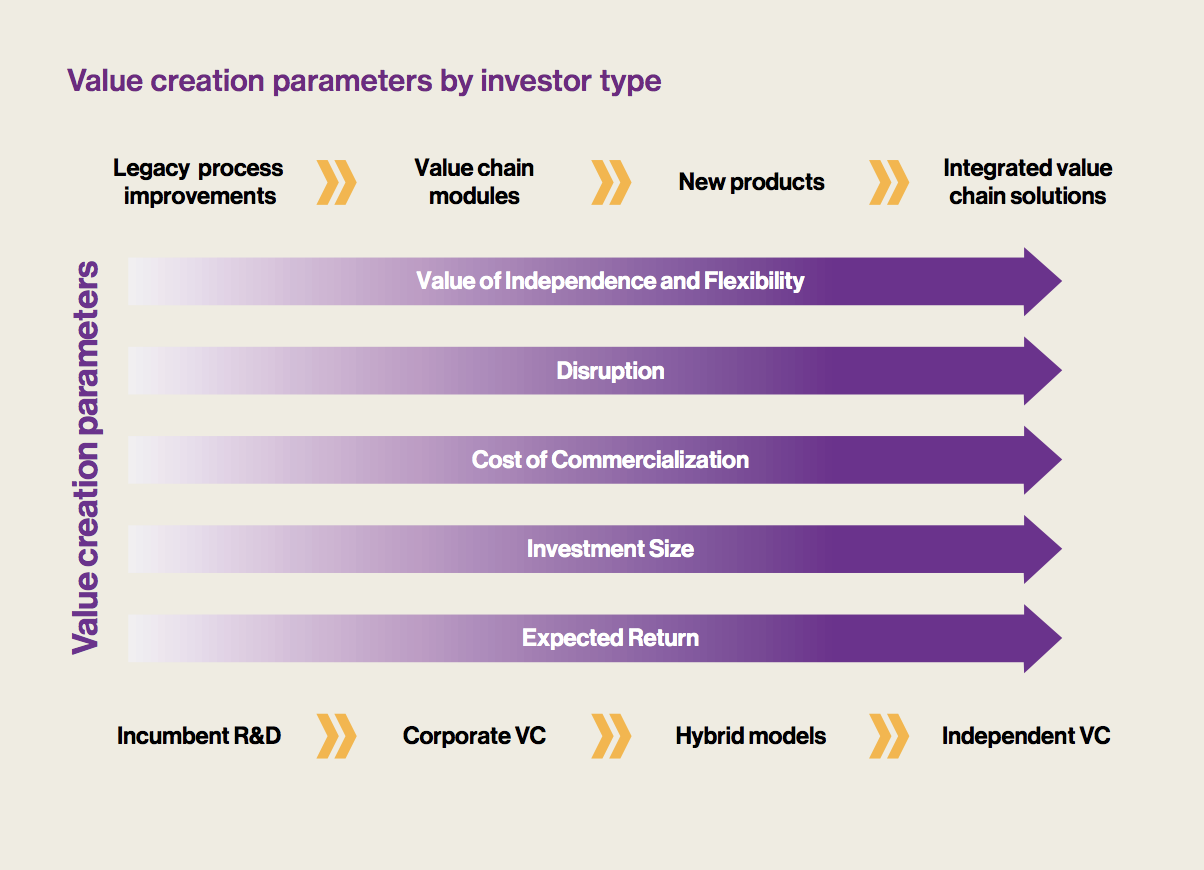
As Rafal Walkiewicz, the chief executive of Willis Tower Watson noted in his report on the industry in the first quarter, “Investors are clearly willing to make increased bets on InsurTech and funding rounds are becoming larger.” But the bulk of the biggest investments were being made by pure-play venture capital firms rather than industry incumbents with more experience in insurance. “Perhaps the stakes are becoming too high for insurers,” Walkiwicz writes. “Especially if they are mostly investing in order to learn how to improve their existing processes.”