Author: azeeadmin

26 Sep 2018

NASA’s bold-ish plan for the next era takes us to the moon and Mars… eventually

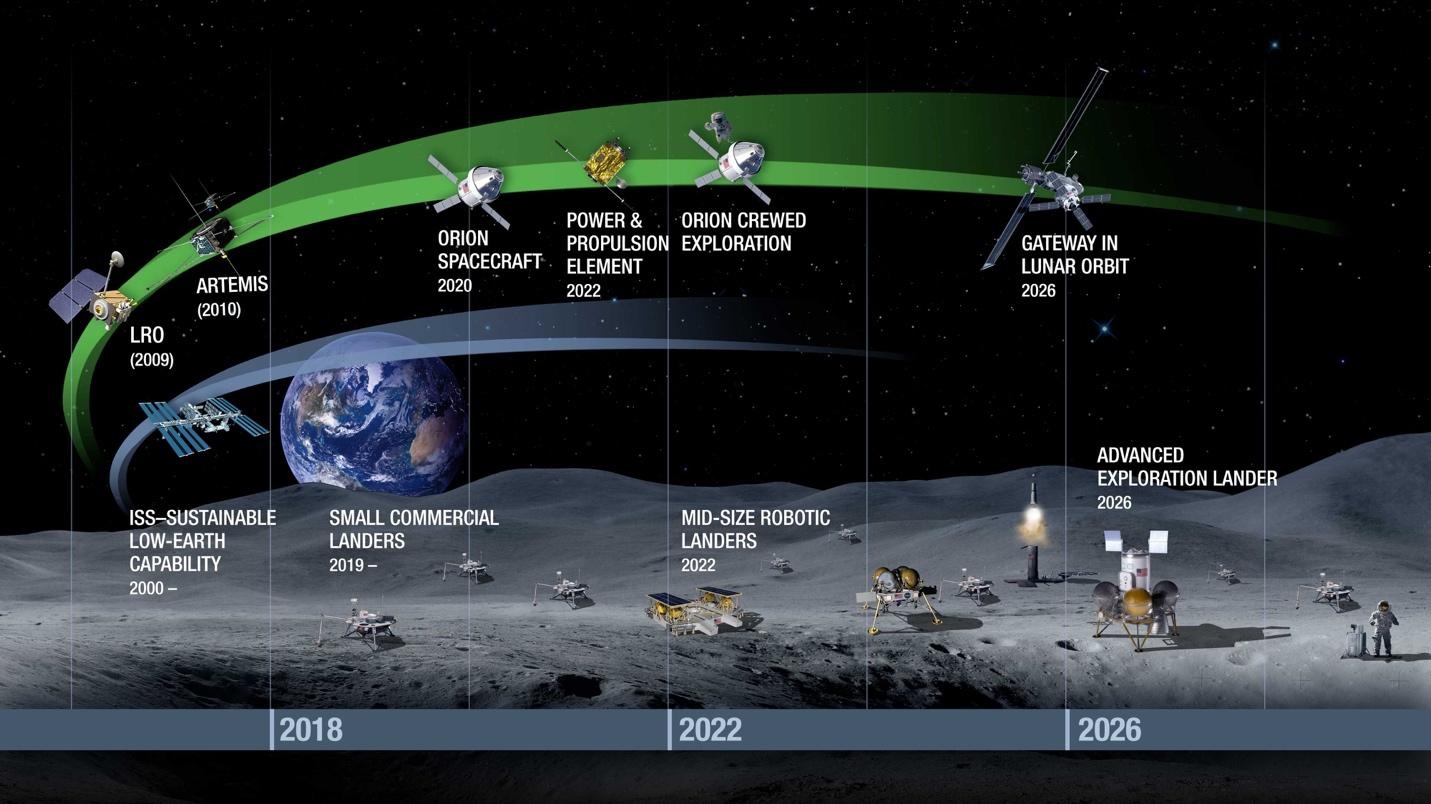
NASA has issued a report summarizing its official plans for exploring our solar system, and it makes for exciting reading — if you don’t mind that it comes with a dose of realism. Crewed missions to the moon’s surface; a semi-permanent base orbiting it; a Mars sample return mission; all these and more are there, if not necessarily in the next decade.

The National Space Exploration Campaign is the name of NASA’s overarching plan to stop worrying about low Earth orbit (LEO), ditch the ISS, win the next moon race and then head off to Mars. It was, in a way, commissioned by the President’s Space Policy Directive-1, which directed NASA to focus on expansion and exploration throughout the solar system. A good goal, and fortunately one that the administration has already been pursuing for a long time.

So the plan for the next decade or two looks a lot like it did a few years back, since by necessity these things have to be pursued on extremely long time frames.

The simple truth is that even if we went all-out right now, it would be extremely difficult, not to mention risky, to put boots on regolith within 10 years. It’s not that we couldn’t do it just to say we did, but that any future moon mission would have to be part of a long-term strategy to leverage lunar orbits and landers in the pursuit of interplanetary travel. In other words, we could spend billions for a showy short-term Apollo-style touchdown, or we could invest billions in long-term infrastructure that could lead to meaningful dominance in a number of fields.

To that end, NASA has some short-term goals that are ambitious but achievable, and has locked future projects, like the Lunar Gateway and landers, behind the pending results of those efforts. After all, if the Orion spacecraft and Space Launch System are delayed, or perhaps exceed expectations, that has a material knock-on effect when it comes to using those systems to build and staff a permanent installation in lunar orbit.

Its priorities lie essentially along three lines:

1. Empower commercial space

NASA has operated launches to LEO, for instance International Space Station resupply missions, for decades. It’s ready to be done with that, and commercial endeavors are ready to take over.

“It is vitally important that a broad customer base emerges in the next few years to supplant NASA’s historically central role in the LEO economy,” the report reads. Its goals here for the next few years are essentially directing funding and contracts while carrying out studies of effectiveness, competition and so on.

Depending on how this goes, the U.S. could eliminate direct federal funding of the ISS by 2025, instead relying on commercial providers. This doesn’t mean we’d leave the ISS altogether — NASA would just stop being the one bringing up supplies and astronauts.

Indeed, $150 million is earmarked for funding a new Commercial LEO Development program aimed at potentially replacing the ISS altogether — or at least getting the pieces in place to do so. It wouldn’t have to be nearly the same scale, but an orbital platform or two to call our own would be nice.

More generally, getting out of the LEO business frees up a ton of money and resources at NASA, which they can direct toward more ambitious projects.

2. Trouble the moon

The moon is a fabulous staging area for our planned exploration of the solar system. It’s inhospitable as all hell, meaning we can test things like Mars habitats and space radiation exposure there. It might have a ton of useful minerals underneath its coating of moon dust, and perhaps even some usable water, which would greatly simplify putting a base there.

Unfortunately, the last time anyone stepped foot on the moon was decades ago, and there have been precious few return trips even with robotic landers. So we’re going to fix that.

We’ve got plans for commercial lunar landers and rovers starting as early as 2019 — that is to say, they’ll be in development, not touching down. Based on the cost and success of these, more missions will be commissioned or undertaken in order to improve our basic knowledge of the lunar surface, which is still full of unknowns when it comes to practical applications like drilling, mining and so on.

Meanwhile, the Orion spacecraft and SLS will be getting its first orbital tests in 2020, and if all goes well it could potentially deliver astronauts (and potentially small payloads) to lunar orbit within a few years. After that’s been proven, the cargo-carrying Orion variant could be taking 10 tons of payload to orbit at a time.

This is all preparatory to establishing the Lunar Gateway, a space station in orbit around the moon, which would be staffed by NASA astronauts and used as a deep space test bed and lab. They’re going to try to nail down the basics — volume, mass, materials, technologies — by next year, and want to have the first component in lunar orbit by 2022.

3. Remind everyone that we’re already on Mars

NASA is full of scientists, and asking them about a Mars mission in the future will likely draw glares as they point furiously to the many Mars missions they’re already juggling. The administration’s roadmap, unsurprisingly, focuses more on the near future than the far future. The fact here is that Mars is already a priority and they have major missions planned already, but to say anything about a crewed mission or base would be irresponsible and premature.

Insight is already en route and will land in November; the Mars 2020 Rover is all set to take off next summer; both will produce all kinds of interesting results critical to planning future missions. Mars 2020 will be bagging up samples for possible return via another mission several years out. Can you imagine what we can do with a cargo hold full of Martian rock? You better believe we want to get that stuff into the lab before we send out an away team.

2024 is the earliest time NASA commits to making a decision about a crewed Mars mission perhaps in the 2030s — and even then it would be an orbital one. Naturally, further missions will depend on the incredibly valuable observations and lessons learned from that mission — so perhaps we’re looking at the late 2030s for boots on Mars.

Is that a bit disappointing? Well, with the rate things are progressing in commercial space, we may very well see a private Mars mission well before that. But NASA is under certain obligations, being a scientific organization and one funded by taxpayers, to justify its work and test it to a degree that private companies may choose not to.

The report is heavy on promises but light on actual policy and hard dates, which is to be expected when many of the goals are far enough out that they can’t be effectively outlined beyond “we’ll know in 2024.” It may be a bit frustrating in this period of rapid advances in space to have such distant and vague goals, but that’s kind of the nature of the business.

In the meantime, it’s not like there’s any shortage of exciting developments from NASA or the many commercial space companies reinventing the entire sector. If you don’t like NASA’s patient approach, you’re welcome to mount your own mission to space — no, really. You wouldn’t be the only one.

26 Sep 2018

Facebook poisons the acquisition well

Who should you sell your startup to? Facebook and the founders of its former acquisitions are making a strong case against getting bought by Mark Zuckerberg and Co. After a half-decade of being seen as one of the most respectful and desired acquirers, a series of scandals has destroyed the image of Facebook’s M&A division. That could make it tougher to convince entrepreneurs to sell to Facebook, or force it to pay higher prices and put contractual guarantees of autonomy into the deals.

WhatsApp’s founders left amidst aggressive pushes to monetize. Instagram’s founders left as their independence was threatened. Oculus’ founders were demoted. And over the past few years, Facebook has also shut down acquisitions, including viral teen Q&A app TBH, fitness tracker Moves, video advertising system LiveRail, voice control developer toolkit Wit.ai and still-popular mobile app developer platform Parse.

Facebook’s users might not know or care about much of this. But it could be a sticking point the next time Facebook tries to buy out a burgeoning competitor or complementary service.

Broken promises with WhatsApp

The real trouble started with WhatsApp co-founder Brian Acton’s departure from Facebook a year ago before he was fully vested from the $22 billion acquisition in 2014. He’d been adamant that Facebook not stick the targeted ads he hated inside WhatsApp, and Zuckerberg conceded not to. Acton even got a clause added to the deal that the co-founders’ remaining stock would vest instantly if Facebook implemented monetization schemes without their consent. Google was also interested in buying WhatsApp, but Facebook’s assurances of independence sealed the deal.

WhatsApp’s other co-founder, Jan Koum, left Facebook in April following tension about how Facebook would monetize his app and the impact of that on privacy. Acton’s departure saw him leave $850 million on the table. Captivity must have been pretty rough for freedom to be worth that much. Today in an interview with Forbes’s Parmy Olson, he detailed how Facebook got him to promise it wouldn’t integrate WhatsApp’s user data to get the deal approved by EU regulators. Facebook then broke that promise, paid the $122 million fine that amounted to a tiny speed bump for the money-printing corporation, and kept on hacking.

When Acton tried to enact the instant-vesting clause upon his departure, Facebook claimed it was still exploring, not “implementing,” monetization. Acton declined a legal fight and walked away, eventually tweeting “Delete Facebook.” Koum stayed to vest a little longer. But soon after they departed, WhatsApp started charging businesses for slow replies, and it will inject ads into the WhatsApp’s Stories product Status next year. With user growth slowing, users shifting to Stories, and News Feed out of ad space, Facebook’s revenue problem became WhatsApp’s monetization mandate.

The message was that Facebook would eventually break its agreements with acquired founders to prioritize its own needs.

Diminished autonomy for Instagram

Instagram’s co-founders Kevin Systrom and Mike Krieger announced they were resigning this week, which sources tell TechCrunch was because of mounting tensions with Zuckerberg over product direction. Zuckerberg himself negotiated the 2012 acquisition for $1 billion ($715 million when the deal closed with Facebook’s share price down, but later $4 billion as it massively climbed). That price was stipulated on Instagram remaining independent in both brand and product roadmap.

Zuckerberg upheld his end of the bargain for five years, and the Instagram co-founders stayed on past their original vesting dates — uncommon in Silicon Valley. Facebook pointed to Instagram’s autonomy when it was trying to secure the WhatsApp acquisition. And with the help of Facebook’s engineering, sales, recruiting, internationalization and anti-spam teams, Instagram grew into a 1 billion-user juggernaut.

But again, Facebook’s growth and financial woes led to a change of heart for Zuckerberg. Facebook’s popularity amongst teens was plummeting while Instagram remained cool. Facebook pushed to show its alerts and links back to the parent company inside of Instagram’s notifications and settings tabs. Meanwhile, it stripped out the Instagram attribution from cross-posted photos and deleted a shortcut to Instagram from the Facebook bookmarks menu.

Zuckerberg then installed a loyalist, his close friend and former News Feed VP Adam Mosseri, as Instagram’s new VP of Product mid-way through this year. The reorganization also saw Systrom start reporting to Facebook CPO Chris Cox. Previously the Instagram CEO had more direct contact with Zuckerberg despite technically reporting to CTO Mike Schroepfer, and the insertion of a layer of management between them frayed their connection. Six years after being acquired, Facebook started breaking its promises, Instagram felt less autonomous and the founders exited.

The message again was that Facebook expected to be able to exploit its acquisitions regardless of their previous agreements.

Reduced visibility for Oculus

Zuckerberg declared Oculus was the next great computing platform when Facebook acquired the virtual reality company in 2014. Adoption ended up slower than many expected, forcing Oculus to fund VR content creators since it’s still an unsustainable business. Oculus has likely been a major cash sink for Facebook it will have to hope pays off later.

But in the meantime, the co-founders of Oculus have faded into the background. Brendan Iribe and Nate Mitchell have gone from leading the company to focusing on the nerdiest part of its growing product lineup as VPs running the PC VR and Rift hardware teams, respectively. Former Xiaomi hardware leader Hugo Barra was brought in as VP of VR to oversee Oculus, and he reports to former Facebook VP of Ads Andrew “Boz” Bosworth — a longtime Zuckerberg confidant who TA’d one of his classes at Harvard who now runs all of Facebook’s hardware efforts.

Oculus’ original visionary inventor Palmer Luckey left Facebook last year following a schism with the company over him funding anti-Hillary Clinton memes and “sh*tposters.” He was pressed to apologize, saying “I am deeply sorry that my actions are negatively impacting the perception of Oculus and its partners.”

Lesser-known co-founder Jack McCauley left Facebook just a year after the acquisition to start his own VR lab. Sadly, Oculus co-founder Andrew Reisse died in 2013 when he was struck by a vehicle in a police chase just two months after the acquisition was announced. The final co-founder Michael Antonov was the chief software architect, but Facebook just confirmed to me he recently left the division to work on artificial intelligence infrastructure at Facebook.

Today for the first time, none of the Oculus co-founders appeared onstage at its annual Connect conference. Obviously the skills needed to scale and monetize a product are different from those needed to create. Still, going from running the company to being stuck in the audience doesn’t send a great signal about how Facebook treats acquired founders.

Course correction

Facebook needs to take action if it wants to reassure prospective acquisitions that it can be a good home for their startups. I think Zuckerberg or Mosseri (likely to be named Instagram’s new leader) should issue a statement that they understand people’s fears about what will happen to Instagram and WhatsApp since they’re such important parts of users’ lives, and establishing core tenets of the product’s identity they don’t want to change. Again, 15-year-old Instagrammers and WhatsAppers probably won’t care, but potential acquisitions would.

So far, Facebook has only managed to further inflame the founders versus Facebook divide. Today former VP of Messenger and now head of Facebook’s blockchain team David Marcus wrote a scathing note criticizing Acton for his Forbes interview and claiming that Zuckerberg tried to protect WhatsApp’s autonomy. “Call me old fashioned. But I find attacking the people and company that made you a billionaire, and went to an unprecedented extent to shield and accommodate you for years, low-class. It’s actually a whole new standard of low-class,” he wrote.

Posted by David Marcus on Wednesday, September 26, 2018

But this was a wasted opportunity for Facebook to discuss all the advantages it brings to its acquisitions. Marcus wrote, “As far as I’m concerned, and as a former lifelong entrepreneur and founder, there’s no other large company I’d work at, and no other leader I’d work for,” and noted the opportunity for impact and the relatively long amount of time acquired founders have stayed in the past. Still, it would have been more productive to focus on why’s it’s where he wants to work, how founders actually get to touch the lives of billions and how other acquirers like Twitter and Google frequently dissolve the companies they buy and often see their founders leave even sooner.

Acquisitions have protected Facebook from disruption. Now that strategy is in danger if it can’t change this narrative. Lots of zeros on a check might not be enough to convince the next great entrepreneur to sell Facebook their startup if they suspect they or their project will be steamrolled.

26 Sep 2018

Juul, the popular e-cig startup under growing FDA scrutiny, says removing flavors is “on the table” among other things

Juul has been on an incredible, and in some ways, nightmarish, ride this year. The three-year-old, San Francisco-based company has handily won 75 percent of the e-cigarette market in the U.S., thanks in large part to the sleek design of its nicotine vaporizer. It is reportedly on track to see at least $1 billion in revenue this year. And the company has capital to invest in its business, having sealed up a $1.2 billion round that it began raising in summer. Much of that money will be spent internationally, and no wonder. Roughly 95 percent of the world’s billion smokers live outside of the U.S.

Against the backdrop of this supercharged growth, dark clouds have gathered around the company as parents and regulators have grown concerned by its adoption by teenagers, many of whom might never even consider smoking a cigarette but are taking up nicotine vaping and “Juuling” specifically. In fact, FDA Commissioner Scott Gottlieb told an audience in New York yesterday that his agency is releasing data in November that will show year-over-year use among high schoolers has risen by at least 80 percent and that middle-school usage has grown, too. Gottlieb further warned that the agency might also eventually ban the sale of e-cigarettes online out of concern that they are being bought in bulk and acquired by minors.

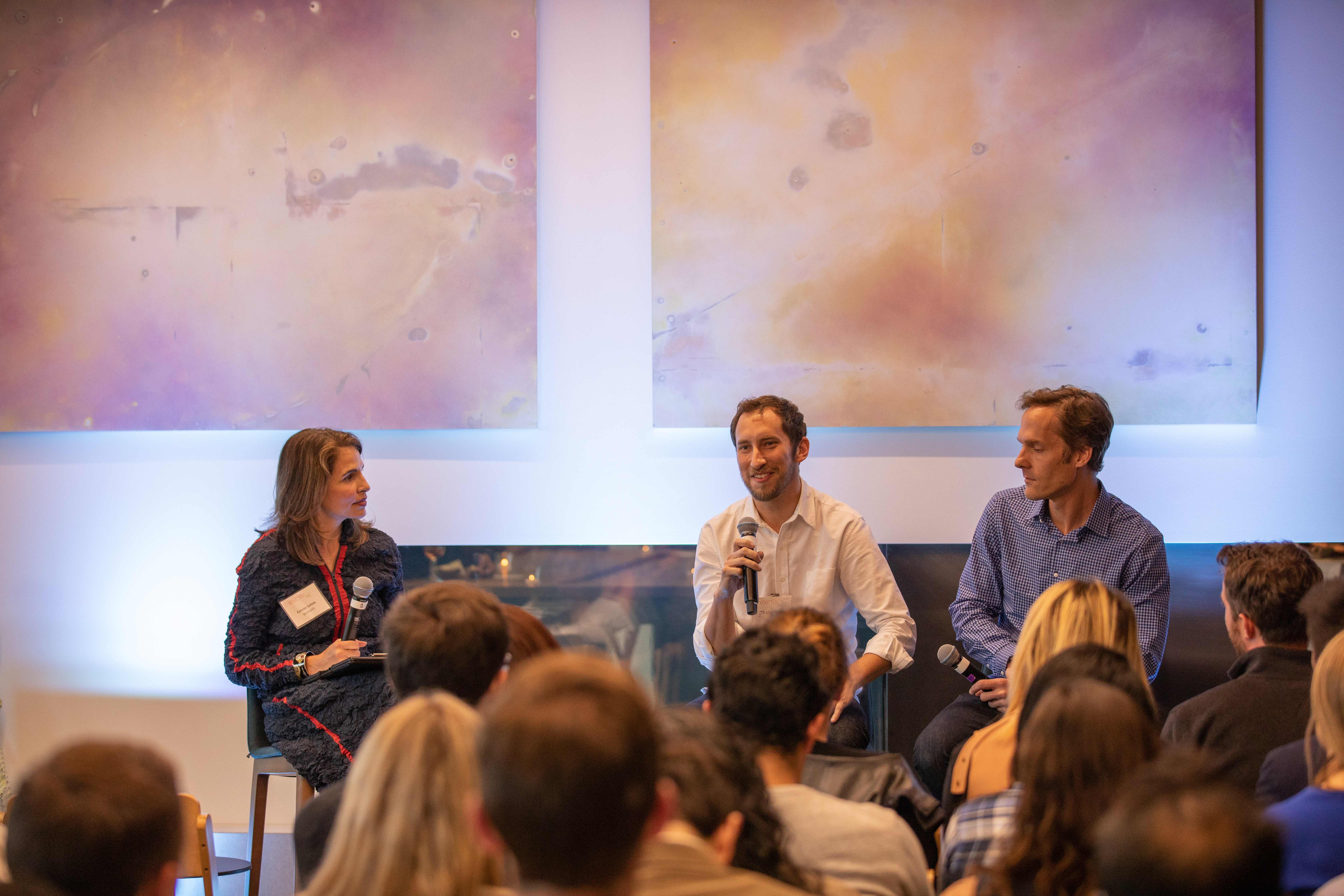
Last night, at an industry event hosted in San Francisco by this editor, I sat down with Juul’s founders, Adam Bowen and James Monsees, who met while at Stanford and have teamed up to develop numerous vaporizer products over the years, including the popular Pax cannabis vaporizer and, more recently, to develop Juul, where they are currently CTO and chief product officer, respectively. Over the course of 30 minutes, we talked about the future of the company (they have secured more than 100 patents between them and have applied for many more), whether they would consider an acquisition offer from a tobacco company (the answer seemed to be yes), and why they don’t drop the most controversial feature of the Juul product: its variety of flavored e-cigarette liquids, which critics argue are attracting children but that Juul has long insisted is imperative to getting its target customer — adult smokers —- to switch to Juul.

We’ll have video of our conversation available at a later date. In the meantime, here are outtakes from our conversation, edited lightly for length.

TC: You see Juul as a technology company focused on harm reduction. But your product has been adopted by high school students in part, which has parents pissed and regulators worried, and this firestorm seems to grow worse by the day. How are you dealing with all of this on a personal level?

JM: Man, this is quite an experience, one that we never really knew if it was going to come to fruition or not, though I think we always expected that if this was going to work, it was going to be really hard. As smokers ourselves, we were really passionate about ending the combustible cigarette once and for all. There are a billion smokers globally, and the U.S. has 38 million smokers. We don’t see them as much here in the Valley. But I’m from St. Louis, and when I grew up, I was exposed to cigarettes and I think the story was somewhat the same for Adam. Half of long-term smokers will die of smoking-related diseases if we don’t do something about this. Unfortunately, along with that comes a lot of challenges . . . I think what we really didn’t expect was the unfortunate level of adoption by underage consumers, and that is definitely something that we now take on as our mantle to own.

TC: Before we get into this issue and the surrounding controversies, I hoped to pull back the curtain on your company, which is fascinating from a business perspective. How many employees do you have, and are they mostly in San Francisco?

JM:  We’re changing very rapidly. At the beginning of this year, we had about 225 employees and today we have about 1,100.

AB: Our biggest offices are in San Francisco, with offices in multiple cities in multiple countries, including in Israel. We just launched in Canada recently. And we’ll be launching several more [offices] this year.

TC: Didn’t Israel ban Juul?

AB: No. Israel imposed a restriction on the nicotine strength allowable for e-cigarettes, so that includes the 5 percent version of our product, which we currently sell in the U.S.,  but we have since switched to a reduced strength that is compliant with the now-effective limit [there].

TC: 1,100 is a lot of employees. What do they do?

JM: This is an incredibly complicated company, perhaps the most we’ve ever seen and perhaps the most that most of our investors have ever seen. I’m sure there are people in this room who either invest in or have started hardware companies, and [who know that] hardware is just hard.

We are a hardware company. We’re a hardware company that makes and sells millions of products a week. We’re a hardware company that has produced those products at incredibly high volume, all five of them, all of which we manufacture on equipment and tools that we built from scratch. We have to work with contract manufacturers and vendors that are selling us parts in the tens or hundreds of millions on a weekly or monthly basis. We have to do that in multiple countries around the world. We have to comply with regulatory guidelines in many, many different countries. We have to market our products as carefully and effectively as possible. We have to communicate publicly in as grown-up and responsible a fashion as possible.

I could keep going, but the point is we have an incredible diversity of employees. There’s just an amazing amount of cross-functional work that happens at the company.

TC: A story came out in Inc. today where an unnamed employee said the morale is actually very high, that employees really do believe that you never marketed to minors, and that they believe you’ll find a way to stem adoption by underage people. They also said they were ‘making money hand over fist.’ What do you think of those comments?

AB: I think morale is very high. People are energized and galvanized to continue working on this cause, which is providing smokers with a satisfying alternative and address the challenges that we face head on. People are really energized to address the issues like youth usage. So that is an accurate reflection of the vibe at the office right now.
TC: You already have more than 100 patents to your names. Does Juul become a holding company for much more than what is on the market currently? What’s next?

JM: The technologies that we’ve been building are incredibly powerful and could be deployed in other markets, there’s no doubt about that. Some of our patent filings cover some bases outside of the core areas that we’re really focused on right now, which is the elimination of smoking from the face of the earth. But the mission of this company is exactly that, to eliminate smoking. The reason that it is the mission is that smoking is the leading cause of preventable death in the world. And we’re very interested in that, I think, conceptually, intellectually, and it’s just kind of a fun mission to work on.

TC: You’ve already raised $1.2 billion, including from Tiger Global and Fidelity. Where do you go for future funding, given that VCs have vice clauses that preclude them from backing the company? Would you consider an IPO?

AB: Sure. Listing the company is certainly a possibility [as is] continuing to grow it privately. These are tactics that we can that we can employ. But really, we’re just focused on growth, both domestically and abroad. So that’s the primary use the proceeds from the most recent round raised. I mean, we have a ways to go just here in the U.S. We’re 75 percent of the e-cigarette market, which sounds like a lot, but we’re only 4 to 5 percent of the U.S. cigarette market. And that’s what we’re really out to displace. So we’re really just getting started here, and we’ve just scratched the surface outside of the U.S., where 95 percent of smokers live.

TC: And where you’re not dealing with the same regulatory issues as here, although I wonder if it’s going to be sort of a contagion, where people in other countries worry about their teenagers based on what they’re reading in the U.S. In fact, you’re reportedly embroiled right now in three lawsuits, including by a family who says their kid is addicted to your products. You didn’t market [to underage users], as far as you’re concerned. Do you feel at all culpable?

JM: Any under-age use of this product or any nicotine product is strictly unacceptable. And that is the challenge that we are more than happy to take on, and we’re excited to take them on. Frankly, I think this has been way too longstanding of an issue in the market.

And things are changing. We’re moving away from a stick that you light on fire and beginning to have the ability to apply technology solutions to a massive problem has existed for a really long time.

TC: At TechCrunch’s Disrupt event a couple of weeks ago, you talked about connecting Juuls to people’s phones, so that if someone were to leave their Juul behind but had their phone with them, someone else, a minor, couldn’t pick up that Juul and use it. But that seemed like a very unlikely scenario to me.

JM: That’s one of many examples of technologies we can use to deploy to reduce or eliminate these problems. We’ve been using that as sort of an illustrative example of many things because, look, we’re in the midst of conversations with the FDA. We believe very strongly that some of these technology solutions will be huge steps ahead of how this industry has been able to tackle these challenges in the past. But I don’t think at this moment, we’re ready to really talk about specific things.

TC:  I don’t know if Juul has suggested it, or it’s merely been suggested that Juul this, but what about creating geofences around schools so that kids can’t vape there? That seems like a no-brainer.

JM: Yeah, there was there was an article that speculated about this. That is one of many, many patents that have been filed publicly, and if you dig even further, you’ll see a whole bunch of exploration that we’ve done because we’ve been working on this issue for a long time. Unfortunately, the U.S. is unlikely at this moment to be the ground zero for the deployment of some of these youth prevention technologies because there’s a moratorium on new product introductions, but obviously that’s changing very rapidly, so if the opportunity for potentially the U.S. to move even more quickly [arises] . . . that would be tremendous.

TC: Do you feel like the FDA has been fair to you? It seems like you’ve been telling your story to the public, and the FDA has meanwhile been suggesting that it’s not getting the information that it needs from you.

AB: We’re trying to solve the same problem as the FDA actually. Our interests are really aligned in that they want to see smokers move to reduced risk products while minimizing the uptake by youth and other unintended consequences, and so do we. So it’s really a question of, how do we get there collectively. And we need to work with them.

TC: As you point out, you’re staring at a huge opportunity. Why don’t you just get rid of the flavored e-cigarette liquids, which is what the FDA hates the most? There’s much more evidence to suggest that flavor profiles entice children to use your product versus help adults switch over to your products.

JM: All options around the table. And that’s one of them.

Look, this issue has to be resolved. We mean that. We have absolutely no interest in any underage consumer ever using these products. It is detrimental to the mission of the company. We are not a major tobacco company. We have not saturated this market. We are less than 0.5 percent of the global tobacco market. And all of this upside will only be achieved if we create goodwill and stand out in contrast to the way tobacco companies have traditionally behaved.

Removing flavors is certainly on the table. But we have not seen evidence that there’s causation necessarily for flavors being a lead-in for underage consumers. Cigarettes have been a major problem for underage consumers for some time. What we do see strong evidence of internally is a much stronger correlation for adult consumers staying away from cigarettes as they move further from everything that reminds them of cigarettes in the first place, which includes the taste of cigarettes.

TC: How are you tracking the reasons that smokers are gravitating toward your products and staying? How can you say that it’s because of the flavors, versus them wanting to quit traditional cigarettes?

JM:  That is evidence that is amongst the many many many things that we will be sharing with the FDA.

TC: In the meantime, have you talked to the tobacco companies? Have you fielded any offers?

AB:  We know many folks in the tobacco industry but we’re very proudly independent and continue to grow the company independently.

JM: Obviously, the big concern for pretty much anyone, including us, is what does that mean to the mission of the company, to consider partnering with, working with, the major tobacco companies. We’ve done that in the past. Many, many years ago, we had a partnership with the third largest global tobacco company [which bought the trademark and IP for Monsees’ and Bowen’s earliest vaporizer, called Ploom]. Then we bought them out of the deal; we parted ways.

Look, if a partnership with a major tobacco company — if, frankly, any number of things that we could do, will accelerate the decline of adult smoking and improve the lives of consumers around the world, we would certainly consider it. We’re not necessarily convinced at this moment that that’s the move that would make that happen.

TC: Before you go, the FDA today also said it’s considering banning the online sale of e-cigarettes. How much would that impact your business?

AB: The majority of our sales are actually offline, though we still think that online is a an important route of access for adult smokers to get the product. Fortunately, there are very strict age-verification technologies you can employ, and we have the strictest in place, so it’s a matter that we think should be addressed just by employing very rigorous age verification, on our own site and by requiring that any e-commerce resellers we work with use those strict controls, as well.


26 Sep 2018

Amazon is opening a new brick-and-mortar store in NYC featuring its best sellers

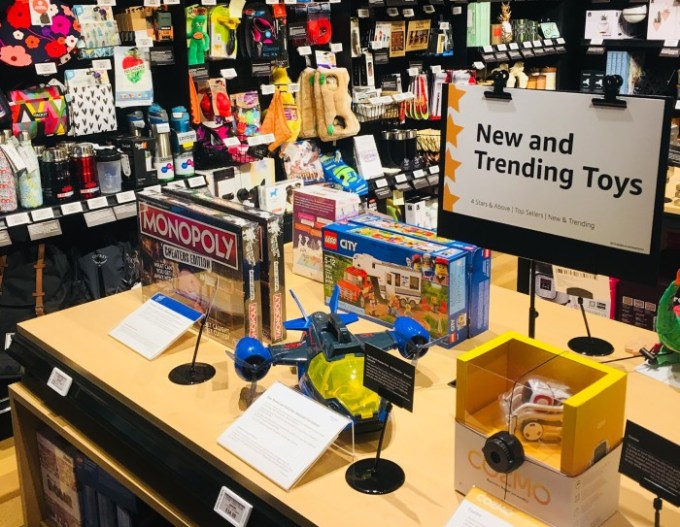
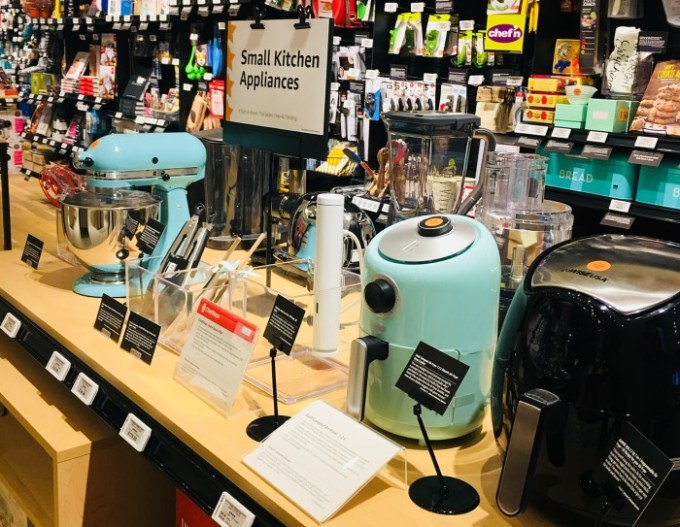
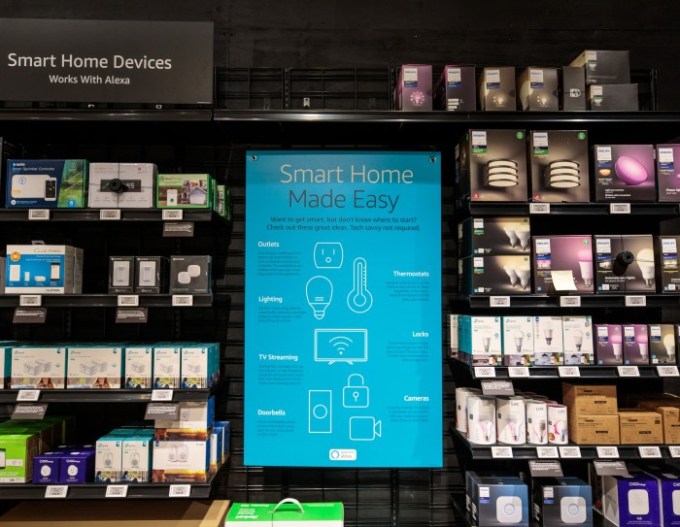
Amazon is expanding its brick-and-mortar footprint with a new kind of store, the company announced this afternoon. On Thursday, the retailer will open an “Amazon 4-Star” store in New York, where all the items it sells are rated 4 stars and above, are a top seller, or are new and trending on Amazon. It’s effectively a real-world introduction to Amazon’s best products, in other words.

The store will be located in SoHo, on Spring Street between Crosby and Lafayette Streets, and will be open 10 AM – 9 PM Monday through Saturday, and 11 AM – 8 PM on Sundays.

The 4-Star store, Amazon explains in an announcement, is “a direct reflection of our customers—what they’re buying and what they’re loving.”

Amazon, thanks to its massive e-commerce site, does know what sells. The average rating of all the products it stocks in the new store is 4.4 stars, and combined, the products have amassed more than 1.8 million 5-star customer reviews, the retailer says.

The store is divided into sections like “Most Wished For” items, which represent those people are adding to their Amazon Wish Lists, as well as “Amazon Exclusives,” and “Frequently Bought Together,” which represents the Amazon algorithm come to life. It will also feature some locally popular products in its “Trending Around NYC” section.

At launch, the store includes items like the card game Codenames (4.8 stars, with more than 2,000 customer reviews); a Lodge 3.5 Inch Cast Iron Mini Skillet (4.4 stars, with more than 10,900 customer reviews), and, naturally, Amazon’s own devices like the Echo Spot (4.5 stars, with more than 5,600 customer reviews), and the Fire TV Stick (4.4 stars, with more than 197,000 customer reviews). Both the Spot and Fire TV Stick were top sellers on Amazon Prime Day this year, and are among Amazon’s overall best sellers.

What’s interesting about Amazon 4-Star is how the items are priced.

Shoppers who are Prime members will pay the Amazon.com price for their purchases, while non-Prime members will pay the list price. The store will also work as a fairly expensive user acquisition strategy for Amazon, given the cost of real estate – non-Prime members will have the option to sign up for a free Prime trial in the store in order to get the Amazon.com discount.

Amazon has been steadily expanding into real-world venues in recent years. It acquired a large brick-and-mortar footprint with its acquisition of green grocer Whole Foods, and has been steadily launching its new cashierless Amazon Go stores in select markets, as well. It also has some Amazon Books stores and other pop-ups focused on device sales around the U.S.

The retailer didn’t say if it intends to bring 4-Star to other locations either in or outside NYC in the future.


26 Sep 2018

At Oculus Connect keynote, original co-founders absent onstage

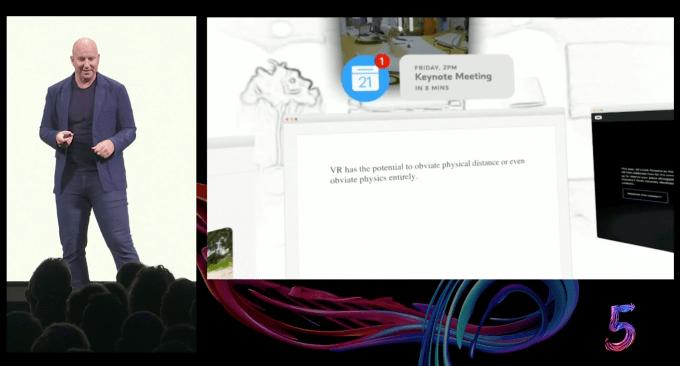
As Facebook execs took to the stage during the opening keynote for the company’s VR-focused Oculus Connect 5 conference, one thing was clearly missing, the founding team that had built the virtual reality startup Facebook bought for $2 billion in 2014.

None of the five original OculusVR co-founders took to the stage at the company’s big keynote, while Facebook executives including CEO Mark Zuckerberg, long-time VP of Ads Andrew Bosworth — now VP of VR/AR — and Hugo Barra, Facebook’s VP of VR, delivered the bulk of major announcements.

VP of VR/AR Andrew Bosworth

The absence of OculusVR co-founders onstage at Facebook’s biggest VR event of the year comes as a flurry of news circulates surrounding the former leaders of high-profile Facebook acquisitions. Earlier this week, Instagram’s co-founders Kevin Systrom and Mike Krieger announced they were unexpectedly leaving the company. Today, we heard more WhatsApp founder Brian Acton who left Facebook earlier this year and walked away from $850 million after growing dissatisfied with the direction of the company he originally built.

From 2014

Oculus has had a more turbulent time at Facebook than other acquisitions, the company was at the center of a $3 billion lawsuit last year with ZeniMax Media over the founding of the company and the theft of intellectual property. Ultimately, Facebook was made to pay up $250 million.

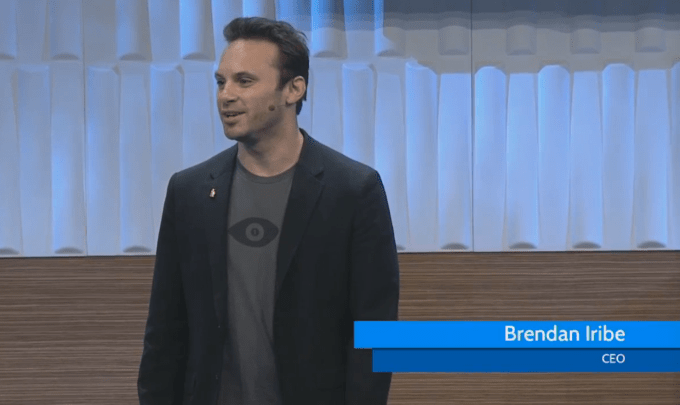
Founder Palmer Luckey also proved to be quite the headache for Facebook’s public communications after his donation to an anti-Clinton group during the 2016 election led a firestorm of negative press. Luckey left Facebook last year. While the company’s other co-founders held onto leadership roles following the acquisition, a big shakeup at the end of 2016 downgraded the roles of then-CEO Brendan Iribe and then-VP of Product Nate Mitchell, with Xiaomi’s Barra coming onboard later to lead Oculus as Facebook’s VP of VR reporting directly to Zuckerberg.

The OculusVR co-founders have been taking more of a backseat role in the past couple of years at events as well. While Iribe and Luckey held a major presence during the keynotes at early conferences, last year, only Mitchell took to the stage. This year there were plenty of callbacks to Connect keynotes of the past with early employees like Chief Scientist Michael Antonov speaking about the future of the VR platform, but ultimately none of the startup’s original leadership were present onstage during the nearly 2-hour presentation.

As Facebook continues to shift its high-profile acquisitions away from autonomy and further under its core leadership umbrella, the future of founding leaders driving the public vision of the companies they originally built seems even more uncertain.

more Oculus Connect 5 coverage

26 Sep 2018

FCC cracks the whip on 5G deployment against protests of local governments

The FCC is pushing for speedy deployment of 5G networks nationwide with an order adopted today that streamlines what it perceives as a patchwork of obstacles, needless costs, and contradictory regulations at the state level. But local governments say the federal agency is taking things too far.

5G networks will consist of thousands of wireless installations, smaller and more numerous than cell towers. This means that wireless companies can’t use existing facilities, for all of it at least, and will have to apply for access to lots of new buildings, utility poles, and so on. It’s a lot of red tape, which of course impedes deployment.

To address this, the agency this morning voted 3 to 1 along party lines to adopt the order (PDF) entitled “Accelerating Wireline Broadband Deployment by Removing Barriers to Infrastructure Investment.” What it essentially does is exert FCC authority over state wireless regulators and subject them to a set of new rules superseding their own.

First the order aims to literally speed up deployment by standardizing new, shorter “shot clocks” for local governments to respond to applications. They’ll have 90 days for new locations and 60 days for existing ones — consistent with many existing municipal timeframes but now to be enforced as a wider standard. This could be good, as the longer time limits were designed for consideration of larger, more expensive equipment.

On the other hand, some cities argue, it’s just not enough time — especially considering the increased volume they’ll be expected to process.

Cathy Murillo, Mayor of Santa Barbara, writes in a submitted comment:

The proposed ‘shot clocks’ would unfairly and unreasonably reduce the time needed for proper application review in regard to safety, aesthetics, and other considerations. By cutting short the necessary review period, the proposals effectively shift oversight authority from the community and our elected officials to for-profit corporations for wireless equipment installations that can have significant health, safety, and aesthetic impacts when those companies have little, if any, interest to respect these concerns.

Next, and even less popular, is the FCC’s take on fees for applications and right-of-way paperwork. These fees currently vary widely, because as you might guess it is far more complicated and expensive — often by an order of magnitude or more — to approve and process an application for (not to mention install and maintain) an antenna on 5th Avenue in Manhattan than it is in outer Queens. These are, to a certain extent anyway, natural cost differences.

The order limits these fees to “a reasonable approximation of their costs for processing,” which the FCC estimated at about $500 for one application for up to five installations or facilities, $100 for additional facilities, and $270 per facility per year all inclusive.

For some places, to be sure, that may be perfectly reasonable. But as Catherine Pugh, Mayor of Baltimore, put it in a letter to the FCC protesting the proposed rules, it sure isn’t for her city.

An annual fee of $270 per attachment, as established in the above document, is unconscionable when the facility may yeild profits, in some cases, many times that much in a given month. The public has invested and installed these assets [i.e. utility poles and other public infrastructure], not the industry. The industry does not own these assets; the public does. Under these circumstances, it is entirely reasonable that the public should be able to charge what it believes to be a fair price.

There’s no doubt that excessive fees can curtail deployment and it would be praiseworthy of the FCC to tackle that. But the governments they are hemming in don’t seem to appreciate being told what is reasonable and what isn’t.

“It comes down to this: three unelected officials on this dais are telling state and local leaders all across the country what they can and cannot do in their own backyards,” said FCC Commissioner Jessica Rosenworcel in a statement presented at the vote. “This is extraordinary federal overreach.”

New York City’s commissioner of information technology told Bloomberg that his office is “shocked” by the order, calling it “an unnecessary and unauthorized gift to the telecommunications industry and its lobbyists.”

The new rules may undermine deployment deals that already exist or are under development. After all, if you were a wireless company, would you still commit to paying $2,000 per facility when the feds just gave you a coupon for 80 percent off? And if you were a city looking at a budget shortfall of millions because of this, wouldn’t you look for a way around it?

Chairman Ajit Pai argued in a statement that “When you raise the cost of deploying wireless infrastructure, it is those who live in areas where the investment case is the most marginal—rural areas or lower-income urban areas—who are most at risk of losing out.”

But the basic market economics of this don’t seem to work out. Big cities cost more and are more profitable; rural areas cost less and are less profitable. Under the new rules, big cities and rural areas will cost the same, but the former will be even more profitable. Where would you focus your investments?

The FCC also unwisely attempts to take on the aesthetic considerations of installations. Cities have their own requirements for wireless infrastructure, such as how it’s painted, where it can be located, what size it can be when in this or that location. But the FCC seems (as it does so often these days) to want to accommodate the needs of wireless providers rather than the public.

Wireless companies complain that the rules are overly restrictive or subjective, and differ too greatly from one place to another. Municipalities contend that the restrictions are justified and, at any rate, their prerogative to design and enforce.

“Given these differing perspectives and the significant impact of aesthetic requirements on the ability to deploy infrastructure and provide service, we provide guidance on whether and in what circumstances aesthetic requirements violate the [Communications] Act,” the FCC’s order reads. In other words, wireless industry gripes about having to paint their antennas or not hang giant microwave arrays in parks are being federally codified.

“We conclude that aesthetics requirements are not preempted if they are (1) reasonable, (2) no more burdensome than those applied to other types of infrastructure deployments, and (3) published in advance,” the order continues. Does that sound kind of vague to you? Whether an city’s aesthetic requirement is “reasonable” is hardly the jurisdiction of a communications regulator.

For instance, Hudson, Ohio city manager Jane Howington writes in a comment on the order that the city has 40-foot limits on pole heights, to which the industry has already agreed, but which would be increased to 50 under the revisions proposed in the rule. Why should a federal authority be involved in something so clearly under local jurisdiction and expertise?

This isn’t just an annoyance. As with the net neutrality ruling, legal threats from states can present serious delays and costs.

“Every major state and municipal organization has expressed concern about how Washington is seeking to assert national control over local infrastructure choices and stripping local elected officials and the citizens they represent of a voice in the process,” said Rosenworcel. “I do not believe the law permits Washington to run roughshod over state and local authority like this and I worry the litigation that follows will only slow our 5G future.”

She also points out that the predicted cost savings of $2 billion — by telecoms, not the public — may be theorized to spur further wireless deployment, but there is no requirement for companies to use it for that, and in fact no company has said it will.

In other words, there’s every reason to believe that this order will sow discord among state and federal regulators, letting wireless companies save money and sticking cities with the bill. There’s certainly a need to harmonize regulations and incentivize wireless investment (especially outside city centers), but this doesn’t appear to be the way to go about it.

26 Sep 2018

Star Wars: Vader Immortal is a virtual reality game coming in 2019

Few properties seem better suited to tap VR than Star Wars, if only because… you know, lightsabers.

And Lucasfilm knows it. They’ve just announced Star Wars: Vader Immortal — a three part, at-home experience that’ll launch on Oculus’ just announced standalone Quest headset.

Alas, there’s not much to go on besides the name, a quick teaser trailer, and that it’s launching sometime in 2019. Lucasfilm does note that it’ll be a “yet untold story” that’ll take place across three episodes, with the story writing lead by Dark Knight writer David S. Goyer.

This isn’t the first time the Lucasfilm/ILM teams have dabbled with VR. They released a short one-off experience called Trials of Tatooine for the HTC Vive two years ago, and they worked with The Void to build massive, full-building VR game called Secrets of the Empire that launched at Disneyland last year. But Trials was short and experimental, and Secrets requires you to be in a very specific place in the real world. This one sounds like it’ll be a bit more substantial, and intended for a wider audience.

(* tangent: for what it’s worth, Secrets of the Empire is one of the more mind-blowing VR experiences I’ve ever had. I left feeling that it was a bit pricey for the amount of time it lasted, but I’m still thinking about how damned cool it was nearly a year later.)

More on this as we hear about it.

26 Sep 2018

Farmer’s Fridge wants to make eating healthy food as easy as getting money from an ATM

Fast, healthy food is one of those concepts that just seems too good to be true. But Farmer’s Fridge, a Chicago-based startup that recently closed a $30 million Series C round led by former Google CEO Eric Schmidt’s Innovation Endeavors, aims to make that a reality.

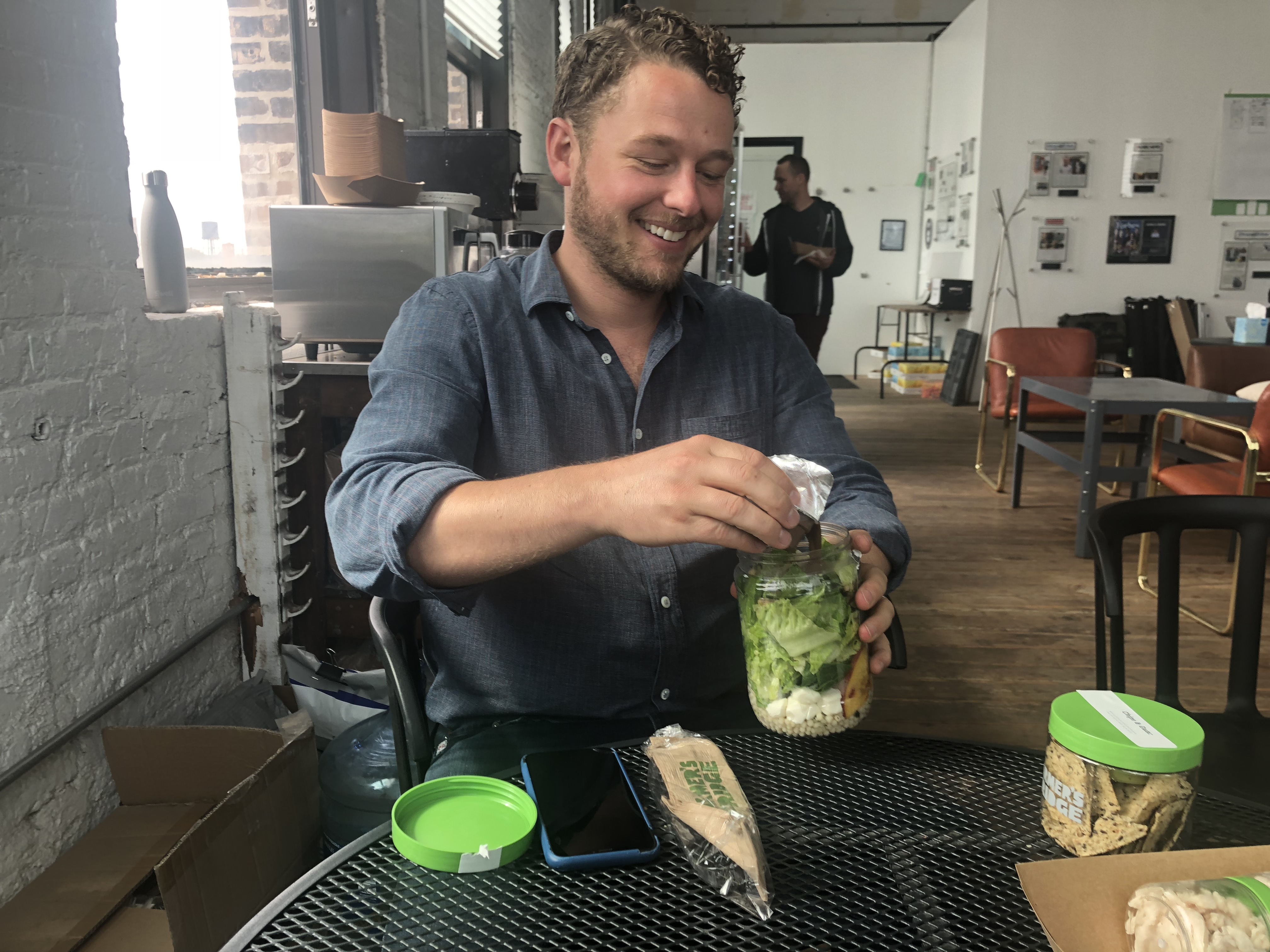
Farmer’s Fridge retrofits vending machines to serve up healthy foods — salads, sandwiches, granola, etc. — for people on the go, for anywhere from $5 to about $8. In order to ensure restaurant-quality food, Farmer’s Fridge has a chef on board who receives feedback from customers to constantly tweak the menu and the food. There’s also a large workforce in place to restock the food, which is prepared daily in Farmer’s Fridge’s kitchen, every morning. I tried the food while I was in Chicago, and I must admit that it was good. And this is coming from someone who generally dislikes salad.

While the amount of waste is low (about 5 percent left over) — thanks to its allocation algorithm that determines how much of each type of food to stock in each vending machine location — Farmer’s Fridge has a system in place to deliver leftover food to the Greater Chicago Food Depository, a food bank that works in partnership with 700 agencies, including soup kitchens, shelters and pantries.

“The hypothesis for the business is that it’s been done for ATMs, it’s been done for movies, and those things have nothing to do with each other. So the only connection would be that consumers generally want things that are faster and cheaper and more convenient, as long as they don’t have to sacrifice any quality from the experience,” Farmer’s Fridge founder and CEO Luke Saunders told me at the startup’s headquarters in Chicago.

Farmer’s Fridge founder and CEO Luke Saunders at the startup’s Chicago-based HQ

“So, renting a movie from a kiosk — there’s no difference,” he added. “It’s the same movie when you get home. With food, though, it was interesting because there’s a lot of businesses where the experience is supposedly the most important part, so ‘if you have really good service at a restaurant, could technology actually replace that experience’ was the core question of the business. Or is that an important sustained advantage for a restaurant versus our business model?”

So far, it’s been working. Since launching in 2013, Farmer’s Fridge has deployed 200 vending machines throughout Chicago and Milwaukee. Farmer’s Fridge vending machines can be found in airports, hospitals and in traditional retailers, like pharmacies, convenience stores and even the Amazon Go store in Chicago. Each location gets stocked at least five days a week, while the airport gets stocked seven days a week. Depending on the business partner, Farmer’s Fridge has a revenue model that ranges from subsidized accounts to revenue shares.

“Each vertical behaves really differently,” Saunders said. “In a hospital, they care more about having an amenity overnight for employees who don’t have access to a cafeteria than they do about profitability. At O’Hare International Airport, it’s a revenue share because of the traffic generated. For some retailers, it’s about the traffic Farmer’s Fridge brings to those places.”

The app is probably the least technologically interesting part about Farmer’s Fridge, but what it offers is an easy way to see where you can find a fridge, the inventory of said fridge and the ability to reserve food from that fridge ahead of time. The fridge itself is the real technological achievement. It’s an internet-connected device that runs firmware and features a graphical user interface and cloud infrastructure.

Next year, the plan is to expand regionally and launch in an additional region. In the nearer term, Farmer’s Fridge is expecting to grow from 130 employees today to about 200 by the end of next year.

26 Sep 2018

Bipartisan bill seeks to elevate the federal CIO position

On Wednesday, Texas Rep. Will Hurd and Illinois Rep. Robin Kelly introduced a bipartisan bill that would reorganize how IT is managed throughout the federal government. The bill, the Federal CIO Authorization Act of 2018, would make a handful of changes with the intention of making the government run more smoothly and securely.

Among those changes, the bill would rename the Office of E-Government, the department overseen by the federal CIO, to the “Office of the Federal Chief Information Officer.” Second, it would “elevate” the federal CIO position so that the position reports to the director of the Office of Management and Budget (OMB) instead of the deputy director, as it stands now. Beyond those changes, the bill would make the federal chief information security officer (CISO) position report directly to the federal CIO.

While CIOs within individual government agencies report directly to agency directors, the federal CIO role has not been elevated in the same way. The decision to further empower agency CIOs, enacted through an executive order in May, aimed to “better position agencies to modernize their IT systems” and to reduce cybersecurity risk by streamlining the way agency CIO roles functioned. The federal CIO bill has the same goals in mind.

“No entity can operate securely and efficiently without a CIO in the year 2018, including the federal government,” Rep. Hurd said of the proposal. “This bill does more than just rename an office. It makes a clear statement that the Federal CIO is in charge of coordinating IT policy across the government in order to ensure that our agencies are able to provide better, faster and more cost-efficient services for the American people.”

Rep. Kelly added that the bill seeks to “streamline government IT processes,” part of a broader effort to bring government technology — and the positions that manage it — up to date.

26 Sep 2018

Stripe is now valued at $20B after raising another $245M led by Tiger Global

Payments startup Stripe has changed the landscape for how businesses can collect funds online by using a few lines of code, and today the company is announcing that it’s picked up more funding of its own. Stripe has raised $245 million, valuing the company at $20 billion.

This is a big jump on its previous round, two years ago, that valued it at $9 billion.

Led by Tiger Global Management, other new backers included DST Global and Sequoia, along with existing investors Andreessen Horowitz, Kleiner Perkins, Khosla Ventures, General Catalyst, and Thrive Capital.

The company says it plans to use the funding to hire more people for what it describes as its “distributed global engineering team.” It now has hubs in San Francisco, Seattle, and Dublin (its co-founders, John and Patrick Collison, hail from Ireland), and it’s also going to launch a new hub in Singapore.

Engineering has been at the heart of the company’s growth from the start, up to now. Recall the famous essay by Paul Graham about Stripe that served as a mantra of sorts for how startups should grow. Fast forward to today, and Stripe boasts that “all told, the company deployed more than 3,200 new versions of its core API over the past year.”

The funding underscores the continuing strong climate for raising money from private backers at increasingly staggering valuations. VCs and private equity firms have raised billions, and they are looking for fast-growing, promising startups where they can invest that money. A number of startups are foregoing, or delaying, going public in favor of staying private for longer, financed by them.

Stripe itself is a prime target for these VCs. The company says it has “millions” of customers, including Google, Mindbody, Spotify, and Uber. It is now live in 130 markets for acceptance and 25 countries for originating the charges. by carving a place out for itself as a faster, easier way to integrate payments infrastructure into websites and apps, by way of a few lines of code — replacing the more laborious, and often more expensive route, of working with banks and other payment providers in a complicated chain of players that includes gateway providers, credit card processors, merchant acquirers, specialized payment methods, wallets and more.

Although Amazon is one of the world’s biggest companies, and most retailers a digital presence, e-commerce is still a relatively nascent area, with only about three percent of all transactions occurring online at a global average. That means a big opportunity for companies like Stripe, and competitors like Adyen, PayPal and others.

“We believe in the contingency of progress,” said Stripe CEO and co-founder Patrick Collison, in a statement. “Better global payments infrastructure will increase economic output, encourage entrepreneurship, and help upstarts compete with incumbents. By bringing Stripe into more markets and building out our capabilities for companies of all sizes, we hope to accelerate innovation around the world.” Stripe estimates that there will be $4 trillion in online sales by 2020 globally.

While payments is Stripe’s bread and butter, the company has also been diversifying and now also includes Stripe Issuing, Stripe Terminal, fraud detection, and potentially cash advances, among its various offerings. These help the company develop stronger ties with its customers, and also potentially increase its margins.

“No one else is going as deep as us on software and the technology stack as we are,” said co-founder and president John Collison.