Author: azeeadmin

26 Sep 2018

Uber to pay $148 million in data breach settlement

Uber has agreed to pay $148 million to settle a data breach that affected some 57 million customers in 2016.

The agreement was with the attorneys general of all 50 states and the District of Columbia to resolve their legal inquiries on this matter, Uber’s chief legal officer Tony West said in a statement released Thursday.

The data breach affected 50 million riders and 7 million drivers; around 600,000 driver license numbers for U.S. drivers were also included in the breach.

Uber response and cover up of the breach led to the firing of Joe Sullivan, the company’s chief security officer at the time. Uber didn’t report the incident that occurred in October 2016. Instead, the company paid hackers $100,000 to get rid of the evidence and keep the data breach a secret, which Bloomberg first reported.

The data breach and ensuing cover up was revealed in November, more than a year after it had occurred and just a few months after Dara Khosrowshahi had taken the CEO position.

West noted that Uber (and in Khosrowshahi’s first year as CEO) has worked to improve safety and security following the scandal. For instance, Uber hired in 2018 Ruby Zefo as chief privacy officer and Matt Olsen and as chief trust and security officer.

The hiring of Zefo, who led Intel’s global privacy and security legal team, and Olsen is part of the company’s mission to move past the embarrassing data breach, as well as other weak privacy practices employed by former CEO Travis Kalanick, who resigned in 2017 after a string of scandals. In April, Uber expanded a proposed settlement made with the Federal Trade Commission pertaining to data mishandling, privacy and security complaints that date back to 2014 and 2015. That proposed settlement happened prior to Uber’s disclosure of the 2016 data breach.
26 Sep 2018

Chegg resets 40 million user passwords after data breach

Chegg, a technology giant specializing in textbook rental, has confirmed a data breach affecting some 40 million customers.

In a filing with the Securities and Exchange Commission, the company said it will reset all user passwords after hackers gained access to the company’s customer database. That database includes users for Chegg’s website but also other products, such as citation service EasyBib, which it owns.

The breach occurred in April, but was only discovered a week ago.

Hackers stole usernames, email addresses, shipping addresses, and hashed passwords, the company said, but doesn’t believe that financial data was taken.

The company went public in 2013, and today is currently worth $3.3 billion. Chegg’s stock is down more than 10 percent a day after the breach was revealed.

26 Sep 2018

CollegeHumor unveils Dropout, a subscription service for comedy videos, comics and more

CollegeHumor is getting into the subscription business with a new service called Dropout.

Dropout is part of CH Media, the IAC -owned subsidiary that also includes Dorkly, Drawfree and CollegeHumor proper. It’s not just a subscription video service. Yes, there will be ad-free video series, many of them starring familiar faces from previous CollegeHumor shows, but Dropout will also offer comics and chat stories.

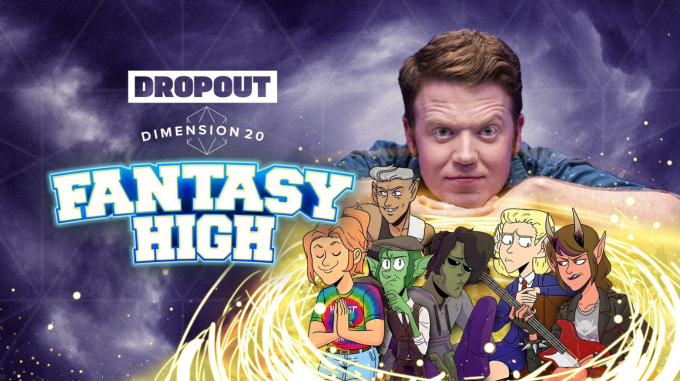
The shows include “Dimension 20: Fantasy High”, which CollegeHumor describes as what you’d get “if John Hughes ran a tabletop RPG,” plus a second season of “Lonely and Horny” starring Jake Hurwitz and Amir Blumenfeld. Many of the comics and chat stories will tie into the series in some way, and there will also be a members-only Discord channel allowing subscribers interact with CollegeHumor creators and stars.

Chief Business Officer Shane Rahmani said that rather than SVOD (subscription video on demand), Dropout is offering “SMOD — subscription media on demand.” He added that with a subscription model, CollegeHumor can “play at a proverbial next level of investment,” with content that “feels much more premium.”

It’s been a little over a year since NBCUniversal announced that it was shutting down its own comedy streaming service Seeso. Rahmani didn’t discuss Seeso directly during our interview, but he addressed the broader question: “Why do I think this will work?”

“It really all comes down to the core offering for this very specific consumer,” he said. “It’s built for a very digitally native consumer particularly, someone who loves nerd culture but also loves comedy and goes out to things like Comic Con. Someone who plays a lot of video games and loves being a fan of ours. We’re dead-focused on meeting their needs specifically in the first year.”

CollegeHumor Dropout

Although Rahmani and his team have a clear audience in mind, they don’t see “nerdy” as synonymous with “white guys.” In fact, when I asked about diversity of talent and of audience, CollegeHumor sent me the following statement from Chief Creative Officer Sam Reich:

Inclusivity is a top priority for us at CollegeHumor / DROPOUT. We don’t see nerdy topics as belonging to one group of people and not another. If you look at RPGs, for instance, there is a more diverse collection of people playing them now than ever before — and if you look at the cast of our RPG show, “Dimension 20,” it reflects that. If some bad fans of these topics have at one point alienated people, then it’s our job to create an environment that’s inclusive and supportive enough to win them back.

Of course, when you’re talking about streaming comedy, you also have to acknowledge Netflix, which is releasing new specials every week. CollegeHumor, in contrast, doesn’t really do standup. Instead, Rahmani said the company’s approach is “rooted in world-building sketch comedy — comedy layered with characters and storylines and elements that cross pollinate … a Marvel universe for comedy.”

Dropout launching on the web in a public beta test, with native apps to follow. It will start out at $3.99 per month before adding different tiers — Yyou’ll still be able to pay $3.99 per month after the beta, but only if you commit to an annual subscription. Otherwise it’s $4.99 per month with a six-month subscription or $5.99 month-to-month.

Even without a subscription, CollegeHumor fans will get access to some of the new content. Rahmani said the windowing policies (i.e., how long CollegeHumor waits before releasing a previously paywalled video for free) are still being decided, but there will be teasers released for each episode that should also work as standalone funny videos that are couple minutes in length.

26 Sep 2018

Oculus Hybrid Apps let you use 2D & 3D software simultaneously in VR

Oculus showed off the future of working in VR today. Rather than just splaying out 2D software on an infinite desktop, the new Oculus Hybrid Apps system lets you see both 2D screens and 3D models in VR at the same time. That means you could use a traditional image editing suite to change the look of a piece of a 3D object while also being able to rotate, move, and look around that object.

Hybrid Apps were announced at the Oculus Connect 5 conference today in San Jose where Facebook also revealed the new Oculus Quest headset, forward compatability for Oculus content, a mobile app for discovering and remotely installing software on the Rift, and the debut of the YouTube VR app on Oculus Go.

Hybrid Apps are built atop the Oculus Dash virtual desktop system announced last year. In this demo, you can see an artist using the 2D Substance Painter software to polish the colors and textures of a 3D robot model while being able to see changes live.

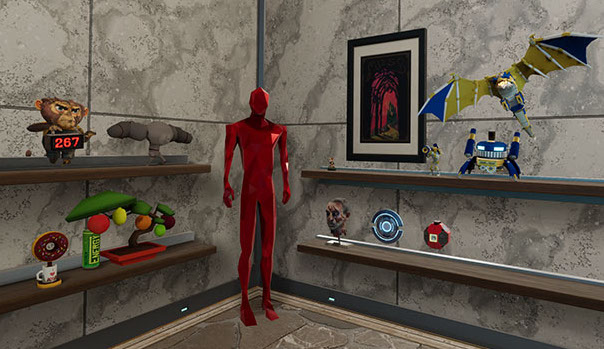
Oculus showed off a wide array of other new software today. Your Sims-style customizable Oculus Home can now sport Custom Developer Items so you can earn (or maybe one day buy) 3D goods within games. Earn an airship in a flying game, and that airship can float inside your Oculus Home when you’re done playing. The feature could let you build your own trophy wall, making those in-game achievements a lot more tangible.

Each year Oculus shows off the newest versions of its Avatars system that lets you create in-VR visual identity. They’re getting more lifelike thanks to additional hairstyles, skin tones, and accessories. And later this year, Oculus will launch Expressive Avatars that use its research on simulated eye and mouth movement as well as microexpressions to make them feel real.

Overall, Oculus Connect 5 felt a bit anti-climactic. Facebook has a lot of scandals distracting from its VR efforts while also triggering more scrutiny of any choices it makes related to privacy. What once might have been seen as mildly creepy now triggers damaging press cycles. Facebook ended up adding a privacy shield to cover the lens of its upcoming Portal video chat screen, Cheddar’s Alex Heath reports.

Combined with slow adoption of VR, it seems like there is less and less progress between Oculus’ annual conference. Instead of big advances in avatars, we get cosmetic upgrades and reveals of changes that won’t arrive for months. The newest Oculus Quest headset looks pretty similar to its previous prototypes.

At this point, the necessary technology for satisfactory VR has largely arrived. It’s now on Oculus and its legion of developers to build products and experiences that are simple, affordable, and impressive enough to be worth the hassle of face computing.

more Oculus Connect 5 coverage

26 Sep 2018

YouTube’s VR app is coming to Oculus Go

For a while, the best thing Google Daydream had going for it was YouTube, the platform has had a ton of 360 content on it but has been unavailable on Facebook’s Oculus Go headset.

At the company’s Oculus Connect 5 keynote, the company announced that a YouTube VR app will soon be arriving on the $199 headset bringing a load of user-created and professional 360 content to the device.

YouTube VR supports a number of VR video types including 360 spheres, 360 livestreams and 3D stereo videos running on its VR180 platform.

Developing

more Oculus Connect 5 coverage

26 Sep 2018

Soviet camera company Zenit is reborn!

If you’re familiar with 20th century Soviet camera clones you’ll probably be familiar with Zenit. Created by Krasnogorsky Zavod, the Nikon/Leica clones were a fan favorite behind the Iron Curtain and, like the Lomo, was a beloved brand that just doesn’t get its due. The firm stopped making cameras in 2005 but in its long history it defined Eastern European photography for decades and introduced the rifle-like Photo Sniper camera looked like something out of James Bond.

Now, thanks to a partnership with Leica, Zenit is back and is here to remind you that in Mother Russia, picture takes you.

The camera is based on the Leica M Type 240 platform but has been modified to look and act like an old Zenit. It comes with a Zenitar 35 mm f/1.0 lens that is completely Russian-made. You can use it for bokeh and soft-focus effects without digital processing.

The Leica M platform offers a 24MP full-frame CMOS sensor, a 3-inch LCD screen, HD video recording, live view focusing, a 0.68x viewfinder, ISO 6400, and 3fps continuous shooting. It will be available this year in the US, Europe, and Russia.

How much does the privilege of returning to the past cost? An estimated $5,900-$7,000 if previous incarnations of the Leica M are any indication. I have a few old film Zenits lying around the house, however. I wonder I can stick in some digital guts and create the ultimate Franken-Zenit?

26 Sep 2018

Oculus mobile app will now let users remote install PC games

Having to deal with using a PC is honestly the worst part about dealing with virtual reality. The same goes for having to wait for lengthy installs of big VR game downloads.

Today at its Oculus Connect 5 keynote, the company announced that its mobile app for iOS and Android will now connect to the company’s Rift headset allowing users to browse the desktop store and remote install games and apps. Previously the mobile app only worked with the $199 Oculus Go standalone headset.

In addition to facilitating easier downloads, the mobile app will also let users connect with friends on the Rift and browse for events being showcased on the PC-based headset.

Developing

more Oculus Connect 5 coverage

26 Sep 2018

Uber commits $10 million to sustainable transportation

Uber is putting $10 million behind sustainable transportation over the next three years. As part of the fund, Uber is donating $250,000 to SharedStreets, a nonprofit organization focused on creating a shared standard for public streets and data sharing. Lyft, also in the name of environmental impact, invested millions of dollars in carbon offsets earlier this year.

This comes a few months after Uber announced its plans to work with SharedStreets in Washington, D.C. to collect and share transportation data. At the time, Uber CEO Dara Khosrowshahi explained the plan was to launch a pilot to share data on curb usage across all models of transportation, and eventually partner with other cities around data.

Uber also intends to put that money — $1 million of it, to be exact — toward campaigning for a congestion pricing campaign in New York City, and pushing for a policy “that moves us to a more sustainable future,” Uber Head of Transportation Policy Andrew Salzberg told TechCrunch.

In a blog post, Khosrowshahi said Uber is willing to help cities tackle congestion, “even if that means paying money out of our own pocket to pass a tax on our core business.”

On the bike front, Uber is funding PeopleForBikes, a coalition of bicycling suppliers and retailers. Separate from the $10 million commitment, Uber has launched electric bike charging stations in Sacramento, Calif. Even though Uber-owned JUMP bikes are dockless, they still need to be charged.

“We need to find a way to make charging easy and accessible,” Salzberg said. “The idea is to make charging easier and keep more bikes on the road.”

In Sacramento, there are already 50 chargers on the ground. The goal is to get 300 installed by the end of the year, across 35 locations.

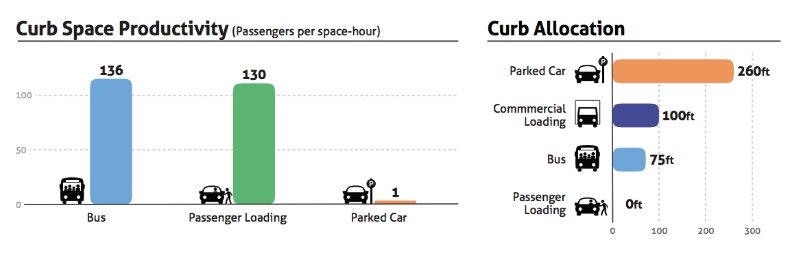
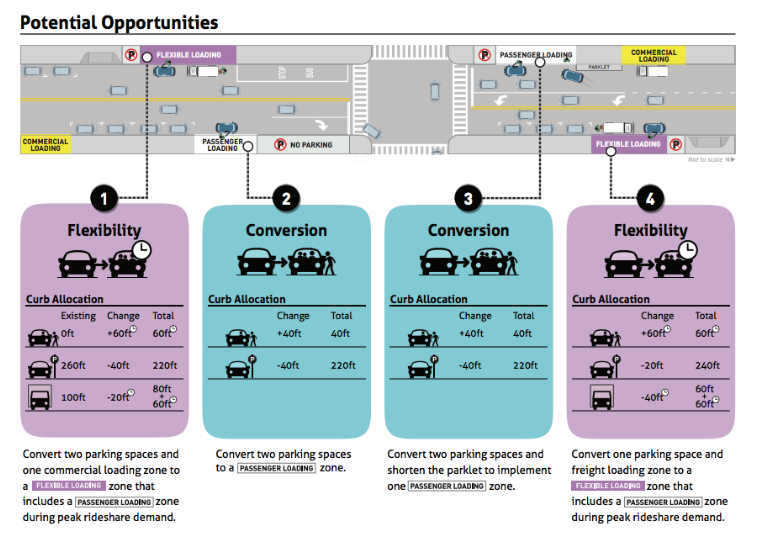
Up until today, Uber had been working behind the scenes with Fehr & Peers, a transportation consultant, to outline suggestions for how cities can better utilize curb space. The firm went as far as to develop a curb productivity index that calculates the amount of people using a curb per hour, per 20 feet of curb, which is about the size of a parking space.

The firm’s findings and suggestions were based on San Francisco, where Uber says it has “had a decent number of conversations over curb space,” Salzberg said, adding that “there’s nothing to specifically announce that’s going to be actionable.”

With this current report, Salzberg says the idea is for it to act as a resource for all cities — not just for San Francisco.

“Yeah, it’s about San Francisco, but the purpose is to have something that’s reference-able,” he said. “It’s obviously only one small step.”

Whether or not cities get on board with this plan is another story for another day.

26 Sep 2018

Facebook’s newest VR headset, Oculus Quest ships in the spring for $399

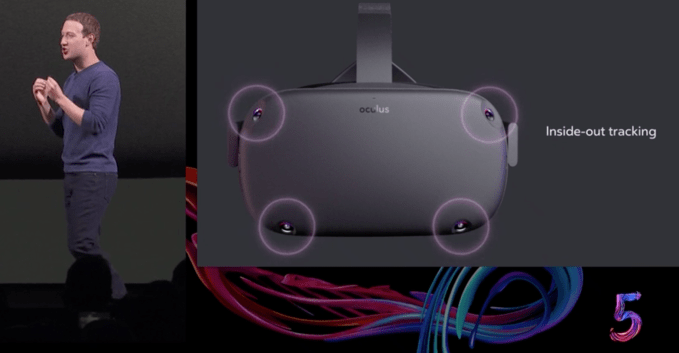
Opening up the Oculus Connect 5 keynote with some announcements, Facebook CEO Mark Zuckerberg announced that its newest headset, called Oculus Quest, will be released in the spring of 2019 at a $399 price point.

The standalone VR device will be the first wireless Oculus hardware to sport positional tracking, both for the headset itself and the dual hand controllers. The headset will ship with 50+ games made specifically for the device at launch.

The headset will retail for $399 and while the company’s flagship Oculus Rift headset is also $399, you need to tether to a fairly beefy gaming computer for that experience while the Oculus Quest has everything you need baked into it, including the compute and battery components. The device will a premium standalone option following the release of the $199 Oculus Go earlier this year which ran on a last-gen mobile chipset and lacks the ability to freely move through space while being tracked.

Oculus first showcased what was then called “Santa Cruz” at its developer conference two years ago. At the time, the feature prototype was all about the positionally-tracked standalone headset, but in time the company also added tracked controllers into the mix to bring an experience more comparable to the Rift. Developers have had the last few months to play with the platform which is a bit of an in-between platform for Oculus balancing some of the gameplay capabilities of the Rift with the simplicity of the Oculus Go.

Developing

more Oculus Connect 5 coverage

26 Sep 2018

Oculus VR content will be forwards-compatible with new Rifts

Oculus doesn’t want to deter developers by making their games and content obsolete when the next version of Rift comes out. So today at the Oculus Connect 5 conference, Facebook CEO Mark Zuckerberg announced that “Future versions of our product are going to be compatible with the old ones. All of the content that works for Rifts is going to work on the next version.”

That next version of the Oculus headset will be called Quest and will come out in the Spring. It’s wireless, will shop with Touch controllers, and there will be over 50 titles available at launch.

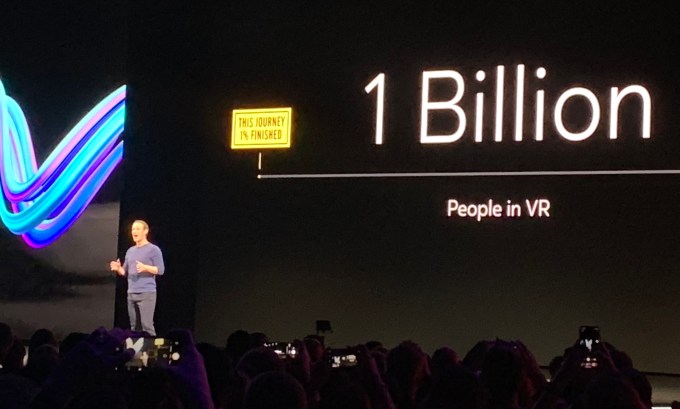
The compatability strategy ties into Zuckerberg’s prediction that the VR industry needs about 10 million users on any given hardware platform in order to drive enough sales for content creation to be sustainable. He joked about the slow adoption of VR, noting that last year Oculus set forth a goal of getting 1 billion people into VR. That journey is “one percent finished”, or “maybe less than one percent”.