
Author: azeeadmin

26 Sep 2018

WhatsApp founder, Brian Acton, says Facebook used him to get its acquisition past EU regulators

WhatsApp founder, Brian Acton, who left Facebook a year ago — before going on to publicly bite the hand that fed him, by voicing support for the #DeleteFacebook movement (and donating $50M to alternative encrypted messaging app, Signal) — has delved into the ethics clash behind his acrimonious departure in an interview with Forbes.

And for leaving a cool ~$850M in unvested stock on the table by not sticking it out a few more months inside Zuckerberg’s mothership, as co-founder Jan Koum did. (Collecting air cooled Porsches must be an expensive hobby, though.)

Acton has also suggested he was used by Facebook to help get its 2014 acquisition of WhatsApp past EU regulators who had been concerned it might be able to link accounts — as it subsequently did.

“You mean it won’t make as much money”

The WhatsApp founders’ departure from Facebook boils down to a disagreement over how to monetize their famously ‘anti-ads’ messaging platform from Menlo Park.

Though how the pair ever imagined their platform would be safe from ads in the clutches of, er, an ad giant like Facebook remains one of the tech world’s greatest unexplained brain-fails. Or else they were mostly just thinking of the billions Facebook was paying them.

Acton said he tried to push Facebook towards an alternative, less privacy hostile business model for WhatsApp — suggesting a metered-user model such as by charging a tenth of a penny after a certain large number of free messages were used up.

But that “very simple business” idea was rejected outright by Facebook COO Sheryl Sandberg, who he said told him “it won’t scale”.

“I called her out one time,” Acton also told Forbes. “I was like, ‘No, you don’t mean that it won’t scale. You mean it won’t make as much money as…,’ and she kind of hemmed and hawed a little. And we moved on. I think I made my point… They are businesspeople, they are good businesspeople. They just represent a set of business practices, principles and ethics, and policies that I don’t necessarily agree with.”
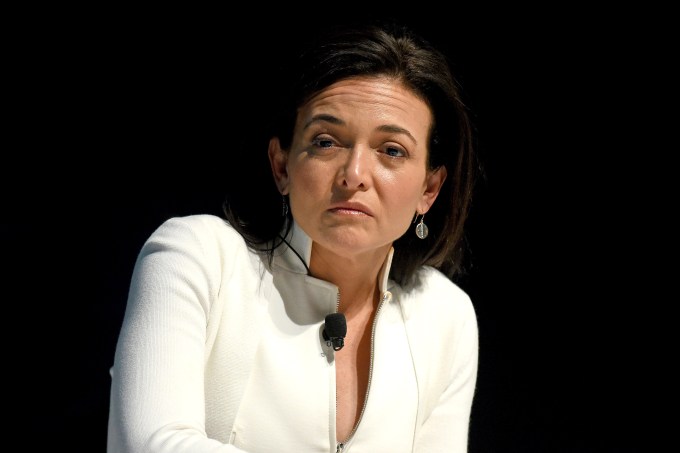
CANNES, FRANCE – JUNE 22: Chief Operating Officer of Facebook Sheryl Sandberg attends the Cannes Lions Festival 2017 on June 22, 2017 in Cannes, France. (Photo by Antoine Antoniol/Getty Images for Cannes Lions)

Still, it seems Acton and Koum had a pretty major inkling of the looming clash of business “principles and ethics” with Facebook’s management, given they had a clause written into their contract to allow them to immediately get all their stock if the company began “implementing monetization initiatives” without their consent.

So with his ideas being actively rejected, and with Facebook ramping up the monetization pressure on the “product group” (which is how Acton says Zuckerberg viewed WhatsApp), he thought he saw a route to both cash out and get out — by calling in the contract clause.

Facebook had other ideas, though. Company lawyers told him the clause didn’t yet apply because it had only been “exploring”, not yet implementing monetization. At a meeting over the issue he said Zuckerberg also told him: “This is probably the last time you’ll ever talk to me.” So presumably things got pretty chilly.

The original $19BN deal for Facebook to buy WhatsApp had been rushed through over a weekend in 2014, and Acton said there had been little time to examine what would turn out to be crucial details like the monetization clause.

But not doing the due diligence on that clearly cost him a second very sizeable personal fortune.

Regardless, faced with more uncomfortably chilly meetings, and a legal fight to get the unvested stock, Acton said he decided to just take the winnings he already had and leave.

He even rejected an alternative proposed settlement (without fleshing out exactly what it was) — saying Facebook management had wanted to put a nondisclosure agreement in it, and “that was part of the reason that I got sort of cold feet in terms of trying to settle with these guys”.

“At the end of the day, I sold my company. I am a sellout. I acknowledge that,” he also told Forbes, indicating that he’s not unaware that the prospect of a guy who got really, really wealthy by selling out his principles and his users then trying to claw out even more cash from the ad tech giant he sold to probably wouldn’t look so good.

At least this way he can say he took an $850M haircut to show he ‘cared’.

In August Facebook confirmed that from next year it will indeed begin injecting ads into WhatsApp statuses — which is where the multimedia montage Stories format it cloned from Snapchat has been bolted onto the platform.

So WhatsApp’s ~1.5BN+ monthly users can look forward to unwelcome intrusions as they try to go about their daily business of sending messages to their friends and family.

How exactly Facebook will ‘encourage’ WhatsApp users to eyeball the marketing noise it intends to monetize remains to be seen. But tweaks to make statues more prominent/unavoidable look likely. Facebook is a master of the dark pattern design, after all.

The company is also set to charge businesses for messages they receive from potential customers via the WhatsApp platform — of between a half a penny and 9 cents, depending on the country.

So, in a way, it’s picking up on Acton’s suggestion of a ‘metered model’ — just in a fashion that will “scale” the bottom line in Sandberg’s sought for ‘loadsamoney’ style.

Though of course neither Acton nor Koum will be around to cash in on the stock uplift as Facebook imposes its ad model onto a whole new unwilling platform.

“I think everyone was gambling… because enough time had passed”

In perhaps the most telling tidbit of the interview, Acton reveals that even before the WhatsApp acquisition had been cleared he was carefully coached by Facebook to tell European regulators it would be “really difficult” for it to combine WhatsApp and Facebook user data.

“I was coached to explain that it would be really difficult to merge or blend data between the two systems,” Acton said.

An ‘impossible conjoining’ that Facebook subsequently, miraculously went on to achieve, just two years later, which later earned it a $122M fine from the European Commission for providing incorrect or misleading information on the original filing. (Facebook has maintained that unintentional “errors” were to blame.)

After the acquisition had been cleared Acton said he later learned that elsewhere in Facebook there were indeed “plans and technologies to blend data” between the two services — and that specifically it could use the 128-bit string of numbers assigned to each phone to connect WhatsApp and Facebook user accounts.

Phone-number matching is another method used to link accounts — and sharing WhatsApp users’ phone numbers with the parent group was a change pushed onto users via the 2016 update to WhatsApp’s terms and conditions.

(Though Facebook’s linking of WhatsApp and Facebook accounts for ad targeting purposes remains suspended in Europe, after regulatory push-back.)

“I think everyone was gambling because they thought that the EU might have forgotten because enough time had passed,” he also said in reference to Facebook pushing ahead with account matching, despite having told European regulators it couldn’t be done.

Regulators did not forget. But a $122M fine is hardly a proportionate disincentive for a company as revenue-heavy as Facebook (which earned a whopping $13.23BN in Q2). And which can therefore swallow the penalty as another standard business cost.

Acton said Facebook also sought “broader rights” to WhatsApp users data under the new terms of service — and claims he and Koum pushed back and reached a compromise with Facebook management.

The ‘compromise’ being that the clause about ‘no ads’ would remain — but Facebook would get to link accounts to power friend suggestions on Facebook and to offer its advertising partners better targets for ads on Facebook. So really they just bought themselves (and their users) a bit more time.

Now, of course, with both founders out of the company Facebook is free to scrub the no ads clause and use the already linked accounts for ad targeting in both directions (not just at Facebook users).

And if Acton and Koum ever really thought they could prevent that adtech endgame they were horribly naive. Again, most probably, they just balanced the billions they got paid against that outcome and thought 2x [shrug emoji].

Facebook’s push to monetize WhatsApp faster than its founders were entirely comfortable with looks to be related to its own concerns about needing to please investors by being able to show continued growth.

Facebook’s most recent Q2 was not a stellar one, with its stock taking a hit on slowing user growth.

Three years after the WhatsApp acquisition, Acton said Zuckerberg was growing impatient — recounting how he told an all-hands meeting for WhatsApp staffers Facebook needed WhatsApp revenues to continue to show growth to Wall Street.

Internally, Acton said Facebook had targeted a $10 billion revenue run rate within five years of monetization of WhatsApp — numbers he thought sounded too high and which therefore must be reliant on ads.

And so within a year or so Acton was on his way out — not quite as personally mega-wealthy as he could have been. But definitely don’t cry for him. He’s doing fine.

At the Signal Foundation, where Acton now works, he says the goal is to make “private communication accessible and ubiquitous”.

Though the alternative e2e encrypted app has only unquantified “millions” of users to WhatsApp and Facebook’s multi billions. But at least it has $50M of Acton’s personal fortune behind it.
26 Sep 2018

WhatsApp founder, Brian Acton, says Facebook used him to get its acquisition past EU regulators

WhatsApp founder, Brian Acton, who left Facebook a year ago — before going on to publicly bite the hand that fed him, by voicing support for the #DeleteFacebook movement (and donating $50M to alternative encrypted messaging app, Signal) — has delved into the ethics clash behind his acrimonious departure in an interview with Forbes.

And for leaving a cool ~$850M in unvested stock on the table by not sticking it out a few more months inside Zuckerberg’s mothership, as co-founder Jan Koum did. (Collecting air cooled Porsches must be an expensive hobby, though.)

Acton has also suggested he was used by Facebook to help get its 2014 acquisition of WhatsApp past EU regulators who had been concerned it might be able to link accounts — as it subsequently did.

“You mean it won’t make as much money”

The WhatsApp founders’ departure from Facebook boils down to a disagreement over how to monetize their famously ‘anti-ads’ messaging platform from Menlo Park.

Though how the pair ever imagined their platform would be safe from ads in the clutches of, er, an ad giant like Facebook remains one of the tech world’s greatest unexplained brain-fails. Or else they were mostly just thinking of the billions Facebook was paying them.

Acton said he tried to push Facebook towards an alternative, less privacy hostile business model for WhatsApp — suggesting a metered-user model such as by charging a tenth of a penny after a certain large number of free messages were used up.

But that “very simple business” idea was rejected outright by Facebook COO Sheryl Sandberg, who he said told him “it won’t scale”.

“I called her out one time,” Acton also told Forbes. “I was like, ‘No, you don’t mean that it won’t scale. You mean it won’t make as much money as…,’ and she kind of hemmed and hawed a little. And we moved on. I think I made my point… They are businesspeople, they are good businesspeople. They just represent a set of business practices, principles and ethics, and policies that I don’t necessarily agree with.”

CANNES, FRANCE – JUNE 22: Chief Operating Officer of Facebook Sheryl Sandberg attends the Cannes Lions Festival 2017 on June 22, 2017 in Cannes, France. (Photo by Antoine Antoniol/Getty Images for Cannes Lions)

Still, it seems Acton and Koum had a pretty major inkling of the looming clash of business “principles and ethics” with Facebook’s management, given they had a clause written into their contract to allow them to immediately get all their stock if the company began “implementing monetization initiatives” without their consent.

So with his ideas being actively rejected, and with Facebook ramping up the monetization pressure on the “product group” (which is how Acton says Zuckerberg viewed WhatsApp), he thought he saw a route to both cash out and get out — by calling in the contract clause.

Facebook had other ideas, though. Company lawyers told him the clause didn’t yet apply because it had only been “exploring”, not yet implementing monetization. At a meeting over the issue he said Zuckerberg also told him: “This is probably the last time you’ll ever talk to me.” So presumably things got pretty chilly.

The original $19BN deal for Facebook to buy WhatsApp had been rushed through over a weekend in 2014, and Acton said there had been little time to examine what would turn out to be crucial details like the monetization clause.

But not doing the due diligence on that clearly cost him a second very sizeable personal fortune.

Regardless, faced with more uncomfortably chilly meetings, and a legal fight to get the unvested stock, Acton said he decided to just take the winnings he already had and leave.

He even rejected an alternative proposed settlement (without fleshing out exactly what it was) — saying Facebook management had wanted to put a nondisclosure agreement in it, and “that was part of the reason that I got sort of cold feet in terms of trying to settle with these guys”.

“At the end of the day, I sold my company. I am a sellout. I acknowledge that,” he also told Forbes, indicating that he’s not unaware that the prospect of a guy who got really, really wealthy by selling out his principles and his users then trying to claw out even more cash from the ad tech giant he sold to probably wouldn’t look so good.

At least this way he can say he took an $850M haircut to show he ‘cared’.

In August Facebook confirmed that from next year it will indeed begin injecting ads into WhatsApp statuses — which is where the multimedia montage Stories format it cloned from Snapchat has been bolted onto the platform.

So WhatsApp’s ~1.5BN+ monthly users can look forward to unwelcome intrusions as they try to go about their daily business of sending messages to their friends and family.

How exactly Facebook will ‘encourage’ WhatsApp users to eyeball the marketing noise it intends to monetize remains to be seen. But tweaks to make statues more prominent/unavoidable look likely. Facebook is a master of the dark pattern design, after all.

The company is also set to charge businesses for messages they receive from potential customers via the WhatsApp platform — of between a half a penny and 9 cents, depending on the country.

So, in a way, it’s picking up on Acton’s suggestion of a ‘metered model’ — just in a fashion that will “scale” the bottom line in Sandberg’s sought for ‘loadsamoney’ style.

Though of course neither Acton nor Koum will be around to cash in on the stock uplift as Facebook imposes its ad model onto a whole new unwilling platform.

“I think everyone was gambling… because enough time had passed”

In perhaps the most telling tidbit of the interview, Acton reveals that even before the WhatsApp acquisition had been cleared he was carefully coached by Facebook to tell European regulators it would be “really difficult” for it to combine WhatsApp and Facebook user data.

“I was coached to explain that it would be really difficult to merge or blend data between the two systems,” Acton said.

An ‘impossible conjoining’ that Facebook subsequently, miraculously went on to achieve, just two years later, which later earned it a $122M fine from the European Commission for providing incorrect or misleading information on the original filing. (Facebook has maintained that unintentional “errors” were to blame.)

After the acquisition had been cleared Acton said he later learned that elsewhere in Facebook there were indeed “plans and technologies to blend data” between the two services — and that specifically it could use the 128-bit string of numbers assigned to each phone to connect WhatsApp and Facebook user accounts.

Phone-number matching is another method used to link accounts — and sharing WhatsApp users’ phone numbers with the parent group was a change pushed onto users via the 2016 update to WhatsApp’s terms and conditions.

(Though Facebook’s linking of WhatsApp and Facebook accounts for ad targeting purposes remains suspended in Europe, after regulatory push-back.)

“I think everyone was gambling because they thought that the EU might have forgotten because enough time had passed,” he also said in reference to Facebook pushing ahead with account matching, despite having told European regulators it couldn’t be done.

Regulators did not forget. But a $122M fine is hardly a proportionate disincentive for a company as revenue-heavy as Facebook (which earned a whopping $13.23BN in Q2). And which can therefore swallow the penalty as another standard business cost.

Acton said Facebook also sought “broader rights” to WhatsApp users data under the new terms of service — and claims he and Koum pushed back and reached a compromise with Facebook management.

The ‘compromise’ being that the clause about ‘no ads’ would remain — but Facebook would get to link accounts to power friend suggestions on Facebook and to offer its advertising partners better targets for ads on Facebook. So really they just bought themselves (and their users) a bit more time.

Now, of course, with both founders out of the company Facebook is free to scrub the no ads clause and use the already linked accounts for ad targeting in both directions (not just at Facebook users).

And if Acton and Koum ever really thought they could prevent that adtech endgame they were horribly naive. Again, most probably, they just balanced the billions they got paid against that outcome and thought 2x [shrug emoji].

Facebook’s push to monetize WhatsApp faster than its founders were entirely comfortable with looks to be related to its own concerns about needing to please investors by being able to show continued growth.

Facebook’s most recent Q2 was not a stellar one, with its stock taking a hit on slowing user growth.

Three years after the WhatsApp acquisition, Acton said Zuckerberg was growing impatient — recounting how he told an all-hands meeting for WhatsApp staffers Facebook needed WhatsApp revenues to continue to show growth to Wall Street.

Internally, Acton said Facebook had targeted a $10 billion revenue run rate within five years of monetization of WhatsApp — numbers he thought sounded too high and which therefore must be reliant on ads.

And so within a year or so Acton was on his way out — not quite as personally mega-wealthy as he could have been. But definitely don’t cry for him. He’s doing fine.

At the Signal Foundation, where Acton now works, he says the goal is to make “private communication accessible and ubiquitous”.

Though the alternative e2e encrypted app has only unquantified “millions” of users to WhatsApp and Facebook’s multi billions. But at least it has $50M of Acton’s personal fortune behind it.
26 Sep 2018

SenseHawk, drone analytics for the solar industry, takes flight with $2M investment

The consumer market is just the tip of the iceberg for drones, which have the potential to deploy across a range of different industry verticals such as construction or agriculture.

That’s the premise beyond SenseHawk, a U.S-India startup that specializes in using data captured by drones to develop insight for projects within the solar industry. The startup is currently active in three markets — its two home countries and Australia — and now it has raised $2 million from SAIF Partners to push its business on and expand into new regions. A number of undisclosed angel investors also took part in the round.

The company was founded in December 2015 by Swarup Mavanoor and Rahul Sankhe, who previously both spent time working for renewable energy company SunEdison. Mavanoor that the idea for the business came when using a drone to collect data for a construction project. While the information gathering gave considerably more insight that traditional methods of deploying people, the duo found that there was no service for extracting specific data required.

“We started looking around and though lots of people are doing basic drone data processing, no-one is really looking at this vertical,” Mavanoor told TechCrunch in an interview. Thus SenseHawk was born.

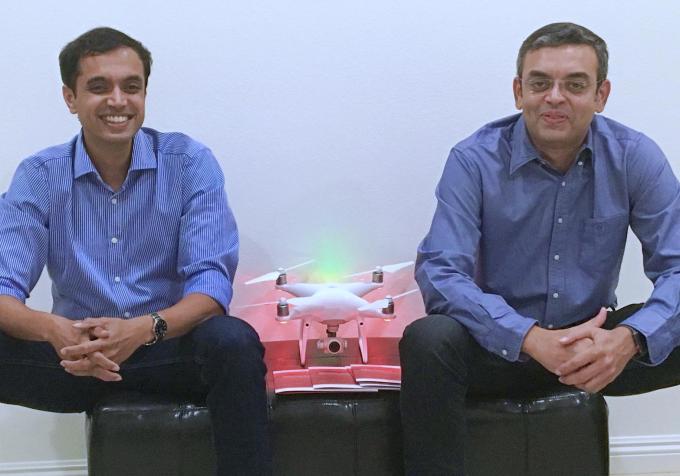
[Left to right] SenseHawk co-founders Swarup Mavanoor and Rahul Sankhe

The company isn’t really a drone business, it’s more of a data and analytics startup.

That’s because it doesn’t pilot drones itself. Rather, it helps companies that own and use them to get the insight that they need for each project. SenseHawk is developing an AI platform that’s split into different modules. Those include terrain-based analysis tools, a construction monitoring and analytics system, and thermal analysis.

Mavanoor said that clients adopt modules based on requirements, with some taking all three.

He said the startup plans to use the new funds raised to develop its core tech and AI platform, including new modules, and expand its business into new regions such as Europe and Africa. It is also hiring, with its headcount is set to expand to around 20 people in the coming weeks. Its engineering team is based in Bangalore, India.

Many verticals that involve outdoor work have the potential for drone-based analytics and services, but SenseHawk is sticking to the industry it knows best for the time being.

“Our core development is focused on solar because we are from the industry so have an advantage in terms of our network and understanding of what’s needed. We did look at [other industries like] agriculture, but the worry was where do you make money.

“What you can deliver with a drone is basic analytics, but agriculture requires precise data on what to do and how to progress,” Mavanoor added. “Ultimately, we decided that there’s no point in doing 10 things and doing a decent job, versus sticking to one thing and doing an amazing job.”

26 Sep 2018

SenseHawk, drone analytics for the solar industry, takes flight with $2M investment

The consumer market is just the tip of the iceberg for drones, which have the potential to deploy across a range of different industry verticals such as construction or agriculture.

That’s the premise beyond SenseHawk, a U.S-India startup that specializes in using data captured by drones to develop insight for projects within the solar industry. The startup is currently active in three markets — its two home countries and Australia — and now it has raised $2 million from SAIF Partners to push its business on and expand into new regions. A number of undisclosed angel investors also took part in the round.

The company was founded in December 2015 by Swarup Mavanoor and Rahul Sankhe, who previously both spent time working for renewable energy company SunEdison. Mavanoor that the idea for the business came when using a drone to collect data for a construction project. While the information gathering gave considerably more insight that traditional methods of deploying people, the duo found that there was no service for extracting specific data required.

“We started looking around and though lots of people are doing basic drone data processing, no-one is really looking at this vertical,” Mavanoor told TechCrunch in an interview. Thus SenseHawk was born.

[Left to right] SenseHawk co-founders Swarup Mavanoor and Rahul Sankhe

The company isn’t really a drone business, it’s more of a data and analytics startup.

That’s because it doesn’t pilot drones itself. Rather, it helps companies that own and use them to get the insight that they need for each project. SenseHawk is developing an AI platform that’s split into different modules. Those include terrain-based analysis tools, a construction monitoring and analytics system, and thermal analysis.

Mavanoor said that clients adopt modules based on requirements, with some taking all three.

He said the startup plans to use the new funds raised to develop its core tech and AI platform, including new modules, and expand its business into new regions such as Europe and Africa. It is also hiring, with its headcount is set to expand to around 20 people in the coming weeks. Its engineering team is based in Bangalore, India.

Many verticals that involve outdoor work have the potential for drone-based analytics and services, but SenseHawk is sticking to the industry it knows best for the time being.

“Our core development is focused on solar because we are from the industry so have an advantage in terms of our network and understanding of what’s needed. We did look at [other industries like] agriculture, but the worry was where do you make money.

“What you can deliver with a drone is basic analytics, but agriculture requires precise data on what to do and how to progress,” Mavanoor added. “Ultimately, we decided that there’s no point in doing 10 things and doing a decent job, versus sticking to one thing and doing an amazing job.”

26 Sep 2018

Inside Facebook Stories’ quest for originality amidst 300M users

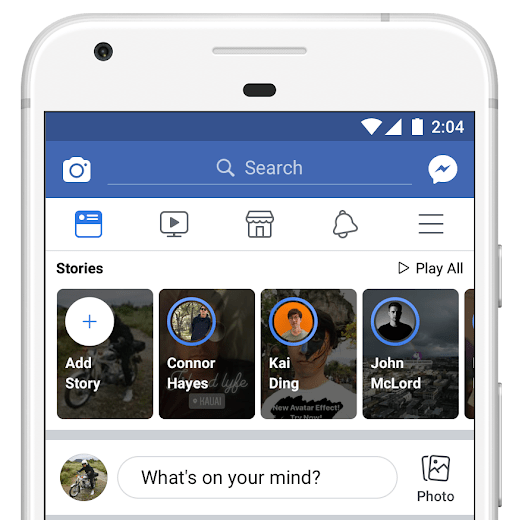
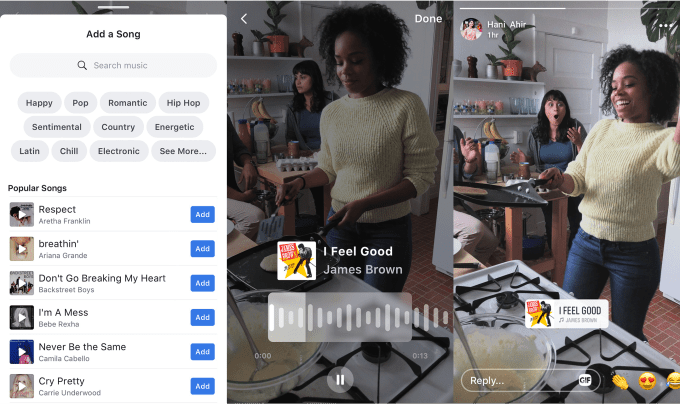
There’s a secret Facebook app called Blink. Built for employees only, it’s how the company tests out new video formats its hoping will become the next Boomerang or SuperZoom. They range from artsy Blur effects to a way even old Android phones can use Slo-Mo. One exciting format involves audio beat detection that syncs visual embellishments to songs playing in the background or added via the Music stickers that are  coming to Facebook Stories after debuting on Instagram.

“When we first formed the team . . . we brought in film makers and cinematographers to help the broader team understand the tropes around storytelling and filmmaking” says Dantley Davis, Facebook Stories’ Director Of Design. He knows those tropes himself, having spent seven years at Netflix leading the design of its apps and absorbing creative tricks from countless movies. He wants to democratize those effects once trapped inside expensive desktop editing software. “We’re working on formats to enable people to take the video they have and turn it into something special.”

For all the jabs about Facebook stealing Stories from Snapchat, it’s working hard to differentiate. That’s in part because there’s not much left to copy, and because it’s largely succeeded in conquering the prodigal startup that refused to be acquired. Snapchat’s user count shrank last quarter to 188 million daily users. Facebook’s versions continue to grow. After announcing in May that Facebook Stories had 150 million users, with Messenger citing 70 million last September, today the company revealed they have a combined 300 million daily users.

With the success of any product comes the mandate to monetize it. That push ended up pushing out the founders of Facebook acquisition WhatsApp, and encroachment on product decision making did the same to Instagram’s founders who this week announced they were resigning. Now the mandate has reached Facebook Stories which today opened up to advertisers globally. As Stories sharing is predicted to surpass feed sharing in 2019, Facebook is counting on the ephemeral slideshows to sustain its ad revenue. Fears they wouldn’t lopped $120 billion off Facebook’s market cap this summer.

But to run ads you need viewers and that will require responses to questions that have dogged Facebook Stories since its debut in early 2017: Why do I need Stories here too when I already have Instagram Stories and WhatsApp Status.

The answer may be creativity, but Facebook is taking a scientific approach to determining which creative tools to build. Liz Keneski is a user experience research manager at Facebook. She leads the investigative trips, internal testing, and focus groups that shape Facebook’s products. Keneski laid out the different types of research Facebook employs to go from vague idea to polished launch.

Foundational Research – “This is the really future looking research. It’s not necessarily about any specific products but trying to understand people’s needs.”

Contextual Inquiry – “People are kind enough to invite us into their homes and talk with us about how they use technology.” Sometimes Facebook does “street intercepts” where they find people in public and spend five minutes watching and discussing how they use their phone. It also conducts “diary studies” where people journal about how they spend their time with tech.

Descriptive Research – “When we’re exploring a defined product space”, this lets Facebook get feedback on exactly what users would want a new feature to do.

Participatory Design – “It’s kind of like research arts and crafts. We give people different artifacts and design elements and actually ask them to a deign what an experience that would be ideal for them might look like.”

Product Research – “Seeing how people interact with a specific product, the things they’re like or don’t like, the things they might want to change” lets Facebook figure out how to tweak features it’s built so they’re ready to launch.

Last year Facebook went on a foundational research expedition to India. Devanshi Bhandari who works on the globalization. She discovered that even in emerging markets where Snapchat never got popular, people already knew how to use Stories. “We’ve been kind of surprised to learn . . . Ephemeral sharing wasn’t as new to some people as we expected” she tells me. It turns out there are regional Stories copycats around the globe.

As Bhandari dug deeper she found that people wanted more creative tools, but not at the cost of speed. So Facebook began caching the Stories tray from your last visit so it’d still appear when you open Facebook Lite without having to wait for it to load. This week, Facebook will start offering creative tools like filters inside Facebook Lite Stories by enabling them server side so users can do more than just upload unedited videos.

That trip to India ended up spawning whole new products. Bhandari noticed some users, especially women, weren’t comfortable showing their face in Stories. “People would sometimes put their thumb over the video camera but share the audio content” she tells me. That led Facebook to build Audio Stories

But to make Stories truly Facebook-y, it had to build them into all its products. Facebook recently launched Group and Event Stories, where members can collaborate by all contributing clips that show up in the Stories tray atop the News Feed. Now Facebook is going to start building its own version of Snapchat’s Our Stories. Facebook is now testing holiday-based collaborative Stories, starting with a festival in Vietnam. Users can opt to post to this themed Story, and friends (but not the public) will see those clips combined.

26 Sep 2018

Circle launches its stablecoin

When Circle raised its $110 million funding round, the company used this opportunity to talk about its stablecoin — USD Coin, or USDC for short. And you can now buy, sell and send USD Coins on Circle Trade and Circle’s exchange Poloniex.

But what is a stablecoin? As the name suggests, 1 USDC is worth 1 USD. Unlike traditional cryptocurrencies, you can be sure that the value of USDC isn’t going to fluctuate like crazy.

There are multiple reasons why you’d want to use stablecoins. First, if you want to short cryptocurrencies without cashing out, you can convert your bitcoins or ethers to USDC. This way, it’ll be easier to buy cryptocurrencies again in the future.

Second, if you want to avoid traditional financial institutions, you can send USDC to other people without going through a bank. Sending USDC is like sending any other token — you just need to tell your recipient to get a wallet and ask for their wallet address.

Third, I’m sure many people are going to use stablecoins to avoid taxation issues. It’s easier to hide a bunch of tokens than a big wire transfers hitting your bank statement.

Many people living in countries suffering from hyperinflation or chronic inflation, such as Venezuela or Turkey, could also rely on USDC to convert some of their savings. This way, you don’t have to open a bank account in another country.

USDC is an ERC-20 token, which means that it’s easy to add support for USDC if you’re running an exchange or a wallet. But Circle wants to make sure that issuers are not just printing money without any actual USD in their bank accounts.

Multiple companies partnered to create CENTRE, a consortium that is going to define policies around stablecoins and governance. If you want to issue USDC, you have to comply with a bunch of rules. In particular, you have to send monthly audited reports proving that you have as many USD on deposit as issued tokens.

Multiple companies have already announced that they will begin trading USDC soon, such as DigiFinex, CoinEx, KuCoin, OKCoin, Coinplug and XDAEX. On the wallet front, BitGo, Cobo, Coinbase Wallet, CoolWallet S, Elph, imToken, Ledger, Status and Trust will add native USDC support soon.

26 Sep 2018

Putting the Pentagon $10B JEDI cloud contract into perspective

Sometimes $10 billion isn’t as much as you think.

It’s true that when you look at the bottom line number of the $10 billion Joint Enterprise Defense Infrastructure (JEDI) cloud contract, it’s easy to get lost in the sheer size of it, and the fact that it’s a one-vendor deal. The key thing to remember as you think about this deal is that while it’s obviously a really big number, it’s spread out over a long period of time and involves a huge and growing market.

It’s also important to remember that the Pentagon has given itself lots of out clauses in the way the contract is structured. This could be important for those who are worried about one vendor having too much power in a deal like this. “This is a two-year contract, with three option periods: one for three years, another for three years, and a final one for two years,” Heather Babb, Pentagon spokeswoman told TechCrunch.

The contract itself has been set up to define the department’s cloud strategy for the next decade. The thinking is that by establishing a relationship with a single vendor, it will improve security and simplify overall management of the system. It’s also part of a broader view of setting technology policy for the next decade and preparing the military for more modern requirements like Internet of Things and artificial intelligence applications.

Many vendors have publicly expressed unhappiness at the winner-take-all, single vendor approach, which they believe might be unfairly tilted toward market leader Amazon. Still, the DOD, which has stated that the process is open and fair, seems determined to take this path, much to the chagrin of most vendors, who believe that a multi-vendor strategy makes more sense.

John Dinsdale, chief analyst at Synergy Research Group, a firm that keeps close tabs on the cloud market, says it’s also important to keep the figure in perspective compared to the potential size of the overall market.

“The current worldwide market run rate is equivalent to approximately $60 billion per year and that will double in less than three years. So in very short order you’re going to see a market that is valued at greater than $100 billion per year – and is continuing to grow rapidly,” he said.

Put in those terms, $10 billion over a decade, while surely a significant figure, isn’t quite market altering if the market size numbers are right. “If the contract is truly worth $10 billion that is clearly a very big number. It would presumably be spread over many years which then puts it at only a very small share of the total market,” he said.

He also acknowledges that it would be a big feather in the cap of whichever company wins the business, and it could open the door for other business in the government and private sector. After all, if you can handle the DOD, chances are you can handle just about any business where a high level of security and governance would be required.

Final RFPs are now due on October 12th with a projected award date of April 2019, but even at $10 billion, an astronomical sum of money to be sure, it ultimately might not shift the market in the way you think.

26 Sep 2018

Alexa is reported down across Europe

Reports are coming in that Amazon’s Alexa service is down in parts of UK, Spain, Germany and Austria. According to Down Detector and Twitter, the problem started surfacing around 8am local time and still continues. Interestingly, some users are reporting the issue is isolated to Echo Dot 2 models and while other Echo devices are still working. Sometimes. Other reports say everything is down. When users try to talk to their Echo devices, Alexa will report an error with connectivity and spin a red ring around the top.

Because of this outage, users will have to use wall switches to turn on lights, press buttons to make coffee and look outside to assess the weather. Sucks. I know.

As Engadget points out in their coverage, the outage could stem from Amazon Web Service issues at the company’s Ireland facility. Amazon is now reporting that those issues have been resolved so there’s a chance Alexa will be coming back online shortly.

26 Sep 2018

How to livestream today’s Oculus Connect 5 keynote online and in VR

Virtual reality is largely an expensive hobby for Facebook and its CEO Mark Zuckerberg today, but the company hopes that within the decade, it can build out an entire VR empire for the social media giant to conquer.

Later this morning, we’ll get a taste of the future of VR from Facebook at the Oculus Connect 5 keynote. We’ll see the company’s latest hardware efforts, the future of gaming on the platforms and perhaps a taste of what they have planned for the next couple years of their product lineup.

The action all starts at 10:00am PT.

We’ll be covering the breaking news and offering our analysis on the day’s events, but feel free to follow along with the livestream for the big updates from the Oculus and Facebook teams.

You can check out a livestream of the keynote on the Oculus Facebook page or Oculus YouTube channel.

Additionally, if you’re an Oculus Go or Gear VR owner, you’ll actually be able to watch the keynote in virtual reality. I’ve never found keynotes shot in 360-degrees to be particularly engaging, but if you’re excited about the announcements and want to stay super on-brand, you can dive into the Oculus Venues app later this morning to get the lowdown.

What should you be expecting? Chances are Oculus will cram a lot of announcements into the keynote, but we’ve broken down some of the pieces of hardware and trends you should be expecting. So check it out.

more Oculus Connect 5 coverage

26 Sep 2018

Cloudflare partners with Microsoft, Google and others to reduce bandwidth costs

Say hello to the Bandwidth Alliance, a new group led by Cloudflare that promises to reduce the price of bandwidth for many cloud customers. The overall idea here is that customers who use both Cloudflare, which is turning eight years old this week, and a cloud provider that’s part of this alliance will get a significant discount on their egress traffic or won’t have to pay for it at all.

The alliance is open, and others may join still, but right now it includes virtually every major and minor cloud provider you’ve ever heard of — with one exception. Current members include Automattic, Backblaze, Digital Ocean, DreamHost, IBM Cloud, Linode, Google, Google Cloud, Microsoft Azure, Packet, Scaleway and Vapor. Some of these will now offer free egress traffic to mutual customers with Cloudflare, while others will offer at least a 75 percent discount.

That’s quite the alliance, but as Cloudflare CEO and co-founder Matthew Prince told me, once the first member joined, the rest of the pieces fell into place quickly. Surely it also helped that both Google and Microsoft have invested in Cloudflare.

Why would these businesses choose to do away with what’s a minor but high-margin business, though? “The argument that we made to them was a pretty simple argument: it makes sense for you to charge for transit when you are actually paying for it,” Prince said. Most of the time, though, those costs are very minor and Cloudflare, thanks to his massive number of global peering locations, can ingest the traffic directly from the cloud provider with no middlemen involved.

The first company Cloudflare partnered with was Google, thanks to that company’s CDN Interconnect program, which launched in 2015. Cloudflare was one of the initial partners in the program, though as Prince noted, there was still a lot to learn for all parties involved, especially because traffic was sometimes routed in very unpredictable ways that circumvented the cost savings mechanisms. Cloudflare learned from this, though, and is now using its own Argo technology to intelligently route traffic.

As Prince noted, though, one thing that turned out to be harder than anticipated was ensuring that the cloud vendors would know that one of their customers is a mutual customer. Some have that instrumentation in place, while Cloudflare needs to pass a special header to them so they can know where their traffic is coming from.

Prince also argued that this will make it easier for many companies to use multiple cloud providers without having to pay extremely high bandwidth cost. While Cloudflare’s early focus was very much on web traffic, Prince said that more than half is now API-based traffic, and that’s exactly the kind of user who will likely save quite a bit of money thanks to this.

The one company that’s not part of this alliance, of course, is Amazon with its AWS platform. Prince said that Cloudflare has talked to them, though, and the group is open to all cloud and CDN providers.
