Author: azeeadmin

25 Sep 2018

Mars orbiter spots silent, dust-covered Opportunity rover as dust storm clears

Mars rover Opportunity has been operating on the surface of the Red Planet since 2004, but a dust storm this summer may prove to be the mission’s toughest challenge. The enormous storm caked Opportunity in dust and blocked out the sun, its source of energy — and there’s no guarantee the batteries aren’t dead for good. But now that the skies have cleared, we at least have our first look at the workhorse rover from orbit since it went radio silent.

The Mars Reconnaissance Orbiter captures fabulous imagery of the planet at a regular rate, but it happened that it passed over Perseverance Valley last week, where Opportunity is currently stationary. In the image you can just make it out as a few pixels raised above the surface.

That valley isn’t the only place that was hit by the storm — this was no flurry but a full-blown planet-spanning tempest that lasted for months. It isn’t the first dust storm Opportunity has weathered by a long shot, but it was probably the worst.

The last we heard from the rover was on June 10, at which point the storm was getting so intense that Opportunity couldn’t charge its batteries any more and lowered itself into a hibernation state, warmed only by its plutonium-powered heaters — if they’re even working.

Once a day, Opportunity’s deeply embedded safety circuit checks if there’s any power in its battery or coming in via solar.

“Now that the sun is shining through the dust, it will start to charge its batteries,” explained Jim Watzin, director of the Mars Exploration Program at NASA. And so some time in the coming weeks it will have sufficient power to wake up and place a call back to Earth. But we don’t know when that call will come.”
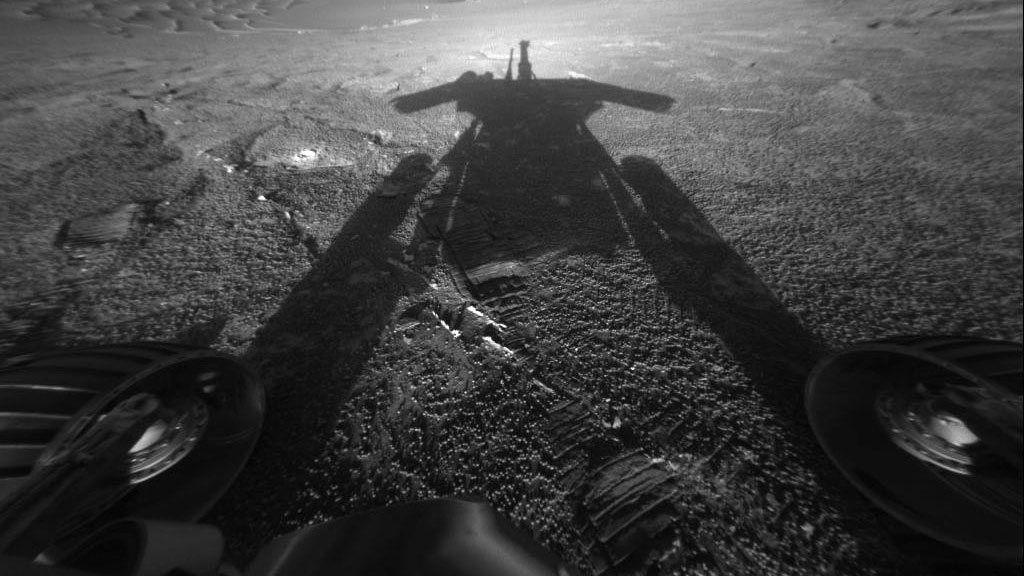
An Opportunity shadow-selfie from 2004, when Opportunity was comparatively young (and had “only” doubled its mission length).

That’s the hope, anyway. There is of course the possibility that the dust has obscured the solar cells too thickly, or some power fault during the storm led to the safety circuit not working… there’s no shortage of what-if scenarios. But space exploration is a unique combination of the deeply realistic with the deeply optimistic, and there’s no way Opportunity’s handlers aren’t going to give the little rover all the time it needs, within reason, to get back in touch.

The team has been sending extra signals out to spur a response from Opportunity and will continue to do so for the next few weeks, but even that won’t be the end of the line.

Thomas Zurbuchen, associate administrator at NASA’s Science Mission Directorate, assured the many Opportunity superfans out there that they plan to keep listening at least through January. And you can bet a few sentimental types will find a way to check now and then after that as well.

Should the worst happen and the dust storm appear to have disabled the rover for good, that would still be a hell of a run — Opportunity was intended to last for 90 days and has instead gone for 14 years. Nothing sad about that. But here’s hoping we hear from this long-lived explorer soon.
25 Sep 2018

Tinder’s ‘Swipe the Vote’ campaign aims to educate young voters and get them to polls

Tinder has partnered up with nonprofit Rock the Vote for a second time, in the hopes of driving young people to the polls through in-app messaging. The company claims a young adult user base where more than half are in the 18 to 24 demographic, and believes it’s well-positioned to mobilize younger voters during the 2018 U.S. Midterm Elections.

It’s critical to get these voters to the polls, as only 46.1 percent of the 18 to 29-year old turned out to vote during the 2016 election, according to the U.S. Census Bureau, the company notes.

Tinder says it will begin to share “fun facts” with its users during election season right in the app – like the volumes of voter registrations and other anecdotes related to past and upcoming elections. These facts will have a particular focus on those that of most interest to Tinder’s younger users.

For example, some that will be shared include: “Did you know that only about 40% of eligible voters turn up for the midterm elections?,” and “Even though millennials make up 25% of the population, they make up less than 5% of state legislatures,” plus, “The average American is twenty years younger than their congressional representative.”

The facts will pop up in the app as often as two to three times a week in the U.S. as a “Swipe the Vote” native display card.

These cards will also include a way to tap to navigate in-app to the Rock the Vote website where users can enter their ZIP code and details in order to register to vote.

Additionally, the two organizations also produced a Schoolhouse Rock!-inspired video encouraging young Americans to vote. (Though the Schoolhouse Rock reference may fly over the 18-year olds’ heads.)

Tinder isn’t the only large platform participating in National Voter Registration Day today (September 25).

Others, including Facebook, Instagram, Twitter, Reddit, Snapchat, Lyft, HBO, and many more have also rolled out their own campaigns in an effort to mobilize and register voters.

But because of Tinder’s access to a very young group of potential voters, it’s one of the more interesting efforts to watch, along with Snapchat.

25 Sep 2018

Tinder’s ‘Swipe the Vote’ campaign aims to educate young voters and get them to polls

Tinder has partnered up with nonprofit Rock the Vote for a second time, in the hopes of driving young people to the polls through in-app messaging. The company claims a young adult user base where more than half are in the 18 to 24 demographic, and believes it’s well-positioned to mobilize younger voters during the 2018 U.S. Midterm Elections.

It’s critical to get these voters to the polls, as only 46.1 percent of the 18 to 29-year old turned out to vote during the 2016 election, according to the U.S. Census Bureau, the company notes.

Tinder says it will begin to share “fun facts” with its users during election season right in the app – like the volumes of voter registrations and other anecdotes related to past and upcoming elections. These facts will have a particular focus on those that of most interest to Tinder’s younger users.

For example, some that will be shared include: “Did you know that only about 40% of eligible voters turn up for the midterm elections?,” and “Even though millennials make up 25% of the population, they make up less than 5% of state legislatures,” plus, “The average American is twenty years younger than their congressional representative.”

The facts will pop up in the app as often as two to three times a week in the U.S. as a “Swipe the Vote” native display card.

These cards will also include a way to tap to navigate in-app to the Rock the Vote website where users can enter their ZIP code and details in order to register to vote.

Additionally, the two organizations also produced a Schoolhouse Rock!-inspired video encouraging young Americans to vote. (Though the Schoolhouse Rock reference may fly over the 18-year olds’ heads.)

Tinder isn’t the only large platform participating in National Voter Registration Day today (September 25).

Others, including Facebook, Instagram, Twitter, Reddit, Snapchat, Lyft, HBO, and many more have also rolled out their own campaigns in an effort to mobilize and register voters.

But because of Tinder’s access to a very young group of potential voters, it’s one of the more interesting efforts to watch, along with Snapchat.

25 Sep 2018

DoorDash customers say their accounts have been hacked

Food delivery startup DoorDash has received dozens of complaints from customers who say their accounts have been hacked.

Dozens of people have tweeted at @DoorDash with complaints that their accounts had been improperly accessed and had fraudulent food deliveries charged to their account. In many cases, the hackers changed their email addresses so that the user could not regain access to their account until they contacted customer services. Yet, many said that they never got a response from DoorDash, or if they did, there was no resolution.

Several Reddit threads also point to similar complaints.

DoorDash is now a $4 billion company after raising $250 million last month, and serves more 1,000 cities across the U.S. and Canada.

After receiving a tip, TechCrunch contacted some of the affected customers.

Four people we spoke to who had tweeted or commented that their accounts had been hacked said that they had used their DoorDash password on other sites. Three people said they weren’t sure if they used their DoorDash password elsewhere.

But six people we spoke to said that their password was unique to DoorDash, and three confirmed they used a complicated password generated by a password manager.

DoorDash said that there has been no data breach and that the likely culprit was credential stuffing, in which hackers take lists of stolen usernames and passwords and try them on other sites that may use the same credentials.

Yet, when asked, DoorDash could not explain how six accounts with unique passwords were breached.

“We do not have any information to suggest that DoorDash has suffered a data breach,” said spokesperson Becky Sosnov in an email to TechCrunch. “To the contrary, based on the information available to us, including internal investigations, we have determined that the fraudulent activity reported by consumers resulted from credential stuffing.”

The victims that we spoke to said they used either the app or the website, or in some cases both. Some were only alerted when their credit cards contacted them about possible fraud.

“Simply makes no sense that so many people randomly had their accounts infiltrated for so much money at the same time,” said one victim.

If, as DoorDash claims, credential stuffing is the culprit, we asked if the company would improve its password policy, which currently only requires a minimum of eight characters. We found in our testing that a new user could enter “password” or “12345678” as their password — which have for years ranked in the top five worst passwords.

The company also would not say if it plans to roll out countermeasures to prevent credential stuffing, like two-factor authentication.

25 Sep 2018

DoorDash customers say their accounts have been hacked

Food delivery startup DoorDash has received dozens of complaints from customers who say their accounts have been hacked.

Dozens of people have tweeted at @DoorDash with complaints that their accounts had been improperly accessed and had fraudulent food deliveries charged to their account. In many cases, the hackers changed their email addresses so that the user could not regain access to their account until they contacted customer services. Yet, many said that they never got a response from DoorDash, or if they did, there was no resolution.

Several Reddit threads also point to similar complaints.

DoorDash is now a $4 billion company after raising $250 million last month, and serves more 1,000 cities across the U.S. and Canada.

After receiving a tip, TechCrunch contacted some of the affected customers.

Four people we spoke to who had tweeted or commented that their accounts had been hacked said that they had used their DoorDash password on other sites. Three people said they weren’t sure if they used their DoorDash password elsewhere.

But six people we spoke to said that their password was unique to DoorDash, and three confirmed they used a complicated password generated by a password manager.

DoorDash said that there has been no data breach and that the likely culprit was credential stuffing, in which hackers take lists of stolen usernames and passwords and try them on other sites that may use the same credentials.

Yet, when asked, DoorDash could not explain how six accounts with unique passwords were breached.

“We do not have any information to suggest that DoorDash has suffered a data breach,” said spokesperson Becky Sosnov in an email to TechCrunch. “To the contrary, based on the information available to us, including internal investigations, we have determined that the fraudulent activity reported by consumers resulted from credential stuffing.”

The victims that we spoke to said they used either the app or the website, or in some cases both. Some were only alerted when their credit cards contacted them about possible fraud.

“Simply makes no sense that so many people randomly had their accounts infiltrated for so much money at the same time,” said one victim.

If, as DoorDash claims, credential stuffing is the culprit, we asked if the company would improve its password policy, which currently only requires a minimum of eight characters. We found in our testing that a new user could enter “password” or “12345678” as their password — which have for years ranked in the top five worst passwords.

The company also would not say if it plans to roll out countermeasures to prevent credential stuffing, like two-factor authentication.

25 Sep 2018

See the new iPhone’s ‘focus pixels’ up close

The new iPhones have excellent cameras, to be sure. But it’s always good to verify Apple’s breathless on-stage claims with first-hand reports. We have our own review of the phones and their photography systems, but teardowns provide the invaluable service of letting you see the biggest changes with your own eyes — augmented, of course, by a high-powered microscope.

We’ve already seen iFixit’s solid-as-always disassembly of the phone, but TechInsights gets a lot closer to the device’s components — including the improved camera of the iPhone XS and XS Max.

Although the optics of the new camera are as far as we can tell unchanged since the X, the sensor is a new one and is worth looking closely at.

Microphotography of the sensor die show that Apple’s claims are borne out and then some. The sensor size has increased from 32.8mm2 to 40.6mm2 — a huge difference despite the small units. Every tiny bit counts at this scale. (For comparison, the Galaxy S9 is 45mm2, and the soon-to-be-replaced Pixel 2 is 25mm2.)

The pixels themselves also, as advertised, grew from 1.22 microns (micrometers) across to 1.4 microns — which should help with image quality across the board. But there’s an interesting, subtler development that has continually but quietly changed ever since its introduction: the “focus pixels.”

That’s Apple’s brand name for phase detection autofocus (PDAF) points, found in plenty of other devices. The basic idea is that you mask off half a sub-pixel every once in a while (which I guess makes it a sub-sub-pixel), and by observing how light enters these half-covered detectors you can tell whether something is in focus or not.

Of course, you need a bunch of them to sense the image patterns with high fidelity, but you have to strike a balance: losing half a pixel may not sound like much, but if you do it a million times, that’s half a megapixel effectively down the drain. Wondering why that all the PDAF points are green? Many camera sensors use an “RGBG” sub-pixel pattern, meaning there are two green sub-pixels for each red and blue one — it’s complicated why. But there are twice as many green sub-pixels and therefore the green channel is more robust to losing a bit of information.


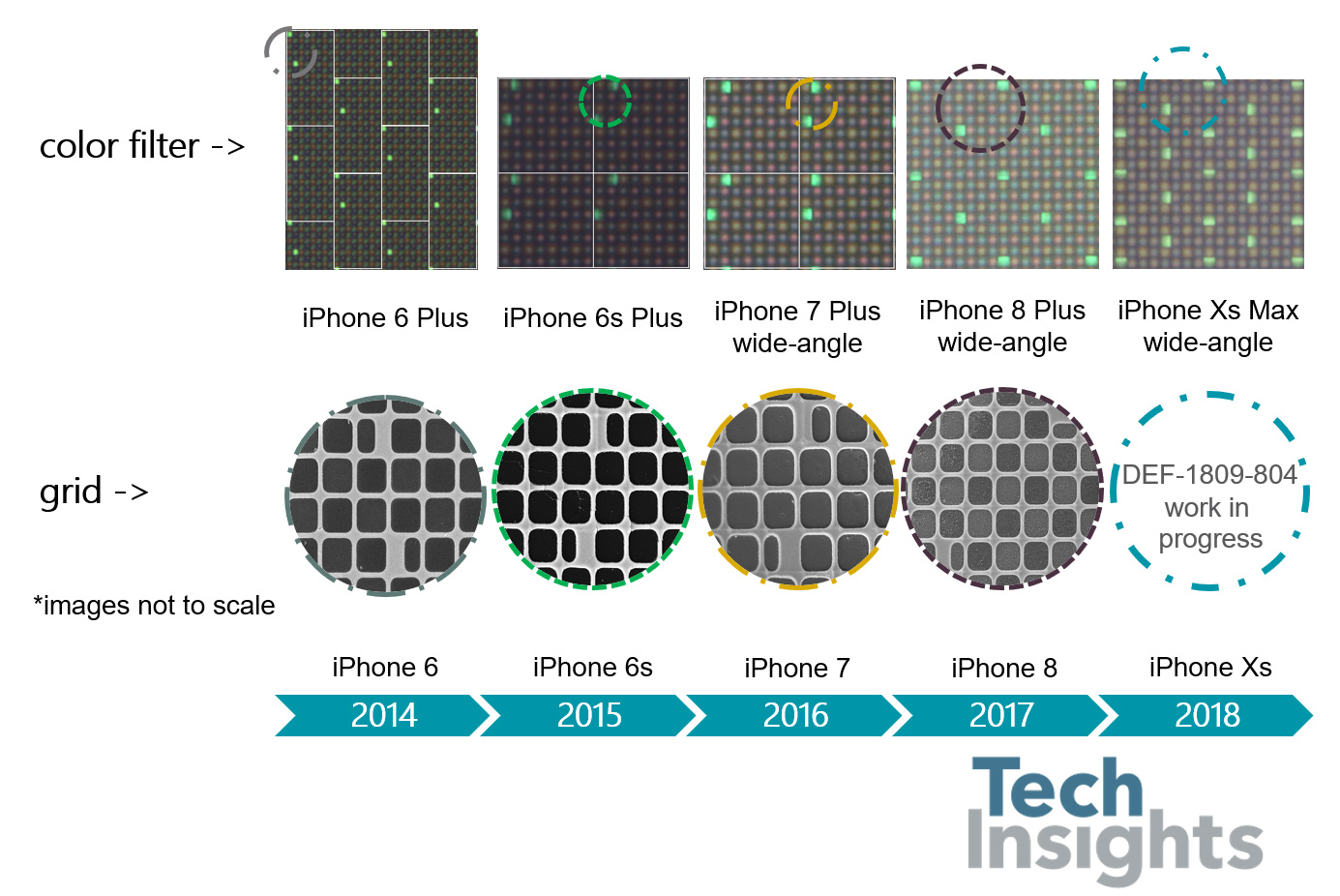
Apple introduced PDAF in the iPhone 6, but as you can see in TechInsights’ great diagram, the points are pretty scarce. There’s one for maybe every 64 sub-pixels, and not only that, they’re all masked off in the same orientation: either the left or right half gone.

The 6S and 7 Pluses saw the number double to one PDAF point per 32 sub-pixels. And in the 8 Plus, the number is improved to one per 20 — but there’s another addition: now the phase detection masks are on the tops and bottoms of the sub-pixels as well. As you can imagine, doing phase detection in multiple directions is a more sophisticated proposal, but it could also significantly improve the accuracy of the process. Autofocus systems all have their weaknesses, and this may have addressed one Apple regretted in earlier iterations.

Which brings us to the XS (and Max, of course), in which the PDAF points are now one per 16 sub-pixels, having increased the frequency of the vertical phase detection points so that they’re equal in number to the horizontal one. Clearly the experiment paid off and any consequent light loss has been mitigated or accounted for.

I’m curious how the sub-pixel patterns of Samsung, Huawei, and Google phones compare, and I’m looking into it. But I wanted to highlight this interesting little evolution. It’s an interesting example of the kind of changes that are hard to understand when explained in simple number form — we’ve doubled this, or there are a million more of that — but which make sense when you see them in physical form.

25 Sep 2018

What to expect from Facebook’s big Oculus Connect 5 keynote

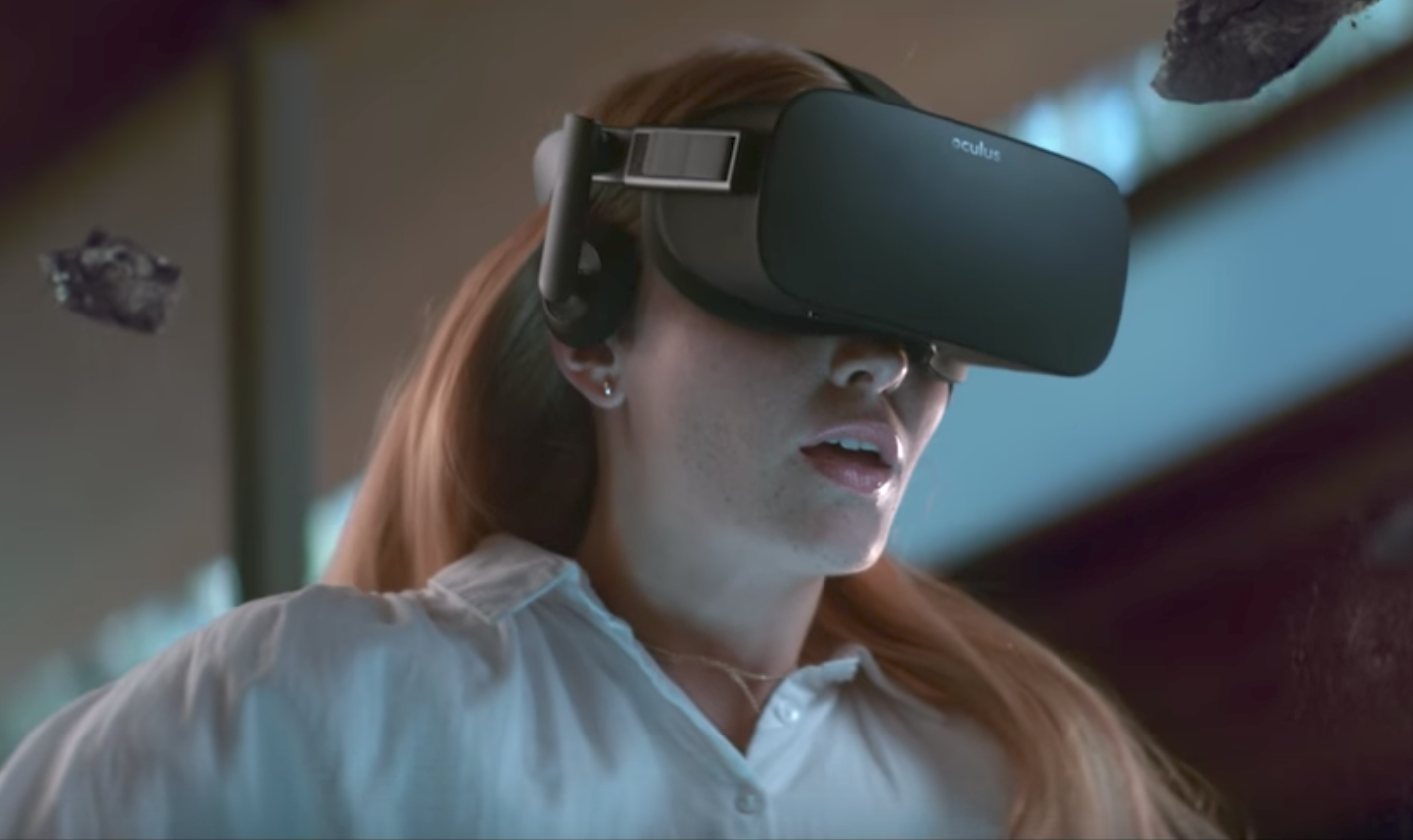
The Oculus Connect 5 conference kicks off tomorrow in San Jose where FB and company will let their latest virtual reality efforts loose and attempt to prove to the world at last that VR is coming and there’s nothing we can do to stop it.

Tomorrow is going to be a big day for hardware, though there might not be all that many surprises, as Oculus has already been pretty vocal about some of its future plans. We’ll see.

Here’s some of the stuff that we’re expecting to go down tomorrow.

Release date, price for Oculus “Santa Cruz” standalone

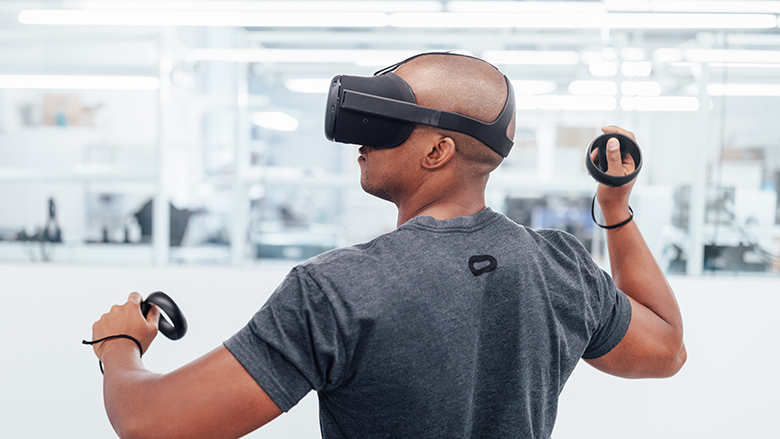
The still unnamed standalone, 6DoF headset with tracked controllers is more than likely coming early next year; the big question is really going to be its price.

While Oculus has been very aggressive with their $199 starting price for Oculus Go, it will be interesting to see where the pricing moves for whatever “Santa Cruz” ends up being called. The headset is still running a mobile chipset, though it will more than likely be a current-generation Snapdragon 845 as opposed to the much older 821, which is on the Oculus Go. The headset most notably will also sport positional tracking and hand controllers (which we’ll probably see an updated design for) at launch, features that will also surely add to the price.

I’m expecting pricing to sit around $349-$399; anything less would probably cannibalize Oculus Go sales and anything more would be a tough sell to consumers that have already proven a little reluctant to buy into VR right now.

A look at the next-gen Oculus Rift

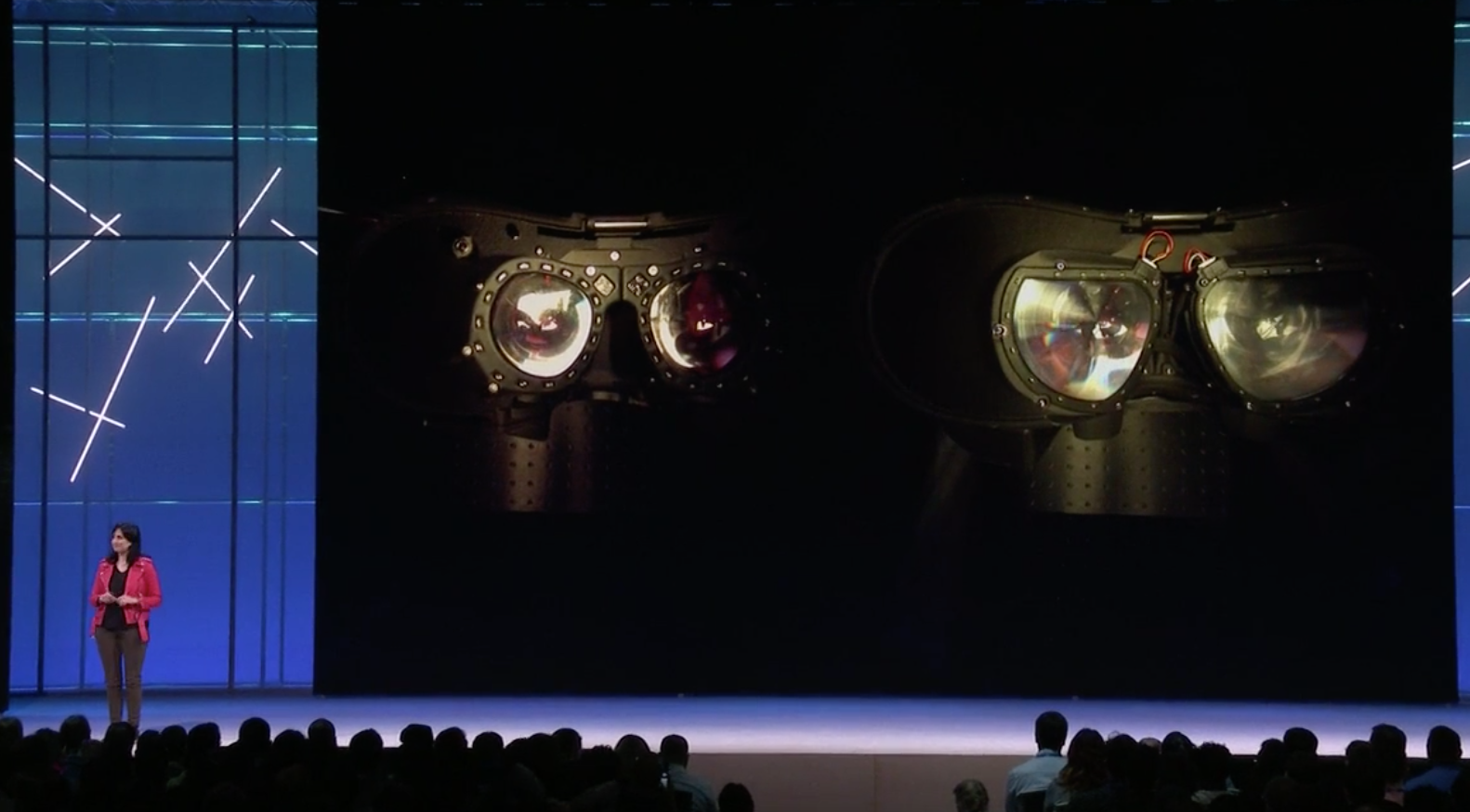
We got a peek at the Oculus “Half Dome” prototype at F8; my guess is we’ll see a lot more about it tomorrow and perhaps get some press demos of a feature prototype.

The company’s Rift headset is more than a couple of years old at this point so it’s probably time to start thinking about the next generation of the PC-powered headset. There have been a lot of leaps in GPU power since the Rift was announced and now that Oculus has a few products rounding out the low-end, they may be freed up a bit more to have a PC professional tier that can get a bit more experimental.

The big deal with “Half Dome” is its new approach to the way the lenses focus on objects. With the old system, their fixed focal distance ensured you couldn’t really read anything within arm’s length; with the new system that uses motorized displays and eye-tracking, the headset will be able to act more like your eyes do, focusing on objects as you look at them dynamically. This is coupled with a new lens system that significantly widens the field-of-view. It’s all really powerful stuff, but presents a lot of engineering challenges, so it’ll be interesting to hear more details from Oculus onstage.

Blurrier Oculus/Facebook division

Just as Instagram and WhatsApp have been sucked into the Facebook corporate hierarchy, we’ll likely see the results of deeper Oculus integration into Facebook’s VR division represented at the keynote.

After the big reorganization at the end of 2016, the Oculus exec structure has seen the co-founders downgraded while power has swelled to executives in Zuckerberg’s inner circle. Hugo Barra’s job title is still Facebook VP of VR, while Andrew Bosworth is the VP of AR/VR; we’ll likely hear quite a bit from them. In the conference’s earlier years, we saw an Oculus co-founder take to the stage for the big announcement, then last year Mark Zuckerberg opened things up and walked everyone through the big announcements.

This year, Oculus Research was renamed Facebook Reality Lab. It’ll be interesting to see where else Facebook makes inroads into the Oculus structure.

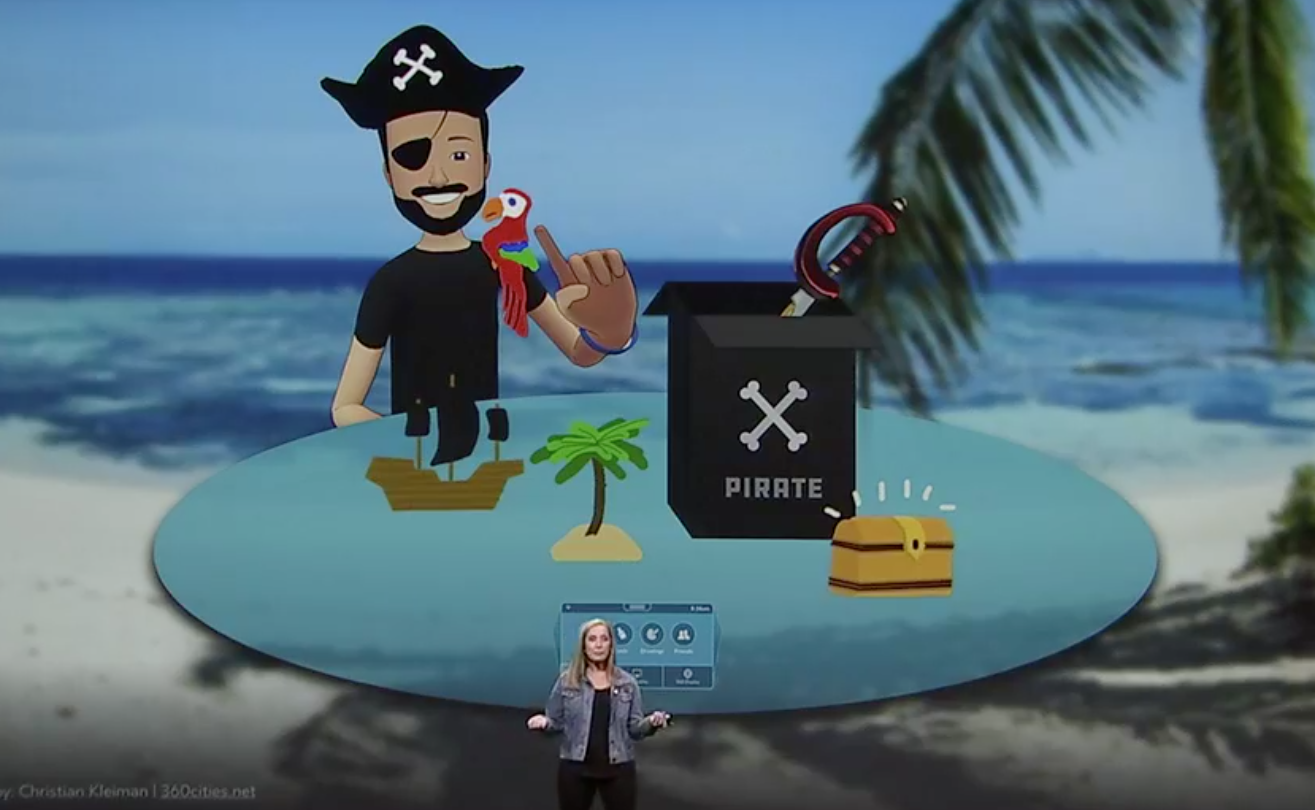
Facebook Spaces has gotten some air time for the past few years; it’s likely the team will be back onstage sharing their latest feature updates. We’ll see whether the social app gains “Santa Cruz” support and whether it will grow to become a stock app or continue to live in its more experimental phase.

New AAA content

One thing we can certainly expect to hear a lot about tomorrow is new gaming titles available on the company’s existing platforms.

Oculus made a big deal last year about how it’s looking to court AAA game publishers to develop for Rift; the Oculus Studios divisions will probably clue us into its next wave of titles with more of an emphasis on a few polished big-ticket releases rather than a wave of indie projects.

A couple of years back Oculus detailed that they had spent $250 million on content and were spending $250 million more, but we haven’t heard many updates on the dollar amounts pledged to games or experiences. Maybe we’ll hear a few more details about how substantial the company’s investments have grown or where the company is looking to direct its investments next.

Oculus mixed reality

This one might be a stretch, but this could be the year we get to see some of the company’s experimentations with augmented reality that they’ve been lightly teasing over the past few years.

We know the team at the Facebook Reality Lab is working on AR headset technologies, but it’s also clear that it’s still a very early, expensive time for the technology. Nevertheless, Microsoft is likely going to be showing off an updated HoloLens focused squarely on enterprise soonish and Magic Leap has already showcased their first big move into the consumer space.

Oculus showing its hand this early would be a bit surprising, but if Apple is as close to releasing a headset as reports have suggested, perhaps they want to clue people into what they’re working on.


There’s going to be a lot happening over the next couple of days, especially at the keynote tomorrow morning at 10am PT. TechCrunch will be on the ground bringing you the best analysis and the quickest updates you can find on the world wide web.

more Oculus Connect 5 coverage

25 Sep 2018

Protesters call on Salesforce to end contract with border patrol agency

A dozen or so people accompanied by a 14-foot, 800-pound cage gathered in downtown San Francisco Tuesday morning to protest Salesforce’s contract with U.S. Customs and Border Patrol (CBP), the agency within the Department of Homeland Security responsible for enforcing the Trump Administration’s zero-tolerance immigration policy.

Today is the first day of Dreamforce, Salesforce’s annual user conference that attracts some 200,000 people. The protesters claim Salesforce, which signed an agreement with CPB in March, is complicit in the actions of CBP and should be held accountable.

“Salesforce has a moral and ethical obligation to end this contract,” one protestor shouted.

The sign plastered to the front of the cage — a mock-up of those reportedly used in CBP facilities to hold separated children of migrant families — read “Detention center powered by Salesforce.”

“It’s hard to miss an 800-pound cage rolling down the street,” Jelani Drew, lead organizer of the demonstration and campaigner for the nonprofit advocacy group Fight for the Future, told TechCrunch. “They had to look and that was the goal.”

[gallery ids="1719937,1719939,1719940,1719941"]

Almost 1,800 families were separated at the U.S.-Mexico border from October 2016 through February of this year, per Reuters. And another 2,342 children were separated from 2,206 parents between May 5 and June 9, according to Vox.

In late June, President Donald Trump signed an executive order to end family separation, though the zero-tolerance policy, which mandates that any persons entering the U.S. illegally be prosecuted, remains.

Salesforce chief executive officer Marc Benioff, who has a reputation for advocating for liberal causes and politics, has said the deal with CBP does not involve CBP’s U.S.-Mexico border policies. CBP, rather, uses some Salesforce cloud tools, specifically Salesforce Analytics, Community Cloud and Service Cloud, to bolster its recruiting process and to “manage border activities.”

When asked for comment, Salesforce told TechCrunch the cloud-computing company respects the right to protest and pointed us in the direction of Benioff’s tweets, which reaffirm the business doesn’t have an agreement with Immigration and Customs Enforcement (ICE) and that the CBP contract is unrelated to family separation.

That tweet, posted in July, was a response to a petition signed by 650 Salesforce employees, who took issue with the CBP contract, specifically CBP’s use of Salesforce Service Cloud to manage activities at the border.

“We cannot cede responsibility for the use of the technology we create–particularly when we have reason to believe that it is being used to aid practices so irreconcilable to our values,” the employees wrote. “Those values often feel abstract, and it is easier to uphold them when they are not being tested. They are being tested now.

In addition to his tweet, Benioff wrote in a memo to employees at the time that he is “opposed to separating children from their families at the border.”

“It is immoral. I have personally financially supported legal groups helping families at the border. I also wrote to the White House to encourage them to end this horrible situation.”

Salesforce co-CEO Keith Block said the company would donate $1 million to organizations helping families separated at the U.S. border and that Salesforce would match employee donations. In his tweet, he did not specify which organizations the company would support.

Today, Block similarly took to Twitter to announce that the nonprofit arm of Salesforce would donate $18 million to “Bay Area causes.” The San Francisco Chronicle reports that the San Francisco and Oakland Unified School Districts will receive $15.5 million, Hamilton Families, Larkin Street Youth Services and the San Francisco Food Bank will receive $2 million and the San Francisco Park Alliance will receive $500,000.

Today’s protest was organized by Fight for the Future, Color of Change, Demand Progress, Defending Rights and Dissent, Mijente, Presente.org, RAICES and Sum of Us. RAICES, The Refugee and Immigrant Center for Education and Legal Services, recently rejected a $250,000 donation from Salesforce because of its contract with CBP.

Benioff contacted RAICES executive director Jonathan Ryan over the summer to discuss the opposition to Salesforce’s contract with CBP, according to a new report from The Guardian. The pair were scheduled to speak until Benioff canceled last minute. “I am sorry I’m scuba diving right now,” Benioff reportedly wrote to Ryan.

We’ve reached out to RAICES for comment.

Benioff and Salesforce are among several large tech companies that have struck controversial deals with government agencies. Employees at both Amazon and Microsoft have protested their companies’ contracts with ICEGoogle reportedly decided not to renew a Pentagon contract after employees resigned in protest of the search giant’s involvement with controversial AI research project Project Maven.

Jacinta Gonzalez, senior campaign organizer with Mijente, a national hub for Latinx organizers, told TechCrunch the she and the other protesters are hopeful tech companies will drop their contracts with both CBP and ICE.

“We’ve been incredibly concerned with corporations, particularly the tech corporations, that are facilitating ICE and border patrol’s destruction of immigrant communities,” Gonzalez said. “It’s a matter of continuing to pressure these investors and executives at these tech companies that are making billions at the expense of immigrants. They are profiting off the suffering of immigrants.”

25 Sep 2018

The new era in mobile

A future dominated by autonomous vehicles (AVs) is, for many experts, a foregone conclusion. Declarations that the automobile will become the next living room are almost as common — but, they are imprecise. In our inevitable driverless future, the more apt comparison is to the mobile device. As with smartphones, operating systems will go a long way toward determining what autonomous vehicles are and what they could be. For mobile app companies trying to seize on the coming AV opportunity, their future depends on how the OS landscape shapes up.

By most measures, the mobile app economy is still growing, yet the time people spend using their apps is actually starting to dip. A recent study reported that overall app session activity grew only 6 percent in 2017, down from the 11 percent growth it reported in 2016. This trend suggests users are reaching a saturation point in terms of how much time they can devote to apps. The AV industry could reverse that. But just how mobile apps will penetrate this market and who will hold the keys in this new era of mobility is still very much in doubt.

When it comes to a driverless future, multiple factors are now converging. Over the last few years, while app usage showed signs of stagnation, the push for driverless vehicles has only intensified. More cities are live-testing driverless software than ever, and investments in autonomous vehicle technology and software by tech giants like Google and Uber (measured in the billions) are starting to mature. And, after some reluctance, automakers have now embraced this idea of a driverless future. Expectations from all sides point to a “passenger economy” of mobility-as-a-service, which, by some estimates, may be worth as much as $7 trillion by 2050.

For mobile app companies this suggests several interesting questions: Will smart cars, like smartphones before them, be forced to go “exclusive” with a single OS of record (Google, Apple, Microsoft, Amazon/AGL), or will they be able to offer multiple OS/platforms of record based on app maturity or functionality? Or, will automakers simply step in to create their own closed loop operating systems, fragmenting the market completely?

Automakers and tech companies clearly recognize the importance of “connected mobility.”

Complicating the picture even further is the potential significance of an OS’s ability to support multiple Digital Assistants of Record (independent of the OS), as we see with Google Assistant now working on iOS. Obviously, voice NLP/U will be even more critical for smart car applications as compared to smart speakers and phones. Even in those established arenas the battle for OS dominance is only just beginning. Opening a new front in driverless vehicles could have a fascinating impact. Either way, the implications for mobile app companies are significant.

Looking at the driverless landscape today there are several indications as to which direction the OSes in AVs will ultimately go. For example, after some initial inroads developing their own fleet of autonomous vehicles, Google has now focused almost all its efforts on autonomous driving software while striking numerous partnership deals with traditional automakers. Some automakers, however, are moving forward developing their own OSes. Volkswagen, for instance, announced that vw.OS will be introduced in VW brand electric cars from 2020 onward, with an eye toward autonomous driving functions. (VW also plans to launch a fleet of autonomous cars in 2019 to rival Uber.) Tesla, a leader in AV, is building its own unified hardware-software stack. Companies like Udacity, however, are building an “open-source” self-driving car tech. Mobileye and Baidu have a partnership in place to provide software for automobile manufacturers.

Clearly, most smartphone apps would benefit from native integration, but there are several categories beyond music, voice and navigation that require significant hardware investment to natively integrate. Will automakers be interested in the Tesla model? If not, how will smart cars and apps (independent of OS/voice assistant) partner up? Given the hardware requirements necessary to enable native app functionality and optimal user experience, how will this force smart car manufacturers to work more seamlessly with platforms like AGL to ensure competitive advantage and differentiation? And, will this commoditize the OS dominance we see in smartphones today?

It’s clearly still early days and — at least in the near term — multiple OS solutions will likely be employed until preferred solutions rise to the top. Regardless, automakers and tech companies clearly recognize the importance of “connected mobility.” Connectivity and vehicular mobility will very likely replace traditional auto values like speed, comfort and power. The combination of Wi-Fi hotspot and autonomous vehicles (let alone consumer/business choice of on-demand vehicles) will propel instant conversion/personalization of smart car environments to passenger preferences. And, while questions remain around the how and the who in this new era in mobile, it’s not hard to see the why.

Americans already spend an average of 293 hours per year inside a car, and the average commute time has jumped around 20 percent since 1980. In a recent survey (conducted by Ipsos/GenPop) researchers found that in a driverless future people would spend roughly a third of the time communicating with friends and family or for business and online shopping. By 2030, it’s estimated the autonomous cars “will free up a mind-blowing 1.9 trillion minutes for passengers.” Another analysis suggested that even with just 10 percent adoption, driverless cars could account for $250 billion in driver productivity alone.

Productivity in this sense extends well beyond personal entertainment and commerce and into the realm of business productivity. Use of integrated display (screen and heads-up) and voice will enable business multi-tasking from video conferencing, search, messaging, scheduling, travel booking, e-commerce and navigation. First-mover advantage goes to the mobile app companies that first bundle into a single compelling package information density, content access and mobility. An app company that can claim 10 to 15 percent of this market will be a significant player.

For now, investors are throwing lots of money at possible winners in the autonomous automotive race, who, in turn, are beginning to define the shape of the mobile app landscape in a driverless future. In fact, what we’re seeing now looks a lot like the early days of smartphones with companies like Tesla, for example, applying an Apple -esque strategy for smart car versus smartphone. Will these OS/app marketplaces be dominated by a Tesla — or Google (for that matter) — and command a 30 percent revenue share from apps, or will auto manufacturers with proprietary platforms capitalize on this opportunity? Questions like these — while at the same time wondering just who the winners and losers in AV will be — mean investment and entrepreneurship in the mobile app sector is an extremely lucrative but risky gamble.

25 Sep 2018

Hear from investors at General Catalyst, FirstMark, Shasta at TC Sessions: AR/VR

The worlds of augmented reality and VR theoretically represent a boundless expanse for startups looking to create a new digital future. Realizing that future is the tough part, and doing so while Google, Facebook, Microsoft and Apple all look to plant their flags is even harder.

While plenty of investors have taken a look at AR/VR companies in the years following Facebook’s acquisition of Oculus VR, for many, the prospect of buying in at a stage where the consumer interest is so uncertain has proven a bit too risky. At TechCrunch’s one-day Sessions AR/VR event on October 18 at UCLA, we’ll chat with investors from top venture capital firms about where they’re seeing potential in the market and how they are approaching investments in AR/VR in 2018.

We’ll be joined by Niko Bonatsos from General Catalyst, Catherine Ulrich from FirstMark Capital and Jacob Mullins from Shasta Ventures on a panel discussing the ins and outs of AR/VR investing.

Bonatsos was an early investor in Snap and has also backed AR cloud startup 6D.ai (which will also be joining us), Ulrich’s firm FirstMark has made investments in AR/VR startups like Sketchfab and Mullins runs Shasta Ventures’ Camera Fund focused on early-stage AR investments.

The future of consumer AR/VR may be a bit murky for the time being, but these investors are looking to peer through the smoke and mirrors and find the startups that will stand resilient.

Get an inside look into the AR/VR investment landscape when you purchase a ticket today. Early-bird sales were extended til this Friday, September 28. Don’t miss out! Student tickets are just $45 and can be purchased through this link.