Author: azeeadmin

25 Sep 2018

Live streams of karate and niche sports are terrifying major sports leagues

Of the 100 most-watched live telecasts in the US in 2005, 14 were sporting events; in 2015, sporting events comprised 93 of the top 100 telecasts. That shift occurred because TV shows are shifting to online or on-demand viewing, and live broadcasts of the biggest sports are the main thing TV networks have left to draw in live audiences. But the need to keep those sports on TV and off streaming services is only accelerating the rate at which young people are tuning into other sports leagues instead.

The rapid adoption of subscription video streaming services like Netflix and Hulu and of social live streams on Facebook, YouTube, and Twitch is enabling massive growth by sports leagues that you won’t normally see on TV. In the streaming era, more sports – and new types of sports like esports – keep thriving while interest in traditional pro leagues like the NFL and MLB declines.

OTT is where the growth is

The central narrative in the global film/TV industry right now is the response of incumbent companies to the growing dominance of Netflix, Amazon, and other streaming (aka “OTT” or over-the-top) services. The incumbents are merging to consolidate ownership of must-have shows onto a smaller number of new OTT services that will each be stronger.

The majority of American households have a Netflix subscription (i.e. access to one of Netflix’s 56M US accounts), another 20M have a Hulu subscription, the number of OTT-only households has tripled in 5 years, and 50% of US internet users use a subscription OTT service at least weekly. Almost one-third (29%) of Americans say they watch more streaming TV than linear TV, and among those age 18-29 it’s 54% (with 29% having cut the cord on linear TV entirely). People, especially young people, want to watch shows on their own time and on any device, and they get more value from a few $8-40 per month subscription platforms than a $100+ per month cable bill.

Meanwhile, social live-streaming platforms that got their start enabling people to either vlog or watch video gaming are expanding to all sorts of live broadcasting: Twitch averaged 1 million viewers at any given point of day in January, and there were 3.5 billion broadcasts over Facebook Live in the first two years after it launched (with 2 billion users viewing at least one).

We’ve hit the pivot point where media is streaming-first. Netflix is now the leading studio in Hollywood, spending $13 billion this year on content. Linear TV viewing is declining: every major cable network (except NBC Sports) has declining viewership and aging viewers. Between 2007 and 2017, the median age of primetime viewers on ABC, CBS, NBC, and Fox went up 8-11 years and are all in the 50s or 60s.

Major pro sporting events are the last bastion of TV networks because the dominant brands are, for the most part, only available live on TV. Beyond those, the only content getting large audiences to tune in simultaneously are a couple Hollywood awards shows and premieres or finales of a couple hit shows (Big Bang Theory and NCIS).

The exclusive broadcast rights to those live sports events – particularly the NFL, NBA, MLB, and top NCAA basketball and football games – are the last defense for major broadcast networks. They are the reason for younger Americans to not cut the cord. ESPN makes $7.6 billion per year in carriage fees from cable companies paying for the right to carry the main ESPN channel (the other ESPN channels add another $1 billion); that number is increasing even as ESPN’s viewership is declining.

Disney (ESPN’s owner) and other leading broadcasters don’t want to let people watch major sporting events online instead (at least not easily or cheaply) because doing so would pull the rug out from under their traditional revenue stream and OTT revenue (subscription + ads) won’t make up for it quickly enough. This problem is only exacerbated by the fact that TV networks are paying record sums for exclusive broadcast rights to top sports leagues out of fear that losing them to a rival could be a nail in their coffin.

This strategy is delaying, not stopping the shift in consumption habits. More and more young people are tuning out (or never tuning in) to the major pro sports on TV, and the median age of their audiences shows that: 64 for the PGA Tour, 58 for NASCAR, 57 for MLB, 52 for NCAA football and men’s basketball, and 50 for the NFL…and all are getting older. (Cable news networks, the other holdouts who are still doing well on live TV face the same situation: the average age of Fox News, MSNBC, and CNN viewers is now 65, 65, and 61 respectively.)

The major pro sports staying on linear TV has expanded the market opening for new sports to fill the open space with young people who mainly consume content online. In fact, a growing marketplace of different sports leagues (including esports) developing their own fanbases is an inevitability of the shift to OTT video as it lowers the barrier to entry to near-zero and let’s geographically dispersed fans unify in one place.

1. Lower barrier to entry for distribution

Lawn bowling is no longer your grandfather’s sports league. Mint Images/Getty Images

Niche sports leagues – or frankly, even big sports leagues that just aren’t at the scale of professional football, baseball, basketball, and hockey – have always had a hard time getting coverage on television. But you can produce and distribute video for an online audience more cheaply than for a television audience.

In fact with Facebook Live and Twitch, you can stream live video for free, and you can share clips across every social channel to attract interest. To launch your own OTT service or partner with an existing one, you don’t need to start with a massive audience from the beginning and you don’t need millions of dollars from sponsors just to break even.

Having signed over 150 new deals this year alone for its 20+ sports verticals (which will stream 2,500 live events in 2018), Austin-based FloSports has established itself as the go-to OTT partner for sports leagues with an established, passionate following that aren’t massive enough to garner regular ESPN-level coverage.

From rugby, track & field, and wrestling to bowling, competitive marching band, and ballroom dance, millions of Americans have participated in these activities in their youth and through clubs as adults but rarely see them on television. In fact, the rare instances when such sports are on TV – like their national championships – the league is usually paying large sums (potentially hundreds of thousands of dollars) for that airtime rather than getting paid by the broadcasters.

FloSports gives a home to the superfans of its partner leagues, with full coverage of the sport and commentary meant for real fans. It produces events in the manner best fit to highlight the action and turns superfans – who generally pay a subscription – into evangelists who recruit friends. There are numerous sports that have millions of participants yet no active, high-quality event coverage; those are underserved markets.

By tapping into this, FloSports properties (like FloWrestling, FloTrack, etc.) have gained hundreds of thousands of subscribers and created a surge of interest in teams like Oklahoma State’s wrestling team, which saw an 144% increase in live stream viewing and 68% growth in event attendance after joining FloWrestling (leading to them to set an all-time attendance record in the university’s basketball arena of 14,059 people). In the first half of 2018, FloSports’ various Instagram accounts collectively received 307M video views, more than the collective accounts of Fox Sports or of all NFL teams (and NFL Network).

2. Going global right away.

Johanne Defay of France at a World Surf League event. Mark Ralston/AFP/Getty Images

The top pro sports leagues have geographically concentrated fan-bases that fit the geographic restrictions of TV broadcasters, which end at a country’s border. Online streaming empowers sports that have large fan bases who aren’t geographically concentrated to aggregate in the digital sphere with enough eyeballs (and paying subscriptions) to drive engagement with the sport’s content through the roof.

Since being acquired in 2015 and renamed World Surf League, the governing body of professional surfing has developed a large global following – with 6.5M Facebook fans and 2.9M Instagram followers – through the launch of live streams and on-demand video on its website and mobile app, plus partnering with third-parties like Bleacher Report’s OTT service B/R Live. Only 20-25% of WSL’s viewers are in the US but since its competitions are streamed direct-to-consumer online, they were able to reach surfers around the world right away. After seeing WSL’s Facebook Live streams garner over 14M viewers in 2017, Facebook paid up to become the exclusive live-stream provider for WSL competitions for two years, beginning this past March.

3. Immediate data on audience engagement.

As with all offline-to-online shifts, OTT video streaming captures dramatically more data on audience demographics and engagement than television does, and it does it in real-time. This makes it easier for emerging sports leagues to partner with advertisers and show immediate ROI on their sponsorships, plus it informs their understanding of how to produce their particular type of sporting event for maximum audience engagement.

Karate Combat is a year-old league that builds off the existing base of karate participants and fans around the world (numbering in the tens of millions) with a new competition format specifically intended for OTT. The league allows full-contact fighting and sets the match in a pit (rather than a traditional fighting ring) for better camera angles. It also replaces the traditional focus on having a big in-person audience (which is expensive) and instead sets the fights in exotic locations (like the fight this coming Thursday night on top of the World Trade Center).

Like many emerging sports leagues, Karate Combat is vertically integrated: the league organizing the competitions is also the one producing and streaming the event coverage over its website, mobile apps, and social channels. This not only means it captures the content-related revenue from subscribers, advertisers, and numerous OTT distribution partners, but it sees every data point about fans’ viewing behavior and their interaction with various dashboards (like biometrics on each fighter) so they can optimize both online and offline aspects of the production.

4. Online means interactive

Jujitsu fighting is now an OTT service. South_agency/Getty Images

Online viewing creates the opportunity for functionality you can’t achieve with linear TV: interactive displays overlayed on or next to live video. Viewers can pull up and click through real-time stats, change camera views, or switch overlays (think the the yellow first-down line in NFL broadcasts or coloring around a hockey puck to help you track it on the ice). Ultimately, a more interactive experience means a more social and more entertaining experience (and the sort of deep engagement advertisers value too).

FloSports’ ju-jitsu live streams (FloGrappling) give subscribers multiple live cameras each covering simultaneous matches on different mats so they can click between them. This is a more personalized experience than passively watching one broadcast on TV and it gets that subscriber actively engaged, with their behavior providing valuable data points for FloSports and their deeper interaction likely more compelling to event sponsors.

The display might also highlight live comments from friends or friends-of-friends in order to draw viewers into a more social experience. Discussion of a specific live stream with others watching it has been a central feature for Twitch and Facebook Live and enables the league or team streaming the event to directly engage with fans around the world.

An exception to the OTT-first strategy may be in sports that are entirely new and have zero existing base of participants or fans. Karate, surfing, and video-gaming all have millions of passionate participants around the world, going back decades. A new league like the 3-year-old Drone Racing League (DRL), which has raised $21M in venture capital to develop the sport of competitive drone racing, has to artificially stimulate the development of a fanbase if it doesn’t want to wait years for grassroots competitions to create a critical mass of fans even for a niche OTT service. It’s unsurprising then that DRL has focused on striking TV deals with ESPN, Sky Sports, ProSiebenSat.1, and others to thrust it in front of large audiences from the start, like a new game show hoping its format will entice enough people to take interest.

Power is in the hands of the league owners

Ari Emanuel, chief executive officer of William Morris Endeavor Entertainment. Jonathan Alcorn/Bloomberg via Getty Images

The best position to be in right now is the owner of a sports league that’s rapidly growing in popularity. The competition for audience by both traditional media companies and tech platforms leaves a long list of distribution partners eager for must-have, exclusive content – especially content like sports events that fans want to want live together – and willing to pay up.

Moreover, vertical integration to control your fans’ content viewing experience and own your relationship with them has never been easier. There are direct subscriptions, advertisers, event sponsors, event tickets, a portfolio of possible OTT distribution deals, and merchandising. The potential revenue streams a league can develop are only more numerous when you add in launching a fantasy sports league – like World Surf League has done – and the recent nationwide legalization of sports betting in the US.

Endeavor, the parent company of Hollywood’s powerful WME-IMG talent agency, seems to have recognized this and is an early mover in the space. It bought two sports leagues that have relied on TV deals and event attendance revenue – UFC for $4B and the smaller but rapidly growing Professional Bull Riders for $100M – and, since they each own their content, launched direct-to-consumer subscription platforms (UFC Fight Pass and PBR Ridepass) for super-fans and cord-cutters. (Endeavor also paid $250M to acquire Neulion, the technology company whose infrastructure powers the OTT services of the UFC, PBR, World Surf League, and dozens of others.)

There’s opportunity for new streaming platforms focused on being the media partner for these emerging sports leagues. Inevitably, the opportunity for bundling will consolidate many of the niche subscriptions onto a small number of leading sports OTT platforms, and that’s a powerful market position for those platforms.

What is unclear is if they can defend themselves as the incumbent media and tech companies come around to this phenomenon and commit billions toward capturing the market. The leading sports broadcasting companies all have OTT offerings and want to make them as compelling to potential subscribers as possible even if they exclude content from the biggest pro sports. A larger company that can afford to spend huge sums on exclusive sports streaming rights (like Disney with ESPN/ABC, Comcast with NBC/Sky Sports, CBS with CBS Sports Network, or Discovery with Eurosport) might opt to buy a company like FloSports as part of their deep dive into the space or they might just aim to outbid them when a league’s contract comes up for renewal.

The hope for an independent OTT platform devoted to emerging sports leagues is they get big enough, fast enough that they can afford to keep winning the rights to emerging leagues as those leagues grow and offers from competitors bid prices up. These dedicated OTT services will likely have to secure long-term – think ten years – streaming rights deals or acquire control of some popular new sports leagues outright to hold their own.

Like online distribution triggered an explosion of digital publishing brands and social influencers for every imaginable niche, the rise of high-quality live streaming and subscription OTT services will allow a lot more sports leagues to build an audience and revenue base substantial enough to thrive. There’s more variety for consumers and resources than ever for those with a rapidly growing league to attract fans worldwide.


25 Sep 2018

Big cameras and big rivalries take center stage at Photokina

Photokina is underway in London and the theme of the show is “large.” Unusually for an industry that is trending towards the compact, the cameras on stage at this show sport big sensors, big lenses, and big price tags. But though they may not be for the average shooter, these cameras are impressive pieces of hardware that hint at things to come for the industry as a whole.

The most exciting announcement is perhaps that from Panasonic, which surprised everyone with the S1 and S1R, a pair of not-quite-final full frame cameras that aim to steal a bit of the thunder from Canon and Nikon’s entries into the mirrorless full frame world.

Panasonic’s cameras have generally had impressive video performance, and these are no exception. They’ll shoot 4K at 60 FPS, which in a compact body like that shown is going to be extremely valuable to videographers. Meanwhile the S1R, with 47 megapixels to the S1’s 24, will be optimized for stills. Both will have dual card slots (which Canon and Nikon declined to add to their newest gear), weather sealing, and in-body image stabilization.

The timing and inclusion of so many desired features indicates either that Panasonic was clued in to what photographers wanted all along, or they waited for the other guys to move and then promised the things their competitors wouldn’t or couldn’t. Whatever the case, the S1 and S1R are sure to make a splash, whatever their prices.

Panasonic was also part of an announcement that may have larger long-term implications: a lens mount collaboration with Leica and Sigma aimed at maximum flexibility for the emerging mirrorless full-frame and medium format market. L-mount lenses will work on any of the group’s devices (including the S1 and S1R) and should help promote usage across the board.

Leica, for its part, announced the S3, a new version of its medium format S series that switches over to the L-mount system as well as bumping a few specs. No price yet but if you have to ask, you probably can’t afford it.

Sigma had no camera to show, but announced it would be taking its Foveon sensor tech to full frame and that upcoming bodies would be using the L mount as well.

This Fuji looks small here, but it’s no lightweight. It’s only small in comparison to previous medium format cameras.

Fujifilm made its own push on the medium format front with the new GFX 50R, which sticks a larger than full frame (but smaller than “traditional” medium format) sensor inside an impressively small body. That’s not to say it’s insubstantial: Fuji’s cameras are generally quite hefty, and the 50R is no exception, but it’s much smaller and lighter than its predecessor and, surprisingly, costs $2,000 less at $4,499 for the body.

The theme, as you can see, is big and expensive. But the subtext is that these cameras are not only capable of extraordinary imagery, but they don’t have to be enormous to do it. This combination of versatility with portability is one of the strengths of the latest generation of cameras, and clearly Fuji, Panasonic and Leica are eager to show that it extends to the pro-level, multi-thousand dollar bodies as well as the consumer and enthusiast lineup.

25 Sep 2018

The death of once high-flying VC funds

They all started with the best of intentions. Formation 8 talked about bringing “smart enterprise” to the corporate world. Social Capital talked about how to “fix capitalism,” and Binary Capital wanted to “affect global behaviour change.” Rothenberg Ventures set out to “work on the biggest problems that change the world.”

Young founding partners debuting change-the-world funds were irresistible for chroniclers of the venture world, who too often had been forced to chat to balding and aging managing directors while hitting the links at resplendent country clubs. Everything was going to change in the venture world, and here was a new guard of progressive-thinking talent that would transform Silicon Valley forever.

Then it all came crashing down.

Social Capital fired nearly its entire remaining staff last week after seeing a mass staff exodus over the past few months. Formation 8 suffered deep acrimony between its founding partners, and its successive funds continue to deal with new challenges, such as a new, unreported lawsuit in California. Binary faced the Caldbeck sexual harassment situation, while Rothenberg imploded with allegations of financial fraud and mismanagement.

Some of the tales are sordid, while others are clearly the result of inexperience and hubris. But together, they weave a narrative for us that shouldn’t surprise anyone: giving hundreds of millions of dollars to neophytes wasn’t perhaps the best plan to build long-lasting funds.

The lessons though are myriad and broad. For founders, receiving investments from same-age peers may have made board meetings more relaxing, but at the cost of experience and oversight. Journalists who sat by while VCs built founding fables about themselves should have done more to pierce these reality distortion fields.

But perhaps most of all, the lessons need to be learned by limited partners. As LPs continue to lower their guard and drop due diligence in the race to get into the next hot fund, perhaps the combination of these stories can serve as a warning against rushing to write a check and being thoughtful about who to partner with in business.

The Valley finds its glamour

Sand Hill Road was the epicenter of venture capital. Its monopoly is increasingly being lost to downtown Palo Alto and SF. (Photo by Steven Damron used under Creative Commons).

It’s almost impossible to imagine today, but venture and the broader startup ecosystem used to be decidedly uncool. In the early 2000s, before the rise of blogs like TechCrunch and the breathless coverage of thousands of tech startups, Silicon Valley startups worked in the relative obscurity of the South Bay — the actual Silicon Valley of lore. A boring suburban hell of sorts, startups attracted the misfits and the communalists, and most definitely the engineers who saw in the internet the future of human society.

Things changed as the global financial crisis struck in 2008. The startup world began to migrate north, to San Francisco. Technology went from a backwater industry to the forefront of global power and commerce. Once the bastion of nerds, the MBAs and other pretty people started pouring in, ready to seek out fortune — the tech that might drive it be damned.

Perhaps most importantly, glamor hit the tech world hard. Conferences like Disrupt and AllThingsD propelled formerly unknown entrepreneurs to the heights of fame. Exec comms became de rigueur for founders, and venture firms equipped themselves with some of the best communications talent they could find.

Yet, while the entrepreneurs were increasingly speaking about “saving the world,” the venture firms were not. Stodgy, venerable, and just plain old (and white and male), the stalwarts of Sand Hill Road (the epitome of a suburban hell street complete with a full-service gas station) struggled to adapt their boring Excel number crunching thinking to this new world.

Their firms – and LPs – noticed, and responded by trying to hire a new crop of partners, operators with the cachet to win over founders and snare the next great deal. Operators had very different mentalities from traditional venture folks, but that was okay in the competition for the next hot startup.

But as any Silicon Valley enthusiast knows, the path to disruption doesn’t lie through evolving incumbents. Instead, it’s about founding startups, or in this case, new venture firms with fresh perspectives that connect with founders looking for a friend on their board rather than competent but mature directors who were older than their grandparents.

The best-laid plans of mice and VCs…

Joe Lonsdale of 8VC. David Paul Morris/Bloomberg via Getty Images

And so we get Joe Lonsdale, a co-founder of Palantir, who left and eventually started Formation 8 at age 30 with Brian Koo age 33, scion of the Koo family of South Korea which owns the LG conglomerate, along with long-time VC investor Jim Kim. They raise $448 million for their first fund in 2013, the largest debut in the history of venture. Lonsdale described the firm’s investing style simply: “First and foremost, we invest in driven entrepreneurs who we believe will change the world.”

We get Jonathan Teo aged 34 and Justin Caldbeck aged 37 (and the oldest of the pack!), two young but reasonably experienced venture capitalists peeling off of their venerable funds (General Catalyst for Teo and Lightspeed and Bain for Caldbeck) to start Binary Capital, which began with a debut fund of $125 million in 2014 and raised another $175 million just two years later. Teo, speaking to a Singaporean magazine, explained that “We are at the centre of the tech ecosystem, and consumer technology is the highest leverage a company has to affect global behaviour change.”

(That same article noted in its intro that “It is not every day that someone buys a Boeing 747 as a gift. But that was exactly what Jonathan Teo did last year, when he gathered a group of Silicon Valley tech titans to purchase a used plane and donated it to Burning Man, an annual experimental art festival held in Black Rock Desert, Nevada.” Burning Man may well be one of the most inter-connected events for all of these folks).

Justin Caldbeck, formerly of Binary Capital. Michael Short/Bloomberg via Getty Images

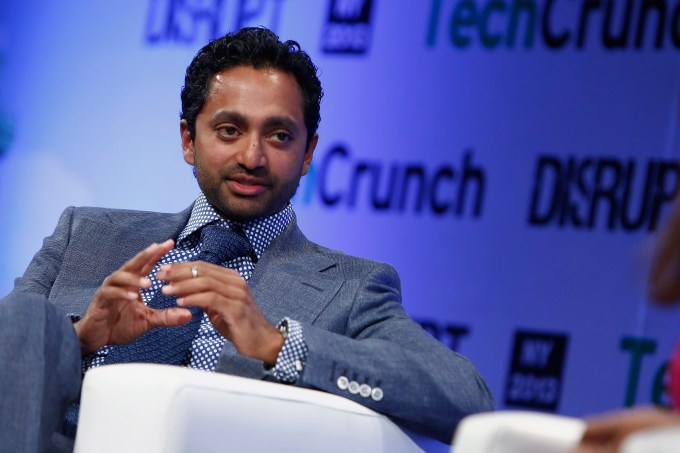
Chamath Palihapitiya, who spent four years at Facebook early in that company’s history and eventually headed growth, would start Social+Capital Partnership in 2011 and synced up with experienced hands Ted Maidenberg and Mamoon Hamid. Palihapitiya, aged 34 and self-described “Merchant of Progress,” said that he wanted to “fix capitalism.” In an interview with Fast Company’s Ainsley Harris, he said, “But you can fix capitalism. And the reason you can fix capitalism: It is inherently numerical, and as a result, it is inherently objective. It can be done objectively.”

Rothenberg may not have raised the same kind of moolah, debuting with a $5 million seed fund in 2013, but Rothenberg spread his wings far and wide in San Francisco, opening up his apartment and co-working facilities to create a community of entrepreneurs. He loved the press and media attention and outlandish behavior, eventually hosting a now infamous field day at the SF Giants baseball park in SoMa. As he explained during an interview at Stanford, “…we can build and create awesome experiences, people care about that and then we can actually work on the biggest problems that change the world and that’s awesome…”

These four firms flouted venture conventions, and sought out the path-breaking investments that would drive returns. Formation 8 struck a bit of gold with its exit of Oculus to Facebook and RelateIQ to SalesForce. The rebranded Social Capital bought into high-flying startup Slack, and also led the series A into Intercom. Binary invested in young consumer startups like Bellhops and Shoptiques and Havenly according to Pitchbook. Rothenberg invested heavily in VR and also in popular companies like Boosted, Apartment List, and Chubbies, albeit with mostly tiny checks.

These firms were designed to cultivate the next-generation of founders, and on that front, they succeeded. If only that was the sole benchmark for success.

… often go awry

Chamath Palihapitiya of Social Capital. (Photo by Brian Ach/Getty Images for TechCrunch)

Tolstoy begins Anna Karenina with the line that “Happy families are all alike; every unhappy family is unhappy in its own way.”

The same is true of venture firms. Portfolio returns can easily make everyone happy, but when firms blow up, they all blow up in their own, idiosyncratic ways.

Formation 8 was the first of the set to disintegrate. Part of the equation was accusations and a lawsuit against Joe Lonsdale around a sexual assault – allegations that were in the end dismissed. But the challenges internally at the firm far pre-dated those challenges. As William Alden at Buzzfeed chronicled at extreme length, Lonsdale and Brian Koo were at loggerheads over investment strategy, and even the geography of where the Formation 8 offices should be located in the Bay Area. Plus, they had a fight over a Korean restaurant Koo tried to open in Palo Alto. There were also the lurid details of the Hyperloop One imbroglio, where Lonsdale was a board member.

The two ended up separating, with Lonsdale creating 8VC and debuting with a $425 million fund and Koo starting Formation Group with a $357 million fund.

Yet, the troubles continue. A lawsuit – so far unreported – was filed in the United States District Court for Northern California this past June, alleging that Koo and Formation Group and its affiliates committed “fraud, breach of contract, breach of the implied covenant of good faith and fair dealing…“ by failing to pay a partner named Martin Robinson and a principal named Selvam Moorthy. That litigation remains on-going according to district court records, where the parties are due to discuss a motion to move the matter to arbitration.

Lonsdale, for his part, has certainly shied away from the media, and has been in a rebuilding phase, eventually nailing a second fund for 8VC of $640 million earlier this year.

Partner fallout is one version of an unhappy venture firm, but Binary Capital disintegrated due to alleged sexual harassment by Justin Caldbeck from multiple women in Silicon Valley. He would eventually come to be the Silicon Valley poster boy for the MeToo movement, and was sued by a former employee of Binary. The firm’s assets were sold to LHV earlier this year, and it is now essentially a non-entity.

Rothenberg Ventures team

Meanwhile, Rothenberg has been facing tougher challenges. He faced a litany of investigations over his fiduciary responsibilities to his fund, eventually being charged by the SEC last month for fraud. That criminal trial is on-going.

And then we get to Social Capital, whose troubles appear to be more managerial. Palihapitiya’s two early partners, Maidenberg and Hamid, both decamped to other firms. There has now been a complete exodus of partners and staff at the firm, with even more layoffs taking place just in the last few days. The fund is no longer raising outside capital.

Outside of Palihapitiya, the math on who is left remains decidedly unclear. The Information quotes Palihapitiya as saying that “I would rather spend time with the people that are 100% aligned with what I want to do and the person that’s most aligned with what I want to do is me.”

That shouldn’t be a problem when there is no one else in the room.

Lessons for founders, VCs, and LPs

RubberBall Productions via Getty Images

Silicon Valley loves a great story. We love the entrepreneurs who fight like hell to build their companies, who beat the odds against incumbents and competitors. We love the drama of business, of Uber against Lyft and Airbnb against city governments. We want the underdogs to win.

At some point though, we need to evaluate our own narrative fetishes. We need to see through the loud pronouncements, the ambitious quotes, the glossy marketing. Especially in venture capital, where excuses for poor performance are a common trade, we need to resurrect the age-old skill of simply looking at the numbers and evaluating quality. As my VC mentors over the years have consistently said: VC is not an investment business, it is a returns business.

We also need to reevaluate our patience. Startups take twelve years or more to build and exit, but VC firms have a much longer cycle. They are meant to last, because they owe broad obligations to so many other firms through the board seats they hold.

Partner turnover is up at many firms, despite the damage that does to startup governance. Even worse is when a firm disintegrates entirely. We should celebrate the slow and steady on the finance side, and leave the quick growth to the startups.

In a region that reveres the young, we also need to remember that many jobs are ultimately dependent on experience, and venture capital is certainly one of them. VC is its own trade, with learnings and techniques that build up over a lifetime of investing. That doesn’t mean that young people have nothing to offer – far from it. But it does mean that our indexing should not just assume that a 30-something automatically has the capacity to manage a complex front and back office team and invest hundreds of millions of dollars in a few short months.

LPs face the greatest challenges in this area. They are the guardians of their funds, since after all, it’s their money that will be lost. But the timing to get into a hot investor’s hand can be extraordinarily limited, and even asking a question or two could lead them to be cut out of a fund’s subscriptions. LPs need to band together and refuse to concede to these demands. Due diligence doesn’t have to be exhaustive on a debut fund, but it should also not be de minimis. Some coordination here is just absolutely needed to ensure a basic level of integrity.

It’s said that new VCs need to down an F-16 in order to learn the trade. Together, Formation 8 raised $1.39 billion, Social Capital $1.3 billion, Binary $300 million, and Rothenberg $70 million, according to Pitchbook.

That’s a $3 billion education for these partners, and for all of us.

25 Sep 2018

Trump’s new presidential limo is a beastly take on the Cadillac CT6

The new presidential limousine — and an identical one called a “spare” that travels in President Donald Trump’s motorcade for added security— was spotted this week on the streets of New York. This new “Beast,” like so many before it, is a Cadillac .

But this time, the heavily armored vehicle produced by GM, is designed after the Cadillac CT6. (Although if you look closely there are some Escalade influences in there.) The last version of the presidential limo used during the Obama Administration was modeled after a Cadillac DTS.

The Secret Service dictates much of the design of the presidential limousine such as a heavy-duty chassis and armored material. There are other accoutrements inside the vehicle, which is based on a GM truck platform. GM didn’t provide many details however, citing security reasons.

“It’s GM’s honor to develop and build the presidential limousine, a great American tradition,” a GM spokesperson said in an emailed statement to TechCrunch. “Continuing a rich history of Cadillac limousines that have served many U.S. presidents, the new car embodies Cadillac’s style and craftsmanship. The limousine, which was designed and built in Detroit, proudly resembles the Cadillac CT6 sedan. This being a secure project, we cannot discuss further details.”

GM won federal contracts worth $15.8 million to develop two phases of what the government describes as a “next-generation parade limousine program.” GM has other multi-million dollar contracts with the Secret Service to supply the agency with services and vehicles.

Here’s what we do know: the custom tank-like Cadillac CT6 appeared for the first time in public on Sunday. The Secret Service even tweeted out an image promoting the vehicle ahead of this week’s United Nations General Assembly meetings.

If this presidential Cadillac CT6 is anything like its predecessors, then the vehicle is outfitted with everything you’d need to stay alive in the midst of an attack, including a bullet-proof glass, a supply of the president’s blood type and an independent air supply to thwart a chemical attack.

The last Beast, a 2009 custom Cadillac DTS, was unveiled on former President Barack Obama’s Inauguration Day. The vehicle, which featured 19.5-inch wheels and seating for five, was in production for two years. The interior included a fold-out desk for the president.

25 Sep 2018

Federal appeals court rules Uber drivers must arbitrate claims

A federal appeals court has handed a defeat to Uber drivers who were suing the company in three separate lawsuits over claims that they were misclassified as independent contractors instead of full-time employees.

The litigants must go through arbitration to pursue their claims against the company rather than have the claims heard in open court.

The decision also means that the drivers in one of the suits can’t file a class-action against Uber. Had the case been able to go to trial, drivers could have pursued larger damage claims against the company.

In a 3-0 decision, judges on the 9th U.S. Circuit Court of Appeals in San Francisco flipped the ruling of a lower court judge that would have allowed Uber drivers to sue in open court.

As full-time employees, the drivers argued they would be entitled to reimbursement for gas and expenses around maintenance and general upkeep.

According to Reuters, the drivers also claimed that Uber was not allowing them to keep all of their tips from passengers.

While Uber drivers aren’t able to avoid forced arbitration for complaints against their non-employer the platform, Uber did do the right thing recently in ending forced arbitration in cases of sexual harassment or assault.

Were the Uber drivers to proceed with their lawsuit and become full-time employees of the ride-hailing company, they’d be likely to face the same forced arbitration claims. Full-time Uber employees are also forced into arbitration to settle disputes rather than have their claims heard in open court.

At the heart of the dispute for Uber drivers is the demand for the safety net that comes with full-time employment and for companies a potentially significant hit to their bottom line.

Ride-hailing platforms like Uber and Lyft have long argued that the drivers on the platform aren’t actually employees of the company, despite being the providers of the service that the technology platforms facilitate. For drivers, the inability to set pricing or negotiate the percentage that Lyft or Uber will take of the fees that are charged means they operate more like employees than bidders in a marketplace.

And earlier this year, the California Supreme Court seemed to agree with the drivers’ argument.

In April, the California Supreme Court issued a ruling in a case involving the nationwide delivery company Dynamex Operations West Inc. and its contract drivers. The decision established a new test for enforcement of California wage laws, and made it much harder for companies in California to claim that independent contractors are not actually full-time employees.

25 Sep 2018

Qualcomm doubles down on claims that Apple stole chip secrets for Intel

If you happen to crack open that fancy little iPhone XS casing on your new phone, you’ll notice there’s a dwindling amount of Qualcomm chips in there and that they’re increasingly being replaced by Intel hardware.

The swap is representative of the cooling state of affairs between the two as the companies’ legal teams battle over Apple’s refusal to pay royalties that Qualcomm claims it is owed. Today, Qualcomm doubled down on its claims that Apple was stealing chip secrets from Qualcomm tech and feeding it to Intel engineers.

CNBC reports:

Qualcomm has unveiled explosive charges against Apple for stealing “vast swaths” of its confidential information and trade secrets for the purpose of improving the performance of chip sets provided by Qualcomm competitor Intel, according to a filing with the Superior Court of California.

The allegations are contained in a complaint that Qualcomm hopes the court will amend to its existing lawsuit against Apple for breaching the so called master software agreement that Apple signed when it became a customer of Qualcomm’s earlier this decade.

The newly filed documents amend an earlier suit by the company, claiming that Intel engineers working with Apple have been using Qualcomm source code.

25 Sep 2018

Cody Wilson out as CEO of Defense Distributed

Defense Distributed announced during a press conference in Austin today that Cody Wilson has resigned as CEO. The announcement comes as the 3D-printed firearm activist faces charges of sexually assaulting a minor.

Wilson was in Taipei last week when the charges were made public, only to be extradited to Texas and ultimately released on $150,000 bail. The company’s Director of Development Paloma Heindorff told the audience that Wilson resigned Friday, adding that he will no longer play a role in Defense Distributed moving forward.

The company itself also has been the focus of an ongoing legal battle, with both Wilson and Defense Distributed serving as a kind of flash point for the debate around 3D-printed guns. A number of states have filed suits, targeting the site’s distribution of plans for 3D-printing firearms at home.

“Defense Distributed, after legally committing its files to the public domain through a license from the U.S. Department of State, has been ordered to shut down its DEFCAD file repository by a federal judge in the Western District of Washington,” its homepage notes. For now, DD’s site is devoted to a call for donations to its legal battles.

As for the future of the company, Heindorff called Defense Distributed “resilient” during the press conference, adding, “I cannot be more proud of my team right now. We didn’t miss a beat. No one blinked. We have no intention of stopping.”

25 Sep 2018

Watchdog says face scanning at US airports is plagued with technical problems

A watchdog report has warned that Homeland Security’s face scanning program, designed to track all departing travelers from the U.S., is facing “technical and operational challenges” that may not see the system fully working by the time of its estimated completion in 2021.

The report by Homeland Security’s inspector general said that although Customs and Border Protection (CBP) was making “considerable progress” in rolling out the facial scanning technology, the program is dogged with problems.

CBP has been on a years-long effort to roll out facial recognition at U.S. airports, trialing one airport after the other with the help of airlines, in an effort to track passengers as they leave the U.S. Although citizens can opt-out, the biometric scanning is mandatory for all foreign nationals and visitors. CBP is using the system to crack down on those who overstay their visas, but critics say the system violates privacy rights.

Currently in nine airports, the facial recognition program is set to be operational in the top 20 airports by 2021. But the inspector general report out Tuesday said the government may miss that target.

“During the pilot, CBP encountered various technical and operational challenges that limited biometric confirmation to only 85 percent of all passengers processed,” the report said. “These challenges included poor network availability, a lack of dedicated staff, and compressed boarding times due to flight delays.”

The report said the scanners failed to “consistently match individuals of certain age groups or nationalities.”

Although the system detected 1,300 visitors overstaying their allowed time in the U.S., the watchdog seemed to suggest that more overstays would have been found if the system wasn’t running under capacity at an 85 percent success rate.

As a result, CBP “may be unable to meet expectations for achieving full operational capability, including biometrically processing 100 percent of all international passengers at the 20 busiest airports,” the report said.

Staffing issues and a lack of certainty around airline assistance are also throwing the program into question. After all, CBP said that it will rely on the airlines to take the facial scans, while CBP does the background checks behind the scenes. But CBP’s “plans to rely upon airport stakeholders” for equipment purchases, like digital cameras needed for taking passenger photos at boarding gates “pose a significant point of failure” for the program, the report read.

“Until CBP resolves the longstanding questions regarding stakeholder commitment to its biometric program, it may not be able to scale up to reach full operating capability by 2021 as planned,” the report said.

Although the CBP disagreed, the agency said it would “develop an internal contingency plan” in case airlines and airports decline to help.

A CBP spokesperson did not return a request for comment.

25 Sep 2018

The Horological Machine 9 puts a rocket on your wrist

If you’ve been keeping up with watchmaker MB&F you’ll be familiar with their Horological Machine series, watches that are similar in construction but wildly differ when it comes to design. This watch, the HM9, is called the Flow and hearkens back to roadsters, jets, and 1950s space ships.

[gallery ids="1719823,1719822,1719821"]

The watch, limited to a run of 33 pieces, shows the time on a small forward-facing face in one of the cones. The other two cones contain dual balance wheels. The balance wheel is what causes the watch to tick and controls the energy released by the main spring. Interestingly, MB&F added two to this watch in an effort to ensure accuracy. “The twin balance wheels of the HM9 engine feed two sets of chronometric data to a central differential for an averaged reading,” they wrote. “The balances are individually impulsed and spatially separated to ensure that they beat at their own independent cadences of 2.5Hz (18,000bph) each. This is important to ensure a meaningful average, just as how a statistically robust mathematical average should be derived from discrete points of information.”

There are two versions called the Road and Air and they cost a mere $182,000 (tax not included.) Considering nearly every piece of this is made by hand – from the case to the curved crystal to the intricate movement – you’re essentially paying a team of craftsman a yearly wage just to build your watch.

While it’s no Apple Watch, the MB&F HM9 is a unique and weird little timepiece. While it’s obviously not for everyone, with enough cash and a little luck you can easily join a fairly exclusive club of HM9 owners.

25 Sep 2018

Google’s blanket ban of cryptocurrency ads ends next month

Google is rolling back its ban on cryptocurrency advertisements – following a similar move made by Facebook earlier this summer, CNBC reports. Google in March was among the first of the major platforms to announce it would no longer run ban cryptocurrency ads, due to an abundance of caution around an industry where there’s so much potential for consumer harm.

Facebook, Twitter, and even Snapchat had also banned cryptocurrency ads, for similar reasons.

But Facebook moved away from its blanket ban this June, when it said it would no longer ban all cryptocurrency ads, but would rather allow those from “pre-approved advertisers” instead. It excluded ads that promoted binary options and initial coin offerings (ICOs), however.

Google is now following suit with its own policy change. The update was announced today, we’ve confirmed.

Google’s policy still bans ICOs, wallets and trading advice, CNBC reports, citing Google’s updated policy page which points to a list of banned products.

But the October 2018 policy update says that “regulated cryptocurrency exchanges” will be allowed to advertise in the U.S. and Japan.

To do so, advertisers will have to be certified with Google for the specific country where their ads will run, a process that begins in October. The policy will apply to all accounts that advertise these types of financial products, Google says.

Banning cryptocurrency ads on the part of the major platforms was a good step in terms of consumer protection, due to the amount of fraud and spam in the industry. According to the FTC, consumers lost $532 million to cryptocurrency-related scams in the first two months of 2018. An agency official also warned that consumers could lose more than $3 billion by the end of the year, because of these problems.

But for ad-dependent platforms like Facebook and Google, there’s so much money to be made here. It’s clear they wanted to find a way to let some of these advertisers back in. Google parent Alphabet makes around 86% of its total revenue from ads, CNBC noted, and booked over $54 billion in ad revenue in the first half of the year.

Google has not yet responded to a request for comment.