Author: azeeadmin

19 May 2021

Spokn slurps out the BS in corporate internal comms and replaces it with audio storytelling

The podcasting world remains one of the most vibrant formats in media (and I am not just saying that since the Equity crew won a Webby yesterday for our not-that-humble podcast). Its openness, diversity, freedom, and ease-of-authoring has broadened the medium to all sorts of hosts on every subject imaginable.

We experience that dynamism and verve in our own audio listening, but then we start to tune into our company’s internal communications, and, well, you certainly don’t need sleeping pills to zone out. Top-down, formal, banal — corporate comms remains mired in a 1950s way of speaking that is completely out-of-sync with the millennials and Gen Z majority of workers who expect something actually worth watching and listening to.

Spokn wants to make company-wide podcasting a must-listen event, not just for leaders to talk to their employees, but for every worker to have a voice and share their expertise and stories across their workplaces. Through its app, companies can deliver personalized podcast feeds on everything from a daily standup or weekly AMA to training and development content, all of which is secure and kept for internal use.

It’s an idea that has quickly attracted investor attention. The startup, which was part of Y Combinator’s most recent Winter 2021 batch, closed on a $4 million seed round two weeks before Demo Day led by Ann Bordetsky, a partner at NEA who joined earlier this year and previously served as COO of Rival. This is her first investment with the firm.

The company was founded by Fawzy Abu Seif, Mariel Davis and Mohammad Galal Eldeen. Abu Seif and Davis met each other in an Egyptian jazz club in November 2017, about a week after he had quit his job. They eventually came together not just as a couple — they got married in the fall of 2019 — but as business partners, linking up with Galal Eldeen and incorporating Spokn in April 2018.
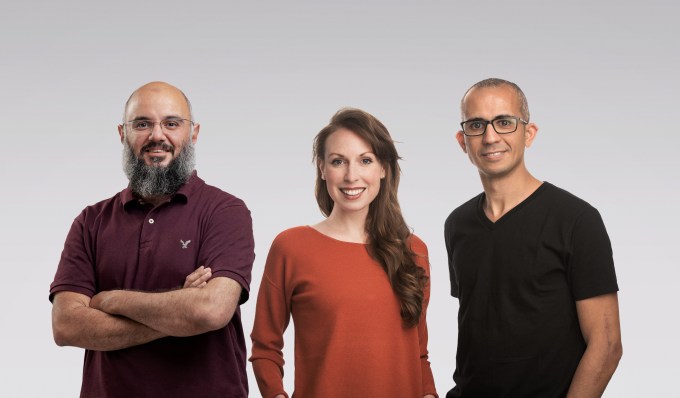
Spokn’s Mohammad Galal Eldeen, Mariel Davis and Fawzy Abu Seif. Image Credits: Spokn

Spokn’s product evolved across three iterations. First, the team tried to create audio narrations of evergreen content at major publishers like The New York Times. The idea was to help publishers reuse their best content as a new revenue source while connecting more listeners into these brands. Getting publishers to commit was tough though. “The consumer app wasn’t doing that great, and we started hunting around the data to see if something was working,” Davis said.

What they found was that professional development podcasts were much more popular compared to other topics, and so they had an opportunity to re-jigger the product to focus on training and specifically target enterprises. The idea was “let’s empower companies with the same tools we had as a consumer company,” Abu Seif said.

Prior to Spokn, Davis had worked with an entrepreneur in the Middle East building out a social enterprise network focused on skills training, a role in which she handled internal communications. She saw just how little impact media like email made for employees, particularly in the distributed workforce she was attempting to engage. The new direction for Spokn was far more enticing.

The newly-married couple moved to New York City from Egypt and signed an apartment lease in early March 2020 — just as the COVID-19 pandemic spread widely in the region. We “multiplied the living expenses by 8-10x while doing the same Zoom calls we could make from there,” Abu Seif joked.

Eventually, the company realized that it could do much more than just training, and expanded into broader internal comms. “Async audio is a lot more personal than email,” Abu Seif said. This latest product iteration launched in November 2020, and included push notifications, an app for streaming, personalization features and analytics to allow companies to track what was working and what was not for employees.
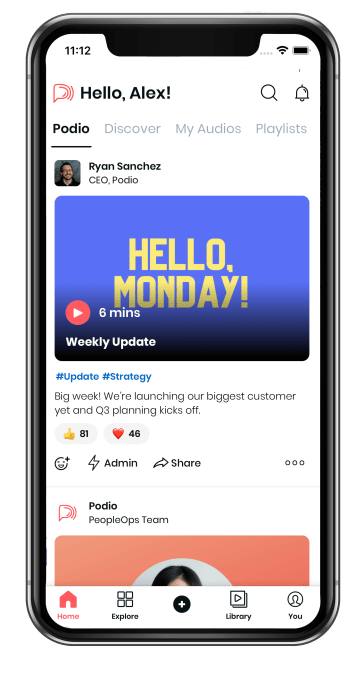
Spokn’s app offers a personalized feed of company podcasts. Image Credits: Spokn

Perhaps most importantly, companies can tailor the access lists for individual podcasts to particular groups of people, such as senior execs, people managers, sales employees, or any other logical grouping. We “get a lot of inbound from companies that are trying to duct-tape solutions together,” Davis said. For Abu Seif, “all the tools that marketers have to engage consumers, we are empowering companies to engage with their employees.”

Despite the startup and product’s youth, it has attracted a quick following among companies, with customers including Podium, ShipBob, Cedar, Mixpanel, ServiceNow and Superhuman. Podium’s CEO, for example, records weekly podcasts that are shipping on Spokn, and apparently even installed a podcast studio near his office just to make it easier to produce his shows.

Podcasting inside companies fixes a lot of problems with traditional internal comms. First and foremost, it can create a deeper connection where email cannot. Audio can feel more personal than even video, and can also be played in the background. It’s also asynchronous unlike live video, allowing employees in different time zones to connect with key stories at an appropriate time.

Plus, employees can avoid all the fatigue that comes from being onscreen. “No one wants Zoom zombies,” Bordetsky of NEA said. “We need intuitive and asynchronous communication tools like Spokn to build connection and community in the workplace.” Her thesis for the investment is that “flexible, distributed work is here to stay and employee communication is at the heart of building a modern, virtual-first employee experience.”

Buyers of Spokn range from heads of people to sales teams, and the company is also focused on recruiting and retention as well. “Companies are pretty freaked out about retaining their great talent,” Davis said. Some companies are now sharing “stories with prospects even before their first day at the company.”

While the product is mostly used by leaders today, Spokn wants to expand that remit to employees talking with their peer colleagues, helping to build community in hybrid offices where it is harder than ever to make a connection with others.

Of course, companies can screw up podcasting just as much as they have screwed up every other medium to communicate like humans, and Davis says it’s become her full-time job to help them think through storytelling and how to connect better with their own employees. We “work to find the right storytellers in the company,” she said.

Outside NEA, other investors in the seed round included Reach Capital, Funders Club, Liquid2, Share Capital, SOMA Capital, Scribble VC and Hack VC.

19 May 2021

Twaice raised $26M to scale its battery analytics software

All batteries degrade over time. For automakers, fleet managers and other companies, the crux — and key to profitability — is knowing when they will.

But it’s surprisingly difficult to understand the health and status of a battery without extensive and expensive testing, which isn’t always possible once a battery is in a vehicle. German battery analytics software company Twaice has been taking aim at this problem since its founding in 2018, and it announced Wednesday that it has raised $26 million in Series B funding led by Chicago-based Energize Ventures. The company, which primarily works in the mobility and energy storage industries, now has a total financing of $45 million.

“We started Twaice with the focus on building a battery analytics platform which really covers the whole lifecycle of battery systems,” company co-founder Stephan Rohr told TechCrunch, including the development and operational phases. The company has launched tools that are suited for the design and development phase and when the battery is actually in a vehicle or energy storage system. Audi, Daimler and Hero Motors are some of its customers.

The company intends to use this fresh round of funding to expand its European commercial footprint and possibly into the United States. It also wants to build even more use cases on top of its analytics platform — for example, working with fleet providers, rather than only the manufacturers.

One of the company’s innovations is a concept of a “digital twin,” or a simulation model of the battery system that runs in Twaice’s cloud platform. The company continually updates the parameters of the “twin” so that it reflects the behavior of the actual battery, down to its thermal characteristics, electrical behavior and degradation. That means companies that operate a fleet of EV buses can monitor the state of the battery packs of each of their vehicles.

“It enables not just a focus on the current health of the battery system, but also it enables us to simulate and forecast the future,” Rohr said.

Twaice also offers solutions before the battery even enters the vehicle or energy storage system. “Battery design engineers use our simulations to reduce the testing effort [. . .] assess charging strategies, assess depth of discharge, assess different cell chemistries,” Rohr explained.

One major use case for Twaice’s software is for warranty tracking and safety risks. Using battery analytics OEMs can understand where exactly the battery failed, whether in the cell or the module, for example, and also gain valuable data on future warranty claims based on previous data. Warranties are huge risks for OEMs, Lennart Hinrichs, Twaice’s commercial director, explained to TechCrunch, in part because batteries are so complex and difficult to understand once they’re in a vehicle.

But having a grasp on the battery’s life could come in handy for consumers as well. Twaice has partnered with TÜV Rheinland, a testing and certification institute in Germany that’s working on EV resale in the private market. It could eventually lead the way to a standard assessment process for batteries on the resale market.

Once the battery is no longer suited for its first-life application, companies can use Twaice’s software to assess the remaining life and health of the battery system and determine whether it’s fit for a second-life purpose or if it should go straight to recycling.

Twaice’s previous funding round in March 2020 was led by early-stage venture capital firm Creandum, with additional participation from existing investors  UVC Partners, Cherry Ventures and Speedinvest.

19 May 2021

Britive grabs $10M Series A to build automated multi-cloud permissions tool

Britive, an early stage startup that is trying to bring privileged access control to a multi-cloud world, announced a $10 million Series A this morning. Crosslink Capital led the investment with participation from previous investors Upfront Ventures and One Way Ventures.

The company helps automate permissioning across multiple cloud vendors and software services, whether that involves a human or a machine seeking permission. In a world of increasing automation, it’s often a machine seeking access, and that makes permissioning all the more critical, says Britive co-founder and CEO Art Poghosyan.

“What we offer is an automated approach to access, [moving from] what we call statically granted access, which constantly gets added all the time […] to completely ‘just in time access’,” he said. That means that after you define a policy, it sets the ground rules for access, and grants it based on that policy for the time required, and nothing more, whether you’re a human or a machine.

In today’s complex development world that could take many forms including API keys and secrets. “Yes, sometimes those things are granted to a human actor like a DevOps engineer, but a lot of times it also needs to be granted — quote, unquote — to a Terraform script or to GitHub to go and build out application infrastructure or deploy an application,” he said.

The company currently has 40 employees, a number that Poghosyan expects to double in the next 12 months as he puts this capital to work. As a first generation Armenian immigrant, Poghosyan says that he takes diversity and inclusion extremely seriously as he hires more employees.

“We’ve always been committed — in this business and our previous startup — to providing equal opportunities to talented people, no matter what background they come from. I’m really proud that even as a small company — we’re 40 at the moment — we have more than 50% of our workforce, which comes from ethnic minority groups,” he said.

Britive, which is based in Los Angeles, launched in 2018 and brought its first product to market in 2019. The company raised a $5.4 million seed round last July, which it announced in September, making the total raised so far approximately $15.4 million.

19 May 2021

Review: Apple’s 2021 iPad Pro is great, again, but…

If you’ve lived in a few places in your life then you probably have experienced the feeling of moving into a nice new apartment or house — a blank canvas of rooms and spaces filled with possibility. Most times, unless you’ve got that money money, you then fill it up with all of your same, old dinged up furniture.

I have had this experience a bunch over the years. When I moved out of my parent’s house, every single piece of furniture I had was thrifted, rescued or gifted. A mash-mash of centuries and styles that was well lived in the day I got it. Even as I got married and even moved much of that same furniture came with. 

Eventually, much of it began to feel too out of place and we passed it on and carefully bought or made things that we felt represented our home and resonated with us. But there is still that odd piece, like that dinged up dutch modern coffee table, that we look at and remember the sticky cocktail clutter of karaoke nights in our 20’s and the —still sticky — kid’s snacks of our 30’s.

That’s where iPad is now. It’s a beautiful new monument to the engineering and hardware teams at Apple that continue to execute at an insane level year over year. But it’s filled with the still functional but feeling its age iPadOS software. And it’s getting more out of place by the day.

This writeup has to be about what Apple has currently shipped, of course. That’s what consumers are getting in the mail when they order one now. But, Apple’s Worldwide Developer’s Conference is coming in just a couple of weeks and I hope to basically review this iPad Pro all over again in a new light. 

Ironically, one of the biggest hardware upgrades for this model is going to elicit a relatively muted response in me here. The M1 chip is absolutely blistering. It delivers the same performance as the M1 MacBook Pro did in benchmark tests, making Apple’s lineup more a matter of form factor and use case than raw power. But last year’s model frankly still feels just as fast in almost all of the applications that I tested and certainly in all of my daily workflows.  

Yes, it’s super powerful and you’re getting the absolute latest in silicon, but upgraders won’t see any immediate difference. In some ways this is by design. In my interview last month with Apple’s John Ternus and Greg Joswiak about the iPad Pro they noted that the new unified processor strategy and the aggressively good display are about creating overhead that they hope developers will take advantage of.

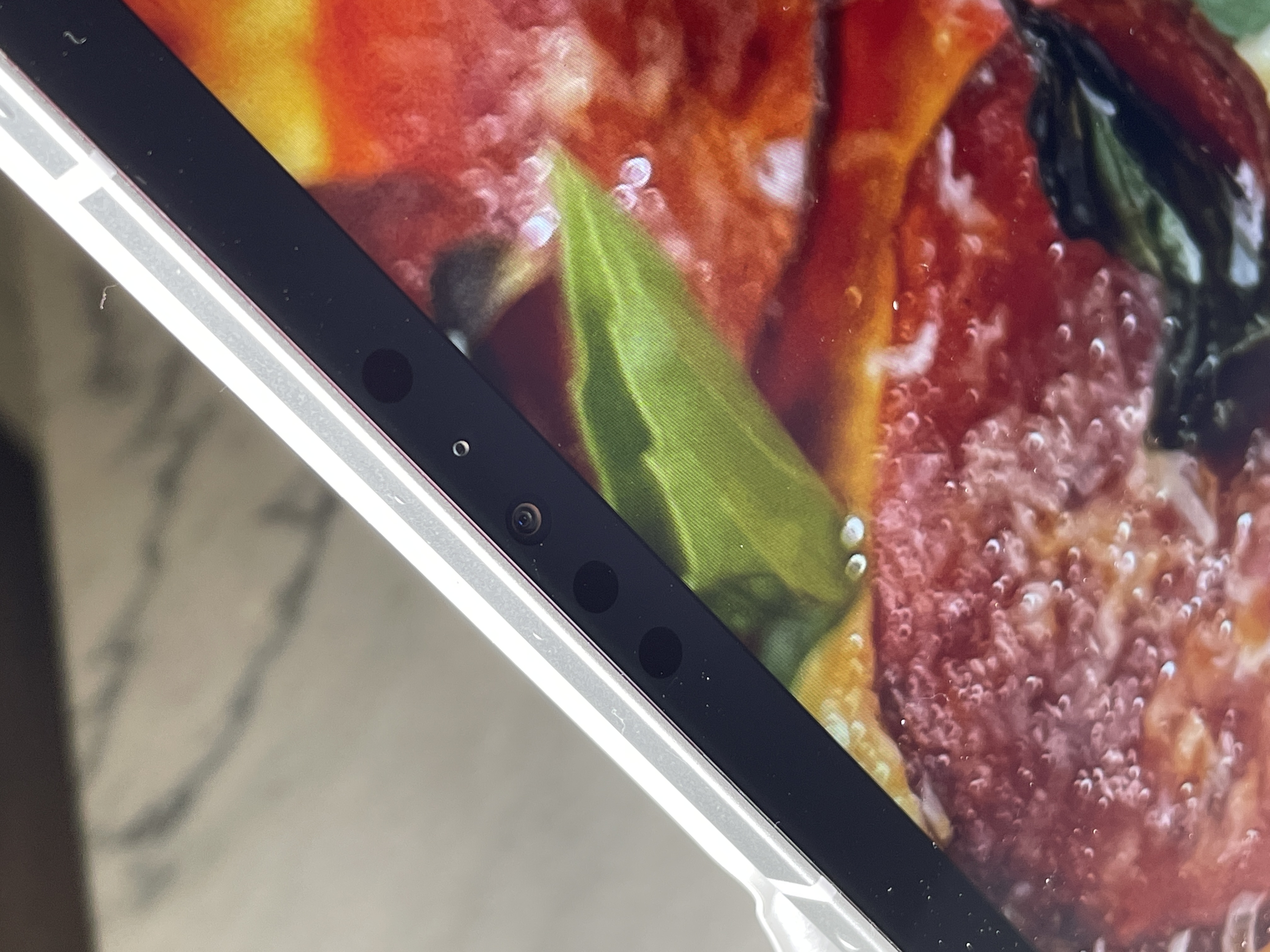
The new iPad Pro cameras are pretty fantastic, both front and back are now very usable and the new front camera especially benefits from an increase in resolution and new wide-angle optics. This wide angle makes video calling a bit more relaxed and doable on iPad Pro. 

That is coupled with Center Stage, Apple’s new ML-driven feature that automatically crops and centers your head and shoulders, following you around with a smooth and forgiving pan and zoom as you lean, stand and even move about a room within the view of the camera. The feature works by using machine learning frameworks to detect a person’s silhouette within the frame and then applies “camera moves” to that view as you shift in the frame. Unlike some other auto-zooming features, Center Stage feels like there is a virtual camera operator there helping you to frame yourself properly. It’s really clever and very nicely done — and it’s one of the biggest upgrades to iPad Pro usability this time around.

And yes, if you’re wondering, this does a lot to mitigate the camera placement issues on iPad Pro. The camera remains in the ‘top center’ of a vertically oriented iPad Pro, which means that it is on the ‘middle left’ of a horizontally oriented keyboard-bound setup. This has led to an awkwardness in iPad video calling. Center Stage doesn’t completely delete these issues, hand placement is still a problem at times, but it goes a long way to making it more usable. The new APIs will make this feature available to all video calling apps by the way, and there are also some slight improvements in multi-tasking which let you use multi-pane setups without blanking out your video call in the process of a Zoom.

I tested the external Thunderbolt connection with Apple’s Pro Display XDR and it works fine. The displays are very close in capability so, aside from the scaling, this arrangement could prove to be very useful for pros working in a pipeline with XDR displays for color correction purposes. The software limitation of the iPad Pro only supporting mirror mode is still in effect, alas, which makes the usability of this feature a bit suspect in most situations.

Speaking of the screen, the mini-LED driven Liquid Retina XDR display is probably the best display that’s ever shipped on a mobile computer. It’s just fantastic. The daily driving brightness is good, with an average of 600 nit max, but full screen HDR content like videos or photos allow the display to boom up to 1,000 nits average with a peak of 1,600 nits. This thing is b r i g h t. Daylight viewing of HDR content is massively improved. And this comes with inclusion of all of the standard stuff like the 120hz ProMotion features. 

The 10,000 mini-LEDs in the display allow for much more precise localization of blacks (because they can turn off completely) and less bloom (though extreme tests still show it). They also provide a noticeably better edge-to-edge uniformity in brightness and improved off-axis viewing of content on the screen. It’s just better in every way. Absolute gold standard display here.

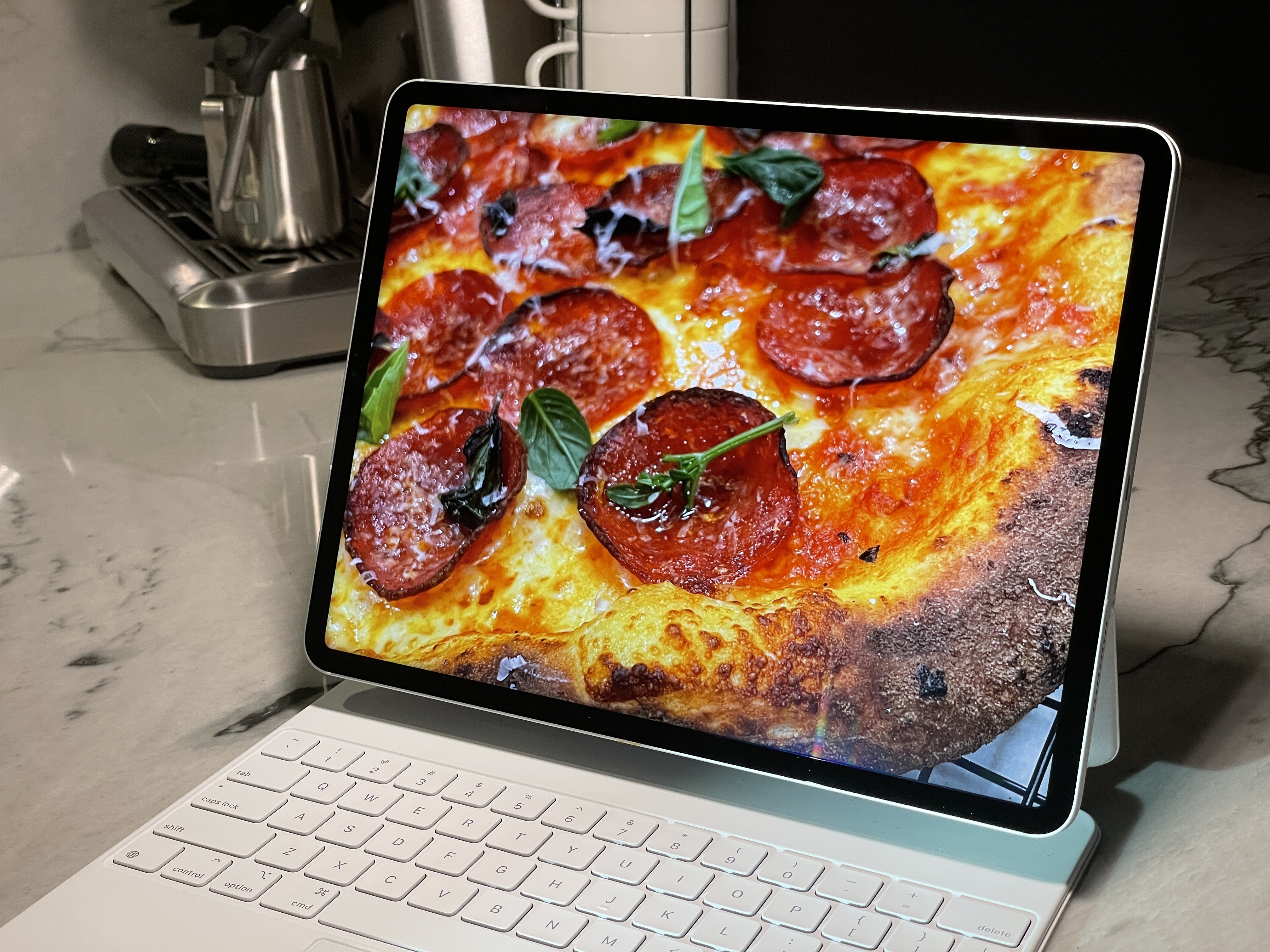
Apple’s new Magic Keyboard works essentially exactly the same as the previous version, but it now comes in white. I’m also happy to report that if you have an existing one it works completely fine on the new iPad Pro models. There was some minor uproar because Apple noted that the dimensions of the two devices were not the same so the old keyboard may not fit perfectly. Rest assured that it’s essentially the same exact fit and the functionality is identical. The only time any of it is evident is if you close it and peer very, very carefully at the open end you’ll notice that there is about 1mm less clearance between the rim of the case and the edge of the iPad Pro. Apple probably felt that it was better to over-disclose than anything here but really, it’s not an issue.

The white color is fantastic looking, especially with the silver model of iPad Pro and its white antenna window accents. It’s very 2001 (even though Kubrik’s iPads were black). I would fully, 100% expect this thing to get marred and dingy though. There’s a warning on the box that ‘color may transfer’ and I would believe it. My demo unit has not sustained any noticeable markings yet but I would guess that it’s just a matter of time. 

The overall feel of the keyboard is still great, a really nice typing experience and great little piece of kit that should be factored into the price of purchase of any iPad Pro because it’s just essential.

The other side of this coin that isn’t so shiny is the iPad’s aging software. It’s just as good as it was when I wrote my review of the iPad Pro in 2020 — at which point my conclusions were ‘you can adapt to it but it could be better’. That was a year ago. As someone who has used it as my only portable machine for the last two and a half years I can tell you that this is a very long time to wait for a big leap forward in capability. 

I have a very simple ask for the iPad’s software. I want to feel the same energy vivacity and pure performance for the sake of peak performance that the hardware side exhibits. 

Apple’s iPad Pro hardware is performing like an athlete in peak physical condition that is out three lengths ahead. The M1 chip and mini-LED display are really untouchable – it is exhilarating to see this much excellence packed into one device.

Unfortunately the software can not cash those checks, leaving this iPad Pro to feel like a perfect house with the same old furniture.

Apple has done an incontestably incredible job with the 2021 iPad Pro’s hardware, but it needs to level the software up. As a ‘power’ user that lives on iPad Pro much of the year, I have grown used to my kludges and tic-affordances. But there needs to be some big time commitment to the iPad paradigm here. The pane-style interface currently has so many things to recommend it as a brutally fast, fluid way to work, but there is no follow through. There is no willingness to say ‘this is a new way of working and you will learn it.’ 

Too much of the iPad Pro’s current software leans into ‘affordance valley’. A place where users are still treated as if they aren’t capable of learning a touch-first way of working. Instead, these affordances actually do the opposite and stand in the way of progress.

This reminds me of the ‘reduce animations’ affordance circa the iOS 7 era. When Apple reinvented iOS it went way overboard in animations in order to make it super clear to the user what was happening when they were tapping around the new pane-based interface. Nothing was ‘slower’ hardware wise but the animated affordances they put in were tuned too far up and made it feel slower. Turning those animations off made the interface feel snappier and more useful almost instantly. 

Apple eventually got those animations under control by conceding that maybe people were indeed ready to be more advanced touch users. 

This is where the iPad Pro is currently and it’s the disparity that irks the most. This is one of the best computing hardware devices ever made, and you know it’s capable of so much more than it is currently being let do. Apple has always had an editorial point of view when it comes to software and I can appreciate that. But currently, it feels like that stance is far too conservative when it comes to iPad Pro.

That’s why I’m waiting for WWDC with bated breath. With this much high-level execution on the hardware side, you have to imagine that the time is ripe for Apple to really take the next leap forward with iPad software. When that happens and we get a solid view of Apple’s vision for the next wave of iPad work, I’ll come back to the table with another look.

19 May 2021

What has four wheels and loses money?

Hello and welcome back to Equity, TechCrunch’s venture capital-focused podcast, where we unpack the numbers behind the headlines.

This is our Wednesday show, where we niche down to a single topic and go deep. This time Natasha and Alex corralled TechCrunch transportation editor Kirsten Korosec to talk to us about the endless parade of EV SPACs, and more. Before we get into the show notes, you can follow Equity on Twitter here.

And, because we are proud, we won a Webby! Our show! How cool is that? Thank you for love listening, hate listening, all of it. We are so thankful.

Ok, here’s what we talked about:

  • Why is every electric vehicle company going public via a SPAC, and why is there so much potential fraud in the space? Kirsten has some notes on the matter, but it boils down to money in both cases.
  • The Bird-SPAC deal in all its glory. You can read Alex and Kirsten’s dive into the Bird investor deck here. We had questions like why was the shared scooter model ever considered viable, and, how did the company improve its economics during a pandemic? The SPAC world never, ever disappoints.
  • Of course, we couldn’t resist talking about the scooter barrage of news from years ago and how things have changed since.
  • We end with her latest scoop, a series of exits at Waymo, and what that means for the future of the autonomous vehicle company. Plus, we didn’t get to make a joke about it in the show but let’s just say: Waymo has a waymore to go before it has driverless tech all over the streets.
  • And one more thing: Kirsten gives a look at some of the speakers at our upcoming mobility event. Snag tickets here, and subscribe to her newsletter, The Station, for all things mobility every week.

And that’s that! We are back with our regular weekly news rundown Friday morning. Chat you all then!

Equity drops every Monday at 7:00 a.m. PST, Wednesday, and Friday morning at 7:00 a.m. PST, so subscribe to us on Apple PodcastsOvercastSpotify and all the casts.

19 May 2021

Span introduces a new home electric panel

As energy prices continue to rise and more home owners look to the viability of things like solar, consumers will no doubt be searching for more ways to control their usage. Founded by ex-Tesla engineer Arch Rao, Span looks to address these questions, while asking, in a world of smart home devices, why the end-user access to grid energy has stayed stagnant for so long.

Span is a young company – founded roughly this time three years ago. This time last year, it raised a $10.1 million Series A, and by the end of the year, was  rolling out its products to homes across the U.S.

While not disclosing actual numbers, Rao tells me that Span, is “starting to capture a meaningful share of the storage market in the U.S. Especially in key markets like California.” Make of that what you will, but the company is particularly targeting solar users with a battery capture system.

Announced today, Span’s second product is a smaller and more versatile unit, simply calling the Span Smart Panel. The system is also notably cheaper than its first-gen predecessor, knocking the $5,000 MSRP down to $3,500. Your results may vary on the price, as power companies will often bundle this technology with other offerings like solar panels.

“This is part of the original vision that we thought about with Nest,” Nest co-founder and Span investor Matt Rogers said in an interview with TechCrunch. “There’s a lot you can do with your home. Nest and Google are heading in different directions. But the opportunity to understand the energy in your home and be the glue and the command center is still really real. Especially in this world where energy costs go up, and where solar and storage become pervasive. You can’t imagine a world in the future like that, that doesn’t have something like Span.”

The system plays nicely with most home electrical panels and offers minute control for circuits, as well as support for Ethernet, Wi-Fi, cellular and Bluetooth connections. The company offers simple device control through a connected mobile app.

“What we’ve done is fundamentally reinvent the home electrical panel,” Rao tells TechCrunch. “We are not tied to a single use case. We are the backbone of everything in your home. Some homes have thermostats, some don’t. Some homes have solar, some don’t. But practically every home has an electrical panel that is still using technology that is 100 years old.”

19 May 2021

Blue Origin reveals highest bid for a seat on its first human spaceflight, currently at $2M

Blue Origin is taking a novel approach to selling the first available private spaceflight seat on its New Shepard rocket, with an auction that will award the spot to the highest bidder. The company used a sealed bidding process for the first part of the contest, but it is now revealing the amount of the top bid and from here until June 10, all online bidding will happen in the open.

The current top bid for the coveted spot is at $1.4 million, after a bidding process that saw 5,200 applicants put in an offer, spanning bidders from 136 countries. Blue Origin will now be taking open bids on its website, and the current high bid (which is already up to $2 million as of this writing) will be displayed prominently for all to see.

On June 12, there will be one final, live online auction, among remaining participants who have registered and are willing to compete at whatever the high price is at the time. The winner then gets a seat on that first flight, which is currently set for July 20, and which will include other, yet-to-be-named passengers selected by Blue Origin.

The Jeff Bezos-founded space company has been working towards this moment for a long time, but this winning bid isn’t a direct payday for the private spaceflight venture: Instead, it’s donating the amount of the winning offer to its Club for the Future non-profit, which is aimed at encouraging kids to pursue a STEM education.

This will be Blue Origin’s first ever human spaceflight, and the fact that they’re opening up at least one seat to a member of the public means they’re extremely confident in the reliability of the suborbital, reusable New Shepard launch system.

19 May 2021

Formlabs raises $150M

A massive raise for the 3D printing industry this morning, as Massachusetts-based Formlabs has announced a $150 million Series E. The round, led by Softbank’s Vision Fund 2, effectively doubles the value of the unicorn to $2 billion dollars.

The news comes during a kind of resurgence as the once-beleaguered industry is seeing a massive uptick in interest – and funding. Of note, Desktop Metal, Shapeways, Velo3D and Markforged have all announced places to go public via SPAC. The company notes a recent study that projects that the industry will hit more than $51 billion by 2026. The news arrives as technology is improving, materials are diversifying and companies are looking for ways to introduce additive manufacturing into mass production.

Founded in 2011 by MIT Media Lab students, Formlabs has been something of an anomaly in the world of 3D printing. The company adapted a formerly industrial method of additive manufacturing (stereolithography) to a desktop form factor. It was enough to keep the firm going amid a bubble burst for the industry.

“Today, most 3D printing technology is still too expensive and difficult to use for widespread adoption,” CEO Max Lobovsky said in a press release tied to the round. “Our laser focus on improving the user experience and quality of these machines while bringing down the cost is central to our success and the growth of the industry. With this investment, we plan to expand our current portfolio of SLA and SLS technology and accelerate our product development to continue delivering on the expectations of the 3D printing industry.”

The large round will go toward increasing the company’s global headcount and helping Formlabs scale its technology toward mass production – a longstanding sticking point for most 3D printing tech.

19 May 2021

Super raises $50M to cover home repairs and maintenance via a subscription model

The real estate sales market has been in an upswing this year, and today a startup that’s addressing one of homeowners’ biggest needs — repair and maintenance services, and specifically the stress of sorting these out when things break down — is announcing some funding on the heels of strong growth.

Super — which has built a business providing repair and maintenance for electrical and mechanical systems, appliances, and plumbing by way of a monthly subscription — has closed a growth round of $50 million.

The startup plans to use the funding to expand into new markets, to hire more people, and to continue adding more maintenance/repair services and partnerships into its wider home-warranty-by-subscription proposition.

CEO Jorey Ramer, who co-founded the company with Ryan Donnelly (VP of engineering), also said that another part of the investment will be used to enhance the AI tech that underpins Super’s service and pricing plans. More on that below.

The San Francisco-based company is currently active in some of the fastest-growing housing markets in the U.S.,  Austin, Chicago, Dallas, Houston, Phoenix, San Antonio, and Washington, D.C. (ironically not in SF itself), and it has grown revenue 7x since April 2019, when it previously raised money, a $20 million Series B. It’s not disclosing actual revenue numbers, nor user numbers.

This is latest Series C has a number of strategic backers that speaks to the bigger ecosystem of financial and insurance services that interlink with each other, and which are used by the average person in the course of home ownership. (Indeed, Super these days seems to refer to itself as an “insuretech”.)

Led by Wells Fargo Strategic Capital, the venture arm of the banking giant, others in the round included home construction giant Asahi Kasei, AAA – Auto Club Group (which also sells insurance), Gaingels, and REACH. The last of these is a scale-up service from Second Century Ventures, which is the investment fund of the National Association of Realtors. Aquiline Technology Growth, Liberty Mutual Strategic Ventures, Moderne Ventures and the HSB Fund of Munich Re Ventures — which all invested in Super’s previous $20 million round back in April 2019 — also participated.

The company has now raised $80 million in total, and it’s not disclosing its valuation.

As we have noted before, Ramer came up with the idea for Super when he himself moved to San Francisco after he sold his previous startup, Jumptap — an advertising network acquired by Millennial Media (which is now part of Verizon by way of its acquisition of AOL, just like TechCrunch). He’d been an apartment renter for all of his adult life, but when he moved to the Bay Area, he found himself buying property, and it came with more than a little reluctance because of the headache of taking care of his new home.

“I liked being a renter,” he said in an interview. “You pay a fee, and you know what to expect.” (“Super” is a reference to the superintendents that handle maintenance and repair in an apartment building, and to what Super hopes customers will think about its service.)

The route that Ramer decided to take for how to approach filling that gap, interestingly, is not unlike the challenges that Jumptap faced in the world of ad tech: instead of trying to build a services business from the ground up, he opted to build an integrated network that tapped into a number of small services enterprises already working in the business of maintaining homes. (The correlation here is that, rather than building a first-party behemoth, the approach is to knit together a number of online properties so that people looking to advertise can do so across a wide range of places in a network).

Super has created a kind of marketplace: the services businesses and individuals that Super engages with to carry out maintenance and repairs are all licensed and use its platform for free, essentially, and Super handles remuneration based on call-outs. For users, the call-outs come as part of their monthly plans, and they include different options based on which level of service they pay for.

The funding it’s announcing today will be used in part to enhance how those monthly plans work.

Not only are there algorithms that Super has built to determine how to price its services based on location, size of home and other factors; but there are features in the app that subscribers can use to interact with Super to report issues, call out maintenance people, and provide more detail about problems to improve faster, and in some cases, automated adjudication on issues.

Better tech for more responsive home services has been an interesting area of the market, but one that’s largely been ignored up to now, but as they have matured, AR and other computer vision breakthroughs have definitely helped to advance that game. (And a number of others are also tapping into that, including Hover, Nana, Jobber and more.)

The way that the service has been built to scale — working with contractors means adding in more kinds of coverage is easier than building from the ground up — also means that Super over time may well add more services into the mix.

“The things we would do are things your super would do,” Ramer said. “So that might include fixing plumbing, but might also potentially include cleaning carpets, which you could think of as maintenance. Painting is another interesting area. It seems like it might be a cosmetic thing, but if you do not paint, you risk dry rot. It’s also preventative care. So if we, say, cover 100% maintenance you could imagine that included, too.”

One area where it’s unlikely to move is general contract work, say rebuilding a bathroom or kitchen, or adding in a new room in your loft: the focus it seems will remain on the essentials of keeping your home working.

But aside of expanding the services directly on its own platform, there are also potentially opportunities for how Super might work with partners. AAA for example has a notable business not just in roadside assistance but also insurance coverage. Ramer describes Super as “roadside assistance for your home,” and he points out that it’s a natural partnership to sell those alongside each other.

Similarly, Wells Fargo, as a mortgage lender, is a natural complement, providing a route to its customers to help maintain the properties that they’re in the process of paying off to the bank. This in turn also becomes a kind of insurance policy to the bank itself, as it keeps the homes it is financing in better shape.

“Wells Fargo embraces innovation, and we’re excited to support a tech-forward platform like Super which brings further advancement to the home services market,” said Matthew Raubacher, managing director for WFSC’s Principal Technology Investments Group, in a statement. “The challenges of ongoing repairs and maintenance resonates with every homeowner, and Super provides an experience that is convenient for the customer, while boosting job visibility for local contractors and businesses. We look forward to seeing them continue to widen their geographic footprint and expand their product offering.”

19 May 2021

Unbounce snags Snazzy.ai to add automated copywriting to platform

Unbounce, a Vancouver startup best known for helping marketers create automated landing pages, added a new wrinkle this morning when it announced it has acquired Snazzy.ai, an early stage automated copywriting startup. The two companies did not share the terms.

Unbounce Chief Strategy Officer Tamara Grominsky says that her company focuses on helping customers convert their customers into sales, and with Snazzy, it gets some pretty nifty technology based on GPT-3 artificial intelligence technology.

“We’re focused right now on building conversion intelligence software that will allow marketers to work with machines to really unlock their true conversion potential, […] and we saw a huge opportunity with Snazzy to focus particularly on the content creation and copy creation space to help us accelerate that strategy,” Grominsky explained.

She points out that the product is really aimed at the marketing generalist charged with overseeing landing pages, and who is responsible for a range of tasks including writing copy. “The average Unbounce customer isn’t a specialized copywriter, so they don’t spend [their work] day writing copy. They’re what we would consider a marketing generalist or really someone who’s responsible for a wide range of marketing responsibilities,” she said.

Snazzy co-founder Chris Frantz says the tech is really about getting people started, and then they can tweak the results as needed. “The hardest part has always been to get that first line, that first page, the first couple of words in — and we eliminate that entirely. That might not always result in amazing copy, but on the plus side you can always click the button again and give it another try,” he said.

Frantz says that with so much competition in the space, he and his co-founder felt they could build a market much faster as part of a larger and broader marketing platform solution like Unbounce.

“I love Tamara’s vision for the future of Unbounce. I think she has a very ambitious vision. She sold me on that very early on in the process. At the same time, there was a lot of competition in the space, and to have a key differentiator with a company like Unbounce, which has a decade of marketing experience and a lot of trust within this community, I think it’s a very powerful wedge that we can use to further grow our audience,” Frantz said.

The tool lets you write a range of copy from landing pages to Google ad copy. The company launched in alpha last October and already had 30,000 customers, which Grominsky says Unbounce hopes to convert into customers. The good news for those customers is that the company plans to leave Snazzy as a stand-alone product, while incorporating the tech into the platform in ways that make sense in the coming year.