Author: azeeadmin

14 May 2021

Extra Crunch roundup: Selling SaaS to developers, cracking YC after 13 tries, all about Expensify

Before Twilio had a market cap approaching $56 billion and more than 200,000 customers, the cloud-communications platform developed a secret sauce to fuel its growth: a developer-focused model that dispensed with traditional marketing rules.

Software companies that sell directly to end users share a simple framework for managing growth that leverages discoverability, desirability and do-ability — the “aha!” moment where a consumer is able to incorporate a new product into their workflow.

Data show that traditional marketing doesn’t work on developers, and it’s not because they’re impervious to a sales pitch. Builders just want reliable tools that are easy to use.

As a result, companies that are looking to create and sell software to developers at scale must toss their B2B playbooks and meet their customers where they are.


Attorney Sophie Alcorn, our in-house immigration law expert, submitted two columns: On Monday, she analyzed a decision by the U.S. Department of Homeland Security not to cancel the International Entrepreneur Parole program, which potentially allows founders from other countries to stay in the U.S. for as long as 60 months.

On Wednesday, she responded to a question from an entrepreneur who asked whether it made sense to sponsor visas for workers who are working remotely inside the U.S.

Thanks very much for reading Extra Crunch this week, and have a great weekend.

Walter Thompson
Senior Editor, TechCrunch
@yourprotagonist

4 lessons I learned about getting into Y Combinator (after 13 applications)

Image of a chair and a trash can in an office, with the bin surrounded by crumpled paper, representing persistence.

Image Credits: Peter Finch (opens in a new window) / Getty Images

Can you imagine making 13 attempts at something before attaining a successful outcome?

Alex Circei, CEO and co-founder of Git analytics tool Waydev, applied 13 times to Y Combinator before his team was accepted. Each year, the accelerator admits only about 5% of the startups that seek to join.

“Competition may be fierce, but it’s not impossible,” says Circei. “Jumping through some hoops is not only worth the potential payoff but is ultimately a valuable learning curve for any startup.”

In an exclusive exposé for TechCrunch, he shares four key lessons he learned while steering his startup through YC’s stringent selection process.

The first? “Put your business value before your personal vanity.”

The Expensify EC-1
The Expensify EC-1

Image Credits: Illustration by Nigel Sussman, art design by Bryce Durbin

In March, TechCrunch Daily Reporter Anna Heim was interviewing executives at Expensify to learn more about the company’s history and operations when they unexpectedly made themselves less available.

Our suspicions about their change of heart were confirmed on May 3 when the expense report management company confidentially filed to go public.

With a founding team comprised mainly of P2P hackers, it’s perhaps inevitable that Expensify doesn’t look and feel like something an MBA might envision.

“We hire in a super different way. We have a very unusual internal management structure,” said founder and CEO David Barrett. “Our business model itself is very unusual. We don’t have any salespeople, for example.”

Similar to the way companies must file a Form S-1 that describes their operations and how they plan to spend capital, TechCrunch EC-1s are part origin story, part X-ray. We published the first article in a series on Expensify on Monday:

We’ll publish the remainder of Anna’s series on Expensify in the coming weeks, so stay tuned.

As Procore looks to nearly double its private valuation, the IPO market shows signs of life

Construction tech unicorn Procore Technologies this week set a price range for its impending public offering. The news comes after the company initially filed to go public in February of 2020, a move delayed by the pandemic.

In March 2021, Procore filed again for a public offering, but its second shot ran into a cooling IPO market. The company filed another S-1/A in April, and then another in early May. This week’s filing is the first that sets a price for the Carpinteria, California-based software upstart.

But Procore is not the only company that filed and later put on hold an IPO to get back to work on floating. Kaltura, a software company focused on video distribution, also recently got its IPO back on track. Are we seeing a reacceleration of the IPO market? Perhaps.

3 golden rules for health tech entrepreneurs

Family physician Bobbie Kumar lays out the golden rules to ensure your healthcare product, service or innovation is on the right track.

Rule 1: “It’s not enough to develop a ‘new tool’ to use in a health setting,” Dr. Kumar writes. “Maybe it has a purpose, but does it meaningfully address a need, or solve a problem, in a way that measurably improves outcomes? In other words: Does it have value?”

Dear Sophie: How does the International Entrepreneur Parole program work?

lone figure at entrance to maze hedge that has an American flag at the center

Image Credits: Bryce Durbin/TechCrunch

Dear Sophie,

I’m the founder of an early-stage, two-year-old fintech startup. We really want to move to San Francisco to be near our lead investor.

I heard International Entrepreneur Parole is back. What is it, and how can I apply?

— Joyous in Johannesburg

Digging into digital mortgage lender Better.com’s huge SPAC

If you have heard of Better.com but really had no idea what it does before this moment, welcome to the club. Mortgage tech is like pre-kindergarten applications — it applies to a very specific set of folks at a very particular moment. And they care a lot about it. But the rest of us aren’t really aware of its existence.

Better.com, a venture-backed digital mortgage lender, announced this week that it will combine with a SPAC, taking itself public in the second half of 2021. The unicorn’s news comes as the American IPO market is showing signs of fresh life after a modest April.

As tech offices begin to reopen, the workplace could look very different

Colleagues in the office working while wearing medical face mask during COVID-19

Image Credits: filadendron (opens in a new window) / Getty Images

The pandemic forced many employees to begin working from home, and, in doing so, may have changed the way we think about work. While some businesses have slowly returned to the office, depending on where you live and what you do, many information workers remain at home.

That could change in the coming months as more people get vaccinated and the infection rate begins to drop in the U.S.

Many companies have discovered that their employees work just fine at home. And some workers don’t want to waste time stuck on congested highways or public transportation now that they’ve learned to work remotely. But other employees suffered in small spaces or with constant interruptions from family. Those folks may long to go back to the office.

On balance, it seems clear that whatever happens, for many companies, we probably aren’t going back whole-cloth to the prior model of commuting into the office five days a week.


For unicorns, how much does the route to going public really matter?

4 progressively larger balls of US $1 bills, studio shot

Image Credits: PM Images (opens in a new window) / Getty Images

On a recent episode of TechCrunch’s Equity podcast, hosts Natasha Mascarenhas and Alex Wilhelm invited Yext CFO Steve Cakebread and Latch CFO Garth Mitchell on to discuss when companies should go public, the costs and benefits of the process, and when a SPAC can make sense. Yext pursued a traditional IPO a few years back; Latch is now going public via a blank-check company combination.

The chat was more than illustrative, as we got to hear two CFOs share their views on delayed public offerings and when different types of debuts can make the most sense. While the TechCrunch crew has, at times, made light of certain SPAC-led deals, the pair argued that the transactions can make good sense.

Undergirding the conversation was Cakebread’s recent IPO-focused book, which not only posited that companies going public earlier rather than later is good for their internal operations but also because it can provide the public with a chance to participate in a company’s success.

In today’s hypercharged private markets and frothy public domain, his argument is worth considering.


The truth about SDK integrations and their impact on developers

Image of three complex light trails converging against a white background to represent integration.

Image Credits: John Lund (opens in a new window) / Getty Images

Ken Harlan, the founder and CEO of Mobile Fuse, writes about the perks and pitfalls of software development kits.

“The digital media industry often talks about how much influence, dominance and power entities like Google and Facebook have,” Harlan writes. “Generally, the focus is on the vast troves of data and audience reach these companies tout. However, there’s more beneath the surface that strengthens the grip these companies have on both app developers and publishers alike.

“In reality, SDK integrations are a critical component of why these monolith companies have such a prominent presence.”

Don’t hate on low-code and no-code

The Exchange caught up with Appian CEO Matt Calkins after his enterprise app software company reported its first-quarter performance to discuss the low-code market and what he’s hearing in customer meetings. To round out our general thesis — and shore up our somewhat bratty headline — we’ve compiled a list of recent low-code and no-code venture capital rounds, of which there are many.

As we’ll show, the pace at which venture capitalists are putting funds into companies that fall into our two categories is pretty damn rapid, which implies that they are doing well as a cohort. We can infer as much because it has become clear in recent quarters that while today’s private capital market is stupendous for some startups, it’s harder than you’d think for others.

Bird’s SPAC filing shows scooter-nomics just don’t fly

A pair of Bird e-scooters parked in Barcelona. Image Credits: Natasha Lomas/TechCrunch

Historically — and based on what we’re seeing in this fantastical filing — Bird proved to be a simply awful business. Its results from 2019 and 2020 describe a company with a huge cost structure and unprofitable revenue, per filings. After posting negative gross profit in both of the most recent full-year periods, Bird’s initial model appears to have been defeated by the market.

What drove the company’s hugely unprofitable revenues and resulting net losses? Unit economics that were nearly comically destructive.

Dear Sophie: Does it make sense to sponsor immigrant talent to work remotely?

lone figure at entrance to maze hedge that has an American flag at the center

Image Credits: Bryce Durbin/TechCrunch

Dear Sophie,

My startup is in big-time hiring mode. All of our employees are currently working remotely and will likely continue to do so for the foreseeable future — even after the pandemic ends. We are considering individuals who are living outside of the U.S. for a few of the positions we are looking to fill.

Does it make sense to sponsor them for a visa to work remotely from somewhere in the United States?

— Selective in Silicon Valley

The hamburger model is a winning go-to-market strategy

Follow the Hamburger model for your go-to-market strategy

Image Credits: ivan101 / Getty Images

“Today, we live in a world of product-led growth, where engineers (and the software they have built) are the biggest differentiator,” says Coatue Management general partner Caryn Marooney and investor David Cahn. “If your customers love what you’re building, you’re headed in the right direction. If they don’t, you’re not.

“However, even the most successful product-led growth companies will reach a tipping point, because no matter how good their product is, they’ll need to figure out how to expand their customer base and grow from a startup into a $1 billion+ revenue enterprise.

“The answer is the hamburger model. Why call it that? Because the best go-to-market (GTM) strategies for startups are like hamburgers:

  • The bottom bun: Bottom-up GTM.
  • The burger: Your product.
  • The top bun: Enterprise sales.”

Software subscriptions are eating the world: Solving billing and cash flow woes simultaneously

the recycle logo recreated in folded US currency no visible serial numbers/faces etc.

Image Credits: belterz (opens in a new window) / Getty Images

Krish Subramanian, the co-founder and CEO of Chargebee, writes that while subscription business models are attractive, there are two major pitfalls: First, payment.

“Regardless of company size, there’s an ongoing need to convince customers to sign up long term,” Subramanian writes. “The second issue: How do businesses cover the funding gap between when customers sign up and when they pay?”

Is there a creed in venture capital?

Scott Lenet, the president of Touchdown Ventures, asks how deal-makers should think about how to handle themselves when counter-parties attempt to change an agreement. “When is it OK to modify terms, and when should deal-makers stand firm?” he asks.

“Entrepreneurs and investors should recognize that contracts are worth very little without the ongoing relationship management that keeps all parties aligned. Enforcement is so unusual in the world of startups that I consider it a mostly dead-end path. In my experience, good communication is the only reliable remedy. This is the way.”


Even startups on tight budgets can maximize their marketing impact

Maximize the impact of your marketing strategy

Image Credits: Ray Massey / Getty Images

“Search engine optimization, PR, paid marketing, emails, social — marketing and communications is crowded with techniques, channels, solutions and acronyms,” writes Dominik Angerer, CEO and co-founder of Storyblok, which provides best practice guidance for startups on how to build a sustainable approach to marketing their content. “It’s little wonder that many startups strapped for time and money find defining and executing a sustainable marketing campaign a daunting prospect.

“The sheer number of options makes it difficult to determine an effective approach, and my view is that this complexity often obscures the obvious answer: A startup’s best marketing asset is its story.”

14 May 2021

Daily Crunch: Stripe buys Y Combinator alum Bouncer for undisclosed sum

To get a roundup of TechCrunch’s biggest and most important stories delivered to your inbox every day at 3 p.m. PDT, subscribe here.

Wrapping the week here at Daily Crunch with a big thanks to Henry for taking over yesterday and a fist bump to everyone who has written in with notes on its format. We’re still tinkering, so your notes are read and (mostly) appreciated, even if we can’t respond to everyone.

Stick with us as we get this fully figured out. — Alex

TechCrunch Top 3

Coding school drama: The market for coding schools and bootcamps is not going to go away so long as there is an outsized market demand for developers that current educational methods can’t fulfill. But not every player in the market is doing well. Lambda School, for example, is in even more hot water this week.

VCs love edtech: While private investors are happily pouring capital into the edtech startup market, the share prices of many public edtech companies are under fire. That’s a sentiment gap that TechCrunch is keeping close tabs on. More here on the edtech venture market.

Apply to Startup Battlefield: There’s not a lot of time left to apply to the upcoming Disrupt Startup Battlefield. And we want to hear from you. Really. Many startups that have taken part in our free and fun and very public pitch-off have gone on to raise lots of capital or even go public. So hang out with us; we think you’re great!

Startups and VC

Stripe buys Bouncer: The progress of the yet-private Stripe as an online finance behemoth continued today with its purchase of Bouncer, a startup based in Brooklyn that TechCrunch reports has “built a platform to automatically run card authentications and detect fraud in card-based online transactions.” Fraud detection is a point of product differentiation among online payment companies, so this is a deal to watch.

Why aren’t more African startups going public? The SPAC boom is taking a host of American startups public, but not upstart tech companies from Africa. The real issue could simply be one of scale, it turns out. TechCrunch investigates.

SoftBank makes piles of money: Some of the bets that SoftBank has made on its own, and via its Vision Fund 1 and 2, have been clunkers. WeWork remains a byword for embarrassment. But the teleco and investing powerhouse has been on a heater lately, as TechCrunch’s Equity Podcast explored. How good were its results? Very, very well. More on its investing performance here.

Don’t leak customer account data: An exercise startup that competes with Peloton didn’t have its cybersecurity house in order. Echelon, TechCrunch reports, “had a leaky API that let virtually anyone access riders’ account information.” That’s all kinds of not good. And the news item explains why cybersecurity has been so hot lately. More tech everywhere means more potential vulnerabilities everywhere, as well.

5 ways to raise your startup’s PR game

By now, it’s widely understood that storytelling is the foundation for successful startup PR.

Tech journalists receive more pitches than we can count each day from very early-stage companies seeking to make a name for themselves, and, to be honest, most of them sound like they were written with language-prediction technology.

What most companies fail to grasp is that storytelling is everyone’s job, like product managers who write blog posts that give users real insights into the latest release. The same holds true for founders who take part in Reddit AMAs and engineers who join product Slack chats.

To make a splash and stay relevant, here are five actionable suggestions that won’t cost a dime to implement.

(Extra Crunch is our membership program, which helps founders and startup teams get ahead. You can sign up here.)

Big Tech Inc.

Wrapping up news from the biggest tech companies this week, a short digest of earnings results from companies that you care about is in order.

Coinbase met its pre-released Q1 2020 earnings expectations, posting both huge revenue and profit gains. In short, the first quarter was a huge win for the crypto trading house. It had the same sort of quarter that likely led to Robinhood filing to go public.

DoorDash blew the, er, doors off its own quarter, leading to its shares spiking by around 25% in today’s trading. That’s one hell of a result. Sure, DoorDash is worth a lot less than it was at its peak, but the company had a great day all the same.

Airbnb managed a roughly 2.5% gain today after reporting its own earnings yesterday. It also got an analyst upgrade to boot. In short, the company managed year-over-year revenue growth, but also detailed larger-than-anticipated losses thanks to some one-time items. Worth around $85 billion, Airbnb remains richly valued.

And then there was Alibaba, which has lost around a quarter-trillion in value since it got into a scrap with its local administration and swung to a loss after it was served with a multibillion dollar fine by the Chinese government. But the e-commerce giant’s $28.6 billion in total revenue was up 64% compared to its year-ago result. Hot dang.

Now you are all caught up! Have a lovely weekend, and we’ll see you again Monday afternoon.

14 May 2021

Google’s ‘DVD Screensaver’ Easter egg makes the logo bounce around your screen accordingly

It’s been a while since we’ve seen a good Easter egg out of Google. Not too long ago it felt like someone would discover a new hidden gag in Google’s products every few weeks. The company cranked them out like it was their job.

While we haven’t seen as many new ones pop up lately, it looks like they’re still finding their way in. The latest: with the right search terms, you can make the Google search page act like an early aughts media player thats been left idling too long.

How to activate it:

  1. Be on a desktop browser. It doesn’t seem to work on mobile.
  2. Use Google to search for “DVD screensaver”. “DVD bouncing logo” appears to work, as well.
  3. Wait about five seconds and the logo should start a-bouncin’.

What’s the point? Like most good easter eggs, the only answer to that is “I dunno, it’s fun!” Kill time by seeing if it ever hits the corner. Tell your co-workers about it so they know for a fact you’re reading dumb stuff on the Internet instead of working. Happy Friday!

[As far as I can tell, this egg was first pointed out on Twitter by Google engineer Zouhir Chahoud. Thanks Zouhir!]

14 May 2021

New Relic’s business remodel will leave new CEO with work to do

For Bill Staples, the freshly appointed CEO at New Relic, who takes over on July 1, yesterday was a good day. After more than 20 years in the industry, he was given his own company to run. It’s quite an accomplishment, but now the hard work begins.

Lew Cirne, New Relic’s founder and CEO, who is stepping into the executive chairman role, spent the last several years rebuilding the company’s platform and changing its revenue model, aiming for what he hopes is long-term success.

“All the work we did in re-platforming our data tier and our user interface and the migration to consumption business model, that’s not so we can be a $1 billion New Relic — it’s so we can be a multibillion-dollar New Relic. And we are willing to forgo some short-term opportunity and take some short-term pain in order to set us up for long-term success,” Cirne told TechCrunch after yesterday’s announcement.

On the positive side of the equation, New Relic is one of the market leaders in the application performance monitoring space. Gartner has the company in third place behind Dynatrace and Cisco AppDynamics, and ahead of DataDog. While the Magic Quadrant might not be gospel, it does give you a sense of the relative market positions of each company in a given space.

New Relic competes in the application performance monitoring business, or APM for short. APM enables companies to keep tabs on the health of their applications. That allows them to cut off problems before they happen, or at least figure out why something is broken more quickly. In a world where users can grow frustrated quickly, APM is an important part of the customer experience infrastructure. If your application isn’t working well, customers won’t be happy with the experience and quickly find a rival service to use.

In addition to yesterday’s CEO announcement, New Relic reported earnings. TechCrunch decided to dig into the company’s financials to see just what challenges Staples may face as he moves into the corner office. The resulting picture is one that shows a company doing hard work for a more future-aligned product map and business model, albeit one that may not generate the sort of near-term growth that gives Staples ample breathing room with public investors.

Near-term growth, long-term hopes

Making long-term bets on a company’s product and business model future can be difficult for Wall Street to swallow in the near term. But such work can garner an incredibly lucrative result; Adobe is a good example of a company that went from license sales to subscription incomes. There are others in the midst of similar transitions, and they often take growth penalties as older revenues are recycled in favor of a new top line.

So when we observe New Relic’s recent result and guidance for the rest of the year, we’re more looking for future signs of life than quick gains.

Starting with the basics, New Relic had a better-than-anticipated quarter. An analysis showed the company’s profit and adjusted profit per share both beat expectations. And the company announced $173 million in total revenue, around $6 million more than the market expected.

So, did its shares rise? Yes, but just 5%, leaving them far under their 52-week high. Why such a modest bump after so strong a report? The company’s guidance, we reckon. Per New Relic, it expects its current quarter to bring 6% to 7% growth compared to the year-ago period. And it anticipates roughly 6% growth for its current fiscal year (its fiscal 2022, which will conclude at the end of calendar Q1 2022).

14 May 2021

New Relic’s business remodel will leave new CEO with work to do

For Bill Staples, the freshly appointed CEO at New Relic, who takes over on July 1, yesterday was a good day. After more than 20 years in the industry, he was given his own company to run. It’s quite an accomplishment, but now the hard work begins.

Lew Cirne, New Relic’s founder and CEO, who is stepping into the executive chairman role, spent the last several years rebuilding the company’s platform and changing its revenue model, aiming for what he hopes is long-term success.

“All the work we did in re-platforming our data tier and our user interface and the migration to consumption business model, that’s not so we can be a $1 billion New Relic — it’s so we can be a multibillion-dollar New Relic. And we are willing to forgo some short-term opportunity and take some short-term pain in order to set us up for long-term success,” Cirne told TechCrunch after yesterday’s announcement.

On the positive side of the equation, New Relic is one of the market leaders in the application performance monitoring space. Gartner has the company in third place behind Dynatrace and Cisco AppDynamics, and ahead of DataDog. While the Magic Quadrant might not be gospel, it does give you a sense of the relative market positions of each company in a given space.

New Relic competes in the application performance monitoring business, or APM for short. APM enables companies to keep tabs on the health of their applications. That allows them to cut off problems before they happen, or at least figure out why something is broken more quickly. In a world where users can grow frustrated quickly, APM is an important part of the customer experience infrastructure. If your application isn’t working well, customers won’t be happy with the experience and quickly find a rival service to use.

In addition to yesterday’s CEO announcement, New Relic reported earnings. TechCrunch decided to dig into the company’s financials to see just what challenges Staples may face as he moves into the corner office. The resulting picture is one that shows a company doing hard work for a more future-aligned product map and business model, albeit one that may not generate the sort of near-term growth that gives Staples ample breathing room with public investors.

Near-term growth, long-term hopes

Making long-term bets on a company’s product and business model future can be difficult for Wall Street to swallow in the near term. But such work can garner an incredibly lucrative result; Adobe is a good example of a company that went from license sales to subscription incomes. There are others in the midst of similar transitions, and they often take growth penalties as older revenues are recycled in favor of a new top line.

So when we observe New Relic’s recent result and guidance for the rest of the year, we’re more looking for future signs of life than quick gains.

Starting with the basics, New Relic had a better-than-anticipated quarter. An analysis showed the company’s profit and adjusted profit per share both beat expectations. And the company announced $173 million in total revenue, around $6 million more than the market expected.

So, did its shares rise? Yes, but just 5%, leaving them far under their 52-week high. Why such a modest bump after so strong a report? The company’s guidance, we reckon. Per New Relic, it expects its current quarter to bring 6% to 7% growth compared to the year-ago period. And it anticipates roughly 6% growth for its current fiscal year (its fiscal 2022, which will conclude at the end of calendar Q1 2022).

14 May 2021

California Gov. Newsom proposes $3.2B in EV investment as part of economic recovery package

California Governor Gavin Newsom, a vocal proponent of electric vehicles, on Friday debuted a new proposal that would earmark $3.2 billion to boost EV infrastructure and adoption in the state.

“This is a big deal,” Newsom said at a press conference Friday. “The Biden Administration’s been talking a lot about this, they’re hoping to do something with the Senate, but we’re doing it. We’re not waiting around.”

Over half of the $3.2 billion budget would go toward replacing 1,150 trucks, 1,000 transit buses, and 1,000 school buses with electric models. Another $800 million would be put toward the state’s Clean Cars 4 All program, which aims to help lower-income drivers upgrade to a zero- or near-zero car, as well as further rebates or clean vehicles. The proposal earmarks $500 million towards infrastructure and $250 million would go toward manufacturing grants. Newsom did not specify what type of infrastructure programs would qualify; it’s likely those funds would go toward charging.

“Hyundai, we hope you are listening,” Newsom said, referring to the automaker’s announcement Thursday that it would invest $7.4 billion in the United States to manufacture EVs through 2025.

“Let’s start to wake up to the opportunities not to be reliant on foreign adversaries or interventions from those looking to extract resources through cyberattacks and/or other foreign governments that can abuse their privileges and rights as it relates to security and availability of fossil fuels,” he said. His comments were likely in reference to the recent cyberattack on the Colonial Pipeline, which has led to gas shortages in swathes of the eastern United States.

The funds are a small sliver of his proposed $100 billion economic recovery package, dubbed “California Roars Back.” If it’s approved by the state legislature, it would be the largest recovery plan in the state’s history. Other proposals included in the package are nearly $1 billion to improve the state electric grid and invest in energy storage, green hydrogen and offshore wind development.

Last September, Newsom signed an executive order to phase out internal combustion engine passenger vehicles from being sold in the state by 2035. Transportation accounts for over half of all carbon emissions in the state.

14 May 2021

As M&A accelerates, deal-makers are leveraging AI and ML to keep pace

The global pandemic has changed the way we work, including how and where we work. For those involved in the mergers and acquisitions (M&A) industry, a notoriously relationship-driven business, this has meant in-person boardroom handshakes have been replaced by video conference calls, remote collaboration and potentially less travel in the future.

Research shows that AI will transform the M&A process by decreasing the time it takes to perform due diligence to less than a month in 2025 from three to six months in 2020.

The pandemic has also accelerated digital transformation, and deal-makers have embraced digital tools, sometimes even drones, to help them execute effectively. Even legal M&A professionals, often among the major holdouts to embrace remote work and technologies, are increasingly using technology to automate common time-consuming tasks, such as redaction and contract analysis. And with a vast majority of them reporting permanent remote or hybrid work arrangements, further technology adoption is expected.

The quickening pace of digital transformation is no longer about ensuring a competitive edge. Today, it’s also about business resilience. But what’s on the horizon, and how else will technology evolve to meet the needs of companies and deal-makers?

There are still many inefficiencies in managing M&A, but technologies such as artificial intelligence, especially machine learning, are helping to make the process faster and easier.

AI helping sell-side prepare deals and conduct diligence

Typical deals require the analysis of huge amounts of data in a relatively short period of time. So, when time is money, tools that speed up the M&A process are critical. That’s why AI-powered tools that help deal-makers automate tasks, reduce human error and ensure greater regulatory compliance are gaining interest.

For example, when it comes to selling a business or asset, one of the most challenging parts of the M&A process is organizing and preparing the files needed for review by potential investors or purchasers. Investment banking analysts often spend weeks reviewing thousands of files to figure out how to organize them and prepare them for a transaction.

Using statistical methods that allow a system to learn from data, and then make decisions, AI and machine learning leverage an algorithm to sift through those large volumes of data and content. Such a tool can then enable the upload of hundreds or thousands of files and their review by an AI engine, which reads the files and suggests categories, as well as appropriate folder locations, for the files. AI and machine learning streamline the process in a matter of minutes, not weeks, freeing up deal-makers to focus on higher-value activities.

14 May 2021

Opportunity knocks: Exhibit at TC Sessions: Mobility 2021

No matter what slice of the mobility market you’ve claimed as your own — AVs, EVs, data mining, AI, dockless scooters, robotics or the batteries that will charge and change the world — you won’t find a better place to showcase your extraordinary tech and talent than TC Sessions: Mobility 2021.

Buy a Startup Exhibitor Package and virtually plant your early-stage mobility startup in front of a global audience that’s focused exclusively on one of the most complex, rapidly evolving industries. TC Sessions: Mobility, which takes place on June 9, features the top minds and makers, draws thousands of attendees, fosters collaborative community and creates a networking environment ripe with opportunities.

Pro tip: This package is for pre-Series A, early-stage startups only.

The Startup Exhibitor Package costs $380, and it comes with four all-access passes to the event. But wait (insert infomercial voice here), there’s more!

Your virtual expo booth features lead-generation capabilities. You can highlight your pitch deck, run a video loop and/or host live demos. Network with CrunchMatch, our AI-powered platform, to find and connect with the people who can help move your business forward. CrunchMatch lets you host private video meetings — pitch investors, recruit new talent or grow your customer base.

You’ll have access to all the presentations, panel discussions and breakout sessions, too. And video-on-demand means you won’t miss out.

Here’s a peek at just some of the agenda’s great programming you and, thanks to those extra passes, your team can attend — or catch later with VOD:

  • EV Founders in Focus: We sit down with the founders poised to take advantage of the rise in electric vehicle sales. This time, we will chat with Kameale Terry, co-founder and CEO of ChargerHelp! a startup that enables on-demand repair of electric vehicle charging stations.
  • Will Venture Capital Drive the Future of Mobility? Clara Brenner, Quin Garcia and Rachel Holt will discuss how the pandemic changed their investment strategies, the hottest sectors within the mobility industry, the rise of SPACs as a financial instrument and where they plan to put their capital in 2021 and beyond.
  • Driving Innovation at General Motors: GM is in the midst of sweeping changes that will eventually turn it into an EV-only producer of cars, trucks and SUVs. But the auto giant’s push to electrify passenger vehicles is just one of many efforts to be a leader in innovation and the future of transportation. We’ll talk with Pam Fletcher, vice president of innovation at GM, one of the key people behind the 113-year-old automaker’s push to become a nimble, tech-centric company.

TC Sessions: Mobility 2021 takes place June 9. Buy a Startup Exhibitor Package and set yourself up for global exposure and networking success. Show us your extraordinary tech and talent!

Is your company interested in sponsoring or exhibiting at TC Sessions: Mobility 2021? Contact our sponsorship sales team by filling out this form.

14 May 2021

Every early-stage startup must identify and evaluate a strategic advantage

Whether you’re building a company or thinking about investing, it’s important to understand your strategic advantage. In order to determine one, you should ask fundamental questions like: What’s the long-term, sustainable reason that the company will stay in business?

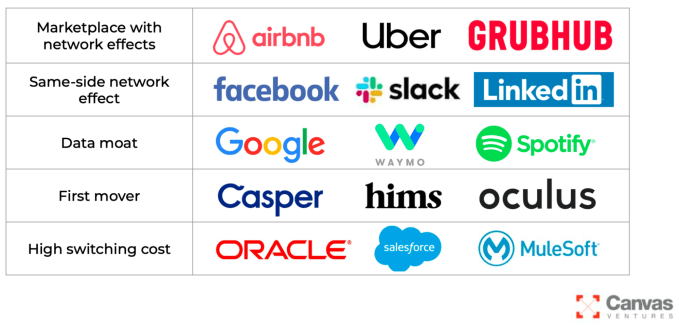
The most important elements for founders to consider when figuring out their strategic advantage(s) include one-sided or “direct” network effects (e.g. with social media sites like Facebook), marketplace network effects (e.g. with two-sided marketplaces like Uber), data moats, first mover and switching costs.

Let’s take a quick look at an example of one-sided network effects. At the very earliest stages of Facebook’s existence, it was just Mark Zuckerberg, a few friends, and their basic profiles. The nascent social media platform wasn’t useful beyond a few dorm rooms. They needed a strategic advantage or the company would not make it beyond the edge of campus.

A successful startup without a strategic advantage is just a validated business model vulnerable to copycat companies looking for a market entry point.

In fact, Facebook only truly became a useful platform — and accelerated as a business — when more users came into the fold and more types of email addresses were accepted. Add to that the introduction of an ad marketplace revenue model and you have a clear strategic advantage — based on one-sided network effects — that gave Facebook a strategic edge over other early social media sites like MySpace.

These one-sided network effects are different from two-sided network effects.

A strategic advantage is paramount to maintaining market share

Image Credits: Canvas Ventures

Two-sided network effects are most common in marketplace business models. In a two-sided network, supply and demand are matched, like Uber riders (demand) being matched with Uber drivers (supply). The Uber product is not necessarily more valuable just because more users (riders) join, the way Facebook is more valuable when more users join.

In fact, when more users (riders) join the demand side of the Uber network, it might actually be worse for the user experience — it’s harder to find a driver and wait times get longer. The demand side (riders) gets value from more supply (drivers) joining the platform and vice-versa. That’s why it’s called a two-sided network, or a marketplace.

Regardless of industry, a successful startup without a strategic advantage is just a validated business model vulnerable to copycat companies looking for a market entry point. Copycats can range in size from startups with similar grit to large companies like Facebook or Google that have limitless resources to drive competition into the market, and potentially run the startup with the original idea out of business. This vulnerability can prove fatal unless a startup’s founding team explores and embraces one or more strategic advantages.

14 May 2021

What to expect from Google’s all-virtual I/O

While Apple, Microsoft and the like were scrambling to bring their respective developer conferences online, Google made the executive design to just scrap I/O outright last year. It was a bit of an odd one, but the show went on through news-related blog posts.

While we’re going to have to wait another year to darken the doors of Mountain View’s Shoreline Amphitheater, the company has opted to go virtual for the 2021 version of the show. Understandably so. Google apparently has a lot up its sleeves this time.

Last month, Alphabet CEO Sundar Pichai teased some big news on the tech giant’s investor call, noting, “Our product releases are returning to a regular cadence. Particularly excited that our developer event — Google I/O — is back this year, all virtual, and free for everyone on May 18th-20th. We’ll have significant product updates and announcements, and I invite you all to tune in.”

From the sound of it, next week’s event will find Google returning to form following what was a rough year for just about everyone. So, what can we expect from the developer-focused event?

Forest Row, East Sussex, UK – July 30th 2013: Android figure shot in home studio on white. Image Credits: juniorbeep / Getty Images

Android 12 is the biggie, of course. From a software development standpoint, it’s a lynchpin to Google’s ecosystem, and for good reason has pretty much always taken centerstage at the event.

The developer version of Google’s mobile operating system has been kicking for a while now, but it has offered surprisingly little insight into what features might be coming. That’s either because it’s going to be a relatively minor upgrade as far as these things go or because the company it choosing to leave something to the imagination ahead of an official unveiling.

What we do know so far is that the operating system is getting a design upgrade. Beyond that, however, there are still a lot of question marks.

Google Assistant is likely to get some serious stage time, as well, coupled with some updates to the company’s ever-growing Home/Nest offerings. Whether that will mean, say, new smart displays on Nest speakers is uncertain. Keep in mind, hardware is anything but a given. The big Pixel event, after all, generally comes in the fall. That said, June is an ideal mid-marker during the year to refresh some other lines.

Google Pixel buds

Image Credits: Google

The likeliest candidate for new hardware (if there is any) is a new version of the company’s fully wireless earbuds — which the company has accidentally leaked out once or twice. The Pixel Buds A are said to sport faster pairing, and if their name is any indication, will be a budget entry.

Speaking of which… earlier this year, Google made the rather unorthodox announcement confirming that the Pixel 5a 5G is on the way. Denying rumors that have been swirling around the Pixel line generally, the company told TechCrunch in a statement, “Pixel 5a 5G is not cancelled. It will be available later this year in the U.S. and Japan and announced in line with when last year’s a-series phone was introduced.” Given that the 4a arrived in August, we could well be jumping the gun here. Taken as a broader summer time frame, however, it’s not entirely out of the realm of possibility here.

NEW YORK, NY – SEPTEMBER 13: Michael Kors and Google Celebrate new MICHAEL KORS ACCESS Smartwatches at ArtBeam on September 13, 2017 in New York City. (Photo by Dimitrios Kambouris/Getty Images for Michael Kors)

Wear OS has felt like an also-ran basically for forever. Rebrands, revamps and endless hardware partners have done little to change that fact. But keep in mind, this is going to be Google’s first major event since closing the Fitbit acquisition, so it seems like a no-brainer that the company’s going to want to come on strong with its wearable/fitness play. And hey, just this week, rumor broke that Samsung might be embracing the operating system after years of customizing Tizen.

Things kick off Tuesday morning May 18 at 10 a.m. PT, 1 p.m. ET with a big keynote.