Author: azeeadmin

14 May 2021

Echelon exposed riders’ account data, thanks to a leaky API

Image Credits: Echelon (stock image)

Peloton wasn’t the only at-home workout giant exposing private account data. Rival exercise giant Echelon also had a leaky API that let virtually anyone access riders’ account information.

Fitness technology company Echelon, like Peloton, offers a range of workout hardware — bikes, rowers, and a treadmill — as a cheaper alternative for members to exercise at home. Its app also lets members join virtual classes without the need for workout equipment.

But Jan Masters, a security researcher at Pen Test Partners, found that Echelon’s API allowed him to access the account data — including name, city, age, sex, phone number, weight, birthday, and workout statistics and history — of any other member in a live or pre-recorded class. The API also disclosed some information about members’ workout equipment, such as its serial number.

Masters, if you recall, found a similar bug with Peloton’s API, which let him make unauthenticated requests and pull private user account data directly from Peloton’s servers without the server ever checking to make sure he (or anyone else) was allowed to request it.

Echelon’s API allows its members’ devices and apps to talk with Echelon’s servers over the internet. The API was supposed to check if the member’s device was authorized to pull user data by checking for an authorization token. But Masters said the token wasn’t needed to request data.

Masters also found another bug that allowed members to pull data on any other member because of weak access controls on the API. Masters said this bug made it easy to enumerate user account IDs and scrape account data from Echelon’s servers. Facebook, LinkedIn, Peloton and Clubhouse have all fallen victim to scraping attacks that abuse access to APIs to pull in data about users on their platforms.

Ken Munro, founder of Pen Test Partners, disclosed the vulnerabilities to Echelon on January 20 in a Twitter direct message, since the company doesn’t have a public-facing vulnerability disclosure process (which it says is now “under review”). But the researchers did not hear back during the 90 days after the report was submitted, the standard amount of time security researchers give companies to fix flaws before their details are made public.

TechCrunch asked Echelon for comment, and was told that the security flaws identified by Masters — which he wrote up in a blog post — were fixed in January.

“We hired an outside service to perform a penetration test of systems and identify vulnerabilities. We have taken appropriate actions to correct these, most of which were implemented by January 21, 2021. However, Echelon’s position is that the User ID is not PII [personally identifiable information,” said Chris Martin, Echelon’s chief information security officer, in an email.

Echelon did not name the outside security company but said while the company said it keeps detailed logs, it did not say if it had found any evidence of malicious exploitation.

But Munro disputed the company’s claim of when it fixed the vulnerabilities, and provided TechCrunch with evidence that one of the vulnerabilities was not fixed until at least mid-April, and another vulnerability could still be exploited as recently as this week.

When asked for clarity, Echelon did not address the discrepancies. “[The security flaws] have been remediated,” Martin reiterated.

Echelon also confirmed it fixed a bug that allowed users under the age of 13 to sign up. Many companies block access to children under the age of 13 to avoid complying with the Children’s Online Privacy Protection Act, or COPPA, a U.S. law that puts strict rules on what data companies can collect on children. TechCrunch was able to create an Echelon account this week with an age less than 13, despite the page saying: “Minimum age of use is 13 years old.”

14 May 2021

Why SPACs aren’t targeting African startups

One. That’s the number of African tech companies that have gone public on the NYSE in the last 10 years. Two, if you’re counting local exchanges. The former is African-focused e-commerce company Jumia and the latter is Egyptian fintech company Fawry.

As a tech company, Fawry’s listing on the Egyptian Stock Exchange is a rarity. Typically, most exchanges in emerging markets like Africa, India, and Latin America are filled with traditional companies in age-old sectors like banking, telecoms, manufacturing, and energy.

Unlike Fawry, what you see these days are new-age tech companies from these markets going public abroad, especially in the U.S. Due to the friendly nature of U.S. exchanges such as Nasdaq and the NYSE, and their history building up the FAANG and other multibillion-dollar companies, they have become the top destination for IPO-ready companies in emerging markets. 

Last year, the U.S. IPO market was caught in a frenzy with a different way of going public: via special purpose acquisition companies (SPACs). Although these acquisition vehicles have been around for quite some time, they’ve lacked the sensational attributes we’ve now become accustomed to. Public and influential entrepreneurs from Chamath Palihapitiya to Richard Branson have made sure that SPACs — which many have called a fad — are here to stay.

Despite issues with the SEC as a liquidity option, SPACs have continued to remain popular for many companies because they have less completion time and regulatory hurdles than a traditional IPO.

We’ve covered a lot on this subject within the past year, and this article does a good job explaining SPACs.

In the U.S. alone, there are more than 300 SPACs. Last year, more than 85% of deals completed were executed with companies in the country, per Bloomberg. With fewer targets to acquire, an increasing number of SPACs are eyeing startups in other markets like Asia and Latin America, with the same endgame: take them public in the U.S.

Although Africa cannot be compared to these other regions in terms of technology and investment activities, it has some success stories. Companies like Jumia, GetSmarter, Paystack and Flutterwave are bright examples from the continent. But except for Tidjane Thiam’s $300 million blank-check company Freedom Acquisition I Corp (which has found no fintech target yet), there’s practically no SPAC targeting African tech companies.

Not SPACworthy

Iyinoluwa Aboyeji, founder and general partner at Future Africa, an early-stage VC firm, told TechCrunch that SPAC targets are most often billion-dollar companies. “The way the economics of a SPAC work, you want a billion-dollar company, and that’s a very short list in Africa. You can’t SPAC anything less than a billion dollars as you wouldn’t make enough money for it to be worth your while,” he said.

There are only a handful of African tech companies worth that much. Just recently, Flutterwave joined the illustrious club that includes Jumia, Fawry, and Interswitch. If what Aboyeji said is anything to go by, SPACs can only target Flutterwave and Interswitch. Yet, the chances of this happening are quite slim because the pair have expressed interest in going public via IPOs on local and international exchanges.

So, where exactly does it leave the continent if there are no billion-dollar companies to SPAC?

Aboyeji thinks SPACs could narrow down targets to companies that could become unicorns with their next rounds.

Eghosa Omoigui, managing partner at EchoVC Partners, an early-stage VC firm focused on sub-Saharan Africa, shares this view and adds that selecting these companies will boil down to the thrill they offer blank check companies should they choose to look Africa’s way.

“When you think about it, there’s only a small number of startups on the continent that have enough traction or excitement to be [packaged] in a SPAC,” he said.

From a neutral lens, some companies fit into this box of attractive African-focused companies with unicorn potential. A few of them, including Andela, Branch, Gro Intelligence and TymeBank, are worth more than $500 million and can easily double that with any SPAC activity.

But Omoigui believes a large number of these startups aren’t ready to go public yet.

“The real question I think is, even if you file for a SPAC and merge it with an African target, is that company ready to be public? The truth of the matter is that the valuations they get when private are much better than what they’ll get in the public markets.” 

Private capital seems sufficient… for now

The continent’s tech ecosystem is still very much nascent. In 2019, African startups raised a total of $2 billion, which is the peak of investments to have flowed in a year so far. That same year, Indian startups raised $14.5 billion. This disparity in investments is one reason there are few unicorns and acquisitions in the region. So it pretty much shows that there’s still a lot of ground to cover for African startups before thinking of going public. Maybe this is why SPACs aren’t targeting African startups now. 

“The way I see it, African startups are not ready yet to go public,” Aboyeji remarked. “They still need more time in the private markets. If you’re pursued by private capital and you see what happened to the likes of Jumia that went public, your inclination is just to take the private capital.”

In addition to that, private equity is catching up with what public financing can offer. Startups globally are staying private longer than ever. In the U.S., the number of publicly listed companies has dropped by 52% from the late 1990s to 2016. It’s a trend that has been passed to other markets, so it’s likely that African companies might stay private for the foreseeable future.

Nevertheless, Omoigui is optimistic that this situation might change in fewer than three years. In his opinion, SPACs will run out of interesting targets in other emerging markets and might start broadening their scope to include African companies.

The EchoVC managing partner added that the continent could do well with more SPACs from indigenous personalities like Thiam while waiting for those from foreign entities. This will build more excitement on the continent because in most cases, it isn’t the target that people usually get enthusiastic about but the vehicle itself.

“Sometimes you realize that it’s not really the startups that need to be hot and exciting; it is the SPAC sponsor. That’s what people are hopping on the bandwagon for.”

Before running Future Africa full-time, Aboyeji had stints with Andela as a co-founder and as CEO of Flutterwave. The startups are still private to date but are on anyone’s cards to go public within this decade. For Aboyeji, however, make that three as the entrepreneur-cum-investor wants to take his investment firm public, maybe via a SPAC.

“I’m definitely going to exit on the public market with Future Africa. That’s my goal. I would consider a SPAC as an entrepreneur, but it’s likely that I’ll decide to directly list as well,” he said.

Andela CEO Jeremy Johnson told me SPACs are here to stay, and most African startups will go public that way. However, he didn’t budge when asked if there were any chance his company would do the same.

“One of the benefits is that they allow you to talk about the future, and Africa’s growth rate means its future is going to be brighter than the past,” he said. “I think African startups will end up going public via this route.”


14 May 2021

Fisker and Foxconn sign deal to build electric vehicles

Electric car startup Fisker signed an agreement with Foxconn, the Taiwanese company that assembles iPhones, to co-develop and manufacture a new electric vehicle. Production on the car, which will be sold under the Fisker brand name in North America, Europe, China and India, will begin in the U.S. by the end of 2023. Numerous details, including the type of car and the location of future manufacturing plants, have not been disclosed by the two companies.

Fisker is calling the joint program Project PEAR, which stands for Personal Electric Automotive Revolution. Fisker chairman and CEO Henrik Fisker has bragged that the PEAR vehicle will be the “next big thing in car design,” a car that’s both “emotionally desirable” and “eco-friendly.” Fisker did not respond to requests for more information on the design of the vehicle.

The two companies had signed a memorandum of understanding agreement in February, setting the expectation that a formal agreement would be reached by this time. Included in the agreement signed on Thursday is a goal to produce 250,000 units annually across multiple sites. In January, Foxconn partnered with Chinese automaker Zhejiang Geely Holding Group to form a joint venture that would provide car manufacturers with production and consulting services, so the deal with Fisker is one of the company’s first forays into the automotive industry.

“In order to deliver on our promise of product breakthroughs from Project PEAR, we needed to rethink every aspect of product development, sourcing and manufacturing,” said Fisker chairman and CEO Henrik Fisker in a statement. “Our partnership with Foxconn enables us to deliver those industry firsts at a price point that truly opens up electric mobility to the mass market.”

The new vehicle will be priced under $30,000, according to Fisker, who touted the uniqueness and innovation of his car’s designs. Fisker will also begin production on its first model, Ocean, an electric SUV, in Europe by the end of next year. The company also intends to release a prototype of Ocean at the Los Angeles Auto Show later this year.

“We have world-class supply chains in place to support Project PEAR – in particular, securing the reliable delivery of chipsets and semiconductors,” said Young-way Liu, chairman of Foxconn, in a statement.

Liu noted how Foxconn would be able to connect Project PEAR with suppliers around the world through its software and hardware open platform for EVs, MIH, which aligns with the company’s “3+3” vision which symbolizes the infinite technological and industry advancements available through the platform.

Foxconn and Fisker are still shopping for potential U.S. manufacturing sites, so they’ve set up an office between the U.S. and Taiwan to coordinate design, engineering, purchasing and manufacturing operations.

13 May 2021

Daily Crunch: Lemonade says website security flaw that exposed customer data is ‘by design’

To get a roundup of TechCrunch’s biggest and most important stories delivered to your inbox every day at 3 p.m. PDT, subscribe here.

I interrupt your regularly scheduled Daily Crunch to announce that your regularly scheduled writer, one Alex Wilhelm, is out sick today. If the effects of his second shot subside by tomorrow, then he’ll be back with his commas. In the meantime, I have taken the reins and hope to be at least half as spirited. Let’s get on with it, shall we? — Henry

TechCrunch Top 3

Lemonade “DGAF”: Activist short seller Carson Block wrote a letter to the CEO of insurance marketplace Lemonade saying that he “accidentally discovered” a security flaw that exposed customers’ account data. Block told Zack that his firm is shorting the company’s stock “because it is clear Lemonade does not give a fuck about securing its customers’ sensitive personal information.” Strong words!

Google’s gotta pay in Italy: Natasha writes about the most recent European trouble Google finds itself in. Italy’s antitrust watchdog group slapped the company with a €100 million (or about US$123 million) for its Android Auto practices. Specifically, the AGCM says Google has prevented Enel X Italia, the maker of electric car charging app JuicePass, from inclusion in the platform. Google says it didn’t do anything wrong. Shrug.

Space adventures afoot: Japanese entrepreneur and billionaire Yusaku Maezawa will be passing the moon aboard a SpaceX Crew Dragon by 2023. But he can’t wait to leave Earth. So to whet his space-travel whistle, Maezawa will head to the International Space Station as a client of Space Adventures on a Russian Soyuz rocket set to take off from Kazakhstan on December 8. And he’s taking his production assistant, Yozo Hirano, with him. That’s dedication.

Startups and VC

Vietnamese flexible pay startup Nano raises $3M seed round: Nano Technologies, a startup that lets workers in Vietnam access their earned wages immediately through an app called VUI, has raised $3 million in seed funding.

Legionfarm, pairing pro gamers with amateurs, raises $6 million Series A: The gaming platform that lets gamers play with pro players in their favorite games announced a $6 million Series A round.

Chef Robotics raises $7.7M to help automate kitchens: Chef Robotics raised a combined $7.7 million pre-seed and seed round, with the goal of helping automate certain aspects of food preparation. The company says its robotics and vision system is destined to increase production volume and enhance consistency, while removing some food waste from the process. Fast casual restaurants appear to be a key focus for this sort of tech.

Sylvera grabs seed backing from Index to help close the accountability gap around carbon offsetting: The U.K.-based startup is using satellite, radar and lidar data-fueled machine learning to bolster transparency around carbon offsetting projects in a bid to boost accountability and credibility. And it’s just grabbed $5.8 million in seed funding to do it.

SpecTrust raises millions to fight cybercrime with its no-code platform: Risk defense startup SpecTrust is emerging from stealth today with a $4.3 million seed raise to “fix the economics of fighting fraud” with a no-code platform that it says cuts 90% of a business’ risk infrastructure spend that responds to threats in “minutes instead of months.”

BluBracket nabs $12M Series A to expand source code security platform: The early-stage startup focuses on keeping source code repositories secure, even in distributed environments.

Alba Orbital’s mission to image the Earth every 15 minutes brings in $3.4M seed round: Alba Orbital raised the money to get its next satellites into orbit to provide Earth observation at intervals of 15 minutes rather than hours or days.

The hamburger model is a winning go-to-market strategy

Software startups that fail to reach product-market fit simply fade away, memorialized only by an inactive Twitter account and perhaps a stenciled sign in a now-vacant co-working space.

All product-led growth companies will reach the stage where their founders must figure out how to crack the code that allows them to vault to the next level and become a billion-dollar company. That’s where the “hamburger” go-to-market comes in.

The bottom bun is bottom-up GTM, the top bun represents enterprise sales and your product? That’s the meat.

(Extra Crunch is our membership program, which helps founders and startup teams get ahead. You can sign up here.)

Big Tech Inc.

Google Analytics is preparing for life after cookies by using its machine learning systems to model user behavior when cookies are not available. During her first interview as the new head of Google Analytics, Vidhya Srinivasan tells Frederic that this is the only way to go.

Amazon’s back with its Echo Buds, and this time, Brian’s not as unimpressed as he was last time. Progress! Read his review here.

When Discord launched its own Clubhouse-like voice event rooms, Stage Channels, in March, it set the stage for connecting folks to live events beyond their own communities. Today, the company announced all the pieces are in place to start helping people discover live events and the servers that host them. Think open mic nights and book clubs, says Taylor.

Elon Musk, the self-dubbed Technoking, is backpedaling on the company’s stance about bitcoin, writes Kirsten and Rebecca. The Tesla CEO announced yesterday in a tweet that he has suspended purchases of its electric vehicles with the cryptocurrency. The shift comes just weeks after the Tesla CFO said the company believes in the longevity of bitcoin, despite its volatility.

Acquisition corner: Walmart acquires virtual try-on startup Zeekit and PayPal buys returns logistics business Happy Returns.

Community

Polls are fun and we like hearing and learning from you. What have we learned this week? You’re not that excited about going back to an office, and you’re not too keen on Bird’s upcoming SPAC. Next up? Let us know what you think about Tesla’s move to pause accepting bitcoin as payment (then come chat about all of it on our Discord server).

13 May 2021

Substack acquires team from community consulting startup People & Company

New media poster child Substack announced today that they’ve added a small community-building consultancy team to its ranks, acquiring the Brooklyn-based startup People & Company.

The small firm has been working with clients to build up their community efforts and its team will now be tasked with building up some of the newsletter company’s upstart efforts for writers in its network.

In a blog post, Substack co-founder Hamish McKenzie said that the company had previously used the People & Co. team to consult on their fellowship and mentorship programs and that members of the team would now be working on a variety of new efforts from scaling programs to help writers with legal support and health insurance to community-guided projects like workshops and meetups to help crowdsource insights.

“These people are the best in the world at what they do, and now they’re not only working for Substack, but they’re also working for you,” McKenzie wrote.

Beyond Substack, previous partners with People & Company include Porsche AG, Nike and Surfrider.

Substack has been blazing ahead in recent months, adding new partners and raising cash as it aims to bring on more and more subscribers to its network. The firm shared back in late March that it had raised a $65 million round at a reported valuation around $650 million according earlier reporting by Axios.

13 May 2021

Even startups on tight budgets can maximize their marketing impact

Search engine optimization, PR, paid marketing, emails, social — marketing and communications is crowded with techniques, channels, solutions and acronyms. It’s little wonder that many startups strapped for time and money find defining and executing a sustainable marketing campaign a daunting prospect.

The sheer number of options makes it difficult to determine an effective approach, and my view is that this complexity often obscures the obvious answer: A startup’s best marketing asset is its story. The knowledge and expertise of its team, together with the why and the how of its offering provides the most compelling content.

Leveraging this material with best practice techniques enables any startup, no matter how limited its budget, to run an effective marketing campaign.

Many startups make the mistake of choosing systems and employing procedures to solve the immediate needs of the department that requires them.

I know this approach works, because this is exactly what I did with my co-founder Alex Feiglstorfer when we set up Storyblok. To be clear, we are developers not marketers. However, our previous experience building CMS systems taught us that the main driver of organic engagement for most businesses was customer conversations around content.

Specifically, sharing experiences, expertise and what we learned. We had committed nearly all of our available cash to developing our product, so we knew that the only way to market Storyblok was to do it all ourselves.

As a result, we focused solely on problem-solving content. This took the form of tutorials on web development and opinion pieces on headless CMS and other topics within our areas of expertise. The trick was that what we published wasn’t made just for marketing, it was based on our own internal documentation of problems we encountered as we developed our product. In essence, we were “learning in public.” Through this approach we were able to acquire thousands of customers in our first year.

Retelling this story isn’t to blow my own trumpet, it’s to make clear that you don’t have to be a marketer by training or commit a huge amount of time and resources to successfully market your startup. So, how do you get started?

Getting your structure and technology right

Although there’s no one-size-fits-all approach to how you organize your startup’s marketing function, there are some basic principles that apply in nearly every situation. A recent survey of 400+ executives from CMS Wire helpfully identified the following factors as the “top digital customer experience challenges” for businesses:

  1. Limited budget/resources.
  2. Siloed systems and fragmented customer data.
  3. Limited cross-department alignment/collaboration.
  4. Outdated/limited technology, operations or processes.
  5. Lack of in-house expertise/skills.

Challenges two to four are the pitfalls that we can focus on avoiding. They are directly related to how a startup produces, organizes and distributes its content.

With regard to the siloing of systems and fragmentation of customer data, the overriding goal is to ensure all your systems are integrated and speak to one another. In practice, this means that the data gathered in different departments — whether its feedback from sales, engagement on your website, customer service responses or product development information — is collected in a uniform and methodical manner and is readily accessible across the business.

13 May 2021

Three students sue coding bootcamp Lambda School alleging false advertising and financial shenanigans

Lambda School has attracted a lot of attention, and raised some $130 million in venture funding from an impressive list of investors, for its novel approach to coding education: offering six-month virtual computer science courses for $30,000, with the option of paying for the courses in installments based on a sliding scale that only kicks in after you land a job that makes at least $50,000.

But it turns out that the startup is attracting a a lot of controversy, too. In the latest development, three students have filed lawsuits against the company in California, claiming misleading financial and educational practices.

The suits — which are being brought by the non-profit National Student Legal Defense Network on behalf of Linh Nguyen, Heather Nye and Jonathan Stickrod — go back to a period of between 2018 and 2020, and they focus on four basic claims.

First, that Lambda School falsified and misrepresented job placement rates. Second, that Lambda School misrepresented the true nature of its financial interest in student success (specifically, there are question marks over how Lambda handles its ISA contracts and whether it benefits from those). Third, that it misrepresented and concealed a regulatory dispute in California that required the school to cease operations. And fourth, that it enrolled and provided educational services and signed ISA contracts in violation of that order.

The filings for the three cases are embedded below.

The three students are all currently on the hook for their Lambda tuitions, which they opted to pay back in installments by way of the school’s income share agreement (ISA) model. The suits do not disclose how much the three individuals are seeking in damages.

For those who have been following news of Lambda School over the last several years, the claims detailed in the suit will sound familiar. The inflated job placement rates; and the fact that it wasn’t legally allowed to operate, yet was still accepting students, signing ISA deals, and teaching, for example, were all reported over that period of time, along with other criticisms about how CEO and founder Austen Allred, a self-proclaimed “growth hacker“, leveraged his and Lambda’s other Twitter accounts to hype up the school.

Some of the issues that are raised in the lawsuits have also been resolved since then. For example, the prominent display of over 80% of students finding jobs can no longer be found on the Lambda site, and in California you no longer get an ISA but a retail installment contract (similar but different). But as is the way of litigation, lawsuits based on past issues from people who were impacted by them when they were still active, are, in many ways, the next logical, unsurprising step.

There is also a specific strategy behind these three cases being filed the same time.

Alex Elson, the co-founder of the National Student Legal Defense Network, told TechCrunch in an interview that the ISA contracts that students sign at Lambda have arbitration clauses that preclude students from arbitrating against Lambda in groups, ie class action suits. The idea is that by bringing three nearly identical individual cases simultaneously against the school, the defendants can both expose the widespread practices of Lambda, and pave the way for broader relief for others similarly impacted. (The Student Defense Network’s co-counsel in the case is CalebAndonian PLLC and Cotchett Pitre & McCarthy LLP.)

Originally incubated at Y Combinator and backed by a long list of investors that include GV (Google Ventures), Gigafactory (ex-Founders Fund partners), GGV, and more, Lambda School has had a tough time of it in the last year, a period that has seen the Covid-19 pandemic have a disproportionate and impact on some parts of the economy but not others.

Edtech has largely been seen as a huge growth area, but that may not have been the case for edtech startups specifically focused on vocational, technology jobs, given that the tech world has seen a lot of hiring freezes, and layoffs, as companies sought to keep down costs in the face of the unknown.

Lambda went through two sets of layoffs in the space of a year, and it seems that in one of them it also changed its teaching model, doing away with TLs (team leads), paid mentors who helped assess students, and instead moved to a model where students mentored each other and assessed themselves. It has also changed the courses themselves, shortening them to six months from their original nine- and 18-month formats — but not reducing the prices for those courses.

And it’s not quite past all of its regulatory issues, either.

Just two weeks ago, California’s Department of Financial Protection and Innovation (DFPI) announced a settlement with the school over the language that it uses in financing contracts with students.

Specifically, the DFPI took issue with how it said Lambda falsely described its financial arrangement with students as a “qualified educational loan… subject to the limitations on dischargeability contained in… the United States Bankruptcy Code.” (Educational loans are usually exempt from bankruptcy discharge — when a debtor is not required to pay a debt because that debtor is bankrupt, it’s a bankruptcy discharge; typically educational loans are not covered by this, so the issue here was the Lambda School was claiming that even if a student files for bankruptcy that student would still have to pay back Lambda.)

“The language violates the new California Consumer Financial Protection Law (CCFPL), which took effect this year and prohibits companies from engaging in practices that are unlawful, unfair, deceptive, or abusive,” the DFPI noted.

The settlement requires Lambda to notify students that the bankruptcy dischargeability provision language is not accurate; retain a third party to review the terms of the school’s finance contract to ensure that it complies with all applicable laws; and undergo a review of its marketing materials to ensure that the information is accurate and not likely to mislead consumers.

You could say that all of these issues are the table stakes of being a startup and trying something new: the school is moving fast, breaking things, and iterating along the way to figure it all out. But for a service that can leave students liable for paying back $30,000, it’s a big price for others to pay when those things don’t quite work as advertised.

Still, despite all that, Lambda also continues to have a lot of supporters and partners. Just last month, for example, it announced a new backend engineering program that it developed with Amazon. And while it doesn’t seem guaranteed taking the problem will get you an instant open door to a job with the tech giant, it’s a sign of where there remains interesting value in the idea.

We have also reached out to the company’s CEO and founder Austen Allred, and the company itself, for a response and we will update this post as we learn more.

Updated with Lambda’s response: with the following statement:

Per policy, we don’t speak about individual student or alumni situations in detail publicly, but we’re of course happy to review matters directly and will review any cases that are filed. In general, though, for any student’s ISA payments to be activated, they would have first signed an ISA contract and subsequently landed a role leveraging skills learned at Lambda School that pays $50K or more in salary.

Our mission is to de-risk education and expand access to higher paying jobs. For that reason, our ISAs (and RICs in California) are designed with policies that are as flexible and student-centric as possible. That includes our purposely generous proration refund and proration policy for students who decide to leave the program, regardless of tuition payment method. Additionally, if an alumnus loses their job, salary, or is making under $50K a year, their payments are immediately paused. ISAs expire completely after 24 payments or 60 deferred months, even if the total paid is less than $30,000.

Our number one priority is student success. We stand behind the quality of our instructors and our proven student outcomes (which we go into more detail about here and in our outcomes reporting). While we will always strive for our students and alumni to have a positive experience and achieve their career goals, we’re also willing to work with individuals and review cases to come to a resolution.

The suits are below:


13 May 2021

After another canceled year in the desert, Burning Man plans for a virtual event

Last month, the organization behind Burning Man announced that the festival/experience would not be returning to the desert of Nevada this year due to the COVID-19 pandemic and would instead be attempting a virtual event once again aiming to bring attendees access to a handful of web-based experiences.

Today, the Burning Man org released tickets for its online events taking place between August 22 and September 7.

There have been few illusions for attendees that a virtual event is any substitute for the real thing, but organizers have tried to get creative when it comes to the social web experiences so that attendees can reclaim some of the camaraderie. While the organization won’t be setting up an official presence, some camps have already committed to hosting an unofficial return to the desert.

Last year, TechCrunch profiled the Burning Man org as they struggled to pull together a virtual event that captured the feeling of the in-person experience using virtual reality, mobile apps, and virtual experimental theater.

Most of the creators behind last year’s experience are back this year including a few VR-centric experiences and a handful of live-streaming and Zoom-based apps designed to spice things up a bit. This year’s apps include the VR-based BRCvr, interactive chat platform Build-a-Burn, 3D world Dusty Universe, ‘photo-realistic’ simulation The Infinite Playa, video chat Sparkleverse and livestream platform Burn Week.

This year, the apps have a reserve ticketing system set up for “early bird tickets” and they are all charging different prices based on the experience type. The most aggressive pitch is from Infinite Playa which is offering tickets ranging from a $16 two-hour pass to an $88 unlimited pass. Others are adopting donation-based pricing tiers, while the Burn Week livestream is offering a free stream to all viewers alongside a $29 “extended experience.”

13 May 2021

Alba Orbital’s mission to image the Earth every 15 minutes brings in $3.4M seed round

Orbital imagery is in demand, and if you think having daily images of everywhere on Earth is going to be enough in a few years, you need a lesson in ambition. Alba Orbital is here to provide it with its intention to provide Earth observation at intervals of 15 minutes rather than hours or days — and it just raised $3.4M to get its next set of satellites into orbit.

Alba attracted our attention at Y Combinator’s latest demo day; I was impressed with the startup’s accomplishment of already having 6 satellites in orbit, which is more than most companies with space ambition ever get. But it’s only the start for the company, which will need hundreds more to begin to offer its planned high-frequency imagery.

The Scottish company has spent the last few years in prep and R&D, pursuing the goal, which some must have thought laughable, of creating a solar-powered Earth observation satellite that weighs in at less than one kilogram. The joke’s on the skeptics, however — Alba has launched a proof of concept and is ready to send the real thing up as well.

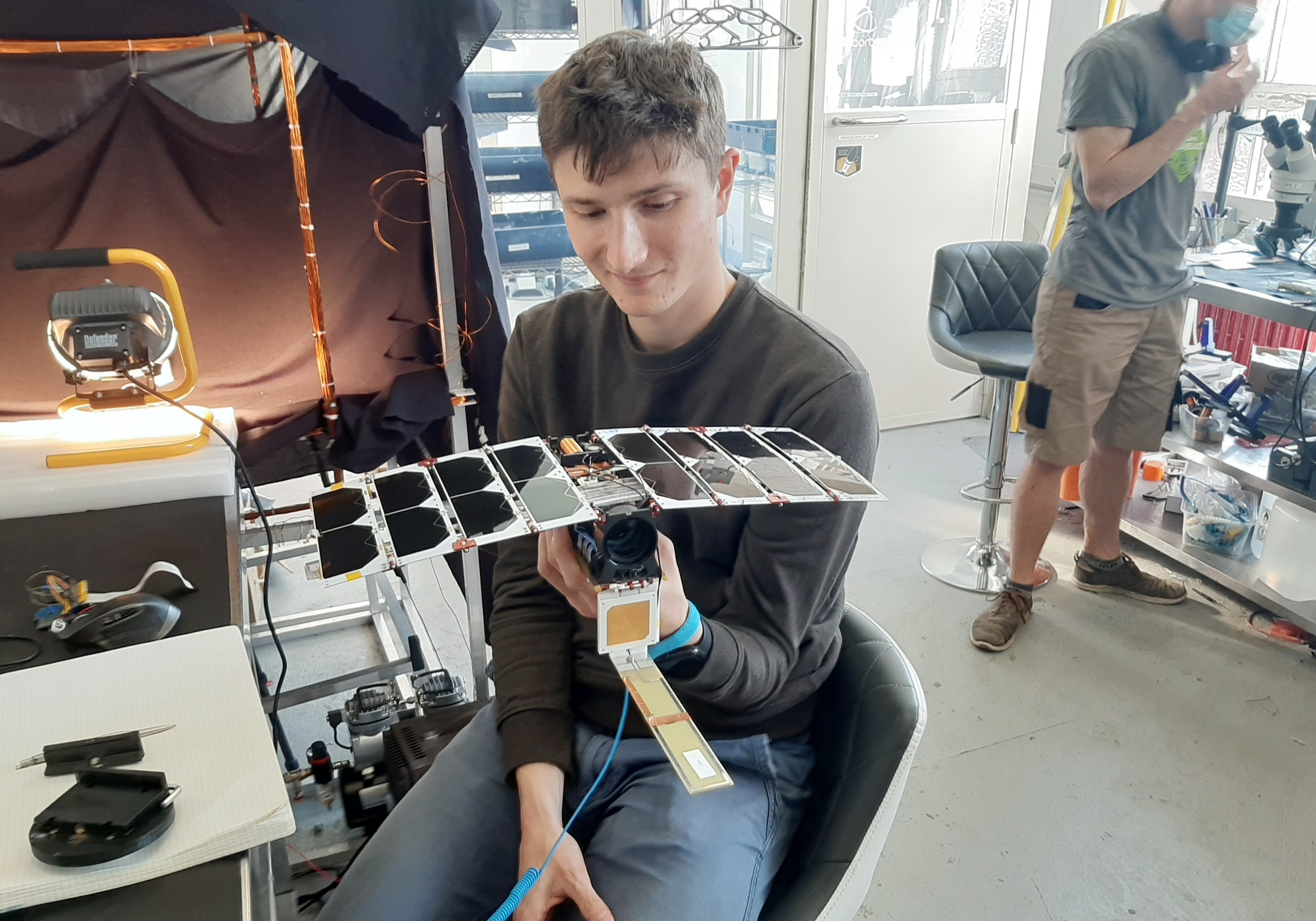
Little more than a flying camera with the minimum of storage, communication, power, and movement, the sub-kilogram Unicorn-2 is about the size of a soda can, with paperback-size solar panel wings, and costs in the neighborhood of $10,000. It should be able to capture up to 10 meter resolution, good enough to see things like buildings, ships, crops, even planes.

A member of the Alba Orbital team holds a Unicorn-2 satellite.

Image Credits: Alba Orbital

“People thought we were idiots. Now they’re taking it seriously,” said Tom Walkinshaw, founder and CEO of Alba. “They can see it for what it is: a unique platform for capturing datasets.”

Indeed, although the idea of daily orbital imagery like Planet’s once seemed excessive, in some situations it’s quite clearly not enough.

“The California case is probably wildfires,” said Walkinshaw (and it always helps to have a California case). “Having an image once a day of a wildfire is a bit like having a chocolate teapot… not very useful. And natural disasters like hurricanes, flooding is a big one, transportation as well.”

Walkinshaw noted that they company was bootstrapped and profitable before taking on the task of launching dozens more satellites, something the seed round will enable.

“It gets these birds in the air, gets them finished and shipped out,” he said. “Then we just need to crank up the production rate.”

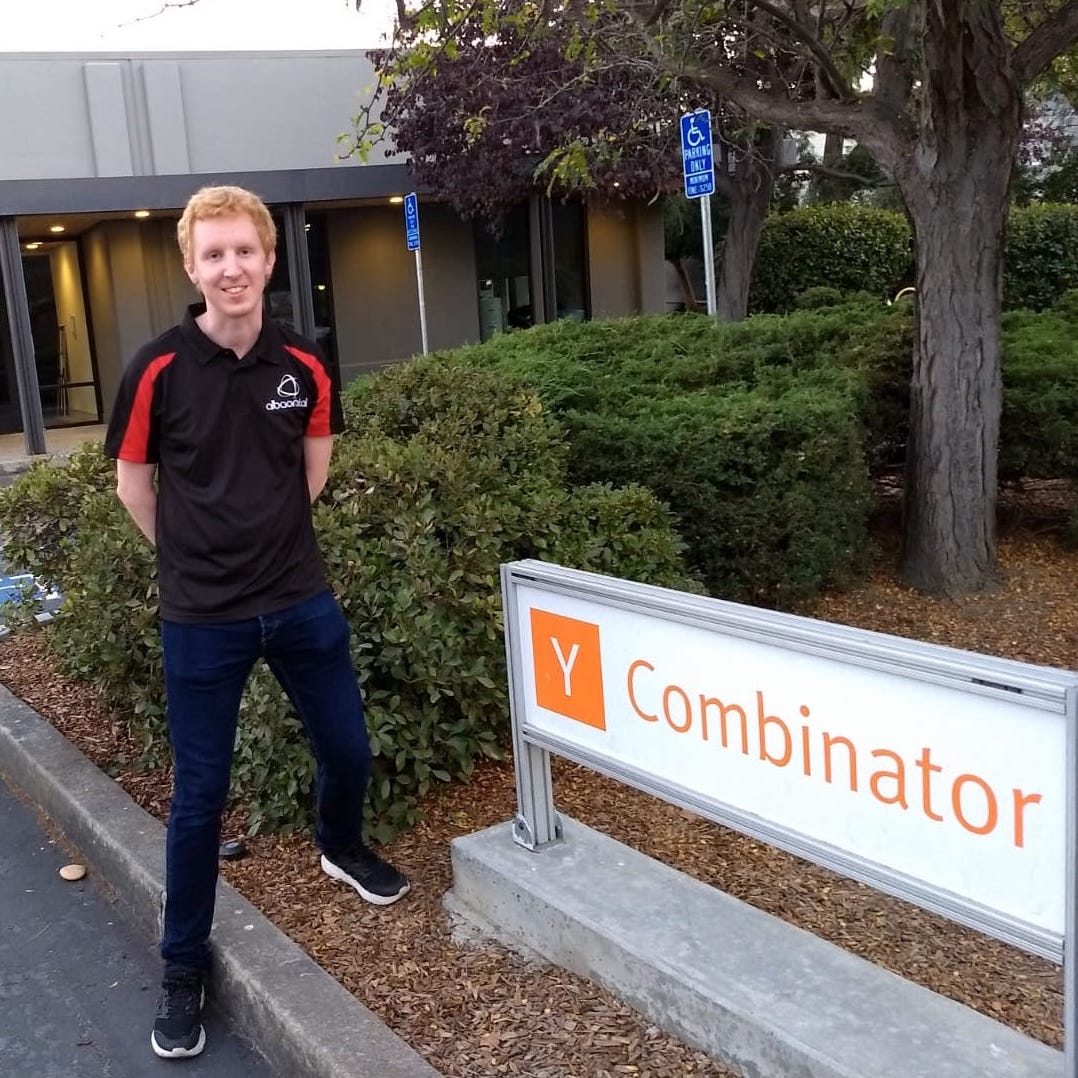
Alba Orbital founder Tom Walkinshaw next to a Y Combinator sign.

Image Credits: Alba Orbital

When I talked to Walkinshaw via video call, ten or so completed satellites in their launch shells were sitting on a rack behind him in the clean room, and more are in the process of assembly. Aiding in the scaling effort is new investor James Park, founder and CEO of FitBit — definitely someone who knows a little bit about bringing hardware to market.

Interestingly, the next batch to go to orbit (perhaps as soon as in a month or two, depending on the machinations of the launch provider) will be focusing on nighttime imagery, an area Walkinshaw suggested was undervalued. But as orbital thermal imaging startup Satellite Vu has shown, there’s immense appetite for things like energy and activity monitoring, and nighttime observation is a big part of that.

The seed round will get the next few rounds of satellites into space, and after that Alba will be working on scaling manufacturing to produce hundreds more. Once those start going up it can demonstrate the high-cadence imaging it is aiming to produce — for now it’s impossible to do so, though Alba already has customers lined up to buy the imagery it does get.

The round was led by Metaplanet Holdings, with participation by Y Combinator, Liquid2, Soma, Uncommon Denominator, Zillionize, and numerous angels.

As for competition, Walkinshow welcomes it, but feels secure that he and his company have more time and work invested in this class of satellite than anyone in the world — a major obstacle for anyone who wants to do battle. It’s more likely companies will, as Alba has done, pursue a distinct product complementary to those already or in the process of being offered.

“Space is a good place to be right now,” he concluded.

13 May 2021

Advanced tax strategies for startup founders

As an entrepreneur, you started your business to create value, both in what you deliver to your customers and what you build for yourself. You have a lot going on, but if building personal wealth matters to you, the assets you’re creating deserve your attention.

You can implement numerous advanced planning strategies to minimize capital gains tax, reduce future estate tax and increase asset protection from creditors and lawsuits. Capital gains tax can reduce your gains by up to 35%, and estate taxes can cost up to 50% on assets you leave to your heirs. Careful planning can minimize your exposure and actually save you millions.

Smart founders and early employees should closely examine their equity ownership, even in the early stages of their company’s life cycle. Different strategies should be used at different times and for different reasons. The following are a few key considerations when determining what, if any, advanced strategies you might consider:

  1. Your company’s life cycle — early, mid or late stage.
  2. The value of your shares — what they are worth now, what you expect them to be worth in the future and when.
  3. Your own circumstances and goals — what you need now, and what you may need in the future.

Some additional items to consider include issues related to qualified small business stock (QSBS), gift and estate taxes, state and local income taxes, liquidity, asset protection, and whether you and your family will retain control and manage the assets over time.

Smart founders and early employees should closely examine their equity ownership, even in the early stages of their company’s life cycle.

Here are some advanced equity planning strategies that you can implement at different stages of your company life cycle to reduce tax and optimize wealth for you and your family.

Irrevocable nongrantor trust

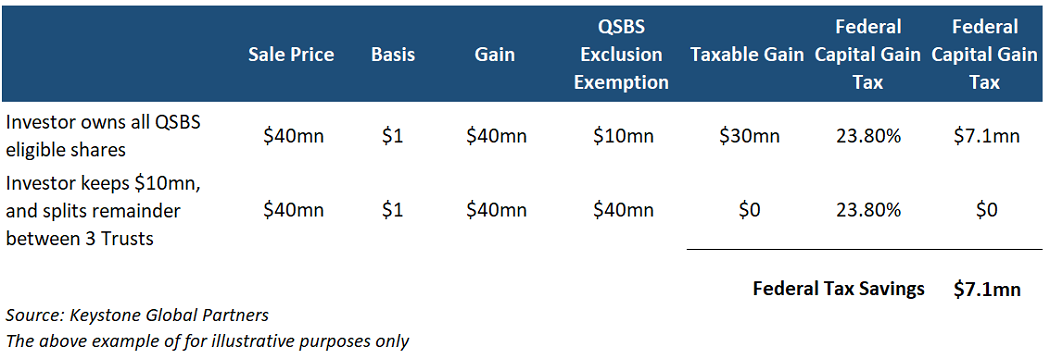
QSBS allows you to exclude tax on $10 million of capital gains (tax of up to 35%) upon an exit/sale. This is a benefit every individual and some trusts have. There is significant opportunity to multiply the QSBS tax exclusion well beyond $10 million.

The founder can gift QSBS eligible stock to an irrevocable nongrantor trust, let’s say for the benefit of a child, so that the trust will qualify for its own $10 million exclusion. The founder owning the shares would be the grantor in this case. Typically, these trusts are set up for children or unborn children. It is important to note that the founder/grantor will have to gift the shares to accomplish this, because gifted shares will retain the QSBS eligibility. If the shares are sold into the trust, the shares lose QSBS status.
QSBS tax strategy

Image Credits: Peyton Carr

In addition to the savings on federal taxes, founders may also save on state taxes. State tax can be avoided if the trust is structured properly and set up in a tax-exempt state like Delaware or Nevada. Otherwise, even if the trust is subject to state tax, some states, like New York, conform and follow the federal tax treatment of the QSBS rules, while others, like California, do not. For example, if you are a New York state resident, you will also avoid the 8.82% state tax, which amounts to another $2.6 million in tax savings if applied to the example above.

This brings the total tax savings to almost $10 million, which is material in the context of a $40 million gain. Notably, California does not conform, but California residents can still capture the state tax savings if their trust is structured properly and in a state like Delaware or Nevada.

Currently, each person has a limited lifetime gift tax exemption, and any gifted amount beyond this will generate up to a 40% gift tax that has to be paid. Because of this, there is a trade-off between gifting the shares early while the company valuation is low and using less of your gift tax exemption versus gifting the shares later and using more of the lifetime gift exemption.

The reason to wait is that it takes time, energy and money to set up these trusts, so ideally, you are using your lifetime gift exemption and trust creation costs to capture a benefit that will be realized. However, not every company has a successful exit, so it is sometimes better to wait until there is a certain degree of confidence that the benefit will be realized.

Parent-seeded trust

One way for the founder to plan for future generations while minimizing estate taxes and high state taxes is through a parent-seeded trust. This trust is created by the founder’s parents, with the founder as the beneficiary. Then the founder can sell the shares to this trust — it doesn’t involve the use of any lifetime gift exemption and eliminates any gift tax, but it also disqualifies the ability to claim QSBS.

The benefit is that all the future appreciation of the asset is transferred out of the founder’s and the parent’s estate and is not subject to potential estate taxes in the future. The trust can be located in a tax-exempt state such as Delaware or Nevada to also eliminate home state-level taxes. This can translate up to 10% in state-level tax savings. The trustee, an individual selected by the founder, can make distributions to the founder as a beneficiary if desired.

Further, this trust can be used for the benefit of multiple generations. Distributions can be made at the discretion of the trustee, and this skips the estate tax liability as assets are passed from generation to generation.

Grantor retained annuity trust (GRAT)

This strategy enables the founder to minimize their estate tax exposure by transferring wealth outside of their estate, specifically without using any lifetime gift exemption or being subject to gift tax. It’s particularly helpful when an individual has used up all their lifetime gift tax exemption. This is a powerful strategy for very large “unicorn” positions to reduce a founder’s future gift/estate tax exposure.

For the GRAT, the founder (grantor) transfers assets into the GRAT and gets back a stream of annuity payments. The IRS 7520 rate, currently very low, is a factor in calculating these annuity payments. If the assets transferred into the trust grow faster than the IRS 7520 rate, there will be an excess remainder amount in GRAT after all the annuity payments are paid back to the founder (grantor).

This remainder amount will be excluded from the founder’s estate and can transfer to beneficiaries or remain in the trust estate tax-free. Over time, this remainder amount can be multiples of the initial contributed value. If you have company stock that you expect will pop in value, it can be very beneficial to transfer those shares into a GRAT and have the pop occur inside the trust.

This way, you can transfer all the upside gift and estate tax-free out of your estate and to your beneficiaries. Additionally, because this trust is structured as a grantor trust, the founder can pay the taxes incurred by the trust, making the strategy even more powerful.

One thing to note is that the grantor must survive the GRAT’s term for the strategy to work. If the grantor dies before the end of the term, the strategy unravels and some or all the assets remain in his estate as if the strategy never existed.

Intentionally defective grantor trust (IDGT)

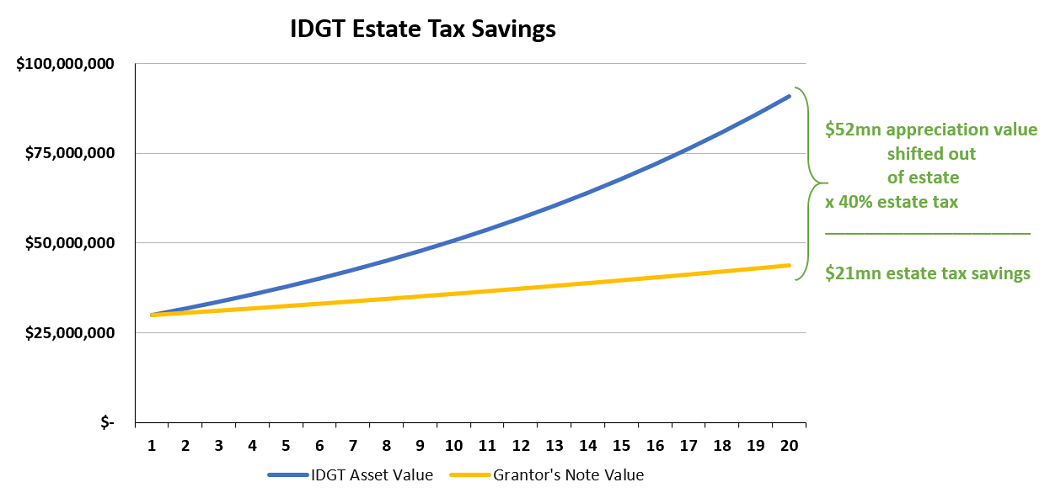
This is similar to the GRAT in that it also enables the founder to minimize their estate tax exposure by transferring wealth outside of their estate, but has some key differences. The grantor must “seed” the trust by gifting 10% of the asset value intended to be transferred, so this approach requires the use of some lifetime gift exemption or gift tax.

The remaining 90% of the value to be transferred is sold to the trust in exchange for a promissory note. This sale is not taxable for income tax or QSBS purposes. The main benefits are that instead of receiving annuity payments back, which requires larger payments, the grantor transfers assets into the trust and can receive an interest-only note. The payments received are far lower because it is interest-only (rather than an annuity).
IDGT Estate tax savings

Image Credits: Peyton Carr

Another key distinction is that the IDGT strategy has more flexibility than the GRAT and can be generation-skipping.

If the goal is to avoid generation-skipping transfer tax (GSTT), the IDGT is superior to the GRAT, because assets are measured for GSTT purposes when they are contributed to the trust prior to appreciation rather than being measured at the end of the term for a GRAT after the assets have appreciated.

The bottom line

Depending on a founder’s situation and goals, we may use some combination of the above strategies or others altogether. Many of these strategies are most effective when planning in advance; waiting until after the fact will limit the benefits you can extract.

When considering strategies for protecting wealth and minimizing taxes as it relates to your company stock, there’s a lot to take into account — the above is only a summary. We recommend you seek proper counsel and choose wealth transfer and tax savings strategies based on your unique situation and individual appetite for complexity.