Author: azeeadmin

25 Jan 2021

Wolt closes $530M round to continue expanding beyond restaurant delivery

Wolt, the Helsinki-based online ordering and delivery company that initially focused on restaurants but has since expanded to other verticals, has raised $530 million in new funding. The round was led by Iconiq Growth, with participation from Tiger Global, DST, KKR, Prosus, EQT Growth and Coatue.

Previous backers 83North, Highland Europe, Goldman Sachs Growth Equity, EQT Ventures and Vintage Investment Partners also followed on. The new round takes the total amount of financing Wolt has raised to $856 million. Wolt declined to disclose the company’s latest valuation, although we know from the previous D round that the company is one of Europe’s so-called unicorns.

“We operate in an extremely competitive and well-funded industry, and this round allows us to have a long-term mindset when it comes to doubling down on our different markets,” says co-founder and CEO Miki Kuusi in a statement. “Despite the turbulence of 2020, we’ve remained focused on growth, tripling our revenue to a preliminary $330 against a net loss of just $38 million. Compared to the $670 million in new capital that we’ve raised during this year, this puts us into a strong position for investing in our people, technology, and markets when thinking about the next few years ahead”.

Since launching with 10 restaurants in its home city in 2015, five years on Wolt has expanded to 23 countries and 120 cities, mostly in Europe but also including Japan and Israel. More recently, like others in the restaurant delivery space, Wolt has expanded beyond restaurants and takeout food into the grocery and retail sectors. This, says the company, sees it offer anything from cosmetics to pet food and pharmaceuticals on its platform.

“This was mostly a primary raise,” Kuusi tells me when I ask if the new round includes secondary funding (i.e. shareholders that exited to new investors). “We’re not looking to disclose the valuation at this time, but we’ve previously shared that the Series D round that we raised in early 2020 valued that company at above €1 billion,” he adds.

Kuusi says that the latest funding round is based on the belief that local services in the offline world will gradually be brought online by players “that can execute and maintain a great customer experience”. “We started with an exclusive focus on the restaurant, as it’s the biggest local service with an underlying high-frequency use case,” he says. “We quickly learnt that the magical product market fit for bringing the restaurant online was to offer a quick and predictable delivery experience from restaurants that didn’t use to be available for delivery. We do this by handling the complexity of the delivery on the restaurant’s behalf”.

However, this was especially difficult to do efficiently and sustainably in small and difficult home market in the Nordics. To solve this, Wolt needed to build an “optimization-heavy logistics setup for last-mile delivery” that Kuusi says lets the service operate even in “very small cities with low income disparity, limited population density and high labor costs”.

“This means that we can operate efficiently even with relatively low order volumes, enabling us to grow and expand rapidly with much less financing than some of the other players in the market. We simply had no other choice than to do it this way was we came from such a difficult home market”.

On this foundation, Wolt is expanding into other ordering and local delivery verticals, aiming to be what Kuusi dubs as “the everything app” of goods and services. “Today, Wolt is much more than a restaurant delivery service, you can order groceries, electronics, flowers, clothes and many other things on our platform,” he explains. “We believe that the future of how people buy Nike shoes is a few taps on Wolt and some 30 minutes later you get any pair of shoes brought to your door. This is what we strive to make into a reality with our team at Wolt”. (I’m an Adidas guy myself, steadfastly European.)

Asked what he thinks about all the money being pumped into the dark convenience store model, Kuusi says Wolt is investing into its own dark store operation called Wolt Market. “It’s not surprising to also see a growing amount of financing going into this sector,” he admits. “We’re huge believers in a hybrid model where there will be both offline/online retailers as well as focused online retailers in the mix. Obviously the latter category is only getting started, and we should see a massive amount of growth for the coming years ahead”.
25 Jan 2021

Taboola is going public via SPAC

Taboola is the latest company seeking to go public via special purpose acquisition corporation — more commonly known as a SPAC.

To achieve this, it will merge with ION Acquisition Corp, which went public in 2020 with the aim of funding an Israeli tech acquisition (Haaretz reported last month that Taboola was in talks with ION). The transaction is expected to close in the second quarter, and the combined company will trade on the New York Stock Exchange under the ticker symbol TBLA.

Founded in 2007, Taboola powers content recommendation widgets (and advertising on those widgets) across 9,000 websites for publishers including CNBC, NBC News, Business Insider, The Independent and El Mundo. It says it reaches 516 million daily active users while working with more than 13,000 advertisers.

The company had previously planned to merge with competitor Outbrain before the deal was canceled last fall, with sources pointing to the market impact of the COVID-19 pandemic, a “challenging culture fit” and regulatory issues to explain the deal’s end.

Taboola’s founder and CEO Adam Singolda (pictured above) told me that this didn’t lead directly the SPAC deal. But he said, “I always wanted to go public,” which wasn’t possible while the merger was in the works. Once that deal was called off, and with 2020 turning out to be a strong year for Taboola — it’s projecting revenue of $1.2 billion, including $375 million ex-TAC revenue (revenue after paying publishers), with over $100 million in adjusted EBITDA — the time seemed right, and ION seemed like the right partner.

“We believe Taboola is an open web recommendation leader which is well positioned to challenge the walled gardens,” said ION CEO Gilad Shany in a statement. “We were looking to merge with a global technology leader with Israeli DNA and we found that in Taboola. The combination of long-term partnerships built by the company with thousands of open web digital properties, their direct access to advertisers, massive global reach and proven AI technology, allows Taboola to provide significant value to their partners while also achieving attractive unit economics as the company grows.”

The deal will value Taboola at $2.6 billion. Through this transaction, the company plans to raise a total of $545 million, including $285 million in PIPE financing secured from Fidelity Management & Research Company, Baron Capital Group, funds and accounts managed by Hedosophia, the Federated Hermes Kaufmann Funds and others.

Singolda said that the company plans to invest $100 million in R&D this year, and that he hopes to expand the technology into areas like e-commerce and TV advertising, with the goal of moving “beyond the browser.” More broadly, he said he wants Taboola to be be “a strong public company that champions the open web.”

“The open web is a $64 billion advertising market [according to Taboola estimates], but there’s no Google for the open web,” he said.

Yes, Google itself spends plenty of time talking about similar ideas, but Singolda argued that while Google has consumer products like search and YouTube that compete with other publishers for time and attention, “Taboola is not in the consumer business … We serve our partners, and it’s in our identity to drive audience growth, engagement and revenue.”

25 Jan 2021

Google pledges grants and facilities for COVID-19 vaccine programs

Google said today it is taking several steps to help with COVID-19 vaccine distribution in the United States, including grants and opening its facilities to vaccination programs. The tech giant is among several other large corporations, including Amazon, Walmart, Starbucks and Microsoft, that have pledged support to local government agencies and medical providers to help increase vaccinations.

Google will pledge ad grants and funding worth a total of $150 million to health organizations and public health agencies to promote vaccine education. It will also provide support for vaccine distribution by making Google facilities available, including buildings and parking lots.

The company said it partnering with One Medical and public health authorities to open vaccination sites in Los Angeles and the San Francisco Bay Area in California; Kirkland, Washington; and New York City, with more sites planned in the U.S. depending on vaccine availability. Its technology, including the Intelligent Vaccine Impact Platform, is being used to help with logistics planning for vaccine distribution.

In terms of funding, about $100 million will be part of Google’s Ad Grants Crisis Relief program, and go to non-profits like the CDC Foundation and the World Health Organization. Another $50 million will be invested “in partnership with public health agencies to reach underserved communities with vaccine-related content and information,” the company said. Google.org has committed about $5 million in grants to organizations focused on access to vaccines among people of color and in rural areas, including the Morehouse School of Medicine’s Satcher Health Leadership Institute and the CDC Foundation.

25 Jan 2021

Sano Genetics, a startup helping with Long Covid research, raises £2.5M in seed funding

Sano Genetics, a startup with a broad mission to support personalised medicine research by increasing participation in clinical trials, has raised £2.5 million in seed funding.

The round is led by Episode1 Ventures, alongside Seedcamp, Cambridge Enterprise, January Ventures, and several Europe and U S.-based angel investors. It adds to £500,000 in pre-seed funding in 2018.

Sano Genetics says part of the new capital will be to fund free at-home DNA testing kits for 3,000 people affected by Long Covid. It will also further invest in the development of its tech platform and grow the team

Founded in 2017 by Charlotte Guzzo, Patrick Short and William Jones after they met at Cambridge University while studying genomics as postgrads, Sano Genetics has built what it describes as a “private-by-design” tech platform to help patients take part in medical research and clinical trials. This includes at-home genetic testing capabilities, and is seeing the company support research into multiple sclerosis, ankylosing spondylitis, NAFLD, and ulcerative colitis2, with a research programme for Parkinson’s disease on the agenda for later in 2021.

“For participants in medical research, the process is not user friendly,” says Sano Genetics CEO Patrick Short. “There is usually little to no benefit for participants beyond altruism, taking part is difficult and time consuming, and people are also concerned about the privacy of their sensitive genetic and medical information.

“[Therefore], for researchers in biotech, pharma, and academia, it is very difficult to attract and retain research participants, which adds substantial costs and time to their research. In particular for research involving genetics and precision therapies, it is doubly challenging to find the ‘right’ patients because genetic testing is not routine in the healthcare system”.

To help solve this, Sano Genetics matches relevant participants to research via its platform. It then makes participation easier by enabling at-home genetic testing and by guiding participants through the process.

“The system is designed so users know exactly what will happen with their data, and we give them straightforward ways to control their data,” explains Short. “We keep our users engaged and involved in the research process by giving them updates on the research they have been a part of, and with free personalised content including genetic reports, and stories from other people like them on our blog”.

A typical end user is someone who has a chronic or rare disease and is using the platform to take part in research that helps them personally (e.g. access to a new therapy via a clinical trial) or to help others like them.

Meanwhile, Sano Genetics generates revenue by charging biotech and pharma companies fees to find the right patients for their studies. “The typical study for us consists of a set-up fee, a per-test fee for our at-home genetic testing and analysis, and a fee for each referral we make of an interested and eligible participant to their research study,” adds the Sano Genetics CEO.

25 Jan 2021

Virtual social network IMVU raises $35M from China’s NetEase and others

The line between social networking and gaming is increasingly blurring, and internet incumbents are taking notice. NetEase, the second-largest gaming company in China behind Tencent, is among a group of investors who just backed IMVU, an avatar-focused social network operating out of California.

Menlo Park-based Structural Capital among other institutions also joined in the strategic round totaling $35 million. IMVU has raised over $77 million from five rounds since it was co-founded by The Lean Startup author Eric Ries back in 2004. The company declined to disclose its post-money valuation.

The fresh investment will be used to fund IMVU’s product development and comes fresh off a restructuring at the company. A new parent organization called Together Labs was formed to oversee its flagship platform IMVU, in which users can create virtual rooms and chat with strangers using custom avatars, a product that’s today considered by some a dating platform; a new service called Vcoin that lets users buy, gift, earn and convert a digital asset from the IMVU platform into fiat; among other virtual services.

“NetEase operates some of the most successful, biggest in scale, and evergreen MMO [massively multiplayer online] games in China and they see in IMVU business highlights echoing theirs,” Daren Tsui, chief executive officer at Together Labs, told TechCrunch.

“IMVU operates one of the world’s oldest, yet most vibrant and young — in terms of our user base — metaverses. We have many shared business philosophies and complementary know-how. It is a natural fit for us to become partners,” he added.

Founded in 2005, NetEase is now known for its news portal, music streaming app, education products, and video games that compete with those of Tencent. It has over the years made a handful of minority investments in companies outside China, though it’s not nearly as aggressive as Tencent in terms of investment pace and volume.

A NetEase spokesperson declined to comment on the investment in IMVU.

The partnership, according to Tsui, would allow the virtual networking company to tap NetEase’s game development and engineering capabilities as well as leverage NetEase’s knowledge in global market strategy as Together Labs launches future products, including one called WithMe.

In 2020, IMVU saw record growth with over 7 million monthly active users and 400,000 products created every month by IMVU users. The service currently has a footprint in over 140 countries and is “always looking to expand” in existing markets, including Asia, in which it already has a localized Korean app, according to Tsui.

“With IMVU’s accelerating growth over recent years, the launch of VCOIN, and the development of the new WithMe platform, we felt timing was right to bring all of these products under a new roof to reinforce our commitment for creating authentic human connections in virtual spaces,” said the chief executive.

25 Jan 2021

Kenyan insurtech startup Pula raises $6M Series A to derisk smallholder farmers across Africa

Pula, a Kenyan insurtech startup that specialises in digital and agricultural insurance to derisk millions of smallholder farmers across Africa, has closed a Series A investment of $6 million.

The round was led by Pan-African early-stage venture capital firm,  TLcom Capital, with participation from nonprofit Women’s World Banking. The raise comes after Pula closed $1 million in seed investment from Rocher Participations with support from Accion Venture Lab, Omidyar Network and several angel investors in 2018.  

Founded by Rose Goslinga and Thomas Njeru in 2015, Pula delivers agricultural insurance and digital products to help smallholder farmers navigate climate risks, improve their farming practices and bolster their incomes over time.

Agriculture insurance has traditionally relied on farm business. In the U.S. or Europe with typically large farms, an average insurance premium is $1,000. But in Africa, where smallholding or small-scale farms are the norms, the number stands at an average of $4.

It is particularly telling that the value of agricultural insurance premiums in Africa represents less than 1 percent of the world’s total when the continent has 17 percent of the world’s arable land. 

This disparity stems from the fact that the traditional method of calculating insurance through farm visits is often unaffordable for these smallholder farmers. Thus, they are often neglected from financial protection against climate risks like flood, drought, pestilence and hail.

Pula is solving this problem by using technology and data. Through its Area Yield Index Insurance product, the insurtech startup leverages machine learning, crop cuts experiments and data points relating to weather patterns and farmer losses, to build products that cater to various risks.

But getting farmers on board has never been easy, Goslinga told TechCrunch. According to her, Pula has understood not to sell insurance directly to small-scale farmers, because they can suffer from optimism bias. “Some think a climate disaster wouldn’t hit their farms for a particular season; hence, they don’t ask for insurance initially. But if they witness any of these climate risks during the season, they would want to get insurance, which is counterproductive to Pula,” said the founder in a phone call.

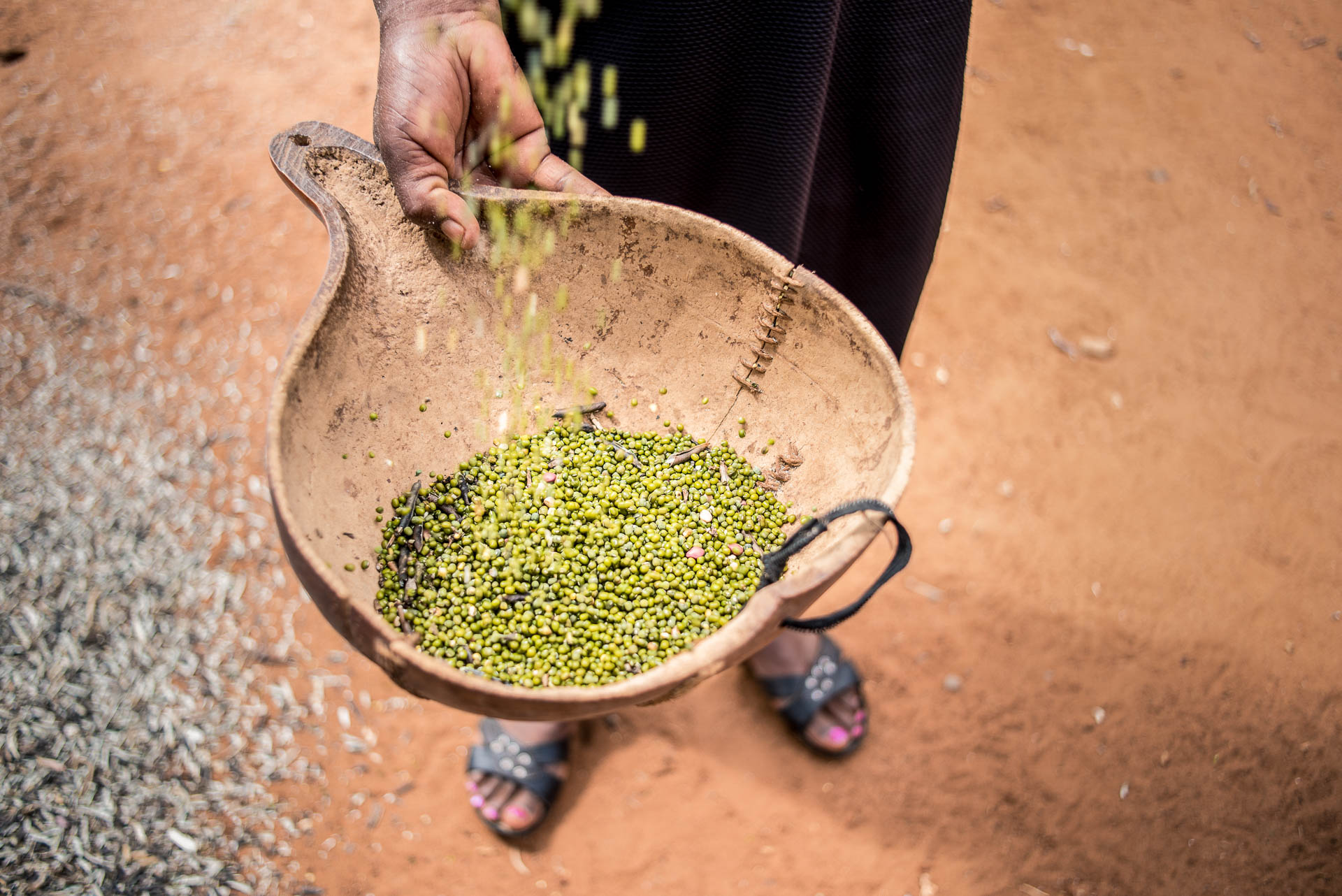
Image Credits: Pula

So the startup instead partners with banks. Banks provide loans to farmers and make it compulsory for them to have insurance. With the loan, banks can pay the insurance on behalf of the farmers at the start of the season. But at the end of the season, the farmer has to repay the loan with interest.

“The unit economics doesn’t work for us to work with farmers directly. But with banks, we know they provide loans to farmers with much better margins to pay for insurance. Also, we work together with government subsidy programs since they’re also interested in protecting their farmers.”

Through its partnerships with banks, governments and agricultural input companies, Pula is at the center of an ecosystem that provides insurance to smallholder farmers and has amassed 50 insurance partners and six reinsurance partners. 

Its clientele includes the likes of the World Food Programme and Central Bank of Nigeria as well as the Zambian and Kenyan governments. Social enterprises like One Acre Fund, startups like Apollo Agriculture, and agribusiness giants like Flour Mills and Export Trading Group are also among Pula’s clients.

Co-CEOs with agricultural backgrounds

When Goslinga met Njeru in 2008, she worked for Syngenta Foundation for Sustainable Agriculture (SFSA). There, she started Kilimo Salama, as a micro-insurance program for more than 200,000 farmers in Kenya and Rwanda. She met Njeru who was the lead actuary at UAP Insurance, a partner to the Kilimo Salama program, at the time.

After staying with Syngenta for six years and recognising the need to provide standard insurance products for smallholder farmers, Goslinga left to start Pula with Njeru in 2015. However, it wasn’t until two years later that Njeru joined fulltime as he had a six-year engagement with Deloitte South Africa from 2012 as a consultant actuary. The pair both act as co-CEOs.

“When Thomas and I launched Pula in 2015, we had one goal in mind: to build and deliver scalable insurance solutions for Africa’s 700 million smallholder farmers,” Goslinga said. “With our latest funding, now is the time to break into new ground. In our five years since launching, we’ve built strong traction for our products. However, the fact remains that across Africa and other emerging markets, there are still millions of smallholder farmers with risks to their livelihoods that have not been covered.”

According to Goslinga, the COVID-19 pandemic helped Pula double its footprint and size as rural farming activities and operations continued despite pandemic-induced lockdowns. 

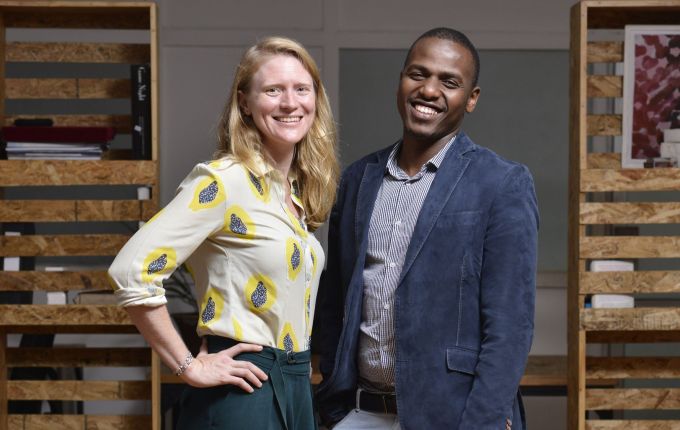
Pula co-founders and Co-CEOs (Rose Goslinga and Thomas Njeru)

Therefore, the new financing will scale up operations in its existing 13 markets across Africa, where it has insured over 4.3 million farmers. They include Senegal, Ghana, Mali, Nigeria, Ethiopia, Madagascar, Tanzania, Kenya, Rwanda, Uganda, Zambia, Malawi and Mozambique. Likewise, the Kenyan startup hopes to propel its expansion for smallholder farmers in Asia and Latin America.

Pula is one of the few African startups disrupting the farming industry with technology. Its Series A investment attests that investors’ appetite for agritech startups is still on the rise.

A week ago, Aerobotics, a South African startup that uses artificial intelligence to help farmers protect their trees and fruits from risks, raised a Series B round of $17 million. Last month, SunCulture, a Kenyan startup that provides solar power systems, water pumps and irrigation systems for small-scale farmers, raised $14 million. 

Another startup is Apollo Agriculture which raised $6 million Series A, akin to Pula. Not only did the pair raise the same round, Apollo Agriculture and Pula both deal with providing financial resources to smallholder farmers. But while both companies might look like competitors, even to the admission of Goslinga, she argues that the startups are partners and complement each other.

As part of the new fundraise, TLcom’s senior partner Omobola Johnson will join Pula’s board. However, it was her colleague, Maurizio Caio, the firm’s managing partner, who had something to say about the round. 

“The potential for the insurance market for smallholder farmers in Africa is huge, and under the leadership of Rose and Thomas, Pula has rapidly established a strong presence throughout the continent and has several high-profile clients on their books. We are confident of Pula’s potential for growth in spite of the pandemic and look forward to partnering with them as they execute the next phase of their journey,” he said in a statement.

For the lead investor, Pula’s investment marks the culmination of its busiest run of investments having led and co-led rounds in Okra, Shara, Autochek and Ilara Health within the past year.

Christina Juhasz, CIO at Women’s World Banking, the other investor in the round, explained that the organisation cut a check for Pula “given the legions of women engaged in small-hold farming and securing the food supply for communities around the globe.”

25 Jan 2021

Alma raises $59.4 million for its Klarna-like payment option

French startup Alma is raising a $59.4 million Series B funding round (€49 million). The company has been building a new payment option for expensive good. You can choose to pay over three or four installments. This product sounds familiar if you’ve used Klarna in the past. But Klarna isn’t available in France.

Cathay Innovation, Idinvest, Bpifrance’s Large Venture fund, Seaya Ventures and Picus Capital are participating in today’s funding round. In addition to today’s equity round, Alma is raising a credit line of $25.5 million (€21 million) to finance merchant payments.

What makes Alma attractive to merchants is that the startup is handling 100% of the risk involved with a payment over multiple installments. When a customer buys a bike over four installments, they’ll get charged over several months. But the merchant gets paid on day one.

Since I first covered Alma, the startup has launched the ability to pay later. You enter your card information right now but you get charged 15 days or a month later. It can be particularly useful if you’re unsure about something you’re buying and if you think there’s a chance you’ll send it back.

And it’s an attractive option in France where debit cards are the norm — not credit cards. Alma also plans to offer longer plans, such as the ability to buy now and pay over 6, 10 or 12 installments.

Thanks to the new influx of cash, the startup plans to triple the size of its team and reach €1 billion in annual payment volume within two years. It’s also going to expand to other countries, but with a specific focus on helping French merchants reach European customers living in other European countries.

25 Jan 2021

Cybersecurity startup SpiderSilk raises $2.25M to help prevent data breaches

Dubai-based cybersecurity startup SpiderSilk has raised $2.25 million in a pre-Series A round, led by venture firms Global Ventures and STV.

In the past two years, SpiderSilk has discovered some of the biggest data breaches: Blind, the allegedly anonymous social network that exposed private complaints by Silicon Valley employees; a lab leaked highly sensitive Samsung source code; an inadvertently public code repository revealed apps, code, and apartment building camera footage belonging to controversial facial recognition startup Clearview AI; and a massive spill of unencrypted customer card numbers at now-defunct MoviePass may have been the final nail in the already-beleaguered subscription service’s casket.

Much of those discoveries were found from the company’s proprietary internet scanner, SpiderSilk co-founder and chief security officer Mossab Hussein told TechCrunch.

Any company would want their data locked down, but mistakes happen and misconfigurations can leave sensitive internal corporate data accessible from the internet. SpiderSilk helps its customers understand their attack surface by looking for things that are exposed but shouldn’t be.

The cybersecurity startup uses its scanner to map out a company’s assets and attack surfaces to detect vulnerabilities and data exposures, and it also simulates cyberattacks to help customers understand where vulnerabilities are in their defenses.

“The attack surface management and threat detection platform we built scans the open internet on a continuous basis in order to attribute all publicly accessible assets back to organizations that could be affected by them, either directly or indirectly,” SpiderSilk’s co-founder and chief executive Rami El Malak told TechCrunch. “As a result, the platform regularly uncovers exploits and highlights how no organization is immune from infrastructure visibility blind-spots.”

El Malak said the funding will help to build out its security, engineering and data science teams, as well as its marketing and sales. He said the company is expanding its presence to North America with sales and engineering teams.

It’s the company’s second round of funding, after a seed round of $500,000 in November 2019, also led by Global Ventures and several angel investors.

“The SpiderSilk team are outstanding partners, solving a critical problem in the ever-complex world of cybersecurity, and protecting companies online from the increasing threats of malicious activity,” said Basil Moftah, general partner at Global Ventures.

25 Jan 2021

Autonomous driving startup Uisee attracts Chinese state investor in $150M round

There is no lack of state funding for China’s smart driving startups nowadays as the country advances its goal to become a global leader in artificial intelligence in a decade’s time. The latest to get a financial boost is Uisee, a Beijing-based company founded by a group of tech veterans including the former head of Intel Labs China, Wu Gansha.

Uisee said Monday it has closed a funding round north of 1 billion yuan ($150 million) from investors including the National Manufacturing Transformation and Upgrade Fund, a $21 billion state-backed fund set up in 2019 to promote and upgrade the manufacturing value chain in China, with the Ministry of Finance as the biggest shareholder.

Five-year-old Uisee is the first autonomous driving company the Fund has ever backed, according to the announcement, and the firm is expected to help propel forward the public transit and logistics sectors and become a “benchmark” autonomous driving enterprise in China, said a manager from the Fund in a statement.

Unlike Mobileye or China’s Momenta, which sell advanced driver-assistance systems as they invest in the development of more advanced Level 4 driving, Uisee leapfrogs ADAS and focuses on unmanned driving, co-founder and CEO Wu Gansha said in a previous interview.

Uisee enables autonomous driving for cases ranging from robotaxis and city buses to airports and logistics hubs. It’s secured a handful of major customers, including the Hong Kong International Airport, which is using Uisee’s tech to automate its baggage tractors, alongside state-backed automakers FAW Group, Dongfeng Motor, and more.

The new funding round, which also counts a number of undisclosed “industrial investors,” will allow Uisee to ramp up research and development and promote the industry’s at-scale monetization.

More to come…

24 Jan 2021

Wingcopter raises $22 million to expand to the U.S. and launch a next-generation drone

German drone technology startup Wingcopter has raised a $22 million Series A – its first significant venture capital raise after mostly bootstrapping. The company, which focuses on drone delivery, has come a long way since its founding in 2017, having developed, built and flown its Wingcopter 178 heavy-lift cargo delivery drone using its proprietary and patented tilt-rotor propellant mechanism, which combines all the benefits of vertical take-off and landing with the advantages of fixed-wing aircraft for longer distance horizontal flight.

This new Series A round was led by Silicon Valley VC Xplorer Capital, as well as German growth fund Futury Regio Growth. Wingcopter CEO and founder Tom Plümmer explained to the in an interview that the addition of an SV-based investor is particularly important to the startup, since it’s in the process of preparing its entry into the U.S., with plans for an American facility, both for flight testing to satisfy FAA requirements for operational certification, as well as eventually for U.S.-based drone production.

Wingcopter has already been operating commercially in a few different markets globally, including in Vanuatu in partnership with Unicef for vaccine delivery to remote areas, in Tanzania for two-way medical supply delivery working with Tanzania, and in Ireland where it completed the world’s first delivery of insulin by drone beyond visual line of sight (BVLOS, the industry’s technical term for when a drone flies beyond the visual range of a human operator who has the ability to take control in case of emergencies).

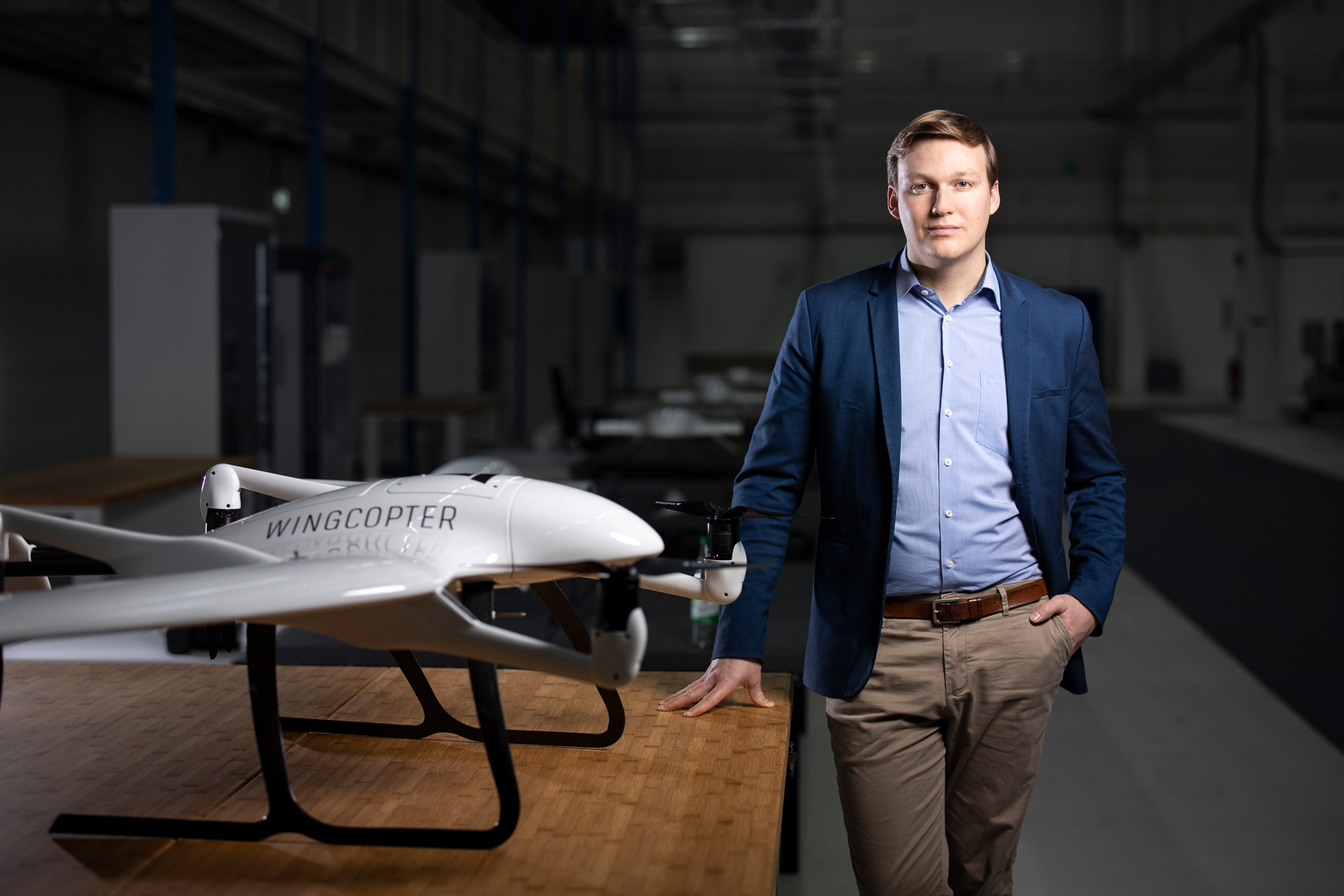
Wingcopter CEO and co-founder Tom Plümmer

While Wingcopter has so far pursued a business as an OEM manufacturer of drones, and has had paying customers eager to purchase its hardware effectively since day one (Plümmer told me that they had at least one customer wiring them money before they even had a bank account set up for the business), but it’s also now getting into the business of offering drone delivery-as-a-service. After doing the hard work of building its technology from the ground up, and seeking out the necessary regulatory approvals to operate in multiple markets around the world, Plümmer says that he and his co-founders realized that operating a service business not only meant a new source of revenue, but also better-served the needs of many of its potential customers.

“We learned during this process, through applying for permission, receiving these permissions and working now in five continents in multiple countries, flying BVLOS, that actually operating drones is something we are now very good at,” he said. This was actually becoming a really good source of income, and ended up actually making up more than half of our revenue at some point. Also looking at scalability of the business model of being an OEM, it’s kind of […] linear.”

Linear growth with solid revenue and steady demand was fine for Wingcopter as a bootstrapped startup founded by university students supported by a small initial investment from family and friends. But Plümmer says the company say so much potential in the technology it had developed, and the emerging drone delivery market, that the exponential growth curve of its drone delivery-as-a-service model helped make traditional VC backing make sense. In the early days, Plümmer says Wingcopter had been approached by VCs, but at the time it didn’t make sense for what they were trying to do; that’s changed.

“We were really lucky to bootstrap over the last four years,” Plümmer said. “Basically, just by selling drones and creating revenue, we could employ our first 30 employees. But at some point, you realize you want to really plan with that revenue, so you want to have monthly revenues, which generally repeat like a software business – like software as a service.”

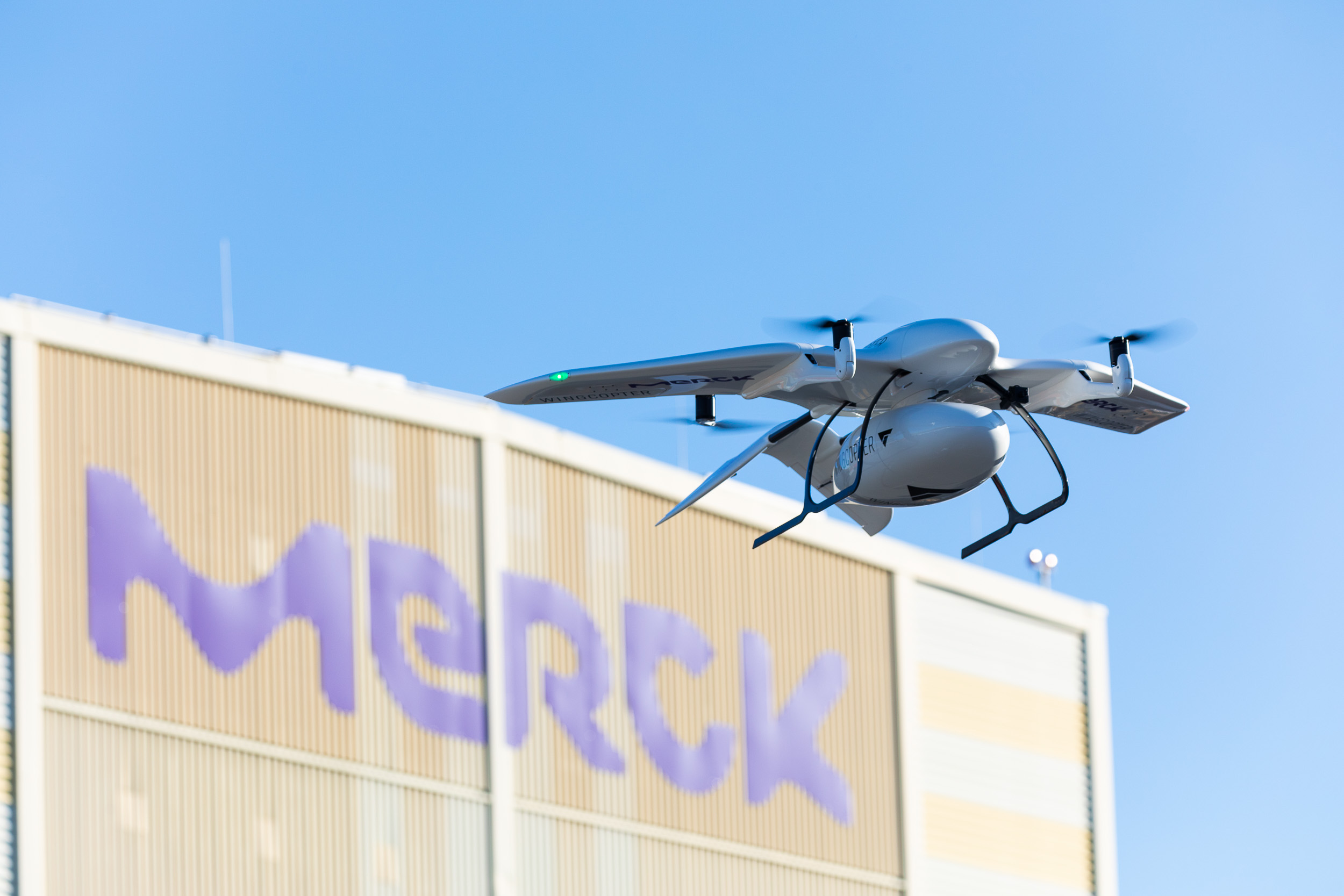
Wingcopter 178 cargo drone performing a delivery for Merck.

Wingcopter has also established a useful hedge regarding its service business, not only by being its own hardware supplier, but also by having worked closely with many global flight regulators on their regulatory process through the early days of commercial drone flights. They’re working with the FAA on its certification process now, for instance, with Plümmer saying that they participate in weekly calls with the regulator on its upcoming certification process for BVLOS drone operators. Understanding the regulatory environment, and even helping architect it, is a major selling point for partners who don’t want to have to build out that kind of expertise and regulatory team in-house.

Meanwhile, the company will continue to act as an OEM as well, selling not only its Wingcopter 178 heavy-lift model, which can fly up to 75 miles, at speeds of up to 100 mph, and that can carry payloads up to around 13 lbs. Because of its unique tilt-rotor mechanism, it’s not only more efficient in flight, but it can also fly in much windier conditions – and take-off and land in harsher conditions than most drones, too.

Plümmer tells me that Wingcopter doesn’t intend to rest on its laurels in the hardware department, either; it’s going to be introducing a new model of drone soon, with different capabilities that expand the company’s addressable market, both as an OEM and in its drones-as-a-service business.

With its U.S. expansion, Wingcopter will still look to focus specifically on the delivery market, but Plümmer points out that there’s no reason its unique technology couldn’t also work well to serve markets including observation and inspection, or to address needs in the communication space as well. The one market that Wingcopter doesn’t intend to pursue, however, is military and defense. While these are popular customers in the aerospace and drone industries, Plümmer says that Wingcopter has a mission “to create sustainable and efficient drone solutions for improving and saving lives,” and says the startup looks at every potential customer and ensures that it aligns with its vision – which defense customers do not.

While the company has just announced the close of its Series A round, Plümmer says they’re already in talks with some potential investors to join a Series B. It’s also going to be looking for U.S. based talent in embedded systems software and flight operations testing, to help with the testing process required its certification by the FAA.

Plümmer sees a long tail of value to be built from Wingcopter’s patented tilt-rotor design, with potential applications in a range of industries, and he says that Wingcopter won’t be looking around for any potential via M&A until it has fully realized that value. Meanwhile, the company is also starting to sow the seeds of its own potential future customers, with training programs in drone flights and operations it’s putting on in partnership with UNICEF’s African Drone and Data Academy. Wingcopter clearly envisions a bright future for drone delivery, and its work in focusing its efforts on building differentiating hardware, plus the role it’s playing in setting the regulatory agenda globally, could help position it at the center of that future.