Category: UNCATEGORIZED

11 Dec 2019

The vast majority of US consumers aren’t spending $1,000+ on phones

Pricing in the smartphone wars has taken a sharp turn in recent years on the premium end of the spectrum. Ever since the arrival of the iPhone X, flagship devices have often arrived in excess of $1,000, as company push toward more premium components in order to remain competitive.

Likely surprising no one, most consumers aren’t spending that much on devices. According to numbers from NPD’s latest Mobile Phone Tracking study, however, the numbers are pretty stark. Less than 10% of U.S. consumers are spending that much on devices. That could foretell some bleak numbers for 5G sales, as early units routinely run around $1,200.

Not an encouraging sign as many manufacturers look toward 5G as the next major driver amid flagging global sales. One thing to consider here is that most phones are good at this point. Even mid-tier smartphones are pretty solid. While the devices have become a commodity, few if any users truly need to spend that much on a product. There’s a reason Samsung, Google and even Apple have been focused on lower cost alternatives of late.

There are, however, reasons for manufacturers to be hopeful. For one thing, the arrival of 5G is often cited as one of the primary sources of slowed sales. Many premium users are likely waiting for more network coverage and devices before purchasing their next phone. NPD says that nearly 3/4ths of consumers are at least aware that 5G is a thing.

Also notable is Qualcomm’s recent 765 announcement, which should help make 5G devices accessible for consumers are a lower price point in the coming year. 

11 Dec 2019

Arthur announces $3.3M seed to monitor machine learning model performance

Machine learning is a complex process. You build a model, test it in laboratory conditions, then put it out in the world. After that, how do you monitor how well it’s tracking what you designed it do? Arthur wants to help, and today it emerged from stealth with a new platform to help you monitor machine learning models in production.

The company also announced it had closed a $3.3 million seed round, which closed in August.

Arthur CEO and co-founder Adam Wenchel says that Arthur is analogous to a performance monitoring platform like New Relic or DataDog, but instead of monitoring your systems, it’s tracking the performance of your machine learning models.

“We are an AI monitoring and explainability company, which means when you put your models in production, we let you monitor them to know that they’re not going off the rails, that you can explain what they’re doing, that they’re not performing badly and are not being totally biassed — all of the ways models can go wrong,” Wenchel explained.

Data scientists build machine learning models and test them in the lab, but as Wenchel says, when that model leaves the controlled environment of the lab, lots can go wrong, and it’s hard to keep track of that. “Models always perform well in the lab, but then you put them out in the real world and there is often a drop-off in performance — in fact, almost always. So being able to measure and monitor that is a capability people really need,” he said.

Interestingly enough, AWS announced a new model monitoring tool last week as part of SageMaker Studio. IBM also announced a similar tool for models built on the Watson platform earlier this year, but Wenchel says the involvement of the big guys could work to his company’s advantage since his product is platform-agnostic. “Having a neutral third party for your monitoring that works equally well across stacks is going to be pretty valuable,” he said.

As for the funding, it was co-led by Work-Bench and Index Ventures with participation from Hunter Walk at Homebrew, Jerry Yang at AME Ventures and others.

Jonathan Lehr, a general partner at Work-Bench sees a company with a lot of potential. “We regularly speak with ML executives from Fortune 1000 companies and one of their biggest concerns as they become more data-driven is model behavior in production. The Arthur platform is by far the best solution we’ve seen for AI monitoring and transparency…” he said.

The company, which is based in New York City, currently has 10 people. It launched 2018, and has been heads down working on the product since. Today, marks the release of the product publicly.

11 Dec 2019

Apple: Use only our special cloth to clean the $1,000 coating on our $5,000 Pro Display

If you thought the saga of the $7,000 Apple Pro Display XDR couldn’t get any more ridiculous, prepare yourself for the proverbial cherry on top: The company insists that you only use the single special cleaning cloth that comes with the monitor. If you lose it, you’re advised to order another.

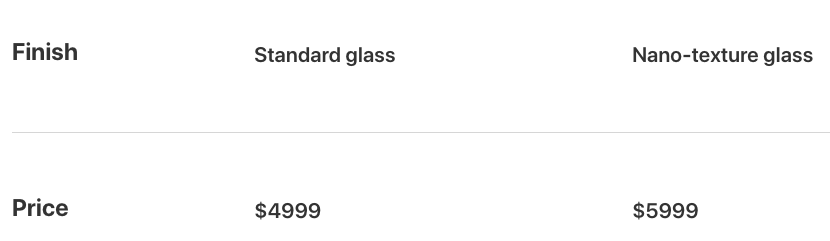
Apple, already under fire from longtime users for the ever-increasing price of its products, attracted considerable ire and ridicule when it announced the high-end monitor in June. Of course there are many expensive displays out there — it was more the fact that Apple was selling the display for $5,000, the stand separately for $999, and an optional “nano-texture” coating for an additional grand.

Just wait till you see how much the Mac Pro that goes with it costs.


Technically it’s not actually a “coating” but an extremely small-scale etching of the surface that supposedly produces improved image quality without some of the drawbacks of a full-matte coating. “Typical matte displays have a coating added to their surface that scatters light. However, these coatings lower contrast while producing unwanted haze and sparkle,” the product description reads. Not so with nano-texture.

Unfortunately, the unique nature of the glass necessitates special care when cleaning.

“Use only the dry polishing cloth that comes with your display,” reads the support page How to clean your Apple Pro Display XDR. “Never use any other cloths to clean the nano-texture glass. If you lose the included polishing cloth, you can contact Apple to order a replacement polishing cloth.” (No price is listed, so I’ve asked Apple for more information.)

Obviously if you’re cleaning an expensive screen you don’t want to do it with Windex and wadded-up newspaper. But it’s not clear what differentiates Apple’s cloth from an ordinary microfiber wipe.

Do the nano-scale ridges shred ordinary mortal cloth and get fibers caught in their interstices? Can the nano-texture be damaged by anything of insufficient softness?

Apple seems to be presuming a certain amount of courage on the part of consumers, who must pay a great deal for something that not only provides an uncertain benefit (even Apple admits that the display without the coating is “engineered for extremely low reflectivity”) but seems susceptible to damage from even the lightest mishandling.

No doubt the Pro Display XDR is a beautiful display, and naturally only those who feel it is worth the price will buy one. But no one likes to have to baby their gadgets, and Apple’s devices have also gotten more fragile and less readily repairable. The company’s special cloth may be a small, even silly thing, but it’s part of a large and worrying trend.

11 Dec 2019

Gmelius wants to fit all of your startup’s software needs right into Gmail

Few spaces are hotter right now than enterprise SaaS and tools that streamline communications in the workplace have been some of the more popular investments for savvy VCs.

The workplace email inbox is a nightmare, but there are plenty of wrong ways to kill it. Gmelius is building a workspace platform that lives inside Gmail, allowing teams to get more bespoke tools without adding yet another piece of software to their repertoire.

Gmelius slots into the Gmail workspace, adding a host of features like shared inboxes, a help desk, an account-management solution and automation tools. This integration fits into the existing interface while hiding heavier tools including Trello-like Kanban boards inside Gmail. It can understandably feel like an awful lot of functionality to fit into one app.

Gmelius has been around for a long time as a Chrome plugin, but the company has made significant strides this year to revamp their product as a premium tool for startups looking to supercharge their email and collaborate internally inside Gmail. The company still offers a free tier with limited functionality, but now has several professional tiers scaling up to a $49 per user enterprise plan.

The startup is rebelling against an overwhelming trend of service unbundling which has led startups to pay for more SaaS products than ever. Gmelius is taking on competitors like Front and others that have built out their own distinct platforms.

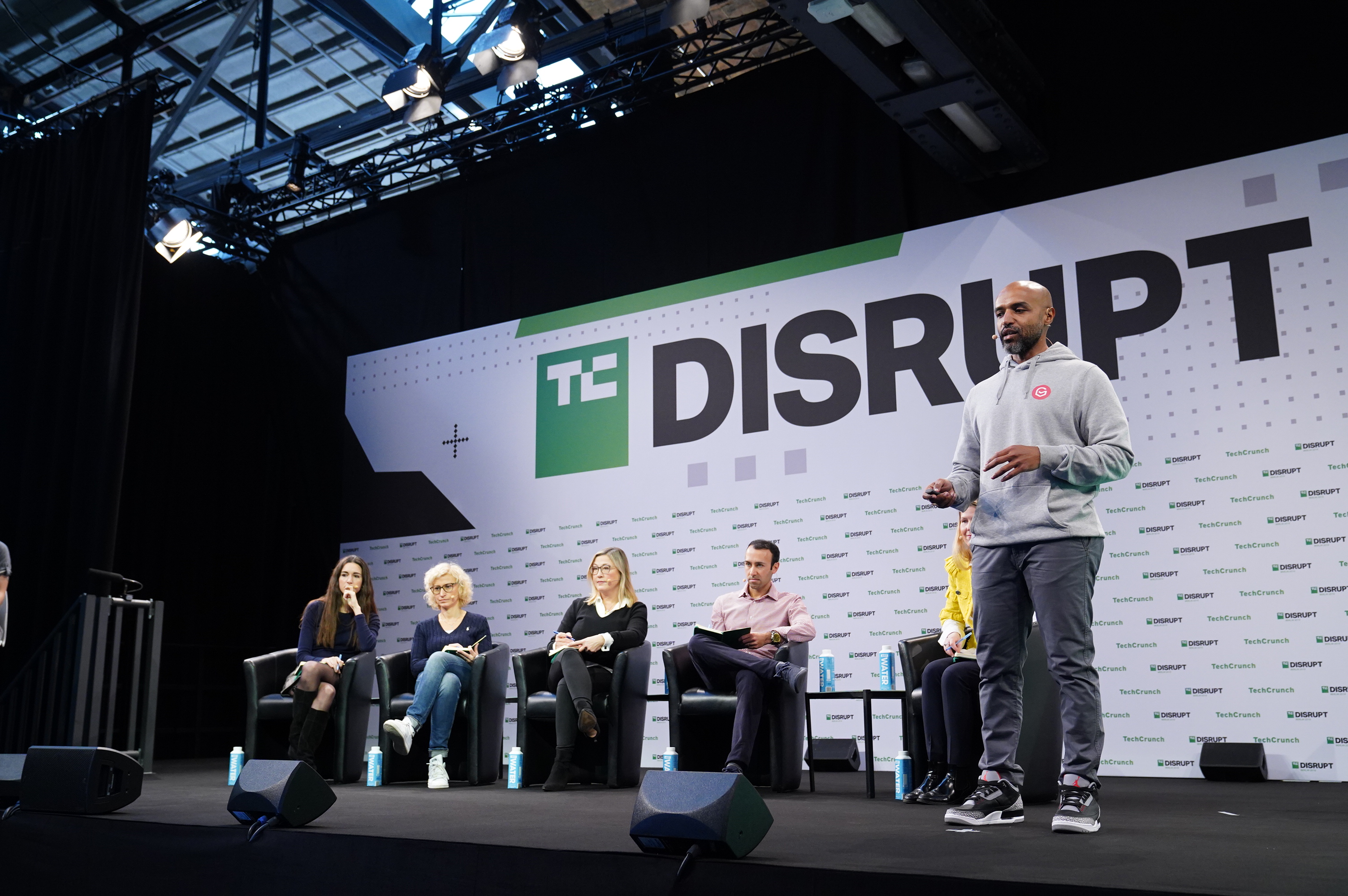
Gmelius recently graduated from Y Combinator and is in the midst of raising new funding to scale its team to take on more customers. They are competing in TechCrunch Disrupt Berlin’s Startup Battlefield.

11 Dec 2019

Eaze and Wayv founder explains how to raise money for cannabis startups

Keith McCarty could have retired after Microsoft bought Yammer. Instead, he founded Eaze to address cannabis delivery.

He lead the company through its B round and then stepped back, but last year, he founded Wayv, a new cannabis startup to address an even more significant challenge for the industry: supply chain logistics. So far, it’s raised $5 million and is currently seeking its Series A. Fundraising is hard for any entrepreneur, but McCarty’s experience sets him apart from most cannabis industry founders.

The company is now the first complete payment solution in the cannabis industry, allowing money to travel throughout the ecosystem in the fastest, safest way while remaining compliant with all of California’s regulations.

We spoke at length about this ability and along the way, chatted about the cannabis startup landscape.

McCarty has been in the industry for about five years, founding Eaze in 2014 and later leaving after raising a $13 million B round. At the time, startups generally didn’t seek venture funding and McCarty helped the company become one of the first to do so. Now founder and CEO of a new cannabis startup, he’s at it again.

11 Dec 2019

How to build a diverse board

Over a recent dinner with twenty C-suite executives, one founder-CEO recounted how he was preparing a slide for a company all-hands with headshots of his board of directors when he was struck by the contrast between his gender-balanced employee base and his all-male board.

“It wasn’t something I was proud to share with the team,” he told us, as heads around the table nodded.

The other CEOs in the room got it. A board populated exclusively by men is at odds with efforts to promote diversity and inclusion throughout the organization. For too many CEOs, the composition of their boards can feel more like a liability than a strategic asset.

Board diversity offers an array of benefits, including new perspectives that can improve decision-making and reduce “groupthink,” access to a broader talent pool, and of course the symbolic power of women and minorities at the top rung of the corporate ladder. Yet, according to a collaborative study published today by Crunchbase, Kellogg School of Management and Him For Her, the boards of 60 percent of the most heavily funded venture-backed startups don’t include a single woman

As the study shows, some of the gender imbalance can be explained by the dearth of women founders and funders. With investors composing the majority of private-company board seats, the paucity of female check-writers in the venture community carries through to the boardroom. But the problem goes beyond that. Only 19 percent of independent directors — those appointed without a prior operating or investing relationship with the company — are women.

Why should CEOs care about building boards that bring more women and minorities to the table? To answer this question, we sought input from three chief executives who’ve developed standout boards with an eye toward diversity.

What follows is a synthesis of the advice they shared.

View your board as a strategic asset

Well-functioning boards help CEOs see the bigger picture by providing an external perspective. For Stephane Kasriel, CEO of Upwork, “our board has been the most useful in discovering blind spots, by asking questions that force us to think outside of our day-to-day way of looking at things.” Ripple CEO Brad Garlinghouse says his board brings “a satellite view of the world so that we can analyze global macro trends that may converge or diverge, affecting Ripple’s future.”

For early-stage startups, board members can help address tactical needs, providing introductions to candidates or lending functional expertise to shape strategy. “Over time, you’ll rely on the board for flexing its fiduciary muscle,” according to Zander Lurie, CEO of SurveyMonkey. But “don’t be afraid of governance,” he advises. “A strong board is not your enemy — it’s there to help you thrive.” The bigger risk, he warns, “is in surrounding yourself with a bunch of ‘yes’ directors who heed your commands; that has proven to be a flawed strategy for all stakeholders.”

Build a board that makes you proud

If the most valuable contributions a board can make are to provoke thinking and see around corners, then having a range of voices in the boardroom is critical. For Kasriel, more diversity “means more viewpoints on the same problems. The whole point of having an eight-person board is to have eight very different and complementary — though sometimes conflicting, and that’s OK — perspectives.” 

“It’s important to have diversity of thought to protect the company from groupthink,” adds Garlinghouse. “Also, diverse boards bring different personal networks to bear… as companies scale, especially for startups, the most effective, impactful boards are diverse ones.”

A broader set of skills, life experiences and ways of thinking give CEOs more resources to draw from for assistance. Says Lurie, “a diverse set of perspectives and experiences will help you anticipate and respond to all kinds of challenges in your organization.

Make sure your board has the skill sets and diversity attributes that make you proud to show your employees and customers. You wouldn’t make a TV commercial starring only seven white guys; make sure you exercise the same duty of care when creating your board.”

This isn’t about optics. Lurie points to “one study [that] found that companies with one or more women on their board have 26 percent better share performance than companies with all-male boards. That’s part of why I’m so proud the SurveyMonkey board is comprised of 50% women and 50% men. More voices lead to better leadership.”

Reach outside your network

You’ve heard the argument that board diversity reflects a pipeline problem. Actually, it’s a marketplace problem. There is no shortage of exceptionally-qualified female and minority candidates. The real issue is that within the personal networks responsible for appointing most directors, these candidates are often simply invisible. So how can CEOs tap into this wealth of talent?

“Plenty of us suffer from affinity bias,” Lurie acknowledges. “We unconsciously gravitate toward people who look like us, share the same work background, or maybe went to our alma mater. This homogenous network isn’t going to serve you in building a diverse board, a diverse leadership team, or a diverse organization. Start going out of your way to connect with people who are dissimilar to you.

Find events to attend that wouldn’t normally be on your radar. Ask people you know to connect you with folks they know who might add a unique perspective. Investing in diversity takes effort in the beginning, but it’s well worth it for the gains you’ll see in performance, employee engagement, and more.”

“It’s not really different from any other executive search,” observes Kasriel. “If you’re just leveraging your personal network, then it’s likely to have the same level of diversity as everything else in your personal life which, for many entrepreneurs, isn’t a lot. I’ve also found that simple InMail via LinkedIn works quite well: find someone you really admire, approach them directly, explain to them why you think they could be an amazing addition to your board and why being on your board could be interesting to them.”

Garlinghouse cautions CEOs that, “building diverse boards and leadership teams take time and intention, so make it part of your mission from the beginning — it should not be an afterthought… otherwise, those with the ‘right’ experience who get the big jobs will continue to look the same.”

Always be recruiting

According to Garlinghouse, “CEOs should always be recruiting…it’s always the right time to take that coffee meeting.” 

Kasriel concurs. “Recruiting is the number-two priority for a CEO — number one is, don’t run out of money — and this includes recruiting your board. A great board can have an outsized impact in your ability to succeed, helping you navigate difficult decisions, making sure you have the right strategy and helping you attract great executives, investors, partners and customers.”

Focus on competencies, not titles

When it comes to defining the ideal new board member, traditional wisdom says to look for a current or former CEO. But increasingly today’s chief executives reject that advice which inherently favors male candidates. Instead they focus on adding key competencies to fill out the expertise in their boardrooms.

The first step is to assess your current board. “Take stock of where your board stands today and where you have gaps to fill,” counsels Lurie, “and draw a distinction between the titles listed on someone’s resume and the competencies they bring to the table.”

Kasiel explains that, in building out the Upwork board, “We were very thoughtful in finding people who brought a specific expertise.” Recently added directors were selected for their deep knowledge of finance and operations, enterprise sales and M&A and tech marketing.

“But equally importantly,” he adds, “we wanted board members who were passionate about the mission of Upwork — to create economic opportunities so people have better lives — and were aligned with our value of maximizing value for all stakeholders, not just our stockholders.”

Garlinghouse suggests that CEOs “pay attention to what’s happening in adjacent verticals, especially if you’re in a space that’s constantly evolving; the perfect director might not — and likely won’t — have a career dedicated to what your company does, but skills always transfer.”

“One potentially controversial tip,” offers Kasriel, “consider hiring ‘more junior’ board members. In tech, things move really fast and someone who has been a CMO for 20+ years may not know as much about recent marketing technology tools or marketing practices such as ABM and Inbound Marketing. The first 15 years of that 20-year experience may not be all that useful.”

Add independent directors early

When should a startup add its first independent director? According to these CEOs, it’s never too early.

The first independent director at Upwork joined the board about six years before the company’s IPO. “I don’t think it was too early,” recalls Kasriel. “In fact, I often advise early stage companies to add an independent board member as early as they can.”

“It’s never too early to have an independent director on the board,” agrees Garlinghouse at Ripple, where the first independent was appointed only a year after the company’s founding. “The advantage of having independent directors,” he points out, “is that CEOs can prioritize diversity of thought because they are not constrained by board seats controlled by shareholders… With independent directors, CEOs have more flexibility in choosing an expertise in a specific area or a unique experience that’s currently lacking to bring companies to the next stage of scale.”

To CEOs worried about upsetting board dynamics, Kasriel responds, “the whole point of adding a new director is to change board dynamics! Obviously, you can make a bad hire on the board, just like you can make a bad hire on your management team, so it’s very important to make sure that the new board member is not only chosen well but also onboarded professionally so they can contribute fully to the functioning of the board. The onboarding may require existing board members to also evolve how they themselves operate. It goes both ways.”


11 Dec 2019

Uber guarantees space for skis and snowboards with Uber Ski feature

Uber is launching a new feature aimed at skiers and snowboarders.

The ride-hailing company said Wednesday that beginning December 17 an Uber Ski icon will pop up on the app that will let customers order a ride with confirmed extra vehicle space or a ski/snowboarding rack.

Uber is launching the feature in 23 U.S. cities located areas near mountain resorts such as Anchorage, Boise, Boston, Eastern Washington, Flagstaff, Arizona and Grand Rapids, Michigan, Green Bay, Wisconsin, Lehigh Valley, Minneapolis-St. Paul, New Hampshire, Portland, Oregon, Portland,Maine,  Salt Lake City, Seattle, Upstate New York, Vermont, Wilkes-Barre Scranton and Worcester, Wyoming. Riders living in Colorado cities such as Colorado Springs, Denver, Fort Collins and the front range of the Rockies where numerous resorts are located will also have the feature.

Uber hasn’t said if it will offer the ski feature outside of the United States.

Uber Ski is the latest of additional features aimed at attracting new users or retaining existing ones. Uber wouldn’t say if a bike option might be next. However, Nundu Janakiram, head of rider experience, said to expect more features like this one.

“No one customer is the same, which is why part of our platform strategy is unlocking capabilities for unique needs, at the right times,” Janakiram said. “Uber Ski is the latest step toward that goal, and we’ll have more to share in the future as we continue to identify ways we can do more in the vein of Uber Ski, Uber Pet, and more for riders that love Uber’s convenience.”

The feature comes with a cost. Riders pay an additional surcharge for the selection, on top of their standard trip fare. Riders will be able to view the Uber Ski surcharge on their receipt, and the surcharge will be added to their upfront price when that option is selected in-app, the company said.

Drivers don’t have to participate in Uber Ski. They can opt-out of Uber Ski trips in the driver preferences menu in the app, while still receiving other eligible trip opportunities, according to the company. If they choose to accept Uber Ski trips, drivers will also receive a significant portion of that surcharge, on top of their standard trip earnings.

Drivers who want to participate will first need to snap and upload a photo of their vehicle to the app’s documents section to confirm eligibility.

11 Dec 2019

Albo raises $19M Series A to scale Mexico’s largest neobank

Another startup hoping to capitalize on the fintech opportunity in Mexico has closed on a new sum of funding. Mexican challenger bank Albo has secured a $19 million extension to its Series A financing, led by U.S.-based Valar Ventures. The neobank previously raised $7.4 million at the beginning of 2019, bringing the company’s total Series A funding amount to $26.4 million.

This marks one of the larger early rounds for a Mexican startup. Albo joins the ranks of other Mexican startups that have raised larger-than-average Series A rounds like Y-Combinator backed scooter company Grin that scored a $45.7 million Series A and Klar, the Chime clone that raised $57.5 million in debt and equity seed funding.

Albo is Valar Ventures’ first foray into Mexico, though it has a penchant for neobanks broadly. The fund, which was founded by Peter Thiel, notably invested in N26 and TransferWise.

Mountain Nazca and Flourish Ventures also joined Albo’s Series A.. 

In its current form, Albo is a Mastercard debit card and a personal finance app that allows customers to open a bank account in 5 minutes through a branchless experience. 

The challenger bank tech startup concept is one of the most lucrative opportunities in Mexico – which is the second largest economy in Latin America second to Brazil. Out of the 130 million population of Mexico, 45% are underbanked. While underbanked users have access to bank accounts, deep financial products designed to help them compound wealth through lending and savings features do not exist in the Mexican market through traditional banks. This leaves what founder 31-year-old Angel Sahagun describes as a total addressable market of 59 million people in Mexico alone.

Traditional banks don’t serve the Mexican population. Existing incumbents shy away from lending, lack transparency, have high fees and are known for bad customer service. 

Albo says it owns the market share in Mexico with 200,000 monthly active customers who are spending and making transactions in its platform. But it is far from the only consumer neobank option in the country. Brazil’s Nubank, one of the most high-funded startups in all of Latin America, expanded into Mexico in May of this year. Nubank says it has 8.5 million clients in Brazil, and the startup is reportedly fundraising at its $10 billion valuation. Not to mention the threat posed by European startups like N26 and Revolut that have reportedly had their eye on the Mexican market. 

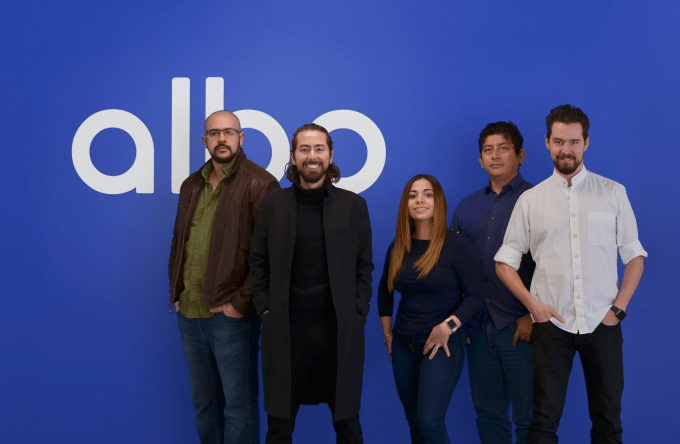
The Albo team has raised $26.4 million to scale its leading neobank.

Sahagun says that while there may be some overlap in Nubank and Albo customers, the offerings are different. Nubank issues credit cards for people with existing credit history – not the same target customer as Albo. 

Either way, with a new Mexican fintech product launching or getting funded seemingly every day, the market is growing saturated. That’s great for the ecosystem and for customers to have so much competition. But this will raise challenges around acquiring customers and hiring, and fundraising will undoubtedly get harder for those who want a piece of the Mexico fintech pie. 

In the meantime, founders are taking more of a collaborative rather than competitive stance. “This isn’t a winner takes all market,” says Sahagun, arguing that the financial market in Mexico is diverse enough to thrive with numerous financial products. 

Sahagun says the capital will be used to expand leadership roles and speed up customer acquisition. Albo will use the capital to build out new features: a savings product that lets users improve spending and saving habits, and what it says will be a transparent and easy-to-use lending option for customers who want access to loans. 

11 Dec 2019

Hyperproof wants to make it easier to comply with GDPR and other regulations

As companies try to figure out how to comply with regulations like GDPR, ISO or Sarbanes Oxley, they face a huge challenge just getting started. Hyperproof, a Bellevue, Washington startup, is launching a new product to help companies build a workflow to get them in compliance in a more organized way.

Company co-founder and CEO Craig Unger says most companies struggle with the complexity of compliance. It involves a lot of different activities and often requires the cooperation of employees, who typically aren’t involved in compliance.

Hyperproof wants to provide a single place where companies can undertake their compliance activities. “In reality, there’s no single place where if you’re a compliance officer, you can say, ‘here is where I do my work’. Here is the equivalent of my SAP system for a CFO or my CRM system for a head of sales or head of marketing — and Hyperproof is just that,” Unger explained.

He says most companies do compliance today in a fairly ad hoc way, relying on technology like spreadsheets to track tasks, and email to make requests for needed information. What Hyperproof does is package all of that into a single program. You indicate what compliance regimen you want to work with, and Hyperproof builds a workspace for you with all of the requirements you need for that compliance framework.

Unger says at this point, the company is simply putting all of the tasks in a single workflow to simplify and organize your activities around this compliance framework.You can also import a spreadsheet to get that information inside Hyperproof, or outline the requirements in your own language in the program.

“Once you have a defined program in place, you can start working with the rest of the organization in a collaborative way by sending emails. The evidence that comes back gets put inside Hyperproof as an immutable record with an audit trail around this data collection,” Unger explained. Should you get audited, you have a central place to show the auditor your work.

The company has concentrated on building the workflow part of this, but in the future wants to add automation and APIs to connect directly to other systems to automate many of the activities. The goal with the initial release was to get companies a compliance framework workflow, and then build on that in the future.

The company was founded last year and has raised $3 million from 23 angel investors in the Seattle area where they are based. In fact, Unger is a former Microsoft employee and also helped found Azuqua, a workflow startup he sold to Okta this year for $52.5 million.

11 Dec 2019

Watch live as Blue Origin aims for a booster re-use record with rocket launch

Blue Origin will be looking to launch one of its New Shepard sub-orbital spacecraft today – a second attempt after weather didn’t cooperate yesterday. Conditions are looking much better at the company’s West Texas launch site, so the Jeff Bezos-founded space venture is much more optimistic that today’s launch will go off as planned.

This mission, codenamed NS-12 because it’s the 12th flight of the New Shepard vehicle, will be the sixth re-use of the NS3 booster stage which provides the spacecraft’s initial thrust to get it off the ground. That will be a record for commercial reusable spaceflight, and it’s a key mission parameter, though the primary focus is still on delivering payloads for customers.

Those payloads include a range of different science experiments, as well as postcards submitted by kids around the world via the Blue Origin ‘Club for the Future’ non-profit. Bezos announced this new organization at the big Blue Origin lunar lander unveiling in May, and it’s designed to provide educational materials around space exploration to schools, and the postcards project is its first big endeavor.

Currently, Blue Origin is waiting to update their specific launch time due to heavy fog in the vicinity of its launch pad, but we’ll update this post with the exact time once it’s available.