Category: UNCATEGORIZED

25 Nov 2019

AWS expands its IoT services, brings Alexa to devices with only 1MB of RAM

AWS today announced a number of IoT-related updates that, for the most part, aim to make getting started with its IoT services easier, especially for companies that are trying to deploy a large fleet of devices. The marquee announcement, however, is about the Alexa Voice Service, which makes Amazon’s Alex voice assistant available to hardware manufacturers who want to build it into their devices. These manufacturers can now create “Alexa built-in” devices with very low-powered chips and 1MB of RAM.

Until now, you needed at least 100MB of RAM and an ARM Cortex A-class processor. Now, the requirement for Alexa Voice Service integration for AWS IoT Core has come down 1MB and a cheaper Cortex-M processor. With that, chances are you’ll see even more lightbulbs, light switches and other simple, single-purpose devices with Alexa functionality. You obviously can’t run a complex voice-recognition model and decision engine on a device like this, so all of the media retrieval, audio decoding, etc. is done in the cloud. All it needs to be able to do is detect the wake word to start the Alex functionality, which is a comparably simple model.

“We now offload the vast majority of all of this to the cloud,” AWS IoT VP Dirk Didascalou told me. “So the device can be ultra dumb. The only thing that the device still needs to do is wake word detection. That still needs to be covered on the device.” Didascalou noted that with new, lower-powered processors from NXP and Qualcomm, OEMs can reduce their engineering bill of materials by up to 50 percent, which will only make this capability more attractive to many companies.

Didascalou believes we’ll see manufacturers in all kinds of areas use this new functionality, but most of it will likely be in the consumer space. “It just opens up the what we call the real ambient intelligence and ambient computing space,” he said. “Because now you don’t need to identify where’s my hub — you just speak to your environment and your environment can interact with you. I think that’s a massive step towards this ambient intelligence via Alexa.”

No cloud computing announcement these days would be complete without talking about containers. Today’s container announcement for AWS’ IoT services is that IoT Greengrass, the company’s main platform for extending AWS to edge devices, now offers support for Docker containers. The reason for this is pretty straightforward. The early idea of Greengrass was to have developers write Lambda functions for it. But as Didascalou told me, a lot of companies also wanted to bring legacy and third-party applications to Greengrass devices, as well as those written in languages that are not currently supported by Greengrass. Didascalou noted that this also means you can bring any container from the Docker Hub or any other Docker container registry to Greengrass now, too.

“The idea of Greengrass was, you build an application once. And whether you deploy it to the cloud or at the edge or hybrid, it doesn’t matter, because it’s the same programming model,” he explained. “But very many older applications use containers. And then, of course, you saying, okay, as a company, I don’t necessarily want to rewrite something that works.”

Another notable new feature is Stream Manager for Greengrass. Until now, developers had to cobble together their own solution for managing data streams from edge devices, using Lambda functions. Now, with this new feature, they don’t have to reinvent the wheel every time they want to build a new solution for connection management and data retention policies, etc., but can instead rely on this new functionality to do that for them. It’s pre-integrated with AWS Kinesis and IoT Analytics, too.

Also new for AWS IoT Greengrass are fleet provisioning, which makes it easier for businesses to quickly set up lots of new devices automatically, as well as secure tunneling for AWS IoT Device Management, which makes it easier for developers to remote access into a device and troubleshoot them. In addition, AWS IoT Core now features configurable endpoints.

25 Nov 2019

Daily Crunch: Uber faces legal battle in London

The Daily Crunch is TechCrunch’s roundup of our biggest and most important stories. If you’d like to get this delivered to your inbox every day at around 9am Pacific, you can subscribe here.

1. Uber has again been denied licence renewal in London over safety risks

With Uber’s two-month license extension in London coming to an end, the company has once again been denied a full renewal by the city’s transport regulator — which said that it had found a “pattern of failures” that put “passenger safety and security at risk.”

This doesn’t mean the company has to halt London operations immediately. Instead, Uber says it will appeal the decision, and it will be able to continue operating in the city during the appeals process.

2. eBay to sell ticket marketplace StubHub to viagogo for $4.05 billion

The deal will merge StubHub’s U.S.-based marketplace with viagogo, which serves a worldwide audience as a ticket marketplace in Europe, Asia, Australia and Latin America.

3. More than 1 million T-Mobile customers exposed by breach

A T-Mobile representative told us that the attack was discovered in early November and shut down “immediately.” But if you’re a T-Mobile customer, it may be a good idea to change your password and check up on your account details.

4. Scribd raises $58M for subscription e-books and audiobooks

At the beginning of this year, the company — known for a Netflix-style, e-book and audiobook subscription — announced that it had more than 1 million paying subscribers. It also said it’s been profitable since 2017.

5. HP rejects Xerox again, but leaves door open for negotiation

In a letter released this morning, the HP board of directors summarily rejected Xerox’s latest takeover offer, saying it significantly undervalues the company. At the same time, it left the door open for further negotiation.

6. Inside Prosus Ventures’ $4.5 billion bet on India

TechCrunch spoke with Larry Illg and Ashutosh Sharma of Prosus Ventures (currently in the midst of a takeover attempt of British food delivery startup Just Eat) to understand how significant food tech is for the investment firm and the bets it is making in India. (Extra Crunch membership required.)

7. This week’s TechCrunch podcasts

This week’s Equity skips the normal news roundup for an interview Poshmark CEO Manish Chandra and investor James Currier. And over at Original Content, we review Netflix’s first music competition show “Rhythm + Flow.”

25 Nov 2019

Omni storage & rentals fails, shutters, sells engineers to Coinbase

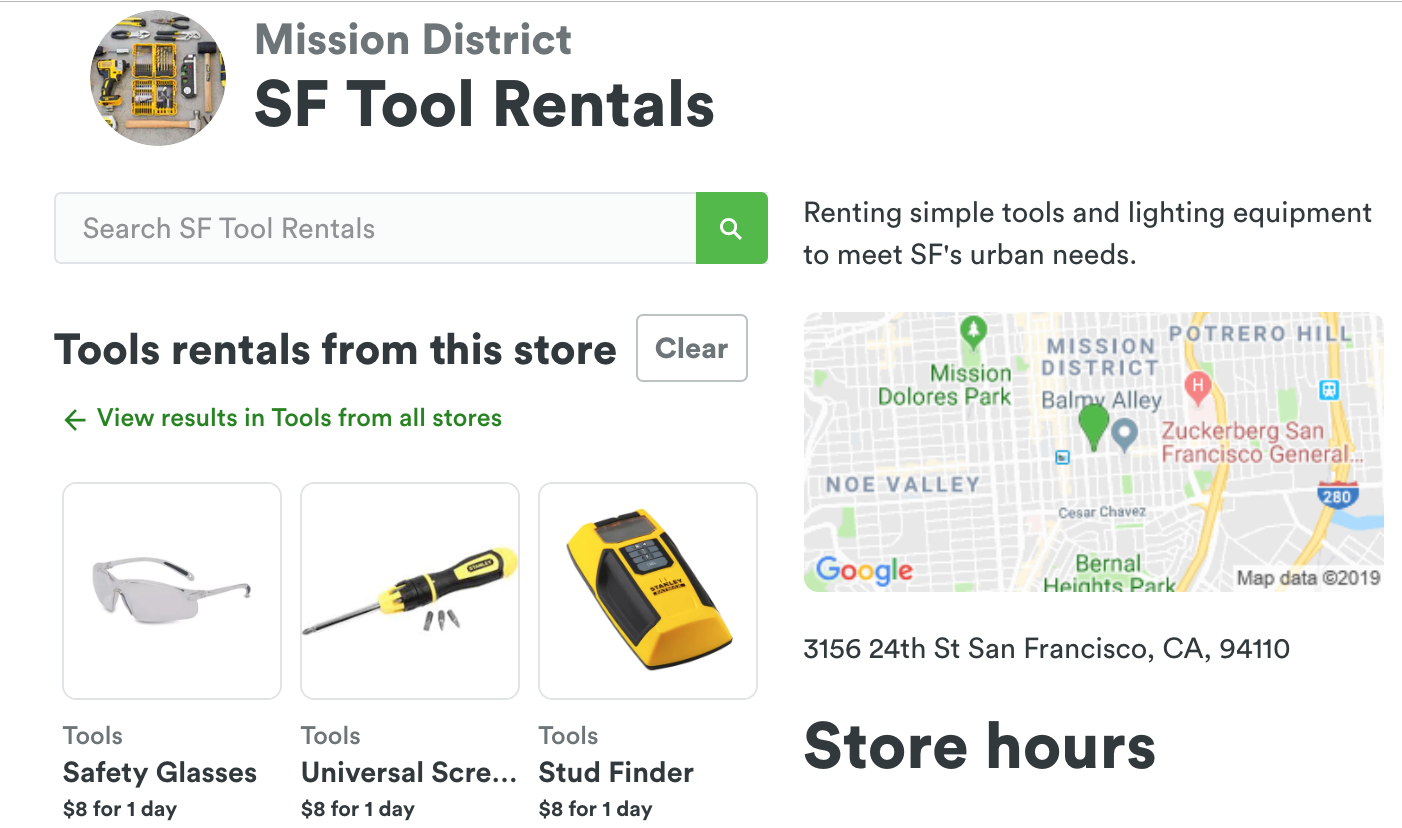
$35 million-funded Omni is packing up and shutting down after struggling to make the economics of equipment rentals and physical on-demand storage work out. The startup fought for a second wind after selling off its physical storage operations to competitor Clutter in May. Then sources tell me it tried to build a whitelabel software platform for letting brick-and-mortar merchants rent stuff like drills or tents as well as sell them so Omni could get out of hands-on logistics. But now the whole company is folding, with Coinbase hiring roughly 10 of Omni’s engineers.

“They realized that the core business was just challenging as architected” a source close to Omni tells TechCrunch. “The service was really great for the consumer but when they looked at what it would take to scale, that would be difficult and expensive.”

The news follows TechCrunch’s report in October that Omni had laid off operations teams members and was in talks to sell its engineering team to Coinbase. Omni had internally discussed informing its retail rental partners ahead of time that it would be shutting down. Meanwhile, it frantically worked to stop team members from contacting the press about the startup’s internal troubles.

We’ll be winding down operations at Omni and closing the platform by the end of this year. We are proud of what we built and incredibly thankful for everyone who supported our vision over the past five and a half years” an Omni spokesperson says.

Coinbase has reached an agreement with Omni to hire members of its engineering team. We’re always looking for top-tier engineering talent and look forward to welcoming these new team members to Coinbase” a Coinbase spokesperson tells us. The team was looking for more highly skilled engineers they could efficiently hire as a group, though it’s too early to say what they’ll be working on.

One major question is whether investors will get any cash back. Omni raised $25 million from cryptocurrency company Ripple in early 2018. Major investors include Flybridge, Highland, Allen & Company, and Founders Fund, plus a slew of angels.

Physical storage-turned-rentals startup Omni  is dealing with layoffs today, two sources familiar with the situation tell TechCrunch. Omni just shed seven operations team members. The startup is in talks to sell its engineering team to Coinbase  after also receiving interest from Thumbtack.

Omni’s rental business was doing poorly without enough users paying a few bucks to borrow a tent, bike or power drill. Omni had planned to launch a white-labeled platform allowing brick-and-mortar merchants to operate and market their own rental business.

But despite having plenty of cash left after raising $25 million from cryptocurrency company Ripple early last year, Omni feared the new platform would flop too and its prospects would worsen.

The company is in talks with Coinbase to hire some of the engineering staff, who would have them work on Coinbase Earn, which rewards users with cryptocurrency for completing online educational programs. Some employees are interviewing at Coinbase today. However, a Coinbase spokesperson told me there’s currently no official deal — before noting that there is nothing on the record they can share. Omni promised TechCrunch a statement but then refused to talk on the record.

Omni Rentals

Omni got its start in on-demand storage, where it would come to your home, pick up and tag your stuff, store it in a warehouse and bring it back whenever you wanted it. It grew popular in San Francisco and started to scale out to other cities. In April, Omni began allowing users to earn money by renting out their stored goods to other Omni customers.

But by May, Omni was selling its storage business to SoftBank-funded competitor Clutter, and the transition was rocky. Users complained about changing prices and misplaced items, alarmed that suddenly a different startup had control of their possessions.

I was formerly a happy Omni customer of its storage business, but the transition to Clutter was botched and shook faith that users’ stuff would be taken care of. At one point they lost some of my belongings, until C-level executives stepped in to figure out what happened.

Going forward, instead of storing goods itself, Omni would rely on local storefronts for pickup and drop-off of rentals. But many users balked at the hassle of rentals when Amazon makes buying so easy.

One source said that Omni had discussed telling rental partners in two weeks that it would be shutting down the rental service, though TechCrunch cannot confirm that. Another source said Omni was frantically trying to stop members of its team from talking to the press today.

Omni’s vision of cloud storage for the physical world and access over ownership had attracted capital from Flybridge, Highland, Allen & Company, Founders Fund, Precursor and a wide array of angels. But efforts to change user behavior and operate a logistically complicated business, matched with spotty execution, led the startup to hit the skids and seek a soft landing.

25 Nov 2019

Coup shuts down its electric moped scooter service

Coup, an electric moped scooter-sharing service that operates in Berlin, Paris and Berlin, has announced in an email that it is going to shut down in all three cities. On Twitter, the company says that operating the service is “economically unsustainable” in the long term.

“We plan to discontinue our service in Berlin and Tübingen in by the middle of December 2019. It is also planned to close the COUP locations in Paris and Madrid,” the company says in its email announcement. The service still operates normally for now.

Coup also says that users who topped up their accounts with prepaid packages will get reimbursed when the service eventually shuts down.

“Even though Coup is a well-known brand in this market with a loyal customer base that regularly uses our services, operating Coup in the long term has become economically unsustainable,” Coup told a user on Twitter in French.

Coup is a wholly owned subsidiary of Bosch. It operates a service with hundreds of Gogoro scooters that you can book and ride with the Coup app. Just like other free-floating micro-mobility services, you could unlock a moped scooter somewhere and leave it somewhere else as long as you remain in the operating area.

Coup competes with Cityscoot in Paris. The French startup operates a similar service and has recently announced a partnership with Uber.

We have reached out to the company and will update this article if we hear back. Here’s the full email from Coup:

Dear COUP customer,

We have some sad news for you. We plan to discontinue our service in Berlin and Tübingen in by the middle of December 2019. It is also planned to close the COUP locations in Paris and Madrid.

We deeply regret this. Over the past three years, you and all the other COUP customers have remained loyal to us. We are proud to have been able to establish such a strong community in such a short period of time. Thank you for your loyalty, and thank you for using our service.

You can continue to use COUP in the usual way until the service is discontinued. In a separate e-mail, we will let you know when exactly this will happen. Until then, nothing will change in your contractual relationship with COUP.

If you have incurred costs for prepaid packages that have not been used up, they will of course be reimbursed. You can also continue using up your freerides until the service is discontinued.

Our customer support team will also remain open for telephone and e-mail inquiries.

25 Nov 2019

Peak Design’s new bags and backpacks improve on the originals and add new options

SF-based Peak Design hasn’t really changed much about its now-classic Everyday bags over the years, and they’ve regularly received plenty of praise and good reviews so that makes sense. Today, however, Peak is launching the ‘V2’ collection of its entire Everyday line, including smart revisions of some of its best equipment, and all-new designs for some additional options.

The Peak Design Everyday V2 lineup includes improved Everyday Backpacks (starting at $259.95), with the company’s signature magnetic latch closure for the top compartment. The overall design is cleaned up and much more attractive overall, to my eyes, and they’ve beefed up the dimensions of the laptop compartments enough that the smaller 20L version should be able to easily hold your 15 (or 16 now, thanks Apple) -inch MacBook Pro. You can also modify the height of the laptop sleeve for when you’re carrying smaller notebooks, and there’s a bunch of other changes like much-improved zippers that promise more durability over time.

Peak has also used 100% recycled material for the fabric that makes up the outer shell of the Everyday Backpack V2, and they’ve got Bluesign certification, which is a third-party certification about sustainable sourcing for textiles, for all but the Black color way for these bags. Peak also says the top has been opened up, and there’s more room in the expandable side pockets, plus new magnetic attachment points for holding straps and keeping them from swinging around.

The Everyday Backpack, which has been my go-to photo backpack since its introduction basically, is also now joined by the new Everyday Backpack Zip (starting at $189.95), which skips the MagLatch closure for a more traditional full zip-up system. This line is more approachable in terms of price, and it doesn’t’t offer internal capacity expansion, or as many compartments. It also comes in smaller sizes (15L and 20L, no 30L option) and just generally has fewer bells and whistles. That said, it looks to be even more discreet for general use as a daypack, and the smaller size option is probably something that people with smaller frames were looking for anyway.

There’s also a new Everyday Totepack (from $169.95) with a roll-top flap and handles, as well as an Everyday Tote (from $149.95) that is a true shoulder bag vs. the convertible backpack Totepack design. These options are probably ideal for students or lighter photo/everyday carry use, and present yet another set of options for people looking for something other than a more standard backpack.

Peak also updated the Everyday Messenger (starting at $219.95), which is its shoulder bag for photographers, as well as the Everyday Sling (from $79.95). These single-strap bags all get improved aesthetics, as well as weight savings vs. last generation, while their gear compartments are a little bigger and they have the new UltraZip more durable zippers, as well as recycled materials.

Overall, Peak is launching a ton of updated products all at once, which is nice because it means the whole line benefits from the new materials, designs and zippers it’s now using. The added models mean there’s definitely a bag for everyone’s needs in the line now, and in fact it might actually be the case that the range means it’s harder to pick which one is right for you.

We have a couple of the new bags in for testing, and will be providing a review of these in the coming days once we’ve had a bit more time to spend with the new gear, so stay tuned.


25 Nov 2019

Peak Design’s new bags and backpacks improve on the originals and add new options

SF-based Peak Design hasn’t really changed much about its now-classic Everyday bags over the years, and they’ve regularly received plenty of praise and good reviews so that makes sense. Today, however, Peak is launching the ‘V2’ collection of its entire Everyday line, including smart revisions of some of its best equipment, and all-new designs for some additional options.

The Peak Design Everyday V2 lineup includes improved Everyday Backpacks (starting at $259.95), with the company’s signature magnetic latch closure for the top compartment. The overall design is cleaned up and much more attractive overall, to my eyes, and they’ve beefed up the dimensions of the laptop compartments enough that the smaller 20L version should be able to easily hold your 15 (or 16 now, thanks Apple) -inch MacBook Pro. You can also modify the height of the laptop sleeve for when you’re carrying smaller notebooks, and there’s a bunch of other changes like much-improved zippers that promise more durability over time.

Peak has also used 100% recycled material for the fabric that makes up the outer shell of the Everyday Backpack V2, and they’ve got Bluesign certification, which is a third-party certification about sustainable sourcing for textiles, for all but the Black color way for these bags. Peak also says the top has been opened up, and there’s more room in the expandable side pockets, plus new magnetic attachment points for holding straps and keeping them from swinging around.

The Everyday Backpack, which has been my go-to photo backpack since its introduction basically, is also now joined by the new Everyday Backpack Zip (starting at $189.95), which skips the MagLatch closure for a more traditional full zip-up system. This line is more approachable in terms of price, and it doesn’t’t offer internal capacity expansion, or as many compartments. It also comes in smaller sizes (15L and 20L, no 30L option) and just generally has fewer bells and whistles. That said, it looks to be even more discreet for general use as a daypack, and the smaller size option is probably something that people with smaller frames were looking for anyway.

There’s also a new Everyday Totepack (from $169.95) with a roll-top flap and handles, as well as an Everyday Tote (from $149.95) that is a true shoulder bag vs. the convertible backpack Totepack design. These options are probably ideal for students or lighter photo/everyday carry use, and present yet another set of options for people looking for something other than a more standard backpack.

Peak also updated the Everyday Messenger (starting at $219.95), which is its shoulder bag for photographers, as well as the Everyday Sling (from $79.95). These single-strap bags all get improved aesthetics, as well as weight savings vs. last generation, while their gear compartments are a little bigger and they have the new UltraZip more durable zippers, as well as recycled materials.

Overall, Peak is launching a ton of updated products all at once, which is nice because it means the whole line benefits from the new materials, designs and zippers it’s now using. The added models mean there’s definitely a bag for everyone’s needs in the line now, and in fact it might actually be the case that the range means it’s harder to pick which one is right for you.

We have a couple of the new bags in for testing, and will be providing a review of these in the coming days once we’ve had a bit more time to spend with the new gear, so stay tuned.


25 Nov 2019

Weekend Fund raises $10M for second early-stage fund

Product Hunt founder Ryan Hoover has raised another $10 million to invest in nascent upstarts via Weekend Fund. The news represents the firm’s second fundraise after a $3 million debut angel fund that closed in 2017.

Hoover, an investor in Girlboss, audio social media platform TTYL and mobile application performance software company Headspin, founded Product Hunt in 2013 before selling the product discovery platform, where he still serves as chief executive officer, to AngelList for $20 million in 2016.

Limited partners in Hoover’s latest fund include venture capitalists Marc Andreessen, Chris Dixon, Jana Messerschmidt, Ben Rubin, Chris and Crystal Sacca, Hunter Walk, Kevin Rose and Garry Tan, as well as Q&A co-founder Suzy Ryoo, former Microsoft president Steven Sinofsky, &Then co-founder Corley Hughes, Adobe’s chief product officer Scott Belksy, Nurx CEO Varsha Rao, Long Term Stock Exchange CEO Eric Ries and Atom Factory CEO Troy Carter.

Weekend Fund, which also operates an experiment to encourage employees to build side projects into companies called Weekend Build, invests across geographies and industries with a particular interest in audio and voice products, tools for distributed teams and remote workers, and low-code/no-code projects.

Weekend Fund joins a long line-up of early-stage micro-funds (or nano-funds, if you prefer) setting aside capital to compete with the likes of GGV Capital, Sequoia Capital and other monster funds that deploy capital at the seed stage, too. Weekend Fund, for its part, doesn’t lead investments, rather, it writes small checks as a participant in early financings.

According to Crunchbase, U.S. investors raised more sub-$100 million VC funds last year (148 in total)more than any other year in history.

25 Nov 2019

Weekend Fund raises $10M for second early-stage fund

Product Hunt founder Ryan Hoover has raised another $10 million to invest in nascent upstarts via Weekend Fund. The news represents the firm’s second fundraise after a $3 million debut angel fund that closed in 2017.

Hoover, an investor in Girlboss, audio social media platform TTYL and mobile application performance software company Headspin, founded Product Hunt in 2013 before selling the product discovery platform, where he still serves as chief executive officer, to AngelList for $20 million in 2016.

Limited partners in Hoover’s latest fund include venture capitalists Marc Andreessen, Chris Dixon, Jana Messerschmidt, Ben Rubin, Chris and Crystal Sacca, Hunter Walk, Kevin Rose and Garry Tan, as well as Q&A co-founder Suzy Ryoo, former Microsoft president Steven Sinofsky, &Then co-founder Corley Hughes, Adobe’s chief product officer Scott Belksy, Nurx CEO Varsha Rao, Long Term Stock Exchange CEO Eric Ries and Atom Factory CEO Troy Carter.

Weekend Fund, which also operates an experiment to encourage employees to build side projects into companies called Weekend Build, invests across geographies and industries with a particular interest in audio and voice products, tools for distributed teams and remote workers, and low-code/no-code projects.

Weekend Fund joins a long line-up of early-stage micro-funds (or nano-funds, if you prefer) setting aside capital to compete with the likes of GGV Capital, Sequoia Capital and other monster funds that deploy capital at the seed stage, too. Weekend Fund, for its part, doesn’t lead investments, rather, it writes small checks as a participant in early financings.

According to Crunchbase, U.S. investors raised more sub-$100 million VC funds last year (148 in total)more than any other year in history.

25 Nov 2019


Devialet partners with Huawei for new speaker

Huawei and Devialet have unveiled a new speaker specifically designed for the Chinese market, the Huawei Sound X. French startup Devialet has been looking at ways to license its technology and patents to consumer electronics manufacturers, such as Sky, Iliad, Altice USA and Renault.

While Devialet only sells very premium speakers under its own brand, such as the $1,000 Phantom Reactor, the Huawei Sound X is much more affordable. You’ll be able to buy a pair of speakers for RMB 1,999, the equivalent of $285. Unfortunately, those speakers will only be available in China for now.

The pill-shaped design is reminiscent of the Apple HomePod or the most recent Amazon Echo. It features a 60W double subwoofer and 360-degree sound. You can either use the pair of speakers in different rooms or pair them to create a stereo sound system.

The Huawei Sound X has six microphones so that you can control it with your voice. You can also control the speaker with capacitive touch buttons at the top of the speaker.

If you have a Huawei phone, you can tap it on the top of the speaker to hand off music to the speaker. It also integrates with Huawei HiLink, the company’s framework to control your connected objects around your home.

Devialet has been slowly expanding to China with a distribution partnership, two Devialet stores in Beijing and Shanghai and retail stores partnerships. According to the company, China is now the second market for Devialet.

25 Nov 2019

Facebook Viewpoints pays users for well-being surveys & tasks

Facebook is launching a new market research, task, and product testing program that lets users earn money. Starting today, people in the US who are over 18 can download Viewpoints and participate in a well-being survey so Facebook can learn to “limit the negative impacts of social media and enhance the benefits.” Other opportunities include completing online chores on behalf of Facebook, or trying out new apps or devices ahead of launch so Facebook can refine them.

The well-being survey will score users 1000 points, which translates into a $5 reward. People interested in signing up can join Viewpoints here. The company claims it will only use the data collected internally and won’t sell it. Facebook Viewpoints is available on iOS and Android, and the company plans to open the app to more countries next year.

The question is whether users will be comfortable giving up even more data Facebook. Many are already creeped out by Facebook, but the monetary incentive might override their morals.

Meanwhile, Facebook will have to work to prevent the app from beinh abused. Most importantly, it needs to figure out how to make sure underage minors aren’t slipping into the app. They might be more vulnerable to coercion by cash, and less aware of the consequences of sharing their data.

The laucnh of Viewpoints comes after Facebook shut down its paid market surveillance program Research and its free VPN that collected users’ data Onavo in the wake of a TechCrunch investigation that found the company was paying teenagers for their data while breaking Apple’s rules about distributing employee-only apps outside of a company.