Category: UNCATEGORIZED

21 Nov 2019

GM will bring an electric truck to market in 2021

GM CEO Mary Barra said Thursday that the automaker will bring its first electric truck to market in the fall of 2021.

The comments were made Thursday during GM’s investor day. Later this evening, Tesla, which also plans to start selling an electric truck in 2021, will reveal its “cybertruck” at an event in Hawthorne, Calif. Reuters first reported the news.

“General Motors understands truck buyers and… people who are new coming into the truck market,” Barra said during the investor conference, explaining the company’s rationale for the move.

GM’s foray into electric trucks has been public before. Last month, the Detroit Free Press reported the that GM’s Detroit-Hamtramck Assembly Plant would remain open to produce an electric pickup under a deal between the UAW and the automaker.

This is the first time the company has provided a timeline.

Several other companies are expected to bring electric trucks to the marketplace in the next several years, including newcomer Rivian, Tesla and Ford.

21 Nov 2019

Toyota’s first plug-in hybrid RAV4 piles on the power and fuel efficiency

Toyota gave its first plug-in hybrid RAV4 more than just a plug. It piled on the power as well.

The 2021 Toyota RAV4 Prime, which was unveiled this week at the LA Auto Show, will be achieve two seemingly conflicting goals. The vehicle will be its most fuel efficient and one of its most powerful.

This variant of the RAV4 will have an all-wheel drive, sport-tuned suspension. It has a tuned 2.5-liter, four-cylinder gasoline engine and when combined with the electric motors will deliver 302 horsepower and be able to travel from 0 to 60 miles per hour in a projected 5.8 seconds. Toyota hasn’t announced a price yet, but expect it to be more expensive than the hybrid version of the RAV4, which starts at $28,100.

toyota rav4 prime

The 2021 Toyota Rav4 Prime, a plug-in hybrid, on the floor of the 2019 LA Auto Show.

That might seem slow compared to some of the pure electric sedans on the market. But it’s far zippier than previous models and marks a much needed improvement in the RAV4. The vehicle’s electric battery will provide an estimated 39 miles of range before kicking back to the gas-powered engine.

The RAV4 Prime has a manufacturer-estimated 90 combined MPGe. The 2021 model, will be available in the sportier SE and luxury-focused XSE trims, will hit the marketplace in summer 2020.

To understand the improvement, consider this. Toyota offered a 3.5-liter V6 in the 2006 to 2012 model years of the RAV4. And yet, despite having more cylinders and bigger displacement it only produced 269 horsepower and combined fuel economy rating of 21 miles per gallon.

The vehicle will also come standard with advanced driver assistance features, including pre-collision pedestrian detection, radar cruise control, lane departure alert with steering assist, automatic high beam and road sign assistance.

As Toyota offers more electrified versions of its popular SUVs, the company is upping the warranty on its hybrid battery. The automaker said that beginning with the 2020 model year, its hybrid battery warranty will be increased from 8 years or 100,000 miles to 10 years from original date of first use, or 150,000 miles, whichever comes first.

21 Nov 2019

Valve’s flagship Half-Life VR game will land in March of 2020

As expected, Valve just dropped some details about Half-Life: Alyx, the flagship VR game it teased earlier this week.

Here’s what we know so far:

  • It’s scheduled for release in March of 2020
  • Players will take on the role of Alyx, wearing a pair of “gravity gloves” that allow you to grab things otherwise out of reach.
  • It’ll take place sometime between Half-Life and Half-Life 2. Alas, for anyone hoping for a conclusion to the storyline set in motion in Half-Life 2: Episode 2 twelve years ago, it sounds like this ain’t it.
  • It’s built on the Source 2 engine, and will work on “all PC-based VR headsets”
  • It’ll cost $60, but be free for anyone who owns Valve’s Index VR headset.

Valve also posted a trailer, showing everything from headcrabs to the Citadel from Alyx’s first person VR perspective… plus a special little cameo if you stick around to the end. Check it out here:


Story developing…

21 Nov 2019

Congress extends NSA call records collection powers to March

In passing a short-term funding bill to avoid a U.S. government shutdown, Congress has also extended the government’s legal powers allowing it to collect daily millions of Americans’ call records.

Buried in a funding bill passed by the House this week was a clause that extended the government’s so-called Section 215 powers, which allow the National Security Agency to compel phone providers to turn over daily logs — known as “metadata” — of their customers’ calls, including their phone numbers, when the call was made, and the call’s duration. The program is designed to allow intelligence analysts to sift through vast amounts of data to identify links between suspected terrorists. But the program also collects millions of wholly domestic phone calls between Americans, which courts have ruled unconstitutional.

Although it’s believed all the major phone carriers have been told to feed their call logs to the government, a top secret court order leaked by whistleblower Edward Snowden only confirmed Verizon — which owns TechCrunch — as an unwitting participant in the program.

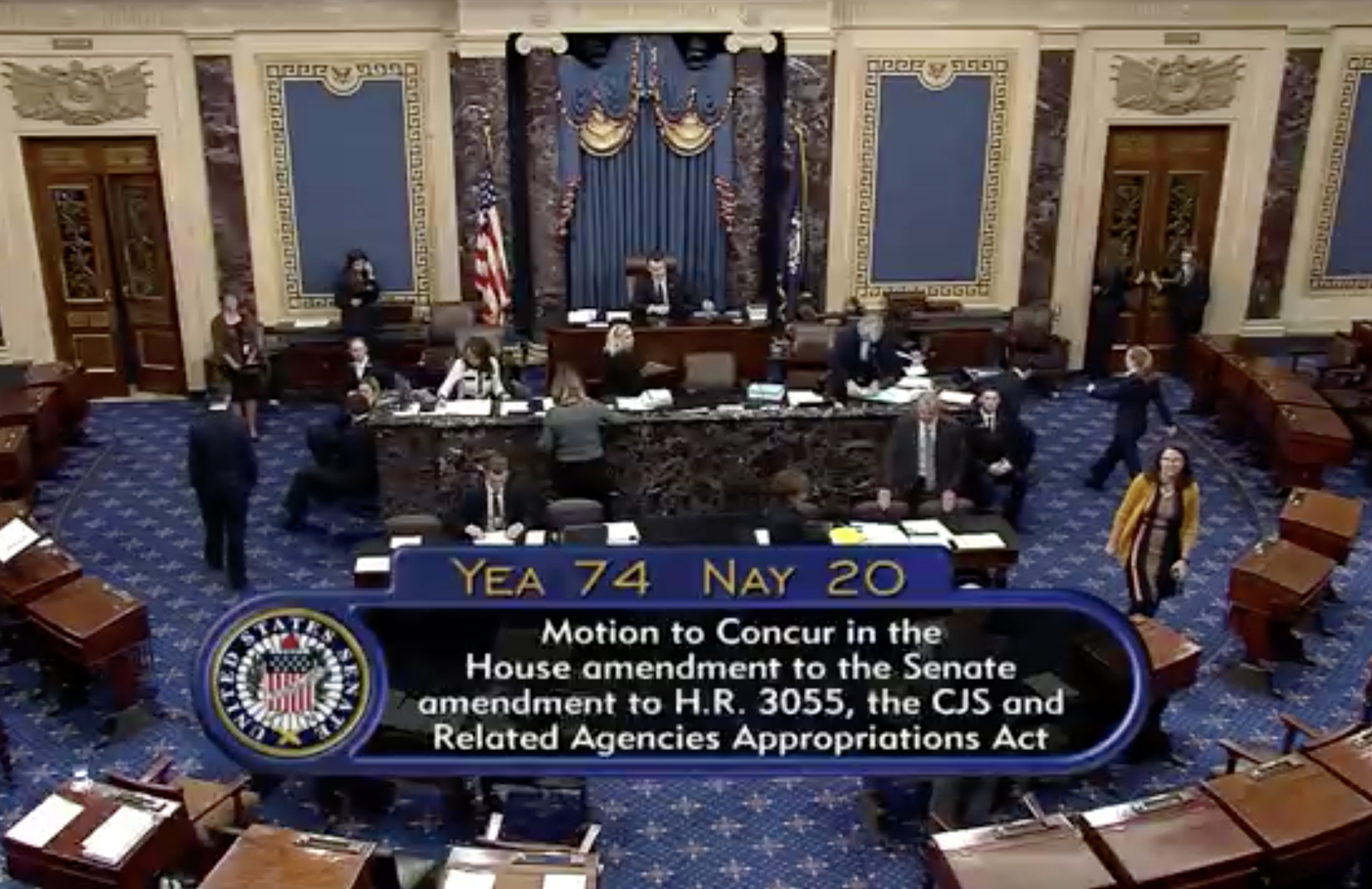
The Senate approved the funding bill on Thursday after a 74-20 vote. The bill will now go to the president’s desk, averting a midnight government shut down, but also confirming the Section 215 powers will be extended until March 15.

The Senate voted 74-20 to approve the bill. (Image: C-SPAN)

But although the powers are to be extended, the program itself is said to have been shut down,

After the Snowden disclosures in 2013, Congress moved to reign in the NSA’s call collection powers amid public outcry. In 2015, lawmakers passed the Freedom Act, which allowed the continued collection of call records but ostensibly with grater oversight. Since the Freedom Act passed, the number of records collected has rocketed. But during that time the NSA was forced to come clean and admit that it “overcollected” Americans’ call records on two separate occasions, prompting the agency to delete hundreds of millions of call logs.

The second incident led the NSA to shut down the call records collection program. But the Trump administration has renewed efforts to restart the program by pushing for the legal powers to be reauthorized.

The Electronic Frontier Foundation, which first noted the legal extension, said it was “disappointed” that lawmakers “hid an extension of these authorities in a funding bill, without debate and without consideration of meaningful privacy and civil liberties safeguards to include.”

A source in the Senate said the three-month extension came as a surprise, but that the additional time would allow lawmakers for more time to properly debate reforms to the program without rushing it through before the end of the year.

Several privacy advocacy and rights groups, including the EFF and the ACLU, have called on the government to end the call records collection program.

21 Nov 2019

Daily Crunch: PayPal acquires Honey

The Daily Crunch is TechCrunch’s roundup of our biggest and most important stories. If you’d like to get this delivered to your inbox every day at around 9am Pacific, you can subscribe here.

1. PayPal to acquire shopping and rewards platform Honey for $4B

Currently, Honey’s 17 million monthly active users take advantage of its suite of money-saving tools to track prices, get alerts, make lists, browse offers and participate in a rewards program called Honey Gold.

The acquisition, which is PayPal’s largest to date, will give the payments giant a foothold earlier in the customer’s shopping journey. Instead of only competing on the checkout page against credit cards or Apple Pay, for example, PayPal will leap ahead to become a part of the deal discovery process, as well.

2. Alphabet’s Loon signs deal with Telefonica to provide internet to remote parts of the Amazon

Loon is Alphabet’s high-altitude balloon company that is using its stratospheric technology to provide internet connectivity on Earth. This is Loon’s third commercial contract, including one with Telkom Kenya which is also awaiting final regulatory sign-off, and an arrangement with Canadian company Telecast to develop a coordination system for a future planned low-Earth orbit satellite constellation.

3. Apple expands and updates its ‘Everyone Can Code’ program

The company says it has redesigned the “Everyone Can Code” curriculum with a focus on introducing coding to more elementary and middle school students, while also adding more resources for teachers, a new student guide and refreshed Swift Coding Club materials.

4. G Suite users get more AI writing help, Google Assistant calendar integration and more

Unlike other grammar tools, Google’s version utilizes a neural network approach to detect potential grammar issues in your text — similar to the techniques used for building effective machine translation models. The company is also bringing to Docs the same autocorrect feature it already uses in Gmail.

5. Announcing TechCrunch Early Stage, a new event series all about founders

Our TC Early Stage events will be smaller (and more affordable) than Disrupt, with a focus on giving early-stage founders the information they need to be successful. The first will be in San Francisco on April 28, followed by one in Paris on October 28 and another in New York City (date TBA, but hey, we’re coming back to NYC!).

6. Sonos acquires voice assistant startup Snips, potentially to build out on-device voice control

Snips, which had been developing dedicated smart device assistants that can operate locally (instead of relying on consistently round-tripping voice data to the cloud) could help Sonos set up a voice control option for its customers that has better privacy and is focused more narrowly on music control.

7. Reimagine inside sales to ramp up B2B customer acquisition

User-first products are driving rapid company growth in an era where individuals discover, adopt and share software they like throughout their organizations. This is great if you’re a Slack, Shopify or Dropbox — but what if your company doesn’t fit that profile? (Extra Crunch membership required.)

21 Nov 2019

Daily Crunch: PayPal acquires Honey

The Daily Crunch is TechCrunch’s roundup of our biggest and most important stories. If you’d like to get this delivered to your inbox every day at around 9am Pacific, you can subscribe here.

1. PayPal to acquire shopping and rewards platform Honey for $4B

Currently, Honey’s 17 million monthly active users take advantage of its suite of money-saving tools to track prices, get alerts, make lists, browse offers and participate in a rewards program called Honey Gold.

The acquisition, which is PayPal’s largest to date, will give the payments giant a foothold earlier in the customer’s shopping journey. Instead of only competing on the checkout page against credit cards or Apple Pay, for example, PayPal will leap ahead to become a part of the deal discovery process, as well.

2. Alphabet’s Loon signs deal with Telefonica to provide internet to remote parts of the Amazon

Loon is Alphabet’s high-altitude balloon company that is using its stratospheric technology to provide internet connectivity on Earth. This is Loon’s third commercial contract, including one with Telkom Kenya which is also awaiting final regulatory sign-off, and an arrangement with Canadian company Telecast to develop a coordination system for a future planned low-Earth orbit satellite constellation.

3. Apple expands and updates its ‘Everyone Can Code’ program

The company says it has redesigned the “Everyone Can Code” curriculum with a focus on introducing coding to more elementary and middle school students, while also adding more resources for teachers, a new student guide and refreshed Swift Coding Club materials.

4. G Suite users get more AI writing help, Google Assistant calendar integration and more

Unlike other grammar tools, Google’s version utilizes a neural network approach to detect potential grammar issues in your text — similar to the techniques used for building effective machine translation models. The company is also bringing to Docs the same autocorrect feature it already uses in Gmail.

5. Announcing TechCrunch Early Stage, a new event series all about founders

Our TC Early Stage events will be smaller (and more affordable) than Disrupt, with a focus on giving early-stage founders the information they need to be successful. The first will be in San Francisco on April 28, followed by one in Paris on October 28 and another in New York City (date TBA, but hey, we’re coming back to NYC!).

6. Sonos acquires voice assistant startup Snips, potentially to build out on-device voice control

Snips, which had been developing dedicated smart device assistants that can operate locally (instead of relying on consistently round-tripping voice data to the cloud) could help Sonos set up a voice control option for its customers that has better privacy and is focused more narrowly on music control.

7. Reimagine inside sales to ramp up B2B customer acquisition

User-first products are driving rapid company growth in an era where individuals discover, adopt and share software they like throughout their organizations. This is great if you’re a Slack, Shopify or Dropbox — but what if your company doesn’t fit that profile? (Extra Crunch membership required.)

21 Nov 2019

BMW locks up 10.2 billion euro battery order ahead of EV onslaught

BMW announced Thursday it will spend more than 10 billion euros ($11.07 billion) on battery cells from Chinese battery cell manufacturer Contemporary Amperex Technology Co and Samsung SDI.

The deal comes just days after BMW unveiled its first purely electric premium mid-size sedan called the i4. The all-electric sedan, which won’t be available until 2021, is powered by the company’s fifth-generation eDrive platform and part of the company’s upcoming onslaught of EVs.

BMW’s original deal with CATL, which was announced in mid-2018, was for four billion euros worth of battery cells. This new contract is from 2020 to 2031, the German automaker said.

BMW Group will be the first customer of CATL’s battery cell factory that is under construction in Erfurt, Germany. BMW played an active part in establishing CATL in Germany, according to Andreas Wendt, member of the Board of Management of BMW AG responsible for purchasing and supplier network.

The automaker also signed a long-term supply contract for its fifth-generation electric drive trains with Samsung SDI. BMW’s contract with Samsung SDI, which is worth 2.9 billion euros, is valid from 2021 to 2031.

BMW battery-i4

Battery in the BMW i4 sedan.

“In this way, we are securing our long-term battery cell needs,” Wendt said at a supplier event Thursday in Seoul, South Korea.

And if BMW sticks to its electric vehicle agenda, those needs will be substantial. The automaker plans to have 25 electrified models in its line-up by 2023. “Electrified” can mean plug-in hybrids or all-electric vehicles and BMW has create a flexible vehicle architecture to be able to offer both varieties and respond to market conditions.

More than half of the 25 models will be fully electric, the company said. The BMW Group has said it will double its sales of electrified vehicles between 2019 and 2021. The steepest growth curve will be through 2025. The company has predicted that global sales of electrified vehicles should increase by an average of more than 30% every year.

21 Nov 2019

BMW locks up 10.2 billion euro battery order ahead of EV onslaught

BMW announced Thursday it will spend more than 10 billion euros ($11.07 billion) on battery cells from Chinese battery cell manufacturer Contemporary Amperex Technology Co and Samsung SDI.

The deal comes just days after BMW unveiled its first purely electric premium mid-size sedan called the i4. The all-electric sedan, which won’t be available until 2021, is powered by the company’s fifth-generation eDrive platform and part of the company’s upcoming onslaught of EVs.

BMW’s original deal with CATL, which was announced in mid-2018, was for four billion euros worth of battery cells. This new contract is from 2020 to 2031, the German automaker said.

BMW Group will be the first customer of CATL’s battery cell factory that is under construction in Erfurt, Germany. BMW played an active part in establishing CATL in Germany, according to Andreas Wendt, member of the Board of Management of BMW AG responsible for purchasing and supplier network.

The automaker also signed a long-term supply contract for its fifth-generation electric drive trains with Samsung SDI. BMW’s contract with Samsung SDI, which is worth 2.9 billion euros, is valid from 2021 to 2031.

BMW battery-i4

Battery in the BMW i4 sedan.

“In this way, we are securing our long-term battery cell needs,” Wendt said at a supplier event Thursday in Seoul, South Korea.

And if BMW sticks to its electric vehicle agenda, those needs will be substantial. The automaker plans to have 25 electrified models in its line-up by 2023. “Electrified” can mean plug-in hybrids or all-electric vehicles and BMW has create a flexible vehicle architecture to be able to offer both varieties and respond to market conditions.

More than half of the 25 models will be fully electric, the company said. The BMW Group has said it will double its sales of electrified vehicles between 2019 and 2021. The steepest growth curve will be through 2025. The company has predicted that global sales of electrified vehicles should increase by an average of more than 30% every year.

21 Nov 2019

Splice teaches AI to sell Similar Sounds as users double

Splice is blowing up like a hit song. The audio sample marketplace has doubled revenue and user count in a year, and now reaches 3 million musicians. 70% of those visit weekly to hunt down the freshest and trendiest sounds that give their tracks that special something, and many pay $7.99 for unlimited access.

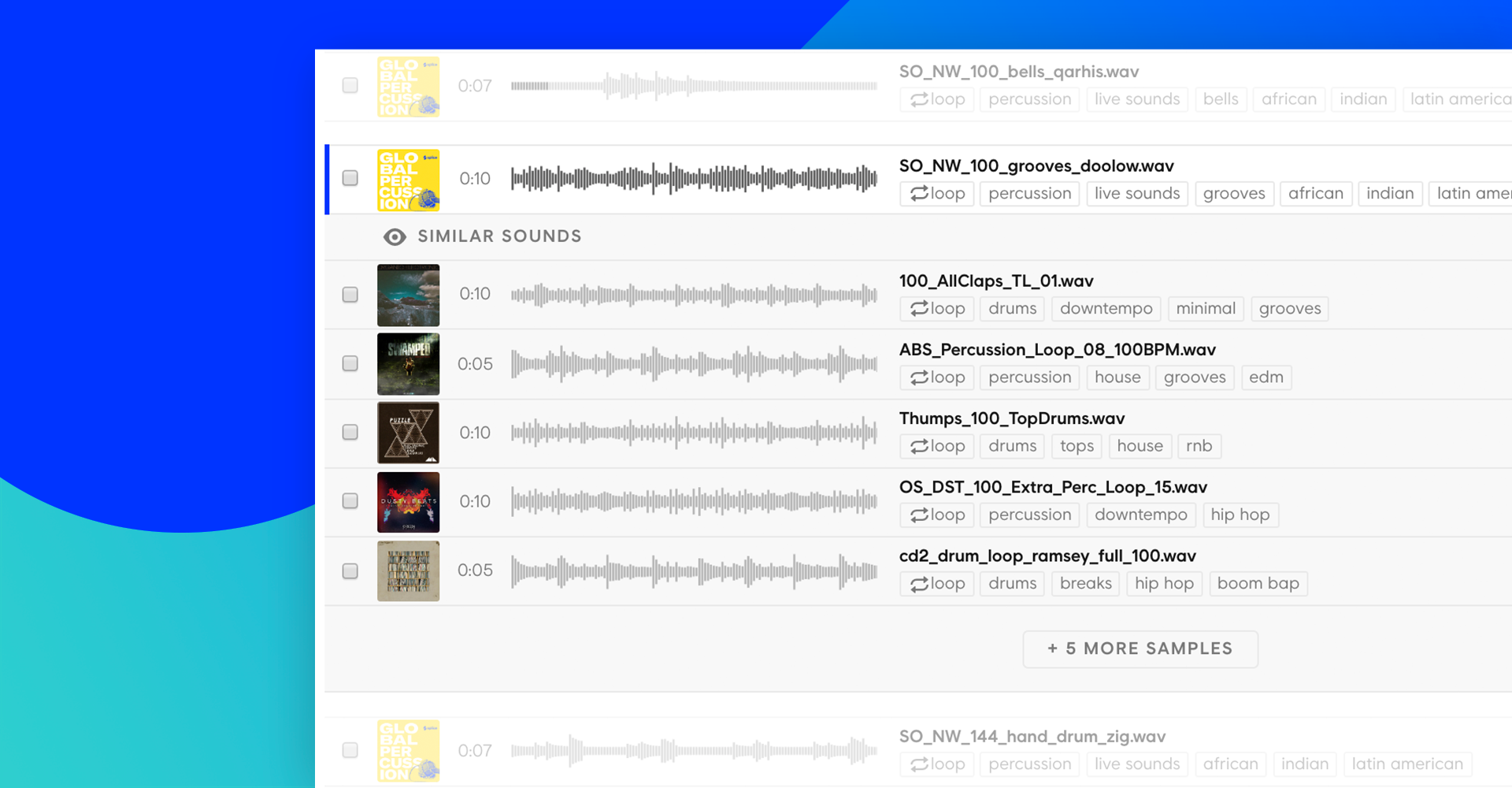
But words can’t always describe music. Searching by genre and subjective tags can take forever and leave artists frustrated when the sounds they find they don’t resonate right. So Splice has taught a machine learning algorithm to draw connections between samples. That allows it for the first time to recommend Similar Sounds to one a musician is currently listening to, based on their pitch, melody, rhythm, and harmonic profile. Sometimes the similarities are surprising — something only a machine could hear.

Splice co-founder and CEO Steve Martocci

It’s an express lane down sonic rabbit hole. Splice is seeing a double-digit increase in artists successfully finding and downloading a sample after a search. That means more subscribers, and more creators relying on Splice to power their artistic process. No wonder Splice was able to raise a $57.5 million Series C from Union Square in March.

“Like with Google Reverse Image Search…now you can do that for any sound” says Splice co-founder and CEO Steve Martocci. “Lots of companies do machine learning that might help them on the backend but this is a real user feature that’s providing value.”

Splice Similar Sounds

Prioritizing where to provide value next is Splice’s biggest challenge amidst hyper growth. The startup launched in 2013 as sort of a Github for music production that saved between every change so artists could revert to old versions and easily coordinate with collaborators. More recently it fought rampant digital instrument piracy by letting users pay a fee per month for access to popular but pricey synthesizers and plug-ins with a rent-to-own model.

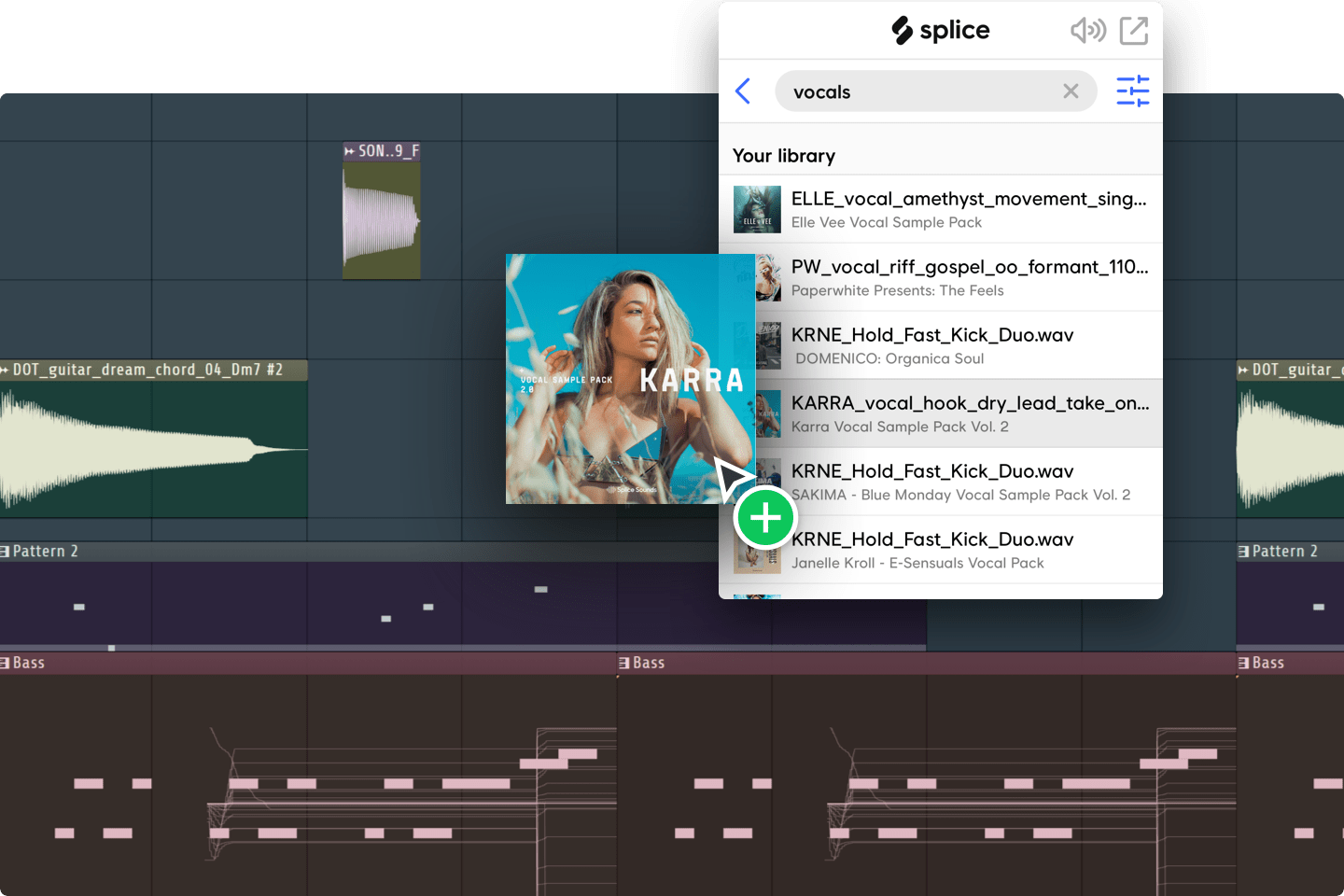
Its breakout product has been the Splice Sounds marketplace where musicians preview 60 million audio samples per day from keyboard flourishes to snare drum hits. The snippets are royalty-free to use, leading many sourced from Splice to end up in chart-topping songs like Demi Lovato’s Billboard #1 “Sorry Not Sorry”. The platform charges $7.99 for unlimited access and splits the revenue with artists who create the sounds, to which Splice has paid out $20 million to date.

Yet once musicians narrow their search with keywords and genres based on tagging by Splice’s human staff, they still often have to scan through tons of sounds to find what feels right.

“People tell me their production process changed so much” Martocci says. “I know there’s one sound that’s close enough if I just keep pressing down on Splice.” With AI able to scan sounds to augment human tagging, and find the similarities to suggest related ones, “Now you might have to just press down once.” I hope to see Splice build new ways to browse Sounds beyond search so you can just follow your ears. It could also offer more ways for sound creators to stay in touch with their fans, as DJs are discovering some concert attendees love their samples more than their sets.

“My job is to keep as many people inspired to create as possible” beams Martocci, who famously sold his TechCrunch Disrupt Hackathon chat app Group.Me to Skype for $85 million just a year after launching. Others want in to the sample business too, though. Music hardware maker Native Instruments launched a competing Sounds.com marketplace last year, while there’s another called Blend.

But Martocci is differentiating with new label deals like one with Spinnin’ Records that sees its artists specially producing sound packs for Splice. It’s not actually other startups that are the biggest limiting factor for Splice. “My biggest competition is people giving up on themselves or thinking they’re not musical” says Martocci.

A big part of maintaining that momentum for artists is making sure they get paid. Stem, Kobalt, Dubset, and more startups have emerged to clean up the messy royalties distribution process. Martocci admits he’s eyeing the space too. “Full disclosure: I think there’s a long-term future for Splice to play a part in doing it right across the board” he tells me. “The royalty-free ecosystem has been a great start for us to get people opening up the creative process and it’s just the beginning of making sense of the whole space.”

After a decade of musictech being a graveyard, Spotify’s success and its direct listing entrance to the stock market have reinvigorated the industry. Streaming grew to $4.3 billion in the first half of the year to make up 80% of US recorded music business. Payouts from streaming are convincing artists the age of the CD is gone and they need to embrace technology and new revenue streams.

That certainly seems to have emboldened Martocci. “We want to build a multi-generational business here. We want to build the most iconic company in music history!” That passion has attracted tons of part-time DJ / full-time techies to work at Splice, including former Secret co-founder Chrys Bader-Wechseler and ex-Facebook video PM Matt Pakes. “We have our in-office studio that’s used every night by an employe. We have DJ equipment team members can rent out and use for their gigs” Martocci notes. “You need to have a team who understands the problems.”

21 Nov 2019

Facebook Dating now integrates with Instagram and Facebook Stories

Facebook Dating, an opt-in feature of the main Facebook app, will begin to tap into the content users are already creating across both Facebook and Instagram to enhance its service. Today, Facebook Dating users will be able to add their Facebook or Instagram Stories to Facebook Dating, in order to share their everyday moments with daters.

As opposed to more polished profile photos, Stories can give someone better insight into what a person is like by showcasing what activities they like to engage in, their hobbies, their interests, their personality, and their humor, among other things. And if the daters themselves appear in a Story, it lets others see what they really look like, even if their online photos are out-of-date.
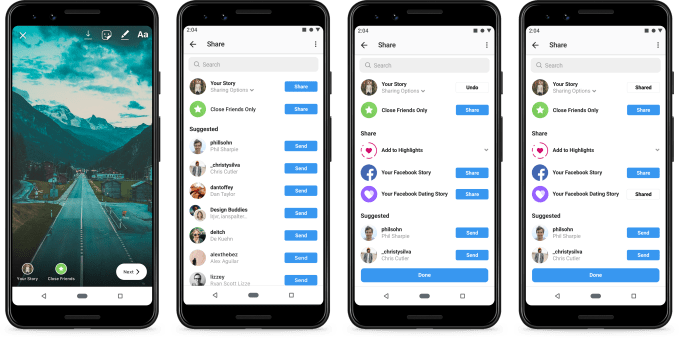
The way the feature is being implemented on Facebook Dating puts the user in control of what’s being shared. That is, your Facebook or Instagram Stories are not automatically copied over to Facebook Dating by default. Instead, users can select which of their Stories are shared and which are not.

In addition, people daters have blocked or passed on Facebook Dating won’t be able to see them.

If a Story is inappropriate, you can also block the user and report it, like you can with other content elsewhere on Facebook.
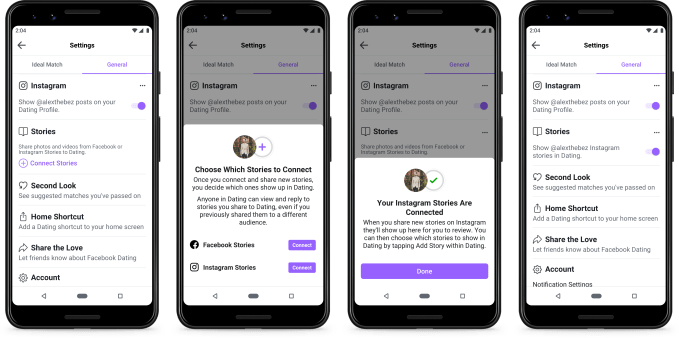
One thing to be aware of is that this feature is a way to share a Story to Facebook Dating, but the Story isn’t exclusively designed for Facebook Dating. That means, if you decide to use the Story feature as some sort of video dating intro, your Facebook and Instagram friends could see this, as well.

When browsing Facebook Dating, you’ll be able to view other people’s Stories along with their profiles. And if you match with someone, you can continue to view their Stories and then even use that to spark a conversation, which takes place in the app. This is similar to how you can respond to someone’s Facebook or Instagram Story today, which then appears in Messenger or Instagram’s Messages section, respectively.
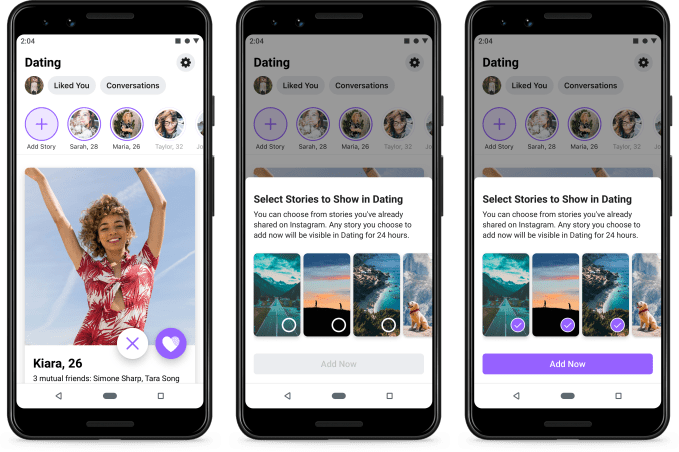
The new Stories feature could be a potential competitive advantage for Facebook Dating, because it allows users a new way to express themselves without requiring them to create new content just for the dating service itself. Even if a rival dating app like Tinder or Bumble introduced their own version of Stories, many wouldn’t think to launch a dating app to capture their everyday moments.

Stories integration is rolling out starting today to Facebook Dating.

Dating, as a Facebook feature, is currently available in 20 countries, including Argentina, Bolivia, Brazil, Canada, Chile, Colombia, Ecuador, Guyana, Laos, Malaysia, Mexico, Paraguay, Peru, the Philippines, Singapore, Suriname, Thailand, United States, Uruguay, and Vietnam. It will be in Europe by early 2020, Facebook says.

The company has not disclosed how many people are using Facebook Dating at this time.