Category: UNCATEGORIZED

20 Nov 2019

Cheq raises another $16M to fight ad fraud

Cheq, a startup focused on preventing ad fraud and ensuring that ads run in brand-safe environments, has raised $16 million in Series B funding.

When the company raised its $5 million Series A last year, CEO Guy Tytunovich contrasted Cheq’s approach with what he called “first generation solutions for ad verification” — rather than identifying fraud and other issues after an ad has already run, he said Cheq is more proactive and can block ads from being served in real time.

I caught up with Tytunovich yesterday, and he told me that this approach remains one of Cheq’s strengths.

At the same time, he also acknowledged that “refunds, rebates and make goods” are allowing advertisers to achieve a kind of retroactive prevention. So he’s increasingly focused on Cheq’s accuracy.

Tytunovich suggested that rather than simply relying on keywords (an approach that might suggest that a relatively innocuous article like “LeBron James killed it last night” isn’t an appropriate place to serve an ad), Cheq is examining 1,200 different factors, “looking for anomalies or looking where the fraudster did some sloppy work.”

He added, “We investigate every single impression in JavaScript. We are extremely deterministic, to not cause this damage of false positives and false negatives.”

And Tytunovich said that despite the number of companies tackling the issue, fraud is still growing — he pointed to a recent report from Cheq estimating that fraud will cost advertisers $23 billion this year.

“You need to be smarter every day,” he said. “We’re definitely seeing in ad fraud, not just different types of sophisticated fraud — as the time goes by we see more and more of that organized crime type of ad fraud. Which is fascinating on the one hand, but also it’s kind of frightening if you really think about it.”

The new funding was led by Battery Ventures (which also led the Series A) and MizMaa Ventures. The latter is an Israeli firm that Tytunovich said already “helped tremendously” with things like introductions, even before making an investment.

Cheq is also moving into new areas like connected TV and console gaming.

Ultimately, Tytunovich said he wants the company to become the “immune system of the internet” — which doesn’t just mean detecting ad fraud, but also becoming “a solution to everything that sucks about digital advertising specifically, things like fake news and how advertising relates to that.”


20 Nov 2019

With echoes of Theranos, Truvian Sciences revives the dream of low-cost, accessible blood tests

A little over a year after the dissolution of the once high-flying blood testing startup Theranos, another startup has raised over $27 million to breathe new life into the vision of bringing low-cost blood tests to point-of-care medical facilities.

Unlike Theranos, Truvian Sciences is not claiming that most of its blood tests do not need clearance from the U.S. Food and Drug Administration, and is, in fact, raising the money to proceed with a year-long process to refine its technology and submit it to the FDA for approval.

“More and more consumers are refusing to accept the status quo of healthcare and are saying no to expensive tests, inconvenient appointments and little to no access to their own test results,” said Jeff Hawkins, the president and chief executive of Truvian, in a statement. “In parallel, retail pharmacies are rising to fill demand, becoming affordable health access points. By bringing accurate, on-site blood testing to convenient sites, we will give consumers a more seamless experience and enable them to act on the vast medical insights that come with regular blood tests.”

Hawkins, the former vice president and general manager of reproductive and genetic health business at Illumina, is joined by a seasoned executive team of life sciences professionals including Dr. Dena Marrinucci, the former co-founder of Epic Sciences, who serves as the company’s senior vice president of corporate development and is a co-founder of the company.

Image courtesy of Flickr/Mate Marschalko

As part of today’s announcement, the company said it was adding Katherine Atkinson, a former executive at Epic Sciences and Illumina, as its new chief commercial officer, and has brought on the former chairman of the Thermo Fisher Scientific board of directors, Paul Meister, as a new director.

Funding for the company came from GreatPoint Ventures and included DNS Capital,Tao Capital Partners and previous investor Domain Associates.

The ultimate goal, according to Hawkins, is to develop a system that can be installed in labs and can provide accurate results in 20 minutes for a battery of health tests from a small sample of blood for as low as $50. Typically, these tests can cost anywhere from several hundred to several thousand dollars — depending on the testing facility, says Hawkins.

Using new automation and sensing technologies, Truvian is aiming to combine chemistries, immunoassays and hematology assays into a single device that can perform standard assessment blood tests like lipid panels, metabolic panels, blood cell counts, and tests of thyroid, kidney and liver functions.

The company’s system includes remote monitoring and serviceability, according to a statement from Truvian. Its dry reagent technology allows materials to be stored at room temperature, removing the need for cold chain or refrigerated storage. According to a statement, the company is working to receive a CE Mark in the European Economic Area and submitted to the FDA for 510(k) clearance along with a  “clinical laboratory improvement amendments” waiver application to let the devices be used in a retail setting or doctor’s office.

“We don’t believe that single drop of blood from a finger stick can do everything,” says Hawkins (in opposition to Theranos). “Fundamentally as a company we have built the company with seasoned healthcare leaders.”

As the company brings its testing technology to market, it’s also looking to compliment the diagnostics toolkit with a consumer-facing app that would provide a direct line of communication between the company and the patients receiving the results of its tests.

Truvian’s data will integrate with both Apple and Google’s health apps as well as reside on the company’s own consumer-facing app, according to Hawkins.

“At the end of the day precision medicine is going to come from integrating these data sources,” says Hawkins. “I think if we pull off what we want we should be able to make your routine blood testing far more accessible.”

20 Nov 2019

With echoes of Theranos, Truvian Sciences revives the dream of low-cost, accessible blood tests

A little over a year after the dissolution of the once high-flying blood testing startup Theranos, another startup has raised over $27 million to breathe new life into the vision of bringing low-cost blood tests to point-of-care medical facilities.

Unlike Theranos, Truvian Sciences is not claiming that most of its blood tests do not need clearance from the U.S. Food and Drug Administration, and is, in fact, raising the money to proceed with a year-long process to refine its technology and submit it to the FDA for approval.

“More and more consumers are refusing to accept the status quo of healthcare and are saying no to expensive tests, inconvenient appointments and little to no access to their own test results,” said Jeff Hawkins, the president and chief executive of Truvian, in a statement. “In parallel, retail pharmacies are rising to fill demand, becoming affordable health access points. By bringing accurate, on-site blood testing to convenient sites, we will give consumers a more seamless experience and enable them to act on the vast medical insights that come with regular blood tests.”

Hawkins, the former vice president and general manager of reproductive and genetic health business at Illumina, is joined by a seasoned executive team of life sciences professionals including Dr. Dena Marrinucci, the former co-founder of Epic Sciences, who serves as the company’s senior vice president of corporate development and is a co-founder of the company.

Image courtesy of Flickr/Mate Marschalko

As part of today’s announcement, the company said it was adding Katherine Atkinson, a former executive at Epic Sciences and Illumina, as its new chief commercial officer, and has brought on the former chairman of the Thermo Fisher Scientific board of directors, Paul Meister, as a new director.

Funding for the company came from GreatPoint Ventures and included DNS Capital,Tao Capital Partners and previous investor Domain Associates.

The ultimate goal, according to Hawkins, is to develop a system that can be installed in labs and can provide accurate results in 20 minutes for a battery of health tests from a small sample of blood for as low as $50. Typically, these tests can cost anywhere from several hundred to several thousand dollars — depending on the testing facility, says Hawkins.

Using new automation and sensing technologies, Truvian is aiming to combine chemistries, immunoassays and hematology assays into a single device that can perform standard assessment blood tests like lipid panels, metabolic panels, blood cell counts, and tests of thyroid, kidney and liver functions.

The company’s system includes remote monitoring and serviceability, according to a statement from Truvian. Its dry reagent technology allows materials to be stored at room temperature, removing the need for cold chain or refrigerated storage. According to a statement, the company is working to receive a CE Mark in the European Economic Area and submitted to the FDA for 510(k) clearance along with a  “clinical laboratory improvement amendments” waiver application to let the devices be used in a retail setting or doctor’s office.

“We don’t believe that single drop of blood from a finger stick can do everything,” says Hawkins (in opposition to Theranos). “Fundamentally as a company we have built the company with seasoned healthcare leaders.”

As the company brings its testing technology to market, it’s also looking to compliment the diagnostics toolkit with a consumer-facing app that would provide a direct line of communication between the company and the patients receiving the results of its tests.

Truvian’s data will integrate with both Apple and Google’s health apps as well as reside on the company’s own consumer-facing app, according to Hawkins.

“At the end of the day precision medicine is going to come from integrating these data sources,” says Hawkins. “I think if we pull off what we want we should be able to make your routine blood testing far more accessible.”

20 Nov 2019

Front announces Front Calendar to integrate scheduling with shared inboxes

Front, the company that lets you manage your inboxes as a team, acquired Meetingbird last year. So it shouldn’t come as a surprise that Front is about to roll out its own calendar. This way, you can manage meetings within Front and find time that works for everyone.

Integrating emails with your calendar makes a lot of sense. There’s a reason why Outlook lets you manage both your inbox and your calendar. And there’s also a reason why Google includes both Gmail and Google Calendar in G Suite accounts.

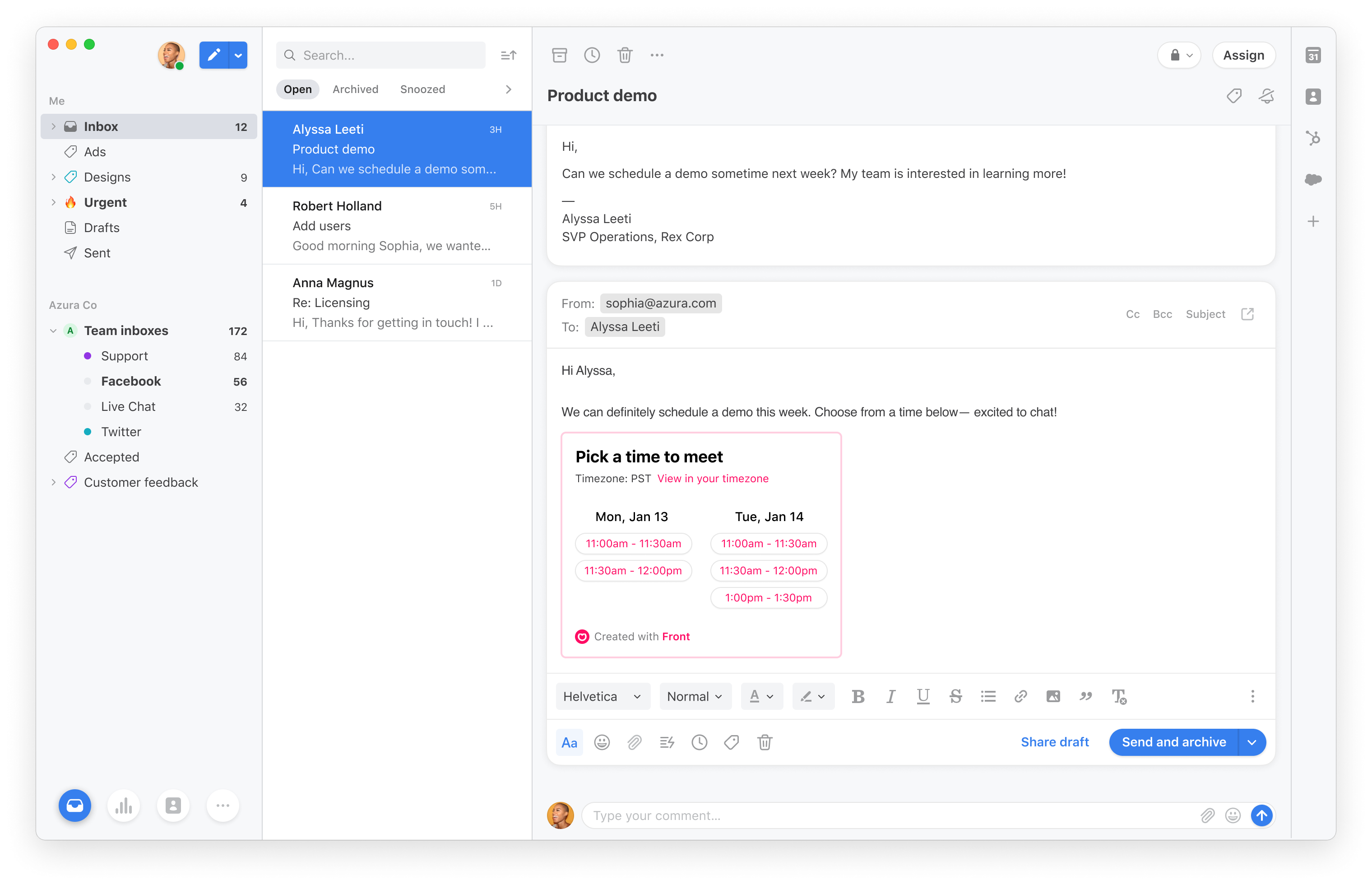
Front Calendar works with both Google and Office 365 accounts as the backend infrastructure for your calendars. You can open up a day view by clicking on the calendar button in the top right corner.

As you can see in the following screenshot as well, you get a preview of your existing events when somebody sends you a calendar invitation.

A day view doesn’t cut it when you’re trying to plan further ahead, that’s why you can expand the calendar and get a full-fledge calendar in glorious full screen:

Finally, Front Calendar is bringing back Meetingbird’s core feature. You can insert a widget in your email with your available meetings times. Recipients can click to accept a time slot.

It looks like a good Google Calendar or Outlook alternative. But Front says that it wants to add a multiplayer component — beyond just inviting people to events. You could imagine opening an event and @-mentioning your teammates to reschedule an event. You could also imagine setting up sophisticated rules to automatically tag and organize events based on multiple criteria.

The first version of Front Calendar will be available in December.

20 Nov 2019

Anyone can now create maps and stories on Google Earth

Google Earth is making a significant change to its product, with the addition of content creation tools that allow anyone to create maps and stories for its platform. The feature is an expansion of the Voyager program, launched in 2017, which then introduced guided tours from top storytellers, scientists, and nonprofits, like BBC Earth, Jane Goodall, Sesame Street, and NASA.

Those tours combined text and imagery, including Street View and 360-degree videos, to immerse viewers in habitats around the world, where they could explore and learn.

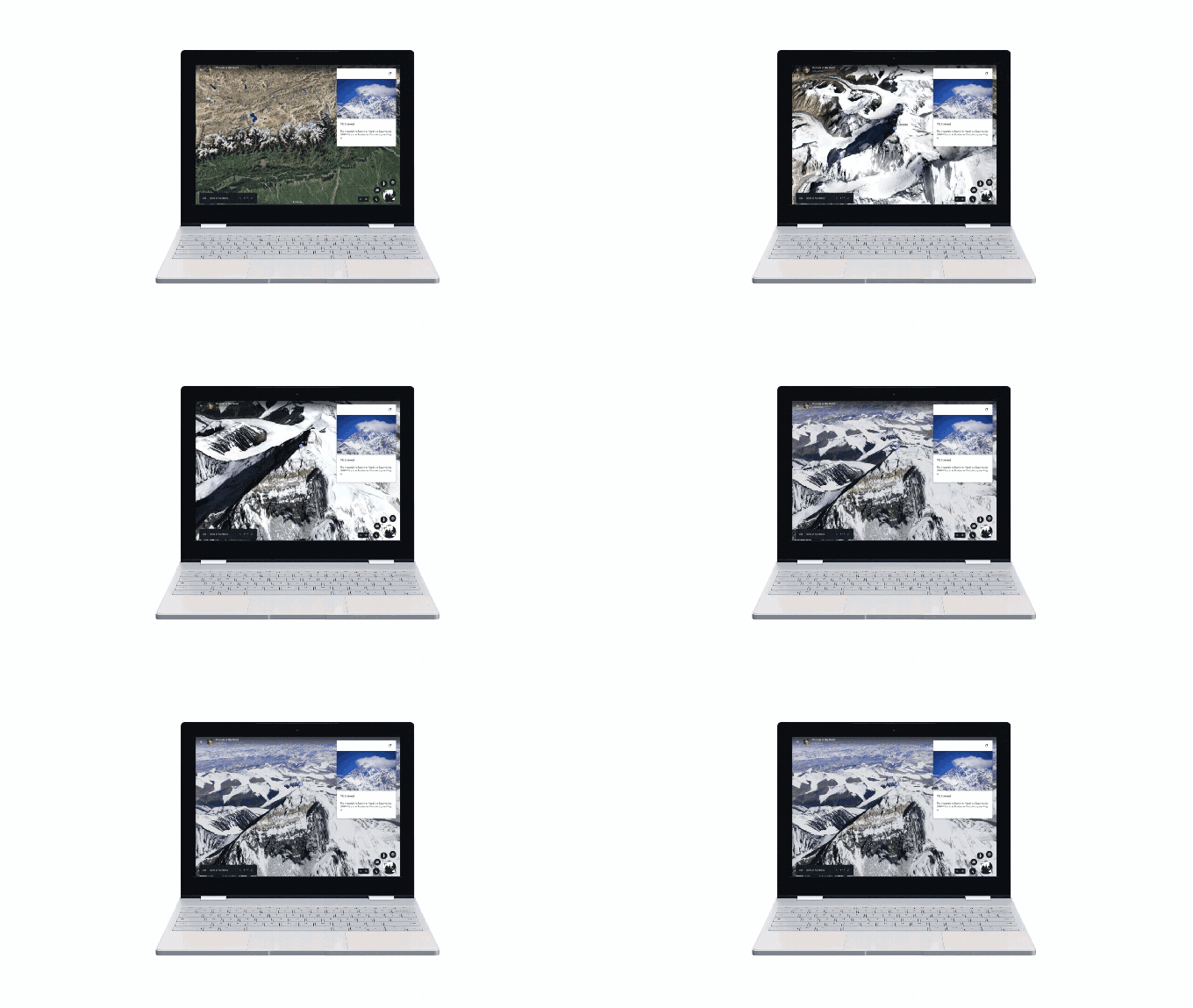
The new content creation tools offer similar capabilities, including the ability to select from Street View photos and 3D views of the earth when telling your story. You can also add placemarks, lines, shapes, photos, and videos, and write the text in a rich text editor, create title screens for slides for fullscreen presentations, and more.

The resulting stories can be organized into narratives that will fly users from place to place as they watch the presentation. The tools also support collaboration and the final stories can be shared with others by way of a Google Drive integration. This could allow a group of educators, for example, to work together to build out tours that complemented their lesson plans.

Early adopters have used these creation tools to build maps that show a river under threat, an Antarctic expedition, or offer a 3D tour of Renaissance architecture in Italy, among other things. An educational nonprofit also used the feature to showcase the stops characters made in the Young Adult novel, Walk Two Moons.

There’s a clear use case here for education, as the tools let teachers to build stories to bring their lessons to life and give students a close-up look at the places they’re learning about. But some may choose to use the tools for things of a more personal nature, like travel inspiration or bucket list-making, for example.

When Google launched its Voyager platform in 2017, it also modernized Google Earth for modern web browsers, meaning it can now run as a web app in Google Chrome.

This all ties into Google’s larger push for Chromebooks in the classroom — an area where it also competes against Apple and Microsoft.

That battle is fairly heated, as well. Apple’s marketing SVP Phil Schiller even slammed Google’s Chromebooks this week says they’re “cheap” and won’t succeed. However, low-cost Chromebooks have been winning so far. According to estimates, 60% of all laptops and tablets purchased for U.S. K-12 classrooms were Chromebooks, and only 18% were Apple products, CNBC reported.

With Google Earth creation tools that tie into Google Drive, Google has added another competitive advantage for its own products. But whether teachers will actually adopt the tools at scale remains to be seen. Many professionally created tours are already available, after all, through Voyager. And while the creation is easy enough, it’s also time-consuming to find the right photos and videos, to add places and write text.

One concern is that by opening up creation tools to the crowd, Google Earth could be inviting spam and other inappropriate content to show up on a platform often used in classroom settings by children. Google says it has built automated detection systems, including machine learning models, that can help it find and remove policy-violating content, however.

It also enables users to flag any such content so it can conduct manual reviews review and take action. And the user attribution is prominently displayed on the content, so everyone can see the author information. Repeated violations could see the user banned from further content creation.

The creation tools are now available in the Google Earth web app, and the projects can be viewed on mobile and tablet devices using the Google Earth mobile app for iOS and Android, says Google.

20 Nov 2019

Ubiquiti announces new AmpliFi Alien router with Wi-Fi 6

Ubiquiti, the company behind popular UniFi Wi-Fi access points and networking equipment, is releasing a new router for consumers — the AmpliFi Alien.

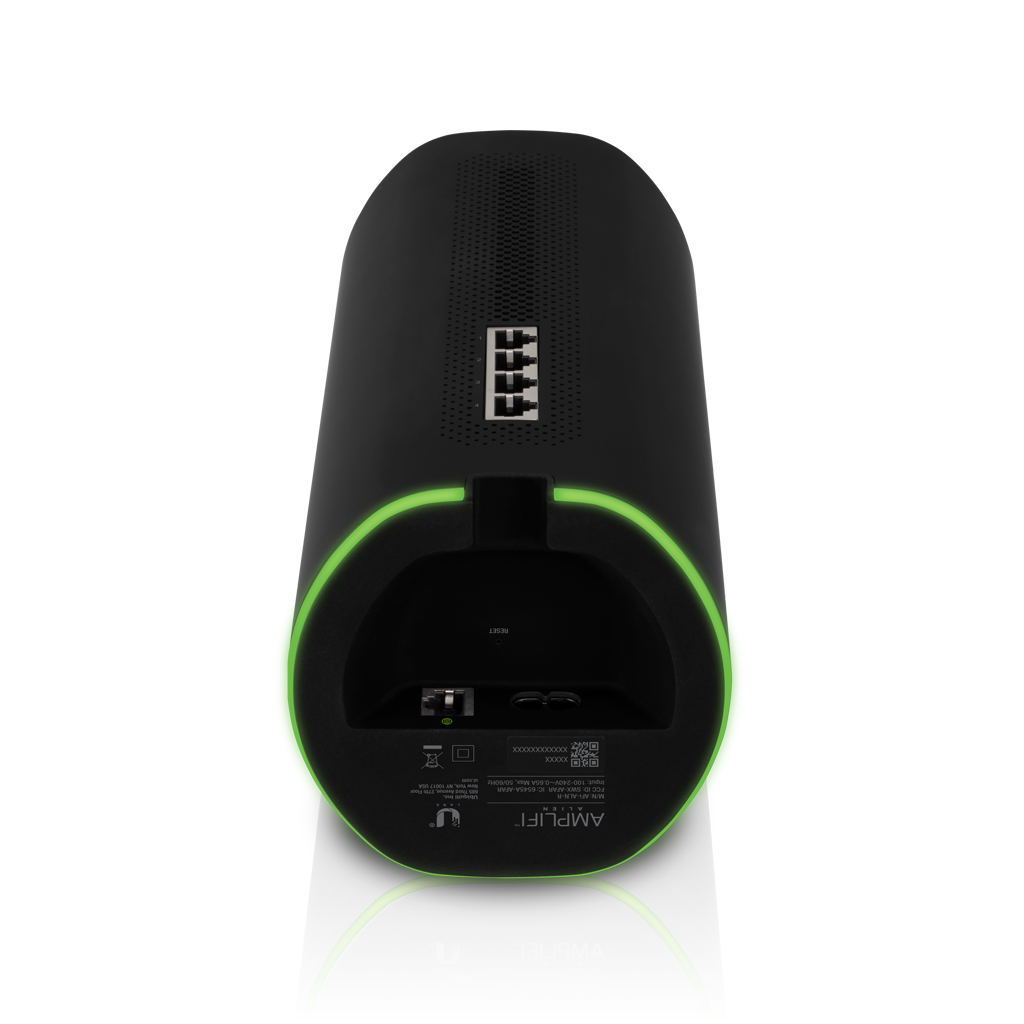
Today’s new device is an all-in-one networking device. It features a router (the “brain” of your local network), four Gigait Ethernet ports and Wi-Fi capabilities. And yes, it is a Wi-Fi 6 (802.11ax) device.

You can plug the AmpliFi Alien to your modem, put your modem in bridge mode and let it take care of your network at home. It should be a huge improvement compared to ISP-provided hardware.

When it comes to Wi-Fi performance, the AmpliFi Alien supports 8×8 MIMO Wi-Fi 6 (both 2.4GHz and 5GHz) and offers a separate 5GHz Wi-Fi 5 radio (802.11ac). There aren’t a ton of devices that support Wi-Fi 6 just yet. The iPhone 11 and the Samsung Galaxy S10 support Wi-Fi 6, but not the brand new 16-inch MacBook Pro for instance.

But the AmpliFi Alien also works with older devices that run on previous Wi-Fi generations, so you don’t have to replace all your gadgets. You can also set up an isolated guest network if you don’t want your friends to be able to access your computers on your network. You can also use your AmpliFi devices as a VPN endpoint when you’re on the road.

The device itself is a cylinder-shaped tower with flat edges at the front of the back of the device. It looks a bit like the recently announced UniFi Dream Machine, but it’s less curvy and taller. There’s a color touch screen to get information about connection speeds and some LEDs at the base of the tower.

You can buy multiple AmpliFi Alien and create a mesh network around your house. A single AmpliFi Alien costs $379.

Compared to the UniFi Dream Machine, you can’t control the device with UniFi’s network management controller. This is a consumer device so you don’t get a ton of customizations on the software front — the AmpliFi Alien isn’t designed for enterprise clients. But Ubiquiti offers an AmpliFi mobile app to configure the DHCP server, port forwarding and Wi-Fi settings.

20 Nov 2019

Vouch raises $45M led by YC Continuity for business insurance that targets startups

“Move fast and break things” is a term we usually associate with Facebook (at least, until 2014) and the general startup ethos of being disruptive. Now in true entrepreneurial fashion, the phrase is finding itself as the center of — what else — a startup idea, which today is announcing a sizeable Series B as it gains traction.

Vouch, which offers business insurance specifically targeting startups, is today announcing a Series B of $45 million, led by Y Combinator’s Continuity Fund. The company was part of YC cohort that presented this past August, and between then and now it appears to have also raised a Series A of $24 million, with this Series B actually also closing back in September (I’m guessing the delay in timing was to coincide the news with the expansion of its service to California). PitchBook data indicates that Vouch’s valuation has also ramped up rapidly: it’s currently at $210 million. (Previous investors in the company include Ribbit Capital, SVB Financial Group, Y Combinator, Index Ventures, and 500 Startups, with the total raised to date now at $70 million.)

The company — not to be confused with the tutoring network Vouch, nor the ‘social network for loans’ Vouch — will be using the money that it will use to continue expanding its product and to bring the service to more geographies.

In addition to now launching in its newest region of California, today, it’s also live in Oregon, Utah, Colorado, Illinois, Indiana, Ohio, Wisconsin and Michigan. Today’s move is a key one, considering Silicon Valley is at the heart of the tech world, and therefore startups, and therefore fertile ground for acquiring new customers.

(It seems that although Vouch itself is based in San Francisco, it delayed a California launch in part to test out the product in smaller markets before hitting the big time: California, it notes, accounts for 50% of the whole business insurance market in the US, and California startups alone spend $44 billion annually on it.)

When Vouch launched at YC, founder Sam Hodges (who had been one of the original co-founders of Funding Circle, the business lending platform that went public in London) described the platform’s mission as a way of mitigating risks because sometimes “bad things happen to good startups.”

The company’s insurance covers all the tricky things that can befall young businesses in what is a very volatile market. (Common wisdom says that most fail, some have put the figure as high as 90%.)

That includes general liability (which includes damage to rented premises, personal or advertising injury, and related areas), business liability, management liability, fiduciary liability, cyber and crime coverage, rented and non-owned auto insurance and more. (Health or workers’ compensation are not included.) The products start at $200/year, which Vouch says undercuts most of what is already on the market. Munich Re backs the policies.

“Vouch helps founders manage the risks associated with starting up a new company, so they can focus on creating and growing businesses that change the world. We believe that’s a purpose worth pursuing,” said Hodges in a statement. “As an entrepreneur, I’ve spent most of my career building companies at the intersection of technology and financial services. I know first-hand that along the journey of building and growing a business, teams will face numerous high-stakes challenges. Vouch is here to support entrepreneurs and mitigate those challenges from the beginning, leaving more room for growth.”

Y Combinator has always had a soft spot for startups that built services for startups, and this is no exception. It makes perfect sense as a follow-on investment for Continuity, which has also backed Brex, Gusto, Instacart, LendUp, and Stripe. In this sense, it becomes a strategic investor, not unlike Silicon Valley Bank (which tells startups that do business with it that Vouch is its preferred insurance provider).

“Y Combinator and Vouch share a common goal – giving founders the support they need to build successful, innovative companies,” said Anu Hariharan, Partner at Y Combinator Continuity, in a statement. “Vouch is built specifically for startups, so founders have the peace of mind that their business is covered. This platform is fundamental to the startup community, as it enables founders to focus on growing their companies — which is why we were bullish on leading the Series B.”

20 Nov 2019

Spotify’s free music service will now stream on Alexa devices, plus Bose and Sonos smart speakers

Spotify has worked with Amazon Echo since 2016, but only for premium subscribers. Today, that changes as Spotify says its free tier will now stream across Alexa-powered devices, as well as other smart speakers from Sonos and Bose. The Alexa support will be available for users in the U.S., Australia, and New Zealand. Support for Sonos and Bose is more broadly available to users around the world.

In the case of Alexa devices, like Amazon Echo speakers or the Fire TV, users will be able to ask Alexa to play Spotify’s playlist, like “Today’s Top Hits,” or their personalized playlist, “Discover Weekly,” among others. The service can also be set as the default, so you can use commands like “Play my Discover Weekly,” “Like this song,” or “Pause,” and more, without having to say “on Spotify.”

Meanwhile, on Sonos and Bose speakers, users can set up Spotify Connect from the Spotify app. This works with Bose smart speakers and soundbars, as well as all Sonos smart speakers, including the new indoor/outdoor speaker Sonos Move and the Symfonisk IKEA WiFi Speaker, integrated with the Sonos Home Sound System.

To use Spotify Connect, you’ll tap the “Devices” icon on the screen to select which speaker you want to use. This will also require the Bose and Sonos devices are updated to the latest firmware, the company says.

The expanded support for smart speakers comes only a day after Amazon directly challenged Spotify with a major move of its own. On Tuesday, Amazon announced its own music service would become free across devices, including the web, Fire TV, iOS, and Android. Before, the free, ad-supported music service was only available on Echo devices. While the services is a rival of sorts to other free services, like Spotify and Pandora, it has a more limited catalog of just 2 million tracks. That makes it better for those who only casually listen to music stations and curated playlists.

Spotify’s stock dropped almost 5% on Tuesday after Amazon’s announcement, however.

By now making Spotify’s free tier more accessible, it’s likely that many people will choose Spotify’s free streaming over Amazon’s free streaming, given the larger catalog of over 50 million songs. In addition, Spotify is best known for its personalization capabilities that help introduce users to new music based on their likes and listening history, which continues to be a major draw.

However, Amazon is only one of many challengers Spotify faces these days, with Apple Music, YouTube Music and regional players in big markets like India and China, also vying for users.

In addition, TikTok owner ByteDance is said to be preparing to move into music streaming, aiming for markets like India, Indonesia, and Brazil. That’s a huge threat not only because of the markets it’s targeting but because you can now draw a direct line between TikTlk top tracks and No. 1 tracks and hits on Spotify, which gives it a competitive advantage.


20 Nov 2019

WHILL brings its autonomous wheelchairs to North American airports

After trials in Amsterdam’s Schiphol airport, Tokyo’s Haneda airport, and Abu Dhabi airport earlier this year, WHILL, the developer of autonomous wheelchairs, is bringing its robotic mobility tech to North America.

At airports in Dallas and Winnipeg, travelers with mobility limitations booked a Whill through Scootaround and test out the company’s products.

Using sensing technologies and automatic brakes, Whill’s wheelchairs detect and avoid obstacles in busy airports, allowing customers to get to their gate faster.

Based in Yokohama, Japan, Whill has raised roughly $80 million for its technology to bring autonomy to personal mobility.

“When traveling, checking in, getting through security and to the gate on time is critical to avoid the hassle and frustration of missing a flight,” said Satoshi Sugie, the founder and chief executive of WHILL, in a statement. “Travelers with reduced mobility usually have to wait longer times for an employee to bring them a wheelchair and be pushed to their gate, reducing their flexibility while traveling. We are now providing an opportunity for travelers with reduced mobility to have a sense of independence as they move about the airport and get from point A to point B as smoothly as possible.”

The company is one of a growing number of startups and established technology companies tackling the massive market of assistive technologies.

The entire population of people with disabilities globally stands at 1 billion and there are 70 million potential customers for assistive technology products across Europe. If demand in human terms isn’t enough to sway would-be entrepreneurs, then perhaps a recent market report indicating that spending on assistive technologies for the elderly and people with disabilities is projected to reach over $26 billion by 2024 will do the trick.

“Accessibility is a priority for Winnipeg Richardson International Airport and travel is now easier for passengers with limited mobility thanks to our partnership with WHILL. We are excited to be one of the first airports in North America to trial WHILL’s autonomous personal mobility devices with our travelers.”

20 Nov 2019

Inhabitr raises $4 million to let you rent furniture

Inhabitr, a Chicago-based furniture rental platform, has today announced the close of a $4 million in Series A funding, led by Great North Labs.

Inhabitr launched in 2016 after the cofounders, who have gone through dozens of moves between the two of them, decided that purchasing, moving and maintaining furniture is one of the biggest pain points of the whole process.

Inhabitr tries to solve that by letting users rent furniture on the platform at a much more affordable cost than buying, never having to worry about the associated costs of moving that furniture should they relocate.

The company works directly with manufacturers to source products, and partners with local furniture stores and their employees to handle delivery and white glove installation.

Customers can choose from pre-packaged rooms to go, which have been curated by in-house designers, or build their own room by renting a la carte. Living room packages range from $70/month to $130/month, while individual pieces of furniture, like a sofa, are priced anywhere between $30/month to as high as $150/month for some high-end pieces. If at any time a user wants to change things up, Inhabitr charges a $99 swap fee to swap old furniture out with new.

The Chicago-based company already serves 10 cities in the U.S. and has put furniture in more than 2000 homes.

The hope is that Inhabitr can better serve the end customer by tying together these three existing frameworks — designers, furniture manufacturers, and retail stores.

Cofounder Ankur Agrawal believes that one of the biggest challenges for the company is scaling operations in a logistics-heavy industry, and perfecting the training playbook for the retail employees interfacing with the end customer.

“Another big challenge is capital,” said Agrawal. “Furniture as a category is an operations-heavy category and there is little understanding around the industry. Investors think of this as a non-sexy category and are looking for an obsolete business that software can come and disrupt. But the next feat of iteration will come from brick and mortar innovation.”