Category: UNCATEGORIZED

19 Nov 2019

India says law permits agencies to snoop on citizen’s devices

The Indian government said on Tuesday that it is “empowered” to intercept, monitor, or decrypt any digital communication “generated, transmitted, received, or stored” on a citizen’s device in the country in the interest of national security or to maintain friendly relations with foreign states.

Citing section 69 of the Information Technology Act, 2000, and section 5 of the Telegraph Act, 1885, Minister of State for Home Affairs G. Kishan Reddy said local law empowers federal and state government to “intercept, monitor or decrypt or cause to be intercepted or monitored or decrypted any information generated, transmitted, received or stored in any computer resource in the interest of the sovereignty or integrity of India, the security of the state, friendly relations with foreign states or public order or for preventing incitement to the commission of any cognizable offence relating to above or for investigation of any offence.”

Reddy’s remarks were in response to the parliament, where a lawmaker had asked if the government had snooped on citizens’ WhatsApp, Messenger, Viber, and Google calls and messages.

The lawmaker’s question was prompted after 19 activists, journalists, politicians, and privacy advocates in India revealed earlier this month that their WhatsApp communications may have been compromised.

WhatsApp has said that Israeli spyware manufacturer NSO’s tools have been used to send malware to 1,400 users. The Facebook-owned company has in recent weeks alerted users whose accounts had been compromised. The social juggernaut earlier this month sued NSO alleging that its tools were being used to hack WhatsApp users.

NSO has maintained that it only sells its tools to government and intelligence agencies, an assertion that stoked fear among some that the state could be behind targeting the aforementioned 19 people — and perhaps more — in the country.

Reddy did not directly address the questions, but in a blanket written statement said that “authorized agencies as per due process of law, and subject to safeguards as provided in the rules” can intercept or monitor or decrypt “any information from any computer resource” in the country.

He added that each case of such interception has to be approved by the Union Home Secretary (in case of federal government) and by the Home Secretary of the State (in case of state government.)

Last month, the Indian government said it was moving ahead with its plan to revise existing rules to regulate intermediaries — social media apps and others that rely on users to create their content — as they are causing “unimaginable disruption” to democracy.

It told the country’s apex court that it would formulate the rules by January 15 of next year.

A report published today by New Delhi-based Software Law and Freedom Centre (SFLC) found that more than 100,000 telephone interception are issued by the federal government alone every year.

“On adding the surveillance orders issued by the state governments to this, it becomes clear that India routinely surveils her citizens’ communications on a truly staggering scale,” the report said.

The non-profit organization added that the way current laws that enable law enforcement agencies to conduct surveillance on citizens’ private communications are “opaque” as they are run “solely by the executive arm of the government, and make no provisions for independent oversight of the surveillance process.”

19 Nov 2019

Amazon makes its music streaming service free with ads

Amazon is making its music streaming service free. The company previously offered free, ad-supported streaming only to customers who owned an Amazon Echo device. Now it’s rolling out free streaming to anyone using the Amazon Music app on iOS, Android, Fire TV and Amazon Music on the web in the U.S., U.K., and Germany.

The company has been steadily making its music streaming service more accessible by reducing prices. Earlier this year, for example, Amazon said it would no longer charge the $3.99 per month for streaming from Amazon Music Unlimited to Echo devices or require customers to pay for Amazon Prime in order to gain access to Prime Music’s smaller, 2+ million song catalog. Instead, it rolled out an ad-supported version of Amazon Music for free to Echo owners.

This is basically the same 2 million song catalog that comes with Prime Music, it just includes advertising and doesn’t require Prime membership.

Now, it’s making Amazon Music free for anyone — Echo owner or not — across a range of devices. This will allow users to play thousands of stations based on any song, artist, era, or genre, similar to Pandora. They’ll also gain access to top playlists, like “All Hits” featuring the world’s top songs, or the “Holiday Favorites” station, among others.

The move doesn’t really threaten paid subscription services like Spotify or Pandora’s premium tier or Apple Music, as Amazon’s free service has a much smaller catalog. It’s also not nearly as advanced in terms of its personalization technology, which powers things like Spotify’s Discover Weekly and other custom playlists. These are a big draw for music fans, and a reason they opt for one streaming service over another.

Instead, Amazon’s free music service serves more as a way to upsell consumers by encouraging them to join Amazon Prime in order to remove the ads from their music. (Prime Music’s 2 million songs are an added perk of a Prime subscription.) This is Amazon’s true motive: lock in more customers to Amazon Prime, ensure they realize the value of the free shipping and other benefits, then get them to renew every year. Once a Prime member, people will shop more often from Amazon, which is where the retailer’s profits lie.

The free music service also serves as an entry point into Amazon’s wider music ecosystem. If customers decide they want a larger, ad-free catalog, they can up to join Amazon Music Unlimited instead, which offers 50 million songs at $7.99 per month for Prime members, or $9.99 per month for others. And true audiophiles can upgrade to Amazon Music HD for $12.99 per month for Prime members, or $14.99 per month for non-members.

For the time being, Amazon is offering 4 months of Amazon Music Unlimited for $0.99.

19 Nov 2019

Sweden drops rape investigation into Wikileaks founder, Julian Assange

Sweden has dropped an investigation into Wikileaks founder, Julian Assange, on allegations of suspected rape.

In a statement today the country’s prosecution authority said the evidence has “weakened considerably” in the almost a decade that’s elapsed since the events in question.

“I would like to emphasise that the injured party has submitted a credible and reliable version of events. Her statements have been coherent, extensive and detailed; however, my overall assessment is that the evidential situation has been weakened to such an extent that that there is no longer any reason to continue the investigation,” said Eva-Marie Persson, Sweden’s deputy director of public prosecution.

The prosecutor had only announced in May that it was reopening an investigation into allegations of sexual offences which date back to August 2010. The investigation was earlier discontinued in 2017 but reopened at the request of the lawyer for the alleged victim following Assange’s arrested at the Ecuadorian embassy in London, after the country withdrew diplomatic immunity.

After his arrest Assange was convicted for violating bail conditions and sent to Belmarsh prison in London where he remains.

He is now facing potential extradition to the US which quickly instigated extradition proceedings against him — initially charging Assange with conspiracy to hack into a classified computer, and then additional charges under the Espionage Act.

The extradition hearing is due to take place in February 2020 after a UK judge denied a request by Assange’s lawyers to delay proceedings to give him more time to prepare his defence.

When Assange fled to the Ecuadorian embassy in 2012 it was an attempt to avoid extradition to Sweden. The Wikileaks founder claimed he would be at risk of extradition to the US. But after spending some seven years of self-imposed incarceration in Knightsbridge he faces a major legal fight to stave off the same outcome.

19 Nov 2019

The iRobot Roomba s9+ and Braava m6 are the robots you should trust to clean your house well

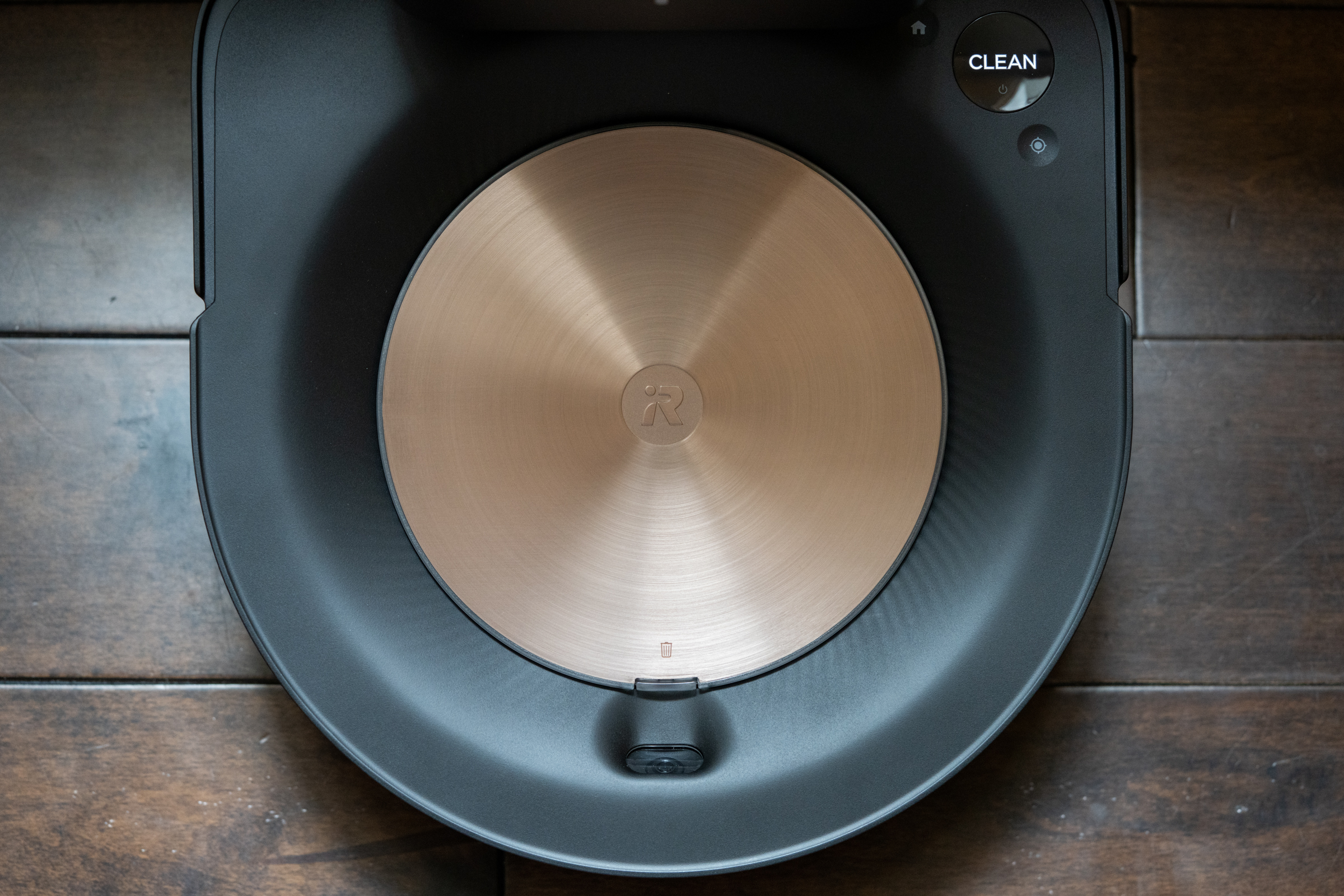
This holiday season, we’re going to be looking back at some of the best tech of the past year, and providing fresh reviews in a sort of ‘greatest hits’ across a range of categories. First up: iRobot’s top-end home cleaning robots, the Roomba s9+ robot vacuum, and the Braava m6 robot mop and floor sweeper. Both of these represent the current peak of iRobot’s technology, and while that shows up in the price tag, it also shows up in performance.

iRobot Roomba S9+

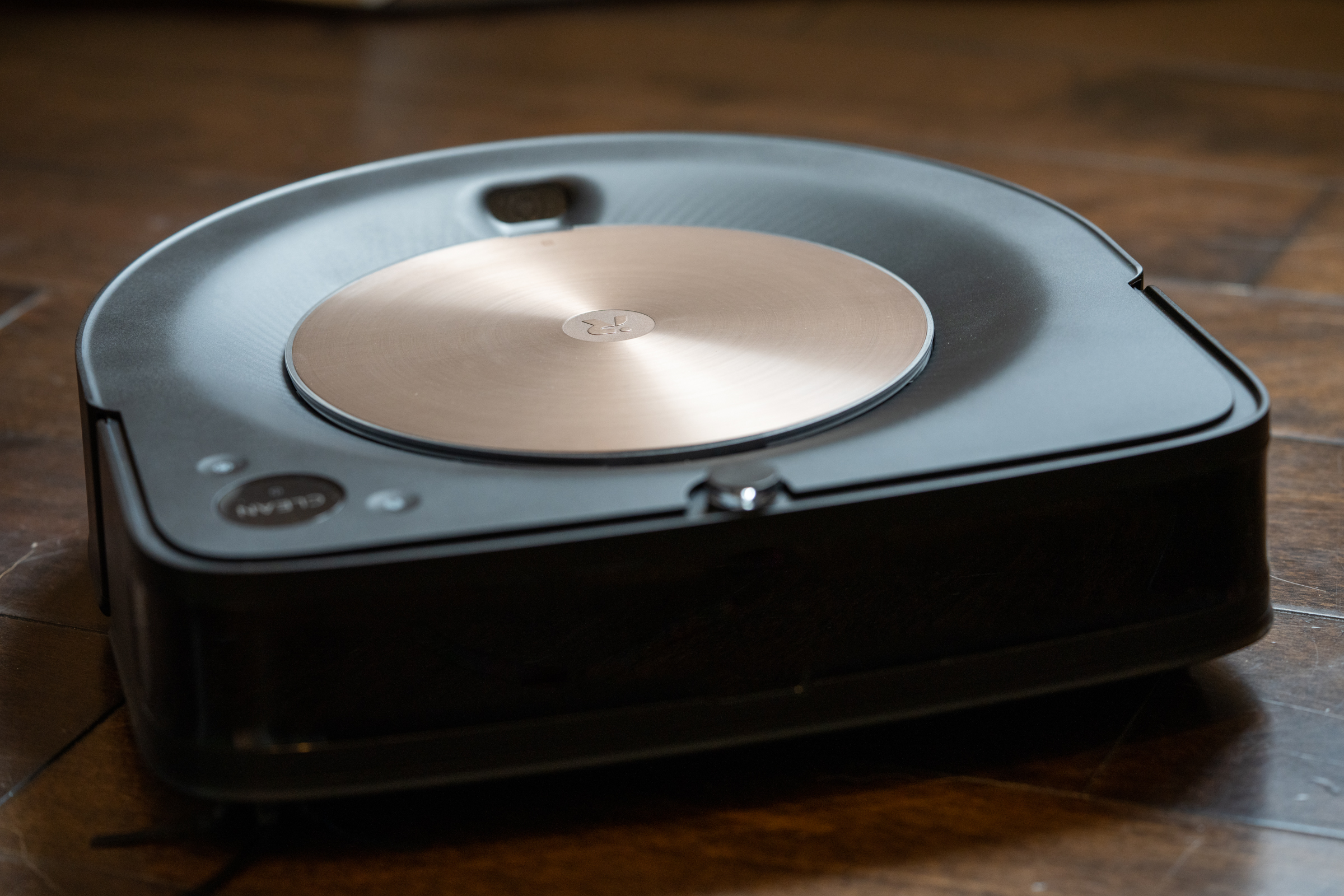
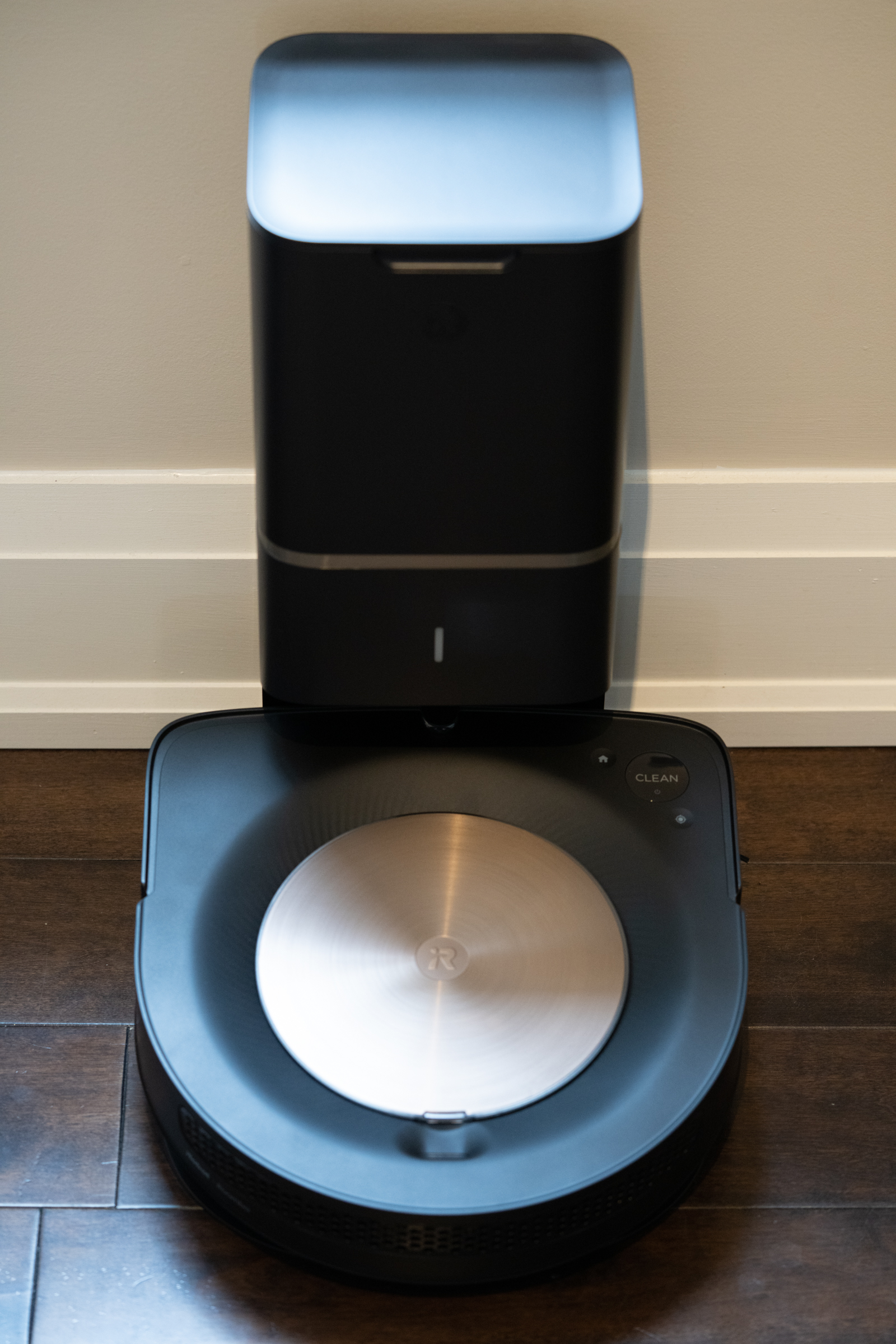
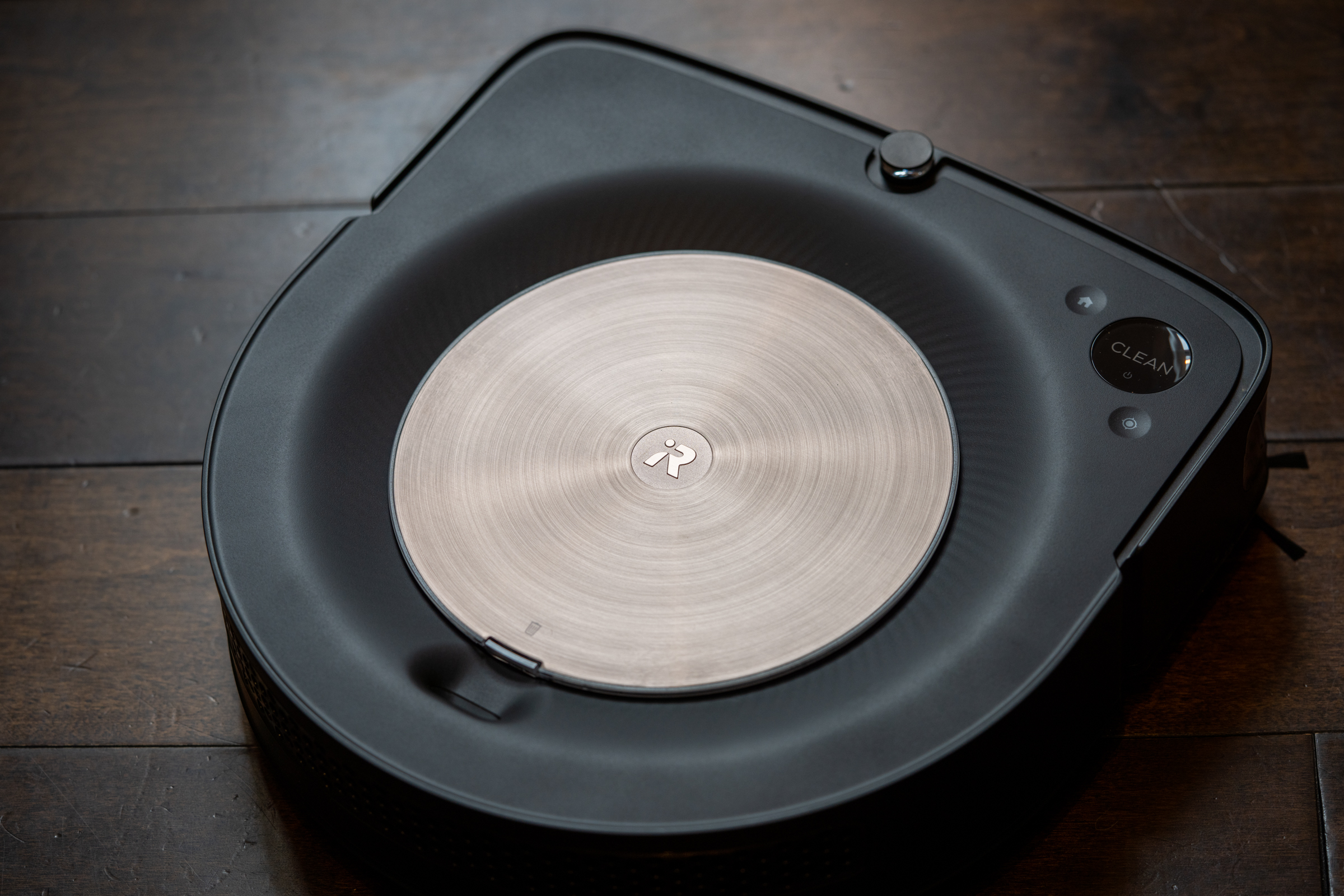
The iRobot Roomba S9+ is actually two things: The Roomba S9, which is available separately, and the Clean Base that enables the vacuum to empty itself after a run, giving you many cleanings before it needs you to actually open up a bin or replace a bag. Both the vacuum and its base are WiFi-connected, and controllable via iRobot’s app, as well as Google Assistant and Alexa. Combined, it’s the most advanced autonomous home vacuum you can get, and it manages to outperform a lot of older or less sophisticated robot vacuums even in situations that have historically been hard for this kind of tech to handle.

Like the Roomba S7 before it (which is still available and still also a great vacuum, for a bit less money), the S9 uses what’s called SLAM (Simultaneous Localization and Mapping), and a specific variant of that called vSLAM (the stands for ‘visual’). This technology means that as it works, it’s generating and adapting a map of your home to ensure that it can clean more effectively and efficiently.

After either a few dedicated training runs (which you can opt to send the vacuum on when it’s learning a new space) or a few more active vacuum runs, the Roomba S9 will remember your home’s layout, and provide a map that you can customize with room dividers and labels. This then turns on the vacuum’s real smart superpowers, which include being able to vacuum just specific rooms on command, as well as features like letting it easily pick up where it left off if it needs to return to its charging station mid-run. With the S9 and its large battery, the vacuum can do an entire run of my large two-bedroom condo on a single charge (the i7 I used previously needed two charges to finish up).

The S9’s vSLAM and navigation systems seem incredibly well-developed in my use: I’ve never once had the vacuum become stuck, or confused by changes in floor colouring, even going from a very light to a very dark floor (this is something that past vacuums have had difficulty with). It infallibly finds its way back to the Clean Base, and also never seems to be flummoxed by even drastic changes in lighting over the course of the day.

So it’s smart, but does it suck? Yes, it does – in the best possible way. Just like it doesn’t require stops to charge up, it also manages to clean my entire space with just one bin. There’s a lot more room in here thanks to the new design, and it handles even my dog’s hair with ease (my dog sheds a lot, and it’s very obvious light hair against dark wood floors). The new angled design on the front of the vacuum means it does a better job with getting in corners than previous fully round designs, and that shows, because corners are were clumps of hair go to gather in a dog-friendly household.

The ‘+’ in the S9+ is that Clean Base as I mentioned – think of it like the tower of lazy cleanliness. The base has a port that sucks dirt from the S9 when it’s done a run, shooting it into a bag in the top of the tower that can hold up to 30 full bins of dirt. That ends up being a lot in practice – it should last you months, depending on house size. Replacement bags cost $20 for three, which is probably what you’ll go through in a year, so it’s really a negligible cost for the convenience you’re getting.

Braava m6

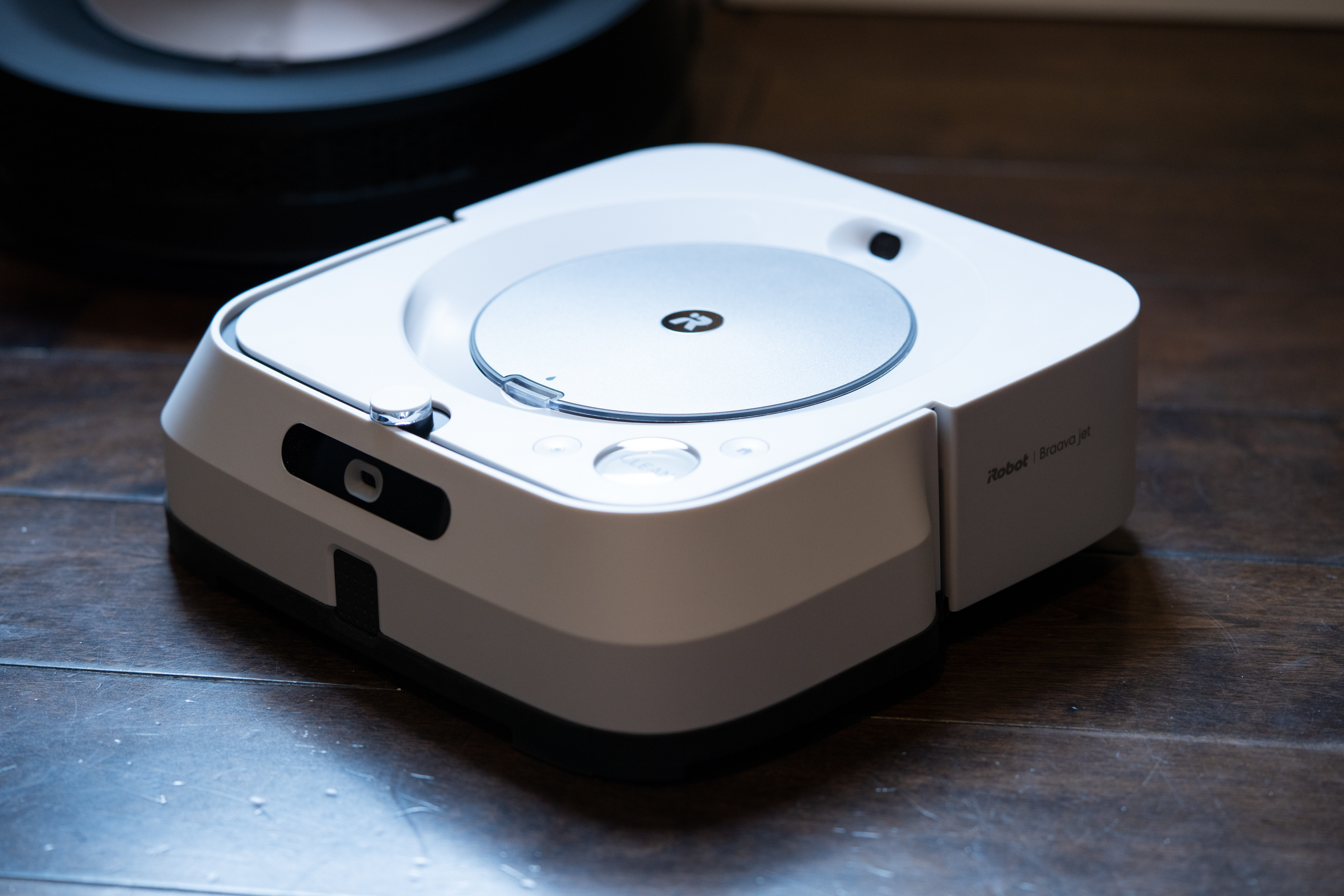
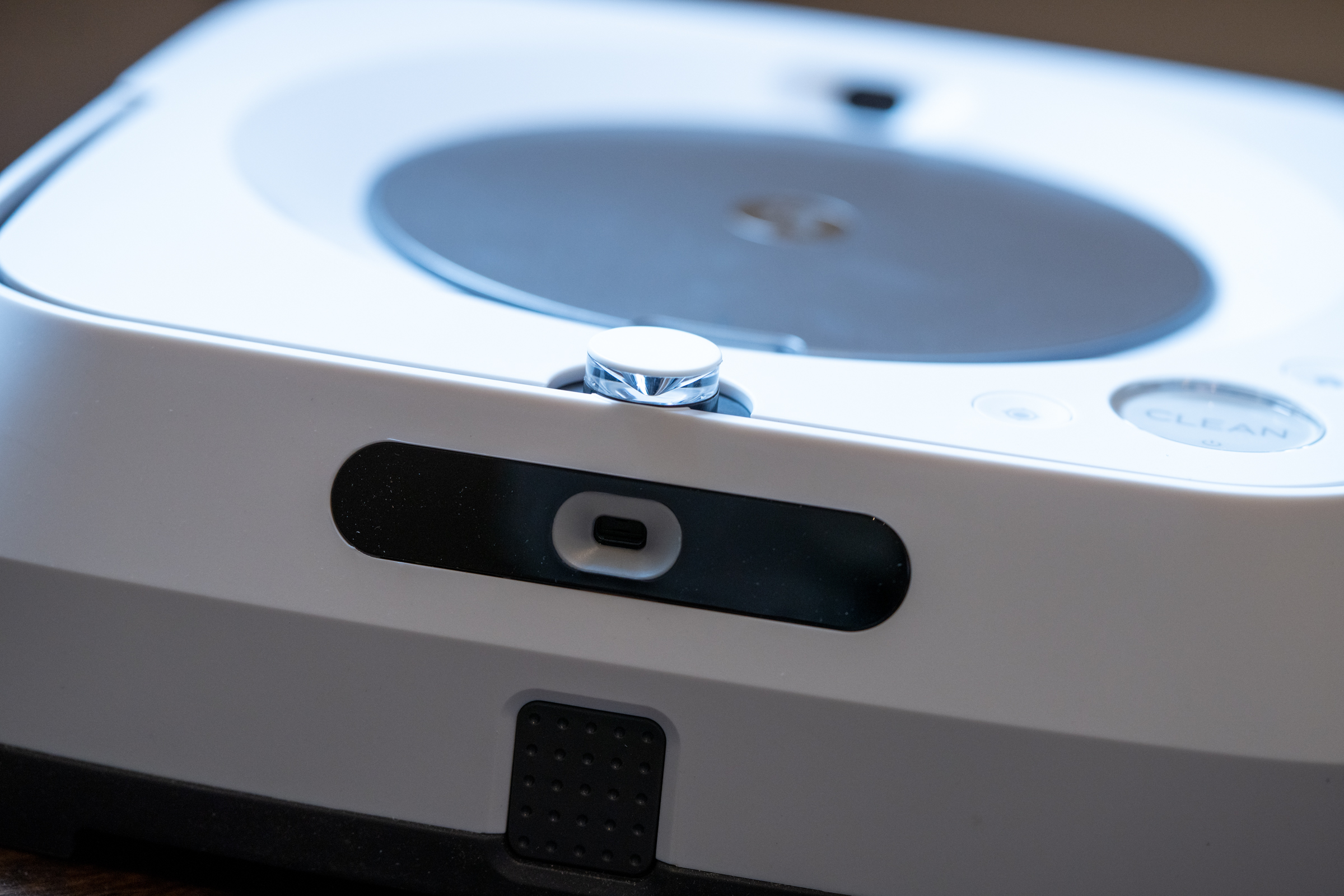
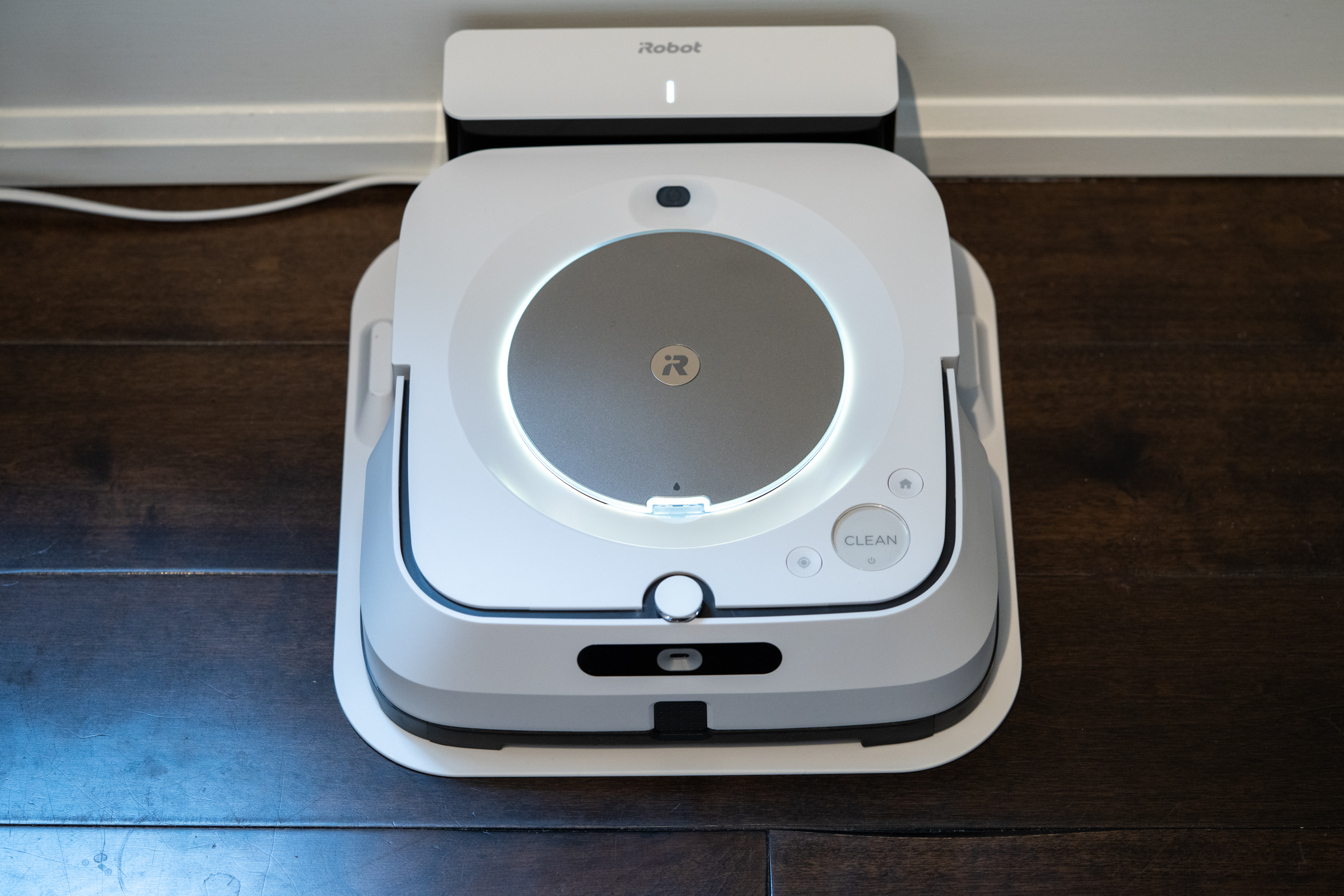
The Roomba S9’s best friend, if you will, is the Braava m6. This is iRobot’s latest and greatest smart mop, which is exactly what it sounds like: Whereas Roomba vacuums, the Braava uses either single use disposable, or microfibre washable/reusable pads, as well as iRobot’s own cleaning fluid, to clean hardwood, tile, vinyl, cork and other hard surface floors once the vacuuming is done. It can also just run a dry sweep, which is useful for picking up dust and pet hair, as a finishing touch on the vacuum’s run.

iRobot has used its unique position in offering both of these types of smart devices to have them work together – if you have both the S9 and the Braava m6 added to your iRobot Home app, you’ll get an option to mop the floors right after the vacuum job is complete. It’s an amazing convenience feature, and one that works fairly well – but there are some differences in the smarts powering the Braava m6 and the Roomba s9 that lead to some occasional challenges.

The Braava m6 doesn’t seem to be quite as capable when it comes to mapping and navigating its surroundings. My condo layout is relatively simple, all one level with no drops or gaps. But the m6 has encountered some scenarios where it doesn’t seem to be able to cross a threshold or make sense of all floor types. Based on error messages, it seems like it’s identifying some surfaces as ‘cliffs’ or steep drops when transitioning back from lighter floors to darker ones.

What this means in practice is that a couple of times per run, I have to reposition the Braava manually. There are ways to solve for this, however, built into the software: Thanks to the smart mapping feature, I can just direct the Braava to focus only on the rooms with dark hardwood, or I can just adjust it when I get an alert that it’s having difficulty. It’s still massively more convenient than mopping by hand, and typically the m6 does about 90 percent of the apartment before it runs into difficult in one of these few small trouble areas.

If you’ve read online customer reviews fo the m6, you may also have seen complaints that it can leave tire marks on dark floors. I found that to be true – but with a few caveats. They definitely aren’t as pronounced as I expected based on some of the negative reviews out there, and I have very dark floors. They also only are really visible in direct sunlight, and then only faintly. They also fade pretty quickly, which means you won’t notice them most of the time if you’re mopping only once ever few vacuum runs. In the end, it’s something to be aware of, but for me it’s not a dealbreaker – far from it. The m6 still does a fantastic job overall of mopping and sweeping, and saves me a ton of labor on what is normally a pretty back-hostile manual task.

Bottom line

These iRobot home cleaning gadgets are definitely high-end, with the s9 starting at $1,099.99 ($1,399.99 with the cleaning base) and the m6 staring at $499.99. You can get a bundle with both staring at $1439.98, but even that is still a lot for cleaning appliances. This is definitely a case where the ‘you get what you pay for’ maxim proves true, however. Either rate s9+ alone, or the combo of the vacuum and mop represent a huge convenience, especially when used on a daily or similar regular schedule, vs. doing the same thing manually. The s9 also frankly does a better job than I ever could wth my own manual vacuum, since it’s much better at getting into corners, under couches, and cleaning along and under trip thanks to its spinning brush. And asking Alexa to have Roomba start a cleaning run feels like living in the future in the best possible way.

19 Nov 2019

Salesforce, AWS expand partnership to bring Amazon Connect to Service Cloud

Salesforce and AWS announced an expansion of their on-going partnership that actually goes back to a $400 million 2016 infrastructure services agreement, and expanded last year to include data integration between the two companies. This year, Salesforce announced it will be offering AWS telephony and call transcription services with Amazon Connect as part of its Service Cloud call center solution.

“We have a strategic partnership with Amazon Web Services, which will allow customers to purchase Amazon Connect from us, and then it will be pre-integrated and out of the box to provide a full transcription of the call, and of course that’s alongside of an actual call recording of the call,” Bill Patterson, executive vice president for Service Cloud explained.

It’s worth noting that the company will be partnering with other telephony vendors as well, so that customers can choose the Amazon solution or another from Cisco, Avaya or Genesys, Patterson said.

These telephony partnerships fill in a gap in the Service Cloud call center offering, and give Salesforce direct access to the call itself. The telephony vendors will handle call transcription and hand that off to Salesforce, which can then use its intelligence layer called Einstein to “read” the transcript and offer the CSR next best actions in real time, something the company has been able to do with interactions from chat and other channels, but couldn’t do with voice.

“As this conversation evolves, the consumer is explaining what their problem is, and Einstein is [monitoring] that conversation. As the conversation gets to a critical mass, Einstein begins to understand what the content is about and suggests a specific solution to the agent,” Patterson said.

Salesforce will begin piloting this new Service Cloud capability in the spring with general availability expected next summer.

Only last week, Salesforce announced a major partnership with Microsoft to move Salesforce Marketing Cloud to Azure. These announcements show Salesforce will continue to use multiple cloud partners when it makes sense for the business. Today, it’s Amazon’s turn.

19 Nov 2019

SocialRank sells biz to Trufan, pivots to a mobile LinkedIn

What do you do when your startup idea doesn’t prove big enough? Run it as a scrawny but profitable lifestyle business? Or sell it to a competitor and take another swing at the fences. Social audience analytics and ad targeting startup SocialRank chose the latter is going for glory.

Today, SocialRank announced it’s sold its business, brand, assets, and customers to influencer marketing campaign composer and distributor Trufan which will run it as a standalone product. But SocialRank’s team isn’t joining up. Instead, the whole staff are sticking together to work on a mobile-first professional social network called Upstream aiming to unbundle LinkedIn.

Started in 2014 amidst a flurry of marketing analytics tools, SocialRank had raised $2.1 million from Rainfall Ventures and others before hitting profitability in 2017. But as the business plateaued, the team saw potential to use data science about people’s identity to get them better jobs.

“A few months ago we decided to start building a new product (what has become Upstream). And when we came to the conclusion to go all-in on Upstream, we knew we couldn’t run two businesses at the same time” SocialRank co-founder and CEO Alex Taub tells me. “We decided then to run a bit of a process. We ended up with a few offers but ultimately felt like Trufan was the best one to continue the business into the future.

The move lets SocialRank avoid stranding its existing customers like the NFL, Netflix, and Samsung that rely on its audience segmentation software. Instead, they’ll continue to be supported by Trufan where Taub and fellow co-founder Michael Schonfeld will become advisors.

“While we built a sustainable business we essentially knew that if we wanted to go real big, we would need to go to the drawing board” Taub explains.

Two-year-old Trufan has raised $1.8 million Canadian from Round13 Capital, local Toronto startup Clearbanc’s founders, and several NBA players. Trufan helps brands like Western Union and Kay Jewellers design marketing initiatives that engage their customer communities through social media. It’s raising an extra $400,000 USD from Round13 to finance the acquisition, which should make Trufan cash-flow positive by the end of the year.

Why isn’t the SocialRank team going along for the ride? Taub said LinkedIn was leaving too much opportunity on the table. While it’s good for putting resumes online and searching for people, “All the social stuff are sort of bolt-ons that came after Facebook and Twitter arrived. People forget but LinkedIn is the oldest active social network out there”, Taub tells me, meaning it’s a bit outdated.

Rather than attack head-on, the newly forged Upstream plans to pick the Microsoft-owned professional networkapart with better approaches to certain features. “I love the idea of ‘the unbundling of LinkedIn’, ala what’s been happening with Craigslist for the past few years” says Taub. “The first foundational piece we are building is a social professional network around giving and getting help. We’ll also be focused on the unbundling of the groups aspect of LinkedIn.”

Taub concludes that entrepreneurs can shackle themselves to impossible goals if they take too much venture capital for the wrong business. As we’ve seen with SoftBank, investors demand huge returns that can require pursuing risky and unsustainable expansion strategies.

“We realized that SocialRank had potential to be a few hundred million dollar in revenue business but venture growth wasn’t exactly the model for it” Taub says. “You need the potential of billions in revenue and a steep growth curve.” A professional network for the smartphone age has that kind of addressable market. And the team might feel better getting out of bed each day knowing their trying to unlock career paths for people instead of just getting them to click ads.

19 Nov 2019

Eden office management platform raises $25 million Series B

Eden, the workplace management platform that connects office managers with service providers, today announced the close of a $25 million Series B round led by Reshape. Participants in the round also include Fifth Wall Ventures, Mitsui Fudosan, RXR Realty, Thor Equities, Bessemer Venture Partners, Alate Partners, Quiet Capital, S28 Capital, Canvas Ventures, Comcast Ventures, Upshift Partners, Impala Ventures, ENIAC Ventures, and Crystal Towers, among others.

Eden was founded by Joe DuBey back in 2015 and launched out of Y Combinator as an on-demand tech repair and support service, sending IT specialists to consumers’ homes to help set up a printer or repair a cracked phone screen. Within the first year, Eden had pivoted its business entirely to the enterprise, helping B2B clients with their IT issues at much cheaper cost than employing an IT specialist full time.

By 2017, Eden had expanded well beyond IT support into other office management categories, like inventory management around supplies, cleaning, handiwork and more. Indeed, revenue shifted dramatically from Eden’s W2 wizards toward third-party vendors and service providers, with around 75 percent coming from third parties.

Today, 100 percent of Eden’s revenue comes from connecting offices with third-party providers. The company is live in 25 markets, including a few international cities like Berlin and London. Eden now has more than 2,000 service providers on the platform.

The next phase of the company, according to DuBey, is to focus on the full spectrum of property management, zooming out to landlords and property managers.

“The broader vision we have is that everyone in the workplace will use Eden to have a better day at work, from the landlord of the building to the software engineer to the office manager, who is our primary client,” said DuBey. “One thing we’ve learned is that there is a meaningful part of the world you can serve by working directly with the business or the office or facilities manager. But it might be the majority of our category where you really need to build a relationship with the landlord and the property manager to really be successful.”

To that end, Eden is currently in beta with software aimed at landlords and property managers that could facilitate registered guests and check-ins, as well as building-related maintenance and service issues.

Eden has raised just over $40 million in funding since inception.

19 Nov 2019

LA-based Maslo pivots to professional services, launching an AI product for executive coaching

When the Los Angeles-based startup Maslo launched its first product in early 2018, the company was focused on a direct-to-consumer tool designed to encourage mindfulness and self-awareness through a machine learning enabled avatar that would respond to individual’s inputs.

Now the company has reframed its offering, raised a fresh round of financing and is coming to market with a refined vision for a training tool for executive coaching.

Like the original Maslo, the new product is a service for journaling and personal growth, but this time it includes dashboards and visualization tools for the life coaches and training professionals that are molding the minds and leadership habits of tomorrow’s executives.

“Most of the products and experiences today are one dimensional,” said Maslo co-founder Ross Ingram. “They’re pulling information from you, but they’re not really reacting or responding.”

Using natural language processing and other machine learning tools, Maslo’s service will process entries by customers from their voice-activated, recorded journals and visualize data on a dashboard so that clients can see their how language patterns, thematic trends, and emotions recur among their customers.

Image courtesy of Maslo

As part of its go-to-market strategy Maslo is partnering with the International Coaching Federation and any coaches who are currently enrolled in an ICF Accredited Coaching Program can access Maslo’s services at no cost.

The new product launch follows a $1 million capital commitment from Saki Georgiadis, who was an early investor in Calm, and Dr. Ray Muzyka, the founder and former chief executive of Bioware.

“I’m quite excited about the opportunity here to transform technology into products and services that help us become holistically, better humans,” said Muzyka, in a statement. “[Maslo’s] recent focus has validated my original interest, which led me to invest.”

Maslo is also currently collaborating with professors from the University of British Columbia and researchers from the Canadian national research organization focused on social innovation, Mitacs, on a stud to assess the efficacy of “empathetic computing”.

Maslo has also been awarded a grant in partnership with The University of British Columbia and Mitacs, a nonprofit national research organization in Canada focused on industrial and social innovation. The grant focuses on “Assessing the Efficacy of Empathetic Computing,” and will be coordinated with a team within Dr. Alan Kingstone’s Brain, Attention, and Reality (BAR) Lab. The research will look to provide insights on the effects of personification in computing products on people and their relationships.

“We are extraordinarily excited to be partnering with Maslo, and we see this as the start of an exciting exploration into a human centric engagement with technology,” said Dr. Alan Kingstone, the head of the Brain, Attention, and Reality (BAR) Lab at UBC.

19 Nov 2019

Xiaomi integrates earthquake alert system into MIUI OS, unveils Xiao AI 3.0 digital assistant

Xiaomi today unveiled a new iteration of its virtual assistant Xiao Ai and shared a new feature of Android -based MIUI operating system as the publicly listed Chinese technology group pushes to expand its internet services ecosystem. The company also said that it will be launching ten 5G devices next year.

At its annual Mi Developer conference in Beijing, the company said it is integrating an earthquake warning function into MIUI for select users in China, with plans to expand it nationwide soon.

The integration, touted as the first of its kind globally, will enable alerts to be sent to smartphones running MIUI 11 and Mi TV “seconds to tens of seconds” before the quake waves arrive, Xiaomi said.

The feature, which was first trialed in September this year, has been developed in partnership with Institute of Care-life, a Chengdu-based organization focusing on natural disaster warning. Xiaomi said it has activated the feature for the earthquake-prone Sichuan Province and plans to expand it elsewhere in the nation soon.

Wang Tun, head of the institute, said this function, unlike those available through apps in some countries, works more efficiently and does not rely on a working internet connection.

Xiao AI 3.0

The company also unveiled Xiao AI voice assistant 3.0, the latest iteration of its digital assistant. The service, used by 49.9 million users each month, now offers a male voice option and supports a naturally continuous dialogue on smartphones.

Xiaomi founder and chief executive Lei Jun addressing developers at a company’s conference on Tuesday

Xiaomi added that it is launching a new version of MACE, the open-source deep-learning framework that powers Xiao AI. The new MACE-Kit for developers will open its source soon, the company said.

“Xiaomi’s AutoML model now leads the industry by dataset performance; and MiNLP, the company’s natural language processing platform, is activated over 6 billion times on a daily basis, making Xiao AI one of the world’s busiest AI platform,” said Cui Baoqiu, VP and Chairman of Xiaomi’s Technical Committee, in a statement.

On the sidelines of these announcements, Xiaomi added that it is aiming to serve more partners in the manufacturing industry around the globe through its Finance payments service. The company has invested in over 270 ecosystem partners, among which more than 100 are focused on the development of smart hardware and lifestyle products, it said. Overall, more than 400 business partners in the manufacturing chain today are using Xiaomi Finance, it claimed.

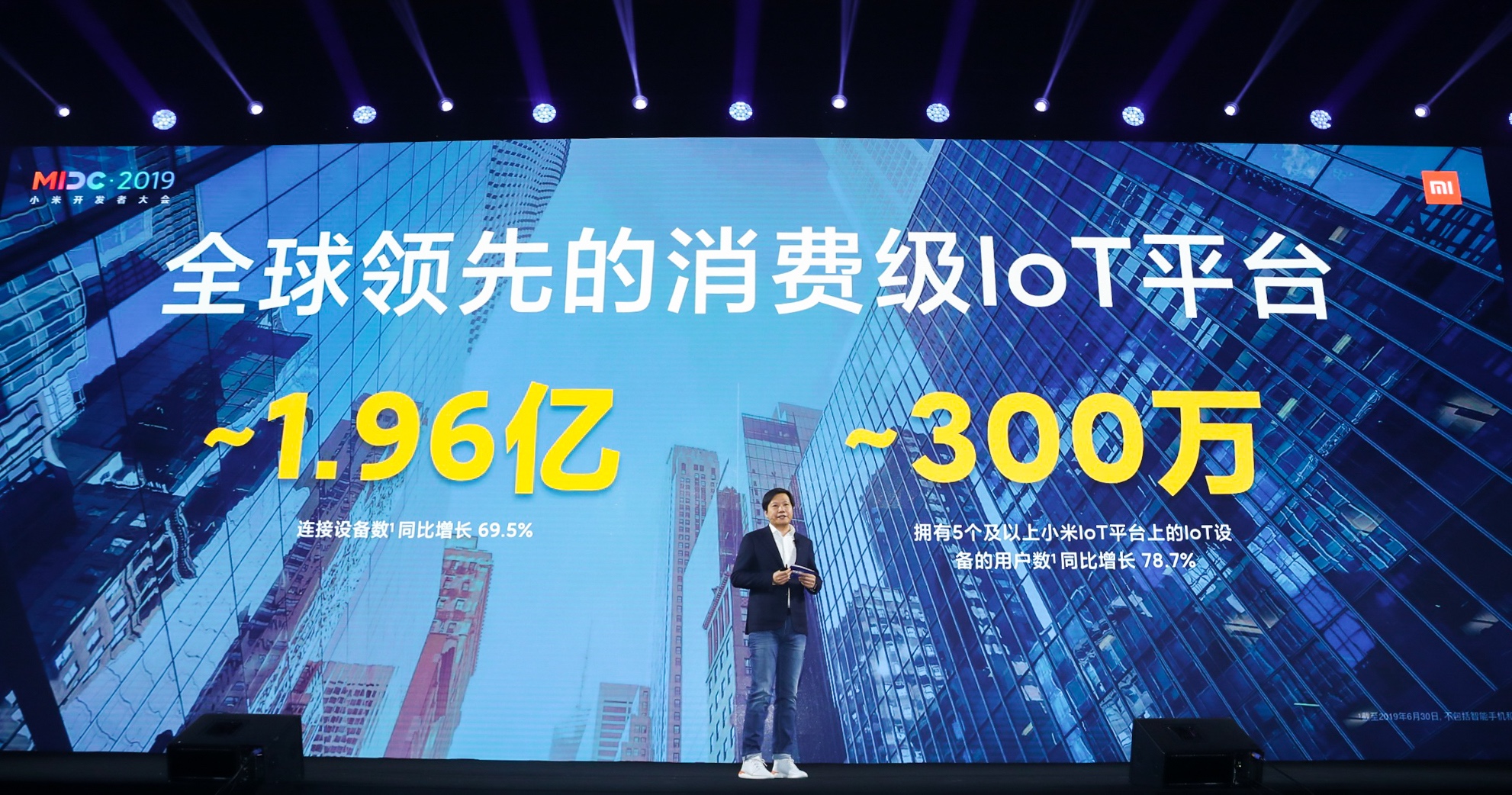
At the conference, Lei Jun, founder and chief executive of Xiaomi said the company also plans to market over ten 5G-enabled devices next year as part of its effort “in making 5G + AIoT part of daily life of everyone.”

19 Nov 2019

Four must-haves for the Tesla ‘Cybertruck’ all-electric pickup truck

Tesla is set to unveil its pickup this week and it needs to be widely different from its current lineup. The current line of Tesla vehicles share a lot of parts, and, logically, the Tesla pickup will do the same. However, a truck has different demands than a passenger car or sport utility vehicle. It has to be more robust and able to stand up to more abuse. It has to tow and haul and scale more than a mall flowerbed.

The Tesla pickup is launching as Rivian’s electric pickup is nearing launch. The Rivian R1T looks and feels like an electric pickup. It’s also built off of a purpose-built platform designed to haul and tow. Tesla does not have a similar platform as the Model X SUV is more car than a truck.

Eventually, more automakers will offer electric trucks. Ford has confirmed it’s building an electric F-150 and recently showed it off pulling a train. The upsides are profound. An electric truck will, in theory, offer improved toque (better towing), high payload capacity (due to better weight distribution), and improved performance numbers (electric motors are quick). A truck platform is also, by nature, larger and stronger allowing automakers to stuff more batteries into the frame.

Here’s what we want to see in a pickup from Tesla:

Twice the towing capacity of the Model X

The Tesla Model X is incredible and by most measures, the fastest production SUV available. But it cannot tow much. That’s not because of the powertrain but rather the vehicle platform. A Tesla pickup needs to be able to tow and haul.

According to the Model X owners manual, the vehicle can tow 5,000 pounds. That’s good enough for a couple of jet skis or a tiny trailer, but not much else. For comparison, most Ford F-150 models can tow over 10,000 pounds with some models topping off at 13,000 lbs. Rivian projects its electric pickup can tow over 11,000 pounds. The difference comes from the frame design and vehicle length.

The design of the vehicle often limits towing. The rear suspension needs to be able to support the weight, and the vehicle needs to be long enough to reduce trailer sway. Short vehicles have a hard time towing trailers, and the Model X, built on a version of the Model S, is a compact vehicle. There’s nothing worse than looking out the driver-side window and seeing your trailer racing you down the hill.

In the name of safety alone, a Tesla pickup must have improved towing capacity over the Model X. It should have an integrated trailer brake controller, too — something missing from the Model X.

The Model X platform is not built for hauling either. According to the owner’s manual, when two passengers are in the vehicle, it can only hold an additional 654 lbs. That’s just eight bags of Quickrete cement. To make matters worse, the rear deck of the Model X can only support 285 lbs somewhat saying the rear axle cannot hold that much weight, and the additional weight needs to be spread between the two axles.

A pickup needs to be able to take a load of wood mulch or a couple of major appliances, and Tesla’s current platforms are not designed for such.

Most light-duty pickups, from the Honda Ridgeline to the F-150, can support from 1,500 lbs to 2,000 lbs in the bed. And it’s easy to exceed that rating, too. An open truck bed is an invitation to load it up, but unless you’re using a heavy-duty pickup, don’t get a pallet of landscaping bricks.

Robust Serviceable Parts

Even if a pickup is only used for monthly Home Depot runs, it sustains more abuse than passenger vehicles due to its size. Brakes wear out quicker, and tires need more attention. If it has a light-duty suspension, bushings and joints wear out faster than in cars or SUVs.

Tesla makes it difficult for owners to repair the vehicles they purchased. I don’t expect that to be any different with the Tesla pickup. Tesla is not going to want owners wrenching on the truck. Since that’s the case, the pickup must come with improved parts.

The serviceable parts (brakes, suspension, and tires) that come on the Tesla pickup needs to be more robust and reliable than that used on the Tesla passenger vehicles.

Electric vehicles feature much fewer parts that can go wrong than internal combustion vehicles. It’s great. Owners do not have to change a timing belt or engine oil. But there are still items that will wear out, and most pickup buyers need assurances that they can go the distance.

Off-roading capabilities (or the ability to add off-roading capabilities)

The electric Rivian R1T is currently racing across South America to demonstrate its off-roading chops. Here’s the company’s blog post about it. This excites the truck guy in me. Now that’s a truck, I yell!

I don’t have the data, but I suspect most light-duty pickups are hardly used to their potential. I have a well-equipped F-150 that is used to tow a trailer twice a year.

Trucks are often aspirational purchases where buyers shop for potential lifestyles. Sure, you must have a truck, because one day, you’re going to buy that travel trailer and drive through Yellowstone. To fulfill this dream, a pickup should be able to run the desert or climb rocks.

The Rivian R1T gets a lot of things right, and I hope Tesla is following Rivian’s lead. It’s longer than a Ford Ranger and exceeds the Toyota Tacoma’s bed capacity rating. The wheel wells are large, seemingly saying it can support larger tires than the original from the factory. The R1T has an imposing stance. It looks the part, and the Tesla pickup needs to look the part, too.

Even if the Tesla looks like a weak truck, it’s essential to be able to modify the truck. Add-ons are a big part of the truck culture. My F-150 has become a money pit as I’ve thrown cash into buying accessories. Rivian knows this and has shown off its pickup with a handful of adds-on from tents to kitchens.

Power output

A Tesla pickup could have a unique selling point by allowing owners to use it as a high-output generator.

Right now, a lot of trucks have plenty of power ports, both 12v and 110v. They’re found throughout the cab and bed but cannot power serious tools. The 12v system used in internal combustion vehicles will not power much more than a drill or small saw, let alone a house by acting as a whole house generator.

The functionality would be well received. Homeowners would appreciate the ability to power parts of their homes during blackouts. Campers could use it when taking the pickup on an adventure. Construction works could use it to power and recharge tools.

Right now, there isn’t a way to output the full power of a Tesla vehicle. Owners can use an inverter, but that’s also limited and requires extra parts. Tesla would need to build safeguards and regional power ports into the battery platform to ensure safety and compatibility.

A word about the price.

There’s no way around this. A Tesla pickup will be more expensive than its internal combustion counterparts. It will be an upscale pickup, aimed at those that wear Arc’teryx instead of Carhart.

Rivian is pricing its pickup with a starting price of $69,000 and a Tesla pickup will likely start in the same range. If it’s a new platform built for hauling or towing, Tesla will have a lot of engineering and manufacturing hours to recuperate, which will drive the price north. Until more are available, Tesla and Rivian will be able to set the market price.

It’s a lot for a truck. That’s the price of a fully-spec’d out Ford F-150 that’s more comfortable or capable than it has any right to be. It’s also the same price as a beefy F-350 with Ford’s most potent engine and a towing capacity of 37,000 lbs.

Check back later this week as TechCrunch will be on hand later when Tesla unveils its pickup.