Category: UNCATEGORIZED

18 Nov 2019

Intel and Argonne National Lab on ‘exascale’ and their new Aurora supercomputer

The scale of supercomputing has grown almost too large to comprehend, with millions of compute units performing calculations at rates requiring, for first time, the exa prefix — denoting quadrillions per second. How was this accomplished? With careful planning… and a lot of wires, say two people close to the project.

Having noted the news that Intel and Argonne National Lab were planning to take the wrapper off a new exascale computer called Aurora (one of several being built in the U.S.) earlier this year, I recently got a chance to talk with Trish Damkroger, head of Intel’s Extreme Computing Organization, and Rick Stevens, Argonne’s associate lab director for computing, environment and life sciences.

The two discussed the technical details of the system at the Supercomputing conference in Denver, where, probably, most of the people who can truly say they understand this type of work already were. So while you can read at industry journals and the press release about the nuts and bolts of the system, including Intel’s new Xe architecture and Ponte Vecchio general-purpose compute chip, I tried to get a little more of the big picture from the two.

It should surprise no one that this is a project long in the making — but you might not guess exactly how long: more than a decade. Part of the challenge, then, was to establish computing hardware that was leagues beyond what was possible at the time.

“Exascale was first being started in 2007. At that time we hadn’t even hit the petascale target yet, so we were planning like three to four magnitudes out,” said Stevens. “At that time, if we had exascale, it would have required a gigawatt of power, which is obviously not realistic. So a big part of reaching exascale has been reducing power draw.”

Intel’s supercomputing-focused Xe architecture is based on a 7-nanometer process, pushing the very edge of Newtonian physics — much smaller and quantum effects start coming into play. But the smaller the gates, the less power they take, and microscopic savings add up quickly when you’re talking billions and trillions of them.

But that merely exposes another problem: If you increase the power of a processor by 1000x, you run into a memory bottleneck. The system may be able to think fast, but if it can’t access and store data equally fast, there’s no point.

“By having exascale-level computing, but not exabyte-level bandwidth, you end up with a very lopsided system,” said Stevens.

And once you clear both those obstacles, you run into a third: what’s called concurrency. High performance computing is equally about synchronizing a task between huge numbers of computing units as it is about making those units as powerful as possible. The machine operates as a whole, and as such every part must communicate with every other part — which becomes something of a problem as you scale up.

“These systems have many thousands of nodes, and the nodes have hundreds of cores, and the cores have thousands of computation units, so there’s like, billion-way concurrency,” Stevens explained. “Dealing with that is the core of the architecture.”

How they did it, I, being utterly unfamiliar with the vagaries of high performance computing architecture design, would not even attempt to explain. But they seem to have done it, as these exascale systems are coming online. The solution, I’ll only venture to say, is essentially a major advance on the networking side. The level of sustained bandwidth between all these nodes and units is staggering.

Making exascale accessible

While even in 2007 you could predict that we’d eventually reach such low-power processes and improved memory bandwidth, other trends would have been nearly impossible to predict — for example, the exploding demand for AI and machine learning. Back then it wasn’t even a consideration, and now it would be folly to create any kind of high performance computing system that wasn’t at least partially optimized for machine learning problems.

“By 2023 we expect AI workloads to be a third of the overall HPC server market,” said Damkroger. “This AI-HPC convergence is bringing those two workloads together to solve problems faster and provide greater insight.”

To that end the architecture of the Aurora system is built to be flexible while retaining the ability to accelerate certain common operations, for instance the type of matrix calculations that make up a great deal of certain machine learning tasks.

“But it’s not just about performance, it has to be about programmability,” she continued. “One of the big challenges of an exacale machine is being able to write software to use that machine. oneAPI is going to be a unified programming model — it’s based on an open standard of Open Parallel C++, and that’s key for promoting use in the community.”

Summit, as of this writing the most powerful single computing system in the world, is very dissimilar to many of the systems developers are used working on. If the creators of a new supercomputer want it to have broad appeal, they need to bring it as close to being like a “normal” computer to operate as possible.

“It’s something of a challenge to bring x86-based packages to Summit,” Stevens noted. “The big advantage for us is that, because we have x86 nodes and Intel GPUs, this thing is basically going to run every piece of software that exists. It’ll run standard software, Linux software, literally millions of apps.”

I asked about the costs involved, since it’s something of a mystery with a system like this how that a half-billion dollar budget gets broken down. Really I just thought it would be interesting to know how much of it went to, say, RAM versus processing cores, or how many miles of wire they had to run. Though both Stevens and Damkroger declined to comment, the former did note that “the backlink bandwidth on this machine is many times the total of the entire internet, and that does cost something.” Make of that what you will.

Aurora, unlike its cousin El Capitan at Lawrence Livermore National Lab, will not be used for weapons development.

“Argonne is a science lab, and it’s open, not classified science,” said Stevens. “Our machine is a national user resource; We have people using it from all over the country. A large amount of time is allocated via a process that’s peer reviewed and priced to accommodate the most interesting projects. About two thirds is that, and the other third Department of Energy stuff, but still unclassified problems.”

Initial work will be in climate science, chemistry, and data science, with 15 teams between them signed up for major projects to be run on Aurora — details to be announced soon.

18 Nov 2019

Gremlin brings Chaos Engineering as a Service to Kubernetes

The practice of Chaos Engineering developed at Amazon and Netflix a decade ago to help those web scale companies test their complex systems for worst case scenarios before they happened. Gremlin was started by a former employee of both these companies to make it easier to perform this type of testing without a team of Site Reliability Engineers (SREs). Today, the company announced that it now supports chaos engineering-style testing on Kubernetes clusters.

The company made the announcement at the beginning of KubeCon, the Kubernetes conference taking place in San Diego this week.

Gremlin co-founder and CEO Kolton Andrus says that the idea is to be able to test and configure Kubernetes clusters so they will not fail, or at least reduce the likelihood. He says to do this it’s critical to run chaos testing in live environments, whether you’re testing Kubernetes clusters or anything else, but it’s also a bit dangerous to do be doing this. He says to mitigate the risk, best practices suggest that you limit the experiment to the smallest test possible that gives you the most information.

“We can come in and say I’m going to deal with just these clusters. I want to cause failure here to understand what happens in Kubernetes when these pieces fail. For instance, being able to see what happens when you pause the scheduler. The goal is being able to help people understand this concept of the blast radius, and safely guide them to running an experiment,” Andrus explained.

In addition, Gremlin is helping customers harden their Kubernetes clusters to help prevent failures with a set of best practices. “We clearly have the tooling that people need [to conduct this type of testing], but we’ve also learned through many, many customer interactions and experiments to help them really tune and configure their clusters to be fault tolerant and resilient,” he said.

The Gremlin interface is designed to facilitate this kind of targeted experimentation. You can check the areas you want to apply a test, and you can see graphically what parts of the system are being tested. If things get out of control, there is a kill switch to stop the tests.

Gremlin Kubernetes testing screen. Screenshot: Gremlin

Gremlin launched in 2016. Its headquarters are in San Jose. It offers both a freemium and pay product. The company has raised almost $27 million, according to Crunchbase data.

18 Nov 2019

Logitech accessory kit makes the Xbox Adaptive Controller even more accessible

Microsoft’s Xbox Adaptive Controller was a breath of fresh air in a gaming world that has largely failed to consider the needs of people with disabilities. Now Logitech has joined the effort to empower this diverse population with an expanded set of XAC-compatible buttons and triggers.

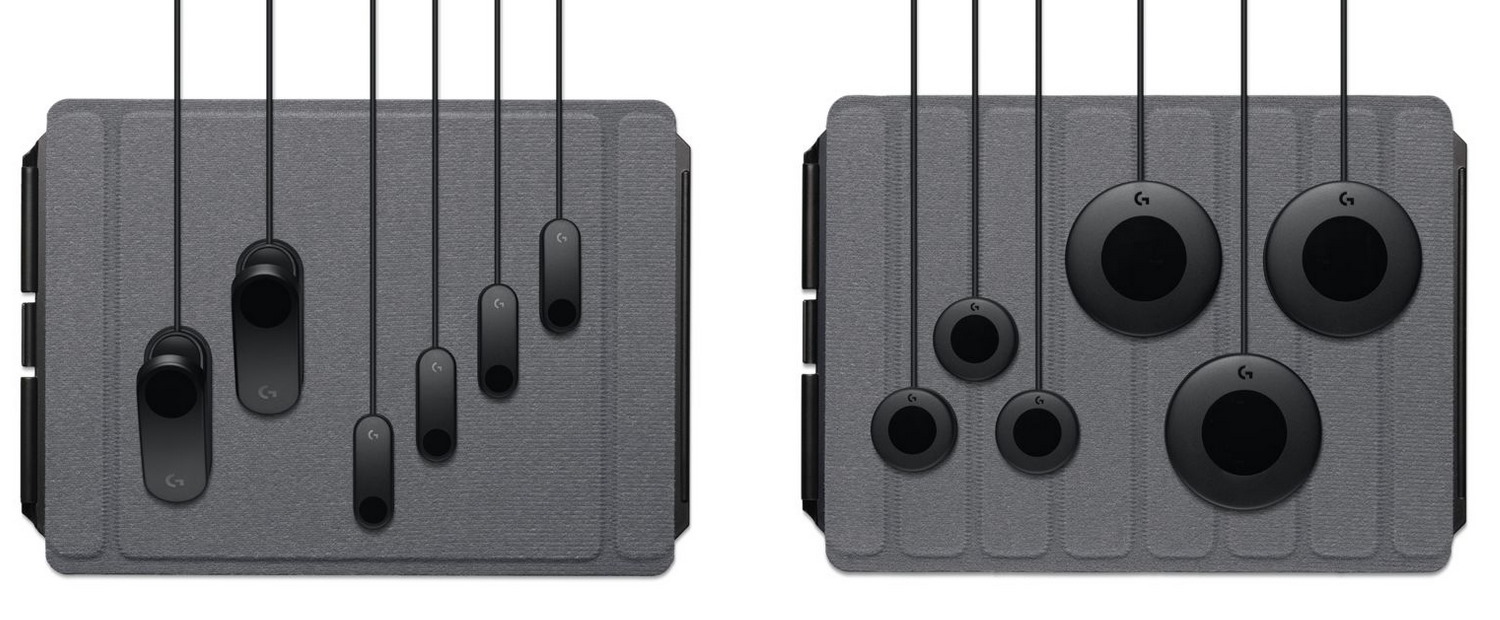
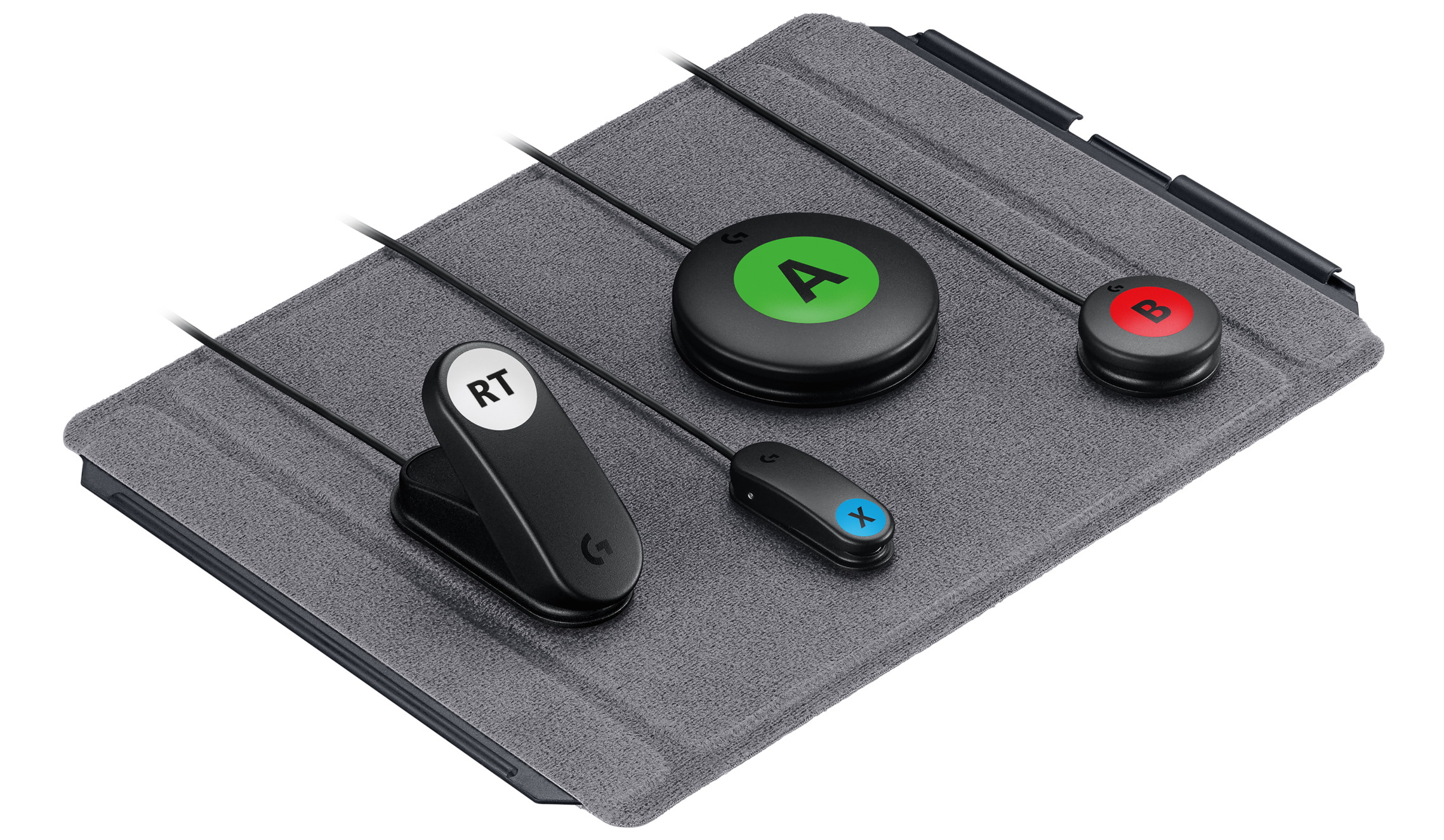
Logitech’s $100 Adaptive Gaming Kit comes with a dozen buttons in a variety of sizes, two large analog levers to control the triggers, and a Velcro-style pad to which they can all be securely attached. It’s hopefully the start of a hardware ecosystem that will be at least a significant fraction of the diversity available to the able population.

The visibility of gamers with disabilities has grown both as the communities have organized and communicated their needs, and as gaming itself has moved towards the mainstream. Turns out there are millions of people who, for one reason or another, can’t use a controller or mouse and keyboard the way others can — and they want to play games too.

Always one of the more reliably considerate companies when it comes to accessibility issues, Microsoft began developing the XAC a couple years back — though admittedly after years of, like the rest of the gaming hardware community, failing to accommodate disabled gamers.

Logitech was an unwitting partner, having provided joysticks for the project without being told what they were for. But when the XAC was unveiled, Logitech was stunned and chagrined.

“This is something that, shame on us, we didn’t think about,” said Mark Starrett, Logitech G’s senior global product manager. “We’ve been trying to diversify gaming, like getting more girls to play, but we totally did not think about this. But you see the videos Microsoft put out, how excited the kids are — it’s so motivating to see that, it makes you want to continue that work.”

And to their credit, the team got in contact with Microsoft soon after and said they’d like to collaborate on some accessories for the system.

In some ways this wouldn’t be particularly difficult: The XAC uses 3.5mm headphone jacks as its main input, so it can accept signals from a wide range of devices, from its own buttons and sticks to things like blow tubes, so there’s no worries about proprietary connections, for instance. But when it comes to accessible devices and systems like this, there are often other rigorous standards in place that need to be upheld throughout, so it’s necessary to work closely with both the platform provider (Microsoft) and, naturally, the people who will actually be using them.

“This community, you can’t make anything for them without doing it with them,” said Starrett. “When we design a gaming keyboard or mouse, we engage pros, players, all that stuff, right? So with this, it’s absolutely critical to watch them with every piece.”

“The biggest takeaway is that everybody is so different: every challenge, every setup, everyone we talked to,” he continued. “We had a 70, 80 year old guy who plays Destiny and has arthritis — all we really needed to do was put a block on the back of his controller, because he couldn’t pull the trigger. Then we worked with a girl who has a quadstick, she was playing Madden like a pro with something you just puff and blow on. Another guy played everything with his feet. So we spent a lot of time on the site just watching.”

The final set of buttons they arrived at includes three very large ones, four smaller ones (though still big compared with ordinary controller buttons), four “light touch” buttons that can be easily activated by any contact, and two big triggers. Because they knew different gamers would use the sets differently, there’s a set of labels in the box that can be applied however they like.

Then there are two hook and loop (i.e. Velcro) mats to which the buttons can be attached, one rigid and the other flexible, so it can be draped over a leg, the arm of a couch, etc.

Even the packaging the buttons come in is accessible: A single strip of tape pulls out and causes the whole box to unfold, and then everything is in non-sealed reusable bags. The guide is wordless so it can be used in any country, by any player.

It’s nice to see such consideration at work, and no doubt the players who will benefit from these products will be happy to have a variety of options to choose from. I was starting to think I could use a couple of these buttons myself.

Starrett seemed very happy with the results, and also proud that the work had started something new at Logitech.

“The groups we talked to brought a lot of different things to mind for us,” he said. “We’re always updating things, but now we’re updating everything with an eye to accessibility. It’s helped Logitech as a company to learn about this stuff.”

You can pick up Logitech’s Adaptive Gaming kit here for $100.

18 Nov 2019

Juno shuts down its operations in NYC as owner Gett signs strategic partnership with Lyft

Gett, the ridesharing company backed by Volkswagen and valued at around $1.5 billion, is putting the brakes on a major part of its growth strategy. Today, the company announced that it is closing down its operations in New York, which operates under the Juno brand, effective today. The company has substantial business serving enterprise customers — with some 15,000 companies overall — so alongside this news, it’s also entered into a strategic partnership with Lyft to take on those accounts starting next year.

Notably, that 15,000 figure is down on the 20,000 number that Gett shared with me earlier this year when it raised $200 million and talked about going public, by Q1 of 2020.

That is not detailed in today’s press release, which focuses instead on rationalization and the “enactment of misguided regulations in New York City earlier this year.”

“This development reinforces Gett’s strategy to build a profitable company focused on the corporate transportation sector, a market worth $1 trillion each year,” said Gett CEO Dave Waiser, Gett CEO, in a statement.

We asked Waiser if he can provide more guidance on IPO plans and he noted to me earlier that the company still expects to be operationally profitable by December and that an IPO is still on the horizon, although without a specific date in mind.

“We are focusing on reaching operational profitability globally already next month in December,” he said. “Being a leader in the corporate ground transportation, profitable and global, makes our plans for IPO realistic.”

We’re also asking Gett for more specifics on the strategic aspect of this deal and whether Lyft is giving Gett shares in its company, or indeed vice versa. Gett notes that “Juno drivers will be paid in full by Juno for all rides completed by Juno’s service end-date. All Juno riders will be invited to join Lyft.”

The Lyft partnership, Gett said, will mean that when its corporate customers come to the United States, they can continue to use their Gett apps to order Lyft cars. As Gett had never managed to expand beyond New York City, this will give the company overall a larger footprint, while also drastically cutting the margins that it will be able to make per ride.

Gett made a significant move to consolidate its position in the US — specifically the key New York market where it operated — when it acquired Juno, a smaller rival in the New York market, for about $250 million in 2017.

The acquisition spearheaded a big effort to catch up to and potentially even surpass the two biggest ridehailing companies in the market, Uber and Lyft, at a time when many people were starting to question some of Uber’s and Lyft’s practices in the market. Juno (founded by the founders of the messaging app Viber) tried to take a different approach to the market by putting drivers and their compensation front and center, thereby hoping both to attract more of them to its platform, and also more riders happier with the ethics of the different approach.

At the same time, Gett took a different approach to its competitors by focusing only on specific markets, to cut down operating expenses and focus on profit. It made it as far as being a “solid number three,” in the words of Waiser earlier this year.

“A year ago, profitability was not a very popular topic,” Waiser said to me when Gett raised $200 million earlier this year. “In Uber and Lyft we see two great companies, but even as they grow revenues, their losses are growing. What is really unique for Gett is that our success, and our improvements in revenues, are in parallel with our Ebitda improving.”

However, as you can see from the IPOs and subsequent performances of both Uber and Lyft, the economics of ride-hailing have proven to be problematic, and ultimately the company has had to rely on outside investment like the others, while also finding that it couldn’t scale or move into the black as it had hoped it would. The retreat from direct operations in the US underscores that fact.

18 Nov 2019

If you don’t have an investment banker, replicate one

The good news: even if you have a small company and can’t afford a banker, you can synthetically and cheaply replicate one. That’s part of the value proposition of an institutional VC; I have been the (unpaid) investment banker for many of my portfolio companies.  

If you don’t have relationships with potential investors, here’s how to replicate a banker:

Her job is to lead a professional outreach campaign to investors, writing highly customized emails to each based on your agreed-upon template. If you don’t have a pre-existing relationship, it is critical that you write emails which are palpably customized and of course well written, or else you’re just spamming.

The person doing outreach should have a title as senior as possible, e.g., “acting COO.” The higher the title, the higher the response rate she will generate. Any good business school will have dozens of current students who fit these criteria. She will get a lower response rate than you (with the CEO title), but likely a higher response rate than an outside banker who does not have an established relationship with the investor you are targeting. You can also have her impersonate you via email, although there’s always a risk of that ending in embarrassment if she is not highly responsible and trustworthy.  

  • You as the CEO should handle all the meetings. There’s no need to bring your colleague who’s setting up meetings, although I’m sure she will appreciate it.  

Raising capital is a time-consuming, arduous, complex task and you will be living with the consequences of your actions for decades. I recommend hiring a professional to help you, if you can afford it. I also recommend doing thorough research before hiring a banker. The wrong decision can cost you millions of dollars, in the form of a broken deal process, a suboptimal valuation, or inappropriate investors.

18 Nov 2019

Steve Jang & Kanyi Maqubela form or fund as Kindred Ventures

Venture capitalists often mutter, “I haven’t seen anything I like lately”. Founders frequently complain that “investors are back-seat drivers who won’t get their hands dirty.” A $55 million fund with a fresh approach is aiming to address both those issues.

Steve Jang and Kanye Maquebla are two exceedingly smart and sweet guys who couldn’t help but come up with ideas for startups. Jang co-founded music apps Imeem and Soundtracking, meanwhile serving as an early Uber advisor and angel investor in Coinbase. Maqubela worked in operations at career network Doostang and solar startup One Block Off The Grid before becoming a venture partner at Collaborative Fund.

Today the pair officially launch Kindred Ventures to form startups as well as fund them.

“We don’t want to wait for people to come around and solve the problems we think matter” says Jang. “We’d rather proactively assemble an amazing team to go tackle that problem” Maqubela follows up. But Kindred Ventures will also step up and lead seed rounds, then help startups orchestrate their follow-on fundraises.

Kindred Ventures partner and co-founder Steve Jang

“The ethos is empathy — to take a very adaptive coaching and mentorship model” Jang tells me. That means partnering with startups rather than offering arms-length investing. By keeping the portfolio size low, Jang and Maqubela plan to turn concentrated conviction and outsized, hands-on effort into big stakes in tomorrow’s top companies.

“I originally wanted to call the fund Kindred Spirits, but it sounds a little too woo-woo” Jang says with a laugh. From multiple interviews with the team and its portfolio, though, that’s really the vibe Kindred Ventures is going for. To be the first people founders call when they’re in crisis…whether they need answers or just some cheering up.

Beyond the warm smiles, Kindred already has a strong track record from its prototype phase under Jang’s solo operation since 2014. He’d made a reputation for himself as a fixer through his advising work during Uber’s scrappy early years starting in 2009.

After Imeem’s sale to Myspace and later Soundtracking’s acquisition by Rhapsody, Jang made about 50 angel investments of around $25,000 to $250,000 in companies like Blue Bottle Coffee, Postmates, and Zymergen under the name Kindred Ventures. Instead of just throwing money around, “I’d help a co-founder — sit down and work with them on product, their presentation for seed funding, hiring their first employees, finding a co-founder — it was quite different from how VCs operate.” But to pour that kind of sweat into his portfolio, Jang needed the help of someone who could dig deep and become an ally to founders in any vertical.

After his stints in operations, Maqubela went on to work at Collaborative Fund for seven years, rising to partner at the firm looking for the intersection of positive impact and profit. He tells me developed a thesis about “what does it mean to be a techno-optimist: to believe that technology is a amoral but can be oriented towards good.”

Maqubela’s super-power is learning. I knew him from Stanford and now the same reputation precedes him through his portfolio of angel investments like Earnest and Buffer. He’ll immerse himself in any topic or industry, read and call people until he truly gets it, and then wedge his entrepreneurial skillset into the cracks to firm up an idea. Still, relatively new to venture, Maqubela was seeking someone with a well-worn process for investing and a big heart for what founders go through.

Kindred Ventures partner and co-founder Kanyi Maqubela

The coincidental co-investors became friends, then deliberately funded startups together, and now are taking the leap together as Kindred Ventures. Together they want to redefine “What does it mean to invest at t=0?. What do they really need?” Maqubela says.

The plan is to fund about twenty-five companies through pre-seed and seed per fund, which they’ll raise every two to three years. Kindred is vertical agnostic, but it has a soft spot for the future of cities, work, and living. It also keen on marketplaces, material science, food innovation, deep tech, enterprise SAAS, and developer tools.

So far Kindred Ventures has funded nine startups from its $55 million initial fund. It’s helped form two companies and hopes to do four to eight per fund. But Kindred won’t be taking founder-level equity in those. Instead it just wants the opportunity to lead the seed round and own 10% to 20% by the time of the Series A.

That makes Kindred Ventures distinct from most startup studios like Atomic that aim for bigger ~30% stakes. “The Studios are creating whole platform teams, services teams, only work on their own ideas, and own a considerable amount of equity” Jang notes. By leaving more shares for the real CEO, “We’d be able to work with a stronger profile of founders” while avoiding spending so much time per company that the model becomes unscalable.

Kindred’s two formations come from the disparate medtech and blockchain worlds. Maqubela became an expert in cardiology to help start Heartbeat, which does in-person and remote heart health diagnostics.

“It’s ‘we’re there for you when you need us’ rather than ‘we’re there for you when we fund you and then we move on’ CEO Jeff Wessler, MD tells me about Kindred. “Very quickly this evolved into Steve and Kanyi being my absolute numbers 1 and 2.” The investors gave Wessler entrepreneurship 101 coaching, provided Heartbeat’s first funding, and helped it build a team.

Plenty of funds talk a lot about getting their hands dirty. Often that means hiring big teams they can assign to help founders, though, while the partners focus elsewhere. With just two support staff, Jang and Maqubela don’t have that luxury. Instead, they’re in constant contact by WhatsApp, phone, and email to work through snags directly.

They’re always super responsive” says Michael Karnjarnaaprakorn, co-founder of collectibles investing startup Otis that was backed by Kindred’s prototype fund. He cites three big value-adds. Strategy: “Anytime I’m thinking through a big decision, I call them to help me think through it” including fundraising and product launches. Network: “They have an extremely strong network and are usually one to two degrees away from anyone.” And “everything else”, from mentorship on founder psychology to company building.

But being high-touch and cooperative doesn’t mean becoming a push-over yes-man. “Founder empathy is not always founder friendly” says Maqubela. “It’s being able to disagree with founders, even very passionately, and still constructively working together. To be able to tell them they’re wrong but come out the other side.”

That means Kindred Ventures isn’t for every founder. Those who want their investors firmly belted in the backseat or locked in the trunk may want to look elsewhere for cash. Smart founders will take all the help they can get, and Kindred strives to give the most per dollar. Jang concludes that “The idea may come from them or come from us, but we want to back amazing founders on a mission. It’s scratching both itches for us.”

18 Nov 2019

BMW unveils the powerful i4 electric sedan with 530 hp, 373 miles of range

BMW just took the wraps off its first purely electric premium mid-size sedan. Appropriately called the i4, the vehicle is powered by the company’s fifth-generation eDrive platform and is just part of the company’s upcoming onslaught of EVs. But put down the credit card. This car isn’t coming until late 2021 at the earliest.

Right now, BMW says the i4 will produce 530 hp, making it more potent on paper than BMW’s formidable M3. Combined with the 80-kWh battery, it’s good for a 0 to 62 mph sprint in about 4 seconds and a top speed of 125 mph. The WLTP cycle, which is different from the EPA ratings, clocks in at 600 kilometers, or about 373 miles.

The i4 uses the fifth-generation BMW eDrive, which will be first available in the iX3 in 2020, followed by the iNEXT. BMW says this platform features a brand new electric motor, power electronics, charging unit, and high-voltage battery. The battery implementation in the i4 is flat, according to BMW’s press release, and weighs 550 kilograms. For reference, the battery pack in the Tesla Model 3 weighs 480 kg.

A lot of questions remain about the i4, including the final design. BMW is showing off the model with camouflage signaling there could be changes in the sheet metal. The price is still yet to be announced, along with how it will sit within BMW’s 4 series lineup. Right now, the i4 looks excellent, but it’s still a few years out, and the landscape will likely look different by the time it hits dealers.

18 Nov 2019

Pitch on stage at TechCrunch’s Robotics & AI show – March 3 at UCBerkeley

On March 3 next year, TechCrunch will host the fourth annual TC Sessions: Robotics + AI at UC Berkely’s Zellerbach Hall. This time around we’re adding a new twist to the incredible line-up of speakers, breakout sessions and Q&As: It’s a pitch off for early-stage companies in the robotics and AI space.

How it works: The night before the event, ten startups, chosen through an online application process, will pitch at a private event with TechCrunch Editors, main stage speakers, and industry experts. A panel of VC judges will select the top 5 teams to then pitch the next day on the main stage at TC Sessions: Robotics + AI the next day.

It is a once in a lifetime opportunity for founders to get their company in front of the tier one leaders and investors in the industry as well as receive video coverage on TechCrunch. We expect 1500 attendees at the show and tens of thousands online.

Extra treat: Each of the ten startup team finalists will receive two free tickets to attend the show the next day.

Apply here by February 1. TechCrunch will review applications and notify companies by Feb. 15 so the founders have time to prepare. So, what are you waiting for? Get some spotlight!

Not interested in the pitch off but want to attend this fantastic, show, Grab your Early Bird pass here before it’s too late!

18 Nov 2019

Google Maps tests a social networking feature with the ability to ‘follow’ Local Guides

Google Maps will soon begin testing a new feature that’s more common to social networks like Facebook, rather than a maps app: the ability to find and follow other users. In Google Maps’ case, it’s specifically rolling out the ability to follow top “Local Guides” — its community members who actively review business and share photos and other knowledge to Google Maps, as part of a larger rewards program.

The Local Guides program launched in 2015 as a way to take on Yelp Elites, by allowing the most active Maps contributors to earn status as a tastemaker of sorts for their own hometown. Guides write more in-depth business reviews and post photos in order to help other Google Maps users learn about the area.

In exchange, they receive a variety of perks like early access to new features, exclusive local meetups, free access to Google services, discounts and coupons, and more.

Now, Google says, it it’s kicking off a pilot program that will allow Google Maps users in select markets to follow top Local Guides by clicking a new “Follow” button on these users’ profile pages. By doing so, the Guides’ recommendations will be surfaced for you when you’re using Google Maps. In a new section on the “For You” tab in the app, you’ll find the area recommendations from the Local Guides.

Google is piloting the program in Bangkok, Delhi, London, Mexico City, New York, Osaka, San Francisco, São Paulo, and Tokyo, for the time being. Presumably, if all goes well, it would expand to more markets.

The feature is the latest move by Google Maps to take on Facebook as the first stop for discovering area businesses and keeping up with their news, events, sales, and more. Just over a year ago, Google rolled out a “Follow” feature for tracking businesses on the Maps app, which later expanded to iOS. This summer Google launched a host of tools for local businesses that allowed them to update their photos and profiles on Google Maps, claim a short URL, and send offers to customers — all features that challenge Facebook Pages.

But until now, Google’s focus has been on getting users to follow and interact with businesses themselves, not other users.

Of course, there’s one big caveat to the Local Guides program in terms of using it as a good source for business information: it’s crowdsourced info from regular people, not professional critics or reviewers. That means the quality of the Local Guides’ reviews can be fairly hit-or-miss. Meanwhile, Google seems more concerned with Local Guides’ engagement and quantity of reviews, rather than review accuracy or quality.

Often, the Local Guides’ reviews lack any criticism, but are simply non-detailed posts about the business in question. For example, many restaurant reviews don’t say much more than “the food is amazing! can’t wait to go back!,” or some variation of this with a few more words. They often read no better (and sometimes much worse) than the other user reviews on the Google Maps app. That’s not to say all Local Guides’ reviews are unhelpful — many do make an effort — but just seeing a review labeled as being from a “Local Guide” is no indication of the review’s quality.

However, the new recommendations feature coming to these 9 test markets will focus more on the Local Guides’ photos, rather than their words. On the “For You” tab of Google Maps, their recommendations will be on display in the form of photo collages — only by clicking through will you see what they wrote. The effect is one where there’s a bit of an Instagram-like feel to the Google Maps app.

The new feature was announced at Google’s annual Local Guides summit. Here, Google also shared how its Local Guides community has grown to around 120 million people across 24,000 cities and towns. But this is another confirmation that the company is celebrating user growth, but not necessarily with an eye on review quality. Unfortunately, if Local Guides can’t all be trusted to offer compelling, detailed and fair reviews, people will not consider them of interest, and won’t be compelled to “follow” anyone here for those sorts of recommendations.

Google didn’t say when the “Follow” feature would launch into pilot testing in these markets, just that it would be arriving “soon.”

18 Nov 2019

Weber’s new SmokeFire pellet grill uses June technology for smart cooking

BBQ legend Weber is getting into the connected cooking game with their new SmokeFire grill, which uses wood pellets for fuel and which incorporates technology developed by Weber in partnership with appliance startup June for WiFi-enabled smart cooking.

The SmartFire grill, which will be available for pre-order in the U.S. starting on Cyber Monday and which will star shipping early next year, is a first in more ways than one for Weber. Yes, it packs in connected smart cooking – but it’s also the first time Weber has made a pellet grill, a style of outdoor cooker popularized by Traegar, and useful for both low and slow smoking, as well as high-heat grilling like a more traditional coal, natural gas or propane BBQ.

Weber may not have a history of building pellet grills, but it does have a very strong reputation when it comes to outdoor cooking appliances. The business introduced its iconic Kettle Grill back in 1952, and consistency racks up top marks for its range of BBQs, known for their even, consistent temperatures and long-term durability.

[gallery ids="1913242,1913241,1913240,1913235,1913239,1913238,1913237,1913236"]

This legacy cooking industry heavyweight apparently decided to partner with June once word of the startup’s own Smart Oven started circulating around the office. June and Weber teamed up to test thousands of recipes in the development of the Weber Connect smart grilling software, which provides step-by-step directions ranging from prep through the entire cook, as well as a an ETA on whatever you’ve got on the grill, delivered to and controlled from your smartphone.

The SmartFire comes in two different sizes, with 24″ and 36″ grilling surfaces respectively, for $999 and $1,199 respectively. The design looks like what you’d expect from a pellet grill – with the interesting choice of locating the hopper wherein you feed said pellets to the back of a small prep shelf on the right side of the grill. If you’re new to pellet grills, they feed these processed wood pellets, which produce great smoke but very little ash because of their high-efficiency burn, in a controlled manner that keeps temperature inside the grill consistent where you set it.

Low and slow is a great way to grill, and having intelligent cooking features to guide you along the way should help alleviate rookie mistakes like over and undercooking. Plus, it’s just exciting to imagine what Weber can do withs its first pellet grill.