Category: UNCATEGORIZED

18 Nov 2019

Microsoft announces changes to cloud contract terms following EU privacy probe

Chalk up another win for European data protection: Microsoft has announced changes to commercial cloud contracts following privacy concerns raised by European Union data protection authorities.

The changes to contactual terms will apply globally and to all its commercial customers — whether public or private sector entity, or large or small business, it said today.

The new contractual provisions will be offered to all public sector and enterprise customers at the beginning of 2020, it adds.

In October Europe’s data protection supervisor warned that preliminary results of an investigation into contractual terms for Microsoft’s cloud services had raised serious concerns about compliance with EU data protection rules and the role of the tech giant as a data processor for EU institutions.

Writing on its EU Policy blog, Julie Brill, Microsoft’s corporate VP for global privacy and regulatory affairs and chief privacy officer, announces the update to privacy provisions in the Online Services Terms (OST) of its commercial cloud contracts — saying it’s making the changes as a result of “feedback we’ve heard from our customers”.

“The changes we are making will provide more transparency for our customers over data processing in the Microsoft cloud,” she writes.

She also says the changes reflect those Microsoft developed in consultation with the Dutch Ministry of Justice and Security — which comprised both amended contractual terms and technical safeguards and settings — after the latter carried out risk assessments of Microsoft’s OST earlier this year and also raised concerns.

Specifically, Microsoft is accepting greater data protection responsibilities for additional processing involved in providing enterprise services, such as account management and financial reporting, per Brill:

Through the OST update we are announcing today we will increase our data protection responsibilities for a subset of processing that Microsoft engages in when we provide enterprise services. In the OST update, we will clarify that Microsoft assumes the role of data controller when we process data for specified administrative and operational purposes incident to providing the cloud services covered by this contractual framework, such as Azure, Office 365, Dynamics and Intune. This subset of data processing serves administrative or operational purposes such as account management; financial reporting; combatting cyberattacks on any Microsoft product or service; and complying with our legal obligations.

Microsoft currently designates itself as a data processor, rather than data controller for these administrative and operations functions that can be linked to provision of commercial cloud services, such as its Azure platform.

But under Europe’s General Data Protection framework a data controller has the widest obligations around handling personal data — with responsibility under Article 5 of the GDPR for the lawfulness, fairness and security of the data being processed — and therefore also greater legal risk should it fail to meet the standard.

So, from a regulatory point of view, Microsoft’s current commercial contract structure poses a risk for EU institutions of user data ending up being processed under a lower standard of legal protection than is merited.

The announced switch from data processor to controller should raise the bar around associated purposes that Microsoft may also provide to commercial customers of its cloud services.

For the latter purpose itself, Microsoft says it will remain the data processor, as well as for improving and addressing bugs or other issues related to the service, ensuring security of the services, and keeping the services up to date.

In August a conference organized jointly by the EU’s data protection supervisor and and the Dutch Ministry brought together EU customers of cloud giants to work on a joint response to regulatory risks related to cloud software provision.

Earlier this year the Dutch Ministry obtained contractual changes and technical safeguards and settings in the amended contracts it agreed with Microsoft.

“The only substantive differences in the updated terms [that will roll out globally for all commercial cloud customers] relate to customer-specific changes requested by the Dutch MOJ, which had to be adapted for the broader global customer base,” Brill writes now.

Microsoft’s blog post also points to other global privacy-related changes it says were made following feedback from the Dutch MOJ and others — including a roll out of new privacy tools across major services; specific changes to Office 365 ProPlus; and increased transparency regarding use of diagnostic data.

18 Nov 2019

Bolt Bikes launches e-bike subscription platform for gig delivery workers in U.S., UK

Bolt Bikes, the Sydney, Australia-based startup founded in 2017, is taking its electric bike platform designed for gig economy delivery workers to the U.S. and UK.

The company is expanding on the heels of a $2.5 million seed round led by Maniv Mobility, European e-mobility firm Contrarian Ventures, individual investors and former executives of Uber and Deliveroo . The company was founded by Mina Nada, former Deliveroo and Mobike executive) and Michael Johnson, a former Bain & Co executive.

Bolt Bikes now provides its flexible subscriptions, which include vehicle servicing, in Sydney and Melbourne, Australia, San Francisco and London. The company sells its electric bikes. But the main premise is to rent them out for commercial use. The electric bikes are rented on a week-to-week contract for $39.

The Bolt Bikes platform includes a the electric bike, fleet management software, financing and servicing. Subscribers get 24-hour access to the bike. A battery charger, phone holder, phone USB port, secure U-Lock and safety induction is included. Bolt Bikes also offers the first week as a free trial.

“Being in the food delivery industry since its inception, we saw that light electric vehicles were the real future of ‘last mile’ logistics, yet no-one was offering the right vehicle, financing or maintenance solution,” Nada said in a statement.

Bolt Bikes has piqued the interest of more than investors. Postmates has been piloting a Bolt Bikes rental program in San Francisco since June.

And the company has aspirations to increase its fleet and to expand to more cities in the U.S., UK and Australia.

18 Nov 2019

Fertility startup Mojo wants to take the trial and error out of IVF

Fertility tech startup Mojo is coming out of stealth to announce a €1.7 million (~$1.8M) seed round of funding led by Nordic seed fund Inventure. Also participating are Doberman and Privilege Ventures (an investor in Ava), plus a number of angel investors including Josefin Landgard (founder and ex-CEO of Kry) and Hampus Jakobsson (partner at BlueYard, BA in Clue & Kind.app).

Mojo’s mission, says co-founder and CEO Mohamed Taha, is to make access to fertility treatment more affordable and accessible by using AI and robotics technology to assist in sperm and egg quality analysis, selection and fertilization to reduce costs for clinics. Only by reducing clinics’ costs will the price fall for couples, he suggests.

“What the AI does in our technology stack from now until our roadmap is completed, product wise, is to look at sperm, look at eggs, look at data and ensure that the woman or the couple get precise treatment or the precise embryo that yields healthy baby,” he tells TechCrunch. “The role of robotics is to ensure that the manipulations/procedures are done precisely and at reduced time compared to nowadays, and also accurately.”

The idea for the business came to Taha after he was misdiagnosed with a kidney condition while still a student. His doctor suggested freezing his sperm as a precaution against deterioration in case he wanted to father a child in the future, so he started having regular sperm tests. “I was super annoyed with one particular fact,” he says of this. “Every time I do a sperm test I get a different result.”

After speaking to doctors the consensus view of male fertility he heard was “I shouldn’t care about my fertility — worst case scenario all that they need from me is one sperm”. He was told it would be his future partner who would be put on IVF to “take the treatment for me”. Doctors also told him there was little research into male fertility, and therefore into sperm quality — such as which sperm might yield a healthy baby or could result in a miscarriage. And after learning about what IVF entailed, Taha says it struck him as a “tough” deal for the woman.

“It’s completely blackbox,” he says of male fertility. “I also learned that in terms of IVF or ART [assisted reproductive technologies] everything, pretty much, is done manually. And everything, pretty much, also is done at random — you select a random sperm, they fertilize it with a random egg. Hopefully the technician who’s doing it manually knows his or her job. And in the end there’s going to be an embryo that will be implanted.”

He says he was also struck by the fact the ‘trial and error’ process only works 25% of the time in high end laboratories, yet can prospective parents between €40,000-€100,000 for each round of treatment. “This is where the idea of the company came from,” he adds. Mojo’s expectation for their technology is that it will be able to increase IVF success rates to 75% by 2030.

The team started work in 2016 as a weekend project during their PhDs. Taha initially trained as an electrical engineer before going on to do a PhD in nanotechnology, investigating new and affordable materials for use as biosensors. It was the microscopes and robotic arms that he and his co-founders, Fanny Chesa, Tobias Boecker, Daniel Thomas, were using in the labs to examine nanoparticles and select specific particles for insertion into other media that led them to think why not adapt this type of technology for use in fertility clinics — as an alternative to purely manual selection and fertilization.

“We just completely automate everything to ensure that the procedure is done faster, better and at the same time more reliably,” Taha says of the concept for Mojo. “No randomness. Understand the good from the bad.”

That — at least — is the theory. To be clear, they don’t yet have their proposition robustly proved out nor productized at this stage. Their intended first product, called Mojo Pro, is still pending certification as a medical device in the EU, for example. But the plan, should everything go to plan, is to get it to market next summer, starting in the UK.

This product, a combination of microscopy hardware and AI software, will be sold to fertility clinics (under a subscription model) to offer an analysis service consisting of a sperm count and quality check — as a first service for couples to determine whether or not the man has a fertility problem.

Initially, Mojo’s computer vision analysis system is focused on sperm counts, automating what Taha says is currently a manual process, as well as assessing some basic quality signals — such as the speed and morphology of the sperm. For example, a sperm with two heads or two tails would be an easy initial judgement call to weed out as “bad”, he suggests.

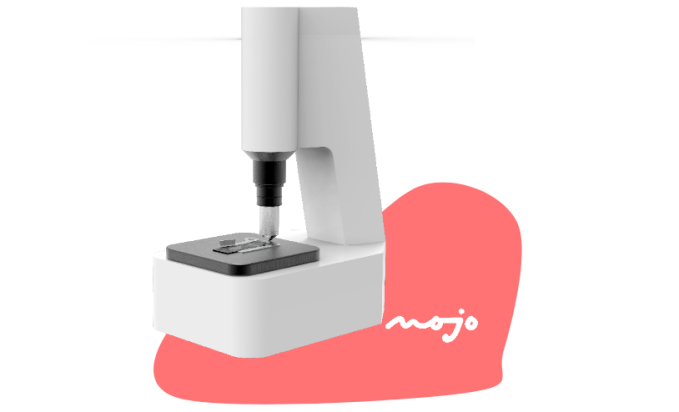
“The first product is to look at the sperm and say if this man experiences infertility or not. So we have a smart microscopy — built custom in-house. And this is where the element of the robotics comes in,” he explains. “At the same time we put on it an AI that looks at a moving sperm sample. Then, through looking at this, the system on Mojo Pro will tell us what is the sperm count, what is the sperm mobility (how fast they move) and what is the predominant shape of the sperm.

“The second part is the selection of the sperm [i.e. if the sample is needed for IVF]. Now we ensure that good sperm is being selected. This microscopy will look at the same and visually will guide the embryologist to pick the good sperm — that’s highlighted around, for example, by a green box. Good sperm have green boxes around them, bad sperm have red boxes around them so they can pick up through their current techniques the sperm that are highlighted green.”
Mojo

Based on internal testing of Mojo Pro the system has achieved 97% of the accuracy of a manual sperm count so far, per Taha, who says further optimization is planned.

Though he admits there’s no standardization of sperm counts in the fertility industry — which means such comparative metrics offer limited utility, given the lack of robust benchmarks.

“The way we are going with this is we’re really choosing the best of the best practitioners and we are just comparing our work against them for now,” is the claim. (Mojo’s lab partner for developing the product is TDL.)

“We will try to introduce new standards for ourselves,” he adds.

The current research focus is: “What are the visuals to make sure the sperm is good or bad; how to actually measure the sperm sample, the sperm count; in terms of morphology… how we can incorporate a protocol that can be the gold standard of computer vision or AI looking at sperm?”

The wider goal for the business is to understand much more about the role that individual sperm and eggs play in yielding a healthy (or otherwise) embryo and baby.

Taha says the team’s ultimate goal is “automating the fertilization process”, again with the help of applied AI and robotics (and likely also incorporating genetic testing to screen for diseases).

He points out that in many markets couples are choosing to conceive later in life. The big vision, therefore, is to develop new assisted reproductive technologies that can support older couples to conceive healthy babies.

“Generally speaking we leave our fertility to chance — which is sex… So there’s a little bit of randomness in the process. This doesn’t necessarily mean it’s bad — it’s how the body functions. But when you hit later ages, 30 or 40, we face biological deficiencies which means the quality of the eggs are not good any more, the quality of the sperm might not be good any more, if fertilization happens with old gametes… you are not sure there is a healthy baby. So we need technology to play a role here.

“Imagine a couple at the age of 40 who want to conceive a baby ten, twelve years from now. What happens if this couple have the possibility of the sperm of the man to be shipped somewhere, the egg of the woman to be shipped somewhere and they get fertilized using high end technology, and they get informed once the embryo is ready to be implanted. This is where we believe the consumer game will be in the future,” he says.

“We envisage ourselves going from just working with clinics in the coming ten years… making our AI and our robotics really flawless at manipulation, and then we are envisaging of having as consumer-facing way where we ensure people have healthy babies. Not necessarily this will be a clinic but it will be somehow where fertilization will happen in our facilities.”

“I’m not speaking about super humans or designer babies,” he adds. “I’m speaking about ensuring at a later stage of the conception journey to have a healthy baby. And this is where we see ART can actually be the way to procreate at later stages in order to ensure that the baby is healthy then there should be new technologies that just give you a healthy baby — and not mess up with your body.”

Of course this is pure concept right now. And Taja concedes that Mojo doesn’t even have data to determine “good” sperm from “bad” — beyond some basic signifiers.

But once samples start flowing via customers of the first product they expect to be able to start gathering data (with permission) to support further research into the role played by individual sperm and eggs in reproduction — looking at the whole journey from sperm and egg selection through to embryo and baby.

Though getting permission for all elements of the research they hope to do may be one potential barrier.

“Once the first module is in the market we will be collecting data,” he says. “And this data that we’ll be collecting will go and be associated with the live births or the treatment outcome. And with that we’ll understand more and more what is a good sperm, what is a bad sperm.

“But we need to start from somewhere. And this somewhere right now what we’re relying on is the knowledge that good practitioners have in the field.”

Taha says he and his co-founders actively started building the company in January 2018, taking in some angel investment, along with government grants from France and the EU’s Horizon 2020 research pot.

They’ve been building the startup out of Lyon, France but the commercial team will shortly be moving to the UK ahead of launching Mojo Pro.

In the short term the hope is to attract clinics to adopt the Mojo Pro subscription service as a way for them to serve more customers, while potentially helping couples reduce the number of IVF cycles they have to go. Longer term the bet is that changing lifestyles will only see demand for data-fuelled technology-assisted reproduction grow.

“Now we help streamline laboratory processes in order to help the 180M people who have fertility problems have access to fertility at an affordable price and reliable manner but also we have an eye on the future — what happens when genetic testing… [plays] an important role in the procreation and people will opt for this,” he adds.


18 Nov 2019

Elavon to acquire Sage Pay, a gateway that competes with Stripe, PayPal and Adyen, for $300M

E-commerce continues to gain momentum — a trend we’ll see played out in the next two months of holiday shopping — and with that comes more consolidation. Today, Elavon, the payments company that is a subsidiary of US Bancorp, announced that it will acquire Sage Pay, one of the bigger payment processors in the UK and Ireland serving small and medium businesses.

Sage Pay’s owner Sage Group said the deal is being done for £232 million in cash (or $300 million at today’s currency rates).

Elavon is active in 10 countries and says it’s the fourth-largest merchant acquirer in Europe, competing against the likes of  Global Payments, Vantiv, FIS, Ingenico, Verifone, Stripe, Chase, MasterCard and Visa. The deal is still subject to regulatory approval (both by the Federal Reserve in the US and the Central Bank of Ireland), and if all proceeds, the deal is expected to close in Q2 of 2020.

The acquisition points to a bigger trend underway in e-commerce. The market is very fragmented, not just in terms of the companies who sell goods online but also (and perhaps especially) in terms of the companies that manage the complexities at the back end.

In keeping with that, Sage Pay has a lot of competitors in its specific area of taking and managing the payments process for online retailers and others taking transactions online or via mobile apps. They include some of the same competitors as Elavon’s: newer entrants like Stripe, Adyen, and PayPal (all of which have extensive businesses covering many countries and are each larger than Sage, valued in the billions rather than hundreds of millions of dollars), but also smaller operations like GoCardless as well as more established companies like WorldPay.

This deal is a mark of the consolidation that’s been taking place to gain better economies of scale in a market where individual transactions generally generate incremental revenues.

Sage Pay, in that context, was a relatively small player. It 2018 revenues were £41 million, but it is profitable, with an operating profit of £15 million, and Sage said it expects “to report a statutory profit on disposal of approximately £180 million on completion.”

The deal comes on the heels of Sage Group — which is publicly traded — confirming reports in September that it was looking for strategic alternatives for the payments business. Sage Group for the last couple of years has been divesting payments and banking assets to focus more on accounting, people and payroll software, which it sells through an SaaS model.

“Our vision of becoming a great SaaS company for customers and colleagues alike means we will continue to focus on serving small and medium sized customers with subscription software solutions for Accounting & Financials and People & Payroll,” said Steve Hare, Sage’s CEO, in a statement. “Payments and banking services remain an integral part of Sage’s value proposition and we will deliver them through our growing network of partnerships, including Elavon.”

Elavon, as the consolidator here, was itself acquired by US Bancorp way back in 2001 for $2.1 billion. Currently it is active in 10 countries, but in that same vein of consolidation to improve economies of scale on the technical side, and to aggregate more incremental transactions on the financial side, Elavon’s main objective is to increase its overall share of the e-commerce market in Europe. specifically by expanding with Sage Pay further into the UK and Ireland.

“We are a customer-focused company that is helping businesses succeed in a global marketplace that is changing rapidly,” said Hannah Fitzsimons, president and general manager of Elavon Merchant Services, Europe. “This acquisition brings tremendous talent and leading technology to Elavon, which can be leveraged across the European market.”

18 Nov 2019

5 reasons you need to be at Disrupt Berlin

We’re one month out from Disrupt Berlin (11-12 December) and no matter which part of the startup ecosystem you inhabit, Disrupt Berlin is a huge opportunity to learn, network and gain inspiration.

Consider these five reasons why you should buy a pass to Disrupt Berlin and join thousands of founders, investors and technologists for two potential-packed days that could change the trajectory of your business.

1. The People You Will Meet

As hard as founders work, it takes a network to make startup dreams come true. Networking at Disrupt Berlin puts you in touch with people who can help you move toward your goal. Connect with investors, developers, engineers, founders, marketers and more. Sizing up investors? Got questions about manufacturing or product development?

You’ll find the right people a lot faster and more efficiently thanks to CrunchMatch, the free business match-making platform we’re making available to all attendees. When CrunchMatch goes live (before the conference starts), we’ll email instructions on accessing the platform to all registered attendees.

You create a profile outlining your role and the type of connections you want to make. CrunchMatch suggest connections based on similar goals and then — subject to your approval — the platform handles all the scheduling details. It’s simple and it connects you with the people you really want to meet. And there will be nearly 3,000 to choose from.

2. The Interviews You’ll Watch (and questions you can ask)

TechCrunch’s editors have spent months picking speakers for the Disrupt stage who reflect the current trends and conversations in the startup ecosystem . The editors interviews focus on teasing out the information and insights everyone wants to hear. And if you have questions of your own, many of the speakers will be available for audience questions at a follow-up Q&A.

New to Disrupt Berlin this year, The Extra Crunch Stage, features experienced operators giving practical, real-world advice on how to launch, run and grow a successful startup, including the chance for you to ask our experts your questions. We launched this stage earlier this year in San Francisco, and the ”how to” programming was a huge hit. Curious about what it takes to raise a series A? Are you all about SaaS? Need help with your PR and branding strategy? Or thinking of scaling your startup globally? We have you covered.

And there’s so much more programming waiting for you across several stages— plan your time and check out the Disrupt Berlin agenda.

3. The Thrills of Startup Battlefield

There’s no better startup launch pad than our world-renowned Startup Battlefield. Since 2007, this global pitch competition has launched 857 companies — like Vurb, Dropbox, Mint and Yammer. They’ve collectively raised $8.9 billion and produced 113 exits. Who will join their ranks?

Be in the room to watch this year’s outstanding cohort go head-to-head in a fierce battle to win the judges hearts and minds. Oh, right — they’ll also win the Disrupt Cup, intense media and investor love and a $50,000 equity-free cash infusion. It all goes down live on the Main Stage, and it’s streamed live to a global audience.

4. The Serendipity of Startup Alley

Opportunity is the name of the game in Startup Alley — the expo floor and heartbeat of Disrupt Berlin. It’s where you’ll find hundreds of early-stage startups showcasing the latest products, platforms and services across the tech spectrum. Looking for potential customers, collaborators, mentors or just curious about new technology? Head to Startup Alley, because you never know who you’ll meet.

Here’s another great reason to go — you’ll find our TC Top Picks. TechCrunch editors hand-picked up to five stellar startups to represent the best of the following tech categories: AI/Machine Learning, Biotech/Healthtech, Blockchain, Fintech, Mobility, Privacy/Security, Retail/E-commerce, Robotics/IoT/Hardware, CRM/Enterprise and Education.

5. Your Inspiration, Stoked

You’re focused on making your startup dreams come true. Investing two days at Disrupt to meet new, yet like-minded people can shake things up in the best possible way. Connect with your community, refresh your thinking, share ideas and hear new perspectives. And maybe meet a future partner, investor, or employee. Go home inspired to dig deeper and work harder.

Well, there you have it. Five awesome reasons to hop off the fence, buy a pass to Disrupt Berlin and join us on 11-12 December.

Is your company interested in sponsoring or exhibiting at Disrupt Berlin 2019? Contact our sponsorship sales team by filling out this form.

18 Nov 2019

Heetch adds $4 million to its Series B round

Ride-hailing service Heetch has added a new investor to its $38 million Series B round. AfricInvest is investing another $4 million in the startup — in total, Heetch has raised a $42 million Series B round. Previous investors in the Series B round include Cathay Innovation, Idinvest and Total Ventures.

Heetch first started as a pure peer-to-peer ride-hailing platform. Anyone could become a driver, anyone could order a ride. After some regulatory issues in France, Heetch now uses a hybrid approach. It partners with professional drivers in some markets, it partners with local taxis and even moto-taxis in others.

In its home market France, the company competes directly with Uber, Kapten and other traditional ride-hailing apps. It takes a smaller cut than many of its competitors (15%) and users can pay both in cash or card.

According to the company, Heetch is one of the top three companies in the nine French cities where it operates (Paris, Lyon, Lille, Nice, Marseille, Toulouse, Bordeaux, Strasbourg and Nantes). Heetch also operates in Belgium.

More recently, the company has expanded to other markets with a focus on French-speaking Africa. It is currently live in Morocco, Algeria and Cameroon. In Morocco, Heetch has partnered with major taxi unions to let people book taxis through its app. It is now the only legal ride-sharing app.

In Douala, Cameroon, the company has built a moto-taxi service. The company insists that it is training drivers and moto-taxis are equipped with helmets as there are many accidents.

Up next, Heetch plans to expand to six additional countries in 2020, including Tunisia and Senegal.

18 Nov 2019

MMC Ventures outs new £100M ‘Scale Up’ fund to double-down on its portfolio at the later-stage

MMC Ventures, the London-based VC that typically invested at Seed and Series A via the various funds it manages, has launched a new £100 million “Scale Up” fund to provide expansion capital to its later-stage portfolio companies.

This is a move we are seeing a number of early-stage European VCs make, such as LocalGlobe with its “Latitude” fund, as they look to double-down on existing investments at Series B and beyond.

The motivation is obvious: as European tech continues to grow, becoming increasingly ambitious and global, investors don’t want to get diluted too much and too early. Meanwhile, although arguably there is an abundance of early-stage capital floating around, there are less European funds as you move to later stage.

MMC Ventures says its Scale Up Fund will provide primary capital to current portfolio companies that have grown beyond the mandate of MMC Ventures’ existing funds. Notably, however, MMC’s Scale Up Fund is also permitted to participate in secondary transactions.

In a call with MMC’s Bruce Macfarlane (Managing Partner) and Simon Menashy (Partner), the pair explained that this means that MMC can offer liquidity to early MMC and third-party investors who wish to exit from one of MMC’s portfolio companies early.

In this way, capital can be recycled within the early-stage funding ecosystem, whereby, for example, angel investors can go again by backing newly formed companies, while MMC maintains a longer-term outlook.

However, despite the launch of a later stage fund, Macfarlane says MMC’s core specialism remains as a Series A investor

Meanwhile, MMC has already made investments from the Scale Up Fund into a number of portfolio companies. They are Safeguard Global (alongside Accel KKR), Masabi (alongside Smedvig Capital), and Interactive Investor.

The Scale Up Fund rounds off a number of new funds managed by MMC. The firm recently outed a new £52 million seed fund in partnership with the Mayor of London. And combined with its annual EIS fundraise, the VC has added £200 million to its coffers in the last 12 months.

Over the last year, MMC has invested more than £85 million across the pre-seed, seed, series A and later stages in amounts ranging from £100,000 to £25 million. The firm also moved into new larger offices in Holborn, in Central London, which Macfarlane tells me is a sign of how bullish MMC remains with regards to U.K. tech and in spite of Brexit.

“2019 has been a big year for our firm, and the launch of our new Scale Up Fund represents a scale up moment for MMC as well as a significant innovation in the U.K. venture market,” adds Macfarlane in a statement. “This Fund allows us to double down on our most successful businesses while enabling our investors, and others, to take full or partial exits from early investments”.

18 Nov 2019

Mustang Mach-E: 5 Tech and Design Details That Stood Out

Ford finally showed the world its highly anticipated all-electric crossover, the Mustang Mach-E. The vehicle, which was unveiled Sunday at the Hawthorne Airport and in Tesla’s backyard, marks a series of firsts for Ford and the Mustang badge.

It’s the first vehicle to come out of Team Edison, the automaker’s dedicated electric vehicle organization. It’s not only the first electric Mustang, it’s also an SUV. 

TechCrunch has had an up close look and ride in the Mach-E. While there’s a lot to highlight, here are some of the details that stood out.

Door handles

Ford went an entirely new direction with the door handles on the Mustang Mach-E. You won’t find any Tesla lookalike door handles here. The doors seem to be lacking handles at all. A closer look though reveals illuminated buttons on the B and C pillars. The front doors also have a small, protruding handle located just under the button to grab onto.

Pressing the button for the backdoor immediately pops it open just slightly. Then the passenger reaches into the ajar door to hit the latch. This might sound dangerous and apt for a crushed finger. Except there’s an immediate safety in place that doesn’t allow the door to close.

Owners will be able to also use their smartphone to unlock the Mustang Mach-E. This phone as a key technology is new to Ford.

Tech tray

It’s a seemingly small detail, but so many automakers ignore that their customers have smartphones and want to put these devices somewhere other than a cup holder. Behold the tech tray, which has wireless charging pad.

The cup holders, located just below the tech tray, can be used to hold actual cups.

Infotainment system

The 15.5-inch screen will get a lot of attention, perhaps because its location and vertical placement is reminiscent of the Tesla Model S. But then there’s the physical dial placed on the bottom of the screen to control the volume.

Ford Mustang Mach-E screen

While not everyone will love this feature, it’s interesting how this dial came to be. Team Edison was assembled in 2017 to do more than create a new electric vehicle. It was created to do it differently and much faster than a typical vehicle program.

How the look and functionality of the infotainment system was developed is an example of this newfound nimbleness. A group of just over a dozen people with minimal oversight started with a research trip to China. Further customer research revealed that people wanted native apps in their car’s infotainment system and they didn’t want to learn anything new, Philip Mason, who is on Team Edison’s user experience, said during a backgrounder event prior to unveiling.

A prototype of physical dial was put together quickly — no fancy prototypes — and research groups responded positively.

The infotainment system is also cloud connected, allowing it to show traffic in real-time in navigation feature, has natural language, activated by one of four “wake words” like OK, Ford, and allows users to create personal profiles. The system learns the behavior and likes of the user over time.

And the entire system will be updated and improved via over-the-air software updates.

Vegan interior

Ford is hardly the first to move away from leather for its interior. Tesla has dropped leather and the Porsche Taycan is also vegan. Now the interior of the Mustang Mach-E also qualifies.

The synthetic material is among the better faux leather materials TechCrunch has come across. Even the steering wheel, a challenging area for synthetics, feels good.

Ford Mustang Mach-E interior

Frunk

A front trunk in an all-electric vehicle is nothing new. The Mustang Mach-E doesn’t have the biggest frunk on the market; it’s not the smallest either.

But there is something interesting about this 4.8-cubic-inch frunk. It’s drainable and plastic lined. Josh Greiner, senior interior designer on the Mach-E, was quick to note during a backgrounder prior to the unveiling that the frunk could be packed with ice and used while tailgating.

18 Nov 2019

Opera’s Africa fintech startup OPay gains $120M from Chinese investors

Africa focused fintech startup OPay has raised a $120 million Series B round backed by Chinese investors.

Located in Lagos and founded by consumer internet company Opera, OPay will use the funds to scale in Nigeria and expand its payments product to Kenya, Ghana and South Africa — Opera’s CFO Frode Jacobsen confirmed to TechCrunch.

Series B investors included Meituan-Dianping, GaoRong, Source Code Capital, Softbank Asia, BAI, Redpoint, IDG Capital, Sequoia China and GSR Ventures.

OPay’s $120 million round comes after the startup raised $50 million in June.

It also follows Visa’s $200 million investment in Nigerian fintech company Interswitch and a $40 million raise by Lagos based payments startup PalmPay — led by China’s Transsion.

There are a couple quick takeaways. Nigeria has become the epicenter for fintech VC and expansion in Africa. And Chinese investors have made an unmistakable pivot to African tech.

Opera’s activity on the continent represents both trends. The Norway based, Chinese (majority) owned company founded OPay in 2018 on the popularity of its internet search engine.

Opera’s web-browser has ranked No. 2 in usage in Africa, after Chrome, the last four years.

The company has built a hefty suite of internet-based commercial products in Nigeria around OPay’s financial utility. These include motorcycle ride-hail app ORide, OFood delivery service, and OLeads SME marketing and advertising vertical.

“Opay will facilitate the people in Nigeria, Ghana, South Africa, Kenya and other African countries with the best fintech ecosystem. We see ourselves as a key contributor to…helping local businesses…thrive from…digital business models,” Opera CEO and OPay Chairman Yahui Zhou, said in a statement.

Opera CFO Frode Jacobsen shed additional light on how OPay will deploy the $120 million across Opera’s Africa network. OPay looks to capture volume around bill payments and airtime purchases, but not necessarily as priority.  “That’s not something you do ever day. We want to focus our services on things that have high-frequency usage,” said Jacobsen.

Those include transportation services, food services, and other types of daily activities, he explained. Jacobsen also noted OPay will use the $120 million to enter more countries in Africa than those disclosed.
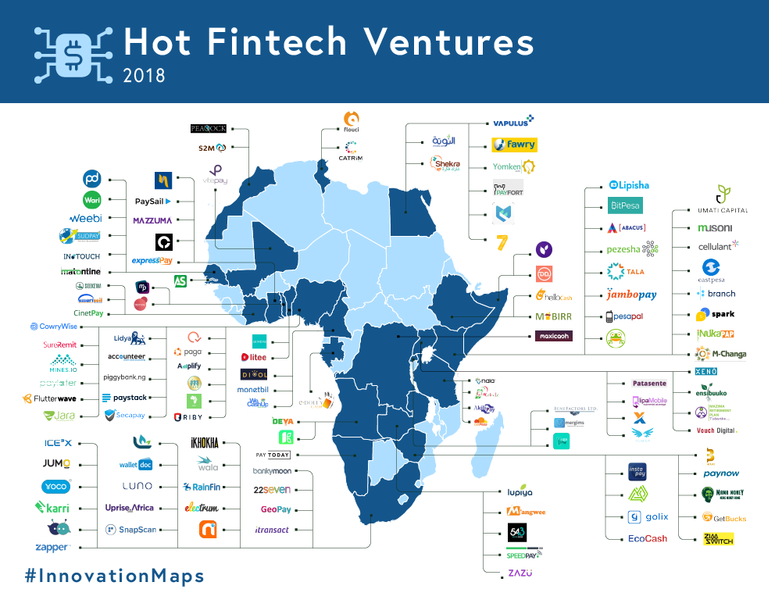
Since its Series A raise, OPay in Nigeria has scaled to 140,000 active agents and $10 million in daily transaction volume, according to company stats.

Beyond standing out as another huge funding round, OPay’s $120 million VC raise has significance for Africa’s tech ecosystem on multiple levels.

It marks 2019 as the year Chinese investors went all in on the continent’s startup scene. OPay, PalmPay, and East African trucking logistics company Lori Systems have raised a combined $240 million from 15 different Chinese actors in a span of months.

OPay’s funding and expansion plans are also harbinger for fierce, cross-border fintech competition in Africa’s digital finance space. Parallel events to watch for include Interswitch’s imminent IPO, e-commerce venture Jumia’s shift to digital finance, and WhatsApp’s pending entry in African payments.

The continent’s 1.2 billion people represent the largest share of the world’s unbanked and underbanked population — which makes fintech Africa’s most promising digital sector. But it’s becoming a notably crowded sector where startup attrition and failure will certainly come into play.

And not to be overlooked is how OPay’s capital raise moves Opera toward becoming a multi-service commercial internet platform in Africa.

This places OPay and its Opera-supported suite of products on a competitive footing with other ride-hail, food delivery and payments startups across the continent. That means inevitable competition between Opera and Africa’s largest multi-service internet company, Jumia.


18 Nov 2019

Yahoo Japan and Line Corp confirm merger agreement

SoftBank Corp announced today that it has reached an agreement to merge with Z Holdings (the SoftBank subsidiary formerly known as Yahoo Japan) and Line Corp, in a move they hope will better position them against competitors. The merger, which was first reported by Nikkei last week, is expected to be completed in October 2020.

SoftBank and Naver, the owner of Line, will each hold 50% of a new holding company that will operate Line and Z Holdings. By uniting, SoftBank and Naver hope that they will better position search portal Yahoo Japan, Line’s messaging app and their other businesses to compete against rivals from the United States and China.

In its announcement, SoftBank said “in the Internet market, overseas companies, especially those based in the United States and China, are overwhelmingly dominant, and even when comparing the size of operations, there is currently a big difference between such overseas companies and those in other Asian countries, other than China.”

Line is one of the most popular messaging apps in Japan, Taiwan and Thailand, but has struggled to compete in other markets, despite offering a wide array of services that includes Line Pay, Line Taxi and Line Music. Yahoo Japan is one of the country’s biggest search engines, but it competes with Google and its other businesses, including e-commerce, are up against rivals like Rakuten and Alibaba.

Once merged, SoftBank and Naver say cooperation between their subsidiaries and investment portfolio companies will enable them to make more advances in artificial intelligence and other areas, including search, advertising and payment and financial services.

The merger would entail taking Line private by acquiring all outstanding Line shares, options and convertible bonds. The tender offer for Line’s remaining shares will be 5,200 yen, a 13.41% premium over the closing price of Line’s common shares, listed on the Tokyo Stock Exchange, on Nov. 13, before reports came out about the potential merger.