Category: UNCATEGORIZED

15 Nov 2019

D-Wave sticks with its approach to quantum computing

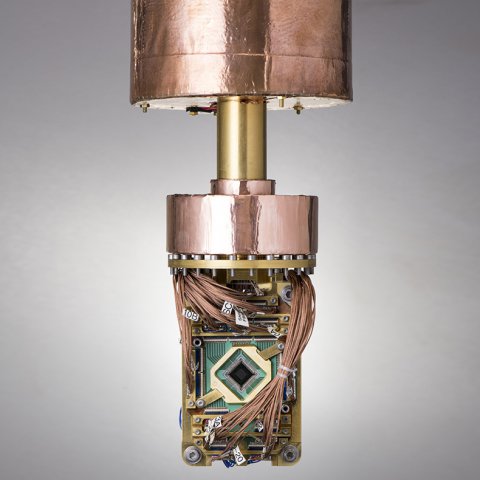
Earlier this month, at the WebSummit conference in Lisbon, D-Wave and Volkswagen teamed up to manage a fleet of buses using a new system that, among other things, used D-Wave’s quantum technology to help generate the most efficient routes. While D-Wave’s 2000Q only played a small part in this process, it’s nevertheless a sign that quantum computing is slowly getting ready for production use and that D-Wave’s approach, somewhat controversial in its early days, is paying off.

Unlike other players in the quantum computing market, D-Wave always bet on quantum annealing as its core technology. This technology lends itself perfectly to optimization problems like the kind of routing problem the company tackled with VW, as well as sampling problems, which, in the context of quantum computing, are useful for improving machine learning models, for example. Depending on their complexity, some of these problems are nearly impossible to solve with classical computers (at least in a reasonable time).

Grossly simplified, with quantum annealing, you are building a system that almost naturally optimizes itself for the lowest energy state, which then represents the solution to your problem.

Microsoft, IBM, Rigetti and others are mostly focused on building gate-model quantum computers and they are starting to see results (with the exception of Microsoft, which doesn’t have a working computer just yet and is hence betting on partnerships for the time being). But this is also a far more complex problem. And while you can’t really compare these technologies qubit to qubit, it’s telling that D-Wave’s latest machines, the Advantage, will feature 5,000 qubits — while the state of the art among the gate-model proponents is just over 50. Scaling these machines up is hard, though, especially given that the industry is still trying to figure out how to manage the noise issues.

D-Wave remains the only major player that’s betting on annealing, but the company’s CEO Vern Brownell remains optimistic that this is the right approach. “We feel more strongly about our decision to do quantum annealing now that there are a few companies that actually have quantum computers that people can access,” he said in an interview earlier this month.

“We have customers, Volkswagen included, that have run problems against those other computers and seeing what they can actually do and it’s vastly different. Our capability is many orders of magnitude faster for most problems than what you can do with other quantum computers. And that is because of the choice of quantum annealing. And that is because quantum healing is more robust to errors.” Error correction, he argues, remains the fundamental problem, and will hamper the performance of these systems for the foreseeable future. “And in order to move into the enterprise or any kind of practical application, that error correction needs to be wrestled with,” he noted.

15 Nov 2019

VC Cyan Banister on her path, who decides what at Founders Fund, and the state of San Francisco

Cyan Banister is an American success story. A homeless teenager who originally supported herself by making hemp necklaces, then silk-screen T-shirts, she went on to become a self-taught engineer and to later hold several management roles at the security startup IronPort. It was a life-changing experience for her. She made an early fortune when it sold to Cisco for $830 million in 2007. She also met her husband, Scott Banister, who cofounded the company, and the two together and separately began writing seed-stage checks, including to SpaceX, Uber, and a long list of companies that are now household names.

When seed-stage valuations began soaring to levels that gave them both pause, they hit the brakes, and Banister, a self-described workaholic, headed over to AngelList as an “ev-angel-list” to help recruit people like herself to its platform.  Soon after, Peter Thiel’s Founders Fund reached out to her and invited her to become a partner.

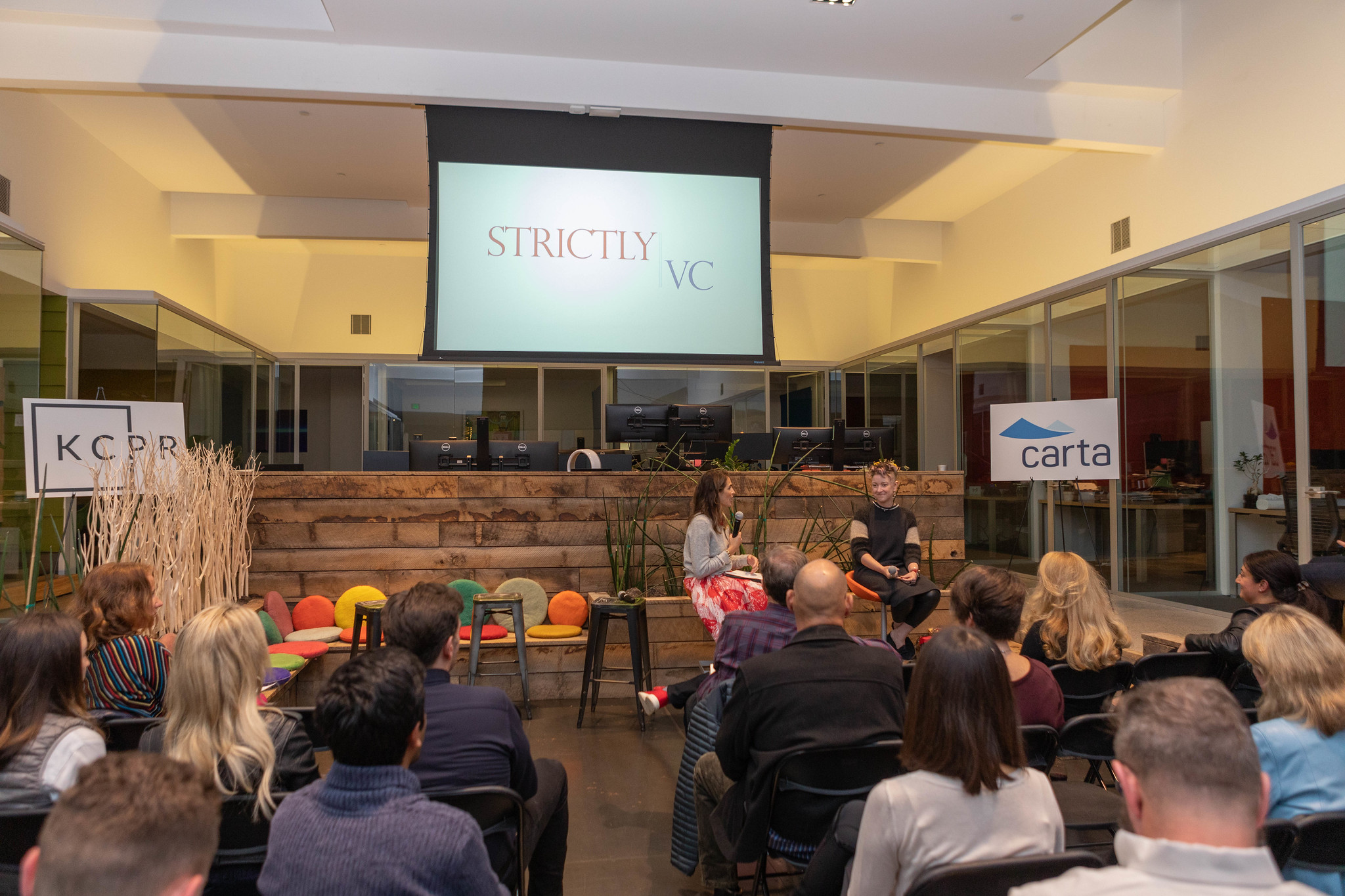
In a wide-ranging conversation at a San Francisco event on Wednesday, we talked with Banister about that path, along with her investing style, which still sees her make angel investments of $1.5 million or less in companies that are often ambitiously futuristic or boringly practical and very much needed. (She kidded that they balance out one another.)

We also chatted about Founders Fund, which has changed considerably since its 2005 founding yet maintained its reputation as a top fund, and we discussed why she thinks many of its original partners no longer live in San Francisco.

Among the things we learned: that Founders Fund doesn’t have Monday morning partner meetings, as do many firms. In fact, it doesn’t even have weekly meetings, with Banister instead describing a highly decentralized operation. “We don’t have Monday morning partner meetings. We have very few meetings, actually,” she said. “We have a brunch every two or three weeks that’s an hour, hour-and-a-half long. We submit the agenda over Slack; sometimes, we have nothing to talk about and it’s very short. You literally get a plate of food, talk about the one or two items, and you’re done.”

Founders Fund also has quarterly off-sites, typically at a partner’s house and these are “all day affairs,” she said, adding that the team “doesn’t talk about specific deals. We talk about the future, about what’s exciting to all of us, what our different strategies might be.”

As for how decisions get made, Banister explained that the voting structure is dependent on the size of the check. “So you’d meet with one or two or three or four partners, depending on your [investing] stage,” she told attendees. Because she’s looking at very early-stage startups, for example, she doesn’t have to meet with many people to make a decision. As “dollar amounts gets larger,” she continued, “you’re looking at full GP oversight,” including the involvement of senior members like Brian Singerman and Keith Rabois, and “that can a little more difficult.”

Asked how involved Thiel himself is in these decisions, Banister said that there’s a certain threshold above which he is always involved. Pressed on what that number is, Banister smiled, adding, “Let’s just say it’s a lot.”

Pointing to the other senior members of the team, she offered that the partnership doesn’t “need Peter’s advice all the time, but there’s a certain point where he has to get involved and meet the founders. Ideally, it’s a company that we brought in at its early stages and has grown with us and he has already developed a relationship with [its founders]. We also do an off-site once a year, which is a great opportunity for him” to see everyone involved in the firm’s portfolio. “But he’s pretty involved,” she said. “He comes to these brunches and [quarterly] off-sites. We see him more now [since he called it quits in San Francisco and moved to L.A.] than we did when he lived next door because he’s stuck. If he comes to San Francisco, where’s he going to go? He has to stay in his office,” she joked.

Banister declined to confirm or comment on a recent WSJ report that Founders Fund is in the process of closing on $3 billion in capital commitments across two funds — a flagship fund and an opportunity type of fund to support its companies as they remain private ever longer.

But before we let her go, we asked Banister about turnover at the firm. Specifically, we noted, while Founders Fund was formed by Thiel, along with cofounders Ken Howery, Luke Nosek and Sean Parker, Howery is now the ambassador to Sweden, Nosek runs a separate fund in Austin called Gigafund, and Parker is off doing a variety of other things, many of them also in L.A.

She explained that everyone is encouraged to do what they want. “Ken was encouraged to pursue his political aspirations; that’s something he has always wanted to do,” she said for example.

But she also acknowledged, when asked, that San Francisco itself might be a common thread. “It’s too expensive here. That’s the problem. We need to build more housing. We can’t afford people to even serve us in this town, they come in from other cities, they can’t even live here. And that’s a huge problem when you’re investing and your thesis is to invest only in Silicon Valley and the surrounding area.” It’s hard for founders who’ve been dogmatic about keeping their teams together and are now more likely to plant some core members in the Bay Area and hire globally, she said.  It’s also a challenge for Founders Fund, she suggested, saying that “we’re already starting to look elsewhere [for startups], including in the Midwest.”

As for whether San Francisco is doing enough for founders — or founders enough for San Francisco — Banister suggested both are coming up far short, saying of the city that “it should be the most technologically advanced” in the world. “There’s no reason we shouldn’t be like Tokyo . . . when we gave birth to Airbnb and Uber, and yet our city looks the way it does and operates the way it does and it’s a disaster.”

Tech founders and employees are in a particularly “weird situation” where on the one side a “a large part of this city hates technology and hates all of us,” and on the other are people like Salesforce founder Marc Benioff who are funneling money into the city but whose efforts don’t appear to her to be making a difference. “I’ve yet to see a dent” in homelessness, she said, as an example. More, she said, “Crime is going up and we now have a district attorney who won’t prosecute crimes that have to do with any sort of quality-of-life [issue]. [San Francisco is] going to start something instead where if your [car] window is broken, they’ll replace it with some kind of window Uber app at a discounted rate.”

The crowd laughed. Some attendees thought she was joking about the window replacement service. (She wasn’t.)  “This is a really bad direction [we’re headed in],” she said. “We need diversity of thinking here, and we don’t have it on the political level, and we all need to get more involved.”

15 Nov 2019

Daily Crunch: TikTok starts experimenting with commerce

The Daily Crunch is TechCrunch’s roundup of our biggest and most important stories. If you’d like to get this delivered to your inbox every day at around 9am Pacific, you can subscribe here.

1. TikTok tests social commerce

The short-form video app said it’s allowing some users to add links to e-commerce sites (or any other destination) to their profile, while also offering creators the ability to easily send their viewers to shopping websites.

On their own, these changes might not sound that dramatic, and parent company ByteDance characterizes them as experiments. But it could eventually lead TikTok to become a major force in commerce — and to follow the lead of Instagram, where “link in bio” has become one of the most common promotional messages.

2. Despite bans, Giphy still hosts self-harm, hate speech and child sex abuse content

A new report from Israeli online child protection startup L1ght  has uncovered a host of toxic content hiding within the popular GIF-sharing community, including illegal child abuse content, depictions of rape and other toxic imagery associated with topics like white supremacy and hate speech.

3. Lyft is ceasing scooter operations in six cities and laying off 20 employees

Lyft notified employees today that it’s pulling its scooters from six markets: Nashville, San Antonio, Atlanta, the Phoenix area, Dallas and Columbus. A spokesperson told us, “We’re choosing to focus on the markets where we can have the biggest impact.”

4. Takeaways from Nvidia’s latest quarterly earnings

After yesterday’s earnings report, Wall Street seems to have barely budged on the stock price — everyone’s waiting for resolution on some of the key questions facing the company. (Extra Crunch membership required.)

5. Virgin Galactic begins ‘Astronaut Readiness Program’ for first paying customers

The program is being run out of the global headquarters of Under Armour, Virgin Galactic’s partner for its official astronaut uniforms. The training, with instruction from Chief Astronaut Instructor Beth Moses and Chief Pilot Dave Mackay, is required for all Virgin Galactic passengers.

6. AWS confirms reports it will challenge JEDI contract award to Microsoft

In a statement, an Amazon spokesperson suggested that there was possible bias in the selection process: “AWS is uniquely experienced and qualified to provide the critical technology the U.S. military needs, and remains committed to supporting the DoD’s modernization efforts.”

7. SoftBank Vision Fund’s Carolina Brochado is coming to Disrupt Berlin

At SoftBank’s Vision Fund, Brochado focuses on fintech, digital health and marketplace startups. Some of her past investments with both Atomico and SoftBank include LendInvest, Gympass, Hinge Health, Ontruck and Rekki.

15 Nov 2019

Three of Apple and Google’s former star chip designers launch NUVIA with $53M in series A funding

Silicon is apparently the new gold these days, or so VCs hope.

What was once a no-go zone for venture investors, who feared the long development lead times and high technical risk required for new entrants in the semiconductor field, has now turned into one of the hottest investment areas for enterprise and data VCs. Startups like Graphcore have reached unicorn status (after its $200 million series D a year ago) while Groq closed $52M from the likes of Chamath Palihapitiya of Social Capital fame and Cerebras raised $112 million in investment from Benchmark and others while announcing that it had produced the first trillion transistor chip (and who I profiled a bit this summer).

Today, we have another entrant with another great technical team at the helm, this time with a Santa Clara, CA-based startup called NUVIA. The company announced this morning that it has raised a $53 million series A venture round co-led by Capricorn Investment Group, Dell Technologies Capital, Mayfield, and WRVI Capital, with participation from Nepenthe LLC.

Despite only getting started earlier this year, the company currently has roughly 60 employees, 30 more at various stages of accepted offers, and the company may even crack 100 employees before the end of the year.

What’s happening here is a combination of trends in the compute industry. There has been an explosion in data and by extension, the data centers required to store all of that information, just as we have exponentially expanded our appetite for complex machine learning algorithms to crunch through all of those bits. Unfortunately, the growth in computation power is not keeping pace with our demands as Moore’s Law slows. Companies like Intel are hitting the limits of physics and our current know-how to continue to improve computational densities, opening the ground for new entrants and new approaches to the field.

Finding and building a dream team with a “chip” on their shoulder

There are two halves to the NUVIA story. First is the story of the company’s founders, which include John Bruno, Manu Gulati, and Gerard Williams III, who will be CEO. The three overlapped for a number of years at Apple, where they brought their diverse chip skillsets together to lead a variety of initiatives including Apple’s A-series of chips that power the iPhone and iPad. According to a press statement from the company, the founders have worked on a combined 20 chips across their careers and have received more than 100 patents for their work in silicon.

Gulati joined Apple in 2009 as a micro architect (or SoC architect) after a career at Broadcom, and a few months later, Williams joined the team as well. Gulati explained to me in an interview that, “So my job was kind of putting the chip together; his job was delivering the most important piece of IT that went into it, which is the CPU.” A few years later in around 2012, Bruno was poached from AMD and brought to Apple as well.

Gulati said that when Bruno joined, it was expected he would be a “silicon person” but his role quickly broadened to think more strategically about what the chipset of the iPhone and iPad should deliver to end users. “He really got into this realm of system-level stuff and competitive analysis and how do we stack up against other people and what’s happening in the industry,” he said. “So three very different technical backgrounds, but all three of us are very, very hands-on and, you know, just engineers at heart.”

Gulati would take an opportunity at Google in 2017 aimed broadly around the company’s mobile hardware, and he eventually pulled over Bruno from Apple to join him. The two eventually left Google earlier this year in a report first covered by The Information in May. For his part, Williams stayed at Apple for nearly a decade before leaving earlier this year in March.

The company is being stealthy about exactly what it is working on, which is typical in the silicon space because it can take years to design, manufacture, and get a product into market. That said, what’s interesting is that while the troika of founders all have a background in mobile chipsets, they are indeed focused on the data center broadly conceived (i.e. cloud computing), and specifically reading between the lines, to finding more energy-efficient ways that can combat the rising climate cost of machine learning workflows and computation-intensive processing.

Gulati told me that “for us, energy efficiency is kind of built into the way we think.”

The company’s CMO did tell me that the startup is building “a custom clean sheet designed from the ground up” and isn’t encumbered by legacy designs. In other words, the company isn’t building on top of ARM or other existing chip architectures.

Building an investor syndicate that’s willing to “chip” in

Outside of the founders, the other half of this NUVIA story is the collective of investors sitting around the table, all of whom not only have deep technical backgrounds, but also deep pockets who can handle the technical risk that comes with new silicon startups.

Capricorn specifically invested out of what it calls its Technology Impact Fund, which focuses on funding startups that use technology to make a positive impact on the world. Its portfolio according to a statement includes Tesla, Planet Labs, and Helion Energy.

Meanwhile, DTC is the venture wing of Dell Technologies and its associated companies, and brings a deep background in enterprise and data centers, particularly from the group’s server business like Dell EMC. Scott Darling, who leads DTC, is joining NUVIA’s board, although the company is not disclosing the board composition at this time. Navin Chaddha, an electrical engineer by training who leads Mayfield, has invested in companies like HashiCorp, Akamai, and SolarCity. Finally, WRVI has a long background in enterprise and semiconductor companies.

I chatted a bit with Darling of DTC about what he saw in this particular team and their vision for the data center. In addition to liking each founder individually, Darling felt the team as a whole was just very strong. “What’s most impressive is that if you look at them collectively, they have a skillset and breadth that’s also stunning,” he said.

He confirmed that the company is broadly working on data center products, but said the company is going to lie low on its specific strategy during product development. “No point in being specific, it just engenders immune reactions from other players so we’re just going to be a little quiet for a while,” he said.

He apologized for “sounding incredibly cryptic” but said that the investment thesis from his perspective for the product was that “the data center market is going to be receptive to technology evolutions that have occurred in places outside of the data center that’s going to allow us to deliver great products to the data center.”

Interpolating that statement a bit with the mobile chip backgrounds of the founders at Google and Apple, it seems evident that the extreme energy-to-performance constraints of mobile might find some use in the data center, particularly given the heightened concerns about power consumption and climate change among data center owners.

DTC has been a frequent investor in next-generation silicon, including joining the series A investment of Graphcore back in 2016. I asked Darling whether the firm was investing aggressively in the space or sort of taking a wait-and-see attitude, and he explained that the firm tries to keep a consistent volume of investments at the silicon level. “My philosophy on that is, it’s kind of an inverted pyramid. No, I’m not gonna do a ton of silicon plays. If you look at it, I’ve got five or six. I think of them as the foundations on which a bunch of other stuff gets built on top,” he explained. He noted that each investment in the space is “expensive” given the work required to design and field a product, and so these investments have to be carefully made with the intention of supporting the companies for the long haul.

That explanation was echoed by Gulati when I asked how he and his co-founders came to closing on this investor syndicate. Given the reputations of the three, they would have had easy access to any VC in the Valley. He said about the final investors:

They understood that putting something together like this is not going to be easy and it’s not for everybody … I think everybody understands that there’s an opportunity here. Actually capitalizing upon it and then building a team and executing on it is not something that just anybody could possibly take on. And similarly, it is not something that every investor could just possibly take on in my opinion. They themselves need to have a vision on their side and not just believe our story. And they need to strategically be willing to help and put in the money and be there for the long haul.

It may be a long haul, but Gulati noted that “on a day-to-day basis, it’s really awesome to have mostly friends you work with.” With perhaps 100 employees by the end of the year and tens of millions of dollars already in the bank, they have their war chest and their army ready to go. Now comes the fun (and hard) part as we learn how the chips fall.


15 Nov 2019

Twitter makes its political ad ban official

The ban on political ads announced by Twitter two weeks ago has come into effect, and the rules are surprisingly simple — perhaps too simple. No political content as they define it may be promoted; Candidates, parties, governments or officials, PACs, and certain political nonprofit groups are banned from promoting content altogether.

The idea intended to be made manifest in these policies is that “political message reach should be earned, not bought,” as the company puts it. It’s hard to argue with that (but Facebook will anyway). The new rules apply globally and to all ad types.

It’s important to make clear at the outset that Twitter is not banning political content, it is banning the paid promotion of that content. Every topic is fair game and every person or organization on Twitter can pursue their cause as before — they just can’t pay to get their message in front of more eyeballs.

In its briefly stated rules, the company explains what it means by “political content”:

We define political content as content that references a candidate, political party, elected or appointed government official, election, referendum, ballot measure, legislation, regulation, directive, or judicial outcome.

Also banned are:

Ads that contain references to political content, including appeals for votes, solicitations of financial support, and advocacy for or against any of the above-listed types of political content.

That seems pretty straightforward. Banning political ads is controversial to begin with, but unclear or complicated definitions would really make things difficult.

A blanket ban on many politically-motivated organizations will also help clear the decks. Political action committees, or PACs, and their deep-pocketed cousins the SuperPACs, are banned from advertising at all. That makes sense, since what content would they be promoting other than attempts to influence the political process? 501(c)4 nonprofit organizations, not as publicly notorious as PACs but huge spenders on political causes, are also banned.

There are of course exemptions, both for news organizations that want to promote coverage of political issues, and “cause-based” content deemed non-political.

The first exemption is pretty natural — although many news organizations do have a political outlook or ideological bent, it’s a far cry from the practice of donating millions directly to candidates or parties. But not just any site can take advantage — you’ll have to have 200,000 monthly unique visitors, make your own content with your own people, and not be primarily focused on a single issue.

The “cause-based” exemption may be where Twitter takes the most heat. As Twitter’s policy states, it will allow “ads that educate, raise awareness, and/or call for people to take action in connection with civic engagement, economic growth, environmental stewardship, or social equity causes.”

These come with some restrictions: They can only be targeted to the state, province, or region level — no zip codes, so hyper-local influence is out. And politically-charged interests may not be targeted, so you can’t send your cause-based ads just to “socialists,” for example. And they can’t reference or be run on behalf of any of the banned entities above.

But it’s the play in the definition that may come back to bite Twitter. What exactly constitutes “civic engagement” and “social equity causes”? Perhaps these concepts were only vaguely defined by design to be accommodating rather than prescriptive, but if you leave an inch for interpretation, you’d better believe bad actors are going to take a mile.

Clearly this is meant to allow promotion of content like voter registration drives, disaster relief work, and so on. But it’s more than possible someone will try to qualify, say, an anti-immigrant rally as “public conversation around important topics.”

I asked Twitter whether additional guidance on the cause-based content rules would be forthcoming, but a representative simply pointed me to the very language I quoted.

That said, policy lead at Twitter Vijaya Gadde said that the company will attempt to be transparent with its decisions on individual issues and clear about changes to the rules going forward.

“This is new territory,” she tweeted. “As with every policy we put into practice, it will evolve and we’ll be listening to your feedback.”

And no doubt they shall receive it — in abundance.

15 Nov 2019

You’ve heard of CRISPR, now meet its newer, savvier cousin CRISPR Prime

CRISPR, the revolutionary ability to snip out and alter genes with scissor-like precision, has exploded in popularity over the last few years and is generally seen as the standalone wizard of modern gene-editing. However, it’s not a perfect system, sometimes cutting at the wrong place, not working as intended and leaving scientists scratching their heads. Well, now there’s a new, more exacting upgrade to CRISPR called Prime, with the ability to, in theory, snip out more than 90 percent of all genetic diseases.

Just what is this new method and how does it work? We turned to IEEE fellow,  biomedical researcher and dean of graduate education at Tuft University’s school of engineering Karen Panetta for an explanation.

How does CRISPR Prime editing work?

CRISPR is a powerful genome editor. It utilizes an enzyme called Cas9 that uses an RNA molecule as a guide to navigate to its target DNA. It then edits or modifies the DNA, which can deactivate genes or insert a desired sequence to achieve a behavior. Currently, we are most familiar with the application of genetically modified crops that are resistant to disease.

However, its most promising application is to genetically modify cells to overcome genetic defects or its potential to conquer diseases like cancer.

Some applications of genome editing technology include:

  • Genetically modified mosquitos that can’t carry malaria.
  • In humans, “turning on” a gene that can create fetal type behaving cells that can overcome sickle-cell anemia.

Of course, as with every technology, CRISPR isn’t perfect. It works by cutting the double-stranded DNA at precise locations in the genome. When the cell’s natural repair process takes over, it can cause damage or, in the case where the modified DNA is inserted at the cut site, it can create unwanted off-target mutations.

Some genetic disorders are known to mutate specific DNA bases, so having the ability to edit these bases would be enormously beneficial in terms of overcoming many genetic disorders. However, CRISPR is not well suited for intentionally introducing specific DNA bases, the As, Cs, Ts, and Gs that make up the double helix.

Prime editing was intended to overcome this disadvantage, as well as other limitations of CRISPR.

Prime editing can do multi-letter base-editing, which could tackle fatal genetic disorders such as Tay-Sachs, which is caused by a mutation of four DNA letters.

It’s also more precise. I view this as analogous to the precision lasers brought to surgery versus using a hand-held scalpel. It minimized damage, so the healing process was more efficient.

Prime editing can insert, modify or delete individual DNA letters; it can also insert a sequence of multiple letters into a genome with minimal damage to DNA strands.

How effective might Prime editing be?

Imagine being able to prevent cancer and/or hereditary diseases, like breast cancer, from ever occurring by editing out the genes that are makers for cancer. Cancer treatments are usually long, debilitating processes that physically and emotionally drain patients. It also devastates patients’ loved ones who must endure watching helpless on the sidelines as the patient battles to survive.

“Editing out” genetic disorders and/or hereditary diseases to prevent them from ever coming to fruition could also have an enormous impact on reducing the costs of healthcare, effectively helping redefine methods of medical treatment.

It could change lives so that long-term disability care for diseases like Alzheimer’s and special needs education costs could be significantly reduced or never needed.

How did the scientific community get to this point – where did CRISPR/prime editing “come from?”

Scientists recognized CRISPR’s ability to prevent bacteria from infecting more cells and the natural repair mechanism that it initiates after damage occurs, thus having the capacity to halt bacterial infections via genome editing. Essentially, it showed adaptive immunity capabilities.

When might we see CRISPR Prime editing “out in the wild?”

It’s already out there! It has been used for treating sickle-cell anemia and in human embryos to prevent HIV infections from being transmitted to offspring of HIV parents.

So, what’s next?

IEEE Engineers, like myself, are always seeking to take the fundamental science and expand it beyond the petri dish to benefit humanity.

In the short term, I think that Prime editing will help generate the type of fetal like cells that are needed to help patients recover and heal as well as developing new vaccines against deadly diseases. It will also allow researchers new lower cost alternatives and access to Alzheimer’s like cells without obtaining them post-mortem.

Also, AI and deep learning is modeled after human neural networks, so the process of genome editing could potentially help inform and influence new computer algorithms for self-diagnosis and repair, which will become an important aspect of future autonomous systems.

15 Nov 2019

Hulu increases price for live TV by $10, to $55 per month

Hulu just sent an email to subscribers of its Hulu + Live TV plan announcing that the price of the basic live TV plan will increase from $44.99 per month to $54.99 per month.

This is Hulu + Live TV’s second price hike this year, with a $5 increase in January, followed by this twice-as-large increase, which is supposed to take effect on December 18.

In the email, Hulu says this increase “allows us to continue delivering the best live and on-demand TV experience for you.” However, as a the price keeps going up, the price advantage that a “skinny bundle” of TV channels offers over plain old cable starts to shrink.

The streaming service launched its live TV package at the beginning of 2018, and it supposedly past 1 million subscribers before the year was done.

Hulu’s ownership has also been changing, with Disney becoming a majority shareholder following its acquisition of Fox, and then taking full operational control of the company earlier this year. Hulu is part of Disney’s broader streaming strategy, which saw the company launching its own Disney+ service earlier this week and offering Disney+, ESPN+ and Hulu (without live TV) together in a $12.99 bundle.

15 Nov 2019

More layoffs at pivoting London edtech startup pi-top

London edtech startup pi-top has gone through another round of layoffs, TechCrunch has learned.

pi-top confirmed that eight jobs have been cut in the London office, saying the job losses resulted from a “restructuring our business to focus on the U.S. education market”.

In August we broke the news that the STEM hardware focused company had cut 12 staff after losing out on a major contract. pi-top told us then that its headcount had been reduced from 72 to 60.

The latest cuts suggest the workforce has been reduced to around 50 — although we have also heard that company headcount is now considerably lower than that.

One source told us that 12 jobs have gone in the London office this week, as well as additional cuts in the China office where the company’s hardware team is based — but pi-top denied there have been any changes to its China team.

pi-top said in August that the layoffs were related to implementing a new strategy.

Commenting on the latest cuts, it told us: “We have made changes within the company that reflect our business focus on the U.S. education market and our increasingly important SaaS learning platform.”

“The core of our business remains unchanged and we are happy with progress and the fantastic feedback we have received on pitop 4 from our school partners,” pi-top added.

Additionally, we have heard that a further eight roles at the UK office have been informed to staff as at risk of redundancy. Affected jobs at risk include roles in product, marketing, creative services, customer support and finance.

We also understand that a number of employees have left the company of their own accord in recent months, following an earlier round of layoffs.

pi-top did not provide comment on jobs at risk of redundancy but told us that it has hired three new staff “to accelerate the SaaS side of our education offering and will be increasing our numbers in the U.S. to service our growth in the region”.

We understand that the latest round of cuts have been communicated to staff as a cost reduction exercise and also linked to implementing a new strategy. Staff have also been told that the business focus has shifted to the U.S schools market.

As we reported earlier this year, pi-top appointed a new executive chairman of its board who has a strong U.S. focus: Stanley Buchesky served in the Trump administration as an interim CFO for the US department for education under secretary of state, Betsy DeVos. He is also the founder of a U.S. edtech seed fund.

Sources familiar with pi-top say the company is seeking to pivot away from making proprietary edtech hardware to focus on a SaaS learning platform for teaching STEM, called pi-top Further.

At the start of this year it crowdfunded a fourth gen STEM device, the pi-top 4, with an estimated shipping date of this month. The crowdfunder attracted 521 backers, pledging close to $200k to fund the project.

In the pi-top 4 Kickstarter pitch the device is slated as being supported by a software platform called Further — which is described as a “free social making platform” that “teaches you how to use all the pi-top components through completing challenges and contributing projects to the community”, as well as offering social sharing features.

The plan now is for pi-top to monetize that software platform by charging subscription fees for elements of the service — with the ultimate goal of SaaS revenues making up the bulk of its business as hardware sales are de-emphasized. (Hardware is hard; and pi-top’s current STEM learning flagship has faced some challenges with reliability, as we reported in August.)

We understand that the strategic change to Further — from free to a subscription service — was communicated to staff internally in September.

Asked about progress on the pi-top 4, the company told us the device began shipping to backers this week. 

“We are pleased to announce the release of pi-top 4 and pi-top Further, our new learning and robotics coding platform,” it said. “This new product suite provides educators the ability to teach coding, robotics and AI with step-by-step curriculum and an integrated coding window that powers the projects students build. With pi-top, teachers can effectively use Project Based Learning and students can learn by doing and apply what they learn to the real world.”

Last month pi-top announced it had taken in $4M in additional investment to fund the planned pivot to SaaS — and “bridge towards profitability”, as it put it today.

“The changes you see are a fast growing start-up shifting from revenue focus to a right-sized profit generating company,” it also told us.

15 Nov 2019

Know your startup’s value so you can communicate it to investors

I’ve always told companies that investors have a much easier job than they do. To be good at their jobs, investors have to know how to do math and make decisions. As a business owner, you have to do both while also running your business.

The math piece can seem cumbersome, but it’s vital for understanding whether your company is creating or destroying value. A few simple metrics can demonstrate to investors the health and viability of your company, and they can show you which levers to pull that will best optimize your company for investor interest (and secure a higher price). But before you can ever hope to communicate your business’ value to an investor, you must understand it yourself.

The numbers are simple; it’s the calculations that are complex

Investment math itself is not complicated. In essence, it’s just about understanding whether your company is creating or destroying value by asking:

  • Where is your company investing its financial resourcesMost growing companies invest heavily in sales and marketing or research and development.
  • What is the return on this investment?  For example, how much gross profit (revenue x gross margin percentage) does a given sales and marketing investment produce?
  • How does that number compare to your cost of capital? If it’s higher, your company is creating value. If it’s lower, you’re destroying it.

Investors use this information to determine if their return would be higher than their expectation (e.g., 15% hurdle rate), should you continue down your current path of creating or destroying value. Then, they make their decision based on that calculation.

A caveat I’ll add here is that it’s not necessarily a deal-breaker if your company is declining in value. Oil rigs, after all, are considered investment assets, even though they are perpetually declining and will eventually run out (i.e., destroy all of their value). Although this article focuses on calculations that demonstrate value creation, all investment assets can be financed at the right price.

A deep dive into calculating value

One of the best metrics you can use to demonstrate value creation is your cohort-level return on investment. It’s a calculation most investors are familiar with, but it may not be as straightforward to companies who don’t see it as often. Again, while the metrics and concepts of investment math are simple, it’s the process of getting there that requires complex analysis.

Whether you are evaluating these metrics yourself or bringing in outside counsel to assist you, use the process below to show investors you are creating value.

Determine which information to analyze

The first step in calculating value is to understand which information from your income and cash flow statements to analyze as “investments.”

Start by dividing your capital allocation into three main buckets: short-term investments, long-term investments and expenses. In general, short-term investments will be the ones you want to focus on, but it’s helpful to walk through each.

  • Short-term investments (pay back within 24 months)
15 Nov 2019

Virgin Galactic begins ‘Astronaut Readiness Program’ for first paying customers

Virgin Galactic has begun its ‘Astronaut Readiness Program’ this week, which is being run out of Under Armour Global HQ to start. Under Armour is Virgin Galactic’s partner on its official astronaut uniforms, which its first paying space tourists will don on the company’s initial trips beyond Earth.

The Astronaut Readiness Program is a preparatory course that all of Virgin Galactic’s passengers undertake before they can get their trip aboard the company’s VSS Unity sub-orbital spaceplane. It involves guidance and instruction provided by Virgin Galactic team members, including its Chief Astronaut Instructor Beth Moses and Chief Pilot Dave Mackay. Both Mackay and Moses were on Virgin’s February demonstration flight to space, and so can provide not only guidance based on their considerable expertise, but also share insights from actually having flown aboard the same vessel that will take the company’s paying passengers up.

Under Armour is also involved in the program, in more ways than just providing and reading the outfits that passengers will wear. They’re providing guidance on how Astronauts will get around aboard the spacecraft, as well as on nutrition and fitness programs to ready the space tourists for their adventure. A Virging Galactic in-house medical team is also on-hand to consult with each passenger. Virgin’s customers don’t need to match the strenuous physical fitness requirements of NASA astronauts, but the company says it’s still focused on ensuring its customers are healthy and hale on their trips.

Being an early customer for Virgin Galactic means not only training through programs like the one run this week in Baltimore, but also helping the new company develop and refine its process for future use.

“We will now be using the feedback from this week in Baltimore to build on that model,” Virgin Galactic said in a press release. “We discussed with our Future Astronauts how the training and the community can be best shaped for those waiting to fly and for those who have flown.”

To date, Virgin Galactic has 600 customers signed up to fly aboard its SpaceShipTwo spacecraft, which launches from a customized cargo jet aircraft to reach sub-orbital space and provides customs with a 90-minute flight, for a $250,000 ticket. It’s looking to launch its first flights for paying customers in the first half of next year.