Category: UNCATEGORIZED

07 Nov 2019

Kepler achieves a world first for satellite broadband with 100Mbps connection to the Arctic

Small satellite startup Kepler has done something never before accomplished with satellite-based broadband connectivity: providing a high-bandwidth the Arctic. Kepler’s nanosatellites have successfully demonstrated achieving over 100Mbps of network speed to a German icebreaker sea vessel that acts as a mobile lab for the MOSAiC research expedition.

This is the first time ever that there’s been a high-bandwidth satellite network for any central Arctic ground-based use, Kepler says, and this connection isn’t just a technical demo: It’s being used for the researchers in the MOSAiC team, which I made up of hundreds of individuals, to transfer data back and forth between the ship, and shore-based research stations, which improves all aspects of working with the considerable quantities of data being gathered by the team.

Bulk data transfer has been a challenge for a long time for science expeditions at either of the Earth’s poles. It’s impractical to do terrestrial high-bandwitch networks in these locations, and traditional satellite-based networking has not been able to achieve these kinds of speeds in these locales, either. Kepler is uniquely servicing the poles with two low-Earth orbit satellites are on a polar orbital trajectory, which means they can provide these scientists, which include a multidisciplinary team intent on studying the impact of climate change up close at the location where its effects are perhaps most dramatic, or at least felt earliest.

On the icrebreaker floating research ship, Kepler has demonstrated 38Mbps down, and 120Mbps up, which is coincidentally above the max recommended specs that Google has posted for its highest quality Stadia game streaming. But this is for science, not gaming. For science.

07 Nov 2019

Wrench’s on-demand vehicle repair and maintenance service picks up $20 million

Wrench, the Seattle-based on demand vehicle maintenance and repair service for consumers and fleets, has raised $20 million in its latest round of financing.

The company’s round was led by Vulcan Capital with additional participation from Madrona Venture Group, Tenaya Capital and Marubeni Corp.

Wrench is one of a growing number of companies that are using technology to adapt what had previously been infrastructure-heavy services closer to a more consumer-friendly, convenient business model. Other companies operating in a similar vein (and in automotive) include the refueling and car wash on-demand startups like Filld, Yoshi, and Booster Fuels for gassing up and Spiffy, Wype, Washos and Washé for washing.

Equipped with diagnostic software that can assess problems with vehicles based on their owners descriptions and service trucks that can handle most maintenance and repair work, Wrench meets fleet operators and consumers at their vehicle’s to provide servicing and repairs.

It’s a model that’s attracted some competitors with big backing. RepairSmith, which operates a similar service out of Los Angeles and San Francisco, is backed by Daimler to provide much the same on-demand repair services.

Given the competition coming into the market, it’s no wonder that Wrench is raising additional capital to expand its footprint into new markets. The company also said it intends to use the financing to make some key hires.

“Busy consumers need a simple scheduling and vehicle diagnosis system to deliver repair and maintenance services without the hassle of the waiting room,” said Ed Petersen, the company’s chief executive, in a statement.

Wrench has already serviced around 100,000 vehicles, according to Petersen and all of the company’s repair and servicing visits come with a 12,000-mile warranty and a vehicle inspection with the results delivered to a customer.

“Consumers are embracing on-demand services that make their lives better.  Wrench’s technology-enabled mobile mechanic service saves customers time and money – resulting in high customer satisfaction and lifetime value,” said Stuart Nagae, Director of Venture Capital at Vulcan Capital. “With more than 270 million vehicles in the United States, the opportunity is enormous.”

Wrench has already begun its process of geographic expansion with the acquisition earlier this year of the Canadian mobile automotive mechanic startup Fiix, which provided mobile mechanic services to around 80,000 customers across North America.

Wrench raised $4 million in its first round of financing, which TechCrunch covered back in 2017.


07 Nov 2019

Wrench’s on-demand vehicle repair and maintenance service picks up $20 million

Wrench, the Seattle-based on demand vehicle maintenance and repair service for consumers and fleets, has raised $20 million in its latest round of financing.

The company’s round was led by Vulcan Capital with additional participation from Madrona Venture Group, Tenaya Capital and Marubeni Corp.

Wrench is one of a growing number of companies that are using technology to adapt what had previously been infrastructure-heavy services closer to a more consumer-friendly, convenient business model. Other companies operating in a similar vein (and in automotive) include the refueling and car wash on-demand startups like Filld, Yoshi, and Booster Fuels for gassing up and Spiffy, Wype, Washos and Washé for washing.

Equipped with diagnostic software that can assess problems with vehicles based on their owners descriptions and service trucks that can handle most maintenance and repair work, Wrench meets fleet operators and consumers at their vehicle’s to provide servicing and repairs.

It’s a model that’s attracted some competitors with big backing. RepairSmith, which operates a similar service out of Los Angeles and San Francisco, is backed by Daimler to provide much the same on-demand repair services.

Given the competition coming into the market, it’s no wonder that Wrench is raising additional capital to expand its footprint into new markets. The company also said it intends to use the financing to make some key hires.

“Busy consumers need a simple scheduling and vehicle diagnosis system to deliver repair and maintenance services without the hassle of the waiting room,” said Ed Petersen, the company’s chief executive, in a statement.

Wrench has already serviced around 100,000 vehicles, according to Petersen and all of the company’s repair and servicing visits come with a 12,000-mile warranty and a vehicle inspection with the results delivered to a customer.

“Consumers are embracing on-demand services that make their lives better.  Wrench’s technology-enabled mobile mechanic service saves customers time and money – resulting in high customer satisfaction and lifetime value,” said Stuart Nagae, Director of Venture Capital at Vulcan Capital. “With more than 270 million vehicles in the United States, the opportunity is enormous.”

Wrench has already begun its process of geographic expansion with the acquisition earlier this year of the Canadian mobile automotive mechanic startup Fiix, which provided mobile mechanic services to around 80,000 customers across North America.

Wrench raised $4 million in its first round of financing, which TechCrunch covered back in 2017.


07 Nov 2019

Just 48 hours left to buy early bird passes to Disrupt Berlin 2019

Opportunity’s still knocking, but it’s on a very short leash. We’re T-minus 48 hours remaining on early bird prices to Disrupt Berlin 2019. And if you want to talk opportunity, you won’t find a better one than attending this two-day international conference focused on early-stage startups.

Right now, savvy startuppers can reap significant savings — up to €500 depending on which pass level you purchase. But the countdown is on. Don’t let procrastination — or any other obstacle — sideline your chance to get the best price. Buy your early bird passes to Disrupt Berlin before the clock runs out tomorrow, 8 November, at 11:59 p.m. (CEST).

What kind of opportunities await you at Disrupt? Opportunities to network. Startup Alley, the pulsing heart of every Disrupt, will be home base to hundreds of early-stage startups. This is where you’ll find some of the most innovative technology — products and platforms, services and talent. No matter what part of the startup ecosystem they occupy — founders, investors, media, marketers, engineers — everyone heads to the Alley.

While you’re exploring Startup Alley, be sure to check out our TC Top Picks. We hand-picked this cohort of roughly 30-50 exemplary startups representing these tech categories: AI/Machine Learning, Biotech/Healthtech, Blockchain, Fintech, Mobility, Privacy/Security, Retail/E-commerce, Robotics/IoT/Hardware, CRM/Enterprise and Education.

Disrupt Berlin packs a lot of programming into two short days. Pro tip: Use CrunchMatch, our free business match-making platform that helps you find, connect and schedule meetings with people based on mutual business goals and interests. No more wasting time or shoe leather trying to find and schedule meetings with the right people.

Now that you’re set to network with greater efficiency, don’t miss out on the opportunity to learn from a terrific lineup of speakers — founders, investors and tech icons ready to address the most challenging issues facing the startup community. Check the Disrupt Berlin agenda and plan your strategy before you even pack your bags.

Startup Battlefield is an opportunity to witness the birth of tomorrow’s tech giants — potential unicorns in the making. Since 2007, Startup Battlefield pitch competitions have launched 857 tech companies — like Vurb, Dropbox, Mint, Yammer and many others — that have collectively raised $8.9 billion and produced 112 exits.

Watch as 15-20 impressive early-stage startups pitch and demo to a tough panel of seasoned VCs and technologists. All the fast-paced action takes place live on the Main Stage. Be there to see which startup claims the Disrupt Cup and $50,000 prize.

Disrupt Berlin 2019 takes place on 11-12 December. So much untapped opportunity awaits, but your opportunity to pay early bird prices ends tomorrow, 8 November at 11:59 p.m. (CEST). Buy your early-bird pass to Disrupt Berlin today and keep the opportunities coming.

Is your company interested in sponsoring or exhibiting at Disrupt Berlin 2019? Contact our sponsorship sales team by filling out this form.

07 Nov 2019

Naspers CEO Bob van Dijk to talk about late-stage bets at Disrupt Berlin

South African internet company Naspers isn’t a particularly well-known name in the startup community. And yet, the company made an early investment in a small Chinese company called… Tencent. Naspers still retains a 31% stake in Tencent that is valued at around $100 billion (with a B). That’s why I’m excited to announce that Naspers CEO Bob van Dijk is joining us at TechCrunch Disrupt Berlin.

It’s hard to talk about Naspers without talking about SoftBank, another company that made an early bet on Alibaba, another small Chinese company back then. But Naspers doesn’t want to be compared to SoftBank as it doesn’t have the same approach.

Naspers recently created a new holding company for its tech investments called Prosus NV. A couple of months ago, Prosus went public in Amsterdam — the holding company is currently valued at $114 billion.

This has been a huge deal for Naspers — and also a highly unusual listing. And it should open up a lot of possibilities for more late-stage investments in the future. Prosus isn’t a traditional fund with limited partners that expect returns. It means that it can hold investments for multiple decades.

Naspers has invested in online classifieds business OLX, in fintech startups with PayU and Remitly, in food delivery startups Delivery Hero, iFood and Swiggy, and in dozens of other startups across the globe.

While many venture capital firms are focused on the U.S., Naspers has investments in 90 countries. If you want to learn more about the mega-trends of the tech industry, you have to hear what Bob van Dijk has to say.

Buy your ticket to Disrupt Berlin to listen to this discussion — and many others. The conference will take place December 11-12.

In addition to panels and fireside chats, like this one, new startups will participate in the Startup Battlefield to compete for the highly coveted Battlefield Cup.

07 Nov 2019

Real estate fintech platform Immo Investment Technologies raises €11M Series A

Immo Investment Technologies, a London-based fintech startup that purchase homes on behalf of buy-to-let investors, has closed €11M in Series A funding.

Backing the round is Talis Capital and HV Holtzbrinck Ventures, with participation from Tom Stafford and Rahul Mehta of DST Global, Mato Peric of MPGI, among others. In addition, the company is disclosing that it has raised over €100 million in real estate “buyer capital”.

It will use the buyer capital to fund the acquisition of properties — targeting private individuals who want to sell their property quickly. It then refurbishes these properties and puts them on the rental market as part of a fully-managed package, therefore returning a predictable yield to investors.

Immo says it has already evaluated over 10,000 for-sale apartments in the launch city of Hamburg. It claims its technology can accurately predict property sales prices, as well as current and future rental income prices.

“Immo buys residential properties directly from consumers on behalf of professional investors, thereby helping consumers sell their home in a fast, reliable, transparent and convenient way and providing investors with desired residential asset exposure at scale,” explains Hans-Christian Zappel, the startup’s co-founder and CEO.

“Immo tenants enjoy a well invested, fully furnished long-term rental product and a highly standardised and professionally managed lettings experience”.

As well as serving investors and tenants, Immo is also targeting property owners that want to sell their home quickly, with less hassle, and without the expense of using an estate agent. “With Immo, consumers go through one viewing, receive an offer within 24 hours and then sell to us without any agency fees and free of worries about financing risks or changing minds,” says Zappel.

The ability to transact “fast and confidently” is based on the company’s data and tech-driven approach to understanding markets and assets, says the Immo co-founder. “We replace instinct and gut-based valuations, with data; we call this the ‘Immo Intelligence’,” he adds.

In this regard, it echoes similar claims made by Nested, another London-based fintech company aiming to remove the uncertainties surrounding selling a property.

“Using our inspection technology we collect a proprietary set of 281 data points about every property,” continues Zappel. “Everything from ceiling height, decibel noise levels, wall dampness, lumen levels to water pressure gets measured. The resulting asset information is then combined with a hyperlocal market assessment which is based on two automated valuation models that use historical transaction and lettings data as well as environmental data such as traffic flow, crime statistics, average school/restaurant/cafe ratings, average AirBnb ratings in the area, social media activity, distance to supermarkets/places of worship, etc. to come up with the price we are able to offer to the seller”.

Based on its machine learning model, Immo claims to be able to do the financial underwriting of a property “in a matter of minutes,” a process that when done manually can take days.

Meanwhile, traditional real estate brokers are arguably Immo’s most direct competitors, but they tend to charge high fees and don’t provide a standardised experience for sellers. “They sell the hope for a quick and convenient sale to a customer that is helpless. Immo actually delivers on that promise,” says Zappel.

He also argues that Immo isn’t currently competing directly with other “iBuyer” models, such as those operated by OpenDoor, Nested, and Casavo. “We are not in the same country market [yet],” he says, “but fundamentally these players are trying to address a similar problem for the consumer”.

“Immo’s C2B model – buying from consumers, selling to investors – is in our view superior to the C2C model [of] buying from consumers, [and] selling to consumers,” adds Zappel. One reason is that Immo is able to operate a “balance sheet light” model, in which properties don’t sit on its balance sheet and therefore is arguably less exposed than some other “iBuyer” models.

Immo generates revenue from investors that pay the startup a fee for sourcing, assessing and acquiring property assets. In addition, the company receives a subscription fee for ongoing portfolio management. “We don’t take any fees from the seller, nor from tenants,” says Zappel.


07 Nov 2019

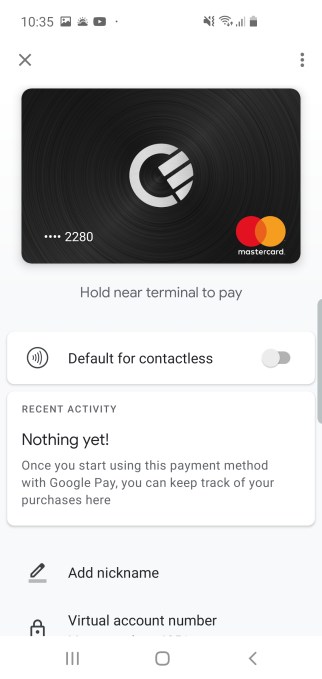
Google Pay comes to Curve, the banking platform that consolidates all your cards into one

Hot on the heels of adding support for Samsung Pay, Curve, the London-based “over-the-top” banking platform that lets you consolidate all of your bank cards into a single card, has added support for Google Pay.

The new integration — which we reported earlier this week was imminent, means that Android users can pay with Curve via their Android-powered phone or smart watch anywhere Google Pay is accepted. This includes via devices from Google itself, along with those made by the likes of Acer, Huawei, HTC, Samsung, LG, Sony Ericsson, Motorola, and others.

It also widens the availability of Google Pay to users whose bank doesn’t currently support Google’s digital wallet, such as Barclays and Virgin, who have chosen instead to shun Google Pay while adding support for NFC-enabled payments to their own banking apps.

The new feature is enabled by Curve’s ability to consolidate all of your bank cards into a single Curve card. This means that once you register your Curve card with Google Pay, the Google Pay app will now work with any Mastercard or Visa-issued debit or credit card.

With Google Pay, Curve customers can also spend beyond the £30 limit on transactions imposed by regular “contactless” card payments. They’ll also benefit from a single sign-in and payment system when transacting online and within apps where Google Pay is supported.

“We are delighted to announce Curve’s integration with Google Pay,” said Diego Rivas, Curve’s Head of Product, OS, in a statement “Curve is still an excellent way of consolidating all your cards in one and its integration with Google Pay enables even more ways to pay if you don’t have your physical card handy. By combining the Google Pay experience with Curve’s unique all your cards in one and money management features, Curve customers get to experience one of the most rewarding and feature packed personal finance products on the market”.

Meanwhile, Apple Pay is still unsupported by Curve. Could it be next? Perhaps. The first rule of Apple Pay is to never talk about Apple Pay (until it launches).

07 Nov 2019

Solar based ISP startup Tizeti launches 4G LTE network in Nigeria

Nigerian internet service provider Tizeti has launched its first 4G LTE network.

The Y-Combinator backed startup — that uses solar powered towers to deliver net connectivity — has built its premier 4G capable tower in the city of Port Harcourt, where Tizeti will offer its first 4G and ISP services.

The company operates primarily in Lagos, Nigeria’s unofficial business capital, and expanded this year to Ghana. Port Harcourt is the fifth largest city in Nigeria located in River State, another commercial hotspot for the country.

Tizeti plans to take its model to additional West African countries in 2020, according to CEO and co-founder Kendall Ananyi.

“We leverage inexpensive wireless capacity and plummeting cost of solar panels to create a low capex and opex network of owned and operated towers,” Ananyi told TechCrunch.

“We’re able to offer customers unlimited internet at 30 to 50% the cost of traditional mobile data plans,” he said.

The price for a Tizeti unlimited plan is 9,500 Nigerian Naira per month, or around $26. The startup has 1.1 million unique users and packages internet services drawing on partnerships with West African broadband provider MainOne and Facebook’s Express Wi-Fi. 

On the addressable market for Tizeti after its latest move, “Not everyone’s gonna sign up but we know we have 20 million in Lagos and 1.8 million in Port Harcourt; so even if we get 10%, that it’s a huge number for us,” Ananyi said.

A lot of businesses and tech startups bank on Nigeria’s numbers, since it has both Africa’s largest economy and population, at 200 million.

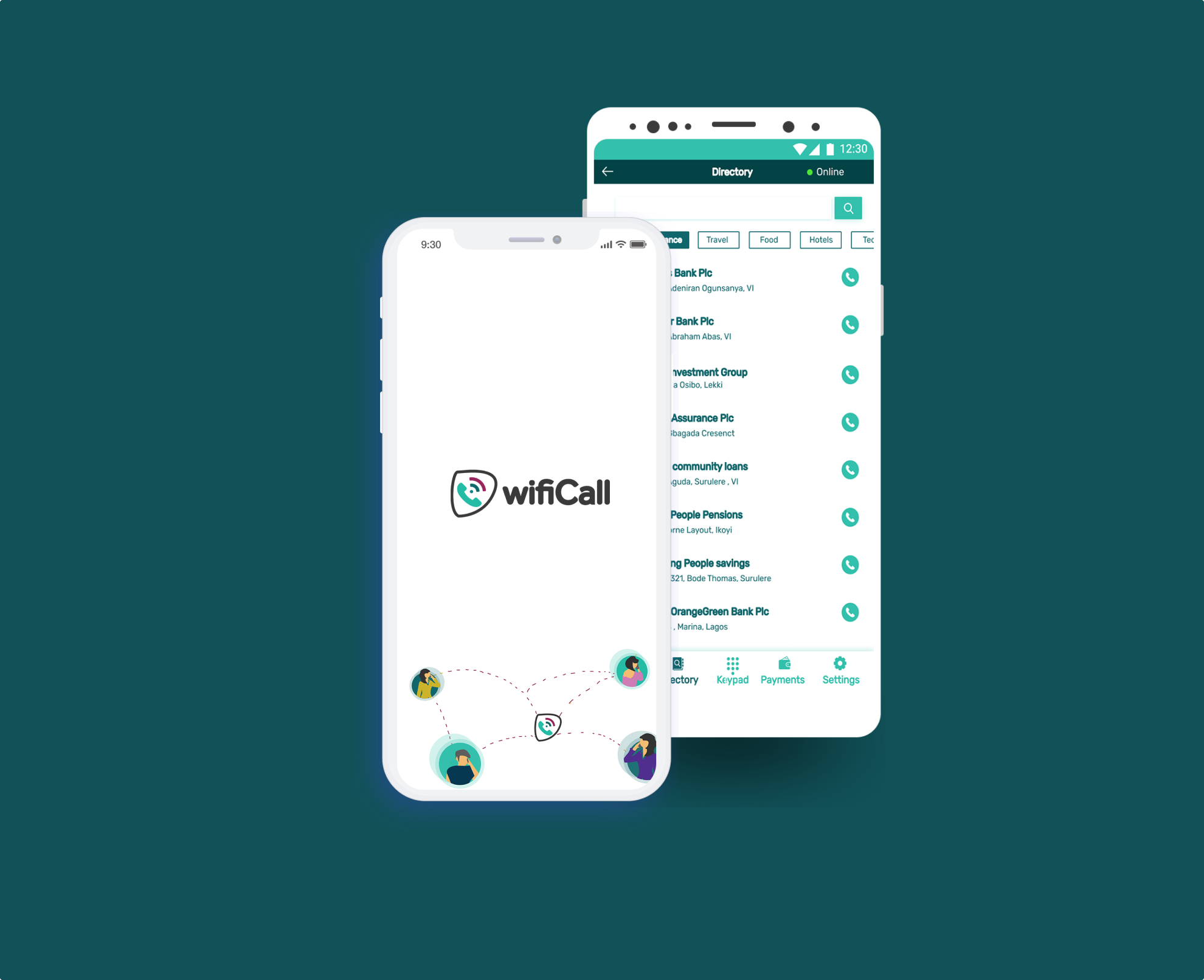
Tizeti raised a $3 million Series A round in 2018 and has built a suite of internet driven products to capture market share. In addition to ISP services, it launched a Skype-like personal and business enterprise communications service — WiFCall.ng— in April 2019.

Tizeti WiFi CallTizeti could shift the connectivity equation in Africa’s key tech hubs, such as Nigeria, where high levels of startup formation and VC investment are still hindered by weak internet stats.
Though Africa (primarily Sub-Saharan Africa) still stands last in most global rankings for internet penetration (35 percent), the continent continues to register among the fastest connectivity growth in the world.

Sub-Saharan Africa countries with the highest number of internet users include Nigeria (123 million), Kenya (46 million) and South Africa (32 million).

07 Nov 2019

An early look at eFounders’ next batch of enterprise SaaS startups

European startup studio eFounders recently reached a portfolio valuation of $1 billion across 23 companies. And the company doesn’t want to stop there as it is currently launching three new companies and products.

While software-as-a-service companies are trendy, eFounders has been exploring this space for a few years now. The company regularly comes up with ideas for new companies that improve the way we work.

In exchange for financial and human resources, eFounders keeps a significant stake in its startups. Ideally, startups raise a seed round and take off on their own after a year or two.

And here’s what eFounders has been working on.

Cycle

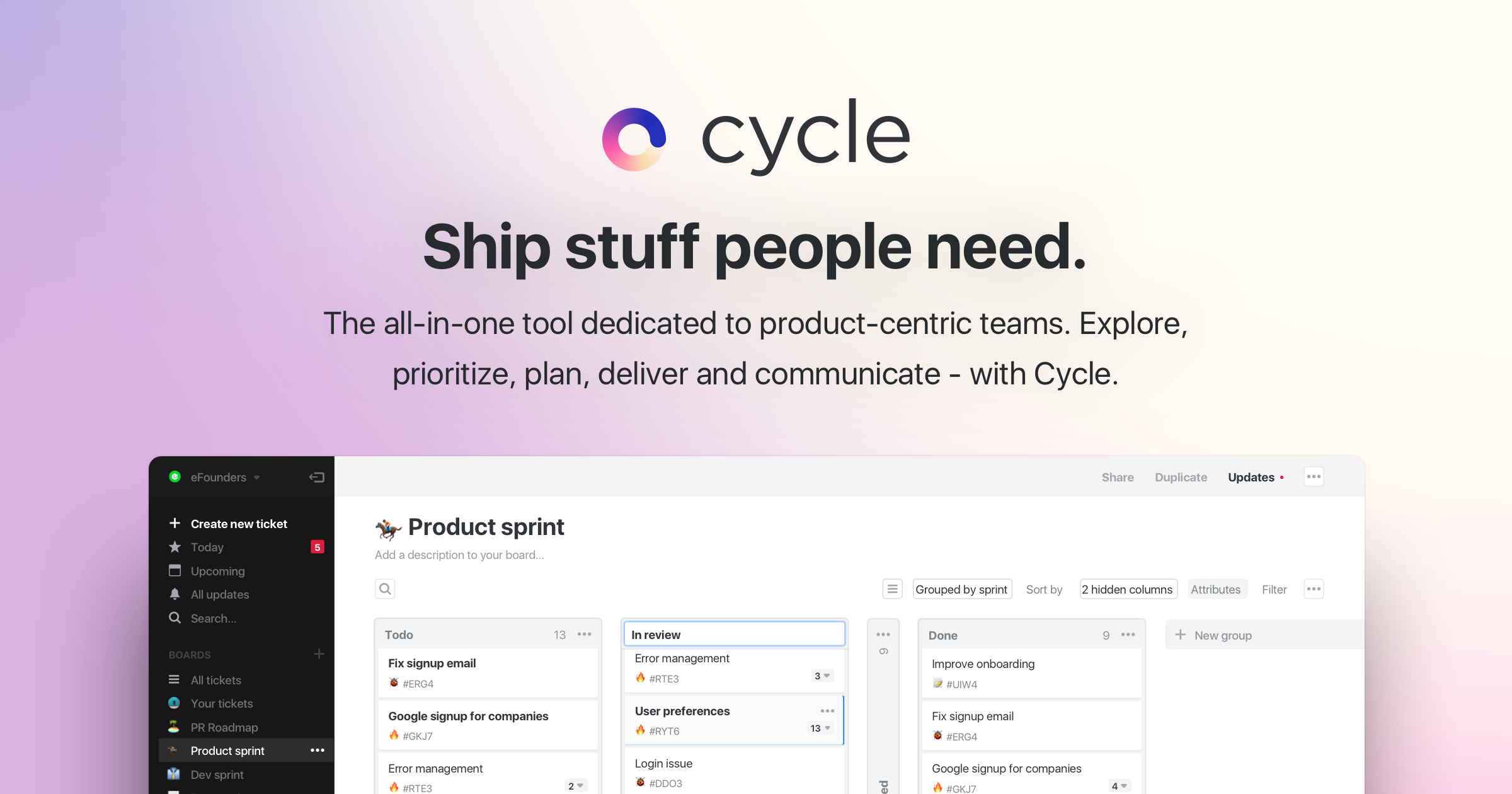
Cycle is a product management platform. And if you think about product management, it encompasses many things under one title, such as writing specs, planning a roadmap, assigning tasks and defining cycles or sprints.

Many startups use multiple tools for all those tasks. And sometimes, the tools that they were using don’t scale well. Cycle will integrate with GitHub, Figma and Zendesk so that you can handle bugs, improvements and features more efficiently.

Finally, Cycle lets you generate product updates for your customers, create public roadmaps and collaborate with other people in your organization.

It has an Airtable vibe as you can create your own views and workflows depending on your needs. You can display data as a timeline, a todo list, a kanban view, a normal list, etc.

Folk

Talking about Airtable, Folk is easy to describe. What if Salesforce and Airtable had a baby? It would look more or less like Folk.

Folk lets you manage your contacts more efficiently and collaborate with teammates. You can import your address book from iCloud, Gmail, Outlook, Excel and CSV files. You can then sort your contacts into groups, add notes, reminders and tasks.

You can also create many views to go through your contacts. There’s a spreadsheet-like view, a kanban view, a calendar view and even a space view so that you can create table layouts for an event.

It’s also worth noting that eFounders CEO Thibaud Elziere is also going to be the CEO of Folk.

Once

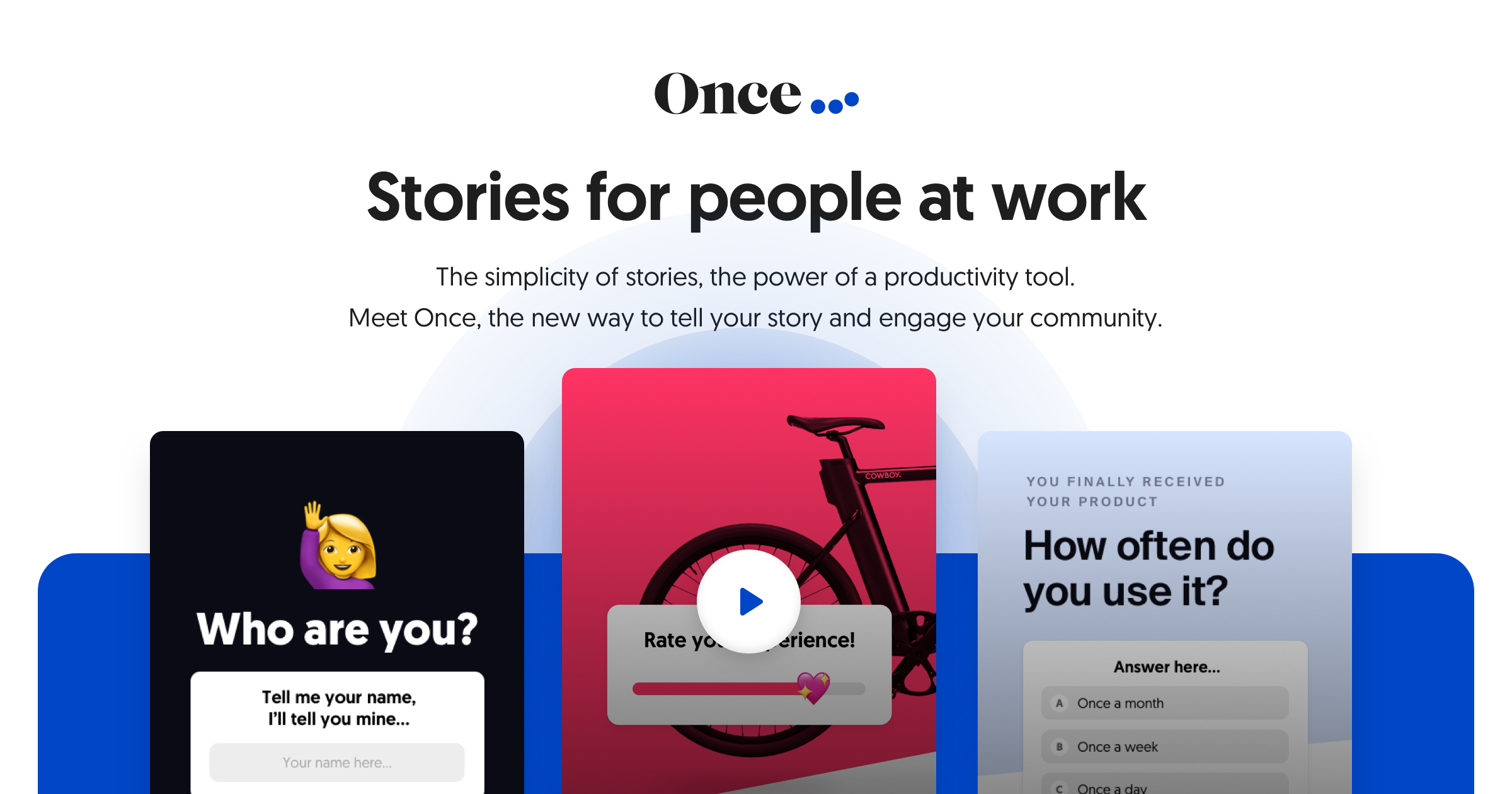
Once is a new take on visual presentations. It lets you create stories using a drag-and-drop interface and generate a link to send your stories to your customers. Once supports everything you’d expect from an Instagram story, such as images, text, polls and sliders.

You can also embed tweets, YouTube videos or Goole Maps addresses in your stories. The best part is that users don’t need to download an app or follow a brand on Instagram. It works in your mobile browser.

07 Nov 2019

Alphabet’s board is investigating how execs have handled claims of sexual harassment and other misconduct

Alphabet’s board of directors has opened an investigation into how executives at the company have handled misconduct claims, CNBC reported earlier today after viewing materials that it says show an independent subcommittee has been formed — and a law firm hired — to look into the issues.

One of the subjects of those claims is the company’s chief legal officer, David Drummond, whose long-ago extramarital affair with an employee was first surfaced in a story by The Information in 2017, one day after the outlet reported that another former executive, Android creator Andy Rubin, had left the company after an internal investigation determined that he had carried on an inappropriate relationship with a subordinate.

Rubin, who has since cofounded the consumer electronic products startup Essential, has consistently denied any wrongdoing, but it infuriated Google employees who learned nearly a year later in a New York Times investigation that he’d negotiated a $90 million severance pay package on his way out the door.

He wasn’t the only executive who was paid by Google after being accused of sexual harassment. Former senior search vice president Amit Singhal was also accused of sexual harassment, deciding to leave the company in his 15th year with Google as it was reportedly looking into the incident. Singhal, who has also denied any wrongdoing, was given a payout that ultimately amounted to $15 million.

Both payouts were approved by Google’s Leadership Development and Compensation Committee. Today, that committee is helmed by investors John Doerr and Ram Shriram, along with GIlead Sciences CFO Robin Washington, though Washington was only brought onto Alphabet’s board in April.

Other employees have also accused the company of not doing enough to stop sexual harassment in previous years, including a former Google engineer who announced on Twitter in 2015 that she was long sexually harassed by management at Google and that the company, despite her complaints, did nothing about it and even supported her harassers.

Why the company has waited until now to take action isn’t clear but it seems likely that fresh accusations against Drummond are at least part of the driver.

It was in August that his former colleague, Jennifer Blakely — who was in a published a post on Medium in which she described him as a serial philanderer who left his wife for Blakely, then left Blakely and the son that he fathered with her for another now-former Google  employee.

She also claimed Drummond had had “an affair with his ‘personal assistant’ who he moved into one of his new homes.”

One day later, Drummond issued a statement of his own, saying: It’s not a secret that Jennifer and I had a difficult break-up 10 years ago. I am far from perfect and I regret my part in that. Her account raises many claims about us and other people, including our son and my former wife. As you would expect, there are two sides to all of the conversations and details Jennifer recounts, and I take a very different view about what happened. I have discussed these claims directly with Jennifer, and I addressed the details of our relationship with our employer at the time.”

Drummond’s statement continued to on to say: “But I do want to address one claim that touches on professional matters. Other than Jennifer, I never started a relationship with anyone else who was working at Google or Alphabet. Any suggestion otherwise is simply untrue.”

Days later, Drummond married a Google employee who he’d been dating.

Drummond, who has continued on in his top role at Alphabet and was paid $47 million last year, this week sold $27 million worth of shares, according to SEC filings. He may need some of it for legal fees.