Category: UNCATEGORIZED

06 Nov 2019

As developers embrace Kubernetes, Replicated launches tools to manage its deployments

Five years ago, when the Los Angeles-based enterprise software startup Replicated first launched, it was one of a number of contenders looking to bring containerized software development tools to businesses.

The company initially hitched its star to containerized software development toolkit, Docker, but over time developers began to migrate to another containerized software development platform — Kubernetes .

Over time, as Kubernetes has emerged as the dominant toolkit for developers, Replicated’s co-founder, Grant Miller realized that his company needed to adjust to the new reality.

“Realistically when we saw Kubernetes becoming the default platform we wondered what would the next generation of Replicated’s tooling look like,” Miller told me recently.

The solution that the company hit upon was to launch a suite of services — which are available now — that could “operationalize and scale the Kubernetes applications,” Miller said.

Replicated had been focused on third party software written by someone else and delivered to run internally within a company’s on-premise hardware. Now the company is launching what it calls KOTS (Kubernetes Off The Shelf), which is a play on commercial off-the-shelf software, Miller says.

“The future of enterprise software is going to be these Kubernetes applications delivered to enterprises so that they can run privately, securely, in their own environments,”  says Miller.

Replicated has already sold its toolkit to a number of vendors, including: HashiCorp, CircleCI, Gradle, Snyk, GitPrime, Sysdig, Wickr, SignalSciences and many others and has distributed those applications into 1,500 enterprises, including 50 of the Fortune 100.

Now, Replicated KOTS enables vendors to easily package an upstream, and fully-supported distribution of Kubernetes with their application for enterprises who have yet to fully embrace Kubernetes.

Once deployed, KOTS gives administrators the ability to get an application configured and deployed using step-through configuration, automated preflight checks and 1-click updates. 

For more advanced cluster operators, the KOTS tools provide integrations that set up an application for automated day-2 operations. Cluster operators can make last-mile configuration changes as overlays that will persist throughout application updates, the company said.

The tools also integrate with internal enterprise image registries to piggy-back on the image scanning that enterprises conduct. Additionally, administrators can consolidate application updates to be automatically versioned through internal version control systems like GitHub Enterprise or GitLab, enabling GitOps for 3rd-party applications. 

Already, Replicated has four customers who are using its KOTS suite of tools. The idea is to give businesses a way to operationalize and support software developers for alerts and provide tools to manage deployments on premises.
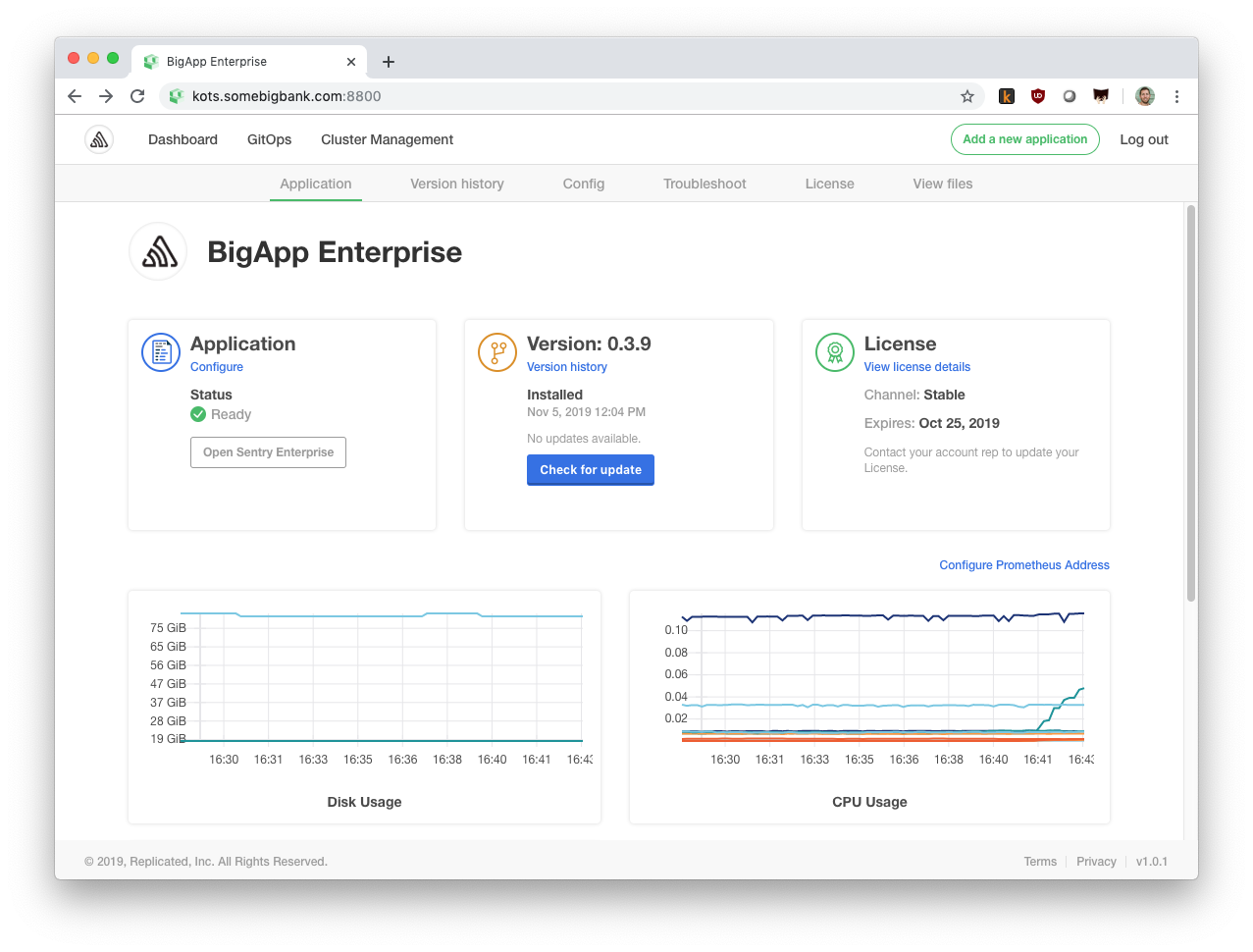
“We’re administrative tooling so you can configure and update and troubleshoot to manage this third party app,” Miller says.

The KOTS tools automate the process of delivering and controlling the delivery of software into a system and help to manage the last-mile configuration.

“There’s a whole level of super neediness that it goes to,” says Miller. “This integrates with enterprises existing first party deployment software management system.”
06 Nov 2019

Salesforce names Adam Blitzer as the new CEO of Marketing Cloud

Salesforce is announcing that it has appointed Adam Blitzer as the new CEO of Marketing Cloud.

Marketing Cloud is Salesforce’s suite of digital marketing tools, built around the company’s acquisition of ExactTarget back in 2013. That acquisition is what brought Blitzer to Salesforce — he co-founded marketing automation startup Pardot, which was acquired by ExactTarget the year before the Salesforce deal.

Blitzer recalled the insanity of going through the Pardot acquisition while also having a one-month-old baby: “I was traveling all the time … but I had a great, built-in excuse that I was never going to go through one of these again. Ten seconds later, we sold ExactTarget to Salesforce.”

Since then, Blitzer has overseen Salesforce’s Sales Cloud and Service Cloud before taking over as Marketing Cloud CEO last month. (The previous Marketing Cloud CEO Bob Stutz is now at SAP.) Salesforce is making the official announcement today, ahead of its Dreamforce conference in a couple weeks.

It sounds like Blitzer’s immediate focus is the customer data platform that Salesforce plans to launch next year, designed to help marketers unify their customer data. He told me the CDP is a “key pillar” of the Marketing Cloud strategy, particularly in a fragmented landscape where a marketer is confronted with “7,000 logos.”

He added, “We don’t have to do 7,000 things — we can be the hub of marketing for our customers,” creating the “single source of truth” for customer data that’s used across a variety of products.

Blitzer also said he sees an opportunity to grow the use of Salesforce’s Einstein AI in digital marketing. And while the company’s biggest strength has been in business-to-business marketing, Blitzer said he’ll be working on “bringing that together with all our [consumer marketing]-focused solutions”— particularly since “many, many consumer goods companies have traditionally been B2B, sold through distributors” but are now facing competition from direct-to-consumer brands.

Asked whether he’s looking to expand the Marketing Cloud through more acquisitions, Blitzer deflected, saying that’s a question for acquisitions team — his role is focused on “organic” growth of the products that Salesforce already owns.

“One of the things I love in taking over this role is the adoption of multiple products by customers,” Blitzer said. “Probably in a distant past, it was see a nail, hit a nail — where they I have an email marketing problem, I need an email marketing solution. Certainly, coming into this role, it’s [now] about owning the customer experience.”

06 Nov 2019

Glovo is opening a tech hub in Poland after gobbling a local food delivery rival

Barcelona-based on-demand delivery startup Glovo is beefing up its engineering capacity by opening a second tech hub, its first in Poland — with an initial plan to hire 40 additional engineers and have a total of 50 tech and product experts working predominantly out of its Warsaw office.

Glovo says it expects the Polish engineering hub to make up half of its technology capacity in time. It will have a main focus on developing user-facing features for its marketplace product and for partners operating on the platform, it adds.

It also has plans for further expansion of the facility down the line — and an overarching roadmap for its business of a 300-strong engineering team to support building out its on-demand service offering.

Its pitch is “everything” delivered on-demand, from fast food to groceries or pharmaceuticals, so long as it’s small and light enough to be handled by one of the couriers picking up jobs on its platform.

While there’s little doubt that fast food makes up the bulk of Glovo orders right now the startup has been trying to push into online grocery deliveries, to compete with giants like Amazon — including setting up its own warehouses capable of fulfilling orders within 20 minutes, 24 hours a day. (It calls these ‘dark supermarkets’ SuperGlovo — ‘super’ meaning ‘supermarket’ in Spanish. Though its ‘dark’ model has also attracted attention from Barcelona City Council for lacking a correct permit.)

In August Spanish media reported that Glovo had itself been shopping — picking up Polish food delivery platform, Pizza Portal, for an acquisition price-tag that’s billed as up to €35M (~$39M).

Glovo raised a $169M Series D back in April which included investment from Drake, owner of global pizza franchise Papa John’s — giving it the means and the motive to gobble smaller rivals in the food delivery space.

Poland being one of its existing markets in Europe. (Albeit Pizza Portal offers various types of fast food for delivery, not just pizza.)

In all, Glovo operates in more than 20 countries at this stage, though its densest markets of operation remain its home market of Spain and also Italy.

In Poland it operates in just eight cities — so the Pizza Portal acquisition looks intended to beef up its footprint there, with the latter slated as the largest food-service platform in the market — even as Glovo doubles down on expanding its engineering capacity by tapping up local tech talent.

At the same time, competition for on-demand delivery, and especially food delivery, remains fierce in Europe where a number of players — including the likes of Deliveroo, JustEat and Uber Eats, are battling it out for territory. And, in some instances, consuming each other to carve out a bigger share of lunch in key markets.

Where Glovo doesn’t operate in Europe highlights some of that ongoing food fight, with no offering in Germany or the UK, for instance. Its regional strategy focuses on the South and East. It has also been building up an international business, opening in markets in LatAm and the Middle East and Africa.

Scaling fast is certainly core to Glovo’s playbook, though. It says it launched in a new city every four days on average last year, while the 2015-founded startup now employs over 1,300 people in all.

Glovo founder Oscar Pierre will be joining us at TechCrunch Disrupt Berlin in December to chat about growing an on-demand delivery business — you can find out more about Disrupt conference passes here

06 Nov 2019

Uber is entering the ads business

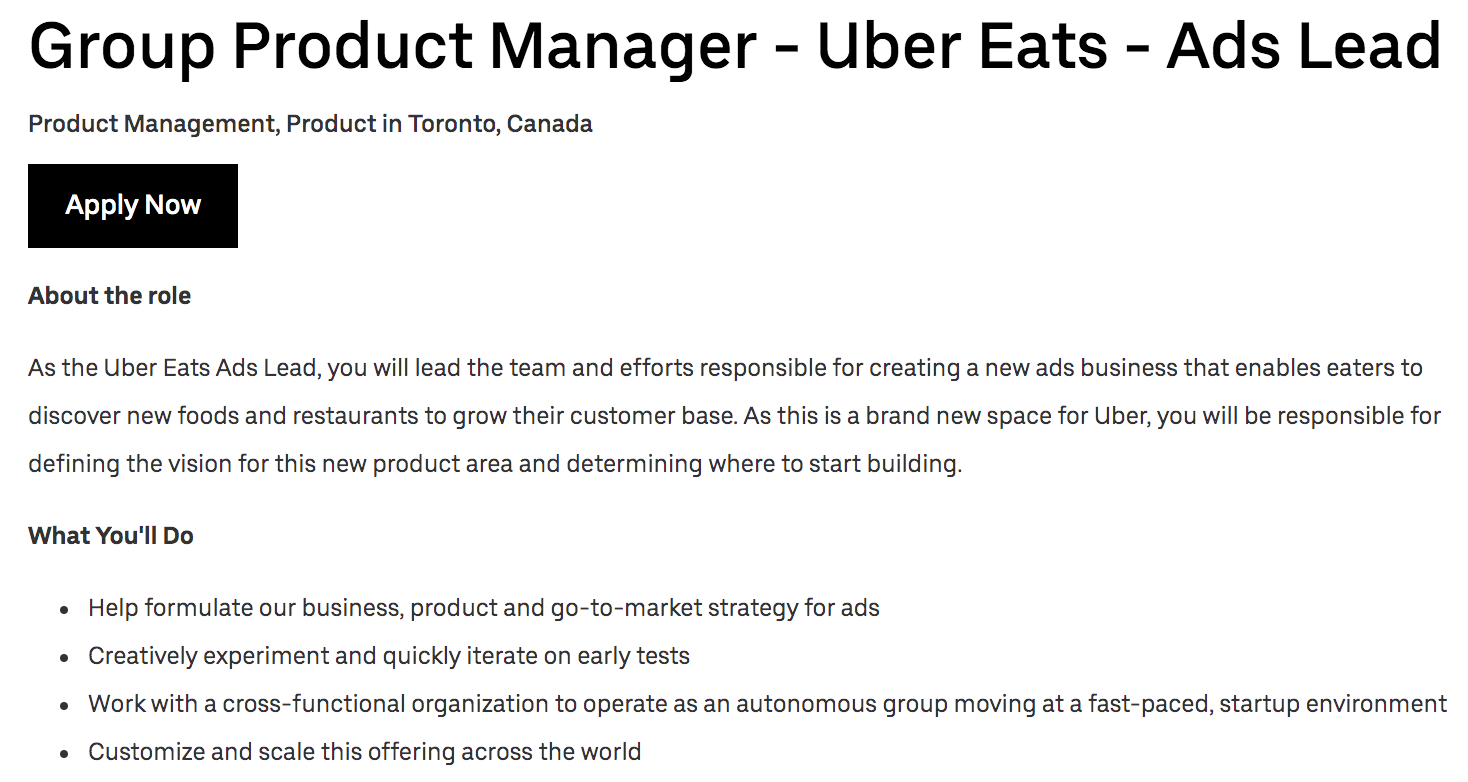
Uber will become an ad platform, selling space inside its Eats app to restaurants hoping to lure in more food delivery orders. A recent Uber job listing spotted by TechCrunch seeks an Uber Eats Ads Lead “to lead the team and efforts responsible for creating a new ads business that enables eaters to discover new foods and restaurants to grow their customer base.”

An Uber spokesperson confirmed the company would be entering the ads business, telling TechCrunch “We are exploring relevant ads in Eats.” Selling ads could help it improve margins on Eats, where it only takes 10.7% of gross bookings as adjusted net revenue since it pays out so much to restaurants and drivers.

The fresh opportunity in ads comes at a critical time when Uber is desperate to show its future potential in the face of a sagging share price that closed at $28.02 yesterday, down 40% from a high of $46.38 in June. Today, Uber’s post-IPO stock lock-up expires and early investors are able to sell their shares, putting newfound pressure on its stock.

TechCrunch was the first to discover a prototype of Eats ads in Decembe called Specials, where restaurants could get featured placement in the app in exchange for offering a discount. This demonstrated Uber’s ability to steer hungry users to order from particular restaurants.

I followed up with Uber’s senior director and head of Eats product Stephen Chau, who hinted at the company’s aspiration in the ads business. “There’s a bunch of different ways we can work with restaurants over time. If we have all the restaurants on the marketplace and we give them tools to help them grow, then this will be a very efficient marketplace. They’re going to be spending those ad dollars somewhere,” Chau told me. We’ve been checking on the company’s progress in ads ever since.

As we predicted, now instead of just a quid pro quo where Uber exchanges added visibility to restaurants willing to offer discounts that could keep users loyal to Uber Eats, it plans to formally sell ads.

“As this is a brand new space for Uber” the Toronto-based Eats Ads Lead “will be responsible for defining the vision for this new product area and determining where to start building.”

The job listing also notes whoever takes the role will “Help formulate our business, product and go-to-market strategy for ads” and “Creatively experiment and quickly iterate on early tests”. Signaling global ambitions for Eats ads, the Lead will “Customize and scale this offering across the world.”

The effort is separate from Uber’s own marketing efforts that see it spend over $1 billion per year to recruit riders, drivers, and Eats customers. Uber will start selling the ads, not just buying them.


The potential for Eats ads stems from Uber’s place as a destination for choosing what to eat, not just ordering it. Wherever there is discovery, there are opportunities for paid discovery. And as Uber focuses on cross-promoting Eats inside its main ride hailing app, it could suck in more users that are open to suggestions that restaurants pay to provide.

We don’t have details on exactly how Uber’s ads will look. However, you could imagine them appearing on the home page, the browse section, or even in search results for certain cuisines or restaurants. Restaurants hoping to boost orders could pay to appear to users who are hungry but don’t know what they want to eat, or to appear before competitors in the same food style.

Amazon successfully navigated a similar expansion from marketplace to ad platform. eMarketer expects Amazon’s US ads business will grow 33% this year to reach $9.85 billion, and claim 7.6% of the total US ad market which makes it the biggest search ad player behind Google.

Uber could use any revenue it can get. This quarter the company lost $1 billion, with $316 million of that loss coming from Eats. But Eats’ revenue grew 64% year-over-year, showing it’s increasingly popular, and could command enough user attention to make advertising lucrative.

Ads could also serve as a wedge for Uber to move deeper into business intelligence services for restaurants. It could apply its data on food delivery demand to help kitchens to optimize prices, allocate staff, and improve menus.

To save its share price, Uber’s best bet is to find new streams of cash it doesn’t have to share with drivers or restaurants. It may still be years until self-driving vehicles arrive to rescue Uber from its tremendous costs.

06 Nov 2019

Take a virtual tour through Rocket Lab’s New Zealand rocket launch facility

Rocket Lab is one of the extremely small group of rocket launch startups that is actually sending payloads to space, and the company sends all of its spacecraft up from a scenic peninsula located on the East Coast of New Zealand. Why? It’s ideally placed for high frequency launch windows, which should help Rocket Lab send up even more payloads using its Electron spacecraft as it scales. And the side benefits are incredibly stunning views and vistas.

This tour of LC-1 includes a look at where Rocket Lab does final assembly for the spacecraft that it launches, which puts together parts made everywhere from Auckland to Huntington Beach, California. There’s a look at how the rocket is rolled out and lifted for fueling and launch, and some insight into how Rocket Lab goes about partially muting some of the incredible volume of noise that’s produced when it fires up its rocket missions.

Finally, there’s a quick look at LC-2, the second launch pad that Rocket Lab is currently building in Wallops Island, Virginia. This will be the company’s first U.S.-based launch site, which will unlock key launch capabilities for U.S. agency customers, and it’s set to host its first Electron launch sometime early next year.

06 Nov 2019

LA is fast becoming a fintech hub as HMBradley launches another West Coast challenger bank

Add HMBradley to the list of Los Angeles based startups looking to shake up the world of high finance typically dominated by East Coast giants with names like JPMorgan Chase, Citigroup, Morgan Stanley, and Goldman Sachs.

The new Santa Monica, Calif.-based bank joins companies like Aspiration and Acorns in trying to offer consumers new ways to manage their finances.

Founded by a team of fintech veterans and backed by PayPal founder Max Levchin, HMBradley got its start in Levchin’s HVF Labs, a San Francisco-based venture studio.

The idea, according to the company’s founder, Zach Bruhnke, was to provide better incentives to consumers for leaving more of their deposits with his bank. “A Bank CEO wants to get more deposits and consumers want more interest,” says Bruhnke. So the thesis behind HMBradley is to give consumers higher interest rates based on the amount of money they save.

Growing up in Shreveport, La. where his father worked selling fences and his mother oversaw deposits into the local bank vault, high finance was the furthest thing from Bruhnke’s mind. But after the entrepreneur sold his first company he witnessed firsthand how wealth brought privileges.

HMBradley operates differently. “If you have the right habits you will be in the top tier of our customers no matter how many zeroes you have in the account,” Bruhnke says.

Working with him on the project is another Shreveport native, Germain Cassiere, an engineer who has worked with Bruhnke on various startups for the past seven years and Dmitry Gritskevich, a former Goldman Sachs banker who worked on the break up of GE Capital.

Together the three men, with $3.5 million in seed financing from Accomplice Ventures, Walkabout Ventures, Mucker Capital, Index Ventures, and a number of angel investors, intend to change how banking customers are rewarded.

“HMBradley presents an entirely new experience that will change how consumers think about banking,” said Levchin. “Aside from its digital-first design that makes sense for the way people handle money today, it was developed to help anyone be more responsible with their money”

At the core of HMBradley’s value proposition is its saving benefit. The company has set up variable annual percentage yields for accounts based on the rate its customers save. The current industry average yield on savings accounts is a paltry 0.09%, but HMBradley will have a tiered system where savers who bank more  than 20% of their direct deposits will have an annual yield of 3%; customers who save between 15% and 20% of their direct deposits will receive rates of 2.25%; while the bottom two tiers of customers (those who save between 10% and 15% of their deposits and 5% to 10% of their direct deposits) will have rates of 1.5% and 1% respectively.

The company also differs from other banks in some pretty significant ways. Chiefly, it doesn’t distinguish between a checking and a savings account. Any bank account opened with the company will earn interest based on savings rate. HMBradley will also offer one-click free credit scoring and will have a network of 55,000 no-fee ATMs available for its customers through the STAR ATM network.

Finally, the company’s accounts are insured for up to $250,000 by the FDIC through its sponsor bank — Hatch Bank.

Currently, the HMBradley is offering a perk to customers who sign up for the company’s waitlist — giving them the option to commit a certain amount of their direct deposit and earn 3% interest on that amount monthly until they make their first deposit (customers have to deposit their money within thirty days from when HMBradley starts accepting deposits to receive the bonus).

“We want to start account relationships on a positive note and build from there,” said Gritskevich, the company’s co-founder and chief operating officer. “We believe that the best way to do that and to show how serious we are about working for our customers is to enable them to earn a bonus before their money is even with us. HMBradley will build their trust as their balance grows. The best part is that the earlier someone signs up, the larger their bonus becomes.”

06 Nov 2019

FirstVet, the video veterinarian service, raises €18.5M for international expansion

FirstVet, the Swedish startup which provides pet owners with on-demand video consultations with local, qualified veterinarians, has closed €18.5 million in Series B funding.

The round is led by London-based Omers Ventures, the venture capital arm of Canadian pension fund Omers that recently launched a dedicated €300 million fund to invest in European tech startups. FirstVet’s Series A backer Creandum also followed on, whilst it brings total funding to-date to €24.5 million.

FirstVet says the funding will enable it to expand the service globally, with the company looking to launch in other markets, name-checking the U.S., Germany, and France. In addition, the startup will continue to develop its product and introduce new features to improve the experience for pet owners and vets alike. This will include new “automation tools” and integration with clinics’ existing systems.

Founded in 2016 in Stockholm, FirstVet wants to expand access to pet care through facilitating on-demand video consultations with registered veterinarians. The company currently operates in five markets — the U.K., Norway, Denmark, Finland, and, of course, Sweden) and says it has more than 200,000 registered users. There are currently 150 veterinarians on the platform, with this number growing continually.

“We are a supplement to physical clinics rather than a substitute to them,” FirstVet CEO and co-founder David Prien told TechCrunch in June 2018. “The most common problems we help pet owners with are gastrointestinal questions, wounds, skin/fur/ears. Our main objective is to be the natural first point of contact for pet owners.”

As a route to market, FirstVet has partnerships with over 20 major insurance companies across all of the markets it operates in, including Bought By Many in the U.K. This sees the FirstVet service offered as part of a pet owner’s insurance premium.

“At Omers Ventures, we invest in and partner with the best and brightest entrepreneurs and teams in tech to build a prosperous future, so FirstVet is the perfect fit for us,” says Henry Gladwyn, Principal at Omers Ventures and new FirstVet board member, in a statement. “It’s rare for a startup to provide genuine value to the entire ecosystem in which it operates, with FirstVet quickly becoming an irreplaceable service for pet owners, and a trusted partner for vets, clinics, and insurance companies. FirstVet has ambitions to become the global leader in on-demand video veterinary appointments, and we are delighted to be on board to help them achieve this goal”.

06 Nov 2019

San Francisco smokes Juul’s hopes by voting to keep e-cigarette ban

Voters in San Francisco have resoundingly rejected an attempt to overturn a citywide ban on e-cigarettes by a margin of around 80:20.

Reporting on the count in the Bay Area, CBS SF says at least 78 per cent of voters rejected the ballot measure, known as Proposition C.

The measure had been heavily back by e-cigarette maker Juuluntil just over a month ago. It is reported to have spent at least $10M promoting the attempt to flip the ban, before withdrawing its support at the end of September as part of a company-wider review under new CEO, K.C. Crosthwaite, that’s also seen between 10-15% of its workforce lay off.

The 2017-founded company, which has raised some $14.4BN in funding to date per Crunchbase, has faced trenchant criticism over the level of youth usage of its products.

In a statement responding to the Prop C vote, San Francisco city attorney Dennis Herrera attacks Juul — dubbing the company “Big Tobacco” — and writing: “San Francisco voters are too smart to be fooled by Juul. Juul is Big Tobacco, and it’s using a classic ploy from the Big Tobacco playbook to try and hook another generation of kids on nicotine. Voters saw right through Juul’s deception. San Francisco already has the toughest e-cigarette regulations in the nation. By law, e-cigarettes must undergo FDA review to ensure they are safe for public health. Complete FDA review and you can sell your product here. If you don’t, you can’t. It’s that simple.”

We’ve reached out to Juul for comment.

In October Juul announced it would stop selling mango, creme, fruit and cucumber flavored nicotine products in the US, while continuing to sell the flavors elsewhere. But it did not commit to permanently giving up on selling flavored nicotine products — in the US or anywhere.

Vaping generally has also been under a growing cloud of suspicion after a number of e-cigarette users died from an acute lung condition which appears related to the process of chemicals being vaporized and inhaled — and potentially to devices being used to vape THC.

Third party sellers hawk unofficial cartridges for e-cigarette devices such as Juul’s which can contain the psychoactive compound found in marijuana, along with other unknown substances. But studies have also shown that even popular e-cigarette brands don’t know exactly what chemicals are produced when the substances contained in their cartridges are vaporized.

“If the FDA can’t verify that these products are safe, then they don’t belong on store shelves,” added Herrera in the statement. “The U.S. Surgeon General has warned that we are in the midst of a youth vaping epidemic. Juul spent millions trying to mislead San Franciscans and rewrite the rules to benefit itself before realizing that was a fool’s errand. It could have put that time and effort into completing the required FDA review. If Juul had done that the day Supervisor Shamann Walton and I introduced our e-cigarette legislation back in March, Juul would have had its answer from the FDA by now. Perhaps FDA review is a test that Juul is afraid it can’t pass.”

Last month a lawsuit filed by a former Juul executive alleged the company knew that a batch of contaminated e-liquid had been used in about one million pods shipped to retailers earlier this year but did not inform customers.

06 Nov 2019

Neo4j introduces new cloud service to simplify building a graph database

Neo4j, a popular graph database, is available as an open source product for anyone to download and use. Its enterprise product aimed at larger organizations is growing fast, but the company recognized there was a big market in between those two extremes, and today it introduced a new managed cloud service called Aura.

They wanted something in the product family for smaller companies, says Emil Eifrem, CEO and co-founder at Neo4j . Aura really gives these smaller players a much more manageable offering with flexible pricing options. “To get started with an enterprise project can run hundreds of thousands of dollars per year. Whereas with Aura, you can get started for about 50 bucks a month, and that means that it opens it up to new segments of the market,” Eifrem told TechCrunch. As he points out, even a startup on a shoe-string budget can afford $50 a month.

Aura operates on a flexible pricing model, and offers the kind of value proposition you would expect from a cloud version of the product. The company deals with all of the management, security and updates for you. It will also scale as needed to meet your data requirements as you grow. The idea is to allow developers to concentrate on simply building applications and let Neo4j deal the database for you.

He says over time, he could see larger businesses, who don’t want to deal with the management side of developing a graph database application also using the cloud product. “Why would you want to operate your own database? You should probably focus on your core business and building applications to support that core business,” he said. But he recognizes change happens slowly in larger organizations, and not every business will be comfortable with a managed service. That’s why they are offering different options to meet different requirements.

Graph databases allow you to see connections between data. It is the underlying technology, for example, in a social networking app, that lets you the connection between people you know and people your friends know. It is also the technology on an e-commerce site that can offer recommendations based on what you bought before because people who buy a certain product are more likely to purchase other related products.

06 Nov 2019

China’s Didi to relaunch Hitch carpooling service this month

Chinese ride-hailing firm Didi Chuxing said today it will conduct a trial relaunch of its Hitch carpooling service in seven major Chinese cities with additional safety features by end of the month, more than a year after suspending the service following the murder of a female passenger by her Didi driver.

The relaunch of popular service Hitch, which was started in 2015 and has clocked more than a billion rides, follows a “comprehensive safety review and product revamp,” Didi said Wednesday. The company claimed its system can now identify high-risk scenarios and trip anomalies as well as support effective intervention. There’s also a new in-app Safety Assistant that shows detailed information on drivers and passenger and offers real-time support from safety specialists.

Additionally, during the trial, Hitch service will only allow trips under 50 kilometres (31 miles) in metro areas between 5am and 8pm for female users. Male users can enjoy the service till 11pm. The cities where Hitch will conduct the trial are Beijing, Harbin, Taiyuan, Shijiazhuang, Changzhou, Shenyang, and Nantong.

Didi suspended the carpooling service after the murder of a female passenger in August 2018, a second such incident after another passenger was murdered only a few months prior. At the time, Didi also issued an apology for its “disappointing mistakes.” (Didi’s other carpooling and general offerings were not suspended.)

Chinese transport ministry lambasted Didi for the incidents, saying the firm had “lost control” of its drivers and vehicles. It said there had been multiple lapses in offline management of people and cars, that had resulted in criminal and security cases. Didi said today it had alerted the authority about the trial re-run.

Hitch is a modern take on hitchhiking that lets a passenger ride for free with a driver headed in their direction. Passengers are encouraged to leave a tip to cover petrol, but the idea is to make each car ride more efficient. Didi doesn’t monetize the service, but it is a strategic way to attract passengers and drivers who may use other services that the firm does draw revenue from.

The Chinese firm did not mention last year’s unfortunate incidents today, but noted that Hitch has become a “popular day-to-day commuter ride-sharing among China’s rising middle class.”

“Since then it has also become an important inter-city mobility solution as the country’s sustained urbanization process continues to drive regional integration and mass migration. During China’s 2018 Lunar New Year, 30.7 million Chinese took Hitch for their annual family reunion over the seven-day break,” it said.

Didi, which was valued at $56 billion earlier this year and claims to have amassed over 550 million users globally, hasn’t been able to turn a profit. The relaunch of carpooling service could put the company, which has been backed by SoftBank and Uber, on the right track.