Category: UNCATEGORIZED

04 Nov 2019

Workday to acquire online procurement platform Scout RFP for $540M

Workday announced this afternoon that it has entered into an agreement to acquire online procurement platform Scout RFP for $540 million. The company raised over $60 million on a post valuation of $184.5 million, according to Pitchbook data.

The acquisition builds on top of Workday’s existing procurement solutions, Workday Procurement and Workday Inventory, but Workday chief product product officer Petros Dermetzis wrote in a blog post announcing the deal that Scout gives the company a more complete solution for customers.

“With increased importance around the supplier as a strategic asset, the acquisition of Scout RFP will help accelerate Workday’s ability to deliver a comprehensive source-to-pay solution with a best-in-class strategic sourcing offering, elevating the office of procurement in strategic importance and transforming the procurement function,” he wrote.

It’s not a coincidence that Workday chose this particular online procurement startup. In fact, Workday Ventures has been an investor in the company since 2018, and it’s also an official Workday partner, making it a known quantity for the organization.

As the Scout RFP founders stated in a blog post about today’s announcement, the two companies have worked well together and a deal made sense. “Working closely with the Workday team, we realized how similar our companies’ beliefs and values are. Both companies put user experience at the center of product focus and are committed to customer satisfaction, employee engagement and overall business impact. It was not surprising how easy it was to work together and how quickly we saw success partnering on go-to-market activities. From a culture standpoint, it just worked,” they wrote. A deal eventually came together as a result.

Scout RFP is a fairly substantial business with 240 customers in 155 countries. There are 300,000 users on the platform, according to data supplied by the company. The company’s 160 employees will be moving to Workday when the deal closes, which is expected by the end of January, pending standard regulatory review.

04 Nov 2019

WeWork-owned Meetup confirms restructuring, layoffs

WeWork’s efforts to cut costs following an ousted chief executive officer and a delayed initial public offering are impacting its subsidiaries. Meetup, which WeWork acquired for a reported $200 million in 2017, announced a round of layoffs this morning, TechCrunch has learned.

The company, which helps people foster in-person connections by facilitating events across the globe, has shed as much as 25% of its workforce, most of which were employees of the company’s engineering department, sources tell TechCrunch.

“Meetup’s top priority is building the best possible product for our community of more than 44 million members around the world,” a representative of the company said in a statement provided to TechCrunch. “Today we made some organizational changes with that goal in mind, including restructuring across some of our departments.”

The news follows WeWork’s now well-documented attempts at restructuring its high-loss business. Late last month, SoftBank provided the over-valued coworking business a much-needed lifeline in the form of a $5 billion loan, a $3 billion tender offer and another $1.5 billion in equity funding, according to The Wall Street Journal. That’s in addition to the billions already invested by the Japanese telecom giant, which now owns a roughly 80% stake, that had valued WeWork at an eye-popping $47 billion. The latest investment package, however, valued the company at just $8 billion. 

Understandably, WeWork’s new leadership seems to be hyper-focused on its cost-cutting strategy. Multiple reports have indicated the business is weighing sales of several of its subsidiaries, including Meetup, Managed by Q and Conductor.

WeWork must boost its balance sheet in the next few months if it plans to stay committed to a 2020 IPO. 

WeWork revealed its IPO prospectus in August, disclosing revenue north of $1.5 billion in the six months ending June 30 on losses of $904.6 million. The company, before a series of its co-founder and CEO Adam Neumann’s misbehaviors were revealed alongside its mounting losses, was to complete the second-largest offering of 2019 behind only Uber, which was valued at $82.4 billion following its May IPO on the New York Stock Exchange.

As for Meetup, the company was founded in 2002 as one of the first IRL social networks. Today’s cuts are not the first since WeWork came into the picture, according to earlier reporting by Gizmodo. Meetup shed roughly 10% of its staff as it negotiated the acquisition and underwent cultural changes as managers pushed for growth and “ more aggressiveness in the workplace.”

The future of Meetup is unclear. WeWork may move forward with a sale of the business or pressure its own cost-cutting measures on the company. In a recent email to Meetup members, CEO David Siegel wrote that he appreciated the recent outpouring of support from the community, as it became apparent the company was in a precarious position because of its owner.

“As you may be aware, there has been significant news about our parent company, WeWork, and what this means for the future of Meetup,” Siegel wrote. “As Meetup’s CEO, I want to personally tell you we’re as committed as ever to bringing people together in person. 


This story is updating.

04 Nov 2019

The 7 most important announcements from Microsoft Ignite

It’s Microsoft Ignite this week, the company’s premier event for IT professionals and decision-makers. But it’s not just about new tools for role-based access. Ignite is also very much a forward-looking conference that keeps the changing role of IT in mind. And while there isn’t a lot of consumer news at the event, the company does tend to make a few announcements for developers, as well.

This year’s Ignite was especially news-heavy. Ahead of the event, the company provided journalists and analysts with an 87-page document that lists all of the news items. If I counted correctly, there were about 175 separate announcements. Here are the top seven you really need to know about.

Azure Arc: you can now use Azure to manage resources anywhere, including on AWS and Google Cloud

What was announced: Microsoft was among the first of the big cloud vendors to bet big on hybrid deployments. With Arc, the company is taking this a step further. It will let enterprises use Azure to manage their resources across clouds — including those of competitors like AWS and Google Cloud. It’ll work for Windows and Linux Servers, as well as Kubernetes clusters, and also allows users to take some limited Azure data services with them to these platforms.

Why it matters: With Azure Stack, Microsoft already allowed businesses to bring many of Azure’s capabilities into their own data centers. But because it’s basically a local version of Azure, it only worked on a limited set of hardware. Arc doesn’t bring all of the Azure Services, but it gives enterprises a single platform to manage all of their resources across the large clouds and their own data centers. Virtually every major enterprise uses multiple clouds. Managing those environments is hard. So if that’s the case, Microsoft is essentially saying, let’s give them a tool to do so — and keep them in the Azure ecosystem. In many ways, that’s similar to Google’s Anthos, yet with an obvious Microsoft flavor, less reliance on Kubernetes and without the managed services piece.

Microsoft launches Project Cortex, a knowledge network for your company

What was announced: Project Cortex creates a knowledge network for your company. It uses machine learning to analyze all of the documents and contracts in your various repositories — including those of third-party partners — and then surfaces them in Microsoft apps like Outlook, Teams and its Office apps when appropriate. It’s the company’s first new commercial service since the launch of Teams.

Why it matters: Enterprises these days generate tons of documents and data, but it’s often spread across numerous repositories and is hard to find. With this new knowledge network, the company aims to surface this information proactively, but it also looks at who the people are who work on them and tries to help you find the subject matter experts when you’re working on a document about a given subject, for example.

00000IMG 00000 BURST20180924124819267 COVER 1

Microsoft launched Endpoint Manager to modernize device management

What was announced: Microsoft is combining its ConfigMgr and Intune services that allow enterprises to manage the PCs, laptops, phones and tablets they issue to their employees under the Endpoint Manager brand. With that, it’s also launching a number of tools and recommendations to help companies modernize their deployment strategies. ConfigMgr users will now also get a license to Intune to allow them to move to cloud-based management.

Why it matters: In this world of BYOD, where every employee uses multiple devices, as well as constant attacks against employee machines, effectively managing these devices has become challenging for most IT departments. They often use a mix of different tools (ConfigMgr for PCs, for example, and Intune for cloud-based management of phones). Now, they can get a single view of their deployments with the Endpoint Manager, which Microsoft CEO Satya Nadella described as one of the most important announcements of the event, and ConfigMgr users will get an easy path to move to cloud-based device management thanks to the Intune license they now have access to.

Microsoft’s Chromium-based Edge browser gets new privacy features, will be generally available January 15

What was announced: Microsoft’s Chromium-based version of Edge will be generally available on January 15. The release candidate is available now. That’s the culmination of a lot of work from the Edge team, and, with today’s release, the company is also adding a number of new privacy features to Edge that, in combination with Bing, offers some capabilities that some of Microsoft’s rivals can’t yet match, thanks to its newly enhanced InPrivate browsing mode.

Why it matters: Browsers are interesting again. After years of focusing on speed, the new focus is now privacy, and that’s giving Microsoft a chance to gain users back from Chrome (though maybe not Firefox). At Ignite, Microsoft also stressed that Edge’s business users will get to benefit from a deep integration with its updated Bing engine, which can now surface business documents, too.
hero.44d446c9

You can now try Microsoft’s web-based version of Visual Studio

What was announced: At Build earlier this year, Microsoft announced that it would soon launch a web-based version of its Visual Studio development environment, based on the work it did on the free Visual Studio Code editor. This experience, with deep integrations into the Microsoft-owned GitHub, is now live in a preview.

Why it matters: Microsoft has long said that it wants to meet developers where they are. While Visual Studio Online isn’t likely to replace the desktop-based IDE for most developers, it’s an easy way for them to make quick changes to code that lives in GitHub, for example, without having to set up their IDE locally. As long as they have a browser, developers will be able to get their work done..

Microsoft launches Power Virtual Agents, its no-code bot builder

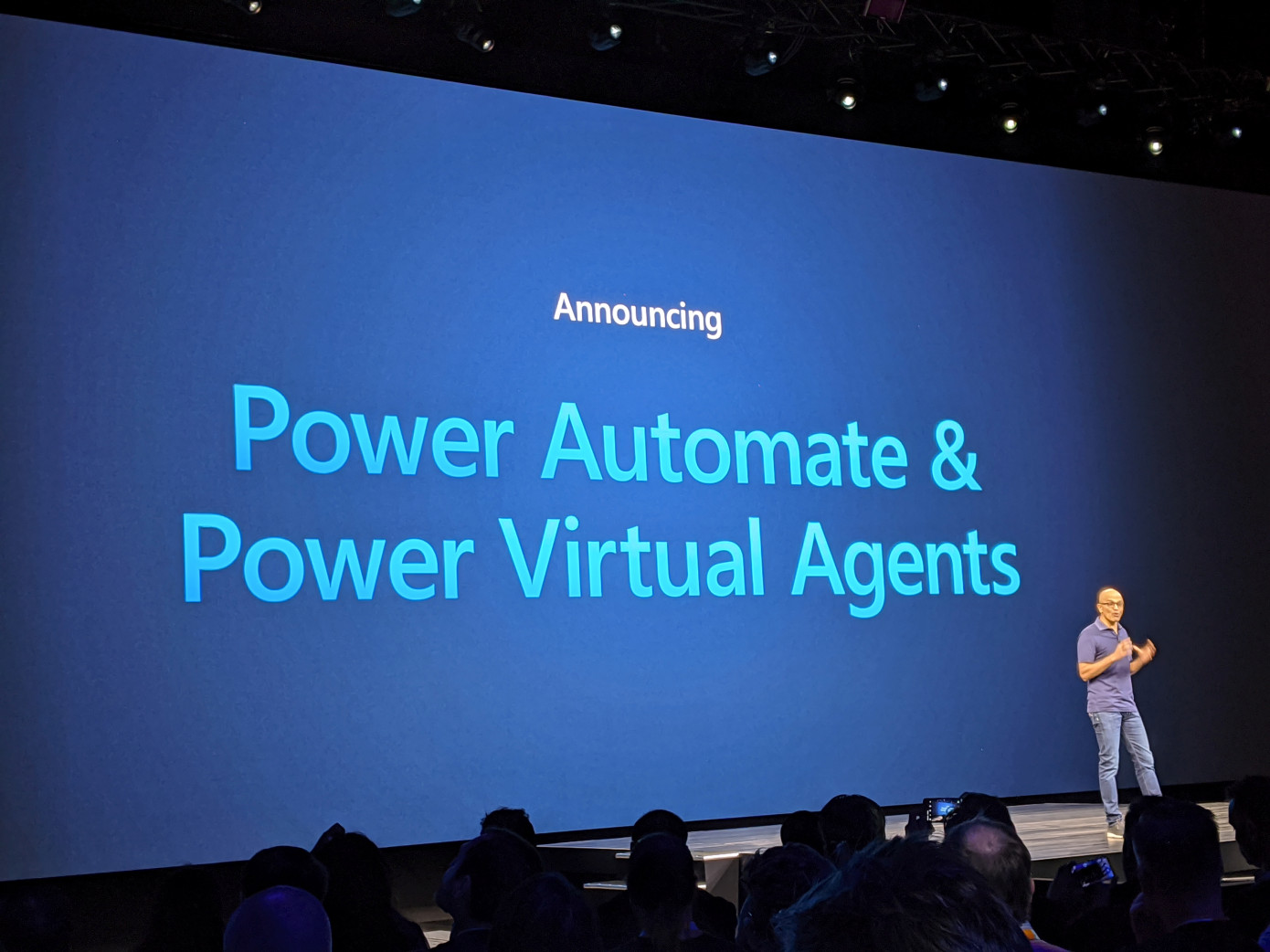
What was announced: Power Virtual Agents is Microsoft’s new no-code/low-code tool for building chatbots. It leverages a lot of Azure’s machine learning smarts to let you create a chatbot with the help of a visual interface. In case you outgrow that and want to get to the actual code, you can always do so, too.

Why it matters: Chatbots aren’t exactly at the top of the hype cycle, but they do have lots of legitimate uses. Microsoft argues that a lot of early efforts were hampered by the fact that the developers were far removed from the user. With a visual too, though, anybody can come in and build a chatbot — and a lot of those builders will have a far better understanding of what their users are looking for than a developer who is far removed from that business group.
Cortana wants to be your personal executive assistant and read your emails to you, too

What was announced: Cortana lives — and it now also has a male voice. But more importantly, Microsoft launched a few new focused Cortana-based experiences that show how the company is focusing on its voice assistant as a tool for productivity. In Outlook on iOS (with Android coming later), Cortana can now read you a summary of what’s in your inbox — and you can have a chat with it to flag emails, delete them or dictate answers. Cortana can now also send you a daily summary of your calendar appointments, important emails that need answers and suggest focus time for you to get actual work done that’s not email.

Why it matters: In this world of competing assistants, Microsoft is very much betting on productivity. Cortana didn’t work out as a consumer product, but the company believes there is a large (and lucrative) niche for an assistant that helps you get work done. Because Microsoft doesn’t have a lot of consumer data, but does have lots of data about your work, that’s probably a smart move.

GettyImages 482028705 1

SAN FRANCISCO, CA – APRIL 02: Microsoft CEO Satya Nadella walks in front of the new Cortana logo as he delivers a keynote address during the 2014 Microsoft Build developer conference on April 2, 2014 in San Francisco, California (Photo by Justin Sullivan/Getty Images)

Bonus: Microsoft agrees with you and thinks meetings are broken — and often it’s the broken meeting room that makes meetings even harder. To battle this, the company today launched Managed Meeting Rooms, which for $50 per room/month lets you delegate to Microsoft the monitoring and management of the technical infrastructure of your meeting rooms.

04 Nov 2019

BMW’s magical gesture control finally makes sense as touchscreens take over cars

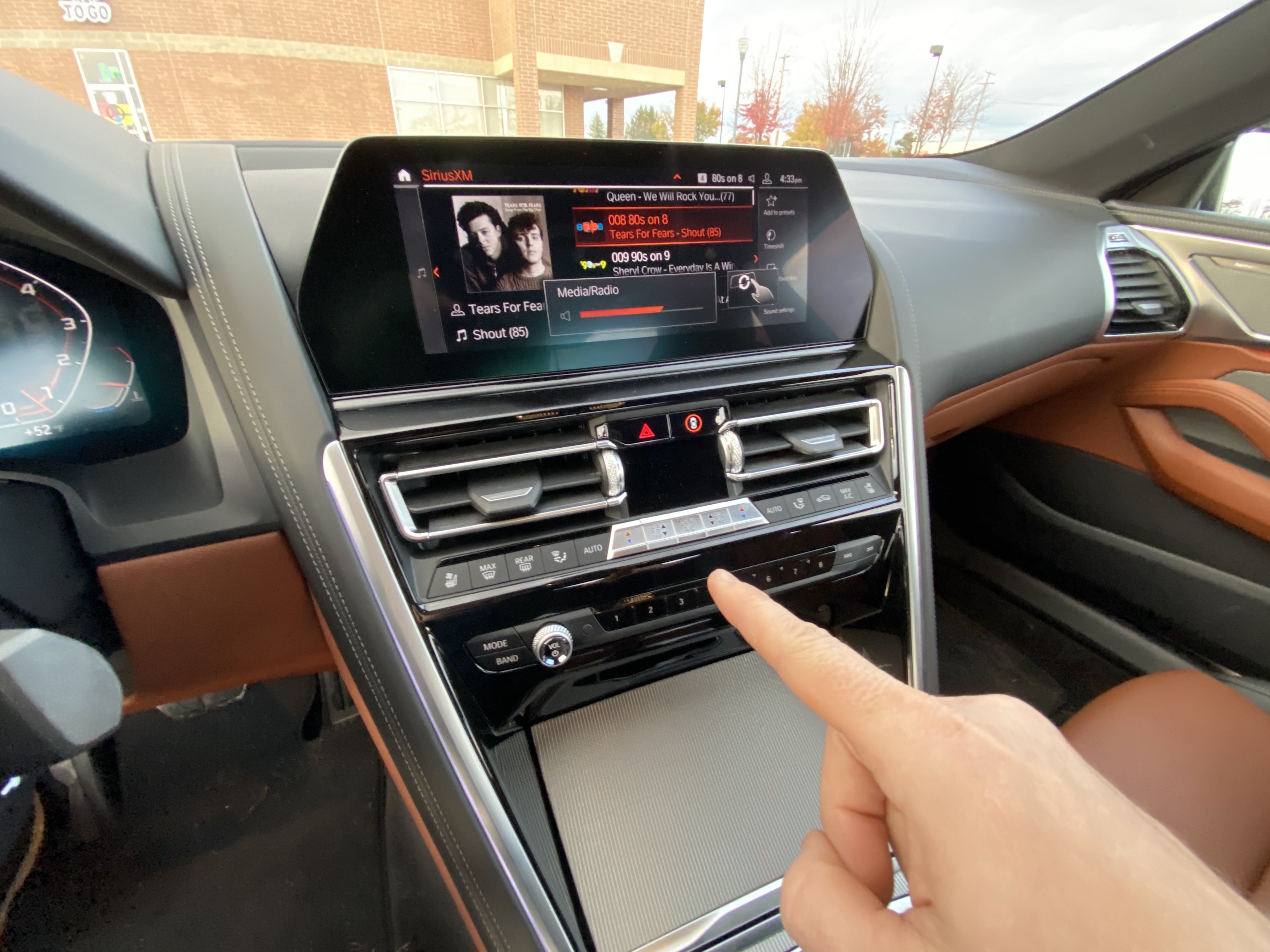
BMW has been equipping its cars with in-air gesture control for several years and I never paid attention to it. It seemed redundant. Why wave your hand in the air when there’s dials, buttons, and touchscreens to do the same? Until this week, that is, when took delivery of a BMW 850i loaner equipped with the tech. This is about the future.


I didn’t know the 850i used gesture control, because, frankly, I had forgotten BMW had this technology; I stumbled upon it. Just make a motion in the air to control the volume or tell the navigation to send you home. Now, in 2019, with giant touchscreens set to takeover cars, I find BMW’s gesture control smart and a great solution to a future void of buttons.

It’s limited in use right now. There are only a few commands: volume, nav, recent calls, and turning on and off the center screen. It’s easy to see additional functions added in the future. It’s sorely missing the ability to step back a screen. I want that function the most.

Here’s how it works: to control the volume, take one finger and spin it in the air above the center stack. Anywhere. The range is impressive. A person can do this next to the screen or two feet away. A person’s arm could be resting on the center armrest and lift in the air and twirl their finger. Bam, it controls the volume. Put two fingers up – not spinning, like a flat peace sign – and the screen turns on or off. Make a fist and open it twice to load the navigation or phone (user picks the function).

After using the system for several days, I never had a false positive. The volume control took about 10 minutes to master while the other gestures worked the first time.

In this car, these commands work in conjunction with physical buttons, dials, and a touchscreen. The gestures are optional. A user can turn off the function in the settings, too.

I found the in-air control a lovely addition to the buttons, though. At night, in the rain, they’re great as they do not require the driver to remove their focus from the road. Just twirl your fingers to turn down the volume.

I’m not convinced massive touchscreens are better for the driver. The lack of actual, tactile response along with burying options in menus can lead drivers to take their eyes off the road. For the automaker, using touchscreens is less expensive than developing, manufacturing, and installing physical buttons. Instead of having rows of plastic buttons and dials along with the mechanical bits behind them, automakers can use a touchscreen and program everything to be on screen. Tesla did it first, Ram, Volvo, and now Ford is following.

In-air gesture control could improve the user experience with touchscreens. When using BMW’s system, I didn’t have to take my eyes off the road to find the volume — something that I have to do occasionally, even in my car. Instead, I just made a circle in the air with my right hand. Likewise, BMW’s system lets the user call up the nav and navigate to a preset destination (like work or home) by just making another gesture.

BMW debuted this system in 2015. The automotive world was different. Vehicles were

04 Nov 2019

Where VCs are looking for voice startup investments

Led by Amazon’s Alexa, smart speakers’ install base is expected to reach 200 million units worldwide by 2020. A quarter of Americans over the age of 12 own a smart speaker, and the majority of those users have more than one device in their home. Moreover, Apple could sell 50 million of its Airpods this year (generating $8 billion in sales) as Bluetooth earpieces explode in popularity.

For the market penetration of this hardware, the app ecosystem remains limited in terms of mainstream adoption. Podcast production and consumption has exploded, but they don’t take advantage of smart speakers and headphones as interactive devices. Even though there were 57,000 Alexa skills available at the end of last year, most people are using smart speakers mainly to check the weather, check the news, ask simple questions and play music.

If voice is a new operating system, where are the opportunities to build giant companies on top of it?

To get a better sense of how the smart money views this market, I asked five VCs who have spent the most time in this space to share which types of startups have captured their attention:

  • Matt Hartman, Partner at Betaworks Ventures
  • Nicole Quinn, Partner at Lightspeed Venture Partners
  • Paul Bernard, Director of the Alexa Fund at Amazon
  • Ann Miura-Ko, Partner at Floodgate
  • Jordan Cooper, Partner at Pace Capital

Here are their responses:

Matt Hartman, Partner at Betaworks Ventures

The most recent wave of audio was about constant connectivity and streaming, and we invested in Anchor, Gimlet, and other audio-first businesses that would thrive in the podcast renaissance. For the next wave of audio, we’re focused [on] three broad categories: personalization, new behaviors/new interfaces, and monetization. Personalization means both utilizing location, Apple Watch, and other data to create magical audio experiences and customized audio content, but also advances in generative content like Resemble.ai and Descript that can create custom audio. 

In terms of new behaviors/new interfaces, people are leaving their Airpods in longer, which means there may be an opportunity for “Airpod-first” product design. Finally, as audio becomes an industry, monetization will be improved and also re-thought: subscription products such as Shine and Headspace are interesting in the context that if they don’t really work as ad-supported podcasts, and they are packaged in such a way that people are willing to pay a monthly or annual subscription.

Nicole Quinn, Partner at Lightspeed Venture Partners

We are in between platforms and it’s not clear what the next platform will be. VR and AR are options, but I believe voice will be the next major platform with mass adoption. The biggest hurdle right now is discoverability which in turn leads to engagement and retention issues. This was the same for mobile before the App Store allowed us to discover new apps. We need the same for voice.

We will then see voice move from a music and list creation tool to one which quickly becomes part of popular culture around shopping, games, travel, meditation, etc. Leading audio apps such as Calm, the meditation and sleep app, are already set up to take advantage of the move to voice.

Paul Bernard, Director of the Alexa Fund at Amazon

Alexa got its start in the home, but we knew early on that bringing this experience to customers outside the home would become important. Our investments in companies like North (smart glasses), Vesper (power-efficient microphones) and Syntiant (power-efficient AI chip) were inspired by this vision, and reflect the idea that ambient computing is becoming part of daily life.

These companies are also helping create the surface area for interactive entertainment and information services, such as Drivetime’s trivia games (we are an investor there too), and social ones like TTYL, which enables friends wearing earbuds to maintain “audio-presence” with each other throughout their day while they multi-task. We also expect to see innovation in how voice can help seniors aging in place — our recent investment in Labrador Systems, which builds assistive robots, is a good example of this trend.

04 Nov 2019

Goldman Sachs leads $50M round for credit card platform Deserve

Deserve, a credit card startup helping young people establish themselves as well as a cloud-based credit card platform for businesses, has raised $50 million in a new round of Series C funding led by Goldman Sachs, the company announced today. Others participating in the round include existing investors Sallie Mae, Accel, Aspect Ventures, Pelion Venture Partners and Mission Holdings.

The funds will be put towards Deserve’s further development of what it calls its “Card as a Service” (CaaS) platform, which helps businesses, brands, and others tailor credit card products to their own unique customer bases.

In doing so, Deserve will some extent compete with other white-labeled and co-branded credit card issuers, like Synchrony Financial and Alliance Data, with its CaaS service aimed at businesses, fintech companies, consumer brands, and universities who want to offer their own financial products.

Deserve’s turnkey, cloud-based and API-based Deserve Credit Platform promises partners the ability to set up a program in as fast as 90 days, instead of the typical 18 to 24 months. It also leverages technology like machine learning alongside traditional financial data and other alternative and proprietary data sources in order to underwrite a larger population — including those who may be new to credit.

This is particularly important as many younger consumers have been avoiding credit cards in the hopes of not being dragged down by debt. Those born in or after 1995, for example, make up only 5% of U.S. consumers who carry credit card debts, reports have said. But as these consumers enter the market for the first time, they’re often choosing credit cards over other credit products, a recent report from TransUnion found. However, without an established credit history, many younger users often fail to qualify for traditional cards.

That’s where Deserve can help. In addition to helping consumers quickly apply for credit right from their phones and get approved in minutes, the program also features financial education and other perks like cashback rewards, and incentive programs from Amazon (Prime Student), Mastercard (cellphone protection), Priority Pass (airport lounges), and others — like Deserve’s own cards offer.

Since its August 2018 fundraising round, Deserve has partnered with clients like Sallie Mae, the New Jersey Institute of Technology and Honor Society to help them launch credit cards designed for their specific audiences. Its overall platform today serves more than 100,000 consumers.

With its new investment led by Apple Card partner Goldman Sachs, Deserve plans to further build out its platform’s tools, APIs and machine learning capabilities with data science and engineering hires, while also expanding its b2b sales and marketing departments.

“Goldman Sachs is supportive of Deserve’s mission to expand access to credit, and to simplify the ability for organizations to offer their own bespoke credit card products,” said Ashwin Gupta, Managing Director, Goldman Sachs, in a statement. “We believe Deserve’s card platform will bring meaningful savings and new opportunities to institutions across a range of verticals.”

The funding brings Deserve’s total raise to date to around $100 million. The company is not yet profitable, but that could now change.

“This current round will lead us to profitability,” Deserve co-founder and CEO Kalpesh Kapadia claims.

Deserve declined to share its valuation.

Currently, Deserve is a team of 60, but it aims to grow to 100 over the next six months.

04 Nov 2019

DJI Mavic Mini Review: Tiny, powerful and the perfect drone for anyone

The $399 Mavic Mini lives in a sweet spot of core features and a low price. It packs everything critical to be a quality drone. It has a good camera, good range, and a good controller. It holds up well in the wind and is quick enough to be fun. And it’s so small that you’re more likely to throw it in your bag and take it on Instagram adventures.

The small size is the Mavic Mini’s main selling point. It weighs 249 grams, and that odd number isn’t an accident. Drones that weight 250 grams and above have to be registered to fly. And yet, even though the Mavic Mini is lightweight and foldable, it’s packed with core features: 30 minute flight time, 4 km HD video transmission, 3-axis gimbal holding a 2.7K camera, and a physical controller that works with Android and iOS devices. At $399, it’s a lot of drone for the money even though it’s missing features found in DJI’s other drones.

There are more expensive drones packed with a lot of features. I own most of those drones. They’re fun, but several years ago, feature creep started sneaking into DJI’s products. Now, with a convoluted product line, a spreadsheet is needed to deceiver DJI’s drones. Most come loaded with countless features owners will likely never use. The Mavic Mini is something different. It’s basic, and I dig it.

Here’s what’s missing: collision detection, ultra-long-range connection, 4k camera, gesture control, and advanced camera features like trackable follow, panoramic, timelapse, and optical zoom.

The Mavic Mini is quick enough to be fun, but it won’t win any races. It’s responsive and fast enough. Light and easy. Compared to a Mavic 2, it feels smaller and less powerful — because it is — and yet it never feels too small or underpowered. The Mavic Mini is well balanced, and owners should find it enjoyable to fly.

Despite its tiny size, the Mavic Mini holds up well in high wind. I took it up to 200m on a windy fall day in the Midwest. The wind was clearing leaves off the trees, and I was bundled up in hat and gloves. It was gusty. The Mavic Mini didn’t care. It took off like a drone much larger and stood tall against the wind. What’s more, the video didn’t suffer. The gimbal held the camera steady as it recorded the autumn landscape.

The drone uses DJI’s new app, and I’m using a beta version to test the drone. Called DJI Fly, it’s a streamlined version of DJI Go and packs several enhancements. Safe fly zones are better integrated into the app and have an additional level of detail over the older app. DJI also better built-in support for its social community app, SkyPixel. However, as this version is streamlined, it lacks a lot of information standard on the Go version, most notable, a mini-map in the bottom corner of the screen. I’m hoping DJI adds more features to this app after it launches.

[gallery ids="1907926,1907927,1907929,1907932,1907930,1907931"]

The camera is good for the price. The pictures here were taken from the drone and not altered or adjusted. They were taken on cloudy and sunny days. The range is surprisingly good as the drone can capture blue skies and dark highlights. Occasionally in direct sunlight, the camera colors become washed out.

They say the best camera is the one you have with you. That’s where the Mavic Mini comes in. The best drone is the one you have with you. For years, I lugged around a massive Pelican case containing Phantom 2 and later a Phantom 3. I thought I was the coolest. At a moment’s notice, I could go to my car’s trunk and retrieve a suitcase containing a flying camera. A few minutes later, after my phone synced to the drone, and the controller joined the drone’s network, I had 15 minutes of flight time. Then came the foldable Mavic, which fit alongside my camera gear like a large telephoto lens. Other drones came and went. I liked the GoPro Karma for a time.

The tiny Mavic Mini is a game-changer. It’s small enough that I’ll bring it everywhere. It’s small and light enough that it feels like a large point and shoot in my computer bag.

Want more features and a better camera but keep the portable size? Earlier this year DJI announced the $919 foldable Mavic Air that has a 4k camera and 5 mile video transmission.

The Mavic Mini gets everything right. It’s small, comes with a lovely case, and in a $499 bundle, two extra batteries with a clever charging pack. The camera is surprisingly good though admittedly less powerful than DJI’s more expensive drones. The Mavic Mini is the perfect drone for a first-timer or experienced drone enthusiast. DJI stuff enough features into the 249 gram body to make this a fantastic drone for anyone.

[gallery ids="1907939,1907948,1907954,1907968,1907942,1907934,1907935,1907941"]

DJI Mavic Mini announcement

04 Nov 2019

MIT develops a way for autonomous delivery robots to find your front door

Researchers at MIT have developed a new method of navigation for robots that could be very useful for the range of companies working on autonomous last-mile delivery. In short, the team has worked out how a robot can figure out the location of a front door, without being provided a specific map in advance.

Most last-mile autonomous delivery robots today, including the ‘wheeled cooler’-style variety that was pioneered by Starship and has since been adopted by a number of other companies, including Postmates, basically meet customers at the curb. Mapping isn’t the only barrier to having future delivery bots go all the way to the door, just like the humans who make those deliveries today.

MIT News points out that mapping an entire neighborhood with the level of specificity required to do true front-door delivery would be incredibly difficult – particularly at national (let alone global) scale. Since that seems unlikely to happen, and especially unlikely for every company looking at building autonomous delivery networks to source separately, they set out to devise a navigation method that lets a robot process cues in its surroundings on the fly to figure out a front door’s location.

This is a variation on what you may have heard of referred to as SLAM, or simultaneous localization and mapping. The MIT team’s innovative twist on this approach is that in place of a semantic map, wherein the robot identifies objects in its surroundings and labels them, they devised a ‘cost-to-go’ map, which uses data from training maps to color-code the surroundings into a heat map wherein it can determine which parts are more likely to be close to a ‘front door’ and which are not, and immediately chart the most efficient path to the door based on that info.

It’s a much, much more simplified version of what we do when we encounter new environments we’ve never seen directly before – you know what’s likely to be the front door of a house you’ve never seen just by looking at it, and you know that essentially because you’re comparing it against your memory of past houses and how those properties have been laid out, even if you’re doing that all without even thinking about it.

Delivery is only one use case for this kind of intelligent local environment mapping, but it’s a good one that might see actual commercial use sooner rather than later.

04 Nov 2019

Battery tech startup Sila Nano lands $45 million and Tesla veteran Kurt Kelty

Sila Technologies, the battery materials company that has partnered with BMW and Daimler, landed $45 million in new funding and hired two high-profile executives, including Kurt Kelty, who led the battery cell team at Tesla for more than a decade.

Kelty, who was on Sila Nano’s advisory board, has been appointed vice president of automotive, according to Sina Nanotechnologies. The company also hired Bill Mulligan, the former executive vice president of global operations at SunPower, as its first CFO.

Kelty was most recently senior vice president of operations at indoor vertical farming company Plenty . But he was best known for his time at Tesla, where he was a considered a critical link between the automaker and battery cell partner Panasonic.

“As part of Sila Nano’s advisory board, I’ve seen the results of the breakthrough battery chemistry firsthand and I could not pass up the opportunity to take it a step further and lead the company’s automotive partnership efforts,” Kelty said in a statement.

The company said Monday that additional $45 million in investment came from Canada Pension Investment Board, bringing its total funding to $340 million. Earlier this year, Sila Nano secured $170 million in Series E funding led by Daimler AG.

This latest investment and expanded leadership team comes as the company, which is valued at more than $1 billion, aims to bring its first batteries to market.

Sila Nanotechnologies has developed a drop-in silicon-based anode that replaces graphite in lithium-ion batteries without requiring changes to the manufacturing process. The company claims that its materials can improve the energy density of batteries by 20% and has the potential to reach 40% improvement over traditional li-ion.

Here’s what that all means.

A battery contains two electrodes. There’s an anode (negative) on one side and a cathode (positive) on the other. An electrolyte sits in the middle and acts as the courier that moves ions between the electrodes when charging and discharging. Graphite is commonly used as the anode in commercial lithium-ion batteries. However, a silicon anode can store a lot more lithium ions.

The basic premise — and one that others are working on — is this: by replacing graphite in the cell with silicon, there would be more space to add more active material. This would theoretically allow you to increase the energy density—or the amount of energy that can be stored in a battery per its volume—of the cell.

Using silicon also helps reduce costs. In the end, the battery would be cheaper and have more energy packed in the same space.

The company says its innovative approach can be used in consumer electronics like wireless ear buds and smartwatches as well as electric vehicles and even energy storage for the grid.

The company started building the first production lines for its battery materials in 2018. That first line is capable of producing the material to supply the equivalent of 50 megawatts of lithium-ion batteries, Sila Nanotechnologies CEO Gene Berdichevsky, an early employee at Tesla who led the technical development of the automaker’s Roadster battery system, told TechCrunch back in April.

Sila Nanotechnologies said Monday that it will continue to ramp up production volume and plans to supply its first commercial customers in consumer electronics within the next year. The company said it also plans to go to market with battery partner Amperex Technology Limited and automotive partners BMW and Daimler.

04 Nov 2019

CTO.ai’s developer shortcuts eliminate coding busywork

There’s too much hype about mythical “10X developers”. Everyone’s desperate to hire these ‘ninja rockstars’. In reality, it’s smarter to find ways of deleting annoying chores for the coders you already have. That’s where CTO.ai comes in.

Emerging from stealth today, CTO.ai lets developers build and borrow DevOps shortcuts. These automate long series of steps they usually have to do manually thanks to integrations with GitHub, AWS, Slack, and more. CTO.ai claims it can turn a days-long process like setting up a Kubernetes cluster into a 15-minute task even sales people can handle. The startup offers both a platform for engineering and sharing shortcuts, and a service where it can custom build shortcuts for big customers.

What’s remarkable about CTO.ai is that amidst a frothy funding environment, the 60-person team quietly bootstrapped its way to profitability over the past two years. Why take funding when revenue was up 400% in 18 months? But after a chance meeting aboard a plane connected its high school dropout founder Kyle Campbell with Slack CEO Stewart Butterfield, CTO.ai just raised a $7.5 million seed round led by Slack Fund and Tiger Global.

“Building tools that streamline software development is really expensive for companies, especially when they need their developers focused on building features and shipping to customers” Campbell tells me. The same way startups don’t build their own cloud infrastructure and just use AWS, or don’t build their own telecom APIs and just use Twilio, he wants CTO.ai to be the ‘easy button’ for developer tools.

Teaching Snakes To Eat Elephants

“I’ve been a software engineer since the age of 8” Campbell recalls. In skate-punk attire with a snapback hat, the young man meeting me in a San Francisco mission district cafe almost looked too chill to be a prolific coder. But that’s kind of the point. His startup makes being a developer more accessible.

After spending his 20s in software engineering groups in the Bay, Campbell started his own company Retsly that bridged developers to real estate listings. In 2014, it was acquired by property tech giant Zillow where he worked for a few years.

That’s when he discovered the difficulty of building dev tools inside companies with other priorities. “It’s the equivalent of a snake swallowing an elephant” he jokes. Yet given these tools determine how much time expensive engineers waste on tasks below their skill level, their absence can drag down big enterprises or keep startups from rising.

CTO.ai shrinks the elephant. For example, the busywork of creating a Kubernetes cluster such as having to the create EC2 instances, provision on those instances, and then provision a master node gets slimmed down to just running a shortcut. Campbell writes that “tedious tasks like running reports can be reduced from 1,000 steps down to 10″ through standardization of workflows that turn confusing code essays into simple fill-in-the-blank and multiple-choice questions.


The CTO.ai platform offers a wide range of pre-made shortcuts that clients can piggyback on, or they can make and publish their own through a flexible JavaScript environment for the rest of their team or the whole community to use. Companies that need extra help can pay for its DevOps-As-A-Service and reliability offerings to get shortcuts made to solve their biggest problems while keeping everything running smoothly.

5(2X) = 10X

Campbell envisions a new way to create a 10X engineer that doesn’t depend on widely-mocked advice on how to spot and capture them like trophy animals. Instead, he believes 1 developer can make 5 others 2X more efficient by building them shortcuts. And it doesn’t require indulging bad workplace or collaboration habits.

With the new funding that also comes from Yaletown Partners, Pallasite Ventures, Panache Ventures and Jonathan Bixby, CTO.ai wants to build deeper integrations with Slack so developers can run more commands right from the messaging app. The less coding required for use, the broader the set of employees that can use the startup’s tools. CTO.ai may also build a self-service tier to augment its seats plus complexity model for enterprise pricing.

Now it’s time to ramp up community outreach to drive adoption. CTO.ai recently released a podcast which saw 15,000 downloads in its first 3 weeks, and it’s planning some conference appearances. It also sees virality through its shortcut author pages, which like GitHub profiles let developers show off their contributions and find their next gig.

One risk is that GitHub or another core developer infrastructure provider could try to barge directly into CTO.ai’s business. Google already has Cloud Composer while GitHub launched Actions last year. Campbell says its defense comes through neutrally integrating with everyone, thereby turning potential competitors into partners.

The funding firepower could help CTO.ai build a lead. With every company embracing software, employers battling to keep developers happy, and teams looking to get more of their staff working with code, the startup sits at the intersection of some lucrative trends of technological empowerment.

“I have 3-year-old at home and I think about what it will be like when he comes into creating things online” Campbell concludes. “We want to create an amazing future for software developers, introducing automation so they can focus on what makes them such an important aspect. Devs are defining society!”

[Image Credit: Disney/Pixar via WallHere Goodfon]