Category: UNCATEGORIZED

03 Nov 2019

The surprisingly boring road to self-driving cars

At last, it is here! The truly self-driving car, no human behind the wheel! For the public! …A few hundred of them, in a closed beta, in a small corner of sun-drenched (never snow-drenched, almost never water-drenched) suburban Phoenix, five years later than some people were predicting six years ago.

Few new technologies have ever been more anticipated and more predicted than the self-driving car. Anyone who drives cannot help but imagine not having to drive any more. It has been said that they will change our cities, our homes, our commerce, even our fundamental way of life.

But at the same time, the actual progress has seemed … well … glacial, to the casual driver’s eye. We’re mostly talking about software, after all. OK, and LIDAR, and cameras, but the software is the key. People couldn’t help but expect a roll-out like that of smartphones, where the launch of the iPhone in 2007 led to adoption by every tech-savvy person by 2010, and the vast majority of the developed world by 2013.

People couldn’t help but expect a mass market push. In 2014, the optimistic attitude was, maybe your next car is electric; then your next one — or even that same one, courtesy of an OTA software update — will be self-driving! Set the controls for the heart of Los Angeles, or Boston, or both, and lie back and snooze, baby.

That’s not how it’s going to happen. Waymo’s closed beta is a huge yep, yes, but it is also a tiny incremental iteration. We aren’t going to see a Big Bang moment, when suddenly you buy your next car and it will carry you unaided from Vancouver to Halifax, or even Vancouver to Whistler. Instead we’re going to see a series of tiny steps forward, measured over years, frequently in industrial or commercial settings rather than personal ones.

First they drive the broad, sunny streets of Phoenix; then highways; then in more complex situations, such as airports and downtowns; then in heavy rain; then amid detours and road closures; then in rough, winding country roads prone to landslides and flooding; then (some considerable time from now, says your Canadian correspondent) in snow and ice…

And even then, how can a truly self-driving car handle anomalous situations, when the car doesn’t know what to do and screeches to a halt? Even more importantly, how will it know it’s in an anomalous situation and it doesn’t know what to do? Will cars be drivable remotely, in such cases? If so, how will we secure that process? What about adversarial attempts to manipulate the neural networks behind the figurative wheel, by feeding them misleading inputs that they respond to but the naked human eye might not notice?

I suppose we have to talk about the so-called “trolley problem,” too. I’d rather not. It is by far the silliest and most overanalyzed question about self-driving, since in 99.9% of problematic situations the solution is simply “stop.” Anything like the trolley problem will only come up in the edgiest of edge cases — but, if only to satisfy the public, those cases will have to be publicly hashed out as well.

The larger issue brought up by the “trolley problem problem” is that we have no collective social understanding of how to judge the risks posed by self-driving cars, and what risks we should accept. On paper, if all of America moved to self-driving cars overnight and they started killing 100 people every single day … America should rejoice, because the death rate from car crashes will have fallen!

In practice, however, he understated, it seems likely that America, or at least American media, will not rejoice. Rather the opposite.

When you step into a self-driving vehicle, you will be taking a risk, just as you do whenever you step into a human-driven vehicle. But it will be harder to measure this new risk, and even if/when we can, we won’t weigh it the same way that we do the old risk. Such is human nature. Liability alone will be a giant can of worms.

We have an entire infrastructure of regulation built around the old risk. It will change only slowly to manage this new risk, and it will have great difficulty sloughing off old preconceptions which no longer apply. Dream of cars with no steering wheels all you like, for example, but my guess is that in many jurisdictions, self-driving cars will have to include a legal driver among their passengers at all times.

When you consider the combination of the technological challenges, the social challenges, and the regulatory challenges, all of which are seriously nontrivial — it seems apparent that we are going to creep, rather than bound, into the self-driving future.

And so: self-driving vehicles will slowly, quietly, take over closed industrial / commercial settings. Waymo’s self-driving taxis, followed (apparently at some distance) by others, will very gradually expand their beachhead from Phoenix, bit by bit and clime by clime, with occasional setbacks. Personal cars will continue to increase their self-driving capabilities one situation at a time: parallel parking, stop-and-go highway traffic, parking garages, certain patches of quiet suburban territory.

This means there will almost certainly be no point at which you suddenly have a self-driving car. Self-driving isn’t a product, an event, or a feature; it’s an aspirational limit to which we will asymptotically approach. We’re collectively already on that curve — which is exciting! — but it seems apparent that its climb will be much more gradual than almost everyone, including me, thought not so long ago.

03 Nov 2019

A network of ‘camgirl’ sites exposed millions of users and sex workers

A number of popular “camgirl” sites have exposed millions of sex workers and users after the company running the sites left the back-end database unprotected.

The sites, run by Barcelona-based VTS Media, include amateur.tv, webcampornoxxx.net, and placercams.com. Most of the sites’ users are based in Spain and Europe, but we found evidence of users across the world, including the United States.

According to Alexa traffic rankings, amateur.tv is one of the most popular in Spain.

The database, containing months-worth of daily logs of the site activities, was left without a password for weeks. Those logs included detailed records of when users logged in — including usernames and sometimes their user-agents and IP addresses, which can be used to identify users. The logs also included users’ private chat messages with other users, as well as promotional emails they were receiving from the various sites. The logs even included failed login attempts, storing usernames and passwords in plaintext. We did not test the credentials as doing so would be unlawful.

The exposed data also revealed which videos users were watching and renting, exposing kinks and private sexual preferences.

In all, the logs were detailed enough to see which users were logging in, from where, and often their email addresses or other identifiable information — which in some cases we could match to real-world identities.

Not only were users affected, the “camgirls” — who broadcast sexual content to viewers — also had some of their account information exposed.

The database was shut off last week, allowing us to publish our findings.

The “camgirl” site, which exposed millions of users’ and sex workers’ account data by failing to protect a backend database with a password. (Image: TechCrunch)

Researchers at Condition:Black, a cybersecurity and internet freedom firm, discovered the exposed database.

“This was a serious failure from a technical and compliance perspective,” said John Wethington, founder of Condition:Black. “After reviewing the sites’ data privacy policy and terms and conditions, it’s clear that users likely had no idea that their activities being monitored to this level of detail.”

“Users should always take into consideration the implications of their data leaking but especially where the implications could be life altering,” he said.

Data exposures — where companies inadvertently leave their own systems open for anyone to access — have become increasingly common in recent years. Dating sites are among those with some of the most sensitive data. Earlier this year, a group dating site 3Fun exposed over a million users’ data, allowing researchers to view users’ real-time locations without permission. These security lapses can be extremely damaging to their users, exposing private sexual encounters and preferences known only to the users themselves. The fallout following the 2016 hack of affair-focused site Ashley Madison resulted in families breaking up and several reports of suicides connected to the breach.

An email to VTS Media bounced over the weekend and could not be reached for comment.

Given both the company and its servers are located in Europe, the exposure of sexual preferences would fall under the “special categories” of GDPR rules, which require more protections. Companies can be fined up to 4% of their annual turnover for GDPR violations.

A spokesperson for the Spanish data protection authority (AEPD) did not respond to a request for comment outside business hours.


Got a tip? You can send tips securely over Signal and WhatsApp to +1 646-755-8849. You can also send PGP email with the fingerprint: 4D0E 92F2 E36A EC51 DAAE 5D97 CB8C 15FA EB6C EEA5.

03 Nov 2019

Week in Review: #DeleteLinkedIn

Hey everyone. Thank you for welcoming me into you inbox yet again.

Last week, I talked about SoftBank’s big embarrassment and how it could impact venture capital.

If you’re reading this on the TechCrunch site, you can get this in your inbox here, and follow my tweets here.


The big story

#DeleteLinkedIn

Before you dial up a quick search, no, LinkedIn isn’t currently caught in a scandal, but does a product need to have a deeply toxic culture, corrupt democracy or have an ICE contract for you to boycott it? Can’t the product itself just be bad?

I’ve thought about writing this for a long time because LinkedIn does serve some purposes, but it’s not a professional network, for the lay user it’s not much of anything.

It’s built for recruiters and salespeople, and, yeah, I’m sure they will have plenty of great things to say about the doors that have been opened to them, but what about the employed consumers who value professional development and have been convinced that a LinkedIn account is a necessity? Facebook has taught consumers that our data is the price to use their services, but at least we get a little something out of that deal. LinkedIn is just a CRM where the customers all populate their own cells of the spreadsheet. It gives users spam and pop-ups that seem designed to help them find where the notifications settings on their phones are.

LinkedIn has been remarkably unambitious for a long time. The company is trying to make money and that’s chill; they’re trying to live up to Microsoft’s expectations by making obvious choices and I’d imagine it’s awfully hard to do that.

Enterprise software lives in an eternal cycle of bundling and unbundling and LinkedIn is long overdue for some startups to come unbundle it. It can keep recruiting, sales and the millions of hallowed-out users profiles, but there’s so much potential dying on the LinkedIn vine.

Investors have raved about the “consumerization of enterprise,” or bringing consumer-like products deeper into the workplace. There has also been a ton of chatter about startups building bespoke communities focused on tighter verticals. These two trends should lead to some great professional development products, and I’m sure there already are plenty entrepreneurs building solutions that will pop up in my inbox or the comments. There’s nearly endless potential for niche professional networks to flourish, actually innovate and create connections.

LinkedIn is what happens when network effects congeal. It has this data that could be used to create so many good worker-facing products, instead the company has monetized itself by going out of its way to obfuscate this data for the majority of its users. I have truly limited faith in LinkedIn turning itself around so maybe it’s time we all walk away from this idea that it has so much untapped potential and we just give up on it to search out some more focused products that have a few users and meet a few needs.

Please reach out to me if you’re building something cool.

Send me feedback
on Twitter @lucasmtny or email
lucas@techcrunch.com

On to the rest of the week’s news.

Cole Burston/Bloomberg via Getty Images

Trends of the week

Here are a few big news items from big companies, with green links to all the sweet, sweet added context:

  • Jack and Zuck 
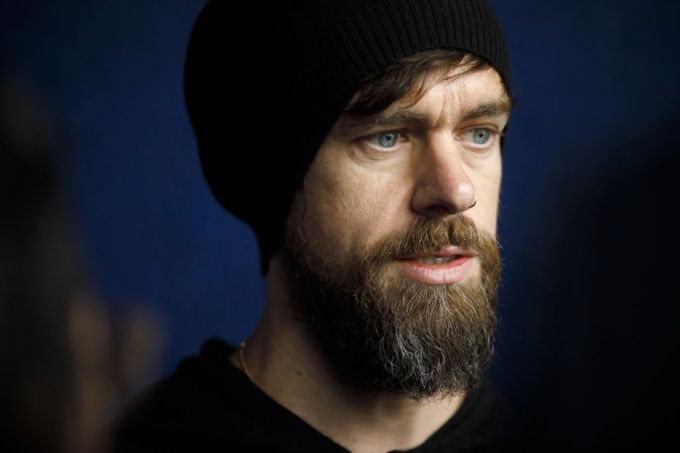
    Jack Dorsey says an awful lot of nothing for being the guy in charge of Twitter, but he had a lot to say this week, and more importantly a little to do. He said the company would be uniformly banning political ads on its site, something that will likely help it sidestep some controversy, and will turn up the heat for Facebook to do the same.
  • Escape pods
    I wrote some harsh words about Juul in my previous newsletter ahead of what seemed like an inevitable reckoning. Well, that reckoning has gotten a bit more codified this week. Altria wrote down $4.5 billion of Juul’s value. The company is prepping for major layoffs including a handful of execs. Layoffs suck but not quite as much as taking a job at Juul.
  • Fitting in
    Google made an interesting hardware play this week buying Fitbit for $2.1 billion. Hardware has always been a bit of an afterthought for Google, but maybe this purchase will allow them a more concerted push to take on the Apple Watch, or maybe like Nest, they won’t have any idea what to do with them. Regardless, it’s a relatively soft and dignified landing for Fitbit which has had a rocky past three years going head-to-head with Apple.

GAFA Gaffes

How did the top tech companies screw up this week? This clearly needs its own section, in order of badness:

  1. Facebook pays fine without saying sorry:
    [Facebook agrees to pay UK data watchdogs Cambridge Analytica fine but settles without admitting liability]
  2. App Store bugs erases ratings:
    [A week-long iOS App Store bug wiped out over 20M ratings]

Disrupt Berlin

DISRUPT SF 530X350 V2 berlin

It’s hard to believe it’s already that time of the year again, but we just announced the agenda for Disrupt Berlin and we’ve got some all-stars making their way to the stage. I’ll be there this year, get some tickets and come say hey!

Sign up for more newsletters in your inbox (including this one) here.

02 Nov 2019

Airbnb to ban ‘party houses’ in wake of Halloween shooting that left 5 dead

Airbnb CEO Brian Chesky said Saturday the company will ban “party houses” and take other steps to safeguard hosts and guests after five people died at a Halloween party hosted at California home that was rented on the service.

Chesky made the announcement via a series of tweets Saturday. “What happened on Thursday night in Orinda, CA was horrible,” Chesky wrote. “I feel for the families and neighbors impacted by this tragedy — we are working to support them.”

Chesky then announced that party houses would be banned and that the company is “redoubling” efforts to combat unauthorized parties.

Chesky announced several other measures to increase safety, including the expansion of manual screenings of high-risk reservations flagged by Airbnb’s risk detection technology and creating a dedicated “party house” rapid response team

Margaret Richardson, from Airbnb’s executive team, has been tasked to accelerate the review process to enact these new policies as soon as possible, he added.


Contra Costa County Sheriff’s Office said the party had been advertised on social media as a mansion party, the San Francisco Chronicle reported. Police were headed to the home Oct. 31 over noise complaints when the gunfire began around 10:50 p.m. Several people died at the scene. The fifth victim died Friday night.

02 Nov 2019

Nintendo’s Ring Fit Adventure is a silly, gentle way to shape up

Nintendo has a long history when it comes to exercise-driven games. I’m dating myself, but I can say I remember playing Track & Field on NES with the Power Pad. How far we’ve come! Ring Fit Adventure is a full-body workout for grown-ups, but fun, gentle, and ridiculous enough to forget it’s exercise.

The game and accessories were announced in September, coming as a complete surprise even considering Nintendo’s constant but hit-and-miss attempts at keeping its players healthy. What really threw people off was that this game actually looked like… a game. And so it is!

Ring Fit Adventure has you, the unnamed and (naturally) mute protagonist, journeying through a series of worlds and levels chasing after Dragaux, a swole dragon who’s infecting the land with… something. Maybe he’s not wiping down the equipment afterwards. Come on, man.

Playing with these virtual versions of the controllers gives you a real feel for how solid the motion detection is.

Anyway, you do this by using the Joy-Cons in a new and strange form: the Ring-Con and leg strap. The latter is pretty self-explanatory, but the ring must be explained. It’s a thick plastic resistance ring that you squeeze from the edges or pull apart. It detects how hard you’re squeezing it through the other Joy-Con, which slots into the top. (The strap and ring grips are washable, by the way.)

The two controllers combined can detect all kinds of movements, from squats and leg lifts to rotations, presses, balancing, and yoga poses. You’ll need them all if you’re going to progress in the game.

Each level is a path that you travel down by actually jogging in real life (or high stepping if you’re in goo), while using the Ring-Con to interact with the environment. Aim and squeeze to send out a puff of air that opens a door or propels you over an obstacle, or pull it apart to suck in distant coins. Press it against your abs to crush rocks, do squats to open chests — you get the idea.

ringfit1

I haven’t gotten this one yet, but it looks handy. I could use a stronger arm-based multi-monster attack.

Of course you encounter enemies as well, which you dispatch with a variety of exercises targeting different muscle groups. Do a few arm presses over your head for some basic damage, or hit multiple enemies with some hip rotations. Each exercise has you do a number of reps, which turn into damage, before defending against enemy attacks with an “Ab Guard.”

The ring and leg strap seem almost magical in their ability to track your motion in all kinds of ways, though some are no doubt only inferred or fudged (as when you lift the leg without the strap). A missed motion happened so rarely over thousands of them that I ceased to think at all about it, which is about the highest compliment you can give a control method like this. Yet it’s also forgiving enough that you won’t feel the need to get everything right down the millimeter. You can even check your pulse by putting your thumb on the IR sensor of the right Joy-Con. Who knew?

As you progress, you unlock new exercises with different uses or colors — and you soon are able to fight more strategically by matching muscle group coloring (red is arms, purple legs, etc) with enemies of the same type. It’s hardly Fire Emblem, but it’s also a lot more than anyone has every really expected from a fitness game.

The red guys are like, “yeah… do him first.”

In fact, so much care and polish has clearly gone into this whole operation that’s it’s frequently surprising; there are so many things that could have been phoned in an not a single one is. The exercises are thoughtfully selected and explained in a friendly manner; the monsters and environments show great attention to detail. There’s no punishment for failure except restarting a level — the first time I “died,” I expected a little sass from my chatty companion, Ring, but it just popped me back to the map with nary a word.

Throughout is a feeling of acceptance and opportunity rather than pressure to perform. You can quit at any time and it doesn’t chide you for abandoning your quest or not burning enough calories. If you decide not to do the warm-up stretch, Tabb just says “OK!” and moves on. When you perform a move, it’s either “good” or “great,” or it reminds you of the form and you can try again. Whenever you start, you can change the difficulty, which I believe is reps, damage, and other soft counts, since it can’t increase the resistance of the Ring-Con.

dragaux

Seems familiar…

There’s no pressure to change your body and no gendered expectations; Your exercise demonstration model/avatar, Tabb, is conspicuously androgynous. Your character is a pretty cut specimen of your preferred gender, to be sure. And Dragaux himself is a sort of parody of oblivious, musclebound gym bunnies (“He’s working out while planning his next workout,” the game announced one time as he skipped an attack to do some bicep curls). But even he, Ring mentions at one point, used to be very insecure about his body. Importantly, there’s nothing about the game that feels targeted to getting a certain type of person a certain type of fit.

I’m not a trainer or fitness expert, but so far the variety of exercises also feels solid. It’s all very low-impact stuff, and because it’s resistance ring and body weight only, there’s a sort of core-strengthening yoga style to it all. This isn’t about getting ripped, but you’ll be surprised how sore you are after taking down a few enemies with a proper-form chair pose.

If you don’t want to play the adventure mode, there are minigames to collect and short workouts you can customize. Honestly some of these would make better party games than half the stuff on 1-2-Switch.

As I’ve been playing the game and discussing it with friends, I found myself wanting more out of the game side. I’m hoping Ring Fit Adventure will be a success so that Nintendo will green light a new, deeper version with more complex RPG elements. Sure, you can change your outfit here for a little extra defense or whatnot, but I want to take this concept further — I know the fundamentals are sound, so I’d like to see them built on.

[gallery ids="1907223,1907228,1907230,1907231,1907227,1907232,1907234"]

It feels like until now there have been few ways to really gamify fitness, except the most elementary, like step tracking. The two separate motion controllers and the smart ways they’re used to track a variety of exercises really feel like an opportunity to do something bigger. Plus once people have bought the accessories, they’re much more likely to buy matching software.

My main criticisms would be that it’s a bit limiting at the beginning. There’s no choice to, for example, prioritize or deprioritize a certain type of exercise. I could probably stand to jog more and do arm stuff less, and I dreaded having to resort to squats for the first few worlds. And the constant instruction on how and when to do everything can be wearing — it would be nice to be able to set some things to “expert mode” and skip the tutorials.

The game and accessories will set you back $80. If you consider it simply as buying a game, it’s an expensive gimmick. But I don’t think that’s the way to think about it. The target audience here is people who likely don’t have a gym membership, something that can cost $50-$100 a month. As a fun and effective fitness tool that does what it sets out to do and does so in a praiseworthy way, I think $80 is a very reasonable asking price.

02 Nov 2019

Twitter’s political ads ban is a distraction from the real problem with platforms

Sometimes it feels as if Internet platforms are turning everything upside down, from politics to publishing, culture to commerce, and of course swapping truth for lies.

This week’s bizarro reversal was the vista of Twitter CEO Jack Dorsey, a tech CEO famed for being entirely behind the moral curve of understanding what his product is platforming (i.e. nazis), providing an impromptu ‘tweet storm’ in political speech ethics.

Actually he was schooling Facebook’s Mark Zuckerberg — another techbro renowned for his special disconnect with the real world, despite running a massive free propaganda empire with vast power to influence other people’s lives — in taking a stand for the good of democracy and society.

So not exactly a full reverse then.

In short, Twitter has said it will no longer accept political ads, period.

Whereas Facebook recently announced it will no longer fact-check political ads. Aka: Lies are fine, so long as you’re paying Facebook to spread them.

You could argue there’s a certain surface clarity to Facebook’s position — i.e. it sums to ‘when it comes to politics we just won’t have any ethics’. Presumably with the hoped for sequitur being ‘so you can’t accuse us of bias’.

Though that’s actually a non sequitur; by not applying any ethical standards around political campaigns Facebook is providing succour to those with the least ethics and the basest standards. So its position does actually favor the ‘truth-lite’, to put it politely. (You can decide which political side that might advantage.)

Twitter’s position also has surface clarity: A total ban! Political and issue ads both into the delete bin. But as my colleague Devin Coldewey quickly pointed out it’s likely to get rather more fuzzy around the edges as the company comes to defining exactly what is (and isn’t) a ‘political ad’ — and what its few “exceptions” might be.

Indeed, Twitter’s definitions are already raising eyebrows. For example it has apparently decided climate change is a ‘political issue’ — and will therefore be banning ads about science. While, presumably, remaining open to taking money from big oil to promote their climate-polluting brands… So yeah, messy.

There will clearly be attempts to stress test and circumvent the lines Twitter is setting. The policy may sound simple but it involves all sorts of judgements that expose the company’s political calculations and leave it open to charges of bias and/or moral failure.

Still, setting rules is — or should be — the easy and adult thing to do when it comes to content standards; enforcement is the real sweating toil for these platforms.

Which is also, presumably, why Facebook has decided to experiment with not having any rules around political ads — in the (forlorn) hope of avoiding being forced into the role of political speech policeman.

If that’s the strategy it’s already looking spectacularly dumb and self-defeating. The company has just set itself up for an ongoing PR nightmare where it is indeed forced to police intentionally policy-provoking ads from its own back-foot — having put itself in the position of ‘wilfully corrupt cop’. Slow hand claps all round.

Albeit, it can at least console itself it’s monetizing its own ethics bypass.

Twitter’s opposing policy on political ads also isn’t immune from criticism, as we’ve noted.

Indeed, it’s already facing accusations that a total ban is biased against new candidates who start with a lower public profile. Even if the energy of that argument would be better spent advocating for wide-ranging reform of campaign financing, including hard limits on election spending. If you really want to reboot politics by levelling the playing field between candidates that’s how to do it.

Also essential: Regulations capable of enforcing controls on dark money to protect democracies from being bought and cooked from the inside via the invisible seeding of propaganda that misappropriates the reach and data of Internet platforms to pass off lies as populist truth, cloaking them in the shape-shifting blur of microtargeted hyperconnectivity.

Sketchy interests buying cheap influence from data-rich billionaires, free from accountability or democratic scrutiny, is our new warped ‘normal’. But it shouldn’t be.

There’s another issue being papered over here, too. Twitter banning political ads is really a distracting detail when you consider that it’s not a major platform for running political ads anyway.

During the 2018 US midterms the category generated less than $3M for the company.

And, secondly, anything posted organically as a tweet to Twitter can act as a political call to arms.

It’s these outrageous ‘organic’ tweets where the real political action is on Twitter’s platform. (Hi Trump.)

Including inauthentically ‘organic’ tweets which aren’t a person’s genuinely held opinion but a planted (and often paid for) fake. Call it ‘going native’ advertising; faux tweets intended to pass off lies as truth, inflated and amplified by bot armies (fake accounts) operating in plain sight (often gaming Twitter’s trending topics) as a parallel ‘unofficial’ advertising infrastructure whose mission is to generate attention-grabbing pantomimes of public opinion to try and sway the real thing.

In short: Propaganda.

Who needs to pay to run a political ad on Twitter when you can get a bot network to do the boosterism for you?

Let’s not forget Dorsey is also the tech CEO famed for not applying his platform’s rules of conduct to the tweets of certain high profile politicians. (Er, Trump again, basically.)

So by saying Twitter is banning political ads yet continuing to apply a double standard to world leaders’ tweets — most obviously by allowing the US president to bully, abuse and threaten at will in order to further his populist rightwing political agenda — the company is trying to have its cake and eat it.

More recently Twitter has evolved its policy slightly, saying it will apply some limits on the reach of rule-breaking world leader tweets. But it continues to run two sets of rules.

To Dorsey’s credit he does foreground this tension in his tweet storm — where he writes [emphasis ours]:

Internet political ads present entirely new challenges to civic discourse: machine learning-based optimization of messaging and micro-targeting, unchecked misleading information, and deep fakes. All at increasing velocity, sophistication, and overwhelming scale.

These challenges will affect ALL internet communication, not just political ads. Best to focus our efforts on the root problems, without the additional burden and complexity taking money brings. Trying to fix both means fixing neither well, and harms our credibility.

This is good stuff from Dorsey. Surprisingly good, given his and Twitter’s long years of free speech fundamentalism — when the company gained a reputation for being wilfully blind and deaf to the fact that for free expression to flourish online it needs a protective shield of civic limits. Otherwise ‘freedom to amplify any awful thing’ becomes a speech chiller that disproportionately harms minorities.

Aka freedom of speech is not the same as freedom of reach, as Dorsey now notes.

Even with Twitter making some disappointing choices in how it defines political issues, for the purposes of this ad ban, the contrast with Facebook and Zuckerberg — still twisting and spinning in the same hot air; trying to justify incoherent platform policies that sell out democracy for a binary ideology which his own company can’t even stick to — looks stark.

The timing of Dorsey’s tweet-storm, during Facebook’s earnings call, was clearly intended to make that point.

“Zuckerberg wants us to believe that one must be for or against free speech with no nuance, complexity or cultural specificity, despite running a company that’s drowning in complexity,” writes cultural historian, Siva Vaidhyanathan, confronting Facebook’s moral vacuousness in a recent Guardian article responding to another Zuckerberg ‘manifesto’ on free speech. “He wants our discussions to be as abstract and idealistic as possible. He wants us not to look too closely at Facebook itself.”

Facebook’s position on speech does only stand up in the abstract. Just as its ad-targeting business can only run free of moral outrage in unregulated obscurity, where the baked in biases — algorithmic and user generated — are safely hidden from view so people can’t joins the dots on how they’re being damaged.

We shouldn’t be surprised at how quickly the scandal-prone company is now being called on its ideological BS. We have a savvier political class as a result of the platform-scale disinformation and global data scandals of the past few years. People who have have seen and experienced what Facebook’s policies translate to in real world practice. Like compromised elections and community violence.

With lawmakers like these turning their attention on platform giants there is a genuine possibility of meaningful regulation coming down the pipe for the antisocial media business.

Not least because Facebook’s self regulation has always been another piece of crisis PR, designed to preempt and steer off the real thing. It’s a cynical attempt to maintain its profitable grip on our attention. The company has never been committed to making the kind of systemic change necessary to fix its toxic speech issues.

The problem is, ultimately, toxicity and division drives engagement, captures attention and makes Facebook a lot of money.

Twitter can claim a little distance from that business model not only because it’s considerably less successful than Facebook at generating money by monopolizing attention, but also because it provides greater leeway for its users to build and follow their own interest networks, free from algorithmic interference (though it does do algorithms too).

It has also been on a self-proclaimed reform path for some time. Most recently saying it wants to be responsible for promoting “conversational health on its platform. No one would say it’s there yet but perhaps we’re finally getting to see some action. Even if banning political ads is mostly a quick PR win for Twitter.

The really hard work continues, though. Namely rooting out bot armies before their malicious propaganda can pollute the public sphere. Twitter hasn’t said it’s close to being able to fix that.

Facebook is also still failing to stem the tide of ‘organic’ politicized fake content on its platform. Fakes that profit at our democratic expense by spreading hate and lies.

For this type of content Facebook offers no searchable archive (as it now does for paid ads which it defines as political) — thereby providing ongoing cover for dark money to do its manipulative hack-job on democracy by free-posting via groups and pages.

Plus, even where Facebook claims to be transparently raising the curtain on paid political influence it’s abjectly failing to do so. Its political ads API is still being blasted by research academics as not fit for purpose. Even as the company policy cranks up pressure on external fact-checkers by giving politicians the green light to run ads that lie.

It has also been accused of applying a biased standard when it comes to weeding out “coordinated inauthentic behavior”, as Facebook euphemistically calls the networks of fake accounts set up to amplify and juice reach — when the propaganda in question is coming from within the US and leans toward the political right.


Facebook denies this, claiming for example that a network of pages on its platform reported to be exclusively boosting content from US conservative news site, The Daily Wire, arereal pages run by real people in the U.S., and they don’t violate our policies. (It didn’t offer us any detail on how it reached that conclusion.) 

A company spokesperson also said: “We’re working on more transparency so that in the future people have more information about Pages like these on Facebook.”

So it’s still promising ‘more transparency’ — rather than actually being transparent. And it remains the sole judge interpreting and applying policies that aren’t at all legally binding; so sham regulation then. 

Moreover, while Facebook has at times issued bans on toxic content from certain domestic hate speech preachers’, such as banning some of InfoWars’ Alex Jones’ pages, it’s failed to stop the self-same hate respawning via new pages. Or indeed the same hateful individuals maintaining other accounts on different Facebook-owned social properties. Inconsistency of policy enforcement is Facebook’s DNA.

Set against all that Dorsey’s decision to take a stance against political ads looks positively statesmanlike.

It is also, at a fundamental level, obviously just the right thing to do. Buying a greater share of attention than you’ve earned politically is regressive because it favors those with the deepest pockets. Though of course Twitter’s stance won’t fix the rest of a broken system where money continues to pour in and pollute politics.

We also don’t know the fine-grained detail of how Twitter’s algorithms amplify political speech when it’s packaged in organic tweet form. So whether its algorithmic levers are more likely to be triggered into boosting political tweets that inflame and incite, or those that inform and seek to unite.

As I say, the whole of Twitter’s platform can sum to political advertising. And the company does apply algorithms to surface or suppress tweets based on its proprietary (and commercial) determination of ‘engagement quality’. So its entire business is involved in shaping how visible (or otherwise) tweeted speech is.

That very obviously includes plenty of political speech. Not for nothing is Twitter Trump’s platform of choice.

Nothing about its ban on political ads changes all that. So, as ever, where social media self-regulation is concerned, what we are being given is — at best — just fiddling around the edges.

A cynical eye might say Twitter’s ban is intended to distract attention from more structural problems baked into these attention-harvesting Internet platforms.

The toxic political discourse problem that democracies and societies around the world are being forced to grapple with is as a consequence of how Internet platforms distribute content and shape public discussion. So what’s really key is how these companies use our information to program what we each get to see.

The fact that we’re talking about Twitter’s political ad ban risks distracting from the “root problems” Dorsey referenced in passing. (Though he would probably offer a different definition of their cause. In the tweet storm he just talks about “working hard to stop people from gaming our systems to spread misleading info”.)

Facebook’s public diagnosis of the same problem is always extremely basic and blame-shifting. It just says some humans are bad, ergo some bad stuff will be platformed by Facebook — reflecting the issue back at humanity.

Here’s an alternative take: The core issue underpinning all these problems around how Internet platforms spread toxic propaganda is the underlying fact of taking people’s data in order to manipulate our attention.

This business of microtargeting — or behavioral advertising, as it’s also called — turns everyone into a target for some piece of propaganda or other.

It’s a practice that sucks regardless of whether it’s being done to you by Donald Trump or by Disney. Because it’s asymmetrical. It’s disproportionate. It’s exploitative. And it’s inherently anti-democratic.

It also incentivizes a pervasive, industrial-scale stockpiling of personal data that’s naturally hostile to privacy, terrible for security and gobbles huge amounts of energy and computing resource. So it sucks from an environmental perspective too.

And it does it all for the very basest of purposes. This is platforms selling you out so others can sell you stuff. Be it soap or political opinions.

Zuckerberg’s label of choice for this process — “relevant ads” — is just the slick lie told by a billionaire to grease the pipes that suck out the data required to sell our attention down the river.

Microtargeting is both awful for the individual (meaning creepy ads; loss of privacy; risk of bias and data misuse) and terrible for society for all the same reasons — as well as grave, society-level risks, such as election interference and the undermining of hard-won democratic institutions by hostile forces.

Individual privacy is a common good, akin to public health. Inoculation — against disease or indeed disinformation — helps protect the whole of us from damaging contagion.

To be clear, microtargeting is also not only something that happens when platforms are paid money to target ads. Platforms are doing this all the time; applying a weaponizing layer to customize everything they handle.

It’s how they distribute and program the masses of information users freely upload, creating maximally engaging order out of the daily human chaos they’ve tasked themselves with turning into a compelling and personalized narrative — without paying a massive army of human editors to do the job.

Facebook’s News Feed relies on the same data-driven principles as behavioral ads do to grab and hold attention. As does Twitter’s ‘Top Tweets’ algorithmically ranked view.

This is programmed attention-manipulation at vast scale, repackaged as a ‘social’ service. One which uses what the platforms learn by spying on Internet users as divisive glue to bind our individual attention, even if it means setting some of us against each another.

That’s why you can publish a Facebook post that mentions a particular political issue and — literally within seconds — attract a violently expressed opposing view from a Facebook ‘friend’ you haven’t spoken to in years. The platform can deliver that content ‘gut punch’ because it has a god-like view of everyone via the prism of their data. Data that powers its algorithms to plug content into “relevant” eyeballs, ranked by highest potential for engagement sparks to fly.

It goes without saying that if a real friendship group contained such a game-playing stalker — who had bugged everyone’s phones to snoop and keep tabs on them, and used what they learnt to play friends off against each other — no one would imagine it bringing the group closer together. Yet that’s how Facebook treats its captive eyeballs.

That awkward silence you could hear as certain hard-hitting questions struck Zuckerberg during his most recent turn in the House might just be the penny dropping.

It finally feels as if lawmakers are getting close to an understanding of the real “root problem” embedded in these content-for-data sociotechnical platforms.

Platforms that invite us to gaze into them in order that they can get intimate with us forever — using what they learn from spying to pry further and exploit faster.

So while banning political ads sounds nice it’s just a distraction. What we really need to shatter the black mirror platforms are holding against society, in which they get to view us from all angles while preventing us from seeing what they’re doing, is to bring down a comprehensive privacy screen. No targeting against personal data.

Let them show us content and ads, sure. They can target this stuff contextually based on a few generic pieces of information. They can even ask us to specify if we’d like to see ads about housing today or consumer packaged goods? We can negotiate the rules. Everything else — what we do on or off the platform, who we talk to, what we look at, where we go, what we say — must remain strictly off limits.


02 Nov 2019

This Week in Apps: iOS 13 complaints, Q3 trends, App Store ratings bug

Welcome back to This Week in Apps — the easiest way to keep up with everything that happened in the world of apps over the past week — from the breaking news to the trends and all the other information an industry watcher needs to know.

The app industry is as hot as ever, with 194 billion downloads in 2018 and more than $100 billion in consumer spending. People spend 90% of their mobile time in apps and more time using their mobile devices than watching TV. In other words, apps aren’t just a way to waste idle hours — they’re big business, and one that often seems to change overnight.

In this Extra Crunch series, we help you to keep up with the latest news from the world of apps.

This week, we’re looking at that one iOS 13 bug everyone is complaining about, App Store Q3 trends, plus the latest revenue numbers announced by Apple and Google during quarterly earnings. We’ve also found a new product for figuring out what may have caused spikes or changes in an app’s history, and we’re tracking new information about Microsoft’s Xbox Console to mobile streaming service as well as Google’s Motion Sense.

And more!

To get this information, subscribe to Extra Crunch.

Headlines

Everyone is complaining about iOS 13 killing background apps

Apple released iOS 13.2 with Deep Fusion this week. The release also included new emoji, Siri recording opt-out, bug fixes and security improvements. But it didn’t solve the background app bug.

As a result, developers are angry and users are frustrated. A number of iOS 13 users are complaining about iOS 13’s aggressiveness in killing background apps and tasks, which is attributed to poor RAM management. This particularly affects apps like Safari, YouTube, Overcast and others. Users have lost Safari tabs, emails they were composing, or the video they were watching just after switching away for a minute.

The complaints are all over Twitter, Reddit, and Apple’s own forums. A MacRumors post about this has over 400 comments.

This has been a problem since the betas, but people were hoping they’d be addressed by the public releases. Apple hasn’t clarified what’s at fault here, but there’s speculation about the impact of the memory-intensive camera system.

As TechCrunch editor Matthew Panzarino put it, it “feels like I’m back on iOS 3.”

Developer Nick Heer of Pixel Envy says the bug isn’t catastrophic, but “it absolutely should be the highest of priorities to fix it. It’s embarrassing that all of the hard work put into making animations and app launching feel smooth is squandered by mismanaged multitasking,” he says.

Radar filed.

Consumers spent more than $500M on photo/video apps in Q3

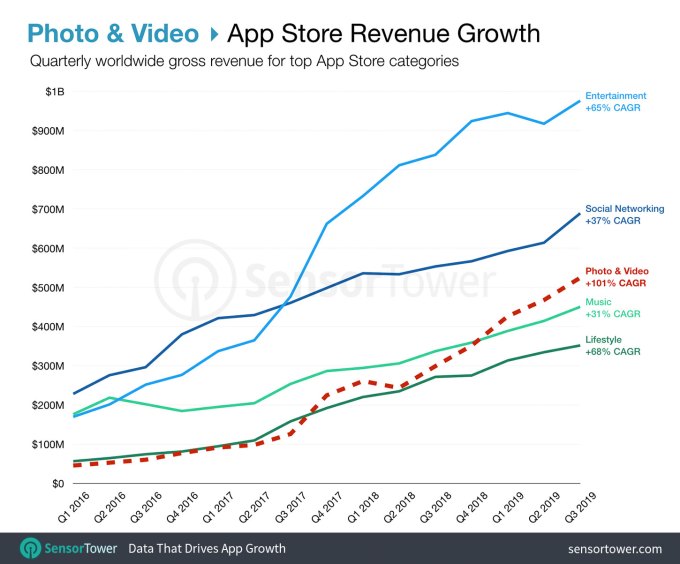
Outside of mobile games, entertainment and streaming apps are also pulling in the big money. But there’s another category benefiting from the shift to the subscription model: photo and video apps. In this category, you’ll find apps that promise to touch up photos, add filters that can make or break Instagram careers, as well as the video giants like YouTube and TikTok.

photo and video app store revenue growth q3 2019

In Q3, the category grossed more than $500 million, up a whopping 75% year-over-year, says Sensor Tower. It’s also seeing an annual growth rate of 101% since 2016. Much of this is attributable to YouTube, which alone was responsible for 30% of the category’s revenue in Q3. (Just wait until TikTok takes in-app monetization seriously, though.)

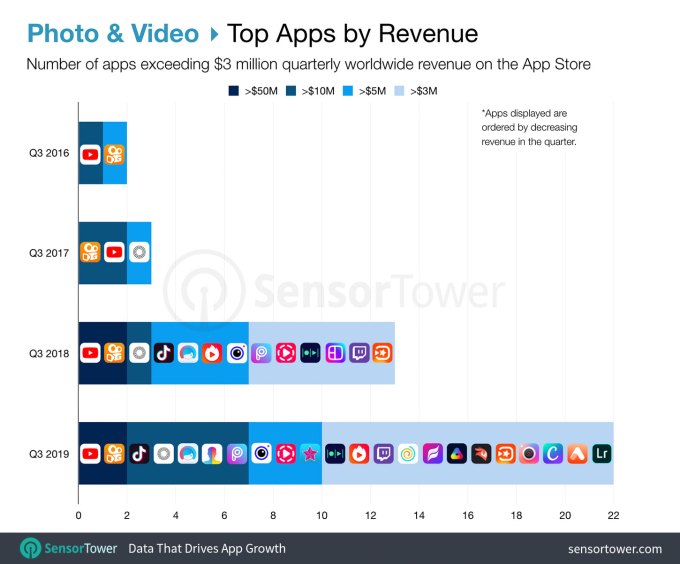
top apps photo and video app store revenue q3 2019

But now, it’s not just the top apps that are growing. In Q3, 22 apps exceeded $3 million in gross user spend, compared to just 2 in Q3 2016. And 7 apps had more than $10 million in revenue, including TikTok, VSCO, Facetune 2, FaceApp, and PicsArt.

02 Nov 2019

Startups Weekly: Understanding Uber’s latest fintech play

Hello and welcome back to Startups Weekly, a weekend newsletter that dives into the week’s noteworthy startups and venture capital news. Before I jump into today’s topic, let’s catch up a bit. Last week, I wrote about how SoftBank is screwing up. Before that, I noted All Raise’s expansion, Uber the TV show and the unicorn from down under.

Remember, you can send me tips, suggestions and feedback to kate.clark@techcrunch.com or on Twitter @KateClarkTweets. If you don’t subscribe to Startups Weekly yet, you can do that here.


Uber Head of Payments Peter Hazlehurst addresses the audience during an Uber products launch event in San Francisco, California, on September 26, 2019. (Photo by Philip Pacheco / AFP) (Photo credit should read PHILIP PACHECO/AFP/Getty Images)

The sheer number of startup players moving into banking services is staggering,” writes my Crunchbase News friends in a piece titled “Why Is Every Startup A Bank These Days.”

I’ve been asking myself the same question this year, as financial services business like Brex, Chime, Robinhood, Wealthfront, Betterment and more raise big rounds to build upstart digital banks. North of $13 billion venture capital dollars have been invested in U.S. fintech companies so far in 2019, up from $12 billion invested in 2018.

This week, one of the largest companies to ever emerge from the Silicon Valley tech ecosystem, Uber, introduced its team focused on developing new financial products and technologies. In a vacuum, a multibillion-dollar public company with more than 22,000 employees launching one new team is not big news. Considering investment and innovation in fintech this year, Uber’s now well-documented struggles to reach profitability and the company’s hiring efforts in New York, a hotbed for financial aficionados, the “Uber Money” team could indicate much larger fintech ambitions for the ride-hailing giant.

As it stands, the Uber Money team will be focused on developing real-time earnings for drivers accessed through the Uber debit account and debit card, which will itself see new features, like 3% or more cash back on gas. Uber Wallet, a digital wallet where drivers can more easily track their earnings, will launch in the coming weeks too, writes Peter Hazlehurst, the head of Uber Money.

This is hardly Uber’s first major foray into financial services. The company’s greatest feature has always been its frictionless payments capabilities that encourage riders and eaters to make purchases without thinking. Uber’s even launched its own consumer credit card to get riders cash back on rides. It’s no secret the company has larger goals in the fintech sphere, and with 100 million “monthly active platform consumers” via Uber, Uber Eats and more, a dedicated path toward new and better financial products may not only lead to happier, more loyal drivers but a company that’s actually, one day, able to post a profit.


VC deals


Meet me in Berlin

The TechCrunch team is heading to Berlin again this year for our annual event, TechCrunch Disrupt Berlin, which brings together entrepreneurs and investors from across the globe. We announced the agenda this week, with leading founders including Away’s Jen Rubio and UiPath’s Daniel Dines. Take a look at the full agenda.

I will be there to interview a bunch of venture capitalists, who will give tips on how to raise your first euros. Buy tickets to the event here.


Listen to Equity

This week on Equity, I was in studio while Alex was remote. We talked about a number of companies and deals, including a new startup taking on Slack, Wag’s woes and a small upstart disrupting the $8 billion nail services industry. Listen to the episode here.

Equity drops every Friday at 6:00 am PT, so subscribe to us on iTunesOvercast and all the casts.

02 Nov 2019

Amazon now sells movie tickets in India

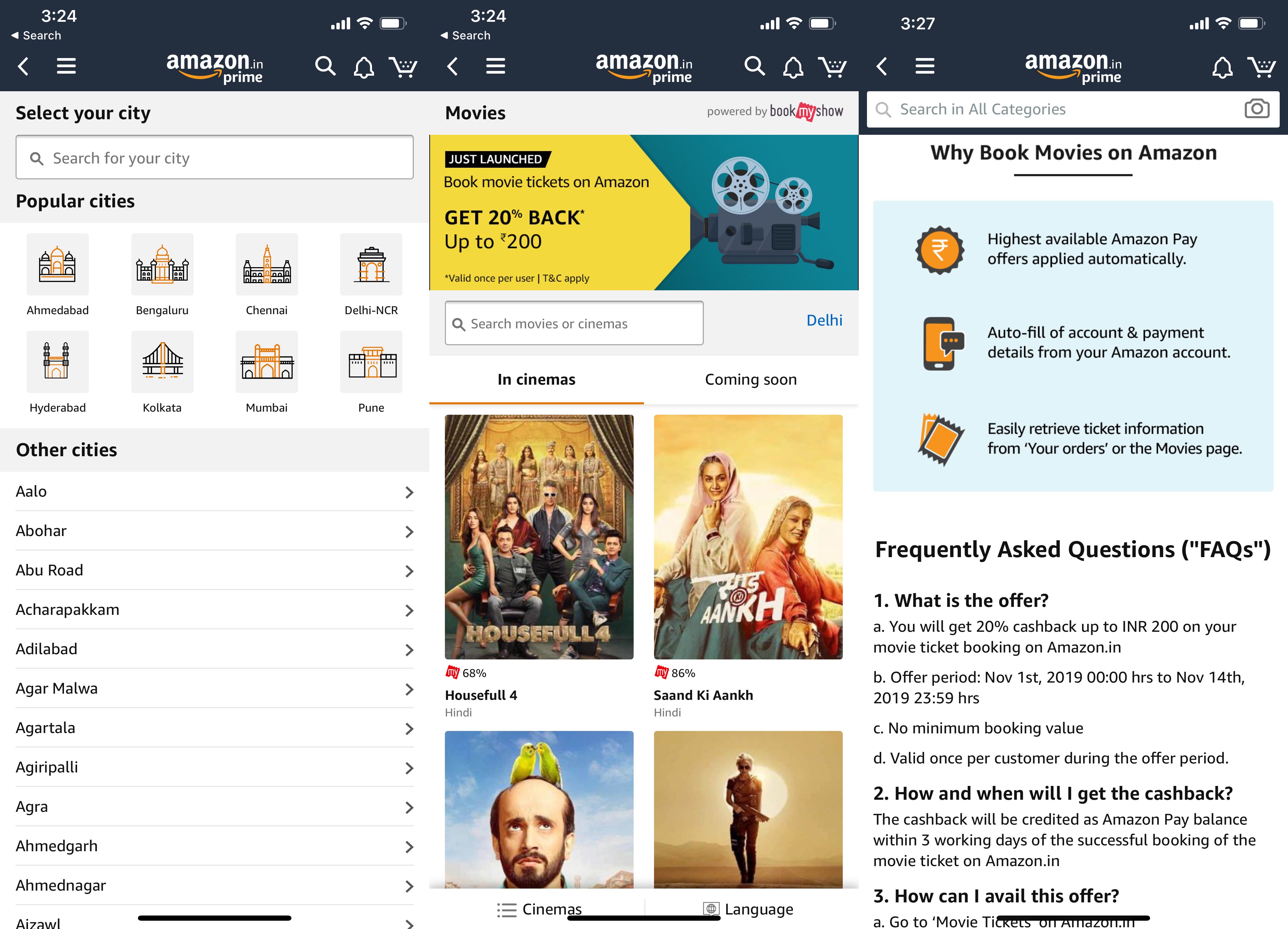
Amazon has set its eye on the next business it wants to disrupt in India: online movie tickets. The e-commerce giant said Saturday it has partnered with online movie ticketing giant BookMyShow to offer booking option on its shopping site and app.

The move comes months after the e-commerce giant began offering flight ticketing option in the country as it races to turn its payments service Amazon Pay into a “super app” — a strategy increasingly employed by players in emerging markets such as India.

Starting today, Amazon users in India can book their movie tickets from the “movie tickets” category under “shop by category” or the Amazon Pay tab, the e-commerce firm said. BookMyShow, which leads the online movie ticketing market, is the exclusive partner for this new offering, the two said.

Neither of the parties disclosed the financial arrangements of the deal, but BookMyShow is likely paying Amazon a fee for tapping “millions” of customers the e-commerce giant has amassed in the country.

Amazon said its credit card users in India will get a 2% cashback on each movie ticket purchase. On its app, the company adds until November 14. it will also offer cashback of up to Rs 200 on each ticket purchase.

For its flight ticketing service, Amazon India partnered with Cleartrip . Balu Ramachandran, SVP at Cleartrip, told TechCrunch in an interview earlier that the company was paying a promotional fee to Amazon, but declined to offer specifics.

An Amazon India spokesperson declined to comment on the financial arrangements.

BookMyShow, which employs 1,400 employees, sells about 15 million tickets each month. The service, which has a presence in over 650 towns and cities, today counts heavily-backed Paytm as one of its biggest rivals. Paytm, which entered the movie ticketing business three years ago, has been able to eat some of BookMyShow’s market share by offering cashback on each ticket purchase.

The media and entertainment business in India is worth $23.9 billion, a report from EY-FICCI said in March this year, which noted that consumer spendings on the web is increasingly growing. More than 50% of all tickets sold by the top four multiplex chains in the country have occurred on the web.

Ashish Hemrajani, founder and CEO of BookMyShow, said through the partnership the company will be able to access Amazon India’s “deep penetration across tier 2 and tier 3 cities.”

Mahendra Nerurkar, Director of Amazon Pay, said today’s partnership shows Amazon’s commitment to “simplify the lives of our customers in every possible way — as they shop, pay bills, or seek other services.”

Last month, Amazon introduced a new feature that allows Amazon Pay users to pay their mobile, internet, and utility bills. This is the first time Amazon is offering these functionalities in any market (it plans to bring this to the U.S. in coming months).

Amazon has been quietly expanding its payments offering, built on top of UPI payments infrastructure, in the country. Unlike its global rivals Google and Walmart that offer standalone apps for their payment services and also focus on transactions among customers, Amazon has kept Pay integrated with its e-commerce offering and focused on consumer-to-business transactions.

The company maintains tie-ups with several popular Indian online services and frequently offers cashback to incentivize users to pick Amazon Pay over other solutions. Earlier this week, Amazon pumped about $634 million into its India business.

01 Nov 2019

Los Angeles-based BuildOps, subcontracting software for real estate, raises $5.8 million

Software development companies tackling services for niche industries, like commercial real estate subcontracting, continue to find Los Angeles to be fertile ground for development.

The latest company to raise funding from a clutch of investors is BuildOps, which raised $5.8 million in seed financing from some big names in the Los Angeles tech ecosystem.

Led by Fika Ventures, with additional investments from MetaProp VC, Global Founders Capital, CrossCut Ventures, TenOneTen, IGSB, 1984 Ventures, L2 Ventures, GroundUp, NBA all-star Metta World Peace, Oberndorf Enterprises, Wolfson Group, and scouts from Sequoia Capital, the new financing will be used to support the company’s continued growth.

BuildOps sells software that integrates scheduling, dispatching, inventory management, contracts, workflow and accounting into a single software package for commercial real estate contractors with staff ranging from a few dozen to several hundred employees.

Software for the service industry is nothing new for Los Angeles entrepreneurs. The unicorn ServiceTitan hails from the greater Los Angeles area and a number of other software as a service businesses are calling the greater Los Angeles area home.

It’s hard to argue with the size of the commercial construction market. Over the past three years commercial construction spending grew from $626 billion to $807 billion, according to data provided by the company. And while most large vendors — architects, general contractors and property management companies have some project management software, the fragmented group of subcontractors that provide services to those customers has remained resistant to adopting new technologies, the company said.

Co-founded by former ServiceTitan devel

oper Neeraj Mittal; Microsoft, Nextag, Swurv, and Fundly former executive Steve Chew; and Alok Chanani, who previously founded a commercial real estate company and was a former commander of a transportation unit of the Army in Iraq.

“At BuildOps, we are on a mission to bring a true all-in-one solution on the latest technology to the people who keep America’s hospitals, power plants, and commercial real estate running. We are privileged to be working closely with some of the country’s top commercial contractors,” said Chanani.

That sentiment is echoed by Liquid 2 Ventures managing partner and former National Football League superstar, Joe Montana .

“Liquid 2 Ventures has an investment thesis in supporting America’s working class and I just love the idea of making their lives far easier and better. You have one solution that does it all and talks seamlessly to every single part of their business from parts to ordering to inventory and more,” said Montana in a statement. “There are very few world-class technology solutions for commercial subcontractors like this and we believe in the founders.”