Category: UNCATEGORIZED

31 Oct 2019

What Berlin’s top VCs want to invest in right now

Berlin rose as one of Europe’s leading startup hubs over the last decade, featuring unicorns N26, Delivery Hero, HelloFresh, and Auto1 Group. Berlin attracts developers from Eastern Europe and elsewhere into an international hub where English is the linga franca among startups and costs are noticeably lower than in London or Paris. Rocket Internet, while criticized for launching copycats of successful US startups has trained a deep bench of young software executives in rapidly scaling companies.

As we gear up for our Disrupt Berlin conference in December, I wanted to get a pulse on the types of startups that top VCs in Berlin’s ecosystem are looking to invest in right now, so I asked eleven of them to share examples of the trends they find most exciting:

  • Luis Hanemann, Partner at e.Ventures
  • David Rosskamp, Partner at June Fund
  • Dr. Fabian Heilemann, Partner at Earlybird
  • Simon Schmincke, Partner at Creandum
  • Jan Miczaika, Partner at HV Holtzbrinck Ventures
  • Pawel Chudzinski, Point Nine Capital
  • Ciaran O’Leary, Partner at Blueyard Capital
  • Jan Borgstädt, Partner at JOIN Capital
  • Christoph Schuh, Partner at Lakestar
  • Anton Waitz, Partner at Project A
  • Filip Dames, Partner at Cherry Ventures

The range of interests hints at the expanse of Berlin’s startup ecosystem right now, with VCs focused on everything from fintech, agtech, and B2B marketplaces to audio, travel, and transportation.

Here are their responses:


Luis Hanemann, Partner at e.Ventures

“We see multiple trends emerging, in the B2C segment we see Audio is booming and is right for disruption. It’s amazing to see the development in the space. Our beloved Berlin-based  portfolio company Blinkist is addressing this topic and we have done a recent investment in Podimo, which is building the Netflix for Podcasts, launching soon in Germany.”


David Rosskamp, Partner at June Fund

“We spend a lot of time thinking around large macro themes and investing into them in a structured way. One central field of attention has been the agricultural world, in particular the flow of goods and information. We see a large need, and an equally large economic opportunity in digitizing these flows, in providing transparent access to agricultural supplies and in empowering millions of small-scale farmers. So June has invested in agricultural trading networks from Europe to Africa. It clearly matches our investment thesis: global, network-driven enterprises that the world needs. We have similar investments in healthcare or decentralized networks, to name a few.”


Dr. Fabian Heilemann, Partner at Earlybird

“At Earlybird we believe that the first wave of innovation within Logistics, being rather of a transformative nature, e.g. digital freight marketplaces and forwarder models, has reached its peak. We are now particular excited w.r.t the second wave of LogTech innovation, which we expect to have a truly disruptive impact on the industry. It is our conviction that the availability of structured data, but also the increasing maturity of for example distributed ledger technologies, entail the opportunity for digital service providers to expand their technology driven lead over incumbent players. Whereas competitive forces in Logistics today are mainly adhere to scale effects, we think that next generation of logistics companies will leverage technology to drive profitability.”


Simon Schmincke, Partner at Creandum

“We continue to see the consumerization of enterprise grade solutions—enabling self-onboarding in a toned-down SME-oriented solution. The FinTech scene here in Berlin is something we continue to be excited about, both for businesses and consumers. Also, anything real estate related immediately grabs our attention—co-living, financing, intelligent design, construction automation. The most important change, however, is that we see entrepreneurs aiming higher and building bigger companies, due, in large part, to the impressive role models the ecosystem has produced in recent years.”


Jan Miczaika, Partner at HV Holtzbrinck Ventures

“Over the past 20 years we’ve seen a significant shift in the focus of Berlin-based startups. Originally there was a strong focus on e-commerce and marketplaces. Today this is significantly broader. Berlin is a fintech hotspot, a global proving ground for mobility concepts, the HQ for digital B2C champions and has strong growth in B2B/SaaS. Berlin is also highly relevant for Blockchain, which fits extraordinarily well with the anarchical spirit of the city. As a broad, multi-stage investor we at HV are excited to cover all of the above, trying to find inspirational entrepreneurs with a strong vision for the future. I personally am most interested in companies with a strong data angle, across both B2C and B2B.”


Pawel Chudzinski, Partner at Point Nine Capital

“Marketplaces have transformed how consumers access products and services across many categories vs. in B2B this process feels like 10-15 years behind. We see more and more startups pursue marketplace opportunities across various b2b categories and we want to discover them as early as possible. We are industry agnostic, but the industries in which we have been spending most time recently were probably supply chain and logistics, and financial services (incl. crypto). We also expect a rise in sustainability focused startups and we started diving into this space as well – mainly from the SaaS and marketplace angle.”


Ciaran O’Leary, Partner at Blueyard Capital

“BlueYard is a thesis driven early stage firm that backs founders with transformative ideas that decentralize markets and empower humanity. Today BlueYard is focused on the reinvention of the internet for permission-less innovation through decentralized web protocols and services that can untangle the server-side monopolies (e.g. p2p protocols and networks), the ability to use nature / biology itself paired with breakthrough engineering and computation to solve humanity’s largest planetary challenges (e.g. synthetic biology, quantum computing), the re-thinking of the knowledge worker stack by liberating users and data from the current tools designed in the 1980s (e.g. alternatives to PowerPoint, Excel, etc) and the separation of state and money through algorithmically transparent and programmable money.”


Jan Borgstädt, Partner at JOIN Capital

“We are deeply entrenched in identifying technologies that lay the foundation of our industrial future – or what we call the Neue Industry. I look for companies whose founders have deep technical knowledge to build transformative tools that augment human capabilities in essential processes. Think about the construction industry, and how advanced modeling tools and software can revolutionize the backbone of the way our civilization is built. Or the automation of processes such as circuit mapping and production planning. These are among the trends that excite us right now.”


Christoph Schuh, Partner at Lakestar

Berlin is the tech ecosystem where we have done the most investments out of our existing portfolio of more than 50 companies. For example Travel & Mobility is the space where we are very much interested and active. We’ve invested into Berlin-based travel tech companies like GetYourGuide, HomeToGo and Omio and we’re still looking for new stars. At Lakestar, we also like B2B plays where industries are in transformation and tech can enable a new level of efficiency for the ecosystem. So we also invested into the Berlin based logistic player Sennder, the  #1 digital freight forwarder in Europe. Actually, we also look into industry disruption in 3.0/4.0/RPA space and others.”


Anton Waitz, Partner at Project A

At Project A, we think and work in industry deep dives. That means we pick 5-6 industries at the time on which we spend most of our energy and where we do the majority of our investments. It’s interesting to see how recently our deep dives have let us think about some of the most fundamental questions in life: How will we work in 10 years time (Deep Dive: Business Software/Process Automation)? How will we reside (Deep dive: Real Estate)? How will we move us (Mobility) and things (Logistics)? How will we produce (Industry 4.0)? And how will we stay healthy (Digital Health)? I guess it shows how deep digitization has reached the very basics of our life – and how exciting our job actually is!”


Filip Dames, Partner at Cherry Ventures

“We believe the next years will show successful companies in industries which have traditionally been very hard to tackle for startups. For example, we’re just at the very beginning of seeing the effects of technology innovation in healthcare or manufacturing, two spaces we actively investing in with Cherry. Data, leveraged through AI or intelligent user interfaces can have a huge impact on solving problems in these industries. In Berlin, we’re excited to see that the city is becoming more and more a home for deep tech companies, attracting technical talent from around the world.”


Join TechCrunch in Berlin on December 11-12 for Disrupt Berlin…

31 Oct 2019

Apple Card users can now finance iPhone purchases for 24 months, interest-free

It’s not quite an “Apple Prime” subscription, but it’s compelling. Apple on Wednesday introduced a new program that will allow Apple Card users to finance their iPhone purchases for 24 months, without paying interest. The program aims to appeal to consumers who frequently upgrade their iPhone to the latest model, but often turn to their carrier to finance those purchases.

With the Goldman Sachs Apple Card, those iPhone users will have another option — and one without the associated interest and fees of a traditional credit card purchase, Apple says. In addition, the Apple Card offers 3% back on purchases from Apple, which further sweetens the deal.

The program helps to lay the groundwork for what some believe may eventually become a larger subscription product for Apple, or a so-called “Apple Prime” — a name that references the Amazon Prime membership program that includes a variety of perks alongside its fast, free shipping.

An Apple hardware subscription could see users instead paying for the privilege of using the latest Apple hardware, while also bundling in other services, like AppleCare, similar to its current iPhone Upgrade Program today. But a true “Apple Prime” would include other Apple subscriptions under the same roof, like iCloud, Apple Music, Apple TV+, Apple News+ and/or Apple Arcade, in some sort of bundle deal. 

Already, Apple has begun to experiment with subscription bundles. This week, for example, it announced a bundle for students that includes Apple Music and Apple TV+ for the same price as a student Apple Music subscription alone ($5/mo). And in a sense, Apple is already bundling its new Apple TV+ streaming service with its hardware, as it’s giving the service away for free with a new device purchase in its first year.

Apple has been steadily moving towards a more robust iPhone subscription program for some time.

In recent years, it has promoted iPhone trade-ins as something of a no-brainer for bringing down the cost of a new iPhone purchase. At the company’s iPhone 11 event in September, for example, Apple put up a slide that emphasized the new iPhone 11’s low price, when viewed under this model. Instead of a starting price of $699, the iPhone 11 could be as little as $399 — or $17 per month, Apple said — when you traded in your iPhone 8. The iPhone 11 Pro was $25 per month with an X trade-in, and the Pro Max, would be $29 per month with an X trade-in, Apple also said.

These sorts of promotions seem to be working, as more Apple customers are turning to trade-ins than in the past.

“We…continue to see great results from our trade-in program with more than five times the iPhone trade-in volume we had a year ago,” noted Apple CFO Luca Maestri on Apple’s earnings call.

The larger idea is to encourage Apple’s customer base to viewing the iPhone not as a big, expensive one-time purchase, but as just another monthly bill you have to pay. Tack on a few extras, like a warranty and some media and entertainment options, and Apple has the meat for a real iPhone-led subscription — it’s very own “Apple Prime,” so to speak. And thanks to the Goldman Sachs Apple Card, it has a way to incentive users to buy from Apple directly.


31 Oct 2019

Ember’s Mug 2 and Travel Mug 2 extend your coffee temperature sweet spot

One of the world’s most static technologies may be the humble mug, but startup Ember decided it was time for a change when they introduced their temperature-controlled smart mug to the market in 2016. Now, the company has launched its Ember Mug 2 – a follow-up that keeps the concept and design intact, but that improves the lineup in some key ways.

There are two separate new second-generation Ember mugs – the Ember Travel Mug, and the Ember Mug designed for home and office use. Both add extended battery life, thanks to swapping its old battery technology with “the most advanced battery technology on the market,” and both gain new redesigned charging coasters, while the Travel Mug 2 gets a new control interface for adjusting the temperature of the beverage within, and it’s a bit lighter while holding the same volume.

Ember Mug 2 (from $99.95)

Ember Mug and Travel Mug 2 3This sequel to Ember’s home mug comes in black, white and copper versions, as well as in two sizes: 10z and 14oz. Like its predecessor, it features an internal heating element and battery, Bluetooth connectivity for smartphone control from the Ember app, and a durable ceramic coating.

The Ember Mug 2 has a customizable LED that shows you when it’s working, and that you can change to whatever color you wish, which is handy if you have a couple of these in use in one household. It comes in black and white (as well as the pricier copper edition) in order to set your desired temperature, you pair it with an app on your phone (a quick and painless process).

Ember will send you notifications when the liquid within reaches the desired temperature. I’ve long used one of their first generation products, and the one thing I found was that on my three-a-day coffee schedule, sometimes my third cup would end up cold, because the battery, while decent, would run out before my appetite for caffeine did.

Enter the sequel, which offers up to 50 percent better battery life than the original version. It’s hard to quantify, since the speed with which I drink my coffee differs day to day, but I will say that in testing I haven’t seen the low battery warning before I was long done actually drinking coffee for the day. In short, if you make sure to pop the mug back on its charging coaster every evening, you should have plenty of juice for a full day of use the next day without any sense of mug range anxiety.

Ember Travel Mug 2 ($179.95)

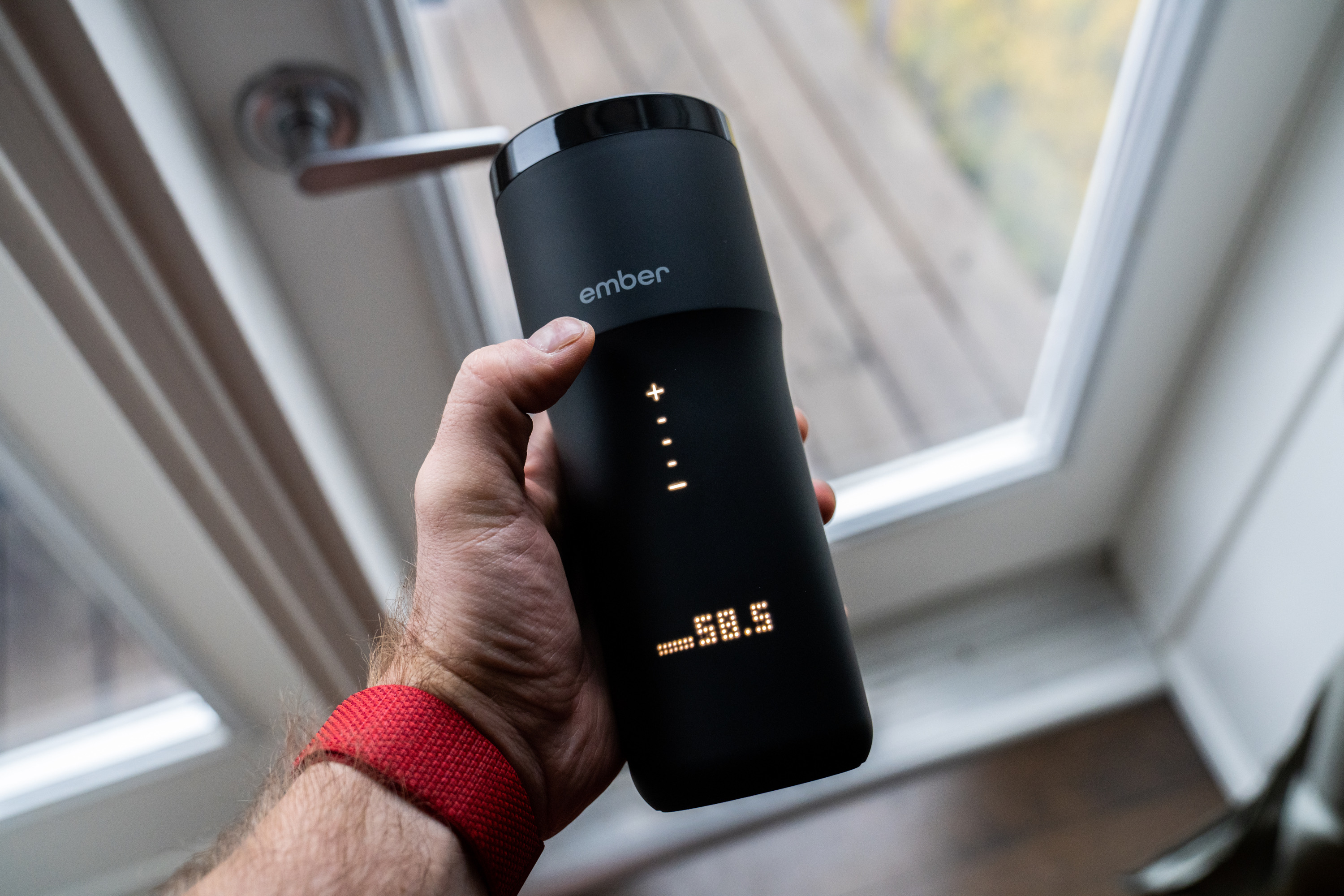
Ember Mug and Travel Mug 2 5The Travel Mug 2 gets a slight redesign as well as battery improvements. Whereas Ember used a physical dial to control temperature adjustments without requiring you to use your phone on the last generation, now there’s a touch sensitive area on the cup just above where the body expands out towards the top. You can slide your fingers around this to increase or decrease the temperature of whatever you have within.

This tweak is likely what allowed Ember to slim down the design while keeping the internal volume (12 oz) the same, so that it’s a bit more lightweight and travel friendly than before (while also offering as much as three hours of battery life). Ember also took the auto sleep and wake features that it introduced with the original Ember ceramic Mug and brought them to the Travel Mug 2, meaning that it’ll turn itself on and off automatically depending on whether it detects liquid inside. or motion from being picked up, to extend battery life even further.

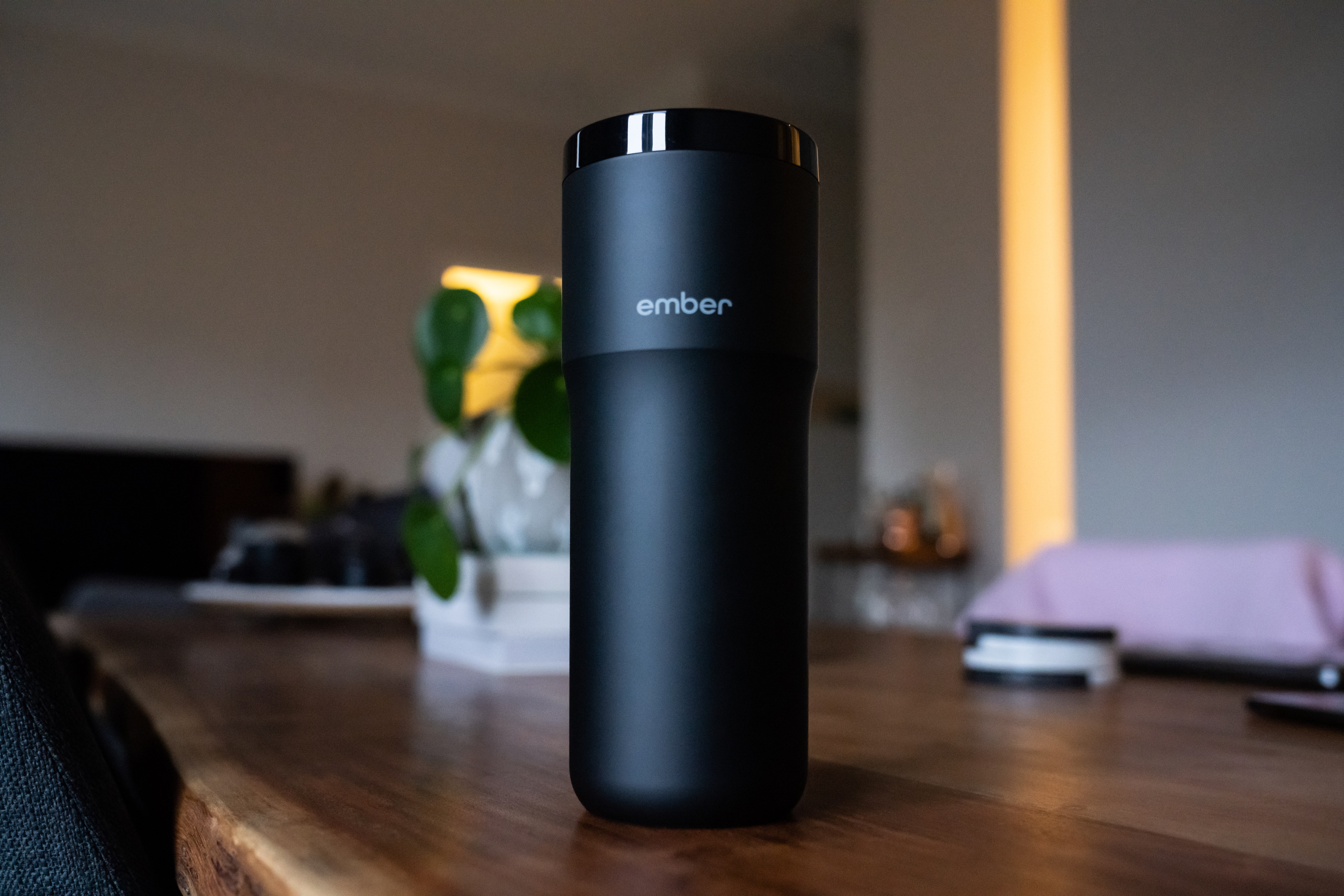
Ember Mug and Travel Mug 2 7The design of the Ember Travel Mug 2 is top-notch, with a smooth matte surface and hand-friendly design, along with clear, easy to red LED displays that just disappear when not in use. The bottom display shows current temperature, as well as an indicator of remaining battery life, and you can add a custom name to show for avoiding confusion if there are multiple Travel Mugs in use.

Bottom Line

Ember’s follow-up hardware to its initial lineup isn’t a dramatic change – but the collection didn’t need a major overhaul because it gets so many things right. The added battery life in the new generation is great, and the appeal remains the same: If you’re a coffee or tea fanatic and don’t love returning to a lukewarm or cold cup, then this is the stuff for you.

Could you opt for a vacuum-walled mug or travel tumbler? Absolutely, and the Zojirushi line-up of insulated travel mugs will keep liquids hot for days. But Ember’s home mug is without peer for actually keeping things hot in an open-top design, and the Travel Mug’s ability to actually adjust and increase temperature on the fly is also a unique value proposition that can’t be matched by any passive insulation.

31 Oct 2019

Ember’s Mug 2 and Travel Mug 2 extend your coffee temperature sweet spot

One of the world’s most static technologies may be the humble mug, but startup Ember decided it was time for a change when they introduced their temperature-controlled smart mug to the market in 2016. Now, the company has launched its Ember Mug 2 – a follow-up that keeps the concept and design intact, but that improves the lineup in some key ways.

There are two separate new second-generation Ember mugs – the Ember Travel Mug, and the Ember Mug designed for home and office use. Both add extended battery life, thanks to swapping its old battery technology with “the most advanced battery technology on the market,” and both gain new redesigned charging coasters, while the Travel Mug 2 gets a new control interface for adjusting the temperature of the beverage within, and it’s a bit lighter while holding the same volume.

Ember Mug 2 (from $99.95)

Ember Mug and Travel Mug 2 3This sequel to Ember’s home mug comes in black, white and copper versions, as well as in two sizes: 10z and 14oz. Like its predecessor, it features an internal heating element and battery, Bluetooth connectivity for smartphone control from the Ember app, and a durable ceramic coating.

The Ember Mug 2 has a customizable LED that shows you when it’s working, and that you can change to whatever color you wish, which is handy if you have a couple of these in use in one household. It comes in black and white (as well as the pricier copper edition) in order to set your desired temperature, you pair it with an app on your phone (a quick and painless process).

Ember will send you notifications when the liquid within reaches the desired temperature. I’ve long used one of their first generation products, and the one thing I found was that on my three-a-day coffee schedule, sometimes my third cup would end up cold, because the battery, while decent, would run out before my appetite for caffeine did.

Enter the sequel, which offers up to 50 percent better battery life than the original version. It’s hard to quantify, since the speed with which I drink my coffee differs day to day, but I will say that in testing I haven’t seen the low battery warning before I was long done actually drinking coffee for the day. In short, if you make sure to pop the mug back on its charging coaster every evening, you should have plenty of juice for a full day of use the next day without any sense of mug range anxiety.

Ember Travel Mug 2 ($179.95)

Ember Mug and Travel Mug 2 5The Travel Mug 2 gets a slight redesign as well as battery improvements. Whereas Ember used a physical dial to control temperature adjustments without requiring you to use your phone on the last generation, now there’s a touch sensitive area on the cup just above where the body expands out towards the top. You can slide your fingers around this to increase or decrease the temperature of whatever you have within.

This tweak is likely what allowed Ember to slim down the design while keeping the internal volume (12 oz) the same, so that it’s a bit more lightweight and travel friendly than before (while also offering as much as three hours of battery life). Ember also took the auto sleep and wake features that it introduced with the original Ember ceramic Mug and brought them to the Travel Mug 2, meaning that it’ll turn itself on and off automatically depending on whether it detects liquid inside. or motion from being picked up, to extend battery life even further.

Ember Mug and Travel Mug 2 7The design of the Ember Travel Mug 2 is top-notch, with a smooth matte surface and hand-friendly design, along with clear, easy to red LED displays that just disappear when not in use. The bottom display shows current temperature, as well as an indicator of remaining battery life, and you can add a custom name to show for avoiding confusion if there are multiple Travel Mugs in use.

Bottom Line

Ember’s follow-up hardware to its initial lineup isn’t a dramatic change – but the collection didn’t need a major overhaul because it gets so many things right. The added battery life in the new generation is great, and the appeal remains the same: If you’re a coffee or tea fanatic and don’t love returning to a lukewarm or cold cup, then this is the stuff for you.

Could you opt for a vacuum-walled mug or travel tumbler? Absolutely, and the Zojirushi line-up of insulated travel mugs will keep liquids hot for days. But Ember’s home mug is without peer for actually keeping things hot in an open-top design, and the Travel Mug’s ability to actually adjust and increase temperature on the fly is also a unique value proposition that can’t be matched by any passive insulation.

31 Oct 2019

Trulia founder Pete Flint backs real estate startup Modus

The founders of Seattle-based Modus cold emailed Pete Flint, the founder of Trulia and a current managing partner at the venture capital firm NFX, for months to no avail. In a last ditch effort, Alex Day, Jai Sim and Abbas Guvenilir sent one more message to the investor who’s real estate listings tool sold to Zillow in 2014 for $3.5 billion. They were at a coffee shop below his San Francisco office, was he interested in meeting?

Fortunately for them, he was.

Modus

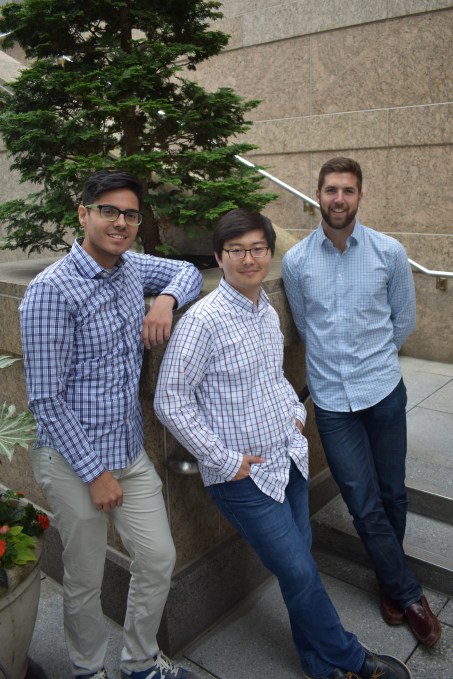
Modus co-founders

Modus, a real estate startup focused on title and escrow services, is today announcing a $12.5 million Series A financing co-led by NFX’s Flint and Niki Pezeshki of Felicis Ventures. Liquid 2 ventures and existing backers including Mucker Capital, Hustle Fund, 500 Startups, Rambleside and Cascadia Ventures also participated in the round.

“The first revolution in online real estate was transforming the research experience, the next revolution in the industry is transforming the transaction,” Flint said in a statement.

Modus launched in 2018 with a focus on Washington State real estate opportunities. The startup, led by former employees of a nearly-defunct lunch delivery company Peach, has developed software to help both agents and home buyers navigate the home closing process, which, unlike many other real estate experiences, has yet to receive a boost of innovation from startups building in the sector. That’s why Modus started with an emphasis on escrow services, though the team’s long term vision, they explain, is to power all real estate transactions.

“When you think about communication, you think of Gmail; when you think of traveling, you think of Uber . We want to be synonymous with home closing,” Sim, the company’s executive chairman, tells TechCrunch.

Sim, the former head of marketing at Peach, says Modus has ambitions of becoming a sort of operating system for real estate, or “like what Stripe is for payment processing, we want to become for real estate transactions.”

Since closing its Series A financing in May–the team waited until now to make its financing information public–Modus has increased its headcount to 50 employees across product, engineering and operations. Their goal now is to provide their software to home-buyers in 15 to 20 states over the next two years. To support expansion efforts, Modus plans to raise a Series B in the second or third quarter of next year.

Modus has previously raised $1.8 million in seed funding.

31 Oct 2019

Trulia founder Pete Flint backs real estate startup Modus

The founders of Seattle-based Modus cold emailed Pete Flint, the founder of Trulia and a current managing partner at the venture capital firm NFX, for months to no avail. In a last ditch effort, Alex Day, Jai Sim and Abbas Guvenilir sent one more message to the investor who’s real estate listings tool sold to Zillow in 2014 for $3.5 billion. They were at a coffee shop below his San Francisco office, was he interested in meeting?

Fortunately for them, he was.

Modus

Modus co-founders

Modus, a real estate startup focused on title and escrow services, is today announcing a $12.5 million Series A financing co-led by NFX’s Flint and Niki Pezeshki of Felicis Ventures. Liquid 2 ventures and existing backers including Mucker Capital, Hustle Fund, 500 Startups, Rambleside and Cascadia Ventures also participated in the round.

“The first revolution in online real estate was transforming the research experience, the next revolution in the industry is transforming the transaction,” Flint said in a statement.

Modus launched in 2018 with a focus on Washington State real estate opportunities. The startup, led by former employees of a nearly-defunct lunch delivery company Peach, has developed software to help both agents and home buyers navigate the home closing process, which, unlike many other real estate experiences, has yet to receive a boost of innovation from startups building in the sector. That’s why Modus started with an emphasis on escrow services, though the team’s long term vision, they explain, is to power all real estate transactions.

“When you think about communication, you think of Gmail; when you think of traveling, you think of Uber . We want to be synonymous with home closing,” Sim, the company’s executive chairman, tells TechCrunch.

Sim, the former head of marketing at Peach, says Modus has ambitions of becoming a sort of operating system for real estate, or “like what Stripe is for payment processing, we want to become for real estate transactions.”

Since closing its Series A financing in May–the team waited until now to make its financing information public–Modus has increased its headcount to 50 employees across product, engineering and operations. Their goal now is to provide their software to home-buyers in 15 to 20 states over the next two years. To support expansion efforts, Modus plans to raise a Series B in the second or third quarter of next year.

Modus has previously raised $1.8 million in seed funding.

31 Oct 2019

Crunchbase raises $30M more to double down on its ambition to be a ‘LinkedIn for company data’

The internet and search engines like Google have made the world our oyster when it comes to sourcing information, but in the world of business, there remains a persistent need for more targeted market intelligence, a way to get reliable data quickly to get on with your work. Today, one of the startups hoping to build a lucrative operation of its own around that premise is announcing a round of funding to get there.

Crunchbase — a directory and database of company-related information that originally got its start as a part of TechCrunch before being spun off into a separate business several years ago — has raised $30 million, a Series C that it plans to use to continue expanding its base of paid subscribers and expanding its product to include more predictive, personalised information for its users by way more machine learning and other AI-based technology.

CEO Jager McConnell, who has long viewed Crunchbase as the “LinkedIn for company profiles,” said that of the 55 million people who visit the site each year currently, the company currently has “tens of thousands” of subscribers — subscriptions are priced at $29/user/month varying by size of company contract — which works out to less than 1% of its active users. That’s “growing quickly,” he added, speaking to site’s potential.

Indeed, he noted that since its last round in 2017, when it raised $18 million, Crunchbase has tripled its employees to 120 and has ten times more annual revenue run rate. It’s also more doubled its traffic since being spun out.

This latest round was led by Omers Ventures, the prolific investment arm of the giant Canadian pension fund of the same name (which is, incidentally, also now opening an office in Silicon Valley to get even more active with startups there).

Existing backers Emergence, Mayfield, Cowboy Ventures, and Verizon (which still owns TC) also participated. McConnell said Crunchbase is not disclosing its valuation with this round, but he did note that it was “well within the target range” that the startup had set, that it was an oversubscribed upround, and that it was on the more practical than exuberant side.

“I believe we are seeing too many high valuations with low annual revenue rates, and it’s catching up with people, and we were very focused on not hitting that valuation trap in order to be successful in the future,” he said. “This is a good round but not something insane.” Strong logic I suspect could be supported by Crunchbase data. For some context, Crunchbase had a post-money valuation of $70 million in its previous round in 2017 (having raised $26 million), according to PitchBook — ironically, one of Crunchbase’s big competitors (CB Insights, Owler being others.)

With its start as a side project of TechCrunch, the DNA of Crunchbase has always been in tech companies, and that is still very much the heart of the data that is in the system today. The kind of data you can get via the site includes basics on when a company was founded, who the founders are, who the current executive leadership is, how much money it has raised and from whom, what has been written about it in the media. You can also find original content on the site by way of its own team of writers covering funding rounds and other Crunchbase-relevant content.

Then, via a number of third-party integrations with companies like Siftery and SimilarWeb, you can also get deeper data around competitors and more (most of which you can only see if you are a paying, not free, user).

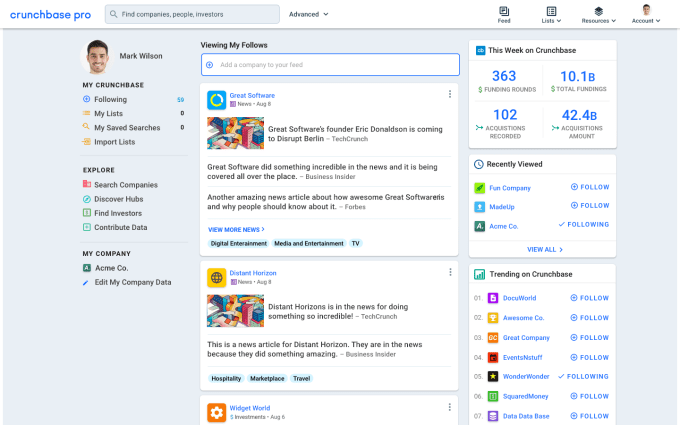
personalized homepage

The company notes that it currently makes 3.9 billion annual updates to its data set — which people upload themselves in the old wiki style, or are manually or automatically uploaded, by way of some 4,000 data partnerships and syndication deals (these include with the likes of Yahoo! Finance, LinkedIn, Business Insider, and Amazon Alexa, which in turn make some 1.6 billion annual calls to the Crunchbase API).

The growth of that information trove, and more interesting ways of parsing it to drive subscriptions and potential licensing revenues, will be of paramount importance to the company’s bottom line. Today there is some advertising on the site, but McConnell confirmed to me that Crunchbase is in the process of winding down advertising on the platform.

“The impact on the business was not material enough to sacrifice the user experience to have ads,” he said.

What’s interesting to me is to see which direction Crunchbase will evolve in in the longer term. As the world has continued to grow into the bigger vision of “every company is a tech company, and every problem has a tech solution” it seems that Crunchbase’s own ambitions have also grown. In the company’s blog post and press release announcing the fundraise, it’s notable to me that technology, or any variation of it, isn’t mentioned even once in the text (only exception being the boilerplate description of Omers). That could point to how — as Crunchbase expands its horizons in terms of the kinds of information on businesses it can provide to users — it might see role for itself not unlike that of LinkedIn, spanning across multiple verticals and the communities of people (or in CB’s case, businesses) that have built around them.

“We are thrilled to partner with Jager and the talented leadership team at Crunchbase,” commented Michael Yang, Managing Partner at OMERS Ventures, in a statement. “Crunchbase continues to show significant traction as the leader in research, information, and prospecting for private companies – an incredibly large and valuable market to address and service. By utilizing and collecting aggregated data, adding tools and apps, and continuing to customize each user experience, the lead generation and deal value Crunchbase can provide is unprecedented, and we are proud to support this next phase of growth.”


31 Oct 2019

Driving license tests just got smarter in India with Microsoft’s AI project

An American giant may have figured out a way to simplify the tedious procedure of issuing driver’s licenses. And an early sneak peek of this solution is now live in parts of India.

Hundreds of people who have taken the driver’s license test in Dehradun, the capital of Indian state Uttarakhand near the Himalayan foothills, in recent weeks haven’t had to sit next to an instructor.

Instead, their cars were affixed with a smartphone that was running HAMS, an AI project developed by Microsoft Research team. HAMS uses a smartphone’s front and rear cameras and other sensors to monitor the driver (their gaze), and the road ahead of them. Microsoft Research team said for driver tests, they customized HAMS to enable precise tracking of a vehicle’s trajectory during test manoeuvres such as parallel parking or negotiating a roundabout.

This AI technology can determine whether the driver performed any action — such as stopping in the middle of a test or course correcting by rolling forward or backward more times than they were allowed — during the test, the team said. Additionally, it also checks things like whether a driver scanned their mirrors before changing the lane.

Shri Shailesh Bagauli, IAS, Secretary of Government of Uttarakhand, said the deployment of HAMS-based driver license testing at the Dehradun RTO is a “significant step towards the Transport Department’s goal of providing efficient, world-leading services to the citizens of Uttarakhand. We are proud to be among the pioneers of the application of AI to enhance road safety.”

HAMS, short for Harnessing AutoMobiles for Safety, was originally developed to monitor drivers and their driving to improve road safety. “Driver training and testing are foundational to this goal, and so the project naturally veered in the direction of helping evaluate drivers during their driving test,” the team said.

Automation is slowly making its way to driver testing across the world, but they still require deployment of extensive infrastructure such as pole-mounted video cameras along the test track. Microsoft’s team said HAMS can bring down the cost of automation while improving test coverage by including a view within the vehicle.

Some surveys (PDF) have shown that a significant number of applicants don’t even show up to give a test to obtain their license because of the “burden” they would have to go through. “Automation using HAMS technology can not only help relieve evaluators of the burden but also make the process objective and transparent for candidates,” says Venkat Padmanabhan, Deputy Managing Director, Microsoft Research India, who started the HAMS project in 2016.

The test venue of this project should not come as a surprise. American technology companies are increasingly expanding their presence in India, one of the last great growth markets with several unique local challenges.

Microsoft, Google, and Amazon have used India a a test bed to build solutions for the local market, some of which eventually make it to other countries. Microsoft has previously developed tools to help farmers in India increase their crop yields and worked with hospitals to prevent avoidable blindness. Last year, the company also worked with cricket legend Anil Kumble to develop a tracking device that helps youngsters analyze their batting performance.

Google has also developed a range of services and tools for India. The company last year launched a tool to help publishers easily bring stories written in local languages to the web. This year, the Android-maker unveiled improvements it has made to its flood prediction tool. And of course, several popular apps such as YouTube Go, and Google Station started as India-only services.

31 Oct 2019

Driving license tests just got smarter in India with Microsoft’s AI project

An American giant may have figured out a way to simplify the tedious procedure of issuing driver’s licenses. And an early sneak peek of this solution is now live in parts of India.

Hundreds of people who have taken the driver’s license test in Dehradun, the capital of Indian state Uttarakhand near the Himalayan foothills, in recent weeks haven’t had to sit next to an instructor.

Instead, their cars were affixed with a smartphone that was running HAMS, an AI project developed by Microsoft Research team. HAMS uses a smartphone’s front and rear cameras and other sensors to monitor the driver (their gaze), and the road ahead of them. Microsoft Research team said for driver tests, they customized HAMS to enable precise tracking of a vehicle’s trajectory during test manoeuvres such as parallel parking or negotiating a roundabout.

This AI technology can determine whether the driver performed any action — such as stopping in the middle of a test or course correcting by rolling forward or backward more times than they were allowed — during the test, the team said. Additionally, it also checks things like whether a driver scanned their mirrors before changing the lane.

Shri Shailesh Bagauli, IAS, Secretary of Government of Uttarakhand, said the deployment of HAMS-based driver license testing at the Dehradun RTO is a “significant step towards the Transport Department’s goal of providing efficient, world-leading services to the citizens of Uttarakhand. We are proud to be among the pioneers of the application of AI to enhance road safety.”

HAMS, short for Harnessing AutoMobiles for Safety, was originally developed to monitor drivers and their driving to improve road safety. “Driver training and testing are foundational to this goal, and so the project naturally veered in the direction of helping evaluate drivers during their driving test,” the team said.

Automation is slowly making its way to driver testing across the world, but they still require deployment of extensive infrastructure such as pole-mounted video cameras along the test track. Microsoft’s team said HAMS can bring down the cost of automation while improving test coverage by including a view within the vehicle.

Some surveys (PDF) have shown that a significant number of applicants don’t even show up to give a test to obtain their license because of the “burden” they would have to go through. “Automation using HAMS technology can not only help relieve evaluators of the burden but also make the process objective and transparent for candidates,” says Venkat Padmanabhan, Deputy Managing Director, Microsoft Research India, who started the HAMS project in 2016.

The test venue of this project should not come as a surprise. American technology companies are increasingly expanding their presence in India, one of the last great growth markets with several unique local challenges.

Microsoft, Google, and Amazon have used India a a test bed to build solutions for the local market, some of which eventually make it to other countries. Microsoft has previously developed tools to help farmers in India increase their crop yields and worked with hospitals to prevent avoidable blindness. Last year, the company also worked with cricket legend Anil Kumble to develop a tracking device that helps youngsters analyze their batting performance.

Google has also developed a range of services and tools for India. The company last year launched a tool to help publishers easily bring stories written in local languages to the web. This year, the Android-maker unveiled improvements it has made to its flood prediction tool. And of course, several popular apps such as YouTube Go, and Google Station started as India-only services.

31 Oct 2019

Namogoo raises $40M to stop unauthorized ad injections and ‘customer journey hijacking’

Namogoo, the Herzliya, Israel-based company that has developed a solution for e-commerce and other online enterprises to prevent “customer journey hijacking,” has raised $40 million in Series C funding.

The round is led by Oak HC/FT, with participation from existing backers GreatPoint Ventures, Blumberg Capital, and Hanaco Ventures. It brings total raised by Namogoo to $69 million, and sees Matt Streisfeld, Partner at Oak HC/FT, join the company’s board.

Founded by Chemi Katz and Ohad Greenshpan in 2014, Namogoo’s platform gives online businesses more control over the customer journey by preventing unauthorized ad injections that attempt to divert customers to competitors. It also helps uncover privacy and compliance risks that can come from the use of 3rd and 4th party ad vendors.

More broadly, Namogoo says that customer journey hijacking is a growing but little-known problem that by some estimates affects 15-25 percent of all user web sessions and therefore costs e-commerce businesses hundreds of millions in lost revenue.

Unauthorized ads are injected into consumer web browsers – on the consumer side, typically via malware the user has unintentionally installed – meaning that e-commerce sites are often unaware that it is even happening. This results in product ads, banners, and pop-ups which appear when visiting an e-commerce site. The ads disrupt the user experience, hoping to send them to competitor sites.

Namogoo says that retailers using its technology see conversion rates increase between 2-5%, which in the first half of 2019 totalled over $575 million in revenue for Namogoo customers. It is used by more than 150 global brands in over 38 countries, including Tumi, Asics, Argos, Dollar Shave Club, Tailored Brands, Upwork, and others.

Meanwhile, Namogoo will use the new funding to further expand its client-side platform offerings, beginning with the launch of its “customer privacy protection solution”. “The solution detects and mitigates against customer privacy risks associated with 3rd- and 4th-party vendors running on company websites and applications,” explains the company.