Category: UNCATEGORIZED

30 Oct 2019

Let’s have a word about what3words with Clare Jones at Disrupt Berlin

Addresses are ambiguous, not precise enough or don’t even exist in some places. what3words wants to map the entire world and overhaul addresses three words at a time. That’s why I’m excited to announce that what3words Chief Commercial Officer Clare Jones is joining us at TechCrunch Disrupt Berlin.

The startup has divided the world in 3 meter squares. Each square has been assigned three words. This way, it’s easy to read, easy to write and even easy to say. And more importantly, it’s unique.

And sometimes, simple ideas can be incredibly powerful. For instance, if you’re driving, it’s much faster to say three words to define an address on your navigation system than a full address.

It’s also more precise. If you’re heading to a huge building, you want to arrive at the entrance of the building, not on the other side. It’s incredibly frustrating when it happens — I nearly missed a train when a GPS navigation system led me to the wrong side of the tracks. This could be particularly useful for ride-hailing apps for instance, as they usually only let you enter an address.

And then, there are countries that never had a good address system in the first place. For instance, Lonely Planet added what3words addresses to its Mongolia travel guide. It is much easier to read three words in a book and type them on your phone, instead of tapping GPS coordinates for instance.

It also opens up a lot of new markets for e-commerce companies. In some countries, customers don’t have a good way to indicate where they live. An e-commerce website can add what3words support to add new delivery locations.

There are many other use cases. Emergency services, governments and humanitarian projects could also leverage what3words to improve communication and become more efficient. And I can’t wait to hear Clare Jones describe how people have been using what3words.

Buy your ticket to Disrupt Berlin to listen to this discussion — and many others. The conference will take place December 11-12.

In addition to panels and fireside chats, like this one, new startups will participate in the Startup Battlefield to compete for the highly coveted Battlefield Cup.

what3words is the world's first addressing system designed for voice – every 3m x 3m square in the world has been assigned an address made of just three words from the dictionary. These 3 word addresses can be used to route cars or drones, used as an address when ordering online, or simply given as a meeting point for a picnic in the park. what3words is used in 170 countries and is being adopted by governments all around the world as an official addressing system. Its investors include Daimler, Intel Capital, Aramex and Deutsche Bahn.

Clare is the Chief Commercial Officer of what3words; prior to this, her background was in the development and growth of social enterprises and in impact investment. Clare was featured in the 2019 Forbes 30 under 30 list for technology and is involved with London companies tackling social/environmental challenges. Clare also volunteers with the Streetlink project, doing health outreach work with vulnerable women in South London.

30 Oct 2019

ShareGrid acquires UK peer-to-peer film and camera rental community BorrowFox

ShareGrid, the U.S.-based marketplace for sharing, buying and selling film and photography equipment, has acquired the U.K’s BorrowFox as part of its international expansion plans.

BorrowFox operates a “peer-to-peer” film and camera rental community that lets people rent out their under-utilised gear. ShareGrid says it expects to launch in the U.K. in 2020 (where it will compete with the likes of Fat Lama).

Terms of deal remain undisclosed, although I understand ShareGrid is acquiring all of BorrowFox’s assets outright. The two companies aren’t disclosing if it was a cash or stock deal or mixture of the two, or who BorrowFox’s investors were.

Meanwhile, I’m told that BorrowFox’s founders, Arthur Pierse and Alastair Woods, won’t be joining ShareGrid.

In the U.S. ShareGrid lets users rent film and camera equipment from each other, including cinema cameras, still cameras, lenses, audio equipment, drones, lighting equipment, gimbals and other accessories, as well as studio spaces, locations and production vehicles.

The idea behind the service is to help creatives access world-class equipment at lower rental fees, and earn an income from their unused gear. The company also offers a buy-and-sell service, custom production quotes, and instant insurance, acting as a “one-stop shop” for filmmakers, photographers and production professionals.

Following the acquisition, ShareGrid says it will host over 100,000 users, with more than $1 billion worth of film and camera equipment available on its combined platform. Once the acquisition complete and ShareGrid has launched in the U.K., existing BorrowFox members will be asked to transfer their account to ShareGrid.

“At ShareGrid, our mission is to enable all filmmakers and photographers, regardless of background, budget or location, to have access to cutting-edge and affordable equipment,” says Marius Ciocirlan, co-founder and CEO of ShareGrid in a statement. “We see the acquisition of BorrowFox as an exciting opportunity to enter the U.K. market, and build on a company that has had a similar vision from the start”.

30 Oct 2019

As Juul announces mass layoffs, a new lawsuit alleges it shipped a million contaminated pods

A lawsuit filed a by former Juul executive alleges that the company knew a batch of contaminated e-liquid had been used in about one million pods shipped to retailers earlier this year, but did not inform customers. The lawsuit, first reported by BuzzFeed, was brought by Siddharth Breja, former senior vice president of global finance at Juul from May 2018 to March 2019, who alleges he was fired after complaining about the contaminated pods.

News of the lawsuit comes the same day as Juul’s announcement it will lay off about 500 people, or 10% to 15% of its workforce, and the departure of four executives, including chief financial officer Tim Danaher. Juul is currently under scrutiny by the Food and Drug Administration, which claims the startup made misleading statements about its product and targeting of teens.

In the lawsuit, Breja claims that during a meeting on March 12, he learned a contaminated batch of mint e-liquid was used to make 250,000 refill kits, or a total of one million pods, that had already been shipped to retailers.

Breja alleges that when he complained about Juul’s refusal to issue a product recall or health and safety notice, Danaher said doing so would cost the company billions of dollars in lost sales, hurting its then-$38 billion valuation. About a week later, Breja says the company fired him, telling him that it was because he had misrepresented himself as former chief financial officer at Uber. In the lawsuit, Breja says the claim was “preposterous,” and that he had accurately represented his former position as a chief financial officer of a division at Uber.

In the lawsuit, Breja also claims that Juul wanted to sell pods that were almost a year old and when he asked the company to include an expiration or best by date, or a date of manufacture on the packaging, he was told by former CEO Kevin Burns that “half our customers are drunk and vaping like mo-fos, who the fuck is going to notice the quality of our pods?”

TechCrunch has contacted Juul and the law firm representing Breja for comment. In a statement to BuzzFeed, Breja’s attorney Harmeet Dhillon said “Mr. Breja became aware of very concerning actions at the company, and he performed his duty to shareholders and to the board by reporting these issues internally. In exchange for doing that, he was inappropriatey terminated. This is very concerning, particularly since some of the issues he raised concerned matters of public safety.”

Burns was replaced in September by K.C. Crosthwaite, a former executive at Juul’s largest shareholder Altria . A replacement for Danaher has not been announced yet.

30 Oct 2019

Slack investor Index Ventures backs Slack competitor Quill

Slack created a new solution for workplace communication, one copied by many, even Microsoft. But the product, which is meant to help individuals and businesses collaborate, has been critiqued for sending too many notifications, with some claiming it’s sabotaged workplace productivity.

Quill, a startup led by Ludwig Pettersson, Stripe’s former creative director and design aficionado, claims to offer “meaningful conversations, without disturbing your team.” The company has raised a $2 million seed round led by Sam Altman with participation from General Catalyst, followed by a $12.5 million Series A at a $62.5 million valuation led by Index Ventures partner and former Slack board observer Sarah Cannon, TechCrunch has learned.

Quill and Cannon declined to comment.

The company, based in San Francisco, has created a no-frills messaging product. Still in beta, Quill plans to encourage fewer, more focused conversations with a heavy emphasis on threads, sources tell TechCrunch . The product is less of a firehose than Slack, says former Y Combinator president Altman, where one can get stuck for extended periods of time filtering through direct messages, threads and channels.

“It’s relentlessly focused on increasing the bandwidth and efficiency of communication,” Altman tells TechCrunch. “The product technically works super well–it surfaces the right information in the feed and it’s pretty intelligent about how it brings the right people into conversations.”

Pettersson previously worked with Altman at his current venture, OpenAI, a research-driven business focused on development that steers artificial intelligence in a “friendlier” direction. Pettersson was a member of the company’s technical staff in 2016 and 2017, creating OpenAI’s initial design.

Index Ventures, for its part, appears to be doubling down on the growing workplace communications software category. The firm first invested in Slack, which completed its highly-anticipated direct listing earlier this year, in 2015. Slack went on to raise hundred millions more, reaching a valuation of over $7 billion in 2018.

Since going public, Slack has struggled to find its footing on the public markets, in large part due to the growing threat of Microsoft Teams, the software giant’s Slack-like product that debuted in 2016. Quickly, Microsoft has gobbled up market share, offering convenient product packages including beloved tools used by most businesses. As of July, Teams had 13 million daily active users and the title of Microsoft’s fastest-growing application in its history. Slack reported 12 million daily active users earlier this month.

Startups like Quill pose a threat to Slack, too. It created the playbook for workplace chat software and proved the massive appetite for such tools; companies are bound to iterate on the model for years to come.

Quill is also backed by OpenAI’s chairman and chief technology officer Greg Brockman and Elad Gil, a former Twitter executive and co-founder of Color Genomics.

30 Oct 2019

HBO Max will cost $14.99 per month and will launch in May 2020

AT&T and WarnerMedia just announced the pricing of its HBO Max streaming service, along sharing more details about the timing and content lineup.

The service will cost $14.99 per month — the same price as HBO Now. WarnerMedia also says it will be free for HBO Now subscribers and for viewers who subscribe to HBO via AT&T. And it will launch in May of next year.

At the event, HBO’s Casey Bloys also announced that HBO has greenlit a Game of Thrones spinoff called House of the Dragon, based on George R.R. Martin’s book of Westerosi history, Fire and Blood (perhaps explaining why a previously announced spin-off that was recently canceled).

The company also revealed that HBO Max will be the exclusive streaming home of South Park. Plus, Elizabeth Banks, Issa Rae and Mindy Kaling are all developing new shows for the service — and Arrow and Riverdale producer Greg Berlanti announced that he’s working on the new DC Comics-related titles Green Lantern and Strange Adventures.

Today’s presentation for media and investors began with lots of commentary about all the corporate synergies between AT&T, WarnerMedia (which AT&T acquired last year) and the service’s namesake HBO.

WarnerMedia’s entertainment and direct-to-consumer chairman Bob Greenblatt said HBO Max will have 10,000 hours of content at launch, including the HBO library, films from Warner Bros. and original content “appealing to all the younger demos.” Ten thousand hours sounds like a lot, but Greenblatt acknowledge it’s less than some competitors (presumably Netflix): “We actually think our value proposition improves when we narrow some of the options.”
Screen Shot 2019 10 29 at 7.43.07 PM

HBO Max Chief Content Officer Kevin Reilly made a similar point, noting that on average, half of the usage on subscription streaming services comes from the top 100 titles, so “quality over quantity” is important. To illustrate that quality, he pointed to titles like Sesame Street, as well as the Lord of the Rings movies, The Hobbit movies, The Matrix trilogy and The Conjuring films, plus every Superman and Batman movie from the past 40 years.

“We’re all-in with DC and the associated brand-love that DC generates,” Reilly said.

He also noted the service will also stream the 90’s classic Friends, as well as The Big Bang Theory, for which it reportedly paid over $1 billion.

As for originals, Reilly said the company plans to launch 31 Max Originals series (combined with HBO series, that makes for 69 original shows on HBO Max in its first year). Half of them, apparently, will be targeted at a young adult audience, and with most of the episodes released on a weekly basis — Reilly argued that this allows for more cultural impact, “rather than fading quickly after a binge and burn.”

In terms of the product itself, WarnerMedia’s Executive Vice President Andy Forssell argued that “despite a decade of SVOD evolution, it’s still too hard to find something to watch,” and said HBO Max will “blend the smart use of data with real human touch, and present them via novel product experiences.”

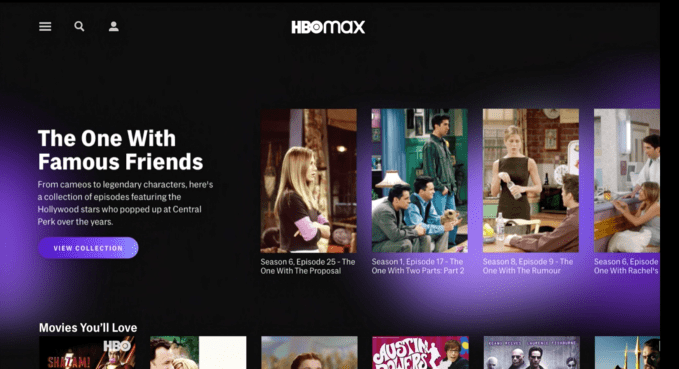
He then showed off how the service will include curated highlights sections focusing on things like Friends episodes with high-profile guest stars. Forssell acknowledged that this might not seem revolutionary, but he argued that it offers a “significant deviation from how SVOD services have used screen real estate.”

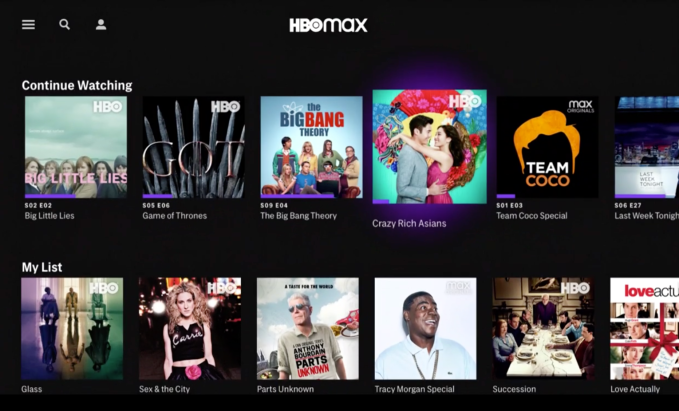
It will also expand HBO’s Recommended by Humans feature, where celebrities and other real people can recommend their favorite movies and TV shows. And there will be kids’ profiles and shared profiles — so that the watching you do with others won’t interfere with the progress and recommendations from your own solo viewing.
Screen Shot 2019 10 29 at 7.42.30 PM

In July, AT&T first announced its plans for HBO Max, but the details around launch and pricing weren’t yet known. Instead, the attention so far has been on HBO Max’s content lineup.

The service aims to capitalize on HBO’s reputation for premium fare to attract consumers — many of whom already pay $15 per month for HBO Now. But it will pad that HBO library with a combination of programming from other WarnerMedia properties like Cinemax, New Line, DC Entertainment, Warner Bros., The CW, CNN, TNT, TBS, TruTV, Turner Classic Movies, Crunchyroll, Adult Swim, Cartoon Network, Rooster Teeth, Looney Tunes, and others.

We now know HBO Max will be home to Game of Thrones and its upcoming spin-offs, plus favorite HBO series like The Sopranos, Sex and the City, Deadwood, Westworld, and others.

It’s also bringing back Gossip Girl, rebooting Grease, making a Dune TV show, and streaming all 21 Studio Ghibli films.

Other HBO Max shows will include a Riverdale spin-off Katy Keene; Search Party; Batwoman; Adventure Time; Stephen King’s The Outsider; Jordan Peele and J.J. Abrams’ horror series Lovecraft Country; Joss Whedon’s The Nevers; Julian Fellowes’ (Downton Abbey) The Gilded Age; David E. Kelley’s The Undoing; Rules of Magic, a prequel to Alice Hoffman’s Practical Magic; The Boondocks; and Gremlins: Secrets of the Mogwai; plus back catalog content like Fresh Prince of Bel-Air, Pretty Little Liars, Doctor Who (2005 and onward), The West Wing, Top Gear, The Office (original version), and others.

Upcoming literary adaptions include Tokyo Vice, The Flight Attendant, CirceMade for LoveStation Eleven, and Anna K: A Love Story. 

More recently, HBO Max has announced a new documentary on Anthony Bourdain, an overall deal with Lisa Ling, a documentary about Amy Schumer, a Melissa McCarthy comedy film, a documentary with Monica Lewinsky, and a new deal with J.J. Abrams’ Bad Robot (the deal allows Bad Robot to make TV under the WarnerMedia umbrella and then sell it to other streaming services).

Abrams was part of today’s event. He said it’s too early to announce any specific programming under the new deal — Bad Robot already works with HBO on titles like Westworld, and Abrams has a new show in the works called Demimonde — but he declared, “There’s no company that values storytelling more than WarnerMedia.”

And for classic movie lovers who mourn the loss of FilmStruck, Warner Bros. CEO Ann Sarnoff, said the service will offer a rich library of films from the Warner Bros. and MGM library, curated titles from Turner Classic Movies, as well as “decades and decades of more great titles from The Criterion Collection.”

AT&T said on Monday it plans to spend about $2 billion on the service over the next two years and aims to sign up some 50 million subscribers by 2025.

The service will arrive at a time when competition in the streaming market is heating up. Netflix, Hulu and Amazon Prime Video’s successes have paved the way for new entrants like Apple TV+, which launches Friday, and Disney+, which arrives mid-November. NBCU is also joining next year with its streaming service Peacock, which will offer The Office and other classic shows, alongside new originals, like a Battlestar Galactica reboot.

These streamers are gaining at the expense of traditional TV, which has impacted other parts of AT&T’s business.

In the third quarter, it lost another 1.2 million satellite and fiber-optic-TV customers as well as 195,000 AT&T TV Now (previously DirecTV Now) subscribers. AT&T’s profit was down 22% year-over-year to $3.7 billion and revenue had fallen 2.5% to $44.6 billion.

Eventually, AT&T’s plan is to merge its AT&T TV Now live TV service into HBO Max and add on a discounted ad-supported tier to HBO Max to make it more affordable.


29 Oct 2019

Tencent leads $111M investment in India’s video streaming service MX Player

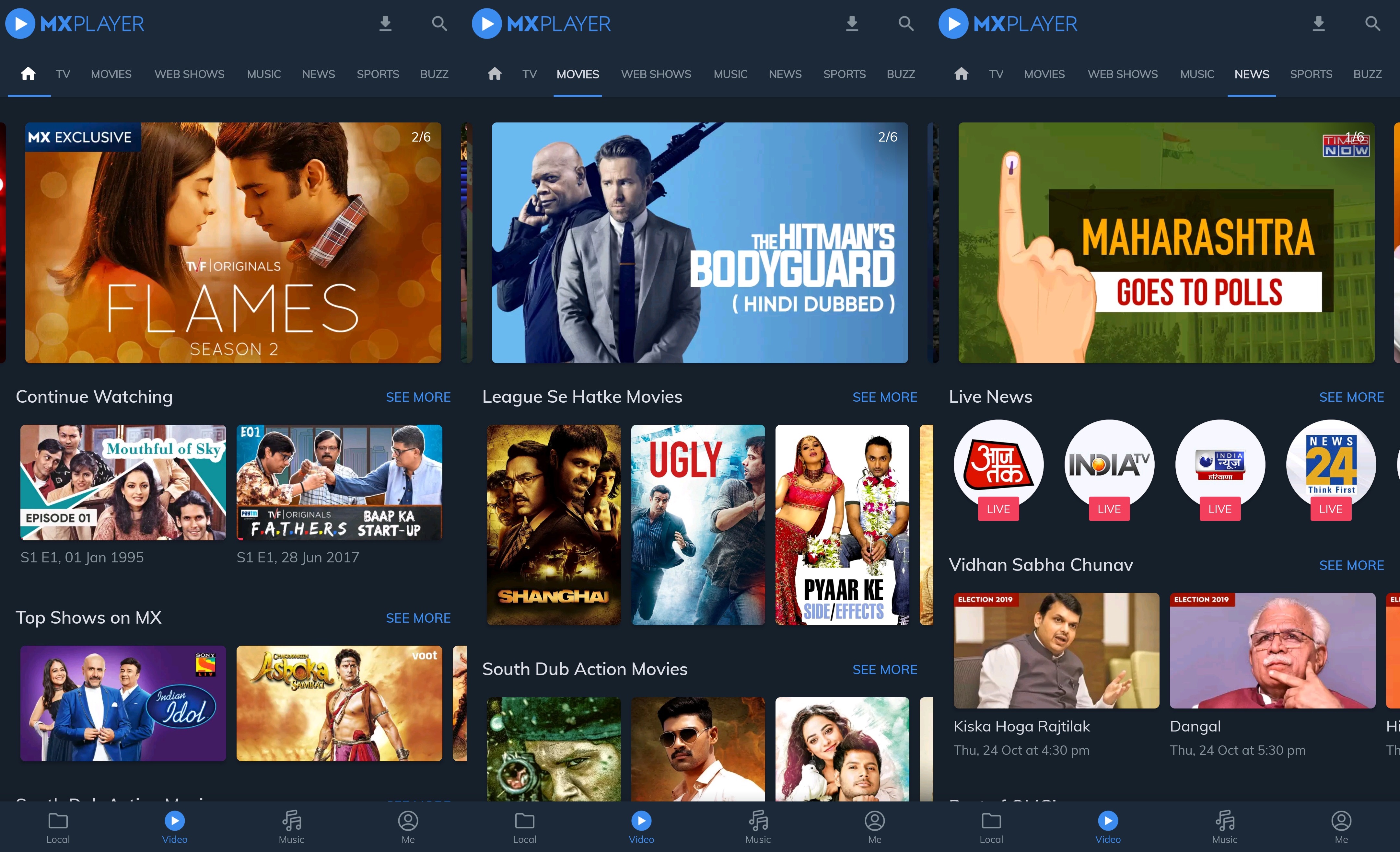
MX Player, a popular video app that offers both local playback and streaming services, said on Wednesday that it has raised $110.8 million in a new financing round led by Chinese internet giant Tencent as the video app looks to expand its business in India and other international markets.

Times Internet, which acquired a majority stake in MX Player in late 2017 for $140 million, also participated in the Series A financing round. The post-money valuation of MX Player was $500 million, a person familiar with the matter told TechCrunch.

The addition of Tencent — which has invested in a handful of Indian startups including Times Internet-owned Gaana, ride-hailing giant Ola, ed tech startup Byju’s, B2B e-commerce startup Udaan and a bookkeeping service for merchants, Khatabook — “is a great sign of confidence,” said Satyan Gajwani, vice chairman of Times Internet. “Tencent is a leading global force in music and video, and there’s a lot for us to learn and leverage from their capabilities,” he added.

Karan Bedi, CEO of MX Player, said in an interview that the video app will use the fresh capital to double down on producing original TV shows and broadening its catalog of licensed content. The firm, which has so far added 15 original shows to its platform, has already commissioned production of another 20 by year-end, he said.

The Singapore-headquartered firm’s push into original shows and licensed content underscores one of the strangest evolution for a video app. MX Player originated in Korea as an app that could run video files in a wide-range of formats locally stored on a phone.

The app did all of this while consuming little resources, an ability that helped it win tens of millions of users with low-cost Android smartphones in emerging markets such as India. In fact, India is MX Player’s largest market, with 175 million monthly active users, Bedi said. Globally, the app has amassed more than 280 million users.

MX Player is ad-supported and does not charge users any monthly subscription fee. The service, which introduced movies and shows streaming in mid-2018, today also offers access to about 200 TV channels, their current and back catalog of shows, and a music streaming feature through an integration with Gaana.

mxplayer tc

Bedi said the company has tied up with all-web show producers such as HoiChoi in India and three of the top five TV local cable networks, including Sony and Sun. Missing from the list is Star India, the largest TV network in the country.

Thanks to the acquisition of 21st Century Fox, Disney now owns Star India. Star India has emerged as one of the gems in Disney’s new portfolio. The firm, which runs dozens of TV channels in India, operates Hotstar, the market-leading video streaming service.

Hotstar reported 300 million monthly active users and 100 million daily active users during the ICC Cricket World Cup tournament. The service has cashed in on the popularity of cricket to boost its numbers.

Bedi said MX Player is working on building new entertainment experiences, but sports content is not something it is exploring. The reason is simple: Cricket drives most of the sports streaming in India and Star India has secured rights to most of such content. (Facebook recently grabbed a slice of it, too.)

But cricket alone can’t help a streaming service win and sustain customers. Even Hotstar’s monthly user base plummets below 60 million in the months following the cricketing season, people familiar with Hotstar’s internal figures have told TechCrunch.

Figuring out what exactly resonates with the users in India, the world’s second largest internet market, is the billion-dollar question. The video streaming market in India is on track to be worth $1.7 billion in the next four years, according to PricewaterhouseCoopers.

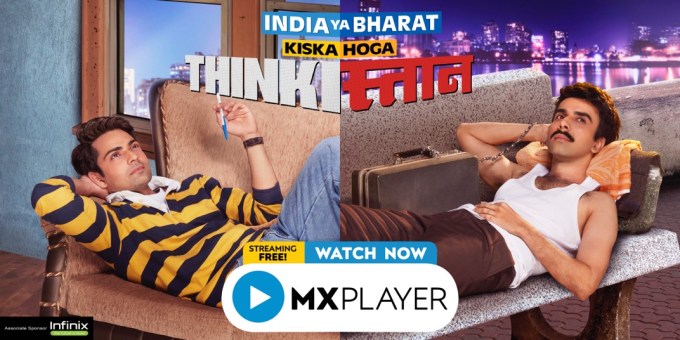
Bedi, who spearheaded Eros Now’s India business before joining MX Player, said users are increasingly enjoying the original shows. Most of the shows that MX Player has produced so far, such as “Hey Prabhu,” “Thinkistan” and “Immature,” are largely targeted at college students and those who have just joined the work force. But the company is slowly populating the platform with shows such as “Queen” that appeal “universally,” he said.

image5

MX Player today competes with more than three dozen local and international players, nearly all of which offer their services at dirt-cheap prices in India. Even Netflix, which launched in India with a $8 plan in 2016, this year introduced a $2.8 monthly tier. In recent months, several more firms including e-commerce giant Flipkart and food delivery startup Zomato have launched their video streaming services in the country.

Tencent-rival Alibaba announced earlier this year that it would invest $100 million to expand social video app Vmate in India.

Once cautious about each megabyte they spent consuming internet services, Indians are now spending about 10GB of data on their smartphones each month as data prices crash in the country, according to an Ericsson report. Indian billionaire Mukesh Ambani disrupted the local telecom market in 2016 when he launched Reliance Jio. The 4G-only carrier undercut the market by first offering bulk of mobile data at no cost, and then charging very little fee.

An analyst TechCrunch spoke with said it’s only a matter of time before India’s video market begins to see some consolidation and pull back. “You have to offer something appealing that none of your rivals have,” he said, requesting anonymity as he advises many of these businesses.

For MX Player, its odd evolution story may be its biggest advantage. The app’s local video playback feature continues to draw many to it, and keeps the app among the top rated in Google’s Play Store. Bedi said the startup, which today employs about 300 people, maintains a large team that continues to improve the tech stacks to improve video playback support.

Moving forward, MX Player will also look into expanding to some international markets. It recently started beta testing the video streaming service in the U.S., Canada, Australia and New Zealand. Eventually, the startup hopes to make original shows for these markets that are relevant to the local audience there.

MX Player maintains a premium app on Google Play Store that strips ads for $5. But the app continues to mostly rely on revenue it generates from ads. Times Internet’s Gajwani said that at some point in the future, the video service will expand monetization beyond pure advertising. “That said, MX is consumed daily as much as the leading TV channel in India, so there’s significant headroom to capture larger advertising spends as well,” he added.

Paytm, a leading financial services firm in India, was also in talks with MX Player to invest in this financial round. It may invest in the video streaming services app at a later stage, a person familiar with the talks said.

29 Oct 2019

Founded by a former Uber exec, Oliver Space wants to design and furnish apartments for busy professionals

Chan Park feels like “an eternal nomad.” It all started at age 12, when he moved from Korea to the U.S., where he attended middle school in Minnesota, followed by high school in New Jersey, followed by college in New Hampshire.

Then he really began to bounce around, working as a trader in New York, embracing the life of a ski bum in Utah, then heading to Asia in the service of Uber, where he spent six years, running its expansion team at first, then managing its entire Southeast Asia business out of Singapore. More specifically, he was responsible for eight countries across the region, and 350 people, which didn’t give him a lot of time to organize his home.

It was something to which he was very accustomed — living in chaos — except something interesting happened in Singapore. “There’s this huge culture of landlords furnishing space to attract expats,” says Park. “The furnishings aren’t super high-end, but they’re well-designed and well put together and it enabled me to be basically be moved in as soon as I put my clothes in the closet.” He also enjoyed being home a lot more. “For the first time, I was proud to host friends for dinners and barbecues and to just open the door and relax. ”

Before long, he was talking with his Dartmouth classmate turned product and industrial designer Christian Talmage about forming their own company, and thus was born Oliver Space, which provides a lot of what that Singaporean landlord delivered to Park: it furnishes places for busy professionals, making moving into a new home as easy as hanging up their clothes.

The service is available in the Bay Area only. And Oliver Space employs just a dozen people so far. But the company has already gained enough traction to attract $6.8 million in seed funding from an interesting array of investors, including Mayfield, Abstract Ventures, operators turned investors Jana Messerschmidt and April Underwood, OpenDoor founder Eric Wu, and Kevin and Julia Hartz of Eventbrite, among others.

Now, Oliver Space just has to grow as quickly, or more so, than two other furniture-as-service startups to recently attract funding. Fernish, a two-year-old, L.A.-based startup that helps people rent from brands like Crate & Barrel, Floyd, and Campaign, attracted $30 million in funding earlier this year led by Real Estate Technology Ventures, with participation from Intuit’s founder Scott Cook and Amazon’s head of global consumer, Jeff Wilke. Feather, a two-year-old, New York-based furniture rental startup that similarly works with known brands like West Elm and Pottery Barn, meanwhile closed a $12 million round a few months ago led by Spark Capital. (It has raised $16 million altogether.)

Park, who as an Uber alum is very attuned to the competition, knows his own startup isn’t the first out of the gate. He thinks it can win on a few fronts, however. For one thing, while Oliver Space uses traditional retailers for some of the items it’s renting, it is also making Oliver Space-branded furnishings — from sectionals to dining tables to beds —  with the help of “dozens” of manufacturers in China and elsewhere, says Park.

Park also stresses design, saying that Oliver Space wants to replace that friend with the great taste to whom a college graduate or busy young professional might otherwise turn for help. Indeed, the company puts together “mood boards” for customers, featuring everything from the loveseat to plants to pillows to candles, all of which it will happily rent to them on a monthly or even yearly basis.

The longer a customer commits to rent items, the less they pay. If they decide eventually to buy the items, Oliver Space will sell them at their retail price, deducting all of their previous rental payments and considering them instead down payments on the furnishings.

Not last, Park says Oliver Park aims to move quickly. In fact, part of why it is having its own furniture made is so that it can be assembled, and later disassembled, fast, so that when a customer walks into his or her home, everything is picture perfect. (If you’ve ordered furniture any time recently and been confronted with wait times of weeks or months, you start to appreciate this part of the pitch, particularly for someone who is new to a city.)

As for what happens when that furniture isn’t brand-new, Park says Oliver Space has plans to inspect, clean, and repair pieces as needed. He likens the opportunity to that of the car market, where pre-owned, certified cars are another source of revenue. “In furniture, used means Craiglist, and you have no idea where a sofa or a rug has been. As our business grows, we’ll be creating that pre-owned concept with our brand’s stamp of approval.”

Maybe so. It’s early to know if these differentiators are enough to make the company stand out. A lot depends on execution as Oliver Space grows out of the Bay Area and into other markets. (Park won’t yet say where these will be.)

In the meantime, it’s easy to understand the appeal of the company and its rivals. Beyond making consumers’ lives easier in numerous ways, they’re presumably better for the environment. At least, with a reported  9.8 million tons of furniture that is thrown into a landfill every year in the U.S. alone, it seems worth seeing whether their way works better.

29 Oct 2019

Apple’s AirPods Pro set a pricey new standard for earbuds

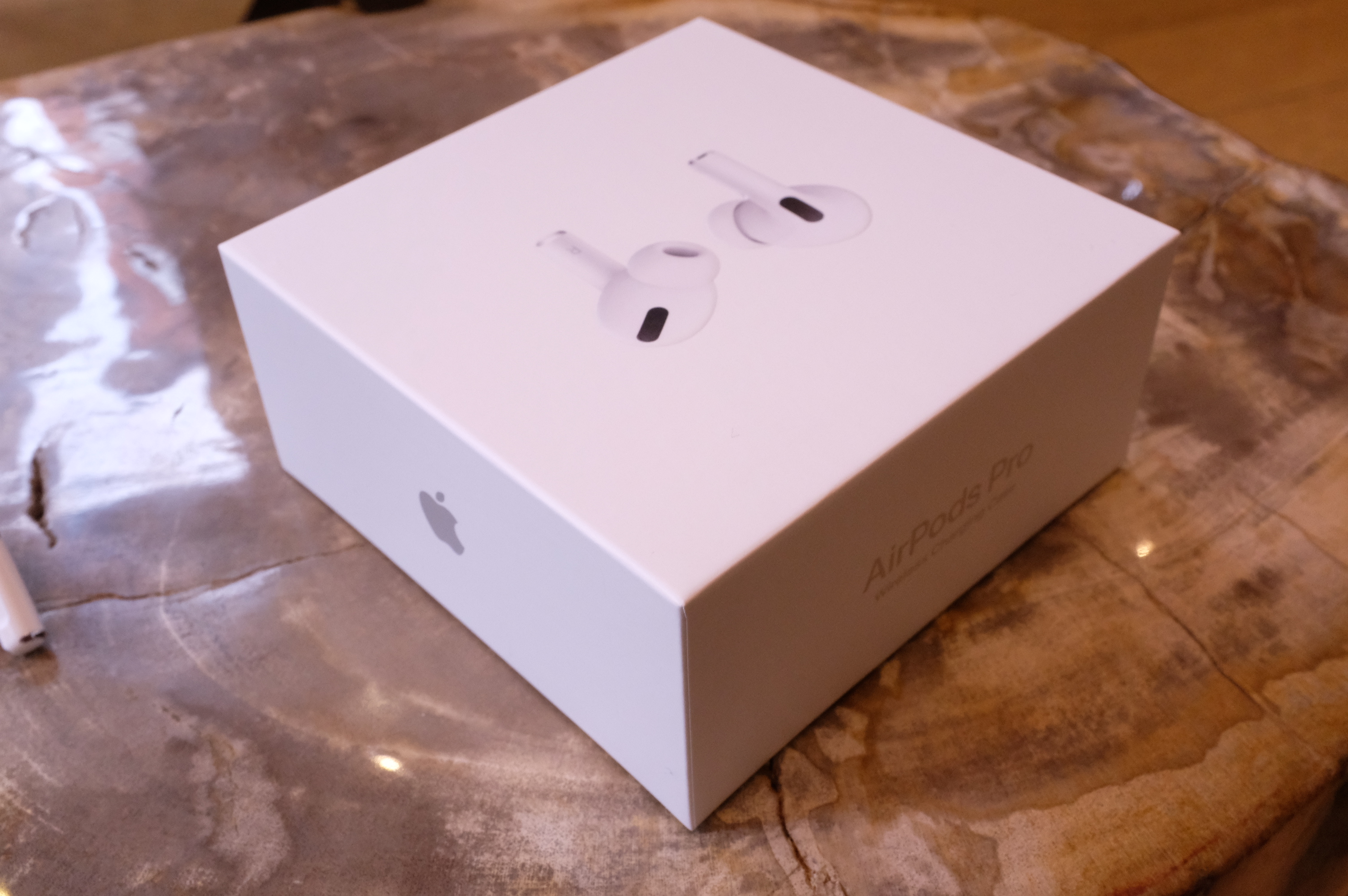
“These $250 earbuds are nice.” That’s the first thing I wrote to a co-worker after unboxing and trying on the new AirPods. After wearing them around the New York City streets, the subway and into a couple of cafes, that pithy review stands.

Here are a few more words: They’re super comfortable. I’ve used a lot of different Bluetooth earbuds. It’s a weird perk of my job. The AirPods Pro (baffling pluralization aside) are probably the most comfortable, with the possible exception of the Powerbeats Pro, another Apple-manufactured joint venture. That one, however, relies on a lot more plastic to get the job done, with a full over-the-ear hook system.

The new AirPods, on the other hand, just hang comfortably. This is a big win for those who’ve experienced ear discomfort from all sort of different designs. [Sheepishly raises hand.] Granted, every ear is like a beautiful, unique snowflake, and not everyone will have the same experience. That said, the company’s clearly done a lot to correct for the complaints about the original AirPods, using both a more ergonomic design and finally giving in to the sway of silicone tips.

Airpods Pro

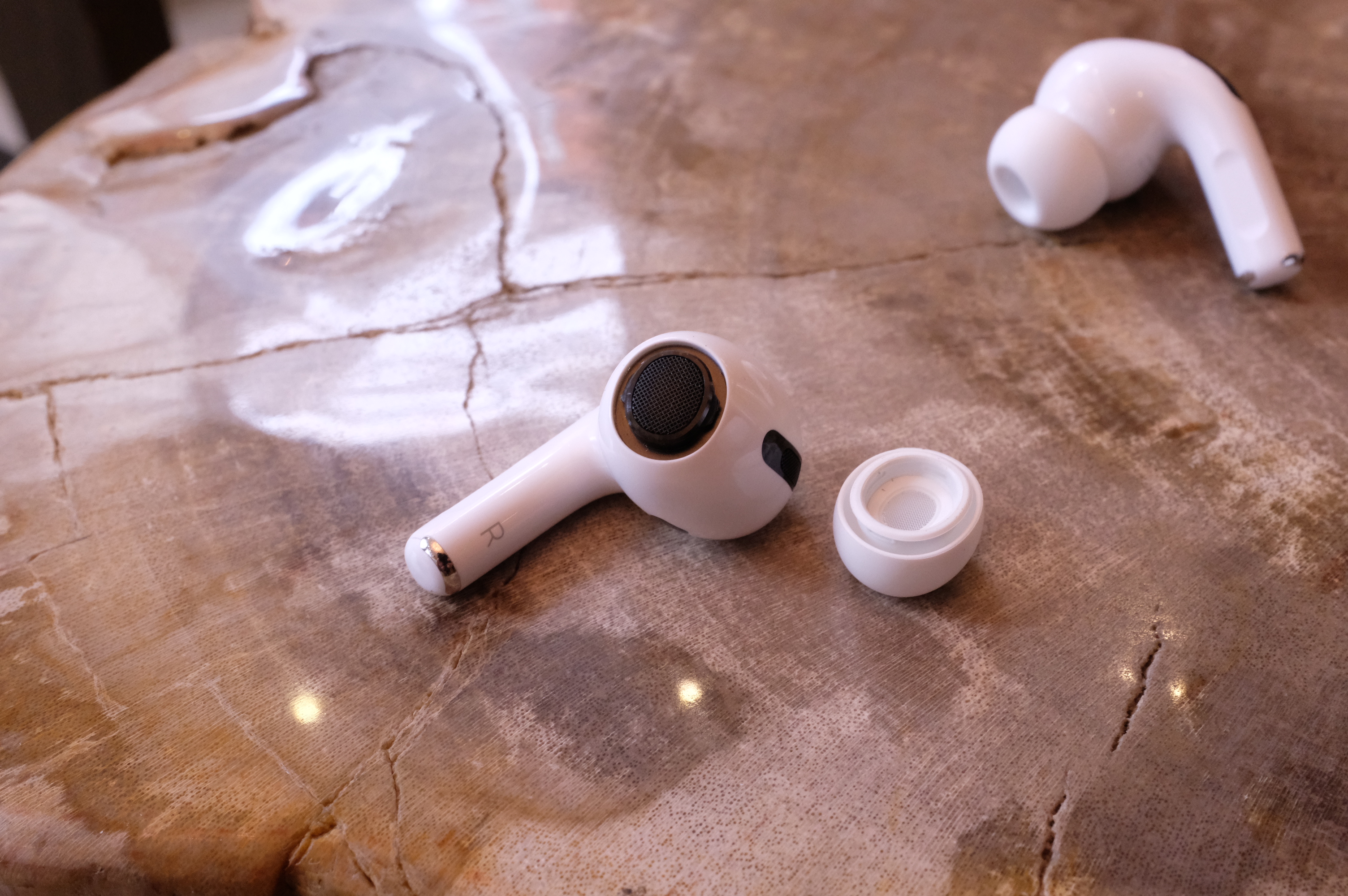
Why Apple waited this long on the latter bit is beyond me, but the company has finally done so on its own terms. Each Pro box ships with a total of six tips (a right and left in small, medium and large), with the medium on by default. These, however, are not your standard, run of the mill silicone tips. A firm yank will pull them off to reveal a hard outer edge that snaps into the bud [picture above].

The company says this is part of ensuring a better fit. Another benefit is that the attachment is much more secure. This is a definite plus, speaking as someone who has accidentally littered the streets of New York with earbud tips. These are far less likely to fall off while getting them out of your pocket. If you do lose one, Apple will be selling replacements for probably a buck or so.

Along with an enlarged body, you’ve no doubt noticed that the stems are notably shorter. That’s because the company has been able to consolidate more of the electronics into the top. The stem remains as a way of handling the earbuds. It also now houses a haptic button that replaces the standard AirPod tap interaction. Instead, you give the stem a squeeze, triggering a subtle clicking sound in the process.

Airpods Pro

By default, a single squeeze pauses and plays a track, whereas a squeeze and hold cycles between noise cancellation and transparent modes. All of this can be adjusted in iOS, once you’ve downloaded version 13.2. Setup on iOS is as easy as ever, requiring you to simply open the case near an iPhone or iPad. Android and desktop pairing, meanwhile, involves the more standard Bluetooth setup.

IMG 4958

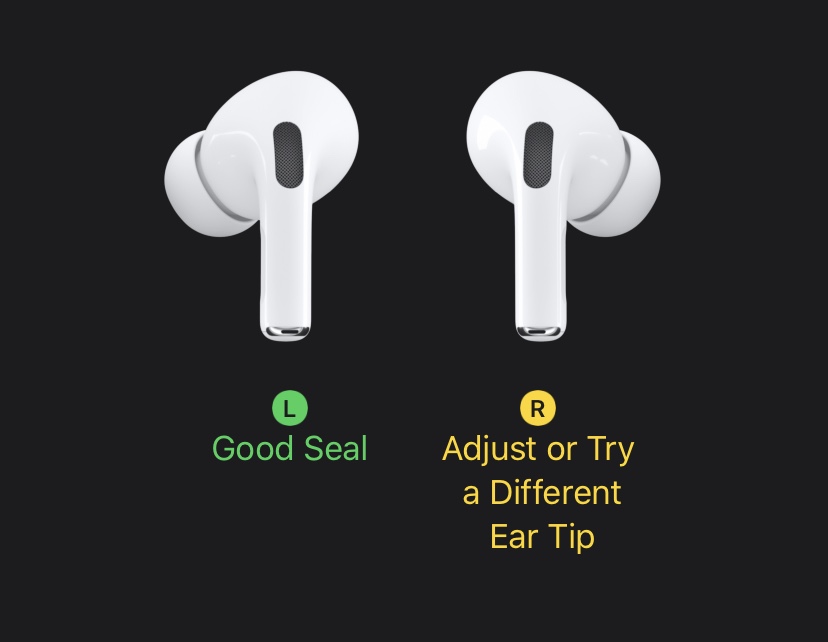
From there, click into Settings > Bluetooth > and then tap the “i” next to AirPods Pro. From here you switch between noise control modes, assign different functions to the button on the individual AirPods and fire up the Ear Tip Fit Test. Hit “play” and it will start a quick snippet of a song used to test the fit. If you have the right tip on, it will display “good seal.” If something is wrong, it recommends trying a different tip or adjusting the bud in ear.

Not only is every ear different, but some folks have a deal of differentiation between right and left. The mediums worked well for me, right out of the box. That’s me, Mr. Average Ears. Results may very.

The Pros sound great. They’re among the best-sounding earbuds I’ve tried, up there with the similarly priced Sony WF-1000XM3. As such, they’re in pretty rare air. Unlike the Echo Buds, you can’t adjust the levels in settings, but Apple’s buds are tuned well out of the box for a wide range of genres. So far, I’ve listened to Ryuichi Sakamoto, Danny Brown, The Hold Steady, Electric Youth and Sunn 0))), for a pretty diverse sampling. It all comes across rich and full — much as one would expect/hope from a $250 pair of earbuds.

Airpods Pro

The noise canceling, too, is up there with Sony’s. Apple’s works adaptively, similar to what it offers on its over-ear Beats headphones. That means the microphones are constantly listening to your surroundings and adjusting accordingly. It’s not quite a full immersion, like you would get from over-ear headphones, but with a tight seal, it does a pretty terrific job drowning out your surroundings when needed.

For those times you need to be more alert, there’s transparency mode, which uses the on-board mics to beam in ambience. Once again, it’s a good mix, letting in sound without completely overwhelming the music. That was one of my issues with the Echo Buds, which tended to overamplify things like an air conditioning unit. Though again, unlike the Echo Buds, you can turn transparency on an off, versus adjusting levels.

Bit of a side note here, but like their predecessors, these new models will probably go a ways toward shifting societal norms in terms of keeping your headphones in while engaging with others. These are the sorts of things that make me want to go all Andy Rooney on kids today, etc., etc.

Airpods Pro

Noise canceling and transparency have similar impacts on battery, knocking about half an hour off of the Pods’ built-in five hours. With the charging case factored in, total listening time should be about 24 hours in standard mode, per Apple’s estimates. I’m excited to push that to the limit as I board a plane to Asia early next week. Ditto for the comfort level — but after several hours today, all is still well.

The case is a little larger than the original AirPods, but is still carried comfortably in a pocket, unlike, say, the Beats or Sony models. The orientation has shifted, as well. It’s not wider than it is long, owing to the shortening of the AirPods’ stems. The new design means they’re slightly more difficult to maneuver into the case, but you’ll get the hang of that after a couple of tries.

Airpods Pro

Like the AirPods 2, the case can be charged both through the Lightning port or wirelessly. Tapping the case while charging will light up the LED, which will display as either yellow or green to let you know how far along your are.

So, yeah, thumbs up after half a day. No surprise there, of course. The $250 price tag will almost certainly make these cost-prohibitive for many, but after a few hours, it’s going to be hard to go back.

Look for a longer write up soon.

29 Oct 2019

The slow death of Flash continues as Google begins to remove it from search

The death of Flash has been a long time coming… and a long time going on, too. For years we’ve heard that it’s on its way out, but who among us has not found an errant Flash video or widget in the last month or two? To hasten its demise Google is taking the understandable step of… pretending it doesn’t exist.

Yes, Google Search will stop indexing Flash content starting later this year. Why was it even doing so today, years after any sane webmaster stopped using it? Well, there’s a lot of legacy content out there. Probably Google wanted to give the long tail a chance to curl up.

Deindexing Flash doesn’t mean if you have website that serves it, it’ll be ignored entirely. But any information accessed through that Flash container, like a storefront, video description, game, or what have you will be skipped over by Google’s crawlers.

And if we’re honest, you’ll probably get demoted pretty hard by the algorithm too.

Most people probably won’t notice any change, partly because Flash-serving websites aren’t often very high on the list anyway, and of course the major browsers all block Flash by default. Even Adobe is giving it up.

If you want to play some of those old Flash games, and really some of them were pretty awesome, you’ll still be able to find them if you search directly for them — there are sites collecting them that will want to show up for Google and as such will work to appear prominently in search results for things like “cool old flash games” and the like.

So is Flash dead now? Probably not, but I wouldn’t call what it’s doing living, either. Still, I imagine we’ll get a few more uses out of that top image.

29 Oct 2019

With Sean Rad signed on as co-founder, Good Today launches new tool for company-wide donations

Good Today offers a simple way for people to support a variety of charity organizations: By donating as little as 25 cents a day, supporters get a daily email allowing them to vote for one of two charity organizations, with the day’s donations split based on the votes.

The nonprofit organization, previously known as Good St., has been around for years — I wrote back it back in 2015 — but co-founder Joe Teplow said he’s refocused on it since selling his startup Rebel to Salesforce last year.

This week, Good Today is announcing its new branding, a new product designed specifically for companies and a number of notable figures who have signed up as co-founders/founding board members: Joe Benun, Jeff Dobrinsky, Sean Rad (co-founder and former CEO at Tinder), Guy Oseary (the talent manager who co-founded Sound Ventures with Ashton Kutcher) and Molly Swenson (the RYOT co-founder who’s now chief impact officer at Live nation’s Maverick).

“Generosity is a learned behavior,” Rad told me. “If you think about the importance of waking up every single day, opening that email and learning about another cause, getting out of your own little bubble … very quickly it becomes an addictive habit.”

Rad also noted that these small donations can lead to a deeper engagement over time, as people discover organizations that they might want to support with larger donations or in other ways.

“Over time, we’re going to be more than giving 25 cents a day,” he added. “The idea here is that if we could build a way to donate every single day, you sort of solve the biggest problem in charity as a whole, which is engagement. Once you get engagement loop going, we’re going to be introducing other experiences.”

Good Today has experimented with company-wide giving before, but Teplow said that the product has been designed largely for consumers, and that until now, “If you wanted to bring your company onto the platform, it was a little bit hacky.”

Good Today for Teams is supposed to change that, allowing companies to sponsor their employees’ donations, along with integrating into Slack (where employees can vote for their preferred charity) and providing a dashboard with administrators can track the team’s votes and giving. It’s already being used by more than 20 companies including Shutterstock, Jeffries, Splash and Maverick.