Category: UNCATEGORIZED

29 Oct 2019

WeFarm rakes in $13M to grow its marketplace and network for independent farmers

Huge networks like Facebook and LinkedIn have a huge gravitational force in the world of social media — the size of their audiences make them important platforms for advertising and those who want information (for better or worse) to reach as many people as possible. But alongside their growth, we’re seeing a lasting role for platforms and networks focused on more narrow special interests, and today one of them — focused on farmers, of all communities — is picking up a round of funding to propel its growth.

WeFarm, a marketplace and networking site for small-holder farmers (that is, farms not controlled by large agribusinesses), has raised $13 million in a Series A round of funding, with plans to use the money to continue adding more users — farmers — and more services geared to their needs.

The round, which brings the total raised by the company to a modest $20 million, is being led by True Ventures, with AgFunder, June Fund; previous investors LocalGlobe, ADV and Norrsken Foundation; and others also participating.

WeFarm today has around 1.9 million registered users, and its early moves into providing a marketplace — helping to put farmers in touch with local suppliers of goods and gear such as seed and fertilizers — generated $1 million in sales in its first eight months of operations, a sign that there is business to be had here. The startup points out that this growth has been, in fact, “faster… than both Amazon and eBay in their early stages.”

WeFarm is based out of London, but while the startup does have users out of the UK and the rest of Europe, Kenny Ewan, the company’s founder and CEO, said in an interview that it is seeing much more robust activity and growth out of developing economies, where small-scale agriculture reigns supreme, but those working the farms have been massively underserved when it comes to new, digital services.

“We are building an ecosystem for global small scale agriculture, on behalf of farmers,” Ewan said, noting that there are roughly 500 million small scale farms globally, with some 1 billion people working those holdings, which typically extend 1.5-2 hectares and often are focused around staple commercial crops like rice, coffee, cattle or vegetables. “This is probably the biggest industry on Earth, accounting for some 75-80% of the global supply chain, and yet no one has built anything for them. This is significant on many levels.”

The service that WeFarm provides, in turn, is two-fold. The network, which is free to join, first of all serves as sounding board, where farmers — who might live in a community with other farmers, but might also be quite solitary — can ask each other questions or get advice on agricultural or smallholding matters. Think less Facebook and more Stack Exchange here.

That provided a natural progression to WeFarm’s second utility track: a marketplace. Initially Ewan said that it’s been working with — and importantly, vetting — local suppliers to help them connect with farmers and the wider ecosystem for goods and services that they might need

Longer term, the aim will be to provide a place where smallholding famers might be able to exchange goods with each other, or sell on what they are producing.

In addition to providing access to goods for sale, WeFarm is helping to manage the e-commerce process behind it. For example, in regions like Africa, mobile wallets have become de facto bank accounts and proxies for payment cards, so one of the key ways that people can pay for items is via SMS.

“For 90% of our users, we are the only digital service they use, so we have to make sure we can fulfil their trust,” Ewan said. “This is a network of trust for the biggest industry on earth and we have to make sure it works well.”

For True and other investors, this is a long-term play, where financial returns might not be as obvious as moral ones.

“We are enormously inspired by how Kenny and the Wefarm team have empowered the world’s farmers, and we see great potential for their future,” said Jon Callaghan, co-founder of True Ventures, in a statement. “The company is not only impact-driven, but the impressive growth of the Wefarm Marketplace demonstrates exciting commercial opportunities that will connect those farmers to more of what they need to the benefit of all, across the food supply chain. This is a big, global business.”

Still, given the bigger size of the long tail, the company that can consolidate and manage that community potentially has a very valuable business on its hands, too.


29 Oct 2019

Venmo launches a rewards program offering up to 5% back at Target, Sephora, Dunkin’ & Wendy’s

Amid increased competition in the digital payments space, Venmo today announced its first-ever rewards program, Venmo Rewards, which will allow users to earn automatic cash back on purchases when they pay with their Venmo card at select retailers. The company is kicking off the program with limited-time cash back deals, including 5% back at Target, 5% back at Sephora, 4% back at Dunkin’, 5% back and Wendy’s and more.

The cash back earned through the program is deposited directly into your Venmo account, so you can use the funds to pay friends through the Venmo app, make Venmo card purchases, pay merchants that accept Venmo, or you can transfer the money to your linked bank account or debit card.

Users will also be able to track their Rewards in a dedicated section of the Venmo mobile app, where they can see what they’ve earned on each of their eligible purchases. They then can opt to share their rewards earned in the Venmo feed.

Similar to how credit card offers come and go, Venmo Rewards cash back deals will also expire at some point, as new ones arrive to take their place. Venmo cardholders will be able to check in on the current offers available to them at any time by visiting their card settings in the Venmo app.

The launch of a Rewards program comes at a time when Venmo is facing increased competition in the digital payments space. Though originally a peer-to-peer money transfer service, Venmo added a debit card last year that allows users to spend their Venmo balance out in the real world, while still taking advantage of features like splitting bills and the social feed, which helped popularize the service among a younger demographic. Recently, Venmo announced plans to offer a credit card, as well.

Today, users don’t necessarily reach for a Venmo card at point-of-sale, however.

They may prefer to use a card where they’ll get airline miles or a retailer’s store card, where they get a discount on the sale itself and/or loyalty points. Apple’s new credit card is also growing in popularity for those who like a cash back option, as it offers up to 3% back which is then stored directly on your Apple Cash card — the seamless transfer between the two made possible by the deep integration Apple allows for its own products.

In order to keep users participating in the Venmo ecosystem, the company needs to find new ways to encourage the use of its card, too.

Venmo Rewards will begin to roll out starting next week, Venmo says.

29 Oct 2019

Amazon Echo Buds review

It’s a wonder that Echo Buds didn’t arrive sooner. Earbuds (I still can’t write “hearables” without cringing a bit) are the clearest path to making Alexa work outside of the home. Amazon, after all, has been unable to crack the smartphone category. Half a decade later, the Fire Phone is little more than a historical curiosity, while Google and Apple have had massive mobile footprints to spread their smart assistants. 

Amazon has dabbled in mobile, with a downloadable Alexa app and Fire Tablet functionality. Last year, the company announced the Alexa Mobile Accessory Kit, which is designed to bring the AI to more devices. Certainly it makes sense as a third-party partner for companies that don’t have the resources or desire to develop their own assistant. The latest Fitbit Versa might be the best example of such an alliance.

From a pure user experience standpoint, however, headphones are the most logical conduit. They’re positioned closest to the mouth for voice commands via microphone and, obviously, offer a direct route into the ear for Alexa responses. In waiting to see how the market shakes out, the company has ceded potential market share.

DSCF8408

There’s a lot about the Echo Buds that would have made them an excellent addition to the category two or three years ago. But the category is among the fastest moving in consumer electronics. Samsung, Sony and Apple/Beats all have excellent offerings, and Amazon opening up Alexa to hardware companies has all but assured that third-party products from companies will eclipse the Echo Buds shortly.

The company does get some things right on its first go. If there’s one thing the Echo Buds really have going for them, it’s customization. For the earbuds themselves, that means not only the customary replaceable silicone tips, but also wings to help them stay in place in the ear. I’ve never been a fan of the hard plastic wings, but the soft silicone covers that slip over the buds are a nice touch.

They’re available in three sizes, so you should be able to find a decent fit. Once everything is in place, the buds should form a nice seal to keep sound in and unwanted ambient noise out. For my money, though, the PowerBeats Pro are still the best on the market when it comes to fit. The over-the-ear design keeps them from straining your ears after an extended period. Amazon’s solution is fairly elegant, as well.

The rest of the customization — and just about everything else, for that matter — is done in the app. Without its own operating system, the Echo Buds don’t have quite the same out of the box pairing experience as first-party Apple or Android headphones. That said, once you’ve downloaded the app, pairing is painless. For those who have other Echo devices, there’s probably something to be said for having all of your Echo devices in a single spot.

DSCF8411

From here, you can customize the touch gestures. By default, a double tap on the left or right ear toggles between active noise reduction (not full-on cancelation) and pass-through modes, while pressing and holding fires up Alexa. The nice thing about this is the ability to reduce accidental triggers. That’s probably my biggest complaint with the Galaxy Buds — the slightest adjustment triggers the touch. The app also offers a built-in equalizer, with sliders for bass, mid and treble, along with a five-level slider for the pass-through ambient mode.

The sound isn’t bad for the price, once you’ve got a nice seal and a the settings to your liking. Sony’s spring to mind both for the quality of the audio and the active noise canceling, but they’re priced at nearly double Amazon’s. I suppose we’ll be able to compare it to Apple’s in the near future, but again, pricing is a major consideration. I like the idea of pass through mode more than the actual implementation. The concept is a nice one — the ability to let in your surroundings. The ambient sound feature leans a little too heavily on the microphones. I wouldn’t recommend having it anywhere above a one out of four. Things like an AC unit were amplified to a point that was overwhelming.

DSCF8414

Alexa, meanwhile, is still very much a home assistant, but Amazon should be building upon that as it makes a more aggressive push. This early implementation was a little buggy in the first go. Asking for the news, Alexa had trouble connecting to NPR, and instead just gave me the weather. Trying to get the assistant to fire up noise reduction with my took a couple of goes, but in both cases, I eventually got them to work. On a whole, however, the microphone did a good job recognizing commands. 

The design of the buds themselves is fairly generic, but that’s perfectly fine. The charging case, meanwhile, is a pretty reasonable size, somewhere between the AirPods’ little dental floss case and the massive PowerBeats Pros. It’s small enough to carry around in your pocket — one of my biggest issues with Beats’ otherwise terrific earbuds. The materials are certainly on the cheap size, and the inclusion of a microUSB slot in 2019 certainly gives the industry of a company working hard to keep prices down. 

At $130, they’re priced $30 less than the standard AirPods 2. Amazon would have done well to go all in on pricing here — $99 would have been a really solid sweet spot for the company — well below other premium earbuds. That’s still a decent premium over off-brand buds, but a familiar name — and assistant — would surely carry some weight with Amazon shoppers. And given that much of the market has settled at between $150 and $250, they’re a downright deal by comparison. 

DSCF8416

Amazon will almost certainly sell plenty, and knowing Amazon, we may see some decent discounts around the holidays. And hey, with Apple’s recent announcement of $249 AirPod Pros, that $130 price tag just got a whole lot more appealing.

29 Oct 2019

CampusReel uses GenZ’s obsession with video to help them choose a college

One of the toughest and earliest decisions many people make as an adult is where to spend thousands of dollars on a degree. Identifying a college or university with the right culture, campus, community and course of study for you can be a lot, especially with the resources provided on most University websites. The alternative is to spend even more to go visit those colleges IRL.

That’s where CampusReel comes in.

CampusReel quietly went live last year with a plan to deliver a real campus tour experience to applicants right from their computer or phone. The platform lets student ambassador create their own tour videos, which are then vetted and uploaded to CampusReel for consumption by applicants.

At launch, CampusReel was paying out ambassadors for their videos. But as the platform has grown, the company has shifted from paid content to a model that relies on the popularity of the platform to attract content creators, rather than cash.

Meanwhile, the startup has developed an API that can be used by other organizations, such as test prep companies, college counseling companies, and the colleges themselves.

Since launch, CampusReel users have generated a library of more than 17,000 searchable videos across 350 colleges and universities. On the applicant side, CampusReel has been used by more than 4,000 high schools and college counselors.

But the API above all represents CampusReel’s growth opportunity. It powers video within eight top college search tools and receives more than 1 million content requests per month.

The founders say one of the greatest challenges to the company is balancing the speed of their relatively lean startup — there are seven people working on the team full time — with the pace of bigger, less agile organizations like universities.

“The biggest challenge is dealing with the sales cycles on the B2B side, especially with colleges who tend to be very slow,” said cofounder and CEO Nick Freud. “We pride ourselves on how quickly we’re able to move, and the organizations we work with are super liberal and forward thinking in the values they promote, but that’s not how they conduct business.”

CampusReel has raised a small amount from a dedicated group of friends and family, and does not have interest in taking traditional VC money. The company declined to disclose their total amount of funding.

29 Oct 2019

Webiny announces $347K seed to build open source serverless CMS

Webiny, a London startup developing a serverless content management system, announced a $347,000 (£247,000) seed round today led by EU investment firm Episode 1.

Webiny founder Sven Al Hamad says that Webiny is the first full-feature content management built for a serverless environment. “That means that we built Webiny from the ground up, and architected it so it works only inside serverless functions,” he said.

The company saw a need for a serverless web development tool, and decided to build it. “We believe that centralized is going to be the future of web development, and to help out the community and advance that thought, we built the first serverless content management system — and open sourced it,” Al Hamad said.

Serverless doesn’t mean there are no servers. What it means is that developers don’t have to worry about the infrastructure resources. The cloud provider takes care of all that based on whatever is required, scaling up and down automatically.

As Al Hamad sees it, web sites are a perfect use case for this. He uses the classic Black Friday e-commerce scenario as an example. On Black Friday, commerce websites get inundated with traffic as people try to take advantage of the big sales. In this case, the cloud service just continues to add server capacity automatically based on the needs, rather than having to provision extra servers manually, and they go away automatically when the demand is gone.

He says this has a couple of advantages. It reduces the need for a big DevOps team to manage the operations side of things to provision all those virtual machines, and it frees up developers to concentrate on building a great website instead of worrying about the resources to run it.

“At the end of the day developers can build new things much, much faster like building the website or adding new features because he or she doesn’t need to waste time on spinning up servers just to test things or worrying about networking, load balances and all those complexities,” he said.

For now, the company is concentrating on building a community of users, but eventually the business will provide consulting and support services for companies who need it.

The content management system is the underlying software that manages a website. Some popular open source examples include WordPress and Drupal.

Al Hamad says the idea for his company sprang up out of a need. He was running a web design and development agency. He said he tried every web CMS under the sun and he just never found one that met all of his requirements. So he closed the shop and decided to build his own and Webiny was born.

29 Oct 2019

Lyft replaces pricey All-Access monthly plan with Lyft Pink

When Lyft unveiled its All-Access plan in last year, many were taken aback by the hefty price of $299 per month. Now, Lyft is ditching that plan and replacing it with Lyft Pink, which costs just $19.99. The perks of the membership differ, but this lower price point will likely prove to be much more of a win-win for Lyft and its riders.

Lyft Pink gets you 15% off on all car rides, three free bike or scooter rides per month, priority airpot pickups, surprise offers and upgrades, relaxed cancellations, waived lost and found fees and other exclusive partnership benefits.

The All-Access plan took a different approach, offering 30 rides — up to $15 per ride — per month. Those who subscribed to All-Access will soon receive an enrollment offer for Lyft Pink.

Uber also offers a couple of subscriptions — Eats Pass for unlimited free Eats deliveries and Uber Pass for discounted and surge-free rides, free Eats deliveries, as well as free bike and scooter rides. Uber Pass costs $24.99 per month.

Lyft is taking names via its waitlist today and plans to start rolling out the memberships until it’s fully available throughout the U.S. later this year.

29 Oct 2019

Become scores $12.5M Series A for its business lending marketplace

Become, the Israeli startup that operates a business lending marketplace to give SMBs more funding options, has closed $10 million in Series A investment. In addition, the company — formerly known has Lending Express — has raised $2.5 million in venture debt.

The round is led by Benson Oak Ventures and Magenta Venture, with participation from RIO Ventures Holdings, iAngels, and Entrée Capital. The debt funding is provided by Viola Credit.

Claiming that the small business lending landscape is “fundamentally flawed,” with 58% of SMBs denied access to funding, Become’s platform uses technology to give each business a “LendingScore” based on how fundable its algorithms think it is. This is supported by a personalised plan and monitoring system to help SMBs become more transparent and therefore viable to lenders.

The Become marketplace then allows multiple lenders to offer tailored offers to the businesses registered on the platform and compete for an SMB’s custom. “This gives each SMB the power to compare and choose the loan that’s right for them, directly from Become’s platform,” says the fintech.

“The lending sector is fundamentally flawed, with many SMBs unable to get loans,” explains Become founder and CEO Eden Amirav. “The process of applying for a loan is often time consuming and confusing, and big bank approval rating sits at just 27.5%”.

To compound this, he says that the lending market is fragmented, consisting of hundreds of alternative lenders, and SMBs don’t know which to choose. “Without the tools to navigate, many end up contacting the wrong lender. There may be some lenders, for example, that have a better loan product or rate that better suits their business.
Finally, the lack of transparency throughout the process leaves SMBs completely in the dark. If denied funding, SMBs don’t know exactly why or how to qualify”.

To remedy this, Become lets SMBs view all of funding options in a single place so that they can make a “financially savvy” decision after careful comparison. The entire process is online from start to finish, with Amirav claiming that funding is made possible in as little as 3 hours. “Become’s LendingScore improves business’s fundability in order to help them qualify for more and better funding options,” he adds.

With regards to competitors, Become competes with both lending marketplaces and business profiling products. The former includes Fundera and Lendio, while Nav is a competitor in the business credit profiling space.

“What sets Become apart is that [we are the] only truly online marketplace from start to finish,” says Amirav. “For the first time, the whole process from application to funding can be completed entirely online, using [our] API, and without the need for offline activity. Become’s technology continues to search for optimal funding options and notifies customers if more suitable, better options are available”.

Meanwhile, Become says it will use the funds to scale its operations in the U.S. and Australia.

It claims 200,000 business owners registered on its platform, supported by an ecosystem of more than 50 lenders and partners including Paypal, OnDeck and Kabbage. The fintech, which has offices in San Francisco and Tel Aviv, has facilitated over $165 million in business loans to date.

29 Oct 2019

Using 3D imaging, ManiMe sells custom-fit stick-on nails

A startup that’s created high-tech stick-on nails has just launched with $2.6 million in venture capital funding.

The round was led by Canaan Partners’ Maha Ibrahim, who’s other early investments include The RealReal and luxury e-commerce site Cuyana. Her latest bet, ManiMe, says it uses machine learning to produce a unique 3D model of each of your nails then laser cuts gels to create a perfectly tailored stick-on nail. The nails are delivered directly to consumers for “the easiest manicure from inside your home,” says co-founder and chief executive officer Jooyeon Song.

ManiMe founders

ManiMe co-founders David Miro Llopis (left) and Jooyeon Song.

ManiMe, which began selling nails last week, has adopted a subscription business model to keep the nails arriving at your doorstep. They cost between $10 to $25 per set, depending on the complexity of the design, and last between 10 to 14 days (no, they can’t be reapplied). ManiMe’s nail sets won’t necessarily save you money–the average manicure is about $20–but the product will save you time, considering a trip to the nail salon takes about an hour twice per month and a ManiMe application should take only five minutes.

Song co-founded ManiMe alongside David Miro Llopis, the startup’s chief operating officer. The pair met during Stanford University’s MBA program and spent the last two years developing the proprietary 3D technology behind ManiMe. Nail innovation isn’t something VCs typically invest in, despite the fact that roughly $8.5 billion was spent on U.S. nail salon services in 2018, according to data collected by Statista.

We’ve yet to try out ManiMe’s faux-nails, but if they’re as good as the founders suggest, the company has a real opportunity to alter the American nail market. Song says they while they have aspirations to be a “category killer,” they ultimately think ManiMe will be complementary to existing nail salons, who could apply ManiMe nails to customers who might not wish to do it themselves.

“Our company’s mission is to make women’s life easier using our technology,” Song tells TechCrunch.

To secure a set of ManiMe nails, a customer needs to send five images of their nails on top of a card, select art from the company’s gallery, then wait three to four days for delivery. Using gel sourced from Korea, ManiMe’s nails are free of harmful chemicals, a real differentiator considering many nail salons are packed with hazardous chemicals–an issue that has caused illness among nail technicians across the U.S. and documented by The New York Times.

The business plans to partner with nail influencers, allowing them to display their nail art on ManiMe’s marketplace. If a customer selects an influencer’s design, ManiMe will give the artist a cut via a previously agreed upon revenue share agreement. The alliance gives nail influencers, of which there are many, an opportunity to monetize their work and promote ManiMe via their social media platforms.

ManiMe is also backed by Trinity Ventures, Techstars and NFX.

29 Oct 2019

Shadow announces new plans for its cloud gaming platform

Blade, the French startup behind Shadow, held a press conference this morning to announce some product news as well as some corporate changes.

Shadow is a cloud computing service for gamers. For a monthly subscription fee, you can access a gaming PC in a data center near you. Compared to other cloud gaming services, Shadow provides a full Windows 10 instance. You can install anything you want, Steam, Photoshop or Word.

Right now, the company offers a single configuration for $35 per month with eight threads on an Intel Xeon 2620 processor, an Nvidia Quadro P5000 GPU that performs more or less as well as an Nvidia GeForce GTX 1080, 12GB of RAM and 256GB of storage.

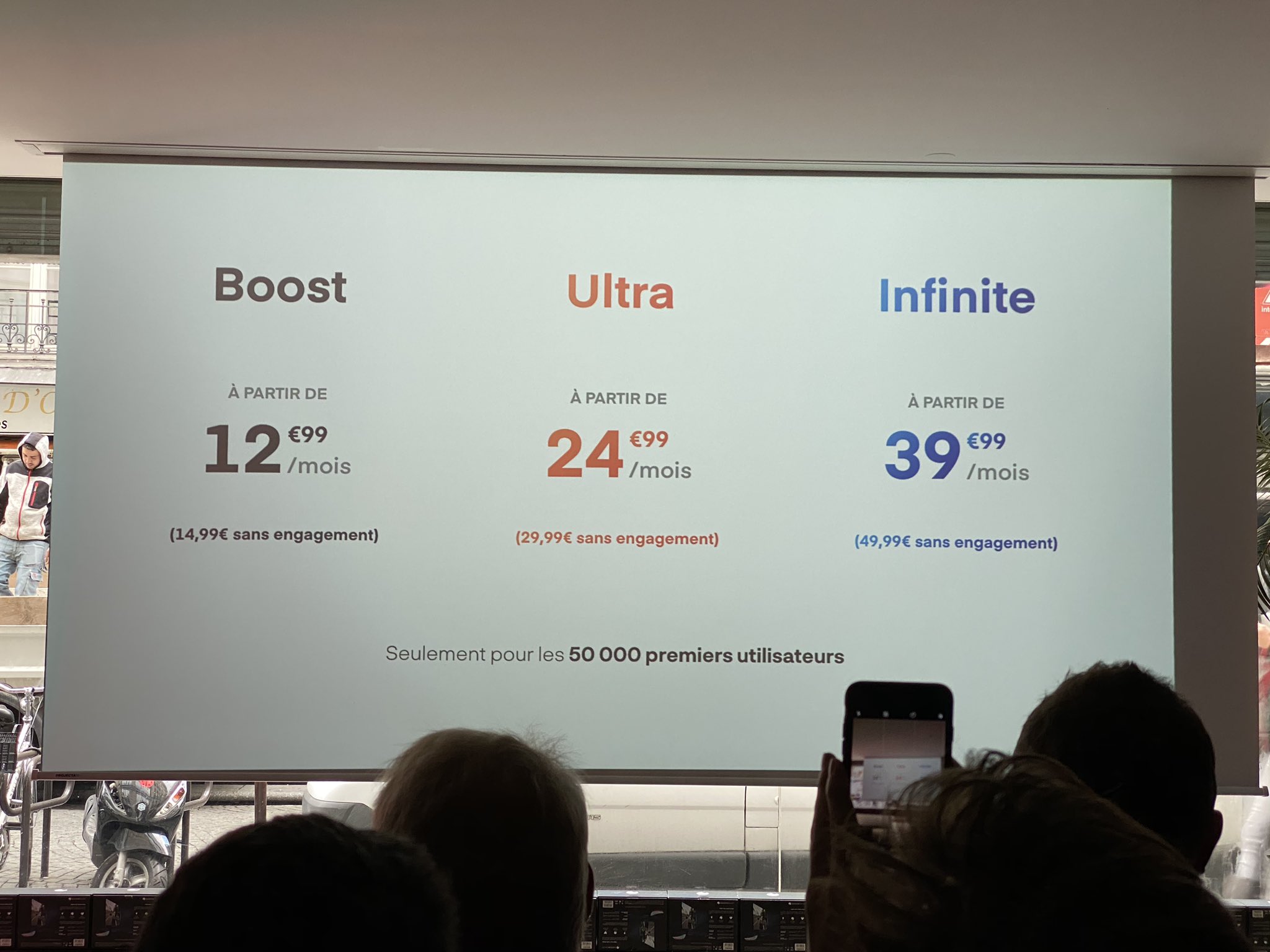
The startup is moving away from a single configuration to offer three different plans. On February 2020, customers will be able to chose between three plans — Boost, Ultra or Infinite.

  • Boost: Nvidia GTX 1080 GPU, 3.4GHz with 4 cores CPU, 12GB of RAM, 256GB of storage
  • Ultra: Nvidia RTX 2080 GPU, 4GHz with 4 cores CPU, 16GB of RAM , 512GB of storage
  • Infinite: Nvidia Titan RTX GPU, 4 GHz with 6 cores CPU, 32GB of RAM, 1TB of storage

In the U.K., Boost costs £12.99/£14.99 per month, Ultra costs £24.99/£29.99 and Infinite costs £39.99/£49.99 per month. You get the lower price with yearly subscriptions.

In France, Germany, Belgium and Luxembourg, plans cost €12.99/€14.99, €24.99/€29.99 and €39.99/€49.99 respectively. Plans will become more expensive after the first 50,000 customers — pre-orders start today. New plans aren’t available in the U.S. for now.

It’s worth noting that you’ll be able to add an option to get more storage with any plan. Storage plans include 256GB of SSD performance — anything above that will perform like a more traditional HDD. Shadow is using Intel Xeon W3200 CPUs on the new configurations.

cQHGO38N.jpg large

OVH founder and chairman Octave Klaba also announced a new partnership with Shadow. OVH is going to take care of Shadow’s infrastructure and become the cloud hosting partner going forward. The new servers will be rolled out in OVH data centers.

In other news, Shadow is launching a new interface specifically designed for TVs and mobile devices. The launcher now lists all your games. You can tap on a game to launch the game directly without going through the regular Windows interface. The update is available on Android TV, iOS and Android. The tvOS update should land next week.

IMG 0206

Competition is heating up

Google is about to launch Stadia on November 19th. Microsoft is working on Project xCloud. Nvidia has its own cloud gaming service. In other words, cloud gaming has become an incredibly crowded market.

Shadow has been around for a few years now. In addition to refining its streaming technology, the company emphasizes everything you can do with Shadow that you can’t do with a more limited cloud gaming service.

“We’re the only one to offer a full PC. You can stream, work, do some Photoshop, do some SolidWorks,” Shadow co-founder Emmanuel Freund said. “We’re the only one to offer 244Hz monitor support, we’re the only one to adapt to all screens.”

As a pure cloud gaming company, Shadow wants to be available on any platform. You don’t have to buy a Google Pixel phone or a PlayStation to access the service. You can launch your Shadow instance on Windows, macOS, Linux, Android, iOS, tvOS and Android TV.

And now, you can even imagine using Shadow with a mobile VR headset. After installing the Android app, you can launch VR games on your Shadow instance and access demanding games without a gaming PC.

Some corporate news

Shadow has raised another $33 million in October (€30 million) — it’s unclear who invested in this round. The company also raised some money from Western Digital and Charter Communications earlier this year. Overall, the startup has now raised $111 million since launch (€100 million).

There are now 70,000 Shadow customers across 8 countries. At $35 per month, the company is generation some significant monthly recurring revenue.

And Shadow has a new CEO. Co-founder Emmanuel Freund is stepping aside as CEO — he’s now in charge of strategy. Jérôme Arnaud is taking over as CEO. The company was probably looking for a more senior business profile for the next step of the company.

29 Oct 2019

Quip wants to help you floss

Quip, the dental care startup that first went to market with electric toothbrushes, has launched its first product outside of brushes. Called Strand, the product is a floss applicator with a refillable canister.

Strand costs $20 for the metallic applicator and refills cost $5. Each string is pre-marked at every 18-inches to help guide people to use that amount for each tooth. Strand has been in the works since before Quip officially launched its toothbrush, Quip CEO Simon Enever told TechCrunch.

“As we’ve talked about a lot, our mission is very much to help with all of the fundamentals of oral care and floss has been that next natural chapter for us on the personal care side of the business,” he said. “There are all of these bad habits people exhibit or don’t exhibit in flossing. There are massive numbers of people who don’t get the basics right and even fewer people are bothering to floss even once a day. For us, it’s paired so closely with brushing itself. The only true way to get proper results in oral care is to both floss and brush.”

With Strand, the hope is to make flossing something people actually want to do. To help with that, Quip designed Strand to be easily fit inside your pocket so that you can easily take it on the go.

“A big insight from our research is that people want to floss on the go,” Enever said. “That’s the time when people want to floss but no one brings their floss with them. We tried to create something that slips comfortably into your pocket.”

To date, Quip has raised more than $60 million in funding from Sherpa Capital, TriplePoint Capital, NFP Ventures and others.