Category: UNCATEGORIZED

24 Oct 2019

Lawmakers ask US intelligence chief to investigate if TikTok is a national security threat

Two lawmakers have asked the government’s most senior U.S. intelligence official to assess if video sharing app TikTok could pose “national security risks” to the United States.

In a letter by Sens. Charles Schumer (D-NY) and Tom Cotton (R-AR), the lawmakers asked the acting director of national intelligence Joseph Maguire if the app maker could be compelled to turn Americans’ data over to the Chinese authorities.

TikTok has some 110 million downloads to date and has spiked in popularity for its ability to record short, snappy and sharable videos across social media networks. But the lawmakers say because TikTok is owned by a Beijing-based company, it could be compelled by the Chinese government to turn over user data — such as location data, cookies, metadata and more — even if it’s stored on servers it owns in the United States.

Both Schumer and Cotton warn that TikTok’s parent company, ByteDance, is “still required to adhere” to Chinese law.

“Security experts have voiced concerns that China’s vague patchwork of intelligence, national security, and cybersecurity laws compel Chinese companies to support and cooperate with intelligence work controlled by the Chinese Communist Party,” the letter, dated Wednesday, said. “Without an independent judiciary to review requests made by the Chinese government for data or other actions, there is no legal mechanism for Chinese companies to appeal if they disagree with a request.”

That same legal principle works both ways. U.S. companies have been shut out, or had their access limited, in some nation states — including China — over fears that they could be compelled to spy on the behalf of the U.S. government.

In the aftermath of the Edward Snowden disclosures, which revealed the U.S. government’s vast surveillance operation, several major tech companies were all dropped from China’s approved state purchases list amid fear of U.S. cooperation in surveillance.

The senators also said they are concerned that the app was censoring content “deemed politically sensitive” to Beijing. In September, The Guardian revealed that the app’s moderators actively censor content relating to Tibetan independence, the Tiananmen Square massacre, or the banned religious group Falun Gong.

They also said the app could pose a “counterintelligence” threat as it could be used as a foreign influence tool as seen in the 2016 U.S. presidential election.

When reached, a spokesperson for the Office of the Director of National Intelligence would not comment.

TikTok said it was “carefully reviewing” the letter.

“We will not be offering any further comment on it at this time other than to reaffirm that TikTok is committed to being a trusted and responsible corporate citizen in the U.S., which includes working with Congress and all relevant regulatory agencies,” said TikTok spokesperson Josh Gartner.

24 Oct 2019

Swiftmile will become the ‘gas station’ for electric bikes and scooters in Austin

Anyone who has tried to ride an electric scooter knows the likelihood of finding one with a charged battery is quite low. Swiftmile, which just landed a contract with the city of Austin, supplies cities and private operators with docks equipped to park and charge both scooters and e-bikes.

What Swiftmile offers serves as a win for operators, riders and cities alike. Operators can provide a better (charged) product to their customers, the likelihood of finding a charged scooter increases and cities can better control sidewalk clutter and issues pertaining to improper parking. Unfortunately, the downside falls on those relying on charging scooters to make extra income.

When Swiftmile deploys in Austin, the plan is to start with ten stations, which comes out to about 80 parking slips. The company hopes to do this by the end of the year. Austin has become a major micromobility hub with seven providers operating a total of 17,600 vehicles in the city. In fact, it’s become known as a place that many other cities look to for regulation.

“What we do with cities is we get permission from them, we get an encroachment permit and then it’s up to us to monetize off the scooter providers,” Swiftmile co-founder and CEO Colin Roche told TechCrunch. “What we do is put our system down and, you can think of it like a gas station in the middle of where all the scooters are. You don’t want a lot of people having to drive in to pick all these scooters up. I think that’s going to diminish more. If the asset is in the field right there, then you incentivize a rider to ride to the station with credit.”

From there, Swiftmile charges the operators by the minute, but not to exceed a certain amount, depending on the market. Initially, the docking system will be open to all operators in order to show them how it works and how beneficial it can be. After a certain period of time, Swiftmile will only charge its customers scooters.

[gallery ids="1900988,1900989,1900990"]

“Here’s the key piece,” Roche said. “Our system is really intelligent so we have the ability to detect whose scooter it is. When it gets plugged in, we pulse the system and it tells us what kind of scooter it is.”

That makes it so a rider could still park any scooter there, but only Swiftmile customers will get their scooters charged.

In addition to Austin, Swiftmile has also launched a mobility hub in Berlin, and plans to deploy more. On the operator side, Swiftmile has partnered with Spin to create branded charging hubs exclusively for Spin scooters. In the U.S., Swiftmile has deployed more than 50 stations. In Austin, however, the charging hubs are vehicle agnostic and will mark Swiftmile’s first public system.

The same will go for Pittsburgh, where Swiftmile will deploy about 50 stations in early 2020. That’s all part of the Pittsburgh Micromobility Collective, which includes Spin, Zipcar, Ford Mobility, Waze and Swiftmile.

Swiftmile got its start as a bike-share operator for private companies, including Tesla and Google. To date, the company has raised a little more than $5 million from Sinai Ventures, Verizon Ventures and others. Additionally, Swiftmile just received a term sheet for a $12 million Series A round.

*Verizon owns TechCrunch, but has no influence on our coverage.

24 Oct 2019

Here’s what the Pixel 4’s radar chip looks like


I’ve been tearing my gadgets apart for as long as I can remember. Consoles, phones, printers, whatever — I’ve always needed to see what makes it all work. Sometimes they even work when I put them back together.

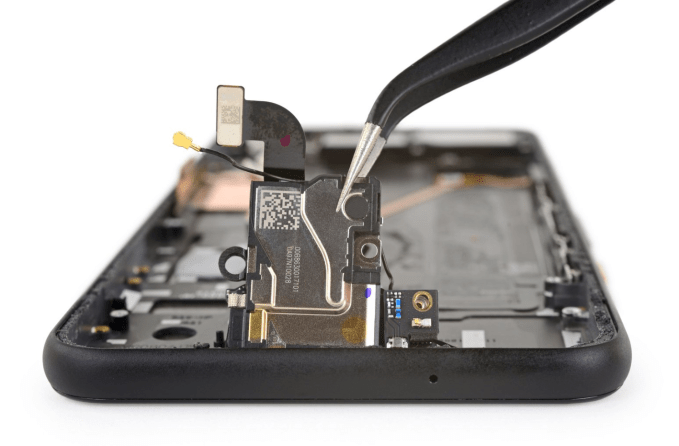
As soon as Google announced that the new Pixel 4 had friggin’ radar built in for detecting hand gestures, I needed to see under the hood. While I haven’t picked up a Pixel 4 yet, our friends over at iFixit busted out the heat guns and did what they do best, tearing the Pixel 4 XL down to parts and uncovering the Project Soli radar chip along the way.

iFixit 2

Image Source: iFixit

That board you’re looking at contains a good amount of stuff beyond the Soli chip — it’s also where you’ll find the earpiece speaker and the ambient light sensor, for example. The Soli chip seems to be that little greenish box in the upper right area.

Alas, there’s… not a ton to learn just from looking at it. Google has spent the last few years working on this, and they’ve ended up with something that’s honestly a bit wild. With no moving parts, and without line of sight, these chips are able to do things like detect when people are near the device (and how many), whether they’re standing or sitting, how they’re moving their hands, and more. As iFixit so succinctly puts it, “TL;DR: magic rectangle knows your every move”.

For anyone looking to tear apart the Pixel 4 XL themselves, be it to make repairs or just out of curiosity, make sure you know what you’re getting into. iFixit gives the device a relatively paltry 4 out of 10 on its repairability score, citing easily breakable pull tabs and a decent amount of glue as obstacles along the way. You can find their full tear down here.

iFixit

Image Source: iFixit
24 Oct 2019

Daily Crunch: Twitter revenue disappoints

The Daily Crunch is TechCrunch’s roundup of our biggest and most important stories. If you’d like to get this delivered to your inbox every day at around 9am Pacific, you can subscribe here.

1. Twitter Q3 misses big on revenues of $824M and EPS of $0.05 on the back of adtech glitches

Twitter said the huge drop in performance “was impacted by revenue product issues, which we believe reduced year-over-year growth by approximately 3 or more percentage points, and greater-than-expected seasonality.”

The company has made a significant shift in the last year to tracking a new user metric of its own making — monetizable daily active users, which is the number of users who are being served ads. More established metrics like daily and monthly active users have stagnated and even declined in recent years.

2. Lowlights from Zuckerberg’s Libra testimony in Congress

“I don’t control Libra” was the central theme of Facebook CEO Mark Zuckerberg’s testimony yesterday, while the House of Representatives unleashed critiques of his approach to cryptocurrency, privacy, encryption and running a giant corporation.

3. Announcing the Disrupt Berlin 2019 agenda

Disrupt Berlin will run on December 11 and December 12, when we’ll sit down with CEOs from big-name companies such as Away, UIPath and Naspers, as well as leading investors from Atomico, SoftBank and GV. (Tickets are available here.)

4. By tweeting from a SCIF, House lawmakers put national security at risk

If you thought storming into a highly secured government facility with your electronics but without permission was a smart idea, you’d be wrong. But that didn’t stop Rep. Matt Gaetz and close to three-dozen of his Republican colleagues from doing exactly that.

5. Virgin Galactic becomes the first public space tourism company on Monday

The company’s shareholders have approved a merger with Chamath Palihapitiya’s special Social Capital Hedosophia holding company, with a debut on the NYSE for the newly merged public entity scheduled for Monday.

6. Cybersecurity automation startup Tines scores $4.1M Series A led by Blossom Capital

Tines automates many of the repetitive manual tasks faced by security analysts so they can focus on other high-priority work. The founders have bootstrapped the company until now.

7. Bill McDermott aims to grow ServiceNow like he did SAP

During the company’s earnings call, outgoing CEO John Donahoe said that McDermott met all of the board’s criteria for its next leader — all in the service of building toward a $10 billion revenue goal. (Extra Crunch membership required.)

24 Oct 2019

Caffeine signs streaming deal with rapper Offset

Caffeine, the live streaming service founded by former Apple designers Ben Keighran and Sam Roberts, has signed an exclusive streaming deal with Offset.

The startup has been relatively quiet since raising nearly $150 million in funding last year, but Keighran (who previously co-founded Chomp and then served as Product Design Lead for Apple TV) told me that’s going to start changing as the company prepares to leave beta testing.

Keighran also pointed to the Offset deal as exemplifying several aspects of his vision for how Caffeine can become “the future of live TV.”

As part of the deal, Offset will host two exclusive shows on his Caffeine channel — a weekly stream at 6pm Pacific on Sundays where he’ll play his favorite games and try out new games suggested by fans, plus a second show called “Bet with Set,” where he’ll compete with celebrity guests on a variety of a challenges.

“With Caffeine, I can create my content in an organic way that lets me make real connections with my community,” Offset said in a statement. “They have created new technology that takes the lag out of online interactions and it makes me reachable in a way that other platforms simply can’t. Caffeine allows me to be myself so I’m trying to reach these kids to show them that everybody is a part of a team and we’re all one.”

Other Caffeine streamers include basketball player LaMelo Ball, rapper The Game and rapper Lil Xan, as well as game streamers Cartoonz, Ohmwreckwer and Cranier. The streams are then monetized by allowing fans to purchase and send virtual gifts.

Keighran said that game streaming will be a key part of Caffeine’s appeal, but he suggested that compared the currently dominant Twitch (owned by Amazon), Caffeine will have an easier time expanding beyond gaming.

He added that not only is Caffeine designed for a wide range of live streaming content, but it also has the advantage of backing from 21st Century Fox and its new owner Disney, which was presumably a big part of how it acquired the streaming rights to sports content from Fox Sports and Disney-owned ESPN.

“We’re getting content rights from Fox and Disney that Google and Amazon would love to have,” Keighran said. “That’s part of the secret sauce that attracts athletes and hip hop artists — they can stream sports content and video games with a better community filter, chat, new monetization with no ads. I think Offset is the perfect example.”

24 Oct 2019

Modern Animal raises $13.5 million to make going to the vet suck less

Modern Animal just raised a $13.5 million seed round of funding to fuel its mission of offering pets, humans and veterinarians a better experience. Led by Founders Fund with participation from Upfront Ventures, Susa Ventures and others, the round will enable Modern Animal to open its first location in Los Angeles early next year.

Founded by Steven Eidelman, who previously founded dog tracking startup Whistle and sold it to Mars Petcare, Modern Animal pegs itself as the next generation veterinary care platform. You can think of it as a One Medical model for pets, where all of the vets are full-time and receive equity in the company.

“If you think about similarities, we are committed to using technology and design to reinvent the way pet care is delivered,” Eidelman told TechCrunch. “There are lots of similarities with One Medical.”

Modern Animal’s first location in LA will be led by Dr. Christine Long, DVM, the former director of veterinary medicine at Petco. For a $100 yearly membership fee, Modern Animal offers unlimited exams, 24/7 virtual care, in-app prescription requests and delivery and more. However, there is a charge for additional services.

“Our goal is to be at parity with the market,” Eidelman said. “We’re not trying to create a high-end experience. We want to build the most efficient system that allows us to deliver the best care. Those efficiencies should funnel into long-term lower cost of care.”

Modern Animal’s first location will have a dental and surgery suite, but does not do any overnight services.

“We’re not trying to operate as an emergency room nor are we hiring specialists,” Eidelman said. “If animals need a more complex level of care, we’ll refer them to the best ER or specialist.”

In the next five years, Modern Animal envisions operating 50 locations throughout the U.S. Each location will continue to be designed with environmental considerations like no ringing phones at the front desk, and keeping dogs and cats in separate areas. That last piece is key for humans who may be allergic to cats or dogs, and for animals who don’t like to interact with different species.

“The idea is to create a really safe and comfortable environment for the animal,” Eidelman said. “But the only way we can get them grate care is if we also take care of humans.”

24 Oct 2019

To scale subscription startups, get to know your customers

The crowded world of subscription businesses offers ongoing opportunities to screw up your relationship with subscribers.

At Disrupt San Francisco 2019, I spoke with Forerunner Ventures’ Eurie Kim, Lola CEO Alex Friedman and KiwiCo CEO Sandra Oh Lin about key issues and priorities for scaling a subscription service post-launch. A primary theme: building relationships with customers who’ll help you decide where to look for your next product.

“The first product just has to work or else you’re just not gonna have a company. But to be a big company, you have to have much more than just the product, it has to be the full experience and the full relationship that you have,” says Kim. “And then certainly you have to have the muscles on your team to be able to listen, evolve, test, and grow. So we’re obviously searching for companies… where the founders know so much about their customer that for the first few years, you have a very clear line of, you know, path forward. It’s not complicated. It’s just execution. And that’s hard to do. But you need to have a pulse on that customer.”

Instead of striving to meet the needs of every customer, entrepreneurs should focus on trying to understand the subscribers they’ve zeroed in on by being purposeful — instead of throwing a bunch of ideas against the wall to see which ones stick.

“What’s hard is your cash constraints. So you’re starting with one or two products. It’s not like an amazing experience, because it’s one or two products,” Kim said onstage. “You have to have like that laser-sharp product that is actually solving so much of the need that someone’s like, ‘well, it’s only one product, but it’s like a really good product. And so I’m going to start there, I’m going to trust Lola, and I’ll get this tampon. And then if I like it, I’m going to stick with it. I’ll sign up for the subscription, because I do need it monthly. And then hey, maybe I’ll buy something else.’ And so the brand relationship builds over the course of time naturally.”

Lola, which makes women’s health products, launched with an organic cotton tampon that shipped to users monthly. After entering that space, the startup’s co-founders strategized about how expand their offerings.

“We figured, okay, there’s this opportunity to build an end-to-end experience here,” says Friedman. “Where do we start? Obviously, there are a lot of different categories and moments. So how can we be there for [our customer] at every stage with products and content and community. And so after period care, we went to sexual wellness, because that is very resonant with our current customer base.”

24 Oct 2019

Looking to become the central hub for logistics management, Shipwell raises $35 million

Shipwell, the software platform for managing trucking logistics, has raised $35 million and is expanding its suite of services to become a full-service hub for logistics management. 

The new round led by Georgian Partners comes as the company has just expanded its suite of tracking and management tools to integrate with FedEx’s parcel shipping services. The company is also planning an expansion into ocean shipping in the coming months, according to chief executive, Gregory Price.

The Austin-based company works with multiple service providers — including the logistics services unicorn Flexport — but operates as a marketplace for shippers to connect with freight companies and online tools to manage those shipments. In effect, the company is pitching a version of the proprietary logistics management toolkit that has made Amazon so successful, to any retailer or outlet.

Since its last round of funding a year ago, Shipwell has grown to service over 4,000 customers per month with supply chains spanning multiple geographies. The company now operates in Canada, Mexico, and even across Europe.

With the new funding the company intends to open new offices in Chicago and expand to a second location in its home base of Austin.

The company has also launched a new application program interface which allows it to help manage logistics through other modes than just trucking. Price says the company has about 20 companies beta-testing the tool, which is set to launch publicly in November.

24 Oct 2019

Spotify now lets artists buy a full-screen ‘recommendation’ promoting their new album

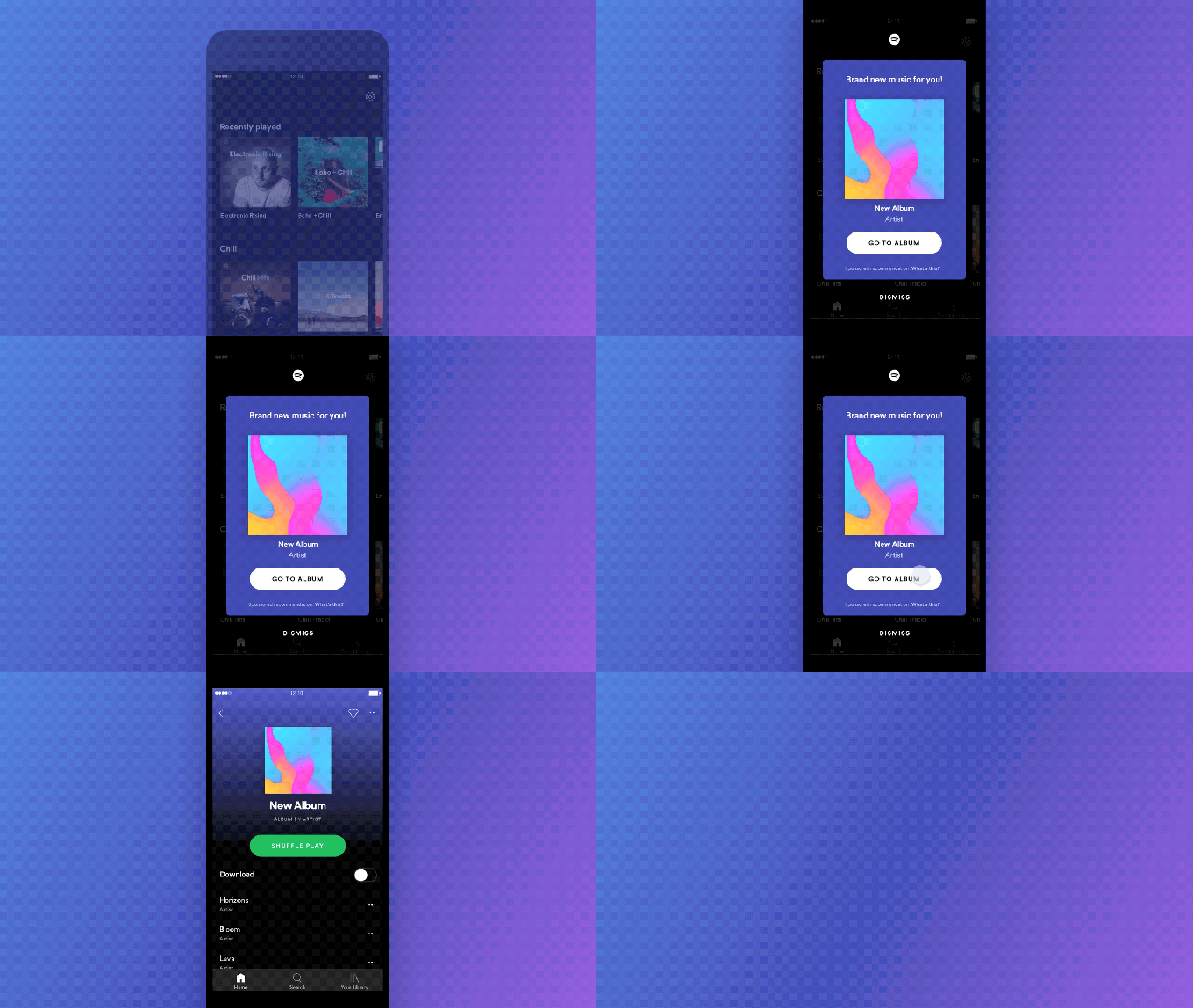
Spotify recently added a feature that will occasionally pop up a full-screen recommendation of a new album the service thinks you’ll like, based on a combination of your listening taste and human curation. Now, it’s going to allow artists and their teams to pay to target their fans through this same feature, effectively turning the recommendation into a full-screen ad.

The company says this is currently a test and is only available in the U.S. for now.

These sponsored recommendations — which are effectively now ads, as they’re bought and paid for — will display to both Free and Premium subscribers. Technically, that means Premium subscribers will be seeing full-screen ads for the first time, even though those ads are tailored to their personal taste in music to be less disruptive to their overall enjoyment of the app.

Brand New Music for You

To head off any backlash about this fact, Spotify says Premium listeners will be able to turn off the recommendations feature, if they choose. It’s not clear that users will think to do this. After all, it was first introduced as just a helpful recommendation feature, not advertising. And because it’s still highly personalized — you’ll only hear from artists you frequently listen to or follow — many users may not realize the feature is now transactional in nature. Or even if they do, they may not care.

You have to hand it to Spotify: that’s actually pretty clever.

The unit itself does disclose that it’s “sponsored” in small print at the bottom. And if you click the “What’s this?” link, you’ll be taken to a screen that explains this is a new music update about an artist you listen to or follow. Users then have the option to turn off future updates from only that artist. Premium users can toggle off the feature entirely.

Spotify says early feedback about the feature has been positive, which is why it decided to move forward with its plans to offer this as sponsored opportunity.

The new recommendations will start to appear for you the next time a favorite artist releases their next album, the company says.


24 Oct 2019

Apple TV app comes to Amazon’s Fire TV Stick and other devices

Ahead of the launch of Apple TV+ on November 1, Apple’s Apple TV app has begun to roll out to other platforms beyond Apple’s own streaming media player, Mac computers, and iOS devices. Earlier this month, for example, the app arrived on Roku devices. Today, it’s hitting Fire TV Stick and Fire TV Stick 4K.

Specifically, it will be available to Fire TV Stick 2nd Generation and Fire TV Stick 4K users in the U.S., Canada, U.K., Germany, France, Italy, Spain, and India, starting today.

Fire TV Basic Edition customers in over 50 countries will also be able to find the new app in the Amazon Appstore on their Fire TV. Though not yet available, the app will launch soon on Fire TV Cube (1st and 2nd Gen.), Fire TV (3rd Gen pendant design), plus Toshiba and Insignia Fire TV Edition smart TVs, and Nebula soundbar.

It’s not compatible with the Fire TV (1st and 2nd Gen) or Fire TV Stick (1st Gen), Amazon says.

While the app is necessary for being able to stream from Apple TV+, that’s not all it does.

Within the Apple TV app, you’re also able to access your iTunes library, including any shows or movies you’ve purchased or rented. However, if you want to buy or rent something new, you’ll need to do so from an Apple device first in order to have the content show up within the app.

For Apple to have an app available on Amazon’s platform at all took years of negotiations.

As Apple’s interest in the world of streaming media and related devices grew, it also had to acknowledge that its walled garden approach needed to be set aside. In 2017, Apple CEO Tim Cook finally announced that Prime Video would come to Apple TV. Since then, the two companies have eased up on their restrictions against each others’ products.

The following year, Amazon expanded its assortment of Apple inventory to include other devices besides Apple TV — like iPads, iPhones, Apple Watch and Beats headphones. It also brought its FreeTime Unlimited app to iOS, while Apple Music arrived on Echo devices.

This March, Apple Music launched on Fire TV, as well.

And with Apple TV+, Apple is even more of a rival to Amazon, which runs its own streaming service, Prime Video.

Apple, however, has a smaller lineup for Apple TV+ with shows like Dickison, The Morning Show, See, For All Mankind, and others. It’s unclear how well these series will perform with audiences, but Apple is giving away a year of access to its service with the purchase of new Apple devices. That gives it time to find its footing, even if several of its first tries bomb.

Amazon says it will announce, via Twitter, when the Apple TV app is released for other devices.