Category: UNCATEGORIZED

23 Oct 2019

WeWork confirms an up to $8 billion lifeline from SoftBank Group; names new executive chairman

Confirming earlier reports, The We Company and SoftBank Group agreed to a new capital infusion which will see SoftBank committing $5 billion in new financing and issuing a tender offer for another $3 billion in buybacks for shareholders.

The company also said it would accelerate an existing commitment to put $1.5 billion into the short-term real estate rental company.

Under the specific terms of the deal, WeWork will receive $1.5 billion committed from SoftBank’s April 2020 cash infusion into the company at $11.60 per share. With that money expected to come in seven days after the deal is signed (subject to shareholder approval).

There’s also the tender offer for up to $3 billion worth of non-SoftBank owned shares at a price of $19.19 per share, which will begin in the fourth quarter of this year, with closing subject to regulatory approvals.

Finally there’s a joint venture share swap where all of SoftBank Vision Fund’s interests in regional joint ventures outside of Japan will be exchanged for WeWork shares at a price of $11.60 per share’ and a debt facility consisting of $1.1 billion in senior secured notes, $2.2 billion in unsecured notes, and a $1.75 billion letter of credit facility, which will occur after the tender offer is completed.

After the closing and the tender offer, SoftBank will own approximately 80 percent of the We Company, according to a statement.

But SoftBank will not actually will not hold a majority of voting rights at any stockholder or board of directors meeting,  thanks to WeWork’s convoluted ownership structure. Therefore, even with its 80 percent stake in the business, WeWork isn’t a subsidiary, but an “associate” of SoftBank.

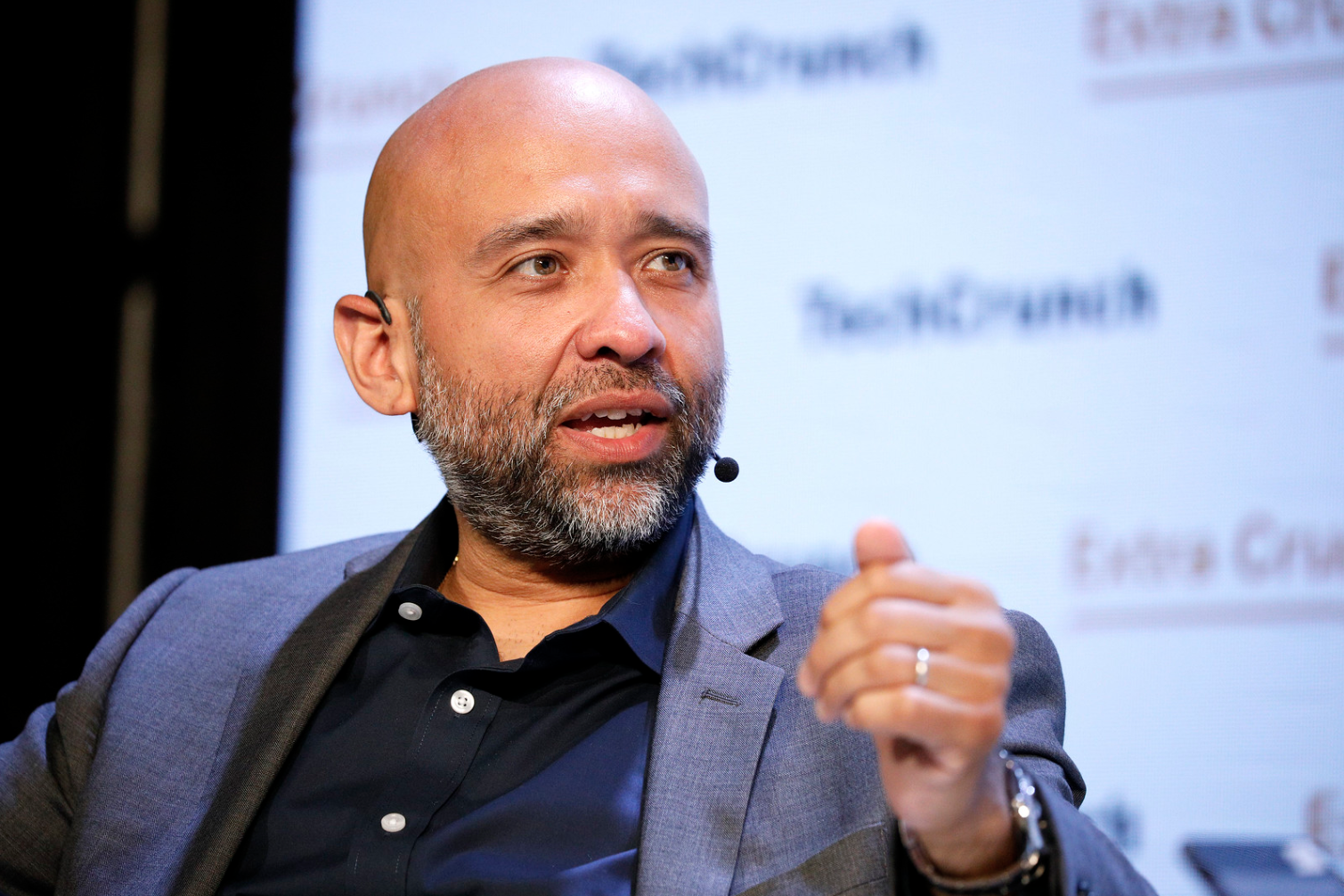
As part of the agreement, the company confirmed that Adam Neumann will become a board observer and Marcelo Claure, the chief operating officer of SoftBank Group will assume the position of executive chairman of the board of directors of WeWork — as soon as the company receives its $1.5 billion payment from SoftBank.

“SoftBank is a firm believer that the world is undergoing a massive transformation in the way people work. WeWork is at the forefront of this revolution. It is not unusual for the world’s leading technology disruptors to experience growth challenges as the one WeWork just faced,” said Masayoshi Son, chairman and chief executive of SoftBank Group Corp, in a statement. “Since the vision remains unchanged, SoftBank has decided to double down on the company by providing a significant capital infusion and operational support. We remain committed to WeWork, its employees, its member customers and landlords.” 

The vision may remain unchanged, but the story that SoftBank will have to tell about its new “associate”. Under Neumann’s stewardship,  We Company was a cash-burning, globe-spanning, all-encompassing community developer that would usher in a new kind of capitalism, operating under the banner of “We”.

Now, the company is more like a struggling purveyor of temporary office space, which has a mountain of leases it owns and is looking down the barrel of a potential cash crunch — even with the SoftBank lifeline. 

Still, SoftBank’s executives and WeWork’s new leadership are standing by their rhetoric for what the company is… and can be.

“WeWork is redefining the nature of work by creating meaningful experiences through integrating design, technology and community. The new capital SoftBank is providing will restore momentum to the company and I am committed to delivering profitability and positive free cash flow,” said Claure in a statement. “As important as the financial implications, this investment demonstrates our confidence in WeWork and its ability to continue to lead in disrupting the commercial real estate market by delivering flexible, collaborative and productive work environments to our customers.”

23 Oct 2019

Salesforce Ventures’s John Somorjai warns N.C.’s politics could dampen its tech hub potential

North Carolina has been rising as an entrepreneurial hub. It’s now home to massive deals, like IBM buying Red Hat for $34 billion and Fortnite maker Epic Games raising a landmark $1.25 billion, both which helped to put the state — and the Triangle region, in particular — on the map. And now it’s just minted another unicorn with Pendo’s last fundraise. But its tech hub potential can still be threatened by the state’s political swings, said Salesforce Ventures head John Somorjai, who spoke today at a tech event in Durham.

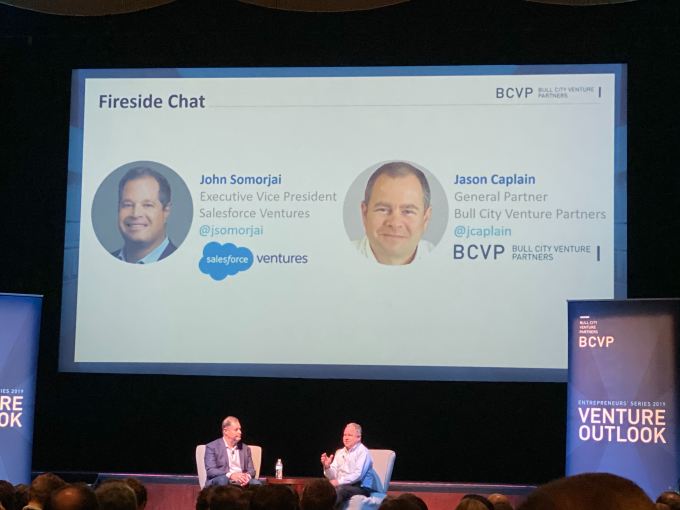
On a panel at Bull City Venture Partners’ Entrepreneurs’ Series 2019, Somorjai reminded the audience that investment in the state follows the talent. And a state can’t attract talent when it’s not “welcoming to all people,” he said.

North Carolina has had a difficult history on this front, if you recall.

In 2016, PayPal canceled plans to open a global operations center in Charlotte after N.C. passed the controversial (“bathroom bill”) law that prevented cities from creating non-discrimination policies based on gender identity. The state lost 400 potential jobs, as a result. Over 100 other companies, including Apple, Google, Twitter, Facebook, eBay, Uber, and others also asked the state to repeal the law after its passing.

N.C. eventually revised the law, then reached a settlement this summer that allows transgender people to use certain bathrooms matching their gender identity. But in some cases, it was too late to woo the tech companies back.

These sorts of issues have a broader effect on the state’s ability to attract tech and business investment at a time when investors are often now looking outside the Valley (and its obscene valuations) to find companies that are more focused on profitability.

Image from iOS 6

Salesforce Ventures, a strategic investor who keeps its stake below 15%, isn’t hesitant to fund companies beyond Silicon Valley — it has five investments in N.C. and 15 overall in the larger region, for example. And 75% of its investments were made outside of California, Somorjai noted.

But when asked what North Carolina’s biggest challenge was, in terms of becoming home to a startup community, he alluded to the state’s politics and its divisive laws.

“Before the last election, there was an environment here that wasn’t really welcoming to all people,” Somorjai said. “One of [Salesforce’s] core tenants — our core values — is equality. And there’s really sound business sense behind that,” he explained. “If you have discriminatory policies, people don’t feel welcome. If they don’t feel welcome, they’re not going to want to work there. And you will never be able to attract the best talent.”

“Money flows to where the talent is,” he added.

He also suggested to the event’s audience — a group of some 450 entrepreneurs and hundreds more working in the area’s startup ecosystem — that local community leaders should remain vigilant about these sorts of problems.

“If you’re complacent, it can happen again,” he added.

Despite the concerns, Somorjai was generally positive about the ability for strong startups to arise in N.C. Salesforce Ventures itself invested in two N.C. area unicorns — Pendo and nCino — and it just acquired Charlotte-based MapAnything, which gives it some 200 new employees in the Tar Heel state. Elsewhere in N.C., startups AvidXchange, Red Ventures, and Tresata all have unicorn valuations.

“One thing we’ve been so excited about is — you have these tremendous universities that are putting out great engineers every year. And you have a growing group of investors that are investing in this area. There’s also now so much talent here that you’re attracting investors from all over the country,” he told the audience. “I think that’s great.”

Image credit, top: SeanPavonePhoto/Getty Images


23 Oct 2019

Verizon is giving its customers 12 free months of Disney+

On November 12 Verizon will begin offering 12 months of Disney+ to all of its new and existing 4gLTE and 5G unlimited wireless customers, the companies said today in a joint statement.

It’s a great way for Disney to juice its early subscriber numbers and for Verizon to add a tantalizing perk as competition heats up for both streaming media companies and telecoms whose media strategy still seems a little… muddled.

While Comcast and AT&T each have their own successful media properties, Verizon (which owns Verizon Media Group, which owns TechCrunch) has seen its fortunes in the media landscape wane as much of the investment thesis behind buying Aol… then Yahoo… then merging them into Oath… then rebranding them as Verizon Media Group… fizzled.

Tying itself to Disney+ — even just promotionally — makes good business sense.

Through the agreement Verizon customers get access to everything Disney+ has to offer, including the highly anticipated Star Wars television series, “The Mandalorian” and another 25 original films and documentaries. Watch the over three hour-long teaser trailer below for an exhaustive look at every. single. Disney. piece. of. content. coming. to. the. service.


“Giving Verizon customers an unprecedented offer and access to Disney+ on the platform of their choice is yet another example of our commitment to provide the best premium content available through key partnerships on behalf of our customers,” said Verizon Chairman and CEO Hans Vestberg, in a statement. “Our work with Disney extends beyond Disney+ as we bring the power of 5G Ultra Wideband technology to the entertainment industry through exciting initiatives with Disney Innovation Studios and in the parks,” he added.

Here’s the deal: At launch, Verizon becomes the exclusive wireless carrier to offer 12 months of Disney+ for itsnew and existing customers. The offer also extends to its new Fios Home Internet and 5G Home Internet customers.

Folks can activate their Disney+ subscription and start streaming on devices including game consoles,  streaming media players and smart televisions.

22 Oct 2019

Somehow, ‘Dark Fate’ got me excited about the Terminator again

The release of a new Terminator sequel has become a familiar ritual: The new filmmakers acknowledge the greatness of the first two movies, then mumble awkwardly about the other sequels — which are inevitably ignored, because they assure us that this time, they’ve created the sequel we’ve been waiting for.

I can’t tell you whether “Rise of the Machines,” “Salvation” or “Genisys” deserves to be dismissed like this, because I haven’t seen any of them. (I did watch the TV spinoff, “The Sarah Connor Chronicles,” which was pretty good.) But I can say that the latest installment, “Terminator: Dark Fate,” delivers on the promise of a worthy sequel.

It helps, of course, to see the return of some familiar names — not just Arnold Schwarzenegger, but also Linda Hamilton, who takes up the role of Sarah Connor for the first time since “Terminator 2.” And then there’s franchise creator James Cameron, who was apparently too busy with his “Avatar” sequels to direct (“Dark Fate” was helmed by “Deadpool” director Tim Miller instead), but who stayed involved as a producer and story writer.

Not that the story is really the selling point: The big emotional moments can feel clumsy and rushed, and some of the dialogue is genuinely groan-worthy.

All the script really needs to do, though, is give us a reason for those familiar faces to be back on-screen together, and to convince us that it’s not totally pointless to watch another Terminator movie. In that, it succeeds — with a few nods towards the changing technological and political landscape thrown in for good measure.

Terminator Dark Fate

In the film’s opening minutes, we learn that our heroes’ efforts at the end of “Terminator 2: Judgment Day” have succeeded in averting a nuclear apocalypse. However, for reasons that only become clear later, those pesky terminators keep showing up.

The story proper kicks off in Mexico City, where a young woman named Dani Ramos (played by Natalia Reyes) becomes the latest target of a cyborg assassin. Her pursuer (Gabriel Luna) is an advanced model whose skin and skeleton can function as two separate bodies, and she gets not one but two protectors — Sarah Connor, along with cybernetically enhanced soldier named Grace (Mackenzie Davis), as well as the late-film addition of an old-model terminator (Schwarzenegger, naturally).

There are more revelations as the story unfolds, but one of the best things about “Dark Fate” is the simplicity of its plot. There’s a killer cyborg, an innocent target and an overmatched guardian; mayhem ensues.

It’s in the depiction of that mayhem that “Dark Fate” excels. The film has plenty of CGI (I’d argue too much), but it feels very different from the weightless, super-powered battles that have become the big-screen norm, and even from the balletic killing sprees of the “John Wick” movies.

Instead, “Dark Fate”‘s action feels like a throwback the ’80s and early ’90s, specifically in those Cameron-directed Terminator movies — where a great deal of thought and ingenuity was devoted to coming up with all the different ways that a relentless murder machine might wreak havoc.

Hamilton, by the way, seems completely at-home in these scenes. And although Schwarzenegger’s performance was gratifyingly funny and loose, “Dark Fate” is absolutely her film.

Meanwhile, I’m still a little fuzzy on the details of how Luna’s Rev-9 actually works works, but it makes for a striking and unsettling visual. The finale, in particular, offers a masterful escalation of jeopardy and destruction, as Rev-9 tears through one environment after another — almost convincing you that this time, the Terminator really might be unstoppable.

I don’t want to overstate the case here: “Dark Fate” doesn’t quite replicate the perfect mix of terror, violence and melancholy that made those first two Terminator films so memorable. But it can hold its own in a fight.

22 Oct 2019

Drift CEO shares insights from 20+ years of startup experience

Why do serial entrepreneurs keep jumping back in? What things might you learn the third, fourth, or fifth time around?

To find out, Extra Crunch Managing Editor Eric Eldon spoke to Drift CEO and founder David Cancel at TechCrunch Disrupt San Francisco. Cancel has spent more than 20 years founding SaaS companies, with exits including Compete (acquired by TNS), Lookery (Acknowledge), Ghostery (Evidon), and Performable (Hubspot.)

In their thirty-minute conversation, they cover everything from finding your first customers, to what he’s seen change over the last two decades in the industry, to why he’s willing to cut a check to employees who want to leave. TL;DR? We’ve embedded a video of their chat at the end of this article.

To find what people really want, ask for money — any money.

One thing Cancel says he’s learned over the years: when you’re just getting started, you need to charge for your product right off the bat because you never know how someone really feels about a product until you ask for money.

“If you’re creating a paid-for product, you have to start charging from day one,” he says.

He outlines an experiment he calls the ‘dollar test,’ where if someone seems interested in a product before it’s even available, he’ll promise them lifetime access if they’ll hand over whatever’s in their pocket — be it a dollar, ten, twenty, whatever.

“What it teaches the entrepreneur is that most of the people who will tell you that they love this thing will not give you a dollar,” actionable information that can save time, money and stress. The dollar test “shortcuts things; most people will end up spending so much time coming back to you because you keep telling [them] you love it, because you’re a nice person and you don’t want to hurt [their] feelings.”

Cancel also uses this approach after a product launches, using it to gauge which new feature requests customers find most important.

“They’d say ‘I love your product, but it doesn’t do X, Y, or Z. My company is special, we need X, Y, or Z feature.'”

“Let’s say they were paying us $5,000 a month. I’d say, ‘it’s only going to be $20 more a month, then we’re going to build it for you and you’ll be the first ones to have it.'”

“What would happen, almost every single time, is there would be this awkward pause. They’d say ‘I have to go talk to my manager, I need to go talk to someone, I’ll get right back to you,'” he said, adding “Almost every single time that person continued to be a customer and never asked for that feature again.”

“When it’s free to ask for anything,” says David, “people will just keep asking.”

David Cancel 2

Letting people go isn’t always a bad thing

If someone asks David for a recommendation on an engineer, he’s willing to recommend his own employees.

His reasoning is twofold; on one side, it means he knows his teams are made up of people who want to be there; on the other, it means employees know he’s looking out for them.

“I want people on the team who want to be on the team. If people ask me, ‘hey, do you know a really great engineer who does X, Y, Z?'” I say ‘Eric does, and Eric’s on my team.’ I’m like, you should talk to him. And if Eric wants to go, he should go, because we only want people who actually [want] to be there. Then that person knows that I’m looking out for the best interests of them, for them — and even if they go, we may end up working together again later.”

Similarly, if an employee says they want to leave and start their own company, David says he’s often the first to write a check:

“We would attract, in the early days, people who wanted to learn how to start their own company. One of the things I would say, and I still say to everyone: Look, if you come on board, and work with us for some days, if you want to leave at any point and start a company, myself and my co-founder Elias will be the first checks in whatever you want to start, no questions asked.”

“And so we have done that for companies in Boston, companies in San Francisco, companies all over the place. And we continue to do that.”

For finding customers and employees, he turns to LinkedIn

Thanks to recruiter spam and “work anniversary” notifications, LinkedIn tends to be the butt of a lot of jokes — but Cancel says, used right, it’s still quite valuable.

“We built a lot of marketing within LinkedIn, which I think is a place that I would advise people to go spend time on now. You can find your buyers, you can find the people that you recruit.”

22 Oct 2019

LabGenius raises $10M to use AI for protein drug discovery

LabGenius, a London-based startup applying AI and “robotic automation” to protein drug discovery, has raised $10 million in Series A funding.

The round is led by Lux Capital and Obvious Ventures, with participation from Felicis Ventures, Inovia Capital, Air Street Capital and existing investors. Also investing is Recursion Pharmaceuticals’ founder and CEO Chris Gibson, as well as Inovia Capital General Partner Patrick Pichette, who was formerly Google’s CFO.

Lux Capital’s Zavain Dar and Obvious Ventures’ Nan Li will join the LabGenius board of directors. Notably, the U.K. company’s early investors include Nathan Benaich, Torsten Reil, EF’s Matt Clifford, and Philipp Moehring, to name just a few.

“LabGenius is a full-stack protein engineering company: we combine artificial intelligence (AI), robotic automation and synthetic biology to evolve next-generation protein therapeutics,” founder and CEO Dr. James Field tells me.

“My central thesis, the thing that’s really is the driving force behind the company, is the conviction that we’re entering an age in which humans will no longer be the sole agents of innovation. Instead, new knowledge, technologies and sophisticated real-world products will be invented by smart robotic platforms called empirical computation engines. An empirical computation engine is an artificial system capable of recursively and intelligently searching a solution space”.

LabGenius’ flagship technology is called “EVA,” which Field describes as a “machine learning-driven, robotic platform” capable of evolving new proteins. “As a smart robotic platform, EVA is capable of designing, conducting, and critically learning from its own experiments,” he says.

The goal: to discover and develop new protein therapeutics that are currently hard for humans alone to find.

LabGenius 8485

“For decades, scientists, engineers and technologists have dreamt of building ‘robot scientists’ capable of autonomously discovering new knowledge, technologies, and sophisticated real-world products,” explains Field.

“For protein engineers, that dream has now entered the realm of possibility. The rapid pace of technological development across the fields of synthetic biology, robotic automation, and ML has given us access to all the essential ingredients required to create a smart robotic platform capable of intelligently discovering novel therapeutic proteins”.

To that end, Field frames the development of EVA as a “long-term, ambitious undertaking” that he says will enable the startup to address previously unsolvable protein engineering challenges and in doing so, develop urgently needed therapeutics.

“My ultimate goal for LabGenius is to establish a fully-integrated biopharmaceutical company powered by the world’s most advanced protein engineering platform,” he adds. “Quite honestly, this is a gargantuan undertaking and while we’ve already established one of the world’s most technically sophisticated protein engineering operations, we’re only just scratching the surface of what’s possible”.

More broadly, there is a tension that many deep tech companies face, which is determining how best to develop technology that’s tightly aligned to real-world commercial needs (before running out of capital!). “For LabGenius, we’ve achieved this in a highly intentional way by undertaking a series of commercial projects of increasing complexity from the company’s earliest days,” Field says.

One on-going project is with Tillotts Pharma AG to identify and develop new drug candidates for the treatment of inflammatory bowel disease (IBD).

“Our business model is pretty simple,” says the LabGenius founder. “We use EVA to discover and characterise new drug molecules and then partner with pharma companies who can take these molecules to market. For example in a typical partner-financed early discovery program, we’ll take a project from concept to early preclinical stage. Typical deal structures include a blend of R&D payments, milestones & royalties”.

Meanwhile, LabGenius will use the capital to scale its team, expand the scope of its discovery platform, and initiate an “internal asset development program”. The next goal is to evolve novel antibody fragments capable of treating conditions that cannot be addressed using conventional antibody formats.

22 Oct 2019

Electric vehicle charging software EV Connect raises $12 million

EV Connect, the Los Angeles-based company that sells software to manage electric vehicle charging, has raised $12 million in a Series B round led by investors Mitsui & Co. and Ecosystem Integrity Fund.

The company has raised $25 million to date.

EV Connect’s cloud-based platform has an open standard architecture that is designed to be hardware agnostic. In other words, EV Connect aims to provide a variety of hardware vendors a way to monitor, manage and maintain charging stations.

The end goal is to push the industry away from a closed and fragmented system to a more open one, according to EV Connect CEO and founder Jordan Ramer.

EV Connect has a two-tiered approach. The company provides and manages 1,000 electric vehicle charging sites through its EV Connect network. EV Connect has a smartphone app to give drivers of electric vehicles real-time access to charging station status.

Its also sells a cloud-based software platform that businesses can customize. Clients include Yahoo!, Marriott, Hilton, Western Digital, Los Angeles Metropolitan Transportation Authority and New York Power Authority.

As part of the round, Mitsui and EV Connect have agreed to develop new business models around EV charging infrastructure. EV Connect plans to work with Mitsui on various applications of EV charging to lower the cost of charging and maximize its utilization, including fleet and energy management solutions, Ramer elaborated to TechCrunch in an emailed response.

“We strongly believe that EV Connect’s infrastructure management technology accelerates the electric vehicle revolution in the energy and power industry where Mitsui has many assets and access to partners,” Kazumasa Nakai, the COO of Mitsui’s infrastructure projects business unit, said in a statement. “Our unique engineering capabilities, in conjunction with EV Connect’s cloud-based EV infrastructure, will enable us to develop new business models to solve the challenges EV infrastructure currently pose for energy management companies.”

22 Oct 2019

How I Podcast: Let’s Talk About Cats’ Mary Phillips-Sandy and Lizzie Jacobs

The beauty of podcasting is that anyone can do it. It’s a rare medium that’s nearly as easy to make as it is to consume. And as such, no two people do it exactly the same way. There are a wealth of hardware and software solutions open to potential podcasters, so setups run the gamut from NPR studios to USB Skype rigs.

We’ve asked some of our favorite podcast hosts and producers to highlight their workflows — the equipment and software they use to get the job done. The list so far includes:

Broken Record’s Justin Richmond
Criminal/This Is Love’s Lauren Spohrer
Jeffrey Cranor of Welcome to Night Vale
Jesse Thorn of Bullseye
Ben Lindbergh of Effectively Wild
My own podcast, RiYL

Screen Shot 2019 10 22 at 6.10.58 PM

This week, it’s a nice, in-depth workflow from Mary Phillips-Sandy and Lizzie Jacobs, the host and producer (respectively) of Let’s Talk About Cats. Now in its second season, the Acast network show sits down with artists, musicians and other creatives to, well, talk about their cats. Recent interviews include Spin Doctor Chris Barron and adult actress/writer, Stoya. 

Episodes can be found on the official Let’s Talk About Cats website and purveyors of finer podcasts everywhere. 

We record most of our episodes at our network’s office in New York. They’ve set up a little recording room that Acast shows can use — it’s convenient, and there are always cute dogs hanging around. No cats, though. 

The Acast space has ElectroVoice RE20 microphones with windscreens on ElectroVoice 309A mounts. Love that warm, classic sound. Also, I (Mary) am self-conscious about my S’s, and these mics do a good job of controlling them. The headphones are Sony MDR-7506s. They’re… fine. Over-ear headphones always kind of suck for me because they squish my glasses. The headphones run through a PreSonus HP4 amp, which lets everyone set their levels exactly where they want them.

The studio board is a Zoom LiveTrak L-12 and the DAW is Hindenburg, which we only use for recording. Lizzie edits and mixes the show at home with ProTools and her beloved Sennheiser HD 380 pros. She has to be listening to a lot of Cats before her head hurts from the headphones. But she doesn’t wear glasses.

how we podcast zoom livetrak

We try to avoid remote interviews. The more we do the show, the more we’ve realized that it works best when the guest is here in person. We make fast transitions between segments, and one bit (the Cat Quiz) involves handing over a special prize, so getting that IRL reaction is important. (Lizzie cutting in here. Mary’s prizes are next-level. It’s incredible what she’s able to find on eBay, Etsy and I don’t even know where else. The show would not be what it is without them, or without Mary’s research skills. Every week she digs up something like a vintage perfume packaged with a cat figurine in a feather boa, or musical theater-themed cat stickers.)

When remote is the only option, we’ll do Skype with Ladiocast on the studio laptop. We also ask our guests to record locally with whatever prosumer or office studio gear they can get their hands on — anything to make their voices sound closer.

This may be obvious, but Dropbox is essential to our process. We have a shared folder with Acast where studio tracks get uploaded so Lizzie (or Virginia, who helps with production) can grab them. We also use it to share clips and images for social media. Speaking of which, we’ve been using Headliner to make captioned preview videos for Instagram and Twitter. Very convenient, highly recommend. We are not graphic designers, so we use Canva to make images for our social accounts and website, which we built on Squarespace, using one of our favorite podcast’s promo codes for a discount.

Scripts, research, booking trackers, scheduling and everything else happens in Google Drive/Calendar, which we’d be lost without. In season one we worked with a human for transcription, but she went back to grad school, so now we use Otter. It’s not perfect, but it’s by far the best automated transcription tool we’ve found, and you can’t beat the price. I (Mary again) actually like taking some time to go through and correct transcripts, because it’s a good way to become (even more) aware of your verbal tics. By the fourth “of course,” you want to travel back in time and slap yourself. 

22 Oct 2019

In latest $10B JEDI contract twist, Defense Secretary recuses himself

The JEDI drama never stops. The $10 billion, decade long cloud contract has produced a series of twists and turns since the project was announced in 2018. These include everything from court challenges to the president getting involved to accusations of bias and conflict of interest. It has had all this and more. Today, in the latest plot twist, the Secretary of Defense Mark Esper recused himself from the selection process because one of his kids works at a company that was involved earlier in the process.

Several reports name his son, Luke Esper, who has worked at IBM since February. The RFP closed in April and Esper is a Digital Strategy Consultant, according to his LinkedIn page, but given the persistent controversy around this deal, his dad apparently wanted to remove even a hint of impropriety in the selection and review process.

Chief Pentagon Spokesperson Jonathan Rath Hoffman issued an official DoD Cloud update earlier today:

“As you all know, soon after becoming Secretary of Defense in July, Secretary Esper initiated a review of the Department’s cloud computing plans and to the JEDI procurement program. As part of this review process he attended informational briefings to ensure he had a full understanding of the JEDI program and the universe of options available to DoD to meet its cloud computing needs. Although not legally required to, he has removed himself from participating in any decision making following the information meetings, due to his adult son’s employment with one of the original contract applicants. Out of an abundance of caution to avoid any concerns regarding his impartiality, Secretary Esper has delegated decision making concerning the JEDI Cloud program to Deputy Secretary Norquist. The JEDI procurement will continue to move to selection through the normal acquisition process run by career acquisition professionals.”

Perhaps the biggest beef around this contract, which was supposed to be decided in August, has been the winner-take-all nature of the deal. Only one company will eventually walk away a winner, and there was a persistent belief in some quarters that the deal was designed specifically with Amazon in mind. Oracle’s Co-CEO Safra Catz took that concern directly to the president in 2018.

The DoD has repeatedly denied there was any vendor in mind when it created the RFP, and internal Pentagon reviews, courts and a government watchdog agency repeatedly found the procurement process was fair, but the complaints continue. The president got involved in August when he named his then newly appointed defense secretary to look into the JEDI contract procurement process. Now Espers is withdrawing from leading that investigation, and it will be up to others including his Deputy Secretary to finally bring this project over the finish line.

Last April, the DoD named Microsoft and Amazon as the two finalists. It’s worth pointing out that both are leaders in Infrastructure as a Service marketshare with around 16% and 33% respectively.

It’s also worth noting that while $10 billion feels like a lot of money, it’s spread out over a 10-year period with lots of possible out clauses built into the deal. To put this deal size into perspective, a September report from Synergy Research found that worldwide combined infrastructure and software service spending in the cloud had already reached $150 billion, a number that is only expected to continue to rise over the next several years as more companies and government agencies like the DoD move more of their workloads to the cloud.

For complete TechCrunch JEDI coverage, see the Pentagon JEDI Contract.

22 Oct 2019

Venture capital firm Redpoint hires a ‘head of founder experience’

As access to top deals becomes more competitive, venture capital firms are creating new roles to attract top entrepreneurs. Now, in addition to recruiting top dealmakers, firms are bringing in culture experts and allocating roles to individuals who better understand and empathize with the founder journey.

In keeping with this trend, Redpoint Ventures, a venture capital firm with roots in Silicon Valley’s Sand Hill Road, has hired a partner and its first-ever “head of founder experience.” Travis Bryant, who joined the firm one year ago as an entrepreneur-in-residence, will be focused on how founders perceive the Redpoint brand, ensuring each individual moment a founder spends with the firm is as founder-friendly as possible.

Historically, VC firms hired investment partners to network, invest in companies and help foster those companies’ growth over a years-long period. Increasingly, these same firms are identifying new talent to provide to founders more attention, resources and support through the company-building process as a means to win access to top deals.

Earlier this month, True Ventures hired its first-ever vice president of culture, Madeline Kolbe Saltzman, who explained she would be guiding “the company and the founder to being the best they can be.” Bryant, for his part, will have a host of responsibilities, including supporting existing programs and services tailored to the needs of portfolio founders, and even remodeling the office to create a better “flow” for founders. Basically, Bryant will think through all the ways Redpoint can leave a positive, lasting impression on the companies it invests in and even the companies it rejects.

“The founder is the center of the solar system,” Bryant tells TechCrunch. “It’s not about them coming to pitch us. It’s how do we help them develop their idea and how do we give them the confidence to get it out in the world.”

One might have thought venture capitalists would steer away from the cult of the founder mentality amid the WeWork saga of 2019. Arguably, tech-founder worship allowed WeWork to garner a baseless $47 billion valuation as a result of the billions in equity funding its founder used to purchase a private jet, make several poorly thought-out acquisitions and commit other irresponsible acts that resulted in a delayed initial public offering, hundreds of layoffs and more to come.

Redpoint’s latest hire, if anything, suggests tech-founder worship is far from being erased. To that point, Bryant says his role is less about the founder and more about creating an environment that fosters more human-to-human relationships, bidding adieu to the traditional startup-VC dynamic.

“In the past, a founder might have just wanted to work with a VC because of their prior performance with a goal to just get money, but now it’s money-plus-plus,” Bryant said. “What are you going to do actively? What can you do to help them cross this chasm and get their idea out and make it successful.”

“The expectation of investors is much more significant,” Bryant added. “It’s not about writing a check and hoping to turn that check into something. It’s about adding value.”