Category: UNCATEGORIZED

22 Oct 2019

Amazon is rolling out a news aggregation app for Fire TV and tablets

Beginning today, Amazon will be rolling out a news aggregation app for Fire TV users in the U.S. The app serves up a customizable news experience from a number of different outlets. The list includes nearly 20 names (a number of which are Yahoo sub-sites), including bigger partners like Reuters, CBS, Sports Illustrated and HuffPo. The available outlets are as follows,

  • CBS News
  • Reuters
  • Huffington Post
  • Bloomberg
  • Yahoo News
  • Yahoo Finance
  • Yahoo Sports
  • Yahoo Entertainment
  • AOL News
  • Al Jazeera
  • People
  • Entertainment Weekly
  • Sports Illustrated
  • Cheddar
  • Newsy
  • Wochit

There are a number of big names missing, of course, including The New York Times, The Wall Street Journal< NPR and CNN all spring to mind. Though admittedly these sorts of content deals can be tricky, through a combination of paywalled content and the kind of flash news feature that’s required to serve content through a smart assistant. Amazon promises to “continue to expand its news content selection over time.”

Once the outlets have been chosen, users can access it by asking Alexa to “play the news.” Alexa-enabled Fire tablets will be getting the app at some point in the near future.

22 Oct 2019

Google has used contract swaps to get bulk access terms to NHS patient data

New Scientist has obtained a legal agreement between Google’s health division and the UK National Health Service (NHS) that includes provision to pass five years’ worth of patient data in bulk as part of a contract novation process.

If you’re feeling a sense of deja vu that’s quite right: Back in 2016 it emerged — also via New Scientist Freedom of Information request — that Alphabet-owned DeepMind, acquired by Google in 2014, had received a bulk patient data injection from a London NHS Trust.

The revelation that vast numbers of NHS patients records (around 1.6 million in that case) had quietly been passed to a Google -owned company led to a lengthy regulatory investigation and, finally in 2017, a finding that the Royal Free NHS Trust had breached UK law when it passed patient data to DeepMind for the development of an alerts app called Streams.

But despite the finding of no legal basis for data to be shared during the app’s development, DeepMind continued inking agreements with NHS Trusts.

It also went on an aggressive PR offensive — holding meetings with patients, publishing its contracts with NHS Trusts (albeit with redactions), and establishing an independent oversight board to scrutinize its health division.

These DeepMind-appointed reviewers went on to warn about the risk of the company being able to exert excessive monopoly power as a result of data-access infrastructure it was bundling with the Streams app.

And then last year a bombshell announcement: DeepMind’s health unit would be folded into Google — as part of a business reorganization instructed by their shared parent, Alphabet. The controversial takeover was completed last month. So for DeepMind then read Google now.

The move made DeepMind’s years of protestations during the data governance scandal — when it had claimed repeatedly that patient data would never be shared with Google — entirely worthless. UK citizens’ medical records are now headed directly for Google’s servers.

Three years on and it’s as if nothing much has changed except the order of names. Regardless of a regulatory slap-down and pointed guidance from the UK’s National Data Guardian on the use of patient data for app development.

Taunton and Somerset NHS Foundation Trust — one of the trusts that signed a five-year contract with DeepMind for Streams — has inked a new contract with Google which includes the same provision for “active” patient data to be passed in bulk.

This is a curious backwards twist given the Trust is what’s known as a ‘global digital exemplar’ (GDE), meaning it’s received extra government funding to fund digital best practice in areas such as information sharing in order to create a model for digital transformation that other trusts can follow. Which includes, in its case, developing open APIs using an international standard for data interoperability between healthcare systems known as a FHIR (aka: Fast Healthcare Interoperability Resources).

DeepMind, meanwhile, bundled the licensing of an FHIR API into its Streams contracts with Trusts — meaning it would own the underlying delivery architecture for data-dependent digital services as well as the Streams app itself. And the new contract Taunton has inked with Google covers the same ground, with clauses pertaining to the design and development of the FHIR API for Streams.

It also includes an unredacted section specifying that this FHIR API, now provided by Google Health UK, will act as the gateway via which third party app makers (initially on iOS) can gain access to “relevant Trust data”.

But with commercial sections of the contract redacted it’s not clear whether Google will charge developers for API access. When we asked DeepMind’s founder about that point back in 2016 Mustafa Suleyman told us he “didn’t know”. (Google did not respond to a question now about Streams commercial terms.)

Its novated contract with Taunton includes provision for sending five years’ worth of historical encounter and diagnostic information on patients, as well as the electronic patient record database in bulk.

We asked the Trust why the contract includes provision to pass patient data in bulk now it has its own FHIR APIs readily available. A spokesman told us it’s because “back in 2016 when we signed the contract we weren’t a GDE so didn’t have access to FHIR” — adding that “we would have needed to cancel the contract and renegotiate, whereas we have novated it like for like”.

Yet one NHS Trust, Yeovil, chose not to novate its contract from DeepMind to Google — having never having rolled out the Streams app. So, in Taunton’s case, it’s not entirely clear why it went ahead and novated.

Its spokesman confirmed to us it hasn’t rolled out Streams either.  Nor does it have any plan to do so at this time, he said.

But a Google spokeswomen told us the Trust has an agreement with Google Health to explore what she couched as future collaborations on ways which mobile tools could support its digital priorities.

Taunton’s spokesman suggested that if the Trust were to move forward with Google on developing digital healthcare apps that made use of the bulk patient data provisions in the novated contract it would seek to consult with patients beforehand. But the contract terms do already provide for access to patient data.

The spokesman suggested the Trust is viewing maintaining a contractual relationship with Google-DeepMind as an “opportunity”. Though it’s not clear whether it risks being contractually bound to Google as sole FHIR API provider for any third party digital healthcare apps. Or whether it could use its own FHIR infrastructure to open up to outside innovation despite having inked this agreement with Google. (We’ve asked the Trust for technical and legal clarification of that.)

Taunton also sent us this statement, attributed to David Shannon, its director of strategic development:

No patient data is currently shared between Taunton and Somerset NHS Foundation Trust and Deepmind or Google Health, nor are we using any Google Health applications.  If we were to work with DeepMind or Google Health on any digital innovations to support patient care in the future, the work would be led by clinicians and we would engage openly and transparently with our patients. When we signed the contract with DeepMind in 2016 we did not have FHIR infrastructure but we are now a Global Digital Exemplar and would use the most appropriate, secure technology available to us.

We contacted the UK’s data protection watchdog, the ICO, for a reaction to confirmation that the novated contract provides for bulk data to be passed to Google — and a spokesperson pointed us to a statement it issued earlier this month, when it said: “Although the ICO cannot approve the steps taken to mitigate any additional risks to personal data as a result of contractual changes, we have been regularly updated on these changes and have made the organisations aware of their obligations under data protection law.”

In July the regulator also posted an update on its Royal Free Streams app investigation, writing then:

… ahead of the transfer of Streams from DeepMind to the new Google Health Unit, the ICO has made it clear to controllers using the Streams service that they will need to have the appropriate legal documentation in place to ensure their processing is in line with the requirements of the GDPR [General Data Protection Regulation]. Organisations must assure themselves and document how they have taken appropriate steps to mitigate data protection risks beyond contractual obligations and the obligation on Google Health under data protection law, such as audits, reports and other appropriate measures.

As we’ve said, Google’s contract with Taunton is redacted to remove all details about commercial terms so it’s not clear what terms are being attached to potential future work on Streams/an FHIR API for third parties. Although DeepMind had been offering the Streams bundle free to Trusts for the first five years, with payments only kicking in if its service support costs exceeded £15,000 a month. So presumably the terms remain the same for the duration of the original contract term.

Taunton’s bulk data provisions in the new contract with Google define “active” patients — which is the only type of patients whose data can be passed, per its stated terms — as “(1) Patients with open elective pathways; (2) Patients with emergency admission pathways with unscheduled pending activity; (3) Patients with emergency admissions within 6 months prior to the point of transfer (i.e.) before Streams go-live;”.

Sam Smith, coordinator at health data privacy advocacy group MedConfidential, argues this is a contradictory definition for a one-off upload. Or else will entail a huge amount of work for the hospital which he says also won’t help for patients who don’t meet the ‘active patients’ definition the day before the export but will the day after.

“These deals show just how little has changed for one of the most controversial NHS data projects of the last half decade,” he said in a statement. “Despite the deal with the Royal Free being ruled unlawful, Trusts have now signed contracts to hand Google five years of patients’ data from over a dozen hospitals — and won’t even say how much they’re being paid.

“If this is the sort of deal that [UK prime minister] Boris Johnson is going to encourage, then it’ll be catastrophic for public trust. Patients must know what is happening to their data, and be able to see exactly what sort of deals are being done to get it.”

Unlike DeepMind, which was on the defensive back foot throughout 2016-17 following the Royal Free data governance scandal, Google Health has not committed to publish its contracts with NHS trusts.

So far its other contracts with NHS Trusts have not been released into the public domain. Though, presumably, if they have all been novated in the same way they’ll contain identical terms as were agreed with DeepMind.

Google has also disbanded the independent oversight board that DeepMind had established, claiming it’s not the right structure to oversee Google Health’s global focus. So there’s been a marked reduction in the level of transparency around what’s being done with patient data as contracts have moved over to the tech giant. Which hardly looks good from a patient trust point of view.

One thing is clear: Google’s ambitions for its now enlarged health division include seeking to apply artificial intelligence to health data for predictive and diagnostic purposes. This was also the intent of AI specialist DeepMind, which had early plans to reuse the Royal Free patient data for training AIs, though it claimed to have stepped back from doing so — once it realized additional regulatory clearances would be required.

This July, just prior to handing off its health division to Google, DeepMind and Google scientists published a research paper in which they detailed a deep learning model for continuously predicting the future likelihood of a patient developing a life-threatening condition called acute kidney injury (AKI). The same condition the Streams app currently uses an NHS algorithm to generate alerts for.

DeepMind claimed the AI AKI model supports faster intervention, describing it as its “biggest healthcare research breakthrough to date”. However the model was trained using U.S. patient data from the Department of Veteran Affairs that skews overwhelmingly male: 93.6%. So there are major caveats about how the AI model could be safely applied to other less skewed, more diverse populations.

Google’s contract with Taunton states that patient data (should the company actually get any) can only be used for direct patient care purposes — so not for developing any software.

Nor, we must presume, for developing any AI models. Additional regulatory approvals would be required for such an experimental purpose which clearly would not fall under a ‘direct patient care’ umbrella.

At the same time the contract sketches the clearest picture yet of what Google has in mind with Streams: An app that’s already evolved in scope from a mobile wrapper for NHS algorithmic alerts to a broader task management and alerts app served via a Google-owned streaming FHIR API.

In a section of contract definitions, the “Streams: Task Management” software is defined as “a clinical task management and text based messaging platform provided in the form of a mobile software application”; while the “Streams: Mobile platform” is defined as a Class I non-measuring medical device provided in the form of a mobile app that can currently assess the real-time detection of AKI — and “which is extensible generally to (i) patient safety alerts, and (ii) real time detection and decision support to support treatment and avert clinical deterioration across a range of diagnoses and organ systems, including any new releases and/or new versions (including, without limitation, releases to include the development of functionality for vital signs entry and viewing and other aspects as set out in the Roadmap) provided as part of the Support Services”.

Within those broad parameters there is clearly scope for Streams to become the wrapper for delivering AI-powered alerts and decision support to clinicians at the hospital bedside.

Though — in the UK at least — there is a question mark over how Google could push AI down its FHIR pipe unless it can gain advance access to the necessary population-level data in order to train relevant AI models.

After all, it’s the NHS, not Google, which holds that sensitive personal information in trust for patients.

And as Sir John Bell said , after penning the UK government’s review of the life sciences sector a couple of years ago: “What Google’s doing in [other sectors], we’ve got an equivalent unique position in the health space. Most of the value is the data. The worst thing we could do is give it away for free.”


22 Oct 2019

Obvious Ventures makes CBD sporty with beam, which sells cannabis products to the GNC set

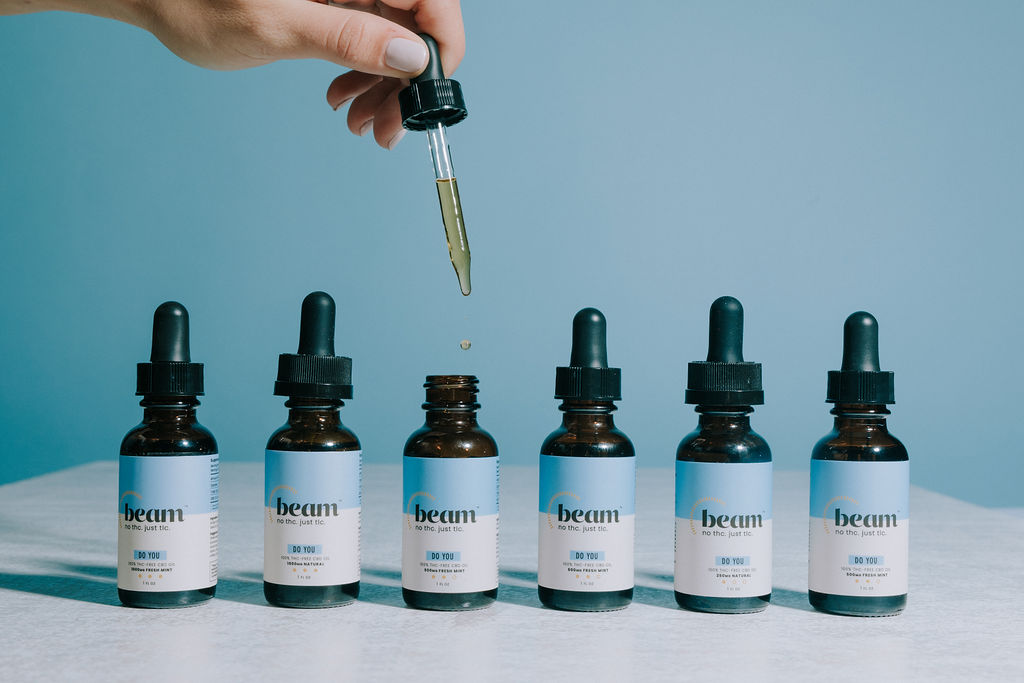
Athletes looking to take a break from all their worries over prescription painkillers and anyone who’s hankering to try out the new cannabinoid-based treatments for their conditions (without worrying about potentially getting dosed with some THC) can now turn to beam.

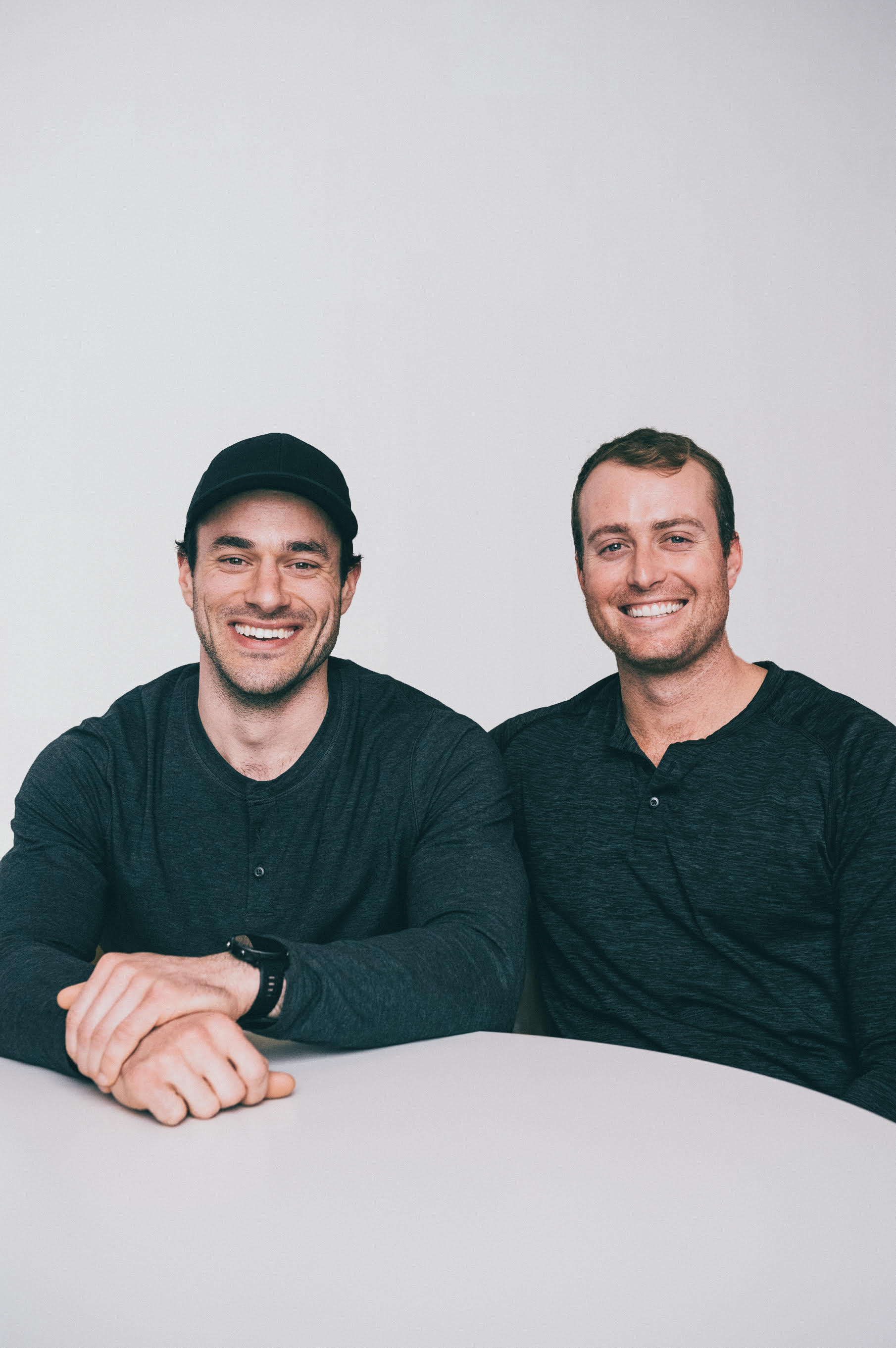
The Boston-based company founded by two former athletes (who were friends at Boston College) is pitching a product that’s 100% CBD sourced from hemp plants without any of the psychoactive ingredients that are found in tetrahydrocannabinol.

Matt Lombardi, a former minor league hockey player and serial entrepreneur, and Kevin Moran, who played baseball in the minors before taking an enterprise software sales job, launched the company back in 2018.

The longtime athletes both were intrigued by cannabis-based treatments and their possibility as an alternative to the chemically derived pain relievers and anti-inflammatories that could have severe side effects or result in addiction. But they also wanted products that would not be tainted with the psychoactive ingredient in marijuana that could cause problems for users in certain states.

So they developed a product set by working with multiple independent laboratories to ensure their products were free of leads, heavy metals, and pesticides, the company said. That devotion to purity has led the company to sign agreements with fitness pros like Mat Fraser, Brooke Wells, Tia-Clair Toomey, and Mikaela Mayer.

Beam Founders RMatt LKevin

Beam founders Matt Lombardi and Kevin Moran

The company currently sells three lines of products — cannabinoid-infused oils, which sell for anywhere from $60 to $140; a cannabinoid-infused salve that retails for $60, and protein bars with cannabinoid powders, which cost between $25 and $45. The bars, oils, and salve can be sold in every state and ordered online, according to the company.

“At the high level we look at being a performance wellness company,” says Lombardi.

While the cannabis industry is still in its infancy, products infused with newly legal cannabinoids have been surging in the market recently. Not a day goes by that some startup isn’t launching a cannabis-infused brand touting its health and wellness benefits.

Beam looks to differentiate itself through its focus on testing and the purity of its products, along with an approach that’s aimed at the health and fitness market. There will be other products coming down the pike that will increase the company’s focus on tailoring its offerings to meet performance needs, says Lombardi.

“We’re launching some blend products that will be purpose-driven for different use cases,” he said. 

The company has also managed to land some venture capital backing to pursue its vision as Obvious Ventures came in to lead a $5 million seed round into the company.

“At Obvious, we believe that natural cannabinoids hold the promise for significant health benefits. We identified beam as a stand-out in a crowded landscape for their product innovation, rigorous focus on quality and ensuring zero THC content in those products and their amazing growth within the fitness community,” said Obvious co-founder James Joaquin, in a statement. “We also feel that the pro-athlete pasts of both beam’s co-founders have informed a unique entrepreneurial skill, putting beam on a quick trajectory towards profitability.”

Obvious definitely has a recent track record of successful investments that point to an awareness of what’s on the horizon for consumers. The firm was an investor in Beyond Meat, whose launch has transformed the market for plant-based meat substitutes.

Joaquin sees another successful recent exit, from the portfolio company Olly, as the closest parallel to the thesis behind beam. “It’s very similar to the work that we did,” he says.

Olly, which had a line of health supplements, was sold to Unilever for an undisclosed amount earlier this year.

With the money in hand, beam is now thinking about the next phase of product development, which will be the launch of two different products — a daytime blend and a nighttime blend. The company intends to roll out additional functional products over time, says Lombardi.

AS Beam12182018389018 1

22 Oct 2019

Slack announces new features to help ease app integration pain

As Slack has grown in popularity, one of the company’s key differentiators has been the ability to integrate with other enterprise tools, but as customers use Slack as a central work hub, it has created its own set of problems. In particular, users have trouble understanding what apps they have access to and how to make best use of them. Slack announced several ways to ease those issues at its Spec developer conference today.

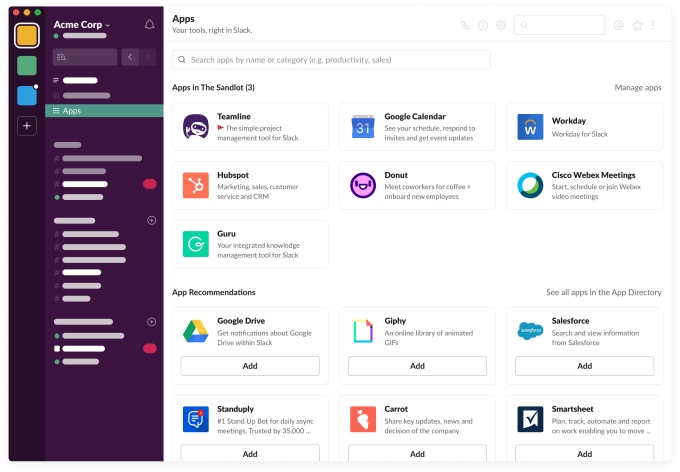
Andy Pflaum, director of Slack platform, points out that there are 1800 app integrations available out of the box in Slack, and developers have created 500,000 additional custom apps. That’s obviously far too many for any user to keep track of, so Slack has created a home page for apps called App Launcher. It acts a bit like the Mac Launchpad, a centralized place where you can see your installed apps.

Slack App launcher

Slack App Launcher. Image: Slack

You access App Launcher from the Slack sidebar by clicking Apps. It opens App Launcher with the apps that make sense for you. When you select an app, Pflaum says it takes you to that app’s home screen where it will be ready to enter or display relevant information.

For example, if you selected Google Calendar, you would see your daily schedule along with meeting requests, which you can accept or reject. You can also launch meeting software directly from this page. All of this happens within Slack, without having to change focus. App Home will be available in Beta in the next few months, according to Pflaum.

Another way Slack is helping ease the app burden is with a new concept called Actions from Anywhere. The company actually launched Actions last year, enabling users to take an action from a message like attaching a Slack message to a pull request in Jira, as an example. Pflaum said that people liked these actions so much that they were requesting the ability to take actions from anywhere in Slack.

“At Spec, we are previewing this new kind of action — Actions from Anywhere — which gives users the ability to take an action from anywhere they are in Slack,” Pflaum said. To really take advantage of this capability, the company is adding a feature to select the five most recent actions from a quick-access menu. These actions fill in automatically based on your most recent activities, and could be a real time-saver for people working inside Slack all day long.

Finally, the company is enabling developers to open an external window inside Slack, what they call Modal windows, which open when users have to fill out a form, take a survey, enter expenses, or provide additional information outside the flow of Slack itself.

All of these and other announcements at Spec are part of the maturation process of Slack as it moves to solve some of the pain points of growing so quickly. When you grow past the point of understanding what a complex piece of software can do, it’s up to the vendor to provide ways to surface all of the benefits and features, and that’s what Slack is attempting to do with these new tools.

22 Oct 2019

Daily Crunch: Facebook fights (some) election lies

The Daily Crunch is TechCrunch’s roundup of our biggest and most important stories. If you’d like to get this delivered to your inbox every day at around 9am Pacific, you can subscribe here.

1. New Facebook features fight election lies everywhere but ads

Facebook made a slew of announcements designed to stop 2020 election interference — including the takedown of some foreign influence campaigns, the labeling of some state-owned or state-controlled media organizations and a new feature called Facebook Protect, which adds extra security.

However, during a press call about these changes, CEO Mark Zuckerberg was hammered with questions about Facebook’s continued unwillingness to fact check political ads.

2. Elon Musk tweets using SpaceX’s Starlink satellite internet

SpaceX CEO Elon Musk used an internet connection provided by his company’s Starlink constellation of broadband satellites early on Tuesday to send a simple tweet.

3. Roku buys adtech platform dataxu for $150M

Roku is beefing up its advertising business with the acquisition of Boston-based dataxu, a demand-side platform that will allow marketers to plan, buy and optimize their video ad campaigns that run on Roku’s devices and services.

4. FTC settles with Devumi, a company that sold fake followers, for $2.5M

The U.S. Federal Trade Commission has put an end to the deceptive marketing tactics of Devumi, a company that sold fake indicators of social media influence.

5. Sandbox VR raises millions more in celebrity party round

Location-based virtual reality startup Sandbox VR announced a huge $68 million Series A led by Andreessen Horowitz at the beginning of the year. Now it’s bringing on some new investors — including Justin Timberlake, Katy Perry, Orlando Bloom and Will Smith — in an $11 million “strategic” round.

6. Medium says it will compensate writers based on reading time, not claps

According to Medium’s Emma Smith, reading time is “a closer measure of quality and resonance with readers.” She also said Medium has now paid out more than $6 million total to 30,000 writers.

7. 6 tips founders need to know about securing their startup

We sat down with three experts on the Extra Crunch stage at Disrupt SF to help startups and founders understand security — what they need to do, when and why. (Extra Crunch membership required.)

22 Oct 2019

Food Network Kitchen brings live, interactive cooking classes to Echo Show, Fire TV & more

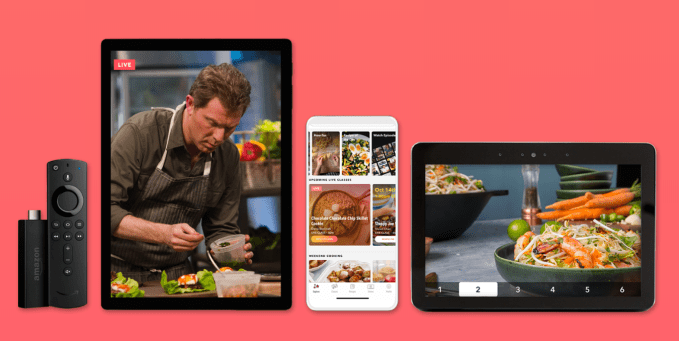
Someone is finally putting the Echo Show to good use. Today, Discovery announced the U.S. launch of its Food Network Kitchen subscription service which will bring daily live and on-demand cooking classes as well as on-demand classes, step-by-step instructional cooking videos, and more to Amazon Echo devices, including the smart screen Echo Show, as well as Fire TV, Fire tablets, and smartphones.

The service was initially unveiled in September at Amazon’s hardware event in Seattle, as a demonstration of how Alexa devices can be useful in the kitchen.

At the event, Bobby Flay spoke (via video) about his involvement, saying he was excited to be able to enter “basically any kitchen in the world, anywhere in the world,” to teach people how to cook.

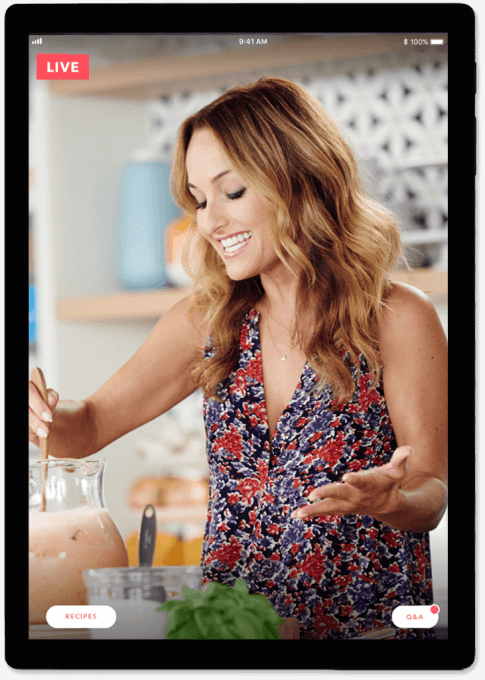
tablet giadaFlay isn’t the only celeb chef or on-air personality involved with the new service.
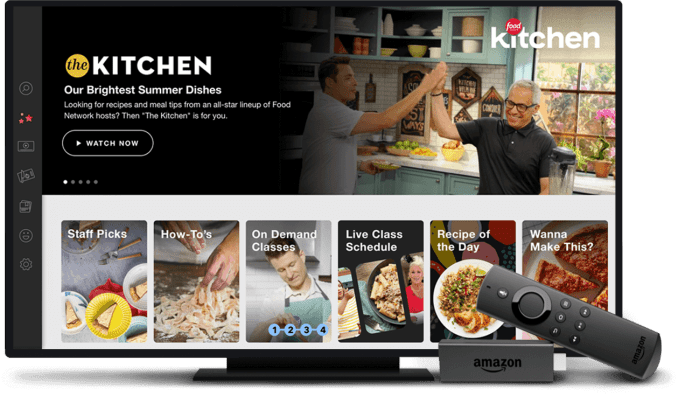
The first month of live cooking classes will also feature Valerie Bertinelli, Anne Burrell, Giada De Laurentiis, Ree Drummond, Amanda Freitag, Katie Lee, Michael Symon, Buddy Valastro, Molly Yeh, Zac Young, Geoffrey Zakarian, and others.

In addition, the app will provide access to talent including Rachael Ray, Guy Fieri, Martha Stewart, Alton Brown, Ina Garten, Andrew Zimmern, Daniel Boulud, Sunny Anderson, Jonathan Waxman, Nancy Silverton, JJ Johnson, and more.

The Food Network Kitchen app itself is something of a mashup of live programming, on-demand video and a more traditional recipe app.

The live class schedules will be posted a week in advance, so you can make plans to tune in. But if you can’t make the daily classes, there are also hundreds of on-demand classes including 500 beginner courses, 395 international cuisine classes, and 75 family-friendly classes.

There are also hundreds of step-by-step videos as well as a curated selection of Food Network TV shows available.

Helpfully, the new app will integrate home delivery for all the ingredients used in the classes, recipes, and other instructional videos and shows so you can be ready to cook.

But what’s most interesting is how the live classes will work. The classes aren’t just being live-streamed to devices, like a live TV show. They’ll actually allow for two-way interaction between the users and the chefs, in real-time. This is, by far, one of the more original use cases for the Echo Show, in particular, to date.

Often, using devices while cooking can be difficult because fingers get messy or your screen shuts off.

Plus, today’s recipes sites are overrun with extra stories for SEO purposes and bogged down with ads and other clutter. And while there are plenty of great recipe apps, not as many have integrated with grocery delivery. They generally just provide a “shopping list” in the app, expecting users to go to the store to buy the ingredients.

tv fire tv

In addition to modernizing the cooking experience, Discovery is also tying together Food Network’s TV channel and the Food Network Kitchen app, at times. For example, Rachael Ray’s 30 Minute Meals will return to Food Network with new episodes on November 9, 2019. The app users will be able to view all 10 episodes and tune in to take live classes with Rachael Ray every day during the week of Nov. 11th.

At other times, the app will offer seasonal series, like Christmas Cookie Challenge, Holiday Baking Championship, and Ultimate Hanukkah Challenge.

food network kitchen devices

The service will offer a free 90-day trial and promotional pricing of $47.99 per year ($4/mo) at launch. This seems reasonable for anyone who regularly turns to cooking apps and videos, and wants more hands-on instruction. The price includes the hundreds of on-demand classes, 25 weekly classes, plus all the other recipes and shows.

Food Network Kitchen isn’t exclusive to Amazon devices at launch, because it’s also available on smartphones. But Amazon does have the exclusive in being the first “smart-speaker-with-screen” platform to support the app.

At launch, Food Network Kitchen will be available across Amazon Alexa and Echo Show, Fire Tablets, Fire TV streaming media devices and Fire TV Edition smart TVs, as well as iOS (iPhone and iPad) and Android mobile devices.


22 Oct 2019

Bird-owned Scoot deploys new electric mopeds

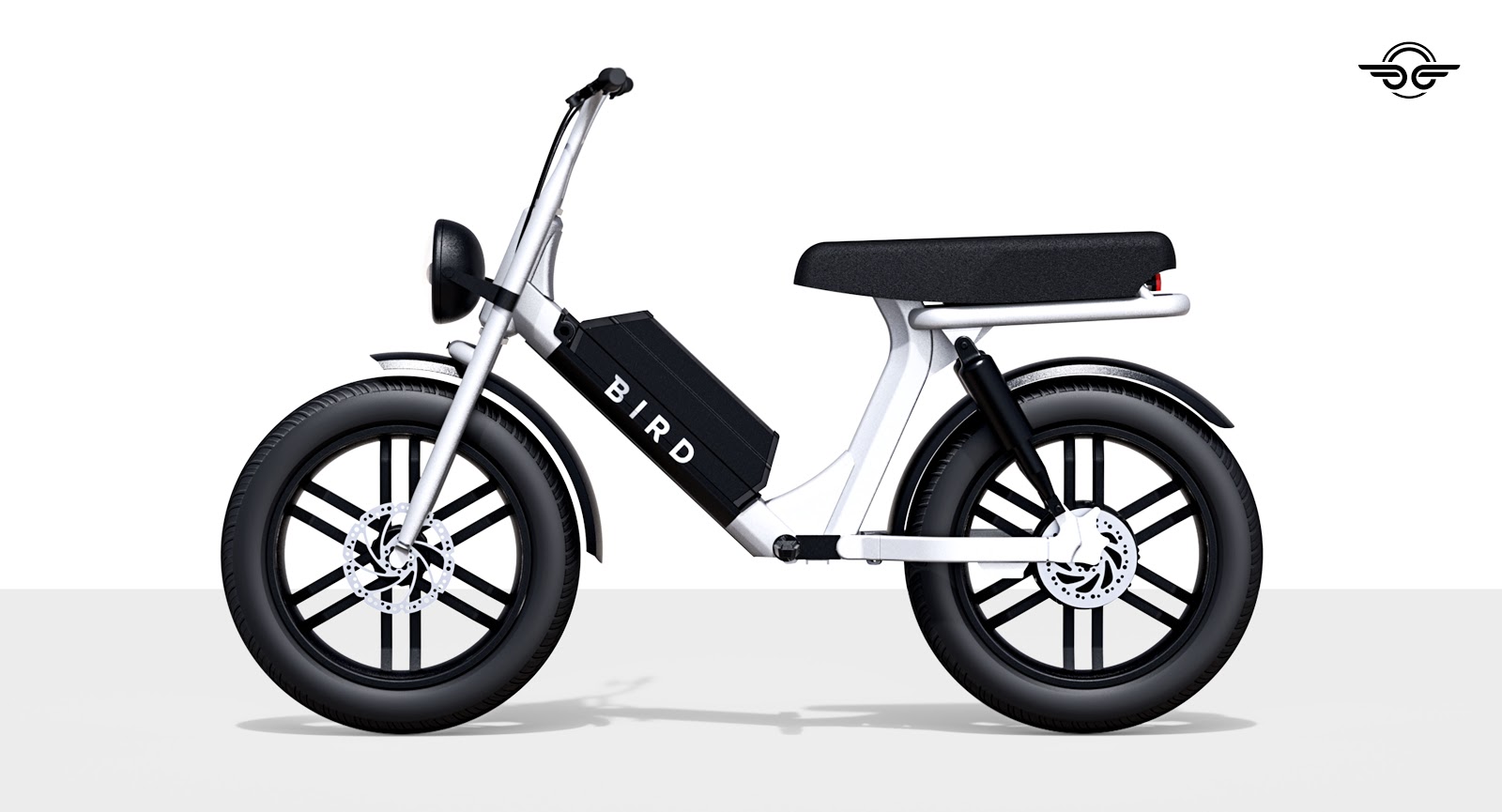
Scoot, owned by Bird, has just unveiled what it’s calling the Scoot Moped.

At first glance, it appears to be Bird’s two-seater vehicle. In June, Bird unveiled the Cruiser, which can seat up to two people and be pedal-assist or just have a peg, depending on the market.

While the Scoot Moped is meant for one person, the design and engineering of the Scoot Moped were based on the Bird Cruiser, according to Scoot.


Bird Cruiser

Initially, the Scoot Moped will be available in Los Angeles as part of a pilot program. Later this year, the plan is to roll them out into other cities. Riders must be at least 18 years old and wear a helmet, which comes with each moped rental.

Scoot has operated its traditional electric mopeds in San Francisco since 2012 and Barcelona since May 2018. In San Francisco, the mopeds max out at 30mph and in Barcelona, max out at 60 mph. With the new moped, the max speed is 20 mph.

Bird bought Scoot back in June for around $25 million. Since then, Bird has gone on to raise another $275 million at a $2.5 billion valuation.

22 Oct 2019

Squarespace acquires social media authoring startup Unfold

Over the past year or two, Squarespace has been expanding beyond website-building with new products like email marketing and its first acquisition (of an online schedulign tool) .

Today, it’s announcing a move into social media content creation with the acquisition of Unfold, which offers templates for creating stories on Instagram, Facebook and Snapchat — you might even call it a Squarespace-style approach to social media.

“As part of our pursuit to be the all-in-one platform for anyone who wants to stand out, we’re excited to welcome the publishers of Unfold into the Squarespace family,” said Squarespace CEO Anthony Casalena in a statement. “Whether building a business or personal brand, social media is a place where many creators get started before launching a website. As a first in our category, we’re excited to provide our customers with a way to stand out no matter how they are getting started.”

The Unfold app is available for free, with premium templates available for individual purchase or a $2.99 monthly subscription fee. In the announcement, Squarespace said that Unfold has been used to create more than 700 million stories.

The financial terms of the acquisition were not disclosed, but Squarespace said Unfold co-founders Alfonso Cobo and Andy McCune will be joining the company.

22 Oct 2019

New York’s Facebook antitrust investigation now has 46 other attorneys general onboard

New York Attorney General Letitia James is turning up the heat on the state’s antitrust investigation into Facebook, which i seeking “to determine whether Facebook’s actions may have endangered consumer data, reduced the quality of consumers’ choices, or increased the price of advertising.”

Her coalition previously consisted of attorneys general from a total of 8 states (plus Washington D.C.), but now that crew has gotten a bit bigger. In an announcement today, James noted that AGs from 31 other states (and Guam) have signed onto the investigation.

“After continued bipartisan conversations with attorneys general from around the country, today I am announcing that we have vastly expanded the list of states, districts, and territories investigating Facebook for potential antitrust violations,” a statement from her office reads. “As we continue our investigation, we will use every investigative tool at our disposal to determine whether Facebook’s actions stifled competition and put users at risk.”

There are now 46 other AGs involved in the investigation with James. This investigation is notably separate from existing antitrust investigations from the DOJ and FTC.

For those keeping score: Arizona, Arkansas, Colorado, Connecticut, Delaware, Florida, Idaho, Illinois, Indiana, Iowa, Kansas, Kentucky, Louisiana, Maine, Massachusetts, Michigan, Minnesota, Mississippi, Missouri, Montana, Nebraska, Nevada, New Hampshire, New Jersey, New Mexico, North Carolina, North Dakota, Ohio, Oklahoma, Pennsylvania, Rhode Island, South Carolina, Tennessee, Texas, Vermont, Virginia, Wisconsin, Wyoming, the territory of Guam and the District of Columbia are involved in the New York investigation

22 Oct 2019

New York’s Facebook antitrust investigation now has 46 other attorneys general onboard

New York Attorney General Letitia James is turning up the heat on the state’s antitrust investigation into Facebook, which i seeking “to determine whether Facebook’s actions may have endangered consumer data, reduced the quality of consumers’ choices, or increased the price of advertising.”

Her coalition previously consisted of attorneys general from a total of 8 states (plus Washington D.C.), but now that crew has gotten a bit bigger. In an announcement today, James noted that AGs from 31 other states (and Guam) have signed onto the investigation.

“After continued bipartisan conversations with attorneys general from around the country, today I am announcing that we have vastly expanded the list of states, districts, and territories investigating Facebook for potential antitrust violations,” a statement from her office reads. “As we continue our investigation, we will use every investigative tool at our disposal to determine whether Facebook’s actions stifled competition and put users at risk.”

There are now 46 other AGs involved in the investigation with James. This investigation is notably separate from existing antitrust investigations from the DOJ and FTC.

For those keeping score: Arizona, Arkansas, Colorado, Connecticut, Delaware, Florida, Idaho, Illinois, Indiana, Iowa, Kansas, Kentucky, Louisiana, Maine, Massachusetts, Michigan, Minnesota, Mississippi, Missouri, Montana, Nebraska, Nevada, New Hampshire, New Jersey, New Mexico, North Carolina, North Dakota, Ohio, Oklahoma, Pennsylvania, Rhode Island, South Carolina, Tennessee, Texas, Vermont, Virginia, Wisconsin, Wyoming, the territory of Guam and the District of Columbia are involved in the New York investigation