Category: UNCATEGORIZED

03 Oct 2019

Notarize and Guaranteed Rate partner on new product that allows homebuyers to complete the entire closing process online

Notarize, a startup that enables people to get documents notarized online, announced today that it has partnered with Guaranteed Rate, one of the largest retail mortgage lenders in the U.S. Guaranteed Rate’s new product, called FlashClose, integrates Notarize’s real estate API and allows customers to close real estate transactions and execute mortgages online.

The service is available in all 50 states. Notarize’s products, including its consumer app, connect users to a notary public by video call to witness e-signatures and notarize documents. Its enterprise solutions include business and real estate APIs. Guaranteed Rate, which has had almost $25 billion in total loan volume this year, is now the largest lender that uses Notarize.

Notarize, which has raised $47 million in funding so far from investors including Polaris Partners, Lennar Corporation and Realogy Holdings, currently helps customers process real estate deals worth a total of about $1.5 billion online each month. Through partnerships like the one it has with Guaranteed Rate, it has added more than 50,000 realtors and title agents as users in the last three months.

Pat Kinsel, founder and CEO of Notarize, tells TechCrunch that 90% of people start searching for homes online and 60% apply for mortgages online, but many real estate and lending companies still require their customers to complete the closing process on paper. Allowing them to complete the entire process online can give companies like Guaranteed Rate a major advantage over competitors.

In a prepared statement, Guaranteed Rate COO Nikolaos Athanasiou said “We are thrilled to announce this integration with Notarize for FlashClose, which puts even more power in the hands of homebuyers—wherever and however they want to close.”

03 Oct 2019

TikTok explains its ban on political advertising

Already under fire for advancing Chinese foreign policy by censoring topics like Hong Kong’s protests and pro-LGBT content, the Beijing-based video app TikTok is now further distancing itself from U.S. social media platforms, like Facebook, Twitter and Instagram, with a ban on political ads on its app.

The company today says it will not allow political ads on TikTok, noting they don’t fit in with the experience the short-form video app aims to offer.

“Any paid ads that come into the community need to fit the standards for our platform, and the nature of paid political ads is not something we believe fits the TikTok platform experience,” says Blake Chandlee, TikTok’s VP of Global Business Solutions, who recently joined the company from Facebook.

“To that end, we will not allow paid ads that promote or oppose a candidate, current leader, political party or group, or issue at the federal, state, or local level – including election-related ads, advocacy ads, or issue ads,” he says.

TikTok further explains that it wants to be known as a place for creative expression, and one that creates a “positive, refreshing environment” that inspires that creativity.

It will further encourage these goals through its products like its fun filters and effects as well as its brand partnerships.

Today, TikTok offers a range of ad opportunities, including in-feed video ads, launch screen ads, and other native ads like its sponsored hashtag challenges. It also more recently launched a beta version of the TikTok Creator Marketplace, which will help to connect brands with TikTok creators for their marketing campaigns.

“Throughout all of this, however, our primary focus is on creating an entertaining, genuine experience for our community,” Chandlee continues. “While we explore ways to provide value to brands, we’re intent on always staying true to why users uniquely love the TikTok platform itself: for the app’s light-hearted and irreverent feeling that makes it such a fun place to spend time,” he says.

Political ads don’t fit with this agenda, the company believes.

But running those sorts of ads also come with significant challenges, as Facebook has found.

It had to create a system to verify the credentials of political advertisers, for example, which requires them to submit identification information like their street address, phone number, business email and website matching the email, tax ID number, or U.S. Federal Election Commmission ID number. It also launched a publicly searchable database of political ads, for transparency’s sake.

As a Chinese-run company, TikTok may not have the resources to run a similar operation. In fact, it seemed to be having trouble cracking down on the hate speech found on its app last year, VICE had reported.

The ban on political ads isn’t really new to TikTok, it’s more of a reiteration of the existing policy — but it’s a statement that TikTok hadn’t made before.


03 Oct 2019

Bird raises $275 million Series D round at $2.5 billion valuation

Bird has closed a $275 million Series D round led by CDPQ and Sequoia Capital, Bird CEO Travis VanderZanden announced at TechCrunch Disrupt San Francisco today. The round values Bird at a $2.5 billion pre-money valuation, according to sources familiar with the round. This round comes a few months after TechCrunch reported Bird was looking to raise a Series D round at a $2.5 billion valuation led by Sequoia.

“Nearly a year ago, we recognized that the world was changing.” Bird CEO and founder Travis VanderZanden said in a statement ahead of Disrupt. “Gone are the days when top line growth was the leading KPI for emerging companies. Positive unit economics is the new goal line. As a result, we pivoted from growth to unit economics as the top priority for the company. Now with the best unit economics in the industry, new Bird investors such as CDPQ see that we are paving the road for a long term sustainable and healthy business.”

Sequoia Capital previously led Bird’s $300 million Series C round back in June, with Roelof Botha joining Bird’s board at the time. Bird plans to use the funding to continue research and development for its variety of vehicles.

“The team at Bird exemplifies grit and has embraced a laser focus on the key drivers of unit economics in a complex business,” Sequoia Capital Partner and Bird board member Roelof Botha said in a statement. “The degree to which they were devoted to and accomplished strong contribution margins in a compressed timeline is rare for a company so early on in its development. We are thrilled to strengthen our commitment to Bird and look forward to seeing continued progress on their path to profitability.”

In July, Bird CEO Travis VanderZanden said Bird has positive unit economics on its new Bird Zero scooters, which accounts for more than 75% of its fleet. But based on one of the images VanderZanden tweeted, it seems that figure is based on a period of four weeks in the summer when scooter ridership is likely higher.

The month before, Bird acquired Scoot in a deal worth less than $25 million. That acquisition marked Bird’s first expansion into traditional bicycles and mopeds. Shortly before that, Bird unveiled a two-seater hybrid bike/moped vehicle called the Bird Cruiser. In addition to offering shared vehicles, Bird is also selling scooters directly to consumers. Prior to this round, Bird had already raised more than $400 million in funding and reached a valuation of $2 billion last June.

I’m chatting with VanderZanden at TechCrunch Disrupt SF right now. Be sure to tune in here.

03 Oct 2019

Kitty Hawk reveals its secret project, Heaviside

Sebastian Thrun is waving a device in his hand with an excited, almost gleeful expression on his face as he trots from a makeshift aircraft hangar toward the secret project that Kitty Hawk Corp. has been working on for nearly two years.

The serial entrepreneur and co-founder of X, the Alphabet moonshot factory, isn’t trying to contain his excitement as he presents what appears to be a decibel meter.

Thrun, the CEO of aviation startup Kitty Hawk, and Damon Vander Lind, the physicist and electrical engineer who has been leading the project, are standing in an expanse of grasslands and low-lying, oak-dotted hills that can only be described as cattle country. But there are no cows to be found here. Instead, a low-slung, orange and black aircraft with eight rotors and a 20-foot wingspan sits on a small asphalt pad.

It’s called Heaviside. Vander Lind’s pink-hued T-shirt, the letters HVSD emblazoned across it, suddenly makes more sense than it did an hour before.

HVSD, which is named after renowned physicist and electrical engineer Oliver Heaviside, is Kitty Hawk’s third act.

The first is Flyer, a single-seater, all-electric, vertical take-off and landing vehicle powered by 10 independent lift fans that operates between 3 to10 feet off the water. Then there’s Cora, a two-person, autonomous taxi that Kitty Hawk unveiled in 2018. Kitty Hawk, which is backed by Google co-founder Larry Page, recently formed a strategic partnership with Boeing to collaborate on urban air mobility, particularly around safety and how autonomous and piloted vehicles will co-exist. The partnership will focus on Cora.

HVSD is an electric aircraft designed to go anywhere and land anywhere fast and quietly, Vander Lind says.

“If you build an aircraft that can land anywhere and then say actually, oh wait it can’t just land anywhere, no I need a big helipad and I need to build a bunch of structure and all that — you miss the point,” said Vander Lind.

And indeed, HVSD isn’t parked on a large runway or giant helipad. The aircraft, which weighs about one-third of a Cessna, is on a section of asphalt much bigger than its wingspan. Just beyond this manmade parking spot are acres of grassland and the occasional tree. There is no runway to be found.

The big promises that Thrun and Vander Lind are trying to deliver on here are speed, silence and ease of use.

Vander Lind, who earned his pilot’s license, commutes part of the way to work in a single-engine piston aircraft he fixed up. He takes a bicycle for the remainder of the journey. The physicist and electrical engineer, who was a lead engineer at the Alphabet-owned airborne wind turbine company Makani Power, notes that his commute, while fun, is hardly practical.

HVSD aims to deliver both an enjoying ride and practicality, Vander Lind said.

Kitty Hawk Heaviside starry night

The aircraft is 100 times quieter than a helicopter, the pair said. And it’s faster. Thrun says HVSD, which has a range of about 100 miles, can travel from San Jose to San Francisco in 15 minutes. The aircraft can be flown autonomously or manually, but even then most of the tasks of flying are handled by the compute, not the human.

Moments after walking around HVSD, the decibel meter, still in Thrun’s grasp, gets put to work. A helicopter that is stationed about 150 feet from where we’re standing is fired up. After two minutes, the helicopter lifts off, it’s whop whop whop lingering even as the craft is more than 600 feet in the air and begins its circular flight path around the testing area. The meter pops above 85 decibels and stays there for several minutes. The decibels go beyond 88 decibels at landing.

Later, after the helicopter lands and the engine slowly winds down, the test turns to HVSD.

An engineer, who is standing in an open air tower, brings HVSD suddenly to life. Unlike a helicopter, the HVSD starts and lifts off in just seconds. There is sound as it lifts off — hitting about 80 decibels — but what’s striking is the brevity. The take off sound lasts fewer than 10 seconds. As HVSD gains altitude and then circles above us, the only sound is a few engineers and technicians talking nearby.

Once Thrun quiets the crew, the noise falls below 40 decibels, which is what a typical, quiet residential neighborhood registers at. HVSD is nearby at about 600 feet of altitude, but it is barely audible as it circles above us. An office with an air conditioning running might be about 50 decibels, Thrun says for comparison.

“The calculus here is that this has to be socially acceptable for people,” Thrun says. “There’s a reason why helicopters are not: they’re for rich people and they’re noisy.”

It took just a year to take HVSD from a concept and some sketches to building a prototype and conducting the first test flights. This past year has been spent testing and refining the aircraft and, as Vander Lind puts it, “trying to make it crash.” It’s a goal that they have yet to accomplish.

“This thing is really robust,” Vander Lind says pointing to HVSD before turning his sights onto the nearby helicopter. “On the helicopter, there’s a little bolt on top, and if you unscrew that, you take the cotter pin out, we all die.”

Kitty Hawk is testing HVSD with and without a pilot inside, which allows the company to push the aircraft and look for flaws and vulnerabilities. “We want to do everything we can to break it in the air, so when you get in it, it’s safe,” Vander Lind says.

It might be awhile before the public gets in HVSD. The Federal Aviation Administration allows Kitty Hawk to test its aircraft as long as it stays within view of the company’s engineers and test crew on the ground. And Thrun and Vander Lind acknowledge there’s more refinement to be done.

For instance, the cockpit, which fits just one person, is still just carbon fiber. Sitting snugly inside, and kicked back like one would be riding a recumbent bicycle, it’s not quite cozy. Vander Lind, who says engineers have slept in it as “one aspect of the testing,” reminds me I’m sitting on bare carbon. He wants to add a lumbar support, arm rests and other comfort features.

The interface of the aircraft at Kitty Hawk’s secret testing area has been stripped out. But Thrun tells me the interface will be simple to use like “pushing a button.”

The idea is for HVSD to be accessible to more than just the super rich and those who have a pilot license, Thrun says. And, of course, to make commuting easier and faster.

The average commute time in the United States is 53 minutes, according to the US Census Bureau. Looking just at the weekday commute, an individual still manages to log 231 hours a year commuting. On Heaviside, Thrun says, it comes to 21 hours a year commuting. “That’s 10 times faster.”

Thrun and Vander Lind are squarely in the visionary and dreamer category. But even they understand there is work left to be done if they ever hope to bring HVSD to the public. Safety is paramount and the team is working on the compute that will handle the flying as well as redundancies.

And then there is the regulatory piece. Thrun has tapped Mike Huerta, who served as FAA Administrator from 2013 to 2018, as an adviser to Kitty Hawk to help the company get closer to its goal.


03 Oct 2019

Here’s how much the all-electric Polestar 2 will cost in its launch markets

Volvo group’s Polestar electric performance car sub-brand has announced pricing for the Polestar 2, the company’s second production car, a four-door mid-sized fastback that will begin production in 2020 and start shipping as early as next June. Starting prices are set at between 58,800€ (around $63,720 U.S.). Those prices include three years of service and maintenance and European value-added tax (VAT). Polestar also previously communicated that its rough guide pricing for North America was at around $63,000, so this is consistent with that, but the final actual price for American buyers will be revealed later on.

That’s a pretty competitive price in the electric performance sedan market: The Model S starts at $75,000 U.S., for instance. The Polestar 2 is really much more a competitor for the Model 3, however, and is priced more closely to a kitted out version of that vehicle.

In terms of what the Polestar 2 packs in performance, its estimated EPA range is set at around 275 miles (the Model 3 starts at 240 but ranges up quickly to 310 and 325 miles depending on battery options). It offers around 408 horsepower from its 300 kW electric powertrain, again just short of the Model 3 when that’s equipped with its dual-motor performance configuration. Polestar say that it’ll do 0 to 60mph is under five seconds, again sort of in the middle of the pack when you look at the Model 3’s full configuration lineup.

Polestar 2 019

Aside from its electric powertrain, the Polestar 2 will have some other interesting techie twists, including an infotainment system based entirely on Android OS and shipping complete with the full suite of Google services, including Google Assistant and the Google Play Store. This is a deeper integration than just Android Auto, which is powered by an Android phone and basically just displays an interface on the in-car screen.

Like the Model 3, the Polestar 2 will initially launch at a higher price point, with more affordable model variations coming later on, including a base model starting at around $45,000 U.S.

03 Oct 2019

First mover advantage: Does it matter in startup fundraising?

We know the world of startup funding is competitive. In fact, I’m speaking at TechCrunch Disrupt on this very topic alongside pre-seed investor Charles Hudson of Precursor Ventures, early-stage investor Annie Kadavy of Redpoint Ventures. I’ve also written extensively for TechCrunch and ExtraCrunch about how founders can optimize their pitch decks to make the most of the 3 minutes and 44 seconds the average VC will spend looking at their deck. We’ve also analyzed the best time of year founders can fundraise to get the most attention from potential investors.

But what can VCs do to make sure they’re getting the biggest piece of the most promising looking companies? We dug into how founders choose their lead investor to gain some insight into how a VC can become more competitive in a rapidly growing market.

Before we dig into the numbers

The data included in this research came from companies that explicitly opted in to participate by responding to an automated email sent to them. We are incredibly appreciative to these founders for making this research possible. You can read more about our startup opt-in process and other aspects of our methodology here.

In this article, I’ll talk about how founders choose their VCs, both in oversubscribed rounds and non-oversubscribed rounds, and how investors can use that information to beat out their competitors.

For VCs, competition is getting harder

Getting a startup funded is a massive hurdle. The good news is there’s actually far more money available now than just a few years ago. In fact, in the first half of 2019 there was $20.6 billion in new capital introduced into the startup market.

Larger funds typically known for investing in later stages have introduced seed funds so they can invest with promising businesses earlier.  Kleiner Perkins announced a $600 million early-stage fund in January, GGV raised a second $460 million “Discovery Fund” last year, even Sequoia Capital operates a scout program with a $180 million fund.

This means smaller funds or those who only invest in earlier rounds might get overlooked when founders are looking for investors.

Investor meetings are a two-way street

In addition to having to compete for the best deals, VCs don’t get it right every time. For every Uber, there are hundreds of Juiceros. The reason they only spend a few minutes looking at a pitch deck is because they’re constantly looking at pitches in hopes they’ll come across another unicorn.

But while it seems like the investors are holding all the cards, if founders optimize their pitch deck and book their meetings in a short window, they can actually create a sense of urgency for the VCs. We’ve seen this recently with the amount of founders reporting oversubscribed rounds.

When looking at how founders chose their lead investors, we discovered that there was a massive difference between those that raised oversubscribed rounds and those that didn’t.

Being the first to move means a lot, until it doesn’t

What was the number one factor in founders deciding on who to choose as their lead investor? We found that nearly 48% of founders chose their lead investor because they were the first one to make the offer.

Anecdotally this makes sense. When DocSend was raising we received a lot of “maybes” during our first few meetings. However, once we had a term sheet most of those “maybes” flipped to a firm “yes.” In fact, many investors that had originally promised a $25k or $50k investment if we found other backers were suddenly asking for $300k or $500k.

We had so many investors interested that our round was oversubscribed and we had to make some choices about who we wanted as an investor. That could have been avoided if any of those VCs had simply acted first.

But when you look at the data a different way, we found that moving first was significantly more important in oversubscribed rounds than those that weren’t. And the more oversubscribed they were, the more valuable moving first becomes.

For founders whose rounds were more than 20 percent oversubscribed, 60 percent of them chose their VC because they came in first with a term sheet. But that dropped to 50 percent for founders that were only slightly oversubscribed and all the way to 38 percent for those founders that weren’t oversubscribed at all.

While we would have thought name-brand VCs might move first, and that top tier interest may cause an oversubscribed round, we found that not to be the case. In both oversubscribed and non-oversubscribed rounds 28 percent of founders reported that a name brand factored into their decision. And for those who chose a name brand investor, only 33 percent of those founders reported that their lead VC moved first. 

The more oversubscribed a round is, the more likely it is that some VCs aren’t going to make the cut. To avoid being the firm that didn’t get the deal it’s best to move quickly when you see a company you like.

A fast round isn’t always an oversubscribed one

Another surprising thing that came up in our research was the amount of time founders spent raising and how that affected their decision making. While we assumed oversubscribed rounds happened significantly faster than the average of 11-15 weeks, we found that oversubscribed rounds only came in slightly under, at 8.6 weeks. However, there was a lot of variability in that number.

We saw some oversubscribed rounds close in as little as 3 weeks and some take as long as 20. So there’s no way to tell whether a round will be oversubscribed based on the time spent fundraising. This means that even if you meet a founder who’s been raising for 10 weeks, it’s still smart to move quickly if you want to be the lead investor.

We would have also thought longer rounds would have benefited the first term sheet more, but there was virtually no difference in the impact of the first acting VC when looking at time. When looking at founders that spent less than 12 weeks raising and those that spent more than 12 weeks, there was virtually no difference in the percent that chose their lead investor based on the first term sheet (at 47 percent and 48 percent respectively).

Terms only matter in oversubscribed rounds

When choosing your lead investor, you would think the terms would be a significant reason to choose one VC over another. But we found that it was barely a factor for most people. In fact, only 4 percent of founders who weren’t oversubscribed cited terms as a major factor.

They instead focused on VCs that had experience in their industry (at 42 percent). But for oversubscribed rounds the percentage of founders who chose their lead investor based on terms shot up to 38. Meaning when the round gets competitive, so do the terms. But they still gave an edge to that first term sheet they received.

Interestingly, a potential deciding factor in oversubscribed rounds could be how well the VC and the founder get along. In those rounds that were significantly oversubscribed, over 46% of respondents said how well they got along with their VC was a factor in choosing them to be the lead. Compare that to only 19% of founders in non-oversubscribed rounds who cited rapport as a key factor in choosing a lead investor.

For many smaller firms getting edged out by bigger players boasting multi-stage funds, it may be as simple as being decisive and personable when it comes to landing the most competitive investments.

03 Oct 2019

No near-term IPO for Impossible Foods, CEO says

The market was receptive to meat replacement products, as the Beyond Meat public offering recently indicated. But rival meat alternative maker Impossible Foods doesn’t see an IPO on its near-term roadmap, according to its founder and CEO, Patrick Brown.

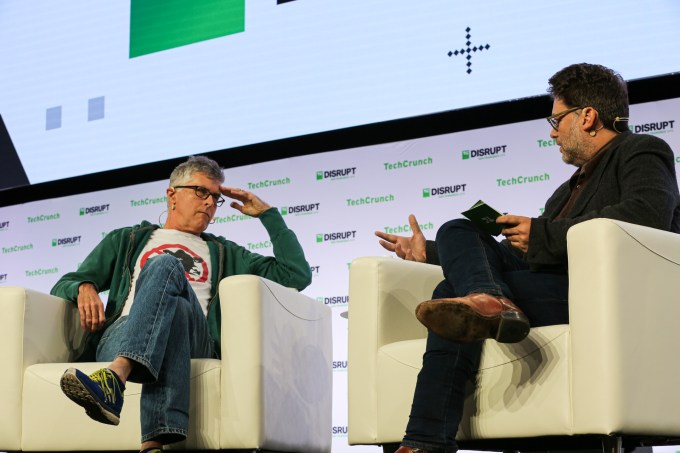
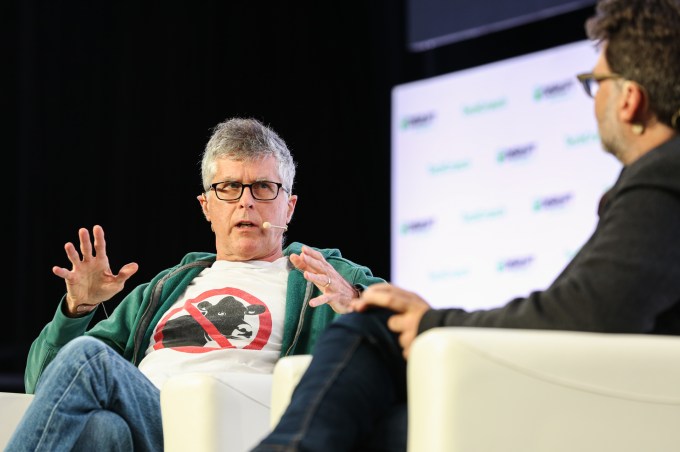
Speaking to the audience at TechCrunch Disrupt SF 2019 on Wednesday, Brown said the company has its hands full growing its business, and going public isn’t something it wants to do anytime soon.

Asked onstage how Impossible Foods will get the money to achieve its goals as a company, and if that meant an IPO was coming soon, the exec agreed that, yes, Impossible Foods does have hugely ambitious goals that require a lot of resources. But it’s not going to the public markets to acquire them, at this point.

disrupt patrick brown 0576

“We’ll have to get those resources either from investors, or from getting our profit margins to the point where we can scale at the velocity that we want to scale with the profit we make from our business,” said Brown. “It’ll be a while before we’re at that point. So we’ll definitely have to raise more money, I would say we are not looking in the near-term future toward an IPO,” he continued.

“As anyone here probably knows, there’s a lot of complications that come with that. We have our hands full, growing our business, doing our core job. And we have great investors, and we have a lot of private investors who are willing to bet on us and so forth,” Brown pointed out.

“So at this point, it’s not, it’s not something that we need, And, and we can just take our time about it, basically,” he said.

The exec also laid out some of the company’s longer-term plans for how he sees the product line growing.

disrupt patrick brown 0578

Impossible Foods chose to focus on beef as its initial product because beef production, by far, has the most destructive impact on the environment. However, the company says its future is in R&D — a team that has 120 people today, and Brown says he plans to double.

Impossible Foods had already made steak prototypes, but isn’t near scaling in that area, the CEO said. The interviewer, TechCrunch editor Johnathan Shieber, also noted he had tried some of the fried chicken products the company had in the works.

“We want to have the know-how and the technology platform to be able to make this entire gamut of products,” Brown said. Ultimately, he explained, the goal is to make the products that consumers prefer to the products that come from animals.

This will present a variety of technology, food science, chemistry, and material sciences challenges, to address factors like flavor, texture, juiciness, and more.

It may also require the company to address the health concerns some have with the meat alternatives, which tend to have higher sodium levels. (Lowering the burger’s sodium is something the company is working on in the next version, we’re told.)

disrupt patrick brown 0558

Brown also briefly touched on the nature of Impossible Foods’ existing business partnerships, such as the recent one with Burger King which sells an Impossible Whopper, as well as others like White Castle and Fatburger.

Those chains sell burgers at low price points, which raises questions about how much money Impossible Foods is making from those deals.

“I can’t give you the exact data because it’s confidential information. I mean, I would, but my CFO would kill me,” joked Brown.

“So the but I can say that basically our product is being sold in lots of mass market places — Burger King, White Castle, Fatburger — tons of these burger chains that sell their burgers at a price that’s affordable to mainstream consumers. It’s great for their business; it’s usually profitable for them. And we’re not losing money on those sales, either. So you can draw your own conclusions,” he added.

The BK deal also was non-exclusive, Brown said, which means the company could continue to work with other fast food businesses, like McDonald’s.

In fact, the CEO believes places like that will eventually come knocking on his door, not the other way around.

“We’re not trying to outperform veggie burgers, we’re trying to outperform the cow. And if we focus on that, and produce the most delicious, healthiest, affordable ground beef on the market, I don’t think we’re going to have to beg McDonald’s or anyone else to put it on their menu,” he said.


03 Oct 2019

Sony’s new A9 II mirrorless full-frame camera has the speed sports photographers need

Sony announced a successor to its popular A9 mirrorless interchangeable lens full-frame camera today. The A9 II carries over some of the specs and stats of its predecessor, like the 24.2 megapixel stacked imaging sensor, but adds an upgraded BIONZ X image processor, which powers the much more powerful autofocus capabilities in the new camera.

Sony debuted a number of improved AF features on its A6400 APS-C camera earlier this year, and its brought those and more to the A7R IV it launched at the beginning of September, and on this new iteration of the A9. There’s real-time eye autofocus for both people and animals, with right and left eye selection for animals, along with real-time eye AF during movie shooting, and the company’s real-time object tracking, which basically sticks your focus point to whatever you want to point it at remarkably well, based on my experience with it in other modern Sony cameras.

Other new features to the camera include a body with upgraded dust and moisture resistance, which Sony also brought to the A7R IV, as well as a beefier design with a deeper grip that should be a welcome change in terms of ergonomics, especially for photographers with bigger hands. And while it uses the same battery, it also is rated for slightly more shots.

[gallery ids="1891690,1891689,1891687,1891688,1891685,1891684,1891683"]

Sony also brought its new digital audio interface to the hotshoe on the camera, again something it first introduced in the A7R IV. That will let you use their new shotgun mic and XLR adapter to pipe audio from external sources into the camera when recording video.

This camera is really intended to meet the needs of photographers who need high-speed capture capabilities, and Sony has bumped things up there, too. You get blackout-free, silent continuous shooting at up to 20fps, with a buffer size capable of capturing 361 JPGs or 239 of Sony’s ‘compressed’ RAW files in one continuous go – it can also calculate AF and auto exposure at up to 60 times per second, so each of these should be in focus and properly exposed even in changing lighting conditions.

The new A9 II goes on sale in November, and will be priced at $4,500 for the body only.

03 Oct 2019

IronSource, a mobile adtech startup, confirms $400M+ raise at $1+ valuation

On the same day that two Israeli-founded adtech startups, Taboola and Outbrain, announced a merger to create a $2 billion company, another Israel-founded company focusing on advertising and marketing for mobile has also closed a huge funding round. IronSource, which has built a video ad network and user acquisition technology for mobile app publishers, has raised between $400 million and $450 million in funding. The money is coming from investment giant CVC, which is getting a minority stake in the business in this deal, valuing the company at over $1 billion.

The company is not being specific on the exact amount raised, describing it only as over $400 million. Israeli media yesterday reported that it would be a $450 million deal to value the company at around $1.55 billion. However, we have confirmed with the company that these numbers are in fact not accurate.

Alongside the merger of Taboola and Outbrain, ironSource’s investment underscores a couple of important trends. First, Israel continues to churn out some significant big data startups that are using their technology specifically for marketing and advertising ends. Second, we’re seeing a collective effort from a number of smaller (but strong) businesses to challenge the biggest tech players currently in the industry, namely Google, Facebook and Amazon, who dominate both in desktop and mobile advertising (and by association, marketing, as advertising is often used as the building block for marketing campaigns).

On the part of ironSource, the company said it’s on track to make $1 billion in revenue this year, and it is profitable (and has been from early on, when it was raising much more modest sums from a low-profile list of investors that is understood to include Viola Ventures, 83North and Leonard Blavatnik, the man behind Access Industries).

“As one of the world’s most respected private equity firms, CVC has a track record of successfully partnering with companies to drive global growth,” said Tomer Bar Zeev, CEO and Co-Founder of ironSource, in a statement. “As such they are the perfect partner for this next phase in our journey, as we continue to scale internationally, engage with A-class partners and invest heavily in building out our offering for game developers.”

The company has a core focus on gaming apps, and as these have become a perennial favorite for mobile consumers — mobile gaming is expected to generate revenues of $180 billion by 2021, ironSource says — ironSource’s business has grown, too. Its customers and partners include software, app and game developers with the list including the likes of EA, Zynga and Kongregate.

“We’re witnessing the creation of a sector, gametech, which supports this growing ecosystem, with tailor-made tech solutions such as advertising, marketing, analytics, market intelligence, CRM and more,” said Bar-Zeev. “Our continued investment in this industry is part of a wider goal to be the go-to partner for any game developer looking to scale their game business.”

While that is a big and well-served area of the industry, what perhaps makes ironSource more interesting and unique is that it couples the tech it sells to developers with technology and services for mobile networks and device makers by way of its Aura solution, which helps them with engagement and content distribution to help them build alternative revenue streams on their networks. IronSource said this technology is integrated on more than 120 million mobile devices globally as of today.

“We are delighted to be partnering with such an innovative and exciting technology business,” said Daniel Pindur, Partner at CVC Capital Partners, in a statement. “The investment in ironSource is a unique opportunity to support a well-respected founder-led organization to accelerate its growth. We look forward to working with Tomer Bar Zeev and his team to take the company to the next level.”

03 Oct 2019

Europe’s top court sets new line on policing illegal speech online

Europe’s top court has set a new line for the policing of illegal speech online. The ruling has implications for how speech is regulated on online platforms — and is likely to feed into wider planned reform of regional rules governing platforms’ liabilities.

Per the CJEU decision, platforms such as Facebook can be instructed to hunt for and remove illegal speech worldwide — including speech that’s “equivalent” to content already judged illegal.

Although any such takedowns remain within the framework of “relevant international law”.

So in practice it does not that mean a court order issued in one EU country will get universally applied in all jurisdictions as there’s no international agreement on what constitutes unlawful speech or even more narrowly defamatory speech.

Existing EU rules on the free flow of information on ecommerce platforms — aka the eCommerce Directive — which state that Member States cannot force a “general content monitoring obligation” on intermediaries, do not preclude courts from ordering platforms to remove or block illegal speech, the court has decided.

That decision worries free speech advocates who are concerned it could open the door to general monitoring obligations being placed on tech platforms in the region, with the risk of a chilling effect on freedom of expression.

Facebook has also expressed concern. Responding to the ruling in a statement, a spokesperson told us:

“This judgement raises critical questions around freedom of expression and the role that internet companies should play in monitoring, interpreting and removing speech that might be illegal in any particular country. At Facebook, we already have Community Standards which outline what people can and cannot share on our platform, and we have a process in place to restrict content if and when it violates local laws. This ruling goes much further. It undermines the long-standing principle that one country does not have the right to impose its laws on speech on another country. It also opens the door to obligations being imposed on internet companies to proactively monitor content and then interpret if it is “equivalent” to content that has been found to be illegal. In order to get this right national courts will have to set out very clear definitions on what ”identical” and ”equivalent” means in practice. We hope the courts take a proportionate and measured approach, to avoid having a chilling effect on freedom of expression.”

The legal questions were referred to the CJEU by a court in Austria, and stem from a defamation action brought by Austrian Green Party politician, Eva Glawischnig, who in 2016 filed suit against Facebook after the company refused to take down posts she claimed were defamatory against her.

In 2017 an Austrian court ruled Facebook should take the defamatory posts down and do so worldwide. However Glawischnig also wanted it to remove similar posts, not just identical reposts of the illegal speech, which she argued were equally defamatory.

The current situation where platforms require notice of illegal content before carrying out a takedown are problematic, from one perspective, given the scale and speed of content distribution on digital platforms — which can make it impossible to keep up with reporting re-postings.

Facebook’s platform also has closed groups where content can be shared out of sight of non-members, and where an individual could therefore have no ability to see unlawful content that’s targeted at them — making it essentially impossible for them to report it.

While the case concerns the scope of the application of defamation law on Facebook’s platform the ruling clearly has broader implications for regulating a range of “unlawful” content online.

Specifically the CJEU has ruled that an information society service “host provider” can be ordered to:

  • … remove information which it stores, the content of which is identical to the content of information which was previously declared to be unlawful, or to block access to that information, irrespective of who requested the storage of that information;
  • … remove information which it stores, the content of which is equivalent to the content of information which was previously declared to be unlawful, or to block access to that information, provided that the monitoring of and search for the information concerned by such an injunction are limited to information conveying a message the content of which remains essentially unchanged compared with the content which gave rise to the finding of illegality and containing the elements specified in the injunction, and provided that the differences in the wording of that equivalent content, compared with the wording characterising the information which was previously declared to be illegal, are not such as to require the host provider to carry out an independent assessment of that content;
  • … remove information covered by the injunction or to block access to that information worldwide within the framework of the relevant international law

The court has sought to balance the requirement under EU law of no general monitoring obligation on platforms with the ability of national courts to regulate information flow online in specific instances of illegal speech.

In the judgement the CJEU also invokes the idea of Member States being able to “apply duties of care, which can reasonably be expected from them and which are specified by national law, in order to detect and prevent certain types of illegal activities” — saying the eCommerce Direction does not stand in the way of states imposing such a requirement.

Some European countries are showing appetite for tighter regulation of online platforms. In the UK, for instance, the government laid out proposals for regulating a board range of online harms earlier this year. While, two years ago, Germany introduced a law to regulate hate speech takedowns on online platforms.

Over the past several years the European Commission has also kept up pressure on platforms to speed up takedowns of illegal content — signing tech companies up to a voluntary code of practice, back in 2016, and continuing to warn it could introduce legislation if targets are not met.

Today’s ruling is thus being interpreted in some quarters as opening the door to a wider reform of EU platform liability law by the incoming Commission — which could allow for imposing more general monitoring or content-filtering obligations, aligned with Member States’ security or safety priorities.

“We can trace worrying content blocking tendencies in Europe,” says Sebastian Felix Schwemer, a researcher in algorithmic content regulation and intermediary liability at the University of Copenhagen. “The legislator has earlier this year introduced proactive content filtering by platforms in the Copyright DSM Directive (“uploadfilters”) and similarly suggested in a Proposal for a Regulation on Terrorist Content as well as in a non-binding Recommendation from March last year.”

Critics of a controversial copyright reform — which was agreed by European legislators earlier this year — have warned consistently that it will result in tech platforms pre-filtering user generated content uploads. Although the full impact remains to be seen, as Member States have two years from April 2019 to pass legislation meeting the Directive’s requirements.

In 2018 the Commission also introduced a proposal for a regulation on preventing the dissemination of terrorist content online — which explicitly included a requirement for platforms to use filters to identify and block re-uploads of illegal terrorist content. Though the filter element was challenged in the EU parliament.

“There is little case law on the question of general monitoring (prohibited according to Article 15 of the E-Commerce Directive), but the question is highly topical,” says Schwemer. “Both towards the trend towards proactive content filtering by platforms and the legislator’s push for these measures (Article 17 in the Copyright DSM Directive, Terrorist Content Proposal, the Commission’s non-binding Recommendation from last year).”

Schwemer agrees the CJEU ruling will have “a broad impact” on the behavior of online platforms — going beyond Facebook and the application of defamation law.

“The incoming Commission is likely to open up the E-Commerce Directive (there is a leaked concept note by DG Connect from before the summer),” he suggests. “Something that has previously been perceived as opening Pandora’s Box. The decision will also play into the coming lawmaking process.”

The ruling also naturally raises the question of what constitutes “equivalent” unlawful content? And who and how will they be the judge of that?

The CJEU goes into some detail on “specific elements” it says are needed for non-identical illegal speech to be judged equivalently unlawful, and also on the limits of the burden that should be placed on platforms so they are not under a general obligation to monitor content — ultimately implying that technology filters, not human assessments, should be used to identify equivalent speech.

From the judgement:

… it is important that the equivalent information referred to in paragraph 41 above contains specific elements which are properly identified in the injunction, such as the name of the person concerned by the infringement determined previously, the circumstances in which that infringement was determined and equivalent content to that which was declared to be illegal. Differences in the wording of that equivalent content, compared with the content which was declared to be illegal, must not, in any event, be such as to require the host provider concerned to carry out an independent assessment of that content.

In those circumstances, an obligation such as the one described in paragraphs 41 and 45 above, on the one hand — in so far as it also extends to information with equivalent content — appears to be sufficiently effective for ensuring that the person targeted by the defamatory statements is protected. On the other hand, that protection is not provided by means of an excessive obligation being imposed on the host provider, in so far as the monitoring of and search for information which it requires are limited to information containing the elements specified in the injunction, and its defamatory content of an equivalent nature does not require the host provider to carry out an independent assessment, since the latter has recourse to automated search tools and technologies.

“The Court’s thoughts on the filtering of ‘equivalent’ information are interesting,” Schwemer continues. “It boils down to that platforms can be ordered to track down illegal content, but only under specific circumstances.

“In its rather short judgement, the Court comes to the conclusion… that it is no general monitoring obligation on hosting providers to remove or block equivalent content. That is provided that the search of information is limited to essentially unchanged content and that the hosting provider does not have to carry out an independent assessment but can rely on automated technologies to detect that content.”

While he says the court’s intentions — to “limit defamation” — are “good” he points out that “relying on filtering technologies is far from unproblematic”.

Filters can indeed be an extremely blunt tool. Even basic text filters can be triggered by words that contain a prohibited spelling. While applying filters to block defamatory speech could lead to — for example — inadvertently blocking lawful reactions that quote the unlawful speech.

The ruling also means platforms and/or their technology tools are being compelled to define the limits of free expression under threat of liability. Which pushes them towards setting a more conservative line on what’s acceptable expression on their platforms — in order to shrink their legal risk.

Although definitions of what is unlawful speech and equivalently unlawful will ultimately rest with courts.

It’s worth pointing out that platforms are already defining speech limits — just driven by their own economic incentives.

For ad supported platforms, these incentives typically demand maximizing engagement and time spent on the platform — which tends to encourage users to spread provocative/outrageous content.

That can sum to clickbait and junk news. Equally it can mean the most hateful stuff under the sun.

Without a new online business model paradigm that radically shifts the economic incentives around content creation on platforms the tension between freedom of expression and illegal hate speech will remain. As will the general content monitoring obligation such platforms place on society.