Category: UNCATEGORIZED

27 Sep 2019

Worried about a ‘no deal’ brexit? UK startups should check this guide

UK startups concerned the country is about to leave the European Union in just a little over a month’s time with nothing agreed to ensure a smooth transition should point their eyes at this guide — put together by startup policy advocacy group, Coadec.

While a ‘no deal’ brexit is still not inevitable the chances of it happening have stepped up sharply in recent months as the clock winds down towards exit day with no withdrawal agreement in place. Such an outcome has major implications for technology businesses, given the cross-border nature of services startups tend to provide.

“With the UK potentially just over a month away from exiting the EU, no deal remains the default option,” warns Coadec. “We are clear that no deal would be disastrous for the startup community…but that doesn’t mean that it won’t happen. That’s why we have teamed up with the UK Tech Cluster Group & Tech Nation to put together this guidance for the startup community.”

Under current prime minister, Boris Johnson, the UK government has sharply dialled up the brexit rhetoric. Johnson has said — in typical flashy fashion — that he’d rather be “dead in a ditch” than ask for an extension to the October 31st deadline for agreeing a deal with the European Union.

He has also prorogued parliament — illegally — in an attempt to bypass parliamentary scrutiny, which he described in an internal memo as “a rigmarole“.

The prorogation was quashed by the Supreme Court. But since parliament resumed this week ministers have been refusing to clearly state whether the government will abide by a law it passed just before it got closed down — which requires the PM to ask the EU for an extension if he fails to secure a withdrawal deal before October 19.

Speculation is therefore rife over what political chicanery the government might seek to pull to wiggle out of complying with the law and crash the UK out regardless.

Former UK prime minister, John Major, gave a speech this week warning that such a move would be unforgivable. But there are no signs the government is rethinking its approach.

Johnson has been splashing public money on an advertising campaign that instructs the country to “Get ready for brexit” (such as the billboard pictured above). The government also claims to have substantially ramped up domestic preparations for a no deal exit.

While it’s possible this loud show of bullying bravado is a theatrical tactic to try to pressure the EU into shifting position on contested brexit issues (primarily the Irish back-stop) — so Johnson can grab a deal which could pass a vote in parliament — it’s also possible the government isn’t that interested in a deal, and just wants to deliver brexit “do or die”, as the PM has also put it.

Even if it’s theatrics it doesn’t mean the whole high stakes game of chicken might not backfire — resulting in the UK actually crashing out with nothing on Halloween. The only robust legal certainty is that without an extension to Article 50 the UK will indeed leave the EU on October 31, deal or no deal.

Given rising political turmoil in the UK combined with a hard and fast-approaching brexit deadline, startups are well advised to prepare for the worst — which means leaving the EU with no contingencies in place beyond those you’ve put in place yourself.

Coadec’s guide presents a concise overview of ten issues the policy advocacy group believes should be front of mind for startups and scaleups thinking about how to manage no deal risk.

The guide does not (and is not intended) to replace professional legal advice but it does cuts through a lot of the noise and fuzz around brexit — so it’s well worth a read, especially if you’re trying to get up to speed fast.

Top of their list is data flows — a major consideration for tech businesses that receive personal data from the EU or EEA.

“Startups will need to create contract-based legal structures to replace the free flows of data we took for granted under the European system,” Coadec writes, noting that the UK’s data protection agency is advising startups to look at model clauses, binding corporate rules, codes of conduct or certification mechanisms as alternatives for their data flows.

“These complicated legal structures have typically been the preserve of larger businesses and corporations, not startups and scaleups — so will take time to put in place,” it warns. “If you haven’t started preparations for your post-brexit data flows, they should be a priority now.”

Other issues the guide deals with include immigration & visas; taxation & VAT; and the impact of a no deal on specific pieces of EU legislation and strategy that are relevant to startups — such as the e-Commerce Directive and Digital Single Market — as well as related pieces of legislation (such as ePrivacy) that risk being caught in limbo by brexit as they’ve not yet been passed.

There’s also advice for startups that have .eu domain names, and for those who’ve received funding from the EU’s Horizon 2020 R&D fund, as well as links to relevant government resources.

The guide can be downloaded as a PDF here.

How is your startup preparing for brexit? What’s your biggest ‘no deal’ concern? How much is it costing you to manage brexit risk? Let us know by emailing tips@techcrunch.com 

27 Sep 2019

Why startups exhibit in Startup Alley at Disrupt Berlin 2019

If you’re the founder of an early-stage startup listen up. One of the best ways you can introduce your innovative company to the international tech community is to exhibit in Startup Alley at Disrupt Berlin 2019 on 11-12 December.

There are plenty of reasons to exhibit, but here’s the first thing you need to know. You have two ways to exhibit in Startup Alley. You can simply purchase a Startup Alley Exhibitor Package OR you can apply to our TC Top Picks program and win a Startup Alley Exhibitor Package and a VIP experience (more on that in minute).

As an exhibitor, you’ll receive three Founder passes, access to programming on all stages including the Startup Battlefield competition, speakers, interactive workshops, Q&A Sessions, the complete attendee list via Disrupt Mobile App, CrunchMatch — TechCrunch’s free networking platform — the complete press list, networking parties and exclusive video content access once the conference ends.

Exhibiting gives you prime exposure as thousands of Disrupt Berlin attendees — including 200 media outlets — from more than 50 countries explore Startup Alley to meet and greet the latest startups, sniff out emerging trends and network for potential partners, investment possibilities, collaboration and connection.

Here’s how one co-founder, David Hall of Park & Diamond, describes his Startup Alley experience.

“Exhibiting in Startup Alley is the best training ground for early-stage startup founders, and it was a game-changer for us. We received more insight into our product development process, and we engaged with media and potential investors. It’s a tremendous opportunity to grow.”

Now, let’s talk about the TC Top Picks. The application deadline is 1 October at 12 p.m. (PST). You’re eligible if your startup falls into one of these tech categories: AI/Machine Learning, Biotech/Healthtech, Blockchain, Fintech, Mobility, Privacy/Security, Retail/E-commerce, Robotics/IoT/Hardware, CRM/Enterprise and Education.

If you’re selected (TC editors will choose up to five startups in each category), you’ll exhibit for free one day and you’ll be interviewed by a TechCrunch editor live on the Showcase Stage. We’ll record that interview and promote it on our social media platforms.

Luke Heron, co-founder and CEO of TestCard, exhibited in Startup Alley as a TC Top Pick at Disrupt Berlin 2018 and hoped to cultivate relationships with investors. It seems, by the email he sent to TechCrunch editors, that his time exhibiting in Startup Alley was well spent.

“We just closed $1.7m in funding in large part to you and your team,” Heron wrote. “You guys are fantastic — the lifeblood of the startup scene.”

Whether you’re looking for founders or funders, collaboration and connection or publicity and promotion, you’ll find it, and a ton of opportunity, in Startup Alley.

Join us and the international startup community at Disrupt Berlin 2019 on 11-12 December. Buy a Startup Alley Exhibitor Package or apply to TC Top Picks today.

Is your company interested in sponsoring or exhibiting at Disrupt Berlin 2019? Contact TechCrunch’s sponsorship sales team by filling out this form.

27 Sep 2019

One day left to get featured at TechCrunch Disrupt Berlin’s Startup Battlefield

Founders. The clock is ticking. Applications for Startup Battlefield at Disrupt Berlin 2019 are closing in just about 24 hours.

On December 11-12, TechCrunch will feature the top early-stage startups from around the world in the most renowned on-stage pitch competition in the world – Startup Battlefield. Companies are battling for $50,000 in equity-free prize money, the infamous Disrupt Cup and the attention of press and investors from around the world.

You’ll join the leave of highly successful Startup Battlefield Alumni, including N26, JukeDeck, Dropbox, GetAround, Mint.com, and more. All together, the 857 companies that have launched with Startup Battlefield have raised over $8.9 billion in funding, with 113 successful exits (IPOs and acquisitions).

It’s simply. Startups from any part of the world and any industry can apply. Companies must be early stage, pre-major publicity and have a minimally viable product to demo live on stage. TechCrunch editors review the applications and select the top 3-5% of companies that apply – more competitive than college!

After being selected, founders will go through a mini-accelerator with the Startup Battlefield team, where we will train you on your pitch, go-to-market strategy, on stage talent and set you up for the biggest, most public launch on the largest tech stage in the world. Teams pitch for 6 minutes including a live demo, followed by a 6 min Q&A with our esteemed judges – VCs, angels and heads of major companies.

If you make it to the final round, you simply pitch on stage again with the same pitch in front of a brand new set of judges. These judges debate and decide the final winner of the competition and the startup that gets to bring home $50,000 and the Disrupt Cup.

Participating in Startup Battlefield gets you a whole suite of perks. We’re talking free exhibition space in Startup Alley for both days of Disrupt, invitations to private events, backstage access, CrunchMatch — our free business-matching platform — free subscriptions to Extra Crunch and a ticket to all future TechCrunch events. That’s some major value right there.

There’s nothing to lose, and everything to gain. Stop procrastinating apply to Startup Battlefield today. We want to see you in Berlin!

27 Sep 2019

DARPA aims to make networks 100 times speedier with FastNIC

Having a slow connection is always frustrating, but just imagine how supercomputers feel. All those cores doing all kinds of processing at lightning speed, but in the end they’re all waiting on an outdated network interface to stay in sync. DARPA doesn’t like it. So DARPA wants to change it — specifically by making a new network interface a hundred times faster.

The problem is this. As DARPA estimates it, processors and memory on a computer or server can in a general sense work at a speed of roughly 10^14 bits per second — that’s comfortably into the terabit region — and networking hardware like switches and fiber are capable of about the same.

“The true bottleneck for processor throughput is the network interface used to connect a machine to an external network, such as an Ethernet, therefore severely limiting a processor’s data ingest capability,” explained DARPA’s Jonathan Smith in a news post by the agency about the project. (Emphasis mine.)

That network interface usually takes the form of a card (making it a NIC) and handles accepting data from the network and passing it on to the computer’s own systems, or vice versa. Unfortunately its performance is typically more in the gigabit range.

That delta between the NIC and the other components of the network means a fundamental limit in how quickly information can be shared between different computing units — like the hundreds or thousands of servers and GPUs that make up supercomputers and datacenters. The faster one unit can share its information with another, the faster they can move on to the next task.

Think of it like this: You run an apple farm, and every apple needs to be inspected and polished. You’ve got people inspecting apples and people polishing apples, and both can do 14 apples a minute. But the conveyor belts between the departments only carry 10 apples per minute. You can see how things would pile up, and how frustrating it would be for everyone involved!

With the FastNIC program, DARPA wants to “reinvent the network stack” and improve throughput by a factor of 100. After all, if they can crack this problem, their supercomputers will be at an immense advantage over others in the world, in particular those in China, which has vied with the U.S. in the high performance computing arena for years. But it’s not going to be easy.

“There is a lot of expense and complexity involved in building a network stack,” said Smith, the first of which will be physically redesigning the interface. “It starts with the hardware; if you cannot get that right, you are stuck. Software can’t make things faster than the physical layer will allow so we have to first change the physical layer.”

The other main part will, naturally, be redoing the software side to deal with the immense increase in the scale of the data the interface will have to handle. Even a 2x or 4x change would necessitate systematic improvements; 100x will involve pretty much a ground-up redo of the system.

The agency’s researchers — bolstered, of course, by any private industry folks who want to chip in, so to speak — aim to demonstrate a 10 terabit connection, though there’s no timeline just yet. But the good news for now is that all the software libraries created by FastNIC will be open source, so this standard won’t be limited to the Defense Department’s proprietary systems.

FastNIC is only just getting started, so forget about it for now and we’ll let you know when DARPA cracks the code in a year or three.

26 Sep 2019

Latin America Roundup: SoftBank bets on Brazilian unicorns and Konfio raises $250M for lending plans

SoftBank did not let up the flow of capital to Brazil this month, staying busy despite the WeWork debacle. With two more $100 million-plus rounds in QuintoAndar and MadeiraMadeira, the Japanese investor has funded at least one more unicorn in the Brazilian ecosystem. Their investments in Brazil from the past two months alone far outstrip Latin America’s venture capital funding in all of 2016.

In early September, SoftBank-backed QuintoAndar for a $250 million Series D round alongside Dragoneer, General Atlantic, and Kaszek Ventures, who recently made headlines for raising $600 million to invest in Latin America. QuintoAndar is a real estate rental startup that simplifies the process of locating and renting an apartment in Brazil. Although the startup only has 2% of the rentals market share in Brazil, QuintoAndar’s tech solution enabled them scale rapidly, beating out traditional incumbents in the region’s bureaucratic rental structure.

QuintoAndar’s founders ideated the business model while they were struggling to find an apartment in São Paulo after finishing their MBAs at Stanford. They have seen property rentals grow 5x on their platform since raising a $70M Series C just nine months ago.

SoftBank stayed bullish in Brazil with a $110M investment in home goods marketplace, Madeira Madeira, which has been described as the “Wayfair of Brazil.” This drop-shipping business has grown to sell thousands of products online with a relatively capital-light model that connects buyers directly with warehouses, saving on overhead costs. The SoftBank investment dwarfs all of Madeira Madeira’s previous capital raised – $38.8M – by almost a factor of three.

Madeira Madeira plans to use the capital to expand across Latin America, as well as improve logistics and customer service.

Screen Shot 2019 09 26 at 4.07.41 PM

David Arana, Konfio founder and CEO

Mexico’s Konfio receives $250M credit line from Goldman Sachs, Victory Park Capital

Konfio provides unsecured loans to small and medium businesses in Mexico that are currently underserved by the traditional banking sector. Goldman Sachs contributed up to $100M in secured credit to Konfio to allow them to make up to $250M in loans to 25,000 companies over the next 12 months. Victory Park Capital also contributed to this debt round, bringing Konfio’s total raised to $43 million in equity and $260 million in debt.

This capital mints Konfio as one of the largest fintech startups in the region. It will also allow them to take on larger loan sizes. Konfio’s average loan size hovers around $20,000. Konfio uses credit ratings to calculate risk and disburse loans within 24 hours, and at half the rate of a traditional bank loan.

To date Konfio has served over 1 million clients in what is currently a $100B market in Mexico. Mexico’s access to credit is still significantly lower than the rest of Latin America, so Konfio is well-placed to grow within this market, especially with this new funding.

Klar, Mexico’s newest challenger bank, raises $57.5M from US investors

Mexican challenger bank Klar, a Chime clone, recently raised over $57.5M in debt and equity in one of Mexico’s largest seed rounds. The $50M credit line came from San Francisco’s Arc Labs, while Quona Capital led the $7.5M equity round with support from Santander InnoVentures, aCrew Capital, FJ Labs, and Western Technology Investment.

Klar was founded less than 10 months ago to help Mexicans access free and fair financial services through digital banking. Currently Klar offers a debit and a credit product with transparent fees; today, only 15% of Mexicans have access to credit cards, most of which have +60% interest rates and a lot of hidden fees. Klar wants to make banking accessible for everyone in Mexico through their free digital platform.

This startup will be one to watch over the coming months as it competes with Nubank and other local neobanks to bank Mexico’s unbanked.

Screen Shot 2019 09 26 at 4.14.01 PM

US and Mexican investors back Flat, an Opendoor clone in Mexico

Mexican property-tech startup, Flat, is taking the Opendoor model to Latin America. This startup raised an unprecedented $4.6M in their pre-seed round led by ALL VP, with support from Liquid2 Ventures, Next Billion, Picus Capital, and angels.

Besides Mexican e-scooter giant, Grin, Flat’s pre-seed is the largest ever for Mexico. Flat’s founders, Victor Noguera and Bernardo Cordero, are betting on a $25B home sales market in Mexico that is currently stuck in the 20th century. Flat will allow homeowners and buyers to gain access to accurate information about home prices (think Zillow in the US), as well as managing the slow process of notarizing the purchase after the fact. With Flat, the startup manages everything from valuation to ownership transfer, all through their platform, and within 72 hours of purchase.

Flat will use this investment to vertically integrate within the Mexican market, rather than expanding across Latin America.

News and Notes: Mexican fintechs in focus, more VC funds opening in LatAm

  • Other deals in September included Mutuo Financiera’s $100M credit facility granted by Crayhill Capital Management, a New York based alternative asset management firm, at the beginning of the month. Mutuo Financiera is a vehicle fleet leasing company that focuses on clean energy transportation. The investment will help the startup acquire new compressed natural gas vehicles to serve increased demand in Mexico for clean transportation alternatives.
  • Brazilian growth-stage VC fund, Base Partners, closed a further $135M to invest in scaling Latin American startups. The fund, founded by Fernando Spnola and Arthur Mizne and backed by over 43 Limited Partners, has previously invested in companies like ByteDance and Stripe, recently crowned the U.S.’ third most valuable startup. Base Partners will now compete against investment giants like Kaszek and SoftBank to participate in Latin America’s top expansion stage deals.
  • Mexico’s Credijusto, which offers asset-backed loans and equipment leases to SMEs, raised their Series B this month, topping $42M led by Goldman Sachs and Point72 Ventures. Credijusto has processed more than $90M in loans since they were founded in 2015 and closed a $100M credit agreement with Goldman Sachs just months before this round.
  • Looking ahead to October, SoftBank is said to be evaluating several investments in Brazil and will likely continue deploying capital rapidly in Latin America’s largest market. We may see a few more unicorns in Brazil before the year is out. It is also likely that the Innovation Fund will make its way out of Brazil to other big markets like Colombia or Mexico, where SoftBank has invested in the past.
  • Accion Venture Lab launched a social impact fund and Ewa Capital began raising capital for a female-focused fund in September, so hopefully investment in female founders and inclusive tech will rise in coming months.
  • Mexico’s Square clone, Billpocket, also recently announced an undisclosed round from Axon Capital Partners. Billpocket has been accelerating e-payments in Mexico at a triple-digit pace since it started, carving out a name for itself in a competitive space where incumbent Clip has already received funding from SoftBank.
26 Sep 2019

GoodRx is coming for subscription prescription services with the launch of GoodRx Care

Several months after discreetly acquiring the online prescription service HeyDoctor, GoodRx is launching a new service based on the acquisition, GoodRx Care and offering a direct challenge to online prescription services like Hims, Hers, Nurx, Ro and others.

Already a billion-dollar giant in the world of prescription fulfillment through its cost-comparison and discount medication fulfillment business, more than 10 million consumers use the company’s services already.

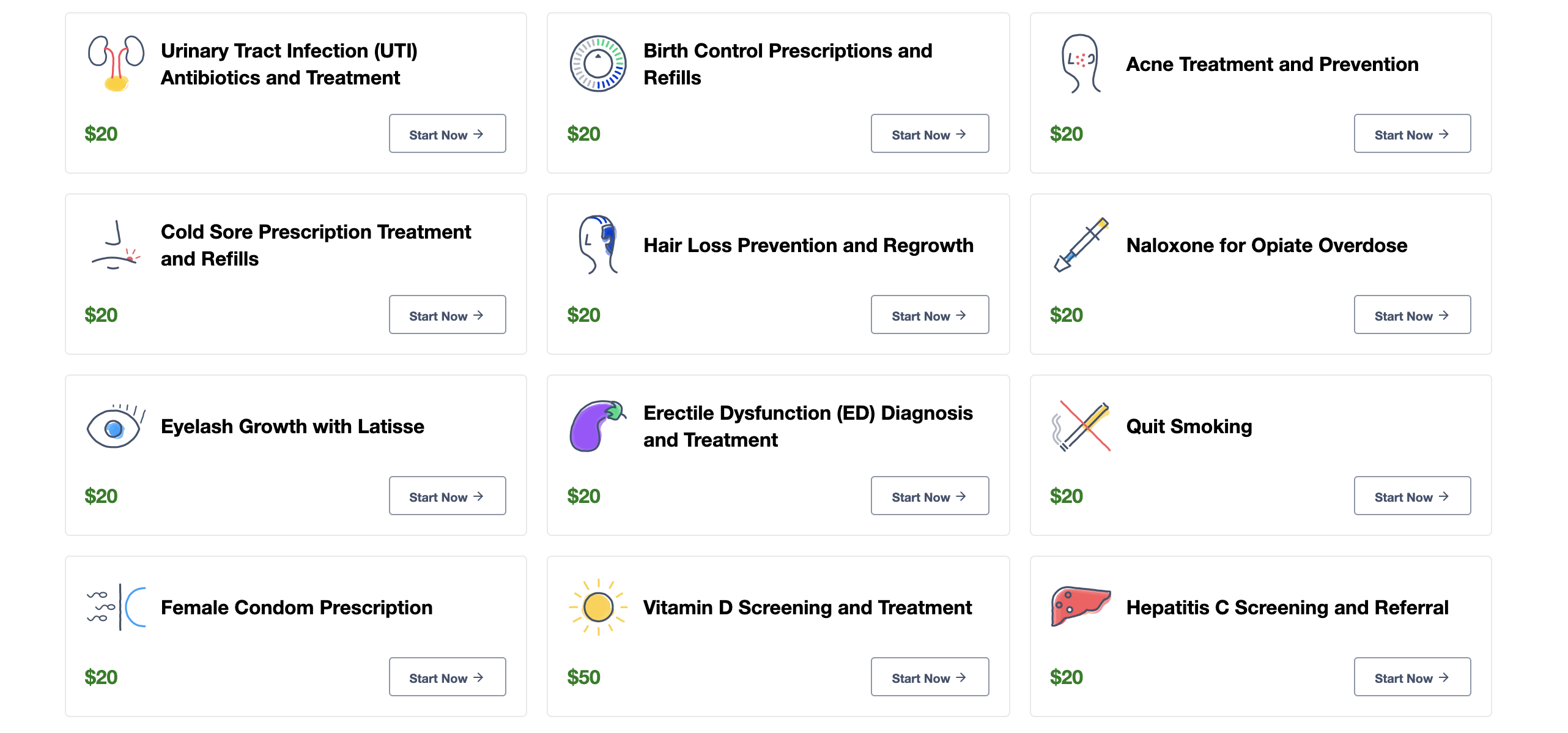
With GoodRx Care, customers can use the online medical service to get a consultation, treatment, prescriptions and lab tests from doctors. The array of services on offer, which covers conditions and ailments from urinary tract infection treatments and birth control pills to erectile dysfunction medication and hair replacement supplements, mirror those pitched by white-glove online prescription services like Ro, Hims, Hers, and Nurx .

Screen Shot 2019 09 26 at 3.40.59 PM

GoodRx Care services

“Over the years, we’ve helped millions of Americans find affordable solutions for their prescription medications, but have also learned that many people struggle to get to the doctor,” said Doug Hirsch, co-CEO and co-founder of GoodRx. “By introducing GoodRx Care, we aim to help fill in the gaps in care to improve access, adherence, and affordability of medical care for all Americans.”

For Hirsch and GoodRx, the expansion into these kinds of online consultations was a natural extension of the company’s services. “One third of people who come to GoodRx . are coming to GoodRx and they may not have the prescription that they don’t think they need,” he says. “For a long time now we’ve been  telling people you may need a prescription for the service and telemedicine options are available.” 

Now the company can keep those customers in-house by offering their own telemedicine consults.

Other technology companies are also pushing deeper into the healthcare industry with Amazon making a big splash with the launch of its employee-only healthcare service offering telemedicine and on-site consultations with staff doctors. Apple, too, has its own healthcare service for employees.

Even BestBuy is seeing big dollars in the healthcare industry. It expects healthcare services to become an increasingly important component to its bottom line as more technology hardware and software is developed to cater to both the aging population, remote health solutions, and infant and childcare.

Demand for more healthcare alternatives is only increasing even as the cost of care rises and the value of healthcare services declines.

As GoodRx notes, access to primary care physicians is hard for most Americans. Some patients can wait up to three weeks to see a doctor and there’s the potential that the country could see a shortfall of up to 120,000 doctors coming within the next 15 years. Add that to the fact that over 27.5 million Americans don’t even have health insurance and the demand for low cost access to care seems obvious.

What’s less obvious is that the care Americans need is access to physicians which will prescribe hair-loss or erectile dysfunction treatments, acne treatments, eyelash growth, or metabolic assessments.

Hirsch says more services will be coming in later months. “We’re at the very early stages of telemedicine,” he says. “We want to continue to expand into more primary services as is safe and affordable and as we can.”

For now, the focus was on bringing the price point down and having more control over where to refer customers. “A lot of these services are tied to mail-order clinics and that could be hundreds of dollars [for a consultation or prescription],” Hirsch says. “We’re going to say it’s $20 for a visit. You can do it today… and you can have a pricing options… we’re saying you’ve had your doctor visit… here’s a list of prices and coupons if you want them.”

Since its launch in 2017, HeyDoctor has had over 100,000 consultations and had already been working with GoodRx, according to Hirsch. The terms of the acquisition were not disclosed.

The acquisition of HeyDoctor is the first big strategic gambit from the company in the year since it raised money from the private equity firm, Silverlake, in a transaction which valued the discount pharmaceutical provider at roughly $2.8 billion, according to a CNBC report.

“In an increasingly fragmented and confusing healthcare system, our goal is to provide a one-stop shop for services that address most basic healthcare needs,” said Hirsch.


26 Sep 2019

Justice Department has issued draft rules on using consumer genetic data in investigations

The U.S. Department of Justice has issued a preliminary set of guidelines for how law enforcement agencies can use genetic information from consumer DNA analysis services in their investigations.

“Prosecuting violent crimes is a Department priority for many reasons, including to ensure public safety and to bring justice and closure to victims and victims’ families,” said Deputy Attorney General Jeffrey A. Rosen, in a statement. “We cannot fulfill our mission if we cannot identify the perpetrators. Forensic genetic genealogy gets us that much closer to being able to solve the formerly unsolvable. But we must not prioritize this investigative advancement above our commitments to privacy and civil liberties; and that is why we have released our Interim Policy – to provide guidance on maintaining that crucial balance.”

Most critically the Department guidelines clearly state that a suspect “shall not be arrested based solely on a genetic association” generated by a genetic genealogical service.

If a suspect is identified using genetic information, the sample must be directly compared to the forensic profile that had already been uploaded to the FBI’s Combined DNA Index System (called CODIS).

Genetic information from a consumer service can only be used when a case involves an unsolved violent crime or sexual offenses and the forensic sample belongs to the person investigators believe to be the perpetrator or when a case involves the remains of a suspected homicide victim, according to the Justice Department.

Prosecutors have the ability to expand or authorize the use of genetic genealogical data beyond violent crimes when law enforcement is investigating crimes that present “a substantial and ongoing threat to public safety or national security.”

Genetic data from a consumer service can only be used after investigators have searched the FBI’s internal system and the collected samples that would be correlated with public information must be reviewed by a designated laboratory official, the Department of Justice said.

“The DLO must determine if the candidate forensic sample is from a single source contributor or is a deduced mixture. The DLO will also assess the candidate forensic sample’s suitability (e.g., quantity, quality, degradation, mixture status, etc.),” for comparison with publicly available genetic records. 

Under the new guidelines, law enforcement agencies can only search consumer genetic databases that provide explicit notifications to their users that law enforcement may use the services to investigate crimes or identify human remains. Investigators also have to receive consent from users of the genealogical service if their genetic information is going to be collected as part of an investigation (unless the consent would compromise the investigation).

These new guidelines follow a series of revelations from earlier in the year centering on the fact that DNA testing services had opened up their services to law enforcement agencies to aid in criminal investigations without their customers’ knowledge or consent.

At the heart of the story, was the decision by the genealogy service FamilyTreeDNA to open the genetic records of several million customers to law enforcement agencies without informing their customers. The story was first reported in January by BuzzFeed.

It wasn’t the first time that law enforcement had turned to genetic evidence to solve a crime. In April 2018, the police arrested a man believed to be the “Golden State Strangler” in part thanks to DNA evidence collected from online DNA and genealogical databases. It was the first instance of public genetic information being used to solve a crime.

The ensuing outcry over FamilyTreeDNA’s decision brought new attention to the fact that the consumer genetic testing companies are largely unregulated and very few regulations exist governing how these companies can use information once a consumer has given their consent.

“We are nearing a de-facto national DNA database,” Natalie Ram, an assistant law professor at the University of Baltimore who specializes in bioethics and criminal justice, told BuzzFeed News at the time. “We don’t choose our genetic relatives, and I cannot sever my genetic relation to them. There’s nothing voluntary about that.”

26 Sep 2019

Privacy in a digital world

Technological progress has created a situation of severe tension and incompatibility between the right to privacy and the extensive data pooling on which the digital economy is based. This development requires new thinking about the substance of that right.

In the last decade, both governments and giant corporations have become data miners, collecting information about every aspect of our activities, behavior and lifestyle. New and inexpensive forms of data storage and the internet connectivity revolution — not only in content, but in fact — in just about everything (from smart appliances to nanobots inside people’s bodies) — enable the constant transmission of big data from sensors and data-collection devices to central “brains”; the artificial intelligence revolution has made it possible to analyze the masses of data gathered in this way.

The intensive collection of data and the inherent advantages of the new technology have spawned the cynical idea that privacy is dead, and we might as well just get used to that fact. In what follows, I will describe three aspects of the right to privacy that have become especially relevant in the digital world. I will then demonstrate that not only is privacy still alive and kicking, but also that we should treat it with the respect it deserves as the most important of all human rights in the digital world.

The first perspective on privacy in the digital world is the idea that the appropriate reaction to the massive pooling of data is to enhance this right, so that we all have better control over our personal information. Individuals should be able to choose what space within their personal domain can be accessed by others and to control the manner, scope and timing of its exposure.

From this perspective, and in a different and more extreme fashion than with regard to other human rights, the borders of the right to privacy allow for compromise and flexibility. Thanks to this control, I — as an individual — have the right to view the content of databases containing information about me. Furthermore, no one is allowed to make any use of this information without my consent, except in extraordinary circumstances. I retain the privilege to agree to the terms of use before I download an app onto my cell phone or began to use freeware — product categories whose economic model rests on commercializing my personal data.

Above all, we need to understand the limits of privacy as control.

This approach is reflected in the regulations requiring my consent for others to make use of and process personal data, ensure my access to data about myself and stipulate that I can have it deleted, corrected or transferred to a different company.

But there is one serious problem with this approach: It is utter fiction. It simply isn’t possible to speak about consent to violations of privacy in a world in which data is processed in many ways and for many purposes, some of which cannot be foreseen at the time when consent is granted. Furthermore, every beginning scholar of behavioral psychology will tell you that no one reads the terms of use, even when they are phrased concisely or displayed in large print — neither of which is the case, of course.

Were this not enough, there is also the psychological phenomenon of the “privacy paradox,” which refers to the discrepancy between the concept of privacy reflected in what users say (“I care deeply about my privacy”) and their actual behavior (“A free pizza? Fantastic! What information do you need?”)

The downside of the notion of privacy as control is that our control of our personal data is quite fictional. There is an overall problem — whereby commercial entities avail themselves of huge tranches of private information without having obtained real consent for doing so. This information, in turn, can be put to various uses, some of which are of value, while others pose serious threats to society.

Above all, we need to understand the limits of privacy as control. It is clear that the best approach would be to upgrade our digital literacy and learn how to deal with the situation; but the problems noted here make this idea only minimally relevant. Perhaps the solution is to start with clearer legislation — national or international — that defines reasonable and legitimate uses of personal information and mandates companies to obtain  the consent of the individual involved, only when the proposed use does not fall into that category.

Somewhat paradoxically, the second approach to the right to privacy in a digital world relates to the most basic and classic connotation of the right to privacy — the “right to be left alone.” This refers to our right to preserve and protect our identity and maintain a safe and protected space around our body, thoughts, feelings, darkest secrets, lifestyle and intimate activities. A world with sensors and surveillance cameras all around us, along with recording devices and gadgets that are constantly monitoring what we do, has far-reaching psychological ramifications.

In the discourse on privacy, we tend to deal chiefly with questions of controlling the transmission or management of information after it has been collected, with regards to issues of data anonymization, security and encryption. But what we need at the present time is to ask whether there really is a commercial, business or public need to collect our private data so obsessively.

Against the clear advantages of technological progress, commercial convenience and even law enforcement, we must weigh the chilling effect on curiosity, on trust, on creativity, on intimate activity, on the ability to think outside the box — which is the critical spark to innovation.

What’s more, the essential feature of all digital personal assistants is the human traits (voice, face, language) with which their developers have endowed them. These devices are supposed to give us the feeling that there is another human being in the room. Researchers have shown that in contrast to our behavior with what we perceive as a machine (such as a computer or telephone), we react to humanized technology as if a real person were standing there. The right to be left alone will get a whole new meaning, then, different than in the internet age.

The third approach to the right to privacy is the idea that privacy should make it impossible for commercial or government entities to combine our personal data with big data amassed from other people in order to construct precise personality, psychological and behavioral profiles through machine learning. This phenomenon, known as the “autonomy trap,” applies to information about emotional tendencies, insecurity, sexual orientation (even of persons still in the closet), fears and anxieties and more.

The problem is that the personality profile is used for retargeting advertisements of products or services or for other facets of influencing behavior — all of it in a way that is precisely tailored to the needs associated with the profile.

In a world in which it is possible to pool and analyze information about us in order to generate buying and behavior recommendations “just for you” (purchases on Amazon, shows on Netflix, navigation guides such as Waze), we in effect are unwittingly surrendering some of our decision-making autonomy to systems that know what is the best route to our destination and what we should eat. 

Without individual privacy there is no meaning to an individual’s life.

We also are exposed to attempts at individual persuasion tailored just for us, with a power, invasiveness and capacity that did not exist in the past. Think “self-restraint preference algorithms” power devices, such as personal assistants, whose purpose is to learn as much about us as possible — what we are interested in, who our friends are, our habits, our mood — and then to help us by sending messages, making phone calls, setting appointments, ordering products or making travel reservations.

We must remember the slippery slope from the use of techniques for collecting personal information in order to offer products and services, and the use of the very same techniques to influence our thoughts, creates an autonomy trap about beliefs, and undermines our trust in democratic institutions — in brief, manipulates elections.

The Cambridge Analytica scandal in the spring of 2018 — which took the lid off the exploitation of personal data in order to sway the elections in many countries — shows that the right to privacy goes far beyond individual control of information and extends to a threat to the very possibility of conducting a sound democratic process, and thus — of protecting all human rights.

And so, in the digital world, privacy must be seen as a crucially important right for us as a society, as a collective. At the conceptual level it needs to go through the same process of evolution as its older sibling, the right to freedom of expression. Just as freedom of expression started out as the right of individuals to scream to their heart’s content, and developed into a collective right that sustains a rich and functional public discourse so that we can engage in a healthy democratic process, so too privacy must grow and develop — from the right of individuals to trade in their own data, into a collective right of defense against autonomy traps, in the context of elections and mind control.

The laws governing commercial competition will have to develop ideas that see personal data as an independent market. Antitrust agencies will have to look at the concentration of the personal data held by a single entity.

By the same token, the laws on election propaganda will have to regulate what types of personal information may not be exploited in campaigns, and determine whether there are techniques whose persuasive and manipulative powers are so great that they should be banned.

Privacy is not dead. In fact, it has become our most basic right and must be protected. Without individual privacy there is no meaning to an individual’s life, and without privacy, democracy loses all meaning.

26 Sep 2019

At the sixth annual Pear Demo Day, weather balloons, branded credit cards, and lots of top degrees

Pear, a Palo Alto-based seed stage fund that has made its name through early bets on Guardant Health, DoorDash, Memebox, and Gusto, among others, hosted its sixth annual demo day this week in what proved to be a scorchingly hot afternoon in Woodside, California — not that invitees were put off by the heat.

Hundreds of investors showed up at a sprawling public estate and surrounding gardens to see the dozen teams that Pear spent the summer working with, each of them less than nine months old, according to Pear, and many incorporated only in recent months. (Each has also only received less than $200,000 so far from Pear and no other institutional investment.)

While some are sure to evolve into other ideas or dissolve into other endeavors, the whole of the group gave those gathered food for thought and a first look at some very solid talent.

Following are the companies that presented:

1) Windborne: Founded by three Stanford grads and another from Harvard, this startup aims to improve the accuracy of weather data where it’s currently limited, like over oceans, by using weather balloons that could allow the team to do things like tell shipping companies which route to take to minimize fuel burn. CEO Paige Brown also says their system can fly 60 times longer than existing solutions and for the same price. The more specific claim: that in a single $350 flight, a Windborne balloon can fly for more than five days and travel a quarter of the way around the world, collecting direct measurements in places no one else can.

The team apparently bonded as engineers in the Stanford Student Space Initiative and they’ve all worked at SpaceX.

Windborne

2) Guild: This one was started by two Stanford grads and helps companies make branded credit cards. Why would they bother? Because, the startup claims, branded credit cards are a lot more lucrative — increasing spending by 20 percent, cutting churn by roughly half, and generating $50 per year of profit per customer. Co-founder Michael Spelfogel says he knows of which he speaks, having tried, unsuccessfully, to launch a branded credit card while at Lyft.

He also says the idea is to partner with sports teams first.

Guild

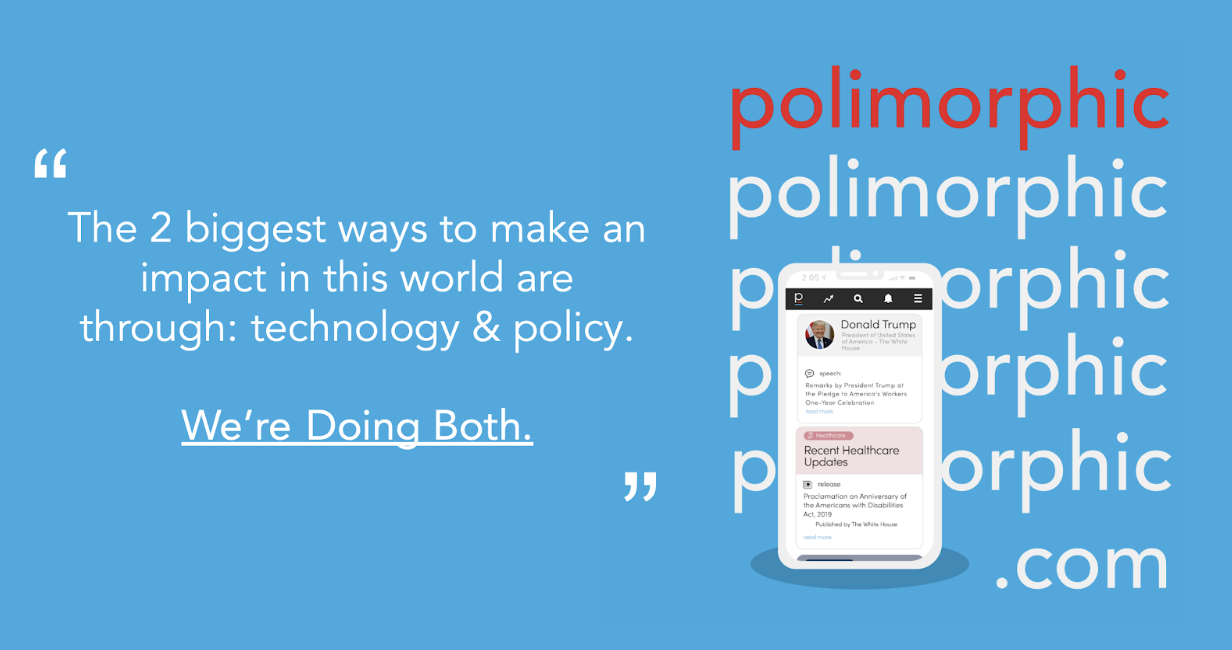
3) Polimorphic: Started by two computer scientists out of MIT, this startup is building a “civic media platform” meant to help politicians communicate with constituents in an interactive way. The platform basically invites constituents toexpress their views directly to political and government leaders, while giving campaigns, civic groups, and governments a way to engage with those individuals (though the latter has to pay to do this.)  It’s a meaningful market, they argue, saying that campaign spending has been growing by 50 percent in between major election cycles, with $9 billion spent in 2016 alone.

Of course, because this was a demo day, the founders also talked about their traction, saying they already have three letters of intent, and volunteering that they’re in early talks with three presidential campaigns.

Polimorphic

4) Gradio: Launched by graduates of Stanford, Georgia Institute of Technology, NYU and MIT, Gradio says it speeds up the process of collecting and labeling data for use with AI and machine learning. The “Gradio data engine” corrects mislabeled data, identifies and removes “low value” data, and highlights the highest value data. It’s a smart pitch, considering that acquiring and labeling data right now requires tons of human labor and often requires pricey domain expertise and that, even so, something like one if five data points is mislabeled at a typical AI company.

As for who will use the technology, the founders say they’re targeting companies in the natural language processing space first.

Gradio

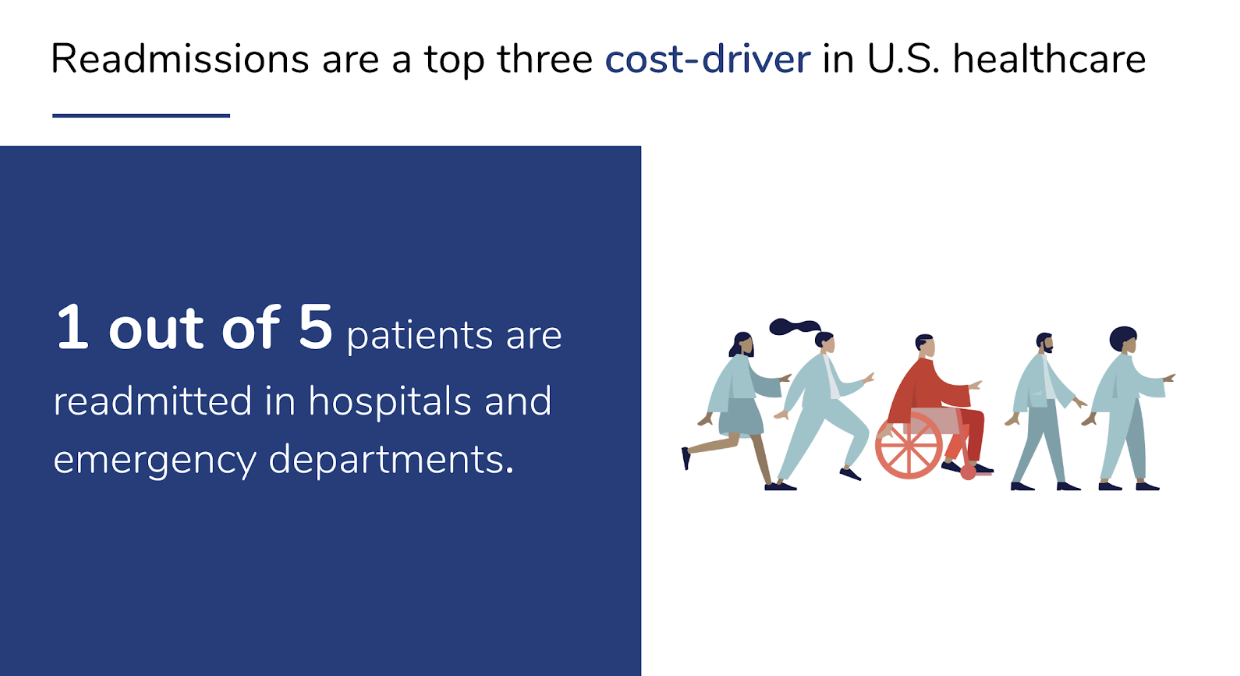
5) Sympto Health: Launched by two founders from UC San Diego (one who graduated, one who dropped out to build Sympto), this startup is trying to tackle a universal problems, which is that patients very often forget clinical instructions, and when that happens, they sometimes wind up being readmitted to the hospital.

Sympto ties into a care facility’s existing systems/workflows and sends “patient engagement” messages — things like surgery checklists, pre-appointment questionnaires, etc — to minimize missed information and unnecessary readmissions. It says its patient-as-an-engagement service has already landed the company two enterprise contracts worth $300,000, too.

Screen Shot 2019 09 26 at 12.29.50 PM


6) Smarty: This startup was founded by a single person with multiple degrees (HBS, MIT) who previously worked as a software engineer at Yammer.

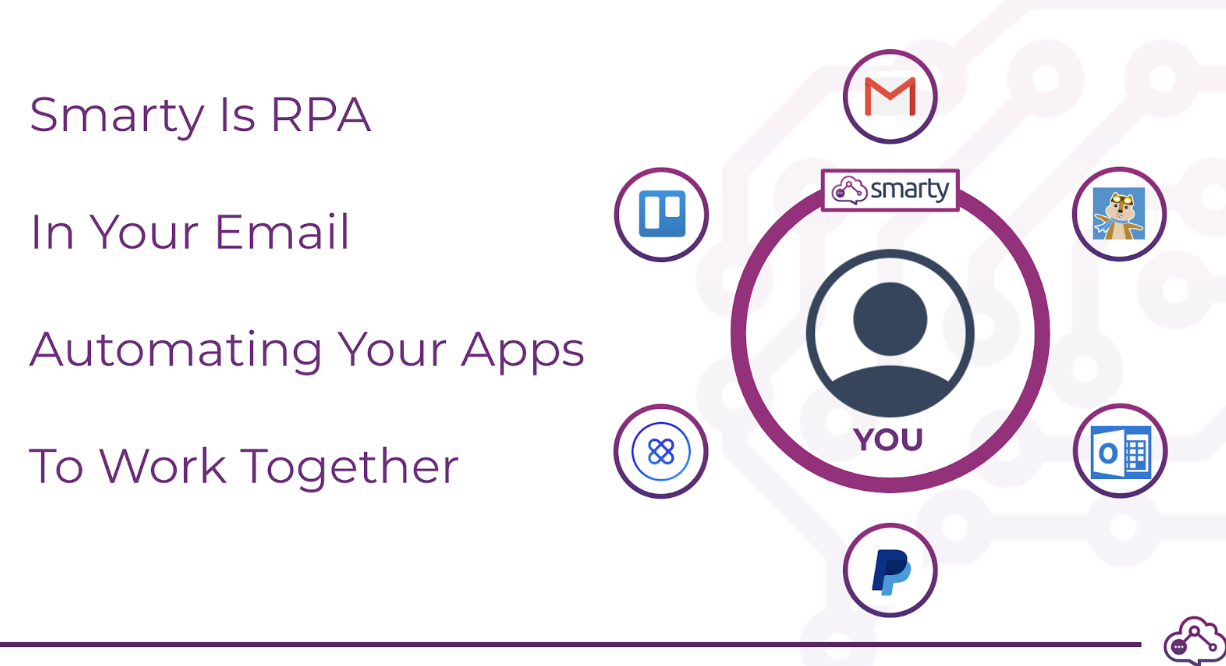
What she has built: an automation tool that’s focused on business tasks like scheduling meetings, making introductions, and finding flights for out of town meetings. The tool is being made available first to users of G Suite and Office 365 users (which have 200 million paying users combined), who are being asked to pay Smarty $20 a month for its workflow automation tool, Eventually, though, it aims to be its own client.

Screen Shot 2019 09 26 at 1.01.34 PM

7) Impct: Started by two MBAs from National Chengchi University and another from Stanford, Impct is making what it called snacks for good. It’s not that they’re more healthful than other options; instead, the idea is for companies to buy these white-label snacks for their offices, then re-invest a percentage of their sales into social responsibility programs chosen by employees. The thinking is that employees want their kombucha; why not buy spend on snack bars and drinks that give back?

Screen Shot 2019 09 26 at 1.14.39 PM

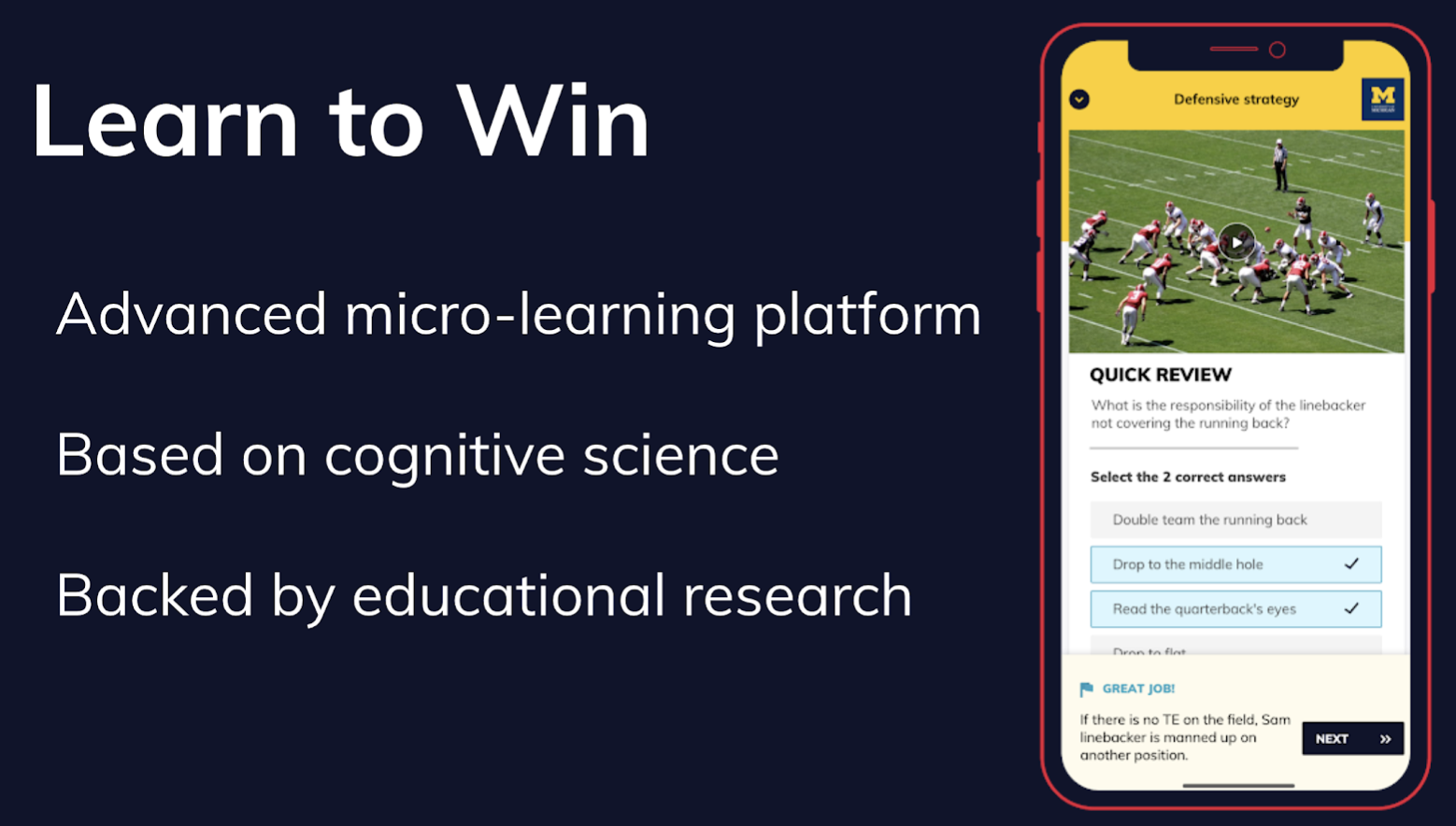
8) Learn to Win: Started by two Stanford MBAs who say traditional learning management systems fall short of the needs of  high-performance teams, Learn to Win is a “micro learning” training program that’s right now being used by 100 sports organizations; it also has a signed contract with the Air Combat Command to train fighter pilots.

What the program ostensibly offers: content that’s presented in a visual and easy-to-use content authoring engine, the ability to deploy mobile active learning content to users, and and the ability to quickly evaluate results and iterate.

Next on the startup’s to-do list: enticing other entities with training challenges, including in the commercial airline industry, at oil and gas companies, and within police and fire departments.

Screen Shot 2019 09 26 at 1.25.01 PM

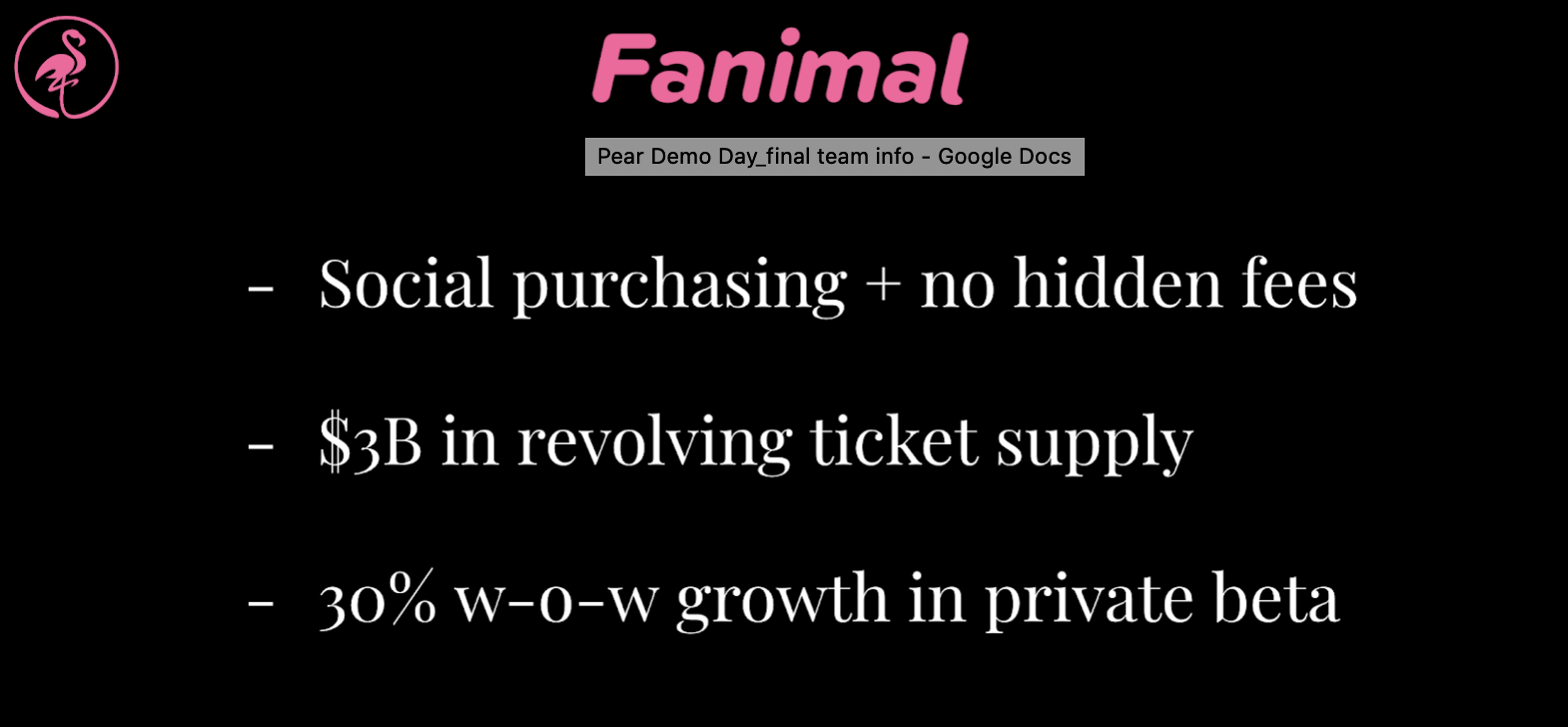
9) Fanimal: Founders with degrees from Stanford, Columbia University and UC Berkeley (and who’ve worked at Boston Consulting Group, Gunderson Dettmer, and Hackbright Academy) decided to come together to tackle two annoying problems associated with uying tickets for live events: high fees, and that feeling when you buy tickets for a group of people . . . then need to chase them down for reimbusement.

With Fanimal, everyone in a social group pays individually and receives their own tickets, and there are no hidden fees. Instead, Fanimal makes money by adding a “small markup” to tickets. Since launching a few weeks ago, they’ve sold more than $31,000 in tickets.

Screen Shot 2019 09 26 at 1.30.30 PM

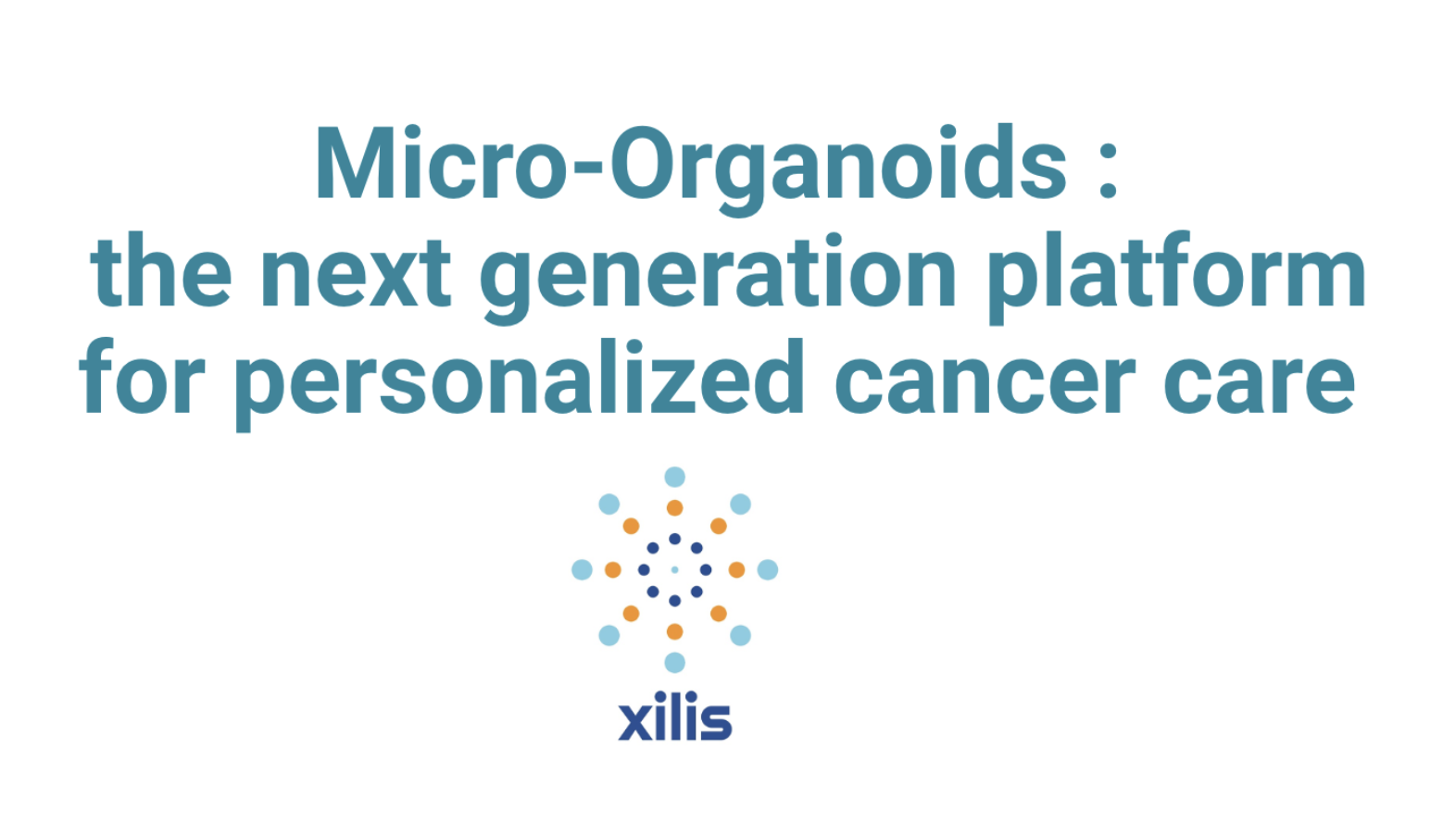
10) Xilis:  A Stanford PhD and a PhD from UNC Chapel Hill who are both now Duke University professors focused on oncology and precision health came together for this company out of their acutely awareness that when someone is diagnosed with cancer, finding the right treatment frequently takes months and often comes with countless side effects. To speed along the process, their company, Xilis, uses “micro-organoids” to make thousands of 3d replicas of a patient’s tumor in about 6 days, which the company says can be used for testing for drug compatibility faster.

They say it works, too. At least, the cofounders, Xiling Shen and David Hsu, say they’ve tested the technology with 12 patients, with a 100% success rate in predicting how a tumor will respond to medication.

Screen Shot 2019 09 26 at 1.38.53 PM 1


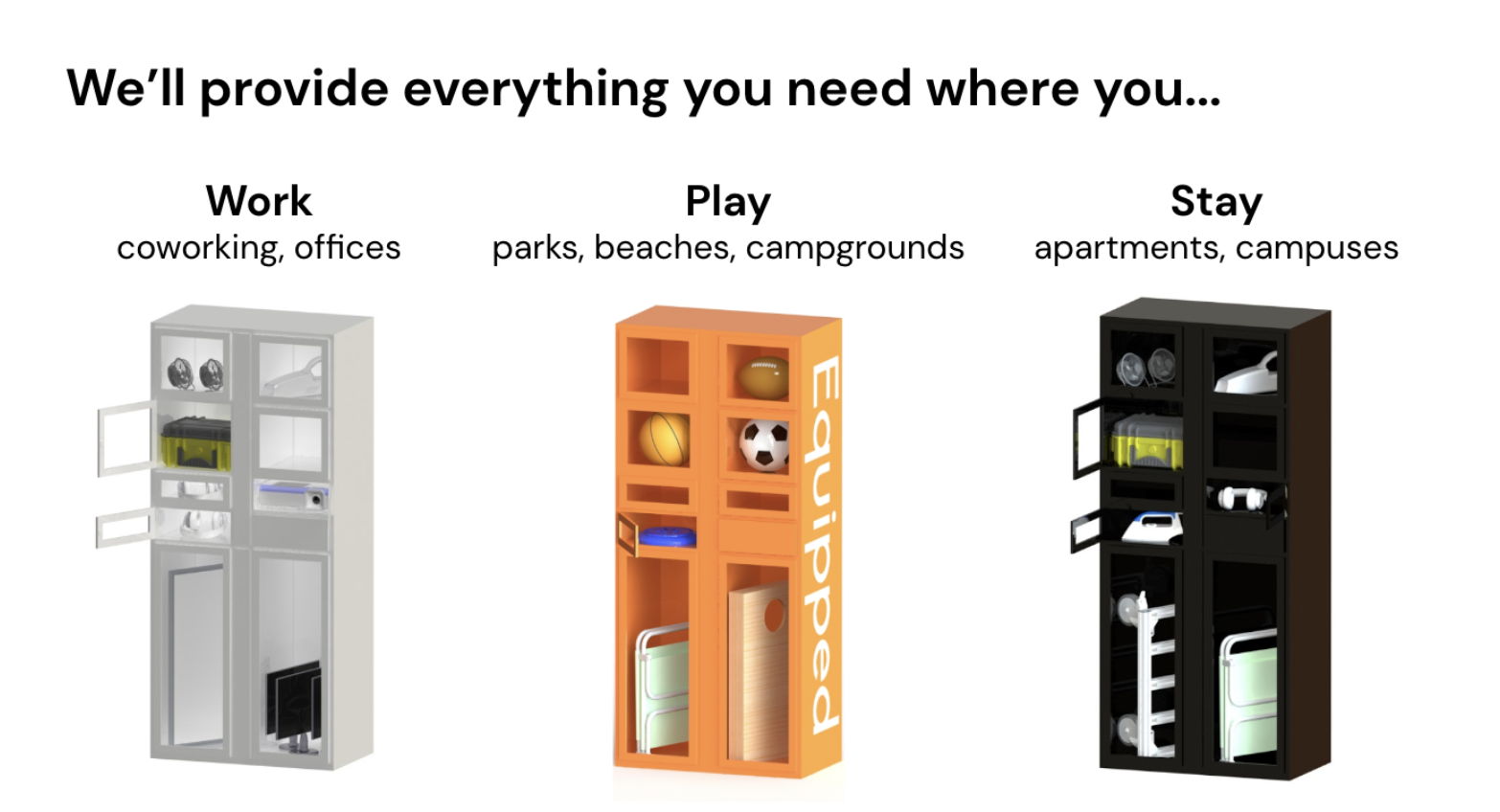
11) Equipped: Founded by two Stanford grads who’ve worked variously for the NBA, Tesla and Amazon, Equipped has an interesting proposal. What if instead of lug an oversize umbrella to the beach or bring a soccer ball to the park, you could buy these things where they make sense, in on-demand equipment lockers at the beach, or outside a park, where you could rent what you need, then return it?

Nike seems to like the idea. CEO Dan Mandelman says the sports retail giant is paying them $200,000 for six lockers in LA, with the cities of Burlingame, San Ramon, and Redwood City currently implementing pilot programs.

Screen Shot 2019 09 26 at 1.44.31 PM

12) Maker: Two Stanford MBAs with marketing and management consultant experience have created a marketplace for small batch wines.

Maker finds small/independent wineries, cans their product under the Maker label, then delivers to the end customer.

Screen Shot 2019 09 26 at 1.58.41 PM

By the way, you can get a flavor for Pear’s demo day here if you’re curious.


26 Sep 2019

‘We are seeing volume and interest in Peloton explode,’ says company president on listing day

This morning, Peloton (NASDAQ: PTON), the tech-enabled stationary bicycle and fitness content streaming company, raised $1.2 billion in its NASDAQ initial public offering. Despite dropping more than 10% in its first day of trading — ultimately closing down 11% at $25.84 per share — the IPO was a bona fide success. Peloton, once denied (over and over again) by VC skeptics, now has hundreds of millions of dollars to take its business into a new era. One in which, the media, hardware, software, logistics and social company attempts to become a generation-defining company akin to Apple.

Founded in 2012 — six years after Soul Cycle opened its first cycling studio in New York’s Upper East Side and two years before a Soul Cycle founder, Ruth Zukerman, jumped ship to launch her own indoor cycling business, Flywheel Sports — a man by the name of John Foley made the ambitious, some might say foolish, decision to start a company that would sell these exercise bikes direct-to-consumer. That way, you could take a Soul Cycle class, in essence, in the comfort of your own home. Even better, technology would improve the experience.

As my colleague Josh Constine recently described it, these bikes come outfitted with a 22-inch Android screen, transforming an outdated exercising experience and bringing it into 2019: “It makes lazy people like me work out. That’s the genius of the Peloton bicycle. All you have to do is Velcro on the shoes and you’re trapped. You’ve eliminated choice and you will exercise,” Constine writes.

Peloton’s ability to get people exercise — a feature driven by its talented instructors (some of whom were poached from competitor Flywheel Sports) — ultimately had venture capital investors funneling $1 billion, roughly, into the business. Today, Peloton operates dozens of showrooms across the U.S., counts 1.4 million total community members — defined as any individual who has a Peloton account — and over 500,000 paying subscribers. Why? Because the company, as stated in its IPO prospectus, “sells happiness.”

“Peloton is so much more than a Bike — we believe we have the opportunity to create one of the most innovative global technology platforms of our time,” writes Foley. “It is an opportunity to create one of the most important and influential interactive media companies in the world; a media company that changes lives, inspires greatness, and unites people.”

Peloton Bike Lifestyle 04

Peloton’s flagship product, a tech-enabled stationary bike.

Peloton’s community coupled with the high margins on sales of its $2,245 bikes had the company reporting $915 million in total revenue for the year ending June 30, 2019, an increase of 110% from $435 million in fiscal 2018 and $218.6 million in 2017. Its losses, meanwhile, hit $245.7 million in 2019, up significantly from a reported net loss of $47.9 million last year.

What’s next for Peloton? The opportunities are endless, given the company’s firm seat at the intersection of hardware, software, media content and more. A third product may be in the works, expansion to international markets or new instructors. Peloton is going after a massive market ripe for disruption. What’s certain is that we’ll see a whole lot of cash flowing into fitness tech copycats in the next couple of years.

Peloton, following a number of lukewarm consumer IPOs (Uber), nearly doubled its valuation to $8.1 billion this morning after pricing its IPO at the top of its range, $29 per share. To answer some of our most burning questions, we chatted with Peloton’s president William Lynch, the former CEO of Barnes & Noble, about the float.

The following conversation has been edited for length and clarity.

William Lynch

Peloton president and former Barnes & Noble CEO William Lynch.


Kate Clark: What’s next for Peloton?
William Lynch: We now have over a billion in capital to fuel more growth, especially in the area of product innovation.